

Central GLP-1 receptor signalling accelerates plasma clearance of triacylglycerol and glucose by activating brown adipose tissue in mice
Open accessThe DOI matches its Crossref record; 32 of the 32 references it cites were found in a registry or an index.
Abstract
AIMS/HYPOTHESIS: Glucagon-like peptide 1 (GLP-1) receptor (GLP-1R) agonism, used in the treatment of type 2 diabetes, has recently been shown to increase thermogenesis via the brain. As brown adipose tissue (BAT) produces heat by burning triacylglycerol (TG) and takes up glucose for de novo lipogenesis, the aim of this study was to evaluate the potential of chronic central GLP-1R activation by exendin-4 to facilitate clearance of lipids and glucose from the circulation by activating BAT. METHODS: Lean and diet-induced obese (DIO) C57Bl/6J mice were used to explore the effect of a 5 day intracerebroventricular infusion of the GLP-1 analogue exendin-4 or vehicle on lipid and glucose uptake by BAT in both insulin-sensitive and insulin-resistant conditions. RESULTS: Central administration of exendin-4 in lean mice increased sympathetic outflow towards BAT and white adipose tissue (WAT), resulting in increased thermogenesis as evidenced by increased uncoupling protein 1 (UCP-1) protein levels and decreased lipid content, while the uptake of TG-derived fatty acids was increased in both BAT and WAT. Interestingly, in DIO mice, the effects on WAT were blunted, while exendin-4 still increased sympathetic outflow towards BAT and increased the uptake of plasma TG-derived fatty acids and glucose by BAT. These effects were accompanied by increased fat oxidation, lower plasma TG and glucose concentrations, and reduced body weight. CONCLUSIONS/INTERPRETATION: Collectively, our results suggest that BAT activation may be a major contributor to the glucose- and TG-lowering effects of GLP-1R agonism.
Overview
The claims and statistics of this paper haven’t been checked yet.
Free: it reads the open-access text and checks the first 5 claims that cite a source we can check. Create a free account to check every claim.
Integrity signals
Registry
Cites
Statistics
Figures
Verification
Claims the paper makes
The claims and statistics of this paper haven’t been checked yet.
Free: it reads the open-access text and checks the first 5 claims that cite a source we can check. Create a free account to check every claim.
Claims other papers make about this one
Each is checked against this paper’s own text: does it say what the citing paper says it does?
The source backs part of the claim, not all of it — or backs it for a different population, condition or comparison.
In the citing paper
“Beiroa (36) et al. injected GLP-1 analog, liraglutide (LIR), into mice. LIR was found to stimulate the thermogenesis of brown adipose tissue and the browning of adipose cells, independent of the intake of nutrients. It can increase the thermogenesis and utilization of triacylglycerol-derived fatty acids and glucose in brown adipocytes and reduce the lipid content through the central GLP-1R agonist”
From GLP−1 receptor agonists for the treatment of obesity: Role as a promising approach (2023) · cites this paper as [38]
Experimental — accuracy not yet measured
Self-check
Percentages, sums and reported differences re-computed from the paper’s own numbers.
The self-check needs the paper’s full text.
Citations
Cites
Brown Adipose Tissue: Function and Physiological Significance
CANNON, B., & NEDERGAARD, J. (2004) · Physiological Reviews · doi:10.1152/physrev.00015.2003 · Cited by 6,433 · cited 1×
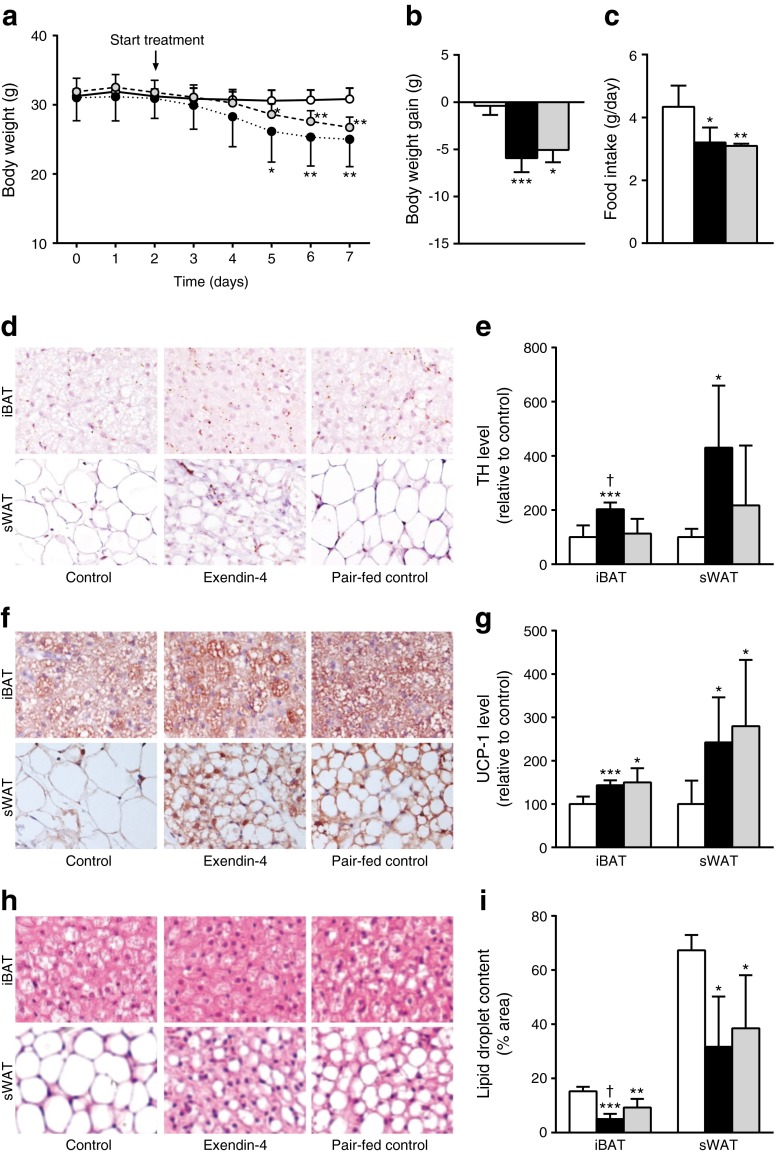
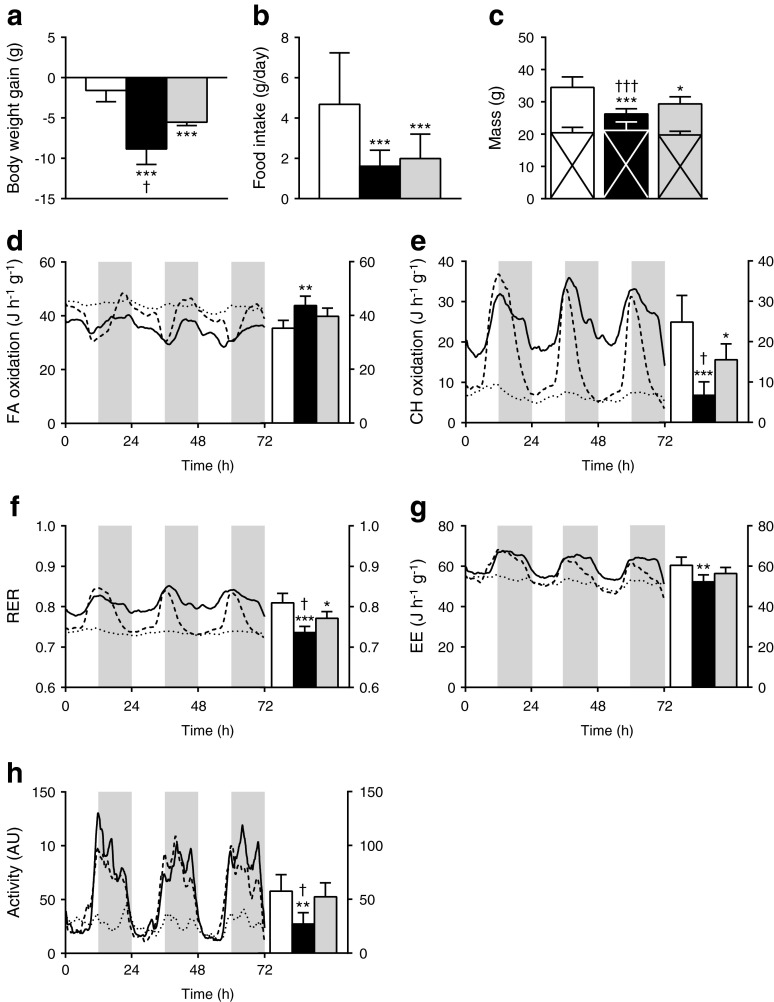
“In apparent contrast to the notion that increased BATactivity is generally correlated with an enhanced total energy expenditure [26], central GLP-1R activation in fact reduced total energy expenditure, an effect we have observed before during 0 5 10 15”
Watterson, K. R., Bestow, D., Gallagher, J., Hamilton, D. L., Ashford, F. B., Meakin, P. J., & Ashford, M. L. J. (2013) · Neurosignals · doi:10.1159/000334144 · Cited by 3,389
A role for glucagon-like peptide-1 in the central regulation of feeding
Turton, M. D., O'Shea, D., Gunn, I., Beak, S. A., Edwards, C. M. B., Meeran, K., Choi, S. J., Taylor, G. M., Heath, M. M., Lambert, P. D., et al. (1996) · Nature · doi:10.1038/379069a0 · Cited by 1,950 · cited 3×
“1c), both of which are well-known effects of activation of the central GLP-1R system [3, 17].”
BackgroundBrown adipose tissue activity controls triglyceride clearance
Bartelt, A., Bruns, O. T., Reimer, R., Hohenberg, H., Ittrich, H., Peldschus, K., Kaul, M. G., Tromsdorf, U. I., Weller, H., Waurisch, C., et al. (2011) · Nature Medicine · doi:10.1038/nm.2297 · Cited by 1,608 · cited 1×
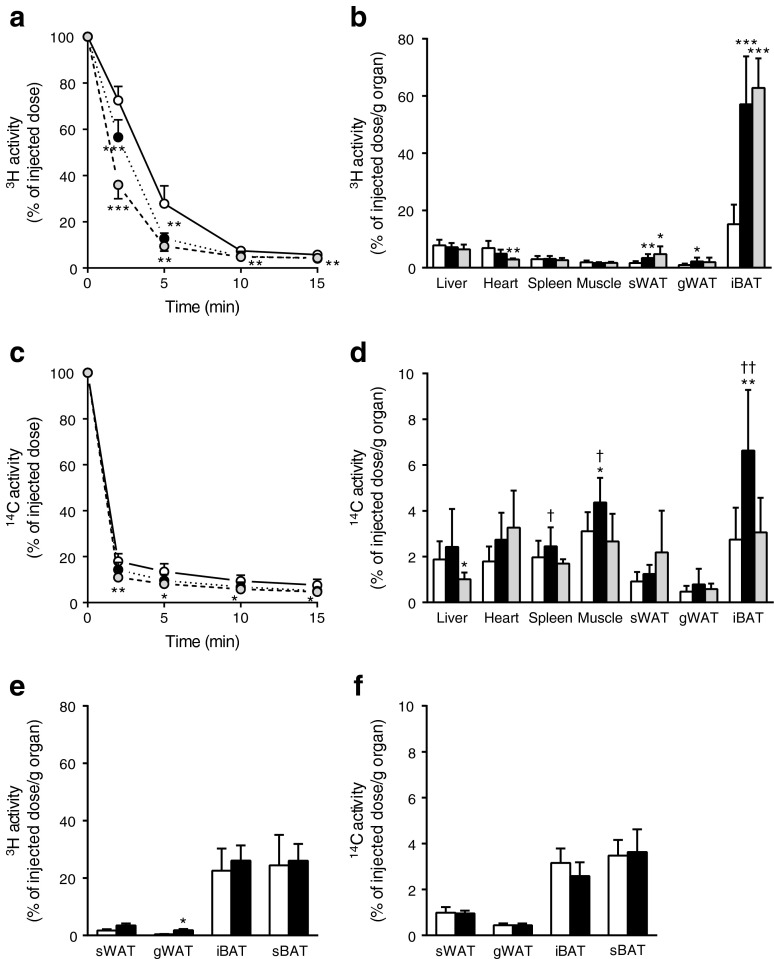
“In fact, BAT activation can correct hyperlipidaemia [9] and hyperglycaemia [10] by increased uptake of TG-derived fatty acids [11] and glucose from plasma.”
BackgroundDiet-Induced Type II Diabetes in C57BL/6J Mice
Surwit, R. S., Kuhn, C. M., Cochrane, C., McCubbin, J. A., & Feinglos, M. N. (1988) · Diabetes · doi:10.2337/diab.37.9.1163 · Cited by 1,208
GLP-1 agonism stimulates brown adipose tissue thermogenesis and browning through hypothalamic AMPK
Beiroa, D., Imbernon, M., Gallego, R., Senra, A., Herranz, D., Villarroya, F., Serrano, M., Fernø, J., Salvador, J., Escalada, J., et al. (2014) · Diabetes · doi:10.2337/db14-0302 · Cited by 602 · cited 3×
“As central GLP-1 infusion increases sympathetic outflow towards BAT and WAT and subsequently stimulates thermogenesis [12, 13, 18], we analysed the expression of TH, a marker for activity of noradrenergic (norepiphrenergic) nerve fibres [19].”
BackgroundGöke, R., Larsen, P. J., Mikkelsen, J. D., & Sheikh, S. P. (1995) · European Journal of Neuroscience · doi:10.1111/j.1460-9568.1995.tb00650.x · Cited by 474 · cited 1×
“The GLP-1R is widely expressed through the hypothalamus [25], and exerts effects via different nuclei.”
BackgroundBrown fat activation reduces hypercholesterolaemia and protects from atherosclerosis development
Berbée, J. F. P., Boon, M. R., Khedoe, P. P. S. J., Bartelt, A., Schlein, C., Worthmann, A., Kooijman, S., Hoeke, G., Mol, I. M., John, C., et al. (2015) · Nature Communications · doi:10.1038/ncomms7356 · Cited by 435 · cited 1×
“Therefore, we suggest that GLP-1R agonists via BAT activation reduce both hyperlipidaemia and hyperglycaemia, and possibly even atherosclerosis [31], in addition to the effects of BAT activation on obesity.”
BackgroundSelf-citationDickson, S. L., Shirazi, R. H., Hansson, C., Bergquist, F., Nissbrandt, H., & Skibicka, K. P. (2012) · The Journal of Neuroscience · doi:10.1523/jneurosci.6326-11.2012 · Cited by 414 · cited 1×
“The exendin4-induced decrease in physical activity, resulting from a diminished food-seeking behaviour [29], is less likely to contribute to the change in total energy expenditure [30].”
BackgroundArcuate Glucagon-Like Peptide 1 Receptors Regulate Glucose Homeostasis but Not Food Intake
Sandoval, D. A., Bagnol, D., Woods, S. C., D'Alessio, D. A., & Seeley, R. J. (2008) · Diabetes · doi:10.2337/db07-1824 · Cited by 320 · cited 2×
“For example, GLP-1R signalling in the arcuate nucleus regulates glucose metabolism, while it modulates feeding via the paraventricular nucleus [5].”
Background
Cited by
Items 101–140 of 140
Herman, R., Jensterle, M., Horvat, S., Ležaić, L., Snoj, Ž., Pušnik, I., Goričar, K., Cör, A., Pušnik, L., Mlačnik, V., et al. (2025) · Trials · doi:10.1186/s13063-025-09045-9 · Cited by 14
Hypothalamic BMP9 suppresses glucose production by central PI3K/Akt/mTOR pathway
He, Y., Zhang, C., Luo, Y., Chen, J., Yang, M., Li, L., Gu, H. F., Yang, G., & Zhang, X. (2020) · Journal of Endocrinology · doi:10.1530/joe-19-0591 · Cited by 8
Gao, M., & Liu, D. (2019) · Scientific Reports · doi:10.1038/s41598-019-49757-y · Cited by 8
Zhou, F., Jiang, L., Guo, J., Fan, Y., Pan, Q., Li, T., Sun, X., & Li, P. (2023) · Therapeutic Advances in Chronic Disease · doi:10.1177/20406223231161516 · Cited by 7
Mattar, P., Jaque, C., Teske, J. A., Morselli, E., Kerr, B., Cortés, V., Baudrand, R., & Perez‐Leighton, C. E. (2023) · Frontiers in Endocrinology · doi:10.3389/fendo.2023.1164047 · Cited by 7
“, Peroxisome proliferator-activated receptor gamma coactivator 1alpha or carnitine palmitoyltransferase I) inWAT and BAT, leading to increased thermogenesis (27, 28, 31).”
BackgroundMethodByun, S., Sotzen, M. R., Knappenberger, M. A., Bento, M. T., Asker, M., Olekanma, D. I., & Skibicka, K. P. (2025) · Comprehensive physiology · doi:10.1002/cph4.70083 · Cited by 8
“Both hormones are known to participate in intra-islet crosstalk, with glucagon acting on beta-cell GLP-1Rs and glucagon receptors to enhance insulin release, and GIP promoting glucagon secretion from alpha-cells (Drucker and Holst 2023).”
Chen, L.-S., & Liu, L. (2024) · Clinical Nutrition · doi:10.1016/j.clnu.2024.07.024 · Cited by 5
Effects of Weight Loss on Endothelium and Vascular Homeostasis: Impact on Cardiovascular Risk
Tiezzi, M., Sega, F. V. D., Gentileschi, P., Campanelli, M., Benavoli, D., & Tremoli, E. (2025) · Biomedicines · doi:10.3390/biomedicines13020381 · Cited by 5
“In healthy subjects, acylated ghrelin improves cardiac functional parameters, but not endothelial function [83,84].”
Mamontova, E. D., Michurina, S. S., Stafeev, I., Sorkina, E., Sklyanik, I. A., Koksharova, E., Menshikov, M. Y., Shestakova, M. V., & Parfyonova, Y. V. (2021) · Biochemistry (Moscow) · doi:10.1134/s000629792103010x · Cited by 5
The Iminosugar AMP-DNM Improves Satiety and Activates Brown Adipose Tissue Through GLP1
Chao, D. H. M., Wang, Y., Foppen, E., Ottenhoff, R., van Roomen, C. P. A. A., Parlevliet, E. T., van Eijk, M., Verhoek, M., Boot, R. G., Marques, A. R. A., et al. (2019) · Diabetes · doi:10.2337/db19-0049 · Cited by 5
“It was previously shown that the central GLP1 systemhas also been implicated in the control of BAT activation and thermogenesis control by increasing sympathetic output to the BAT (9,25).”
BackgroundMethodInfluentialSelf-citationHypertension Remission After Bariatric Surgery: Metrics, Mechanisms, and Patient Selection
Shirmohamadi, E., Ghasemloo, N., Ramezanpour, M. R., & Mohammadzadeh, N. (2025) · Current Cardiology Reports · doi:10.1007/s11886-025-02280-1 · Cited by 6
Activation of cyclooxygenase-2 signaling mediates liraglutide-induced adipose lipolytic activity
Li, J., Wu, H., Ma, W., Yuan, T., Chen, X., & Pan, Y. (2025) · European Journal of Pharmacology · doi:10.1016/j.ejphar.2025.178133 · Cited by 5
Wang, T., Chen, S., Zhou, D., & Hong, Z. (2025) · Metabolism · doi:10.1016/j.metabol.2025.156148 · Cited by 8
Xu, Z., Wen, S., Dong, M., & Zhou, L. (2024) · Diabetes Obesity and Metabolism · doi:10.1111/dom.16146 · Cited by 4
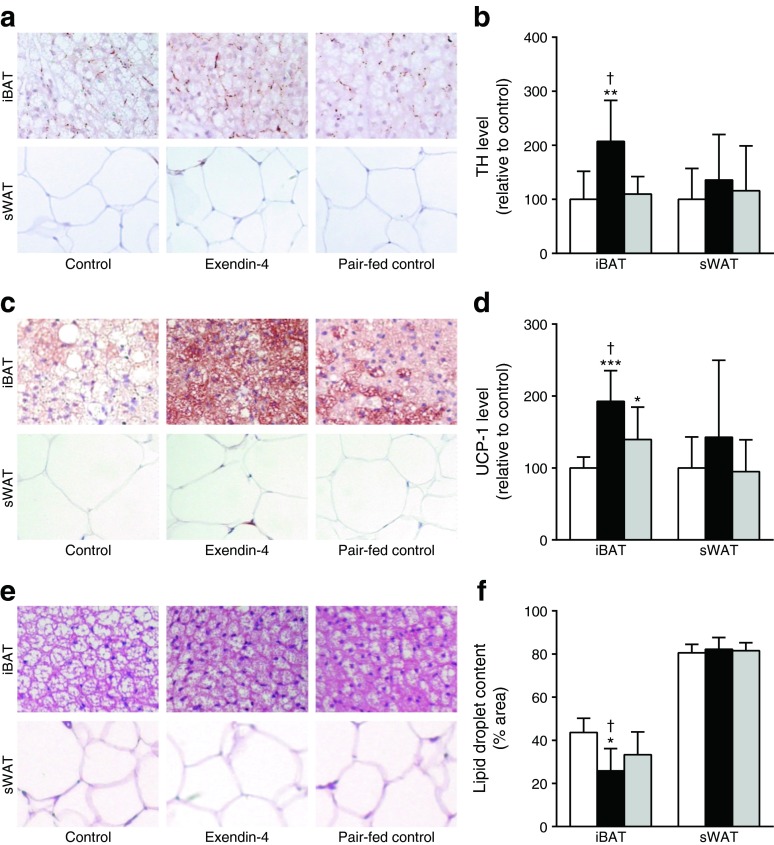
“63 However, in the diet-induced obese (DIO) mouse model, the effect of exendin-4 on WAT is somewhat diminished, but it still enhances sympathetic nerve outflow to BAT and strengthens BAT's ability to absorb plasma triglyceride-derived fatty acids and glucose.”
Bába, L.-I., Gáll, Z., Kolcsár, M., Pap, Z., Varga, Z. V., Kovács, B., Beatrix, H., & Kun, I.-Z. (2020) · Scientia Pharmaceutica · doi:10.3390/scipharm88040050 · Cited by 4
GPCR-mediated regulation of beige adipocyte formation: Implications for obesity and metabolic health
Cui, Y., Auclair, H., He, R., & Zhang, Q. (2024) · Gene · doi:10.1016/j.gene.2024.148421 · Cited by 4
Hyperactive browning and hypermetabolism: potentially dangerous element in critical illness
Huang, L., Zhu, L., Zhao, Z., & Jiang, S. (2024) · Frontiers in Endocrinology · doi:10.3389/fendo.2024.1484524 · Cited by 2
“In the meantime, beige adipose tissue or activated brown adipose tissue can absorb glucose or lipids from circulation, improving insulin resistance and hyperlipidemia (59).”
Clinical and Radiological Fusion: A New Frontier in Predicting Post-Transplant Diabetes Mellitus
Budhiraja, P., Smith, B. H., Kukla, A., Kline, T. L., Korfiatis, P. D., Stegall, M. D., Jadlowiec, C. C., Cheungpasitporn, W., Wadei, H. M., Kudva, Y. C., et al. (2025) · Transplant International · doi:10.3389/ti.2025.14377 · Cited by 3
“These medications effectively reduce VAT compared to other treatments [31, 32].”
Huska, B., Niccoli, S., Phenix, C. P., & Lees, S. J. (2020) · Biomedicines · doi:10.3390/biomedicines8060159 · Cited by 2
“β-adrenergic receptor activation in IBAT increases cyclic adenosine monophosphate (cAMP), leading to protein kinase A (PKA)-dependent activation of metabolism [52].”
BackgroundŠumarac-Dumanović, M. (2017) · Medicinski glasnik Specijalne bolnice za bolesti štitaste žlezde i bolesti metabolizma · doi:10.5937/medgla1767009s · Cited by 2
Le, T. D. V., Fathi, P. A., Watters, A. B., Ellis, B. J., Bozadjieva-Kramer, N., Perez, M. B., Sullivan, A. I., Rose, J. P., Baggio, L. L., Koehler, J. A., et al. (2023) · bioRxiv (Cold Spring Harbor Laboratory) · doi:10.1101/2023.01.03.522509 · Cited by 2
Mamontova, E. D., Michurina, S. S., Стафеев, Ю. С., Sorkina, E., Скляник, И. А., Koksharova, E., Menshikov, M., Shestakova, M. V., & Парфёнова, Е. В. (2021) · Biochemistry (Moscow) · doi:10.31857/s032097252103009x · Cited by 1
Impact of incretin analogues on lipid and lipoprotein metabolism in obesity and diabetes
Baragetti, A., & Norata, G. D. (2026) · British Journal of Pharmacology · doi:10.1111/bph.70483 · Cited by 2
Pi, Y., Du, T. T., & Zhao, P. (2022) · Indian Journal of Pharmaceutical Sciences · doi:10.36468/pharmaceutical-sciences.976 · Cited by 1
“In animal studies, GLP-1 analogues enhanced the heat production in Brown Adipose Tissue (BAT) and brown adipocyte degeneration, indicating that GLP-1 analogues may at least partially contribute to weight reduction via activating BAT[18].”
BackgroundLiu, C., Schönke, M., Spoorenberg, B., Lambooij, J. M., van der Zande, H. J. P., Zhou, E., Tushuizen, M. E., Andréasson, A., Park, A., Oldham, S. N., et al. (2023) · eLife · doi:10.7554/elife.83075.sa2 · Cited by 1
Self-citationBolin, A. P. (2018) · Digital Library of Theses and Dissertations (Universidade de São Paulo) · doi:10.11606/t.42.2018.tde-13062018-151546 · Cited by 1
General Discussion and Future Perspectives
Cassarini, C. (2019) · CRC Press eBooks · doi:10.1201/9780429448300-7
Taher, J. (2017) · TSpace (University of Toronto) · Cited by 1
Advances in Biological and Clinical Research of GLP-1 Receptor Agonists
李, 鑫. (2022) · Advances in Clinical Medicine · doi:10.12677/acm.2022.124430
Kanamarlapudi, V. (2020) · Faculty Opinions – Post-Publication Peer Review of the Biomedical Literature · doi:10.3410/f.734616040.793572407
Суплотова, Л. А., Fedorova, A. I., Kulmametova, D. S., Сергеевна, Д. Т., & Makarova, O. B. (2023) · Meditsinskiy sovet = Medical Council · doi:10.21518/2079-701x-2022-16-23-148-155
Beslenmenin Merkezi ve Periferal Regülasyonu
KESKİN, E., & GEZGİÇ, B. (2023) · doi:10.59287/sbyc.543
GLP-1RA Promotes Beige Differentiation in Adipose Tissue
刘, 臻. (2024) · Advances in Clinical Medicine · doi:10.12677/acm.2024.143795
Modder, M., Coomans, C. P., Saaltink, D., Tersteeg, M. M. H., Hoogduin, J., Scholten, L., Pronk, A. C. M., Lalai, R. A., Boelen, A., Kalsbeek, A., et al. (2024) · Scientific Reports · doi:10.1038/s41598-024-70639-5
Self-citationModder, M., Tomás, A., Afkir, S., Pronk, A. C. M., Streefland, T. C. M., Lalai, R. A., van Eenige, R., Rensen, P. C. N., Jones, B. J., & Kooijman, S. (2025) · Diabetes Obesity and Metabolism · doi:10.1111/dom.16374
“33 Under these circumstances, both GLP-1 receptor agonists comparably reduced body weight FIGURE 1 Acyl-ExF1 treatment lowers plasma glucose levels compared with saline and acyl-ExD3 treatment in APOE*3-Leiden.”
Self-citationKhalifa, A. S., Ibrahim, A., Khalid, S., Abdelfattah, A. M., Bakkar, N. Z., Elrewiny, M. A., & El-Yazbi, A. F. (2026) · Elsevier eBooks · doi:10.1016/b978-0-443-44173-8.00021-8
Peptide hormone-based combinational pharmacotherapies for chronic metabolic diseases
Chui, Z. S. W., Xue, Y., Wu, X., & Xu, A. (2026) · Pharmacological Reviews · doi:10.1016/j.pharmr.2026.100150
Qi, W. S., Li, Y., Jiang, C., Wang, R., Jiang, X., Pang, L., Wang, S., Zheng, L., Wong, C., & Cai, Y. (2026) · Journal of the American Heart Association · doi:10.1161/jaha.126.050333
“…exendin-4, and the SGLT2 inhibitors, such as em-pagliflozin and dapagliflozin, have shown a positive effect on the browning of WAT depots in mice 66,67 or rats, 68 but longitudinal studies are needed to examine whether this effect would translate into better clinical outcomes in patients with…”
Raffaelli, F., Oelkrug, R., Iwen, K. A., & Mittag, J. (2026) · Zenodo (CERN European Organization for Nuclear Research) · doi:10.5281/zenodo.18885903
Metadata
- Authors
- Kooijman, S., Wang, Y., Parlevliet, E. T., Boon, M. R., Edelschaap, D., Snaterse, G., Pijl, H., Romijn, J. A., & Rensen, P. C. N.
- Affiliations
- Leiden University Medical Center (NL)
- Amsterdam UMC Location University of Amsterdam (NL)
- Corresponding author
- Kooijman, Sander
- ORCID
- Venue
- Diabetologia
- Published
- 2015-08-09
- Volume
- 58
- Issue
- 11
- Pages
- 2637-2646
- ISSN
- 0012-186X (ISSN-L)
- 1432-0428
- PMC
- PMC4589565
- OpenAlex
- W2124135959
- Cited by
- 140
- References
- 32
- Citations by year
- 2026: 5 · 2025: 11 · 2024: 17 · 2023: 17 · 2022: 14 · 2021: 9 · 2020: 12 · 2019: 12 · 2018: 19 · 2017: 14 · 2016: 8 · 2015: 2
- FWCI
- 10.56
- Type
- journal article
- Language
- en
- Open access
- hybrid
- doi.org
- Locations
- Diabetologia (publishedVersion, cc-by)
- Europe PMC (PubMed Central) (publishedVersion, cc-by)
- PubMed Central (publishedVersion, cc-by)
- PubMed (publishedVersion)
- Pure Amsterdam UMC (acceptedVersion, cc-by)
- Data Archiving and Networked Services (DANS) (submittedVersion)
- Leiden Repository (Leiden University) (submittedVersion)
- Funders
- ZonMw
- Leids Universitair Medisch Centrum
- Topics
- Health Sciences › Medicine › Physiology (medical) › Adipose Tissue and Metabolism
- Life Sciences › Neuroscience › Endocrine and Autonomic Systems › Regulation of Appetite and Obesity
- Health Sciences › Medicine › Endocrinology, Diabetes and Metabolism › Diabetes Treatment and Management
- Keywords
- GLP-1 receptor, exendin-4, brown adipose tissue, thermogenesis, glucose uptake, diet-induced obesity, insulin resistance, sympathetic nervous system, UCP1, fat oxidation, white adipose tissue, type 2 diabetes
- MeSH terms
- Glucagon-Like Peptide-1 Receptor, Uncoupling Protein 1, Exenatide, Glucagon-Like Peptide-1 Receptor Agonists, Animals, Body Composition, Adipose Tissue, Brown, Glucose, Insulin, Ion Channels, Male, Mice, Inbred C57BL, Peptides, Triglycerides, Venoms, Signal Transduction, Mitochondrial Proteins, Mice, Glucagon-Like Peptide 1, Incretins
About these checks
Registry, retraction, Cites and statistics results are computed, not judged, with one exception: a printed reference that no index lists is read once by a model before it counts as a citation error. Claims are extracted by a model and kept only when their quote appears verbatim in the text; each cited source is then checked, with a model’s help, for whether it says what the claim relies on. Those verdicts can be wrong — read the claim’s quote and the cited source before relying on one.
Statistics and arithmetic are recomputed, not judged.
Confidence bands are shown only for fields calibrated on our annotated test set. None is calibrated yet, so no band is shown.
What counts as a claim ›How we measure confidence ›How we check this ›
Are you an author, or do you see a problem with this page? Request a review
Data sources
Bibliographic data: Semantic Scholar, OpenAlex, Crossref.
Contains information from the Semantic Scholar Academic Graph Datasets, made available under the ODC Attribution License (ODC-BY 1.0).
Semantic Scholar’s data is described in: Kinney, R., et al. (2023). The Semantic Scholar Open Data Platform. arXiv:2301.10140.
