

Central GLP-1 receptor signalling accelerates plasma clearance of triacylglycerol and glucose by activating brown adipose tissue in mice
Open accessThe DOI matches its Crossref record; 32 of the 32 references it cites were found in a registry or an index.
Abstract
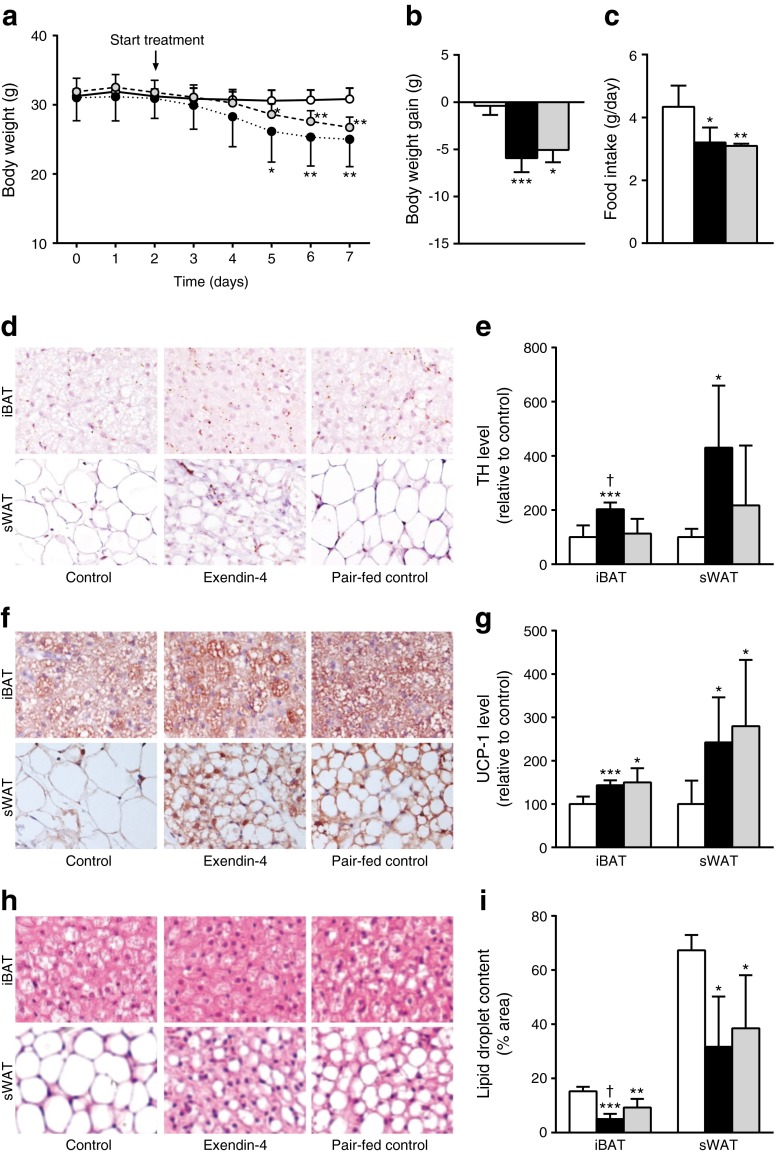
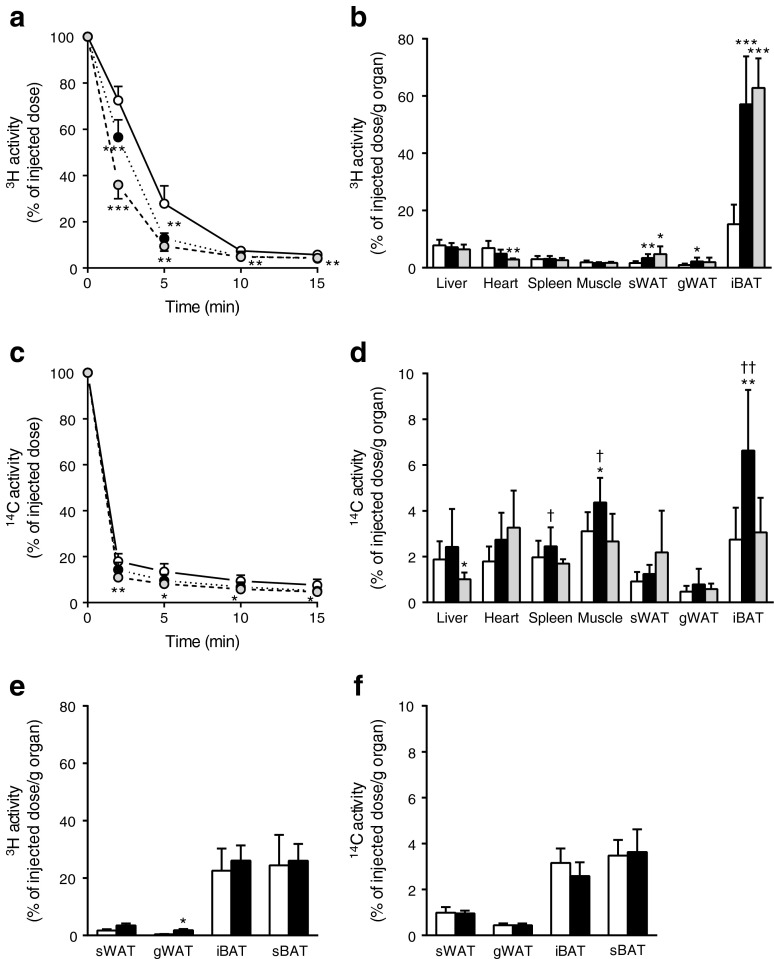
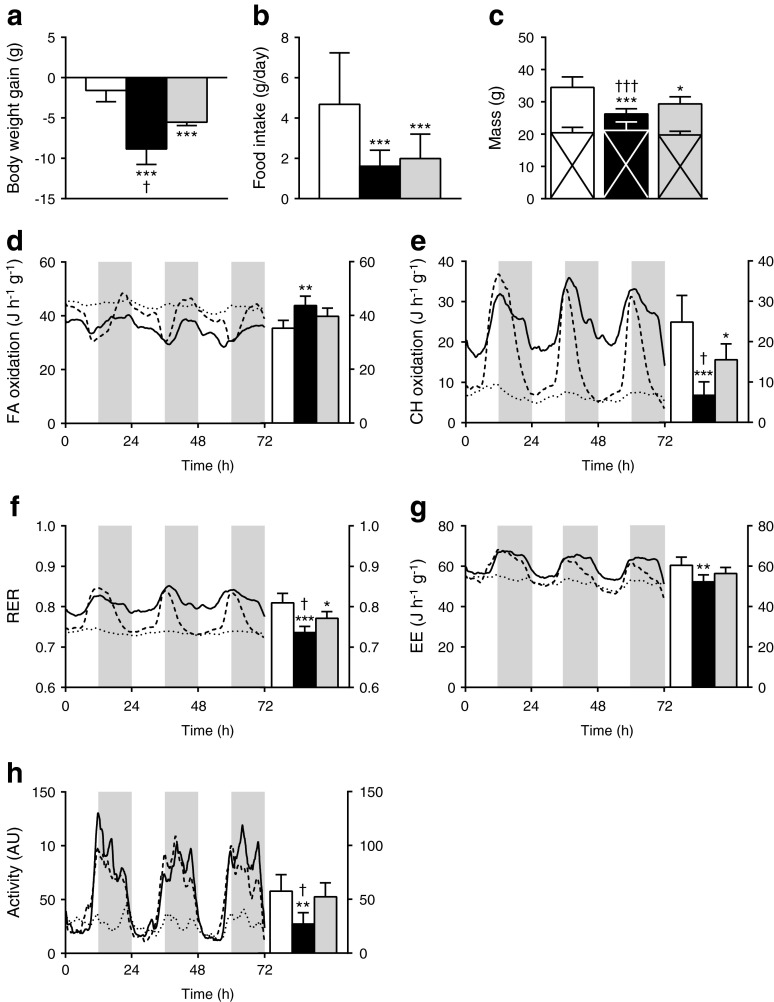
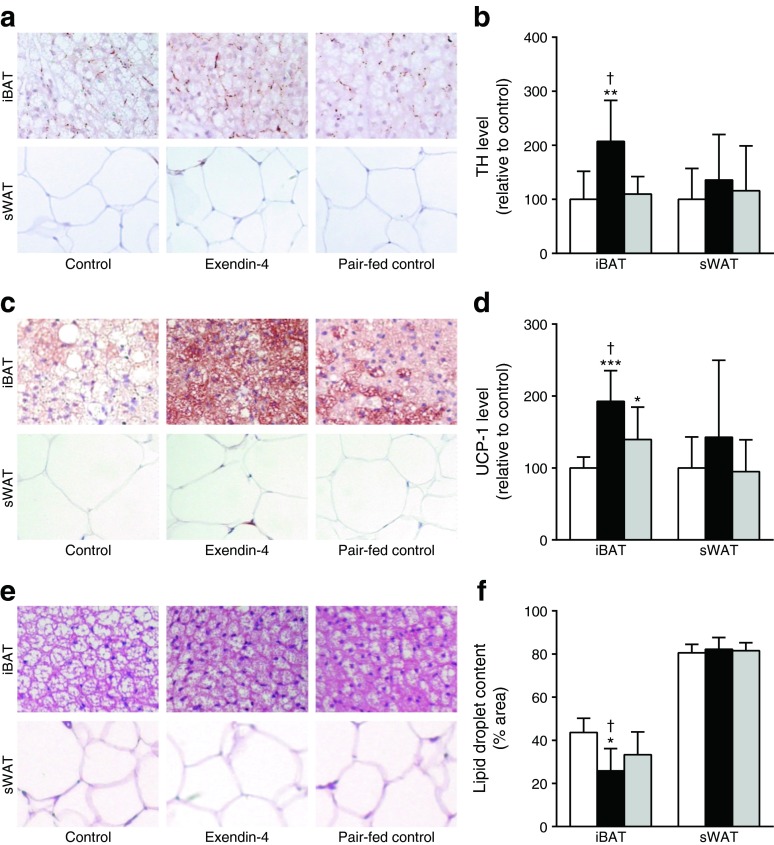
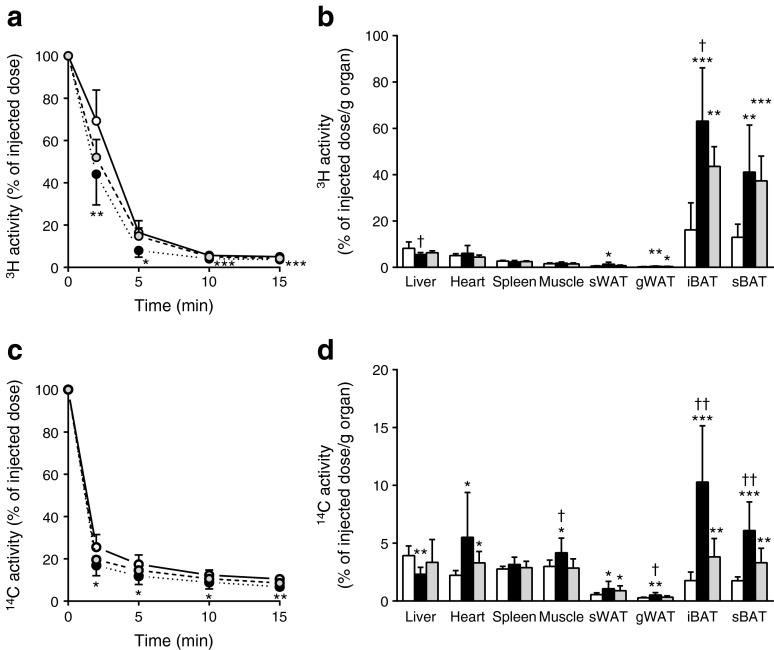
AIMS/HYPOTHESIS: Glucagon-like peptide 1 (GLP-1) receptor (GLP-1R) agonism, used in the treatment of type 2 diabetes, has recently been shown to increase thermogenesis via the brain. As brown adipose tissue (BAT) produces heat by burning triacylglycerol (TG) and takes up glucose for de novo lipogenesis, the aim of this study was to evaluate the potential of chronic central GLP-1R activation by exendin-4 to facilitate clearance of lipids and glucose from the circulation by activating BAT. METHODS: Lean and diet-induced obese (DIO) C57Bl/6J mice were used to explore the effect of a 5 day intracerebroventricular infusion of the GLP-1 analogue exendin-4 or vehicle on lipid and glucose uptake by BAT in both insulin-sensitive and insulin-resistant conditions. RESULTS: Central administration of exendin-4 in lean mice increased sympathetic outflow towards BAT and white adipose tissue (WAT), resulting in increased thermogenesis as evidenced by increased uncoupling protein 1 (UCP-1) protein levels and decreased lipid content, while the uptake of TG-derived fatty acids was increased in both BAT and WAT. Interestingly, in DIO mice, the effects on WAT were blunted, while exendin-4 still increased sympathetic outflow towards BAT and increased the uptake of plasma TG-derived fatty acids and glucose by BAT. These effects were accompanied by increased fat oxidation, lower plasma TG and glucose concentrations, and reduced body weight. CONCLUSIONS/INTERPRETATION: Collectively, our results suggest that BAT activation may be a major contributor to the glucose- and TG-lowering effects of GLP-1R agonism.
Overview
The claims and statistics of this paper haven’t been checked yet.
Free: it reads the open-access text and checks the first 5 claims that cite a source we can check. Create a free account to check every claim.
Integrity signals
Registry
Cites
Statistics
Figures
Verification
Claims the paper makes
The claims and statistics of this paper haven’t been checked yet.
Free: it reads the open-access text and checks the first 5 claims that cite a source we can check. Create a free account to check every claim.
Claims other papers make about this one
Each is checked against this paper’s own text: does it say what the citing paper says it does?
The source backs part of the claim, not all of it — or backs it for a different population, condition or comparison.
In the citing paper
“Beiroa (36) et al. injected GLP-1 analog, liraglutide (LIR), into mice. LIR was found to stimulate the thermogenesis of brown adipose tissue and the browning of adipose cells, independent of the intake of nutrients. It can increase the thermogenesis and utilization of triacylglycerol-derived fatty acids and glucose in brown adipocytes and reduce the lipid content through the central GLP-1R agonist”
From GLP−1 receptor agonists for the treatment of obesity: Role as a promising approach (2023) · cites this paper as [38]
Experimental — accuracy not yet measured
Self-check
Percentages, sums and reported differences re-computed from the paper’s own numbers.
The self-check needs the paper’s full text.
Citations
Cites
Brown Adipose Tissue: Function and Physiological Significance
CANNON, B., & NEDERGAARD, J. (2004) · Physiological Reviews · doi:10.1152/physrev.00015.2003 · Cited by 6,433 · cited 1×
“In apparent contrast to the notion that increased BATactivity is generally correlated with an enhanced total energy expenditure [26], central GLP-1R activation in fact reduced total energy expenditure, an effect we have observed before during 0 5 10 15”
Watterson, K. R., Bestow, D., Gallagher, J., Hamilton, D. L., Ashford, F. B., Meakin, P. J., & Ashford, M. L. J. (2013) · Neurosignals · doi:10.1159/000334144 · Cited by 3,389
A role for glucagon-like peptide-1 in the central regulation of feeding
Turton, M. D., O'Shea, D., Gunn, I., Beak, S. A., Edwards, C. M. B., Meeran, K., Choi, S. J., Taylor, G. M., Heath, M. M., Lambert, P. D., et al. (1996) · Nature · doi:10.1038/379069a0 · Cited by 1,950 · cited 3×
“1c), both of which are well-known effects of activation of the central GLP-1R system [3, 17].”
BackgroundBrown adipose tissue activity controls triglyceride clearance
Bartelt, A., Bruns, O. T., Reimer, R., Hohenberg, H., Ittrich, H., Peldschus, K., Kaul, M. G., Tromsdorf, U. I., Weller, H., Waurisch, C., et al. (2011) · Nature Medicine · doi:10.1038/nm.2297 · Cited by 1,608 · cited 1×
“In fact, BAT activation can correct hyperlipidaemia [9] and hyperglycaemia [10] by increased uptake of TG-derived fatty acids [11] and glucose from plasma.”
BackgroundDiet-Induced Type II Diabetes in C57BL/6J Mice
Surwit, R. S., Kuhn, C. M., Cochrane, C., McCubbin, J. A., & Feinglos, M. N. (1988) · Diabetes · doi:10.2337/diab.37.9.1163 · Cited by 1,208
GLP-1 agonism stimulates brown adipose tissue thermogenesis and browning through hypothalamic AMPK
Beiroa, D., Imbernon, M., Gallego, R., Senra, A., Herranz, D., Villarroya, F., Serrano, M., Fernø, J., Salvador, J., Escalada, J., et al. (2014) · Diabetes · doi:10.2337/db14-0302 · Cited by 602 · cited 3×
“As central GLP-1 infusion increases sympathetic outflow towards BAT and WAT and subsequently stimulates thermogenesis [12, 13, 18], we analysed the expression of TH, a marker for activity of noradrenergic (norepiphrenergic) nerve fibres [19].”
BackgroundGöke, R., Larsen, P. J., Mikkelsen, J. D., & Sheikh, S. P. (1995) · European Journal of Neuroscience · doi:10.1111/j.1460-9568.1995.tb00650.x · Cited by 474 · cited 1×
“The GLP-1R is widely expressed through the hypothalamus [25], and exerts effects via different nuclei.”
BackgroundBrown fat activation reduces hypercholesterolaemia and protects from atherosclerosis development
Berbée, J. F. P., Boon, M. R., Khedoe, P. P. S. J., Bartelt, A., Schlein, C., Worthmann, A., Kooijman, S., Hoeke, G., Mol, I. M., John, C., et al. (2015) · Nature Communications · doi:10.1038/ncomms7356 · Cited by 435 · cited 1×
“Therefore, we suggest that GLP-1R agonists via BAT activation reduce both hyperlipidaemia and hyperglycaemia, and possibly even atherosclerosis [31], in addition to the effects of BAT activation on obesity.”
BackgroundSelf-citationDickson, S. L., Shirazi, R. H., Hansson, C., Bergquist, F., Nissbrandt, H., & Skibicka, K. P. (2012) · The Journal of Neuroscience · doi:10.1523/jneurosci.6326-11.2012 · Cited by 414 · cited 1×
“The exendin4-induced decrease in physical activity, resulting from a diminished food-seeking behaviour [29], is less likely to contribute to the change in total energy expenditure [30].”
BackgroundArcuate Glucagon-Like Peptide 1 Receptors Regulate Glucose Homeostasis but Not Food Intake
Sandoval, D. A., Bagnol, D., Woods, S. C., D'Alessio, D. A., & Seeley, R. J. (2008) · Diabetes · doi:10.2337/db07-1824 · Cited by 320 · cited 2×
“For example, GLP-1R signalling in the arcuate nucleus regulates glucose metabolism, while it modulates feeding via the paraventricular nucleus [5].”
Background
Cited by
Butyrate reduces appetite and activates brown adipose tissue via the gut-brain neural circuit
Li, Z., Yi, C.-X., Katiraei, S., Kooijman, S., Zhou, E., Chung, C. K., Gao, Y., van den Heuvel, J. K., Meijer, O. C., Berbée, J. F. P., et al. (2018) · Gut · doi:10.1136/gutjnl-2017-314050 · Cited by 674
Self-citationGLP-1 and the kidney: from physiology to pharmacology and outcomes in diabetes
Muskiet, M. H. A., Tonneijck, L., Smits, M. M., van Baar, M. J. B., Kramer, M. H. H., Hoorn, E. J., Joles, J. A., & van Raalte, D. H. (2017) · Nature Reviews Nephrology · doi:10.1038/nrneph.2017.123 · Cited by 407
“Finally, GLP-1R agonists seem to facilitate clearance of lipids from the circulation by activating brown adipose tissue 169 , which produces heat by burning triglycerides.”
Pleiotropic Effects of GLP-1 and Analogs on Cell Signaling, Metabolism, and Function
Rowlands, J., Heng, J., Newsholme, P., & Carlessi, R. (2018) · Frontiers in Endocrinology · doi:10.3389/fendo.2018.00672 · Cited by 302
“Both chronic and acute CNS infused GLP-1 promoted BAT activation and subsequently glucose and triglyceride uptake, via activation of AMPK in the hypothalamic ventromedial nucleus in rodents (181, 182).”
BackgroundGLP−1 receptor agonists for the treatment of obesity: Role as a promising approach
Wang, J.-Y., Wang, Q.-W., Yang, X.-Y., Yang, W., Li, D.-R., Jin, J.-Y., Zhang, H.-C., & Zhang, X.-F. (2023) · Frontiers in Endocrinology · doi:10.3389/fendo.2023.1085799 · Cited by 248
Brown Adipose Tissue—A Translational Perspective
Carpentier, A. C., Blondin, D. P., Haman, F., & Richard, D. (2023) · Endocrine Reviews · doi:10.1210/endrev/bnac015 · Cited by 198
GLP-1 receptor agonists and kidney protection
Greco, E., Russo, G., Giandalia, A., Viazzi, F., Pontremoli, R., & De Cosmo, S. (2019) · Medicina · doi:10.3390/medicina55060233 · Cited by 173
“Finally, studies on rodent models have shown that GLP-1R agonists seem to help clearance of lipids from the circulation by activating brown adipose tissue, which produces heat by burning triglycerides [27].”
BackgroundGLP-1 receptor agonist promotes brown remodelling in mouse white adipose tissue through SIRT1
Xu, F., Lin, B., Zheng, X., Chen, Z., Cao, H., Xu, H., Liang, H., & Weng, J. (2016) · Diabetologia · doi:10.1007/s00125-016-3896-5 · Cited by 157
‘Browning’ the cardiac and peri-vascular adipose tissues to modulate cardiovascular risk
Aldiss, P., Davies, G., Woods, R., Budge, H., Sacks, H. S., & Symonds, M. E. (2017) · International Journal of Cardiology · doi:10.1016/j.ijcard.2016.11.074 · Cited by 148
Glucagon-Like Peptide-1: New Regulator in Lipid Metabolism
Bu, T., Sun, Z., Pan, Y., Deng, X., & Yuan, G. (2024) · Diabetes & Metabolism Journal · doi:10.4093/dmj.2023.0277 · Cited by 131
“GLP-1 also regulates lipid metabolism in BAT and white adipose tissue (WAT) through the brain-adipocyte axis [43,44].”
BackgroundActivation of murine pre-proglucagon–producing neurons reduces food intake and body weight
Gaykema, R. P., Newmyer, B. A., Ottolini, M., Raje, V., Warthen, D. M., Lambeth, P. S., Niccum, M., Yao, T., Huang, Y., Schulman, I. G., et al. (2017) · Journal of Clinical Investigation · doi:10.1172/jci81335 · Cited by 123
Bizino, M. B., Jazet, I. M., de Heer, P., van Eyk, H. J., Dekkers, I. A., Rensen, P. C. N., Paiman, E. H. M., Lamb, H. J., & Smit, J. W. (2020) · Diabetologia · doi:10.1007/s00125-019-05021-6 · Cited by 123
Self-citationTargeting white, brown and perivascular adipose tissue in atherosclerosis development
van Dam, A. D., Boon, M. R., Berbée, J. F. P., Rensen, P. C. N., & van Harmelen, V. (2017) · European Journal of Pharmacology · doi:10.1016/j.ejphar.2017.03.051 · Cited by 113
“…(Chevalier et al., 2015; SuarezZamorano et al., 2015), thyroid hormone (Lin et al., 2015), glucagonlike peptide 1 receptor (GLP1R) activation (Kooijman et al., 2015), fibroblast growth factor (FGF) 21 (Fisher et al., 2012), bone morphogenetic protein (BMP) 4 (Qian et al., 2013) and BMP7…”
BackgroundInfluentialSelf-citationVarin, E. M., Mulvihill, E. E., Baggio, L. L., Koehler, J. A., Cao, X., Seeley, R. J., & Drucker, D. J. (2019) · Cell Reports · doi:10.1016/j.celrep.2019.05.055 · Cited by 104
“GLP-1R signaling also controls glucose homeostasis and regulates post-prandial lipoprotein production and secretion through incompletely defined central and/or peripheral neural GLP-1R networks (Farr et al., 2015; Kooijman et al., 2015).”
BackgroundThe Dichotomous Effect of Chronic Stress on Obesity
Razzoli, M., & Bartolomucci, A. (2016) · Trends in Endocrinology & Metabolism · doi:10.1016/j.tem.2016.04.007 · Cited by 99
“In line with this, GLP-1 receptor agonism can induce BAT activation, via increased sympathetic outflow, resulting in enhanced triglyceride and glucose clearance, both in lean and obese mice [58].”
BackgroundLoss of dorsomedial hypothalamic GLP-1 signaling reduces BAT thermogenesis and increases adiposity
Lee, S. J., Sanchez-Watts, G., Krieger, J.-P., Pignalosa, A., Norell, P. N., Cortella, A., Pettersen, K. G., Vrdoljak, D., Hayes, M. R., Kanoski, S. E., et al. (2018) · Molecular Metabolism · doi:10.1016/j.molmet.2018.03.008 · Cited by 95
“The hypothalamus plays an important role in TG metabolism via sympathetic regulation of BAT, liver, and WAT [15].”
BackgroundInfluentialvan Eyk, H. J., Paiman, E. H. M., Bizino, M. B., de Heer, P., Geelhoed-Duijvestijn, P. H., Kharagjitsingh, A. V., Smit, J. W. A., Lamb, H. J., Rensen, P. C. N., & Jazet, I. M. (2019) · Cardiovascular Diabetology · doi:10.1186/s12933-019-0890-5 · Cited by 90
Self-citationGLP-1 receptor agonists in diabetic kidney disease: current evidence and future directions
Yu, J. H., Park, S. Y., Lee, D. Y., Kim, N. H., & Seo, J. A. (2022) · Kidney Research and Clinical Practice · doi:10.23876/j.krcp.22.001 · Cited by 104
Switching on the furnace: Regulation of heat production in brown adipose tissue
Li, L., Li, B., Li, M., & Speakman, J. R. (2019) · Molecular Aspects of Medicine · doi:10.1016/j.mam.2019.07.005 · Cited by 90
Hypothalamic AMPK as a Mediator of Hormonal Regulation of Energy Balance
Wang, B., & Cheng, K. K. Y. (2018) · International Journal of Molecular Sciences · doi:10.3390/ijms19113552 · Cited by 92
“Central administration of the GLP-1 receptor agonist increases sympathetic outflow to BAT, leading to increased ability of glucose and lipid clearance and thermogenesis in BAT [166].”
BackgroundLiu, C., Schönke, M., Zhou, E., Li, Z., Kooijman, S., Boon, M. R., Larsson, M., Wallenius, K., Dekker, N., Barlind, L., et al. (2021) · Cardiovascular Research · doi:10.1093/cvr/cvab076 · Cited by 87
“(5mm) were prepared for haematoxylin and eosin staining using standard protocols,(29) and uncoupling protein-1 (UCP-1) immunostaining as described previously.(30) The areas occupied by intracellular lipid vacuoles”
MethodSelf-citationvan den Berg, R., Kooijman, S., Noordam, R., Ramkisoensing, A., Abreu-Vieira, G., Tambyrajah, L. L., Dijk, W., Ruppert, P., Mol, I. M., Kramar, B., et al. (2018) · Cell Reports · doi:10.1016/j.celrep.2018.03.004 · Cited by 79
“Promotion of BAT activity has shown great potential as treatment for metabolic disorders and cardiovascular disease in numerous preclinical models (Berbée et al., 2015; Boon et al., 2014; Kooijman et al., 2015b; Laurila et al., 2016) and, to some extent, in humans (Cypess et al., 2015).”
BackgroundResultInfluentialSelf-citationThe Role of AMPK Signaling in Brown Adipose Tissue Activation
van der Vaart, J. I., Boon, M. R., & Houtkooper, R. H. (2021) · Cells · doi:10.3390/cells10051122 · Cited by 99
“Central administration of the GLP‐1R agonist exendin‐4 in‐ creases sympathetic outflow toward BAT, leading to increased UCP1 protein levels, re‐ duced lipid content, and increased FA uptake [93].”
BackgroundSelf-citationKuipers, E. N., van Dam, A. D., Held, N. M., Mol, I. M., Houtkooper, R. H., Rensen, P. C. N., & Boon, M. R. (2018) · International Journal of Molecular Sciences · doi:10.3390/ijms19061786 · Cited by 94
“Since the increased uptake of TG-derived FA by sWAT might point to the increased browning of this depot [17,18], we next determined whether quercetin had induced browning of sWAT.”
BackgroundSelf-citationZhang, Z., Yang, D., Xiang, J., Zhou, J., Cao, H., Che, Q., Bai, Y., Guo, J., & Su, Z. (2021) · International Journal of Biological Sciences · doi:10.7150/ijbs.60354 · Cited by 90
“Recently, increasing evidence has suggested that numerous hormonal factors, such as leptin [43, 44], thyroid hormones [45, 46], and glucagon-like peptide-1(GLP-1) [47-49] control BAT differentiation and thermogenesis by suppressing hypothalamic AMPK activity.”
BackgroundDecara, J., Rivera, P., Arrabal, S., Vargas, A., Serrano, A., Pavón, F. J., Dieguez, C., Nogueiras, R., Rodríguez de Fonseca, F., & Suárez, J. (2018) · Acta Physiologica · doi:10.1111/apha.13008 · Cited by 76
Uncoupling mechanism and redox regulation of mitochondrial uncoupling protein 1 (UCP1)
Ježek, P., Jabůrek, M., & Porter, R. K. (2018) · Biochimica et Biophysica Acta (BBA) - Bioenergetics · doi:10.1016/j.bbabio.2018.11.007 · Cited by 80
“Interestingly, a glucagon peptide-1 (GLP-1) analog is also known to activate BAT in mice [97].”
BackgroundLiu, C., Schönke, M., Spoorenberg, B., Lambooij, J. M., van der Zande, H. J., Zhou, E., Tushuizen, M. E., Andreasson, A.-C., Park, A., Oldham, S., et al. (2023) · eLife · doi:10.7554/elife.83075 · Cited by 70
Self-citationThe key role of a glucagon-like peptide-1 receptor agonist in body fat redistribution
Zhao, L., Zhu, C., Lu, M., Chen, C., Nie, X., Abudukerimu, B., Zhang, K., Ning, Z., Chen, Y., Cheng, J., et al. (2019) · Journal of Endocrinology · doi:10.1530/joe-18-0374 · Cited by 67
Immune Modulation of Brown(ing) Adipose Tissue in Obesity
van den Berg, S. M., van Dam, A. D., Rensen, P. C. N., de Winther, M. P. J., & Lutgens, E. (2017) · Endocrine Reviews · doi:10.1210/er.2016-1066 · Cited by 67
Self-citationRuiz, J. R., Martinez-Tellez, B., Sanchez-Delgado, G., Osuna-Prieto, F. J., Rensen, P. C. N., & Boon, M. R. (2018) · Progress in Cardiovascular Diseases · doi:10.1016/j.pcad.2018.07.002 · Cited by 63
Self-citationLi, Z., Zhou, E., Liu, C., Wicks, H., Yildiz, S., Razack, F., Ying, Z., Kooijman, S., Koonen, D. P. Y., Heijink, M., et al. (2023) · JCI Insight · doi:10.1172/jci.insight.166655 · Cited by 68
“BAT sections (5 μm), prepared using a microtome (Leica RM2245), were stained with H&E and IHC stained for UCP-1 (1/4,000; catalog ab10983, Abcam) and TH (1/2,000; catalog ab134461, Abcam) as previously described (40).”
MethodSelf-citationGlucagon-Like Peptide-1 Receptor Agonists (GLP-1RAs) in the Brain–Adipocyte Axis
Geloneze, B., de Lima-Júnior, J. C., & Velloso, L. A. (2017) · Drugs · doi:10.1007/s40265-017-0706-4 · Cited by 60
“In addition, the ICV infusion of exendin-4 increasesCNSactivity, promotes BAT activation and white adipose tissue browning, and increases BAT glucose and triglyceride uptake [27].”
BackgroundYang, S.-H., Xu, R.-X., Cui, C.-J., Wang, Y., Du, Y., Chen, Z.-G., Yao, Y.-H., Ma, C.-Y., Zhu, C.-G., Guo, Y.-L., et al. (2018) · Cardiovascular Diabetology · doi:10.1186/s12933-018-0689-9 · Cited by 56
“production [39]; (3) to slow gastric emptying and to reduce lipase activity [40]; (4) to decrease VLDL production, lipogenesis and ApoB100 production [41, 42]; (5) to inhibit fat oxidation and to promote thermogenesis [43]; (6) the effect of decreased PCSK9 by liraglutide on cholesteryl ester transfer protein (CETP) i…”
BackgroundSelf-citationRelevance of lipid metabolism for brown fat visualization and quantification
Schilperoort, M., Hoeke, G., Kooijman, S., & Rensen, P. C. N. (2016) · Current Opinion in Lipidology · doi:10.1097/mol.0000000000000296 · Cited by 55
Self-citationJanssen, L. G. M., Nahon, K. J., Bracké, K. F. M., van den Broek, D., Smit, R., Sardjoe Mishre, A. S. D., Koorneef, L. L., Martinez-Tellez, B., Burakiewicz, J., Kan, H. E., et al. (2020) · Metabolism · doi:10.1016/j.metabol.2020.154167 · Cited by 54
Self-citationvan Eyk, H. J., Paiman, E. H. M., Bizino, M. B., IJzermans, S. L., Kleiburg, F., Boers, T. G. W., Rappel, E. J., Burakiewicz, J., Kan, H. E., Smit, J. W. A., et al. (2020) · Nutrition, Metabolism and Cardiovascular Diseases · doi:10.1016/j.numecd.2019.12.005 · Cited by 54
Self-citationBrowning Epicardial Adipose Tissue: Friend or Foe?
Doukbi, E., Soghomonian, A., Sengenès, C., Ahmed, S., Ancel, P., Dutour, A., & Gaborit, B. (2022) · Cells · doi:10.3390/cells11060991 · Cited by 64
Intestinal lipid absorption and transport in type 2 diabetes
Vergès, B. L. (2022) · Diabetologia · doi:10.1007/s00125-022-05765-8 · Cited by 64
Ceddia, R. P., & Collins, S. (2020) · Clinical Science · doi:10.1042/cs20190579 · Cited by 54
Glucagon, GLP-1 and Thermogenesis
González-García, I., Milbank, E., Diéguez, C., López, M., & Contreras, C. (2019) · International Journal of Molecular Sciences · doi:10.3390/ijms20143445 · Cited by 49
“The high activity of brown fat induced the clearance of triglycerides and glucose from plasma, reducing white fat depots and favoring body weight loss [88].”
BackgroundNTCP deficiency in mice protects against obesity and hepatosteatosis
Donkers, J. M., Kooijman, S., Slijepcevic, D., Kunst, R. F., Abbing, R. L. P. R., Haazen, L. C. J. M., de Waart, D. R., Levels, J. H. M., Schoonjans, K., Rensen, P. C. N., et al. (2019) · JCI Insight · doi:10.1172/jci.insight.127197 · Cited by 49
Self-citationPotential use of dietary fibre from Hibiscus sabdariffa and Agave tequilana in obesity management
Moyano, G., Sáyago‐Ayerdi, S. G., Largó, C., Caz, V., López-Santamaría, M., & Tabernero, M. (2015) · Journal of Functional Foods · doi:10.1016/j.jff.2015.11.011 · Cited by 76
Le, T. D. V., Fathi, P. A., Watters, A. B., Ellis, B. J., Besing, G.-L. K., Bozadjieva-Kramer, N., Perez, M. B., Sullivan, A. I., Rose, J. P., Baggio, L. L., et al. (2023) · Molecular Metabolism · doi:10.1016/j.molmet.2023.101718 · Cited by 50
Sarcopenia and cachexia: molecular mechanisms and therapeutic interventions
Wang, T., Zhou, D., & Hong, Z. (2025) · MedComm · doi:10.1002/mco2.70030 · Cited by 46
Ying, Z., Tramper, N., Zhou, E., Boon, M. R., Rensen, P. C. N., & Kooijman, S. (2022) · Cardiovascular Research · doi:10.1093/cvr/cvac131 · Cited by 48
“In parallel, exendin-4 increased BAT uptake of glucose and triglyceridederived FAs, accompanied by lowered plasma glucose and triglyceride levels.(110) Similarly, in healthy humans, GLP-1R agonism with exenatide increased BAT volume and glucose uptake, accompanied by lower Figure 3 Graphical summary of promising thera…”
BackgroundInfluentialSelf-citationBreaking BAT: can browning create a better white?
Warner, A., & Mittag, J. (2016) · Journal of Endocrinology · doi:10.1530/joe-15-0408 · Cited by 43
Zhu, E., Yang, Y., Zhang, J., Li, Y., Li, C., Chen, L., & Sun, B. (2016) · Oncotarget · doi:10.18632/oncotarget.13189 · Cited by 42
“Another group reported that central GLP-1 receptor signaling accelerates plasma clearance of triacylglycerol (TAG) and glucose by activating BAT in mice [25].”
BackgroundHan, Y., Liu, W., Chen, L., Xin, X., Wang, Q., Zhang, X., Jin, M., Gao, Z., & Huang, W. (2021) · Biomaterials · doi:10.1016/j.biomaterials.2021.120944 · Cited by 43
Brown and beige adipose tissues: phenotype and metabolic potential in mice and men
Chechi, K., Lichtenbelt, W. D. V. M., & Richard, D. (2017) · Journal of Applied Physiology · doi:10.1152/japplphysiol.00021.2017 · Cited by 42
“Central glucagon-like peptide 1 agonism was recently shown to enhance TG-derived fatty acids and glucose uptake by BAT and induce browning of WAT in a rodent study, via an increase in SNS activity to both iBAT and subcutaneous WAT, indicating a plausible role for gut-mediated regulation of BAT and beige fat depots (79…”
BackgroundDadson, P., Hannukainen, J. C., Din, M. U., Lahesmaa, M., Kalliokoski, K. K., Iozzo, P., Pihlajamäki, J., Karlsson, H. K., Parkkola, R., Salminen, P., et al. (2018) · Diabetes, Obesity and Metabolism · doi:10.1111/dom.13233 · Cited by 40
Glucagon-like peptide-1, glucagon-like peptide-2, and lipid metabolism
Lutz, T. A., & Osto, E. (2016) · Current Opinion in Lipidology · doi:10.1097/mol.0000000000000293 · Cited by 43
Insights into incretin-based therapies for treatment of diabetic dyslipidemia
Stemmer, K., Finan, B., DiMarchi, R. D., Tschöp, M. H., & Müller, T. D. (2020) · Advanced Drug Delivery Reviews · doi:10.1016/j.addr.2020.05.008 · Cited by 43
“For instance, icv GLP-1 was demonstrated to enhance sympathetic nervous system activity in brown [154,155] and white adipose tissue [156], leading to increased thermogenesis and a reduction of lipogenic gene expression, respectively.”
BackgroundSerotonin signaling to regulate energy metabolism: a gut microbiota perspective
Li, G., Dong, S., Liu, C., Yang, J., Rensen, P. C. N., & Wang, Y. (2024) · Life Metabolism · doi:10.1093/lifemeta/loae039 · Cited by 45
“In addition, pharmacological activation of central GLP-1 receptor (GLP-1R) signaling expressed by serotonergic neurons [110–112] augments the activity of thermogenic adipose tissue and enhances the utilization of circulating glucose and triglycerides [113, 114].”
Self-citationA BAT-Centric Approach to the Treatment of Diabetes: Turn on the Brain
Hankir, M. K., Cowley, M. A., & Fenske, W. K. (2016) · Cell Metabolism · doi:10.1016/j.cmet.2016.05.003 · Cited by 41
“…considered to be the major hypothalamic nuclei in the thermoregulatory network (Morrison and Madden, 2014), recent molecular studies further point toward the ventromedial hypothalamus (VMH) and the lateral hypothalamic area (LHA) to also be involved in BAT regulation (Kooijman et al., 2015a).”
BackgroundResultInfluentialHropot, T., Herman, R., Janez, A., Lezaic, L., & Jensterle, M. (2023) · International Journal of Molecular Sciences · doi:10.3390/ijms24108592 · Cited by 39
“Most importantly, these effects were accompanied by a reduction in body weight and lower plasma triacylglycerol as well as glucose concentrations [69].”
BackgroundEffect of glucagon-like peptide-1 (GLP-1) analogues on epicardial adipose tissue: A meta-analysis
Berg, G., Barchuk, M., Lobo, M., & Nogueira, J. P. (2022) · Diabetes & Metabolic Syndrome: Clinical Research & Reviews · doi:10.1016/j.dsx.2022.102562 · Cited by 36
Li, S., Wang, X., Zhang, J., Li, J., Liu, X., Ma, Y., Han, C., Zhang, L., & Zheng, L. (2018) · Brazilian Journal of Medical and Biological Research · doi:10.1590/1414-431x20187299 · Cited by 36
“However, although GLP-1 receptor signaling accelerates plasma clearance of triacylglycerol and glucose by activating brown adipose tissue in mice (19), an increase in brown adipose tissue may be an additional mechanism whereby pharmacological GLP-1R activation controls energy balance (20).”
BackgroundAdipose tissue in older individuals: a contributing factor to sarcopenia
Wang, T., Zhou, D., & Hong, Z. (2024) · Metabolism · doi:10.1016/j.metabol.2024.155998 · Cited by 40
Wan, Y., Bao, X., Huang, J., Zhang, X., Liu, W., Cui, Q., Jiang, D., Wang, Z., Liu, R., & Wang, Q. (2017) · Frontiers in Physiology · doi:10.3389/fphys.2017.00294 · Cited by 38
“Central infusion of GLP-1 was reported to stimulate BAT thermogenesis (Lockie et al., 2012; Beiroa et al., 2014; Kooijman et al., 2015).”
BackgroundHabib, H. A., Heeba, G. H., & Khalifa, M. M. A. (2020) · European Journal of Pharmacology · doi:10.1016/j.ejphar.2020.173721 · Cited by 33
Recent Advances in the Emerging Therapeutic Strategies for Diabetic Kidney Diseases
Huang, W., Chen, Y., Li, Z., He, F., & Zhang, C. (2022) · International Journal of Molecular Sciences · doi:10.3390/ijms231810882 · Cited by 36
“Animal models have proven that GLP-1R agonists can lower blood lipids, especially LDL-C, total cholesterol, and triglycerides, and this effect may be achieved by reducing intestinal chylomicron production and activating brown adipose tissue [103,104].”
BackgroundEgecioglu, E., Anesten, F., Sch�le, E., & Pálsdóttir, V. (2018) · Biomedical Reports · doi:10.3892/br.2018.1118 · Cited by 32
Oliveira, F. C. B., Bauer, E. J., Ribeiro, C. M., Pereira, S. A., Beserra, B. T. S., Wajner, S. M., Maia, A. L., Neves, F. A. R., Coelho, M. S., & Amato, A. A. (2022) · Frontiers in Endocrinology · doi:10.3389/fendo.2021.803363 · Cited by 30
“An additional line of evidence supporting the possibility of a nonsympathetically-mediated action of liraglutide on adipose tissue found herein is the previous report that GLP-1-induced activation of SNS is blunted in obese mice (37).”
BackgroundUnlocking the multifaceted roles of GLP-1: Physiological functions and therapeutic potential
AL-Noshokaty, T. M., Abdelhamid, R., Abdelmaksoud, N. M., Khaled, A., Hossam, M., Ahmed, R., Saber, T., Khaled, S., Elshaer, S. S., & Abulsoud, A. I. (2025) · Toxicology Reports · doi:10.1016/j.toxrep.2025.101895 · Cited by 30
Bakbak, E., Terenzi, D. C., Trac, J. Z., Teoh, H., Quan, A., Glazer, S. A., Rotstein, O. D., Al-Omran, M. A., Verma, S., & Hess, D. A. (2021) · Reviews in Endocrine and Metabolic Disorders · doi:10.1007/s11154-021-09669-7 · Cited by 32
“The ability of liraglutide to promote white-adipose tissue browning and brownadipose tissue proliferation suggests a potential mechanism through which GLP-1R activation increases excess energy utilization by encouraging the utilization of triglycerides stored within adipocytes [101, 103].”
BackgroundBrown and beige adipose tissue: New therapeutic targets for metabolic disorders
Magro, B. S., & Dias, D. P. M. (2024) · Health Sciences Review · doi:10.1016/j.hsr.2024.100148 · Cited by 44
Wang, X., Chen, J., Rong, C., Pan, F., Zhao, X., & Hu, Y. (2018) · Biochemical and Biophysical Research Communications · doi:10.1016/j.bbrc.2018.10.197 · Cited by 30
Liu, F., Yang, Q., Zhang, H., Zhang, Y., Yang, G., Ban, B., Li, Y., & Zhang, M. (2022) · PLOS ONE · doi:10.1371/journal.pone.0270899 · Cited by 30
The effect of obesity pharmacotherapy on body composition, including muscle mass
Argyrakopoulou, G., Gitsi, E., Konstantinidou, S. K., & Kokkinos, A. (2025) · International Journal of Obesity · doi:10.1038/s41366-024-01533-3 · Cited by 28
“…the favorable effects of liraglutide on white adipose tissue and preclinical indications of GLP-1 RAs activating brown adipose tissue (BAT), a randomized controlled trial (RCT) was conducted to investigate the impact of 1.8 mg of liraglutide on BAT in patients with type 2 diabetes (T2DM) [19, 20].”
InfluentialNahon, K. J., Doornink, F., Straat, M. E., Botani, K., Martínez‐Téllez, B., Abreu-Vieira, G., van Klinken, J. B., Voortman, G. J., Friesema, E. C. H., Ruiz, J. R., et al. (2018) · Diabetologia · doi:10.1007/s00125-018-4716-x · Cited by 30
“shown to largely increase the uptake of triacylglycerol-derived fatty acids by BAT in mice [41].”
BackgroundSelf-citationvan Loon, N. M., Ottenhoff, R., Kooijman, S., Moeton, M., Scheij, S., Roscam Abbing, R. L. P., Gijbels, M. J. J., Levels, J. H. M., Sorrentino, V., Berbée, J. F. P., et al. (2018) · Arteriosclerosis, Thrombosis, and Vascular Biology · doi:10.1161/atvbaha.118.311168 · Cited by 25
“Staining of UCP1 (uncoupling protein 1) and TH (tyrosine hydroxylase) was done as described previously.(23,24) No background staining was observed for both antigens when the primary antibody was replaced by purified immunoglobulins (not shown).”
MethodSelf-citationSchwartz, A. B., Kapur, A., Huang, Z., Anangi, R., Spear, J. M., Stagg, S. M., Fardone, E., Dekan, Z., Rosenberg, J. T., Grant, S. C., et al. (2020) · Journal of Neurochemistry · doi:10.1111/jnc.15200 · Cited by 30
“…regulate excitability based on nutritional status and energy homeostasis (Fadool & Kolling, 2020; Fadool et al., 2000, 2011; Julliard et al., 2017; Kovach et al., 2016; Marks & Fadool, 2007; Marks et al., 2009; Palouzier-Paulignan et al., 2012; Thiebaud et al., 2016, 2019; Tucker et al., 2010a;…”
BackgroundChronic infusion of taurolithocholate into the brain increases fat oxidation in mice
Eggink, H. M., Tambyrajah, L. L., van den Berg, R., Mol, I. M., van den Heuvel, J. K., Koehorst, M., Groen, A. K., Boelen, A., Kalsbeek, A., Romijn, J. A., et al. (2017) · Journal of Endocrinology · doi:10.1530/joe-17-0503 · Cited by 33
Self-citationCombined GIP receptor and GLP1 receptor agonism attenuates NAFLD in male APOE∗3-Leiden.CETP mice
Ying, Z., van Eenige, R., Ge, X., van Marwijk, C., Lambooij, J. M., Guigas, B., Giera, M. A., de Boer, J. F., Coşkun, T., Qu, H., et al. (2023) · EBioMedicine · doi:10.1016/j.ebiom.2023.104684 · Cited by 28
Self-citationLiraglutide improves lipid and carbohydrate metabolism of ovariectomized rats
Model, J. F. A., Lima, M. V., Ohlweiler, R., Vogt, É. L., Rocha, D. S., de Souza, S. K., Türck, P., Araújo, A. S. D. R., & Vinagre, A. S. (2021) · Molecular and Cellular Endocrinology · doi:10.1016/j.mce.2021.111158 · Cited by 24
Takeda, K., Sawazaki, H., Takahashi, H., Yeh, Y., Jheng, H., Nomura, W., Ara, T., Takahashi, N., Seno, S., Osato, N., et al. (2018) · FEBS Open Bio · doi:10.1002/2211-5463.12498 · Cited by 23
Beaudry, J. L., & Drucker, D. J. (2019) · Endocrinology · doi:10.1210/endocr/bqz029 · Cited by 24
van Eenige, R., Ying, Z., Tramper, N., Wiebing, V., Siraj, Z., de Boer, J. F., Lambooij, J. M., Guigas, B., Qu, H., Coşkun, T., et al. (2023) · Atherosclerosis · doi:10.1016/j.atherosclerosis.2023.03.016 · Cited by 20
Self-citationPharmacological modulation of adaptive thermogenesis: new clues for obesity management?
Genchi, V. A., Palma, G., Sorice, G. P., D’Oria, R., Caccioppoli, C., Marrano, N., Biondi, G., Caruso, I., Cignarelli, A., Natalicchio, A., et al. (2023) · Journal of Endocrinological Investigation · doi:10.1007/s40618-023-02125-0 · Cited by 23
“The amelioration of lipid turnover under pharmacological stimulation of central GLP-1R occurred through a shift in energy metabolism from carbohydrates to fatty acids as the prevalent energy source [149], which confirmed previous data showing that chronic exposure to GLP-1 increased the rate of fatty acid oxidation by…”
BackgroundResultALVARES, D. C. L., HOFFMAN, S. S., Stankovic, B., & Adeli, K. (2018) · Biochimica et Biophysica Acta (BBA) - Molecular and Cell Biology of Lipids · doi:10.1016/j.bbalip.2018.12.010 · Cited by 22
Bele, S. D., Girada, S. B., Ray, A., Gupta, A., Oruganti, S., Babu, P. P., Rayalla, R. S., Kalivendi, S. V., Ibrahim, A., Puri, V., et al. (2020) · eLife · doi:10.7554/elife.52212 · Cited by 18
Fang, S., Cai, Y., Lyu, F., Zhang, H., Wu, C., Zeng, Y., Fan, C., Zou, S., Zhang, Y., Li, P., et al. (2020) · Journal of Diabetes Research · doi:10.1155/2020/9084567 · Cited by 20
“Exendin-4 activated central GLP-1R to increase plasma TG and glucose clearance in HFD-induced mice via BAT activation and WAT browning mediated by the hypothalamic AMPK pathway [32].”
BackgroundAlZaim, I., Eid, A. H., Abd‐Elrahman, K. S., & EL‐Yazbi, A. F. (2022) · Biochemical Pharmacology · doi:10.1016/j.bcp.2022.115337 · Cited by 16
Anti-atherosclerotic effect of incretin receptor agonists
Wang, X., Yang, X., Qi, X., Fan, G., Zhou, L., Peng, Z., & Yang, J. (2024) · Frontiers in Endocrinology · doi:10.3389/fendo.2024.1463547 · Cited by 22
Central administration of coagonist of GLP-1 and glucagon receptors improves dyslipidemia
PATEL, V. G., Joharapurkar, A. A., Kshirsagar, S. G., Sutariya, B., Patel, M. S., Patel, H., Pandey, D., Patel, D. N., Bahekar, R. H., & Jain, M. R. (2017) · Biomedicine & Pharmacotherapy · doi:10.1016/j.biopha.2017.12.068 · Cited by 18
Brown, J. D., McAnally, D., Ayala, J. E., Burmeister, M. A., Morfa, C. J., Smith, L. H., & Ayala, J. E. (2018) · American Journal of Physiology-Regulatory, Integrative and Comparative Physiology · doi:10.1152/ajpregu.00459.2017 · Cited by 21
“[GLP1 (7-36)], (M) -a rr es tin re cr ui tm en t”
BackgroundMethodInfluentialAdipose Tissue, at the Core of the Action of Incretin and Glucagon-Based Anti-Obesity Drugs
Villarroya, F., Peyrou, M., & Giralt, M. (2025) · Current Obesity Reports · doi:10.1007/s13679-025-00660-w · Cited by 15
“Intracerebroventricular injection of exen-din-4 similarly increased sympathetic outflow to both BAT and WAT, resulting in higher thermogenesis in mice [121 ].”
Cotadutide improves brown adipose tissue thermogenesis in obese mice
Spezani, R., Marcondes‐de‐Castro, I. A., Marinho, T. D. S., Reis‐Barbosa, P. H., Cardoso, L. E. M., Águila, M. B., & Mandarim‐de‐Lacerda, C. A. (2023) · Biochemical Pharmacology · doi:10.1016/j.bcp.2023.115852 · Cited by 16
Physiological and pharmacological actions of glucagon like peptide-1 (GLP-1) in domestic animals
Model, J. F. A., Rocha, D. S., Fagundes, A. D. C., & Vinagre, A. S. (2022) · Veterinary and Animal Science · doi:10.1016/j.vas.2022.100245 · Cited by 18
Ishino, S., Sugita, T., Kondo, Y., Okai, M., Tsuchimori, K., Watanabe, M., Mori, I., Hosoya, M., Horiguchi, T., & Kamiguchi, H. (2017) · Annals of Nuclear Medicine · doi:10.1007/s12149-017-1169-0 · Cited by 16
Progress in the contrary effects of glucagon-like peptide-1 and chemerin on obesity development
Zhang, Q., Ye, J., & Wang, X. (2023) · Experimental Biology and Medicine · doi:10.1177/15353702231214270 · Cited by 15
“65 Within the CNS, GLP-1R is expressed in numerous neuronal populations, highly expressed in the hypothalamus, 66 and especially highly expressed in the anterior and ventral part of the DMH, which is a key part of the regulation of energy balance and the sympathetic control network and is densely…”
BackgroundMaushart, C. I., Senn, J. R., Loeliger, R. C., KRAENZLIN, M. E., Müller, J., Becker, A. S., Baláž, M., Wolfrum, C., Burger, I. A., & Betz, M. J. (2021) · Frontiers in Endocrinology · doi:10.3389/fendo.2021.666595 · Cited by 17
“Research in both rodents (15) and humans (16) indicates favorable effects of active BAT onmetabolism, such as a reduction in blood glucose and triglycerides and lipoproteins suggesting that more active BAT could contribute to a metabolically healthy phenotype.”
BackgroundDifferent Protein Sources Enhance 18FDG-PET/MR Uptake of Brown Adipocytes in Male Subjects
Maliszewska, K., Adamska-Patruno, E., Miniewska, K., Bauer, W., Buczyńska, A., Mojsak, M. N., & Kretowski, A. J. (2022) · Nutrients · doi:10.3390/nu14163411 · Cited by 12
Glucagon‐Like Peptide‐1 Links Ingestion, Homeostasis, and the Heart
Krieger, J., Daniels, D., Lee, S. J., Mastitskaya, S., & Langhans, W. (2024) · Comprehensive physiology · doi:10.1002/cph4.7 · Cited by 15
Beyond obesity – thermogenic adipocytes and cardiometabolic health
Aldiss, P., Dellschaft, N. S., Sacks, H. S., Budge, H., & Symonds, M. E. (2017) · Hormone Molecular Biology and Clinical Investigation · doi:10.1515/hmbci-2017-0007 · Cited by 12
Thermogenic adipose tissues: Promising therapeutic targets for metabolic diseases
Pahlavani, M., Pham, K., Kalupahana, N. S., Morovati, A., Ramalingam, L., Abidi, H., Kiridana, V., & Moustaïd‐Moussa, N. (2024) · The Journal of Nutritional Biochemistry · doi:10.1016/j.jnutbio.2024.109832 · Cited by 12
Do anti-obesity medical treatments have a direct effect on adipose tissue?
Vergès, B. L. (2024) · Annales d Endocrinologie · doi:10.1016/j.ando.2024.05.021 · Cited by 10
Pan, R., Liu, J., & Chen, Y. (2023) · Frontiers in Pharmacology · doi:10.3389/fphar.2023.1144918 · Cited by 12
Wang, X., Zhao, X., Gu, Y., Zhu, X., Yin, T., Tang, Z., Yuan, J., Chen, W., Ouyang, R., Yao, L., et al. (2020) · Journal of Diabetes Research · doi:10.1155/2020/9783859 · Cited by 10
“In mice, GLP-1RA promotes white adipocyte browning and brown preadipocyte differentiation and increases the utilization of fatty acids and glucose in brown adipocytes [33, 34].”
BackgroundGLP-1 and IL-6 regulates obesity in the gut and brain
Yang, K., Wu, Y., He, Y., Dai, J.-X., Luo, Y.-L., Xie, J.-H., & Ding, W. (2024) · Life Sciences · doi:10.1016/j.lfs.2024.123339 · Cited by 8
Metadata
- Authors
- Kooijman, S., Wang, Y., Parlevliet, E. T., Boon, M. R., Edelschaap, D., Snaterse, G., Pijl, H., Romijn, J. A., & Rensen, P. C. N.
- Affiliations
- Leiden University Medical Center (NL)
- Amsterdam UMC Location University of Amsterdam (NL)
- Corresponding author
- Kooijman, Sander
- ORCID
- Venue
- Diabetologia
- Published
- 2015-08-09
- Volume
- 58
- Issue
- 11
- Pages
- 2637-2646
- ISSN
- 0012-186X (ISSN-L)
- 1432-0428
- PMC
- PMC4589565
- OpenAlex
- W2124135959
- Cited by
- 140
- References
- 32
- Citations by year
- 2026: 5 · 2025: 11 · 2024: 17 · 2023: 17 · 2022: 14 · 2021: 9 · 2020: 12 · 2019: 12 · 2018: 19 · 2017: 14 · 2016: 8 · 2015: 2
- FWCI
- 10.56
- Type
- journal article
- Language
- en
- Open access
- hybrid
- doi.org
- Locations
- Diabetologia (publishedVersion, cc-by)
- Europe PMC (PubMed Central) (publishedVersion, cc-by)
- PubMed Central (publishedVersion, cc-by)
- PubMed (publishedVersion)
- Pure Amsterdam UMC (acceptedVersion, cc-by)
- Data Archiving and Networked Services (DANS) (submittedVersion)
- Leiden Repository (Leiden University) (submittedVersion)
- Funders
- ZonMw
- Leids Universitair Medisch Centrum
- Topics
- Health Sciences › Medicine › Physiology (medical) › Adipose Tissue and Metabolism
- Life Sciences › Neuroscience › Endocrine and Autonomic Systems › Regulation of Appetite and Obesity
- Health Sciences › Medicine › Endocrinology, Diabetes and Metabolism › Diabetes Treatment and Management
- Keywords
- GLP-1 receptor, exendin-4, brown adipose tissue, thermogenesis, glucose uptake, diet-induced obesity, insulin resistance, sympathetic nervous system, UCP1, fat oxidation, white adipose tissue, type 2 diabetes
- MeSH terms
- Glucagon-Like Peptide-1 Receptor, Uncoupling Protein 1, Exenatide, Glucagon-Like Peptide-1 Receptor Agonists, Animals, Body Composition, Adipose Tissue, Brown, Glucose, Insulin, Ion Channels, Male, Mice, Inbred C57BL, Peptides, Triglycerides, Venoms, Signal Transduction, Mitochondrial Proteins, Mice, Glucagon-Like Peptide 1, Incretins
About these checks
Registry, retraction, Cites and statistics results are computed, not judged, with one exception: a printed reference that no index lists is read once by a model before it counts as a citation error. Claims are extracted by a model and kept only when their quote appears verbatim in the text; each cited source is then checked, with a model’s help, for whether it says what the claim relies on. Those verdicts can be wrong — read the claim’s quote and the cited source before relying on one.
Statistics and arithmetic are recomputed, not judged.
Confidence bands are shown only for fields calibrated on our annotated test set. None is calibrated yet, so no band is shown.
What counts as a claim ›How we measure confidence ›How we check this ›
Are you an author, or do you see a problem with this page? Request a review
Data sources
Bibliographic data: Semantic Scholar, OpenAlex, Crossref.
Contains information from the Semantic Scholar Academic Graph Datasets, made available under the ODC Attribution License (ODC-BY 1.0).
Semantic Scholar’s data is described in: Kinney, R., et al. (2023). The Semantic Scholar Open Data Platform. arXiv:2301.10140.
