

Marked improvement in HbA1c following commencement of flash glucose monitoring in people with type 1 diabetes
Open accessThe DOI matches its Crossref record; 24 of the 24 references it cites were found in a registry or an index.
Abstract
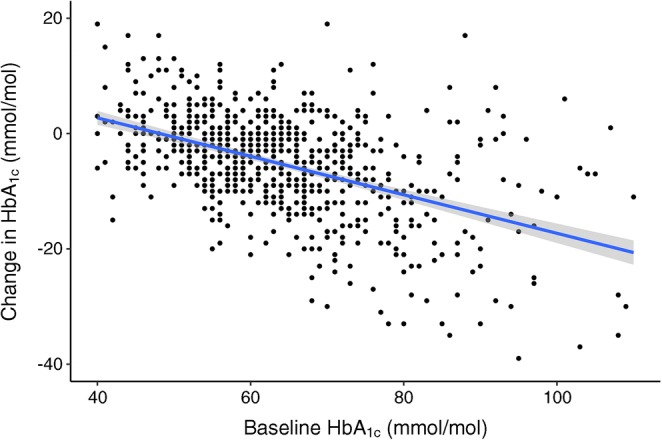
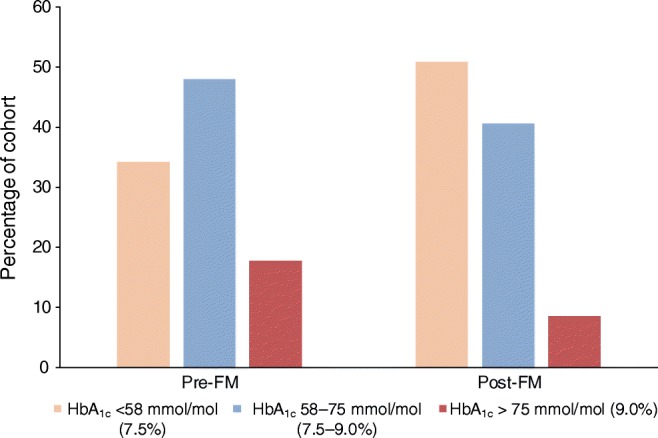
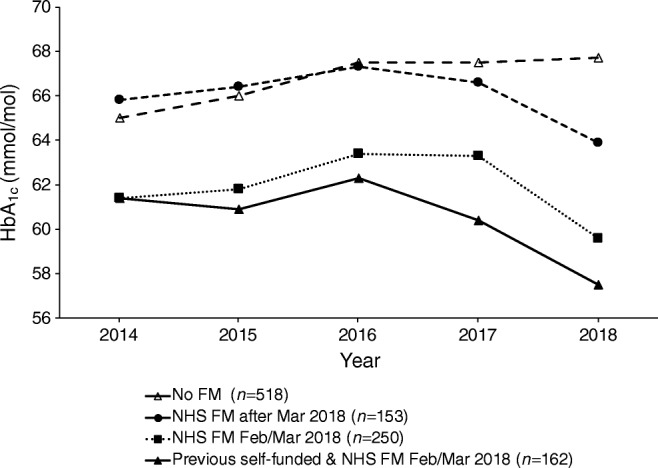
Minimal evidence supports the efficacy of flash monitoring in lowering HbA 1c . We sought to assess the impact of introducing flash monitoring in our centre. We undertook a prospective observational study to assess change in HbA 1c in 900 individuals with type 1 diabetes following flash monitoring (comparator group of 518 with no flash monitoring). Secondary outcomes included changes in hypoglycaemia, quality of life, flash monitoring data and hospital admissions. Those with baseline HbA 1c ≥58 mmol/mol (7.5%) achieved a median −7 mmol/mol (interquartile range [IQR] −13 to −1) (0.6% [−1.2 to −0.1]%) change in HbA 1c ( p < 0.001). The percentage achieving HbA 1c <58 mmol/mol rose from 34.2% to 50.9% ( p < 0.001). Median follow-up was 245 days (IQR 182 to 330). Individuals not using flash monitoring experienced no change in HbA 1c across a similar timescale ( p = 0.508). Higher HbA 1c ( p < 0.001), younger age at diagnosis ( p = 0.003) and lower social deprivation ( p = 0.024) were independently associated with an HbA 1c fall of ≥5 mmol/mol (0.5%). More symptomatic (OR 1.9, p < 0.001) and asymptomatic (OR 1.4, p < 0.001) hypoglycaemia was reported after flash monitoring. Following flash monitoring, regimen-related and emotional components of the diabetes distress scale improved although the proportion with elevated anxiety (OR 1.2, p = 0.028) and depression (OR 2.0, p < 0.001) scores increased. Blood glucose test strip use fell from 3.8 to 0.6 per day ( p < 0.001). Diabetic ketoacidosis admissions fell significantly following flash monitoring ( p = 0.043). Flash monitoring is associated with significant improvements in HbA 1c and fewer diabetic ketoacidosis admissions. Higher rates of hypoglycaemia may relate to greater recognition of hitherto unrecognised events. Impact upon quality of life parameters was mixed but overall treatment satisfaction was overwhelmingly positive.
Overview
The claims and statistics of this paper haven’t been checked yet.
Free: it reads the open-access text and checks the first 5 claims that cite a source we can check. Create a free account to check every claim.
Integrity signals
Registry
Cites
Statistics
Figures
Verification
Claims the paper makes
The claims and statistics of this paper haven’t been checked yet.
Free: it reads the open-access text and checks the first 5 claims that cite a source we can check. Create a free account to check every claim.
Claims other papers make about this one
Each is checked against this paper’s own text: does it say what the citing paper says it does?
The cited source says what the claim attributes to it.
In the citing paper
“In individuals with type 1 diabetes wearing isCGM devices, studies have shown improvement in A1C levels (41,77)”
From 7. Diabetes Technology: Standards of Care in Diabetes—2025 (2025) · cites this paper as [77]
Self-check
Percentages, sums and reported differences re-computed from the paper’s own numbers.
The self-check needs the paper’s full text.
Citations
Cites
The Hospital Anxiety and Depression Scale
Zigmond, A. S., & Snaith, R. P. (1983) · Acta Psychiatrica Scandinavica · doi:10.1111/j.1600-0447.1983.tb09716.x · Cited by 47,139 · cited 8×
“CGM Continuous glucose monitoring CSII Continuous subcutaneous insulin infusion DAFNE Dose Adjustment for Normal Eating DDS Diabetes distress scale DKA Diabetic ketoacidosis HADS Hospital Anxiety and Depression Scale IQR Interquartile range IAH Impaired awareness of hypoglycaemia MDI Multiple daily injection NHS Natio…”
BackgroundInfluentialDepression and quality of life in older persons: A review
Sivertsen, H., Bjørkløf, G. H., Engedal, K., Selbæk, G., & Helvik, A.-S. (2015) · Dementia and Geriatric Cognitive Disorders · doi:10.1159/000437299 · Cited by 14,152
Assessing Psychosocial Distress in Diabetes
Polonsky, W. H., Fisher, L., Earles, J., Dudl, R. J., Lees, J., Mullan, J., & Jackson, R. A. (2005) · Diabetes Care · doi:10.2337/diacare.28.3.626 · Cited by 1,575
Continuous glucose monitoring and intensive treatment of type 1 diabetes
(2008) · New England Journal of Medicine · doi:10.1056/nejmoa0805017 · Cited by 1,559
Beck, R. W., Riddlesworth, T., Ruedy, K., Ahmann, A., Bergenstal, R., Haller, S., Kollman, C., Kruger, D., McGill, J. B., Polonsky, W., et al. (2017) · JAMA · doi:10.1001/jama.2016.19975 · Cited by 1,185
Bolinder, J., Antuna, R., Geelhoed-Duijvestijn, P., Kröger, J., & Weitgasser, R. (2016) · The Lancet · doi:10.1016/s0140-6736(16)31535-5 · Cited by 893
Amiel, S. A., Beveridge, S., Bradley, C., Gianfrancesco, C., Heller, S. R., James, P., McKeown, N., Newton, D. F., Newton, L. D., Oliver, L., et al. (2002) · Deakin Research Online (Deakin University) · Cited by 723
Lind, M., Polonsky, W., Hirsch, I. B., Heise, T., Bolinder, J., Dahlqvist, S., Schwarz, E., Ólafsdóttir, A. F., Frid, A., Wedel, H., et al. (2017) · JAMA · doi:10.1001/jama.2016.19976 · Cited by 705
Dunn, T. C., Xu, Y., Hayter, G., & Ajjan, R. A. (2018) · Diabetes Research and Clinical Practice · doi:10.1016/j.diabres.2017.12.015 · Cited by 239 · cited 1×
“A previous study demonstrated a strong correlation between more flash monitoring scanning and lower estimated HbA1c [21]; in addition, we have shown increased scanning is prospectively associated with fall in HbA1c.”
Background
Cited by
Items 101–170 of 170
Wong, C., de Bray, A., Hassan, N. U., Almohandes, A., Thant, K. Z., Gill, S., Gill, D., Forsdick, H., Sinclair, A. J., Karamat, M. A., et al. (2024) · Therapeutic Advances in Endocrinology and Metabolism · doi:10.1177/20420188241269133 · Cited by 5
“10 An additional benefit of isCGM is the reduction in time spent in hypo-glycaemia for both people living with type 1 10,12,13 and type 2 9,14 diabetes.”
BackgroundObesity 2021: Current Clinical Management of a Chronic, Serious Disease
Kushner (2021) · The Journal of Family Practice · doi:10.12788/jfp.0221 · Cited by 8
Gea, I. L., Lirio, M. F. M., Gómez‐Perea, A., Jiménez, A. B. A., Ceballos, L. T., Hinojosa, J. M. J., & López‐Siguero, J. P. (2022) · Journal of Clinical Medicine · doi:10.3390/jcm11020286 · Cited by 5
“Separate prospective observational and randomized control studies show that flash glucose monitoring is associated with significant improvements in HbA1c in adults with T1D [5], or with T2D on insulin [6].”
BackgroundInfluentialKingsnorth, A. P., Wilson, C., Choudhary, P., & Griffin, T. P. (2023) · Journal of Diabetes Science and Technology · doi:10.1177/19322968231176531 · Cited by 6
van den Boom, L., & Kostev, K. (2020) · Diabetes Obesity and Metabolism · doi:10.1111/dom.13977 · Cited by 5
Rimac, D. S., Bilić-Čurčić, I., Prpić-Kriẑevac, I., Schönberger, E., Centner, M. G., Barišić, M., & Canecki-Varžić, S. (2022) · Healthcare · doi:10.3390/healthcare10091792 · Cited by 7
Lemaître, M., Faiz, K., Baudoux, F., Subtil, D., & Vambergue, A. (2022) · Diabetes and Vascular Disease Research · doi:10.1177/14791641221136837 · Cited by 5
Herranz-Antolín, S., Cotón-Batres, C., López-Virgos, M. C., Esteban-Monge, V., de Frutos, V. Á., & Torralba, M. (2024) · Endocrine · doi:10.1007/s12020-024-03901-5 · Cited by 4
“…CGM (iCGM) systems have emerged as valuables tools for improving metabolic control in patients with type 1 and type 2 DM, in terms of signi fi cantly reducing glycated hemoglobin (HbA1c) [8 – 11] levels as well as reducing hypoglycemia episodes [12], and thereby improving quality of life [13].”
Herranz-Antolín, S., Cotón-Batres, C., López-Virgos, M. C., Esteban-Monge, V., de Frutos, V. Á., Pekarek, L., & Torralba, M. (2024) · Diabetes Technology & Therapeutics · doi:10.1089/dia.2024.0181 · Cited by 4
Krakauer, M., Alves, S. T. D. F., Rodacki, M., Gabbay, M. A. L., Vianna, A. G. D., Scharf, M., Lamounier, R. N., Franco, D. R., Araujo, L. R., & Calliari, L. E. (2025) · Diabetology & Metabolic Syndrome · doi:10.1186/s13098-025-01797-3 · Cited by 5
Medina, A. M. G., Yepes, C. A., Duarte-Osorio, A., Henao, D. C., Jaramillo-Parra, P., Stephens-Leal, I., García-Morales, O. M. P., Rubio, C., Salej-Durán, V., Monroy, G., et al. (2022) · Acta Médica Colombiana · doi:10.36104/amc.2022.2239 · Cited by 5
Bakker, J. J., Lameijer, A., Flores-Guerrero, J. L., Bilo, H. J. G., & van Dijk, P. R. (2022) · BMJ Open Diabetes Research & Care · doi:10.1136/bmjdrc-2022-002769 · Cited by 5
Ssemmondo, E., Deshmukh, H., Wilmot, E. G., Adeleke, K. A., Shah, N. Z., Walton, C., Barnes, D., Ryder, R. E. J., & Sathyapalan, T. (2024) · Diabetes Obesity and Metabolism · doi:10.1111/dom.15435 · Cited by 6
Shah, N. Z., Deshmukh, H., Wilmot, E. G., Patmore, J., Choudhary, P., Christian, P., Herring, R. A., Furlong, N. J., Saunders, S., Narendran, P., et al. (2021) · British Journal of Diabetes · doi:10.15277/bjd.2021.308 · Cited by 4
Sá, J. M., Lopes, S. G. D. C., Barbosa, M., Barros, I., & Santos, M. J. (2021) · Archives of Endocrinology and Metabolism · doi:10.20945/2359-3997000000405 · Cited by 4
“In line with previous publications (5,11), our study demonstrated a statistically significant and clinically relevant improvement in HbA 1 c after one year of FGM use, especially in individuals with the worst initial metabolic control (HbA 1 c ≥ 8%).”
ResultWen, X., Ou, T., Zeng, N., Li, X., Luo, A., Xu, X., Li, W., & Du, T. (2021) · Diabetes Research and Clinical Practice · doi:10.1016/j.diabres.2021.108989 · Cited by 4
Sehgal, S., Boucsein, A., Styles, S. E., Palmer, O., Paul, R. G., Crocket, H. R., de Bock, M. I., & Wheeler, B. J. (2023) · Diabetic Medicine · doi:10.1111/dme.15168 · Cited by 3
Glycemic metrics in Japanese isCGM users – Analysis by diabetes type and therapy
Ogawa, W., Urakami, T., Kadowaki, T., Kao, K., Brandner, L., Shimizu, K., & Dunn, T. C. (2024) · Journal of Diabetes Investigation · doi:10.1111/jdi.14233 · Cited by 2
“…analyses in the USA and Europe have shown that the use of FSL is associated with signi fi cant improvements in overall glycemic control 4 – 9 , diabetes-related hospitalizations 10,11 , reductions in hypoglycemia 4 – 6 , decreased absenteeism 4,5 , and improvements in treatment satisfaction 4,12 .”
MethodZalzala, S. H., Al-Hashimi, B. A.-R., Zalzala, Z. H. A., & Fahad, K. S. (2024) · BMC Nutrition · doi:10.1186/s40795-024-00976-1 · Cited by 2
Corbal, B. S., Puzic, R. F. D. S., da Silva, É. T., Lameirinhas, T. S., da Silva, C. M. B., & Corbal, G. S. O. (2025) · Medicine · doi:10.1097/md.0000000000045015 · Cited by 2
“[31] Conversely, improved mental well-being (WHO-5) and treatment satisfaction (DTSQ) were documented, particularly among patients with T1DM, [32] while findings from the FLAREN-NL4 study (n = 1365; 1054 with T1DM) showed improved general status and mental health at 6 and 12 months, but no…”
Mark‐Wagstaff, C., Deshmukh, H., Wilmot, E. G., Walker, N., Barnes, D., Parfitt, V. J., Saunders, S., Gregory, R., Choudhary, P., Patmore, J., et al. (2023) · Diabetes Obesity and Metabolism · doi:10.1111/dom.15283 · Cited by 3
“33 However, to evaluate the longer-term economic benefit and clinical utility, a full cost-effective analysis will be needed after sufficient follow-up.”
BackgroundGulati, C., Kanimozhi, N., Prajna, K. B., Sujatha, C. K., Sinduja, K., & Kathiravan, M. N. (2023) · International Conference on Augmented Intelligence and Sustainable Systems (ICAISS) · doi:10.1109/icaiss58487.2023.10250757 · Cited by 2
“Compared to SMBG using the conventional finger-prick method, FGM has been shown in observational studies [3] to reduce glycated hemoglobin (HbA1c) and the duration and frequency of hypoglycemia in people with type 1 diabetes.”
MethodKersten, C. J. B. A., Zandbergen, A. A. M., Fokkert, M. J., Slingerland, R. J., Knottnerus, I. L. H., van der Molen, M., Wijlens, M. L. B., Hofmeijer, J., & den Hertog, H. M. (2024) · Journal of Stroke and Cerebrovascular Diseases · doi:10.1016/j.jstrokecerebrovasdis.2024.108103 · Cited by 2
Riveline, J., Guerci, B., Wojtusciszyn, A., & Dunn, T. C. (2020) · Médecine des Maladies Métaboliques · doi:10.1016/j.mmm.2020.08.001 · Cited by 5
An IoT Based Epilepsy Monitoring Model
McHale, S., & Pereira, E. (2021) · Lecture notes in networks and systems · doi:10.1007/978-3-030-80129-8_15 · Cited by 3
Mustonen, J., Rautiainen, P., Lamidi, M., Lavikainen, P., Martikainen, J. A., & Laatikainen, T. K. (2024) · Diabetes Technology & Therapeutics · doi:10.1089/dia.2024.0102 · Cited by 2
Muriel, R. A. S. (2022) · Gredos (University of Salamanca) · doi:10.14201/gredos.149564 · Cited by 2
RAIMOND, L. H., Secher, A. L., Meldgaard, M., Linddal, A. K., Skouboe, A. G., & Nørgaard, K. (2023) · Practical Diabetes · doi:10.1002/pdi.2474 · Cited by 1
Linton, K., Stimson, R. H., Dover, A. R., Forbes, S., Madill, K., Annoh, R., Strachan, M. W. J., McKnight, J. A., Wright, R. J., & Gibb, F. W. (2021) · Journal of Diabetes Science and Technology · doi:10.1177/1932296821994091 · Cited by 1
“001) and, by definition, HbA1c change following iscCGM was significantly different (−23 mmol/mol [-32 to -19] vs +6 [2-12], P < .”
BackgroundSelf-citationNew Perspectives in COPD Management
Yawn (2021) · The Journal of Family Practice · doi:10.12788/jfp.0220 · Cited by 2
Decision Points in the Management of Patients with Diabetic Kidney Disease
Weir (2021) · The Journal of Family Practice · doi:10.12788/jfp.0217 · Cited by 1
Utilizing CGM Ambulatory Glucose Profiles to Optimize Diabetes Management
Miller (2021) · The Journal of Family Practice · doi:10.12788/jfp.0226 · Cited by 2
Facilitating Personalisation in Epilepsy with an IoT Approach
McHale, S., & Pereira, E. (2021) · International Journal of Advanced Computer Science and Applications · doi:10.14569/ijacsa.2021.0120904 · Cited by 1
Lyons, R. E., Wahab, R. A., Goh, S. Y., Breen, C., Rhynehart, A., O'Scannail, M., Kelly, H. J., Neff, K., O'Shea, D. B., Canavan, R. J., et al. (2024) · Endocrinology Diabetes & Metabolism · doi:10.1002/edm2.469 · Cited by 1
Salasa, W., Seredyński, T., Mądry, W., Mazurkiewicz, A., Kołodziej, M., Męczyńska, J., Saiuk, N., Kozicz, M. A., Wojciechowska, A., & Marcicka, J. (2024) · Journal of Education Health and Sport · doi:10.12775/jehs.2024.67.50885 · Cited by 1
Telemedicine in Pediatric Diabetes Care: The Way Forward?
Sharma, L., Bhowmik, E., Ali, Z., Kumar, A., Ansari, A. M., Gupta, N., Sudhanshu, S., Dabadghao, P., Mishra, S. K., & Bhatia, V. (2025) · Indian Pediatrics · doi:10.1007/s13312-025-3353-y · Cited by 1
“%) to qualify for non-inferiority [11,12].”
Ali, M. A.-D., Stimson, R. H., Dover, A. R., Forbes, S., Annoh, R., Madill, K., & Gibb, F. W. (2020) · BMJ Open Diabetes Research & Care · doi:10.1136/bmjdrc-2020-001668 · Cited by 1
Self-citationGlucose(monitoring): from bench to real world experiences
Fokkert, M. J. (2022) · University of Groningen research database (University of Groningen / Centre for Information Technology) · doi:10.33612/diss.207217778 · Cited by 2
Hypoglykämien bei Diabetes mellitus: häufig und gefährlich
Holstein, A., & Holstein, D. J. F. (2019) · Diabetes aktuell · doi:10.1055/a-1031-2237
“Eine prospektive Observationsstudie zeigte für das iscCGM bei Typ-1-Diabetes eine deutliche HbA1c-Verbesserung und seltenere Ketoazidosen, jedoch führte es auch zu einer signifikant erhöhten Perzeption asymptomatischer und symptomatischer Hypoglykämien [37].”
BackgroundHypoglycaemia in older people with dementia and diabetes
Mattishent, K. (2019) · UEA Digital Repository (University of East Anglia)
Kostev, K., & van den Boom, L. (2020) · Monitor Versorgungsforschung · doi:10.24945/mvf.03.20.1866-0533.2243
M’Bemba, J. (2020) · Médecine des Maladies Métaboliques · doi:10.1016/j.mmm.2020.10.005
Alsulihem, S., & Alhodaib, H. I. (2021) · Computer Methods and Programs in Biomedicine · doi:10.1016/j.cmpb.2021.105979
Cardiometabolic Risk Reduction: A Review of Clinical Guidelines and the Role of SGLT-2 Inhibitors
Reid (2021) · The Journal of Family Practice · doi:10.12788/jfp.0216
Use of SGLT-2 Inhibitors in Patients with Chronic Kidney Disease
Mottl (2021) · The Journal of Family Practice · doi:10.12788/jfp.0225 · Cited by 3
Improving Shingles Vaccination Rates in Family Medicine
Luther (2021) · The Journal of Family Practice · doi:10.12788/jfp.0218
The Challenge: Finding the Most Appropriate Statin and Dose for Each Patient
Lillo (2021) · The Journal of Family Practice · doi:10.12788/jfp.0224
Blood glucose monitoring in diabetes mellitus: Current issues in Diabetes
Gordon, C. (2020) · Practice Nursing · Cited by 2
Alhodaib, H. I., & Alsulihem, S. (2021) · World Journal of Diabetes · doi:10.4239/wjd.v12.i11.1908
Protección penal de la intimidad de los usuarios de sistemas informáticos e internet0
Recio, F. G. (2007) · Estudios jurídicos
Glucose flash monitoring systems: sources of funding, procurement and delivering to patients
Федоров, А. А., Сергеевна, П. О., & Ratushnyak, S. S. (2021) · Medical Technologies Assessment and Choice · doi:10.17116/medtech20214304144
Cherubini, V. (2020) · Springer eBooks · doi:10.1007/978-3-030-42806-8_11
Carty, D. (2022) · Wiley eBooks · doi:10.1002/9781119785033.ch10
Nielsen, I. R., Priergaard, M. K., & Kofoed‐Enevoldsen, A. (2022) · Endocrinology Diabetes & Metabolism · doi:10.1002/edm2.366
Saxena, R. K., Singh, A. B., & .Singh, N. P. (2023) · International Journal of Life Science and Pharma Research · doi:10.22376/ijlpr.2023.13.4.sp6.l87-l99
Ghafoor, E., & Eichorst, B. (2024) · Elsevier eBooks · doi:10.1016/b978-0-443-22106-4.00021-8
Hussin, S. A., Mohamad, N. A., Othman, M. K., & Mohamed, W. M. I. W. (2024) · Malaysian Journal of Medical Sciences · doi:10.21315/mjms2024.31.2.14
“This is based on the National Institute for Health and Care Excellence (NICE) guidelines for 2015, according to an analysis by Tyndall et al. in 2019 (8, 9).”
MethodLameijer, A. (2024) · University of Groningen research database (University of Groningen / Centre for Information Technology) · doi:10.33612/diss.1021051970
Lückmann, S. L., Förster, A., Heinrich, S., Buhtz, C., Meyer, G., Mikolajczyk, R., & Fleischer, S. (2024) · Diabetes Research and Clinical Practice · doi:10.1016/j.diabres.2024.111935
Impacto del inicio de la monitorización flash de glucosa en pacientes adultos con diabetes tipo 1
Sahagún, R. J. (2024) · UVaDOC UVaDOC University of Valladolid Documentary Repository (University of Valladolid) · doi:10.35376/10324/72390
Herranz-Antolín, S., Ramos-Garrido, S., Esteban-Monge, V., Cotón-Batres, C., López-Virgos, M. C., Lallena-Pérez, S., & Torralba, M. (2025) · Acta Diabetologica · doi:10.1007/s00592-025-02563-7
“…emerge as highly effective tools for improv - ing metabolic control in people living with diabetes mellitus (DM), both for the significant reduction of glycated hemo - globin (HbA1c) levels [1–3 ] as well as for the reduction of hypoglycemia episodes [ 4 ] and improvement of quality of life [ 5 ].”
Driessens, H., Woldring, J. A. C., Nijkamp, M. W., van Dijk, P. R., & Klaase, J. M. (2025) · Journal of Clinical & Translational Endocrinology · doi:10.1016/j.jcte.2025.100426
Al-Harbi, M. Y., Albunyan, A., Alnahari, A., Kao, K., Brandner, L., Jammal, M. E., & Dunn, T. C. (2022) · Figshare · doi:10.6084/m9.figshare.19695806
Buku Referensi: Edukasi Psikososial dan Komunikasi Terapeutik untuk Pasien Diabetes Melitus
Fajriyah, N., Kristiani, R. B., Wijaya, H. (., & Yobel, S. (2025) · Neliti
Batir, D. M., Boev, M., Gurău, G., Matei, M. N., Nechita, A., & Maftei, N.-M. (2026) · IntechOpen eBooks · doi:10.5772/intechopen.1014475
Taneri, P. E., Bongaerts, B. W. C., Shokraee, K., Thinakaran, K., Wolf, M. V., Metzendorf, M., Roglić, G., Franco, J. V. A., & Guo, Y. (2026) · Cochrane Database of Systematic Reviews · doi:10.1002/14651858.cd016263
Diabetics experiences of continuous blood glucose sensoring
Himanen, K. (2024) · UEF eRepo (University of Eastern Finland)
The role of wearable technology in the management of type 1 diabetes
Sehgal, S. (2024) · Otago University Research Archive (University of Otago)
Herranz-Antolín, S., Martínez‐Brocca, M. A., Cánovas‐Molina, G., Aragón‐Alonso, A., Brito-Sanfiel, M. Á., Martínez‐Montoro, J. I., Bellido, V., Azriel, S., López-García, M. C., Pérez, C. T., et al. (2026) · Diabetes Obesity and Metabolism · doi:10.1111/dom.71385
Metadata
- Authors
- Tyndall, V., Stimson, R. H., Zammitt, N. N., Ritchie, S. A., McKnight, J. A., Dover, A. R., & Gibb, F. W.
- Affiliations
- Western General Hospital (GB)
- Edinburgh Royal Infirmary (GB)
- Corresponding author
- Gibb, Fraser W.
- Venue
- Diabetologia
- Published
- 2019-06-09
- Volume
- 62
- Issue
- 8
- Pages
- 1349-1356
- ISSN
- 0012-186X (ISSN-L)
- 1432-0428
- PMC
- PMC6647076
- OpenAlex
- W2950215271
- Cited by
- 165
- References
- 24
- Citations by year
- 2026: 3 · 2025: 7 · 2024: 20 · 2023: 18 · 2022: 29 · 2021: 50 · 2020: 32 · 2019: 4
- FWCI
- 23.33
- Type
- journal article
- Language
- en
- Open access
- hybrid
- doi.org
- Licence
- cc-by
- creativecommons.org/licenses/by/4.0 (tdm)
- creativecommons.org/licenses/by/4.0 (vor)
- Locations
- Diabetologia (publishedVersion, cc-by)
- Europe PMC (PubMed Central) (publishedVersion, cc-by)
- PubMed Central (publishedVersion, cc-by)
- PubMed (publishedVersion)
- Edinburgh Research Explorer (University of Edinburgh) (submittedVersion, cc-by)
- Funders
- University of Edinburgh
- Topics
- Health Sciences › Medicine › Endocrinology, Diabetes and Metabolism › Diabetes Management and Research
- Health Sciences › Medicine › Endocrinology, Diabetes and Metabolism › Diabetes Management and Education
- Health Sciences › Medicine › Endocrinology, Diabetes and Metabolism › Diabetes Treatment and Management
- Keywords
- flash glucose monitoring, type 1 diabetes, HbA1c, glycemic control, hypoglycemia, diabetic ketoacidosis, diabetes distress, depression, anxiety, blood glucose test strips, hospitalization, social deprivation, age at diagnosis, HbA1c targets, diabetes self-management, quality of life
- MeSH terms
- Adult, Diabetes Mellitus, Type 1, Female, Glycated Hemoglobin, Humans, Hypoglycemia, Male, Middle Aged, Patient Admission, Prospective Studies, Quality of Life, Surveys and Questionnaires, Research Design, Blood Glucose Self-Monitoring, Diabetic Ketoacidosis, Treatment Outcome, Patient Satisfaction
About these checks
Registry, retraction, Cites and statistics results are computed, not judged, with one exception: a printed reference that no index lists is read once by a model before it counts as a citation error. Claims are extracted by a model and kept only when their quote appears verbatim in the text; each cited source is then checked, with a model’s help, for whether it says what the claim relies on. Those verdicts can be wrong — read the claim’s quote and the cited source before relying on one.
Statistics and arithmetic are recomputed, not judged.
Confidence bands are shown only for fields calibrated on our annotated test set. None is calibrated yet, so no band is shown.
What counts as a claim ›How we measure confidence ›How we check this ›
Are you an author, or do you see a problem with this page? Request a review
Data sources
Bibliographic data: Semantic Scholar, OpenAlex, Crossref.
Contains information from the Semantic Scholar Academic Graph Datasets, made available under the ODC Attribution License (ODC-BY 1.0).
Semantic Scholar’s data is described in: Kinney, R., et al. (2023). The Semantic Scholar Open Data Platform. arXiv:2301.10140.
