

Marked improvement in HbA1c following commencement of flash glucose monitoring in people with type 1 diabetes
Open accessThe DOI matches its Crossref record; 24 of the 24 references it cites were found in a registry or an index.
Abstract
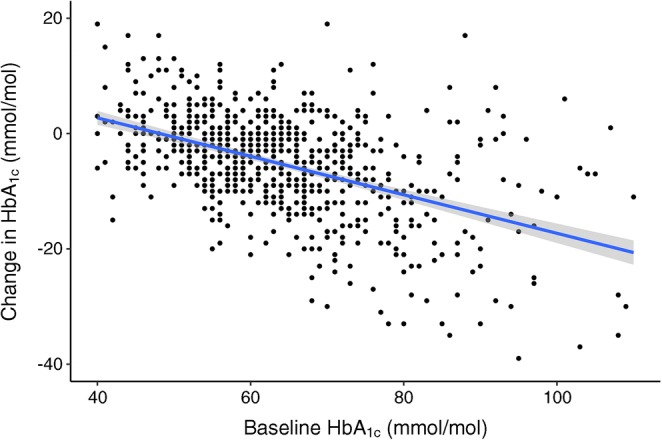
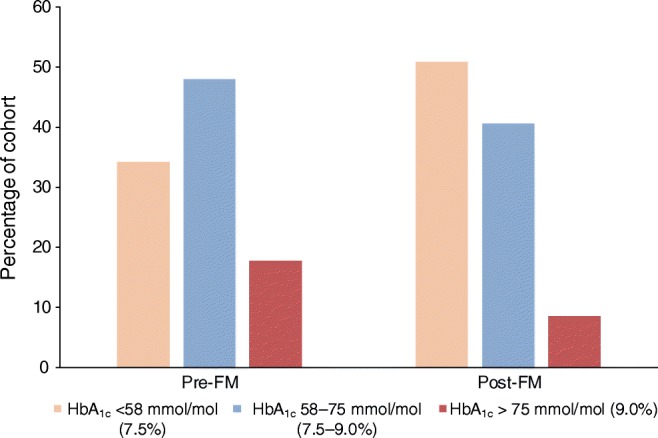
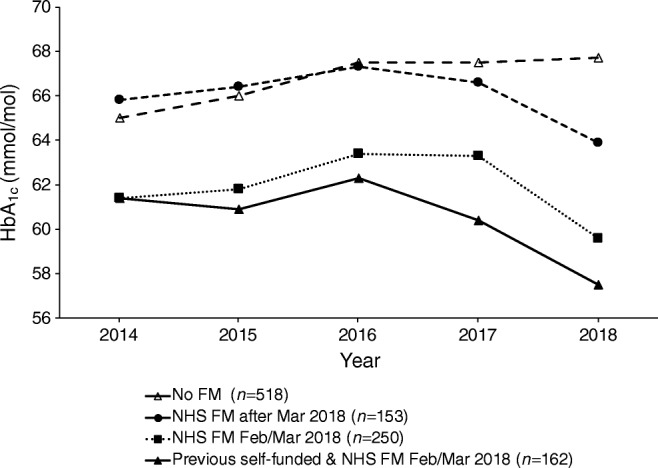
Minimal evidence supports the efficacy of flash monitoring in lowering HbA 1c . We sought to assess the impact of introducing flash monitoring in our centre. We undertook a prospective observational study to assess change in HbA 1c in 900 individuals with type 1 diabetes following flash monitoring (comparator group of 518 with no flash monitoring). Secondary outcomes included changes in hypoglycaemia, quality of life, flash monitoring data and hospital admissions. Those with baseline HbA 1c ≥58 mmol/mol (7.5%) achieved a median −7 mmol/mol (interquartile range [IQR] −13 to −1) (0.6% [−1.2 to −0.1]%) change in HbA 1c ( p < 0.001). The percentage achieving HbA 1c <58 mmol/mol rose from 34.2% to 50.9% ( p < 0.001). Median follow-up was 245 days (IQR 182 to 330). Individuals not using flash monitoring experienced no change in HbA 1c across a similar timescale ( p = 0.508). Higher HbA 1c ( p < 0.001), younger age at diagnosis ( p = 0.003) and lower social deprivation ( p = 0.024) were independently associated with an HbA 1c fall of ≥5 mmol/mol (0.5%). More symptomatic (OR 1.9, p < 0.001) and asymptomatic (OR 1.4, p < 0.001) hypoglycaemia was reported after flash monitoring. Following flash monitoring, regimen-related and emotional components of the diabetes distress scale improved although the proportion with elevated anxiety (OR 1.2, p = 0.028) and depression (OR 2.0, p < 0.001) scores increased. Blood glucose test strip use fell from 3.8 to 0.6 per day ( p < 0.001). Diabetic ketoacidosis admissions fell significantly following flash monitoring ( p = 0.043). Flash monitoring is associated with significant improvements in HbA 1c and fewer diabetic ketoacidosis admissions. Higher rates of hypoglycaemia may relate to greater recognition of hitherto unrecognised events. Impact upon quality of life parameters was mixed but overall treatment satisfaction was overwhelmingly positive.
Overview
The claims and statistics of this paper haven’t been checked yet.
Free: it reads the open-access text and checks the first 5 claims that cite a source we can check. Create a free account to check every claim.
Integrity signals
Registry
Cites
Statistics
Figures
Verification
Claims the paper makes
The claims and statistics of this paper haven’t been checked yet.
Free: it reads the open-access text and checks the first 5 claims that cite a source we can check. Create a free account to check every claim.
Claims other papers make about this one
Each is checked against this paper’s own text: does it say what the citing paper says it does?
The cited source says what the claim attributes to it.
In the citing paper
“In individuals with type 1 diabetes wearing isCGM devices, studies have shown improvement in A1C levels (41,77)”
From 7. Diabetes Technology: Standards of Care in Diabetes—2025 (2025) · cites this paper as [77]
Self-check
Percentages, sums and reported differences re-computed from the paper’s own numbers.
The self-check needs the paper’s full text.
Citations
Cites
The Hospital Anxiety and Depression Scale
Zigmond, A. S., & Snaith, R. P. (1983) · Acta Psychiatrica Scandinavica · doi:10.1111/j.1600-0447.1983.tb09716.x · Cited by 47,139 · cited 8×
“CGM Continuous glucose monitoring CSII Continuous subcutaneous insulin infusion DAFNE Dose Adjustment for Normal Eating DDS Diabetes distress scale DKA Diabetic ketoacidosis HADS Hospital Anxiety and Depression Scale IQR Interquartile range IAH Impaired awareness of hypoglycaemia MDI Multiple daily injection NHS Natio…”
BackgroundInfluentialDepression and quality of life in older persons: A review
Sivertsen, H., Bjørkløf, G. H., Engedal, K., Selbæk, G., & Helvik, A.-S. (2015) · Dementia and Geriatric Cognitive Disorders · doi:10.1159/000437299 · Cited by 14,152
Assessing Psychosocial Distress in Diabetes
Polonsky, W. H., Fisher, L., Earles, J., Dudl, R. J., Lees, J., Mullan, J., & Jackson, R. A. (2005) · Diabetes Care · doi:10.2337/diacare.28.3.626 · Cited by 1,575
Continuous glucose monitoring and intensive treatment of type 1 diabetes
(2008) · New England Journal of Medicine · doi:10.1056/nejmoa0805017 · Cited by 1,559
Beck, R. W., Riddlesworth, T., Ruedy, K., Ahmann, A., Bergenstal, R., Haller, S., Kollman, C., Kruger, D., McGill, J. B., Polonsky, W., et al. (2017) · JAMA · doi:10.1001/jama.2016.19975 · Cited by 1,185
Bolinder, J., Antuna, R., Geelhoed-Duijvestijn, P., Kröger, J., & Weitgasser, R. (2016) · The Lancet · doi:10.1016/s0140-6736(16)31535-5 · Cited by 893
Amiel, S. A., Beveridge, S., Bradley, C., Gianfrancesco, C., Heller, S. R., James, P., McKeown, N., Newton, D. F., Newton, L. D., Oliver, L., et al. (2002) · Deakin Research Online (Deakin University) · Cited by 723
Lind, M., Polonsky, W., Hirsch, I. B., Heise, T., Bolinder, J., Dahlqvist, S., Schwarz, E., Ólafsdóttir, A. F., Frid, A., Wedel, H., et al. (2017) · JAMA · doi:10.1001/jama.2016.19976 · Cited by 705
Dunn, T. C., Xu, Y., Hayter, G., & Ajjan, R. A. (2018) · Diabetes Research and Clinical Practice · doi:10.1016/j.diabres.2017.12.015 · Cited by 239 · cited 1×
“A previous study demonstrated a strong correlation between more flash monitoring scanning and lower estimated HbA1c [21]; in addition, we have shown increased scanning is prospectively associated with fall in HbA1c.”
Background
Cited by
7. Diabetes Technology: Standards of Medical Care in Diabetes—2022
American Diabetes Association Professional Practice Committee (2022) · Diabetes Care · doi:10.2337/dc22-s007 · Cited by 358
“In a retrospective study of adults with type 2 diabetes taking insulin, a reduction in acute diabetes-related events and all-cause hospitalizations was seen (74).”
Background7. Diabetes Technology: Standards of Care in Diabetes—2025
American Diabetes Association Professional Practice Committee, ElSayed, N. A., McCoy, R. G., Aleppo, G., Balapattabi, K., Beverly, E. A., Briggs Early, K., Bruemmer, D., Echouffo-Tcheugui, J. B., Ekhlaspour, L., et al. (2025) · Diabetes Care · doi:10.2337/dc25-s007 · Cited by 348
7. Diabetes Technology: Standards of Care in Diabetes — 2023
ElSayed, N. A., Aleppo, G., Aroda, V. R., Bannuru, R. R., Brown, F. M., Bruemmer, D., Collins, B. S., Hilliard, M. E., Isaacs, D., Johnson, E. L., et al. (2023) · Diabetes Care · doi:10.2337/dc23-s007 · Cited by 301
7. Diabetes Technology: Standards of Care in Diabetes—2024
American Diabetes Association Professional Practice Committee, ElSayed, N. A., Aleppo, G., Bannuru, R. R., Bruemmer, D., Collins, B. S., Ekhlaspour, L., Hilliard, M. E., Johnson, E. L., Khunti, K., et al. (2024) · Diabetes Care · doi:10.2337/dc24-s007 · Cited by 281
Charleer, S., De Block, C., Van Huffel, L., Broos, B., Fieuws, S., Nobels, F., Mathieu, C., & Gillard, P. (2020) · Diabetes Care · doi:10.2337/dc19-1610 · Cited by 261
Continuous glucose monitoring: A review of the evidence in type 1 and 2 diabetes mellitus
Lin, R., Brown, F., James, S., Jones, J., & Ekinci, E. (2021) · Diabetic Medicine · doi:10.1111/dme.14528 · Cited by 197
Deshmukh, H., Wilmot, E. G., Gregory, R., Barnes, D., Narendran, P., Saunders, S., Furlong, N., Kamaruddin, S., Banatwalla, R., Herring, R., et al. (2020) · Diabetes Care · doi:10.2337/dc20-0738 · Cited by 175
“A real-world study of 900 FSL users from 263 Edinburgh by Victoria Tyndall et al.[12], demonstrated a -4mmol/mol reduction in HbA1c 264 overall and similar to our findings they observed a more substantial reduction in HbA1c in 265 those with a higher baseline HbA1c and also those with a higher number of scans per day…”
BackgroundMethodResultInfluentialIntermittently scanned continuous glucose monitoring for type 1 diabetes
Leelarathna, L., Evans, M. L., Neupane, S., Rayman, G., Lumley, S., Cranston, I., Narendran, P., Barnard-Kelly, K., Sutton, C. J., Elliott, R. A., et al. (2022) · New England Journal of Medicine · doi:10.1056/nejmoa2205650 · Cited by 174
Roussel, R., Riveline, J.-P., Vicaut, E., de Pouvourville, G., Detournay, B., Emery, C., Levrat-Guillen, F., & Guerci, B. (2021) · Diabetes Care · doi:10.2337/dc20-1690 · Cited by 173
Fokkert, M., van Dijk, P., Edens, M., Barents, E., Mollema, J., Slingerland, R., Gans, R., & Bilo, H. (2019) · BMJ Open Diabetes Research & Care · doi:10.1136/bmjdrc-2019-000809 · Cited by 163
“This finding, based on self-reported data, is slightly in contrast with the findings in the study of Tyndall et al , 11 where hospital admission rates show a tendency to increase.”
Wada, E., Onoue, T., Kobayashi, T., Handa, T., Hayase, A., Ito, M., Furukawa, M., Okuji, T., Okada, N., Iwama, S., et al. (2020) · BMJ Open Diabetes Research & Care · doi:10.1136/bmjdrc-2019-001115 · Cited by 157
Continuous glucose monitoring: The achievement of 100 years of innovation in diabetes technology
Galindo, R. J., & Aleppo, G. (2020) · Diabetes Research and Clinical Practice · doi:10.1016/j.diabres.2020.108502 · Cited by 133
Advances in Continuous Glucose Monitoring: Clinical Applications
Kwon, S. Y., & Moon, J. S. (2025) · Endocrinology and Metabolism · doi:10.3803/enm.2025.2370 · Cited by 94
“Beyond RCTs, retrospective cohort and real-world studies of adults with T1D have consistently demonstrated comparable HbA1c improvements and greater reductions in hypoglycemia-related outcomes with CGM over extended follow-up periods [15-18].”
Ang, E., Lee, Z. X., Moore, S., & Nana, M. (2020) · Journal of Diabetes and its Complications · doi:10.1016/j.jdiacomp.2020.107559 · Cited by 67
Prigge, R., McKnight, J. A., Wild, S. H., Haynes, A., Jones, T. W., Davis, E. A., Rami-Merhar, B. M., Fritsch, M., Prchla, C., Lavens, A., et al. (2021) · Diabetic Medicine · doi:10.1111/dme.14766 · Cited by 73
Self-citationBoscari, F., & Avogaro, A. (2021) · Reviews in Endocrine and Metabolic Disorders · doi:10.1007/s11154-021-09635-3 · Cited by 80
Gibb, F. W., McKnight, J. A., Clarke, C., & Strachan, M. W. J. (2020) · Diabetologia · doi:10.1007/s00125-020-05099-3 · Cited by 74
Self-citationNathanson, D., Svensson, A.-M., Miftaraj, M., Franzén, S., Bolinder, J., & Eeg-Olofsson, K. (2021) · Diabetologia · doi:10.1007/s00125-021-05437-z · Cited by 61
Landscape of Continuous Glucose Monitoring (CGM) and Integrated CGM: Accuracy Considerations
Bailey, T. S., & Alva, S. (2021) · Diabetes Technology & Therapeutics · doi:10.1089/dia.2021.0236 · Cited by 56
Continuous Glucose Monitoring Use in Older Adults for Optimal Diabetes Management
Munshi, M. N. (2023) · Diabetes Technology & Therapeutics · doi:10.1089/dia.2023.0111 · Cited by 63
Prevalence, Cost, and Burden of Diabetic Ketoacidosis
Virdi, N. S., Poon, Y., Abaniel, R. M., & Bergenstal, R. M. (2023) · Diabetes Technology & Therapeutics · doi:10.1089/dia.2023.0149 · Cited by 68
Dover, A. R., Ritchie, S. A., McKnight, J. A., Strachan, M. W. J., Zammitt, N. N., Wake, D. J., Forbes, S., Stimson, R. H., & Gibb, F. W. (2020) · Diabetic Medicine · doi:10.1111/dme.14374 · Cited by 56
“These individuals tend to have higher levels of socio-economic deprivation [8] and may be at greater risk of deteriorating glycaemic control in the midst of this crisis.”
BackgroundSelf-citationBoucher, S. E., Gray, A. R., Wiltshire, E. J., de Bock, M. I., Galland, B. C., Tomlinson, P. A., Rayns, J. A., MacKenzie, K. E., Chan, H., Rose, S., et al. (2020) · Diabetes Care · doi:10.2337/dc20-0613 · Cited by 51
Aggarwal, A., Pathak, S., & Goyal, R. (2022) · Diabetes Research and Clinical Practice · doi:10.1016/j.diabres.2022.109825 · Cited by 55
Nørgaard, S. K., Mathiesen, E. R., Nørgaard, K., & Ringholm, L. (2021) · Diabetes Technology & Therapeutics · doi:10.1089/dia.2021.0109 · Cited by 38
Gordon, I., Rutherford, C., Makarounas‐Kirchmann, K., & Kirchmann, M. (2020) · Diabetes Research and Clinical Practice · doi:10.1016/j.diabres.2020.108158 · Cited by 40
Galindo, R. J., Parkin, C. G., Aleppo, G., Carlson, A. L., Kruger, D. F., Levy, C. J., Umpierrez, G. E., & McGill, J. B. (2021) · Diabetes Technology & Therapeutics · doi:10.1089/dia.2021.0107 · Cited by 39
Determinants of HbA1c reduction with FreeStyle Libre flash glucose monitoring (FLARE-NL 5)
Lameijer, A., Fokkert, M. J., Edens, M. A., Slingerland, R. J., Bilo, H. J. G., & van Dijk, P. R. (2020) · Journal of Clinical & Translational Endocrinology · doi:10.1016/j.jcte.2020.100237 · Cited by 35
“Age, gender, baseline HbA1c and baseline SF-12 MCS and PCS scores were included as covariates in the multivariate model with the difference in HbA1c as dependent variable, based on previous literature [13].”
MethodDover, A. R., Strachan, M. W. J., McKnight, J. A., Stimson, R. H., Mackenzie, S. D., Lyall, M. J., Wright, R. J., Forbes, S., & Gibb, F. W. (2020) · Diabetic Medicine · doi:10.1111/dme.14445 · Cited by 33
Self-citationHayek, A. A., & Dawish, M. A. A. (2020) · Diabetes Therapy · doi:10.1007/s13300-020-00849-3 · Cited by 31
Lameijer, A., Fokkert, M. J., Edens, M. A., Gans, R. O. B., Bilo, H. J. G., & van Dijk, P. R. (2021) · BMJ Open Diabetes Research & Care · doi:10.1136/bmjdrc-2021-002124 · Cited by 32
Broos, B., Charleer, S., Bolsens, N., Moyson, C., Mathieu, C., Gillard, P., & De Block, C. (2021) · The Journal of Clinical Endocrinology & Metabolism · doi:10.1210/clinem/dgab188 · Cited by 28
Lameijer, A., Lommerde, N., Dunn, T. C., Fokkert, M. J., Edens, M. A., Kao, K., Xu, Y., Gans, R. O. B., Bilo, H. J. G., & van Dijk, P. R. (2021) · Diabetes Research and Clinical Practice · doi:10.1016/j.diabres.2021.108897 · Cited by 27
Frank, J., Blissett, D. B., Hellmund, R., & Virdi, N. S. (2021) · Diabetes Technology & Therapeutics · doi:10.1089/dia.2021.0263 · Cited by 31
Practical guidance for using the FreeStyle Libre flash continuous glucose monitoring in primary care
Unger, J., Kushner, P. R., & Anderson, J. E. (2020) · Postgraduate Medicine · doi:10.1080/00325481.2020.1744393 · Cited by 30
Yauch, L. M., Velazquez, E. P., Piloya, T., Mungai, L., Omar, A. A., & Moran, A. (2020) · Endocrinology Diabetes & Metabolism · doi:10.1002/edm2.135 · Cited by 28
“0 mmol/L) 30 ± 19 [29;26] 26 ± 23 [16;25] 27 ± 19 [24;24] 31 ± 16 [31;21]”
Secher, A. L., Pedersen‐Bjergaard, U., Svendsen, O. L., Gade-Rasmussen, B., Almdal, T., RAIMOND, L. H., Vistisen, D., & Nørgaard, K. (2021) · Diabetologia · doi:10.1007/s00125-021-05555-8 · Cited by 29
Bockholt, R., Paschke, S., Heubner, L., Ibarlucea, B., Laupp, A., Janićijević, Ž., Klinghammer, S., Balakin, S., Maitz, M. F., Werner, C., et al. (2022) · Journal of Clinical Medicine · doi:10.3390/jcm11092408 · Cited by 31
Utilizing continuous glucose monitoring in primary care practice: What the numbers mean
Edelman, S. V., Cavaiola, T. S., BOEDER, S. C., & Pettus, J. (2020) · Primary care diabetes · doi:10.1016/j.pcd.2020.10.013 · Cited by 27
Gavin, J. R., & Bailey, C. J. (2021) · Diabetes Technology & Therapeutics · doi:10.1089/dia.2021.0211 · Cited by 29
Jeyam, A., Gibb, F. W., McKnight, J. A., O’Reilly, J. E., Caparrotta, T. M., Höhn, A., McGurnaghan, S. J., Blackbourn, L. A. K., Hatam, S., Kennon, B., et al. (2021) · Diabetologia · doi:10.1007/s00125-021-05578-1 · Cited by 27
Self-citationGáborová, M., Doničová, V., Bačová, I., Pallayová, M., Bona, M., Peregrim, I., Gresova, S., Stimmelova, J., Dzugasová, B., Blichová, L. Š., et al. (2021) · International Journal of Environmental Research and Public Health · doi:10.3390/ijerph18073402 · Cited by 22
“Comprehensive glucose monitoring and therapy are indispensable to prevent these complications because even small increases in maternal glucose are related to poorer clinical outcomes [7,8].”
BackgroundTsur, A., Cahn, A., Israel, M., Feldhamer, I., Hammerman, A., & Pollack, R. M. (2020) · Diabetes/Metabolism Research and Reviews · doi:10.1002/dmrr.3355 · Cited by 24
“In contrast, a number of observational studies have demonstrated an improvement in glycemic control with FCGM, as well as a reduction in reported hypoglycemia and hospital admissions for diabetic ketoacidosis (DKA).(20-22) In the present study, we aimed to evaluate the impact FCGM on T1D glycemic control and healthcar…”
ResultInfluentialRose, L., Klausmann, G., & Seibold, A. (2021) · Diabetes Therapy · doi:10.1007/s13300-020-00978-9 · Cited by 18
Miller, E. M., & Midyett, L. K. (2021) · Diabetes Technology & Therapeutics · doi:10.1089/dia.2021.0192 · Cited by 26
Bosi, E., Gregori, G., Cruciani, G., Irace, C., Pozzilli, P., & Buzzetti, R. (2021) · Diabetes Research and Clinical Practice · doi:10.1016/j.diabres.2021.109172 · Cited by 22
“[16] Tyndall V, Stimson RH, Zammitt NN, Ritchie SA, McKnight JA, Dover AR, et al.”
BackgroundThe frequency of intermittently scanned glucose and diurnal variation of glycemic metrics
Hansen, K. W., & Bibby, B. M. (2022) · Journal of Diabetes Science and Technology · doi:10.1177/19322968211019382 · Cited by 20
Time in Range as a Research Outcome Measure
Timmons, J. G., Boyle, J. G., & Petrie, J. R. (2021) · Diabetes Spectrum · doi:10.2337/ds20-0097 · Cited by 23
Integrating Continuous Glucose Monitoring Into Clinical Practices and Patients' Lives
Hirsch, I. B., & Miller, E. M. (2021) · Diabetes Technology & Therapeutics · doi:10.1089/dia.2021.0233 · Cited by 25
Anticoagulation protocol and early prosthetic valve thrombosis.
Talwar, S., Kapoor, C. K., Devagourou, V., & Kumar, A. S. (2004) · PubMed · Cited by 24
Lorenzen, J. T., Madsen, K. P., Cleal, B. R., Joensen, L. E., Nørgaard, K., Pedersen‐Bjergaard, U., Schmidt, S., Rytter, K., & Willaing, I. (2024) · BMJ Open · doi:10.1136/bmjopen-2023-080053 · Cited by 21
Flash Continuous Glucose Monitoring: A Summary Review of Recent Real-World Evidence
Bailey, C. J., & Gavin, J. R. (2020) · Clinical Diabetes · doi:10.2337/cd20-0076 · Cited by 20
“, 2019 (25) • 8-month, prospective observational study (United Kingdom) • 900 adults with type 1 diabetes • Use of flash CGM • SMBG comparator group (n 5 518) • A1C • Hypoglycemia • Hospitalization • QoL • A1C levels decreased by 0.”
BackgroundInfluentialBlissett, R., Blissett, D. B., Levrat‐Guillen, F., Deshmukh, H., Wilmot, E. G., Ryder, R. E. J., Walton, C., & Sathyapalan, T. (2022) · BMJ Open Diabetes Research & Care · doi:10.1136/bmjdrc-2021-002580 · Cited by 24
Galindo, R. J., Aleppo, G., Parkin, C. G., Baidal, D. A., Carlson, A. L., Cengiz, E., Forlenza, G. P., Kruger, D. F., Levy, C. J., McGill, J. B., et al. (2022) · Journal of Diabetes Science and Technology · doi:10.1177/19322968221144052 · Cited by 19
Al-Harbi, M. Y., Albunyan, A., Nahari, A., Kao, K., Brandner, L., Jammal, M. E., & Dunn, T. C. (2022) · Diabetology & Metabolic Syndrome · doi:10.1186/s13098-022-00831-y · Cited by 20
Stimson, R. H., Dover, A. R., Strachan, M. W. J., Wright, R. J., Forbes, S., & Gibb, F. W. (2023) · Diabetic Medicine · doi:10.1111/dme.15130 · Cited by 17
“Consistent with our previous assessments, following conversion from home blood glucose monitoring to Freestyle Libre, 6,10 individuals with higher glucose levels at baseline were more likely to experience a 5% or greater improvement in TIR.”
MethodSelf-citationJefferies, C., Boucsein, A., Styles, S. E., Chamberlain, B., Michaels, V. R., Crocket, H. R., de Lange, M., Lala, A., Cunningham, V. J., Wiltshire, E. J., et al. (2023) · Diabetes Technology & Therapeutics · doi:10.1089/dia.2023.0292 · Cited by 20
“20 It may be that in T1D children with elevated HbA1c and already struggling with day-to-day management”
Jiménez-Sahagún, R., Hoyos, E. G., Díaz-Soto, G., de la Marca, M. D. L. O. N., Ibáñez, M. S., Simón, S. D. A., Torres, B., Gómez, J. J. L., García, E. D., Buigues, A. O., et al. (2021) · Endocrinología Diabetes y Nutrición · doi:10.1016/j.endinu.2021.05.011 · Cited by 17
“La mediana de escaneos diarios inicial fue de 11 [8-15] y de 9 [7-11,3] a los 3 meses (p < 0,001).”
BackgroundGavin, J. R., & Bailey, C. J. (2023) · Diabetes Technology & Therapeutics · doi:10.1089/dia.2023.0057 · Cited by 18
Fellinger, P., Rodewald, K., Ferch, M., Itariu, B., Kautzky-Willer, A., & Winhofer, Y. (2022) · Biosensors · doi:10.3390/bios12050288 · Cited by 16
“The introduction of continuous glucose monitoring (CGM) in recent years improved the management of diabetes significantly [1].”
BackgroundMethodHow use of continuous glucose monitoring can address therapeutic inertia in primary care
Martens, T. W., & Parkin, C. G. (2022) · Postgraduate Medicine · doi:10.1080/00325481.2022.2080419 · Cited by 16
Huang, W., Li, S., Lu, J., Shen, Y., Wang, Y., Wang, Y., Feng, K., Huang, X., Zou, Y., Hu, L., et al. (2022) · Endocrine · doi:10.1007/s12020-022-03216-3 · Cited by 18
Sehgal, S., de Bock, M. I., Williman, J. A., Taylor, B. J., Elbalshy, M. M., Galland, B. C., Hall, R. M., Paul, R. G., Boucsein, A., Jones, S., et al. (2021) · Journal of Diabetes & Metabolic Disorders · doi:10.1007/s40200-021-00923-y · Cited by 16
“In adults, use of isCGM improves HbA1c in 40% of users, and quality of life measures also improve with reduced diabetes-related distress scores [8].”
BackgroundNational Asthma Education and Prevention Program 2020 Guidelines: What’s Important for Primary Care
Murphy, M. (2021) · The Journal of Family Practice · doi:10.12788/jfp.0219 · Cited by 16
Diabetes technologies – what the general physician needs to know
Li, A., & Hussain, S. (2020) · Clinical Medicine · doi:10.7861/clinmed.2020-0034 · Cited by 14
Canecki-Varžić, S., Steiner, K., Centner, M. G., Grgurević, M., Berković, M. C., Majanović, S. K., Radman, M., Miličević, T., Rahelić, D., & Bilić-Čurčić, I. (2021) · Diagnostics · doi:10.3390/diagnostics11020305 · Cited by 14
“5% FGM usage was associated with a significant reduction in HbA1c, thus further supporting our results [8,10,11,16].”
BackgroundResultCASTORINO, K. N., Durnwald, C. P., Ehrenberg, S., Ehrhardt, N. M., Isaacs, D., Levy, C. J., Valent, A. M., & Continuous Glucose Monitoring for Gestational Diabetes Management Working Group (2024) · Journal of Women s Health · doi:10.1089/jwh.2023.0864 · Cited by 15
Battelino, T., Edelman, S. V., Nishimura, R., & Bergenstal, R. M. (2021) · Diabetes Technology & Therapeutics · doi:10.1089/dia.2020.0180 · Cited by 13
“53 In addition, the FUTURE study, a large real-world observational study in Belgium, showed that after CGM was approved for reimbursement, there were significant reductions in hospitalizations due to hypoglycemia or diabetic ketoacidosis and reduced absenteeism, compared with the previous year.”
Stimson, R. H., Dover, A. R., Ritchie, S. A., Wright, R. J., McKnight, J. A., Zammitt, N. N., & Gibb, F. W. (2020) · BMJ Open Diabetes Research & Care · doi:10.1136/bmjdrc-2020-001292 · Cited by 15
Self-citationVirtual visits and the use of continuous glucose monitoring for diabetes care in the era of COVID-19
UNDERWOOD, P. C., Hibben, J., Gibson, J. M., & DiNardo, M. M. (2021) · Journal of the American Association of Nurse Practitioners · doi:10.1097/jxx.0000000000000659 · Cited by 13
Deshmukh, H., Wilmot, E. G., Gregory, R., Barnes, D., Narendran, P., Saunders, S., Furlong, N. J., Kamaruddin, S., Banatwalla, R., Herring, R. A., et al. (2021) · Diabetes Obesity and Metabolism · doi:10.1111/dom.14467 · Cited by 15
Charleer, S., Block, C. E. M. D., Bolsens, N., Huffel, L. V., Nobels, F. R. E., Mathieu, C., & Gillard, P. (2023) · Diabetes Technology & Therapeutics · doi:10.1089/dia.2022.0452 · Cited by 15
Stimson, R. H., Dover, A. R., Forbes, S., Strachan, M. W. J., McKnight, J. A., & Gibb, F. W. (2020) · Journal of Diabetes Science and Technology · doi:10.1177/1932296820967335 · Cited by 13
“Age (years) 39 (31-51) Diabetes duration (years) 18 (10-29)”
Self-citationMoreno-Fernández, J., Sastre, J., Pinés, P. J., Calderón-Vicente, D., Gargallo, J., & Muñoz‐Rodríguez, J. R. (2023) · Endocrinología Diabetes y Nutrición (English ed ) · doi:10.1016/j.endien.2023.03.013 · Cited by 14
Mustonen, J., Rautiainen, P., Lamidi, M., Lavikainen, P., Martikainen, J. A., & Laatikainen, T. K. (2023) · Acta Diabetologica · doi:10.1007/s00592-023-02079-y · Cited by 15
“1 3 reduction of HbA1c is in line with previous RCTs [16] and real-world studies [7, 14, 17], as well as a recent metaanalysis [18], showing that isCGM is efficient in lowering HbA1c in patients with type 1 diabetes although our findings were modest compared to the findings from Evans et al.”
BackgroundResultInfluentialMolfetta, S. D., Rossi, A., Assaloni, R., Cherubini, V., Consoli, A., Bartolo, P. D., Guardasole, V., Laurenzi, A., Lombardo, F., Maffeis, C., et al. (2022) · Diabetes Research and Clinical Practice · doi:10.1016/j.diabres.2022.109867 · Cited by 14
Elsherif, I., Jammah, A. A., Ibrahim, A. R., Alawadi, F., Sadek, I. S., Rahman, A. M., Sharify, G. E., AlFeky, A., Aldossari, K. K., Roushdy, E., et al. (2024) · Primary care diabetes · doi:10.1016/j.pcd.2024.06.003 · Cited by 11
Elbalshy, M. M., Styles, S. E., Galland, B. C., Haszard, J. J., Crocket, H. R., Wiltshire, E. J., Jefferies, C., de Bock, M. I., Tomlinson, P. A., Jones, S., et al. (2020) · Journal of Diabetes & Metabolic Disorders · doi:10.1007/s40200-020-00671-5 · Cited by 13
Effects of unrestricted access to flash glucose monitoring in type 1 diabetes
Hansen, K. W. (2020) · Endocrinology Diabetes & Metabolism · doi:10.1002/edm2.125 · Cited by 10
Levy, C. J., Galindo, R. J., Parkin, C. G., Gillis, J., & Argento, N. B. (2023) · Journal of Diabetes Science and Technology · doi:10.1177/19322968231161317 · Cited by 13
Chiumello, D., Passeri, M., Coppola, S., Chiodaroli, E., Carnier, S., Montante, M., Pozzi, T., Goggi, I., Bifari, F., Mortola, U., et al. (2025) · Acta Diabetologica · doi:10.1007/s00592-025-02531-1 · Cited by 11
“In non-critically ill patients, CGM use not only improved glycemic control by reducing hypoglycemic events, but also enhanced quality of life [46, 47 ].”
Reddy, S., Wu, C. C., José, A. S., Hsieh, J. L., & Rautela, S. D. (2023) · Clinical Diabetes · doi:10.2337/cd22-0128 · Cited by 8
Dağdelen, S., Deyneli, O., Dınççağ, N., ILKOVA, H. M., SİVA, Z. O., Yetkin, İ., & Yilmaz, T. M. (2022) · Frontiers in Endocrinology · doi:10.3389/fendo.2021.663222 · Cited by 11
Shi, L., Hellmund, R., & Abbott Diabetes Care, A. (2020) · US Endocrinology · doi:10.17925/use.2020.16.1.24 · Cited by 9
Glycemic Metrics Derived From Intermittently Scanned Continuous Glucose Monitoring
Hansen, K. W., & Bibby, B. M. (2020) · Journal of Diabetes Science and Technology · doi:10.1177/1932296820975822 · Cited by 8
Deshmukh, H., Wilmot, E. G., Pieri, B. A., Choudhary, P., Shah, N. Z., Gregory, R., Kilvert, A., Lumb, A. N., Christian, P., Barnes, D., et al. (2022) · Diabetic Medicine · doi:10.1111/dme.14942 · Cited by 8
Wysham, C., & Kruger, D. F. (2021) · Journal of the Endocrine Society · doi:10.1210/jendso/bvab064 · Cited by 7
Screening for Autoantibodies in Type 1 Diabetes: A Call to Action
Петерс (2021) · The Journal of Family Practice · doi:10.12788/jfp.0223 · Cited by 11
Primary Prevention of CVD with Aspirin: Benefits vs Risks
Weisman (2021) · The Journal of Family Practice · doi:10.12788/jfp.0222 · Cited by 9
Jiménez-Sahagún, R., Hoyos, E. G., Díaz-Soto, G., de la Marca, M. D. L. O. N., Ibáñez, M. S., Simón, S. D. A., Torres, B., Gómez, J. J. L., García, E. D., Buigues, A. O., et al. (2022) · Endocrinología Diabetes y Nutrición (English ed ) · doi:10.1016/j.endien.2022.03.008 · Cited by 10
Emamipour, S., van Dijk, P. R., Bilo, H. J. G., Edens, M. A., van der Galiën, O., Postma, M. J., Feenstra, T., & van Boven, J. F. M. (2022) · Journal of Diabetes Science and Technology · doi:10.1177/19322968221109841 · Cited by 7
Pieri, B. A., Deshmukh, H., Wilmot, E. G., Choudhary, P., Shah, N. Z., Gregory, R., Barnes, D., Saunders, S., Patmore, J., Walton, C., et al. (2022) · Diabetes Obesity and Metabolism · doi:10.1111/dom.14841 · Cited by 9
“We also showed that just over half of the people with IAH at baseline had restoration of awareness at followup, similar to the results reported in a study conducted by Tyndall et al., which showed that IAH resolved in 42.5% of people.7 Our findings show that FSL can help to restore awareness in those with IAH.”
BackgroundMethodInfluentialLiu, Z., Lin, B., Chen, D., Yang, Y., Jiang, W., Yang, D., Yan, J., Yao, B., Yang, X., & Xu, W. (2024) · Endocrine · doi:10.1007/s12020-024-04083-w · Cited by 6
Continuous Glucose Monitoring: Optimizing Diabetes Care: Executive Summary
Miller, E. M., Gavin, J. R., Kruger, D. F., & Brunton, S. (2022) · Clinical Diabetes · doi:10.2337/cd22-0043 · Cited by 9
Reddy, M., & Oliver, N. S. (2019) · Diabetes Technology & Therapeutics · doi:10.1089/dia.2019.0369 · Cited by 6
“Although randomized controlled data evaluating isCGM versus SMBG in T1DM are limited to the IMPACT study, there is a growing evidence base, derived from observational studies in T1DM, implying that isCGM has a favorable impact on glycemic control and user satisfaction.(10) Our findings suggest that all studies of isCG…”
BackgroundInsurance Coverage for Emerging Diabetes Technologies: Payers' Perspective
Nolan, T., & Frazzitta, M. A. (2021) · Diabetes Technology & Therapeutics · doi:10.1089/dia.2021.0262 · Cited by 6
Jensen, M. H., Cichosz, S. L., Gustenhoff, P., Nikontovic, A., Hejlesen, O. K., & Vestergaard, P. (2022) · PLoS ONE · doi:10.1371/journal.pone.0274626 · Cited by 7
Mustonen, J., Rautiainen, P., Lamidi, M., Lavikainen, P., Martikainen, J. A., & Laatikainen, T. K. (2022) · Diabetes Spectrum · doi:10.2337/ds21-0087 · Cited by 7
“However, these studies usually have been limited by a relatively small sample size (9), and their follow-up data usually ended at 1 year (10,11).”
BackgroundResultMoreno-Fernández, J., Sastre, J., Pinés, P. J., Calderón-Vicente, D., Gargallo, J., & Muñoz‐Rodríguez, J. R. (2023) · Endocrinología Diabetes y Nutrición · doi:10.1016/j.endinu.2022.12.003 · Cited by 11
Secher, A. L., Pedersen‐Bjergaard, U., Svendsen, O. L., Gade-Rasmussen, B., Almdal, T., Dørflinger, L., Vistisen, D., & Nørgaard, K. (2020) · BMJ Open · doi:10.1136/bmjopen-2019-036474 · Cited by 7
Metadata
- Authors
- Tyndall, V., Stimson, R. H., Zammitt, N. N., Ritchie, S. A., McKnight, J. A., Dover, A. R., & Gibb, F. W.
- Affiliations
- Western General Hospital (GB)
- Edinburgh Royal Infirmary (GB)
- Corresponding author
- Gibb, Fraser W.
- Venue
- Diabetologia
- Published
- 2019-06-09
- Volume
- 62
- Issue
- 8
- Pages
- 1349-1356
- ISSN
- 0012-186X (ISSN-L)
- 1432-0428
- PMC
- PMC6647076
- OpenAlex
- W2950215271
- Cited by
- 165
- References
- 24
- Citations by year
- 2026: 3 · 2025: 7 · 2024: 20 · 2023: 18 · 2022: 29 · 2021: 50 · 2020: 32 · 2019: 4
- FWCI
- 23.33
- Type
- journal article
- Language
- en
- Open access
- hybrid
- doi.org
- Licence
- cc-by
- creativecommons.org/licenses/by/4.0 (tdm)
- creativecommons.org/licenses/by/4.0 (vor)
- Locations
- Diabetologia (publishedVersion, cc-by)
- Europe PMC (PubMed Central) (publishedVersion, cc-by)
- PubMed Central (publishedVersion, cc-by)
- PubMed (publishedVersion)
- Edinburgh Research Explorer (University of Edinburgh) (submittedVersion, cc-by)
- Funders
- University of Edinburgh
- Topics
- Health Sciences › Medicine › Endocrinology, Diabetes and Metabolism › Diabetes Management and Research
- Health Sciences › Medicine › Endocrinology, Diabetes and Metabolism › Diabetes Management and Education
- Health Sciences › Medicine › Endocrinology, Diabetes and Metabolism › Diabetes Treatment and Management
- Keywords
- flash glucose monitoring, type 1 diabetes, HbA1c, glycemic control, hypoglycemia, diabetic ketoacidosis, diabetes distress, depression, anxiety, blood glucose test strips, hospitalization, social deprivation, age at diagnosis, HbA1c targets, diabetes self-management, quality of life
- MeSH terms
- Adult, Diabetes Mellitus, Type 1, Female, Glycated Hemoglobin, Humans, Hypoglycemia, Male, Middle Aged, Patient Admission, Prospective Studies, Quality of Life, Surveys and Questionnaires, Research Design, Blood Glucose Self-Monitoring, Diabetic Ketoacidosis, Treatment Outcome, Patient Satisfaction
About these checks
Registry, retraction, Cites and statistics results are computed, not judged, with one exception: a printed reference that no index lists is read once by a model before it counts as a citation error. Claims are extracted by a model and kept only when their quote appears verbatim in the text; each cited source is then checked, with a model’s help, for whether it says what the claim relies on. Those verdicts can be wrong — read the claim’s quote and the cited source before relying on one.
Statistics and arithmetic are recomputed, not judged.
Confidence bands are shown only for fields calibrated on our annotated test set. None is calibrated yet, so no band is shown.
What counts as a claim ›How we measure confidence ›How we check this ›
Are you an author, or do you see a problem with this page? Request a review
Data sources
Bibliographic data: Semantic Scholar, OpenAlex, Crossref.
Contains information from the Semantic Scholar Academic Graph Datasets, made available under the ODC Attribution License (ODC-BY 1.0).
Semantic Scholar’s data is described in: Kinney, R., et al. (2023). The Semantic Scholar Open Data Platform. arXiv:2301.10140.
