

Exploring potential applications of optical lattice clocks in a plate subduction zone
Open accessThe DOI matches its Crossref record; 71 of the 73 references it cites were found in a registry or an index.
Abstract
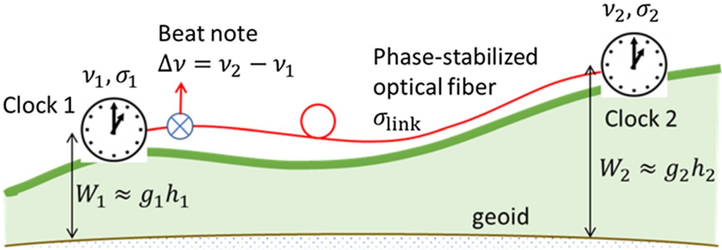
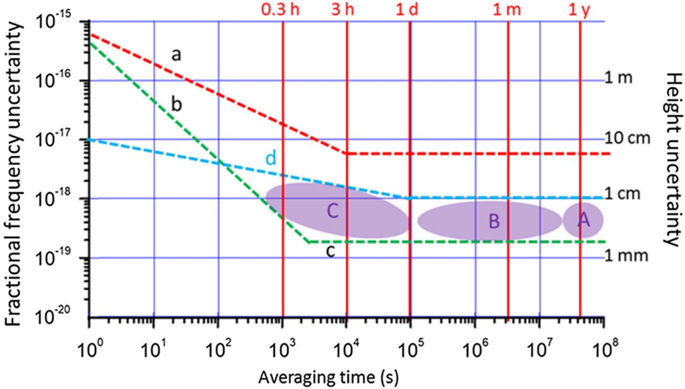
Optical clocks improved the accuracy of state-of-the-art cesium clocks by more than two orders of magnitude and enabled frequency comparison with a fractional uncertainty of one part in 10 18 . Gravitational redshift of two such clocks allows determining their height difference with an uncertainty of 1 cm. In Europe, chronometric leveling has been extensively conducted for unifying the height reference systems. Temporal response of the leveling, which affords monitoring a cm height variation within hours of averaging time, may offer new opportunities to explore seismology and volcanology. Superb stability of optical lattice clocks will be best used for such applications. This article outlines the prospects of chronometric leveling in Japan. Combining optical lattice clocks with an existing observation network of GNSS, crustal deformations may be monitored with unprecedented accuracy in the future.
Overview
The claims and statistics of this paper haven’t been checked yet.
Free: it reads the open-access text and checks the first 5 claims that cite a source we can check. Create a free account to check every claim.
Integrity signals
Registry
Cites
Statistics
Figures

Verification
Claims the paper makes
The claims and statistics of this paper haven’t been checked yet.
Free: it reads the open-access text and checks the first 5 claims that cite a source we can check. Create a free account to check every claim.
Claims other papers make about this one
Each is checked against this paper’s own text: does it say what the citing paper says it does?
The check wasn’t confident either way, so it gives no verdict — never disputed.
In the citing paper
“The instability is slightly higher in the remote clock comparison (1 . 7 × 10 -15 / √ τ/ s, Fig. 4) than in the local one (1 . 0 × 10 -15 / √ τ/ s, Fig. 2) as the transportable clock laser [56] was pre-stabilized to the ultrastable lasers at PTB [57, 58] during the local comparisons.”
From Long-distance chronometric leveling with a portable optical clock (2024) · cites this paper as [58]
Experimental — accuracy not yet measured
Self-check
Percentages, sums and reported differences re-computed from the paper’s own numbers.
The self-check needs the paper’s full text.
Citations
Cites
Free software helps map and display data
Wessel, P., & Smith, W. H. F. (1991) · Eos, Transactions American Geophysical Union · doi:10.1029/90eo00319 · Cited by 4,110
Precise point positioning for the efficient and robust analysis of GPS data from large networks
Zumberge, J. F., Heflin, M. B., Jefferson, D. C., Watkins, M. M., & Webb, F. H. (1997) · Journal of Geophysical Research: Solid Earth · doi:10.1029/96jb03860 · Cited by 3,620
Wahr, J., Molenaar, M., & Bryan, F. (1998) · Journal of Geophysical Research: Solid Earth · doi:10.1029/98jb02844 · Cited by 2,157 · cited 1×
“of these effects are represented in terms of the equivalent water height anomaly (Wahr et al. 1998) instead of the geoid height anomaly in these papers).”
BackgroundEmerging trends in global freshwater availability
Rodell, M., Famiglietti, J. S., Wiese, D. N., Reager, J. T., Beaudoing, H. K., Landerer, F. W., & Lo, M.-H. (2018) · Nature · doi:10.1038/s41586-018-0123-1 · Cited by 2,107
Deformation of the Earth by surface loads
Farrell, W. E. (1972) · Reviews of Geophysics · doi:10.1029/rg010i003p00761 · Cited by 1,802 · cited 2×
“where kn and hn denote the load Love numbers for the potential change and the vertical displacement (Farrell 1972).”
BackgroundAltamimi, Z., Rebischung, P., Métivier, L., & Collilieux, X. (2016) · Journal of Geophysical Research: Solid Earth · doi:10.1002/2016jb013098 · Cited by 1,427
Forget, G., Campin, J.-M., Heimbach, P., Hill, C. N., Ponte, R. M., & Wunsch, C. (2015) · Geoscientific Model Development · doi:10.5194/gmd-8-3071-2015 · Cited by 790 · cited 1×
“Another possibility is to use fine resolution OBP data, calculated by a dynamic ocean model assimilating real data (e.g., Wu et al. 2003; Usui et al. 2006; Forget et al. 2015; Tanaka et al. 2015b), although precision to represent OBP is generally limited because of the sparse distributions of real observations of OBP.”
MethodSystematic evaluation of an atomic clock at 2 × 10⁻¹⁸ total uncertainty
Nicholson, T. L., Campbell, S. L., Hutson, R. B., Marti, G. E., Bloom, B. J., McNally, R. L., Zhang, W., Barrett, M. D., Safronova, M. S., Strouse, G. F., et al. (2015) · Nature Communications · doi:10.1038/ncomms7896 · Cited by 780
A scaling law for slow earthquakes
Ide, S., Beroza, G. C., Shelly, D. R., & Uchide, T. (2007) · Nature · doi:10.1038/nature05780 · Cited by 765 · cited 1×
“The presence of such SSEs is expected by a scaling law for slow earthquakes (Ide et al. 2007).”
BackgroundAtomic clock performance enabling geodesy below the centimetre level
McGrew, W. F., Zhang, X., Fasano, R. J., Schäffer, S. A., Beloy, K., Nicolodi, D., Brown, R. C., Hinkley, N., Milani, G., Schioppo, M., et al. (2018) · Nature · doi:10.1038/s41586-018-0738-2 · Cited by 727 · cited 2×
“Recent progress of optical atomic clocks has improved this uncertainty by more than 100 times and achieved fractional uncertainties of low 10–18 (Nicholson et al. 2015; Ushijima et al. 2015; Brewer et al. 2019; McGrew et al. 2018).”
Background
Research works printed but not linked: 5
- Hatanaka Y, Sengoku A, Sato T, Johnson J, Rocken C, Meertens C (2001) Detection of tidal loading signals from GPS permanent array of GSI Japan. J Geod Soc Jpn 47:187-192
- Kuroishi Y (2017) Perturbations on the geopotential at the earth's sur- face due to earth tides and ocean tidal loading: evaluation for geodetic application of precision clock comparison to differential geopotential measurements. J Geod Soc Jpn 63:33-43 ((in Japa- nese with English abstract))
- Matsumoto K, Sato T, Takanezawa T, Ooe M (2001) GOTIC2: a pro- gram for computation of oceanic tidal loading effect. J Geod Soc Jpn 47:243-248
- Okubo S, Yamamoto K, Iguchi M (2017) Diagnosis of conduit state of Sakurajima volcano using continuous records on gravity and crustal movements. Bull Earthq Res Inst Univ Tokyo 92:91-99 ((in Japanese with English abstract))
- Yokoyama I (2013) An interpretation on secular changes in deforma- tion caused by the 1914 eruption of Sakurajima Volcano. Bull Volcanol Soc Jpn 58:77-90
Cited by
A perspective on the future of transportable optical lattice clocks
Takamoto, M., Tanaka, Y., & Katori, H. (2022) · Applied Physics Letters · doi:10.1063/5.0087894 · Cited by 40
Self-citationLong-distance chronometric leveling with a portable optical clock
Grotti, J., Nosske, I., Koller, S. B., Herbers, S., Denker, H., Timmen, L., Vishnyakova, G., Grosche, G., Waterholter, T., Kuhl, A., et al. (2024) · Physical Review Applied · doi:10.1103/physrevapplied.21.l061001 · Cited by 33
Field deployable atomics package for an optical lattice clock
Kale, Y. B., Singh, A. K., Gellesch, M., Jones, J. M., Morris, D. C., Aldous, M., Bongs, K., & Singh, Y. (2022) · Quantum Science and Technology · doi:10.1088/2058-9565/ac7b40 · Cited by 21
Porsev, S. G., Kozlov, M. G., & Safronova, M. S. (2023) · Physical Review A · doi:10.1103/physreva.108.l051102 · Cited by 10
Transportable strontium lattice clock with 4 × 10 − 19 blackbody radiation shift uncertainty
Nosske, I., Vishwakarma, C., Lücke, T., Rahm, J., Poudel, N., Weyers, S., Benkler, E., Dörscher, S., & Lisdat, C. (2025) · Quantum Science and Technology · doi:10.1088/2058-9565/ae1161 · Cited by 19
Determination of the time-variable geopotential by means of orbiting clocks
Giuliani, S., Tapley, B. D., & Ries, J. (2024) · Journal of Geodesy · doi:10.1007/s00190-024-01868-9 · Cited by 9
“…of chronometric geodesy (CG), which has numerous purposes (Bjerhammar 1985; Bon-darescu et al. 2015; Mehlstäubler et al. 2018; Müller et al. 2018; Tanaka and Katori 2021), is to convert the FS between separated clocks on the Earth’s surface into gravity potential (geopotential U plus centrifugal…”
Huang, P., Sulzbach, R. L., Klemann, V., Tanaka, Y., Dobslaw, H., Martinec, Z., & Thomas, M. (2022) · Journal of Geophysical Research Solid Earth · doi:10.1029/2022jb025200 · Cited by 7
“Furthermore, as relativistic geodesy using fiber-linked optical clocks will be able to improve observational accuracy of tides by providing us with a new type of observation data (e.g., Tanaka and Katori, 2021), accounting for the effect of 3D Earth structures will be more important.”
BackgroundSelf-citationWu, K., Shen, W., Sun, X. L., Cai, C., & Shen, Z. (2023) · Geo-spatial Information Science · doi:10.1080/10095020.2023.2231515 · Cited by 9
“…extensively discussed in recent years (Lion et al. 2017; Mcgrew et al. 2018; Shen, Shen, and Zhang 2016; Takamoto et al. 2015), opening a new era of time-frequency geoscience (Kopeikin, Vlasov, and Han 2018; Mehlstäubler et al. 2018; Puetzfeld et al. 2019; Shen et al. 2019; Tanaka and Katori 2021).”
Study Review of the Speed of Light in Space-Time for STEM Student
Alfaris, L., Siagian, R. C., & Sumarto, E. P. (2023) · Jurnal Penelitian Pendidikan IPA · doi:10.29303/jppipa.v9i2.2757 · Cited by 7
Continuous operation of a bicolor thulium optical lattice clock
Mishin, D., Provorchenko, D. I., Tregubov, D. O., Kolachevsky, N., & Golovizin, A. A. (2021) · Applied Physics Express · doi:10.35848/1882-0786/ac3186 · Cited by 6
Tanaka, Y., & Aoki, Y. (2022) · International Association of Geodesy symposia · doi:10.1007/1345_2022_147 · Cited by 3
Self-citationResearch on Quantum Materials and Quantum Technology at RIKEN
Ishibashi, K., Yorozu, S., Arima, T., Kawamura, M., Tokura, Y., Karube, K., Yu, X., Taguchi, Y., Hanaguri, T., Machida, T., et al. (2025) · ACS Nano · doi:10.1021/acsnano.4c15409 · Cited by 4
Self-citationXiong, C., Liu, D., Wu, L., Bao, L., & Zhang, P. (2022) · Remote Sensing · doi:10.3390/rs14174141 · Cited by 3
Wu, K., Shen, W.-B., Fok, H. S., Lian, Z., Zhang, P., Li, L., Wang, L., Ning, A., Xu, R. L., & Shen, Z. (2025) · Advances in Space Research · doi:10.1016/j.asr.2025.10.010 · Cited by 4
Development of Compact and Robust Physical System for Strontium Optical Lattice Clock
Chen, Y.-X., Zhou, C., Tan, W., Guo, F., Zhao, G., Xia, J. G., Meng, J., & Chang, H. (2024) · Applied Sciences · doi:10.3390/app14041551 · Cited by 4
Transportable optical lattice clocks and general relativity
Shinkai, H.-A., Takamoto, M., & Katori, H. (2025) · International Journal of Modern Physics D · doi:10.1142/s0218271825400127 · Cited by 6
Self-citationUltra-long-distance distribution of low-phase-noise two-tone lightwave for THz seeding
Sakaguchi, J., & Furukawa, H. (2025) · Optics Express · doi:10.1364/oe.555113 · Cited by 2
Superradiant active optical atomic clocks: motivations and current challenges
Matusko, M., & Delehaye, M. (2024) · Journal of Physics Conference Series · doi:10.1088/1742-6596/2889/1/012045 · Cited by 3
“…diverse applications, ranging from probing variations in fundamental constants [5, 6, 7, 8] to the redefinition of the second [9, 10, 11, 12, 13] or advancing the field of the relativistic geodesy [14, 15, 16, 17, 18, 19, 20], where optical atomic clocks can serve as extremely accurate altimeters.”
GNSS carrier phase time and frequency comparison for gravity potential determination
Xu, W., Yan, C., & Zhang, P. (2025) · Geophysical Journal International · doi:10.1093/gji/ggaf479 · Cited by 2
Ultrastable Frequency and Timing for Future Telecom Networks
Rajagopal, L., Lord, A., & Menchetti, M. (2022) · IEEE/LEOS Summer Topical Meetings · doi:10.1109/sum53465.2022.9858243 · Cited by 1
“The changes in the relative height difference between the two sites is a measure of the magnitude of the disaster ([8]).”
BackgroundLegoshin, A. D., Liskova, K. A., Kudeyarov, K. S., Vishnyakova, G. A., Mironchuk, E. S., Zhadnov, N. O., Kryuchkov, D. S., Khabarova, K. Y., & Kolachevsky, N. (2023) · Journal of Experimental and Theoretical Physics · doi:10.1134/s1063776123080083
Nishimura, F., Kuramochi, Y., & Yamamoto, K. (2023) · Physical Review A · doi:10.1103/physreva.108.063112
Legoshin, A. D., Liskova, K. A., Kudeyarov, K. S., Vishnyakova, G. A., Mironchuk, E. S., Zhadnov, N. O., Kryuchkov, D. S., Khabarova, K. Y., & Kolachevskiy, N. N. (2023) · Журнал Экспериментальной и Теоретической Физики · doi:10.31857/s0044451023080114
Optical lattice clocks and related platforms
Takamoto, M., & Katori, H. (2024) · Elsevier eBooks · doi:10.1016/b978-0-323-98378-5.00002-7 · Cited by 1
Self-citationCompact and Robust Laser System for a Transportable Strontium Optical Lattice Clock
Muramatsu, T., Hiroki, T., Sakai, Y., Hisai, Y., Furumiya, T., Uno, S., Tojo, K., Takamoto, M., & Katori, H. (2024) · Journal of Physics Conference Series · doi:10.1088/1742-6596/2889/1/012042 · Cited by 2
Self-citationAnderson, D. Z., Chomaz, P., Takeuchi, S., Arakawa, Y., Baba, Y., Benson, O. J., Soderberg, K.-A., Diamanti, E., Elkouss, D., Fujii, K., et al. (2026) · Journal of Physics B Atomic Molecular and Optical Physics · doi:10.1088/1361-6455/ae271a
Self-citationVerification of Gravitational Redshift Using Transportable Optical Lattice Clocks
Ohmae, N., Takamoto, M., Ushijima, I., & Katori, H. (2023) · The Review of Laser Engineering · doi:10.2184/lsj.51.8_506
Self-citationResearch progress on precision measurement based on optical clocks
Xiaotong, L., Jin, C., & Hong, C. S. (2025) · Acta Physica Sinica · doi:10.7498/aps.75.20251594 · Cited by 1
Determining of Geopotential Difference With Multi-GNSS Undifferenced Time–Frequency Signals
Xu, W. S., & Zhang, P. (2026) · IEEE Transactions on Instrumentation and Measurement · doi:10.1109/tim.2026.3664549 · Cited by 1
“Recent breakthroughs in fiber-optic and coaxial time transfer technologies have facilitated continental-scale clock networks for geopotential di ff erence determination [9], [10], [11], [12], [13], [14], [15].”
Impact of Earth Tide Models on Reducing Uncertainty in Continuous Operation of Optical Atomic Clocks
Ichikawa, R., Tanaka, Y., & Honda, R. (2026) · International Association of Geodesy symposia · doi:10.1007/1345_2026_361
Self-citationSpatially defined Rabi spectroscopy for uninterrupted optical clock interrogation
Nishida, K., Takeuchi, R., Tsuji, S., 岡場, 翔., & Katori, H. (2026) · Nature Communications · doi:10.1038/s41467-026-76017-1
Self-citation
Metadata
- Authors
- Tanaka, Y., & Katori, H.
- Affiliations
- The University of Tokyo (JP)
- RIKEN (JP)
- Corresponding author
- Tanaka, Yoshiyuki
- Venue
- Journal of Geodesy
- Published
- 2021-07-30
- Volume
- 95
- Issue
- 8
- ISSN
- 0949-7714 (ISSN-L)
- 1432-1394
- OpenAlex
- W3191841765
- Semantic Scholar
- 65a1bf46cfeeb2a8f97f6a42b27ff6b6308751cb
- Cited by
- 31
- References
- 73
- Citations by year
- 2026: 3 · 2025: 7 · 2024: 7 · 2023: 7 · 2022: 6 · 2021: 1
- FWCI
- 2.29
- Type
- journal article
- Language
- en
- Open access
- hybrid
- doi.org
- Licence
- cc-by
- creativecommons.org/licenses/by/4.0 (tdm)
- creativecommons.org/licenses/by/4.0 (vor)
- Locations
- Journal of Geodesy (publishedVersion, cc-by)
- Funders
- Japan Society for the Promotion of Science (JP16H06474, JP16H06284)
- Japan Science and Technology Agency (JPMJMI18A1)
- Topics
- Physical Sciences › Physics and Astronomy › Atomic and Molecular Physics, and Optics › Advanced Frequency and Time Standards
- Physical Sciences › Engineering › Aerospace Engineering › GNSS positioning and interference
- Physical Sciences › Earth and Planetary Sciences › Geophysics › Geophysics and Sensor Technology
- Keywords
- optical lattice clock, gravitational redshift, height reference system, crustal deformation monitoring, GNSS, seismology, volcanology
About these checks
Registry, retraction, Cites and statistics results are computed, not judged, with one exception: a printed reference that no index lists is read once by a model before it counts as a citation error. Claims are extracted by a model and kept only when their quote appears verbatim in the text; each cited source is then checked, with a model’s help, for whether it says what the claim relies on. Those verdicts can be wrong — read the claim’s quote and the cited source before relying on one.
Statistics and arithmetic are recomputed, not judged.
Confidence bands are shown only for fields calibrated on our annotated test set. None is calibrated yet, so no band is shown.
What counts as a claim ›How we measure confidence ›How we check this ›
Are you an author, or do you see a problem with this page? Request a review
Data sources
Bibliographic data: Semantic Scholar, OpenAlex, Crossref.
Contains information from the Semantic Scholar Academic Graph Datasets, made available under the ODC Attribution License (ODC-BY 1.0).
Semantic Scholar’s data is described in: Kinney, R., et al. (2023). The Semantic Scholar Open Data Platform. arXiv:2301.10140.
