

Worth the wait: effects of age of onset of marijuana use on white matter and impulsivity
Open accessThe DOI matches its Crossref record; 73 of the 76 references it cites were found in a registry or an index.
Abstract
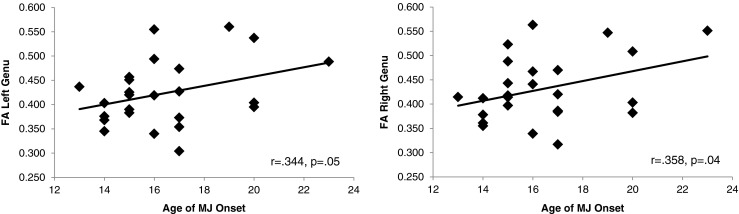
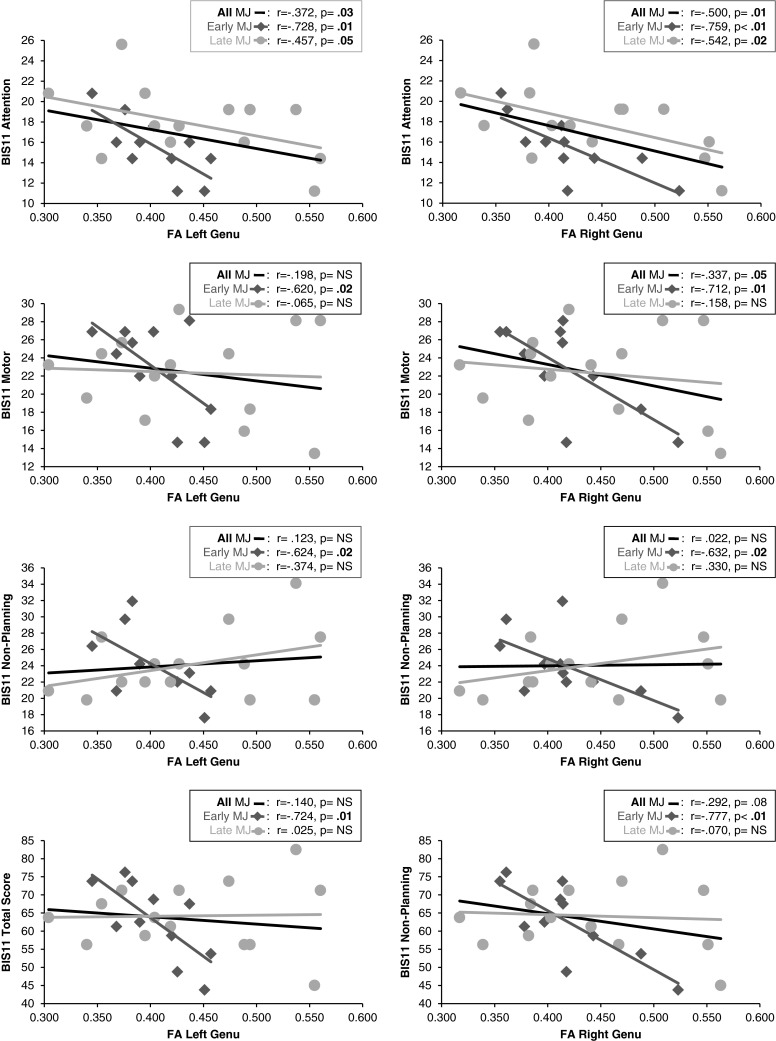
RATIONALE: Marijuana (MJ) use continues to rise, and as the perceived risk of using MJ approaches an all-time historic low, initiation of MJ use is occurring at even younger ages. As adolescence is a critical period of neuromaturation, teens and emerging adults are at greater risk for experiencing the negative effects of MJ on the brain. In particular, MJ use has been shown to be associated with alterations in frontal white matter microstructure, which may be related to reports of increased levels of impulsivity in this population. OBJECTIVES: The aim of this study was to examine the relationship between age of onset of MJ use, white matter microstructure, and reported impulsivity in chronic, heavy MJ smokers. METHODS: Twenty-five MJ smokers and 18 healthy controls underwent diffusion tensor imaging and completed the Barratt Impulsiveness Scale. MJ smokers were also divided into early onset (regular use prior to age 16) and late onset (age 16 or later) groups in order to clarify the impact of age of onset of MJ use on these variables. RESULTS: MJ smokers exhibited significantly reduced fractional anisotropy (FA) relative to controls, as well as higher levels of impulsivity. Earlier MJ onset was also associated with lower levels of FA. Interestingly, within the early onset group, higher impulsivity scores were correlated with lower FA, a relationship that was not observed in the late onset smokers. CONCLUSIONS: MJ use is associated with white matter development and reported impulsivity, particularly in early onset smokers.
Overview
The claims and statistics of this paper haven’t been checked yet.
Free: it reads the open-access text and checks the first 5 claims that cite a source we can check. Create a free account to check every claim.
Integrity signals
Registry
Cites
Statistics
Figures
Verification
Claims the paper makes
The claims and statistics of this paper haven’t been checked yet.
Free: it reads the open-access text and checks the first 5 claims that cite a source we can check. Create a free account to check every claim.
Claims other papers make about this one
Each is checked against this paper’s own text: does it say what the citing paper says it does?
In the citing paper
“lower FA values have been connected with earlier onset of among cannabis users (Gruber, Dahlgren, Sagar, Gönenç, & Lukas, 2014).”
From Substance abuse and white matter: Findings, limitations, and future of diffusion tensor imaging research (2019) · cites this paper as Gruber, Dahlgren, Sagar, Gönenç, & Lukas, 2014
In the citing paper
“Moreover, early-onset marijuana use (<16 years) is associated with reduced white matter fiber tract integrity in the corpus callosum compared to later-onset marijuana use (>16 years; Gruber et al., 2014).”
From Sensitive periods of substance abuse: Early risk for the transition to dependence (2017) · cites this paper as Gruber et al., 2014
Self-check
Percentages, sums and reported differences re-computed from the paper’s own numbers.
The self-check needs the paper’s full text.
Citations
Cites
An inventory for measuring depression
BECK, A. T. (1961) · Archives of General Psychiatry · doi:10.1001/archpsyc.1961.01710120031004 · Cited by 38,032 · cited 3×
“Briefly, self-report measures included the Profile ofMood States (Pollock et al. 1979), which provides a profile of current mood state for the individual domains of vigor, anger, confusion, tension, and depression, as well as a total mood disturbance score; the Beck Depression Inventory (Beck et al. 1961); and the Sta…”
BackgroundDevelopment and validation of brief measures of positive and negative affect: The PANAS scales.
Watson, D., Clark, L. A., & Tellegen, A. (1988) · Journal of Personality and Social Psychology · doi:10.1037/0022-3514.54.6.1063 · Cited by 32,433 · cited 3×
“Further, participants also completed the Positive andNegative Affect Scale (Watson et al. 1988), which provides a score for both positive and negative affect; the Montgomery–Asberg Depression Rating Scale (Montgomery and Asberg 1979); the Hamilton Anxiety Scale (Hamilton 1959); and the Young Mania Rating Scale (Young…”
Method(1970) · Cited by 24,983
A new depression scale designed to be sensitive to change
Montgomery, S. A., & Åsberg, M. (1979) · British Journal of Psychiatry · doi:10.1192/bjp.134.4.382 · Cited by 13,962 · cited 3×
“1988), which provides a score for both positive and negative affect; the Montgomery–Asberg Depression Rating Scale (Montgomery and Asberg 1979); the Hamilton Anxiety Scale (Hamilton 1959); and the Young Mania Rating Scale (Young et al.”
MethodThe assessment of anxiety states by rating
HAMILTON, M. (1959) · British Journal of Medical Psychology · doi:10.1111/j.2044-8341.1959.tb00467.x · Cited by 11,455 · cited 3×
“1988), which provides a score for both positive and negative affect; the Montgomery–Asberg Depression Rating Scale (Montgomery and Asberg 1979); the Hamilton Anxiety Scale (Hamilton 1959); and the Young Mania Rating Scale (Young et al.”
MethodA Rating Scale for Mania: Reliability, Validity and Sensitivity
Young, R. C., Biggs, J. T., Ziegler, V. E., & Meyer, D. A. (1978) · British Journal of Psychiatry · doi:10.1192/bjp.133.5.429 · Cited by 8,744 · cited 3×
“1988), which provides a score for both positive and negative affect; the Montgomery–Asberg Depression Rating Scale (Montgomery and Asberg 1979); the Hamilton Anxiety Scale (Hamilton 1959); and the Young Mania Rating Scale (Young et al. 1978).”
MethodScoville, W. B. (1949) · Journal of neurosurgery · doi:10.3171/jns.1949.6.1.0065 · Cited by 7,381
Johnston, L. D., O'Malley, P. M., Bachman, J. G., & Schulenberg, J. E. (2009) · PsycEXTRA Dataset · doi:10.1037/e560352009-001 · Cited by 6,921
Wechsler Abbreviated Scale of Intelligence
Dumont, R., Willis, J. O., Veizel, K., & Zibulsky, J. (2014) · Encyclopedia of Special Education · doi:10.1002/9781118660584.ese2519 · Cited by 5,521
Wechsler Abbreviated Scale of Intelligence
Wechsler, D. (2012) · PsycTESTS Dataset · doi:10.1037/t15170-000 · Cited by 4,596
Cited by
Sensitive periods of substance abuse: Early risk for the transition to dependence
Jordan, C. J., & Andersen, S. L. (2017) · Developmental Cognitive Neuroscience · doi:10.1016/j.dcn.2016.10.004 · Cited by 455
Lower-Risk Cannabis Use Guidelines: A Comprehensive Update of Evidence and Recommendations
Fischer, B., Russell, C., Sabioni, P., van den Brink, W., Le Foll, B., Hall, W., Rehm, J., & Room, R. (2017) · American Journal of Public Health · doi:10.2105/ajph.2017.303818 · Cited by 433
Cannabis and adolescent brain development.
Lubman, D. I., Cheetham, A., & Yücel, M. (2015) · Pharmacology & Therapeutics · doi:10.1016/j.pharmthera.2014.11.009 · Cited by 360
“Of interest, threeofthesestudieshaveprovidedcross-sectionaldatasupportingare-lationship between poorer white matter integrity and an earlier onset of cannabis use (Gruber et al., 2011; Zalesky et al., 2012; Gruber et al., 2014).”
Rosenberg, E. C., Tsien, R. W., Whalley, B. J., & Devinsky, O. (2015) · Neurotherapeutics · doi:10.1007/s13311-015-0375-5 · Cited by 276
Alcohol and Drug Use and the Developing Brain
Squeglia, L. M., & Gray, K. M. (2016) · Current Psychiatry Reports · doi:10.1007/s11920-016-0689-y · Cited by 249
Uhl, G. R., Koob, G. F., & Cable, J. (2019) · Annals of the New York Academy of Sciences · doi:10.1111/nyas.13989 · Cited by 240
Evidence for the Risks and Consequences of Adolescent Cannabis Exposure
Levine, A., Clemenza, K., Rynn, M., & Lieberman, J. (2017) · Journal of the American Academy of Child & Adolescent Psychiatry · doi:10.1016/j.jaac.2016.12.014 · Cited by 239
Cannabis-associated psychosis: Neural substrate and clinical impact
Murray, R. M., Englund, A., Abi-Dargham, A., Lewis, D. A., Di Forti, M., Davies, C., Sherif, M., McGuire, P., & D'Souza, D. C. (2017) · Neuropharmacology · doi:10.1016/j.neuropharm.2017.06.018 · Cited by 200
Lisdahl, K. M., Wright, N. E., Medina-Kirchner, C., Maple, K. E., & Shollenbarger, S. (2014) · Current Addiction Reports · doi:10.1007/s40429-014-0019-6 · Cited by 160
UPPS-P model impulsivity and marijuana use behaviors in adolescents: A meta-analysis
VanderVeen, J. D., Hershberger, A. R., & Cyders, M. A. (2016) · Drug and Alcohol Dependence · doi:10.1016/j.drugalcdep.2016.09.016 · Cited by 179
Cannabis Use and the Risk for Psychosis and Affective Disorders
Sideli, L., Quigley, H., La Cascia, C., & Murray, R. M. (2020) · Journal of Dual Diagnosis · doi:10.1080/15504263.2019.1674991 · Cited by 136
Mechanisms Underlying Sex Differences in Cannabis Use
Calakos, K. C., Bhatt, S., Foster, D. W., & Cosgrove, K. (2017) · Current Addiction Reports · doi:10.1007/s40429-017-0174-7 · Cited by 145
Castellanos-Ryan, N., Pingault, J.-B., Parent, S., Vitaro, F., Tremblay, R. E., & Séguin, J. R. (2017) · Development and Psychopathology · doi:10.1017/s0954579416001280 · Cited by 111
Epidemiology of Substance Use in Reproductive-Age Women
McHugh, R. K., Wigderson, S. B., & Greenfield, S. F. (2014) · Obstetrics and Gynecology Clinics of North America · doi:10.1016/j.ogc.2014.02.001 · Cited by 125
Mokrysz, C., Freeman, T. P., Korkki, S., Griffiths, K., & Curran, H. V. (2016) · Translational Psychiatry · doi:10.1038/tp.2016.225 · Cited by 106
Hampton, W. H., Hanik, I. M., & Olson, I. R. (2019) · Drug and Alcohol Dependence · doi:10.1016/j.drugalcdep.2019.02.005 · Cited by 95
“Specifically, lower FA values have been connected with earlier onset of among cannabis users (Gruber et al., 2014).”
BackgroundSagar, K. A., Dahlgren, M. K., Gönenç, A., Racine, M. T., Dreman, M. W., & Gruber, S. A. (2015) · Developmental Cognitive Neuroscience · doi:10.1016/j.dcn.2015.03.003 · Cited by 94
“These findngs support previous work, which revealed that MJ smokers xhibit processing deficits during frontally-mediated cognitive asks, resulting in altered decision-making and behavioral inhiition (Gruber and Yurgelun-Todd, 2005), and that the deficits bserved in MJ smokers were primarily…”
Self-citationBlest-Hopley, G., Colizzi, M., Giampietro, V., & Bhattacharyya, S. (2020) · Frontiers in Psychiatry · doi:10.3389/fpsyt.2020.00859 · Cited by 84
“Studies Investigating Brain Structure Alterations Associated With Adolescentonset Cannabis Use A number of studies have employed magnetic resonance imaging (MRI) (please also see Table 2 for a list of studies and summary results)to investigate alterations in brain structure associated with adolescent-onset of cannabis…”
BackgroundPerceived cannabis use norms and cannabis use among adolescents in the United States
Wu, L.-T. T., Swartz, M. S., Brady, K. T., & Hoyle, R. H. (2015) · Journal of Psychiatric Research · doi:10.1016/j.jpsychires.2015.02.022 · Cited by 92
Splendor in the Grass? A Pilot Study Assessing the Impact of Medical Marijuana on Executive Function
Gruber, S. A., Sagar, K. A., Dahlgren, M. K., Racine, M. T., Smith, R. T., & Lukas, S. E. (2016) · Frontiers in Pharmacology · doi:10.3389/fphar.2016.00355 · Cited by 79
Self-citationLongitudinal changes in white matter microstructure after heavy cannabis use
Becker, M. P., Collins, P. F., Lim, K. O., Muetzel, R. L., & Luciana, M. (2015) · Developmental Cognitive Neuroscience · doi:10.1016/j.dcn.2015.10.004 · Cited by 77
Jacobus, J., Squeglia, L. M., Infante, M. A., Castro, N., Brumback, T., Meruelo, A. D., & Tapert, S. F. (2015) · Neuropsychology · doi:10.1037/neu0000203 · Cited by 77
“Neuroimaging studies have also found that earlier age of marijuana use onset is associated with altered neural tissue health in gray and white matter and functional brain activation patterns (Becker, Wagner, Gouzoulis-Mayfrank, Spuentrup, & Daumann, 2010; Gruber, Dahlgren, Sagar, Gönenc, & Killgore, 2012; Gruber et al…”
InfluentialKerr, D. C. R., Bae, H., & Koval, A. L. (2018) · Psychology of Addictive Behaviors · doi:10.1037/adb0000385 · Cited by 75
Cannabis Contaminants Limit Pharmacological Use of Cannabidiol
Montoya, Z. T., Conroy, M., Heuvel, B. D. V., Pauli, C. S., & Park, S. (2020) · Frontiers in Pharmacology · doi:10.3389/fphar.2020.571832 · Cited by 78
Shrier, L. A., Burke, P. J., Kells, M., Scherer, E. A., Sarda, V., Jonestrask, C., Xuan, Z., & Harris, S. K. (2018) · mHealth · doi:10.21037/mhealth.2018.07.04 · Cited by 70
Filbey, F. M., McQueeny, T., DeWitt, S. J., & Mishra, V. (2015) · Developmental Cognitive Neuroscience · doi:10.1016/j.dcn.2015.10.001 · Cited by 69
Effects of marijuana use on prefrontal and parietal volumes and cognition in emerging adults
Price, J. S., McQueeny, T., Shollenbarger, S., Browning, E. L., Wieser, J., & Lisdahl, K. M. (2015) · Psychopharmacology · doi:10.1007/s00213-015-3931-0 · Cited by 68
Shollenbarger, S. G., Price, J., Wieser, J., & Lisdahl, K. (2015) · NeuroImage: Clinical · doi:10.1016/j.nicl.2015.03.024 · Cited by 64
“…controls; ROIs included the forceps minor (fMinor), UNC, and ATR (Abou-Saleh, 2010; Arnone et al., 2008; Ashtari et al., 2009; Gruber et al., 2011; Gruber et al., 2014; Houenou et al., 2007; see Mahon et al., 2010; Oertel-Knöchel et al., 2014; Simmonds et al., 2014; Steffens et al., 2011; Wang et…”
InfluentialRecreational cannabis use impairs driving performance in the absence of acute intoxication
Dahlgren, M. K., Sagar, K. A., Smith, R. T., Lambros, A. M., Kuppe, M. K., & Gruber, S. A. (2020) · Drug and Alcohol Dependence · doi:10.1016/j.drugalcdep.2019.107771 · Cited by 64
“, 2008), and reduced integrity of white matter microstructure (e.g., Clark et al., 2012; Gruber et al., 2014).”
BackgroundSelf-citationLichenstein, S. D., Manco, N., Cope, L. M., Egbo, L., Garrison, K. A., Hardee, J., Hillmer, A. T., Reeder, K., Stern, E. F., Worhunsky, P., et al. (2022) · Neuropsychopharmacology · doi:10.1038/s41386-021-01226-9 · Cited by 63
“Furthermore, extant studies have also highlighted key factors that may moderate the effects of cannabis on the adolescent brain, including sex [93, 98, 112], genetic variation [58, 59, 92, 120], and differences in individual patterns of cannabis use, including age of onset [42, 77, 95, 100, 108, 109, 117], quantity/fr…”
BackgroundInfluentialAdverse Structural and Functional Effects of Marijuana on the Brain: Evidence Reviewed
Mandelbaum, D. E., & de la Monte, S. M. (2016) · Pediatric Neurology · doi:10.1016/j.pediatrneurol.2016.09.004 · Cited by 70
Sagar, K. A., & Gruber, S. A. (2018) · International Review of Psychiatry · doi:10.1080/09540261.2018.1460334 · Cited by 83
“Moreover, these alterations have also been correlated with impulsivity (Gruber et al., 2011, 2014) and appear to be a risk factor for poorer executive function and cannabis use disorders (Clark et al., 2012).”
BackgroundSelf-citationThe Behavioral Sequelae of Cannabis Use in Healthy People: A Systematic Review
Sorkhou, M., Bedder, R. H., & George, T. P. (2021) · Frontiers in Psychiatry · doi:10.3389/fpsyt.2021.630247 · Cited by 61
“Concerning cross-sectional designs, six studies also concluded that cannabis users exhibit greater impulsivity and poorer inhibitory control than non-users (44, 48, 64, 74, 91, 92).”
BackgroundNeuroimaging of the dopamine/reward system in adolescent drug use
Ernst, M., & Luciana, M. (2015) · CNS Spectrums · doi:10.1017/s1092852915000395 · Cited by 57
“Earlier use of marijuana has been found to be associated with more pronounced deviations, as well as with increased behavioral impulsivity.(105) These studies generally have not focused on the reward system per se, and links to the dopaminergic system are tentative at best.”
BackgroundChild maltreatment and age of alcohol and marijuana initiation in high-risk youth
Proctor, L. J., Lewis, T., Roesch, S., Thompson, R., Litrownik, A. J., English, D., Arria, A. M., Isbell, P., & Dubowitz, H. (2017) · Addictive Behaviors · doi:10.1016/j.addbeh.2017.06.021 · Cited by 56
Dellazizzo, L., Potvin, S., Dou, B. Y., Beaudoin, M., Luigi, M., Giguère, C.-É., & Dumais, A. (2020) · American Journal of Psychiatry · doi:10.1176/appi.ajp.2020.19101008 · Cited by 55
RCAM: a proposed model of recovery capital for adolescents
Hennessy, E. A., Cristello, J. V., & Kelly, J. F. (2019) · Addiction Research & Theory · doi:10.1080/16066359.2018.1540694 · Cited by 63
“their ability to regular their emotions (Gruber et al. 2014).”
Early onset marijuana use is associated with learning inefficiencies.
Schuster, R. M., Hoeppner, S. S., Evins, A. E., & Gilman, J. M. (2016) · Neuropsychology · doi:10.1037/neu0000281 · Cited by 55
Brain structural changes in cannabis dependence: association with MAGL
Manza, P., Yuan, K., Kojori, E. S., Tomasi, D. G., & Volkow, N. D. (2019) · Molecular Psychiatry · doi:10.1038/s41380-019-0577-z · Cited by 58
Marijuana Use Predicts Cognitive Performance on Tasks of Executive Function
Dahlgren, M. K., Sagar, K. A., Racine, M. T., Dreman, M. W., & Gruber, S. A. (2016) · Journal of Studies on Alcohol and Drugs · doi:10.15288/jsad.2016.77.298 · Cited by 55
“…on arrival at the labora- tory, and to ensure compliance, marijuana participants were led to believe that researchers could use this sample to detect the last use of marijuana, a method we have successfully used in the past (Gruber & Yurgelun-Todd, 2005; Gruber et al., 2011, 2012a, 2012b, 2014).”
MethodSelf-citationAdolescents are more sensitive than adults to acute behavioral and cognitive effects of THC
Murray, C. H., Huang, Z., Lee, R., & de Wit, H. (2022) · Neuropsychopharmacology · doi:10.1038/s41386-022-01281-w · Cited by 46
The role of substance use, smoking, and inflammation in risk for suicidal behavior
Chang, H. B., Munroe, S., Gray, K., Porta, G., Douaihy, A. B., Marsland, A. L., Brent, D. A., & Melhem, N. (2018) · Journal of Affective Disorders · doi:10.1016/j.jad.2018.09.005 · Cited by 55
Cookey, J., Bernier, D. C., & Tibbo, P. G. (2014) · Schizophrenia Research · doi:10.1016/j.schres.2014.04.026 · Cited by 50
Jakabek, D., Yücel, M., Lorenzetti, V., & Solowij, N. (2016) · Psychopharmacology · doi:10.1007/s00213-016-4398-3 · Cited by 48
Moulin, V., Baumann, P., Gholam‐Rezaee, M., Alameda, L., Palix, J., Gasser, J., & Conus, P. (2018) · Frontiers in Psychiatry · doi:10.3389/fpsyt.2018.00294 · Cited by 53
“Finally, from a neurodevelopmental point of view, abuse of illicit substances, which often starts in adolescence (our results showed that the age of onset of cannabis use in violent patients was 15 years versus 17 years in non-violent patients), could have a deleterious impact on the developing brain, which is particu…”
BackgroundPersistency of Cannabis Use Predicts Violence following Acute Psychiatric Discharge
Dugre, J. R., Dellazizzo, L., Giguère, C., Potvin, S., & Dumais, A. (2017) · Frontiers in Psychiatry · doi:10.3389/fpsyt.2017.00176 · Cited by 48
Claus, E. D., Feldstein Ewing, S. W., Magnan, R. E., Montanaro, E., Hutchison, K. E., & Bryan, A. D. (2018) · Brain Imaging and Behavior · doi:10.1007/s11682-017-9723-x · Cited by 42
“Data from cross-sectional and longitudinal studies suggest that alcohol and marijuana use during adolescence is associated with changes in neural development and neurocognitive functioning (Gruber et al. 2013; Jacobus et al. 2015; Meier et al. 2012; Squeglia et al. 2014; White et al. 2010).”
Age of First Marijuana Use and Its Impact on Education Attainment and Employment Status
Beverly, H. K., Castro, Y., & Opara, I. (2019) · Journal of Drug Issues · doi:10.1177/0022042618823007 · Cited by 49
Distinct cognitive performance and patterns of drug use among early and late onset cocaine users
Lopes, B. M., Gonçalves, P. D., Ometto, M., dos Santos, B., Cavallet, M., Chaim-Avancini, T. M., Serpa, M. H., Nicastri, S., Malbergier, A., Busatto, G. F., et al. (2017) · Addictive Behaviors · doi:10.1016/j.addbeh.2017.04.013 · Cited by 45
Denoising scanner effects from multimodal MRI data using linked independent component analysis
Li, H., Smith, S. M., Gruber, S. A., Lukas, S. E., Silveri, M. M., Hill, K. P., Killgore, W. D. S., & Nickerson, L. D. H. (2019) · NeuroImage · doi:10.1016/j.neuroimage.2019.116388 · Cited by 45
Self-citationWright, N. E., Scerpella, D., & Lisdahl, K. M. (2016) · PLOS ONE · doi:10.1371/journal.pone.0166005 · Cited by 38
Effects of Marijuana Use on Brain Structure and Function
Brumback, T., Castro, N., Jacobus, J., & Tapert, S. F. (2016) · International review of neurobiology · doi:10.1016/bs.irn.2016.06.004 · Cited by 44
Parental Cannabis Use Is Associated with Cannabis Initiation and Use in Offspring
O’Loughlin, J. L., Dugas, E. N., O’Loughlin, E. K., Winickoff, J. P., Montreuil, A., Wellman, R. J., Sylvestre, M., & Hanusaik, N. (2018) · The Journal of Pediatrics · doi:10.1016/j.jpeds.2018.10.057 · Cited by 42
Štark, T., Martino, S. D., Drago, F., Wotjak, C. T., & Micale, V. (2021) · Pharmacological Research · doi:10.1016/j.phrs.2021.105938 · Cited by 39
Cannabis Use in Adolescence: A Review of Neuroimaging Findings
Chye, Y., Christensen, E., & Yücel, M. (2020) · Journal of Dual Diagnosis · doi:10.1080/15504263.2019.1636171 · Cited by 34
Cannabis, Cannabinoids, and Brain Morphology: A Review of the Evidence
Chye, Y., Kirkham, R., Lorenzetti, V., McTavish, E., Solowij, N., & Yücel, M. (2020) · Biological Psychiatry Cognitive Neuroscience and Neuroimaging · doi:10.1016/j.bpsc.2020.07.009 · Cited by 42
Friedman, A. L., Meurice, C., & Jutkiewicz, E. M. (2019) · Experimental and Clinical Psychopharmacology · doi:10.1037/pha0000276 · Cited by 33
Disentangling the lasting effects of adolescent cannabinoid exposure
Stringfield, S. J., & Torregrossa, M. M. (2021) · Progress in Neuro-Psychopharmacology and Biological Psychiatry · doi:10.1016/j.pnpbp.2020.110067 · Cited by 32
Kerr, D., Levy, N. S., Bae, H. T., Boustead, A. E., & Martins, S. S. (2023) · American Journal of Preventive Medicine · doi:10.1016/j.amepre.2023.06.009 · Cited by 36
Sagar, K. A., Dahlgren, M. K., Racine, M. T., Dreman, M. W., Olson, D. P., & Gruber, S. A. (2016) · PLoS ONE · doi:10.1371/journal.pone.0157060 · Cited by 37
Self-citationLevar, N., Francis, A., Smith, M. J., Ho, W. C., & Gilman, J. M. (2018) · Cannabis and Cannabinoid Research · doi:10.1089/can.2017.0030 · Cited by 36
“32,33 Memory impairment is also greater among those with an earlier age of onset of use.”
Cousijn, J., Toenders, Y. J., van Velzen, L. S., & Kaag, A. M. (2021) · Addiction Biology · doi:10.1111/adb.13081 · Cited by 35
“does not necessarily influence white matter microstructure in young adults, but, in line with previous findings, those starting weekly use relatively young may be at an increased risk.(28,54) These results and”
ResultMeier, M. H., Schriber, R. A., Beardslee, J., Hanson, J. L., & Pardini, D. A. (2019) · Drug and Alcohol Dependence · doi:10.1016/j.drugalcdep.2019.05.012 · Cited by 37
“, grey matter shape and density, white matter integrity) or functional brain differences in adulthood, which have been shown to be related, in some studies, to earlier-onset cannabis use (Filbey et al., 2014; Gruber et al., 2014; Orr et al., 2016).”
Niloy, N., Hediyal, T. A., Vichitra, C., Sharma, S., Chidambaram, S. B., Gorantla, V. R., & Mahalakshmi, A. M. (2023) · Biomolecules · doi:10.3390/biom13010162 · Cited by 35
Abnormal white matter integrity in synthetic cannabinoid users
Zorlu, N., Biase, M. A. D., Kalaycı, Ç. Ç., Zalesky, A., Bağcı, B., Oğuz, N., Gelal, F. M., Beşiroğlu, L., Gülseren, Ş., Sarıçiçek, A., et al. (2016) · European Neuropsychopharmacology · doi:10.1016/j.euroneuro.2016.08.015 · Cited by 32
Which came first: Cannabis use or deficits in impulse control?
Rinehart, L., & Spencer, S. M. (2020) · Progress in Neuro-Psychopharmacology and Biological Psychiatry · doi:10.1016/j.pnpbp.2020.110066 · Cited by 33
Hust, S. J. T., Willoughby, J. F., Li, J., & Couto, L. R. (2020) · Journal of Health Communication · doi:10.1080/10810730.2020.1825568 · Cited by 31
Haas, A. L., Zamboanga, B. L., Bersamin, M. M., & Hyke, T. (2018) · The Journal of Primary Prevention · doi:10.1007/s10935-018-0503-1 · Cited by 33
Gruber, S. A., & Sagar, K. A. (2017) · Policy Insights from the Behavioral and Brain Sciences · doi:10.1177/2372732216684851 · Cited by 30
Self-citationChronic Cannabis Use and Axonal Fiber Connectivity
Solowij, N., Zalesky, A., Lorenzetti, V., & Yücel, M. (2017) · Elsevier eBooks · doi:10.1016/b978-0-12-800756-3.00046-6 · Cited by 35
Neuroimaging in Alcohol and Drug Dependence
Niciu, M. J., & Mason, G. F. (2014) · Current Behavioral Neuroscience Reports · doi:10.1007/s40473-013-0005-7 · Cited by 31
Endocannabinoids as Therapeutic Targets
Prospero-Garcia, O. E., Ruiz‐Contreras, A. E., Ortega-Gómez, A., Herrera-Solís, A., & Méndez‐Díaz, M. (2019) · Archives of Medical Research · doi:10.1016/j.arcmed.2019.09.005 · Cited by 31
Concurrent Use of Tobacco and Cannabis and Internalizing and Externalizing Problems in US Youths
Vuong, V., Ling, P. M., Chaffee, B. W., & Nguyen, N. T. H. (2024) · JAMA Network Open · doi:10.1001/jamanetworkopen.2024.19976 · Cited by 32
Schmits, É., & Glowacz, F. (2018) · Journal of Substance Use · doi:10.1080/14659891.2018.1531945 · Cited by 35
“Noël, 2012) or abusive (Gruber et al., 2014; Verdejo-Garcia et al., 2007) alcohol use.”
Castellano-García, F., Benito, A., Jovani, A., Fuertes-Sáiz, A., Marí-Sanmillán, M. I., & Haro, G. (2022) · Brain Sciences · doi:10.3390/brainsci12050590 · Cited by 28
“Predisposing risk factors, such as impulsiveness [13], novelty seeking [14], exposure to early adversity [15], and other pre-existing conditions including attention deficit hyperactivity disorder (ADHD) [16], can also lead to the early use of substances.”
BackgroundKoenis, M. M. G., Durnez, J., Rodrigue, A., Mathias, S. R., Alexander‐Bloch, A. F., Barrett, J. A., Doucet, G. E., Frangou, S., Knowles, E. E. M., Mollon, J., et al. (2020) · Human Brain Mapping · doi:10.1002/hbm.25324 · Cited by 22
“…lower structural connectivity in participants with CUD (Arnone et al., 2008; Ashtari et al., 2009; Becker et al., 2015; Epstein & Kumra, 2015; Gruber et al., 2014; Jacobus et al., 2009; Jakabek et al., 2016; Manza et al., 2019; Murray et al., 2017; Orr et al., 2016; Shollenbarger et al.,…”
BackgroundResultSkalski, L. M., Towe, S. L., Sikkema, K. J., & Meade, C. S. (2017) · AIDS and Behavior · doi:10.1007/s10461-017-1898-z · Cited by 22
Binge and Cannabis Co-Use Episodes in Relation to White Matter Integrity in Emerging Adults
Wade, N. E., Thomas, A. M., Gruber, S. A., Tapert, S. F., Filbey, F. M., & Lisdahl, K. M. (2020) · Cannabis and Cannabinoid Research · doi:10.1089/can.2018.0062 · Cited by 22
Self-citationRobinson, E. A., Gleeson, J., Arun, A. H., Clemente, A., Gaillard, A., Rossetti, M. G., Brambilla, P., Bellani, M., Crisanti, C., Curran, H. V., et al. (2023) · Frontiers in Neuroimaging · doi:10.3389/fnimg.2023.1129587 · Cited by 27
Boer, O. D., Marroun, H. E., & Muetzel, R. L. (2024) · Molecular Psychiatry · doi:10.1038/s41380-024-02471-2 · Cited by 30
“When examining white matter microstructure, cannabis-related alterations were mostly reported in the corpus callosum [65, 70, 81, 82].”
Maple, K. E., Thomas, A. M., Kangiser, M. M., & Lisdahl, K. M. (2019) · Psychiatry Research Neuroimaging · doi:10.1016/j.pscychresns.2019.04.011 · Cited by 23
Sagar, K. A., & Gruber, S. A. (2025) · CNS Drugs · doi:10.1007/s40263-024-01148-2 · Cited by 19
Self-citationSexual minority female youth and substance use disparities across development
Dermody, S. S., McGinley, J. J., Eckstrand, K., & Marshal, M. P. (2019) · Journal of LGBT Youth · doi:10.1080/19361653.2019.1598313 · Cited by 20
Mashhoon, Y., Sagar, K. A., & Gruber, S. A. (2019) · Pediatric Clinics of North America · doi:10.1016/j.pcl.2019.08.004 · Cited by 21
Self-citationLuciana, M. M., & Ewing, S. W. F. (2015) · Developmental Cognitive Neuroscience · doi:10.1016/j.dcn.2015.10.005 · Cited by 26
“Negative outcomes are particularly salient in the contexts of earlier use onset (<age 16 years; Gruber et al., 2012, 2014) as well as heavier and more frequent use (Bolla et al., 2002; Filbey et al., 2014; Solowij and Grenyer, 2002).”
Dunn, A. L., Michie, P. T., Hodgson, D. M., & Harms, L. R. (2020) · Neuroscience & Biobehavioral Reviews · doi:10.1016/j.neubiorev.2020.06.028 · Cited by 18
Childhood social environmental and behavioural predictors of early adolescent onset cannabis use
Scholes‐Balog, K. E., Hemphill, S. A., Heerde, J. A., Toumbourou, J. W., & Patton, G. C. (2020) · Drug and Alcohol Review · doi:10.1111/dar.13077 · Cited by 24
Academic, socioeconomic and interpersonal consequences of cannabis use: a narrative review
Ryan, N. C., Morin, É., Rioux, C., London-Nadeau, K., & Leblond, M. (2021) · Drugs Education Prevention and Policy · doi:10.1080/09687637.2021.1906846 · Cited by 23
“thickness and white matter alterations (Gruber et al., 2014; Jacobus et al., 2014), as well as”
BackgroundAdolescent Marijuana Use and Related Risk Behaviors, National Findings From 2015 to 2017
Schauer, G. L., Clayton, H. B., Njai, R. S., & Grant, A. M. (2020) · American Journal of Preventive Medicine · doi:10.1016/j.amepre.2020.05.020 · Cited by 17
Courtney, K. E., Baca, R. E., Doran, N., Jacobson, A., Liu, T. T., & Jacobus, J. (2020) · Psychopharmacology · doi:10.1007/s00213-020-05640-7 · Cited by 20
The Justice System and Young Adults With Substance Use Disorders
Perker, S. S., & Chester, L. E. H. (2021) · PEDIATRICS · doi:10.1542/peds.2020-023523h · Cited by 18
Moulin, V., Framorando, D., Gasser, J., & Dan‐Glauser, E. (2022) · Frontiers in Psychiatry · doi:10.3389/fpsyt.2022.746287 · Cited by 19
“Further research focused on the link between CU and the structures and functions of brain areas related to action control (110, 111).”
BackgroundDestrée, L., Amiet, D., Carter, A., Lee, R., Lorenzetti, V., Segrave, R. A., Youssef, G. J., Solowij, N., & Yücel, M. (2018) · Drugs in Context · doi:10.7573/dic.212541 · Cited by 15
Nicotine Effects on White Matter Microstructure in Young Adults
Kangiser, M. M., Thomas, A. M., Kaiver, C. M., & Lisdahl, K. M. (2019) · Archives of Clinical Neuropsychology · doi:10.1093/arclin/acy101 · Cited by 18
Zhu, Z., Dluzynski, D., Hammad, N., Saravanan, D. P., Walser, S. A., Mittal, R., Samanta, D., Brown, M. L., Asadi‐Pooya, A. A., Kakooza‐Mwesige, A., et al. (2023) · Children · doi:10.3390/children10040713 · Cited by 42
Petker, T. D., Ferro, M. A., Ameringen, M. V., Murphy, J. G., & MacKillop, J. M. (2021) · Psychopharmacology · doi:10.1007/s00213-021-05781-3 · Cited by 19
Characteristics of Marijuana Acquisition Among a National Sample of Adolescent Users
King, K. A., Merianos, A. L., & Vidourek, R. A. (2016) · American Journal of Health Education · doi:10.1080/19325037.2016.1157535 · Cited by 16
Smith, C. L., Cooper, B. R., Miguel, A. C., Hill, L. G., Roll, J. M., & McPherson, S. (2021) · Journal of Cannabis Research · doi:10.1186/s42238-021-00072-2 · Cited by 14
“…(e.g. impulsivity, delinquency, disruptive behavior, conduct disorder, oppositional defiant disorder, attention-deficit/hyper-activity disorder) (Armstrong and Costello 2002; Brinkman et al. 2015; Groenman et al. 2013; Gruber et al. 2014; Haas et al. 2018; Kosterman et al. 2000; Lee et al. 2011).”
Courtney, K. E., Sorg, S., Baca, R., Doran, N., Jacobson, A., Liu, T. T., & Jacobus, J. (2022) · Journal of Studies on Alcohol and Drugs · doi:10.15288/jsad.2022.83.287 · Cited by 13
Gruber, S. A., Sagar, K. A., Dahlgren, M. K., Gönenç, A., Conn, N. A., Winer, J. P., Penetar, D. M., & Lukas, S. E. (2015) · International Journal of Neurology and Neurotherapy · doi:10.23937/2378-3001/2/2/1032 · Cited by 15
“This method has been used with success in previous studies [3,9,11].”
MethodSelf-citation
Metadata
- Authors
- Gruber, S. A., Dahlgren, M. K., Sagar, K. A., Gönenç, A., & Lukas, S. E.
- Affiliations
- Harvard University (US)
- McLean Hospital (US)
- Corresponding author
- Gruber, Staci A.
- Venue
- Psychopharmacology
- Published
- 2013-11-05
- Volume
- 231
- Issue
- 8
- Pages
- 1455-1465
- ISSN
- 0033-3158 (ISSN-L)
- 1432-2072
- PMC
- PMC3967072
- OpenAlex
- W2133193293
- Semantic Scholar
- fbf6aa72352be901dd042c8968e1d6d678e1ce1f
- Cited by
- 177
- References
- 76
- Citations by year
- 2026: 1 · 2025: 13 · 2024: 9 · 2023: 10 · 2022: 14 · 2021: 17 · 2020: 20 · 2019: 22 · 2018: 17 · 2017: 16 · 2016: 19 · 2015: 13 · 2014: 6
- FWCI
- 9.32
- Type
- journal article
- Language
- en
- Open access
- hybrid
- doi.org
- Locations
- Psychopharmacology (publishedVersion, cc-by)
- Europe PMC (PubMed Central) (publishedVersion)
- PubMed Central (publishedVersion, cc-by-nc)
- PubMed (publishedVersion)
- Digital Access to Scholarship at Harvard (DASH) (Harvard University) (submittedVersion, cc-by)
- Funders
- National Institute on Drug Abuse (R21DA021241, R01DA032646)
- Topics
- Health Sciences › Medicine › Pharmacology (medical) › Cannabis and Cannabinoid Research
- Health Sciences › Medicine › Epidemiology › Substance Abuse Treatment and Outcomes
- Health Sciences › Medicine › Radiology, Nuclear Medicine and Imaging › Advanced Neuroimaging Techniques and Applications
- Keywords
- cannabis use, age of onset, white matter microstructure, impulsivity, fractional anisotropy, adolescent cannabis use, neuromaturation, Barratt Impulsiveness Scale
- MeSH terms
- Brain, Corpus Callosum, Female, Fluorescence Polarization, Humans, Impulsive Behavior, Functional Laterality, Male, Marijuana Smoking, Psychiatric Status Rating Scales, Age of Onset, Diffusion Magnetic Resonance Imaging, Young Adult, Diffusion Tensor Imaging, White Matter
About these checks
Registry, retraction, Cites and statistics results are computed, not judged, with one exception: a printed reference that no index lists is read once by a model before it counts as a citation error. Claims are extracted by a model and kept only when their quote appears verbatim in the text; each cited source is then checked, with a model’s help, for whether it says what the claim relies on. Those verdicts can be wrong — read the claim’s quote and the cited source before relying on one.
Statistics and arithmetic are recomputed, not judged.
Confidence bands are shown only for fields calibrated on our annotated test set. None is calibrated yet, so no band is shown.
What counts as a claim ›How we measure confidence ›How we check this ›
Are you an author, or do you see a problem with this page? Request a review
Data sources
Bibliographic data: Semantic Scholar, OpenAlex, Crossref.
Contains information from the Semantic Scholar Academic Graph Datasets, made available under the ODC Attribution License (ODC-BY 1.0).
Semantic Scholar’s data is described in: Kinney, R., et al. (2023). The Semantic Scholar Open Data Platform. arXiv:2301.10140.
