

Neurotrophic factors and neuroplasticity pathways in the pathophysiology and treatment of depression
Open accessThe DOI matches its Crossref record; 373 of the 378 references it cites were found in a registry or an index; 122 of the 287 sources its claims cite were checked for support.
Abstract
Depression is a major health problem with a high prevalence and a heavy socioeconomic burden in western societies. It is associated with atrophy and impaired functioning of cortico-limbic regions involved in mood and emotion regulation. It has been suggested that alterations in neurotrophins underlie impaired neuroplasticity, which may be causally related to the development and course of depression. Accordingly, mounting evidence suggests that antidepressant treatment may exert its beneficial effects by enhancing trophic signaling on neuronal and synaptic plasticity. However, current antidepressants still show a delayed onset of action, as well as lack of efficacy. Hence, a deeper understanding of the molecular and cellular mechanisms involved in the pathophysiology of depression, as well as in the action of antidepressants, might provide further insight to drive the development of novel fast-acting and more effective therapies. Here, we summarize the current literature on the involvement of neurotrophic factors in the pathophysiology and treatment of depression. Further, we advocate that future development of antidepressants should be based on the neurotrophin theory.
Overview
CoChat Summary
## TL;DR
This is a narrative review arguing that depression is closely linked to disrupted neuroplasticity and altered neurotrophic signaling, especially in cortico-limbic circuits such as the hippocampus, prefrontal cortex, amygdala, and ventral striatum. The authors conclude that antidepressant development should increasingly target neurotrophin pathways, especially BDNF/TrkB, to achieve faster and more effective treatments.
## Key findings
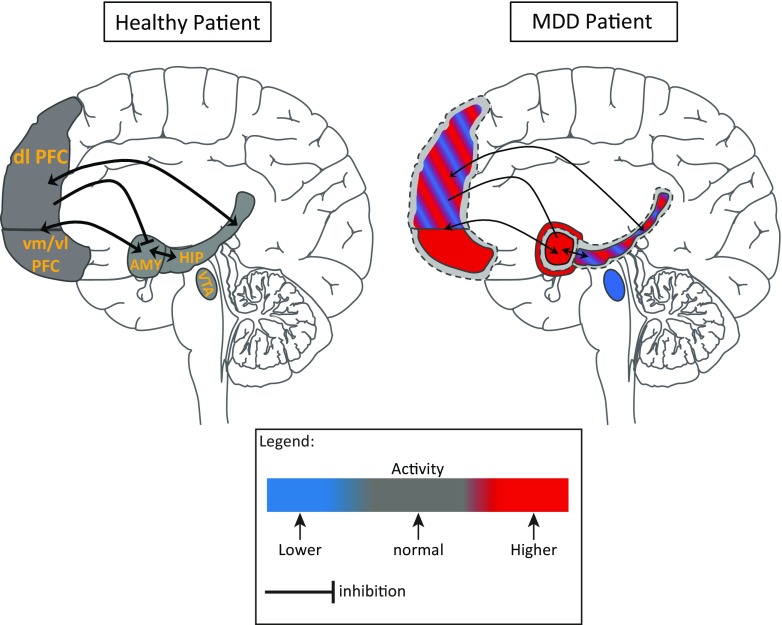
- Depression is associated with structural and functional changes in mood-related brain regions, including reduced hippocampal volume, reduced size of multiple PFC areas, altered amygdala activity, and impaired ventral striatal reward processing.
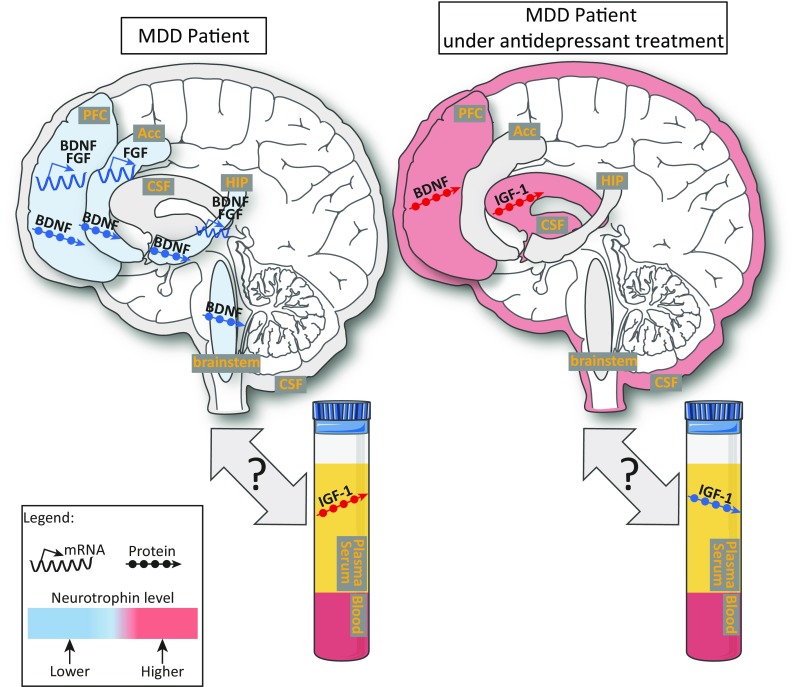
- The paper states that serum BDNF is “overall lower in depressed patients” in a meta-analysis, and that this was “confirmed by two other meta-analytic efforts”; however, it also says serum BDNF is not a reliable biomarker because of assay variability and unclear relation to brain BDNF.
- Multiple growth factors are described as altered in MDD and linked to plasticity: FGF1/FGF2 are reported lower in dorsolateral PFC and ACC, VEGF data are described as conflicting in plasma but relevant to SSRI-induced neurogenesis, and IGF-1 is reported as often higher in serum of depressed patients and reduced with effective antidepressant treatment.
- Antidepressant and stimulation treatments are summarized as having plasticity-related effects, including increased hippocampal volume after 3 years of medication, increased hippocampal volume after ECT, and increased progenitor/dividing cells in dentate gyrus in post-mortem brains treated with nortriptyline and clomipramine.
## Methods
- Narrative review of the literature, explicitly stating that it “summarize[s] the current literature” on neurotrophic factors and neuroplasticity pathways in depression and treatment.
- No original sample, cohort, or experimental dataset is reported in the text provided; instead, the paper synthesizes findings from human imaging, post-mortem studies, meta-analyses, and animal/preclinical studies.
- Main analysis is qualitative synthesis across brain regions, neuroplasticity mechanisms, growth factors, and therapeutic interventions, with conclusions drawn from the accumulated literature rather than a new statistical analysis.
## Limitations
- The paper itself notes that much of the human evidence on neuroplasticity is indirect because of “methodological limitations” and “ethical constraints.”
- It states that several peripheral biomarkers are hard to interpret because there is “no evidence that serum BDNF is related to brain BDNF and neuroplasticity,” and similarly that blood levels of other neurotrophins may not reflect brain levels.
- Evident from the text: this is a non-exhaustive narrative review, so the conclusions depend on the cited literature rather than a systematic search or meta-analysis by the authors.
Model-written summary. Check it against the paper before relying on it.
Integrity signals
Registry
Cites
Statistics
Figures
Verification
Claims the paper makes
100 Valid · 5 Not valid · 78 Not checked · 14 Own results and interpretations
At least one cited source doesn’t support this claim or points to a different paper, and none confirmed it — see the verdicts below.
In the paper
“Although these data and other (Baquet et al. 2004) indicate a temperate effect of BDNF in the maintenance of the cellular architecture of the adult brain, most of the studies evidenced its central role in neuronal plasticity.”
§ Neurotrophic factors and neuroplasticity pathways in the pathophysiology and treatment of depression > Neurotrophins and other growth factors > Brain-derived neurotrophic factor or BDNF
What the sources say
- Disputedcites Baquet et al. 2004 matched to “Early Striatal Dendrite Deficits followed by Neuron Loss with Advanced Age in the Absence of Anterograde Cortical Brain-Derived Neurotrophic Factor” (2004) sourceExperimental — accuracy not yet measured
The Introduction (page unavailable) says cortical BDNF has a major role in medium spiny neuron dendritic structure, contrary to describing its effect on cellular architecture as temperate. The Discussion (page unavailable) also reports substantial changes in soma, dendrite, and spine morphology, while noting that neuron survival was relatively unaffected at younger ages. (LLM, conf=0.84)
Checked by a reasoning model — may be wrong.
hedgedstates a cause- Asserted: passes — The authors put it forward as true.
- Checkable: passes — It can be checked against evidence.
- Load-bearing: unclear — It is unclear whether the paper’s conclusions depend on it.
- Based: passes — The paper gives a reason why it holds.
- Disputed
At least one cited source doesn’t support this claim or points to a different paper, and none confirmed it — see the verdicts below.
In the paper
“Interestingly, it has been shown that BDNF expression was increased in post-mortem brains of depressed patients treated with antidepressant drugs as compared to non-treated patients (Chen et al. 2001; Dunham et al. 2009).”
§ Neurotrophic factors and neuroplasticity pathways in the pathophysiology and treatment of depression > Neurotrophins and other growth factors > Brain-derived neurotrophic factor or BDNF
What the sources say
- Not checked — no full text of the sourcecites Chen et al. 2001 matched to “Increased hippocampal bdnf immunoreactivity in subjects treated with antidepressant medication” (2001) source
- Disputedcites Dunham et al. 2009 matched to “Expression of hippocampal brain-derived neurotrophic factor and its receptors in Stanley consortium brains” (2009) sourceExperimental — accuracy not yet measured
The Drug Treatment section acknowledges antidepressant-associated BDNF increases reported in earlier studies, but says this study could not confirm them. The Additional information section reports no significant difference between treated and untreated patients and no trend toward an increase among treated patients with MDD. (LLM, conf=0.89)
Checked by a reasoning model — may be wrong.
plainstates an association- Asserted: passes — The authors put it forward as true.
- Checkable: passes — It can be checked against evidence.
- Load-bearing: unclear — It is unclear whether the paper’s conclusions depend on it.
- Based: passes — The paper gives a reason why it holds.
The sources with a verdict support this claim; the rest weren’t checked yet, have no full text we could read, or their verdicts aren’t rated yet.
In the paper
“Animal studies revealed that chronic stress causes atrophy of apical dendrites of pyramidal neurons in the CA3 region of the hippocampus (Magarinos et al. 1996; Vyas et al. 2002; Watanabe et al. 1992).”
§ Neurotrophic factors and neuroplasticity pathways in the pathophysiology and treatment of depression > Brain regions and neurocircuits involved in depression: neuroanatomical evidence > Hippocampus
What the sources say
- Supportedcites Magarinos et al. 1996 matched to “Chronic Psychosocial Stress Causes Apical Dendritic Atrophy of Hippocampal CA3 Pyramidal Neurons in Subordinate Tree Shrews” (1996) source
The Discussion reports stress-induced apical dendritic atrophy in hippocampal CA3 pyramidal cells of subordinate tree shrews after 28 days of psychosocial stress, compared with controls. This directly supports the cited animal-study claim; the supplied passage does not specify a page. (LLM, conf=0.94)
- Supportedcites Vyas et al. 2002 matched to “Chronic stress induces contrasting patterns of dendritic remodeling in hippocampal and amygdaloid neurons” (2002) source
The Results section, “Effects of chronic immobilization stress on dendritic morphology of hippocampal CA3 pyramidal neurons,” reports significant atrophy of apical dendrites in CA3 pyramidal cells after chronic immobilization stress in rats. No page number is supplied in the passages. (LLM, conf=0.94)
- Not checked — no full text of the sourcecites Watanabe et al. 1992 matched to “Stress induces atrophy of apical dendrites of hippocampal CA3 pyramidal neurons” (1992) source
plainstates a cause- Asserted: passes — The authors put it forward as true.
- Checkable: passes — It can be checked against evidence.
- Load-bearing: passes — The paper’s conclusions depend on it.
- Based: passes — The paper gives a reason why it holds.
- Supported
The cited sources support only part of this claim — read each source’s verdict below.
In the paper
“PFC abnormalities observed either in MDD patients or in rodent models are partly corrected by antidepressants.”
§ Neurotrophic factors and neuroplasticity pathways in the pathophysiology and treatment of depression > Brain regions and neurocircuits involved in depression: neuroanatomical evidence > Prefrontal cortex
What the sources say
- Not checked — no full text of the sourcecites Lyttle et al. 2015 matched to “Repeated fluvoxamine treatment recovers juvenile stress-induced morphological changes and depressive-like behavior in rats” (2015) source
- Partly supportedcites Wang et al. 2015a matched to “The effects of antidepressant treatment on resting-state functional brain networks in patients with major depressive disorder” (2015) sourceExperimental — accuracy not yet measured
The Discussion reports that escitalopram reduced abnormally high connectivity strength in the dorsomedial prefrontal cortex of patients with MDD, supporting the patient portion of the claim. It does not report correction of prefrontal cortex abnormalities in rodent models; its discussion of animal studies concerns the hippocampus instead. (LLM, conf=0.88)
plainstates a cause- Asserted: passes — The authors put it forward as true.
- Checkable: passes — It can be checked against evidence.
- Load-bearing: passes — The paper’s conclusions depend on it.
- Based: passes — The paper gives a reason why it holds.
The cited sources support only part of this claim — read each source’s verdict below.
In the paper
“Depressed patients show an attenuated activation of the VTA-NAc pathway or the NAc itself when compared to normal patients in fMRI analyses (Epstein et al. 2006; Furman et al. 2011; Pizzagalli et al. 2009; Smoski et al. 2009).”
§ Neurotrophic factors and neuroplasticity pathways in the pathophysiology and treatment of depression > Brain regions and neurocircuits involved in depression: neuroanatomical evidence > Ventral striatum
What the sources say
- Not checked — no full text of the sourcecites Epstein et al. 2006 matched to “Lack of Ventral Striatal Response to Positive Stimuli in Depressed Versus Normal Subjects” (2006) source
- Partly supportedcites Furman et al. 2011 matched to “Frontostriatal functional connectivity in major depressive disorder” (2011) sourceExperimental — accuracy not yet measured
The Ventral striatum results report attenuated functional connectivity between the ventral striatum and two prefrontal regions in participants with major depressive disorder compared with controls; the Discussion describes the striatal seed as approximating the nucleus accumbens. That supports an alteration in an accumbens-related network, but not attenuated activation of the nucleus accumbens itself or of a VTA–NAc pathway. Page numbers were not available in our copy. (LLM, conf=0.87)
- Supportedcites Pizzagalli et al. 2009 matched to “Reduced caudate and nucleus accumbens response to rewards in unmedicated individuals with major depressive disorder” (2009) source
The Results (Functional MRI Data) report weaker left nucleus accumbens responses to monetary gains in the MDD group than in healthy comparison subjects. The finding concerns reward outcomes, and the authors caution that the nucleus accumbens difference is preliminary after correction for multiple comparisons. (LLM, conf=0.88)
plain- Asserted: passes — The authors put it forward as true.
- Checkable: passes — It can be checked against evidence.
- Load-bearing: unclear — It is unclear whether the paper’s conclusions depend on it.
- Based: passes — The paper gives a reason why it holds.
127 more claims · 64 with their cited sources checked
Create a free account to see all 197 claims and to verify the 6 references still open.
- It may state two separate claims as one. 59
- Probably not a substantial claim. 8
Claims other papers make about this one
Each is checked against this paper’s own text: does it say what the citing paper says it does?
The cited source says what the claim attributes to it.
In the citing paper
“Another candidate gene is brain-derived neurotrophic factor (BDNF) which is involved in neuroplastic changes associated with stress and depression13,14.”
From Methylome-wide change associated with response to electroconvulsive therapy in depressed patients (2021) · cites this paper as [13]
The check wasn’t confident either way, so it gives no verdict — never disputed.
In the citing paper
“In depression, altered epigenetic patterns have been observed in key genes related to neurodevelopment and neurotransmission, including the serotonin transporter gene (SLC6A4) and brain-derived neurotrophic factor (BDNF) (Jiang et al., 2019; Levy et al., 2018).”
From Histone modifications and depression: epigenetic mechanisms, therapeutic targets, and translational outlook (2026) · cites this paper as Levy et al., 2018
Experimental — accuracy not yet measuredIn the citing paper
“exercise among patients with depression upregulated brain-derived neurotrophic factor (BDNF), which stimulates and mediates neurogenesis and regulates depressive behavior [67], in the hippocampus and cortex, promoted hippocampal neurogenesis, and significantly enhanced synaptic plasticity [68].”
From Systematic review and meta-analysis of the effects of exercise on depression in adolescents (2022) · cites this paper as [67]
In the citing paper
“BDNF has been consistently associated to the therapeutic effect of antidepressant drugs [199,200,201].”
From P2X7 Receptor Signaling in Stress and Depression (2019) · cites this paper as [199]
Self-check
Percentages, sums and reported differences re-computed from the paper’s own numbers.
Each contradiction between two passages listed here was confirmed by an independent check.
Rated minor: it would not touch a result — a value no result rests on, a p-value that stays on the same side of the significance level, or a conflict that is clerical, resolved elsewhere in the paper, or outside its own findings.
In the paper
§ Neurotrophic factors and neuroplasticity pathways in the pathophysiology and treatment of depression > Future directions: targeting growth factor signaling with synthetic small molecules, focus on the BDNF/TrkB pathway > TrkB antagonists
“To our knowledge, only ANA-12 and cyclotraxin B, both described as selective antagonists for TrkB, have been tested so far.”
§ Neurotrophic factors and neuroplasticity pathways in the pathophysiology and treatment of depression > Future directions: targeting growth factor signaling with synthetic small molecules, focus on the BDNF/TrkB pathway > TrkB antagonists
“ANA-12 is a selective partial agonist that was first developed by Carzola et al. in 2011 using a structure-based in silico screening (Cazorla et al. 2011).”
Citations
Cites
Molecular Mechanisms of Depression: Perspectives on New Treatment Strategies
Lang, U. E., & Borgwardt, S. (2013) · Cellular Physiology and Biochemistry · doi:10.1159/000350094 · Cited by 8,475
LeDoux, J. E. (2000) · Annual Review of Neuroscience · doi:10.1146/annurev.neuro.23.1.155 · Cited by 8,444 · cited 1×
“The amygdala is an integrant part of the limbic system implicated in cognitive and emotional processing, in particular that involved in fear and anxiety (Aggleton 1993; LeDoux 2000).”
BackgroundNeurogenesis in the adult human hippocampus
Eriksson, P. S., Perfilieva, E., Björk-Eriksson, T., Alborn, A.-M., Nordborg, C., Peterson, D. A., & Gage, F. H. (1998) · Nature Medicine · doi:10.1038/3305 · Cited by 6,369
Higgins, S. M. F., Macken, A. P., Cullen, W., Saunders, J., Dunne, C. P., & O’Gorman, C. S. (2013) · PubMed · doi:10.34961/9953 · Cited by 4,808
Requirement of hippocampal neurogenesis for the behavioral effects of antidepressants
Santarelli, L., Saxe, M., Gross, C., Surget, A., Battaglia, F., Dulawa, S., Weisstaub, N., Lee, J., Duman, R., Arancio, O., et al. (2003) · Science · doi:10.1126/science.1083328 · Cited by 4,321
Domingos da Silveira da Luz, A. C., Pereira Dias, G., do Nascimento Bevilaqua, M. C., Cocks, G., Gardino, P. F., Thuret, S., & Nardi, A. E. (2013) · Neuropsychobiology · doi:10.1159/000353269 · Cited by 3,995
Egan, M. F., Kojima, M., Callicott, J. H., Goldberg, T. E., Kolachana, B. S., Bertolino, A., Zaitsev, E., Gold, B., Goldman, D., Dean, M., et al. (2003) · Cell · doi:10.1016/s0092-8674(03)00035-7 · Cited by 3,888
The size and burden of mental disorders and other disorders of the brain in Europe 2010
Wittchen, H. U., Jacobi, F., Rehm, J., Gustavsson, A., Svensson, M., Jönsson, B., Olesen, J., Allgulander, C., Alonso, J., Faravelli, C., et al. (2011) · European Neuropsychopharmacology · doi:10.1016/j.euroneuro.2011.07.018 · Cited by 3,754
The Neuroendocrinology of Stress: A Never Ending Story
Lightman, S. L. (2008) · Journal of Neuroendocrinology · doi:10.1111/j.1365-2826.2008.01711.x · Cited by 3,566
Nestler, E. J., Barrot, M., DiLeone, R. J., Eisch, A. J., Gold, S. J., & Monteggia, L. M. (2002) · Neuron · doi:10.1016/s0896-6273(02)00653-0 · Cited by 3,217
Cited by
Items 201–300 of 309
Guillén, J. M. B. (2023) · American Journal of Psychiatry and Neuroscience · doi:10.11648/j.ajpn.20231101.12 · Cited by 5
McAllister-Williams, H., Goudie, N., Azim, L., Bartle, V., Berger, M., Butcher, C., Chadwick, T. J., Clare, E., Courtney, P., Dixon, L., et al. (2025) · Health Technology Assessment · doi:10.3310/hbfc1953 · Cited by 4
Investigating acupuncture therapy in depression: mechanisms of synaptic plasticity regulation
Si, Y., Ma, W., Zhang, Q., Zhang, Y., An, J., Zhang, M., Fu, Y., Yu, Y., Zhang, H., Fang, Y., et al. (2025) · Neuroscience · doi:10.1016/j.neuroscience.2025.06.005 · Cited by 6
Ahmad, M. H., Rizvi, M. M. A., Fatima, M., & Mondal, A. C. (2021) · Elsevier eBooks · doi:10.1016/b978-0-12-817935-2.00032-5 · Cited by 3
Gao, X., Xia, T. C., Mak, S., Zhu, K. Y., Dong, T. T.-X., & Tsim, K. W. K. (2022) · Evidence-based Complementary and Alternative Medicine · doi:10.1155/2022/8809546 · Cited by 3
“Neurotrophic factors and their corresponding receptors, as well as the abundance of neurotransmitter-related enzymes, play an important role in supporting the maintenance of neuronal functions and which are downregulated in the brain under depression [19, 20].”
BackgroundGiannos, P., Prokopidis, K., Forbes, S. C., Celoch, K., Candow, D. G., & Tartar, J. L. (2022) · Brain Sciences · doi:10.3390/brainsci12070825 · Cited by 3
“Finally, SGK1 is involved in the under-expression of brain-derived neurotrophic factors and the vascular endothelial growth factor, leading to neuronal degeneration that is a consequence of aberrant glucocorticoid receptor activation [64,65].”
BackgroundGarvert, L., Kirchner, K., Grabe, H. J., & der Auwera, S. V. (2022) · Progress in Neuro-Psychopharmacology and Biological Psychiatry · doi:10.1016/j.pnpbp.2022.110614 · Cited by 7
Neurochemical Signaling in Depression: Impact of Target-Based Pharmaceuticals
Sharma, B., & Khushboo (2022) · Current Drug Therapy · doi:10.2174/1574885517666220817122840 · Cited by 4
Natsuyama, T., Okamoto, N., Watanabe, K., Chibaatar, E., Tesen, H., Hayasaki, G., Ikenouchi, A., Kakeda, S., & Yoshimura, R. (2023) · Frontiers in Psychiatry · doi:10.3389/fpsyt.2022.1031386 · Cited by 6
Demirci, E., Taştepe, N., Özmen, S., & Kılıç, E. (2023) · Psychiatric Quarterly · doi:10.1007/s11126-023-10046-7 · Cited by 7
“Increasing evidence suggest that neurotrophic factors, such as brain-derived neurotrophic factor (BDNF), have effects on the regulation of negative emotions and play an important role in the treatment of addictions [6].”
BackgroundHodzic, K., Thordstein, M., Strandberg, J., Jerlhag, E., & Wass, C. (2025) · Brain Sciences · doi:10.3390/brainsci15050461 · Cited by 4
“Such impairments in plasticity may be partly restored by electroconvulsive therapy and ketamine treatment [5].”
The role of Neurotrophin 3 (NT-3) on neural plasticity in depression: A literature review
Shatri, H., Pranandi, M., Ardani, Y., Firmansyah, I., Faisal, E., & Putranto, R. (2023) · Intisari Sains Medis · doi:10.15562/ism.v14i3.1830 · Cited by 2
Yan, Z., Chang, L., Sun, S., & Sun, Z. (2025) · Neuroreport · doi:10.1097/wnr.0000000000002213 · Cited by 2
Ali, S., & Dwivedi, Y. (2025) · Molecular Neurobiology · doi:10.1007/s12035-025-05309-2 · Cited by 5
From microRNA to protein, linking the neurotrophic hypothesis of depression to the Wistar Kyoto rat
Kaadt, E., Hedemann, N., Damgaard, C. K., Müller, H. K., & Elfving, B. (2023) · Neuroscience Applied · doi:10.1016/j.nsa.2023.101131 · Cited by 2
“…(VEGF) have been linked to the depressive pathophysiology and antidepressant treatment in preclinical and clinical studies (Deyama et al., 2019; Deyama and Duman, 2020; Dwivedi et al., 2003; Elfving et al., 2010; Karege et al., 2005; Levy et al., 2018; Qi et al., 2015; Sheldrick et al., 2017).”
Pharmacological Mechanism of Herbal Interventions for Bipolar Disorder
Singh, A., Sarwat, M., & Gupta, S. (2024) · Current Pharmaceutical Design · doi:10.2174/0113816128312442240519184440 · Cited by 2
Luam, D., Carneiro, M. I. S., Fonseca, A. R. O., Shirahige, L., Brito, R. D. M., Melo, L., Melo, D., Silva, M. A. S. D., Piscitelli, D., & Monte-Silva, K. K. (2024) · BMC Musculoskeletal Disorders · doi:10.1186/s12891-024-07824-0 · Cited by 4
“HT - healthy participants as shown by changes in alpha band activity (i.e., power density and peak frequency) in patients with different types of chronic pain [46], others did not find any correlation [47, 48].”
BackgroundNeurotrophic Factor: Epidermal Growth Factor (EGF) and Depressive Disorder
Islam, M. R., Roknuzzaman, A. S. M., Sarker, R., Haque, M. A., Qusar, M. S., & Kabir, E. R. (2024) · Springer eBooks · doi:10.1007/978-3-031-32035-4_33-1 · Cited by 1
On a theology of social work: Historical teachings in contemporary clinical applications
Nicola, W. (2021) · Journal of Religion & Spirituality in Social Work Social Thought · doi:10.1080/15426432.2021.1939226 · Cited by 3
“…Saxon et al., 2017); one study suggests that improvements in attachment security during therapy may coincide with better treatment outcome (K. N. Levy et al., 2018), while another revealed that the quality of the therapeutic alliance is predictive of positive treatment outcome (Black et al.,…”
ResultGalanin, I. V., Нарышкин, А. Г., Ляскина, И. Ю., & Александрович, С. Т. (2022) · Human Physiology · doi:10.1134/s0362119722020062 · Cited by 2
EFFECT OF GLYPROLINES ON THE LEVEL OF NERVE GROWTH FACTOR UNDER CONDITIONS OF "SOCIAL" STRESS
Yasenyavskay, A. L., Tsibizova, A., Андреева, Л. А., et al. (2021) · Journal of Volgograd State Medical University · doi:10.19163/1994-9480-2021-4(80)-55-59 · Cited by 2
Senjobi, C. T., Senjobi, A. H., Soremekun, O. E., Olugbogi, E. A., Adehin, O. H., Lawal, O. I., James-Edwards, L. S., & Arietarhire, L. O. (2024) · Research Square · doi:10.21203/rs.3.rs-4557067/v1 · Cited by 2
Neurotrophic Hypothesis of Development of Depression
Yasenyavskaya, A. L., Цибизова, А. А., & Самотруева, М. А. (2024) · Human Physiology · doi:10.31857/s0131164624020121 · Cited by 1
Karabanov, S. Y., Kibitkina, A. A., Vasilevskaya, E. R., & Fedulova, L. (2024) · Genes and Cells · doi:10.17816/gc631853 · Cited by 2
Zhang, Y., He, Y., Fang, Y., Cai, M., Sun, G., Wang, R., Zhen, J., Zhang, Y., Li, Z., Ma, Y., et al. (2025) · Frontiers in Psychiatry · doi:10.3389/fpsyt.2024.1438085 · Cited by 2
Depression and Suicide in the “World’s Happiest Countries”
Fogel, B. S., & Jiang, X. (2025) · Oxford University Press eBooks · doi:10.1093/med/9780190850074.003.0013 · Cited by 1
The Role of Brain-Derived Neurotrophic Factor (BDNF) in Depression: A Narrative Review
Varghese, T. P., Singh, R., & Chand, S. (2025) · The Open Biomarkers Journal · doi:10.2174/0118753183394103250623111239 · Cited by 2
Munzuroğlu, M., Gökçek-Saraç, Ç., Gemici, A., & Derin, N. (2025) · Toxicology Letters · doi:10.1016/j.toxlet.2025.07.1411 · Cited by 2
The role of neurotrophins in sensory processing in autism
Suprunowicz, M., Wińska, A., Oracz, A. J., Modzelewski, S., Konarzewska, B., & Waszkiewicz, N. (2025) · Neuroscience · doi:10.1016/j.neuroscience.2025.09.051 · Cited by 2
Cas12a Trans-Cleavage of Hairpins Triggers a CHA Cascade for an Ultrasensitive SERS Aptasensor
Yan, J., Wang, S., Xiong, S., Luo, X., Li, Y., & Deng, X. (2026) · ACS Sensors · doi:10.1021/acssensors.6c00041 · Cited by 4
Neuropsychological Effects of Antidepressants: Translational Studies
Kamenish, K., & Robinson, E. S. J. (2023) · Current topics in behavioral neurosciences · doi:10.1007/7854_2023_446 · Cited by 1
Nasrallah, J. (2024) · Journal of Neuro Psychiatry Reports · doi:10.47363/jnpr/2024(2)102 · Cited by 1
Qiao, Y., Zhang, X., Chen, H., Liang, X., Guo, J., Wang, Q., Ding, Y., Wei, L., Bi, H., & Gao, T. (2025) · Drug Design Development and Therapy · doi:10.2147/dddt.s537918 · Cited by 1
“The mice in the control and model groups received intragastric injections of 10% DMSO (dimethyl sulfoxide).”
Effect of diallyl disulfide on lipopolysaccharide-induced depression-like behavior in micePreprint
Lu, J., He, H., Huang, C. I., & Chen, Z. (2019) · doi:10.21203/rs.2.19757/v1 · Cited by 1
The impact of external stress factors on hippocampus volume during antidepressant treatment
Hrtánek, I., Bittšanský, M., Tonhajzerová, I., Grendár, M., Oppa, M., Cesnekova, D., Farský, I., Hutka, P., Dobrota, D., Zeleňák, K., et al. (2021) · The European Journal of Psychiatry · doi:10.1016/j.ejpsy.2020.12.004
Heterogeneity of the mechanisms of action of antidepressants
Козловский, В. Л., Popov, M. Y., Kosterin, D. N., & Витальевна, Л. О. (2021) · V M BEKHTEREV REVIEW OF PSYCHIATRY AND MEDICAL PSYCHOLOGY · doi:10.31363/2313-7053-2021-1-11-17
“Активация нейроногенеза и стимуляция нейроростовых факторов, показанная вначале для тианептина, а затем и для других препаратов [13,16,22], позволяет сделать предположение об их неоднозначном действии.”
Antidepressants: Pharmacology and Biochemistry
Efinger, V., Müller, W. E., & Friedland, K. (2021) · Springer eBooks · doi:10.1007/978-3-319-56015-1_26-1 · Cited by 1
Qian, F., He, Y., Du, X., Lu, H., He, R., & Fan, J. (2021) · Research Square · doi:10.21203/rs.3.rs-757647/v1
EXPERIÊNCIAS DE PERDA DENTÁRIA E QUALIDADE DE VIDA EM PACIENTES TRANSPLANTADOS RENAIS HOSPITALIZADOS
Sousa, L. B., dos Santos, D. L. N., Almondes, C. M. S., & Lopes, F. F. (2021) · doi:10.22533/at.ed.7852113095
Crossley, N., 西原, 和., & 堀田, 裕. (2012) · 新泉社 eBooks · Cited by 1
Plasma levels of neurotrophic factors are not associated with the severity of depression
Zorkina, Y., Syunyakov, T., Abramova, O. V., Yunes, R. А., Pavlichenko, A. V., Ka, P., Khobta, E. B., Susloparova, D. A., Tsarapkin, G. Y., Andreyuk, D., et al. (2021) · Consortium Psychiatricum · doi:10.17816/cp110 · Cited by 1
“7,10 The brain-derived neurotrophic factor (BDNF) is a well-researched protein that has multiple functions and is involved in the processes of neurogenesis, neuroplasticity, and memory formation.”
BackgroundThaw, E. (2021) · Carleton University's Institutional Repository (MacOdrum Library, Carleton University) · doi:10.22215/etd/2021-14729
Keeler, J. L., Keeler-Schäffeler, R., Himmerich, H., & Treasure, J. L. (2021) · OSF Preprints (OSF Preprints) · doi:10.31219/osf.io/d6ucx
Truncated Tyrosine Kinase Receptor B (TrkB.T1) plays a role in susceptibility to chronic stress
Khalaf, S. (2020) · Carleton University's Institutional Repository (MacOdrum Library, Carleton University) · doi:10.22215/etd/2020-14183
Hong, J. Y., Kim, H., Yeo, C., Jeon, W., Lee, J., Baek, S. H., Lee, Y. J., & Ha, I. (2022) · Antioxidants · doi:10.3390/antiox11071388 · Cited by 1
Nunes, F. D. D. (2022) · Digital Library of Theses and Dissertations (Universidade de São Paulo) · doi:10.11606/t.22.2022.tde-18082022-102408
Antidepressants: Pharmacology and Biochemistry
Efinger, V., Müller, W. E., & Friedland, K. (2022) · Springer eBooks · doi:10.1007/978-3-030-62059-2_26 · Cited by 1
Neurobiología del trastorno depresivo mayor
Guerrero, K. J. R., & Bernita, R. E. S. (2022) · Revista Vive · doi:10.33996/revistavive.v5i15.190 · Cited by 3
Nitric Oxide in Major Depressive Disorder
Wegener, G., & Joca, S. R. L. (2023) · Advances in biochemistry in health and disease · doi:10.1007/978-3-031-24778-1_15 · Cited by 1
Álvaro Cavieres, F., & López‐Silva, P. (2022) · Revista médica de Chile · doi:10.4067/s0034-98872022001101513 · Cited by 2
Neuroprotection induced by neurotrophic factors
Réus, G. Z., Manosso, L. M., Botelho, M. E. M., Arent, C. O., Pedro, L. C., & Quevedo, J. (2024) · Elsevier eBooks · doi:10.1016/b978-0-443-23763-8.00063-4
Melancholic Depression Is Accompanied by Increased Level of Nerve Growth Factor in Blood Serum
Uzbekov, M. G., Shikhov, S. N., Krjukov, V. V., et al. (2023) · Neurochemical Journal · doi:10.1134/s1819712423040232
Melancholic Depression is Followed by the Increased Serum Nerve Growth Factor Level
Uzbekov, M. G., Shikhov, S. N., Krjukov, V. V., et al. (2023) · Нейрохимия · doi:10.31857/s1027813323040234
Wang, Y., Huang, Y., Luo, X., Lai, X., Yu, L., Zhao, Z., Zhang, A., Li, H., Huang, G., Li, Y., et al. (2024) · SSRN Electronic Journal · doi:10.2139/ssrn.4879423
Unnissa, Z., Ammaarah, A., Fatima, S., Ahmed, A., Banu, A., Mohiuddin, M. J., & Mohiuddin, S. (2024) · Research Journal of Pharmacy and Technology · doi:10.52711/0974-360x.2024.00359 · Cited by 2
Optogenetics in Mood Disorders
Kumar, P., Kumari, T., Mateen, R., & Bhandarı, S. S. (2024) · Current Behavioral Neuroscience Reports · doi:10.1007/s40473-024-00285-8
“In the pathophysiology of mood disorders, monoamine neurotrans-mitters and their receptors, neurotrophic factors, hormones, and genes have all drawn much interest (77–80).”
Adolescent social isolation induces sex-specific behavioral and neural alterationsPreprint
Albanese, N. C., Poggini, S., Reccagni, A., et al. (2024) · doi:10.31219/osf.io/t4fy8
Neurotrophic Hypothesis of the Development of Depression
Yasenyavskaya, A. L., Цибизова, А. А., & Самотруева, М. А. (2024) · Human Physiology · doi:10.1134/s0362119723700664
ANALYSIS OF MODERN CONCEPTS OF NEURODEGENERATIVE PROPERTIES OF DEPRESSION
Yasenyavskaya, A. L., Tsibizova, A., & Самотруева, М. А. (2023) · Molekulyarnaya Meditsina (Molecular medicine) · doi:10.29296/24999490-2023-04-05 · Cited by 1
The role of neuroplasticity in the etiology and treatment of depressive disorders
Konstantinović, I., & Trandafilović, M. (2023) · AFMN Biomedicine · doi:10.5937/afmnai41-48899
Alvarenga, F. D. S., Zetum, A. S. S., Casotti, M. C., Barbosa, K. R. M., Guaitolini, Y. M., Louro, I. D., & Meira, D. D. (2025) · Brazilian Journal of Health Review · doi:10.34119/bjhrv8n1-131
List of Abbreviations and Acronyms
Fogel, B. S., & Jiang, X. (2025) · Oxford University Press eBooks · doi:10.1093/med/9780190850074.002.0009
Dimensions and Implications of Cultural Identity
Fogel, B. S., & Jiang, X. (2025) · Oxford University Press eBooks · doi:10.1093/med/9780190850074.003.0004
Seeing Depression Through A Cultural Lens
Fogel, B. S., & Jiang, X. (2025) · doi:10.1093/med/9780190850074.001.0001
Fogel, B. S., & Jiang, X. (2025) · Oxford University Press eBooks · doi:10.1093/med/9780190850074.002.0006
Fogel, B. S., & Jiang, X. (2025) · Oxford University Press eBooks · doi:10.1093/med/9780190850074.003.0002
Fogel, B. S., & Jiang, X. (2025) · Oxford University Press eBooks · doi:10.1093/med/9780190850074.003.0006
Ancient Wisdom Meets Modern Science: Depression in Traditional Medicine
Fogel, B. S., & Jiang, X. (2025) · Oxford University Press eBooks · doi:10.1093/med/9780190850074.003.0009
South Korea: Han and Passionate Intensity
Fogel, B. S., & Jiang, X. (2025) · Oxford University Press eBooks · doi:10.1093/med/9780190850074.003.0012
Picturing Depression: Faces, Backgrounds, and Foregrounds
Fogel, B. S., & Jiang, X. (2025) · Oxford University Press eBooks · doi:10.1093/med/9780190850074.003.0001
Fogel, B. S., & Jiang, X. (2025) · Oxford University Press eBooks · doi:10.1093/med/9780190850074.002.0003
Cultural Identity and Personal Biography
Fogel, B. S., & Jiang, X. (2025) · Oxford University Press eBooks · doi:10.1093/med/9780190850074.003.0005
Fogel, B. S., & Jiang, X. (2025) · Oxford University Press eBooks · doi:10.1093/med/9780190850074.003.0018
Cultural Correlates and Clinical Consequences
Fogel, B. S., & Jiang, X. (2025) · Oxford University Press eBooks · doi:10.1093/med/9780190850074.003.0008
Depression and Social Class: A Four-Dimensional View
Fogel, B. S., & Jiang, X. (2025) · Oxford University Press eBooks · doi:10.1093/med/9780190850074.003.0007
Japan: Invisible Double-Edged Swords
Fogel, B. S., & Jiang, X. (2025) · Oxford University Press eBooks · doi:10.1093/med/9780190850074.003.0011
China: Confucian Harmony and Dissonance
Fogel, B. S., & Jiang, X. (2025) · Oxford University Press eBooks · doi:10.1093/med/9780190850074.003.0010 · Cited by 1
Beyond Shades of Gray: Depression and the Bipolar Spectrum
Fogel, B. S., & Jiang, X. (2025) · Oxford University Press eBooks · doi:10.1093/med/9780190850074.003.0003
Fogel, B. S., & Jiang, X. (2025) · Oxford University Press eBooks · doi:10.1093/med/9780190850074.002.0007
Flying High, Feeling Low: Depression in Airline Pilots
Fogel, B. S., & Jiang, X. (2025) · Oxford University Press eBooks · doi:10.1093/med/9780190850074.003.0017
American Regional Cultures and Geography of Mood
Fogel, B. S., & Jiang, X. (2025) · Oxford University Press eBooks · doi:10.1093/med/9780190850074.003.0014
Fogel, B. S., & Jiang, X. (2025) · Oxford University Press eBooks · doi:10.1093/med/9780190850074.002.0004
The Dark Side of Creative Talent
Fogel, B. S., & Jiang, X. (2025) · Oxford University Press eBooks · doi:10.1093/med/9780190850074.003.0015
Physicians in Pain: Depression in the Medical Profession
Fogel, B. S., & Jiang, X. (2025) · Oxford University Press eBooks · doi:10.1093/med/9780190850074.003.0016
İŞ STRESİNİN ÇALIŞANLARIN NÖROPLASTİSİTESİ ÜZERİNDEKİ ETKİSİ
Önen, M. N. (2025) · Erciyes Akademi · doi:10.48070/erciyesakademi.1632734
Recent theories about the neurobiology of major depression
Vázquez, G. H. (2025) · Elsevier eBooks · doi:10.1016/b978-0-443-33580-8.00021-0
Khan, M. M., Khan, Z. A., Khan, M. A., & Pandey, G. (2025) · World Journal of Stem Cells · doi:10.4252/wjsc.v17.i7.106194
Optimizing neurological and cardiovascular health through exercise
Mehta, P. (2025) · Elsevier eBooks · doi:10.1016/b978-0-443-33351-4.00008-8 · Cited by 1
Neurotrophic Factor: Epidermal Growth Factor (EGF) and Depressive Disorder
Islam, M. R., Roknuzzaman, A. S. M., Sarker, R., Haque, M. A., Qusar, M. S., & Kabir, E. R. (2025) · Springer eBooks · doi:10.1007/978-3-031-73368-0_33 · Cited by 1
Senjobi, C. T., Senjobi, A. H., Soremekun, O. E., Olugbogi, E. A., Adehin, O. H., Lawal, O. I., James-Edwards, L. S., & Arietarhire, L. O. (2025) · Research Square · doi:10.21203/rs.3.rs-4557067/v2
The Role of Diet in Supporting Neuroplasticity and Promoting Brain Resilience
Lashin, B. I., Aldalil, S. S., Hefnawy, M. T., Elattar, M., Ghahremanpour, G. K., Mahmoud, A., & Hammad, Y. (2025) · Nutritional neurosciences · doi:10.1007/978-981-95-1983-5_7 · Cited by 1
Sarcopenia in patients with type 2 diabetes mellitus
Николаевич, О. Р., Иванович, Д. Е., Владимировна, М. А., Kokorin, K. V. A., & Пшенникова, И. Г. (2025) · Clinical Medicine (Russian Journal) · doi:10.30629/0023-2149-2025-103-6-420-425 · Cited by 1
Shareef, A., Sameer, H. N., Yaseen, A., Athab, Z. H., Adil, M., & Allela, O. Q. B. (2025) · Molecular Neurobiology · doi:10.1007/s12035-025-05459-3 · Cited by 1
“Additionally, the pathophysiology of MDD has been linked to changes in DNA methylation of the BDNF gene, a critical gene implicated in neuroplasticity, which may indicate a mechanism for stress-induced mood swings [59, 60].”
Uzuneser, T. C., Jones, M. J., Sarikahya, M. H., Gummerson, D., Whitehead, S. N., Hardy, D. B., Rushlow, W. J., & Laviolette, S. R. (2025) · Neurobiology of Disease · doi:10.1016/j.nbd.2025.107201 · Cited by 1
Tseng, C.-C., Lau, C. I., Chou, Y.-H., Yang, K., Cheng, C., Hu, L., Li, C., Tsai, C.-F., & Liu, M. (2025) · Behavioural Brain Research · doi:10.1016/j.bbr.2025.115963
Bioinformatics Approaches to Understanding the Adaptogenic Response
Jain, R., & Tiwari, A. (2025) · Advanced Health Science and Technology Journal · doi:10.4103/ahstj.ahstj_24_25
Astroglia and depression: A Gliocentric perspective from rodent models to therapeutic insights
Subba, R., Ellappan, S., Banerjee, S., & Mondal, A. C. (2026) · Progress in Neuro-Psychopharmacology and Biological Psychiatry · doi:10.1016/j.pnpbp.2026.111627 · Cited by 2
Николаевич, О. Р., Иванович, Д. Е., Kokorin, K. V. A., & Пшенникова, И. Г. (2026) · Clinical Medicine (Russian Journal) · doi:10.30629/0023-2149-2025-103-10-11-787-793
Targeting neuroplasticity in old brain: restoring synapse with cognitive strategies
Kopalli, S. R., Kale, M. B., Yadav, A., Alshahrani, S., Mohammed, A., Oirdi, M. E., Farhan, M., Taksande, B. G., Upaganlawar, A. B., Umekar, M. J., et al. (2026) · Biogerontology · doi:10.1007/s10522-026-10408-1 · Cited by 2
“Neurotrophic factors and intracellular signalling cascades play pivotal roles in neuroplasticity, synaptic plasticity, and cognitive function, with age-related changes impacting these pathways significantly (Levy et al. 2018; Marzola et al. 2023; Miranda et al. 2019a).”
Manic switching from depression is affected by adult hippocampal neurogenesis
Song, J., Kim, W., Park, Y., Lee, J.-M., Kim, J.-H., Park, D., Lee, H.-J., Shin, K.-S., Kim, H. J., & Geum, D. (2026) · Animal Cells and Systems · doi:10.1080/19768354.2026.2654260 · Cited by 1
“The neurotrophic hypothesis posits that chronic stress and depression impair AHN, leading to reduced hippocampal volume and subsequent depressive symptoms, including cognitive deficits (Levy et al. 2018).”
Metadata
- Authors
- Levy, M. J. F., Boulle, F., Steinbusch, H. W., van den Hove, D. L. A., Kenis, G., & Lanfumey, L.
- Affiliations
- Inserm (FR)
- Maastricht University (NL)
- Corresponding author
- Lanfumey, Laurence
- Venue
- Psychopharmacology
- Published
- 2018-06-30
- Volume
- 235
- Issue
- 8
- Pages
- 2195-2220
- ISSN
- 0033-3158 (ISSN-L)
- 1432-2072
- PMC
- PMC6061771
- OpenAlex
- W2810237733
- Cited by
- 308
- References
- 378
- Citations by year
- 2026: 18 · 2025: 66 · 2024: 34 · 2023: 47 · 2022: 46 · 2021: 49 · 2020: 34 · 2019: 12 · 2018: 1
- FWCI
- 2.81
- Type
- journal article
- Language
- en
- Open access
- hybrid
- doi.org
- Licence
- cc-by
- creativecommons.org/licenses/by/4.0 (tdm)
- Locations
- Psychopharmacology (publishedVersion, cc-by)
- Europe PMC (PubMed Central) (publishedVersion, cc-by)
- PubMed Central (publishedVersion, cc-by)
- PubMed (publishedVersion)
- Research Publications (Maastricht University) (publishedVersion, cc-by)
- Research Publications (Maastricht University) (submittedVersion, other-oa)
- Funders
- Inserm
- Agence Nationale de la Recherche (2011-BSV-017-01)
- Internationale Stichting Alzheimer Onderzoek (12530)
- Topics
- Health Sciences › Medicine › Pharmacology (medical) › Treatment of Major Depression
- Life Sciences › Neuroscience › Cellular and Molecular Neuroscience › Nerve injury and regeneration
- Life Sciences › Neuroscience › Biological Psychiatry › Tryptophan and brain disorders
- Keywords
- depression, neurotrophic factors, neuroplasticity, antidepressants, synaptic plasticity, rapid-acting antidepressants, antidepressant mechanism, depression pathophysiology
- MeSH terms
- Affect, Animals, Antidepressive Agents, Depression, Emotions, Humans, Nerve Growth Factors, Neuronal Plasticity, Signal Transduction, Biomarkers, Treatment Outcome, Brain-Derived Neurotrophic Factor
About these checks
Registry, retraction, Cites and statistics results are computed, not judged, with one exception: a printed reference that no index lists is read once by a model before it counts as a citation error. Claims are extracted by a model and kept only when their quote appears verbatim in the text; each cited source is then checked, with a model’s help, for whether it says what the claim relies on. Those verdicts can be wrong — read the claim’s quote and the cited source before relying on one.
The claim verdicts this report counts are experimental: their accuracy is not yet measured.
A language model drew the claims from the paper on 2026-10-02, under version 3 of the claim definition (model deepseek-v4.1-flash, prompt extract-v3).
A second model labelled each claim on 2026-10-02 (model jev-1.13-20260917, definition revision gold-guideline-v0.2).
Cited sources are checked with a language model’s help (gpt-6-sol).
Statistics and arithmetic are recomputed, not judged.
Confidence bands are shown only for fields calibrated on our annotated test set. None is calibrated yet, so no band is shown.
What counts as a claim ›How we measure confidence ›How we check this ›
Are you an author, or do you see a problem with this page? Request a review
Data sources
Bibliographic data: Semantic Scholar, OpenAlex, Crossref.
Contains information from the Semantic Scholar Academic Graph Datasets, made available under the ODC Attribution License (ODC-BY 1.0).
Semantic Scholar’s data is described in: Kinney, R., et al. (2023). The Semantic Scholar Open Data Platform. arXiv:2301.10140.
