

The DOI matches its Crossref record; 96 of the 96 references it cites were found in a registry or an index.
Properties, production, and applications of camelid single-domain antibody fragments
Open accessAbstract
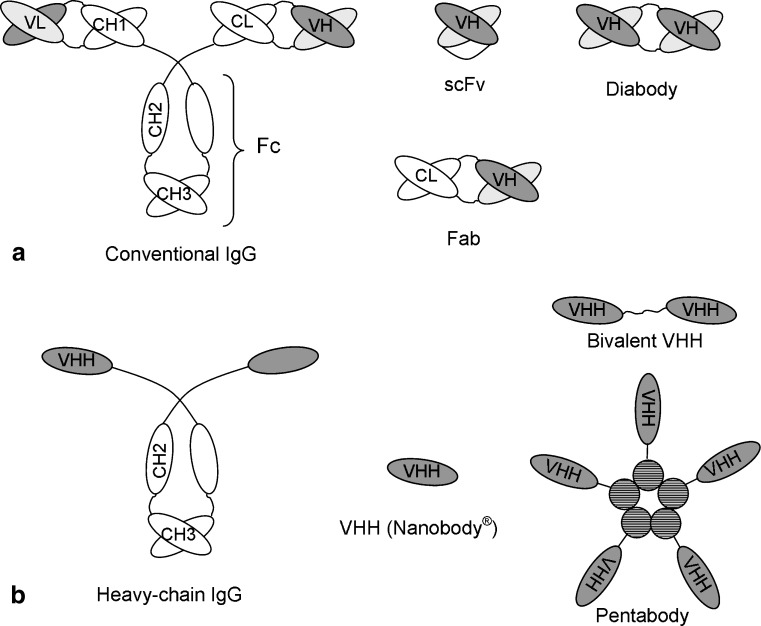
Camelids produce functional antibodies devoid of light chains of which the single N-terminal domain is fully capable of antigen binding. These single-domain antibody fragments (VHHs or Nanobodies®) have several advantages for biotechnological applications. They are well expressed in microorganisms and have a high stability and solubility. Furthermore, they are well suited for construction of larger molecules and selection systems such as phage, yeast, or ribosome display. This minireview offers an overview of (1) their properties as compared to conventional antibodies, (2) their production in microorganisms, with a focus on yeasts, and (3) their therapeutic applications.
Overview
The claims and statistics of this paper haven’t been checked yet.
Run the check — free, no account needed. It reads the open-access text and checks the sources it cites.
Integrity signals
Registry
Cites
Statistics
Figures
Verification
Claims the paper makes
The claims and statistics of this paper haven’t been checked yet.
Run the check — free, no account needed. It reads the open-access text and checks the sources it cites.
Claims other papers make about this one
Each is checked against this paper’s own text: does it say what the citing paper says it does?
The cited source says what the claim attributes to it.
In the citing paper
“Given their high-affinity, solubility and stability also in absence of the partner VL domain, the camelid VH domains (VHH) [4] and the shark VH domains called V-NAR (New Antigen Receptor) [5], are currently used as templates to generate highly efficient and stable new antibody fragments collectively termed nanobodies [6,7,8].”
From Evolution of Escherichia coli Expression System in Producing Antibody Recombinant Fragments (2020) · cites this paper as [4]
Self-check
Percentages, sums and reported differences re-computed from the paper’s own numbers.
The self-check needs the paper’s full text.
Citations
Cites
Naturally occurring antibodies devoid of light chains
Hamers-Casterman, C., Atarhouch, T., Muyldermans, S., Robinson, G., Hammers, C., Songa, E. B., Bendahman, N., & Hammers, R. (1993) · Nature · doi:10.1038/363446a0 · Cited by 3,241 · cited 4×
“Sequence analysis (Hamers-Casterman et al. 1993; Muyldermans et al. 1994; Vu et al. 1997; Harmsen et al. 2000) and elucidation of the crystal structure (Desmyter et al.”
BackgroundInfluentialRapid generation of functional human IgG antibodies derived from Fab-on-phage display libraries
Jostock, T., Vanhove, M., Brepoels, E., van Gool, R., Daukandt, M., Wehnert, A., van Hegelsom, R., Dransfield, D., Sexton, D., Devlin, M., et al. (2004) · Journal of Immunological Methods · doi:10.1016/j.jim.2004.03.014 · Cited by 2,572
Engineered antibody fragments and the rise of single domains
Holliger, P., & Hudson, P. J. (2005) · Nature Biotechnology · doi:10.1038/nbt1142 · Cited by 1,928 · cited 1×
“As compared to human VH domains, the VHH FRs show a high sequence homology of more than 80%, and their 3D structures can be superimposed (Muyldermans et al. 2001; Holliger and Hudson 2005).”
BackgroundWard, E. S., Güssow, D., Griffiths, A. D., Jones, P., & Winter, G. P. (1989) · Nature · doi:10.1038/341544a0 · Cited by 1,010 · cited 2×
“Although isolated antibody heavy (Utsumi and Karush 1964) and light chains (Yoo et al. 1967) can retain antigenbinding specificity, their affinity and solubility is often reduced (Ward et al. 1989).”
BackgroundGreenberg, A. S., Avila, D. W., Hughes, M. K., Hughes, A. L., McKinney, E. C., & Flajnik, M. F. (1995) · Nature · doi:10.1038/374168a0 · Cited by 783 · cited 2×
“Although single-domain antibodies later were also identified in particular cartilaginous fish (Greenberg et al. 1995), most research on the biotechnological application of singledomain antibodies was done using camelids because of Appl Microbiol Biotechnol (2007) 77:13–22”
BackgroundSelection and identification of single domain antibody fragments from camel heavy‐chain antibodies
Ghahroudi, M. A., Desmyter, A., Wyns, L., HAMERS, R., & Muyldermans, S. (1997) · FEBS Letters · doi:10.1016/s0014-5793(97)01062-4 · Cited by 775 · cited 1×
“Methods to isolate antigen-specific VHHs from immune ( Arbabi-Ghahroudi et al. 1997; Van der Linden et al. 2000a), nonimmune (Tanha et al. 2002; Yau et al. 2003; Verheesen et al. 2006), or semisynthetic (Goldman et al. 2006) libraries using phage, yeast, or ribosome display are now well established.”
BackgroundTargeting and tracing antigens in live cells with fluorescent nanobodies
Rothbauer, U., Zolghadr, K., Tillib, S. V., Nowak, D., Schermelleh, L., Gahl, A., Backmann, N., Conrath, K., Muyldermans, S., Cardoso, M. C., et al. (2006) · Nature Methods · doi:10.1038/nmeth953 · Cited by 715 · cited 1×
“Because of their stability, VHHs are especially suited for intrabody production because this requires expression in the reducing environment of the cytoplasm (Gueorguieva et al. 2006; Rothbauer et al. 2006).”
BackgroundMolecular basis for the preferential cleft recognition by dromedary heavy-chain antibodies
Genst, E. D., Silence, K., Decanniere, K., Conrath, K., Loris, R., Kinne, J., Muyldermans, S., & Wyns, L. (2006) · Proceedings of the National Academy of Sciences · doi:10.1073/pnas.0505379103 · Cited by 681 · cited 4×
“Occasionally, VHHs with affinity constants (KD) as low as 100 pM are isolated (Saerens et al. 2004; De Genst et al. 2006; Harmsen et al. 2006), which equals the affinity ceiling proposed for natural antibodies (Sundberg and Mariuzza 2002).”
BackgroundInfluentialSingle‐domain antibody fragments with high conformational stability
Dumoulin, M., Conrath, K., Meirhaeghe, A. V., Meersman, F., Heremans, K., Frenken, L. G. J., Muyldermans, S., Wyns, L., & Matagne, A. (2002) · Protein Science · doi:10.1110/ps.34602 · Cited by 641 · cited 4×
“VHHs are especially suited for oral immunotherapy because of their resistance against extremes of pH and the capacity to bind to the target at high concentrations of chaotropic agents (Dumoulin et al. 2002, 2003).”
BackgroundInfluentialStructure-Immunogenicity Relationships of Therapeutic Proteins
Hermeling, S., Crommelin, D. J. A., Schellekens, H., & Jiskoot, W. (2004) · Pharmaceutical Research · doi:10.1023/b:pham.0000029275.41323.a6 · Cited by 617 · cited 1×
“This could rely on their high sequence homology to conventional VH domains and on their high stability because aggregation of proteins is known to increase immunogenicity (Hermeling et al. 2004).”
Background
Research works printed but not linked: 1
- Estell D (2006) Adapting industry practices for the rapid, large-scale manufacture of pharmaceutical proteins. Bridge 36:39–44
Cited by
Sorted by citations
Items 601–700 of 809
Kunitomi, A., Chiba, S., Higashitani, N., Higashitani, A., Sato, S., Mizuno, K., & Ohashi, K. (2024) · Molecular Biology of the Cell · doi:10.1091/mbc.e23-11-0421 · Cited by 4
Phage Display Technology for Selection of Antibody Fragments
Teixeira, D., & González-Pajuelo, M. (2018) · Elsevier eBooks · doi:10.1016/b978-0-323-50878-0.00003-3 · Cited by 8
Goryainova, O. S., Khan, E., Ivanova, T. I., & Tillib, S. V. (2019) · Medical Immunology (Russia) · doi:10.15789/1563-0625-2019-3-567-575 · Cited by 4
Sotoudeh, N., Noormohammadi, Z., Habibi‐Anbouhi, M., Kazemi‐Lomedasht, F., & Behdani, M. (2019) · Monoclonal Antibodies in Immunodiagnosis and Immunotherapy · doi:10.1089/mab.2019.0031 · Cited by 4
“VHH domains are very small ( * 15–17 kDa), with high solubility and resistant to high temperature, high pressure, and low pH. (24,25) Considering the benefits of camelid polyclonal HcAbs, we cloned and expressed the recombinant extracellular domain of the CTLA-4 receptor gene in Escherichia coli…”
Donald, L. J., Spearman, M. A., Mishra, N., Komatsu, E., Butler, M., & Perreault, H. (2020) · Molecular Omics · doi:10.1039/c9mo00168a · Cited by 4
Emerging Technologies for the Treatment of COVID-19
Aghamollaei, H., Sarvestani, R., Bakherad, H., Zare, H., Guest, P. C., Ranjbar, R., & Sahebkar, A. (2021) · Advances in experimental medicine and biology · doi:10.1007/978-3-030-59261-5_7 · Cited by 4
Development of Nanobodies as first-in-class inhibitors for the NEDP1 deNEDDylating enzymePreprint
Abidi, N., Trauchessec, H., Hassanzadeh‐Ghassabeh, G., Pugnière, M., Muyldermans, S., & Xirodimas, D. P. (2020) · bioRxiv (Cold Spring Harbor Laboratory) · doi:10.1101/2020.03.20.999326 · Cited by 4
Molecular Modeling Methods in the Development of Affine and Specific Protein-Binding Agents
Nasaev, S. S., Mukanov, A. R., Mishkorez, I. V., Kuznetsov, I. I., Leibin, I. V., Dolgusheva, V. A., Pavlyuk, G. A., Manasyan, A. L., & Veselovsky, A. V. (2024) · Biochemistry (Moscow) · doi:10.1134/s0006297924080066 · Cited by 3
“Despite the small size of antibody fragments, their structure still remains suboptimal and includes relatively large regions whose function is limited to maintaining the structure of the binding site [69].”
Kökkaya, S., Göksu, A. G., Sözdutmaz, İ., Toy, M. A., & Berber, E. (2025) · Veterinary Research Communications · doi:10.1007/s11259-025-10912-8 · Cited by 3
“Such formats are particularly useful in research and for targeting mucosal or dense tissues where full IgGs have limited access (Wang et al. 2022).”
Berger, T. R., Boardman, A., Brentjens, R. J., & Maus, M. V. (2021) · Cancer drug discovery and develogment/Cancer drug discovery and development · doi:10.1007/978-3-030-87849-8_3 · Cited by 3
Large-Scale Production of Anti-RNase A VHH Expressed in pyrG Auxotrophic Aspergillus oryzae
Karaman, E., Eyüpoğlu, A. E., Azar, L. M., & Uysal, S. (2023) · Current Issues in Molecular Biology · doi:10.3390/cimb45060304 · Cited by 3
“VHH antibodies are well suited for heterologous expression to achieve a high yield because optimal folding and stability are ensured due to their small size, hydrophilicity, strictly monomeric nature, and low complexity [31].”
BackgroundCheng, J., Lv, Q., Ji, Y., Zhou, C., Guo, J., Li, X., & Hu, J. (2025) · Journal of Pharmaceutical and Biomedical Analysis · doi:10.1016/j.jpba.2025.116673 · Cited by 3
Hao, P., Wang, Y., Yan, Z., Feng, S., Sun, C., Zhang, B., Chen, J., & Gu, Y. (2025) · International Journal of Biological Macromolecules · doi:10.1016/j.ijbiomac.2025.144694 · Cited by 4
Using nanobodies for breast cancer treatment
Galappaththi, S. R., & Swingle, M. R. (2025) · Journal of Pharmacology and Experimental Therapeutics · doi:10.1016/j.jpet.2025.103737 · Cited by 3
Assessing combinatorial strategies to multimerize libraries of single‐domain antibodies
Oliveira, S. S., Aires‐da‐Silva, F., Lourenço, S., Freitas‐Vieira, A., Cunha-Santos, C., & Gonçalves, J. (2012) · Biotechnology and Applied Biochemistry · doi:10.1002/bab.1011 · Cited by 3
Mass Spectrometry-Based Screening Platform Reveals Orco Interactome in Drosophila melanogaster.
Yu, K. E., Kim, D.-H., Kim, Y.-I., Jones, W. D., & Lee, J. (2018) · Europe PMC (PubMed Central) · doi:10.14348/molcells.2018.2305 · Cited by 3
Lü, P., Qiu, S., Pan, Y., Shi, S., Yu, Q., Yu, F., Miao, L., Wang, H., & Chen, K. (2021) · Cancer Biotherapy and Radiopharmaceuticals · doi:10.1089/cbr.2021.0123 · Cited by 3
“31 Besides, the sdAb has better tissue penetration and faster clearance compared with full-size antibodies.”
NANOBODIES: STRUCTURE, MANUFACTURING, APPLICATION (REVIEW)
Шаталова, В. А., Yakubova, A., Palimpsestov, V. V., & Esmagambetov, I. B. (2019) · Drug development & registration · doi:10.33380/2305-2066-2019-8-1-14-22 · Cited by 3
Tian, M., & Gabathuler, R. (2020) · Neuromethods · doi:10.1007/978-1-0716-0838-8_5 · Cited by 3
Engineered Lactobody-Producing Lactobacilli: A Novel form of Therapy Against Rotavirus Infection
Marcotte, H., Pant, N., & Hammarström, L. L. G. (2008) · Future Virology · doi:10.2217/17460794.3.4.327 · Cited by 3
“Several VHHs are now being studied for use in various areas, including infectious diseases [27].”
BackgroundInfluentialProbing Biological Samples in High-Resolution Microscopy: Making Sense of Spots
Opazo, F. (2014) · Neuromethods · doi:10.1007/978-1-62703-983-3_15 · Cited by 3
Elimination of Rabies – A Missed Opportunity
Müller, T., Rupprecht, C. E., Fooks, A. R., Both, L., Smith, S. P., Gibson, A. P., Lohr, F., Fahrion, A. S., & Freuling, C. M. (2022) · Springer eBooks · doi:10.1007/978-3-030-85877-3_21-1 · Cited by 3
Antibody‐Drug Conjugate Therapy
Alley, S. C., Benjamin, D. R., & Law, C. (2009) · doi:10.1002/9780470485408.ch35 · Cited by 3
Isaacs, A., Valenzuela, G., Zhang, X., Modhiran, N., Barr, J. A., Thakur, N., Low, Y. S., Parry, R. H., Barnes, J. B., Jara, R., et al. (2025) · bioRxiv (Cold Spring Harbor Laboratory) · doi:10.1101/2025.03.11.642517 · Cited by 3
Exploring affinity receptors in bioanalysis: from natural binders to biomimetics
Vivaldi, F. M., Torrini, F., Spiaggia, F., Francesco, F. D., & Minunni, M. (2025) · Sensors and Actuators Reports · doi:10.1016/j.snr.2025.100359 · Cited by 2
Yeoh, J. X., Choong, Y. S., & Lim, T. S. (2025) · Protein Expression and Purification · doi:10.1016/j.pep.2025.106857 · Cited by 2
Nanobodies: Pioneering Next‐Generation Tools in Modern Medicine
Folorunsho, O. G., Fernandes, Q., Ezekiel, A. O., & Wilson, A. B. (2026) · Drug Development Research · doi:10.1002/ddr.70319 · Cited by 2
Production and Characterization of a Recombinant Camel Full Heavy Chain Antibody against Human IgE
Yousef, S. H., Rawashdeh, A. M., & Khalil, R. W. (2015) · Jordan Journal of Biological Sciences · doi:10.12816/0027060 · Cited by 2
Applications of Microbial Biopolymers in Display Technology
Rehm, F. B. H., Grage, K., & Rehm, B. H. A. (2017) · Springer eBooks · doi:10.1007/978-3-319-50436-0_377 · Cited by 2
Structural Characterization of Nanobodies during Germline Maturation
Seidler, C. A., Kokot, J., Fernández‐Quintero, M. L., & Liedl, K. R. (2023) · Biomolecules · doi:10.3390/biom13020380 · Cited by 2
Elimination of Rabies: A Missed Opportunity
Müller, T., Rupprecht, C. E., Fooks, A. R., Both, L., Smith, S. P., Gibson, A. P., Lohr, F., Fahrion, A. S., & Freuling, C. M. (2023) · Springer eBooks · doi:10.1007/978-3-031-27164-9_21 · Cited by 2
Geyer, F. K., Borbeck, J., Palka, W., Zhou, X., Takimoto, J., Rabinovich, B. A., Reifenhäuser, B., Friedrich, K., & Kolmar, H. (2025) · Antibodies · doi:10.3390/antib14030073 · Cited by 2
“Residues were chosen to balance sequence humanization with preservation of VHH-specific features, particularly in framework region 2, where hydrophilic camelid-specific residues contribute to solubility and folding [31,32].”
Jestin, J., & Lafaye, P. J. (2011) · InTech eBooks · doi:10.5772/22506 · Cited by 2
“VHH libraries may be an advantageous alternative because VHH are highly soluble, stable, easily expressed in E. coli and because they do not tend to aggregate (Muyldermans, 2001; Harmsen & de Haard, 2007).”
BackgroundAlturki, N. A., Henry, K. A., MacKenzie, C. R., & Arbabi‐Ghahroudi, M. (2015) · Methods in molecular biology · doi:10.1007/978-1-4939-2999-3_16 · Cited by 2
Tillib, S. V., Morgunova, E. Y., Ivanova, T. I., Koroleva, E. A., Rutovskaya, M. V., & Zigangirova, N. A. (2017) · Biomeditsinskaya Khimiya · doi:10.18097/pbmc20176305461 · Cited by 2
Bueno, J. (2017) · Fungal biology · doi:10.1007/978-3-319-68424-6_10 · Cited by 2
Camelid Single-Domain Antibodies for Targeting Cancer Nanotheranostics
Khaleghi, S., Nikkhoi, S. K., & Rahbarizadeh, F. (2021) · Nanotechnology in the life sciences · doi:10.1007/978-3-030-74330-7_4 · Cited by 2
Abolghasemi-Dehaghani, S., Gharanfoli, M., Habibi-Rezaei, M., & Khavari-Nejad, R. A. (2021) · Journal of Liquid Chromatography & Related Technologies · doi:10.1080/10826076.2021.1960857 · Cited by 2
“Neutral pH elution conditions that ensure the preservation of FSH biological activity are another remarkable feature of this matrix.([30,31]) In 2013, Detmers et al.”
BackgroundCharacterization of plant produced VHH antibodies against cobra venom toxins for antivenom therapy
Vitayathikornnasak, S., Rattanapisit, K., Malla, A., Suwanchaikasem, P., Strasser, R., Khorattanakulchai, N., Pothisamutyothin, K., Arunmanee, W., & Phoolcharoen, W. (2024) · Biotechnology Reports · doi:10.1016/j.btre.2024.e00841 · Cited by 2
“Moreover, this approach offers many advantages, such as high solubility, tissue permeability, and stability to changes in pH and temperature [16,18,19].”
Background[Progress in monoclonal antibody-based immunotherapy for cancer treatment].
Guo, Y. (2015) · PubMed · Cited by 2
Novel Approaches in Immunoassays
Koistinen, H. K., & Stenman, U. (2014) · doi:10.2217/9781780843124 · Cited by 2
Use, Applications and Mechanisms of Intracellular Actions of Camelid VHHs
Steels, A., Bertier, L., & Gettemans, J. (2018) · InTech eBooks · doi:10.5772/intechopen.70495 · Cited by 2
“Considering the fact that immunotherapy involves administration of relatively high doses of antibody during prolonged periods, this is a factor that should not be underestimated [7, 8, 20].”
BackgroundLahti, J. L., & Cochran, J. R. (2009) · doi:10.1002/9780470485408.ch9 · Cited by 2
Gross, A. W., Dawson, J. P., Muda, M., Kelton, C., McKenna, S. D., & Hock, B. M. (2013) · Wiley eBooks · doi:10.1002/9781118354599.ch37 · Cited by 2
Rakabe, M. M. (2008) · UpSpace Institutional Repository (University of Pretoria) · Cited by 2
Affimer-based impedimetric biosensors : the new analytical platform for biorecognition applications
Thangsunan, P. (2018) · White Rose eTheses Online (University of Leeds, The University of Sheffield, University of York) · Cited by 2
Enzyme responsive delivery of engineered antibody fragments
Zhong, L. (2023) · doi:10.3990/1.9789036559706 · Cited by 2
RNA Study Using DNA Nanotechnology
Tadakuma, H., Masubuchi, T., & Ueda, T. (2016) · Progress in molecular biology and translational science · doi:10.1016/bs.pmbts.2015.11.004 · Cited by 2
Headen, K. V., Ogunleye, A. O., & Williams, D. E. (2016) · International Journal of Experimental Dental Science · doi:10.5005/jp-journals-10029-1134 · Cited by 1
Li, Z., Zhang, M., Zheng, S., Yu, S., Cheng, X., Yu, D., Du, L., Ren, L., Han, H., & Zhao, Y. (2020) · Transgenic Research · doi:10.1007/s11248-020-00189-9 · Cited by 1
VHH Nanobody Versatility against Pentameric Ligand-Gated Ion Channels
Nemecz, D., Nowak, W., & Nemecz, Á. (2024) · Journal of Medicinal Chemistry · doi:10.1021/acs.jmedchem.4c00231 · Cited by 1
Future Directions and Pipeline Therapies for Hidradenitis Suppurativa
Nguyen, K. T., Jaguan, D., & Goldfarb, N. I. (2025) · Dermatologic Clinics · doi:10.1016/j.det.2024.12.016 · Cited by 1
Fan, X., Gong, Y., Liu, W., Lam, K., Xu, S., Xue, S., & Nian, R. (2025) · Chemistry - A European Journal · doi:10.1002/chem.202404431 · Cited by 1
Attenuating ETEC virulence using a heat-labile enterotoxin–blocking binding protein
Petersson, M., Pettersen, J. S., Henriksen, H., Duzs, Á., Fernández‐Quintero, M. L., Burlet, N. J., Mojica, N., Krengel, U., Jenkins, T. P., Ward, A. B., et al. (2025) · Gut Microbes · doi:10.1080/19490976.2025.2597567 · Cited by 1
The Midas touch: Recombinant antibodies transforming diagnostic platforms
Ch’ng, A. C. W., Lai, J. Y., Yeoh, J. X., Choong, Y. S., Zainuddin, Z., Besari, A. M., Isa, W. Y. H. W., Daly, J. M., Gough, K. C., & Lim, T. S. (2026) · Biotechnology Advances · doi:10.1016/j.biotechadv.2026.108799 · Cited by 2
Aria, H., Bakherad, H., Mehdipour, A. R., Azizi, M., & Rezaei, M. (2026) · International Immunopharmacology · doi:10.1016/j.intimp.2026.116174 · Cited by 1
Enhancing the sensitivity of nanobodies through covalent and non-covalent polymerization
Wang, F., Chen, J., Chen, J.-H., Liu, X., Hu, L., & Huo, L.-J. (2026) · RSC Advances · doi:10.1039/d5ra03619d · Cited by 1
Bispecific nanobodies – promising engineered candidates with high therapeutic efficiency
Banerjee, S., Vangapally, S., Mariya, A., & Paidimuddala, B. (2026) · Journal of Biotechnology · doi:10.1016/j.jbiotec.2026.01.010 · Cited by 1
Nanobodies for inflammatory bowel disease: Miniaturizing solutions
Tang, Y.-T., Ding, N., Li, H.-S., Zhou, Y., Jin, Z., Zha, J., & He, W.-Q. (2026) · Journal of Controlled Release · doi:10.1016/j.jconrel.2026.114713 · Cited by 1
Wu, S., Xu, J., Zhan, L., Mo, H., Li, R., Huang, W., Zhao, Y., Huang, Y., Wang, G., & Yan, S. (2026) · Journal of Agricultural and Food Chemistry · doi:10.1021/acs.jafc.5c10020 · Cited by 1
Hwang, H., Kim, M., Kang, Y. J., Kim, K., Kim, Y., Lee, D. H., Lee, J. H., Hinterdorfer, P., & Kisung, K. (2026) · Plant Biotechnology Reports · doi:10.1007/s11816-026-01042-x · Cited by 1
Selo, M. A., Gobbo, O. L., Obaidi, I., O’Connor, C. M., Fayne, D., Armstrong, M. E., & Donnelly, S. C. (2026) · International Journal of Molecular Sciences · doi:10.3390/ijms27062829 · Cited by 1
Zhuang, G., Shao, S., Yang, H., Liu, N., & Wang, M. (2026) · International Journal of Biological Macromolecules · doi:10.1016/j.ijbiomac.2026.154494 · Cited by 1
The use of camel antibodies in development of EGFRvIII enzyme-linked immunosorbent assay
Sohi, A. N., Rajabibazl, M., Rasaee, M. J., & Omidfar, K. (2015) · Applied Biochemistry and Microbiology · doi:10.1134/s0003683815030163 · Cited by 1
Cellular and Molecular Applications of Super-resolution Microscopy
Fornasiero, E. F., & Opazo, F. (2014) · Elsevier eBooks · doi:10.1016/b978-0-12-409513-7.00010-5 · Cited by 1
Byeon, J.-Y. (2011) · Illinois Digital Environment for Access to Learning and Scholarship (University of Illinois at Urbana-Champaign) · Cited by 1
Tyson, A. L., Akhtar, A. M., & Andreae, L. C. (2019) · Scientific Reports · doi:10.1038/s41598-019-48460-2 · Cited by 1
Ogawa, Y., Komatsu, Y., Nakajima, Y., Kojima, N., & Hagihara, Y. (2020) · The Journal of Biochemistry · doi:10.1093/jb/mvaa029 · Cited by 1
Drug discovery processes: When and where the rubber meets the road
Miller, S. M., Moos, W. H., Munk, B. H., Munk, S. A., Hart, C. P., & Spellmeyer, D. C. (2023) · Elsevier eBooks · doi:10.1016/b978-0-12-824304-6.00025-0 · Cited by 1
Zhou, Y., Zhang, M., Dai, L., Yan, Z., Wang, H., Yang, H., Jin, X., & Wang, Q. (2024) · Medicine · doi:10.1097/md.0000000000036927 · Cited by 1
“[28] In addition, because it is administered subcutaneously, envafolimab monotherapy does not cause infusion reactions as seen with other immune checkpoint inhibitor treatments (0% vs 1% to 4%, respectively).”
BackgroundFunctionalized nanobody-based delivery systems for cancer diagnosis and therapeutic applications
Kumar, G. V., Manicum, A.-L. E., Makwikwi, T., Chakafana, G., Agwamba, E. C., & Katerere, D. R. (2024) · Elsevier eBooks · doi:10.1016/b978-0-443-15518-5.00026-4 · Cited by 1
Siyu, 周. Z., Yunhe, 罗. L., Yiqi, 曾. Z., Yicheng, 杨. Y., Yongbo, 于. Y., & Changfeng, 吴. W. (2024) · Chinese Journal of Lasers · doi:10.3788/cjl240698 · Cited by 1
Generation of Immune Globulin Single Variable Domains by Display Technologies
de Haard, H., Hultberg, A., Verrips, T. C., Vanlandschoot, P., Saunders, M. J., Stortelers, C., & Gucht, S. V. (2014) · Elsevier eBooks · doi:10.1016/b978-0-12-800014-4.00027-5 · Cited by 1
Kultivierung von Säugetierzellen
Howaldt, M., Walz, F., & Kempken, R. (2011) · Spektrum Akademischer Verlag eBooks · doi:10.1007/978-3-8274-2477-8_11 · Cited by 1
Development and characterization of artificial viruses for gene therapy
Domingo‐Espín, J. (2013) · TDX (Tesis Doctorals en Xarxa) · Cited by 1
Selection of a platinum-binding sequence in a loop of a four-helix bundle protein
Yagi, S., Akanuma, S., Kaji, A., Niiro, H., Akiyama, H., Uchida, T., & Yamagishi, A. (2017) · Journal of Bioscience and Bioengineering · doi:10.1016/j.jbiosc.2017.09.006 · Cited by 1
Components and Design of Chimeric Antigen Receptors
Balkhi, M. Y. (2019) · Elsevier eBooks · doi:10.1016/b978-0-12-819573-4.00002-8 · Cited by 1
Study review of camelid and shark antibodies for biomedical and biotechnological applications
Alcivar, E. I. M., & Maily, S. (2021) · Bionatura · doi:10.21931/rb/2021.06.04.31 · Cited by 1
Moving Forward: Expected Opportunities for the Development of New Therapeutic Agents
Cohen, P. F., de Godoy, T. R. M., & Kairemo, K. (2021) · Springer eBooks · doi:10.1007/978-3-030-81261-4_21 · Cited by 1
Affinity-Guided Site-Selective Labeling of Nanobodies with Aldehyde Handles
Märcher, A., & Gothelf, K. V. (2022) · Methods in molecular biology · doi:10.1007/978-1-0716-2075-5_17 · Cited by 1
Lactobacillus mediated targeting of gastrointestinal pathogens
Andersen, K. K. (2014) · Figshare · Cited by 1
Lactobacillus based treatment of vaginal infections
Pendharkar, S. (2013) · Figshare · Cited by 1
STED Microscopy with Scanning Fields Below the Diffraction Limit
Göttfert, F. (2016) · doi:10.53846/goediss-5987 · Cited by 1
A Low-Cost Biological Agglutination Assay for Medical Diagnostic ApplicationsPreprint
Kylilis, N., Riangrungroj, P., Lai, H., Salema, V. F., Fernández, L. Á., Stan, G.-B. V., Freemont, P. S., & Polizzi, K. M. (2018) · bioRxiv (Cold Spring Harbor Laboratory) · doi:10.1101/411637 · Cited by 1
“There are numerous developed nanobodies described in the literature (Harmsen and De Haard 2007).”
Background(2012) · Elsevier eBooks · doi:10.1016/b978-1-907568-37-4.50029-4 · Cited by 1
Challenges and Opportunities of Laboratory diagnosis of Dengue virus infection: a reviewPreprint
Mwanyika, G., Misinzo, G., Rugarabamu, S., Sindato, C., & Mboera, L. E. G. (2019) · Research Square · doi:10.21203/rs.2.9213/v1 · Cited by 1
Koistinen, H. K., & Stenman, U. (2014) · doi:10.2217/ebo.13.526 · Cited by 1
Zümrütdal, E. (2022) · bioRxiv (Cold Spring Harbor Laboratory) · doi:10.1101/2022.08.14.503886 · Cited by 1
Bioimaging for analysis of protein expression in cells and tissues using affinity reagents
Lundberg, E. K. (2008) · KTH Publication Database DiVA (KTH Royal Institute of Technology)
Microbicides: Molecular Strategies for Prevention of Sexually Transmitted Viral Disease
Fichorova, R. N. (2014) · ASM Press eBooks · doi:10.1128/9781555815493.ch15
Host susceptibility to rotavirus infection and development of antibody-based immunotherapy
Günaydın, G. (2014) · Open Archive (Karolinska Institutet)
Single-domain Antibody Inhibitors of Clostridium difficile Toxins
Hussack, G. (2011) · uO Research (University of Ottawa) · doi:10.20381/ruor-5009
“In addition, sdAbs possess desirable characteristics [reviewed in (59)] such as high tissue penetrating properties, high chemical, thermal and proteolytic stability, high level expression in microorganisms, ease of genetic”
BackgroundNew therapeutic approaches for human African trypanosomiasis
Broceta, U., & Diego, J. A. (2014)
Animal Cell Types, Hybridoma Cells
Heilmann, K., & Micheel, B. (2010) · Encyclopedia of Industrial Biotechnology · doi:10.1002/9780470054581.eib037
Pytka, A. (2015) · Digital Commons - URI (University of Rhode Island) · doi:10.23860/thesis-pytka-alex-2015
“Other types of antibody fragments include the antigen-binding fragments (Fabs) [93,127] , dimetric single chain variable fragments (di-scFvs) [128] and single domain antibodies (sdAbs or VHH) [127-129] .”
BackgroundCharacterisation of llama antibody fragments able to act as HIV-1 entry inhibitors
Quigley, A. F. (2009) · OpenGrey (Institut de l'Information Scientifique et Technique)
Applying toponome imaging system for studying colon cancer
Bhattacharya, S. (2026) · Warwick Research Archive Portal (University of Warwick) · doi:10.82444/warw.33667612
Investigation of interactions between nanobodies and their antigens using SPR detection methods
Mariotti, M. (2014) · Chalmers Publication Library (Chalmers University of Technology)
Anticuerpos de llama de dominio único como inhibidores intracelulares de una toxina bacteriana
Alzogaray, V. (2010) · Repositorio Digital Institucional de la Universidad de Buenos Aires (Universidad de Buenos Aires)
Affibody molecules targeting the epidermal growth factor receptor for tumor imaging applications
Friedman, M. (2008) · KTH Publication Database DiVA (KTH Royal Institute of Technology)
Metadata
- Authors
- Harmsen, M. M., & De Haard, H. J.
- Affiliations
- Wageningen University & Research (NL)
- Ablynx (Belgium) (BE)
- Corresponding author
- Harmsen, M. M.
- Venue
- Applied Microbiology and Biotechnology
- Published
- 2007-08-18
- Volume
- 77
- Issue
- 1
- Pages
- 13-22
- ISSN
- 0175-7598 (ISSN-L)
- 1432-0614
- PMC
- PMC2039825
- OpenAlex
- W2147451568
- Cited by
- 809
- References
- 96
- Citations by year
- 2026: 31 · 2025: 43 · 2024: 48 · 2023: 41 · 2022: 41 · 2021: 65 · 2020: 57 · 2019: 49 · 2018: 53 · 2017: 42 · 2016: 46 · 2015: 48 · 2014: 53 · 2013: 40 · 2012: 52
- FWCI
- 2.67
- Type
- journal article
- Language
- en
- Open access
- hybrid
- doi.org
- Locations
- Applied Microbiology and Biotechnology (publishedVersion, cc-by)
- PubMed Central (publishedVersion, cc-by)
- PubMed (publishedVersion)
- Socio-Environmental Systems Modeling (acceptedVersion)
- Data Archiving and Networked Services (DANS) (submittedVersion, other-oa)
- Topics
- Life Sciences › Immunology and Microbiology › Immunology › Monoclonal and Polyclonal Antibodies Research
- Life Sciences › Biochemistry, Genetics and Molecular Biology › Molecular Biology › Protein purification and stability
- Life Sciences › Agricultural and Biological Sciences › Food Science › Animal Diversity and Health Studies
- Keywords
- single-domain antibody fragments, VHH, nanobodies, camelid antibodies, recombinant antibody production, yeast expression system, phage display, ribosome display, yeast surface display, therapeutic applications
- MeSH terms
- Animals, Camelids, New World, Immunoglobulin Fragments, Immunoglobulin Heavy Chains, Models, Biological
About these checks
Registry, retraction, Cites and statistics results are computed, not judged, with one exception: a printed reference that no index lists is read once by a model before it counts as a citation error. Claims are extracted by a model and kept only when their quote appears verbatim in the text; each cited source is then checked, with a model’s help, for whether it says what the claim relies on. Those verdicts can be wrong — read the claim’s quote and the cited source before relying on one.
Statistics and arithmetic are recomputed, not judged.
Confidence bands are shown only for fields calibrated on our annotated test set. None is calibrated yet, so no band is shown.
What counts as a claim ›How we measure confidence ›How we check this ›
Are you an author, or do you see a problem with this page? Request a review
