

The DOI matches its Crossref record; 96 of the 96 references it cites were found in a registry or an index.
Properties, production, and applications of camelid single-domain antibody fragments
Open accessAbstract
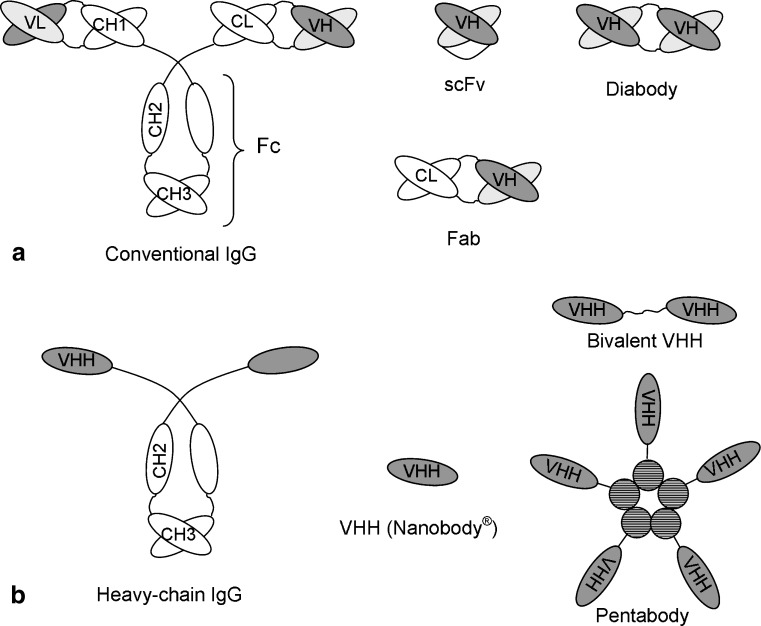
Camelids produce functional antibodies devoid of light chains of which the single N-terminal domain is fully capable of antigen binding. These single-domain antibody fragments (VHHs or Nanobodies®) have several advantages for biotechnological applications. They are well expressed in microorganisms and have a high stability and solubility. Furthermore, they are well suited for construction of larger molecules and selection systems such as phage, yeast, or ribosome display. This minireview offers an overview of (1) their properties as compared to conventional antibodies, (2) their production in microorganisms, with a focus on yeasts, and (3) their therapeutic applications.
Overview
The claims and statistics of this paper haven’t been checked yet.
Run the check — free, no account needed. It reads the open-access text and checks the sources it cites.
Integrity signals
Registry
Cites
Statistics
Figures
Verification
Claims the paper makes
The claims and statistics of this paper haven’t been checked yet.
Run the check — free, no account needed. It reads the open-access text and checks the sources it cites.
Claims other papers make about this one
Each is checked against this paper’s own text: does it say what the citing paper says it does?
The cited source says what the claim attributes to it.
In the citing paper
“Given their high-affinity, solubility and stability also in absence of the partner VL domain, the camelid VH domains (VHH) [4] and the shark VH domains called V-NAR (New Antigen Receptor) [5], are currently used as templates to generate highly efficient and stable new antibody fragments collectively termed nanobodies [6,7,8].”
From Evolution of Escherichia coli Expression System in Producing Antibody Recombinant Fragments (2020) · cites this paper as [4]
Self-check
Percentages, sums and reported differences re-computed from the paper’s own numbers.
The self-check needs the paper’s full text.
Citations
Cites
Naturally occurring antibodies devoid of light chains
Hamers-Casterman, C., Atarhouch, T., Muyldermans, S., Robinson, G., Hammers, C., Songa, E. B., Bendahman, N., & Hammers, R. (1993) · Nature · doi:10.1038/363446a0 · Cited by 3,241 · cited 4×
“Sequence analysis (Hamers-Casterman et al. 1993; Muyldermans et al. 1994; Vu et al. 1997; Harmsen et al. 2000) and elucidation of the crystal structure (Desmyter et al.”
BackgroundInfluentialRapid generation of functional human IgG antibodies derived from Fab-on-phage display libraries
Jostock, T., Vanhove, M., Brepoels, E., van Gool, R., Daukandt, M., Wehnert, A., van Hegelsom, R., Dransfield, D., Sexton, D., Devlin, M., et al. (2004) · Journal of Immunological Methods · doi:10.1016/j.jim.2004.03.014 · Cited by 2,572
Engineered antibody fragments and the rise of single domains
Holliger, P., & Hudson, P. J. (2005) · Nature Biotechnology · doi:10.1038/nbt1142 · Cited by 1,928 · cited 1×
“As compared to human VH domains, the VHH FRs show a high sequence homology of more than 80%, and their 3D structures can be superimposed (Muyldermans et al. 2001; Holliger and Hudson 2005).”
BackgroundWard, E. S., Güssow, D., Griffiths, A. D., Jones, P., & Winter, G. P. (1989) · Nature · doi:10.1038/341544a0 · Cited by 1,010 · cited 2×
“Although isolated antibody heavy (Utsumi and Karush 1964) and light chains (Yoo et al. 1967) can retain antigenbinding specificity, their affinity and solubility is often reduced (Ward et al. 1989).”
BackgroundGreenberg, A. S., Avila, D. W., Hughes, M. K., Hughes, A. L., McKinney, E. C., & Flajnik, M. F. (1995) · Nature · doi:10.1038/374168a0 · Cited by 783 · cited 2×
“Although single-domain antibodies later were also identified in particular cartilaginous fish (Greenberg et al. 1995), most research on the biotechnological application of singledomain antibodies was done using camelids because of Appl Microbiol Biotechnol (2007) 77:13–22”
BackgroundSelection and identification of single domain antibody fragments from camel heavy‐chain antibodies
Ghahroudi, M. A., Desmyter, A., Wyns, L., HAMERS, R., & Muyldermans, S. (1997) · FEBS Letters · doi:10.1016/s0014-5793(97)01062-4 · Cited by 775 · cited 1×
“Methods to isolate antigen-specific VHHs from immune ( Arbabi-Ghahroudi et al. 1997; Van der Linden et al. 2000a), nonimmune (Tanha et al. 2002; Yau et al. 2003; Verheesen et al. 2006), or semisynthetic (Goldman et al. 2006) libraries using phage, yeast, or ribosome display are now well established.”
BackgroundTargeting and tracing antigens in live cells with fluorescent nanobodies
Rothbauer, U., Zolghadr, K., Tillib, S. V., Nowak, D., Schermelleh, L., Gahl, A., Backmann, N., Conrath, K., Muyldermans, S., Cardoso, M. C., et al. (2006) · Nature Methods · doi:10.1038/nmeth953 · Cited by 715 · cited 1×
“Because of their stability, VHHs are especially suited for intrabody production because this requires expression in the reducing environment of the cytoplasm (Gueorguieva et al. 2006; Rothbauer et al. 2006).”
BackgroundMolecular basis for the preferential cleft recognition by dromedary heavy-chain antibodies
Genst, E. D., Silence, K., Decanniere, K., Conrath, K., Loris, R., Kinne, J., Muyldermans, S., & Wyns, L. (2006) · Proceedings of the National Academy of Sciences · doi:10.1073/pnas.0505379103 · Cited by 681 · cited 4×
“Occasionally, VHHs with affinity constants (KD) as low as 100 pM are isolated (Saerens et al. 2004; De Genst et al. 2006; Harmsen et al. 2006), which equals the affinity ceiling proposed for natural antibodies (Sundberg and Mariuzza 2002).”
BackgroundInfluentialSingle‐domain antibody fragments with high conformational stability
Dumoulin, M., Conrath, K., Meirhaeghe, A. V., Meersman, F., Heremans, K., Frenken, L. G. J., Muyldermans, S., Wyns, L., & Matagne, A. (2002) · Protein Science · doi:10.1110/ps.34602 · Cited by 641 · cited 4×
“VHHs are especially suited for oral immunotherapy because of their resistance against extremes of pH and the capacity to bind to the target at high concentrations of chaotropic agents (Dumoulin et al. 2002, 2003).”
BackgroundInfluentialStructure-Immunogenicity Relationships of Therapeutic Proteins
Hermeling, S., Crommelin, D. J. A., Schellekens, H., & Jiskoot, W. (2004) · Pharmaceutical Research · doi:10.1023/b:pham.0000029275.41323.a6 · Cited by 617 · cited 1×
“This could rely on their high sequence homology to conventional VH domains and on their high stability because aggregation of proteins is known to increase immunogenicity (Hermeling et al. 2004).”
Background
Research works printed but not linked: 1
- Estell D (2006) Adapting industry practices for the rapid, large-scale manufacture of pharmaceutical proteins. Bridge 36:39–44
Cited by
Sorted by citations
Nanobodies: natural single-domain antibodies
Muyldermans, S. (2013) · Annual Review of Biochemistry · doi:10.1146/annurev-biochem-063011-092449 · Cited by 2,304
Single-Cell Phenotyping within Transparent Intact Tissue through Whole-Body Clearing
Yang, B., Treweek, J. B., Kulkarni, R. P., Deverman, B. E., Chen, C., Lubeck, E., Shah, S., Cai, L., & Gradinaru, V. (2014) · Cell · doi:10.1016/j.cell.2014.07.017 · Cited by 937
The therapeutic potential of nanobodies
Jovčevska, I., & Muyldermans, S. (2020) · BioDrugs · doi:10.1007/s40259-019-00392-z · Cited by 749
Overcoming the Blood–Brain Barrier: The Role of Nanomaterials in Treating Neurological Diseases
Furtado, D., Björnmalm, M., Ayton, S., Bush, A. I., Kempe, K., & Caruso, F. (2018) · Advanced Materials · doi:10.1002/adma.201801362 · Cited by 708
PEGylation of therapeutic proteins
Jevševar, S., Kunstelj, M., & Porekar, V. G. (2010) · Biotechnology Journal · doi:10.1002/biot.200900218 · Cited by 681
“An example of a successful application of PEGylation to nanobodies is the PEGylated nanobody neutralizing foot and mouth disease (FMD) virus [15].”
BackgroundVincke, C., Loris, R., Saerens, D., Martínez‐Rodríguez, S., Muyldermans, S., & Conrath, K. (2008) · Journal of Biological Chemistry · doi:10.1074/jbc.m806889200 · Cited by 584
Single domain antibodies: promising experimental and therapeutic tools in infection and immunity
Wesolowski, J., Alzogaray, V., Reyelt, J., Unger, M., Juárez‐Moreno, K., Urrutia, M., Cauerhff, A., Danquah, W., Rissiek, B., Scheuplein, F., et al. (2009) · Medical Microbiology and Immunology · doi:10.1007/s00430-009-0116-7 · Cited by 529
“sdAbs generally display high solubility and stability and can also be readily produced in yeast, plant, and mammalian cells [8].”
BackgroundA robust pipeline for rapid production of versatile nanobody repertoires
Fridy, P. C., Li, Y., Keegan, S., Thompson, M. K., Nudelman, I., Scheid, J. F., Oeffinger, M., Nussenzweig, M. C., Fenyö, D., Chait, B. T., et al. (2014) · Nature Methods · doi:10.1038/nmeth.3170 · Cited by 505
Emerging new therapeutic antibody derivatives for cancer treatment
Jin, S., Sun, Y., Xiao, L., Gu, X., Ning, J., Xu, Y., Chen, S., & Pan, L. (2022) · Signal Transduction and Targeted Therapy · doi:10.1038/s41392-021-00868-x · Cited by 480
Methods for converting cysteine to dehydroalanine on peptides and proteins
Chalker, J. M., Gunnoo, S. B., Boutureira, O., Gerstberger, S. C., Fernández‐González, M., Bernardes, G. J. L., Griffin, L., Hailu, H., Schofield, C. J., & Davis, B. G. (2011) · Chemical Science · doi:10.1039/c1sc00185j · Cited by 367
The state-of-play and future of antibody therapeutics
Elgundi, Z., Reslan, M., Cruz, E., Sifniotis, V., & Kayser, V. (2016) · Advanced Drug Delivery Reviews · doi:10.1016/j.addr.2016.11.004 · Cited by 324
Preclinical screening of anti‐HER2 nanobodies for molecular imaging of breast cancer
Vaneycken, I., Devoogdt, N., Gassen, N. V., Vincke, C., Xavier, C., Wernery, U., Muyldermans, S., Lahoutte, T., & Caveliers, V. (2011) · The FASEB Journal · doi:10.1096/fj.10-180331 · Cited by 315
Development trends for therapeutic antibody fragments
Nelson, A. L., & Reichert, J. M. (2009) · Nature Biotechnology · doi:10.1038/nbt0409-331 · Cited by 305
Highly Sensitive and Multiplexed Protein Measurements
Cohen, L., & Walt, D. R. (2018) · Chemical Reviews · doi:10.1021/acs.chemrev.8b00257 · Cited by 298
Antibody fragments as nanoparticle targeting ligands: a step in the right direction
Richards, D. A., Maruani, A., & Chudasama, V. (2016) · Chemical Science · doi:10.1039/c6sc02403c · Cited by 307
Nanobody: The “Magic Bullet” for Molecular Imaging?
Chakravarty, R., Goel, S., & Cai, W. (2014) · Theranostics · doi:10.7150/thno.8006 · Cited by 297
“The detailed procedures for these processes have been well-documented in the literature and will not be discussed here [34, 37, 40].”
BackgroundInfluentialPhage Display Derived Monoclonal Antibodies: From Bench to Bedside
Alfaleh, M. A., Alsaab, H. O., Mahmoud, A. B., Alkayyal, A. A., Jones, M. L., Mahler, S. M., & Hashem, A. M. (2020) · Frontiers in Immunology · doi:10.3389/fimmu.2020.01986 · Cited by 297
Structural Evaluation of EGFR Inhibition Mechanisms for Nanobodies/VHH Domains
Schmitz, K. R., Bagchi, A., Roovers, R. C., Henegouwen, P. M. P. V. B. E., & Ferguson, K. M. (2013) · Structure · doi:10.1016/j.str.2013.05.008 · Cited by 262
Jähnichen, S., Blanchetot, C., Maussang, D., González-Pajuelo, M., Chow, K. Y. C., Bosch, L., Vrieze, S. D., Serruys, B., Ulrichts, H., Vandevelde, W., et al. (2010) · Proceedings of the National Academy of Sciences · doi:10.1073/pnas.1012865107 · Cited by 251
“Nanobodies have several favorable biological and physicochemical characteristics, including low immunogenicity, increased tissue penetration, high solubility, and physical stability (3).”
BackgroundTechniques for the analysis of protein-protein interactions in vivo
Xing, S., Wallmeroth, N., Berendzen, K. W., & Grefen, C. (2016) · PLANT PHYSIOLOGY · doi:10.1104/pp.16.00470 · Cited by 256
David vs. Goliath: The Structure, Function, and Clinical Prospects of Antibody Fragments
Bates, A., & Power, C. A. (2019) · Antibodies · doi:10.3390/antib8020028 · Cited by 237
The roles of TNF in brain dysfunction and disease
Clark, I. A., Alleva, L. M., & Vissel, B. (2010) · Pharmacology & Therapeutics · doi:10.1016/j.pharmthera.2010.08.007 · Cited by 239
From seeing to believing: labelling strategies for in vivo cell-tracking experiments
Progatzky, F., Dallman, M. J., & Celso, C. L. (2013) · Interface Focus · doi:10.1098/rsfs.2013.0001 · Cited by 232
A comprehensive comparison between camelid nanobodies and single chain variable fragments
Asaadi, Y., Jouneghani, F. F., Janani, S., & Rahbarizadeh, F. (2021) · Biomarker Research · doi:10.1186/s40364-021-00332-6 · Cited by 221
“VL and VH exhibit only 53% and 51% sequence identity, respectively, with corresponding regions in humans [72], while nanobodies display high sequence similarity with human VH (VH3 gene family) with ~75–90% identity correlated with their Low immunogenicity in clinical applications [73, 74].”
BackgroundTargeting tumors with nanobodies for cancer imaging and therapy
Oliveira, S., Heukers, R., Sornkom, J., Kok, R. J., & Henegouwen, P. M. P. V. B. E. (2013) · Journal of Controlled Release · doi:10.1016/j.jconrel.2013.08.298 · Cited by 215
Hultberg, A., Temperton, N. J., Rosseels, V., Koenders, M., González-Pajuelo, M., Schepens, B., Ibañez, L. I., Vanlandschoot, P., Schillemans, J. P., Saunders, M. J., et al. (2011) · PLoS ONE · doi:10.1371/journal.pone.0017665 · Cited by 195
“VHHs are small (12– 15 kDa), stable molecules with improved solubility and similar affinities as conventional antibodies [10].”
Alternative affinity tools: more attractive than antibodies?
Ruigrok, V. J. B., Levisson, M., Eppink, M. H. M., Smidt, H., & John van der, O. O. S. T. (2011) · Biochemical Journal · doi:10.1042/bj20101860 · Cited by 200
Strategies for overcoming protein and peptide instability in biodegradable drug delivery systems
Shi, M., & McHugh, K. J. (2023) · Advanced Drug Delivery Reviews · doi:10.1016/j.addr.2023.114904 · Cited by 194
Next generation matrix metalloproteinase inhibitors — Novel strategies bring new prospects
Levin, M., Udi, Y., Solomonov, I., & Sagi, I. (2017) · Biochimica et Biophysica Acta (BBA) - Molecular Cell Research · doi:10.1016/j.bbamcr.2017.06.009 · Cited by 186
Single-domain antibodies as building blocks for novel therapeutics
Saerens, D., Ghassabeh, G. H., & Muyldermans, S. (2008) · Current Opinion in Pharmacology · doi:10.1016/j.coph.2008.07.006 · Cited by 186
“However, an in vitro affinity maturation step of random mutation and selection (such as an error-prone PCR and ribosome display selections) of the selected clones might be required to obtain more potent antigen binders [13–15] with affinities matching those from ‘immune’ libraries.”
BackgroundMartínez-Jothar, L., Doulkeridou, S., Schiffelers, R. M., Toraño, J. S., Oliveira, S., van Nostrum, C. F., & Hennink, W. E. (2018) · Journal of Controlled Release · doi:10.1016/j.jconrel.2018.03.002 · Cited by 186
Pros and cons of different therapeutic antibody formats for recombinant antivenom development
Laustsen, A. H., Gutiérrez, J. M., Knudsen, C., Johansen, K. H., Bermúdez-Méndez, E., Cerni, F. A., Jürgensen, J. A., Ledsgaard, L., Martos-Esteban, A., Øhlenschlæger, M., et al. (2018) · Toxicon · doi:10.1016/j.toxicon.2018.03.004 · Cited by 177
Heeke, G. V., Allosery, K., Brabandere, V. D., Smedt, T. D., Detalle, L., & de Fougerolles, A. (2016) · Pharmacology & Therapeutics · doi:10.1016/j.pharmthera.2016.06.012 · Cited by 175
Nanobody-Based Delivery Systems for Diagnosis and Targeted Tumor Therapy
Hu, Y., Liu, C., & Muyldermans, S. (2017) · Frontiers in Immunology · doi:10.3389/fimmu.2017.01442 · Cited by 184
“Altogether, most Nbs exhibit a high stability against elevated temperature, high pressure, or chemical denaturants as demonstrated by thermo fluorescence or circular dichroism measurements (34, 51, 52).”
BackgroundBilsborrow, J. B., Doherty, E. H., Tilstam, P. V., & Bucala, R. (2019) · Expert Opinion on Therapeutic Targets · doi:10.1080/14728222.2019.1656718 · Cited by 170
Molecular and cellular analysis of human histamine receptor subtypes
Seifert, R., Straßer, A., Schneider, E. H., Neumann, D., Dove, S., & Buschauer, A. (2012) · Trends in Pharmacological Sciences · doi:10.1016/j.tips.2012.11.001 · Cited by 168
Immunological and molecular diagnosis of cysticercosis
Rodríguez, S., Wilkins, P. P., & Dorny, P. (2012) · Pathogens and Global Health · doi:10.1179/2047773212y.0000000048 · Cited by 157
Hussack, G., Arbabi‐Ghahroudi, M., van Faassen, H., Songer, J. G., Ng, K. K.-S., MacKenzie, R., & Tanha, J. (2011) · Journal of Biological Chemistry · doi:10.1074/jbc.m110.198754 · Cited by 153
Rotman, M., Welling, M. M., Bunschoten, A., de Backer, M. E., Rip, J., Nabuurs, R. J. A., Gaillard, P. J., van Buchem, M. A., van der Maarel, S. M., & van der Weerd, L. (2015) · Journal of Controlled Release · doi:10.1016/j.jconrel.2015.02.012 · Cited by 151
Nanobody-derived nanobiotechnology tool kits for diverse biomedical and biotechnology applications
Wang, Y., Fan, Z., Shao, L., Kong, X., Hou, X., Tian, D., Sun, Y., Xiao, Y., & Yu, L. (2016) · International Journal of Nanomedicine · doi:10.2147/ijn.s107194 · Cited by 152
“10, 34–37 research, bioimaging, clinical diagnosis, therapeutics, and agricultural and plant protection.”
Li, J., Deng, Y., Zhang, W., Zhou, A., Guo, W., Yang, J., Yuan, Y., Zhu, L., Qin, S., Xiang, S., et al. (2021) · Journal of Hematology & Oncology · doi:10.1186/s13045-021-01095-1 · Cited by 151
“Although they tend to have a short half-life due to rapid renal clearance, they are more soluble and stable than full monoclonal antibodies and, importantly, more rapidly penetrate tissues; collectively, these properties enable subcutaneous administration [16].”
BackgroundMaussang, D., Mujić-Delić, A., Descamps, F. J., Stortelers, C., Vanlandschoot, P., van Walsum, M., Vischer, H. F., Roy, M. V., Vosjan, M. J. W. D., González-Pajuelo, M., et al. (2013) · Journal of Biological Chemistry · doi:10.1074/jbc.m113.498436 · Cited by 148
Nanobody-Based Apolipoprotein E Immunosensor for Point-of-Care Testing
Ren, X. Z., Yan, J., Wu, D., Wei, Q. L., & Wan, Y. (2017) · ACS Sensors · doi:10.1021/acssensors.7b00495 · Cited by 143
Engineered mRNA-expressed antibodies prevent respiratory syncytial virus infection
Tiwari, P. M., Vanover, D. A., Lindsay, K. E., Bawage, S. S., Kirschman, J. L., Bhosle, S. M., Lifland, A. W., Zurla, C., & Santangelo, P. J. (2018) · Nature Communications · doi:10.1038/s41467-018-06508-3 · Cited by 144
Affinity separation and enrichment methods in proteomic analysis
Fang, X., & Zhang, W. (2008) · Journal of Proteomics · doi:10.1016/j.jprot.2008.06.011 · Cited by 140
Hmila, I., Abderrazek, R. B., Saerens, D., Benlasfar, Z., Conrath, K., Ayeb, M. E., Muyldermans, S., & Bouhaouala‐Zahar, B. (2008) · Molecular Immunology · doi:10.1016/j.molimm.2008.04.011 · Cited by 140
Nanobodies®: New ammunition to battle viruses
Vanlandschoot, P., Stortelers, C., Beirnaert, E., Ibañez, L. I., Schepens, B., Depla, E., & Saelens, X. (2011) · Antiviral Research · doi:10.1016/j.antiviral.2011.09.002 · Cited by 144
Nanobodies – from llamas to therapeutic proteins
Kolkman, J. A., & Law, D. A. (2010) · Drug Discovery Today Technologies · doi:10.1016/j.ddtec.2010.03.002 · Cited by 136
Evolution of Escherichia coli Expression System in Producing Antibody Recombinant Fragments
Sandomenico, A., Sivaccumar, J. P., & Ruvo, M. (2020) · International Journal of Molecular Sciences · doi:10.3390/ijms21176324 · Cited by 134
“Moreover, the high-affinity binding of VHH and V-NAR domains is likely supported by an increased length of the majority of the CDR3 loops (3–28 amino acids) compared to that of the VH domains [13].”
BackgroundInfluentialTherapeutic Antibodies: Current State and Future Trends – Is a Paradigm Change Coming Soon?
Dimitrov, D. S., & Marks, J. D. (2009) · Methods in Molecular Biology™ · doi:10.1007/978-1-59745-554-1_1 · Cited by 132
Nanobody: A Small Antibody with Big Implications for Tumor Therapeutic Strategy
Sun, S., Ding, Z., Yang, X., Zhao, X., Zhao, M., Gao, L., Chen, Q., Xie, S., Liu, A., Yin, S., et al. (2021) · International Journal of Nanomedicine · doi:10.2147/ijn.s297631 · Cited by 138
Immuno-imaging using nanobodies
Vaneycken, I., D’Huyvetter, M., Hernot, S., Vos, J. D., Xavier, C., Devoogdt, N., Caveliers, V., & Lahoutte, T. (2011) · Current Opinion in Biotechnology · doi:10.1016/j.copbio.2011.06.009 · Cited by 130
“These VHHs or nanobodies have an excellent expression yield in both Escherichia coli and yeast and a good solubility compared to most mouse or human two-chains-derived antibody-fragments [7,8].”
BackgroundmRNA as novel technology for passive immunotherapy
Schlake, T., Theß, A., Thran, M., & Jordan, I. (2018) · Cellular and Molecular Life Sciences · doi:10.1007/s00018-018-2935-4 · Cited by 135
“It has been shown that small single-domain antibodies could even cross the blood-brain barrier [83] .”
BackgroundKaufman, N. E. M., Dhingra, S., Jois, S. D. S., & Vicente, M. G. H. (2021) · Molecules · doi:10.3390/molecules26041076 · Cited by 134
“This single Ig domain is stable and can be generated rapidly and cheaply with simple expression systems [74] and are called VHH domains.”
BackgroundIgA Nephropathy: Molecular Mechanisms of the Disease
Mestecky, J. F., Raška, M., Julian, B. A., Gharavi, A. G., Renfrow, M. B., Moldoveanu, Z., Novak, L., Matoušovic, K., & Novák, J. (2012) · Annual Review of Pathology Mechanisms of Disease · doi:10.1146/annurev-pathol-011110-130216 · Cited by 129
Recent advances in the selection and identification of antigen-specific nanobodies
Liu, W., Song, H., Chen, Q., Yu, J., Xian, M., Nian, R., & Feng, D. (2018) · Molecular Immunology · doi:10.1016/j.molimm.2018.02.012 · Cited by 129
“With a molecular weight of approximately 12–15 kDa, nanobodies are reported to be the smallest intact antigen-binding single polypeptide chains found in any natural antibody (Arbabi Ghahroudi et al., 1997; Harmsen and De Haard, 2007; Muyldermans, 2013).”
Vaneycken, I., Govaert, J., Vincke, C., Caveliers, V., Lahoutte, T., BAETSELIER, P. D., Raes, G., Bossuyt, A. M., Muyldermans, S., & Devoogdt, N. (2010) · Journal of Nuclear Medicine · doi:10.2967/jnumed.109.069823 · Cited by 126
“Because of their small size and the high degree of identity of their framework sequence to human VH proteins, it is expected that Nanobodies will exhibit a low immunogenicity (23).”
BackgroundEngineered affinity proteins—Generation and applications
Grönwall, C., & Ståhl, S. (2009) · Journal of Biotechnology · doi:10.1016/j.jbiotec.2009.01.014 · Cited by 122
Single-Domain Antibodies or Nanobodies: A Class of Next-Generation Antibodies
Khodabakhsh, F., Behdani, M., Rami, A., & Kazemi‐Lomedasht, F. (2018) · International Reviews of Immunology · doi:10.1080/08830185.2018.1526932 · Cited by 123
“Additional structural features of HCAbs such as high percentage of hydrophilic amino acids in variable domains, high number of mutational hot spots and the disulfide bonds in antigen-binding site discriminate them from conventional antibodies [4].”
BackgroundBodelón, G., Palomino, C. M., & Fernández, L. Á. (2012) · FEMS Microbiology Reviews · doi:10.1111/j.1574-6976.2012.00347.x · Cited by 120
Hoefman, S., Ottevaere, I., Baumeister, J., & Sargentini‐Maier, M. L. (2015) · Antibodies · doi:10.3390/antib4030141 · Cited by 119
G Protein–Coupled Receptors in Asthma Therapy: Pharmacology and Drug Action
Wendell, S. G., Fan, H., & Zhang, C. (2019) · Pharmacological Reviews · doi:10.1124/pr.118.016899 · Cited by 124
“…are associated with several advantages, such as better solubility and tissue penetration, low immunogenicity, and high physical stability, and they can be easily produced in prokaryotic or eukaryotic host organisms (Harmsen and De Haard, 2007; Joost and Kolkman, 2010; Klarenbeek et al., 2012).”
BackgroundHigh Potency of a Bivalent Human VH Domain in SARS-CoV-2 Animal Models
Li, W., Schäfer, A., Kulkarni, S. S., Liu, X., Martinez, D. R., Chen, C., Sun, Z., Leist, S. R., Drelich, A. K., Zhang, L., et al. (2020) · Cell · doi:10.1016/j.cell.2020.09.007 · Cited by 112
Therapeutic Antibodies against Intracellular Tumor Antigens
Trenevska, I., Li, D., & Banham, A. H. (2017) · Frontiers in Immunology · doi:10.3389/fimmu.2017.01001 · Cited by 113
“These can be engineered from conventional human Igs, or also from those from camelids (camel or llama) and cartilaginous fish (carpet or nurse sharks), whose immune systems were found to have evolved high-affinity V-like domains fused to a conserved framework that is reflective of the constant Fc region found in human…”
BackgroundNanobody; an Old Concept and New Vehicle for Immunotargeting
Rahbarizadeh, F., Ahmadvand, D., & Sharifzadeh, Z. (2011) · Immunological Investigations · doi:10.3109/08820139.2010.542228 · Cited by 117
Beyond Antibodies as Binding Partners: The Role of Antibody Mimetics in Bioanalysis
Yu, X., Yang, Y.-P., Dikici, E., Deo, S. K., & Daunert, S. (2017) · Annual Review of Analytical Chemistry · doi:10.1146/annurev-anchem-061516-045205 · Cited by 113
“This is also possible because nanobodies are capable of recognizing concave-shaped antigens (15).”
BackgroundEnhancing Stability of Camelid and Shark Single Domain Antibodies: An Overview
Goldman, E. R., Liu, J. L., Zabetakis, D., & Anderson, G. P. (2017) · Frontiers in Immunology · doi:10.3389/fimmu.2017.00865 · Cited by 110
“For example, ~90% of VHHs contain a Trp at position 118 (20, 55).”
BackgroundFundamentals and application of ordered molecular assemblies to affinity biosensing
Matharu, Z., Bandodkar, A. J., Gupta, V., & Malhotra, B. D. (2011) · Chemical Society Reviews · doi:10.1039/c1cs15145b · Cited by 110
Clostridium difficile infection: molecular pathogenesis and novel therapeutics
Rineh, A., Kelso, M. J., Vatansever, F., Tegos, G. P., & Hamblin, M. R. (2014) · Expert Review of Anti-infective Therapy · doi:10.1586/14787210.2014.866515 · Cited by 120
From Desert to Medicine: A Review of Camel Genomics and Therapeutic Products
Ali, A., Baby, B., & Vijayan, R. (2019) · Frontiers in Genetics · doi:10.3389/fgene.2019.00017 · Cited by 121
Farzin, L., Shamsipur, M., Samandari, L., & Sheibani, S. (2018) · Microchimica Acta · doi:10.1007/s00604-018-2820-8 · Cited by 108
Targeting breast carcinoma with radioiodinated anti-HER2 Nanobody
Pruszyński, M., Koumarianou, E., Vaidyanathan, G., Revets, H., Devoogdt, N., Lahoutte, T., & Zalutsky, M. R. (2012) · Nuclear Medicine and Biology · doi:10.1016/j.nucmedbio.2012.08.008 · Cited by 105
“With a molecular weight of 12–15 kDa, Nbs are an order of magnitude smaller than intact mAbs, and smaller than Fab (~50 kDa) and scFv (~25 kDa)fragments [8].”
Antibody Fragments and Their Purification by Protein L Affinity Chromatography
Rodrigo, G., Gruvegård, M., & Alstine, J. M. V. (2015) · Antibodies · doi:10.3390/antib4030259 · Cited by 103
Sha, H., Zou, Z., Xin, K., Bian, X., Cai, X., Lu, W., Chen, J., Chen, G., Huang, L., Blair, A. M., et al. (2014) · Journal of Controlled Release · doi:10.1016/j.jconrel.2014.12.039 · Cited by 104
Ishiwatari-Ogata, C., Kyuuma, M., Ogata, H., Yamakawa, M., Iwata, K., Ochi, M., Hori, M., Miyata, N., & Fujii, Y. (2022) · Frontiers in Immunology · doi:10.3389/fimmu.2022.853008 · Cited by 102
“NANOBODY®, the variable heavy chain domains of heavy-chain antibody (VHH), retains all of the antigen-binding activities of heavy-chain antibodies and possesses unique characteristics, including low molecular weight (12–15 kDa), rapid tissue penetration, and low immunogenicity (19, 20).”
BackgroundRakovich, T. Y., Mahfoud, O. K., Mohamed, B. M., Prina‐Mello, A., Crosbie-Staunton, K., Broeck, T. V. D., Kimpe, L. D., Sukhanova, A. V., Baty, D., Rakovich, A., et al. (2014) · ACS Nano · doi:10.1021/nn500212h · Cited by 102
A modular IgG-scFv bispecific antibody topology
Orcutt, K. D., Ackerman, M. E., Cieslewicz, M., Quiroz, E., Slusarczyk, A. L., Frangioni, J. V., & Wittrup, K. D. (2009) · Protein Engineering Design and Selection · doi:10.1093/protein/gzp077 · Cited by 101
GPCR-targeting nanobodies: attractive research tools, diagnostics, and therapeutics
Mujić-Delić, A., de Wit, R. H., Verkaar, F., & Smit, M. J. (2014) · Trends in Pharmacological Sciences · doi:10.1016/j.tips.2014.03.003 · Cited by 105
Principles and Current Clinical Landscape of Multispecific Antibodies against Cancer
Elshiaty, M., Schindler, H., & Christopoulos, P. (2021) · International Journal of Molecular Sciences · doi:10.3390/ijms22115632 · Cited by 102
“Interestingly, the antigen specificity of most antibodies shows a predominant dependence on the CDRs contributed by mainly the VH rather than the VL domain, which takes an extreme form in the heavy chain-only antibodies naturally produced by camelids and sharks [29], and is exploited by “singledomain antibodies” (sdAb…”
BackgroundAnti-CTLA-4 nanobody as a promising approach in cancer immunotherapy
Babamohamadi, M., Mohammadi, N., Faryadi, E., Haddadi, M., Merati, A., Ghobadinezhad, F., Amirian, R., Izadi, Z., & Hadjati, J. (2024) · Cell Death and Disease · doi:10.1038/s41419-023-06391-x · Cited by 104
Zhang, Z., Qian, H., Huang, J., Sha, H., Zhang, H., Yu, L., Liu, B., Hua, D., & Qian, X. (2018) · International Journal of Nanomedicine · doi:10.2147/ijn.s170148 · Cited by 95
“53 Besides, we also confirmed the dual targeting ability and improved synergistic antitumor effect with antitumor drugs for anti-EGFR-iRGD recombinant protein.”
Norovirus antivirals: Where are we now?
Netzler, N. E., Tuipulotu, D. E., & White, P. A. (2018) · Medicinal Research Reviews · doi:10.1002/med.21545 · Cited by 98
Inhalation monoclonal antibody therapy: a new way to treat and manage respiratory infections
Parray, H. A., Shukla, S., Perween, R., Khatri, R., Shrivastava, T., Singh, V., Murugavelu, P., Ahmed, S., Samal, S., Sharma, C., et al. (2021) · Applied Microbiology and Biotechnology · doi:10.1007/s00253-021-11488-4 · Cited by 89
Antibody‐Incorporated Nanomedicines for Cancer Therapy
Wu, S., Wu, F., & Chen, X. S. (2022) · Advanced Materials · doi:10.1002/adma.202109210 · Cited by 94
Camelid Single-Domain Antibodies: Promises and Challenges as Lifesaving Treatments
Arbabi‐Ghahroudi, M. (2022) · International Journal of Molecular Sciences · doi:10.3390/ijms23095009 · Cited by 100
Analysis and modeling of the variable region of camelid single-domain antibodies
Sircar, A., Sanni, K. A., Shi, J., & Gray, J. J. (2011) · The Journal of Immunology · doi:10.4049/jimmunol.1100116 · Cited by 92
Tau immunotherapies: Lessons learned, current status and future considerations
Sandusky-Beltran, L. A., & Sigurdsson, E. M. (2020) · Neuropharmacology · doi:10.1016/j.neuropharm.2020.108104 · Cited by 90
Kim, H. J., McCoy, M. R., Májková, Z., Dechant, J. E., Gee, S. J., Rosa, S. T.-D., González‐Sapienza, G., & Hammock, B. D. (2011) · Analytical Chemistry · doi:10.1021/ac2030255 · Cited by 90
A validated antibody panel for the characterization of tau post-translational modifications
Ercan-Herbst, E., Eid, S., Weber, C., Kowalski, A., Bichmann, M., Behrendt, A., Matthes, F., Krauß, S., Reinhardt, P., Fulle, S., et al. (2017) · Molecular Neurodegeneration · doi:10.1186/s13024-017-0229-1 · Cited by 92
“Other approaches such as mass spectrometry or the use of smaller detection reagents such as camelid singledomain antibodies [18] may help to circumvent this issue.”
de Bruin, R. C. G., Veluchamy, J. P., Lougheed, S. M., Schneiders, F. L., Lopez‐Lastra, S., Lameris, R., Stam, A. G. M., Sebestyén, Z., Kuball, J. H. E., Molthoff, C. F. M., et al. (2017) · OncoImmunology · doi:10.1080/2162402x.2017.1375641 · Cited by 92
“Moreover, VHHs can easily be produced by bacteria or yeast allowing time and cost reduction during manufacturing.35,36 Furthermore, VHH domains are low immunogenic because of their high homology with human VH genes and the absence of the Fc-region.29,36 VHHs are ten times smaller than conventional antibodies allowing…”
BackgroundInfluentialPast, present, and future of anti‐IgE biologics
Guntern, P., & Eggel, A. (2020) · Allergy · doi:10.1111/all.14308 · Cited by 86
sdAb-DB: the single domain antibody database
Wilton, E. E., Opyr, M. P., Kailasam, S., Kothe, R. F., & Wieden, H.-J. (2018) · ACS Synthetic Biology · doi:10.1021/acssynbio.8b00407 · Cited by 84
Nanobody-Targeted Photodynamic Therapy Selectively Kills Viral GPCR-Expressing Glioblastoma Cells
Groof, T. W. M. D., Mashayekhi, V., Fan, T. S., Bergkamp, N. D., Toraño, J. S., van Senten, J. R., Heukers, R., Smit, M. J., & Oliveira, S. (2019) · Molecular Pharmaceutics · doi:10.1021/acs.molpharmaceut.9b00360 · Cited by 85
Protein scaffold-based molecular probes for cancer molecular imaging
Miao, Z., Levi, J., & Cheng, Z. (2010) · Amino Acids · doi:10.1007/s00726-010-0503-9 · Cited by 84
“Besides in E. coli, nanobodies can also be expressed in yeast Saccharomyces cerevisiae ( Harmsen and De Haard 2007 ).”
BackgroundCzaja, A. J. (2014) · Alimentary Pharmacology & Therapeutics · doi:10.1111/apt.12825 · Cited by 83
“Nanobodies are single-domain antibody fragments that are devoid of light chains and that bind selectively to their target.(215) Their emergence has increased the repertoire of therapeutic options.”
BackgroundMetrics for antibody therapeutics development
Reichert, J. M. (2010) · mAbs · doi:10.4161/mabs.2.6.13603 · Cited by 85
Imaging of cerebrovascular pathology in animal models of Alzheimer's disease
Klohs, J., Rudin, M., Shimshek, D. R., & Beckmann, N. (2014) · Frontiers in Aging Neuroscience · doi:10.3389/fnagi.2014.00032 · Cited by 82
Bispecific antibody platforms for cancer immunotherapy
Lameris, R., de Bruin, R. C. G., Schneiders, F. L., Henegouwen, P. M. P. V. B. E., Verheul, H. M. W., de Gruijl, T. D., & van der Vliet, H. J. (2014) · Critical Reviews in Oncology/Hematology · doi:10.1016/j.critrevonc.2014.08.003 · Cited by 85
“[77] Harmsen MM, De Haard HJ.”
Engineered affinity proteins for tumour‐targeting applications
Friedman, M., & Ståhl, S. (2009) · Biotechnology and Applied Biochemistry · doi:10.1042/ba20080287 · Cited by 85
Kylilis, N., Riangrungroj, P., Lai, H., Salema, V. F., Fernández, L. Á., Stan, G.-B. V., Freemont, P. S., & Polizzi, K. M. (2019) · ACS Sensors · doi:10.1021/acssensors.8b01163 · Cited by 84
Metadata
- Authors
- Harmsen, M. M., & De Haard, H. J.
- Affiliations
- Wageningen University & Research (NL)
- Ablynx (Belgium) (BE)
- Corresponding author
- Harmsen, M. M.
- Venue
- Applied Microbiology and Biotechnology
- Published
- 2007-08-18
- Volume
- 77
- Issue
- 1
- Pages
- 13-22
- ISSN
- 0175-7598 (ISSN-L)
- 1432-0614
- PMC
- PMC2039825
- OpenAlex
- W2147451568
- Cited by
- 809
- References
- 96
- Citations by year
- 2026: 31 · 2025: 43 · 2024: 48 · 2023: 41 · 2022: 41 · 2021: 65 · 2020: 57 · 2019: 49 · 2018: 53 · 2017: 42 · 2016: 46 · 2015: 48 · 2014: 53 · 2013: 40 · 2012: 52
- FWCI
- 2.67
- Type
- journal article
- Language
- en
- Open access
- hybrid
- doi.org
- Locations
- Applied Microbiology and Biotechnology (publishedVersion, cc-by)
- PubMed Central (publishedVersion, cc-by)
- PubMed (publishedVersion)
- Socio-Environmental Systems Modeling (acceptedVersion)
- Data Archiving and Networked Services (DANS) (submittedVersion, other-oa)
- Topics
- Life Sciences › Immunology and Microbiology › Immunology › Monoclonal and Polyclonal Antibodies Research
- Life Sciences › Biochemistry, Genetics and Molecular Biology › Molecular Biology › Protein purification and stability
- Life Sciences › Agricultural and Biological Sciences › Food Science › Animal Diversity and Health Studies
- Keywords
- single-domain antibody fragments, VHH, nanobodies, camelid antibodies, recombinant antibody production, yeast expression system, phage display, ribosome display, yeast surface display, therapeutic applications
- MeSH terms
- Animals, Camelids, New World, Immunoglobulin Fragments, Immunoglobulin Heavy Chains, Models, Biological
About these checks
Registry, retraction, Cites and statistics results are computed, not judged, with one exception: a printed reference that no index lists is read once by a model before it counts as a citation error. Claims are extracted by a model and kept only when their quote appears verbatim in the text; each cited source is then checked, with a model’s help, for whether it says what the claim relies on. Those verdicts can be wrong — read the claim’s quote and the cited source before relying on one.
Statistics and arithmetic are recomputed, not judged.
Confidence bands are shown only for fields calibrated on our annotated test set. None is calibrated yet, so no band is shown.
What counts as a claim ›How we measure confidence ›How we check this ›
Are you an author, or do you see a problem with this page? Request a review
