

Prospective observational study of 177Lu-DOTA-octreotate therapy in 200 patients with advanced metastasized neuroendocrine tumours (NETs): feasibility and impact of a dosimetry-guided study protocol on outcome and toxicity
Open accessThe DOI matches its Crossref record; 44 of the 44 references it cites were found in a registry or an index.
Abstract
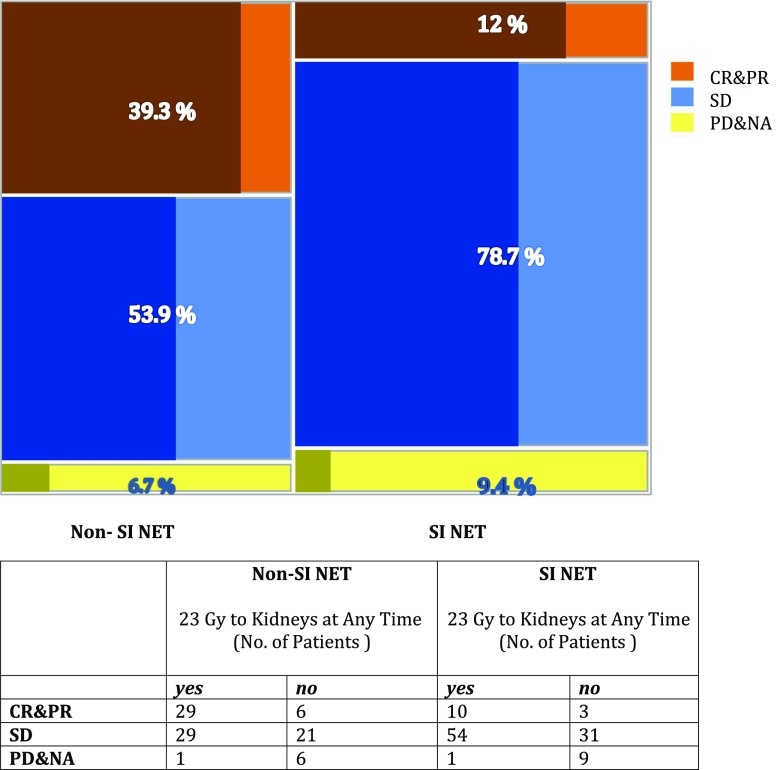
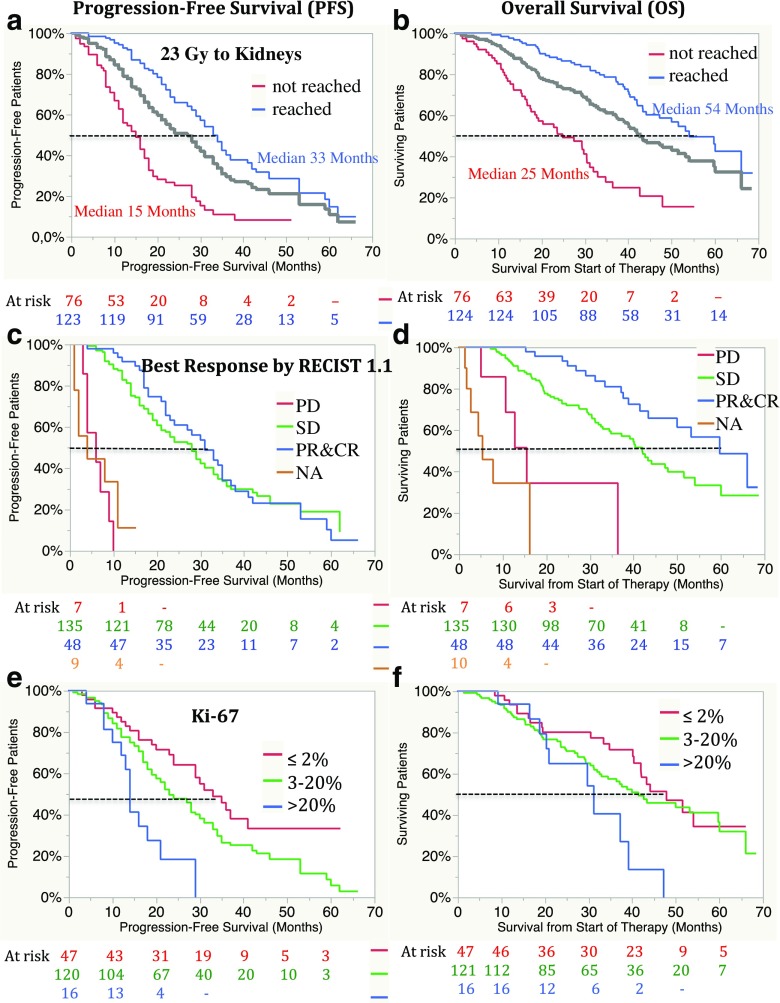
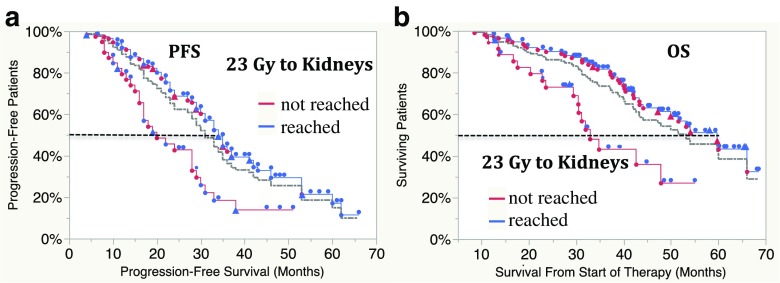
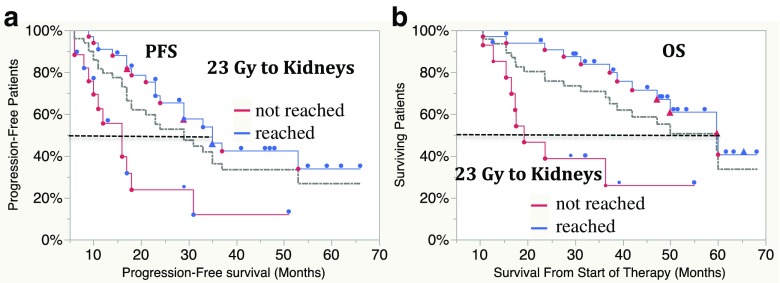
PURPOSE: Peptide receptor radionuclide therapy in patients with neuroendocrine tumours has yielded promising results. This prospective study investigated the feasibility of dosimetry of the kidneys and bone marrow during therapy and its impact on efficacy and outcome. METHODS: Lu-DOTA-octreotate with co-infusion of a mixed amino acid solution, and cycles were repeated until the absorbed dose to the kidneys reached 23 Gy or there were other reasons for stopping therapy. The Ki-67 index was ≤2% in 47 patients (23.5%), 3-20% in 121 (60.5%) and >20% in 16 (8%). RESULTS: In 123 patients (61.5%) the absorbed dose to the kidneys reached 23 Gy with three to nine cycles during first-line therapy; in no patient was a dose to the bone marrow of 2 Gy reached. The best responses (according to RECIST 1.1) were a complete response (CR) in 1 patient (0.5%), a partial response (PR) in 47 (23.5%), stable disease (SD) in 135 (67.5%) and progressive disease (PD) in 7 (3.5%). Median progression-free survival was 27 months (95% CI 22-30 months) in all patients, 33 months in those in whom the absorbed dose to the kidneys reached 23 Gy and 15 months in those in whom it did not. Median overall survival (OS) was 43 months (95% CI 39-53 months) in all patients, 54 months in those in whom the absorbed dose to the kidneys reached 23 Gy and 25 months in those in whom it did not. Median OS was 60 months in patients with a best response of PR or CR, 42 months in those with SD and 16 months in those with PD. Three patients (1.5%) developed acute leukaemia, 1 patient (0.5%) chronic leukaemia (unconfirmed) and 30 patients (15%) grade 3 or 4 bone marrow toxicity. Eight patients (4%) developed grade 2 kidney toxicity and one patient (0.5%) grade 4 kidney toxicity. CONCLUSIONS: Lu-DOTA-octreotate is feasible. Patients in whom the absorbed dose to the kidneys reached 23 Gy had a longer OS than those in whom it did not. Patients with CR/PR had a longer OS than those with SD. Bone marrow dosimetry did not predict toxicity.
Overview
The claims and statistics of this paper haven’t been checked yet.
Free: it reads the open-access text and checks the first 5 claims that cite a source we can check. Create a free account to check every claim.
Integrity signals
Registry
Cites
Statistics
Figures
Verification
Claims the paper makes
The claims and statistics of this paper haven’t been checked yet.
Free: it reads the open-access text and checks the first 5 claims that cite a source we can check. Create a free account to check every claim.
Claims other papers make about this one
Each is checked against this paper’s own text: does it say what the citing paper says it does?
The source backs part of the claim, not all of it — or backs it for a different population, condition or comparison.
In the citing paper
“These studies have demonstrated wide interpatient variability of renal absorbed dose by a factor of 10, underscoring the importance of dosimetry.”
From Normal-Tissue Tolerance to Radiopharmaceutical Therapies, the Knowns and the Unknowns (2021) · cites this paper as [60]
Experimental — accuracy not yet measured
Self-check
Percentages, sums and reported differences re-computed from the paper’s own numbers.
The self-check needs the paper’s full text.
Citations
Cites
New response evaluation criteria in solid tumours: revised RECIST guideline (version 1.1)
Eisenhauer, E. A., Therasse, P., Bogaerts, J., Schwartz, L. H., Sargent, D., Ford, R., Dancey, J., Arbuck, S., Gwyther, S., Mooney, M., et al. (2009) · European Journal of Cancer · doi:10.1016/j.ejca.2008.10.026 · Cited by 29,534 · cited 1×
“1 [29], progression-free survival (PFS) and overall survival (OS).”
BackgroundTolerance of normal tissue to therapeutic irradiation
Emami, B., Lyman, J., Brown, A., Cola, L., Goitein, M., Munzenrider, J. E., Shank, B., Solin, L. J., & Wesson, M. (1991) · International Journal of Radiation Oncology*Biology*Physics · doi:10.1016/0360-3016(91)90171-y · Cited by 4,488 · cited 1×
“For (177)LuDOTA-octreotate, a cumulative absorbed dose of 23 Gy to the kidneys was taken from external beam radiation [25], a cautious cut-off value in the setting of PRRT [26, 27].”
BackgroundPhase 3 Trial of 177 Lu-Dotatate for Midgut Neuroendocrine Tumors
Strosberg, J., El-Haddad, G., Wolin, E., Hendifar, A., Yao, J., Chasen, B., Mittra, E., Kunz, P. L., Kulke, M. H., Jacene, H., et al. (2017) · New England Journal of Medicine · doi:10.1056/nejmoa1607427 · Cited by 3,308 · cited 2×
“NETTER-1 study (N = 116) [8] Erasmus group 2017 update (N = 106) [9] Present study (grade 1 and 2, progressive)”
MethodKwekkeboom, D. J., de Herder, W. W., Kam, B. L., van Eijck, C. H., van Essen, M., Kooij, P. P., Feelders, R. A., van Aken, M. O., & Krenning, E. P. (2008) · Journal of Clinical Oncology · doi:10.1200/jco.2007.15.2553 · Cited by 1,456
Sorbye, H., Welin, S., Langer, S. W., Vestermark, L. W., Holt, N., Osterlund, P., Dueland, S., Hofsli, E., Guren, M. G., Ohrling, K., et al. (2013) · Annals of Oncology · doi:10.1093/annonc/mds276 · Cited by 1,027 · cited 16×
“%) and rectal NETs (45.4”
ResultInfluentialSelf-citationKwekkeboom, D. J., Teunissen, J. J., Bakker, W. H., Kooij, P. P., de Herder, W. W., Feelders, R. A., van Eijck, C. H., Esser, J.-P., Kam, B. L., & Krenning, E. P. (2005) · Journal of Clinical Oncology · doi:10.1200/jco.2005.08.066 · Cited by 657
Imhof, A., Brunner, P., Marincek, N., Briel, M., Schindler, C., Rasch, H., Mäcke, H. R., Rochlitz, C., Müller-Brand, J., & Walter, M. A. (2011) · Journal of Clinical Oncology · doi:10.1200/jco.2010.33.7873 · Cited by 641 · cited 17×
“%) and rectal NETs (45.4”
BackgroundResultInfluentialBrabander, T., van der Zwan, W. A., Teunissen, J. J. M., Kam, B. L. R., Feelders, R. A., de Herder, W. W., van Eijck, C. H. J., Franssen, G. J. H., Krenning, E. P., & Kwekkeboom, D. J. (2017) · Clinical Cancer Research · doi:10.1158/1078-0432.ccr-16-2743 · Cited by 614 · cited 3×
“NETTER-1 study (N = 116) [8] Erasmus group 2017 update (N = 106) [9] Present study (grade 1 and 2, progressive)”
(1962) · PubMed · Cited by 467
Bodei, L., Kidd, M., Paganelli, G., Grana, C. M., Drozdov, I., Cremonesi, M., Lepensky, C., Kwekkeboom, D. J., Baum, R. P., Krenning, E. P., et al. (2015) · European Journal of Nuclear Medicine and Molecular Imaging · doi:10.1007/s00259-014-2893-5 · Cited by 465 · cited 1×
“In agreement with others [22, 30, 40], we found a considerable interindividual variation in calculated bone marrow doses, and similar median values in patients with and without therapy-limiting bone marrow toxicity (Table 3).”
Result
Cited by
Items 101–200 of 266
Strosberg, J., Hofman, M. S., Al‐Toubah, T., & Hope, T. A. (2024) · Journal of Nuclear Medicine · doi:10.2967/jnumed.123.267167 · Cited by 20
Malcolm, J., Falzone, N., Gains, J. E., Aldridge, M. D., Mirando, D. M., Lee, B. Q., Gaze, M. N., & Vallis, K. A. (2022) · EJNMMI Physics · doi:10.1186/s40658-022-00436-4 · Cited by 18
Malandrino, P., Feola, T., Mikovic, N., Cannavale, G., Molfetta, S. D., Altieri, B., Mancini, C., Ferollà, P., Colao, A., & Faggiano, A. (2024) · Seminars in Nuclear Medicine · doi:10.1053/j.semnuclmed.2024.05.001 · Cited by 18
Minczeles, N. S., de Herder, W. W., Konijnenberg, M., Feelders, R. A., Brabander, T., & Hofland, J. (2022) · Clinical Nuclear Medicine · doi:10.1097/rlu.0000000000004203 · Cited by 18
Radiopharmaceuticals for Neuroendocrine Tumors
Chin, R.-I., Wu, F. S., Menda, Y., & Kim, H. J. (2020) · Seminars in Radiation Oncology · doi:10.1016/j.semradonc.2020.07.007 · Cited by 18
McConathy, J., Koshkin, V. S., Menda, Y., Rodon, J. A., Goenka, A. H., Moy, R. H., Morse, S., Demange, A., Blumenstein, L., Babaoğlan, B., et al. (2026) · Clinical Cancer Research · doi:10.1158/1078-0432.ccr-25-4356 · Cited by 20
“…noted by Strosberg and colleagues (47), bone marrow dosimetry lacks precision and may vary depending on patient characteristics and the radionuclide used; furthermore, research shows that the absorbed dose in bone marrow does not correlate strongly with cytopenias observed in patients (44, 48, 49).”
On the Use of Artificial Intelligence for Dosimetry of Radiopharmaceutical Therapies
Brosch-Lenz, J., Delker, A., Schmidt, F. P., & Tran‐Gia, J. (2023) · Nuklearmedizin - NuclearMedicine · doi:10.1055/a-2179-6872 · Cited by 17
“…of the tumor absorbed dose increases the likelihood of tumor control and is advantageous for treatment efficacy, at the same time the absorbed dose for normal tissue needs to be considered to minimize the likelihood of acute side effects or even reject RPT as a viable therapy option [6].”
BackgroundBarriuso, J., Custodio, A., Afonso, R., Alonso, V., Astudillo, A., Capdevila, J., García‐Carbonero, R., Grande, E., Jiménez‐Fonseca, P., Marazuela, M., et al. (2018) · Cancer Treatment Reviews · doi:10.1016/j.ctrv.2018.09.008 · Cited by 17
Quantitative SPECT/CT for Dosimetry of Peptide Receptor Radionuclide Therapy
Kennedy, J. A., Chicheportiche, A., & Keidar, Z. (2021) · Seminars in Nuclear Medicine · doi:10.1053/j.semnuclmed.2021.11.004 · Cited by 19
Clinical Pharmacology of Radiotheranostics in Oncology
Beek, E. T. T., Burggraaf, J., Teunissen, J. J. M., & Vriens, D. (2022) · Clinical Pharmacology & Therapeutics · doi:10.1002/cpt.2598 · Cited by 17
Su, D., Yang, H., Chen, Q., & Chen, Y. (2023) · Frontiers in Oncology · doi:10.3389/fonc.2023.1141648 · Cited by 17
Biegon, A. R., Cohen, S., & Franceschi, D. (2022) · Journal of Personalized Medicine · doi:10.3390/jpm12050725 · Cited by 18
“Notably, SSTR are expressed in the human endometrium and appear to change locations throughout the menstrual cycle [99,100].”
BackgroundRamonaheng, K., van Staden, J. A., & du Raan, H. (2021) · Heliyon · doi:10.1016/j.heliyon.2022.e09830 · Cited by 16
Strategies Towards Improving Clinical Outcomes of Peptide Receptor Radionuclide Therapy
Minczeles, N. S., Hofland, J., de Herder, W. W., & Brabander, T. (2021) · Current Oncology Reports · doi:10.1007/s11912-021-01037-7 · Cited by 16
Nguyen, N. T., Min, Y., Rivière, J., van der Garde, M., Ghosh, S. C., Bartos, L. M., Brendel, M., Bassermann, F. C., Azhdarinia, A., Weber, W., et al. (2025) · Theranostics · doi:10.7150/thno.113354 · Cited by 17
“However, in the case of SSTR2-targeted RPT, difficulties in predicting hematologic toxicity based on bone marrow dosimetry have been reported previously [41].”
Singh, S., Hope, T. A., Bergsland, E. B., Bodei, L., Bushnell, D. L., Chan, J. A., Chasen, B., Chauhan, A., Das, S., Dasari, A. N., et al. (2023) · JNCI Journal of the National Cancer Institute · doi:10.1093/jnci/djad096 · Cited by 15
The Impact of Posttreatment Imaging in Peptide Receptor Radionuclide Therapy
Yadav, S., Lawhn-Heath, C. A., Paciorek, A. T., Lindsay, S., Mirro, R., Bergsland, E. K., & Hope, T. A. (2024) · Journal of Nuclear Medicine · doi:10.2967/jnumed.123.266614 · Cited by 15
Panzuto, F., Albertelli, M., Rimini, M. L. D., Rizzo, F. M., Grana, C. M., Cives, M., Faggiano, A., Versari, A., Tafuto, S., Fazio, N., et al. (2024) · Journal of Endocrinological Investigation · doi:10.1007/s40618-024-02448-6 · Cited by 15
“Notably, patients who reached the maximum toler - able absorbed dose of 23 Gy in their kidneys experienced nearly double the median PFS and OS [ 92 ].”
Minczeles, N. S., de Herder, W. W., Feelders, R. A., Verburg, F. A., Hofland, J., & Brabander, T. (2022) · Journal of Nuclear Medicine · doi:10.2967/jnumed.122.263856 · Cited by 16
Urso, L., Nieri, A., Rambaldi, I., Castello, A., Uccelli, L., Cittanti, C., Panareo, S., Gagliardi, I., Ambrosio, M. R., Zatelli, M. C., et al. (2022) · Endocrine · doi:10.1007/s12020-022-03170-0 · Cited by 15
Recent Advances in Radiopharmaceutical Theranostics of Pheochromocytoma and Paraganglioma
Zhang, X., Wakabayashi, H., Hiromasa, T., Kayano, D., & Kinuya, S. (2023) · Seminars in Nuclear Medicine · doi:10.1053/j.semnuclmed.2022.12.005 · Cited by 15
Clinical Management of Neuroendocrine Neoplasms in Clinical Practice: A Formal Consensus Exercise
Bartolomei, M., Berruti, A., Falconi, M., Fazio, N., Ferone, D., Lastoria, S., Pappagallo, G. L., Seregni, E. C., & Versari, A. (2022) · Cancers · doi:10.3390/cancers14102501 · Cited by 16
“In a prospective study with dosimetric assessment, patients who had, after the 4 cycles, an absorbed dose to the kidneys ≥23 Gy showed significantly better survival outcomes than those who did not reach such a preset dose [50].”
BackgroundCloyd, J. M., Konda, B., Shah, M. H., & Pawlik, T. M. (2018) · Expert Review of Clinical Pharmacology · doi:10.1080/17512433.2019.1561273 · Cited by 14
“Finally, dosimetry-guided PRRT with (177)Lu-DOTATATE may optimize treatment response while minimizing renal and bone marrow toxicities [68].”
Dosimetry in Lu-177-DOTATATE peptide receptor radionuclide therapy: a systematic review
Nautiyal, A., Michopoulou, S. K., & Guy, M. (2023) · Clinical and Translational Imaging · doi:10.1007/s40336-023-00589-x · Cited by 15
“Besides, this treatment is also effective for patients with locally advanced, inoperable or metastatic NETs that are not responsive to conventional therapies [21–23].”
Moraitis, A., Küper, A. T., Tran‐Gia, J., Eberlein, U., Chen, Y., Seifert, R., Shi, K., Kim, M., Herrmann, K., Costa, P. F., et al. (2024) · Seminars in Nuclear Medicine · doi:10.1053/j.semnuclmed.2024.06.003 · Cited by 14
Spada, F., Campana, D., Lamberti, G., Laudicella, R., Dellamano, R., Dellamano, L., Leeuwenkamp, O. R., & Baldari, S. (2021) · European Journal of Nuclear Medicine and Molecular Imaging · doi:10.1007/s00259-021-05656-x · Cited by 14
Hertelendi, M., Belguenani, O., Cherfi, A., Folitar, I., Kollar, G., & Polack, B. (2023) · Biomedicines · doi:10.3390/biomedicines11041024 · Cited by 15
“Specific data for PPGL, bronchial NETs or NETs with unknown primary origin could not be delineated, and for this reason, these three studies have been excluded from the safety analysis [22,29,30].”
BackgroundInfluentialYilmaz, E., Engin, M. N., Özkan, Z. G., Kovan, B., Büyükkaya, F., Poyanlı, A., Sağlam, S., Başaran, M., & Türkmen, C. (2020) · Nuclear Medicine Communications · doi:10.1097/mnm.0000000000001284 · Cited by 14
Lee, L., Ramos-Álvarez, I., & Jensen, R. T. (2022) · Cancers · doi:10.3390/cancers14051250 · Cited by 14
An overview of current phase 3 radiopharmaceutical therapy clinical trials
Lepareur, N. (2025) · Frontiers in Medicine · doi:10.3389/fmed.2025.1549676 · Cited by 13
Tumor growth rate in pancreatic neuroendocrine tumor patients undergoing PRRT with 177Lu-DOTATATE
Pettersson, O. J., Fröss‐Baron, K., Crona, J., & Sundin, A. (2021) · Endocrine Connections · doi:10.1530/ec-21-0027 · Cited by 13
Self-citationACR-ACNM-ASTRO-SNMMI Practice Parameter for Lutetium-177 (Lu-177) DOTATATE Therapy
Love, C., Desai, N. B., Abraham, T., Banks, K. P., Bodei, L., Boike, T. P., Brown, R. K. J., Bushnell, D. L., DeBlanche, L. E., Dominello, M. M., et al. (2022) · American Journal of Clinical Oncology · doi:10.1097/coc.0000000000000903 · Cited by 13
Almeamar, H., Cullen, L., Murphy, D. J., Crowley, R. K., Toumpanakis, C., Welin, S., O'Shea, D. B., & O’Toole, D. (2022) · Journal of Neuroendocrinology · doi:10.1111/jne.13138 · Cited by 13
Self-citationDanieli, R., Mileva, M., Marin, G., Kristanto, P., Delbart, W., Vanderlinden, B., Wimana, Z., Hendlisz, A., Levillain, H., Reynaert, N., et al. (2024) · EJNMMI Research · doi:10.1186/s13550-024-01163-w · Cited by 12
de Vries–Huizing, D. M. V., Versleijen, M. W. J., Sinaasappel, M., Walraven, I., Geluk–Jonker, M. M., Tesselaar, M. E. T., Hendrikx, J. J. M. A., der Veen, B. J. D. W., & Stokkel, M. P. M. (2021) · PLoS ONE · doi:10.1371/journal.pone.0260073 · Cited by 12
ACR-ACNM-ASTRO-SNMMI Practice Parameter for Lutetium-177 (Lu-177) DOTATATE Therapy
Love, C., Desai, N. B., Abraham, T., Banks, K. P., Bodei, L., Boike, T. P., Brown, R. K. J., Bushnell, D. L., DeBlanche, L. E., Dominello, M. M., et al. (2022) · Clinical Nuclear Medicine · doi:10.1097/rlu.0000000000004182 · Cited by 13
Optimizing the Schedule of PARP Inhibitors in Combination with 177Lu-DOTATATE: A Dosimetry Rationale
Hallqvist, A., Svensson, J., Hagmarker, L., Marin, I., Rydèn, T., Beauregard, J., & Bernhardt, P. (2021) · Biomedicines · doi:10.3390/biomedicines9111570 · Cited by 12
The effect of long-acting somatostatin analogues on the uptake of [177Lu]Lu-HA-DOTATATE
Veerman, C. H. A. M., Siebinga, H., de Vries–Huizing, D. M. V., Tesselaar, M. E. T., Hendrikx, J. J. M. A., Stokkel, M. P. M., & Aalbersberg, E. A. (2023) · European Journal of Nuclear Medicine and Molecular Imaging · doi:10.1007/s00259-022-06094-z · Cited by 12
Cicone, F., Gleisner, K. S., Sarnelli, A., Indovina, L., Gear, J. I., Gnesin, S., Kraeber‐Bodéré, F., Delaloye, A. B., Valentini, V., & Cremonesi, M. (2023) · Physica Medica · doi:10.1016/j.ejmp.2023.103188 · Cited by 13
Bodei, L., Gnanasegaran, G., Giammarile, F., Pavel, M., Ambrosini, V., Baum, R. P., Hörsch, D., Howe, J. R., Cremonesi, M., El-Haddad, G., et al. (2026) · The EANM Journal · doi:10.1016/j.eanmj.2026.100017 · Cited by 10
Jouberton, E., Perrot, Y., Dirat, B., Billoux, T., Auzeloux, P., Cachin, F., Chezal, J., Filaire, M., Labarre, P., Miot‐Noirault, E., et al. (2018) · Medical Physics · doi:10.1002/mp.13165 · Cited by 10
Simplified patient-specific renal dosimetry in 177Lu therapy: a proof of concept
Ligonnet, T., Pistone, D., Auditore, L., Italiano, A., Amato, E., Campennì, A., Schaefer, N. G., Boughdad, S., Baldari, S., & Gnesin, S. (2021) · Physica Medica · doi:10.1016/j.ejmp.2021.11.007 · Cited by 10
“In the frame of 177Lu PRRT, treatment optimization based on kidney dosimetry, by adjusting the cumulated therapeutic activity to maximize tumour absorbed dose while keeping renal radiation exposure to a safe level, has been successfully applied [3].”
BackgroundMethodInfluentialTang, C. Y. L., Chua, W. M., Huang, H. L., Lam, W. W.-C., Loh, L. M., Tai, D. W.-M., Ong, S. Y. K., Yan, S. X., Loke, K. S. H., Ng, D. C., et al. (2023) · Journal of Neuroendocrinology · doi:10.1111/jne.13349 · Cited by 10
Tiwari, A., Sunderland, J. J., Graves, S. A., Strand, S., & Flynn, R. T. (2020) · Medical Physics · doi:10.1002/mp.14463 · Cited by 10
Heckert, J. M., Kipnis, S. T., Kumar, S., Botterbusch, S., Alderson, A., Bennett, B., Creamer, C., Eads, J. R., Soulen, M. C., Pryma, D. A., et al. (2020) · The Oncologist · doi:10.1634/theoncologist.2019-0743 · Cited by 10
“Bone marrow suppression was the most common toxicity observed in our cohort, with rates comparable to prior studies [15, 16, 18, 19].”
ResultZhang, M., Ye, J., Xie, Z., Wang, Y., Ma, W., Kang, F., Yang, W., Wang, J., & Chen, X. S. (2022) · Molecular Pharmaceutics · doi:10.1021/acs.molpharmaceut.2c00051 · Cited by 10
Pettersson, O., Fröss‐Baron, K., Crona, J., & Sundin, A. (2020) · Frontiers in Oncology · doi:10.3389/fonc.2020.00193 · Cited by 9
“Baseline CECT was performed within 1 month before PRRT, which comprised 7,4 GBq per treatment cycle, and the number of cycles were tailored according to kidney and bone marrow dosimetry (15).”
MethodSelf-citationMader, N., Schoeler, C., Pezeshkpour, N., Klimek, K., Groener, D., Happel, C., Tselis, N., Mandel, P. C., Grünwald, F., & Sabet, A. (2023) · Cancers · doi:10.3390/cancers15184605 · Cited by 9
“Previous dosimetry-guided studies for 177 Lu-based Peptide Receptor Radionuclide Therapy explored a safe biologically effective cumulative renal dose of 28–40 Gy [32–34].”
Dillon, J. S., Bushnell, D. L., & Laux, D. E. (2021) · Future Oncology · doi:10.2217/fon-2020-0625 · Cited by 9
Mejia, A., Vivian, E., Nwogu, C., Shah, J., Longoria, R., Vo, A., Shahin, I., Verma, J., & Bageac, A. (2022) · Medicine · doi:10.1097/md.0000000000028970 · Cited by 9
“A recent study demonstrated advanced metastasized NET patients treated with PRRT who had lower Ki-67 PIs had a prolonged PFS and OS.([34]) Our analysis was a preliminary descriptive clinical investigation of the population treated and we did not evaluate PFS or OS.”
InfluentialDo we need dosimetry for the optimization of theranostics in CNS tumors?
Cicone, F., Gnesin, S., Santo, G., Stokke, C., Bartolomei, M., Cascini, G. L., Minniti, G. C., Paganelli, G., Verger, A., & Cremonesi, M. (2024) · Neuro-Oncology · doi:10.1093/neuonc/noae200 · Cited by 8
Elvborn, M., Shubbar, E., & Forssell-Aronsson, E. B. (2022) · Cancers · doi:10.3390/cancers14010235 · Cited by 8
Spink, S., Gillett, D., Heard, S., Harper, I. G., Casey, R. T., & Aloj, L. (2024) · EJNMMI Physics · doi:10.1186/s40658-024-00665-9 · Cited by 8
“Several studies have demonstrated that serious kidney toxicity rarely occurs with the current prescription of Lutate, with patients only experiencing a minor decrease in kidney function [7, 11–14].”
BackgroundMethodKhan, J., Rydèn, T., van Essen, M., Svensson, J. B., & Bernhardt, P. (2021) · Radiation Protection Dosimetry · doi:10.1093/rpd/ncab079 · Cited by 7
Dosimetry of nuclear medicine therapies: current controversies and impact on treatment optimization
Cicone, F., Gnesin, S., & Cremonesi, M. (2021) · The Quarterly Journal of Nuclear Medicine and Molecular Imaging · doi:10.23736/s1824-4785.21.03418-x · Cited by 7
Zhao, F.-Q., Huang, L., Wang, Z., Wei, F., Xiao, T., & Liu, Q. (2023) · Frontiers in Endocrinology · doi:10.3389/fendo.2023.1061187 · Cited by 7
“In previous studies, the effectiveness of peptide receptor radionuclide therapy (PPRT) has been reported to have an impact on the prognosis of CRNENs (38, 39).”
BackgroundGastro-Enteric-Pancreatic Neuroendocrine Tumor Treatment
Şanlı, Y., Denizmen, D., & Subramaniam, R. M. (2023) · PET Clinics · doi:10.1016/j.cpet.2022.11.002 · Cited by 7
Know thy tumour: Biomarkers to improve treatment of molecular radionuclide therapy
O’Neill, E. S., & Cornelissen, B. T. (2022) · Nuclear Medicine and Biology · doi:10.1016/j.nucmedbio.2022.02.004 · Cited by 8
La radiothérapie interne vectorisée par les analogues de la somatostatine, en pratique, en 2019
Bournaud, C., Lombard‐Bohas, C., Habouzit, V., Carlier, T., Hindié, E., & Ansquer, C. (2019) · Médecine Nucléaire · doi:10.1016/j.mednuc.2019.04.001 · Cited by 10
Basu, S. K., Chakraborty, S., Parghane, R. V., Kamaldeep, Ranade, R. R., Thapa, P., Asopa, R. V., Sonawane, G., Nabar, S., Shimpi, H., et al. (2020) · PubMed · Cited by 16
Very-Low-Dose Radiation and Clinical Molecular Nuclear Medicine
Tsai, C.-J., Chang, K., Yang, B., Wu, P., Lin, K.-H., Wong, C. Y. O., Lee, H., & Huang, W.-S. (2022) · Life · doi:10.3390/life12060912 · Cited by 8
“concluded that individualized absorbed doses were essential for optimization [37], and prospective dosimetry based on a 23 Gy threshold for Lu-177 [38] and 37 Gy for Y-90 DOTATOC [39] is feasible to reduce renal toxicity.”
BackgroundScreening for Clonal Hematopoiesis for Mitigating the Risk of Hematopoietic Neoplasms after PRRT
Chandra, P., & Kumar, K. (2023) · World Journal of Nuclear Medicine · doi:10.1055/s-0043-1764308 · Cited by 6
Kidney dosimetry in [177Lu]Lu-DOTA-TATE therapy based on multiple small VOIs
Kapidzic, S. C., Gustafsson, J., Larsson, E., Jessen, L., & Gleisner, K. S. (2024) · Physica Medica · doi:10.1016/j.ejmp.2024.103335 · Cited by 6
Perspective of neo-adjuvant/conversion and adjuvant therapy for pancreatic neuroendocrine tumors
Chen, L., & Chen, J. (2019) · Journal of Pancreatology · doi:10.1097/jp9.0000000000000023 · Cited by 6
Radiopharmaceuticals: Status, Regulatory Landscape and Future Perspective
Maithania, H. V., John, R., Painoori, R., monpara, J., Swaminathan, S., & Kalhapure, R. S. (2026) · AAPS PharmSciTech · doi:10.1208/s12249-026-03346-1 · Cited by 5
Resch, S., & Delker, A. (2026) · Zeitschrift für Medizinische Physik · doi:10.1016/j.zemedi.2026.03.011 · Cited by 5
“…study by Garske-Rom ´ an et al., 200 patients underwent multiple cycles of [ 177 Lu]Lu-DOTATATE therapy until the absorbed dose to the kidneys exceeded 23 Gy or the absorbed dose to the bone marrow exceeded 2 Gy, or until therapy was discontinued for reasons unrelated to dosimetry [155].”
Papantoniou, D., Fröss‐Baron, K., Garske‐Román, U., Sundin, A., Thiis‐Evensen, E., Grönberg, M., Welin, S., & Janson, E. T. (2024) · Journal of Neuroendocrinology · doi:10.1111/jne.13379 · Cited by 5
Self-citationKüçükyurt, S., Özogul, Y. Y., Erçalışkan, A., Kabasakal, L., & Eşkazan, A. E. (2020) · Cancer Reports · doi:10.1002/cnr2.1282 · Cited by 5
Radiobiology and Radiation Dosimetry in Nuclear Medicine
Salvatori, M., Cremonesi, M., Indovina, L., Chianelli, M., Pacilio, M., Danieli, R., Chiesa, C., & ZANZONICO, P. B. (2022) · Springer eBooks · doi:10.1007/978-3-031-05494-5_6 · Cited by 5
Khatami, A., Sistani, G., Sutherland, D. E. K., DeBrabandere, S., Reid, R. H., & Laidley, D. T. (2021) · Current Radiopharmaceuticals · doi:10.2174/1874471014666210810100435 · Cited by 5
Zhu, W., Liu, M., & Huo, L. (2023) · Journal of Pancreatology · doi:10.1097/jp9.0000000000000122 · Cited by 4
“…85 30 71 Hamiditabar [172] 2017 100/0/0 NA 48/143 RECIST 12 50 NA NA Baum [173] 2018 36/15/49 Retrospective 384/1048 EORTC NA NA 20 44 Garske-Román [174] 2018 100/0/0 Prospective 49/200** RECIST 45 94 27 42 Demirci [175] 2018 100/0/0 Retrospective 62/186 RECIST 61 69 42 57 Del Prete [176] 2019…”
Miyaji, N., Miwa, K., Akiya, N., Wachi, K., Komatsu, A., Masubuchi, M., Yamashita, K., Wagatsuma, K., Yamao, T., Yagihashi, T., et al. (2025) · Health and Technology · doi:10.1007/s12553-025-01009-y · Cited by 4
Graves, S. A., Li, M., Lee, D., & Schultz, M. K. (2024) · Springer eBooks · doi:10.1007/978-3-031-33533-4_28 · Cited by 6
Dia, A. D., Ferrari, M. E., Travaini, L. L., Grappeja, L., Guglielmo, P., Barone, A. A., Mei, R., Papi, S., Ceci, F., & Grana, C. M. (2025) · Clinical and Translational Imaging · doi:10.1007/s40336-025-00685-0 · Cited by 4
Giraudet, A. (2019) · Médecine Nucléaire · doi:10.1016/j.mednuc.2019.03.003 · Cited by 4
Rinzivillo, M., Prosperi, D., Bartolomei, M., Panareo, S., Iannicelli, E., Magi, L., & Panzuto, F. (2021) · Oncology Research and Treatment · doi:10.1159/000515859 · Cited by 4
National Cancer Institute support for targeted alpha-emitter therapy
Hong, J. A., Brechbiel, M. W., Buchsbaum, J., Canaria, C. A., Coleman, C. N., Escorcia, F. E., Espey, M. G., Kunos, C. A., Lin, F. I., Narayanan, D., et al. (2021) · European Journal of Nuclear Medicine and Molecular Imaging · doi:10.1007/s00259-021-05503-z · Cited by 4
Beykan, S., Tran‐Gia, J., Jensen, S. B., & Laßmann, M. (2022) · Physica Medica · doi:10.1016/j.ejmp.2022.06.002 · Cited by 4
“[5] (with 200 patients), and Del Petre, et al.”
Ahlstedt, J., Johansson, E., Sydoff, M., Karlsson, H., Thordarson, E., Gram, M., & Eriksson, O. (2019) · Neuroendocrinology · doi:10.1159/000500473 · Cited by 5
Soeiro, P., Martins, H. C., Silva, R., & Moreira, A. P. (2020) · BMJ Case Reports · doi:10.1136/bcr-2019-233263 · Cited by 4
Liubchenko, G., Böning, G., Rumiantcev, M., Zounek, A. J., Zacherl, M. J., Sheikh, G. T., Resch, S., Werner, R. A., Ziegler, S. I., & Delker, A. (2025) · EJNMMI Physics · doi:10.1186/s40658-025-00800-0 · Cited by 3
Telo, S., Filice, A., Versari, A., Lamberti, G., Campana, D., Calabrò, D., Fanti, S., & Ambrosini, V. (2021) · Clinical and Translational Imaging · doi:10.1007/s40336-021-00443-y · Cited by 3
Jahn, U., Garske‐Román, U., Sandström, M., Lubberink, M., & Sundin, A. (2023) · EJNMMI Research · doi:10.1186/s13550-023-00997-0 · Cited by 3
Self-citationWetz, C., Ruhwedel, T., Rogasch, J. M. M., Steinhagen, P., Bolduan, F., Amthauer, H., & Schatka, I. (2024) · Clinical Nuclear Medicine · doi:10.1097/rlu.0000000000005479 · Cited by 3
Chandekar, K. R., Satapathy, S., Ballal, S., Yadav, M. P., Ravindra, S. G., Rastogi, S., Sahoo, R. K., & Bal, C. (2025) · Journal of Nuclear Medicine · doi:10.2967/jnumed.125.269456 · Cited by 4
Sarnelli, A., Mezzenga, E., Vagheggini, A., Piccinini, F., Feliciani, G., Belli, M. L., Monti, F., Cremonesi, M., Cittanti, C., Martinelli, G., et al. (2019) · PLoS ONE · doi:10.1371/journal.pone.0218814 · Cited by 3
“The latter reason is even more important as recent publications have proposed using a uniform phantom for SPECT calibration [17, 22–24], within the context of personalized dosimetry for molecular radiotherapy (MRT) [25, 26]. https://doi.org/10.1371/journal.pone.0218814.g006 PLOS ONE | https://doi.org/10.1371/journal.p…”
BackgroundInfluentialVallot, D., Brillouet, S., Pondard, S., Vija, L., Texier, J., Dierickx, L., & Courbon, F. (2024) · EJNMMI Physics · doi:10.1186/s40658-024-00615-5 · Cited by 3
“Garske-Roman et al. [8] found that bone marrow dosimetry did not predict toxicity and Forrer et al. [9] that no conclusions can be drawn concerning the relationship between calculated bone marrow absorbed dose and risk of developing myelodysplastic syndrome.”
BackgroundResultRadioligand therapy — personalized treatment for patients with neuroendocrine tumors
Kolasińska, A. D. (2022) · Oncology in Clinical Practice · doi:10.5603/ocp.2021.0043 · Cited by 2
“…Lu DOTATATE no association was shown between the decrease in the size of the lesions and prolongation of median PFS, HR = 1.01; 95% CI 0.98–1.03; p = 0.624, suggesting that therapy with 177 Lu-DOTATATE affects PFS prolongation even when no radiological response is observed during treatment [33].”
BackgroundInfluentialLutetium-177 Theranostics and Dosimetry for Neuroendocrine Neoplasms and Prostate Cancer
Wong, K. K., Hu, E. M., Akhavanallaf, A., Dewaraja, Y. K., & Roseland, M. E. (2025) · Seminars in Roentgenology · doi:10.1053/j.ro.2025.04.005 · Cited by 2
Dosimetric Principles of Targeted Radiotherapy and Radioimmunotherapy
VINCENTIS, G. D., Frantellizzi, V., & Pacilio, M. (2021) · Springer eBooks · doi:10.1007/978-3-030-81261-4_15 · Cited by 2
Introduction: The Case for Radiopharmaceutical Therapy
Pomykala, K. L., & Herrmann, K. (2023) · Springer eBooks · doi:10.1007/978-3-031-39005-0_1 · Cited by 2
Ytterbrink, C., Shubbar, E., Parris, T. Z., Langen, B., Druid, M., Schüler, E., Strand, S., Åkerström, B., Gram, M., Helou, K., et al. (2024) · International Journal of Molecular Sciences · doi:10.3390/ijms25137480 · Cited by 2
Hofmann, M., Kunte, S. C., Unterrainer, M., Delker, A., Holzgreve, A., Toms, J., Gildehaus, F. J., Auernhammer, C. J., Spitzweg, C., Zacherl, M. J., et al. (2025) · Cancers · doi:10.3390/cancers17091423 · Cited by 2
“%) developed grade 3 or 4 hematotoxicity [21].”
InfluentialAlQahtani, M. S., Miutescu, B. P., Domilescu, I., Negru, S. M., Popovici, D. I., & Gadour, E. (2025) · Pharmaceuticals · doi:10.3390/ph18111650 · Cited by 1
Radionuclides for imaging and therapy in oncology
Velikyan, I. (2025) · Elsevier eBooks · doi:10.1016/b978-0-443-22253-5.00026-1 · Cited by 1
PRRT for well-differentiated gastroenteropancreatic neuroendocrine tumors (GEP-NETs)
Corbett, V., Gupta, G., & Chauhan, A. (2026) · Endocrine Related Cancer · doi:10.1530/erc-25-0495 · Cited by 1
“Although not currently standard, there may be a role for individualized dosimetric assessments using post-177 Lu-DOTATATE scintigraphy with SPECT/CT for treatment planning (35).”
Investigation of iterative deconvolution in 177Lu-SPECT imaging for lesion dosimetry
Ells, Z., Liubchenko, G., Rumiantcev, M., Scheifele, M., Noto, A., Siegmund, S. C., Resch, S., Harbach, A., Werner, R. A., Brendel, M., et al. (2026) · EJNMMI Physics · doi:10.1186/s40658-026-00865-5 · Cited by 1
“Imaging of the 177 Lu activity distribution at multiple timepoints post-injection using Single-Photon-Emission-Computed-Tomography (SPECT) allows assessment of absorbed doses (AD) to organs-at-risk and lesions, which can be used for individualized treat-ment planning [5–8].”
Penninckx, S., Delbart, W., Mileva, M., Kassas, M., Levillain, H., Artigas, C., Flamen, P., & Karfis, I. (2026) · Journal of Nuclear Medicine · doi:10.2967/jnumed.125.271564 · Cited by 1
Warfvinge, C. F., Kapidzic, S. C., Gustafsson, J., Jessen, L., Svensson, J. B., Sundlöv, A., & Gleisner, K. S. (2026) · Journal of Nuclear Medicine · doi:10.2967/jnumed.125.271439 · Cited by 1
Bakr, H., Al-Awar, A., Spetz, J. K. E., & Forssell-Aronsson, E. B. (2026) · International Journal of Molecular Sciences · doi:10.3390/ijms27198709 · Cited by 1
Metadata
- Authors
- Garske-Román, U., Sandström, M., Fröss Baron, K., Lundin, L., Hellman, P., Welin, S., Johansson, S., Khan, T., Lundqvist, H., Eriksson, B., Sundin, A., & Granberg, D.
- Affiliations
- Uppsala University (SE)
- Venue
- European Journal of Nuclear Medicine and Molecular Imaging
- Published
- 2018-03-01
- Volume
- 45
- Issue
- 6
- Pages
- 970-988
- ISSN
- 1619-7070 (ISSN-L)
- 1619-7089
- PMC
- PMC5915504
- OpenAlex
- W2789923927
- Cited by
- 254
- References
- 44
- Citations by year
- 2026: 20 · 2025: 18 · 2024: 30 · 2023: 36 · 2022: 41 · 2021: 44 · 2020: 33 · 2019: 21 · 2018: 10
- FWCI
- 21.08
- Type
- journal article
- Language
- en
- Open access
- hybrid
- doi.org
- Licence
- cc-by
- creativecommons.org/licenses/by/4.0 (tdm)
- Locations
- European Journal of Nuclear Medicine and Molecular Imaging (publishedVersion, cc-by)
- Europe PMC (PubMed Central) (publishedVersion, other-oa)
- PubMed Central (publishedVersion, cc-by)
- PubMed (publishedVersion)
- KTH Publication Database DiVA (KTH Royal Institute of Technology) (submittedVersion, other-oa)
- Funders
- Uppsala University
- Topics
- Health Sciences › Medicine › Oncology › Neuroendocrine Tumor Research Advances
- Health Sciences › Medicine › Radiology, Nuclear Medicine and Imaging › Radiopharmaceutical Chemistry and Applications
- Health Sciences › Medicine › Radiology, Nuclear Medicine and Imaging › Medical Imaging Techniques and Applications
- Keywords
- peptide receptor radionuclide therapy, neuroendocrine tumors, metastatic neuroendocrine tumors, kidney dosimetry, bone marrow dosimetry, absorbed dose, treatment toxicity, progression-free survival, overall survival, acute leukemia, nephrotoxicity, myelosuppression, Ki-67 proliferation index
- MeSH terms
- Adolescent, Adult, Aged, Dose-Response Relationship, Radiation, Female, Humans, Male, Middle Aged, Organometallic Compounds, Prospective Studies, Octreotide, Receptors, Peptide, Neuroendocrine Tumors, Young Adult, Coordination Complexes
About these checks
Registry, retraction, Cites and statistics results are computed, not judged, with one exception: a printed reference that no index lists is read once by a model before it counts as a citation error. Claims are extracted by a model and kept only when their quote appears verbatim in the text; each cited source is then checked, with a model’s help, for whether it says what the claim relies on. Those verdicts can be wrong — read the claim’s quote and the cited source before relying on one.
Statistics and arithmetic are recomputed, not judged.
Confidence bands are shown only for fields calibrated on our annotated test set. None is calibrated yet, so no band is shown.
What counts as a claim ›How we measure confidence ›How we check this ›
Are you an author, or do you see a problem with this page? Request a review
Data sources
Bibliographic data: Semantic Scholar, OpenAlex, Crossref.
Contains information from the Semantic Scholar Academic Graph Datasets, made available under the ODC Attribution License (ODC-BY 1.0).
Semantic Scholar’s data is described in: Kinney, R., et al. (2023). The Semantic Scholar Open Data Platform. arXiv:2301.10140.
