

Prospective observational study of 177Lu-DOTA-octreotate therapy in 200 patients with advanced metastasized neuroendocrine tumours (NETs): feasibility and impact of a dosimetry-guided study protocol on outcome and toxicity
Open accessThe DOI matches its Crossref record; 44 of the 44 references it cites were found in a registry or an index.
Abstract
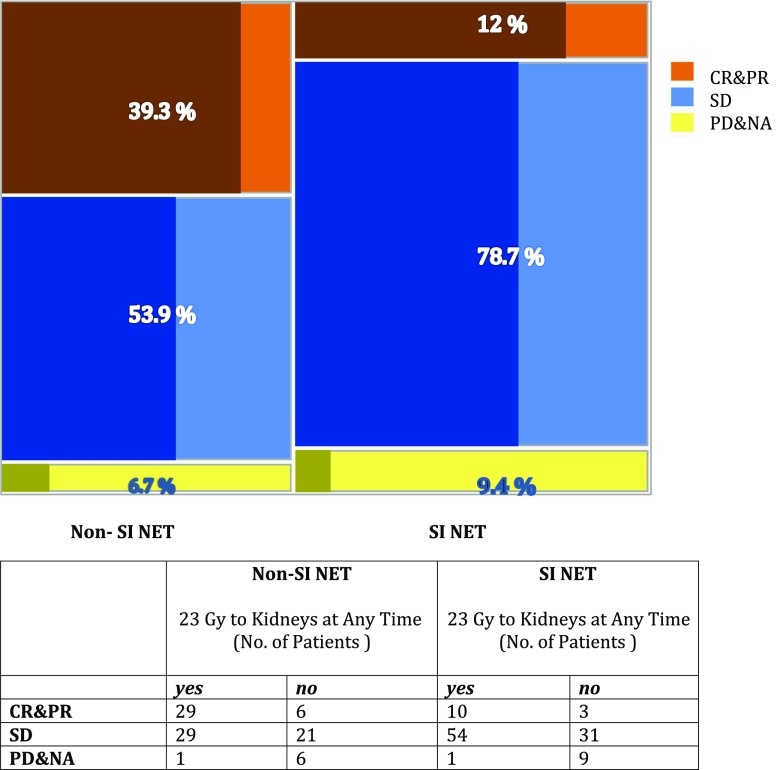
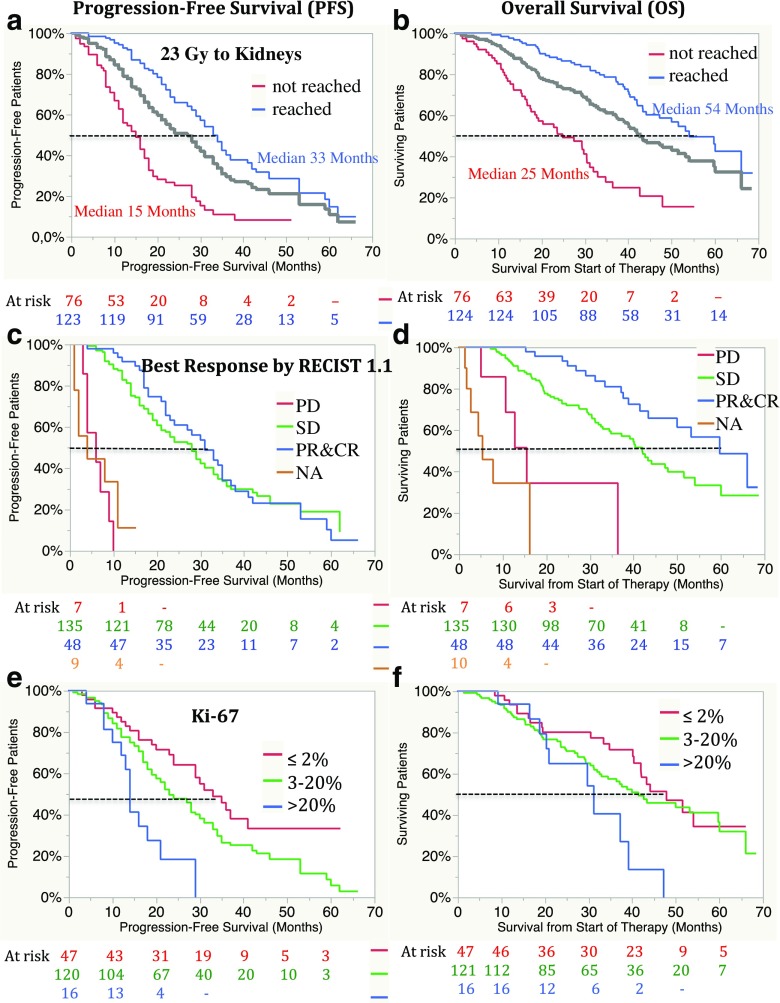
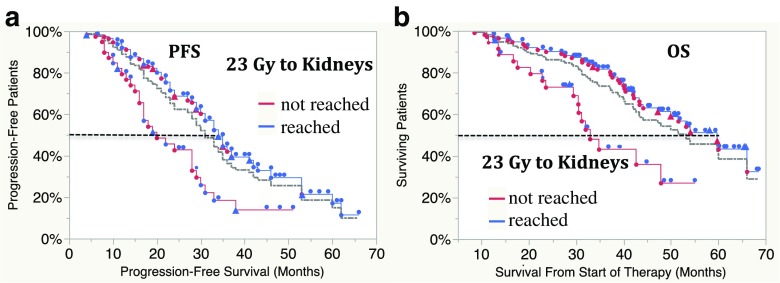
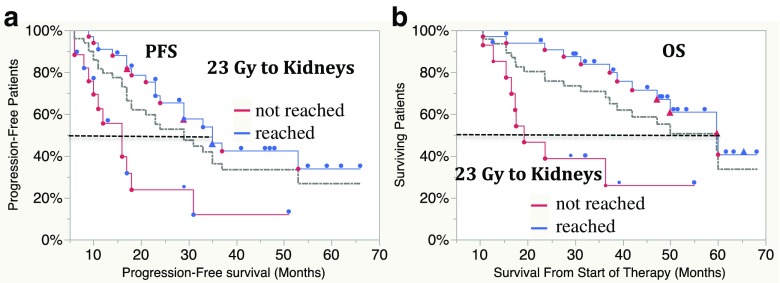
PURPOSE: Peptide receptor radionuclide therapy in patients with neuroendocrine tumours has yielded promising results. This prospective study investigated the feasibility of dosimetry of the kidneys and bone marrow during therapy and its impact on efficacy and outcome. METHODS: Lu-DOTA-octreotate with co-infusion of a mixed amino acid solution, and cycles were repeated until the absorbed dose to the kidneys reached 23 Gy or there were other reasons for stopping therapy. The Ki-67 index was ≤2% in 47 patients (23.5%), 3-20% in 121 (60.5%) and >20% in 16 (8%). RESULTS: In 123 patients (61.5%) the absorbed dose to the kidneys reached 23 Gy with three to nine cycles during first-line therapy; in no patient was a dose to the bone marrow of 2 Gy reached. The best responses (according to RECIST 1.1) were a complete response (CR) in 1 patient (0.5%), a partial response (PR) in 47 (23.5%), stable disease (SD) in 135 (67.5%) and progressive disease (PD) in 7 (3.5%). Median progression-free survival was 27 months (95% CI 22-30 months) in all patients, 33 months in those in whom the absorbed dose to the kidneys reached 23 Gy and 15 months in those in whom it did not. Median overall survival (OS) was 43 months (95% CI 39-53 months) in all patients, 54 months in those in whom the absorbed dose to the kidneys reached 23 Gy and 25 months in those in whom it did not. Median OS was 60 months in patients with a best response of PR or CR, 42 months in those with SD and 16 months in those with PD. Three patients (1.5%) developed acute leukaemia, 1 patient (0.5%) chronic leukaemia (unconfirmed) and 30 patients (15%) grade 3 or 4 bone marrow toxicity. Eight patients (4%) developed grade 2 kidney toxicity and one patient (0.5%) grade 4 kidney toxicity. CONCLUSIONS: Lu-DOTA-octreotate is feasible. Patients in whom the absorbed dose to the kidneys reached 23 Gy had a longer OS than those in whom it did not. Patients with CR/PR had a longer OS than those with SD. Bone marrow dosimetry did not predict toxicity.
Overview
The claims and statistics of this paper haven’t been checked yet.
Free: it reads the open-access text and checks the first 5 claims that cite a source we can check. Create a free account to check every claim.
Integrity signals
Registry
Cites
Statistics
Figures
Verification
Claims the paper makes
The claims and statistics of this paper haven’t been checked yet.
Free: it reads the open-access text and checks the first 5 claims that cite a source we can check. Create a free account to check every claim.
Claims other papers make about this one
Each is checked against this paper’s own text: does it say what the citing paper says it does?
The source backs part of the claim, not all of it — or backs it for a different population, condition or comparison.
In the citing paper
“These studies have demonstrated wide interpatient variability of renal absorbed dose by a factor of 10, underscoring the importance of dosimetry.”
From Normal-Tissue Tolerance to Radiopharmaceutical Therapies, the Knowns and the Unknowns (2021) · cites this paper as [60]
Experimental — accuracy not yet measured
Self-check
Percentages, sums and reported differences re-computed from the paper’s own numbers.
The self-check needs the paper’s full text.
Citations
Cites
New response evaluation criteria in solid tumours: revised RECIST guideline (version 1.1)
Eisenhauer, E. A., Therasse, P., Bogaerts, J., Schwartz, L. H., Sargent, D., Ford, R., Dancey, J., Arbuck, S., Gwyther, S., Mooney, M., et al. (2009) · European Journal of Cancer · doi:10.1016/j.ejca.2008.10.026 · Cited by 29,534 · cited 1×
“1 [29], progression-free survival (PFS) and overall survival (OS).”
BackgroundTolerance of normal tissue to therapeutic irradiation
Emami, B., Lyman, J., Brown, A., Cola, L., Goitein, M., Munzenrider, J. E., Shank, B., Solin, L. J., & Wesson, M. (1991) · International Journal of Radiation Oncology*Biology*Physics · doi:10.1016/0360-3016(91)90171-y · Cited by 4,488 · cited 1×
“For (177)LuDOTA-octreotate, a cumulative absorbed dose of 23 Gy to the kidneys was taken from external beam radiation [25], a cautious cut-off value in the setting of PRRT [26, 27].”
BackgroundPhase 3 Trial of 177 Lu-Dotatate for Midgut Neuroendocrine Tumors
Strosberg, J., El-Haddad, G., Wolin, E., Hendifar, A., Yao, J., Chasen, B., Mittra, E., Kunz, P. L., Kulke, M. H., Jacene, H., et al. (2017) · New England Journal of Medicine · doi:10.1056/nejmoa1607427 · Cited by 3,308 · cited 2×
“NETTER-1 study (N = 116) [8] Erasmus group 2017 update (N = 106) [9] Present study (grade 1 and 2, progressive)”
MethodKwekkeboom, D. J., de Herder, W. W., Kam, B. L., van Eijck, C. H., van Essen, M., Kooij, P. P., Feelders, R. A., van Aken, M. O., & Krenning, E. P. (2008) · Journal of Clinical Oncology · doi:10.1200/jco.2007.15.2553 · Cited by 1,456
Sorbye, H., Welin, S., Langer, S. W., Vestermark, L. W., Holt, N., Osterlund, P., Dueland, S., Hofsli, E., Guren, M. G., Ohrling, K., et al. (2013) · Annals of Oncology · doi:10.1093/annonc/mds276 · Cited by 1,027 · cited 16×
“%) and rectal NETs (45.4”
ResultInfluentialSelf-citationKwekkeboom, D. J., Teunissen, J. J., Bakker, W. H., Kooij, P. P., de Herder, W. W., Feelders, R. A., van Eijck, C. H., Esser, J.-P., Kam, B. L., & Krenning, E. P. (2005) · Journal of Clinical Oncology · doi:10.1200/jco.2005.08.066 · Cited by 657
Imhof, A., Brunner, P., Marincek, N., Briel, M., Schindler, C., Rasch, H., Mäcke, H. R., Rochlitz, C., Müller-Brand, J., & Walter, M. A. (2011) · Journal of Clinical Oncology · doi:10.1200/jco.2010.33.7873 · Cited by 641 · cited 17×
“%) and rectal NETs (45.4”
BackgroundResultInfluentialBrabander, T., van der Zwan, W. A., Teunissen, J. J. M., Kam, B. L. R., Feelders, R. A., de Herder, W. W., van Eijck, C. H. J., Franssen, G. J. H., Krenning, E. P., & Kwekkeboom, D. J. (2017) · Clinical Cancer Research · doi:10.1158/1078-0432.ccr-16-2743 · Cited by 614 · cited 3×
“NETTER-1 study (N = 116) [8] Erasmus group 2017 update (N = 106) [9] Present study (grade 1 and 2, progressive)”
(1962) · PubMed · Cited by 467
Bodei, L., Kidd, M., Paganelli, G., Grana, C. M., Drozdov, I., Cremonesi, M., Lepensky, C., Kwekkeboom, D. J., Baum, R. P., Krenning, E. P., et al. (2015) · European Journal of Nuclear Medicine and Molecular Imaging · doi:10.1007/s00259-014-2893-5 · Cited by 465 · cited 1×
“In agreement with others [22, 30, 40], we found a considerable interindividual variation in calculated bone marrow doses, and similar median values in patients with and without therapy-limiting bone marrow toxicity (Table 3).”
Result
Cited by
Radioactive Main Group and Rare Earth Metals for Imaging and Therapy
Kostelnik, T. I., & Orvig, C. (2019) · Chemical Reviews · doi:10.1021/acs.chemrev.8b00294 · Cited by 483
Strosberg, J. R., Halfdanarson, T. R., Bellizzi, A. M., Chan, J. A., Dillon, J. S., Heaney, A. P., Kunz, P. L., O’Dorisio, T. M., Salem, R., Segelov, E., et al. (2017) · Pancreas · doi:10.1097/mpa.0000000000000850 · Cited by 373
Radiotheranostics: a roadmap for future development
Herrmann, K., Schwaiger, M., Lewis, J. S., Solomon, S. B., McNeil, B. J., Baumann, M., Gambhir, S. S., Hricak, H., & Weissleder, R. (2020) · The Lancet Oncology · doi:10.1016/s1470-2045(19)30821-6 · Cited by 327
Sjögreen Gleisner, K., Chouin, N., Gabina, P. M., Cicone, F., Gnesin, S., Stokke, C., Konijnenberg, M., Cremonesi, M., Verburg, F. A., Bernhardt, P., et al. (2022) · European Journal of Nuclear Medicine and Molecular Imaging · doi:10.1007/s00259-022-05727-7 · Cited by 252
Consensus on molecular imaging and theranostics in neuroendocrine neoplasms
Ambrosini, V., Kunikowska, J., Baudin, E., Bodei, L., Bouvier, C., Capdevila, J., Cremonesi, M., de Herder, W. W., Dromain, C., Falconi, M., et al. (2021) · European Journal of Cancer · doi:10.1016/j.ejca.2021.01.008 · Cited by 244
Self-citationA Review of Theranostics: Perspectives on Emerging Approaches and Clinical Advancements
Burkett, B. J., Bartlett, D. J., McGarrah, P. W., Lewis, A. R., Johnson, D. R., Berberoğlu, K., Pandey, M. K., Packard, A. T., Halfdanarson, T. R., Hruska, C. B., et al. (2023) · Radiology: Imaging Cancer · doi:10.1148/rycan.220157 · Cited by 217
Halfdanarson, T. R., Strosberg, J. R., Tang, L., Bellizzi, A. M., Bergsland, E. K., O'Dorisio, T. M., Halperin, D. M., Fishbein, L., Eads, J., Hope, T. A., et al. (2020) · Pancreas · doi:10.1097/mpa.0000000000001597 · Cited by 202
Advances in the Diagnosis and Management of Well-Differentiated Neuroendocrine Neoplasms
Hofland, J., Kaltsas, G., & de Herder, W. W. (2020) · Endocrine Reviews · doi:10.1210/endrev/bnz004 · Cited by 208
Hope, T. A., Bodei, L., Chan, J. A., El-Haddad, G. E., Fidelman, N. A., Kunz, P. L., Mailman, J. A., Menda, Y., Metz, D. C., Mittra, E., et al. (2020) · Journal of Nuclear Medicine · doi:10.2967/jnumed.119.240911 · Cited by 140
Radiotheranostics in oncology: Making precision medicine possible
Aboagye, E. O., Barwick, T. D., & Haberkorn, U. (2023) · CA: A Cancer Journal for Clinicians · doi:10.3322/caac.21768 · Cited by 131
“Median overall survival was 43 months (95% CI, 39– 53 months) in all patients, 54 months in those for whom the absorbed dose to the kidneys reached 23 Gy, and 25 months in those for whom it did not.(84) This demonstrates opportunities for optimizing dose based on consideration of the organs at risk.”
BackgroundSatapathy, S., Mittal, B. R., & Bhansali, A. K. (2019) · Clinical Endocrinology · doi:10.1111/cen.14106 · Cited by 122
Metastatic Pheochromocytomas and Abdominal Paragangliomas
Granberg, D. O., Juhlin, C. C., & Falhammar, H. (2021) · The Journal of Clinical Endocrinology & Metabolism · doi:10.1210/clinem/dgaa982 · Cited by 112
“The results are promising, with objective response rates up to 39%, disease control rates up to 92%, and PFS up to 33 months (100, 101).”
BackgroundSelf-citationSundlöv, A., Gleisner, K. S., Tennvall, J., Ljungberg, M. H., Warfvinge, C. F., Holgersson, K., Hallqvist, A., Bernhardt, P., & Svensson, J. B. (2022) · European Journal of Nuclear Medicine and Molecular Imaging · doi:10.1007/s00259-022-05786-w · Cited by 106
de Vries–Huizing, D. M. V., der Veen, B. J. D. W., Verheij, M., & Stokkel, M. P. M. (2018) · EJNMMI Research · doi:10.1186/s13550-018-0443-z · Cited by 108
“9% based on RECIST criteria in patients who have received 23 Gy to the kidney [78].”
Normal-Tissue Tolerance to Radiopharmaceutical Therapies, the Knowns and the Unknowns
Wahl, R. L., Sgouros, G., Iravani, A., Jacene, H., Pryma, D., Saboury, B., Capala, J., & Graves, S. A. (2021) · Journal of Nuclear Medicine · doi:10.2967/jnumed.121.262751 · Cited by 95
Rudisile, S., Gosewisch, A., Wenter, V., Unterrainer, M., Böning, G., Gildehaus, F. J., Fendler, W. P., Auernhammer, C. J., Spitzweg, C., Bartenstein, P., et al. (2019) · BMC Cancer · doi:10.1186/s12885-019-6000-y · Cited by 96
“However, they defined the common threshold of 23 Gy to be associated with a higher survival regardless of the number of therapy cycles [25].”
InfluentialHagmarker, L., Svensson, J. B., Rydèn, T., van Essen, M., Sundlöv, A., Gleisner, K. S., Gjertsson, P., & Bernhardt, P. (2019) · Journal of Nuclear Medicine · doi:10.2967/jnumed.118.225235 · Cited by 95
“comparable to other published bone marrow dosimetry data (3,10,11,26-29).”
BackgroundResultFavorable Outcome in Patients with Pheochromocytoma and Paraganglioma Treated with 177Lu-DOTATATE
Vyakaranam, A. R., Crona, J., Norlén, O., Granberg, D. O., Garske‐Román, U., Sandström, M., Fröss‐Baron, K., Thiis‐Evensen, E., Hellman, P., & Sundin, A. (2019) · Cancers · doi:10.3390/cancers11070909 · Cited by 86
“Seven patients were previously included in a prospective dosimetry-tailored PRRT study of 200 patients [19].”
BackgroundMethodSelf-citationNext generation radiotheranostics promoting precision medicine
Pomykala, K. L., Hadaschik, B. A., Sartor, O. A., Gillessen, S., Sweeney, C. J., Maughan, T., Hofman, M. S., & Herrmann, K. (2023) · Annals of Oncology · doi:10.1016/j.annonc.2023.03.001 · Cited by 87
Dosimetry in radionuclide therapy: the clinical role of measuring radiation dose
Lawhn-Heath, C., Hope, T. A., Martinez, J., Fung, E. K., Shin, J., Seo, Y., & Flavell, R. R. (2022) · The Lancet Oncology · doi:10.1016/s1470-2045(21)00657-4 · Cited by 83
Geenen, L., Nonnekens, J., Konijnenberg, M., Baatout, S., de Jong, M., & Aerts, A. (2021) · Nuclear Medicine and Biology · doi:10.1016/j.nucmedbio.2021.06.006 · Cited by 79
“4 GBq of [(177)Lu]Lu-DOTA-TATE before reaching 23 Gy to their kidneys [18].”
BackgroundMethodPeptide receptor radionuclide therapy for patients with advanced pancreatic neuroendocrine tumors
Ramage, J. K., Naraev, B. G., & Halfdanarson, T. R. (2018) · Seminars in Oncology · doi:10.1053/j.seminoncol.2018.08.004 · Cited by 71
Rydèn, T., van Essen, M., Marin, I., Svensson, J., & Bernhardt, P. (2020) · Journal of Nuclear Medicine · doi:10.2967/jnumed.120.245548 · Cited by 72
“An Uppsala group reported the most time-consuming protocols, using 60 or 120 projections with acquisition times of 30 minutes and employing attenuated corrected (AC)-OSEM (3,13,14).”
BackgroundMethodMitjavila, M., Jiménez‐Fonseca, P., Belló, P., Núñez, V. P., Percovich, J. C., García-Burillo, A., Hernando, J., Arbizu, J., Rodeño, E., Estorch, M., et al. (2023) · European Journal of Nuclear Medicine and Molecular Imaging · doi:10.1007/s00259-023-06166-8 · Cited by 69
Sonbol, M. B., Halfdanarson, T. R., & Hilal, T. (2020) · JAMA Oncology · doi:10.1001/jamaoncol.2020.0078 · Cited by 66
Personalized Dosimetry in Targeted Radiation Therapy: A Look to Methods, Tools and Critical Aspects
Danieli, R., Milano, A., Gallo, S., Veronese, I., Lascialfari, A., Indovina, L., Botta, F., Ferrari, M. E., Cicchetti, A., Raspanti, D., et al. (2022) · Journal of Personalized Medicine · doi:10.3390/jpm12020205 · Cited by 76
“In addition, for a few therapies, the first promising signs are emerging, showing that the implementation of treatment planning based on dosimetry brings great benefits for the patients compared to the standard approach [43,116,117].”
BackgroundMileva, M., Marin, G., Levillain, H., Artigas, C., Bogaert, C. V., Marin, C., Danieli, R., Deleporte, A., Picchia, S., Stathopoulos, K., et al. (2023) · Journal of Nuclear Medicine · doi:10.2967/jnumed.123.265987 · Cited by 69
Mora‐Ramirez, E., Santoro, L., Cassol, E., Ramos, J. C. O., Clayton, N., Kayal, G., Chouaf, S., Trauchessec, D., Pouget, J., Kotzki, P., et al. (2020) · Medical Physics · doi:10.1002/mp.14375 · Cited by 71
Urso, L., Nieri, A., Uccelli, L., Castello, A., Artioli, P., Cittanti, C., Marzola, M. C., Florimonte, L., Castellani, M., Bissoli, S., et al. (2023) · Pharmaceutics · doi:10.3390/pharmaceutics15041110 · Cited by 64
“[106] performed salvage RLT with variable cycles (3–9) until reaching 23 Gy of absorbed dose (AD) to the kidneys unless the treatment had to be stopped due to other reasons.”
MethodSandström, M., Freedman, N., Fröss‐Baron, K., Kahn, T., & Sundin, A. (2020) · EJNMMI Physics · doi:10.1186/s40658-020-00339-2 · Cited by 63
“2–74GBq [8] and a study in 74 patients receiving 14.”
BackgroundSelf-citationEfficacy and Safety of 177 Lu-DOTATATE in Lung Neuroendocrine Tumors: A Bicenter study
Zidan, L., Iravani, A., Oleinikov, K., Ben‐Haim, S., Gross, D. J., Meirovitz, A., Maimon, O., Akhurst, T. J., Michael, M., Hicks, R. J., et al. (2021) · Journal of Nuclear Medicine · doi:10.2967/jnumed.120.260760 · Cited by 61
Imaging-guided targeted radionuclide tumor therapy: From concept to clinical translation
Sun, J., Huangfu, Z., Yang, J., Wang, G., Hu, K., Gao, M., & Zhong, Z. (2022) · Advanced Drug Delivery Reviews · doi:10.1016/j.addr.2022.114538 · Cited by 57
Pandit-Taskar, N. D., Iravani, A., Lee, D., Jacene, H. A., Pryma, D. A., Hope, T. A., Saboury, B., Capala, J., & Wahl, R. L. (2021) · Journal of Nuclear Medicine · doi:10.2967/jnumed.121.262977 · Cited by 66
Camus, B., Cottereau, A., Palmieri, L., Dermine, S., Tenenbaum, F., Brézault, C., & Coriat, R. (2021) · Journal of Clinical Medicine · doi:10.3390/jcm10061267 · Cited by 58
“Prospective Garske Roman 2018 [13] metastatic NET (n = 200) n = 108 RECIST v1.”
BackgroundInfluentialJahn, U., Ilan, E., Sandström, M., Lubberink, M., Garske‐Román, U., & Sundin, A. (2021) · Cancers · doi:10.3390/cancers13050962 · Cited by 59
“The patients were retrospectively selected from the previously published dosimetryguided, prospective 177Lu-DOTATATE study (EudraCT 2009-012260-14) [7] and these subjects were also included in the two earlier reports on tumor dosimetry [16,17].”
BackgroundMethodSelf-citationBidakhvidi, N. A., Goffin, K. E., Dekervel, J., Baete, K., Nackaerts, K., Clément, P. M., Cutsem, E. V., Verslype, C., & Deroose, C. M. (2021) · Cancers · doi:10.3390/cancers14010129 · Cited by 53
“, who investigated the impact of a dosimetry-guided study protocol on outcome and toxicity in 200 patients with advanced NETs [48].”
BackgroundInfluentialTargeted Radionuclide Therapy: New Advances for Improvement of Patient Management and Response
Malcolm, J., Falzone, N., Lee, B. Q., & Vallis, K. A. (2019) · Cancers · doi:10.3390/cancers11020268 · Cited by 56
“highlighted the importance of individualised kidney dosimetry in planning 177Lu-DOTA-TATE treatments [18].”
BackgroundPeptide Receptor Radionuclide Therapy for Patients With Advanced Lung Carcinoids
Naraev, B. G., Ramirez, R. A., Kendi, A. T., & Halfdanarson, T. R. (2019) · Clinical Lung Cancer · doi:10.1016/j.cllc.2019.02.007 · Cited by 52
Alipour, R., Jackson, P. A., Bressel, M., Hogg, A., Callahan, J., Hicks, R. J., & Kong, G. (2023) · European Journal of Nuclear Medicine and Molecular Imaging · doi:10.1007/s00259-023-06257-6 · Cited by 53
“A prospective observational study of 200 patients with advanced metastatic NEN showed patients in whom the absorbed dose to normal kidneys reached 23 Gy had a longer OS than those in whom it did not [12].”
BackgroundMitran, B., Rinne, S. S., Konijnenberg, M., Μάινα, Θ., Nock, B. A., Altai, M., Vorobyeva, A., Larhed, M., Максимилианович, Т. В., de Jong, M., et al. (2019) · International Journal of Cancer · doi:10.1002/ijc.32401 · Cited by 51
“4% and 208 keV, 11%) of (177)Lu allow for single photon emission computed tomography (SPECT) acquisition, favoring the application of this attractive radioisotope in a theranostic setting.(14) A systematic search for the most suitable chelator for coupling to the biomolecule of interest, namely PEG2RM26, is expected t…”
BackgroundFröss‐Baron, K., Garske‐Román, U., Welin, S., Granberg, D. O., Eriksson, B. K., Khan, T. S., Sandström, M., & Sundin, A. (2020) · Neuroendocrinology · doi:10.1159/000506746 · Cited by 55
Self-citationPeptide Receptor Radionuclide Therapy (PRRT): Innovations and Improvements
Merola, E., & Grana, C. M. (2023) · Cancers · doi:10.3390/cancers15112975 · Cited by 54
Patel, M. A., Tena, I., Jha, A., Taïeb, D., & Pacák, K. (2021) · Frontiers in Endocrinology · doi:10.3389/fendo.2021.625312 · Cited by 53
“(97) (177)Lu-DOTATATE Prospective 5 2 Morphological, clinical, and”
Jahn, U., Ilan, E., Sandström, M., Garske‐Román, U., Lubberink, M., & Sundin, A. (2019) · Neuroendocrinology · doi:10.1159/000504001 · Cited by 49
Self-citationClinical Perspectives of Theranostics
Okamoto, S., Shiga, T., & Tamaki, N. (2021) · Molecules · doi:10.3390/molecules26082232 · Cited by 52
“A study of theranostics for neuroendocrine tumors reported that dose escalation based on organ risk improved outcome [68].”
BackgroundDosimetry for Optimized, Personalized Radiopharmaceutical Therapy
Graves, S. A., & Hobbs, R. F. (2020) · Seminars in Radiation Oncology · doi:10.1016/j.semradonc.2020.07.008 · Cited by 54
Radiolabeled Somatostatin Analogues for Diagnosis and Treatment of Neuroendocrine Tumors
Ambrosini, V., Zanoni, L., Filice, A., Lamberti, G., Argalia, G., Fortunati, E., Campana, D., Versari, A., & Fanti, S. (2022) · Cancers · doi:10.3390/cancers14041055 · Cited by 51
Warfvinge, C. F., Gustafsson, J., Roth, D. R., Tennvall, J., Svensson, J. B., Bernhardt, P., Åkesson, A., Wieslander, E., Sundlöv, A., & Gleisner, K. S. (2024) · Journal of Nuclear Medicine · doi:10.2967/jnumed.123.266991 · Cited by 50
Neuroendocrine Tumors and Peptide Receptor Radionuclide Therapy: When Is the Right Time?
Hope, T. A., Pavel, M., & Bergsland, E. K. (2022) · Journal of Clinical Oncology · doi:10.1200/jco.22.00176 · Cited by 50
Quantitative 177Lu SPECT/CT imaging for personalized dosimetry using a ring-shaped CZT-based camera
Danieli, R., Stella, M., Leube, J., Tran‐Gia, J., Marin, C., Uribe, C., Vanderlinden, B., Reynaert, N., Flamen, P., & Levillain, H. (2023) · EJNMMI Physics · doi:10.1186/s40658-023-00586-z · Cited by 47
Dadgar, H., Pashazadeh, A., Norouzbeigi, N., Assadi, M., Albalooshi, B., Baum, R. P., Al‐Ibraheem, A., Haidar, M., Beheshti, M., Geramifar, P., et al. (2025) · Theranostics · doi:10.7150/thno.107963 · Cited by 48
“Patients who tolerated higher doses demonstrated improved response rates and survival outcomes, though selection bias was a confounding factor [123].”
Kaemmerer, D., Twrznik, M., Kulkarni, H., Hörsch, D., Sehner, S., Baum, R. P., & Hommann, M. (2019) · Annals of Surgery · doi:10.1097/sla.0000000000003237 · Cited by 47
“There might be differences among studies regarding different cumulative administered activities and therapeutic concepts of PRRT, for example, applying different radionuclides and injected activities for PRRT.(24,25,38,51,52) A lower tumor burden is an independent, prognostically favorable factor for PRRT.”
BackgroundInfluentialStarr, J. S., Sonbol, M. B., Hobday, T. J., Sharma, A., Kendi, A. T., & Halfdanarson, T. R. (2020) · OncoTargets and Therapy · doi:10.2147/ott.s202867 · Cited by 45
Giraudet, A., Kryza, D., Hofman, M. S., Moreau, A., Fizazi, K. S., Fléchon, A., Hicks, R. J., & Tran, B. (2021) · Therapeutic Advances in Medical Oncology · doi:10.1177/17588359211053898 · Cited by 46
Aalbersberg, E. A., de Vries–Huizing, D. M. V., Walraven, I., der Veen, B. J. D. W., Kulkarni, H., Singh, A., Stokkel, M. P. M., & Baum, R. P. (2019) · Journal of Nuclear Medicine · doi:10.2967/jnumed.118.224386 · Cited by 42
Rubira, L., Deshayes, E., Santoro, L., Kotzki, P. O., & Fersing, C. (2023) · Pharmaceutics · doi:10.3390/pharmaceutics15041051 · Cited by 43
Sundquist, F., Georgantzi, K., Jarvis, K. B., Brok, J. S., Koskenvuo, M., Rascon, J., van Noesel, M. M., Grybäck, P., Nilsson, J. N., Braat, A. J. A. T., et al. (2022) · Frontiers in Pediatrics · doi:10.3389/fped.2022.836230 · Cited by 41
Self-citationBodei, L., Cremonesi, M., Ferrari, M. E., Mittra, E., Kulkarni, H., Deroose, C. M., Srirajaskanthan, R., Ramage, J. K., Grana, C. M., Botta, F., et al. (2025) · Journal of Nuclear Medicine · doi:10.2967/jnumed.124.268903 · Cited by 41
Wang, L., Lin, L., Wang, M., & Li, Y. (2020) · Medicine · doi:10.1097/md.0000000000019304 · Cited by 42
Satapathy, S., & Mittal, B. R. (2019) · Nuclear Medicine Communications · doi:10.1097/mnm.0000000000001103 · Cited by 41
A review of 177Lu dosimetry workflows: how to reduce the imaging workloads?
Vergnaud, L., Dewaraja, Y. K., Giraudet, A., Badel, J., & Sarrut, D. (2024) · EJNMMI Physics · doi:10.1186/s40658-024-00658-8 · Cited by 40
“Several trials have also been conducted with 177 Lu [6–8].”
BackgroundLing, X., Latoche, J. D., Choy, C. J., Kurland, B. F., Laymon, C. M., Wu, Y. L., Salamacha, N., Ding, S., Geruntho, J. J., Rigatti, L. H., et al. (2019) · Molecular Imaging and Biology · doi:10.1007/s11307-019-01404-8 · Cited by 37
Zhao, W., Esquinas, P. L., Frezza, A., Hou, X., Beauregard, J., & Celler, A. M. (2019) · Physics in Medicine and Biology · doi:10.1088/1361-6560/ab3039 · Cited by 35
Personalized radiation dosimetry for PRRT—how many scans are really required?
Freedman, N., Sandström, M., Kuten, J., Shtraus, N., Ospovat, I., Schlocker, A. J., & Even‐Sapir, E. (2020) · EJNMMI Physics · doi:10.1186/s40658-020-00293-z · Cited by 34
“Estimates of absorbed dose and effective half-life reported in this study are comparable to those reported by others [4, 5, 13, 18, 19].”
MethodResultSelf-citationHemmingsson, J., Svensson, J. B., Hallqvist, A., Smits, K., Johanson, V., & Bernhardt, P. (2023) · Journal of Nuclear Medicine · doi:10.2967/jnumed.123.265484 · Cited by 33
EANM enabling guide: how to improve the accessibility of clinical dosimetry
Gear, J. I., Stokke, C., Terwinghe, C. Y., Gnesin, S., Sandström, M., Tran‐Gia, J., Cremonesi, M., Cicone, F., Verburg, F., Hustinx, R., et al. (2023) · European Journal of Nuclear Medicine and Molecular Imaging · doi:10.1007/s00259-023-06226-z · Cited by 32
Self-citationRethinking Dosimetry: A European Perspective
Tran‐Gia, J., Cicone, F., Koole, M. J. B., Giammarile, F., Gear, J. I., Deshayes, E., Gabiña, P. M., Cremonesi, M., Wadsley, J., Bernhardt, P., et al. (2025) · Journal of Nuclear Medicine · doi:10.2967/jnumed.124.269378 · Cited by 34
Self-citationPersonalized Dosimetry in the Context of Radioiodine Therapy for Differentiated Thyroid Cancer
Pacilio, M., Conte, M., Frantellizzi, V., Feo, M. S. D., Pisani, A. R., Marongiu, A., Nuvoli, S. M. F., Rubini, G., Spanu, A., & VINCENTIS, G. D. (2022) · Diagnostics · doi:10.3390/diagnostics12071763 · Cited by 32
Jiang, Y., Liu, Q., Wang, G., Sui, H., Wang, R., Wang, J., Zhang, J., Zhu, Z., & Chen, X. S. (2022) · Theranostics · doi:10.7150/thno.77219 · Cited by 30
“reported data on 200 NET patients receiving 177Lu-DOTATATE, and grade 3/4 hematotoxicity was found in 30 patients (15%) [25].”
Hallqvist, A., Brynjarsdóttir, E., Krantz, T., Sjögren, M., Svensson, J., & Bernhardt, P. (2025) · Journal of Nuclear Medicine · doi:10.2967/jnumed.124.268902 · Cited by 29
“Strategies to optimize treatment ef fi cacy include modifying the number of treatment cycles or adjusting the administered activity based on the absorbed doses to critical organs, such as the kidneys ( 3 – 5 ).”
Stolniceanu, C. R., Nistor, I., Bilhă, Ş., Volovat, C. D., Volovăț, S. R., Matovic, M. D., Ştefănescu, C., & Covic, A. C. (2020) · Nuclear Medicine Communications · doi:10.1097/mnm.0000000000001198 · Cited by 31
Satapathy, S., Mittal, B. R., Sood, A. K., Sood, A., Kapoor, R. K., & Gupta, R. (2020) · Clinical Nuclear Medicine · doi:10.1097/rlu.0000000000003170 · Cited by 29
Mix, M. D., Renaud, T., Kind, F., Nemer, U., Yousefzadeh‐Nowshahr, E., Moalosi, T. C. G., Ormrane, A. M., Meyer, P. T., & Ruf, J. (2021) · Journal of Nuclear Medicine · doi:10.2967/jnumed.121.262245 · Cited by 33
“As a consequence, meticulous renal dosimetry is recommended in RLTs and should be thoroughly integrated into treatment protocols (8).”
BackgroundTargeted Radionuclide Therapy in Glioblastoma
Zhao, X., Jakobsson, V., Tao, Y., Zhao, T., Wang, J., Khong, P., Chen, X. S., & Zhang, J. (2024) · ACS Applied Materials & Interfaces · doi:10.1021/acsami.4c07850 · Cited by 29
Buatti, J. M., Pryma, D. A., Kiess, A. P., Mailman, J. A., Ennis, R. D., Menda, Y., White, G. A., & Pandit-Taskar, N. D. (2020) · International Journal of Radiation Oncology*Biology*Physics · doi:10.1016/j.ijrobp.2020.11.048 · Cited by 27
In Vivo Instability of 177Lu-DOTATATE During Peptide Receptor Radionuclide Therapy
Lubberink, M., Wilking, H., Öst, A., Ilan, E., Sandström, M., Andersson, C., Fröss‐Baron, K., Velikyan, I., & Sundin, A. (2020) · Journal of Nuclear Medicine · doi:10.2967/jnumed.119.237818 · Cited by 29
“Thus far, we have treated more than 800 patients with 177LuDOTATATE using a patient-specific protocol, where the number of treatment cycles is determined by a combination of image-based dosimetry to assess absorbed doses to the kidneys and combined image- and blood-based dosimetry to estimate absorbed doses to the bon…”
BackgroundMethodSelf-citationIndividualization of Radionuclide Therapies: Challenges and Prospects
Piwowarska-Bilska, H., Kurkowska, S., & Birkenfeld, B. (2022) · Cancers · doi:10.3390/cancers14143418 · Cited by 28
Marretta, A. L., Ottaiano, A., Iervolino, D., Bracigliano, A., Clemente, O., Gennaro, F. D., Tafuto, R., Santorsola, M., Lastoria, S., & Tafuto, S. (2023) · Journal of Clinical Medicine · doi:10.3390/jcm12041494 · Cited by 25
“[19] 2018 2010–2014 8 3 1 3 7 Zandee WT.”
Maccauro, M., Cuomo, M., Bauckneht, M., Bagnalasta, M., Mazzaglia, S., Scalorbi, F., Argiroffi, G., Kirienko, M., Lorenzoni, A., Aliberti, G., et al. (2024) · European Journal of Nuclear Medicine and Molecular Imaging · doi:10.1007/s00259-024-06863-y · Cited by 26
Lin, E., Chen, T., Little, A. L., Holliday, L., ROACH, P. J., Butler, P., Hosking, E., Bailey, E. A., Elison, B., & Currow, D. C. (2019) · Internal Medicine Journal · doi:10.1111/imj.14336 · Cited by 26
Systemic Treatment Selection for Patients with Advanced Pancreatic Neuroendocrine Tumours (PanNETs)
Megdanova, V. G., Lamarca, Á., Backen, A. C., McNamara, M. G., Barriuso, J., Sergieva, S., Gocheva, L., Mansoor, W., Manoharan, P., & Valle, J. W. (2020) · Cancers · doi:10.3390/cancers12071988 · Cited by 27
“, 2018—177Lu-Dotatate arm [38,43]; w—Phase II study, Sansovini et al.”
BackgroundHemmingsson, J., Svensson, J., van der Meulen, N. P., Müller, C., & Bernhardt, P. (2022) · EJNMMI Physics · doi:10.1186/s40658-022-00495-7 · Cited by 25
“correlation was demonstrated for blood-based dosimetry in a larger prospective study [5, 6, 20, 24].”
MethodPrado-Wohlwend, S., Olmo-García, M. I. D., Bello-Arqués, P., & Merino-Torres, J. F. (2022) · Frontiers in Endocrinology · doi:10.3389/fendo.2022.957172 · Cited by 24
Shah, H., Ruppell, E., Bokhari, R., Aland, P., Lele, V. R., Ge, C., & McIntosh, L. (2023) · European Journal of Radiology Open · doi:10.1016/j.ejro.2023.100477 · Cited by 26
“In a study of 200 patients treated with Lu-177-DOTATATE, grade 1 kidney toxicity was seen in 19% of patients, grade 2 in 4% of patients, and grade 4 toxicity in 1 patient 3 years after therapy which was confirmed due to histologically confirmed hypertensive nephrosclerosis [52].”
BackgroundVelikyan, I. (2020) · Pharmaceuticals · doi:10.3390/ph13030039 · Cited by 26
“determined based on dosimetry (Figure 6) [115].”
Use of imaging-based dosimetry for personalising radiopharmaceutical therapy of cancer
Beauregard, J. (2022) · Cancer Imaging · doi:10.1186/s40644-022-00505-y · Cited by 25
Overview and Current Status of Peptide Receptor Radionuclide Therapy
Bushnell, D. L., & Bodeker, K. L. (2020) · Surgical Oncology Clinics of North America · doi:10.1016/j.soc.2019.11.005 · Cited by 25
Australian experience of peptide receptor radionuclide therapy in lung neuroendocrine tumours
Lim, L. E., Chan, D. L. H., Thomas, D. M., Du, Y., Tincknell, G., Kuchel, A., Davis, A. P., Bailey, D. L., Pavlakis, N., Cehic, G., et al. (2020) · Oncotarget · doi:10.18632/oncotarget.27659 · Cited by 23
“Garske-Roman, 2018 [37] 6 200 177Lu 43 m 27 m 24%”
Torralba, E. G., Spada, F., Lim, K. H. J., Jacobs, T., Barriuso, J., Mansoor, W., McNamara, M. G., Hubner, R. A., Manoharan, P., Fazio, N., et al. (2021) · Cancer Treatment Reviews · doi:10.1016/j.ctrv.2021.102168 · Cited by 22
Chiesa, C., Strigari, L., Pacilio, M., Richetta, E., Cannatà, V., Stasi, M., Marzola, M. C., Schillaci, O., Bagni, O., & Maccauro, M. (2021) · Physica Medica · doi:10.1016/j.ejmp.2021.07.001 · Cited by 22
“Indications of clinical benefit thanks to dosimetry are available in radioiodine treatment of metastatic DTC [12–14], radiopeptide treatment of neuroendocrine tumours [15] and in microspheres”
BackgroundDosimetry for Radiopharmaceutical Therapy: The European Perspective
Laßmann, M., Eberlein, U., Gear, J. I., Konijnenberg, M., & Kunikowska, J. (2021) · Journal of Nuclear Medicine · doi:10.2967/jnumed.121.262754 · Cited by 26
Radionuclide Theranostics in Neuroendocrine Neoplasms: An Update
Franco, M. D., Zanoni, L., Fortunati, E., Fanti, S., & Ambrosini, V. (2024) · Current Oncology Reports · doi:10.1007/s11912-024-01526-5 · Cited by 25
“%) grade 4 kidney toxicity [115].”
Persson, M., Hindorf, C., Ardenfors, O., Larsson, M., & Nilsson, J. N. (2024) · EJNMMI Research · doi:10.1186/s13550-024-01077-7 · Cited by 21
“Skeletal metastases have been reported as a risk factor for bone marrow toxicity by others [10, 13, 16], but with some contradictory data [6], that reported no higher risk of subacute haematological toxicity in patients with skeletal metastases.”
ResultPozzari, M., Maisonneuve, P., Spada, F., Berruti, A., Amoroso, V., Cella, C. A., Laffi, A., Pellicori, S., Bertani, E., & Fazio, N. (2018) · Cancer Treatment Reviews · doi:10.1016/j.ctrv.2018.10.008 · Cited by 21
Peptide Receptor Radionuclide Therapy – Prospects for Personalised Treatment
Sundlöv, A., & Gleisner, K. S. (2020) · Clinical Oncology · doi:10.1016/j.clon.2020.10.020 · Cited by 20
Quantitative SPECT (QSPECT) at high count rates with contemporary SPECT/CT systems
Desy, A., Bouvet, G. F., Croteau, É., Lafrenière, N., Turcotte, É. E., Després, P., & Beauregard, J. (2021) · EJNMMI Physics · doi:10.1186/s40658-021-00421-3 · Cited by 19
The Effects of Peptide Receptor Radionuclide Therapy on the Neoplastic and Normal Pituitary
Marques, P. (2023) · Cancers · doi:10.3390/cancers15102710 · Cited by 20
Beykan, S., Eberlein, U., Ansquer, C., Beauregard, J., Durand‐Gasselin, L., Grønbæk, H., Haug, A. R., Hicks, R. J., Lenzo, N. P., Navalkissoor, S., et al. (2024) · European Journal of Nuclear Medicine and Molecular Imaging · doi:10.1007/s00259-024-06682-1 · Cited by 19
“There is limited correlation between absorbed radiation doses to the bone marrow and development of haematologic toxicity [36–38].”
BackgroundResultInfluentialPituitary Function after High-Dose 177Lu-DOTATATE Therapy and Long-Term Follow-Up
Sundlöv, A., Gleisner, K. S., Tennvall, J., Dahl, L., Svensson, J. B., Åkesson, A., Bernhardt, P., & Lindgren, O. (2020) · Neuroendocrinology · doi:10.1159/000507761 · Cited by 24
Walrand, S., & Jamar, F. (2021) · International Journal of Molecular Sciences · doi:10.3390/ijms22158326 · Cited by 19
“Peptide receptor radionuclide therapy (PRRT) is a well-established therapy for metastatic cancers expressing somatostatin receptors.”
BackgroundMethodResultInfluential
Metadata
- Authors
- Garske-Román, U., Sandström, M., Fröss Baron, K., Lundin, L., Hellman, P., Welin, S., Johansson, S., Khan, T., Lundqvist, H., Eriksson, B., Sundin, A., & Granberg, D.
- Affiliations
- Uppsala University (SE)
- Venue
- European Journal of Nuclear Medicine and Molecular Imaging
- Published
- 2018-03-01
- Volume
- 45
- Issue
- 6
- Pages
- 970-988
- ISSN
- 1619-7070 (ISSN-L)
- 1619-7089
- PMC
- PMC5915504
- OpenAlex
- W2789923927
- Cited by
- 254
- References
- 44
- Citations by year
- 2026: 20 · 2025: 18 · 2024: 30 · 2023: 36 · 2022: 41 · 2021: 44 · 2020: 33 · 2019: 21 · 2018: 10
- FWCI
- 21.08
- Type
- journal article
- Language
- en
- Open access
- hybrid
- doi.org
- Licence
- cc-by
- creativecommons.org/licenses/by/4.0 (tdm)
- Locations
- European Journal of Nuclear Medicine and Molecular Imaging (publishedVersion, cc-by)
- Europe PMC (PubMed Central) (publishedVersion, other-oa)
- PubMed Central (publishedVersion, cc-by)
- PubMed (publishedVersion)
- KTH Publication Database DiVA (KTH Royal Institute of Technology) (submittedVersion, other-oa)
- Funders
- Uppsala University
- Topics
- Health Sciences › Medicine › Oncology › Neuroendocrine Tumor Research Advances
- Health Sciences › Medicine › Radiology, Nuclear Medicine and Imaging › Radiopharmaceutical Chemistry and Applications
- Health Sciences › Medicine › Radiology, Nuclear Medicine and Imaging › Medical Imaging Techniques and Applications
- Keywords
- peptide receptor radionuclide therapy, neuroendocrine tumors, metastatic neuroendocrine tumors, kidney dosimetry, bone marrow dosimetry, absorbed dose, treatment toxicity, progression-free survival, overall survival, acute leukemia, nephrotoxicity, myelosuppression, Ki-67 proliferation index
- MeSH terms
- Adolescent, Adult, Aged, Dose-Response Relationship, Radiation, Female, Humans, Male, Middle Aged, Organometallic Compounds, Prospective Studies, Octreotide, Receptors, Peptide, Neuroendocrine Tumors, Young Adult, Coordination Complexes
About these checks
Registry, retraction, Cites and statistics results are computed, not judged, with one exception: a printed reference that no index lists is read once by a model before it counts as a citation error. Claims are extracted by a model and kept only when their quote appears verbatim in the text; each cited source is then checked, with a model’s help, for whether it says what the claim relies on. Those verdicts can be wrong — read the claim’s quote and the cited source before relying on one.
Statistics and arithmetic are recomputed, not judged.
Confidence bands are shown only for fields calibrated on our annotated test set. None is calibrated yet, so no band is shown.
What counts as a claim ›How we measure confidence ›How we check this ›
Are you an author, or do you see a problem with this page? Request a review
Data sources
Bibliographic data: Semantic Scholar, OpenAlex, Crossref.
Contains information from the Semantic Scholar Academic Graph Datasets, made available under the ODC Attribution License (ODC-BY 1.0).
Semantic Scholar’s data is described in: Kinney, R., et al. (2023). The Semantic Scholar Open Data Platform. arXiv:2301.10140.
