

Nociceptors: a phylogenetic view
Open accessThe DOI matches its Crossref record; 195 of the 196 references it cites were found in a registry or an index.
Abstract
The ability to react to environmental change is crucial for the survival of an organism and an essential prerequisite is the capacity to detect and respond to aversive stimuli. The importance of having an inbuilt "detect and protect" system is illustrated by the fact that most animals have dedicated sensory afferents which respond to noxious stimuli called nociceptors. Should injury occur there is often sensitization, whereby increased nociceptor sensitivity and/or plasticity of nociceptor-related neural circuits acts as a protection mechanism for the afflicted body part. Studying nociception and nociceptors in different model organisms has demonstrated that there are similarities from invertebrates right through to humans. The development of technology to genetically manipulate organisms, especially mice, has led to an understanding of some of the key molecular players in nociceptor function. This review will focus on what is known about nociceptors throughout the Animalia kingdom and what similarities exist across phyla; especially at the molecular level of ion channels.
Overview
The claims and statistics of this paper haven’t been checked yet.
Free: it reads the open-access text and checks the first 5 claims that cite a source we can check. Create a free account to check every claim.
Integrity signals
Registry
Cites
Statistics
Figures
Verification
Claims the paper makes
The claims and statistics of this paper haven’t been checked yet.
Free: it reads the open-access text and checks the first 5 claims that cite a source we can check. Create a free account to check every claim.
Claims other papers make about this one
Each is checked against this paper’s own text: does it say what the citing paper says it does?
The source backs part of the claim, not all of it — or backs it for a different population, condition or comparison.
In the citing paper
“The peripheral nervous system of the lamprey has no myelinated nociceptive fibers, and recordings from spinal and brain dorsal cells that have a potential nociceptive role have achieved mixed results (Martin and Wickelgren, 1971; Rovainen and Yan, 1985; Smith and Lewin, 2009).”
From The evolutionary and genetic origins of consciousness in the Cambrian Period over 500 million years ago (2013) · cites this paper as Smith and Lewin, 2009
Experimental — accuracy not yet measuredThe cited source says what the claim attributes to it.
In the citing paper
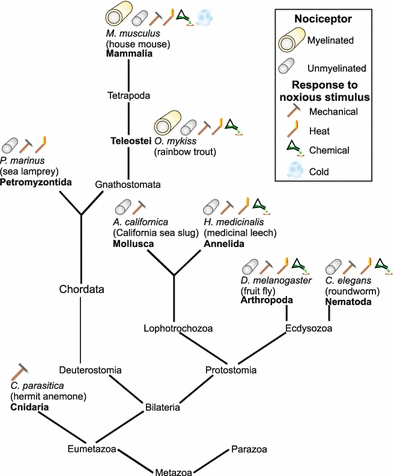
“nociceptors are actually quite ancient neural structures and are present in species of molluscs, nematode worms, and fruit flies (Smith and Lewin, 2009; Figure 4).”
From The evolutionary and genetic origins of consciousness in the Cambrian Period over 500 million years ago (2013) · cites this paper as Smith and Lewin, 2009
The cited source says what the claim attributes to it.
In the citing paper
“Thus, the pain experience seems to characterize teleost fish and presumably all other vertebrates with equally or more complex brains (except perhaps for the cartilaginous fish such as sharks, which may lack appreciable perception: Smith and Lewin, 2009; Sneddon, 2011).”
From The evolutionary and genetic origins of consciousness in the Cambrian Period over 500 million years ago (2013) · cites this paper as Smith and Lewin, 2009
Self-check
Percentages, sums and reported differences re-computed from the paper’s own numbers.
The self-check needs the paper’s full text.
Citations
Cites
The capsaicin receptor: a heat-activated ion channel in the pain pathway
Caterina, M. J., Schumacher, M. A., Tominaga, M., Rosen, T. A., Levine, J. D., & Julius, D. (1997) · Nature · doi:10.1038/39807 · Cited by 9,107 · cited 4×
“In terms of the molecular identity of a potential heat sensor in mammals, excitement abounded when the capsaicin receptor TRPV1 was cloned from rat DRGs and shown to have a threshold of »43°C (Caterina et al. 1997; Tominaga et al. 1998), very similar to the heat-”
BackgroundInfluentialDarwin, C., Burndy Library, Darwin, C., Edmonds & Remnants, & Henry Sotheran Ltd. (1859) · J. Murray eBooks · doi:10.5962/bhl.title.59991 · Cited by 6,984
Darwin, C., Murray, J., Sons, W. C. A., & Evans., B. &. (1859) · doi:10.5962/bhl.title.82303 · Cited by 5,608
Impaired nociception and pain sensation in mice lacking the capsaicin receptor
Caterina, M. J., Leffler, A., Malmberg, A. B., Martin, W. J., Trafton, J., Petersen-Zeitz, K. R., Koltzenburg, M., Basbaum, A. I., & Julius, D. (2000) · Science · doi:10.1126/science.288.5464.306 · Cited by 3,544 · cited 7×
“thermal hyperalgesia and is furthermore the only ion channel known to be activated by capsaicin (Caterina et al. 2000; Davis et al. 2000; Huang et al. 2006a).”
BackgroundInfluentialThe Cloned Capsaicin Receptor Integrates Multiple Pain-Producing Stimuli
Tominaga, M., Caterina, M. J., Malmberg, A. B., Rosen, T. A., Gilbert, H., Skinner, K., Raumann, B. E., Basbaum, A. I., & Julius, D. (1998) · Neuron · doi:10.1016/s0896-6273(00)80564-4 · Cited by 3,081 · cited 5×
“In terms of the molecular identity of a potential heat sensor in mammals, excitement abounded when the capsaicin receptor TRPV1 was cloned from rat DRGs and shown to have a threshold of »43°C (Caterina et al. 1997; Tominaga et al. 1998), very similar to the heat-”
BackgroundInfluentialIdentification of a cold receptor reveals a general role for TRP channels in thermosensation
McKemy, D. D., Neuhausser, W. M., & Julius, D. (2002) · Nature · doi:10.1038/nature719 · Cited by 2,709 · cited 1×
“A further candidate is the menthol-gated TRPM8 ion channel, although this is activated at cool (»26°C), rather than cold temperatures (McKemy et al. 2002) higher than the thresholds for nociceptor activation in mice (Cain et al. 2001) and cold pain in humans (Davis and Pope 2002).”
BackgroundANKTM1, a TRP-like Channel Expressed in Nociceptive Neurons, Is Activated by Cold Temperatures
Story, G. M., Peier, A. M., Reeve, A. J., Eid, S. R., Mosbacher, J., Hricik, T. R., Earley, T. J., Hergarden, A. C., Andersson, D. A., Hwang, S. W., et al. (2003) · Cell · doi:10.1016/s0092-8674(03)00158-2 · Cited by 2,486 · cited 2×
“Unlike painless, TRPA1 was initially described to be cold-activated (Story et al. 2003), however, this Wnding was not replicated by other groups (Jordt”
BackgroundResultTRPA1 Mediates the Inflammatory Actions of Environmental Irritants and Proalgesic Agents
Bautista, D. M., Jordt, S.-E., Nikai, T., Tsuruda, P. R., Read, A. J., Poblete, J., Yamoah, E. N., Basbaum, A. I., & Julius, D. (2006) · Cell · doi:10.1016/j.cell.2006.02.023 · Cited by 1,932 · cited 3×
“As discussed previously, there is an ongoing debate about the ability of noxious cold to activate TRPA1 (Caspani and Heppenstall 2009; Kwan and Corey 2009) and behavioral studies in knockout mice have produced conXicting results (Bautista et al. 2006; Kwan et al. 2006; Karashima et al. 2009).”
BackgroundResultMustard oils and cannabinoids excite sensory nerve fibres through the TRP channel ANKTM1
Jordt, S.-E., Bautista, D. M., Chuang, H.-H., McKemy, D. D., Zygmunt, P. M., Högestätt, E. D., Meng, I. D., & Julius, D. (2004) · Nature · doi:10.1038/nature02282 · Cited by 1,899 · cited 2×
“…not surprising that both of these ion channels are activated by isothioscyanate, which causes the burning associated with wasabi (a member of the Brassicaceae plant family, a paste of which is often served with sushi) and is a repellant for D. melanogaster (Jordt et al. 2004; Al-Anzi et al. 2006).”
BackgroundResultThe induction of pain: an integrative review
Millan, M. J. (1999) · Progress in Neurobiology · doi:10.1016/s0301-0082(98)00048-3 · Cited by 1,774 · cited 1×
“Pain in general and central nervous system aspects of pain/nociception are not the subject of this review and have been extensively discussed elsewhere (Millan 1999; Tracey 2005).”
Background
Research works printed but not linked: 3
- Bullock TH Horridge GA Structure and function in the nervous system of invertebrates 1965 San Francisco W. H. Freeman and Co.
- Goadby P Sharks and other predatory fish of Australia 1959 Brisbane Jacaranda Press
- Lynn B The fibre composition of cutaneous nerves and the classification and response properties of cutaneous afferents, with particular reference to nociception Pain Rev 1994 1 172 183
Cited by
Items 101–200 of 295
Role of Small-Fiber Afferents in Pain Mechanisms With Implications on Diagnosis and Treatment
Albrecht, P. J., & Rice, F. L. (2010) · Current Pain and Headache Reports · doi:10.1007/s11916-010-0105-y · Cited by 25
Cholesterol as a Key Molecule That Regulates TRPV1 Channel Function
Morales‐Lázaro, S. L., & Rosenbaum, T. (2019) · Advances in experimental medicine and biology · doi:10.1007/978-3-030-14265-0_6 · Cited by 24
Psychophysics of a Nociceptive Test in the Mouse: Ambient Temperature as a Key Factor for Variation
Pincedé, I., Pollin, B., Meert, T. F., Plaghki, L., & Bars, D. L. (2012) · PLoS ONE · doi:10.1371/journal.pone.0036699 · Cited by 25
“their size [15-18].”
Sharpness recognition based on synergy between bio-inspired nociceptors and tactile mechanoreceptors
Parvizi-Fard, A., Salimi-Nezhad, N., Amiri, M., Falotico, E., & Laschi, C. (2021) · Scientific Reports · doi:10.1038/s41598-021-81199-3 · Cited by 27
Du, S., Song, Y., Yuan, J., Hao, R., Wu, L., Lei, S., & Hu, W. (2024) · ACS Applied Materials & Interfaces · doi:10.1021/acsami.4c05112 · Cited by 25
Rise of the Sensors: Nociception and Pruritus
Baraniuk, J. N. (2012) · Current Allergy and Asthma Reports · doi:10.1007/s11882-012-0245-8 · Cited by 26
“Nonmyelinated type C fibres have the oldest heritage and diversity of sensory detection [1].”
BackgroundScott, A., Hardefeldt, J. M., & Hall, K. C. (2014) · PLoS ONE · doi:10.1371/journal.pone.0109566 · Cited by 23
“Column stimulation produces nerve impulses that cause a closure reflex, which might appear to be a nociceptive response; however, nociceptors in Cnidaria only respond to mechanical stimuli and not heat stimuli and without a central processing unit they are unlikely to experience pain [32].”
BackgroundVisceral pain – Novel approaches for optogenetic control of spinal afferents
Spencer, N. J., Hibberd, T. J., Lagerström, M. C., Ootsuka, Y., & Kelley, N. (2018) · Brain Research · doi:10.1016/j.brainres.2018.02.002 · Cited by 23
De Se Content and De Hinc Content
Schellenberg, S. (2016) · Analysis · doi:10.1093/analys/anw019 · Cited by 22
Ethics of biohybrid robotics and invertebrate research: biohybrid robotic jellyfish as a case study
Xu, N. W., Lenczewska, O., Wieten, S. E., Federico, C. A., & Dabiri, J. O. (2025) · Bioinspiration & Biomimetics · doi:10.1088/1748-3190/adc0d4 · Cited by 22
“Minimal evidence has shown the existence of nociceptors or even nociceptive responses in lower order animals until the evolution of bilateral symmetry, beginning with annelids (Smith and Lewin 2009, Sneddon 2018).”
Pain expressiveness and altruistic behavior: an exploration using agent-based modeling
Williams, A. C. D. C., Gallagher, E. M., Fidalgo, A. R., & Bentley, P. J. (2015) · Pain · doi:10.1097/j.pain.0000000000000443 · Cited by 24
Wang, Y., & Burrell, B. D. (2017) · Journal of Neurophysiology · doi:10.1152/jn.00092.2017 · Cited by 22
Tong, L. J., Stewart, M., Johnson, I., Appleyard, R. C., Wilson, B., James, O., Johnson, C. B., & McGreevy, P. D. (2020) · Animals · doi:10.3390/ani10112094 · Cited by 21
“The basic and absolute need for pain detection is reflected in the remarkable evolutionary conservation of nociception from metazoa to mammals [29].”
BackgroundAnalgesia for non-mammalian vertebrates
Williams, C. J. A., James, L. E., Bertelsen, M. F., & Wang, T. (2019) · Current Opinion in Physiology · doi:10.1016/j.cophys.2019.07.001 · Cited by 23
Independent evolution of pain insensitivity in African mole-rats: origins and mechanisms
Smith, E. S. J., Park, T. J., & Lewin, G. R. (2020) · Journal of Comparative Physiology A · doi:10.1007/s00359-020-01414-w · Cited by 22
“2008; Smith and Lewin 2009).”
BackgroundInfluentialSelf-citationSneddon, L. U. (2020) · Animal welfare · doi:10.1007/978-3-030-41675-1_10 · Cited by 25
Brand, A., Smith, E. S. J., Lewin, G. R., & Park, T. J. (2010) · PLoS ONE · doi:10.1371/journal.pone.0015162 · Cited by 21
“We have previously identified several peculiarities in naked mole-rat Cfibers, compared to other mammalian species studied to date; these include: a lack of neuropeptides associated with nociception, physiological insensitivity to low pH, and an altered connectivity pattern of C-fiber nociceptors in the dorsal horn [5…”
BackgroundSelf-citationMillimeter Wave Radiation Activates Leech Nociceptors via TRPV1-Like Receptor Sensitization
Romanenko, S., Harvey, A. R., Hool, L. C., Begley, R., Fan, S., & Wallace, V. P. (2019) · Biophysical Journal · doi:10.1016/j.bpj.2019.04.021 · Cited by 21
“nociceptive receptors are remarkably similar to vertebrate NI (24) and pro-”
BackgroundNaked mole-rat acid-sensing ion channel 3 forms nonfunctional homomers, but functional heteromers
Schuhmacher, L.-N., Callejo, G., Srivats, S., & Smith, E. S. J. (2017) · Journal of Biological Chemistry · doi:10.1074/jbc.m117.807859 · Cited by 20
“Sensitivity to acid as a noxious stimulus is largely conserved throughout the animal kingdom (44), but the naked mole-rat is behavioral insensitive to acid (35) due to a variation in NaV1.”
BackgroundSelf-citationYuan, S., & Burrell, B. D. (2012) · Brain Research · doi:10.1016/j.brainres.2012.04.030 · Cited by 20
Himmel, N. J., Sakurai, A., Letcher, J. M., Patel, A. A., Bhattacharjee, S., Benson, M. N., Gray, T. R., Cymbalyuk, G., & Cox, D. N. (2023) · eLife · doi:10.7554/elife.76863 · Cited by 20
The Somatosensory World of the African Naked Mole-Rat
Lewin, G. R., Smith, E. S. J., Reznick, J., Debus, K., Barker, A. J., & Park, T. J. (2021) · Advances in experimental medicine and biology · doi:10.1007/978-3-030-65943-1_7 · Cited by 21
Self-citationSubunit‐specific inhibition of acid sensing ion channels by stomatin‐like protein 1
Kozlenkov, A., Lapatsina, L. P., Lewin, G. R., & Smith, E. S. J. (2013) · The Journal of Physiology · doi:10.1113/jphysiol.2013.258657 · Cited by 19
“Similarly, evidence shows that members of the stomatin family are involved in mechanosensation across phyla (Smith & Lewin, 2009): 40% of skin mechanoreceptors in STOML3−/− mice are mechanically insensitive and mice display decreased tactile acuity (Wetzel et al. 2007); stomatin−/− mice also show…”
BackgroundMethodSelf-citationLeung, K., Mohammadi, A., Ryu, W. S., & Nemenman, I. M. (2016) · PLoS Computational Biology · doi:10.1371/journal.pcbi.1005262 · Cited by 24
“raints,difficultiesinquantifyingapsychophysicalresponse,and subjectivityinself-reporting[2]. Sincethemolecularmechanismsofpaintransductionarebelievedtobe partially conserved among many different species [3, 4, 5], some of these problems are solved by using animal models in nociception research. However, animal subjects c…”
BackgroundTing, A. K. Y., Tay, V. S. Y., Chng, H. T., & Xie, S. (2022) · Veterinary and Animal Science · doi:10.1016/j.vas.2022.100267 · Cited by 20
Feeding live invertebrate prey in zoos and aquaria: Are there welfare concerns?
Keller, M. (2017) · Zoo Biology · doi:10.1002/zoo.21378 · Cited by 17
Painful neurotrophins and their role in visceral pain
López-Pérez, A. E., Nurgali, K., & Abalo, R. (2018) · Behavioural Pharmacology · doi:10.1097/fbp.0000000000000386 · Cited by 17
Nozizeptives System: Nozizeptoren, Fasertypen, spinale Bahnen und Projektionsareale
Baumgärtner, U. (2010) · Der Schmerz · doi:10.1007/s00482-010-0904-4 · Cited by 26
Exaptation and Evolutionary Adaptation in Nociceptor Mechanisms Driving Persistent Pain
Walters, E. T. (2023) · Brain Behavior and Evolution · doi:10.1159/000535552 · Cited by 35
The Role of the IACUC in the Absence of Regulatory Guidance
Leland, S. E., Straeter, P., & Gnadt, B. J. (2019) · ILAR Journal · doi:10.1093/ilar/ilz003 · Cited by 16
Sensory Systems of the African Naked Mole-Rat
Vice, E. N., Lagestee, S., Browe, B. M., Deb, D., Smith, E. S. J., & Park, T. J. (2021) · Advances in experimental medicine and biology · doi:10.1007/978-3-030-65943-1_5 · Cited by 18
Self-citationGrowing Pains: Development of the Larval Nocifensive Response in Drosophila
Sulkowski, M. J., Kurosawa, M. S., & Cox, D. N. (2011) · Biological Bulletin · doi:10.1086/bblv221n3p300 · Cited by 16
“Cepaea nemoralis, a species of land snail, reacts to being placed on a heated surface by lifting the anterior portion of the extended foot (Sneddon, 2004).”
BackgroundControl of myeloid cell functions by nociceptors
Hanč, P., Messou, M.-A., Wang, Y., & von Andrian, U. H. (2023) · Frontiers in Immunology · doi:10.3389/fimmu.2023.1127571 · Cited by 15
“responding to a single or several types of noxious stimuli, respectively (17).”
BackgroundA History of Pain Studies and Changing Attitudes to the Welfare of Crustaceans
Elwood, R. W. (2025) · Animals · doi:10.3390/ani15030445 · Cited by 15
Nociception in fruit fly larvae
Boivin, J.-C., Zhu, J., & Ohyama, T. (2023) · Frontiers in Pain Research · doi:10.3389/fpain.2023.1076017 · Cited by 17
Encoding of Tactile Stimuli by Mechanoreceptors and Interneurons of the Medicinal Leech
Kretzberg, J., Pirschel, F., Fathiazar, E., & Hilgen, G. (2016) · Frontiers in Physiology · doi:10.3389/fphys.2016.00506 · Cited by 19
“…show similar spiking patterns to primate and human mechanoreceptor types (Lewis and Kristan, 1998b; Baca et al., 2005; Johansson and Flanagan, 2009; Smith and Lewin, 2009), and mechanoreceptor responses were shown to depend on common stimulus properties like touch location, mechanical force,…”
Williams, A. C. D. C. (2023) · Evolution Medicine and Public Health · doi:10.1093/emph/eoad038 · Cited by 15
“However, many pain mechanisms are highly conserved across species [9, 10].”
Summers, T. L., Wang, Y., Hanten, B., & Burrell, B. D. (2015) · Journal of Experimental Biology · doi:10.1242/jeb.120600 · Cited by 14
“The medicinal leech (Hirudo verbana) is a lophotrochozoan of particular interest for the study of TRP function because of the similarity of the leech’s somatosensory neurons to those found in mammals (Smith and Lewin, 2009).”
BackgroundDistribution and chemical coding of sensory neurons innervating the skin of the porcine hindlimb
Kozłowska, A., Mikołajczyk, A., Adamiak, Z., & Majewski, M. K. (2016) · Neuropeptides · doi:10.1016/j.npep.2016.10.004 · Cited by 16
Adamo, S. A., & McMillan, L. E. (2019) · Philosophical Transactions of the Royal Society B Biological Sciences · doi:10.1098/rstb.2019.0278 · Cited by 14
Minding Nature: A Defense of a Sentiocentric Approach to Environmental Ethics
MacClellan, J. (2012) · Cited by 14
Electromechanical enhancement of live jellyfish for ocean exploration
Anuszczyk, S. R., & Dabiri, J. O. (2024) · Bioinspiration & Biomimetics · doi:10.1088/1748-3190/ad277f · Cited by 15
“It is important to note that the jellyfish genus that is the focus of this work, Aurelia , lacks a central nervous system and nociceptors, and therefore lack the capacity to sense pain [40].”
BackgroundDid consciousness first evolve in the amniotes?
Grinde, B. (2018) · Psychology of Consciousness Theory Research and Practice · doi:10.1037/cns0000146 · Cited by 14
Sladky, K. K. (2013) · Elsevier eBooks · doi:10.1016/b978-1-4557-0893-2.00018-1 · Cited by 13
Extreme Physiology Extreme Tolerance to Hypoxia, Hypercapnia, and Pain in the Naked Mole-Rat
Park, T. J., & Reznick, J. (2022) · Journal of Muscle Research and Cell Motility · doi:10.1007/s10974-022-09623-3 · Cited by 12
“C-fibers are unmyelinated pain fibers that not only transmit pain signals to the central nervous system (Smith and Lewin 2009), but they can release neuropeptides at the peripheral site of stimulation, which cause vasodilation and edema (Lee and Pisarri 2001).”
BackgroundEkman’s Paradox and a Naturalistic Strategy to Escape From It
Vallverdú, J. (2013) · International Journal of Synthetic Emotions · doi:10.4018/ijse.2013070101 · Cited by 12
Sladky, K. K., & Mans, C. (2019) · Elsevier eBooks · doi:10.1016/b978-0-323-48253-0.00050-7 · Cited by 12
Mugrabi-Oliveira, E., & Goldim, J. R. (2014) · Revista Bioética · doi:10.1590/s1983-80422014000100006 · Cited by 11
Noh, M., Park, H., & Kim, S. (2025) · Chaos Solitons & Fractals · doi:10.1016/j.chaos.2025.116381 · Cited by 10
Fraga, C. J., Brown, M. S., & Xu, N. W. (2025) · Advanced Intelligent Systems · doi:10.1002/aisy.202401105 · Cited by 11
Sentience in cephalopod molluscs: an updated assessment
Schnell, A. K., Browning, H., Crump, A., Burn, C. C., & Birch, J. (2026) · Biological reviews/Biological reviews of the Cambridge Philosophical Society · doi:10.1002/brv.70125 · Cited by 15
“Some nociceptors cannot be activated unless they are sensi-tised by in fl ammatory molecules, which are released when tissue is damaged (Smith & Lewin, 2009).”
Anatomy, Physiology, and Pathophysiology of Pain
Shilo, Y., & Pascoe, P. J. (2013) · Wiley eBooks · doi:10.1002/9781118999196.ch2 · Cited by 19
Miranda, J. A., Stanley, P., Gore, K., Turner, J., Dias, R., & Rees, H. (2014) · PLoS ONE · doi:10.1371/journal.pone.0106108 · Cited by 10
Putative Nociceptive Responses in a Decapod Crustacean: The Shore Crab (Carcinus maenas)
Kasiouras, E., Hubbard, P. C., Gräns, A., & Sneddon, L. U. (2024) · Biology · doi:10.3390/biology13110851 · Cited by 13
“Understanding nociception and defining pain across taxa can have significant implications for the welfare of these organisms [11].”
InfluentialLiving Within Our Limits: A Defense of the Fall
Green, A., & Morris, J. (2020) · Journal of Analytic Theology · doi:10.12978/jat.2020-8.061713121418 · Cited by 10
From nociception in aneural animals to human suffering: toward a comparative biology of pain
Walters, E. T. (2025) · Journal of Experimental Biology · doi:10.1242/jeb.251210 · Cited by 9
Zemanova, M. A. (2021) · European Journal of Ecology · doi:10.17161/eurojecol.v7i2.14683 · Cited by 11
Dumoulin, A., Schmidt, H., & Rathjen, F. G. (2020) · The Neuroscientist · doi:10.1177/1073858420913844 · Cited by 9
A Probabilistic Model for Estimating the Depth and Threshold Temperature of C-fiber Nociceptors
Dezhdar, T., Moshourab, R. A., Fründ, I., Lewin, G. R., & Schmuker, M. (2015) · Scientific Reports · doi:10.1038/srep17670 · Cited by 10
“To estimate D in equation (6) we would then determine De and thermal diffusivities and solve the equation for Dd.”
MethodSelf-citationWhy Do We Care? Evolutionary Mechanisms in the Social Dimension of Pain
Williams, A. C. D. C., & Kappesser, J. (2018) · Springer eBooks · doi:10.1007/978-3-319-78340-6_1 · Cited by 10
Not Just Neurons: Pain Is Orchestrated in Partnership with Many Non-neuronal Cells
Smith, E. S. J., Burton, M. D., Heegaard, A., & Stucky, C. L. (2025) · Journal of Neuroscience · doi:10.1523/jneurosci.1309-25.2025 · Cited by 7
Self-citationÁlvarez-Tosco, K., González-Fernández, R., González-Nicolás, M. Á., Martín-Ramírez, R., Morales, M., Gutiérrez, R., Díaz-Flores, L., Arnau, M. R., Machín, F., Ávila, J., et al. (2024) · BMC Neuroscience · doi:10.1186/s12868-024-00891-y · Cited by 7
Part I: understanding pain in pigs—basic knowledge about pain assessment, measures and therapy
Kschonek, J. D., Twele, L., Deters, K., Miller, M., Reinmold, J., Emmerich, I. U., Hennig‐Pauka, I., Kemper, N., Kreienbrock, L., Wendt, M., et al. (2025) · Porcine Health Management · doi:10.1186/s40813-025-00421-0 · Cited by 9
Animal welfare risks from commercial practices involving cephalopod molluscs and decapod crustaceans
Browning, H., Burn, C. C., Schnell, A. K., Crump, A., & Birch, J. (2025) · Animal Welfare · doi:10.1017/awf.2025.25 · Cited by 8
“Cold nociception in general is not well understood across species, and it may have evolved later than heat nociception (Smith & Lewin 2009).”
Lari, M. M. H., Banafshe, H. R., Hosseini, E. S., & Kashani, H. H. (2023) · Inflammopharmacology · doi:10.1007/s10787-023-01293-y · Cited by 7
“In that case, it will trigger action potential generation and transmission of a pain signal to the spinal cord (Smith and Lewin 2009; Dubin and Patapoutian 2010; Reichling et al. 2013).”
BackgroundAhistorical homology and multiple realizability
Balari, S., & Lorenzo, G. (2014) · Philosophical Psychology · doi:10.1080/09515089.2014.949004 · Cited by 7
“Nociception is a quasi-universal trait (Smith & Lewin, 2009) observed in such disparate organisms as lower vertebrates (Sneddon, 2004; Sneddon, Braithwaite, & Gentle, 2003), gastropods (Illich & Walters, 1997) and mollusks in general (Crook & Walters, 2011), leeches (Pastor, Soria, & Belmonte,…”
BackgroundLewin, G. R. (2020) · Pain · doi:10.1097/j.pain.0000000000001889 · Cited by 8
“The existence of nociceptors is almost completely ubiquitous in the animal kingdom and even the nematode worm Caenorhabditis elegans, with approximately 300 neurons, has a dedicated set of nociceptors.(113,120) Indeed, the fundamental importance of nociceptors is demonstrated by humans with congenital insensitivity to…”
BackgroundSelf-citationJorgensen, M. M., & Burrell, B. D. (2022) · Journal of Comparative Physiology A · doi:10.1007/s00359-021-01540-z · Cited by 7
“The sensory component is often referred to as nociception, the detection of damaging or potentially damaging stimuli (Smith and Lewin 2009).”
BackgroundInfluentialBrécier, A., Bannerman, C. A., Xie, Y., Dedek, C., Zacharias, A. M., O’Connor, C. D., Rickert-Llàcer, A., Miller Steven, D., Li, V. W., Meier, C., et al. (2026) · Nature Communications · doi:10.1038/s41467-026-73772-z · Cited by 6
“Inparticular,nociceptors are of prime interest and serve as the initial relay in the pain pathway: theydetect,encode,andtransmitpainfulstimulitothecentralnervous system 40 .”
Non-synaptic Plasticity in Leech Touch Cells
Meiser, S., Ashida, G., & Kretzberg, J. (2019) · Frontiers in Physiology · doi:10.3389/fphys.2019.01444 · Cited by 6
Remote ischaemic preconditioning increase tolerance to experimentally induced cold pain
Norbury, R., Dickens, L., Grant, I., Emery, A., & Patterson, S. D. (2023) · European Journal of Sport Science · doi:10.1080/17461391.2023.2241831 · Cited by 6
“The threshold to pain perception likely re fl ects the responsiveness of nociceptors to noxious stimuli (Smith & Lewin, 2009), with an increased pain threshold mediated by a desensitisation of the nociceptors.”
BackgroundRisch, N., Pointeau, F., & Poquet, N. (2017) · Kinésithérapie la Revue · doi:10.1016/j.kine.2017.02.130 · Cited by 17
Zhao, D., Guo, Z., & Yuan, C. (2025) · Journal of Materials Chemistry A · doi:10.1039/d5ta02603b · Cited by 5
Musial, F., & Weiß, T. (2025) · Animals · doi:10.3390/ani15202989 · Cited by 5
“Given the similarities in nociception among mammals [12–15], we believe it is reasonable to assume that pain detection thresholds in humans and horses are fundamentally comparable.”
Bakker, J., de la Garza, M. A., Morel, M., Outwater, A. H., Chipangura, J. K., Stumpel, J. B. G., Vercammen, F., Lewbart, G. A., & Nederlof, R. A. (2026) · Animals · doi:10.3390/ani16020222 · Cited by 5
“While no invertebrates have yet been conclusively demonstrated to experience pain in the vertebrate sense, several possess neural architectures plausibly capable of assigning affective value to noxious stimuli [3,15].”
SiN-based optoelectronic synaptic devices: enhancing future cognitive computing systems
Park, H., & Kim, S. (2024) · Journal of Materials Chemistry C · doi:10.1039/d4tc02992e · Cited by 5
Regulation of Nociceptor Signaling by Serotonin
Salzer, I., & Boehm, S. (2018) · Elsevier eBooks · doi:10.1016/b978-0-12-800050-2.00014-0 · Cited by 6
Central GABAergic neuromodulation of nocifensive behaviors in bumble bees
Pasquini, E., Brouwer, J., Rollo, V. D., Baracchi, D., Messina, A., & Frasnelli, E. (2025) · iScience · doi:10.1016/j.isci.2025.112024 · Cited by 5
Convergent evolution of sentience?
Brown, C. (2020) · Animal Sentience · doi:10.51291/2377-7478.1617 · Cited by 5
Dede, A. F. Ü., & Arslanyolu, M. (2021) · European Journal of Protistology · doi:10.1016/j.ejop.2021.125803 · Cited by 5
Mosley, C. I., & Lewbart, G. A. (2014) · Wiley eBooks · doi:10.1002/9781118792919.ch14 · Cited by 6
Zhai, R., & Wang, Q. (2023) · Evolutionary Bioinformatics · doi:10.1177/11769343231216914 · Cited by 5
Ludvigsen, S., Stenklev, N. C., Johnsen, H., Laukli, E., Matre, D., & Aas-Hansen, Ø. (2013) · Fish Physiology and Biochemistry · doi:10.1007/s10695-013-9834-2 · Cited by 8
“The former is prevalent in the animal kingdom and concerns the ability to detect harmful (noxious) stimuli, which requires an appropriate sensory apparatus (Kavaliers 1988; Smith and Lewin 2009).”
BackgroundXing, J., & Li, J. (2016) · Cellular Physiology and Biochemistry · doi:10.1159/000452523 · Cited by 5
Natural Selection and Pain Meet at a Sodium Channel
Lewin, G. R. (2013) · Science · doi:10.1126/science.1244375 · Cited by 5
Self-citationFernández‐Trillo, J., Villaro-Capellán, M., de la Peña, E., Viana, F., & Gomis, A. (2026) · Pain · doi:10.1097/j.pain.0000000000003954 · Cited by 4
Qiu, L., & Smith, E. S. J. (2025) · Journal of Comparative Physiology A · doi:10.1007/s00359-025-01752-7 · Cited by 4
“Nociception functions as a detection and protection mechanism and occurs in both invertebrates and vertebrates, thus demonstrating its fundamental importance in the strive for survival (Smith and Lewin 2009; Sneddon 2018).”
Self-citationAnalgesic activity of new derivatives of quinazolinone -4
Аслибековна, М. Э., Михайлович, М. М., Kodonidi, I. P., & Оганесян, Э. Т. (2017) · Medical news of the North Caucasus · doi:10.14300/mnnc.2017.12089 · Cited by 4
On neglected taxa: Protostomes and the evolution of myelination
Andrade, M. P., & Santos, C. M. D. (2019) · Animal Sentience · doi:10.51291/2377-7478.1512 · Cited by 4
“Smith & Lewin (2009) reviewed the phylogenetic evolution of nociceptors and discussed the absence of myelination in Annelida and Arthropoda based on the analysis of one model species for each clade, Hirudo medicinalis (Annelida) and Drosophila melanogaster (Arthropoda).”
BackgroundA Novel Nociceptor Functional Circuit for Tactile Applications
Rahiminejad, E., Parvizi-Fard, A., Amiri, M., & Thakor, N. V. (2022) · IEEE Transactions on Circuits and Systems I Regular Papers · doi:10.1109/tcsi.2022.3208104 · Cited by 4
“They convey information to the spinal cord leading to the perception of a painful experience [15].”
BackgroundEvolutionary Aspects of Nociception and Pain
Walters, E. T. (2020) · Elsevier eBooks · doi:10.1016/b978-0-12-809324-5.24237-5 · Cited by 5
Reptile and Amphibian Analgesia
Sladky, K. K. (2018) · Elsevier eBooks · doi:10.1016/b978-0-323-55228-8.00060-6 · Cited by 4
Rational vs Ritualistic Medicine: Is it Time to Abandon the Skin Wheal?
Cohen, S. P., & Stojanovic, M. P. (2019) · Pain Medicine · doi:10.1093/pm/pnz010 · Cited by 4
A Low-Cost Microcontroller Based Stimulation System to Study Sensory Processing
Asman, P., Jiang, T., Öztürk, M., Reyna, J., & Ince, N. F. (2019) · International IEEE/EMBS Conference on Neural Engineering · doi:10.1109/ner.2019.8716944 · Cited by 3
Hoynoski, J., Dohn, J., Franzen, A. D., & Burrell, B. D. (2022) · Journal of Experimental Biology · doi:10.1242/jeb.245895 · Cited by 3
Pain in pigs: Characterisation and indicators
Herskin, M. S., & Giminiani, P. D. (2023) · Elsevier eBooks · doi:10.1016/b978-0-323-85676-8.00004-3 · Cited by 3
Neural Secretions and Regulation of Gut Functions
Welcome, M. O. (2018) · Springer eBooks · doi:10.1007/978-3-319-91056-7_9 · Cited by 3
Moayedi, Y., Nakatani, M., & Lumpkin, E. A. (2015) · Atlantis Press eBooks · doi:10.2991/978-94-6239-133-8_35 · Cited by 3
Apects of fish welfare in aquaculture practices
Roques, J. A. C. (2013) · Radboud Repository (Radboud University) · Cited by 8
López, A. K. E., & Ballesteros, E. E. T. (2023) · Revista de Filosofía Universidad Iberoamericana · doi:10.48102/rdf.v55i155.186 · Cited by 4
Metadata
- Authors
- Smith, E. S. J., & Lewin, G. R.
- Affiliations
- Max Delbrück Center (DE)
- Corresponding author
- Smith, Ewan St. John
- Venue
- Journal of Comparative Physiology A
- Published
- 2009-10-11
- Volume
- 195
- Issue
- 12
- Pages
- 1089-1106
- ISSN
- 0340-7594 (ISSN-L)
- 1432-1351
- PMC
- PMC2780683
- OpenAlex
- W2141300182
- Semantic Scholar
- b7813b1b2b322f143d00db4bff45fa4ae7aff238
- Cited by
- 271
- References
- 196
- Citations by year
- 2026: 11 · 2025: 26 · 2024: 12 · 2023: 20 · 2022: 12 · 2021: 20 · 2020: 19 · 2019: 25 · 2018: 20 · 2017: 9 · 2016: 9 · 2015: 9 · 2014: 12 · 2013: 24 · 2012: 17
- FWCI
- 1.63
- Type
- journal article
- Language
- en
- Open access
- hybrid
- doi.org
- Licence
- cc-by-nc
- creativecommons.org/licenses/by-nc/2.0 (tdm)
- Locations
- Journal of Comparative Physiology A (publishedVersion, cc-by-nc)
- PubMed Central (publishedVersion, cc-by-nc)
- PubMed (publishedVersion)
- MDC Repository (Max-Delbrueck-Center for Molecular Medicine) (acceptedVersion)
- Funders
- Alexander von Humboldt-Stiftung
- Topics
- Life Sciences › Neuroscience › Sensory Systems › Ion Channels and Receptors
- Health Sciences › Medicine › Physiology (medical) › Pain Mechanisms and Treatments
- Life Sciences › Neuroscience › Cellular and Molecular Neuroscience › Neurobiology and Insect Physiology Research
- Keywords
- nociceptors, nociception, phylogeny, pain detection, aversive stimuli, nociceptor sensitization, ion channels, molecular evolution, comparative physiology, invertebrates, model organisms, genetic engineering
- MeSH terms
- Animals, Humans, Ion Channels, Nerve Tissue Proteins, Nervous System Physiological Phenomena, Neural Conduction, Nociceptors, Pain, Phylogeny, Sodium Channels, Evolution, Molecular, Mechanotransduction, Cellular, Mice, Acid Sensing Ion Channels
About these checks
Registry, retraction, Cites and statistics results are computed, not judged, with one exception: a printed reference that no index lists is read once by a model before it counts as a citation error. Claims are extracted by a model and kept only when their quote appears verbatim in the text; each cited source is then checked, with a model’s help, for whether it says what the claim relies on. Those verdicts can be wrong — read the claim’s quote and the cited source before relying on one.
Statistics and arithmetic are recomputed, not judged.
Confidence bands are shown only for fields calibrated on our annotated test set. None is calibrated yet, so no band is shown.
What counts as a claim ›How we measure confidence ›How we check this ›
Are you an author, or do you see a problem with this page? Request a review
Data sources
Bibliographic data: Semantic Scholar, OpenAlex, Crossref.
Contains information from the Semantic Scholar Academic Graph Datasets, made available under the ODC Attribution License (ODC-BY 1.0).
Semantic Scholar’s data is described in: Kinney, R., et al. (2023). The Semantic Scholar Open Data Platform. arXiv:2301.10140.
