

Nociceptors: a phylogenetic view
Open accessThe DOI matches its Crossref record; 195 of the 196 references it cites were found in a registry or an index.
Abstract
The ability to react to environmental change is crucial for the survival of an organism and an essential prerequisite is the capacity to detect and respond to aversive stimuli. The importance of having an inbuilt "detect and protect" system is illustrated by the fact that most animals have dedicated sensory afferents which respond to noxious stimuli called nociceptors. Should injury occur there is often sensitization, whereby increased nociceptor sensitivity and/or plasticity of nociceptor-related neural circuits acts as a protection mechanism for the afflicted body part. Studying nociception and nociceptors in different model organisms has demonstrated that there are similarities from invertebrates right through to humans. The development of technology to genetically manipulate organisms, especially mice, has led to an understanding of some of the key molecular players in nociceptor function. This review will focus on what is known about nociceptors throughout the Animalia kingdom and what similarities exist across phyla; especially at the molecular level of ion channels.
Overview
The claims and statistics of this paper haven’t been checked yet.
Free: it reads the open-access text and checks the first 5 claims that cite a source we can check. Create a free account to check every claim.
Integrity signals
Registry
Cites
Statistics
Figures
Verification
Claims the paper makes
The claims and statistics of this paper haven’t been checked yet.
Free: it reads the open-access text and checks the first 5 claims that cite a source we can check. Create a free account to check every claim.
Claims other papers make about this one
Each is checked against this paper’s own text: does it say what the citing paper says it does?
The source backs part of the claim, not all of it — or backs it for a different population, condition or comparison.
In the citing paper
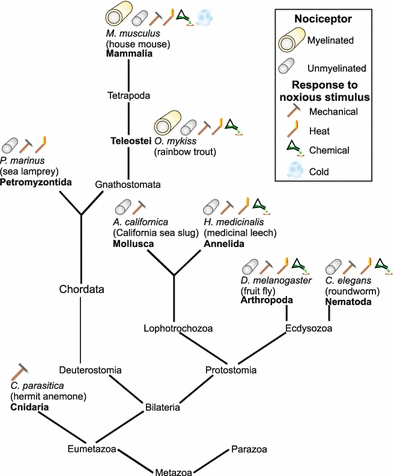
“The peripheral nervous system of the lamprey has no myelinated nociceptive fibers, and recordings from spinal and brain dorsal cells that have a potential nociceptive role have achieved mixed results (Martin and Wickelgren, 1971; Rovainen and Yan, 1985; Smith and Lewin, 2009).”
From The evolutionary and genetic origins of consciousness in the Cambrian Period over 500 million years ago (2013) · cites this paper as Smith and Lewin, 2009
Experimental — accuracy not yet measuredThe cited source says what the claim attributes to it.
In the citing paper
“nociceptors are actually quite ancient neural structures and are present in species of molluscs, nematode worms, and fruit flies (Smith and Lewin, 2009; Figure 4).”
From The evolutionary and genetic origins of consciousness in the Cambrian Period over 500 million years ago (2013) · cites this paper as Smith and Lewin, 2009
The cited source says what the claim attributes to it.
In the citing paper
“Thus, the pain experience seems to characterize teleost fish and presumably all other vertebrates with equally or more complex brains (except perhaps for the cartilaginous fish such as sharks, which may lack appreciable perception: Smith and Lewin, 2009; Sneddon, 2011).”
From The evolutionary and genetic origins of consciousness in the Cambrian Period over 500 million years ago (2013) · cites this paper as Smith and Lewin, 2009
Self-check
Percentages, sums and reported differences re-computed from the paper’s own numbers.
The self-check needs the paper’s full text.
Citations
Cites
The capsaicin receptor: a heat-activated ion channel in the pain pathway
Caterina, M. J., Schumacher, M. A., Tominaga, M., Rosen, T. A., Levine, J. D., & Julius, D. (1997) · Nature · doi:10.1038/39807 · Cited by 9,107 · cited 4×
“In terms of the molecular identity of a potential heat sensor in mammals, excitement abounded when the capsaicin receptor TRPV1 was cloned from rat DRGs and shown to have a threshold of »43°C (Caterina et al. 1997; Tominaga et al. 1998), very similar to the heat-”
BackgroundInfluentialDarwin, C., Burndy Library, Darwin, C., Edmonds & Remnants, & Henry Sotheran Ltd. (1859) · J. Murray eBooks · doi:10.5962/bhl.title.59991 · Cited by 6,984
Darwin, C., Murray, J., Sons, W. C. A., & Evans., B. &. (1859) · doi:10.5962/bhl.title.82303 · Cited by 5,608
Impaired nociception and pain sensation in mice lacking the capsaicin receptor
Caterina, M. J., Leffler, A., Malmberg, A. B., Martin, W. J., Trafton, J., Petersen-Zeitz, K. R., Koltzenburg, M., Basbaum, A. I., & Julius, D. (2000) · Science · doi:10.1126/science.288.5464.306 · Cited by 3,544 · cited 7×
“thermal hyperalgesia and is furthermore the only ion channel known to be activated by capsaicin (Caterina et al. 2000; Davis et al. 2000; Huang et al. 2006a).”
BackgroundInfluentialThe Cloned Capsaicin Receptor Integrates Multiple Pain-Producing Stimuli
Tominaga, M., Caterina, M. J., Malmberg, A. B., Rosen, T. A., Gilbert, H., Skinner, K., Raumann, B. E., Basbaum, A. I., & Julius, D. (1998) · Neuron · doi:10.1016/s0896-6273(00)80564-4 · Cited by 3,081 · cited 5×
“In terms of the molecular identity of a potential heat sensor in mammals, excitement abounded when the capsaicin receptor TRPV1 was cloned from rat DRGs and shown to have a threshold of »43°C (Caterina et al. 1997; Tominaga et al. 1998), very similar to the heat-”
BackgroundInfluentialIdentification of a cold receptor reveals a general role for TRP channels in thermosensation
McKemy, D. D., Neuhausser, W. M., & Julius, D. (2002) · Nature · doi:10.1038/nature719 · Cited by 2,709 · cited 1×
“A further candidate is the menthol-gated TRPM8 ion channel, although this is activated at cool (»26°C), rather than cold temperatures (McKemy et al. 2002) higher than the thresholds for nociceptor activation in mice (Cain et al. 2001) and cold pain in humans (Davis and Pope 2002).”
BackgroundANKTM1, a TRP-like Channel Expressed in Nociceptive Neurons, Is Activated by Cold Temperatures
Story, G. M., Peier, A. M., Reeve, A. J., Eid, S. R., Mosbacher, J., Hricik, T. R., Earley, T. J., Hergarden, A. C., Andersson, D. A., Hwang, S. W., et al. (2003) · Cell · doi:10.1016/s0092-8674(03)00158-2 · Cited by 2,486 · cited 2×
“Unlike painless, TRPA1 was initially described to be cold-activated (Story et al. 2003), however, this Wnding was not replicated by other groups (Jordt”
BackgroundResultTRPA1 Mediates the Inflammatory Actions of Environmental Irritants and Proalgesic Agents
Bautista, D. M., Jordt, S.-E., Nikai, T., Tsuruda, P. R., Read, A. J., Poblete, J., Yamoah, E. N., Basbaum, A. I., & Julius, D. (2006) · Cell · doi:10.1016/j.cell.2006.02.023 · Cited by 1,932 · cited 3×
“As discussed previously, there is an ongoing debate about the ability of noxious cold to activate TRPA1 (Caspani and Heppenstall 2009; Kwan and Corey 2009) and behavioral studies in knockout mice have produced conXicting results (Bautista et al. 2006; Kwan et al. 2006; Karashima et al. 2009).”
BackgroundResultMustard oils and cannabinoids excite sensory nerve fibres through the TRP channel ANKTM1
Jordt, S.-E., Bautista, D. M., Chuang, H.-H., McKemy, D. D., Zygmunt, P. M., Högestätt, E. D., Meng, I. D., & Julius, D. (2004) · Nature · doi:10.1038/nature02282 · Cited by 1,899 · cited 2×
“…not surprising that both of these ion channels are activated by isothioscyanate, which causes the burning associated with wasabi (a member of the Brassicaceae plant family, a paste of which is often served with sushi) and is a repellant for D. melanogaster (Jordt et al. 2004; Al-Anzi et al. 2006).”
BackgroundResultThe induction of pain: an integrative review
Millan, M. J. (1999) · Progress in Neurobiology · doi:10.1016/s0301-0082(98)00048-3 · Cited by 1,774 · cited 1×
“Pain in general and central nervous system aspects of pain/nociception are not the subject of this review and have been extensively discussed elsewhere (Millan 1999; Tracey 2005).”
Background
Research works printed but not linked: 3
- Bullock TH Horridge GA Structure and function in the nervous system of invertebrates 1965 San Francisco W. H. Freeman and Co.
- Goadby P Sharks and other predatory fish of Australia 1959 Brisbane Jacaranda Press
- Lynn B The fibre composition of cutaneous nerves and the classification and response properties of cutaneous afferents, with particular reference to nociception Pain Rev 1994 1 172 183
Cited by
Abraira, V. E., & Ginty, D. D. (2013) · Neuron · doi:10.1016/j.neuron.2013.07.051 · Cited by 1,648
Nociceptors: the sensors of the pain pathway
Dubin, A. E., & Patapoutian, A. (2010) · Journal of Clinical Investigation · doi:10.1172/jci42843 · Cited by 1,409
“Low BLOCKINthreshold BLOCKINA-fibers, sensory neurons that innervate nonneuronal Merkel cells (Aβ-LTM SA I), Meissner corpuscle (Aβ-LTM FA I), Ruffini corpuscle (sensitive to stretch; Aβ-LTM SA II), pacinian corpuscle (vibration; Aβ-LTM FAII), and hairs (hair movement; G1 hair (Aβ-LTM FA1), and Down (D-) hair (Aδ-LTM)…”
BackgroundInfluentialThe Role of Voltage-Gated Sodium Channels in Pain Signaling
Bennett, D. L., Clark, A. J., Huang, J., Waxman, S. G., & Dib-Hajj, S. D. (2019) · Physiological Reviews · doi:10.1152/physrev.00052.2017 · Cited by 730
Defining and assessing animal pain
Sneddon, L. U., Elwood, R. W., Adamo, S. A., & Leach, M. C. (2014) · Animal Behaviour · doi:10.1016/j.anbehav.2014.09.007 · Cited by 508
“The best studied of these receptors include transient receptor potential (TRP) channels such as the TRP channel ‘Painless’ (Tracey et al., 2003) which is an evolutionary homologue of the mammalian TRPA1 (Smith & Lewin, 2009).”
InfluentialProsthesis with neuromorphic multilayered e-dermis perceives touch and pain
Osborn, L. E., Dragomir, A., Betthauser, J. L., Hunt, C. L., Nguyen, H. H., Kaliki, R. R., & Thakor, N. V. (2018) · Science Robotics · doi:10.1126/scirobotics.aat3818 · Cited by 427
“Nociceptors are dedicated sensory afferents in both glabrous and nonglabrous skin responsible for conducting tactile stimuli that we perceive as painful (6).”
BackgroundRose, J. D., Arlinghaus, R., Cooke, S. J., Diggles, B. K., Sawynok, W., Stevens, E. D., & Wynne, C. D. L. (2014) · Fish and Fisheries · doi:10.1111/faf.12010 · Cited by 304
“Whereas nociceptive neurons are widespread but not universal among animals (Smith and Lewin 2009), the higher brain structures known to be essential to conscious pain, specifically regions of neocortex and mesocortex, are found only in mammals (Rose 2002).”
BackgroundAdvances in understanding nociception and neuropathic pain
St. John Smith, E. (2018) · Journal of Neurology · doi:10.1007/s00415-017-8641-6 · Cited by 282
“Anatomical and in vivo/in vitro electrophysiological data show that some nociceptors are myelinated Aδ-fibres and that others are unmyelinated C-fibres, different subsets of which are sensitive to a different range of stimuli, most being polymodal, but others responding to a narrower range of stimuli [2, 5].”
BackgroundSelf-citationComparative Physiology of Nociception and Pain
Sneddon, L. U. (2018) · Physiology · doi:10.1152/physiol.00022.2017 · Cited by 238
“Even bacteria can react to damaging stimuli (71, 142); however, it has been suggested that only animals with a discernible nervous system can centrally process nociceptive information (136).”
BackgroundPain and Suffering in Invertebrates?
Elwood, R. W. (2011) · ILAR Journal · doi:10.1093/ilar.52.2.175 · Cited by 214
“The latter often involve corticosteroid release, which is used as a measure of stress (Stafford and Mellor 2005).”
BackgroundInfluentialSentience in decapod crustaceans: a general framework and review of the evidence
Crump, A., Browning, H., Schnell, A., Burn, C., & Birch, J. (2022) · Animal Sentience · doi:10.51291/2377-7478.1691 · Cited by 215
“They also expressed TRPV1 (Kozma et al., 2020), another highly conserved ion channel involved in polymodal nociception in mammals (Smith & Lewin, 2009).”
BackgroundEvolution of nociception and pain: evidence from fish models
Sneddon, L. U. (2019) · Philosophical Transactions of the Royal Society B: Biological Sciences · doi:10.1098/rstb.2019.0290 · Cited by 206
Lumpkin, E. A., Marshall, K. L., & Nelson, A. M. (2010) · Journal of Cell Biology · doi:10.1083/jcb.201006074 · Cited by 189
“Like worms and mammals, flies have a sizable assortment of mechanosensory neurons essential for survival (for review see Kernan, 2007; Smith and Lewin, 2009).”
BackgroundAndrews, P. L. R., Darmaillacq, A.-S., Dennison, N., Gleadall, I. G., Hawkins, P., Messenger, J. B., Osorio, D., Smith, V. J., & Smith, J. A. (2013) · Journal of Experimental Marine Biology and Ecology · doi:10.1016/j.jembe.2013.02.010 · Cited by 191
The neurobiology of skeletal pain
Mantyh, P. W. (2014) · European Journal of Neuroscience · doi:10.1111/ejn.12462 · Cited by 190
“Each type of sensory nerve fiber that innervates the skin appears to have a unique conduction velocity, neurotransmitter and receptor expression profile, pattern of innervation, and function (Roosterman et al., 2006; Campero et al., 2009; Kwan et al., 2009; Smith & Lewin, 2009).”
BackgroundMinds without spines: Evolutionarily inclusive animal ethics
Mikhalevich, I., & Powell, R. (2020) · Animal Sentience · doi:10.51291/2377-7478.1527 · Cited by 175
Qi, L., Iskols, M., Shi, D., Reddy, P., Walker, C., Lezgiyeva, K., Voisin, T., Pawlak, M., Kuchroo, V. K., Chiu, I. M., et al. (2024) · Cell · doi:10.1016/j.cell.2024.02.006 · Cited by 183
“2,4,5 Alternatively, C-fiber neurons may be specifically sensitive to thermal stimuli and thus unresponsive to mechanical stimuli, 6 and these have been denoted C-fiber heat sensitive (C-Heat) or cold sensitive (C-Cold) neurons.”
The posterior insular-opercular region and the search of a primary cortex for pain
Garcia-Larrea, L. (2012) · Neurophysiologie Clinique/Clinical Neurophysiology · doi:10.1016/j.neucli.2012.06.001 · Cited by 156
“In vertebrates, the evolution pursues from an unmyelinated nervous system in the sea lamprey (which displays both mechanical and heat sensitivity) to fishes, where myelinated nociceptors are first observed (Smith & Lewin 2009).”
Nociceptive Sensitization Reduces Predation Risk
Crook, R. J., Dickson, K., Hanlon, R. T., & Walters, E. T. (2014) · Current Biology · doi:10.1016/j.cub.2014.03.043 · Cited by 168
Peyronnet, R., Martins, J. R., Duprat, F., Demolombe, S., Arhatte, M., Jodar, M., Tauc, M., Duranton, C., Paulais, M., Teulon, J., et al. (2013) · EMBO reports · doi:10.1038/embor.2013.170 · Cited by 169
“Mechanotransduction concerns the cellular responses to a variety of mechanical stimuli [1–7].”
Delfini, M.-C., Mantilleri, A., Gaillard, S., Hao, J., Reynders, A., Malapert, P., Alonso, S., François, A., Barrere, C., Seal, R., et al. (2013) · Cell Reports · doi:10.1016/j.celrep.2013.09.013 · Cited by 160
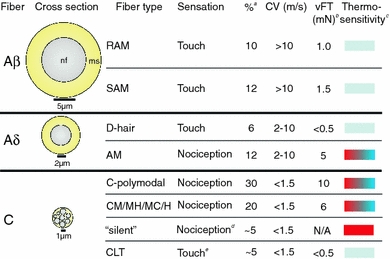
“…axon caliber, degree of myelination, speed of action potential (AP) propagation, mechanical threshold, and the rate of adaptation to sustained mechanical stimuli, LTMRs can be split into Ab, Ad, or C fibers (Bessou and Perl, 1969; Li et al., 2011; Smith and Lewin, 2009; Zimmermann et al., 2009).”
BackgroundFeinberg, T. E., & Mallatt, J. (2013) · Frontiers in Psychology · doi:10.3389/fpsyg.2013.00667 · Cited by 158
“Thus, the pain experience seems to characterize teleost fish and presumably all other vertebrates with equally or more complex brains (except perhaps for the cartilaginous fish such as sharks, which may lack appreciable perception: Smith and Lewin, 2009; Sneddon, 2011).”
BackgroundInfluentialThe Molecular Basis of Acid Insensitivity in the African Naked Mole-Rat
Smith, E. S. J., Omerbašić, D., Lechner, S. G., Anirudhan, G., Lapatsina, L., & Lewin, G. R. (2011) · Science · doi:10.1126/science.1213760 · Cited by 140
Self-citationPokes, sunburn, and hot sauce: Drosophila as an emerging model for the biology of nociception
Im, S. H., & Galko, M. J. (2012) · Developmental Dynamics · doi:10.1002/dvdy.22737 · Cited by 132
Interplay between Oxytocin and Sensory Systems in the Orchestration of Socio-Emotional Behaviors
Grinevich, V., & Stoop, R. (2018) · Neuron · doi:10.1016/j.neuron.2018.07.016 · Cited by 139
“also emerged very early in evolution (Smith and Lewin, 2009; Sneddon, 2004).”
Geffeney, S. L., Cueva, J. G., Glauser, D. A., Doll, J. C., Lee, T. H.-C., Montoya, M., Karania, S., Garakani, A. M., Pruitt, B. L., & Goodman, M. B. (2011) · Neuron · doi:10.1016/j.neuron.2011.06.038 · Cited by 137
“TRPV channels expressed in mammalian nociceptors also respond to chemicals released as a consequence of tissue damage and inflammation and play critical roles in inflammation-induced peripheral sensitization (Basbaum et al., 2009; Smith and Lewin, 2009).”
BackgroundScience, sentience, and animal welfare
Jones, R. C. (2013) · Biology & Philosophy · doi:10.1007/s10539-012-9351-1 · Cited by 119
Crook, R. J., Hanlon, R. T., & Walters, E. T. (2013) · Journal of Neuroscience · doi:10.1523/jneurosci.0646-13.2013 · Cited by 126
“Primary nociceptors that encode noxious stimuli have been reported in several invertebrate and vertebrate species (Smith and Lewin, 2009), but most research has focused on mammalian nociceptors because of their critical roles in normal and abnormal pain states (Basbaum et al., 2009).”
BackgroundInfluentialAnimal models of pain: Diversity and benefits
Abboud, C., Duveau, A., Bouali‐Benazzouz, R., Massé, K. L., Mattar, J., Brochoire, L., Fossat, P., Boué‐Grabot, É., Hleihel, W., & Landry, M. (2020) · Journal of Neuroscience Methods · doi:10.1016/j.jneumeth.2020.108997 · Cited by 128
Arm injury produces long-term behavioral and neural hypersensitivity in octopus
Alupay, J. S., Hadjisolomou, S. P., & Crook, R. J. (2013) · Neuroscience Letters · doi:10.1016/j.neulet.2013.11.002 · Cited by 122
“[2] E.”
BackgroundPerry, C. J., & Baciadonna, L. (2017) · Journal of Experimental Biology · doi:10.1242/jeb.151308 · Cited by 117
“Nociceptors, the receptors that respond to noxious stimuli and initiate avoidance behaviour to protect from further damage, have been identified in several invertebrate species (Smith and Lewin, 2009).”
BackgroundNociceptive Behavior and Physiology of Molluscs: Animal Welfare Implications
Crook, R. J., & Walters, E. T. (2011) · ILAR Journal · doi:10.1093/ilar.52.2.185 · Cited by 132
“Preliminary studies indicate that nociception in these phyla involves many conserved sensory transduction processes (Smith and Lewin 2009; Tobin and Bargmann 2004; Tracey et al. 2003), although differences have also been found.”
BackgroundThe Genetics of Neuropathic Pain from Model Organisms to Clinical Application
Calvo, M., Davies, A. J., Hébert, H. L., Weir, G. A., Chesler, E. J., Finnerup, N. B., Levitt, R. C., Smith, B. H., Neely, G. G., Costigan, M., et al. (2019) · Neuron · doi:10.1016/j.neuron.2019.09.018 · Cited by 116
“Therefore, biology has processed noxious stimuli from the very earliest electrically excitable impulses (Smith and Lewin, 2009; Sneddon, 2018), meaning that both the pain phenotype and the genes that create it appear to be extremely well conserved across the animal phyla.”
BackgroundReview of some scientific issues related to crustacean welfare
Diggles, B. K. (2018) · ICES Journal of Marine Science · doi:10.1093/icesjms/fsy058 · Cited by 107
“Because nociception occurs widely in the animal kingdom (Tobin and Bargmann, 2004; Smith and Lewin, 2009; Sneddon, 2018), it is very important to understand that “activity induced in the nociceptor and nociceptive pathways by a noxious stimulus is not pain, which is always a psychological state” (https://www.”
BackgroundWalters, E. T. (2012) · Frontiers in Physiology · doi:10.3389/fphys.2012.00309 · Cited by 100
“Sensitization to mechanical and other types of stimuli, as well as additional hyperfunctional changes in surviving sensory fibers in and around injured tissue can both compensate for loss of sensory function and help protect the vulnerable region by promoting protective behavior (Walters, 1994; Smith and Lewin, 2009).”
The Perception and Endogenous Modulation of Pain
Ossipov, M. H. (2012) · Scientifica · doi:10.6064/2012/561761 · Cited by 119
“elegans, and mammalian orthologs of the MEC-2 protein, which modulates activity of invertebrate mechanosensors, have been found to modulate activity of the acid-sensing channels (ASIC) [36].”
BackgroundInfluentialA stomatin dimer modulates the activity of acid‐sensing ion channels
Brand, J., Smith, E. S. J., Schwefel, D., Lapatsina, L. P., Poole, K., Omerbašić, D., Kozlenkov, A., Behlke, J., Lewin, G. R., & Daumke, O. (2012) · The EMBO Journal · doi:10.1038/emboj.2012.203 · Cited by 89
“The mechanosensitive ion channel targets of mammalian stomatin-domain containing proteins are, however, still unknown (Smith and Lewin, 2009; Lumpkin et al , 2010; Poole et al , 2011; Lapatsina et al , 2012a).”
Self-citationKlyne, D. M., Moseley, G. L., Sterling, M. M., Barbe, M. F., & Hodges, P. W. (2018) · Journal of Pain · doi:10.1016/j.jpain.2018.02.017 · Cited by 92
Mapping the neuroethological signatures of pain, analgesia, and recovery in mice
Bohic, M., Pattison, L. A., Jhumka, A., Rossi, H. L., Thackray, J. K., Ricci, M. R., Mossazghi, N., Foster, W., Ogundare, S., Twomey, C. R., et al. (2023) · Neuron · doi:10.1016/j.neuron.2023.06.008 · Cited by 82
Self-citationWalters, E. T. (2018) · Frontiers in Physiology · doi:10.3389/fphys.2018.01049 · Cited by 84
“The prevalence of defensive responses to intense stimulation of the body surface supports the universal and obvious presumption that acute activation of nociceptive systems is an adaptive response to somatosensory stimuli threatening the integrity of the body (Sherrington, 1906; Kavaliers, 1988; Walters, 1994; Tobin a…”
BackgroundLechner, S. G., & Lewin, G. R. (2013) · Physiology · doi:10.1152/physiol.00059.2012 · Cited by 101
Self-citationThe translatability of pain across species
Mogil, J. S. (2019) · Philosophical Transactions of the Royal Society B Biological Sciences · doi:10.1098/rstb.2019.0286 · Cited by 90
Rapid molecular evolution of pain insensitivity in multiple African rodents
Eigenbrod, O., Debus, K., Reznick, J., Bennett, N. C., Sánchez-Carranza, O., Omerbašić, D., Hart, D. W., Barker, A. J., Zhong, W., Lutermann, H., et al. (2019) · Science · doi:10.1126/science.aau0236 · Cited by 87
“Chemical nociception is an ancient system found in all vertebrates and invertebrates (7) and utilizes sensory cells that detect noxious substances, termed algogens.”
BackgroundSelf-citationWhat Is It Like to Be a Bass? Red Herrings, Fish Pain and the Study of Animal Sentience
Mason, G. J., & Lavery, J. M. (2022) · Frontiers in Veterinary Science · doi:10.3389/fvets.2022.788289 · Cited by 69
(2021) · London School of Economics and Political Science Research Online (London School of Economics and Political Science)
A ‘toothache tree’ alkylamide inhibits Aδ mechanonociceptors to alleviate mechanical pain
Tsunozaki, M., Lennertz, R. C., Vilceanu, D., Katta, S., Stucky, C. L., & Bautista, D. M. (2013) · The Journal of Physiology · doi:10.1113/jphysiol.2013.252106 · Cited by 77
“They are classified as Aβ, Aδ and C fibres based on unique morphologies, mechanical response thresholds and electrophysiological properties (Iggo, 1960; Brown & Iggo, 1967; Harper & Lawson, 1985; Smith & Lewin, 2009; McGlone & Reilly, 2010; Lumpkin et al. 2010).”
BackgroundHypofunctional TrkA Accounts for the Absence of Pain Sensitization in the African Naked Mole-Rat
Omerbašić, D., Smith, E. S. J., Moroni, M., Homfeld, J., Eigenbrod, O., Bennett, N. C., Reznick, J., Faulkes, C. G., Selbach, M., & Lewin, G. R. (2016) · Cell Reports · doi:10.1016/j.celrep.2016.09.035 · Cited by 77
“This phenomenon is called hyperalgesia (Lewin et al., 2014; Smith and Lewin, 2009).”
Self-citationNerve Growth Factor and Nociception: From Experimental Embryology to New Analgesic Therapy
Lewin, G. R., Lechner, S. G., & Smith, E. S. J. (2014) · Handbook of experimental pharmacology · doi:10.1007/978-3-642-45106-5_10 · Cited by 80
“It is thought that ASIC3 and TRPV1 are the main ion channels that drive nociceptor activation after exposure to physiological tissue acidity observed after inflammation (Smith and Lewin, 2009).”
BackgroundSelf-citationPersistent nociceptor hyperactivity as a painful evolutionary adaptation
Walters, E. T., Crook, R. J., Neely, G. G., Price, T. J., & Smith, E. S. J. (2023) · Trends in Neurosciences · doi:10.1016/j.tins.2022.12.007 · Cited by 96
Self-citationASICs and mammalian mechanoreceptor function
Omerbašić, D., Schuhmacher, L.-N., Sierra, Y. A. B., Smith, E. S. J., & Lewin, G. R. (2014) · Neuropharmacology · doi:10.1016/j.neuropharm.2014.12.007 · Cited by 78
“The transduction of a mechanical stimulus, whether it be a change in force or movement, is thought to take place via the direct gating of mechanosensitive channels present at the endings of sensory neurons (Lewin andMoshourab, 2004; Poole et al., 2011; Smith and Lewin, 2009).”
BackgroundInfluentialSelf-citationThe zebrafish as a model for nociception studies
Malafoglia, V., Bryant, B. P., Raffaeli, W., Giordano, A., & Bellipanni, G. (2013) · Journal of Cellular Physiology · doi:10.1002/jcp.24379 · Cited by 80
Evolution of acid nociception: ion channels and receptors for detecting acid
Pattison, L. A., Callejo, G., & Smith, E. S. J. (2019) · Philosophical Transactions of the Royal Society B Biological Sciences · doi:10.1098/rstb.2019.0291 · Cited by 77
Self-citationNociceptor-Enriched Genes Required for Normal Thermal Nociception
Honjo, K., Mauthner, S. E., Wang, Y., Skene, J. H. P., & Tracey, W. D. (2016) · Cell Reports · doi:10.1016/j.celrep.2016.06.003 · Cited by 79
Transcriptional Profiling of Cutaneous MRGPRD Free Nerve Endings and C-LTMRs
Reynders, A., Mantilleri, A., Malapert, P., Rialle, S., Nidelet, S., Laffray, S., Beurrier, C., Bourinet, E., & Moqrich, A. (2015) · Cell Reports · doi:10.1016/j.celrep.2015.01.022 · Cited by 72
“For example, based on their cell body size, degree of myelination, and axonal conduction velocity, cutaneous fibers can be split into Ab, Ad, or C-fibers (Abraira and Ginty, 2013; Bessou and Perl, 1969; Li et al., 2011; Smith and Lewin, 2009; Zimmermann et al., 2009).”
BackgroundReasons to Be Skeptical about Sentience and Pain in Fishes and Aquatic Invertebrates
Diggles, B. K., Arlinghaus, R., Browman, H. I., Cooke, S. J., Cooper, R. L., Cowx, I. G., Derby, C. D., Derbyshire, S. W. G., Hart, P. J. B., Jones, B., et al. (2023) · Reviews in Fisheries Science & Aquaculture · doi:10.1080/23308249.2023.2257802 · Cited by 74
“Furthermore, in elasmobranchs it appears that C type fibers may be absent altogether (Snow et al. 1993; Smith and Lewin 2009), even though sharks show similar behaviors to teleost fish (e.g., fleeing reaction) when hooked by anglers.”
BackgroundPuri, S., & Faulkes, Z. (2015) · Biology Open · doi:10.1242/bio.20149654 · Cited by 75
“The pungency of peppers is measured by the Scoville scale (Scoville, 1912), which provides a gross estimation of the capsaicin content.”
MethodEcology and welfare of aquatic animals in wild capture fisheries
Diggles, B. K., Cooke, S. J., Rose, J. D., & Sawynok, W. (2011) · Reviews in Fish Biology and Fisheries · doi:10.1007/s11160-011-9206-x · Cited by 74
Cao, X., Yang, F., Zheng, J., & Wang, K. (2012) · Journal of Biological Chemistry · doi:10.1074/jbc.m112.364869 · Cited by 65
Dorsal Root Ganglion Neuron Types and Their Functional Specialization
Emery, E. C., & Ernfors, P. (2018) · Oxford University Press eBooks · doi:10.1093/oxfordhb/9780190860509.013.4 · Cited by 76
Immunosensation: Neuroimmune Cross Talk in the Skin
Tamari, M., Heul, A. V., & Kim, B. (2021) · Annual Review of Immunology · doi:10.1146/annurev-immunol-101719-113805 · Cited by 64
Clinical Analgesia in Reptiles
Sladky, K. K., & Mans, C. (2012) · Journal of Exotic Pet Medicine · doi:10.1053/j.jepm.2012.02.012 · Cited by 69
Walters, E. T. (2019) · Philosophical Transactions of the Royal Society B Biological Sciences · doi:10.1098/rstb.2019.0277 · Cited by 65
E-Skins: Biomimetic Sensing and Encoding for Upper Limb Prostheses
Iskarous, M. M., & Thakor, N. V. (2019) · Proceedings of the IEEE · doi:10.1109/jproc.2019.2939369 · Cited by 60
“[40] E.”
Anesthetics and plants: no pain, no brain, and therefore no consciousness
Draguhn, A., Mallatt, J. M., & Robinson, D. G. (2020) · PROTOPLASMA · doi:10.1007/s00709-020-01550-9 · Cited by 59
Mechanosensory neurons, cutaneous mechanoreceptors, and putative mechanoproteins
Soto, M. D. V., Cobo, T., Cobo, J. L., & Vega, J. A. (2012) · Microscopy Research and Technique · doi:10.1002/jemt.22028 · Cited by 55
Xia, Q., Qin, Y., Qiu, P., Zheng, A., & Zhang, X. (2022) · Journal of Materials Chemistry B · doi:10.1039/d1tb02578c · Cited by 53
Richardson, J., Kotevski, A., & Poole, K. (2021) · FEBS Journal · doi:10.1111/febs.16041 · Cited by 55
Fish and microchips: on fish pain and multiple realization
Michel, M. (2019) · Philosophical Studies · doi:10.1007/s11098-018-1133-4 · Cited by 51
“Although cartilaginous fish exhibit at least some pain-like behaviors, the fact that they do not have nociceptors is a defeater against attributions of pain experiences to them (Rose et al. 2014; Smith and Lewin 2009; Snow et al. 1993).”
BackgroundHow does morphology relate to function in sensory arbors?
Hall, D. H., & Treinin, M. (2011) · Trends in Neurosciences · doi:10.1016/j.tins.2011.07.004 · Cited by 54
IACUC Challenges in Invertebrate Research
Harvey-Clark, C. (2011) · ILAR Journal · doi:10.1093/ilar.52.2.213 · Cited by 48
MicroRNA-143 expression in dorsal root ganglion neurons
Tam, S. T., Bastian, I., Zhou, X., Hoek, M. V., Michael, M., Gibbins, I. L., & Haberberger, R. V. (2011) · Cell and Tissue Research · doi:10.1007/s00441-011-1263-x · Cited by 46
“Pain perception usually starts with the activation of sensory neurons, specifically nociceptors, which detect potential or actual tissue damage (Woolf and Ma 2007; Smith and Lewin 2009).”
BackgroundYuan, S., & Burrell, B. D. (2010) · Journal of Neurophysiology · doi:10.1152/jn.00491.2010 · Cited by 52
“…used to study the basic mechanisms of nociception and its modulation (Kalil- J Neurophysiol • VOL 104 • NOVEMBER 2010 • www.jn.org by 10.220.33.1 on O ctober 9, 2016 http://jn.physiology.org/ D ow nloaded from Gaspar et al. 2007; Smith and Lewin 2009; Tracey et al. 2003; Walters and Moroz 2009).”
InfluentialCharacterization of cutaneous and articular sensory neurons
Serra, I., Husson, Z., Bartlett, J. D., & Smith, E. S. J. (2016) · Molecular Pain · doi:10.1177/1744806916636387 · Cited by 46
Self-citationTayeb, Z., Bose, R., Dragomir, A., Osborn, L. E., Thakor, N. V., & Cheng, G. (2020) · Scientific Reports · doi:10.1038/s41598-020-62525-7 · Cited by 47
Nociceptive Pathway in the Cockroach Periplaneta americana
Emanuel, S., & Libersat, F. (2019) · Frontiers in Physiology · doi:10.3389/fphys.2019.01100 · Cited by 41
“, 2017) and (2) the “dendrites” that bear these channels are not associated with an accessory structure (Grueber et al., 2001, 2002; Tracey et al., 2003; Purves et al., 2004; Smith and Lewin, 2009).”
BackgroundDo Decapod Crustaceans Have Nociceptors for Extreme pH?
Puri, S., & Faulkes, Z. (2010) · PLoS ONE · doi:10.1371/journal.pone.0010244 · Cited by 47
Absence of Histamine-Induced Itch in the African Naked Mole-Rat and “Rescue” by Substance P
St John Smith, E., Blass, G. R., Lewin, G. R., & Park, T. J. (2010) · Molecular Pain · doi:10.1186/1744-8069-6-29 · Cited by 42
“Carbon dioxide can be converted into carbonic acid, which activates C-fiber nociceptors causing pain [22-24] and the ability to detect acid as a noxious stimulus is evolutionarily conserved amongst both invertebrates and vertebrates [14].”
BackgroundSelf-citationEmotional affordances for human–robot interaction
Vallverdú, J., & Trovato, G. (2016) · Adaptive Behavior · doi:10.1177/1059712316668238 · Cited by 50
Pain syndromes and the parietal lobe
García-Larrea, L., & Mauguìere, F. (2018) · Handbook of clinical neurology · doi:10.1016/b978-0-444-63622-5.00010-3 · Cited by 44
“All animals are conscious”: Shifting the null hypothesis in consciousness science
Andrews, K. (2024) · Mind & Language · doi:10.1111/mila.12498 · Cited by 40
DeGrazia, D. (2020) · Advances in neuroethics · doi:10.1007/978-3-030-31011-0_2 · Cited by 49
ZIPping to Pain Relief: The Role (or Not) of PKMζ in Chronicc Pain
Price, T. J., & Ghosh, S. (2013) · Molecular Pain · doi:10.1186/1744-8069-9-6 · Cited by 41
“This is, from an evolutionary perspective, a tantalizing possibility especially considering the important teaching function that the nociceptive system possesses for the survival of complex organisms [115].”
BackgroundHague, T., Florini, M., & Andrews, P. L. R. (2013) · Journal of Experimental Marine Biology and Ecology · doi:10.1016/j.jembe.2013.02.016 · Cited by 40
The Caenorhabditis elegans interneuron ALA is (also) a high-threshold mechanosensor
Sanders, J., Nagy, S., Fetterman, G. C., Wright, C. S., Treinin, M., & Biron, D. (2013) · BMC Neuroscience · doi:10.1186/1471-2202-14-156 · Cited by 45
“To test this, we crossed our Pver-3::GCaMP3 reporter into transgenic animals expressing the degeneration-causing nAChR channel subunit, deg-3(u662), in PVD, FLP and the six harsh touch neurons [7,14,16].”
BackgroundAlthammer, F., Jirikowski, G. F., & Grinevich, V. (2018) · Peptides · doi:10.1016/j.peptides.2018.09.003 · Cited by 38
Differential Modulation of Nociceptive versus Non-Nociceptive Synapses by Endocannabinoids
Higgins, A. S., Yuan, S., Wang, Y., & Burrell, B. D. (2013) · Molecular Pain · doi:10.1186/1744-8069-9-26 · Cited by 35
“Conclusions Nociception is a fundamental sensory process that exhibits considerable evolutionary conservation between vertebrates and invertebrates [54,55].”
BackgroundPolymodal sensory perception drives settlement and metamorphosis of Ciona larvae
Høyer, J., Kolar, K., Athira, A., van den Burgh, M., Dondorp, D., Liang, Z., & Chatzigeorgiou, M. (2024) · Current Biology · doi:10.1016/j.cub.2024.01.041 · Cited by 36
Kitchener, P. D., Fuller, J., & Snow, P. J. (2010) · Brain Behavior and Evolution · doi:10.1159/000319009 · Cited by 31
“Although the association of unmyelinated afferents and nociception is based on our understanding of terrestrial (especially mammalian) sensory neurobiology [Smith and Lewin, 2009], the absence of unmyelinated afferents in stingrays does appear to be associated with an absence of nociception.”
BackgroundSchwann Cell Responses and Plasticity in Different Dental Pulp Scenarios
Couve, E., & Schmachtenberg, O. (2018) · Frontiers in Cellular Neuroscience · doi:10.3389/fncel.2018.00299 · Cited by 35
“The function of both myelinated and non-myelinated nociceptors is crucial for the detection of noxious stimuli, like excessive pressures or lateral forces for example, and to protect the dental tissue from injuries through the activation of pain perception (Woolf and Ma, 2007; Smith and Lewin, 2009; Dubin and Patapout…”
BackgroundChamessian, A. G., Matsuda, M., Young, M. N., Wang, M. Y., Zhang, Z., Liu, D., Tobin, B., Xu, Z., de Ven, T. V., & Ji, R. (2019) · Journal of Neuroscience · doi:10.1523/jneurosci.2064-18.2019 · Cited by 35
“Both of these properties are consistent with those of LTMRs (Smith and Lewin 2009).”
ResultHerskin, M. S., & Giminiani, P. D. (2017) · Elsevier eBooks · doi:10.1016/b978-0-08-101012-9.00011-3 · Cited by 37
Invertebrates and Humans: Science, Ethics, and Policy
Pollo, S., & Vitale, A. (2019) · Animal welfare · doi:10.1007/978-3-030-13947-6_2 · Cited by 37
Hothersall, B., Caplen, G., Nicol, C. J., Taylor, P. M., Waterman‐Pearson, A. E., Weeks, C. A., & Murrell, J. C. (2011) · Journal of Neuroscience Methods · doi:10.1016/j.jneumeth.2011.07.028 · Cited by 29
Summers, T. L., Holec, S. A. M., & Burrell, B. D. (2014) · Journal of Experimental Biology · doi:10.1242/jeb.110049 · Cited by 34
“The medicinal leech is an interesting species to study TRP sensory function in because it possesses somatosensory neurons that are remarkably similar to those found in vertebrates (Smith and Lewin, 2009).”
BackgroundProbing mammalian touch transduction
Bautista, D. M., & Lumpkin, E. A. (2011) · The Journal of General Physiology · doi:10.1085/jgp.201110637 · Cited by 32
“…have traditionally been classified as nociceptors, based on their high mechanical thresholds and projection patterns to the spinal cord (Smith and Lewin, 2009), recent studies have implicated C-afferents in other cutaneous senses, such as warm and cool (Peier et al., 2002; Dhaka et…”
BackgroundSmith, E. S. J., Purfürst, B., Grigoryan, T., Park, T. J., Bennett, N. C., & Lewin, G. R. (2012) · The Journal of Comparative Neurology · doi:10.1002/cne.23133 · Cited by 28
“Large-diameter afferent Ab-fibers are involved in mechano- and proprioception, whereas smaller-diameter Ad-fibers are either mechanoreceptors (D-hair receptors) or nociceptors (Ad-mechanonociceptors), some of which are also thermosensitive (Smith and Lewin, 2009).”
BackgroundInfluentialSelf-citationGrunow, B., & Strauch, S. M. (2023) · Reviews in Fish Biology and Fisheries · doi:10.1007/s11160-023-09781-8 · Cited by 27
“The existence of ASICs has been demonstrated in Hemicordata and Chordata and is thus evolutionarily highly conserved (St. John Smith and Lewin 2009; Omerbašić et al. 2015; Sneddon et al. 2017; Burrell 2017; Lynagh et al. 2018).”
BackgroundThe naked mole-rat as an animal model in biomedical research: current perspectives
Smith, E. S. J., Schuhmacher, L.-N., & Husson, Z. (2015) · Open Access Animal Physiology · doi:10.2147/oaap.s50376 · Cited by 26
“…to detect noxious stimuli is critical to its survival, a point validated by the commonality of nociceptors to organisms within the animal kingdom, 109,111–114 but chronic pain, that often serves no survival benefit, is widespread with 19% of the adult human population expected to experience…”
Self-citationPlanarian nociception: Lessons from a scrunching flatworm
Reho, G., Lelièvre, V., & Cadiou, H. (2022) · Frontiers in Molecular Neuroscience · doi:10.3389/fnmol.2022.935918 · Cited by 27
“These studies include different sets of tests, sometimes only partially carried out, such as behavioral responses to noxious stimuli, electrophysiological responses of sensory afferent fibers in teased nerve preparations or whole cell patch clamp of sensory neurons (Smith and Lewin, 2009).”
BackgroundNijhuis, H., Hofsté, W.-J., Krabbenbos, I. P., Dietz, B. E., Mugan, D., & Huygen, F. J. P. M. (2023) · Pain and Therapy · doi:10.1007/s40122-023-00540-y · Cited by 28
“Additional data taken from the device included the CV of the stimulated fibers, which was in line with previous recordings from this system in earlier studies and those anticipated for A b -fiber activation [21, 25–30].”
BackgroundResultInfluentialPeripheral gating of mechanosensation by glial diazepam binding inhibitor
Li, X., Prudente, A. S., Prato, V., Guo, X., Hao, H., Jones, F., Figoli, S., Mullen, P. N., Wang, Y., Tonello, R., et al. (2024) · Journal of Clinical Investigation · doi:10.1172/jci176227 · Cited by 25
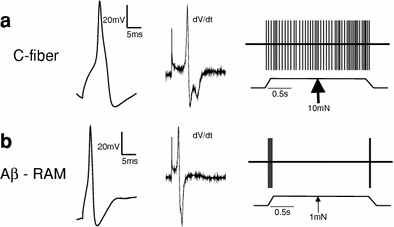
“…by wide action potential with an inflection on the repolarization phase (manifesting as an additional minimum in the first derivative of the spike [dV/dt]), while larger-diameter, presumed A β mechanosensitive neurons have narrower spikes with only one minimum in the first derivative (52).”
Metadata
- Authors
- Smith, E. S. J., & Lewin, G. R.
- Affiliations
- Max Delbrück Center (DE)
- Corresponding author
- Smith, Ewan St. John
- Venue
- Journal of Comparative Physiology A
- Published
- 2009-10-11
- Volume
- 195
- Issue
- 12
- Pages
- 1089-1106
- ISSN
- 0340-7594 (ISSN-L)
- 1432-1351
- PMC
- PMC2780683
- OpenAlex
- W2141300182
- Semantic Scholar
- b7813b1b2b322f143d00db4bff45fa4ae7aff238
- Cited by
- 271
- References
- 196
- Citations by year
- 2026: 11 · 2025: 26 · 2024: 12 · 2023: 20 · 2022: 12 · 2021: 20 · 2020: 19 · 2019: 25 · 2018: 20 · 2017: 9 · 2016: 9 · 2015: 9 · 2014: 12 · 2013: 24 · 2012: 17
- FWCI
- 1.63
- Type
- journal article
- Language
- en
- Open access
- hybrid
- doi.org
- Licence
- cc-by-nc
- creativecommons.org/licenses/by-nc/2.0 (tdm)
- Locations
- Journal of Comparative Physiology A (publishedVersion, cc-by-nc)
- PubMed Central (publishedVersion, cc-by-nc)
- PubMed (publishedVersion)
- MDC Repository (Max-Delbrueck-Center for Molecular Medicine) (acceptedVersion)
- Funders
- Alexander von Humboldt-Stiftung
- Topics
- Life Sciences › Neuroscience › Sensory Systems › Ion Channels and Receptors
- Health Sciences › Medicine › Physiology (medical) › Pain Mechanisms and Treatments
- Life Sciences › Neuroscience › Cellular and Molecular Neuroscience › Neurobiology and Insect Physiology Research
- Keywords
- nociceptors, nociception, phylogeny, pain detection, aversive stimuli, nociceptor sensitization, ion channels, molecular evolution, comparative physiology, invertebrates, model organisms, genetic engineering
- MeSH terms
- Animals, Humans, Ion Channels, Nerve Tissue Proteins, Nervous System Physiological Phenomena, Neural Conduction, Nociceptors, Pain, Phylogeny, Sodium Channels, Evolution, Molecular, Mechanotransduction, Cellular, Mice, Acid Sensing Ion Channels
About these checks
Registry, retraction, Cites and statistics results are computed, not judged, with one exception: a printed reference that no index lists is read once by a model before it counts as a citation error. Claims are extracted by a model and kept only when their quote appears verbatim in the text; each cited source is then checked, with a model’s help, for whether it says what the claim relies on. Those verdicts can be wrong — read the claim’s quote and the cited source before relying on one.
Statistics and arithmetic are recomputed, not judged.
Confidence bands are shown only for fields calibrated on our annotated test set. None is calibrated yet, so no band is shown.
What counts as a claim ›How we measure confidence ›How we check this ›
Are you an author, or do you see a problem with this page? Request a review
Data sources
Bibliographic data: Semantic Scholar, OpenAlex, Crossref.
Contains information from the Semantic Scholar Academic Graph Datasets, made available under the ODC Attribution License (ODC-BY 1.0).
Semantic Scholar’s data is described in: Kinney, R., et al. (2023). The Semantic Scholar Open Data Platform. arXiv:2301.10140.
