

Claudin-1 induced sealing of blood–brain barrier tight junctions ameliorates chronic experimental autoimmune encephalomyelitis
Open accessThe DOI matches its Crossref record; 52 of the 54 references it cites were found in a registry or an index.
Abstract
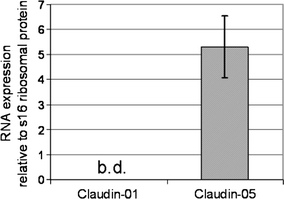
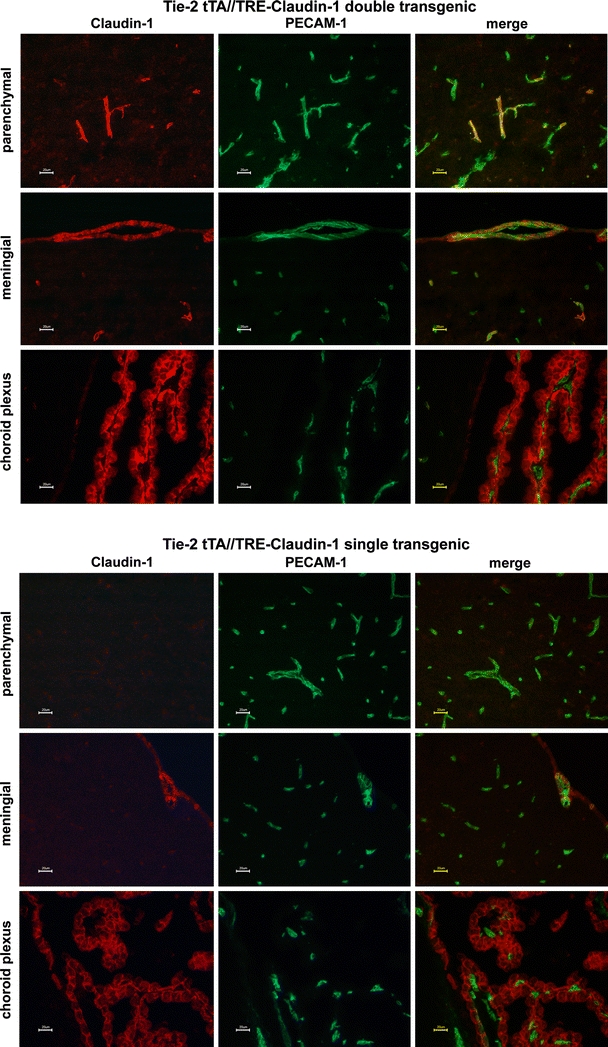
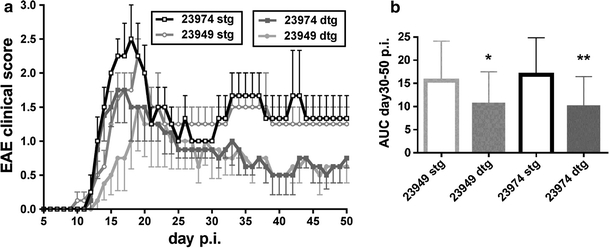
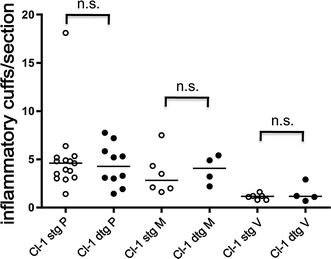
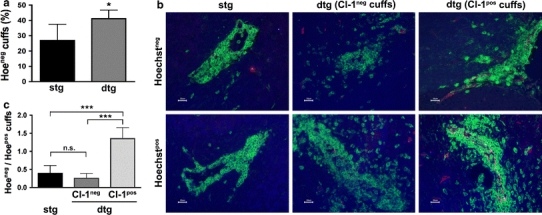
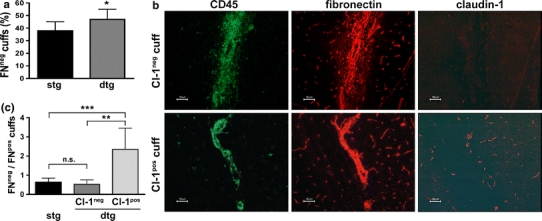
In experimental autoimmune encephalomyelitis (EAE), an animal model for multiple sclerosis (MS), loss of the blood-brain barrier (BBB) tight junction (TJ) protein claudin-3 correlates with immune cell infiltration into the CNS and BBB leakiness. Here we show that sealing BBB TJs by ectopic tetracycline-regulated expression of the TJ protein claudin-1 in Tie-2 tTA//TRE-claudin-1 double transgenic C57BL/6 mice had no influence on immune cell trafficking across the BBB during EAE and furthermore did not influence the onset and severity of the first clinical disease episode. However, expression of claudin-1 did significantly reduce BBB leakiness for both blood borne tracers and endogenous plasma proteins specifically around vessels expressing claudin-1. In addition, mice expressing claudin-1 exhibited a reduced disease burden during the chronic phase of EAE as compared to control littermates. Our study identifies BBB TJs as the critical structure regulating BBB permeability but not immune cell trafficking into CNS during EAE, and indicates BBB dysfunction is a potential key event contributing to disease burden in the chronic phase of EAE. Our observations suggest that stabilizing BBB barrier function by therapeutic targeting of TJs may be beneficial in treating MS, especially when anti-inflammatory treatments have failed.
Overview
The claims and statistics of this paper haven’t been checked yet.
Free: it reads the open-access text and checks the first 5 claims that cite a source we can check. Create a free account to check every claim.
Integrity signals
Registry
Cites
Statistics
Figures
Verification
Claims the paper makes
The claims and statistics of this paper haven’t been checked yet.
Free: it reads the open-access text and checks the first 5 claims that cite a source we can check. Create a free account to check every claim.
Self-check
Percentages, sums and reported differences re-computed from the paper’s own numbers.
The self-check needs the paper’s full text.
Citations
Cites
Compston, A., & Coles, A. (2008) · The Lancet · doi:10.1016/s0140-6736(08)61620-7 · Cited by 4,372
Size-selective loosening of the blood-brain barrier in claudin-5–deficient mice
Nitta, T., Hata, M., Gotoh, S., Seo, Y., Sasaki, H., Hashimoto, N., Furuse, M., & Tsukita, S. (2003) · The Journal of Cell Biology · doi:10.1083/jcb.200302070 · Cited by 1,917 · cited 3×
“In addition to claudin-5 and claudin-3, expression of claudin-12 has also been described at the BBB [35].”
BackgroundKebir, H., Kreymborg, K., Ifergan, I., Dodelet-Devillers, A., Cayrol, R., Bernard, M., Giuliani, F., Arbour, N., Becher, B., & Prat, A. (2007) · Nature Medicine · doi:10.1038/nm1651 · Cited by 1,759
Claudin-based tight junctions are crucial for the mammalian epidermal barrier
Furuse, M., Hata, M., Furuse, K., Yoshida, Y., Haratake, A., Sugitani, Y., Noda, T., Kubo, A., & Tsukita, S. (2002) · The Journal of Cell Biology · doi:10.1083/jcb.200110122 · Cited by 1,512 · cited 1×
“This notion is supported by previous findings demonstrating that claudin-1 seals TJs in skin epithelial and lung endothelial cells [13, 14].”
ResultBlood‐brain barrier‐specific properties of a human adult brain endothelial cell line
Weksler, B. B., Subileau, E. A., Perrière, N., Charneau, P., Holloway, K., Leveque, M., Tricoire‐Leignel, H., Nicotra, A., Bourdoulous, S., Turowski, P., et al. (2005) · The FASEB Journal · doi:10.1096/fj.04-3458fje · Cited by 1,330 · cited 1×
“Later studies, however, which specifically excluded cross-reactivity of anti-claudin-1 antibodies with claudin-3 failed to detect any immunostaining for claudin-1 in CNS parenchymal microvessels or in primary mouse or human brain endothelial cells [2, 20, 43, 47].”
BackgroundComplex Phenotype of Mice Lacking Occludin, a Component of Tight Junction Strands
Saitou, M., Furuse, M., Sasaki, H., Schulzke, J.-D., Fromm, M., Takano, H., Noda, T., & Tsukita, S. (2000) · Molecular Biology of the Cell · doi:10.1091/mbc.11.12.4131 · Cited by 1,195 · cited 2×
“Occludin is highly expressed in TJ of the BBB but not in endothelial TJs of non-neuronal tissues [4, 22], while intact BBB TJs can form in the absence of occludin in vivo [38].”
BackgroundTight junctions of the blood–brain barrier
Wolburg, H., & Lippoldt, A. (2002) · Vascular Pharmacology · doi:10.1016/s1537-1891(02)00200-8 · Cited by 1,183
Furuse, M., Sasaki, H., Fujimoto, K., & Tsukita, S. (1998) · The Journal of Cell Biology · doi:10.1083/jcb.143.2.391 · Cited by 965 · cited 2×
“In contrast to occludin, claudins have been shown to be sufficient to induce TJ strands when transfected into fibroblasts [15].”
BackgroundMorita, K., Sasaki, H., Furuse, M., & Tsukita, S. (1999) · The Journal of Cell Biology · doi:10.1083/jcb.147.1.185 · Cited by 869 · cited 2×
“Upon transfection into fibroblasts claudin-5 induces E-face associated TJs [34], whereas claudin-3, which is specifically expressed in TJ of CNS but not other endothelial cells [44, 47], induces P-face associated TJs [16].”
BackgroundWnt/β-catenin signaling controls development of the blood–brain barrier
Liebner, S., Corada, M., Bangsow, T., Babbage, J., Taddei, A., Czupalla, C. J., Reis, M., Felici, A., Wolburg, H., Fruttiger, M., et al. (2008) · The Journal of Cell Biology · doi:10.1083/jcb.200806024 · Cited by 860
Cited by
Items 101–180 of 180
Gowrikumar, S., Tarudji, A. W., McDonald, B. Z., Balusa, S. S., Kievit, F. M., & Dhawan, P. (2025) · Tissue Barriers · doi:10.1080/21688370.2025.2470482 · Cited by 25
“18,19 The binding of CLDN5 to ZO-1 is required for its localization on the cell membrane and for its establishment of trans-cellular interactions.”
Singh, A., Chokriwal, A., Sharma, M. M., Jain, D., Saxena, J., & Stephen, B. J. (2017) · ACS Chemical Neuroscience · doi:10.1021/acschemneuro.7b00144 · Cited by 27
The Mechanism and Latest Research Progress of Blood–Brain Barrier Breakthrough
Wang, F., Qi, L., Zhang, Z., Duan, H., Wang, Y., Zhang, K., & Li, J. (2024) · Biomedicines · doi:10.3390/biomedicines12102302 · Cited by 25
Viral interactions with the blood-brain barrier: old dog, new tricks
Hou, J., Baker, L. A., Zhou, L., & Klein, R. S. (2016) · Tissue Barriers · doi:10.1080/21688370.2016.1142492 · Cited by 24
Gaston, J. D., Bischel, L. L., Fitzgerald, L. A., Cusick, K. D., Ringeisen, B. R., & Pirlo, R. K. (2017) · Journal of Healthcare Engineering · doi:10.1155/2017/5740975 · Cited by 24
“Though there is some evidence that increased expression of CLDN1 reduces BBB permeability to blood-borne molecules [25], it is probable that the observed level of expression did not have a quanti fi able e ff ect on barrier integrity di ff erences between the models.”
Awan, F. M., Anjum, S., Obaid, A., Ali, A., Paracha, R. Z., & Janjua, H. A. (2014) · Infection Genetics and Evolution · doi:10.1016/j.meegid.2014.07.022 · Cited by 24
Li, T., Chen, H., Xu, B., Yu, M., Li, J., Shi, Y., Xia, S., & Wu, S. (2023) · Pesticide Biochemistry and Physiology · doi:10.1016/j.pestbp.2023.105697 · Cited by 23
Genetic manipulation of brain endothelial cells in vivo
Assmann, J. C., Körbelin, J., & Schwaninger, M. (2015) · Biochimica et Biophysica Acta (BBA) - Molecular Basis of Disease · doi:10.1016/j.bbadis.2015.10.006 · Cited by 23
Activatable small-molecule NIR fluorescent/photoacoustic probes for brain disease imaging
Zou, J., Kim, Y., Lee, Y., Hong, S. J., Lee, K., Zhang, F., Mao, Z., & Kim, J. S. (2025) · Coordination Chemistry Reviews · doi:10.1016/j.ccr.2025.217149 · Cited by 24
Zhao, Y., Chen, C., Xiao, X., Fang, L., Cheng, X., Chang, Y., Peng, F., Wang, J., Shen, S., Wu, S., et al. (2023) · Molecular Neurobiology · doi:10.1007/s12035-023-03655-7 · Cited by 22
“However, loss of claudin-1 only alters the BBB junctional properties to induce tracer leakage in a size-selective manner but does not result in a complete breakdown [54].”
Roche, F., Briançon‐Marjollet, A., Demattéis, M., Baldazza, M., Gonthier, B., Bertholon, F., Perek, N., & Pépin, J. (2024) · International Journal of Molecular Sciences · doi:10.3390/ijms25053065 · Cited by 21
Xu, J., Zhan, T., Zheng, W., Huang, Y., Chen, K., Zhang, X., Ren, P., & Huang, X. (2020) · Acta Cirúrgica Brasileira · doi:10.1590/acb351202 · Cited by 21
SlpB Protein Enhances the Probiotic Potential of L. lactis NCDO 2118 in Colitis Mice Model
Belo, G. A., Cordeiro, B. F., Oliveira, E. R., Braga, M. P., da Silva, S. H., Costa, B. G., Martins, F. S., Jan, G., Loir, Y. L., Gala-García, A., et al. (2021) · Frontiers in Pharmacology · doi:10.3389/fphar.2021.755825 · Cited by 19
Lehner, C., Gehwolf, R., Ek, J., Korntner, S. H., Bauer, H., Bauer, H.-C., Traweger, A., & Tempfer, H. (2016) · European Cells and Materials · doi:10.22203/ecm.v031a19 · Cited by 20
An, D., Ai, J. T., Fang, H. J., Sun, R. B., Shi, Y. Y., Wang, L., & Wang, Q. (2015) · PubMed · doi:10.3967/bes2015.091 · Cited by 18
“This structure results from the unique tight junctions inherent to the BBB endothelium [11-12] .”
Ibiwoye, M. O., Matthews, Q. L., Travers, K., & Foster, J. D. (2019) · Journal of Comparative Pathology · doi:10.1016/j.jcpa.2019.08.008 · Cited by 18
Castillo-González, J., Ruiz, J. L., Serrano-Martínez, I., Forte‐Lago, I., Ubago-Rodríguez, A., Caro, M., Pérez‐Gómez, J. M., Benítez-Troncoso, A., Andrés‐León, E., Sánchez‐Navarro, M., et al. (2023) · Journal of Neuroinflammation · doi:10.1186/s12974-023-02908-5 · Cited by 17
“On the other hand, although controversial findings about the role of claudin-1 have been reported [40, 44, 45], several studies indicate that claudin-1 increases in the disrupted endothelium, affects claudin-5 assembly, and its cytosolic accumulation has been correlated with TJ arrangement deficits…”
BackgroundImpairment of spinal CSF flow precedes immune cell infiltration in an active EAE model
Li, X., Madarasz, A., Ivan, D. C., Weber, F., Aleandri, S., Luciani, P., Locatelli, G., & Proulx, S. T. (2024) · Journal of Neuroinflammation · doi:10.1186/s12974-024-03247-9 · Cited by 17
“In contrast to endothelial cells of the BBB, leptomeningeal vessel endothelial cells constitutively express P-selectin, and display different tight junction molecular arrangements [63].”
BackgroundZaghmi, A., Drouin‐Ouellet, J., Brambilla, D., & Gauthier, M. A. (2020) · Biomaterials · doi:10.1016/j.biomaterials.2020.120461 · Cited by 17
Rochfort, K. D., & Cummins, P. M. (2018) · Neuromethods · doi:10.1007/978-1-4939-8946-1_5 · Cited by 18
The Role of Brain Barriers in Maintaining Brain Vitamin Levels
Tiani, K. A., Stover, P. J., & Field, M. S. (2019) · Annual Review of Nutrition · doi:10.1146/annurev-nutr-082018-124235 · Cited by 16
Association of genetic polymorphisms of claudin‐1 with small vessel vascular dementia
Srinivasan, V., Braidy, N., Xu, Y. H., Xie, P., Kancherla, K., Chandramohan, S., Chan, E. K. W., & Chan, D. K. (2017) · Clinical and Experimental Pharmacology and Physiology · doi:10.1111/1440-1681.12747 · Cited by 16
Blood-Brain Barrier Differentiation
Engelhardt, B. (2011) · Science · doi:10.1126/science.1216853 · Cited by 16
Self-citationMatsuo, K., & Nishihara, H. (2023) · Neural Regeneration Research · doi:10.4103/1673-5374.390978 · Cited by 15
“In experimental autoimmune encephalomyelitis, an animal model of multiple sclerosis, BBB sealing by ectopic expression of a tight junction molecule improved clinical scores in the chronic phase (Pfeiffer et al., 2011).”
BackgroundZhao, Z., Yu, X., Yang, X., Zhang, J., Zhang, D., Sun, N., & Fan, Z. (2020) · International Ophthalmology · doi:10.1007/s10792-020-01519-w · Cited by 16
Leptin and Leptin Signaling in Multiple Sclerosis: A Narrative Review
Flores-Cordero, J. A., Aranaz-Murillo, A., Vilariño‐García, T., Pérez‐Pérez, A., Izquierdo, G., Flores-Campos, R., Hontecillas‐Prieto, L., García-Domínguez, D. J., & Sánchez‐Margalet, V. (2025) · NeuroMolecular Medicine · doi:10.1007/s12017-025-08842-4 · Cited by 12
“Additionally, it suppresses proliferation of regulatory T lymphocytes responsible for immunotolerance (Matarese et al., 2010; Versini et al., 2014), which has been suggested to be involved in the pathogenesis of MS (Matarese et al., 2008).”
Brain tumor immunotherapy: seeing the brain in the body
Lampson, L. A. (2012) · Drug Discovery Today · doi:10.1016/j.drudis.2012.11.007 · Cited by 12
Lee, M. J., Choi, J. H., Lee, S. J., & Cho, I. (2017) · Frontiers in Pharmacology · doi:10.3389/fphar.2017.00192 · Cited by 12
Blood–brain barrier disruption in dementia: Nano‐solutions as new treatment options
Cooper, C. G., Kafetzis, K. N., Patabendige, A., & Tagalakis, A. D. (2023) · European Journal of Neuroscience · doi:10.1111/ejn.16229 · Cited by 11
Schweiger, B., & Kievit, F. M. (2025) · Experimental Brain Research · doi:10.1007/s00221-025-07018-7 · Cited by 11
“However, claudin-1 expression within the brain has been observed in several disease states including ischemic stroke (Sladojevic et al. 2019), experimental autoimmune encephalomyelitis (Pfeiffer et al. 2011), and aging (Bony et al. 2021; Miller et al. 2024).”
The Blood–Brain Barrier: An Introduction to Its Structure and Function
Mahringer, A., Ott, M., & Fricker, G. (2013) · Topics in medicinal chemistry · doi:10.1007/7355_2013_20 · Cited by 11
Cuprizone feeding induces swollen astrocyte endfeet
Fallier‐Becker, P., Bonzheim, I., & Pfeiffer, F. (2022) · Pflügers Archiv - European Journal of Physiology · doi:10.1007/s00424-022-02759-8 · Cited by 10
“During EAE, the BBB often is disrupted by lymphocyte migration from the bloodstream into the brain parenchyma [7, 36, 37].”
BackgroundSelf-citationOntogeny of tight junction protein expression in the ovine cerebral cortex during development
Sadowska, G. B., Ahmedli, N. N., Chen, X. F., & Stonestreet, B. S. (2015) · Neuroscience · doi:10.1016/j.neuroscience.2015.09.062 · Cited by 10
“…observed at tight junctions of brain blood vessels during murine development and appears to contribute to the unique function of the barrier (Nitta et al., 2003, Wolburg et al., 2003, Abbott et al., 2006, Krause et al., 2008, Daneman et al., 2010, Pfeiffer et al., 2011, Schrade et al., 2012).”
BackgroundKim, M. J., Ryu, C. H., Kim, S. M., Lim, J. Y., Kim, W. S., & Jeun, S. (2018) · Tissue Engineering and Regenerative Medicine · doi:10.1007/s13770-017-0101-y · Cited by 9
Regulation of autoimmune‐mediated neuroinflammation by endothelial cells
Kallal, N., Hugues, S., & Garnier, L. (2024) · European Journal of Immunology · doi:10.1002/eji.202350482 · Cited by 8
Špilak, A., Klepe, A., Kriwanek, S. T., Friedl, H.-P., Brachner, A., Nöhammer, C., & Neuhaus, W. (2025) · Fluids and Barriers of the CNS · doi:10.1186/s12987-025-00680-7 · Cited by 8
“Depending on the physiological/pathological conditions and/or the experimental model employed, claudin-1 has been implicated both, in a weakening and enhancement of barrier integrity, indicating that its role may depend on the physiological, cellular and molecular context [28, 59, 65, 76, 108].”
Oxytocin seals the blood–brain barrier, improving 22q11.2 deletion syndrome trajectories
Castellani, G., Ciampoli, M., Benedetti, A., Ferretti, V., Trigilio, G., Barcik, W., Busnelli, M., Contarini, G., Paolini, C., Devroye, C., et al. (2025) · Brain · doi:10.1093/brain/awaf112 · Cited by 8
Liddelow, S. A., Dzięgielewska, K. M., Ek, C. J., Habgood, M. D., Bauer, H., Bauer, H., Lindsay, H. A., Wakefield, M. J., Strazielle, N., Kratzer, I., et al. (2016) · PLoS ONE · doi:10.1371/journal.pone.0147680 · Cited by 8
Emerging Roles of Endothelial Cells in Multiple Sclerosis Pathophysiology and Therapy
Yun, J. W., Minagar, A., & Alexander, J. S. (2017) · Springer eBooks · doi:10.1007/978-3-319-51220-4_1 · Cited by 6
Branine, M. E., Schilling-Hazlett, A. K., Carvalho, P. H. V., Stackhouse-Lawson, K. R., Martins, E. C., da Silva, J. T., Amundson, L. A., Ashworth, C., Socha, M. T., & Dridi, S. (2025) · Veterinary Sciences · doi:10.3390/vetsci12010065 · Cited by 5
Dehkordi, Z. V., Ghadiri, M., Jivad, N., & Amini-Khoei, H. (2026) · The World Journal of Biological Psychiatry · doi:10.1080/15622975.2026.2677901 · Cited by 5
“They found that mice expressing CLDN-1 had lower disease burden throughout the chronic phase of autoimmune encephalomyelitis (Pfeiffer et al., 2011).”
Pfeiffer, F., Mack, A. F., & Wolburg, H. (2017) · Springer eBooks · doi:10.1007/978-3-319-45514-3_2 · Cited by 6
Self-citationWei, D., Xu, M. T., Cui, W., Feng, X., Lei, W., Wang, K., Li, S., & Gao, S. (2025) · American Journal of Translational Research · doi:10.62347/gggx3909 · Cited by 4
Gut microbiota modulates CNS barrier function in murine model for multiple sclerosis
Xie, J., Burgelman, M., Dujardin, P., Castelein, J., Imschoot, G. V., Wonterghem, E. V., Lernout, H., Schetters, S. T. T., Vandendriessche, C., Hoecke, L. V., et al. (2025) · Fluids and Barriers of the CNS · doi:10.1186/s12987-025-00724-y · Cited by 4
“…the one hand, barrier permeability can exist independently from immune cell infiltration; for instance, the enhancement of BBB tight junctions through claudin-1 has been shown to ameliorate chronic EAE disease and reduce BBB permeability without affecting immune cell trafficking into the CNS [63].”
Pathways Across the Blood-Brain Barrier
Abadier, M., & Lyck, R. (2017) · Springer eBooks · doi:10.1007/978-3-319-45514-3_9 · Cited by 4
Self-citationRochfort, K. D., & Cummins, P. M. (2025) · Neuromethods · doi:10.1007/978-1-0716-4474-4_3 · Cited by 3
Immunocytochemical Assessment of Blood–Brain Barrier Structure, Function, and Damage
Louboutin, J. (2015) · Neuromethods · doi:10.1007/978-1-4939-2313-7_13 · Cited by 3
Neurotoxicity of Nanoparticles
Bondy, S. C. (2014) · Wiley eBooks · doi:10.1002/9781118856017.ch6 · Cited by 3
Liu, S., Li, X., Jiao, S., Zheng, Y., Xia, L., Núñez-Figueredo, Y., Liu, K., & Jin, M. (2025) · The Science of The Total Environment · doi:10.1016/j.scitotenv.2025.178664 · Cited by 2
The Impact of Paracoccidioides spp Infection on Central Nervous System Cell Junctional Complexes
de Almeida, S. M., Kulik, A., Malaquias, M. A. S., Nagashima, S., de Paula, C. B. V., Muro, M. D., & de Noronha, L. (2022) · Mycopathologia · doi:10.1007/s11046-022-00653-6 · Cited by 2
Charakterisierung und Modulation von Claudinen zur Öffnung der Blut-Hirn- Schranke
Breitkreuz-Korff, O. (2018) · Universitätsbibliothek der FU Berlin Hochschulschriftenstelle u. Dokumentenserver · doi:10.17169/refubium-8365 · Cited by 2
“…geht einher mit Einsetzen der Symptome und Permeabilität ++ [11] 7 (Plumb et al., 2002) 8 (Kooij et al., 2014) 9 (Kirk et al., 2003) 10 (Morgan et al., 2007) 11 (Pfeiffer et al., 2011) Morbus Parkinson BHS-Permeabilität + ZO-1 und Occl im Striatum - (Chen et al., 2008) (+) erhöht; (-) verringert”
BackgroundNeurogranin-MYH9 interaction regulates cytoskeletal remodeling in cerebral vasculature
Akande, A., Park, J. E., Scott, R. S., Alexander, J. S., & Nam, H. W. (2025) · Fluids and Barriers of the CNS · doi:10.1186/s12987-025-00709-x · Cited by 1
“Some studies report that increased claudin-1 expression disrupts BBB integrity following injury [99, 100], while others demonstrate that claudin-1 may contribute to tight junction sealing and BBB maintenance under both pathological and physiological conditions [101–103].”
Jiang, W., Lynam, E. G., Delafosse, J., Birdsey, G. M., RANDI, A. M., Matter, K., & Balda, M. S. (2026) · Cells · doi:10.3390/cells15111015 · Cited by 1
Malek, I., Chebbi, A., Zghal, I., Hachicha, F., Soumaya, O., Boujemaa, C., Bouguila, H., Nacef, L., & Ayed, S. (2013) · PubMed · Cited by 1
The neurovascular unit and blood–CNS barriers in health and disease
Cottarelli, A., Wayne, C. R., Agalliu, D., & Biswas, S. (2022) · Elsevier eBooks · doi:10.1016/b978-0-12-822546-2.00023-x · Cited by 1
Tight Junction Proteins as Emerging Drug Targets: Expanding the Horizons from Inflammation to Cancer
Garimella, S. V., Roy, R., Gampa, S. C., & Pandrangi, S. L. (2023) · Springer eBooks · doi:10.1007/978-981-99-2415-8_5 · Cited by 1
Goischke, H. K. (2024) · Journal of Neurology Research Review & Reports · doi:10.47363/jnrrr/2024(6)204 · Cited by 1
Mechanisms for Extracellular Matrix-Dependent Blood-Brain Barrier Dysfunction
Hoettles, B. A. (2021) · ScholarWorks (Boise State University) · doi:10.18122/td/1903/boisestate · Cited by 1
Lemesle, M. (2022) · theses.fr (ABES) · doi:10.70675/ebe22607z3311z44c8z9187zcc15ca5abf0f · Cited by 1
Multifaceted Roles of Oxytocin in Social Cognition and Social Decision-Making
Benedetti, A. (2025) · theses.fr (ABES) · doi:10.70675/be57db87z3a61z496bz8b5fz989b4449af9c · Cited by 1
The effects of ethanol and aspalathus linearis on immortalized mouse brain endothelial cells (bEnd5)
Thomas, K. (2015) · University of the Western Cape Electronic Theses and Dissertations Repository (University of the Western Cape)
Blood–Brain Barrier: Genomics, Proteomics, Disease Targets, and Drug Delivery
Duzenli, O. F., & Öner, F. (2017) · Elsevier eBooks · doi:10.1016/b978-0-12-803796-6.00002-2
Elwahab, H. A. (2017) · UWC Research Repository (University of the Western Cape)
Cholesterol metabolism in mouse models of Multiple Sclerosis
Berghoff, S. A. (2020) · eDiss (Georg-August-Universität Göttingen) · doi:10.53846/goediss-8239
Kirchner, J. (2021) · Online Publication Service of Würzburg University (Würzburg University) · doi:10.25972/opus-22263
Paracoccidioides sp infection impairs central nervous system cell junctional complexesPreprint
de Almeida, S. M., Kulik, A., Malaquias, M. A. S., Nagashima, S., de Paula, C. B. V., Muro, M. D., & de Noronha, L. (2022) · Research Square · doi:10.21203/rs.3.rs-1428764/v1
Claudin-Claudin Interactions, Practical Examples
Mizrachi, D. (2024) · Biomedical Journal of Scientific & Technical Research · doi:10.26717/bjstr.2024.60.009383
Sapkota, A., Halder, S. K., & Milner, R. (2025) · Experimental Neurology · doi:10.1016/j.expneurol.2025.115381
Cassar, J., Chan, D. K. Y., Sperandei, S., & Chen, R. (2025) · Translational Medicine of Aging · doi:10.1016/j.tma.2025.08.002
Mathew, S. (2024) · Online Publication Service of Würzburg University (Würzburg University) · doi:10.25972/opus-32247
Li, Y., Wang, C., Zhang, L., Chen, B., Mo, Y., & Zhang, J. (2022) · Figshare · doi:10.6084/m9.figshare.19993859
Elwahab, H. A. (2017) · University of the Western Cape Electronic Theses and Dissertations Repository (University of the Western Cape)
Human Bone Marrow-Mesenchymal Stem Cells Differentiation Into Brain-Like Endothelial Cells|
Soliman Tolba, Y. S. M., BARAN, G., & Mustafaoğlu, N. (2023) · Sabanci University
Tarudji, A. W. (2022) · Lincoln (University of Nebraska)
Gil, A. D. (2024) · Portuguese National Funding Agency for Science, Research and Technology (RCAAP Project by FCT)
Dyrna, F. G. E. (2018) · Qucosa (Saxon State and University Library Dresden)
NMDA receptor of the blood brain barrier : mechanism of action and interaction with tPA
Mehra, A. (2017) · theses.fr (ABES) · doi:10.70675/15fd85bbzf823z4447za49az720e0988f6ab
Aleksejenko, N. (2026) · Dublin City University Open Access Institutional Repository (Dublin City University)
Belo, G. A., Cordeiro, B. F., Oliveira, E. R., Braga, M. P., da Silva, S. H., Costa, B. G., Martins, F. D. S., Jan, G., Le Loir, Y., Gala-García, A., et al. (2021) · doi:10.3389/fphar.2021.755825.s001
Metadata
- Authors
- Pfeiffer, F., Schäfer, J., Lyck, R., Makrides, V., Brunner, S., Schaeren-Wiemers, N., Deutsch, U., & Engelhardt, B.
- Affiliations
- University of Bern (CH)
- University of Zurich (CH)
- University Hospital of Basel (CH)
- Corresponding author
- Engelhardt, Britta
- Venue
- Acta Neuropathologica
- Published
- 2011-10-09
- Volume
- 122
- Issue
- 5
- Pages
- 601-614
- ISSN
- 0001-6322 (ISSN-L)
- 1432-0533
- PMC
- PMC3207130
- OpenAlex
- W2045454822
- Cited by
- 160
- References
- 54
- Citations by year
- 2026: 2 · 2025: 17 · 2024: 6 · 2023: 7 · 2022: 10 · 2021: 8 · 2020: 12 · 2019: 9 · 2018: 11 · 2017: 15 · 2016: 12 · 2015: 11 · 2014: 15 · 2013: 11 · 2012: 12
- FWCI
- 7.07
- Type
- journal article
- Language
- en
- Open access
- hybrid
- doi.org
- Licence
- cc-by-nc
- Locations
- Acta Neuropathologica (publishedVersion, cc-by-nc)
- Europe PMC (PubMed Central) (publishedVersion, cc-by-nc)
- PubMed Central (publishedVersion, cc-by-nc)
- PubMed (publishedVersion)
- reroDoc Digital Library (submittedVersion)
- Bern Open Repository and Information System (University of Bern) (submittedVersion, cc-by-nc)
- Open Access CRIS of the University of Bern
- Funders
- European Commission (202213, 241861, 201024)
- Topics
- Life Sciences › Neuroscience › Neurology › Barrier Structure and Function Studies
- Health Sciences › Medicine › Clinical Neurology › Multiple Sclerosis Research Studies
- Health Sciences › Medicine › Oncology › Drug Transport and Resistance Mechanisms
- Keywords
- claudin-1, blood-brain barrier, tight junctions, experimental autoimmune encephalomyelitis, multiple sclerosis, blood-brain barrier permeability, immune cell trafficking, claudin-3, tetracycline-regulated gene expression, plasma protein leakage
- MeSH terms
- Animals, Blood-Brain Barrier, Cell Movement, Central Nervous System, Disease Models, Animal, Encephalomyelitis, Autoimmune, Experimental, Endothelium, Vascular, Gene Expression Regulation, Membrane Proteins, Mice, Inbred C57BL, Mice, Transgenic, Multiple Sclerosis, Tetracycline, Tight Junctions, Receptor, TIE-2, Mice, Claudin-1
About these checks
Registry, retraction, Cites and statistics results are computed, not judged, with one exception: a printed reference that no index lists is read once by a model before it counts as a citation error. Claims are extracted by a model and kept only when their quote appears verbatim in the text; each cited source is then checked, with a model’s help, for whether it says what the claim relies on. Those verdicts can be wrong — read the claim’s quote and the cited source before relying on one.
Statistics and arithmetic are recomputed, not judged.
Confidence bands are shown only for fields calibrated on our annotated test set. None is calibrated yet, so no band is shown.
What counts as a claim ›How we measure confidence ›How we check this ›
Are you an author, or do you see a problem with this page? Request a review
Data sources
Bibliographic data: Semantic Scholar, OpenAlex, Crossref.
Contains information from the Semantic Scholar Academic Graph Datasets, made available under the ODC Attribution License (ODC-BY 1.0).
Semantic Scholar’s data is described in: Kinney, R., et al. (2023). The Semantic Scholar Open Data Platform. arXiv:2301.10140.
