

The DOI matches its Crossref record; 67 of the 67 references it cites were found in a registry or an index.
Dual modification of Alzheimer’s disease PHF-tau protein by lysine methylation and ubiquitylation: a mass spectrometry approach
Open accessAbstract
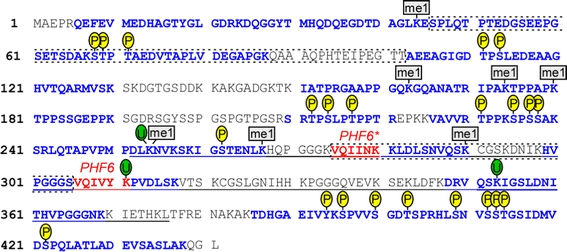
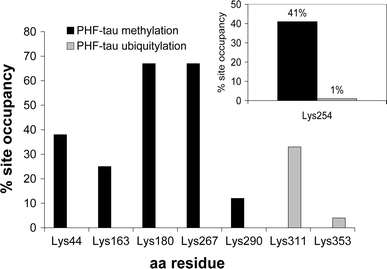
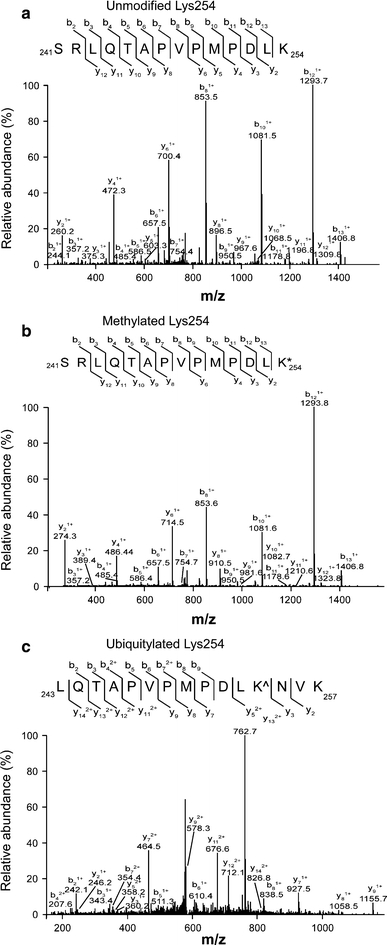
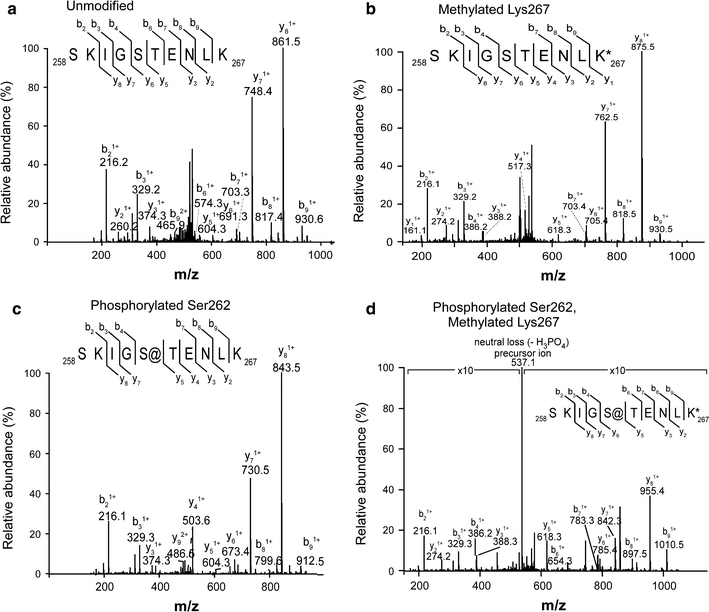
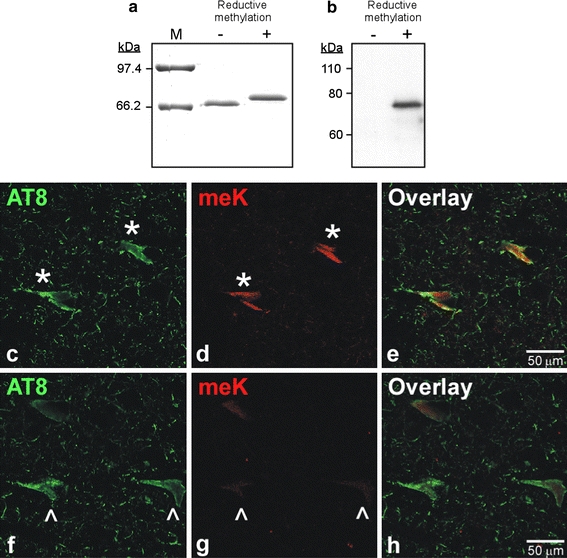
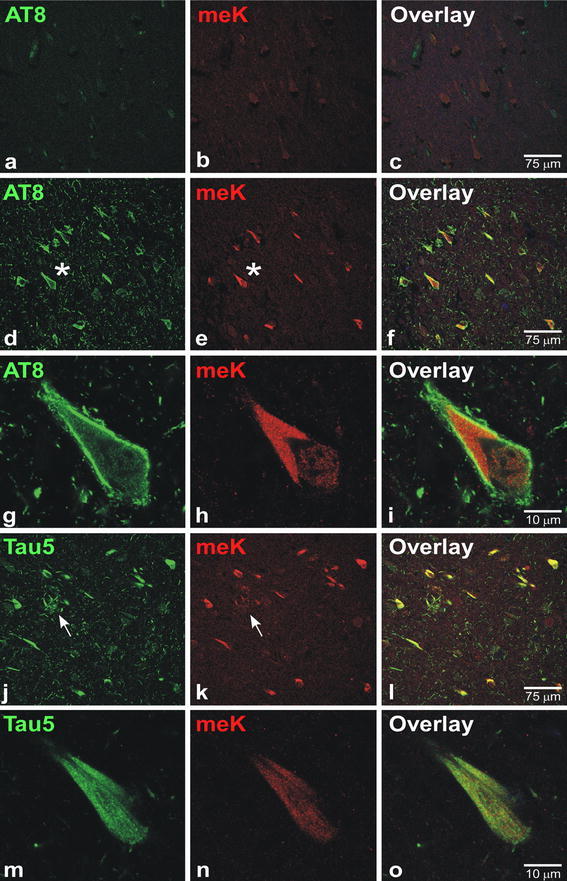
In sporadic Alzheimer's disease (AD), neurofibrillary lesion formation is preceded by extensive post-translational modification of the microtubule associated protein tau. To identify the modification signature associated with tau lesion formation at single amino acid resolution, immunopurified paired helical filaments were isolated from AD brain and subjected to nanoflow liquid chromatography-tandem mass spectrometry analysis. The resulting spectra identified monomethylation of lysine residues as a new tau modification. The methyl-lysine was distributed among seven residues located in the projection and microtubule binding repeat regions of tau protein, with one site, K254, being a substrate for a competing lysine modification, ubiquitylation. To characterize methyl lysine content in intact tissue, hippocampal sections prepared from post mortem late-stage AD cases were subjected to double-label confocal fluorescence microscopy using anti-tau and anti-methyl lysine antibodies. Anti-methyl lysine immunoreactivity colocalized with 78 ± 13% of neurofibrillary tangles in these specimens. Together these data provide the first evidence that tau in neurofibrillary lesions is post-translationally modified by lysine methylation.
Overview
The claims and statistics of this paper haven’t been checked yet.
Run the check — free, no account needed. It reads the open-access text and checks the sources it cites.
Integrity signals
Registry
Cites
Statistics
Figures
Verification
Claims the paper makes
The claims and statistics of this paper haven’t been checked yet.
Run the check — free, no account needed. It reads the open-access text and checks the sources it cites.
Claims other papers make about this one
Each is checked against this paper’s own text: does it say what the citing paper says it does?
In the citing paper
“a recent study suggests that Lys residues are predominately monomethylated in aging or AD cohorts [174–176].”
From Molecular and cellular mechanisms underlying the pathogenesis of Alzheimer’s disease (2020) · cites this paper as [175]
In the citing paper
“Methylated Lys residues mainly distribute to the projection region and tau microtubule-binding domain [174–176].”
From Molecular and cellular mechanisms underlying the pathogenesis of Alzheimer’s disease (2020) · cites this paper as [175]
Self-check
Percentages, sums and reported differences re-computed from the paper’s own numbers.
The self-check needs the paper’s full text.
Citations
Cites
Neuropathological stageing of Alzheimer-related changes.
Braak, H., & Braak, E. (1991) · Acta Neuropathologica · doi:10.1007/bf00308809 · Cited by 16,123 · cited 1×
“All AD cases satisfied criteria for Braak stages V or VI, whereas none of the control cases met pathological criteria for AD [6].”
Mirra, S. S., Heyman, A., McKeel, D., Sumi, S. M., Crain, B. J., Brownlee, L. M., Vogel, F. S., Hughes, J. P., Belle, G. V., Berg, L., et al. (1991) · Neurology · doi:10.1212/wnl.41.4.479 · Cited by 4,961
Braak, H., Alafuzoff, I., Arzberger, T., Kretzschmar, H., & Del Tredici, K. (2006) · Acta Neuropathologica · doi:10.1007/s00401-006-0127-z · Cited by 3,172
Consortium to Establish a Registry for Alzheimer's Disease (CERAD)
Fillenbaum, G., & Heyman, A. (2002) · doi:10.1002/0470846410.ch42(iii · Cited by 2,859
A Model for Random Sampling and Estimation of Relative Protein Abundance in Shotgun Proteomics
Liu, H., Sadygov, R. G., & Yates, J. R. (2004) · Analytical Chemistry · doi:10.1021/ac0498563 · Cited by 2,533
Buée, L., Bussière, T., Buée‐Scherrer, V., Delacourte, A., & Hof, P. R. (2000) · Brain Research Reviews · doi:10.1016/s0165-0173(00)00019-9 · Cited by 2,142
Profound Loss of Layer II Entorhinal Cortex Neurons Occurs in Very Mild Alzheimer’s Disease
Gómez-Isla, T., Price, J. L., McKeel Jr., D. W., Morris, J. C., Growdon, J. H., & Hyman, B. T. (1996) · The Journal of Neuroscience · doi:10.1523/jneurosci.16-14-04491.1996 · Cited by 1,796 · cited 1×
“Because neurofibrillary lesion density correlates with neurodegeneration [24, 31] and cognitive decline”
BackgroundLarge-scale characterization of HeLa cell nuclear phosphoproteins
Beausoleil, S. A., Jedrychowski, M. P., Schwartz, D., Elias, J. E., Villén, J., Li, J., Cohn, M. A., Cantley, L. C., & Gygi, S. P. (2004) · Proceedings of the National Academy of Sciences · doi:10.1073/pnas.0404720101 · Cited by 1,376
Comparison of Label-free Methods for Quantifying Human Proteins by Shotgun Proteomics
Old, W. M., Meyer-Arendt, K., Aveline-Wolf, L. D., Pierce, K. G., Mendoza, A. M., Sevinsky, J. R., Resing, K. A., & Ahn, N. G. (2005) · Molecular & Cellular Proteomics · doi:10.1074/mcp.m500084-mcp200 · Cited by 1,206
Tangle and neuron numbers, but not amyloid load, predict cognitive status in Alzheimer’s disease
Giannakopoulos, P., Herrmann, F. R., Bussière, T., Bouras, C., Kövari, E., Perl, D. P., Morrison, J. H., Gold, G., & Hof, P. R. (2003) · Neurology · doi:10.1212/01.wnl.0000063311.58879.01 · Cited by 1,118
Cited by
Sorted by citations
Artificial intelligence to deep learning: machine intelligence approach for drug discovery
Gupta, R., Srivastava, D., Sahu, M., Tiwari, S., Ambasta, R. K., & Kumar, P. (2021) · Molecular Diversity · doi:10.1007/s11030-021-10217-3 · Cited by 1,473
“Further, [463] used a combination of protein–protein interaction networks, autoencoder, and SVM to predict novel target genes associated with PD. Likewise, [464] used ML models like RF, DT, generalized linear model, and rule induction to find out risk genes of HD through gene expression profiling.”
MethodFricker, M., Tolkovsky, A. M., Borutaitė, V., Coleman, M. P., & Brown, G. C. (2018) · Physiological Reviews · doi:10.1152/physrev.00011.2017 · Cited by 1,148
Molecular and cellular mechanisms underlying the pathogenesis of Alzheimer’s disease
Guo, T., Zhang, D., Zeng, Y., Huang, T. Y., Xu, H., & Zhao, Y. (2020) · Molecular Neurodegeneration · doi:10.1186/s13024-020-00391-7 · Cited by 994
Morris, M., Knudsen, G. M., Maeda, S., Trinidad, J. C., Ioanoviciu, A., Burlingame, A. L., & Mucke, L. (2015) · Nature Neuroscience · doi:10.1038/nn.4067 · Cited by 472
Glial contributions to neurodegeneration in tauopathies
Leyns, C. E. G., & Holtzman, D. M. (2017) · Molecular Neurodegeneration · doi:10.1186/s13024-017-0192-x · Cited by 409
Alzheimer’s disease: insights into pathology, molecular mechanisms, and therapy
Zheng, Q., & Wang, X. (2024) · Protein & Cell · doi:10.1093/procel/pwae026 · Cited by 483
What is the evidence that tau pathology spreads through prion-like propagation?
Mudher, A., Colin, M., Dujardin, S., Medina, M., Dewachter, I., Alavi Naini, S. M., Mandelkow, E.-M., Mandelkow, E., Buée, L., Goedert, M., et al. (2017) · Acta Neuropathologica Communications · doi:10.1186/s40478-017-0488-7 · Cited by 384
Amyloid-β and tau complexity — towards improved biomarkers and targeted therapies
Polanco, J. C., Li, C., Bodea, L., Martínez‐Mármol, R., Meunier, F. A., & Götz, J. (2017) · Nature Reviews Neurology · doi:10.1038/nrneurol.2017.162 · Cited by 386
Lysine Acetylation Goes Global: From Epigenetics to Metabolism and Therapeutics
Ali, I., Conrad, R. J., Verdin, E. M., & Ott, M. (2018) · Chemical Reviews · doi:10.1021/acs.chemrev.7b00181 · Cited by 375
Alquezar, C., Arya, S., & Kao, A. W. (2021) · Frontiers in Neurology · doi:10.3389/fneur.2020.595532 · Cited by 367
Dendritic Tau in Alzheimer’s Disease
Ittner, A., & Ittner, L. M. (2018) · Neuron · doi:10.1016/j.neuron.2018.06.003 · Cited by 278
Tau-based therapies in neurodegeneration: opportunities and challenges
Li, C., & Götz, J. (2017) · Nature Reviews Drug Discovery · doi:10.1038/nrd.2017.155 · Cited by 272
Neuroprotective Natural Products for Alzheimer’s Disease
Chen, X., Drew, J., Berney, W., & Lei, W. (2021) · Cells · doi:10.3390/cells10061309 · Cited by 236
Updates in Alzheimer's disease: from basic research to diagnosis and therapies
Liu, E., Zhang, Y., & Wang, J. (2024) · Translational Neurodegeneration · doi:10.1186/s40035-024-00432-x · Cited by 241
Tapia‐Rojas, C., Cabezas-Opazo, F., Deaton, C. A., Vergara, E. H., Johnson, G. V. W., & Quintanilla, R. A. (2018) · Progress in Neurobiology · doi:10.1016/j.pneurobio.2018.12.005 · Cited by 207
Woerman, A. L., Aoyagi, A., Patel, S. S., Kazmi, S. A., Lobach, I. V., Grinberg, L. T., McKee, A. C., Seeley, W. W., Olson, S. H., & Prusiner, S. B. (2016) · Proceedings of the National Academy of Sciences · doi:10.1073/pnas.1616344113 · Cited by 180
Degradation of tau protein by autophagy and proteasomal pathways
Wang, Y., & Mandelkow, E. (2012) · Biochemical Society Transactions · doi:10.1042/bst20120071 · Cited by 166
Amyloidogenesis of Tau protein
Niżyński, B., Dzwolak, W., & Nieznański, K. (2017) · Protein Science · doi:10.1002/pro.3275 · Cited by 166
Barthélemy, N. R., Mallipeddi, N., Moiseyev, P., Sato, C., & Bateman, R. J. (2019) · Frontiers in Aging Neuroscience · doi:10.3389/fnagi.2019.00121 · Cited by 152
Funk, K. E., Thomas, S. N., Schafer, K. N., Cooper, G. L., Liao, Z., Clark, D. J., Yang, A. J., & Kuret, J. (2014) · Biochemical Journal · doi:10.1042/bj20140372 · Cited by 142
Self-citationFLEXITau: Quantifying Post-translational Modifications of Tau Protein in Vitro and in Human Disease
Mair, W., Muntel, J., Tepper, K., Tang, S., Biernat, J., Seeley, W. W., Kosik, K. S., Mandelkow�, E., Steen, H., & Steen, J. A. J. (2016) · Analytical Chemistry · doi:10.1021/acs.analchem.5b04509 · Cited by 144
Derry, P. J., Hegde, M. L., Jackson, G. R., Kayed, R., Tour, J. M., Tsai, A.-L., & Kent, T. A. (2019) · Progress in Neurobiology · doi:10.1016/j.pneurobio.2019.101716 · Cited by 146
X-linked ubiquitin-specific peptidase 11 increases tauopathy vulnerability in women
Yan, Y., Wang, X., Chaput, D., Shin, M.-K., Koh, Y., Gan, L., Pieper, A. A., Woo, J.-A. A., & Kang, D. E. (2022) · Cell · doi:10.1016/j.cell.2022.09.002 · Cited by 144
Kontaxi, C., Piccardo, P., & Gill, A. C. (2017) · Frontiers in Molecular Biosciences · doi:10.3389/fmolb.2017.00056 · Cited by 138
Post-translational modifications: Regulators of neurodegenerative proteinopathies
Gupta, R. V., Sahu, M., Srivastava, D., Tiwari, S., Ambasta, R. K., & Kumar, P. (2021) · Ageing Research Reviews · doi:10.1016/j.arr.2021.101336 · Cited by 126
Complex regulatory mechanisms mediated by the interplay of multiple post-translational modifications
Csizmók, V., & Forman-Kay, J. D. (2017) · Current Opinion in Structural Biology · doi:10.1016/j.sbi.2017.10.013 · Cited by 127
Barthélemy, N. R., Fenaille, F., Hirtz, C., Sergeant, N., Schraen-Maschke, S., Vialaret, J., Buée, L., Gabelle, A., Junot, C., Lehmann, S., et al. (2016) · Journal of Proteome Research · doi:10.1021/acs.jproteome.5b01001 · Cited by 123
Methylation as a key regulator of Tau aggregation and neuronal health in Alzheimer’s disease
Balmik, A. A., & Chinnathambi, S. (2021) · Cell Communication and Signaling · doi:10.1186/s12964-021-00732-z · Cited by 110
Glucose metabolism and AD: evidence for a potential diabetes type 3
González, A., Calfío, C., Churruca, M., & Maccioni, R. B. (2022) · Alzheimer's Research & Therapy · doi:10.1186/s13195-022-00996-8 · Cited by 112
Structure and Mechanism of Action of Tau Aggregation Inhibitors
Cisek, K. K., Cooper, G., Huseby, C. J., & Kuret, J. (2014) · Current Alzheimer Research · doi:10.2174/1567205011666141107150331 · Cited by 98
Self-citationTau in neurodegenerative diseases: molecular mechanisms, biomarkers, and therapeutic strategies
Zhang, X., Wang, J., Zhang, Z., & Ye, K. (2024) · Translational Neurodegeneration · doi:10.1186/s40035-024-00429-6 · Cited by 119
Wang, L., Bharti, Kumar, R., Pavlov, P. F., & Winblad, B. (2021) · European Journal of Medicinal Chemistry · doi:10.1016/j.ejmech.2020.112915 · Cited by 92
Tau at the interface between neurodegeneration and neuroinflammation
Didonna, A. (2020) · Genes & Immunity · doi:10.1038/s41435-020-00113-5 · Cited by 82
Tau-induced neurodegeneration: mechanisms and targets
Beharry, C., Cohen, L. S., Di, J., Ibrahim, K., Briffa-Mirabella, S., & Alonso, A. D. C. (2014) · Neuroscience Bulletin · doi:10.1007/s12264-013-1414-z · Cited by 92
Quantitative Analysis of the Brain Ubiquitylome in Alzheimer's Disease
Abreha, M. H., Dammer, E. B., Ping, L., Zhang, T., Duong, D. M., Gearing, M., Lah, J. J., Levey, A. I., & Seyfried, N. T. (2018) · PROTEOMICS · doi:10.1002/pmic.201800108 · Cited by 82
The Role of Post-Translational Modifications on the Structure and Function of Tau Protein
Ye, H., Han, Y., Li, P., Su, Z., & Huang, Y. (2022) · Journal of Molecular Neuroscience · doi:10.1007/s12031-022-02002-0 · Cited by 76
Acetylated tau in Alzheimer's disease: An instigator of synaptic dysfunction underlying memory loss
Tracy, T. E., & Gan, L. (2017) · BioEssays · doi:10.1002/bies.201600224 · Cited by 72
Role of Post‐translational Modifications in Alzheimer's Disease
Ramesh, M., Gopinath, P., & Govindaraju, T. (2019) · ChemBioChem · doi:10.1002/cbic.201900573 · Cited by 68
Intracellular and Extracellular Roles for Tau in Neurodegenerative Disease
Hanger, D. P., Lau, D. H. W., Phillips, E. C., Bondulich, M. K., Guo, T., Woodward, B. W., Pooler, A. M., & Noble, W. J. (2014) · Journal of Alzheimer s Disease · doi:10.3233/jad-132054 · Cited by 66
Filamentous Aggregates Are Fragmented by the Proteasome Holoenzyme
Cliffe, R., Sang, J. C., Kundel, F., Finley, D. J., Klenerman, D., & Ye, Y. (2019) · Cell Reports · doi:10.1016/j.celrep.2019.01.096 · Cited by 62
Protein aggregation and its affecting mechanisms in neurodegenerative diseases
Wu, J., Wu, J., Chen, T., Cai, J., & Ren, R. (2024) · Neurochemistry International · doi:10.1016/j.neuint.2024.105880 · Cited by 62
Quantification of Tau Protein Lysine Methylation in Aging and Alzheimer’s Disease
Huseby, C. J., Hoffman, C. N., Cooper, G. L., Cocuron, J.-C., Alonso, A. P., Thomas, S. N., Yang, A. J., & Kuret, J. (2019) · Journal of Alzheimer’s Disease · doi:10.3233/jad-190604 · Cited by 54
Self-citationThe Role and Pathogenesis of Tau Protein in Alzheimer’s Disease
Hong, X., Huang, L., Lei, F., Tian, L., Luo, Y., Zeng, M., & Wang, Z. (2025) · Biomolecules · doi:10.3390/biom15060824 · Cited by 67
Drug design targeting active posttranslational modification protein isoforms
Meng, F., Liang, Z. T., Zhao, K., & Luo, C. (2020) · Medicinal Research Reviews · doi:10.1002/med.21774 · Cited by 56
Microtubule affinity-regulating kinases are potential druggable targets for Alzheimer’s disease
Annadurai, N., Agrawal, K., Džubák, P., Hajdúch, M., & Das, V. (2017) · Cellular and Molecular Life Sciences · doi:10.1007/s00018-017-2574-1 · Cited by 51
Attar, A., & Bitan, G. (2014) · Current Pharmaceutical Design · doi:10.2174/13816128113199990496 · Cited by 48
Lysine methylation: Implications in neurodegenerative disease
Rowe, E. M., Xing, V., & Biggar, K. K. (2018) · Brain Research · doi:10.1016/j.brainres.2018.11.024 · Cited by 44
Jiang, G., Xie, G., Li, X., & Xiong, J. (2025) · Biomolecules · doi:10.3390/biom15060831 · Cited by 48
Non-Histone Protein Methylation: Biological Significance and Bioengineering Potential
Blasi, R. D., Blyuss, O. B., Timms, J. F., Conole, D., Ceroni, F., & Whitwell, H. J. (2021) · ACS Chemical Biology · doi:10.1021/acschembio.0c00771 · Cited by 45
Liu, T., Ren, D., Zhu, X., Yin, Z., Jin, G., Zhao, Z., Robinson, D., Li, X., Wong, K., Cui, K., et al. (2013) · Scientific Reports · doi:10.1038/srep03467 · Cited by 43
Lysosomal Fusion Dysfunction as a Unifying Hypothesis for Alzheimer's Disease Pathology
Funk, K. E., & Kuret, J. (2012) · International Journal of Alzheimer s Disease · doi:10.1155/2012/752894 · Cited by 41
Self-citationNeurochemical Profile of Dementia Pugilistica
Kokjohn, T. A., Maarouf, C. L., Daugs, I. D., Hunter, J. M., Whiteside, C. M., Malek-Ahmadi, M., Rodriguez, E., Kalback, W., Jacobson, S. A., Sabbagh, M. N., et al. (2013) · Journal of Neurotrauma · doi:10.1089/neu.2012.2699 · Cited by 39
The propagation mechanisms of extracellular tau in Alzheimer’s disease
Wei, Y., Liu, M., & Wang, D. (2021) · Journal of Neurology · doi:10.1007/s00415-021-10573-y · Cited by 40
Single-Cell Spatial Proteomic Imaging for Human Neuropathology
Vijayaragavan, K., Cannon, B. J., Tebaykin, D., Bosse, M. M., Baranski, A., Oliveria, J. P., Bukhari, S. A., Mrdjen, D., Corces, M. R., McCaffrey, E., et al. (2022) · Acta Neuropathologica Communications · doi:10.1186/s40478-022-01465-x · Cited by 40
The physiology and pathology of microtubule-associated protein tau
Wang, J., Gao, X., & Wang, Z.-H. (2014) · Essays in Biochemistry · doi:10.1042/bse0560111 · Cited by 35
Hu, J., Sha, W., Yuan, S., Wu, J., & Huang, Y. (2023) · International Journal of Molecular Sciences · doi:10.3390/ijms241915023 · Cited by 40
SETD7-mediated monomethylation is enriched on soluble Tau in Alzheimer’s disease
Bichmann, M., Oriol, N. P., Ercan-Herbst, E., Schöndorf, D. C., Ramos, B. G., Schwärzler, V., Neu, M., Schlüter, A., Wang, X., Jin, L., et al. (2021) · Molecular Neurodegeneration · doi:10.1186/s13024-021-00468-x · Cited by 31
Therapeutic Strategies for Restoring Tau HomeostasisPreprint
Young, Z. T., Mok, S., & Gestwicki, J. E. (2017) · Cold Spring Harbor Perspectives in Medicine · doi:10.1101/cshperspect.a024612 · Cited by 31
Yang, J., Shen, N., Shen, J., Yang, Y., & Li, H.-L. (2023) · Molecular Neurobiology · doi:10.1007/s12035-023-03867-x · Cited by 32
Post-Translational Modifications in Tau and Their Roles in Alzheimer's Pathology
Kalyaanamoorthy, S., Opare, S. K. A., Xu, X., Ganesan, A., & Rao, P. P. N. (2024) · Current Alzheimer Research · doi:10.2174/0115672050301407240408033046 · Cited by 32
Lassen, P. S., Thygesen, C., Larsen, M. R., & Kempf, S. J. (2017) · Journal of Proteomics · doi:10.1016/j.jprot.2017.04.003 · Cited by 26
Analysis of post-translational modifications in Alzheimer's disease by mass spectrometry
Kelley, A. R., Bach, S. B. H., & Perry, G. L. (2018) · Biochimica et Biophysica Acta (BBA) - Molecular Basis of Disease · doi:10.1016/j.bbadis.2018.11.002 · Cited by 25
Urulangodi, M., & Mohanty, A. (2019) · Journal of Cell Communication and Signaling · doi:10.1007/s12079-019-00538-2 · Cited by 21
Protein modification in neurodegenerative diseases
Ramazi, S., Dadzadi, M., Darvazi, M., Seddigh, N., & Allahverdi, A. (2024) · MedComm · doi:10.1002/mco2.674 · Cited by 25
Alaaeddine, R. A., Fayad, M., Nehme, E., Bahmad, H. F., & Kobeissy, F. H. (2017) · Advances in experimental medicine and biology · doi:10.1007/978-3-319-60733-7_4 · Cited by 20
Tau Is Truncated in Five Regions of the Normal Adult Human Brain
Friedrich, M. G., Skora, A. S., Hancock, S. E., Mitchell, T. W., Else, P. L., & Truscott, R. J. W. (2021) · International Journal of Molecular Sciences · doi:10.3390/ijms22073521 · Cited by 21
Didonna, A., Cantó, E., Shams, H., Isobe, N., Zhao, C., Caillier, S. J., Condello, C., Yamate-Morgan, H., Tiwari-Woodruff, S. K., Mofrad, M. R. K., et al. (2019) · Journal of Autoimmunity · doi:10.1016/j.jaut.2019.04.003 · Cited by 19
Ojaghi, S., Mohammadi, S., Amani, M., Ghobadi, S., Bijari, N., Esmaeili, S., & Khodarahmi, R. (2020) · Bioorganic Chemistry · doi:10.1016/j.bioorg.2020.104123 · Cited by 18
Mitochondrial One-Carbon Metabolism and Alzheimer’s Disease
Yu, Y., & Martins, L. M. (2024) · International Journal of Molecular Sciences · doi:10.3390/ijms25126302 · Cited by 18
Thomas, S. N., & Yang, A. J. (2016) · Methods in molecular biology · doi:10.1007/978-1-4939-6598-4_10 · Cited by 15
Self-citationRegulation of Tau Homeostasis and Toxicity by Acetylation
Tracy, T. E., Claiborn, K. C., & Gan, L. (2019) · Advances in experimental medicine and biology · doi:10.1007/978-981-32-9358-8_4 · Cited by 17
Tau Protein Biosensors in the Diagnosis of Neurodegenerative Diseases
Sadeghzadeh, J., Shahabi, P., Farhoudi, M., Kalan, A. E., Mobed, A., & Shahpasand, K. (2022) · Advanced Pharmaceutical Bulletin · doi:10.34172/apb.2023.061 · Cited by 15
Guan, P.-P., & Wang, P. (2023) · Molecular Neurobiology · doi:10.1007/s12035-023-03277-z · Cited by 15
Tai, H., Ma, H.-T., Huang, S.-C., Wu, M., Wu, C., Lai, Y., Li, Z., Margolin, R. A., Intorcia, A. J., Serrano, G. E., et al. (2022) · bioRxiv (Cold Spring Harbor Laboratory) · doi:10.1101/2022.06.24.497452 · Cited by 15
Tau mRNA Metabolism in Neurodegenerative Diseases: A Tangle Journey
da Costa, P. J., Hamdane, M., Buée, L., & Martin, F. (2022) · Biomedicines · doi:10.3390/biomedicines10020241 · Cited by 16
Wang, Z., & Liu, H. (2024) · Biomolecules · doi:10.3390/biom14070862 · Cited by 14
Aging-Related Tau Astrogliopathy in Aging and Neurodegeneration
McCann, H., Durand, B., & Shepherd, C. E. (2021) · Brain Sciences · doi:10.3390/brainsci11070927 · Cited by 15
Singh, R. J., Hussain, J., Kaur, A., Jamdare, B. G., Pathak, D., Garg, K., Kaur, R., Shankar, S., & Sunkaria, A. (2023) · Ageing Research Reviews · doi:10.1016/j.arr.2023.102002 · Cited by 14
Recent advances in applying mass spectrometry and systems biology to determine brain dynamics
Scifo, E., Calza, G., Fuhrmann, M., Soliymani, R., Baumann, M., & Lalowski, M. M. (2017) · Expert Review of Proteomics · doi:10.1080/14789450.2017.1335200 · Cited by 13
Romero‐Fernandez, W., Carvajal‐Tapia, C., Prusky, A., Katdare, K. A., Wang, E., Shostak, A., Ventura‐Antunes, L., Harmsen, H. J., Lippmann, E. S., Fuxé, K., et al. (2023) · Scientific Reports · doi:10.1038/s41598-023-38000-4 · Cited by 11
Acetylated tau exacerbates apoptosis by disturbing mitochondrial dynamics in HEK293 cells
Zhang, J., Fang, Z., Zhao, J., Liu, G., Shen, X., Jiang, G., & Liu, Q. R. (2024) · Journal of Neurochemistry · doi:10.1111/jnc.16053 · Cited by 11
Tau Lysine Pseudomethylation Regulates Microtubule Binding and Enhances Prion-like Tau Aggregation
Xia, Y., Bell, B. M., & Giasson, B. I. (2023) · International Journal of Molecular Sciences · doi:10.3390/ijms24098286 · Cited by 11
Methylation at a conserved lysine residue modulates tau assembly and cellular functions
Shams, H., Matsunaga, A., Ma, Q., Mofrad, M. R. K., & Didonna, A. (2022) · Molecular and Cellular Neuroscience · doi:10.1016/j.mcn.2022.103707 · Cited by 10
Oh, Y. R., & Shin, M. (2025) · BMB Reports · doi:10.5483/bmbrep.2025-0077 · Cited by 9
Lei, H., Chen, X., Ruan, L., Liu, X., Ye, F., Li, K., Cheng, W., Yu, B., Di, C., & Di, C. (2025) · Ageing Research Reviews · doi:10.1016/j.arr.2025.102927 · Cited by 7
Tang, F., Wei, J., Wong, M.-L., & Lei, P. (2025) · Genomic psychiatry : · doi:10.61373/gp025i.0122 · Cited by 7
Progress in Analysis of Tau Protein
Li, L., & Wang, X. (2020) · Chinese Journal of Analytical Chemistry · doi:10.1016/s1872-2040(20)60024-x · Cited by 7
Yang, S. T., Yu, C., Yang, Z., Cui, H. Z., Wu, Y., Liang, Z., Liu, Y., Shi, X. Q., Shao, F., Zhao, S., et al. (2021) · Journal of Cellular Physiology · doi:10.1002/jcp.30442 · Cited by 7
Smith, E. D., Torrellas, J., McKenna, R., Vo, Q., Mietzsch, M., Borchelt, D., Prokop, S., & Chakrabarty, P. (2025) · Journal of Neurochemistry · doi:10.1111/jnc.70221 · Cited by 6
Murphy, K. B., Ye, Y., Tsalenchuk, M., Nott, A., & Marzi, S. J. (2021) · bioRxiv (Cold Spring Harbor Laboratory) · doi:10.1101/2021.09.06.459142 · Cited by 6
Advances in Alzheimer’s disease: mechanistic insights and therapeutic targets
Jia, Y.-J., Ge, Y., Li, B., Yang, Y., Chen, H., Liu, J., Guo, J., Yu, J., Ye, K., Wang, J., et al. (2026) · Science China Life Sciences · doi:10.1007/s11427-025-2991-7 · Cited by 6
Making tau amyloid models in vitro: a crucial and underestimated challenge
Broc, J., Piersson, C., & Fichou, Y. (2025) · FEBS Letters · doi:10.1002/1873-3468.70022 · Cited by 5
Implications of Mucin-Type O-Glycosylation in Alzheimer’s Disease
Navarro, N. V., Mundim, G. D. N., & Čudić, M. (2025) · Molecules · doi:10.3390/molecules30091895 · Cited by 5
Tabassum, Z., Tseng, J., Isemann, C., Tian, X., Chen, Y., Herring, L. E., & Cohen, T. J. (2022) · Journal of Biological Chemistry · doi:10.1016/j.jbc.2022.101977 · Cited by 5
Molecular Mechanism of Tau Misfolding and Aggregation: Insights from Molecular Dynamics Simulation
Zhong, H., Liu, H., & Liu, H. (2023) · Current Medicinal Chemistry · doi:10.2174/0929867330666230409145247 · Cited by 5
Targeted tau protein degradation: a promising therapeutic approach for tauopathies
Baazaoui, N., Alfaifi, M. Y., Shati, A. A., Saad, R. B., & Garzoli, S. (2025) · Neuroscience · doi:10.1016/j.neuroscience.2025.11.041 · Cited by 5
Abraham, M. K., Madanan, A. S., Varghese, S., Shkhair, A. I., Indongo, G., Rajeevan, G., Kala, A. B. K., & George, S. (2024) · Analytical Methods · doi:10.1039/d4ay02014f · Cited by 4
Cooper, G. L., Huseby, C. J., Chandler, C. N., Cocuron, J., Alonso, A. P., & Kuret, J. (2018) · Analytical Biochemistry · doi:10.1016/j.ab.2018.01.018 · Cited by 4
Self-citationKochen, N. N., Seaney, D., Vasandani, V., Murray, M., Braun, A. R., & Sachs, J. N. (2024) · Proteins Structure Function and Bioinformatics · doi:10.1002/prot.26679 · Cited by 4
Minimotifs dysfunction is pervasive in neurodegenerative disorders
Sharma, S., Young, R. J., Chen, J., Chen, X., Oh, E. C. T., & Schiller, M. R. (2018) · Alzheimer s & Dementia Translational Research & Clinical Interventions · doi:10.1016/j.trci.2018.06.005 · Cited by 4
Metadata
- Authors
- Thomas, S. N., Funk, K. E., Wan, Y., Liao, Z., Davies, P., Kuret, J., & Yang, A. J.
- Affiliations
- University of Maryland, Baltimore (US)
- The Ohio State University (US)
- Albert Einstein College of Medicine (US)
- Corresponding author
- Kuret, Jeff
- Yang, Austin J.
- ORCID
- Venue
- Acta Neuropathologica
- Published
- 2011-10-28
- Volume
- 123
- Issue
- 1
- Pages
- 105-117
- ISSN
- 0001-6322 (ISSN-L)
- 1432-0533
- PMC
- PMC3249157
- OpenAlex
- W2155022431
- Cited by
- 123
- References
- 67
- Citations by year
- 2026: 7 · 2025: 12 · 2024: 14 · 2023: 8 · 2022: 10 · 2021: 14 · 2020: 7 · 2019: 9 · 2018: 9 · 2017: 14 · 2016: 5 · 2015: 3 · 2014: 7 · 2013: 1 · 2012: 3
- FWCI
- 2.40
- Type
- journal article
- Language
- en
- Open access
- hybrid
- doi.org
- Licence
- cc-by-nc
- Locations
- Acta Neuropathologica (publishedVersion, cc-by-nc)
- Europe PMC (PubMed Central) (publishedVersion, cc-by-nc)
- PubMed Central (publishedVersion, cc-by-nc)
- PubMed (publishedVersion)
- Funders
- Ohio State University (P30-NS045758)
- University of Rochester
- National Institutes of Health (NS045758)
- National Institute on Aging (AG 25323, R01AG014452, AG 14452, R01AG025323)
- National Institute of Mental Health (MH 59786, R01MH059786)
- National Institute of Neurological Disorders and Stroke (P30NS045758)
- Topics
- Life Sciences › Neuroscience › Cellular and Molecular Neuroscience › Alzheimer's disease research and treatments
- Health Sciences › Medicine › Psychiatry and Mental health › Dementia and Cognitive Impairment Research
- Physical Sciences › Chemistry › Spectroscopy › Advanced Proteomics Techniques and Applications
- Keywords
- Alzheimer's disease, tau protein, lysine methylation, ubiquitination, post-translational modification, paired helical filaments, neurofibrillary tangles, microtubule-binding repeats, hippocampus
- MeSH terms
- Aged, Aged, 80 and over, Alzheimer Disease, Amino Acid Sequence, Female, Humans, Lysine, Male, Methylation, Middle Aged, Molecular Sequence Data, Phosphorylation, Protein Processing, Post-Translational, Neurofibrillary Tangles, tau Proteins, Tandem Mass Spectrometry, Ubiquitination
About these checks
Registry, retraction, Cites and statistics results are computed, not judged, with one exception: a printed reference that no index lists is read once by a model before it counts as a citation error. Claims are extracted by a model and kept only when their quote appears verbatim in the text; each cited source is then checked, with a model’s help, for whether it says what the claim relies on. Those verdicts can be wrong — read the claim’s quote and the cited source before relying on one.
Statistics and arithmetic are recomputed, not judged.
Confidence bands are shown only for fields calibrated on our annotated test set. None is calibrated yet, so no band is shown.
What counts as a claim ›How we measure confidence ›How we check this ›
Are you an author, or do you see a problem with this page? Request a review
