

Pilocytic astrocytoma: pathology, molecular mechanisms and markers
Open accessThe DOI matches its Crossref record; 75 of the 75 references it cites were found in a registry or an index.
Abstract
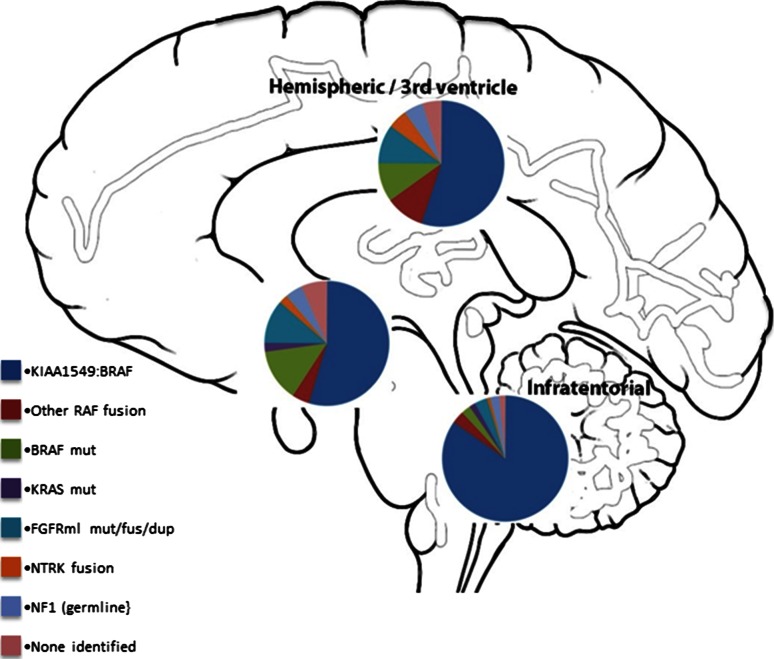
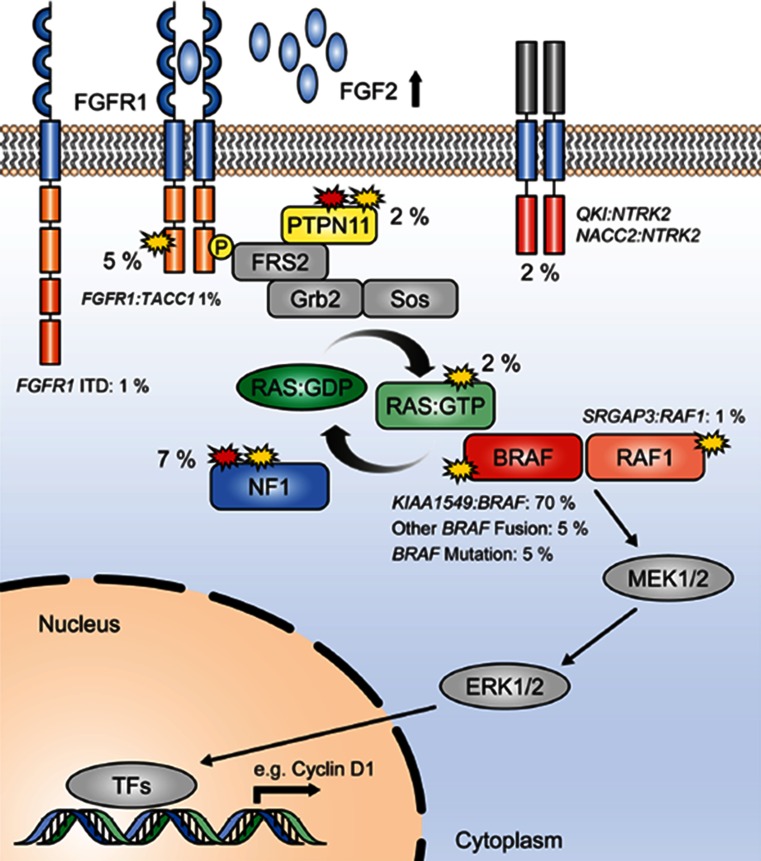
Pilocytic astrocytomas (PAs) were recognized as a discrete clinical entity over 70 years ago. They are relatively benign (WHO grade I) and have, as a group, a 10-year survival of over 90%. Many require merely surgical removal and only very infrequently do they progress to more malignant gliomas. While most show classical morphology, they may present a spectrum of morphological patterns, and there are difficult cases that show similarities to other gliomas, some of which are malignant and require aggressive treatment. Until recently, almost nothing was known about the molecular mechanisms involved in their development. The use of high-throughput sequencing techniques interrogating the whole genome has shown that single abnormalities of the mitogen-activating protein kinase (MAPK) pathway are exclusively found in almost all cases, indicating that PA represents a one-pathway disease. The most common mechanism is a tandem duplication of a ≈2 Mb-fragment of #7q, giving rise to a fusion between two genes, resulting in a transforming fusion protein, consisting of the N-terminus of KIAA1549 and the kinase domain of BRAF. Additional infrequent fusion partners have been identified, along with other abnormalities of the MAP-K pathway, affecting tyrosine kinase growth factor receptors at the cell surface (e.g., FGFR1) as well as BRAF V600E, KRAS, and NF1 mutations among others. However, while the KIAA1549-BRAF fusion occurs in all areas, the incidence of the various other mutations identified differs in PAs that develop in different regions of the brain. Unfortunately, from a diagnostic standpoint, almost all mutations found have been reported in other brain tumor types, although some retain considerable utility. These molecular abnormalities will be reviewed, and the difficulties in their potential use in supporting a diagnosis of PA, when the histopathological findings are equivocal or in the choice of individualized therapy, will be discussed.
Overview
The claims and statistics of this paper haven’t been checked yet.
Free: it reads the open-access text and checks the first 5 claims that cite a source we can check. Create a free account to check every claim.
Integrity signals
Registry
Cites
Statistics
Figures
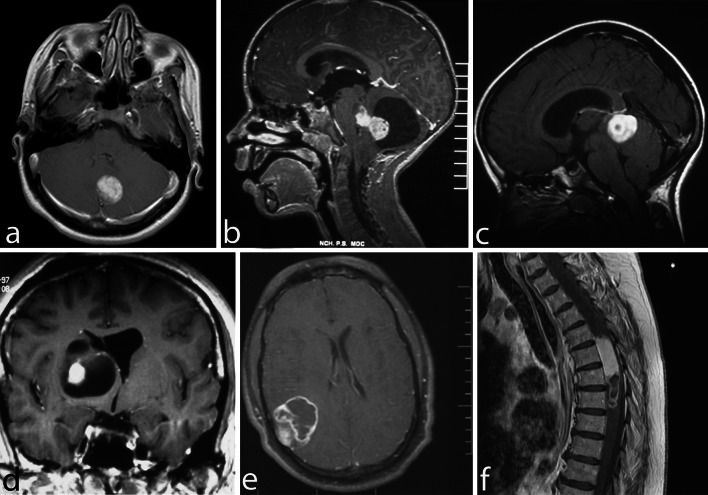
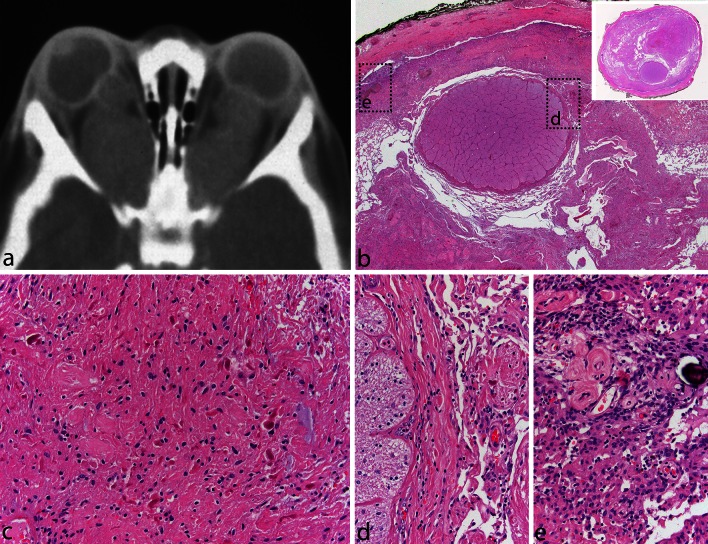
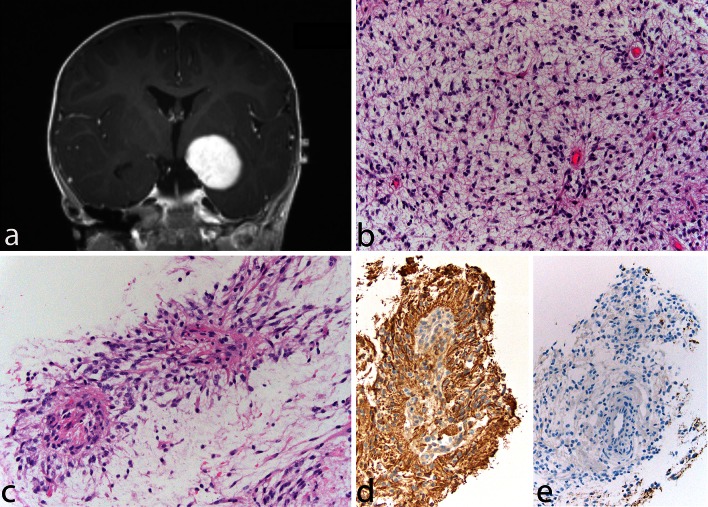
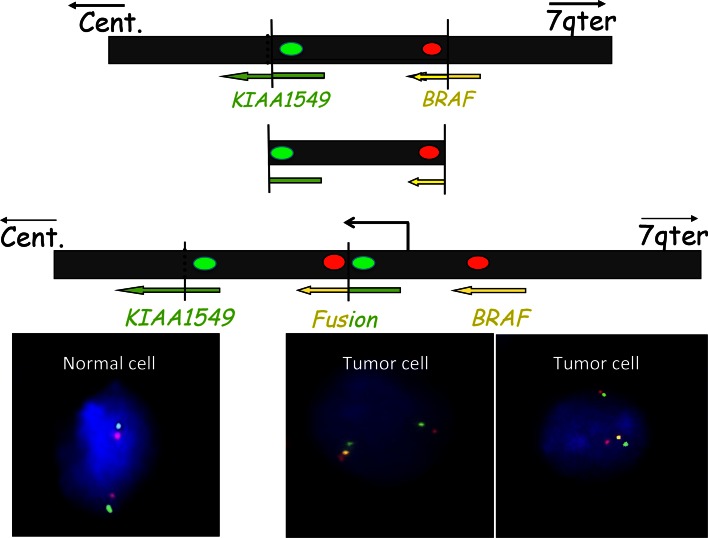
Verification
Claims the paper makes
The claims and statistics of this paper haven’t been checked yet.
Free: it reads the open-access text and checks the first 5 claims that cite a source we can check. Create a free account to check every claim.
Claims other papers make about this one
Each is checked against this paper’s own text: does it say what the citing paper says it does?
The source backs part of the claim, not all of it — or backs it for a different population, condition or comparison.
In the citing paper
“Grade 1 PA (PT2105 and IPTO2105) did not exhibit significant CNVs, which may be attributed to PA being a relatively benign tumor.26”
From Individualized patient tumor organoids faithfully preserve human brain tumor ecosystems and predict patient response to therapy (2025) · cites this paper as [26]
Experimental — accuracy not yet measured
Self-check
Percentages, sums and reported differences re-computed from the paper’s own numbers.
The self-check needs the paper’s full text.
Citations
Cites
The 2007 WHO Classification of Tumours of the Central Nervous System
Louis, D. N., Ohgaki, H., Wiestler, O. D., Cavenee, W. K., Burger, P. C., Jouvet, A., Scheithauer, B. W., & Kleihues, P. (2007) · Acta Neuropathologica · doi:10.1007/s00401-007-0243-4 · Cited by 15,397
Ostrom, Q. T., Gittleman, H., Farah, P., Ondracek, A., Chen, Y., Wolinsky, Y., Stroup, N. E., Kruchko, C., & Barnholtz-Sloan, J. S. (2013) · Neuro-Oncology · doi:10.1093/neuonc/not151 · Cited by 11,994
Ostrom, Q. T., Gittleman, H., Liao, P., Rouse, C., Chen, Y., Dowling, J., Wolinsky, Y., Kruchko, C., & Barnholtz-Sloan, J. (2014) · Neuro-Oncology · doi:10.1093/neuonc/nou223 · Cited by 1,718
Ohgaki, H., & Kleihues, P. (2005) · Journal of Neuropathology & Experimental Neurology · doi:10.1093/jnen/64.6.479 · Cited by 1,381
Assessing symptom distress in cancer patients: The M. D. Anderson Symptom Inventory
Cleeland, C. S., Mendoza, T. R., Wang, X. S., Chou, C., Harle, M. T., Morrissey, M., & Engstrom, M. C. (2000) · Cancer · doi:10.1002/1097-0142(20001001)89:7<1634::aid-cncr29>3.0.co;2-v · Cited by 1,360
Von Recklinghausen Neurofibromatosis
Riccardi, V. M. (1981) · New England Journal of Medicine · doi:10.1056/nejm198112313052704 · Cited by 1,344
the St. Jude Children's Research Hospital–Washington University Pediatric Cancer Genome Project (2014) · Nature Genetics · doi:10.1038/ng.2938 · Cited by 1,105
Guidelines for the diagnosis and management of individuals with neurofibromatosis 1
Ferner, R. E., Huson, S. M., Thomas, N., Moss, C., Willshaw, H., Evans, D. G., Upadhyaya, M., Towers, R., Gleeson, M., Steiger, C., et al. (2007) · Journal of Medical Genetics · doi:10.1136/jmg.2006.045906 · Cited by 1,053
Schindler, G., Capper, D., Meyer, J., Janzarik, W., Omran, H., Herold-Mende, C., Schmieder, K., Wesseling, P., Mawrin, C., Hasselblatt, M., et al. (2011) · Acta Neuropathologica · doi:10.1007/s00401-011-0802-6 · Cited by 1,034
Jones, D. T. W., Kocialkowski, S., Liu, L., Pearson, D. M., Bäcklund, L. M., Ichimura, K., & Collins, V. P. (2008) · Cancer Research · doi:10.1158/0008-5472.can-08-2097 · Cited by 944
Self-citationGrading of astrocytomas: A simple and reproducible method
Daumas-Duport, C., Scheithauer, B., O'Fallon, J., & Kelly, P. (1988) · Cancer · doi:10.1002/1097-0142(19881115)62:10<2152::aid-cncr2820621015>3.0.co;2-t · Cited by 891
Whole-genome sequencing identifies genetic alterations in pediatric low-grade gliomas
the St. Jude Children's Research Hospital–Washington University Pediatric Cancer Genome Project (2013) · Nature Genetics · doi:10.1038/ng.2611 · Cited by 835
Recurrent somatic alterations of FGFR1 and NTRK2 in pilocytic astrocytoma
the International Cancer Genome Consortium PedBrain Tumor Project, Jones, D. T. W., Hutter, B., Jäger, N., Korshunov, A., Kool, M., Warnatz, H.-J., Zichner, T., Lambert, S. R., Ryzhova, M., et al. (2013) · Nature Genetics · doi:10.1038/ng.2682 · Cited by 825
Self-citationRoberts, A. E., Allanson, J. E., Tartaglia, M., & Gelb, B. D. (2013) · The Lancet · doi:10.1016/s0140-6736(12)61023-x · Cited by 793
Transforming Fusions of FGFR and TACC Genes in Human Glioblastoma
Singh, D., Chan, J. M., Zoppoli, P., Niola, F., Sullivan, R., Castano, A., Liu, E. M., Reichel, J., Porrati, P., Pellegatta, S., et al. (2012) · Science · doi:10.1126/science.1220834 · Cited by 789
Tumor adaptation and resistance to RAF inhibitors
Lito, P., Rosen, N., & Solit, D. B. (2013) · Nature Medicine · doi:10.1038/nm.3392 · Cited by 585 · cited 1×
“This may be explained by the fact that in BRAF/RAF dimers, where one of the two protomers has bound the drug, the non-drug-bound RAF becomes highly activated with increased ERK signaling (for a recent review of tumor responses to RAF family inhibitors see [41]).”
BackgroundLouis, D. N., Perry, A., Burger, P., Ellison, D. W., Reifenberger, G., von Deimling, A., Aldape, K., Brat, D., Collins, V. P., Eberhart, C., et al. (2014) · Brain Pathology · doi:10.1111/bpa.12171 · Cited by 580
Self-citationBRAF gene duplication constitutes a mechanism of MAPK pathway activation in low-grade astrocytomas
Pfister, S., Janzarik, W. G., Remke, M., Ernst, A., Werft, W., Becker, N., Toedt, G., Wittmann, A., Kratz, C., Olbrich, H., et al. (2008) · Journal of Clinical Investigation · doi:10.1172/jci33656 · Cited by 523
Capper, D., Preusser, M., Habel, A., Sahm, F., Ackermann, U., Schindler, G., Pusch, S., Mechtersheimer, G., Zentgraf, H., & von Deimling, A. (2011) · Acta Neuropathologica · doi:10.1007/s00401-011-0841-z · Cited by 472
The RAS/MAPK syndromes: novel roles of the RAS pathway in human genetic disorders
Aoki, Y., Niihori, T., Narumi, Y., Kure, S., & Matsubara, Y. (2008) · Human Mutation · doi:10.1002/humu.20748 · Cited by 365
von Recklinghausen Neurofibromatosis
Lewis, R. A., Gerson, L. P., Axelson, K. A., Riccardi, V. M., & Whitford, R. P. (1984) · Ophthalmology · doi:10.1016/s0161-6420(84)34217-8 · Cited by 354
PTEN mutations in gliomas and glioneuronal tumors
Duerr, E.-M., Rollbrocker, B., Hayashi, Y., Peters, N., Meyer-Puttlitz, B., Louis, D. N., Schramm, J., Wiestler, O. D., Parsons, R., Eng, C., et al. (1998) · Oncogene · doi:10.1038/sj.onc.1201756 · Cited by 344
Pediatric Astrocytomas with Monomorphous Pilomyxoid Features and a Less Favorable Outcome
Tihan, T., Fisher, P. G., Kepner, J. L., Godfraind, C., McComb, R. D., Goldthwaite, P. T., & Burger, P. C. (1999) · Journal of Neuropathology & Experimental Neurology · doi:10.1097/00005072-199910000-00004 · Cited by 323
Jones, D. T. W., Kocialkowski, S., Liu, L., Pearson, D. M., Ichimura, K., & Collins, V. P. (2009) · Oncogene · doi:10.1038/onc.2009.73 · Cited by 321
Self-citationForshew, T., Tatevossian, R. G., Lawson, A. R., Ma, J., Neale, G., Ogunkolade, B. W., Jones, T. A., Aarum, J., Dalton, J., Bailey, S., et al. (2009) · The Journal of Pathology · doi:10.1002/path.2558 · Cited by 304
Sievert, A. J., Lang, S.-S., Boucher, K. L., Madsen, P. J., Slaunwhite, E., Choudhari, N., Kellet, M., Storm, P. B., & Resnick, A. C. (2013) · Proceedings of the National Academy of Sciences · doi:10.1073/pnas.1219232110 · Cited by 285
A population-based study of the incidence and survival rates in patients with pilocytic astrocytoma
Burkhard, C., Di Patre, P.-L., Schüler, D., Schüler, G., Yaşargil, M. G., Yonekawa, Y., Lütolf, U. M., Kleihues, P., & Ohgaki, H. (2003) · Journal of Neurosurgery · doi:10.3171/jns.2003.98.6.1170 · Cited by 279
Frequent Gains at Chromosome 7q34 Involving BRAF in Pilocytic Astrocytoma
Bar, E. E., Lin, A., Tihan, T., Burger, P. C., & Eberhart, C. G. (2008) · Journal of Neuropathology & Experimental Neurology · doi:10.1097/nen.0b013e3181845622 · Cited by 261
Epithelioid GBMs Show a High Percentage of BRAF V600E Mutation
Kleinschmidt-DeMasters, B. K., Aisner, D. L., Birks, D. K., & Foreman, N. K. (2013) · American Journal of Surgical Pathology · doi:10.1097/pas.0b013e31827f9c5e · Cited by 260
Sievert, A. J., Jackson, E. M., Gai, X., Hakonarson, H., Judkins, A. R., Resnick, A. C., Sutton, L. N., Storm, P. B., Shaikh, T. H., & Biegel, J. A. (2009) · Brain Pathology · doi:10.1111/j.1750-3639.2008.00225.x · Cited by 255
Schiffman, J. D., Hodgson, J. G., VandenBerg, S. R., Flaherty, P., Polley, M.-Y. C., Yu, M., Fisher, P. G., Rowitch, D. H., Ford, J. M., Berger, M. S., et al. (2010) · Cancer Research · doi:10.1158/0008-5472.can-09-1851 · Cited by 251
Pleomorphic Xanthoastrocytoma: Natural History and Long‐Term Follow‐Up
Ida, C. M., Rodriguez, F. J., Burger, P. C., Caron, A. A., Jenkins, S. M., Spears, G. M., Aranguren, D. L., Lachance, D. H., & Giannini, C. (2015) · Brain Pathology · doi:10.1111/bpa.12217 · Cited by 246
Self-citationCin, H., Meyer, C., Herr, R., Janzarik, W. G., Lambert, S., Jones, D. T. W., Jacob, K., Benner, A., Witt, H., Remke, M., et al. (2011) · Acta Neuropathologica · doi:10.1007/s00401-011-0817-z · Cited by 234
Self-citationSpinal cord astrocytoma: pathological and treatment considerations
Minehan, K. J., Shaw, E. G., Scheithauer, B. W., Davis, D. L., & Onofrio, B. M. (1995) · Journal of Neurosurgery · doi:10.3171/jns.1995.83.4.0590 · Cited by 214
The Cerebellar Astrocytomas: A Report on 98 Verified Cases
Gol, A., & McKissock, W. (1959) · Journal of Neurosurgery · doi:10.3171/jns.1959.16.3.0287 · Cited by 191
Gliomas in Neurofibromatosis Type 1: A Clinicopathologic Study of 100 Patients
Rodriguez, F. J., Perry, A., Gutmann, D. H., O'Neill, B. P., Leonard, J., Bryant, S., & Giannini, C. (2008) · Journal of Neuropathology & Experimental Neurology · doi:10.1097/nen.0b013e318165eb75 · Cited by 190
Self-citationJacob, K., Albrecht, S., Sollier, C., Faury, D., Sader, E., Montpetit, A., Serre, D., Hauser, P., Garami, M., Bognar, L., et al. (2009) · British Journal of Cancer · doi:10.1038/sj.bjc.6605179 · Cited by 186
Chappé, C., Padovani, L., Scavarda, D., Forest, F., Nanni‐Metellus, I., Loundou, A., Mercurio, S., Fina, F., Lena, G., Colin, C., et al. (2013) · Brain Pathology · doi:10.1111/bpa.12048 · Cited by 185
Cellular Proliferation in Pilocytic and Diffuse Astrocytomas
Giannini, C., Scheithauer, B. W., Burger, P. C., Christensen, M. R., Wollan, P. C., Sebo, T. J., Forsyth, P. A., & Hayostek, C. J. (1999) · Journal of Neuropathology and Experimental Neurology · doi:10.1097/00005072-199901000-00006 · Cited by 185
Self-citationIntracranial gliomas in neurofibromatosis type 1
Listernick, R., Charrow, J., & Gutmann, D. H. (1999) · American Journal of Medical Genetics · doi:10.1002/(sici)1096-8628(19990326)89:1<38::aid-ajmg8>3.0.co;2-m · Cited by 176
Distinct Genetic Signatures among Pilocytic Astrocytomas Relate to Their Brain Region Origin
Sharma, M. K., Mansur, D. B., Reifenberger, G., Perry, A., Leonard, J. R., Aldape, K. D., Albin, M. G., Emnett, R. J., Loeser, S., Watson, M. A., et al. (2007) · Cancer Research · doi:10.1158/0008-5472.can-06-0973 · Cited by 175
Prognosis and Treatment of Spinal Cord Astrocytoma
Minehan, K. J., Brown, P. D., Scheithauer, B. W., Krauss, W. E., & Wright, M. P. (2009) · International Journal of Radiation Oncology*Biology*Physics · doi:10.1016/j.ijrobp.2008.04.060 · Cited by 168
Tumours of the central nervous system
(2021) · Oxford Desk Reference: Oncology · doi:10.1093/med/9780198745440.003.0004 · Cited by 165
Anaplasia in Pilocytic Astrocytoma Predicts Aggressive Behavior
Rodríguez, F. J., Scheithauer, B. W., Burger, P. C., Jenkins, S. M., & Giannini, C. (2010) · The American Journal of Surgical Pathology · doi:10.1097/pas.0b013e3181c75238 · Cited by 138
Self-citationGutmann, D. H., McLellan, M. D., Hussain, I., Wallis, J. W., Fulton, L., Fulton, R. S., Magrini, V. J., Demeter, R., Wylie, T., Kandoth, C., et al. (2012) · Genome Research · doi:10.1101/gr.142604.112 · Cited by 130
Lambert, S. R., Witt, H., Hovestadt, V., Zucknick, M., Kool, M., Pearson, D. M., Korshunov, A., Ryzhova, M. V., Ichimura, K., Jabado, N., et al. (2013) · Acta Neuropathologica · doi:10.1007/s00401-013-1124-7 · Cited by 126
Self-citationAnalysis of pilocytic astrocytoma by comparative genomic hybridization
Sanoudou, D., Tingby, O., Ferguson-Smith, M. A., Collins, V. P., & Coleman, N. (2000) · British Journal of Cancer · doi:10.1054/bjoc.1999.1066 · Cited by 101
Self-citationSharif, S., Upadhyaya, M., Ferner, R. E., Majounie, E., Shenton, A., Baser, M., Thakker, N., & Evans, D. G. (2011) · Journal of Medical Genetics · doi:10.1136/jmg.2010.081760 · Cited by 99
FGFR1 Mutations in Rosette-Forming Glioneuronal Tumors of the Fourth Ventricle
Gessi, M., Moneim, Y. A., Hammes, J., Goschzik, T., Scholz, M., Denkhaus, D., Waha, A., & Pietsch, T. (2014) · Journal of Neuropathology & Experimental Neurology · doi:10.1097/nen.0000000000000080 · Cited by 88
Colin, C., Padovani, L., Chappé, C., Mercurio, S., Scavarda, D., Loundou, A., Frassineti, F., André, N., Bouvier, C., Korshunov, A., et al. (2013) · Neuropathology and Applied Neurobiology · doi:10.1111/nan.12013 · Cited by 87
Jones, D., Ichimura, K., Liu, L., Pearson, D. M., Plant, K., & Collins, V. P. (2006) · Journal of Neuropathology & Experimental Neurology · doi:10.1097/01.jnen.0000240465.33628.87 · Cited by 86
Self-citationRate of spontaneous hemorrhage in histologically proven cases of pilocytic astrocytoma
White, J. B., Piepgras, D. G., Scheithauer, B. W., & Parisi, J. E. (2008) · Journal of neurosurgery · doi:10.3171/jns/2008/108/2/0223 · Cited by 82
Tchoghandjian, A., Fernandez, C., Colin, C., Ayachi, I. E., Voutsinos‐Porche, B., Fina, F., Scavarda, D., Piercecchi‐Marti, M., Intagliata, D., Ouafik, L., et al. (2009) · Brain · doi:10.1093/brain/awp048 · Cited by 74
Ceppa, E. P., Bouffet, É., Griebel, R., Robinson, C. A., & Tihan, T. (2006) · Journal of Neuro-Oncology · doi:10.1007/s11060-006-9216-z · Cited by 74
Spectrum of Pilomyxoid Astrocytomas: Intermediate Pilomyxoid Tumors
Johnson, M. W., Eberhart, C. G., Perry, A., Tihan, T., Cohen, K. J., Rosenblum, M. K., Rais‐Bahrami, S., Goldthwaite, P. T., & Burger, P. C. (2010) · The American Journal of Surgical Pathology · doi:10.1097/pas.0b013e3181fd66c3 · Cited by 72
Further Evidence for a Somatic KRAS Mutation in a Pilocytic Astrocytoma
Janzarik, W., Kratz, C., Loges, N., Olbrich, H., Klein, C., Schäfer, T., Scheurlen, W., Roggendorf, W., Weiller, C., Niemeyer, C., et al. (2007) · Neuropediatrics · doi:10.1055/s-2007-984451 · Cited by 71
KIAA1549‐BRAF Fusions and IDH Mutations Can Coexist in Diffuse Gliomas of Adults
Badiali, M., Gleize, V., Paris, S., Moi, L., Elhouadani, S., Arcella, A., Morace, R., Antonelli, M., Buttarelli, F. R., Figarella‐Branger, D., et al. (2012) · Brain Pathology · doi:10.1111/j.1750-3639.2012.00603.x · Cited by 69
Wu, J., Dombi, E., Jousma, E., Scott Dunn, R., Lindquist, D., Schnell, B. M., Kim, M., Kim, A., Widemann, B. C., Cripe, T. P., et al. (2012) · Pediatric Blood & Cancer · doi:10.1002/pbc.23015 · Cited by 65
Persistence and late malignant transformation of childhood cerebellar astrocytoma
Alpers, C. E., Davis, R. L., & Wilson, C. B. (1982) · Journal of neurosurgery · doi:10.3171/jns.1982.57.4.0548 · Cited by 56
Structure, Nature and Classification of the Cerebellar Astrocytomas
Bucy, P. C., & Gustafson, W. A. (1939) · American Journal of Cancer · doi:10.1158/ajc.1939.327 · Cited by 56
BRAF Alterations Are Frequent in Cerebellar Low-Grade Astrocytomas With Diffuse Growth Pattern
Ida, C. M., Lambert, S. R., Rodríguez, F. J., Voss, J. S., Cann, B. E. M., Seys, A. R., Halling, K. C., Collins, V. P., & Giannini, C. (2012) · Journal of Neuropathology & Experimental Neurology · doi:10.1097/nen.0b013e31825c448a · Cited by 45
Self-citationTumor development in three patients with Noonan syndrome
Fryssira, H., Leventopoulos, G., Psoni, S., Kitsiou‐Tzeli, S., Stavrianeas, N. G., & Kanavakis, E. (2007) · European Journal of Pediatrics · doi:10.1007/s00431-007-0636-3 · Cited by 43
Bolcekova, A., Némethová, M., Zaťková, A., Hlinkova, K., Pozgayova, S., Hlavatá, A., Kádasi, L., Durovcikova, D., Gerinec, A., Husáková, K., et al. (2013) · Neoplasma · doi:10.4149/neo_2013_084 · Cited by 42
KIAA1549:BRAFfusion gene in pediatric brain tumors of various histogenesis
Antonelli, M., Badiali, M., Moi, L., Buttarelli, F. R., Baldi, C., Massimino, M., Sanson, M., & Giangaspero, F. (2014) · Pediatric Blood & Cancer · doi:10.1002/pbc.25272 · Cited by 39
Hainfellner, J. A., Louis, D. N., Perry, A., & Wesseling, P. (2014) · Brain Pathology · doi:10.1111/bpa.12187 · Cited by 31
Cerebellar astrocytomas. Part II. Pathologic features indicative of malignancy.
Ilgren, E. B., & Stiller, C. A. (1987) · PubMed · Cited by 29
The 2007 WHO ClassiWcation of Tumours of the Central Nervous System
Louis, D. N., Ohgaki, H., Wiestler, O. D., Cavenee, W. K., Burger, P. C., Jouvet, A., Scheithauer, B. W., & Kleihues, P. (2007) · Cited by 25
Böhner, G., Masuhr, F., Distl, R., Katchanov, J., Klingebiel, R., Zschenderlein, R., von Deimling, A., & van Landeghem, F. K. H. (2005) · Acta Neuropathologica · doi:10.1007/s00401-005-1051-3 · Cited by 24
Identification of transcriptional regulatory networks specific to pilocytic astrocytoma
Deshmukh, H., Yu, J., Shaik, J. S., MacDonald, T. J., Perry, A., Payton, J. E., Gutmann, D. H., Watson, M. A., & Nagarajan, R. (2011) · BMC Medical Genomics · doi:10.1186/1755-8794-4-57 · Cited by 20
Katsetos, C. D., Krishna, L., Friedberg, E. C., Reidy, J., Karkavelas, G., & Savory, J. (1994) · PubMed · Cited by 15
Optic nerve pilomyxoid astrocytoma in a patient with Noonan syndrome
Nair, S., Fort, J. A., Yachnis, A. T., & Williams, C. A. (2015) · Pediatric Blood & Cancer · doi:10.1002/pbc.25382 · Cited by 13
Tumours of the Central Nervous System
Liberski, P. P. (2013) · Springer eBooks · doi:10.1007/978-3-642-39168-2_6 · Cited by 12
Kebir, S., Schafer, N., Mack, F., Schaub, C., Niessen, M., Stoffels, G., Galldiks, N., Langen, K., Glas, M., & Herrlinger, U. (2014) · Neuro-Oncology · doi:10.1093/neuonc/nou174.313 · Cited by 6
(2009) · Brain Pathology · doi:10.1111/j.1750-3639.2009.00298.x · Cited by 4
A clinicopathologic reappraisal of brain stem tumor classification
Fisher, P. G., Breiter, S. N., Carson, B. S., Wharam, M. D., Williams, J. A., WEINGART, J. D., Foer, D. R., Goldthwaite, P. T., Tihan, T., & Burger, P. C. (2000) · Cancer · doi:10.1002/1097-0142(20001001)89:7<1569::aid-cncr22>3.0.co;2-0
Cited by
Standards and Guidelines for the Interpretation and Reporting of Sequence Variants in Cancer
Li, M. M., Datto, M., Duncavage, E. J., Kulkarni, S., Lindeman, N. I., Roy, S., Tsimberidou, A. M., Vnencak-Jones, C. L., Wolff, D. J., Younes, A., et al. (2017) · The Journal of Molecular Diagnostics · doi:10.1016/j.jmoldx.2016.10.002 · Cited by 2,030
WHO 2016 Classification of gliomas
Wesseling, P., & Capper, D. (2018) · Neuropathology and Applied Neurobiology · doi:10.1111/nan.12432 · Cited by 795
Integrated Molecular and Clinical Analysis of 1,000 Pediatric Low-Grade Gliomas
Ryall, S., Zapotocky, M., Fukuoka, K., Nobre, L., Guerreiro Stucklin, A., Bennett, J., Siddaway, R., Li, C., Pajovic, S., Arnoldo, A., et al. (2020) · Cancer Cell · doi:10.1016/j.ccell.2020.03.011 · Cited by 474
Pediatric low-grade glioma in the era of molecular diagnostics
Ryall, S., Tabori, U., & Hawkins, C. (2020) · Acta Neuropathologica Communications · doi:10.1186/s40478-020-00902-z · Cited by 351
Histologic classification of gliomas
(2016) · Handbook of Clinical Neurology · doi:10.1016/b978-0-12-802997-8.00005-0 · Cited by 297
Metadata
- Authors
- Collins, V. P., Jones, D. T. W., & Giannini, C.
- Affiliations
- University of Cambridge (GB)
- German Cancer Research Center (DE)
- Mayo Clinic (US)
- Corresponding author
- Collins, V. Peter
- Venue
- Acta Neuropathologica
- Published
- 2015-03-20
- Volume
- 129
- Issue
- 6
- Pages
- 775-788
- ISSN
- 0001-6322 (ISSN-L)
- 1432-0533
- PMC
- PMC4436848
- OpenAlex
- W1974545426
- Cited by
- 445
- References
- 75
- Citations by year
- 2026: 18 · 2025: 36 · 2024: 51 · 2023: 53 · 2022: 53 · 2021: 43 · 2020: 48 · 2019: 43 · 2018: 36 · 2017: 28 · 2016: 29 · 2015: 5
- FWCI
- 4.59
- Type
- journal article
- Language
- en
- Open access
- hybrid
- doi.org
- Locations
- Acta Neuropathologica (publishedVersion, cc-by)
- PubMed Central (publishedVersion, cc-by)
- PubMed (publishedVersion)
- Archivio istituzionale della ricerca (Alma Mater Studiorum Università di Bologna) (submittedVersion)
- Funders
- Brain Tumour Charity (10/140)
- National Cancer Institute (CA108961-09, P50CA108961)
- Topics
- Health Sciences › Medicine › Oncology › Glioma Diagnosis and Treatment
- Life Sciences › Biochemistry, Genetics and Molecular Biology › Cancer Research › Cancer Genomics and Diagnostics
- Life Sciences › Biochemistry, Genetics and Molecular Biology › Molecular Biology › Chromatin Remodeling and Cancer
- Keywords
- pilocytic astrocytoma, MAPK signaling, KIAA1549-BRAF fusion, BRAF V600E mutation, FGFR1, KRAS mutation, NF1 mutation, molecular markers, histopathological diagnosis, pediatric brain tumors
- MeSH terms
- Astrocytoma, Humans, Models, Molecular, Molecular Biology, Central Nervous System Neoplasms, Genetic Predisposition to Disease, Neuroimaging
About these checks
Registry, retraction, Cites and statistics results are computed, not judged, with one exception: a printed reference that no index lists is read once by a model before it counts as a citation error. Claims are extracted by a model and kept only when their quote appears verbatim in the text; each cited source is then checked, with a model’s help, for whether it says what the claim relies on. Those verdicts can be wrong — read the claim’s quote and the cited source before relying on one.
Statistics and arithmetic are recomputed, not judged.
Confidence bands are shown only for fields calibrated on our annotated test set. None is calibrated yet, so no band is shown.
What counts as a claim ›How we measure confidence ›How we check this ›
Are you an author, or do you see a problem with this page? Request a review
Data sources
Bibliographic data: Semantic Scholar, OpenAlex, Crossref.
Contains information from the Semantic Scholar Academic Graph Datasets, made available under the ODC Attribution License (ODC-BY 1.0).
Semantic Scholar’s data is described in: Kinney, R., et al. (2023). The Semantic Scholar Open Data Platform. arXiv:2301.10140.
