

Second-generation molecular subgrouping of medulloblastoma: an international meta-analysis of Group 3 and Group 4 subtypes
Open accessThe DOI matches its Crossref record; 32 of the 33 references it cites were found in a registry or an index.
Abstract
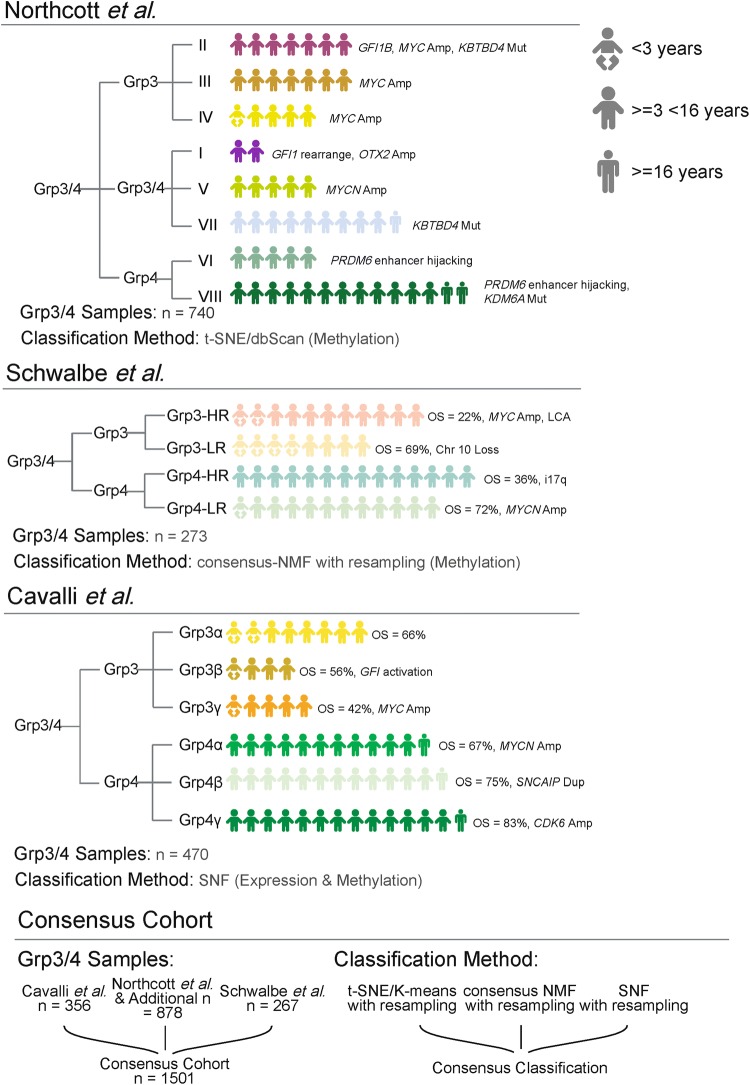
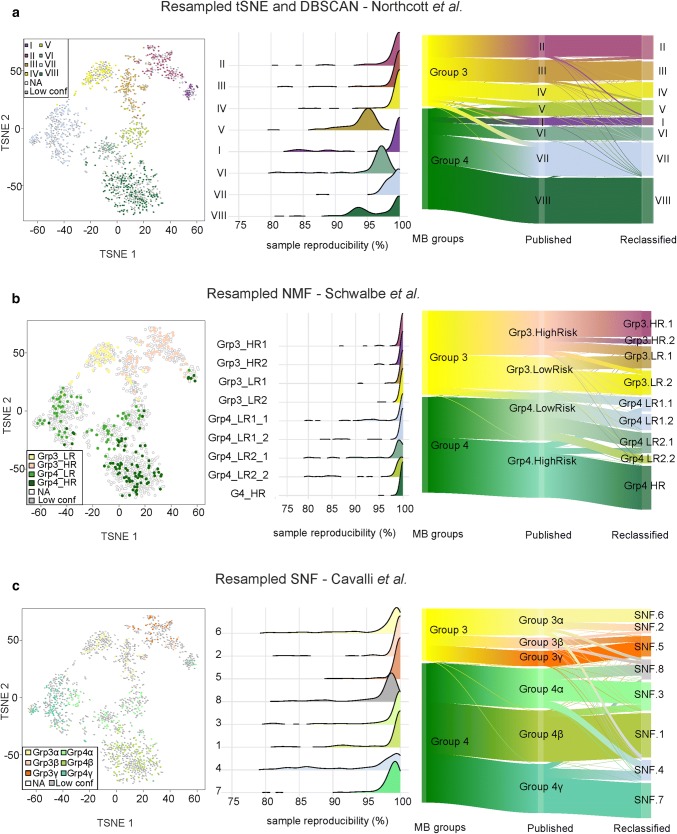
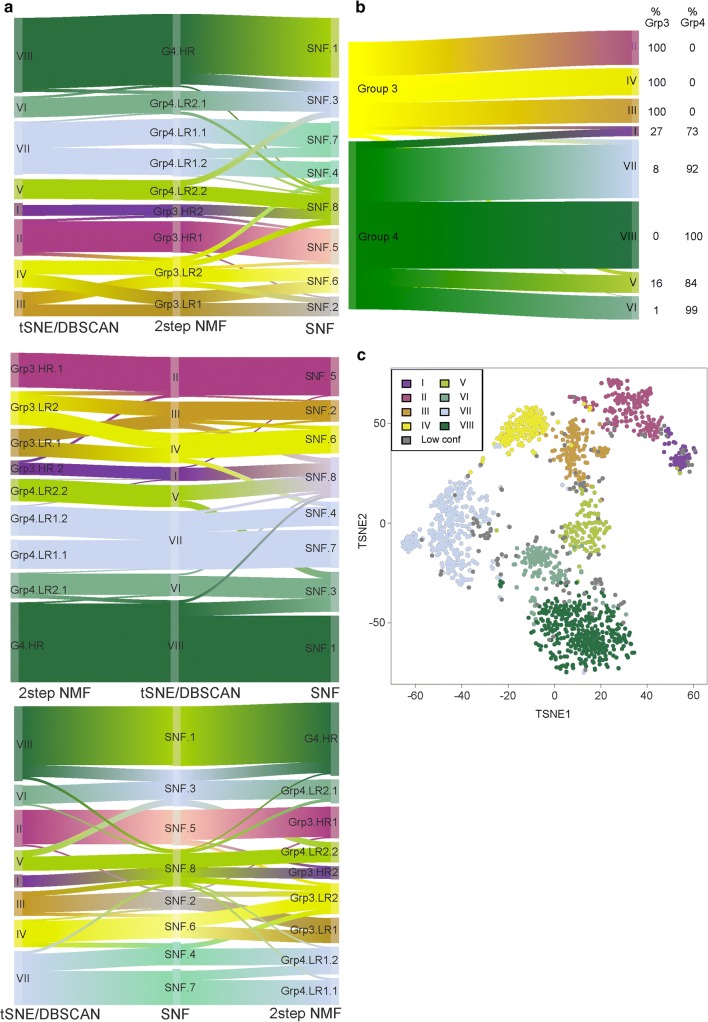
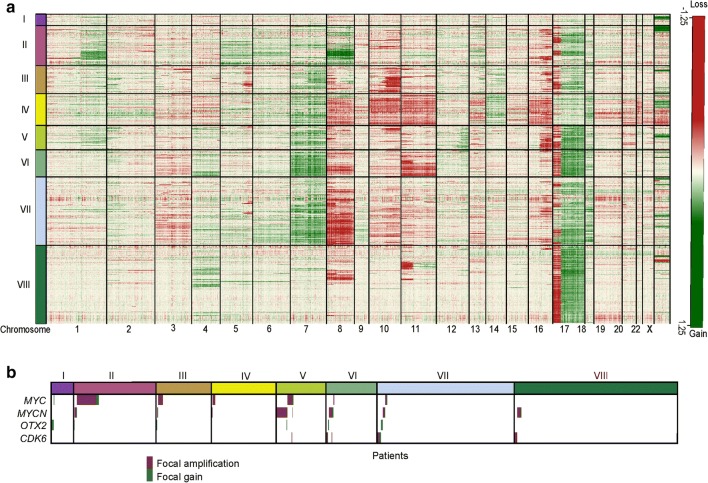
In 2012, an international consensus paper reported that medulloblastoma comprises four molecular subgroups (WNT, SHH, Group 3, and Group 4), each associated with distinct genomic features and clinical behavior. Independently, multiple recent reports have defined further intra-subgroup heterogeneity in the form of biologically and clinically relevant subtypes. However, owing to differences in patient cohorts and analytical methods, estimates of subtype number and definition have been inconsistent, especially within Group 3 and Group 4. Herein, we aimed to reconcile the definition of Group 3/Group 4 MB subtypes through the analysis of a series of 1501 medulloblastomas with DNA-methylation profiling data, including 852 with matched transcriptome data. Using multiple complementary bioinformatic approaches, we compared the concordance of subtype calls between published cohorts and analytical methods, including assessments of class-definition confidence and reproducibility. While the lowest complexity solutions continued to support the original consensus subgroups of Group 3 and Group 4, our analysis most strongly supported a definition comprising eight robust Group 3/Group 4 subtypes (types I-VIII). Subtype II was consistently identified across all component studies, while all others were supported by multiple class-definition methods. Regardless of analytical technique, increasing cohort size did not further increase the number of identified Group 3/Group 4 subtypes. Summarizing the molecular and clinico-pathological features of these eight subtypes indicated enrichment of specific driver gene alterations and cytogenetic events amongst subtypes, and identified highly disparate survival outcomes, further supporting their biological and clinical relevance. Collectively, this study provides continued support for consensus Groups 3 and 4 while enabling robust derivation of, and categorical accounting for, the extensive intertumoral heterogeneity within Groups 3 and 4, revealed by recent high-resolution subclassification approaches. Furthermore, these findings provide a basis for application of emerging methods (e.g., proteomics/single-cell approaches) which may additionally inform medulloblastoma subclassification. Outputs from this study will help shape definition of the next generation of medulloblastoma clinical protocols and facilitate the application of enhanced molecularly guided risk stratification to improve outcomes and quality of life for patients and their families.
Overview
The claims and statistics of this paper haven’t been checked yet.
Free: it reads the open-access text and checks the first 5 claims that cite a source we can check. Create a free account to check every claim.
Integrity signals
Registry
Cites
Statistics
Figures
Verification
Claims the paper makes
The claims and statistics of this paper haven’t been checked yet.
Free: it reads the open-access text and checks the first 5 claims that cite a source we can check. Create a free account to check every claim.
Claims other papers make about this one
Each is checked against this paper’s own text: does it say what the citing paper says it does?
The cited source says what the claim attributes to it.
In the citing paper
“Identification of molecular subgroups and their corresponding scores among the G3/G4 group was based on the work of Sharma and colleagues (14).”
From The Medulloblastoma Meta-Analysis Portal Enables Integrative Exploration of Clinical and Genomic Data from Patients (2025) · cites this paper as [14]
Self-check
Percentages, sums and reported differences re-computed from the paper’s own numbers.
The self-check needs the paper’s full text.
Citations
Cites
The 2016 World Health Organization Classification of Tumors of the Central Nervous System: a summary
Louis, D. N., Perry, A., Reifenberger, G., von Deimling, A., Figarella-Branger, D., Cavenee, W. K., Ohgaki, H., Wiestler, O. D., Kleihues, P., & Ellison, D. W. (2016) · Acta Neuropathologica · doi:10.1007/s00401-016-1545-1 · Cited by 15,657
The 2007 WHO Classification of Tumours of the Central Nervous System
Louis, D. N., Ohgaki, H., Wiestler, O. D., Cavenee, W. K., Burger, P. C., Jouvet, A., Scheithauer, B. W., & Kleihues, P. (2007) · Acta Neuropathologica · doi:10.1007/s00401-007-0243-4 · Cited by 15,397
Erratum to: The 2007 WHO classification of tumours of the central nervous system
Louis, D. N., Ohgaki, H., Wiestler, O. D., Cavenee, W. K., Burger, P. C., Jouvet, A., Scheithauer, B. W., & Kleihues, P. (2007) · Zurich Open Repository and Archive (University of Zurich) · doi:10.5167/uzh-156115 · Cited by 4,442
DNA methylation-based classification of central nervous system tumours
Capper, D., Jones, D. T. W., Sill, M., Hovestadt, V., Schrimpf, D., Sturm, D., Koelsche, C., Sahm, F., Chavez, L., Reuss, D. E., et al. (2018) · Nature · doi:10.1038/nature26000 · Cited by 3,033
Self-citationMolecular subgroups of medulloblastoma: the current consensus
Taylor, M. D., Northcott, P. A., Korshunov, A., Remke, M., Cho, Y.-J., Clifford, S. C., Eberhart, C. G., Parsons, D. W., Rutkowski, S., Gajjar, A., et al. (2012) · Acta Neuropathologica · doi:10.1007/s00401-011-0922-z · Cited by 1,936
Self-citationVisvader, J. E. (2011) · Nature · doi:10.1038/nature09781 · Cited by 1,449
Intertumoral Heterogeneity within Medulloblastoma Subgroups
Cavalli, F. M. G., Remke, M., Rampasek, L., Peacock, J., Shih, D. J. H., Luu, B., Garzia, L., Torchia, J., Nor, C., Morrissy, A. S., et al. (2017) · Cancer Cell · doi:10.1016/j.ccell.2017.05.005 · Cited by 1,219
Self-citationThe whole-genome landscape of medulloblastoma subtypes
Northcott, P. A., Buchhalter, I., Morrissy, A. S., Hovestadt, V., Weischenfeldt, J., Ehrenberger, T., Gröbner, S., Segura-Wang, M., Zichner, T., Rudneva, V. A., et al. (2017) · Nature · doi:10.1038/nature22973 · Cited by 1,112
Self-citationKool, M., Korshunov, A., Remke, M., Jones, D. T. W., Schlanstein, M., Northcott, P. A., Cho, Y.-J., Koster, J., Schouten-van Meeteren, A., van Vuurden, D., et al. (2012) · Acta Neuropathologica · doi:10.1007/s00401-012-0958-8 · Cited by 1,056
Self-citationSubgroup-specific structural variation across 1,000 medulloblastoma genomes
Northcott, P. A., Shih, D. J. H., Peacock, J., Garzia, L., Sorana Morrissy, A., Zichner, T., Stütz, A. M., Korshunov, A., Reimand, J., Schumacher, S. E., et al. (2012) · Nature · doi:10.1038/nature11327 · Cited by 899
Self-citation
Cited by
Items 201–300 of 365
Thompson, D., Castle, J., Sill, M., Pfister, S. M., Bailey, S., Hicks, D., Clifford, S. C., & Schwalbe, E. C. (2025) · Acta Neuropathologica Communications · doi:10.1186/s40478-025-02049-1 · Cited by 3
“Since then, further studies using larger cohorts have revealed additional subgroups within MB SHH , MB Group 3 and MB Group 4 [9–12] which, in turn, were recognised in the WHO 2021 classification [1].”
Self-citationSerra, R., & Mangraviti, A. (2021) · Child s Nervous System · doi:10.1007/s00381-020-04988-7 · Cited by 3
Medulloblastoma in adults: an analysis of clinico-pathological, molecular and treatment factors
FRANCHINO, F., MORRA, I., FORNI, M., Bertero, L., Zanini, C., ROVETA, F., RICARDI, U., MANTOVANI, C., CARPANETO, A., MIGLIORE, E., et al. (2021) · Journal of Neurosurgical Sciences · doi:10.23736/s0390-5616.21.05548-x · Cited by 3
Paul, R., Bapat, P., Deogharkar, A., Kazi, S., Singh, S. K. V., Gupta, T., Jalali, R., Epari, S., Moiyadi, A. V., Shetty, P. M., et al. (2021) · Human Molecular Genetics · doi:10.1093/hmg/ddab264 · Cited by 3
Berlow, N. (2021) · Current Protocols · doi:10.1002/cpz1.269 · Cited by 3
Central Nervous System Tumor Classification
McLendon, R. E., Yachnis, A. T., Miller, C. R., & Ng, H. (2021) · Hematology/Oncology Clinics of North America · doi:10.1016/j.hoc.2021.08.001 · Cited by 3
The Molecular Landscape of Medulloblastoma in Teenagers and Young Adults
Mohammed, O. J., Cebrero, M. E., Ahmad, O., Peet, A. C., Grundy, R. G., & Lourdusamy, A. (2022) · Cancers · doi:10.3390/cancers14010251 · Cited by 3
“In fact, recent medulloblastoma genomic studies show extensive heterogeneity of the Group 3 and Group 4 subtypes and recommend splitting them into as many as eight subtypes, with some subtypes being mixed Group 3 and Group 4 in composition [38].”
Aldighieri, M. (2020) · Nottingham ePrints (University of Nottingham) · Cited by 3
Gardner, L., Rossi, J., Armstrong, B. A., Muse, M., LaVeck, A., Blevins, M. A., Zhang, L., Ford, H. L., Zhao, R., & Wang, X. (2024) · ChemMedChem · doi:10.1002/cmdc.202400179 · Cited by 2
Mlika, M., Mokni, M., Mezni, F. E., & Rammeh, S. (2024) · Frontiers in Neurology · doi:10.3389/fneur.2024.1407572 · Cited by 2
GABAergic Influences on Medulloblastoma
Buffon, V. A., Ribas-Filho, J. M., Malafaia, O., Tassinari, I. D., Roesler, R., & Isolan, G. R. (2025) · Brain Sciences · doi:10.3390/brainsci15070746 · Cited by 2
“More recently, unique subtypes within subgroups have been identified on the basis of marked intra-and intertumoral heterogeneity [22–25].”
Genome-wide cfDNA fragmentation patterns in cerebrospinal fluid reflect medulloblastoma groups
Markowitz, A. L., Munugula, C., Christodoulou, E., Ji, J., Xu, L., Cotter, J. A., & Yellapantula, V. D. (2025) · npj Precision Oncology · doi:10.1038/s41698-025-01067-5 · Cited by 2
“Our study focused on the four consensus molecular groups of MB, but multiple recent studies have elaborated additional internal group heterogeneity not accounted for by this system 23,24 .”
la Cerda-Vargas, M. F. D., Schittenhelm, J., Ebinger, M., Zipfel, J., Beschorner, R., Tabatabai, G., & Schuhmann, M. U. (2025) · Neuro-Oncology Advances · doi:10.1093/noajnl/vdaf266 · Cited by 2
Molecular and clinical correlates of medulloblastoma subgroups: A narrative review
Coltin, H., & Ramaswamy, V. (2021) · Glioma · doi:10.4103/glioma.glioma_18_21 · Cited by 2
Self-citationNetwork Approaches for Precision Oncology
Pai, S. (2022) · Advances in experimental medicine and biology · doi:10.1007/978-3-030-91836-1_11 · Cited by 2
Williamson, D., Schwalbe, E. C., Bailey, S., & Clifford, S. C. (2023) · Neuropathology and Applied Neurobiology · doi:10.1111/nan.12903 · Cited by 2
“MBGrp3/Grp4 DNA methylation subgroups (I–VIII) [5].”
BackgroundInfluentialSelf-citationHacking, J., Thompson, D., Schwalbe, E. C., Clifford, S. C., & Williamson, D. (2023) · STAR Protocols · doi:10.1016/j.xpro.2023.102509 · Cited by 2
“It is beyond the scope of the paper to outline how this should be done and many other publications have described this.(1,2,13,14) However, if using a DNA methylation array, it would be sensible to check using the Molecular Neuropathology Classifier website (https://www.”
Self-citationDelaidelli, A., Burwag, F., Ben‐Neriah, S., Suk, Y., Shyp, T., Kosteniuk, S., Dunham, C. P., Cheng, S. S., Okonechnikov, K., Schrimpf, D., et al. (2025) · Neuro-Oncology · doi:10.1093/neuonc/noaf046 · Cited by 2
Self-citationAdult Medulloblastoma: Clinicomolecular Spectrum, An Institutional Experience
Adhvaryu, V., Gurav, M., Deshpande, G., Rumde, R., Shetty, O. A., Sahay, A., Sahu, A., Dasgupta, A., Chatterji, A., Gupta, T., et al. (2025) · International Journal of Surgical Pathology · doi:10.1177/10668969251332926 · Cited by 2
“18,19 Of the 13 WNT-activated tumors, TP53 -mutant type of immunophe-notype was observed only in one (7.6%).”
InfluentialPXA-like tumors: prognostic implications
Bhardwaj, S., Jangir, H., Singh, S., Singh, J., Sharma, M. C., Suri, A., Kedia, S., Garg, A. K., Sarkar, C., & Suri, V. S. (2025) · Child s Nervous System · doi:10.1007/s00381-025-06853-x · Cited by 2
“Utilizing “essential” or “desirable” diagnostic criteria based on DNA methylation profiles is considered vital for the efficient classification of most CNS tumors [3–8].”
The role of DNA methylation in directing treatment in medulloblastoma
Alsaedi, M. A. H., & Strathdee, G. R. (2025) · Epigenomics · doi:10.1080/17501911.2025.2554570 · Cited by 2
Probing Medulloblastoma Initiation at the Single-Cell Level
Okonechnikov, K., Pfister, S. M., & Kutscher, L. M. (2019) · Trends in cancer · doi:10.1016/j.trecan.2019.10.002 · Cited by 2
Self-citationModelling medulloblastoma pathogenesis and treatment in human cerebellar organoidsPreprint
Willott, T., Nicholson, J. G., Xiao, Y., Ogunbiyi, O. K., Draper, B., Mistry, T., Donovan, L., Zabet, N. R., Merve, A., Badodi, S., et al. (2024) · bioRxiv (Cold Spring Harbor Laboratory) · doi:10.1101/2024.08.14.607977 · Cited by 2
Investigating the role of tumour-deposited extracellular matrix in medulloblastoma progression
Johnson, J. E. C. (2022) · Nottingham ePrints (University of Nottingham) · doi:10.13140/rg.2.2.20942.78400 · Cited by 2
Gangwani, K., Lu, C., Dhanda, S. K., Sioson, E., Zaldívar Peraza, A., Matt, G. Y., Paul, R., Wang, J., Reilly, C., Acić, A., et al. (2025) · Cancer Research · doi:10.1158/0008-5472.can-24-4976 · Cited by 1
“Identification of molecular subgroups and their corresponding scores among the G3/G4 group was based on the work of Sharma and colleagues (14).”
Self-citationHou, Y., & Sahm, F. (2022) · Glioma · doi:10.4103/glioma.glioma_31_22 · Cited by 1
Basic Science of Pediatric Brain Tumors
Taccone, M. S., Srikanthan, D., Rutka, J. T., & Ramaswamy, V. (2024) · Springer eBooks · doi:10.1007/978-3-031-62017-1_7 · Cited by 1
Self-citationMedulloblastoma in children: a case report and literature review
Rojas, D. M. P., Vásquez, L. E. P., Torres, I. L. R. X., Molinares, C. M. P., & Hemandez, C. D. S. (2024) · Journal of Radiology Case Reports · doi:10.3941/jrcr.5362 · Cited by 1
Zhao, H.-G., Ren, S.-K., Zhou, W., Liu, Z., Wang, L., Tian, Y., & Zhao, F. Q. (2025) · Scientific Reports · doi:10.1038/s41598-025-00052-z · Cited by 1
Packer, R. J., & Pfister, S. M. (2025) · Elsevier eBooks · doi:10.1016/b978-0-443-10944-7.00144-x · Cited by 1
Self-citationLi, Y., Liu, H., Liu, Y., Li, J., Suzuki, H. H., Liu, Y., Jiang, T., & Qiu, X. (2025) · Chinese Neurosurgical Journal · doi:10.1186/s41016-025-00405-7 · Cited by 1
“While preliminary DL applications in MB achieved 85% subgroup classification accuracy [12, 13], critical gaps persist in current MB prognostic models, including insufficient cohort sizes for robust generalization, exclusion of high-risk genetic signatures (TP53 mutations, MYC amplification,…”
Real-life experience with a “modified-MEMMAT” regimen for relapsed medulloblastoma
Cacchione, A., Baldo, G. D., D’Antonio, F., Ruscio, V. D., Megaro, G., Pilotto, C., Tornesello, A., Cocciolo, A., Vennarini, S., Chiesa, S., et al. (2025) · Therapeutic Advances in Medical Oncology · doi:10.1177/17588359251344002 · Cited by 1
Central Nervous System Embryonal Tumors
Öztek, M. A., & Wright, J. N. (2025) · Neuroimaging Clinics of North America · doi:10.1016/j.nic.2025.08.007 · Cited by 1
Medulloblastoma chapter - past perspectives and future directions
Govender, D., de Mônaco, B. A., Dhall, G., & Thompson, E. M. (2025) · Advances in cancer research · doi:10.1016/bs.acr.2025.09.001 · Cited by 1
Power, E. A., Pumford, A. D., Kamga, L. F., Silvera, V. M., Rechberger, J. S., Wang, L., Schwartz, J. D., & Daniels, D. J. (2026) · Child s Nervous System · doi:10.1007/s00381-026-07141-y · Cited by 1
“Each of these subgroups has distinct clinicopathological features and varying prognostic implications [6, 7].”
Detection of structural DNA variants in medulloblastomas using optical genome mapping
Kubon, N., Balan, M., Koppstein, D., Praeger, S., Wolter, M., Ebert, P., Pauck, D., Felsberg, J., Beez, T., Picard, D., et al. (2026) · Acta Neuropathologica Communications · doi:10.1186/s40478-026-02245-7 · Cited by 1
“This group displayed the overall highest level of SV and CNV heterogeneity, in line with previous studies [40, 47, 52].”
Go, K., Katsuma, A., Yoshioka, E., Shofuda, T., Fukuoka, K., Ichimura, K., Matsushita, Y., Mineharu, Y., Makino, Y., Kawauchi, T., et al. (2026) · Brain Pathology · doi:10.1111/bpa.70092 · Cited by 1
“Subsequent meta-analyses reconciled these findings into eight clinically meaningful, second-generation methylation subtypes (I – VIII) spanning both groups [45, 46].”
Self-citationLiu, H., Su, Y., Zhang, J., Chen, X., Deng, K., Chen, L., Feng, J., Wu, X., Daniels, C., Li, Y., et al. (2026) · Med · doi:10.1016/j.medj.2026.101076 · Cited by 1
Self-citationWelch, R. L., Moziak, K., Zang, X., & Martin, A. L. (2026) · Frontiers in Oncology · doi:10.3389/fonc.2026.1725230 · Cited by 1
“Additional heterogeneity is currently being described to reveal subtypes within each subgroup (1, 8, 26).”
“Updates on diagnostic and prognostic molecular biomarkers of CNS tumors”
Eaton, S., Almotairi, A. R., Levine, A., & Hawkins, C. E. (2026) · Neurotherapeutics · doi:10.1016/j.neurot.2026.e01066 · Cited by 1
“Group 3 and Group 4 tumors are further refined through DNA methylation into eight distinct sub-classes (I-VIII) that provide granular prognostication [21,22].”
Innovative therapy concepts for pediatric brain tumors
Azizi, A. A., Gojo, J., & Peyrl, A. (2021) · memo - Magazine of European Medical Oncology · doi:10.1007/s12254-021-00736-y · Cited by 1
Intercambio de información entre Administraciones Públicas y derechos de defensa
Reyna, E. L. (1994) · Civitas. Revista española de derecho administrativo/Civitas. Revista española de derecho administrativo · Cited by 1
Pritha, A. N., Anderson, R. A., Anderson, D. E., & Nicolaides, T. P. (2022) · Cureus · doi:10.7759/cureus.23447 · Cited by 1
“Medulloblastoma tumors are categorized into four subgroups by the Cancer Genome Atlas (WNT, sonic hedgehog (SHH), group 3, and group 4); in spite of current treatments, 30% of patients have a relapse which portends a poor outcome [8].”
BackgroundOkonechnikov, K., Schrimpf, D., Köster, J., Sievers, P., Milde, T., Sahm, F., Jones, D., von Deimling, A., Pfister, S. M., Kool, M., et al. (2024) · Acta Neuropathologica · doi:10.1007/s00401-024-02746-6 · Cited by 1
“Thus, differentiated cell subpopulations demonstrated the largest proportions and revealed a significant association with the “consensus” Grp3 and Grp4 MB annotation [10].”
Self-citationMedulloblastomas Initiated by Homologous Recombination Defects in Mice
Lu, H., Wang, Y., Chaudhary, S., Balaga, V., Ke, H., Shi, F., Liu, J., Huo, Y., Romanienko, P. J., Xia, B., et al. (2024) · American Journal Of Pathology · doi:10.1016/j.ajpath.2024.07.018 · Cited by 1
When do I ask for a DNA methylation array for primary brain tumor diagnosis?
Barresi, V., & Poliani, P. L. (2024) · Current Opinion in Oncology · doi:10.1097/cco.0000000000001089 · Cited by 1
“…(high costs, technical and requirements for quality assurance) will be progressively overcome by indicates that the demonstration of an aligned DNA methylation profile is an essential diagnostic criterion, alternative to the demonstration of specific IDH -wildtype [4,18,23 – 25] (Table 1).”
Advances of Immunotherapies for Pediatric Brain TumorsPreprint
Li, J., Zhao, X., & Pei, Y. (2024) · Preprints.org · doi:10.20944/preprints202401.0882.v1 · Cited by 1
Joshi, K., Yuan, M., Katsushima, K., Saulnier, O., Ray, A., Amankwah, E. K., Stapleton, S. L., Jallo, G. I., Taylor, M. D., Eberhart, C. G., et al. (2024) · Research Square · doi:10.21203/rs.3.rs-4810070/v1 · Cited by 1
Self-citationMallet, M., Martin, F., Thoinet, K., Imbert, C., Sarhadi, M., Ganofsky, J., Torrejon-Diaz, J., Fenouil, T., Delloye‐Bourgeois, C., Falk, J., et al. (2025) · bioRxiv (Cold Spring Harbor Laboratory) · doi:10.1101/2025.10.09.681440 · Cited by 1
Investigating the role of Rab GTPases in medulloblastoma pathogenesis
Entwistle, S. (2024) · Nottingham ePrints (University of Nottingham) · Cited by 1
Gutiérrez Araya, D. A. (2024) · Investigative News in Education (Universidad de Costa Rica) · Cited by 1
Taylor, L. (2022) · Nottingham ePrints (University of Nottingham) · Cited by 1
Mitoko, C. A. (2021) · Nottingham ePrints (University of Nottingham) · Cited by 1
Ciliogenesis Control Mechanisms in Cerebellar Neuron Progenitors
Zanini, M. (2019) · theses.fr (ABES) · doi:10.70675/33d5044dz3becz4eeezb387z36c883ae35a7
“To cope with this problem, a recent consensus study equally leveraged either mathematical models in combination with opportune classification confidence measures on a 1500 Group3- and Group4-MBs cohort to derive an objective subtype classification (Sharma et al., 2019).”
BackgroundMethodTop ten discoveries of the year: Neurooncology
Wesseling, P. (2020) · Free Neuropathology · doi:10.17879/freeneuropathology-2020-2671
Sinalização por neurotrofinas em meduloblastoma : efeitos do bloqueio seletivo de TrkB
Thomaz, A. (2019) · LA Referencia (Red Federada de Repositorios Institucionales de Publicaciones Científicas)
Bočkaj, I. (2021) · University of Groningen research database (University of Groningen / Centre for Information Technology) · doi:10.33612/diss.156023051
Pathology and Molecular Biology of Medulloblastoma
Kaur, K., & Sarkar, C. (2021) · Springer eBooks · doi:10.1007/978-981-16-2659-3_6
Optimizing wireless network throughput via network coding and placement of small cells
Li, X. (2013) · Purdue e-Pubs (Purdue University System)
Modelling of stark effect in InAs-AlGaSb multi-quantum wells
Gopir, G. (2000)
Zagidullina, S. R., Levashov, A., Grigorenko, V. A., & Valiev, T. T. (2022) · Medical alphabet · doi:10.33667/2078-5631-2021-37-26-31
D’Angiolella, V. (2019) · Faculty Opinions – Post-Publication Peer Review of the Biomedical Literature · doi:10.3410/f.736250307.793563274
Esami citologici, istologici, immunoistochimici e genetici dei tumori del sistema nervoso centrale
Forest, F., Col, P. D., & Appay, R. (2021) · EMC - Neurologia · doi:10.1016/s1634-7072(21)45000-2
Niehusmann, P., Stensvold, E., Leske, H., Pietsch, T., Goschzik, T., Gielen, G. H., Due‐Tønnessen, B. J., Frič, R., Nilssen, Y., & Brandal, P. (2022) · Pediatric Blood & Cancer · doi:10.1002/pbc.29736
MEDULLOBLASTOMA IN A 16-YEAR-OLD PATIENT: A CLINICAL CASE
Kopochkina, S., Goncharova, A. A., Dushimova, Z., Bykovskaya, A., Tokhmoldayeva, K., & Zharaspayeva, M. (2022) · Oncologia i radiologia Kazakhstana · doi:10.52532/2521-6414-2022-2-64-39-43
MODERN CONCEPTS ON PATHOGENESIS, DIAGNOSIS AND CLASSIFICATION OF MEDULLOBLASTOMA (LITERATURE REVIEW)
Abdukholikovich, A. M., ugli, J. A. M., & Mamatkulovich, M. A. (2022) · JOURNAL OF NEUROLOGY AND NEUROSURGICAL RESEARCH · doi:10.5281/zenodo.7113398
Magnetic resonance-guided radiotherapy in pediatric cancers
Janssens, G. O. R. J., Hall, M. D., Kroon, P. S., Mittauer, K. E., & Seravalli, E. (2022) · Advances in magnetic resonance technology and applications · doi:10.1016/b978-0-323-91689-9.00021-2
Delaidelli, A., Dunham, C. P., Santi, M., Negri, G. L., Triscott, J., Zheludkova, O., Голанов, А. В., Ryzhova, M. V., Okonechnikov, K., Schrimpf, D., et al. (2023) · doi:10.1158/1078-0432.c.6531056
Self-citationDelaidelli, A., Dunham, C. P., Santi, M., Negri, G. L., Triscott, J., Zheludkova, O., Голанов, А. В., Ryzhova, M. V., Okonechnikov, K., Schrimpf, D., et al. (2023) · doi:10.1158/1078-0432.c.6531056.v1
Self-citationMochizuki, A. Y., & Partap, S. (2023) · doi:10.1093/med/9780197573778.003.0016
A Posterior Fossa Mass in a 6-Year-Old
Baker, T. G., & Smith, M. T. (2020) · AJSP Review and Reports · doi:10.1097/pcr.0000000000000366
Wichtige Neuerungen in der WHO-Klassifikation der ZNS-Tumoren mit neuroradiologischer Relevanz
Nafe, R., Samp, P. F., & Hattingen, E. (2023) · Radiologie up2date · doi:10.1055/a-2067-1148
“Es besteht eine leichte Dominanz für das weibliche Ge-schlecht bei Pineozytomen, beim PPTID und beim Pineo-blastom-Subtyp 1, sowie eine Dominanz des männlichen Geschlechts bei den Pineoblastom-Subtypen 2 und 3”
BackgroundClinical impact of molecular genetic testing in pediatric oncology
Dinikina, Y. V., Имянитов, Е. Н., Suspitsin, E. N., Zheludkova, O., Nikitina, I. L., & Belogurova, M. B. (2024) · Meditsinskiy sovet = Medical Council · doi:10.21518/ms2023-416
Dinikina, Y. V., Zheludkova, O., Belogurova, M. B., Spelnikov, D., Osipov, N. N., & Nikitina, I. L. (2024) · Journal of Modern Oncology · doi:10.26442/18151434.2023.4.202521
Wichtige Neuerungen in der WHO-Klassifikation der ZNS-Tumoren mit neuroradiologischer Relevanz
Nafe, R., Samp, P. F., & Hattingen, E. (2024) · Neurologie up2date · doi:10.1055/a-2232-9091
“Meist sind sie supratentoriell lokalisiert, jedoch treten sie auch häufig infratentoriell auf und zeigen dann keine spezifischen bildgebenden Charakteristika, die zur Unterscheidung von einem Medulloblastom herangezogen werden könnten [12,13,14,15].”
BackgroundAdditional file 9 of Group-specific cellular metabolism in Medulloblastoma
Funke, V. L. E., Walter, C., Melcher, V., Wei, L., Sandmann, S., Hotfilder, M., Varghese, J., Jäger, N., Kool, M., Jones, D., et al. (2023) · Figshare · doi:10.6084/m9.figshare.23298923
Self-citationAdditional file 8 of Group-specific cellular metabolism in Medulloblastoma
Funke, V. L. E., Walter, C., Melcher, V., Wei, L., Sandmann, S., Hotfilder, M., Varghese, J., Jäger, N., Kool, M., Jones, D., et al. (2023) · Figshare · doi:10.6084/m9.figshare.23298920
Self-citationAdditional file 6 of Group-specific cellular metabolism in Medulloblastoma
Funke, V. L. E., Walter, C., Melcher, V., Wei, L., Sandmann, S., Hotfilder, M., Varghese, J., Jäger, N., Kool, M., Jones, D., et al. (2023) · Figshare · doi:10.6084/m9.figshare.23298914
Self-citationAdditional file 2 of Group-specific cellular metabolism in Medulloblastoma
Funke, V. L. E., Walter, C., Melcher, V., Wei, L., Sandmann, S., Hotfilder, M., Varghese, J., Jäger, N., Kool, M., Jones, D., et al. (2023) · Figshare · doi:10.6084/m9.figshare.23298902
Self-citationAdditional file 7 of Group-specific cellular metabolism in Medulloblastoma
Funke, V. L. E., Walter, C., Melcher, V., Wei, L., Sandmann, S., Hotfilder, M., Varghese, J., Jäger, N., Kool, M., Jones, D., et al. (2023) · Figshare · doi:10.6084/m9.figshare.23298917
Self-citationAdditional file 4 of Group-specific cellular metabolism in Medulloblastoma
Funke, V. L. E., Walter, C., Melcher, V., Wei, L., Sandmann, S., Hotfilder, M., Varghese, J., Jäger, N., Kool, M., Jones, D., et al. (2023) · Figshare · doi:10.6084/m9.figshare.23298908
Self-citationAdditional file 3 of Group-specific cellular metabolism in Medulloblastoma
Funke, V. L. E., Walter, C., Melcher, V., Wei, L., Sandmann, S., Hotfilder, M., Varghese, J., Jäger, N., Kool, M., Jones, D., et al. (2023) · Figshare · doi:10.6084/m9.figshare.23298905
Self-citationAdditional file 5 of Group-specific cellular metabolism in Medulloblastoma
Funke, V. L. E., Walter, C., Melcher, V., Wei, L., Sandmann, S., Hotfilder, M., Varghese, J., Jäger, N., Kool, M., Jones, D., et al. (2023) · Figshare · doi:10.6084/m9.figshare.23298911
Self-citationWhat is Under the Tent? Posterior Fossa Tumors in Children, the Usual Suspects—Part 1
Gonçalves, F. G., Carvajal, M. E. M., Tierradentro‐García, L. O., Oliveira, V. V., Viaene, A. N., Bag, A. K., Andronikou, S., & Vossough, A. (2024) · Neurographics · doi:10.3174/ng.2300018
Advances in Molecular Classification of Gliomas
Shi, Z. (2024) · Experts' Perspectives on Medical Advances. · doi:10.1007/978-981-99-0123-4_2
Condessa, L., Amaral, M. F., Guimaraes, C., Forte, D., Sagarribay, A., & Nunes, S. (2024) · Pediatric Oncall · doi:10.7199/ped.oncall.2024.54
Khan, S. A., & Ramaswamy, V. (2024) · Springer eBooks · doi:10.1007/978-3-031-62017-1_12
Self-citationProl-Castelo, G., Tejada-Lapuerta, A., Urda-García, B., Núñez‐Carpintero, I., Garcia-Verellen, E., Montagud, A., Valencia, A., & Cirillo, D. (2024) · bioRxiv (Cold Spring Harbor Laboratory) · doi:10.1101/2024.12.30.630738
“The latest consensus reflects the subgroup-defining mutations of WNT and SHH and the high variability observed within G3 and G4 in several studies (9, 10, 11, 12), dividing MB into WNT, SHH and non-WNT/non-SHH subgroups.”
Cuéllar-Hernández, J. J., Ortega-Ruiz, O. R., Pérez‐Ruano, L. A., Tabera-Tarello, P. M., & Terrazo-Lluch, J. (2025) · Pediatric Neurosurgery · doi:10.1159/000545010
Cheshier, S. H., Doz, F., Ellison, D. W., Merchant, T. E., & Pfister, S. M. (2025) · Oxford University Press eBooks · doi:10.1093/med/9780198869702.003.0013
Self-citationPathology of Pediatric Brain Tumors
Chatterjee, D. (2025) · Springer eBooks · doi:10.1007/978-981-96-4872-6_13
Navigating molecular neuropathology of CNS neoplasms for the practicing surgical pathologist
Broadfoot, B. G., Kwon, R., Gökden, M., Rodriguez, A., Bielamowicz, K., Horta, E. S., & Nix, J. S. (2025) · American Journal of Clinical Pathology · doi:10.1093/ajcp/aqaf063
Chernov, A. N., Геннадьевна, Б. Е., Жерегеля, С. Н., Pyurveev, S. S., Анатольевич, К. В., Ivanov, D. O., & Galimova, E. S. (2025) · Diseases · doi:10.3390/diseases13080238
Enabling whole-genome DNA methylation-based classification of central nervous system tumorsPreprint
Lee, J., Ju, Y. S., Oh, B.-L., Choi, S. A., Kim, S. H., Lee, J. W., Phi, J. H., & Jung, Y. K. (2025) · medRxiv · doi:10.1101/2025.09.18.25335800
Watakabe, M., Fukuoka, K., Ichimura, K., Tanami, Y., Kobayashi, M., Kurihara, J., Nakazawa, A., & Koh, K. (2025) · Child s Nervous System · doi:10.1007/s00381-025-06965-4
“Among Group 3/4 cases, two were subclassified as subclass II and III, which were regarded as poor prognostic [7–9].”
Reflecting on scientific growth and innovation as the Society for Neuro-Oncology turns 30
de la Fuente, M. I., Brastianos, P. K., Gampel, B. H., Nassiri, F., Raleigh, D. R., Ida, C. M., Abdelbaki, M. S., Pekmezci, M., Bagley, S. J., Young, J. S., et al. (2025) · Neuro-Oncology · doi:10.1093/neuonc/noaf255
Abid, O., & Rafiee, G. (2025) · arXiv (Cornell University) · doi:10.48550/arxiv.2510.02416
“The fourth model considering the 8 subtypes for group 3 and 4 had a AUC of 0.9969 [6].”
InfluentialFlegontov, A., Druy, A. E., Protsvetkina, A. V., Zaytseva, M., Gegeliya, N. V., Petrova, V., Сенченко, М. А., Tarakanova, A. V., Sanakoeva, A. V., Artyomov, A. V., et al. (2025) · Pediatric Hematology/Oncology and Immunopathology · doi:10.24287/j.993
Metadata
- Authors
- Sharma, T., Schwalbe, E. C., Williamson, D., Sill, M., Hovestadt, V., Mynarek, M., Rutkowski, S., Robinson, G. W., Gajjar, A., Cavalli, F., Ramaswamy, V., Taylor, M. D., Lindsey, J. C., Hill, R. M., Jäger, N., Korshunov, A., Hicks, D., Bailey, S., Kool, M., Chavez, L., Northcott, P. A., Pfister, S. M., & Clifford, S. C.
- Affiliations
- German Cancer Research Center (DE)
- Newcastle University (GB)
- Broad Institute (US)
- University Medical Center Hamburg-Eppendorf (DE)
- St. Jude Children's Research Hospital (US)
- Hospital for Sick Children (CA)
- University of Toronto (CA)
- Corresponding author
- Pfister, Stefan M.
- Clifford, Steven C.
- ORCID
- Sharma, Tanvi
- Williamson, Daniel
- Sill, Martin
- Hovestadt, Volker
- Mynarek, Martin
- Rutkowski, Stefan
- Robinson, Giles W.
- Gajjar, Amar
- Cavalli, Florence
- Ramaswamy, Vijay
- Taylor, Michael D.
- Lindsey, Janet C.
- Hill, Rebecca M.
- Jäger, Natalie
- Korshunov, Andrey
- Hicks, Debbie
- Bailey, Simon
- Kool, Marcel
- Northcott, Paul A.
- Pfister, Stefan M.
- Clifford, Steven C.
- Venue
- Acta Neuropathologica
- Published
- 2019-05-10
- Volume
- 138
- Issue
- 2
- Pages
- 309-326
- ISSN
- 0001-6322 (ISSN-L)
- 1432-0533
- PMC
- PMC6660496
- OpenAlex
- W2944076627
- Cited by
- 310
- References
- 33
- Citations by year
- 2026: 33 · 2025: 43 · 2024: 46 · 2023: 52 · 2022: 47 · 2021: 38 · 2020: 38 · 2019: 10
- FWCI
- 4.04
- Type
- journal article
- Language
- en
- Open access
- hybrid
- doi.org
- Licence
- cc-by
- creativecommons.org/licenses/by/4.0 (tdm)
- Locations
- Acta Neuropathologica (publishedVersion, cc-by)
- Europe PMC (PubMed Central) (publishedVersion, cc-by)
- PubMed Central (publishedVersion, cc-by)
- PubMed (publishedVersion)
- Northumbria Research Link (Northumbria University) (submittedVersion, cc-by)
- Newcastle University ePrints (Newcastle Univesity) (cc-by)
- Funders
- Deutsche Krebshilfe (109252)
- Bundesministerium für Bildung und Forschung (01KU1201A, 1KU1505A)
- Cancer Research UK (C8464/A13457, C8464/A23391)
- INSTINCT network
- Topics
- Health Sciences › Medicine › Oncology › Glioma Diagnosis and Treatment
- Health Sciences › Medicine › Oncology › Neuroblastoma Research and Treatments
- Health Sciences › Medicine › Hematology › Acute Lymphoblastic Leukemia research
- Keywords
- medulloblastoma, Group 3 medulloblastoma, Group 4 medulloblastoma, molecular subtypes, DNA methylation profiling, transcriptome, subtype classification, intertumoral heterogeneity, driver gene alterations, survival outcomes, risk stratification, consensus molecular subtypes
- MeSH terms
- Adolescent, Cerebellar Neoplasms, Child, Child, Preschool, DNA, Neoplasm, Female, Humans, Infant, Male, Medulloblastoma, Genes, myc, DNA Methylation, Gene Expression Profiling, Kaplan-Meier Estimate, Transcriptome
About these checks
Registry, retraction, Cites and statistics results are computed, not judged, with one exception: a printed reference that no index lists is read once by a model before it counts as a citation error. Claims are extracted by a model and kept only when their quote appears verbatim in the text; each cited source is then checked, with a model’s help, for whether it says what the claim relies on. Those verdicts can be wrong — read the claim’s quote and the cited source before relying on one.
Statistics and arithmetic are recomputed, not judged.
Confidence bands are shown only for fields calibrated on our annotated test set. None is calibrated yet, so no band is shown.
What counts as a claim ›How we measure confidence ›How we check this ›
Are you an author, or do you see a problem with this page? Request a review
Data sources
Bibliographic data: Semantic Scholar, OpenAlex, Crossref.
Contains information from the Semantic Scholar Academic Graph Datasets, made available under the ODC Attribution License (ODC-BY 1.0).
Semantic Scholar’s data is described in: Kinney, R., et al. (2023). The Semantic Scholar Open Data Platform. arXiv:2301.10140.
