

Second-generation molecular subgrouping of medulloblastoma: an international meta-analysis of Group 3 and Group 4 subtypes
Open accessThe DOI matches its Crossref record; 32 of the 33 references it cites were found in a registry or an index.
Abstract
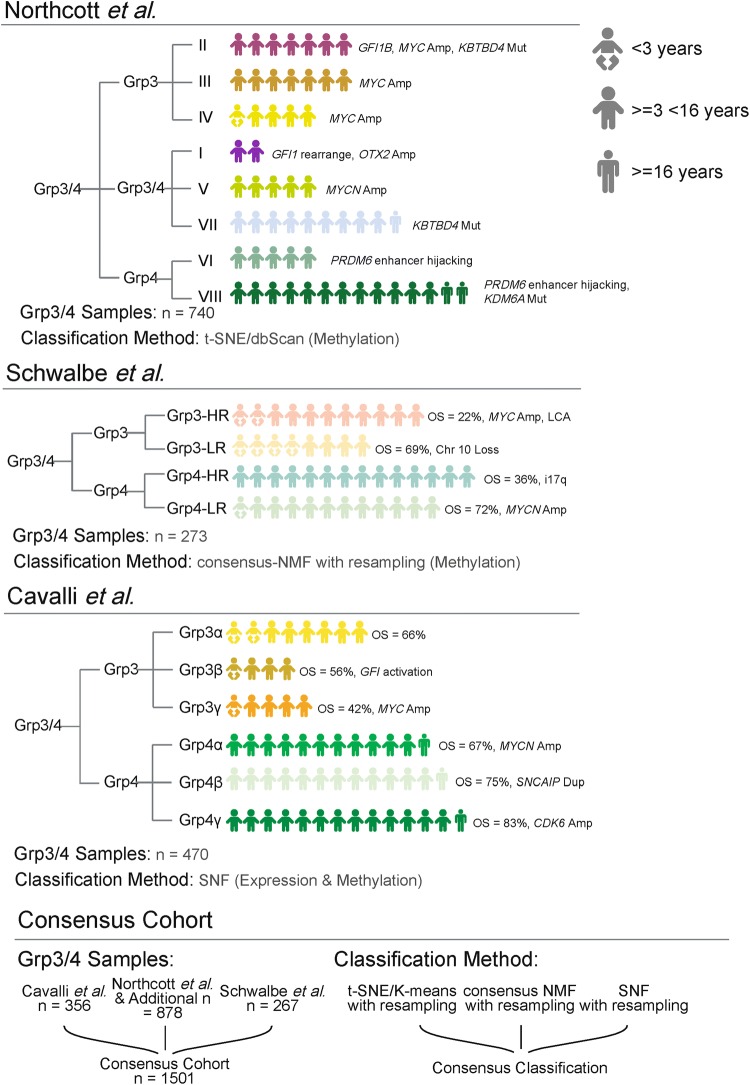
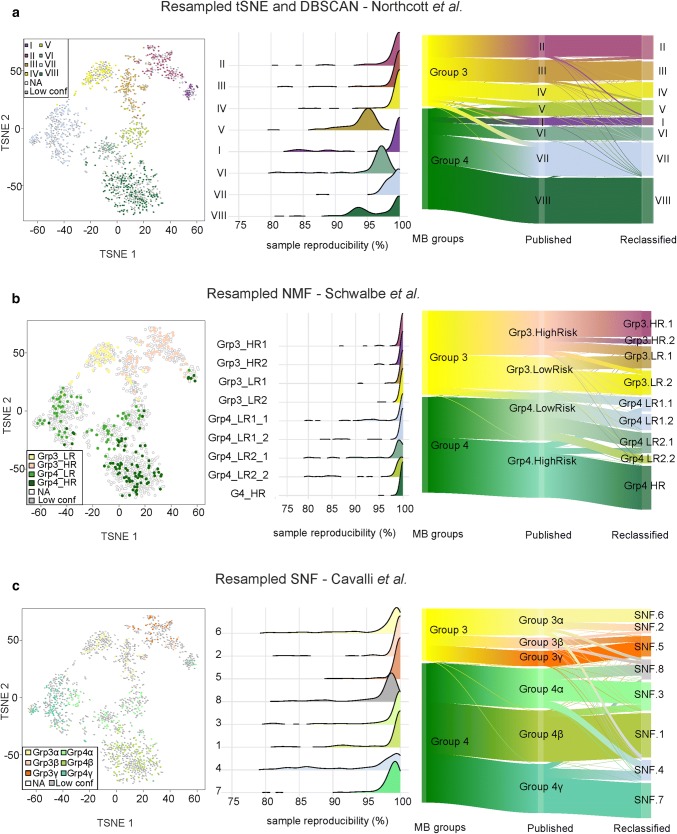
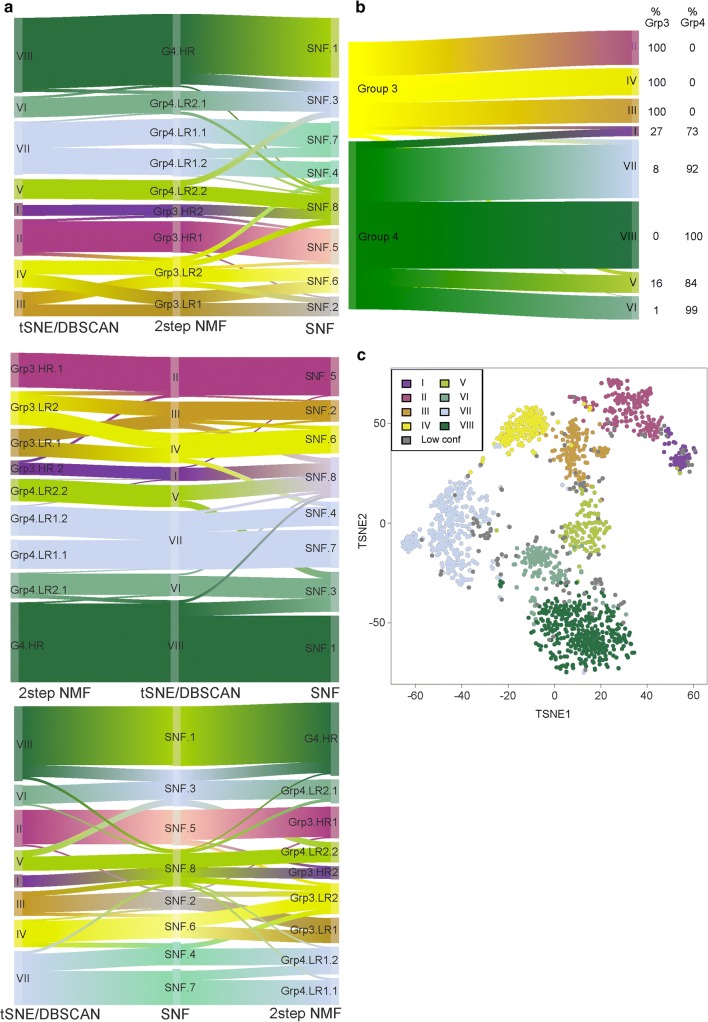
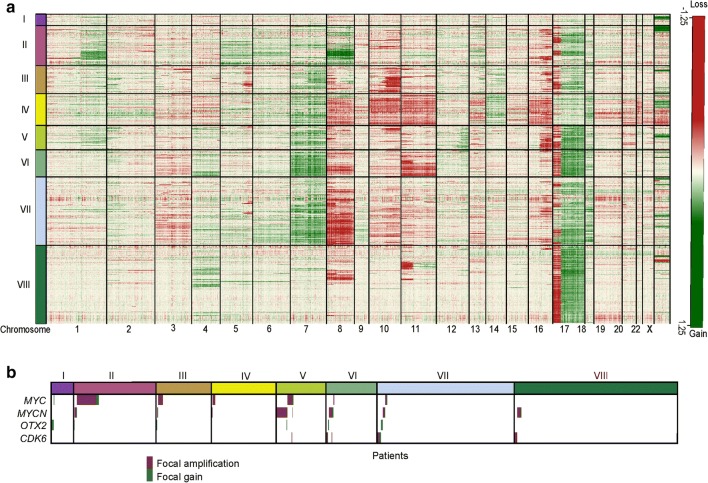
In 2012, an international consensus paper reported that medulloblastoma comprises four molecular subgroups (WNT, SHH, Group 3, and Group 4), each associated with distinct genomic features and clinical behavior. Independently, multiple recent reports have defined further intra-subgroup heterogeneity in the form of biologically and clinically relevant subtypes. However, owing to differences in patient cohorts and analytical methods, estimates of subtype number and definition have been inconsistent, especially within Group 3 and Group 4. Herein, we aimed to reconcile the definition of Group 3/Group 4 MB subtypes through the analysis of a series of 1501 medulloblastomas with DNA-methylation profiling data, including 852 with matched transcriptome data. Using multiple complementary bioinformatic approaches, we compared the concordance of subtype calls between published cohorts and analytical methods, including assessments of class-definition confidence and reproducibility. While the lowest complexity solutions continued to support the original consensus subgroups of Group 3 and Group 4, our analysis most strongly supported a definition comprising eight robust Group 3/Group 4 subtypes (types I-VIII). Subtype II was consistently identified across all component studies, while all others were supported by multiple class-definition methods. Regardless of analytical technique, increasing cohort size did not further increase the number of identified Group 3/Group 4 subtypes. Summarizing the molecular and clinico-pathological features of these eight subtypes indicated enrichment of specific driver gene alterations and cytogenetic events amongst subtypes, and identified highly disparate survival outcomes, further supporting their biological and clinical relevance. Collectively, this study provides continued support for consensus Groups 3 and 4 while enabling robust derivation of, and categorical accounting for, the extensive intertumoral heterogeneity within Groups 3 and 4, revealed by recent high-resolution subclassification approaches. Furthermore, these findings provide a basis for application of emerging methods (e.g., proteomics/single-cell approaches) which may additionally inform medulloblastoma subclassification. Outputs from this study will help shape definition of the next generation of medulloblastoma clinical protocols and facilitate the application of enhanced molecularly guided risk stratification to improve outcomes and quality of life for patients and their families.
Overview
The claims and statistics of this paper haven’t been checked yet.
Free: it reads the open-access text and checks the first 5 claims that cite a source we can check. Create a free account to check every claim.
Integrity signals
Registry
Cites
Statistics
Figures
Verification
Claims the paper makes
The claims and statistics of this paper haven’t been checked yet.
Free: it reads the open-access text and checks the first 5 claims that cite a source we can check. Create a free account to check every claim.
Claims other papers make about this one
Each is checked against this paper’s own text: does it say what the citing paper says it does?
The cited source says what the claim attributes to it.
In the citing paper
“Identification of molecular subgroups and their corresponding scores among the G3/G4 group was based on the work of Sharma and colleagues (14).”
From The Medulloblastoma Meta-Analysis Portal Enables Integrative Exploration of Clinical and Genomic Data from Patients (2025) · cites this paper as [14]
Self-check
Percentages, sums and reported differences re-computed from the paper’s own numbers.
The self-check needs the paper’s full text.
Citations
Cites
The 2016 World Health Organization Classification of Tumors of the Central Nervous System: a summary
Louis, D. N., Perry, A., Reifenberger, G., von Deimling, A., Figarella-Branger, D., Cavenee, W. K., Ohgaki, H., Wiestler, O. D., Kleihues, P., & Ellison, D. W. (2016) · Acta Neuropathologica · doi:10.1007/s00401-016-1545-1 · Cited by 15,657
The 2007 WHO Classification of Tumours of the Central Nervous System
Louis, D. N., Ohgaki, H., Wiestler, O. D., Cavenee, W. K., Burger, P. C., Jouvet, A., Scheithauer, B. W., & Kleihues, P. (2007) · Acta Neuropathologica · doi:10.1007/s00401-007-0243-4 · Cited by 15,397
Erratum to: The 2007 WHO classification of tumours of the central nervous system
Louis, D. N., Ohgaki, H., Wiestler, O. D., Cavenee, W. K., Burger, P. C., Jouvet, A., Scheithauer, B. W., & Kleihues, P. (2007) · Zurich Open Repository and Archive (University of Zurich) · doi:10.5167/uzh-156115 · Cited by 4,442
DNA methylation-based classification of central nervous system tumours
Capper, D., Jones, D. T. W., Sill, M., Hovestadt, V., Schrimpf, D., Sturm, D., Koelsche, C., Sahm, F., Chavez, L., Reuss, D. E., et al. (2018) · Nature · doi:10.1038/nature26000 · Cited by 3,033
Self-citationMolecular subgroups of medulloblastoma: the current consensus
Taylor, M. D., Northcott, P. A., Korshunov, A., Remke, M., Cho, Y.-J., Clifford, S. C., Eberhart, C. G., Parsons, D. W., Rutkowski, S., Gajjar, A., et al. (2012) · Acta Neuropathologica · doi:10.1007/s00401-011-0922-z · Cited by 1,936
Self-citationVisvader, J. E. (2011) · Nature · doi:10.1038/nature09781 · Cited by 1,449
Intertumoral Heterogeneity within Medulloblastoma Subgroups
Cavalli, F. M. G., Remke, M., Rampasek, L., Peacock, J., Shih, D. J. H., Luu, B., Garzia, L., Torchia, J., Nor, C., Morrissy, A. S., et al. (2017) · Cancer Cell · doi:10.1016/j.ccell.2017.05.005 · Cited by 1,219
Self-citationThe whole-genome landscape of medulloblastoma subtypes
Northcott, P. A., Buchhalter, I., Morrissy, A. S., Hovestadt, V., Weischenfeldt, J., Ehrenberger, T., Gröbner, S., Segura-Wang, M., Zichner, T., Rudneva, V. A., et al. (2017) · Nature · doi:10.1038/nature22973 · Cited by 1,112
Self-citationKool, M., Korshunov, A., Remke, M., Jones, D. T. W., Schlanstein, M., Northcott, P. A., Cho, Y.-J., Koster, J., Schouten-van Meeteren, A., van Vuurden, D., et al. (2012) · Acta Neuropathologica · doi:10.1007/s00401-012-0958-8 · Cited by 1,056
Self-citationSubgroup-specific structural variation across 1,000 medulloblastoma genomes
Northcott, P. A., Shih, D. J. H., Peacock, J., Garzia, L., Sorana Morrissy, A., Zichner, T., Stütz, A. M., Korshunov, A., Reimand, J., Schumacher, S. E., et al. (2012) · Nature · doi:10.1038/nature11327 · Cited by 899
Self-citation
Cited by
Items 301–365 of 365
Vo, T., Balderson, B., Jones, K., Ni, G., Crawford, J., Millar, A., Tolson, E., Singleton, M., Kojic, M., Robertson, T., et al. (2024) · Figshare · doi:10.6084/m9.figshare.26586105
Additional file 1 of Group-specific cellular metabolism in Medulloblastoma
Funke, V. L. E., Walter, C., Melcher, V., Wei, L., Sandmann, S., Hotfilder, M., Varghese, J., Jäger, N., Kool, M., Jones, D., et al. (2023) · Figshare · doi:10.6084/m9.figshare.23298899
Self-citationJoshi, K., Yuan, M., Katsushima, K., Saulnier, O., Ray, A., Amankwah, E., Stapleton, S. L., Jallo, G. I., Taylor, M. D., Eberhart, C. G., et al. (2024) · Figshare · doi:10.6084/m9.figshare.26943618
Self-citationVo, T., Balderson, B., Jones, K., Ni, G., Crawford, J., Millar, A., Tolson, E., Singleton, M., Kojic, M., Robertson, T., et al. (2024) · Figshare · doi:10.6084/m9.figshare.26586114
Vo, T., Balderson, B., Jones, K., Ni, G., Crawford, J., Millar, A., Tolson, E., Singleton, M., Kojic, M., Robertson, T., et al. (2024) · Figshare · doi:10.6084/m9.figshare.26586126
Vo, T., Balderson, B., Jones, K., Ni, G., Crawford, J., Millar, A., Tolson, E., Singleton, M., Kojic, M., Robertson, T., et al. (2024) · Figshare · doi:10.6084/m9.figshare.26586123
Vo, T., Balderson, B., Jones, K., Ni, G., Crawford, J., Millar, A., Tolson, E., Singleton, M., Kojic, M., Robertson, T., et al. (2024) · Figshare · doi:10.6084/m9.figshare.26586117
Joshi, K., Yuan, M., Katsushima, K., Saulnier, O., Ray, A., Amankwah, E., Stapleton, S. L., Jallo, G. I., Taylor, M. D., Eberhart, C. G., et al. (2024) · Figshare · doi:10.6084/m9.figshare.26943624
Self-citationJoshi, K., Yuan, M., Katsushima, K., Saulnier, O., Ray, A., Amankwah, E., Stapleton, S. L., Jallo, G. I., Taylor, M. D., Eberhart, C. G., et al. (2024) · Figshare · doi:10.6084/m9.figshare.26943627
Self-citationGöbel, C., Godbole, S., Schoof, M., Holdhof, D., Kresbach, C., Loose, C., Neumann, J., & Schüller, U. (2024) · Figshare · doi:10.6084/m9.figshare.26634882
Vo, T., Balderson, B., Jones, K., Ni, G., Crawford, J., Millar, A., Tolson, E., Singleton, M., Kojic, M., Robertson, T., et al. (2024) · Figshare · doi:10.6084/m9.figshare.26586108
Göbel, C., Godbole, S., Schoof, M., Holdhof, D., Kresbach, C., Loose, C., Neumann, J., & Schüller, U. (2024) · Figshare · doi:10.6084/m9.figshare.26634885
Vo, T., Balderson, B., Jones, K., Ni, G., Crawford, J., Millar, A., Tolson, E., Singleton, M., Kojic, M., Robertson, T., et al. (2024) · Figshare · doi:10.6084/m9.figshare.26586120
Vo, T., Balderson, B., Jones, K., Ni, G., Crawford, J., Millar, A., Tolson, E., Singleton, M., Kojic, M., Robertson, T., et al. (2024) · Figshare · doi:10.6084/m9.figshare.26586111
Joshi, K., Yuan, M., Katsushima, K., Saulnier, O., Ray, A., Amankwah, E., Stapleton, S. L., Jallo, G. I., Taylor, M. D., Eberhart, C. G., et al. (2024) · Figshare · doi:10.6084/m9.figshare.26943621
Self-citationOkonechnikov, K., Federico, A., Schrimpf, D., Sievers, P., Sahm, F., Köster, J., Jones, D., von Deimling, A., Pfister, S. M., Kool, M., et al. (2023) · Figshare · doi:10.6084/m9.figshare.22603885
Self-citationFukuoka, K., Kurihara, J., Shofuda, T., Kagawa, N., Yamasaki, K., Ando, R., Ishida, J., Kanamori, M., Kawamura, A., Park, Y.-S., et al. (2024) · Figshare · doi:10.6084/m9.figshare.26619622
Joshi, K., Yuan, M., Katsushima, K., Saulnier, O., Ray, A., Amankwah, E., Stapleton, S. L., Jallo, G. I., Taylor, M. D., Eberhart, C. G., et al. (2024) · Figshare · doi:10.6084/m9.figshare.26943615
Self-citationInvestigating the role of ascorbic acid and its transporters in medulloblastoma
Jones, M. (2025) · Nottingham ePrints (University of Nottingham)
Mohan, S. A. (2024) · eScholarship@McGill (McGill) · doi:10.82308/25556
Inhibition of gap junctions as a novel treatment strategy for medulloblastoma
Hsieh, M.-C. (2025) · bonndoc (University of Bonn)
McCann, S. (2024) · Nottingham ePrints (University of Nottingham)
A novel peptide for microRNA delivery to medulloblastoma cells
Harland, E., Alhusban, D., Abdoubaki, R., Marfing, D., Simm, A., McCloskey, A., Ehtezazi, T., & Ross, K. (2023) · Liverpool John Moores University
Fukuoka, K., Irikura, T., Kanemura, Y., Hirato, J., Yoshioka, T., Tanami, Y., Kurihara, J., Kobayashi, M., Oya, S., Arakawa, Y., et al. (2025) · Journal of Neuropathology & Experimental Neurology · doi:10.1093/jnen/nlaf153
NRP1 como potencial alvo mole para Meduloblastoma
de Araujo, M. A. (2023) · LA Referencia (Red Federada de Repositorios Institucionales de Publicaciones Científicas)
İnan, M. A., Danyeli, D. A. E., Söylemezoğlu, F., Babaoğlu, B., Tanrıkulu, B., & Özek, M. (2025) · Turkish Neurosurgery · doi:10.5137/1019-5149.jtn.50069-25.2
Study of interferon-stimulated gene 15 expression in the medulloblastoma context
Palacios-Serrato, E. G., Medina-Abreu, K. H., Velasco-Loyden, G., Lira-Rodríguez, N. A., & Tecalco-Cruz, Á. C. (2025) · European Cytokine Network · doi:10.1684/ecn.2025.0506
Recent Advancement in the Pediatric Medulloblastoma Diagnostic Strategy
Hasan, F., Yahya, A. Q., & Hussain, A. F. (2025) · Arab Board Medical Journal · doi:10.4103/abmj.abmj_38_24
Medulloblastoma-Associated KBTBD4 Mutations Disrupt PP2A-A Orphan Quality ControlPreprint
Baur, R., Hehl, L. A., Sathe, G. J., Lunardi, T., Schneider, J., Krebs, A.-S., Silva, J. C., Haakonsen, D. L., Waszak, S. M., Lingner, J., et al. (2026) · bioRxiv (Cold Spring Harbor Laboratory) · doi:10.64898/2026.03.02.709011
“The WNT and SHH subgroups are primarily driven by mutations in CTNNB1 and PTCH1 , respectively, whereas Group 3 and Group 4 MBs harbor alterations in transcriptional regulators such as GFI1/GFI1B , PRDM6 , MYC/MYCN , as well as in epigenetic modifiers including KDM6A (Sharma et al. 2019).”
Su, Y., Deng, K., Chen, X., Feng, Z., Wang, D., Daniels, C., Koh, H. Y., Gonzalez, R. D., Suzuki, H., Miyauchi, T., et al. (2026) · Communications Medicine · doi:10.1038/s43856-026-01454-4
“For non-WNT/non-SHH (Gr.3/4) MB patients in molecular scenarios, features were selected withreference to molecular risk strati fi cation and incorporation of key molecular events based on previous studies 21,22 .”
Self-citationChemotherapy for medulloblastoma in adults
Tobin, G., & Peñas-Prado, M. (2026) · Elsevier eBooks · doi:10.1016/b978-0-443-27356-8.00029-2
Chemotherapy for medulloblastoma—childhood
Szalontay, L., Kilburn, L. B., & Packer, R. J. (2026) · Elsevier eBooks · doi:10.1016/b978-0-443-27356-8.00057-7
Methylation analysis and application to brain tumors
Pillainayagam, C. P., & Newton, H. B. (2026) · Elsevier eBooks · doi:10.1016/b978-0-443-27356-8.00040-1
Developmental determinants of male bias in medulloblastomaPreprint
Bianchini, L., Xu, R., Filipovic, D., da Silva, P. B. G., Sieber, L., Akcay, V., Arnskötter, F., Joshi, P., Nolle, J., Soliman, T., et al. (2026) · bioRxiv (Cold Spring Harbor Laboratory) · doi:10.64898/2026.03.25.714163
“Male predominance amongst children diagnosed with MB is well documented 4,14 .”
Self-citationRossi, M. (2022) · theses.fr (ABES) · doi:10.70675/011c0151z8df9z48b3z819dzce055f9af635
Decoding the immune microenvironment: precision immunotherapy for medulloblastoma subtypes
Li, M., Peng, J., Chen, C., & Hu, J. (2026) · Frontiers in Immunology · doi:10.3389/fimmu.2026.1714134
“Molecular strati fi cation further categorizes Group 4 into high-risk and low-risk subgroups, with 10-year survival rates of 36% and 72%, respectively (40).”
Fonseca, A., Yefet, L. S., Singh, O., Dampier, C. H., Dazelle, K., Lam, M., Abdullaev, Z., Chung, H., Quezado, M., Raffeld, M. A., et al. (2026) · Neuro-Oncology · doi:10.1093/neuonc/noag082
Subtype-specific prognostic impact of TNIK in medulloblastoma
Klaus, F., Maragkou, T., Delbridge, C., Eberhardt, C. G., Hewer, E., Gocke, A., Radpour, R., Mawrin, C., Mogler, C., Neumann, J. E., et al. (2026) · Journal of Neuro-Oncology · doi:10.1007/s11060-026-05554-y
Tamrazi, B., Markowitz, A. L., Margol, A., Nelson, M. D., Krieger, M. D., Snuderl, M., Ji, J., Cen, S., Cotter, J., & Blüml, S. (2026) · Neuro-Oncology · doi:10.1093/neuonc/noag101
Cross-Platform DNA Methylation Classifier for the 8 Molecular Subtypes of Group 3/4 Medulloblastoma
Abid, O., & Rafiee, G. (2026) · IEEE Conference on Artificial Intelligence (CAI) · doi:10.1109/cai68641.2026.11536203
From developmental origins to relapse: molecular and therapeutic insights in medulloblastoma
Tourigny, N., da Silva, C. F., & Ramaswamy, V. (2026) · Child s Nervous System · doi:10.1007/s00381-026-07368-9
“Grp 3 has the worst prognosis of all MB subgroups due to canonical aberrations in the MYC Page 4 of 15 locus of chromosome 8q, and high metastasis dissemination rates [13, 18, 19, 30, 45].”
InfluentialSelf-citationSurgical resection in medulloblastoma: a crossroads in the molecular era
McAbee, J. H., Laird, D. G., Gajjar, A. J., Hersh, D. S., Shimony, N., Aquilina, K., & Klimo, P. D. (2026) · Child s Nervous System · doi:10.1007/s00381-026-07355-0
Self-citationNR3C1 promotes group 4 medulloblastoma invasion via activating VCAN
Wang, J., Zhang, Z. Q., Lin, H., Liu, Y., Wang, Y., Yu, P., Sun, Z., Chai, R., Jiang, T., & Chang, Q. (2026) · Acta Neuropathologica Communications · doi:10.1186/s40478-026-02374-z
“S4D-E) [23].”
Kraya, A., Rathi, K. S., Kazerooni, A. F., Naqvi, A. S., Familiar, A., Guo, Y., Li, Q., Kesherwani, V., Viaene, A. N., Santi, M., et al. (2026) · The Innovation Oncology · doi:10.59717/j.xinn-oncol.2026.100025
Clay, M. R., Tran, Q. T., Pinto, E. M., Lin, T., O'neill, A. F., Alom, M. Z., Zhou, R., Krailo, M., Ribeiro, R. C., Zambetti, G. P., et al. (2026) · npj Precision Oncology · doi:10.1038/s41698-026-01611-x
Ganguly, D., GHOSH, S., Deka, H., Sarmah, J., Majumdar, S., Mahanti, K., Hoque, N., & Ghosh, S. (2026) · Clinical & Translational Oncology · doi:10.1007/s12094-026-04516-0
Bouffet, É., Ramaswamy, V., & Lafay‐Cousin, L. (2026) · Pediatric Blood & Cancer · doi:10.1002/1545-5017.70512
Self-citationGehin, W., Merlin, M.-S., Harlé, A., & Merlin, J. (2026) · Acta Neuropathologica · doi:10.1007/s00401-026-03067-6
“…3, Group 4) with distinct cellular origins, copy number landscapes, clinical behavior, and therapeutic implications [11], and contemporary risk-adapted protocols leverage these subgroups to calibrate treat-ment intensity: from de-escalation in WNT to intensification in metastatic Group 3 [55].”
Zhang, X., 杜来玲, Tian, K., Chen, L., & Li, X. (2026) · Frontiers in Molecular Neuroscience · doi:10.3389/fnmol.2026.1909580
“Genome-wide analyses also reveal sex-specific epigenetic patterns, especially in SHH MB, with differential methylation correlating with survival outcomes (Sharma et al., 2019).”
Sarkar, C., Al-Hussaini, M. A., Santosh, V., Suri, V. S., Park, S., Piao, Y., Tihan, T., Ng, H., Buckland, M. E., Jalali, R., et al. (2026) · Brain Pathology · doi:10.1111/bpa.70136
(2026) · DiRROS repository (University of Maribor)
Bolatov, A., Zhakupov, A., Abdikadirova, A., Sapargaliyeva, M., Ibraimov, B., Zhalimbetova, Z., Оленбай, Г. И., Жетписбаев, Б. Б., Xu, X., & Bayanova, M. (2026) · Brain Pathology · doi:10.1111/bpa.70144
“Likewise, the age distribution of the molecular groups was consistent with previous studies, with WNT tumors occurring predominantly in older children, SHH tumors spanning a wider age range including infants, and non-WNT/non-SHH tumors clustering mainly during childhood [5, 19, 42].”
CReP-mediated control of eIF2α phosphorylation is a critical node in MYC-driven medulloblastoma
Mirabal-Ortega, L., Majo, S., Taunay, L. J., Larcher, M., Ng, D. Y. X., Chabi, S., Grand, M. L., Müller, K., Torrejon-Diaz, J., Lagaye, L., et al. (2026) · Nature Communications · doi:10.1038/s41467-026-77565-2
“Subclassi fi cation into subtypes has shown that tumors which harbor MYC ampli fi cation or very high MYC over-expression are of particular poor prognoses within G3 6 – 8 .”
Self-citationDivergent medulloblastoma chromatin states disclose KDM2B as a selective dependency
Tao, R., Erkek, S., Xu, B., Matsui, Y., Mittal, P., Smith, K. S., Li, Y., Filipovic, D., Xu, R., Gao, Q., et al. (2026) · Nature Genetics · doi:10.1038/s41588-026-02745-1
“As anticipated from transcriptional and DNA methylation signatures that robustly discriminate inter-tumoral heterogeneity in medulloblastoma 6,7,21,56,57 , molecular subgroups differed by chromatin states.”
Self-citationGiunti, L., Mattei, G., Caporalini, C., Scagnet, M., Mussa, F., Agushi, R., Guidi, M., Vergani, D., Balasco, D., Civale, V. Y., et al. (2026) · Neuropathology · doi:10.1111/neup.70080
“Group 4 tumors, by contrast, exhibit a more heterogeneous molecular landscape and are associated with variable clinical prognosis [2, 11].”
Ertekin, M., Temuroglu, A., Aksoy, G. R., Taskapilioglu, M. O., & Sevinir, B. B. (2026) · Child s Nervous System · doi:10.1007/s00381-026-07496-2
Dash, D., Rajak, M., Manothiya, P., & Koiri, R. K. (2026) · Frontiers in Microbiomes · doi:10.3389/frmbi.2026.1983174
DNA methylation in human disease: From biological mechanisms to clinical applications
Mallik, R., Gupta, P., Gupta, A. K., Chaturvedi, P., Pillai, V., & Muegge, K. (2026) · Seminars in Cancer Biology · doi:10.1016/j.semcancer.2026.102635 · Cited by 1
AI-based precision prognostics and therapy personalization for childhood brain tumors
Ştefan, S., Amann, A. S., Smith, K. S., Boniolo, F., Larsson, I., Pfitzer, E., Li, Q., Robinson, G. W., Harter, P. N., Lotter, W. E., et al. (2026) · Nature Genetics · doi:10.1038/s41588-026-02815-4
Self-citationLiu, Y., Xiao, B., Li, S., & Liu, J. (2022) · doi:10.3389/fonc.2022.827054.s001
Metadata
- Authors
- Sharma, T., Schwalbe, E. C., Williamson, D., Sill, M., Hovestadt, V., Mynarek, M., Rutkowski, S., Robinson, G. W., Gajjar, A., Cavalli, F., Ramaswamy, V., Taylor, M. D., Lindsey, J. C., Hill, R. M., Jäger, N., Korshunov, A., Hicks, D., Bailey, S., Kool, M., Chavez, L., Northcott, P. A., Pfister, S. M., & Clifford, S. C.
- Affiliations
- German Cancer Research Center (DE)
- Newcastle University (GB)
- Broad Institute (US)
- University Medical Center Hamburg-Eppendorf (DE)
- St. Jude Children's Research Hospital (US)
- Hospital for Sick Children (CA)
- University of Toronto (CA)
- Corresponding author
- Pfister, Stefan M.
- Clifford, Steven C.
- ORCID
- Sharma, Tanvi
- Williamson, Daniel
- Sill, Martin
- Hovestadt, Volker
- Mynarek, Martin
- Rutkowski, Stefan
- Robinson, Giles W.
- Gajjar, Amar
- Cavalli, Florence
- Ramaswamy, Vijay
- Taylor, Michael D.
- Lindsey, Janet C.
- Hill, Rebecca M.
- Jäger, Natalie
- Korshunov, Andrey
- Hicks, Debbie
- Bailey, Simon
- Kool, Marcel
- Northcott, Paul A.
- Pfister, Stefan M.
- Clifford, Steven C.
- Venue
- Acta Neuropathologica
- Published
- 2019-05-10
- Volume
- 138
- Issue
- 2
- Pages
- 309-326
- ISSN
- 0001-6322 (ISSN-L)
- 1432-0533
- PMC
- PMC6660496
- OpenAlex
- W2944076627
- Cited by
- 310
- References
- 33
- Citations by year
- 2026: 33 · 2025: 43 · 2024: 46 · 2023: 52 · 2022: 47 · 2021: 38 · 2020: 38 · 2019: 10
- FWCI
- 4.04
- Type
- journal article
- Language
- en
- Open access
- hybrid
- doi.org
- Licence
- cc-by
- creativecommons.org/licenses/by/4.0 (tdm)
- Locations
- Acta Neuropathologica (publishedVersion, cc-by)
- Europe PMC (PubMed Central) (publishedVersion, cc-by)
- PubMed Central (publishedVersion, cc-by)
- PubMed (publishedVersion)
- Northumbria Research Link (Northumbria University) (submittedVersion, cc-by)
- Newcastle University ePrints (Newcastle Univesity) (cc-by)
- Funders
- Deutsche Krebshilfe (109252)
- Bundesministerium für Bildung und Forschung (01KU1201A, 1KU1505A)
- Cancer Research UK (C8464/A13457, C8464/A23391)
- INSTINCT network
- Topics
- Health Sciences › Medicine › Oncology › Glioma Diagnosis and Treatment
- Health Sciences › Medicine › Oncology › Neuroblastoma Research and Treatments
- Health Sciences › Medicine › Hematology › Acute Lymphoblastic Leukemia research
- Keywords
- medulloblastoma, Group 3 medulloblastoma, Group 4 medulloblastoma, molecular subtypes, DNA methylation profiling, transcriptome, subtype classification, intertumoral heterogeneity, driver gene alterations, survival outcomes, risk stratification, consensus molecular subtypes
- MeSH terms
- Adolescent, Cerebellar Neoplasms, Child, Child, Preschool, DNA, Neoplasm, Female, Humans, Infant, Male, Medulloblastoma, Genes, myc, DNA Methylation, Gene Expression Profiling, Kaplan-Meier Estimate, Transcriptome
About these checks
Registry, retraction, Cites and statistics results are computed, not judged, with one exception: a printed reference that no index lists is read once by a model before it counts as a citation error. Claims are extracted by a model and kept only when their quote appears verbatim in the text; each cited source is then checked, with a model’s help, for whether it says what the claim relies on. Those verdicts can be wrong — read the claim’s quote and the cited source before relying on one.
Statistics and arithmetic are recomputed, not judged.
Confidence bands are shown only for fields calibrated on our annotated test set. None is calibrated yet, so no band is shown.
What counts as a claim ›How we measure confidence ›How we check this ›
Are you an author, or do you see a problem with this page? Request a review
Data sources
Bibliographic data: Semantic Scholar, OpenAlex, Crossref.
Contains information from the Semantic Scholar Academic Graph Datasets, made available under the ODC Attribution License (ODC-BY 1.0).
Semantic Scholar’s data is described in: Kinney, R., et al. (2023). The Semantic Scholar Open Data Platform. arXiv:2301.10140.
