

Plasma p-tau181 accurately predicts Alzheimer’s disease pathology at least 8 years prior to post-mortem and improves the clinical characterisation of cognitive decline
Open accessThe DOI matches its Crossref record; 36 of the 36 references it cites were found in a registry or an index.
Abstract
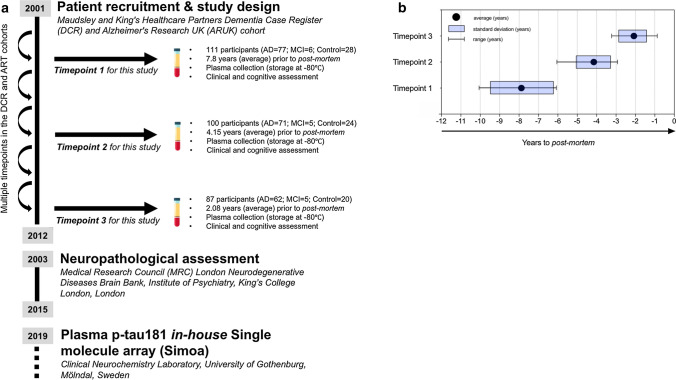
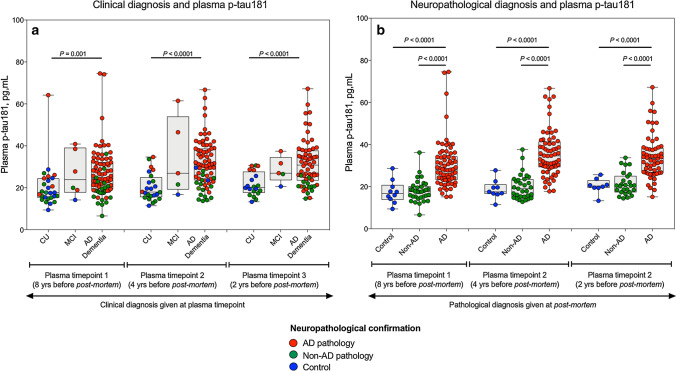
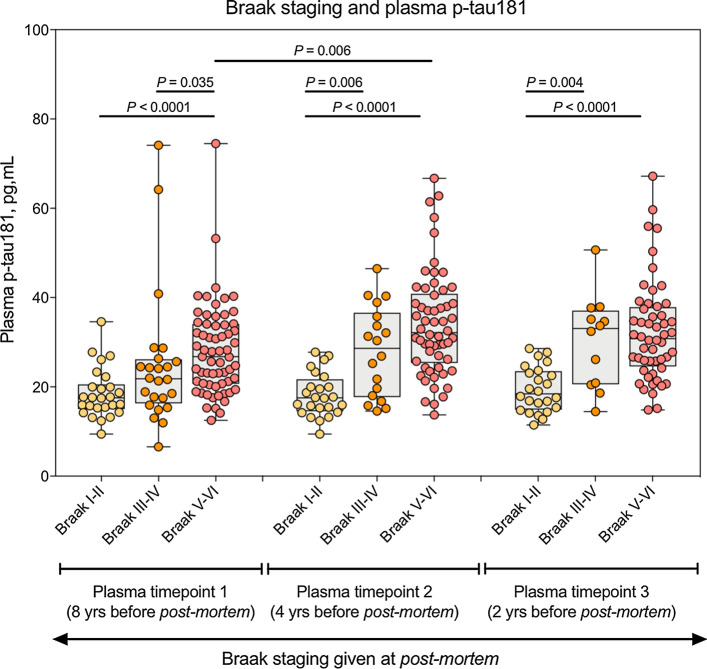
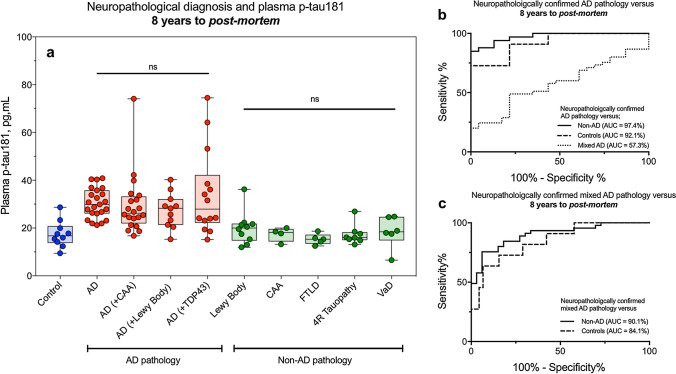
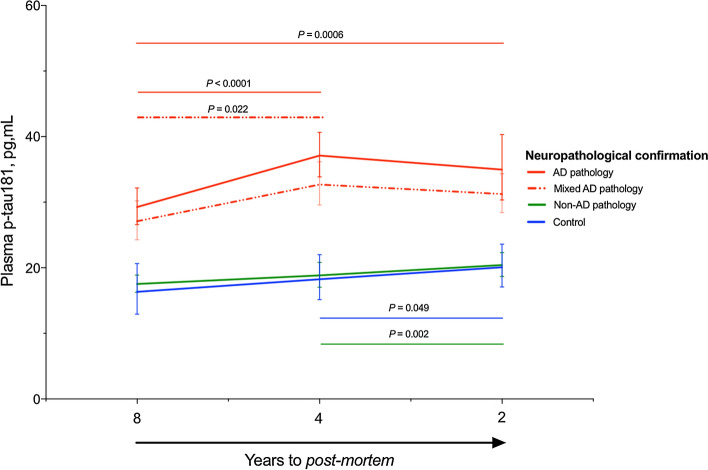
The neuropathological confirmation of amyloid-β (Aβ) plaques and tau neurofibrillary tangles (NFT) remains the gold standard for a definitive diagnosis of Alzheimer’s disease (AD). Nowadays, the in vivo diagnosis of AD is greatly aided by both cerebrospinal fluid (CSF) and positron emission tomography (PET) biomarkers. Although highly accurate, their broad implementation is restricted by high cost, limited accessibility and invasiveness. We recently developed a high-performance, ultrasensitive immunoassay for the quantification of tau phosphorylated at threonine-181 (p-tau181) in plasma, which identifies AD pathophysiology with high accuracy. However, it remains unclear whether plasma p-tau181, measured years before the death, can predict the eventual neuropathological confirmation of AD, and successfully discriminates AD from non-AD dementia pathologies. We studied a unique cohort of 115 individuals with longitudinal blood collections with clinical evaluation at 8, 4 and 2 years prior to neuropathological assessment at death. The results demonstrate that plasma p-tau181 associates better with AD neuropathology and Braak staging than a clinical diagnosis 8 years before post-mortem. Moreover, while all patients had a diagnosis of AD dementia during life, plasma p-tau181 proved to discriminate AD from non-AD pathologies with high accuracy (AUC = 97.4%, 95% CI = 94.1–100%) even 8 years before death. Additionally, the longitudinal trajectory of plasma p-tau181 was assessed in all patients. We found that the main increases in plasma p-tau181 occurred between 8 and 4 years prior to death in patients with AD neuropathology and later plateauing. In contrast, non-AD pathologies and controls exhibited minor, albeit significant, increases in p-tau181 up until death. Overall, our study demonstrates that plasma p-tau181 is highly predictive and specific of AD neuropathology years before post-mortem examination. These data add further support for the use of plasma p-tau181 to aid clinical management in primary care and recruitment for clinical trials.
Overview
The claims and statistics of this paper haven’t been checked yet.
Free: it reads the open-access text and checks the first 5 claims that cite a source we can check. Create a free account to check every claim.
Integrity signals
Registry
Cites
Statistics
Figures
Verification
Claims the paper makes
The claims and statistics of this paper haven’t been checked yet.
Free: it reads the open-access text and checks the first 5 claims that cite a source we can check. Create a free account to check every claim.
Claims other papers make about this one
Each is checked against this paper’s own text: does it say what the citing paper says it does?
The source backs part of the claim, not all of it — or backs it for a different population, condition or comparison.
In the citing paper
“Yet certain p-tau species, but not all, are also associated with neurofibrillary tangle pathology, the secondary AD pathological hallmark.15,16,17”
From Diagnostic Accuracy of a Plasma Phosphorylated Tau 217 Immunoassay for Alzheimer Disease Pathology (2024) · cites this paper as [17]
Experimental — accuracy not yet measuredThe source backs part of the claim, not all of it — or backs it for a different population, condition or comparison.
In the citing paper
“Plasma levels of p-tau are strongly associated with PET and CSF biomarkers of AD pathology19–25, neuropathological changes associated with AD20,23,26,27 and the subsequent development of AD dementia20,23,28.”
From Highly accurate blood test for Alzheimer's disease is similar or superior to clinical cerebrospinal fluid tests (2024) · cites this paper as [26]
Experimental — accuracy not yet measuredThe source backs part of the claim, not all of it — or backs it for a different population, condition or comparison.
In the citing paper
“Plasma measures of phosphorylated tau at Thr181 (p-tau181), Thr217 (p-tau217) and Thr231 (p-tau231) have high diagnostic accuracy in differentiating AD from other neurodegenerative disorders in clinical studies1–3, which are validated by postmortem neuropathological studies1,2,4.”
From Plasma p-tau231 and p-tau217 as state markers of amyloid-β pathology in preclinical Alzheimer’s disease (2022) · cites this paper as [4]
Experimental — accuracy not yet measured
Self-check
Percentages, sums and reported differences re-computed from the paper’s own numbers.
The self-check needs the paper’s full text.
Citations
Cites
Home visits: a strategy to improve newborn survival - Authors' reply
(2008) · Americanae (AECID Library) · doi:10.1016/s0140 · Cited by 22,524
McKhann, G. M., Knopman, D. S., Chertkow, H., Hyman, B. T., Jack, C. R., Kawas, C. H., Klunk, W. E., Koroshetz, W. J., Manly, J. J., Mayeux, R., et al. (2011) · Alzheimer's & Dementia · doi:10.1016/j.jalz.2011.03.005 · Cited by 18,657
NIA‐AA Research Framework: Toward a biological definition of Alzheimer's disease
Jack, C. R., Bennett, D. A., Blennow, K., Carrillo, M. C., Dunn, B., Haeberlein, S. B., Holtzman, D. M., Jagust, W., Jessen, F., Karlawish, J., et al. (2018) · Alzheimer's & Dementia · doi:10.1016/j.jalz.2018.02.018 · Cited by 10,537
Self-citationJack, C. R., Knopman, D. S., Jagust, W. J., Petersen, R. C., Weiner, M. W., Aisen, P. S., Shaw, L. M., Vemuri, P., Wiste, H. J., Weigand, S. D., et al. (2013) · The Lancet Neurology · doi:10.1016/s1474-4422(12)70291-0 · Cited by 4,396
Advancing research diagnostic criteria for Alzheimer's disease: the IWG-2 criteria
Dubois, B., Feldman, H. H., Jacova, C., Hampel, H., Molinuevo, J. L., Blennow, K., DeKosky, S. T., Gauthier, S., Selkoe, D., Bateman, R., et al. (2014) · The Lancet Neurology · doi:10.1016/s1474-4422(14)70090-0 · Cited by 3,321
Self-citationBraak, H., Alafuzoff, I., Arzberger, T., Kretzschmar, H., & Del Tredici, K. (2006) · Acta Neuropathologica · doi:10.1007/s00401-006-0127-z · Cited by 3,172
Blennow, K., de Leon, M. J., & Zetterberg, H. (2006) · The Lancet · doi:10.1016/s0140-6736(06)69113-7 · Cited by 3,134
Self-citationHigh performance plasma amyloid-β biomarkers for Alzheimer's disease
Nakamura, A., Kaneko, N., Villemagne, V. L., Kato, T., Doecke, J., Doré, V., Fowler, C., Li, Q.-X., Martins, R., Rowe, C., et al. (2018) · Nature · doi:10.1038/nature25456 · Cited by 1,681
World Alzheimer Report 2018: The state of the art of dementia research: New frontiers
Patterson, C. (2018) · Cited by 1,461
Karikari, T. K., Pascoal, T. A., Ashton, N. J., Janelidze, S., Benedet, A. L., Rodriguez, J. L., Chamoun, M., Savard, M., Kang, M. S., Therriault, J., et al. (2020) · The Lancet Neurology · doi:10.1016/s1474-4422(20)30071-5 · Cited by 1,316
Self-citation
Cited by
Items 101–200 of 348
Arias, J. F., Brum, W. S., Salvadó, G., Therriault, J., Servaes, S., Wang, Y., Aumont, É., Rahmouni, N., Macedo, A. C., Quispialaya, K. M., et al. (2025) · Brain · doi:10.1093/brain/awaf033 · Cited by 44
Self-citationBiofluid biomarkers in Alzheimer’s disease and other neurodegenerative dementias
Zetterberg, H., & Bendlin, B. B. (2026) · Nature · doi:10.1038/s41586-025-10018-w · Cited by 59
Self-citationAlzheimer Disease Blood Biomarkers in Patients With Out-of-Hospital Cardiac Arrest
Ashton, N. J., Knappe, M. M., Benedet, A. L., Grötschel, L., Lantero‐Rodriguez, J., Karikari, T. K., Hassager, C., Wise, M. P., Stammet, P., Kjærgaard, J., et al. (2023) · JAMA Neurology · doi:10.1001/jamaneurol.2023.0050 · Cited by 42
Self-citationBiomarkers for Managing Neurodegenerative Diseases
Cheslow, L., Snook, A. E., & Waldman, S. A. (2024) · Biomolecules · doi:10.3390/biom14040398 · Cited by 44
Biomarkers: Our Path Towards a Cure for Alzheimer Disease
Tarawneh, R. M. (2020) · Biomarker Insights · doi:10.1177/1177271920976367 · Cited by 46
Karikari, T. K. (2022) · Journal of Alzheimer's Disease · doi:10.3233/jad-215730 · Cited by 33
Self-citationPlasma phosphorylated tau181 predicts cognitive and functional decline
Tropea, T. F., Waligórska, T., Xie, S. X., Nasrallah, I. M., Cousins, K. A. Q., Trojanowski, J. Q., Grossman, M., Irwin, D. J., Weintraub, D. A., Lee, E. B., et al. (2022) · Annals of Clinical and Translational Neurology · doi:10.1002/acn3.51695 · Cited by 40
“Additionally, levels of plasma p-tau181 associated with AD disease severity, predict brain amyloid and tau pathology captured by PET imaging, and predict AD pathology on autopsy.(17,18) In”
BackgroundA blood-based biomarker workflow for optimal tau-PET referral in memory clinic settings
Brum, W. S., Cullen, N. C., Therriault, J., Janelidze, S., Rahmouni, N., Stevenson, J., Servaes, S., Benedet, A. L., Zimmer, E. R., Stomrud, E., et al. (2024) · Nature Communications · doi:10.1038/s41467-024-46603-2 · Cited by 45
Self-citationUnraveling Alzheimer’s disease: insights from single-cell sequencing and spatial transcriptomic
He, Y., Lu, W., Zhou, X. M., Mu, J., & Shen, W. (2024) · Frontiers in Neurology · doi:10.3389/fneur.2024.1515981 · Cited by 44
Plasma GFAP associates with secondary Alzheimer's pathology in Lewy body disease
Cousins, K. A. Q., Irwin, D. J., Chen‐Plotkin, A. S., Shaw, L. M. J., Arezoumandan, S., Lee, E. B., Wolk, D. A., Weintraub, D. A., Spindler, M., Deik, A., et al. (2023) · Annals of Clinical and Translational Neurology · doi:10.1002/acn3.51768 · Cited by 40
Gibson, L. L., Ruiz, C. A., Chong, J. R., Ballard, C. G., & Aarsland, D. (2023) · Current Opinion in Neurology · doi:10.1097/wco.0000000000001173 · Cited by 38
Self-citationSalami, A., Adolfsson, R., Andersson, M., Blennow, K., Lundquist, A., Adolfsson, A. N., Schöll, M., Zetterberg, H., & Nyberg, L. H. (2021) · Journal of Alzheimer s Disease · doi:10.3233/jad-210673 · Cited by 43
“offs of 14–18 pg/ml were determined in relation to 490 defining A status in the ADNI cohort [31], and p491 tau181 values around 20–30 pg/ml were reported 8 492 years before postmortem [32].”
BackgroundSelf-citationSnellman, A., Ekblad, L. L., Ashton, N. J., Karikari, T. K., Lantero‐Rodriguez, J., Pietilä, E. A., Koivumäki, M., Helin, S., Karrasch, M., Zetterberg, H., et al. (2023) · Neurobiology of Disease · doi:10.1016/j.nbd.2023.106175 · Cited by 36
Self-citationDissociable contribution of plasma NfL and p-tau181 to cognitive impairment in Parkinson's disease
Pagonabarraga, J., Pérez‐González, R., Bejr‐Kasem, H., Marín‐Lahoz, J., Horta‐Barba, A., Martínez‐Horta, S., Aracil‐Bolaños, I., Sampedro, F., Campolongo, A., Rivas, E. I., et al. (2022) · Parkinsonism & Related Disorders · doi:10.1016/j.parkreldis.2022.05.020 · Cited by 37
Simrén, J., Ashton, N. J., Blennow, K., & Zetterberg, H. (2021) · Alzheimer s & Dementia Diagnosis Assessment & Disease Monitoring · doi:10.1002/dad2.12145 · Cited by 35
Self-citationLantero‐Rodriguez, J., Tissot, C., Snellman, A., Servaes, S., Benedet, A. L., Rahmouni, N., Montoliu‐Gaya, L., Therriault, J., Brum, W. S., Stevenson, J., et al. (2023) · Alzheimer s & Dementia · doi:10.1002/alz.13119 · Cited by 32
“6,44,45 Thisfindingcorrob-orates the idea that plasma NTA-tau is a predictor of mid-to late-stage tau accumulation.”
BackgroundSelf-citationGiacomucci, G., Mazzeo, S., Crucitti, C., Ingannato, A., Bagnoli, S., Padiglioni, S., Galdo, G., Emiliani, F., Frigerio, D., Moschini, V., et al. (2023) · Journal of the Neurological Sciences · doi:10.1016/j.jns.2023.120805 · Cited by 35
“distinguishing between AD and non-AD pathologies [27].”
A critical appraisal of blood-based biomarkers for Alzheimer’s disease
Lista, S., Mapstone, M. E., Caraci, F., Emanuele, E., López‐Ortiz, S., Martín-Hernández, J., Triaca, V., Imbimbo, C., Gabelle, A., Mielke, M. M., et al. (2024) · Ageing Research Reviews · doi:10.1016/j.arr.2024.102290 · Cited by 33
Thomas, A. J., Hamilton, C. A., Heslegrave, A., Barker, S. A. H., Durcan, R., Lawley, S., Barnett, N. A., Lett, D. J., Firbank, M., Roberts, G., et al. (2022) · Movement Disorders · doi:10.1002/mds.28994 · Cited by 32
“to CSF biomarkers and positron emission tomography (PET) tau(11) and validated against autopsy assessment of AD pathology.(11,12) Elevated pTau181 measures may”
MethodSelf-citationMorrison, M. S., Aparicio, H. J., Blennow, K., Zetterberg, H., Ashton, N. J., Karikari, T. K., Tripodis, Y., Martin, B. M., Palmisano, J. N., Sugarman, M. A., et al. (2022) · Brain · doi:10.1093/brain/awac175 · Cited by 36
Self-citationSun, Q., Ni, J., Wei, M., Long, S., Li, T., Fan, D., Lü, T., Shi, J., & Tian, J. (2022) · Frontiers in Aging Neuroscience · doi:10.3389/fnagi.2022.963845 · Cited by 37
Tieu, M., Choi, S. H., Le, H. T. N., & Cho, S. (2023) · Analytica Chimica Acta · doi:10.1016/j.aca.2023.341535 · Cited by 34
Alty, J., Bai, Q., Li, R., Lawler, K., George, R. J. S., Hill, E., Bindoff, A. D., Garg, S., Wang, X., Huang, G., et al. (2022) · BMC Neurology · doi:10.1186/s12883-022-02772-5 · Cited by 33
Self-citationBlood based biomarkers for movement disorders
Morris, H. R. (2022) · Acta Neurologica Scandinavica · doi:10.1111/ane.13700 · Cited by 29
Predictive blood biomarkers and brain changes associated with age-related cognitive decline
Saunders, T. S., Pozzolo, F. E., Heslegrave, A., King, D., McGeachan, R. I., Spires-Jones, M. P., Harris, S. E., Ritchie, C. W., Terrera, G. M., Deary, I. J., et al. (2023) · Brain Communications · doi:10.1093/braincomms/fcad113 · Cited by 32
“Plasma p-tau181 levels are elevated in AD relative to controls, 11,12 and studies report a negative correlation with cognitive function across the Alzheimer’s-spectrum.”
Self-citationRubenstein, R., McQuillan, L. E., Wang, K., Robertson, C. S., Chang, B., Yang, Z., Xu, H., Williamson, J. B., & Wagner, A. K. (2023) · Journal of Neurotrauma · doi:10.1089/neu.2022.0479 · Cited by 31
Xiao, Z., Wu, W., Ma, X., Liang, X., Lu, J., Zheng, L., Ding, S., Lei, Q., Luo, J., Chen, K., et al. (2022) · Clinical Chemistry · doi:10.1093/clinchem/hvac149 · Cited by 31
Dong, Y., Song, X., Wang, X., Wang, S., & He, Z. (2024) · CNS Neuroscience & Therapeutics · doi:10.1111/cns.70060 · Cited by 39
“54 In contrast, non-AD control cohorts up until death exhibited non-significant increases of p-tau181 in plasma.”
InfluentialWojdała, A. L., Vanbrabant, J., Bayoumy, S., Antwi‐Berko, D., Bastard, N. L., van der Flier, W. M., Jeromin, A., Lambrechts, C., Loo, M. V., Vandijck, M. L. J., et al. (2024) · Alzheimer s Research & Therapy · doi:10.1186/s13195-024-01630-5 · Cited by 38
Wojdała, A. L., Bellomo, G., Gaetani, L., Teunissen, C. E., Parnetti, L., & Chiasserini, D. (2025) · Nature Communications · doi:10.1038/s41467-024-54878-8 · Cited by 34
Chen, S., He, C.-Y., Shen, Y., Zeng, G., Tian, D., Cheng, Y., Xu, M., Fan, D., Tan, C., Shi, A., et al. (2021) · Neuroscience Bulletin · doi:10.1007/s12264-021-00779-5 · Cited by 27
Syed, A. U., Liang, C., Patel, K. K., Mondal, R., Kamalia, V. M., Moran, T. R., Ahmed, S. T., & Mukherjee, J. (2023) · International Journal of Molecular Sciences · doi:10.3390/ijms241310808 · Cited by 31
“Phosphorylated p-tau immunoassays p-tau181 [5] and p-tau217 [6] confirmed that plasma p-tau has high sensitivity and specificity to detect AD neuropathology, which was ascertained with [18F]flortaucipir PET [7,8].”
MethodProvost, K., Iaccarino, L., Soleimani‐Meigooni, D. N., Baker, S. L., Edwards, L., Eichenlaub, U., Hansson, O., Jagust, W. J., Janabi, M., Joie, R. L., et al. (2021) · European Journal of Nuclear Medicine and Molecular Imaging · doi:10.1007/s00259-020-05152-8 · Cited by 27
Solje, E., Benussi, A., Buratti, E., Remes, A. M., Haapasalo, A., & Borroni, B. (2021) · Diagnostics · doi:10.3390/diagnostics11050788 · Cited by 30
Tau proteins in blood as biomarkers of Alzheimer’s disease and other proteinopathies
Verde, F. (2022) · Journal of Neural Transmission · doi:10.1007/s00702-022-02471-y · Cited by 28
Dityrosine cross-linking and its potential roles in Alzheimer’s disease
Maina, M. B., Al‐Hilaly, Y. K., & Serpell, L. C. (2023) · Frontiers in Neuroscience · doi:10.3389/fnins.2023.1132670 · Cited by 28
Thomas, K. R., Bangen, K. J., Edmonds, E. C., Weigand, A. J., Walker, K. S., Bondi, M. W., Galasko, D. R., & Initiative, A. D. N. (2021) · Alzheimer s & Dementia Diagnosis Assessment & Disease Monitoring · doi:10.1002/dad2.12238 · Cited by 31
Parvizi, T., König, T., Wurm, R., Silvaieh, S., Altmann, P., Klotz, S., Rommer, P. S., Furtner, J., Regelsberger, G., Lehrner, J., et al. (2022) · Frontiers in Aging Neuroscience · doi:10.3389/fnagi.2022.887498 · Cited by 25
“Emerging data have proposed plasma-derived pTau 181 and pTau 217 as highly specific biomarkers for AD pathology, which are currently investigated in ongoing studies (Moscoso et al., 2020; Rodriguez et al., 2020; Thijssen et al., 2021).”
BackgroundJiao, B., Liu, H., Guo, L., Liao, X., Zhou, Y., Weng, L., Xiao, X., Zhou, L., Wang, X., Jiang, Y., et al. (2021) · Frontiers in Aging Neuroscience · doi:10.3389/fnagi.2021.749649 · Cited by 37
Alvarez, M., Trent, E., Gonçalves, B. D. S., Pereira, D. G., Puri, R., Frazier, N. A., Sodhi, K., & Pillai, S. S. (2022) · Frontiers in Aging Neuroscience · doi:10.3389/fnagi.2022.1020092 · Cited by 26
Progress in blood biomarkers of subjective cognitive decline in preclinical Alzheimer's disease
Yu, X., Shao, K., Wan, K., Li, T., Li, Y., Zhu, X., & Han, Y. (2023) · Chinese Medical Journal · doi:10.1097/cm9.0000000000002566 · Cited by 24
Lussier, F. Z., Benedet, A. L., Therriault, J., Pascoal, T. A., Tissot, C., Chamoun, M., Mathotaarachchi, S. S., Savard, M., Ashton, N. J., Karikari, T. K., et al. (2021) · Brain Communications · doi:10.1093/braincomms/fcab073 · Cited by 26
Self-citationPresent and Future of Blood-Based Biomarkers of Alzheimer’s Disease: Beyond the Classics
Grigoli, M. M., Pelegrini, L. N. D. C., Whelan, R., & Cominetti, M. R. (2024) · Brain Research · doi:10.1016/j.brainres.2024.148812 · Cited by 22
Korologou‐Linden, R., Kalsi, J., Kafetsouli, D., Olawale, A., Wingfield, D., Mummery, D., Hayhoe, B. W. J., Robinson, O., Majeed, A., & Middleton, L. T. (2024) · The Journal of Prevention of Alzheimer s Disease · doi:10.14283/jpad.2024.83 · Cited by 28
“Plasma Tau biomarkers have been shown to be more valuable in accurately representing the disease continuum and the heterogeneity within the AD phenotype (43, 46, 53, 54).”
BackgroundFang, X., Yang, Y., Wang, H., & Xu, H. Y. (2024) · Mechanobiology in Medicine · doi:10.1016/j.mbm.2024.100063 · Cited by 24
Wang, J., Lu, X., & He, Y. (2025) · Biosensors · doi:10.3390/bios15020085 · Cited by 26
“This biomarker effectively differentiates AD from cognitively normal individuals, mild cognitive impairment (MCI), and other neurodegenerative conditions [41,45,46].”
Circulating short chain fatty acids in Alzheimer's disease: A cross-sectional observational study
Marizzoni, M., Coppola, L., Festari, C., Luongo, D., Salamone, D., Naviglio, D., Soricelli, A., Mirabelli, P., Salvatore, M., Cattaneo, A., et al. (2025) · Journal of Alzheimer s Disease · doi:10.1177/13872877251337773 · Cited by 33
Biomarkers and Tools for Predicting Alzheimer’s Disease in the Preclinical Stage
Li, T.-R., Yang, Q. Z., Hu, X., & Han, Y. (2021) · Current Neuropharmacology · doi:10.2174/1570159x19666210524153901 · Cited by 24
“They have yielded near perfect results, proving that plasma p-tau181 can reflect AD neuropathology regardless of the clinical presentation and other comorbid pathological changes, has strong correlations with brain Aβ and tau depositions determined by CSF or PET [84, 107, 108, 112-114], can predict brain tau and Aβ pa…”
Angioni, D., Hansson, O., Bateman, R. J., Rabe, C., Toloue, M., Braunstein, J. B., Agus, S., Sims, J. R., Bittner, T., Carrillo, M. C., et al. (2023) · The Journal of Prevention of Alzheimer s Disease · doi:10.14283/jpad.2023.68 · Cited by 23
“Multiple BBMs assays have been validated with neuropathological data (21-26).”
MethodAlzheimer’s disease: from early pathogenesis to novel therapeutic approaches
Prajapati, S. K., Pathak, A., & Samaiya, P. K. (2024) · Metabolic Brain Disease · doi:10.1007/s11011-024-01389-6 · Cited by 21
“The other plasma-based bio-marker possibilities are less accurate and disease-specific than plasma p-tau181(Lantero Rodriguez et al. 2020).”
Trieu, C., van Harten, A. C., Leeuwis, A. E., Exalto, L. G., Hooghiemstra, A. M., Verberk, I. M. W., Allaart, C. P., Rocca, H. B., Kappelle, L. J., van Oostenbrugge, R. J., et al. (2024) · Journal of Alzheimer s Disease · doi:10.3233/jad-231096 · Cited by 24
“Specifically, a lower A (cid:2) 42 / 40 ratio reflects A (cid:2) deposition, while higher pTau181 levels reflect the burden of both A (cid:2) deposition and tau pathology [11, 13].”
BackgroundDo microbes play a role in Alzheimer's disease?
Williams, Z. A. P., Láng, L., Nicolas, S., Clarke, G. A., Cryan, J. F., Vauzour, D., & Nolan, Y. M. (2024) · Microbial Biotechnology · doi:10.1111/1751-7915.14462 · Cited by 22
“…are reported as reliable biomarkers for AD pathology (Ashton et al., 2021; Palmqvist et al., 2020) with predictive capacity for future AD diagnosis (Lantero Rodriguez et al., 2020), and tau targeted treatments have also been explored, but with limited efficacy (Florian et al., 2023; Teng et al.,…”
BackgroundGleerup, H. S., Sanna, F., Høgh, P., Simrén, J., Blennow, K., Zetterberg, H., Hasselbalch, S. G., Ashton, N. J., & Simonsen, A. H. (2021) · Frontiers in Aging Neuroscience · doi:10.3389/fnagi.2021.659898 · Cited by 21
Self-citationWang, Z., Tan, L., Gao, P., Ma, Y., Fu, Y., Sun, Y., Yu, J., & Initiative, A. D. N. (2023) · Alzheimer s & Dementia · doi:10.1002/alz.13413 · Cited by 25
Mansourian, M., Khademi, S., & Marateb, H. R. (2021) · Diagnostics · doi:10.3390/diagnostics11030393 · Cited by 22
Graham, N., Blissitt, G., Zimmerman, K. A., Orton, L., Friedland, D., Coady, E., Laban, R., Veleva, E., Heslegrave, A., Zetterberg, H., et al. (2024) · Journal of Neurology Neurosurgery & Psychiatry · doi:10.1136/jnnp-2024-333777 · Cited by 25
Self-citationHuang, Y., Li, Y., Xie, F., & Guo, Q. (2022) · CNS Neuroscience & Therapeutics · doi:10.1111/cns.13962 · Cited by 22
Comeau, D., Martin, M., Robichaud, G. A., & Chamard-Witkowski, L. (2023) · Frontiers in Neurology · doi:10.3389/fneur.2023.1233192 · Cited by 25
Is blood pTau a reliable indicator of the CSF status? A narrative review
Antonioni, A., Raho, E. M., & Lorenzo, F. D. (2023) · Neurological Sciences · doi:10.1007/s10072-023-07258-x · Cited by 21
Blood biomarkers in Down syndrome: Facilitating Alzheimer's disease detection and monitoring
Petersen, M. E., Aguilar, L. F., Head, E., Montoliu‐Gaya, L., Strydom, A., Pape, S. E., Fortea, J., Ashton, N. J., Udeh‐Momoh, C. T., O’Bryant, S. E., et al. (2024) · Alzheimer s & Dementia · doi:10.1002/alz.14364 · Cited by 22
Self-citationVarma, V. R., An, Y., Kac, P. R., Bilgel, M., Moghekar, A., Loeffler, T., Amschl, D., Daurer, M., Prokesch, M., Troncoso, J. C., et al. (2024) · Med · doi:10.1016/j.medj.2025.100724 · Cited by 45
Self-citationFluid biomarkers for neurodegenerative diseases: a comprehensive update
Valletta, M., Briel, N., Yuksekel, I., Barboure, M. C., Coward, A. R., Houwer, J. F. H. D., Fawad, A., González-Mayoral, A., Iaccarino, G., Martínez‐Dubarbie, F., et al. (2025) · Alzheimer s Research & Therapy · doi:10.1186/s13195-025-01919-z · Cited by 26
Self-citationLucena, P. B., Vanherle, S., Lodder, C., de Ravé, M. G., Stancu, I., Lambrichts, I., Vangheluwe, R., Bruffaerts, R., & Dewachter, I. (2022) · Acta Neuropathologica · doi:10.1007/s00401-022-02458-9 · Cited by 26
“The potential of blood-derived AD biomarkers is undeniable [3, 11, 13, 21, 22, 31, 33, 40, 47, 59], making further validation, in-depth research and understanding a high priority in the field.”
BackgroundWang, Z., Tan, L., Wang, H.-F., Chen, S., Fu, Y., Gao, P., Ma, Y., Guo, Y., Hou, J., Zhang, D., et al. (2023) · Alzheimer s & Dementia · doi:10.1002/alz.12997 · Cited by 22
An Introduction to Ultrasensitive Assays for Plasma Tau Detection
Ding, X., Tuo, Q., & Lei, P. (2021) · Journal of Alzheimer s Disease · doi:10.3233/jad-201499 · Cited by 20
(2021) · Biointerface Research in Applied Chemistry · doi:10.33263/briac121.940960 · Cited by 24
Imaging and Fluid Biomarkers of Alzheimer Disease: Complementation Rather Than Competition
Drzezga, A. E., & Barthel, H. (2025) · Journal of Nuclear Medicine · doi:10.2967/jnumed.125.270152 · Cited by 20
Longitudinal Blood-Based Biomarkers and Clinical Progression in Subjective Cognitive Decline
Trieu, C., van Harten, A. C., van Leeuwenstijn, M. S. S. A., Schlüter, L., Boonkamp, L., Aladdin, A., Sikkes, S. A. M., van de Giessen, E., Verberk, I. M. W., Teunissen, C. E., et al. (2025) · JAMA Network Open · doi:10.1001/jamanetworkopen.2025.45862 · Cited by 24
Early Diagnosis of Alzheimer’s Disease: Moving Toward a Blood-Based Biomarkers Era
Tao, Q., Lin, R.-R., & Wu, Z. (2023) · Clinical Interventions in Aging · doi:10.2147/cia.s394821 · Cited by 23
Talyansky, S. D., Guen, Y. L., Kasireddy, N. M., Belloy, M. E., & Greicius, M. D. (2023) · Acta Neuropathologica Communications · doi:10.1186/s40478-023-01626-6 · Cited by 22
Hansen, É. D. O., Dias, N. S., Burgos, I. C. B., Costa, M. V., Teixeira‐Carvalho, A., Teixeira, A. L., Barbosa, I. G., dos Santos, L. A. V., Rosa, D. V., Ribeiro, A. J. F., et al. (2021) · Frontiers in Psychiatry · doi:10.3389/fpsyt.2021.716686 · Cited by 24
Biomarkers and Tools for Predicting Alzheimer's Disease in the Preclinical Stage
Li, T., Yang, Q. Z., Hu, X., & Han, Y. (2022) · Kölner Universitäts PublikationsServer (Universität zu Köln) · Cited by 17
Yu, F., Han, S., Salisbury, D. L., Pruzin, J. J., Geda, Y. E., Caselli, R. J., & Li, D. (2022) · Pilot and Feasibility Studies · doi:10.1186/s40814-022-01200-2 · Cited by 18
Protein fibril length in cerebrospinal fluid is increased in Alzheimer’s disease
Nirmalraj, P. N., Schneider, T. R., Lüder, L., & Felbecker, A. (2023) · Communications Biology · doi:10.1038/s42003-023-04606-7 · Cited by 19
Devoto, C., Vorn, R., Mithani, S., Meier, T. B., Lai, C., Broglio, S. P., McAllister, T. W., Giza, C. C., Huber, D. L., Harezlak, J., et al. (2023) · Frontiers in Neurology · doi:10.3389/fneur.2023.1202967 · Cited by 20
Postu, P. A., Mihăşan, M., Gorgan, L., Sadiki, F. Z., Idrissi, M. E., & Hriţcu, L. (2022) · Biomedicines · doi:10.3390/biomedicines10092300 · Cited by 21
Plasma biomarkers in chronic single moderate–severe traumatic brain injury
Spitz, G., Hicks, A. J., McDonald, S. J., Doré, V., Krishnadas, N., O'Brien, T. J., O’Brien, W. T., Vivash, L. E., Law, M., Ponsford, J. L., et al. (2024) · Brain · doi:10.1093/brain/awae255 · Cited by 20
Varma, V., An, Y., Kac, P. R., Bilgel, M., Moghekar, A., Loeffler, T., Amschl, D., Troncoso, J. C., Blennow, K., Zetterberg, H., et al. (2024) · medRxiv · doi:10.1101/2024.01.25.24301779 · Cited by 16
Self-citationChan, V. T. T., Ran, A. R., Wagner, S. K., Hui, H. Y. H., Hu, X., Ko, H., Fekrat, S., Wang, Y. X., Lee, C. S., Young, A. L., et al. (2024) · Progress in Retinal and Eye Research · doi:10.1016/j.preteyeres.2024.101290 · Cited by 18
Serrano‐Pozo, A., Escott‐Price, V., Grinberg, L. T., Pascoal, T. A., Suárez‐Calvet, M., Dubois, B., & Sperling, R. A. (2026) · The Lancet · doi:10.1016/s0140-6736(26)00198-4 · Cited by 22
Self-citationGiacomucci, G., Mazzeo, S., Ingannato, A., Crucitti, C., Bagnoli, S., Padiglioni, S., Romano, L., Galdo, G., Emiliani, F., Frigerio, D., et al. (2024) · Scientific Reports · doi:10.1038/s41598-024-61655-6 · Cited by 17
Chen, Y., Zeng, X., Diaz, J. L., Sehrawat, A., Lafferty, T. K., Boslett, J. J., Klunk, W. E., Pascoal, T. A., Villemagne, V. L., Cohen, A. D., et al. (2024) · Journal of Neurochemistry · doi:10.1111/jnc.16130 · Cited by 18
Self-citationBrain perfusion, cognition, and plasma Alzheimer's biomarkers in moyamoya disease
Zou, X., Liao, Y., Jiang, C., Yuan, Y., Zhao, F., Ding, D., Liang, C., Xu, B., & Mao, Y. Q. (2023) · Alzheimer s & Dementia · doi:10.1002/alz.12958 · Cited by 16
Kurz, C., Carli, L., Guersel, S., Schrurs, I., Jethwa, A., Carboni, M., Bittner, T., Hortsch, S., Keeser, D., Brendel, M., et al. (2025) · European Archives of Psychiatry and Clinical Neuroscience · doi:10.1007/s00406-025-02013-z · Cited by 16
“Moving forward, validation in larger cohorts and unselected populations will be essential for the adoption of BBBMs to improve their reliability and applicability in different clinical contexts [52–54].”
Bermudez, C. L., Syrjanen, J. A., Stricker, N. H., Algeciras‐Schimnich, A., Kouri, N., Kremers, W. K., Petersen, R. C., Jack, C. R., Knopman, D. S., Dickson, D. W., et al. (2025) · The Journal of Prevention of Alzheimer s Disease · doi:10.1016/j.tjpad.2025.100224 · Cited by 18
Ong, J. J. H., Leow, Y. J., Qiu, B., Tanoto, P., Zailan, F. Z., Sandhu, G. K., & Kandiah, N. (2025) · Neurology · doi:10.1212/wnl.0000000000213836 · Cited by 19
To donate, or not to donate, that is the question: Latino insights into brain donation
Paredes, A. M., Guareña, L. A., Stickel, A. M., Schairer, C. E., & González, H. M. (2022) · Alzheimer s & Dementia · doi:10.1002/alz.12755 · Cited by 14
Shigemizu, D., Akiyama, S., Mitsumori, R., Niida, S., & Ozaki, K. (2022) · npj Aging · doi:10.1038/s41514-022-00096-9 · Cited by 16
Weiner, S., Blennow, K., Zetterberg, H., & Gobom, J. (2023) · Expert Review of Proteomics · doi:10.1080/14789450.2023.2255752 · Cited by 16
Self-citationInvestigating the use of plasma pTau181 in retired contact sports athletes
Vasilevskaya, A., Taghdiri, F., Multani, N., Ozzoude, M., Tarazi, A., Khodadadi, M., Wennberg, R. A., Rusjan, P., Houle, S., Green, R., et al. (2022) · Journal of Neurology · doi:10.1007/s00415-022-11223-7 · Cited by 16
Self-citationDai, C., Xu, Y., Ke, L., Zhu, M., Deng, R., Wang, X., & Zhou, Y. (2025) · ACS Sensors · doi:10.1021/acssensors.4c02916 · Cited by 13
Hirota, Y., Sakakibara, Y., Morishima, M., Sano, T., Hara, M., Arakawa, A., Takao, M., Murayama, S., Saito, Y., Sekiya, M., et al. (2025) · Cell Reports · doi:10.1016/j.celrep.2025.116203 · Cited by 17
Rübsamen, N., Pape, S., Konigorski, S., Zapf, A., Rücker, G., & Karch, A. (2022) · European Journal of Neurology · doi:10.1111/ene.15258 · Cited by 14
“…provide diagnoses, which are more prevalent than sCJD and can be diagnosed easily using a set of diagnostic criteria for this disease, can be removed from the field of clinically relevant differential diagnoses of sCJD if sCJD diagnosis is already ruled out based on these alternative criteria [45].”
BackgroundEmeršič, A., Ashton, N. J., Vrillon, A., Lantero‐Rodriguez, J., Mlakar, J., Kramberger, M. G., González‐Ortiz, F., Kac, P. R., Dulewicz, M., Hanrieder, J., et al. (2024) · Alzheimer s & Dementia · doi:10.1002/alz.13907 · Cited by 12
Self-citationGöschel, L., Dell’Orco, A., Fillmer, A., Aydın, S., Ittermann, B., Riemann, L. T., Lehmann, S., Cano, S., Melin, J., Pendrill, L., et al. (2024) · Alzheimer s & Dementia · doi:10.1002/alz.14318 · Cited by 16
DeMarshall, C. A., Viviano, J., Emrani, S., Thayasivam, U., Godsey, G. A., Sarkar, A., Belinka, B. A., Libon, D. J., Nagele, R. G., & on behalf of the Parkinson’s Study Group and the Alzheimer’s Disease Neuroimaging Initiative (2023) · Journal of Alzheimer s Disease · doi:10.3233/jad-221091 · Cited by 14
Diagnosis of Alzheimer's disease: Towards accuracy and accessibility
Mu, Y., Chang, K., Chen, Y.-F., Yan, K., Wang, C.-X., & Hua, Q. (2024) · Journal of Biological Methods · doi:10.14440/jbm.2024.412 · Cited by 14
Bader, I., Groot, C., Tan, H. S., Milongo, J.-M. A., den Haan, J., Verberk, I. M. W., Yong, K. X. X., Orellina, J. A., Campbell, S. R., Wilson, D., et al. (2024) · Alzheimer s Research & Therapy · doi:10.1186/s13195-024-01545-1 · Cited by 12
A genome-wide association study of plasma phosphorylated tau181
Lord, J., Zettergren, A., Ashton, N. J., Karikari, T. K., Benedet, A. L., Simrén, J., Hye, A., Aarsland, D., Blennow, K., Zetterberg, H., et al. (2021) · Neurobiology of Aging · doi:10.1016/j.neurobiolaging.2021.04.018 · Cited by 12
Self-citationSaunders, T. S., Gadd, D. A., Spires‐Jones, T. L., King, D., Ritchie, C. W., & Terrera, G. M. (2022) · European Journal of Neuroscience · doi:10.1111/ejn.15656 · Cited by 13
Metadata
- Authors
- Lantero Rodriguez, J., Karikari, T. K., Suárez-Calvet, M., Troakes, C., King, A., Emersic, A., Aarsland, D., Hye, A., Zetterberg, H., Blennow, K., & Ashton, N. J.
- Affiliations
- University of Gothenburg (SE)
- King's College London (GB)
- Sahlgrenska University Hospital (SE)
- Corresponding author
- Ashton, Nicholas J.
- ORCID
- Venue
- Acta Neuropathologica
- Published
- 2020-07-27
- Volume
- 140
- Issue
- 3
- Pages
- 267-278
- ISSN
- 0001-6322 (ISSN-L)
- 1432-0533
- PMC
- PMC7423866
- OpenAlex
- W3044633524
- Cited by
- 350
- References
- 33
- Citations by year
- 2026: 22 · 2025: 58 · 2024: 55 · 2023: 63 · 2022: 79 · 2021: 63 · 2020: 9
- FWCI
- 39.04
- Type
- journal article
- Language
- en
- Open access
- hybrid
- doi.org
- Licence
- cc-by
- creativecommons.org/licenses/by/4.0 (tdm)
- creativecommons.org/licenses/by/4.0 (vor)
- Locations
- Acta Neuropathologica (publishedVersion, cc-by)
- PubMed Central (publishedVersion, cc-by)
- PubMed (publishedVersion)
- UCL Discovery (University College London) (submittedVersion)
- Research Portal (King's College London) (submittedVersion, cc-by)
- Repositori digital de la UPF (Universitat Pompeu Fabra) (submittedVersion, cc-by)
- Funders
- BrightFocus Foundation (AF-930627, A2020812F)
- South London and Maudsley NHS Foundation Trust
- Gun och Bertil Stohnes Stiftelse
- Demensförbundet
- Ministerio de Ciencia, Innovación y Universidades (IJC2018‐037478‐I)
- Alzheimer's Society
- National Institute for Health and Care Research
- King's College London
- European Commission (HORIZON2020, 752310)
- Royal Swedish Academy of Sciences (2017-00915)
- Hjärnfonden (FO2017‑0243, FO2017, ALFGBG-715986, #FO2020-0240)
- Vetenskapsrådet (2017-00915, (#ALFGBG-715986, PI19/00155, FO2017-0243)
- Göteborgs Universitet
- Alzheimerfonden (#AF-930627, -742881, AF-742881, -715986, -0243, FO2017-0243)
- Medical Research Council (MR/L016397/1)
- Instituto de Salud Carlos III (PI19/00155, IJC2018-037478-I)
- Wallenberg Centre for Molecular and Translational Medicine
- Topics
- Health Sciences › Medicine › Psychiatry and Mental health › Dementia and Cognitive Impairment Research
- Life Sciences › Neuroscience › Cellular and Molecular Neuroscience › Alzheimer's disease research and treatments
- Health Sciences › Medicine › Clinical Neurology › Cerebrospinal fluid and hydrocephalus
- Keywords
- Alzheimer's disease, tau phosphorylation, early diagnosis, neurofibrillary tangles, amyloid plaques, Braak staging, differential diagnosis of dementia, cognitive decline, longitudinal biomarker trajectories, blood-based biomarkers
- MeSH terms
- Alzheimer Disease, Humans, Biomarkers, Amyloid beta-Peptides, Neurofibrillary Tangles, tau Proteins, Disease Progression, Early Diagnosis
About these checks
Registry, retraction, Cites and statistics results are computed, not judged, with one exception: a printed reference that no index lists is read once by a model before it counts as a citation error. Claims are extracted by a model and kept only when their quote appears verbatim in the text; each cited source is then checked, with a model’s help, for whether it says what the claim relies on. Those verdicts can be wrong — read the claim’s quote and the cited source before relying on one.
Statistics and arithmetic are recomputed, not judged.
Confidence bands are shown only for fields calibrated on our annotated test set. None is calibrated yet, so no band is shown.
What counts as a claim ›How we measure confidence ›How we check this ›
Are you an author, or do you see a problem with this page? Request a review
Data sources
Bibliographic data: Semantic Scholar, OpenAlex, Crossref.
Contains information from the Semantic Scholar Academic Graph Datasets, made available under the ODC Attribution License (ODC-BY 1.0).
Semantic Scholar’s data is described in: Kinney, R., et al. (2023). The Semantic Scholar Open Data Platform. arXiv:2301.10140.
