

Plasma p-tau181 accurately predicts Alzheimer’s disease pathology at least 8 years prior to post-mortem and improves the clinical characterisation of cognitive decline
Open accessThe DOI matches its Crossref record; 36 of the 36 references it cites were found in a registry or an index.
Abstract
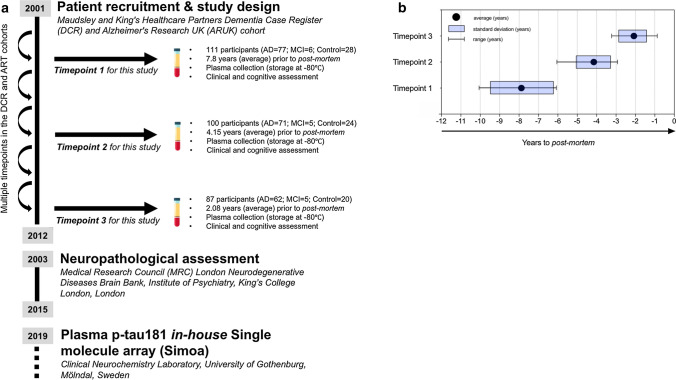
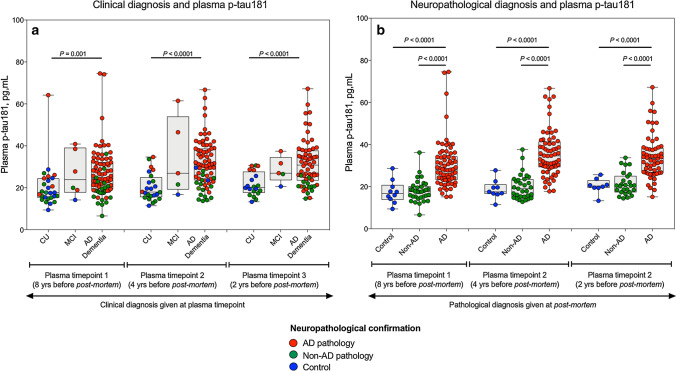
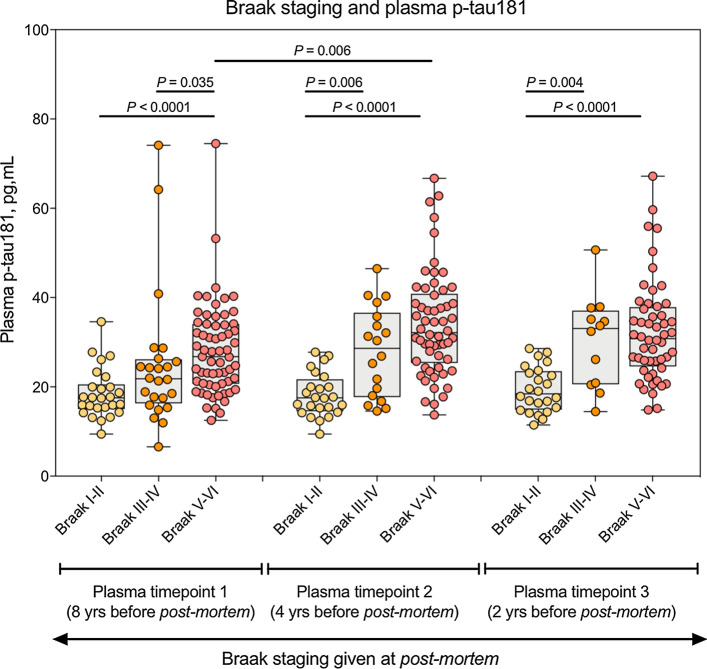
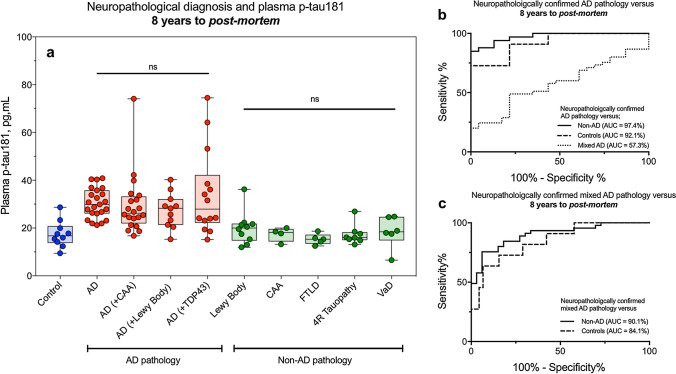
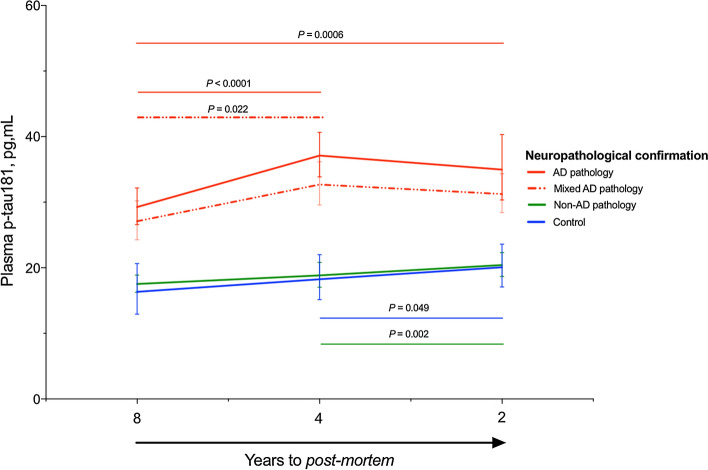
The neuropathological confirmation of amyloid-β (Aβ) plaques and tau neurofibrillary tangles (NFT) remains the gold standard for a definitive diagnosis of Alzheimer’s disease (AD). Nowadays, the in vivo diagnosis of AD is greatly aided by both cerebrospinal fluid (CSF) and positron emission tomography (PET) biomarkers. Although highly accurate, their broad implementation is restricted by high cost, limited accessibility and invasiveness. We recently developed a high-performance, ultrasensitive immunoassay for the quantification of tau phosphorylated at threonine-181 (p-tau181) in plasma, which identifies AD pathophysiology with high accuracy. However, it remains unclear whether plasma p-tau181, measured years before the death, can predict the eventual neuropathological confirmation of AD, and successfully discriminates AD from non-AD dementia pathologies. We studied a unique cohort of 115 individuals with longitudinal blood collections with clinical evaluation at 8, 4 and 2 years prior to neuropathological assessment at death. The results demonstrate that plasma p-tau181 associates better with AD neuropathology and Braak staging than a clinical diagnosis 8 years before post-mortem. Moreover, while all patients had a diagnosis of AD dementia during life, plasma p-tau181 proved to discriminate AD from non-AD pathologies with high accuracy (AUC = 97.4%, 95% CI = 94.1–100%) even 8 years before death. Additionally, the longitudinal trajectory of plasma p-tau181 was assessed in all patients. We found that the main increases in plasma p-tau181 occurred between 8 and 4 years prior to death in patients with AD neuropathology and later plateauing. In contrast, non-AD pathologies and controls exhibited minor, albeit significant, increases in p-tau181 up until death. Overall, our study demonstrates that plasma p-tau181 is highly predictive and specific of AD neuropathology years before post-mortem examination. These data add further support for the use of plasma p-tau181 to aid clinical management in primary care and recruitment for clinical trials.
Overview
The claims and statistics of this paper haven’t been checked yet.
Free: it reads the open-access text and checks the first 5 claims that cite a source we can check. Create a free account to check every claim.
Integrity signals
Registry
Cites
Statistics
Figures
Verification
Claims the paper makes
The claims and statistics of this paper haven’t been checked yet.
Free: it reads the open-access text and checks the first 5 claims that cite a source we can check. Create a free account to check every claim.
Claims other papers make about this one
Each is checked against this paper’s own text: does it say what the citing paper says it does?
The source backs part of the claim, not all of it — or backs it for a different population, condition or comparison.
In the citing paper
“Yet certain p-tau species, but not all, are also associated with neurofibrillary tangle pathology, the secondary AD pathological hallmark.15,16,17”
From Diagnostic Accuracy of a Plasma Phosphorylated Tau 217 Immunoassay for Alzheimer Disease Pathology (2024) · cites this paper as [17]
Experimental — accuracy not yet measuredThe source backs part of the claim, not all of it — or backs it for a different population, condition or comparison.
In the citing paper
“Plasma levels of p-tau are strongly associated with PET and CSF biomarkers of AD pathology19–25, neuropathological changes associated with AD20,23,26,27 and the subsequent development of AD dementia20,23,28.”
From Highly accurate blood test for Alzheimer's disease is similar or superior to clinical cerebrospinal fluid tests (2024) · cites this paper as [26]
Experimental — accuracy not yet measuredThe source backs part of the claim, not all of it — or backs it for a different population, condition or comparison.
In the citing paper
“Plasma measures of phosphorylated tau at Thr181 (p-tau181), Thr217 (p-tau217) and Thr231 (p-tau231) have high diagnostic accuracy in differentiating AD from other neurodegenerative disorders in clinical studies1–3, which are validated by postmortem neuropathological studies1,2,4.”
From Plasma p-tau231 and p-tau217 as state markers of amyloid-β pathology in preclinical Alzheimer’s disease (2022) · cites this paper as [4]
Experimental — accuracy not yet measured
Self-check
Percentages, sums and reported differences re-computed from the paper’s own numbers.
The self-check needs the paper’s full text.
Citations
Cites
Home visits: a strategy to improve newborn survival - Authors' reply
(2008) · Americanae (AECID Library) · doi:10.1016/s0140 · Cited by 22,524
McKhann, G. M., Knopman, D. S., Chertkow, H., Hyman, B. T., Jack, C. R., Kawas, C. H., Klunk, W. E., Koroshetz, W. J., Manly, J. J., Mayeux, R., et al. (2011) · Alzheimer's & Dementia · doi:10.1016/j.jalz.2011.03.005 · Cited by 18,657
NIA‐AA Research Framework: Toward a biological definition of Alzheimer's disease
Jack, C. R., Bennett, D. A., Blennow, K., Carrillo, M. C., Dunn, B., Haeberlein, S. B., Holtzman, D. M., Jagust, W., Jessen, F., Karlawish, J., et al. (2018) · Alzheimer's & Dementia · doi:10.1016/j.jalz.2018.02.018 · Cited by 10,537
Self-citationJack, C. R., Knopman, D. S., Jagust, W. J., Petersen, R. C., Weiner, M. W., Aisen, P. S., Shaw, L. M., Vemuri, P., Wiste, H. J., Weigand, S. D., et al. (2013) · The Lancet Neurology · doi:10.1016/s1474-4422(12)70291-0 · Cited by 4,396
Advancing research diagnostic criteria for Alzheimer's disease: the IWG-2 criteria
Dubois, B., Feldman, H. H., Jacova, C., Hampel, H., Molinuevo, J. L., Blennow, K., DeKosky, S. T., Gauthier, S., Selkoe, D., Bateman, R., et al. (2014) · The Lancet Neurology · doi:10.1016/s1474-4422(14)70090-0 · Cited by 3,321
Self-citationBraak, H., Alafuzoff, I., Arzberger, T., Kretzschmar, H., & Del Tredici, K. (2006) · Acta Neuropathologica · doi:10.1007/s00401-006-0127-z · Cited by 3,172
Blennow, K., de Leon, M. J., & Zetterberg, H. (2006) · The Lancet · doi:10.1016/s0140-6736(06)69113-7 · Cited by 3,134
Self-citationHigh performance plasma amyloid-β biomarkers for Alzheimer's disease
Nakamura, A., Kaneko, N., Villemagne, V. L., Kato, T., Doecke, J., Doré, V., Fowler, C., Li, Q.-X., Martins, R., Rowe, C., et al. (2018) · Nature · doi:10.1038/nature25456 · Cited by 1,681
World Alzheimer Report 2018: The state of the art of dementia research: New frontiers
Patterson, C. (2018) · Cited by 1,461
Karikari, T. K., Pascoal, T. A., Ashton, N. J., Janelidze, S., Benedet, A. L., Rodriguez, J. L., Chamoun, M., Savard, M., Kang, M. S., Therriault, J., et al. (2020) · The Lancet Neurology · doi:10.1016/s1474-4422(20)30071-5 · Cited by 1,316
Self-citation
Cited by
Items 201–300 of 348
Rosano, C., Karikari, T. K., Cvejkus, R., Bellaver, B., Ferreira, P. C. L., Zmuda, J. M., Wheeler, V. W., Pascoal, T. A., & Miljkovic, I. (2024) · Alzheimer s & Dementia Translational Research & Clinical Interventions · doi:10.1002/trc2.12460 · Cited by 13
Self-citationLin, X., Chen, C., Chen, J., Zhu, C., Zhang, J., Su, R., Chen, S., Weng, S., Chang, X., Lin, S., et al. (2024) · ACS Nano · doi:10.1021/acsnano.4c05249 · Cited by 11
Tau biomarkers for neurodegenerative diseases: Current state and perspectives
Vacchi, E., Ruíz‐Barrio, I., & Melli, G. (2025) · Parkinsonism & Related Disorders · doi:10.1016/j.parkreldis.2025.107772 · Cited by 12
Ozcelikay, G., Gamella, M., Ünal, M. A., Gücüyener, K., Montero‐Calle, A., Barderas, R., Pingarrón, J. M., Campuzano, S., & Özkan, S. A. (2022) · Talanta · doi:10.1016/j.talanta.2022.123526 · Cited by 11
Jiang, L., Ding, X., Wang, W., Yang, X., Li, T., & Lei, P. (2022) · Biomolecules · doi:10.3390/biom12091194 · Cited by 12
Phosphorylated tau in Alzheimer’s disease
Telser, J., Grossmann, K., Wohlwend, N., Risch, L., Saely, C. H., & Werner, P. (2023) · Advances in clinical chemistry · doi:10.1016/bs.acc.2023.05.001 · Cited by 12
Zhang, L., Du, X., Yang, C., Gong, H., Zhang, M., Han, Y., & Luo, H. (2025) · Sensors and Actuators B Chemical · doi:10.1016/j.snb.2025.138239 · Cited by 11
Hackenhaar, F. S., Study, T. A. I. B. A. L., Josefsson, M., Adolfsson, A. N., Landfors, M., Kauppi, K., Porter, T., Milicic, L., Laws, S. M., Hultdin, M., et al. (2023) · Journal of Alzheimer s Disease · doi:10.3233/jad-230039 · Cited by 10
“Recently, novel bloodbased markers, for instance those reflecting different species of phosphorylated tau in plasma have shown promise for AD prediction [2, 3].”
BackgroundColey, N., Zetterberg, H., Cantet, C., Guyonnet, S., Ashton, N. J., Vellas, B. J., Blennow, K., Andrieu, S., Vellas, B. J., Guyonnet, S., et al. (2024) · The Lancet Healthy Longevity · doi:10.1016/s2666-7568(23)00255-6 · Cited by 17
Self-citationEvans, L. J., O’Brien, W. T., Spitz, G., Mutimer, S., Xie, B., Giesler, L. P., Major, B. P., Hickey, J. W., Roberts, S., Mitra, B., et al. (2024) · Sports Medicine · doi:10.1007/s40279-024-02138-6 · Cited by 15
Blutbasierte Biomarker zur Optimierung der Früh- und Differentialdiagnostik der Alzheimer-Demenz
Hansen, N., Rauter, C. M., & Wiltfang, J. (2022) · Fortschritte der Neurologie · Psychiatrie · doi:10.1055/a-1839-6237 · Cited by 16
“Zudem war es über das blutbasierte p-tau181 möglich, kognitiv unauffällige Individuen mit und ohne Aß-Pathologie sicher voneinander zu unterscheiden [29] ( ▶ tab.”
BackgroundProspective evaluation of plasma phosphorylated tau in a real‐life memory clinic in Thailand
Thanapornsangsuth, P., Booncharoen, K., Luechaipanit, W., Supharatpariyakorn, T., Sarutikriangkri, Y., Tangnimitchok, S., Likitjaroen, Y., Sukprakun, C., Tepmongkol, S., & Hemachudha, T. (2023) · Alzheimer s & Dementia · doi:10.1002/alz.13022 · Cited by 10
Required improvements for cerebrospinal fluid-based biomarker tests of Alzheimer’s disease
Gaetani, L., Chiasserini, D., Paoletti, F. P., Bellomo, G., & Parnetti, L. (2023) · Expert Review of Molecular Diagnostics · doi:10.1080/14737159.2023.2276918 · Cited by 10
Dark, H. E., Shafer, A. T., Cordon, J., An, Y., Lewis, A., Moghekar, A., Landman, B. A., Resnick, S. M., & Walker, K. A. (2025) · Neurology · doi:10.1212/wnl.0000000000210271 · Cited by 10
Sexton, C. E., Anstey, K. J., Baldacci, F., Barnum, C. J., Barron, A. M., Blennow, K., Brodaty, H., Burnham, S. C., Elahi, F. M., Götz, J., et al. (2021) · Alzheimer s & Dementia · doi:10.1002/alz.12380 · Cited by 13
Self-citationSuárez‐Calvet, M., Ruiz, C. A., Alcolea, D. A., Mendióroz, M., Balasa, M., Morenas‐Rodríguez, E., Puig‐Pijoan, A., Sánchez‐Juan, P., Villarejo‐Galende, A., & Sánchez‐Valle, R. (2024) · Neurología · doi:10.1016/j.nrl.2024.08.002 · Cited by 12
Self-citationUnravelling the plasma proteome: Pioneering biomarkers for differential dementia diagnosis
Gezegen, H., Alaylıoğlu, M., Şahin, E., Swann, O., Veleva, E., Güven, G., Yaman, Ü., Salih, D. A. M., Bılgıç, B., Hanağası, H. A., et al. (2025) · Alzheimer s & Dementia · doi:10.1002/alz.70162 · Cited by 16
Self-citationGraham, N., Zimmerman, K. A., Heslegrave, A., Keshavan, A., Moro, F., Abed‐Maillard, S., Bernini, A., Dunet, V., Garbero, E., Nattino, G., et al. (2023) · Journal of Neurology Neurosurgery & Psychiatry · doi:10.1136/jnnp-2023-331854 · Cited by 9
Self-citationKammula, S. V., Tripathi, S., Wang, N., Dawson, V. L., Dawson, T. M., & Mao, X. (2023) · Ageing and Neurodegenerative Diseases · doi:10.20517/and.2023.20 · Cited by 16
Multi-Omic Blood Biomarkers as Dynamic Risk Predictors in Late-Onset Alzheimer’s Disease
Bhalala, O. G., Watson, R., & Yassi, N. (2024) · International Journal of Molecular Sciences · doi:10.3390/ijms25021231 · Cited by 11
Yang, W., Guan, F., Yang, L., Shou, G., Zhu, F., Xu, Y., Meng, Y., Li, M., & Dong, W. (2024) · Frontiers in Neurology · doi:10.3389/fneur.2024.1445479 · Cited by 13
Plasma p-tau181 associated with structural changes in mild cognitive impairment
Nabizadeh, F., Balabandian, M., Rostami, M. R., Ward, R. T., Ahmadi, N., Pourhamzeh, M., & Initiative, A. D. N. (2022) · Aging Clinical and Experimental Research · doi:10.1007/s40520-022-02148-2 · Cited by 10
Plasma Phospho-Tau-181 as a Diagnostic Aid in Alzheimer’s Disease
Tsantzali, I., Foska, A., Sideri, E., Routsi, E., Tsomaka, E., Kitsos, D. K., Zompola, C., Bonakis, A., Giannopoulos, S., Voumvourakis, K. I., et al. (2022) · Biomedicines · doi:10.3390/biomedicines10081879 · Cited by 9
“Plasma levels of τP-181 may also have prognostic value, since they may predict cortical brain atrophy in AD [27], AD pathology at least 8 years prior to pathologic diagnosis [28] and progression to AD dementia even in presymptomatic subjects [29–31].”
BackgroundBlood-Based Biomarkers for Early Alzheimer’s Disease Diagnosis in Real-World Settings
Perneczky, R., Hansen, N., Hofmann, A., Laske, C., Priller, J., Grimmer, T., Frölich, L., Düzel, E., Jessen, F., & Wiltfang, J. (2024) · Methods in molecular biology · doi:10.1007/978-1-0716-3774-6_1 · Cited by 14
Ashton, N. J., Molfetta, G. D., Tan, K., Blennow, K., Zetterberg, H., & Messing, A. (2024) · Neurological Sciences · doi:10.1007/s10072-024-07495-8 · Cited by 8
“This biomarker is thought to be a specific biomarker for AD pathology [10], but AD is an unlikely scenario in the AxD patient group.”
Self-citationBiofluid biomarkers for Alzheimer’s disease
Wang, S., Xie, S., Zheng, Q., Zhang, Z., Wang, T., & Zhang, G. (2024) · Frontiers in Aging Neuroscience · doi:10.3389/fnagi.2024.1380237 · Cited by 11
Sun, W., Ye, S., Wang, Y., Chen, H., Che, P., Chen, J., & Zhang, N. (2025) · Brain Communications · doi:10.1093/braincomms/fcaf094 · Cited by 9
“48 Positive correlations between A β 42 and information processing speed and visuospatial function and between A β 40 and MMSE were also found in our study.”
Suárez‐Calvet, M., Ruiz, C. A., Alcolea, D. A., Mendióroz, M., Balasa, M., Morenas‐Rodríguez, E., Puig‐Pijoan, A., Sánchez‐Juan, P., Villarejo‐Galende, A., & Sánchez‐Valle, R. (2025) · Neurología (English Edition) · doi:10.1016/j.nrleng.2025.07.004 · Cited by 17
Self-citationMontoliu‐Gaya, L., Valeriano-Lorenzo, E., Ashton, N. J., López‐González, F. J., Lantero‐Rodriguez, J., Ruiz-González, A., Pastor, A. B., Frades, B., Zea‐Sevilla, M. A., Valentí, M., et al. (2025) · Alzheimer s & Dementia · doi:10.1002/alz.70562 · Cited by 11
“7 Similarly, in our study, we found no significant differences in plasma tau biomarker levels when donors were grouped by clinical diagnosis, but we did observe differences when grouped based on neuropathological classification.”
Self-citationA Blood Test for Alzheimer’s Disease: It’s about Time or Not Ready for Prime Time?
Galasko, D. R., Grill, J. D., Lingler, J. H., & Heidebrink, J. L. (2022) · Journal of Alzheimer s Disease · doi:10.3233/jad-215490 · Cited by 8
“Assays for P-tau181, P-tau217, and P-tau231 appear to be both sensitive and specific for AD [11–13].”
Kuo, C.-Y., Tseng, H.-Y., Stachiv, I., Tsai, C., Lai, Y.-C., & Nikolai, T. (2023) · Journal of Clinical Medicine · doi:10.3390/jcm12041322 · Cited by 8
“AD is characterized by an aggregation of the extracellular β-amyloid plaques and intraneuronal neurofibrillary (tau) tangles in the brain [2,3].”
BackgroundCordero, I. R. G., Vasilevskaya, A., Taghdiri, F., Khodadadi, M., Mikulis, D. J., Tarazi, A., Mushtaque, A., Anssari, N., Colella, B., Green, R., et al. (2024) · Journal of Neurology · doi:10.1007/s00415-024-12340-1 · Cited by 9
“As elevated tau phosphorylated at threonine 181 (pTau181) has been associated with tau and amyloid deposition [32, 49, 53] and with post-mortem confirmation of AD [36], we performed an exploratory analysis of plasma pTau181 and CSF AD biomarkers.”
Self-citationBiomarkers and Their Implications in Alzheimer’s Disease: A Literature Review
Marcucci, V., & Kleiman, J. (2021) · Exploratory Research and Hypothesis in Medicine · doi:10.14218/erhm.2021.00016 · Cited by 9
Paclibar, C. G., Schafer, D. M., Biju, A. P., Karim, F., Sison, S. A., Liang, C., Ahmed, S. T., & Mukherjee, J. (2025) · Molecules · doi:10.3390/molecules30050990 · Cited by 6
The emerging role of blood biomarkers in diagnosis and treatment of Alzheimer’s disease
McGettigan, S., Nolan, Y. M., Ghosh, S., & O’Mahony, D. (2023) · European Geriatric Medicine · doi:10.1007/s41999-023-00847-1 · Cited by 8
“Further recent work shows that plasma p-tau181 concentration starts to increase approximately 15 years before clinical disease onset in familial AD [9] and also predicts disease neuropathology at least 8 years before autopsy confirmation in sporadic AD [10].”
BackgroundOhara, T., Tatebe, H., Hata, J., Honda, T., Shibata, M., Matsuura, S., Mikami, T., Maeda, T., Ono, K., Mimura, M., et al. (2024) · Psychiatry and Clinical Neurosciences · doi:10.1111/pcn.13661 · Cited by 7
“9,11,12 Meanwhile, no prospective studies have assessed the association between plasma GFAP levels and risk of dementia.”
BackgroundBudak, M., Fausto, B. A., Osiecka, Z., Sheikh, M., Perna, R., Ashton, N. J., Blennow, K., Zetterberg, H., Fitzgerald-Bocarsly, P. A., & Gluck, M. A. (2024) · Alzheimer s Research & Therapy · doi:10.1186/s13195-024-01619-0 · Cited by 9
Self-citationComorbid Pathologies and Their Impact on Dementia with Lewy Bodies—Current View
Jellinger, K. A. (2025) · International Journal of Molecular Sciences · doi:10.3390/ijms26167674 · Cited by 9
Christodoulou, R. C., Vamvouras, G., Petrou, V., Papageorgiou, P. S., Pitsillos, R., Rivera, L., Vassiliou, E. K., Papageorgiou, S. G., Solomou, E. E., & Initiative, A. D. N. (2025) · Biomolecules · doi:10.3390/biom15091300 · Cited by 7
“Longitudinal analyses have shown that plasma PTAU181 can predict AD neuropathology years before clinical diagnosis, supporting its role as an accessible biomarker for early disease detection [14].”
Chen, W., Lin, C., Su, F., Fang, Y., Liu, G., Chen, C. Y., Zhou, X., Yao, X., Ashford, C. B., Li, F., et al. (2023) · Journal of Alzheimer s Disease · doi:10.3233/jad-230182 · Cited by 9
“Plasmaamyloid-(cid:2) (A (cid:2) ) and phosphorylated tau (P-tau) levels reflect the two principal pathological features of AD, namely brain amyloidosis and tau pathology [10, 11].”
Gauthier, S. G., Therriault, J., Pascoal, T. A., & Rosa‐Neto, P. (2020) · Expert Review of Neurotherapeutics · doi:10.1080/14737175.2020.1841637 · Cited by 7
Blankenship, A. E., Kemna, R. E., Kueck, P. J., John, C. S., Vitztum, M., Yoksh, L., Mahnken, J. D., Vidoni, E. D., Morris, J. K., & Geiger, P. C. (2025) · Journal of Applied Physiology · doi:10.1152/japplphysiol.00396.2024 · Cited by 7
Singh, K., Cheung, B. M. Y., & Xu, A. (2021) · Biomarkers in Medicine · doi:10.2217/bmm-2021-0219 · Cited by 8
Thapa, S., Bhattarai, A., Shah, S., Chand, S., Bagherieh, S., Mirmosayyeb, O., & Mishra, S. K. (2023) · Acta Neurologica Scandinavica · doi:10.1155/2023/2791622 · Cited by 7
“ptau is reliably elevated in Alzheimer’s disease (AD), but its relation to ALS is not well explored [4].”
BackgroundSison, S. A., Paclibar, C. G., Liang, C., & Mukherjee, J. (2024) · Molecules · doi:10.3390/molecules29143308 · Cited by 6
“Phosphorylated p-tau immunoassays, p-tau181 [4,5], and p-tau217 [6] confirmed that plasma p-tau has high sensitivity and specificity to detect AD neuropathology [7,8].”
BackgroundUse of biomarkers in the diagnosis of Alzheimer’s disease in adults with intellectual disability
McFeely, A., O’Connor, A., & Kennelly, S. (2024) · The Lancet Healthy Longevity · doi:10.1016/j.lanhl.2024.100639 · Cited by 6
Huang, G., Li, R., Roccati, E., Lawler, K., Bindoff, A. D., King, A. E., Vickers, J. C., Bai, Q., & Alty, J. (2025) · The Journal of Prevention of Alzheimer s Disease · doi:10.1016/j.tjpad.2025.100081 · Cited by 6
Self-citationSalvadó, G., Ossenkoppele, R., Ashton, N. J., Beach, T. G., Serrano, G. E., Zetterberg, H., Mattsson, N., Janelidze, S., Blennow, K., & Hansson, O. (2022) · medRxiv · doi:10.1101/2022.08.22.22279052 · Cited by 6
Self-citationPan, W., Teng, Y., Han, X., Liu, S., Pang, X., Wang, L., & Zhao, M. (2025) · The Journal of Prevention of Alzheimer s Disease · doi:10.1016/j.tjpad.2025.100193 · Cited by 8
“Similarly, p-Tau181 [ 65 , 75–78 ] and p-S396-Tau [ 79 ] were significantly elevated in the CSF and plasma of patients with AD, and p-Tau181 in plasma reached a peak 4–8 years before patient death and stabilized thereafter, indicating its potential prognostic predictive value [ 80 ].”
Giudici, K. V., Barreto, P. D. S., Cantet, C., Zetterberg, H., Blennow, K., & Vellas, B. J. (2025) · The Journal of Frailty & Aging · doi:10.1016/j.tjfa.2025.100064 · Cited by 5
Self-citationKarur, P., Kaldas, M., Babu, Y. S. R., & Parmar, M. S. (2026) · Molecular Neurobiology · doi:10.1007/s12035-025-05647-1 · Cited by 6
“…r m m a tt e r e d , a s p - t a u181 fr o m t h e L ill y a ss a y p e r-f o r m e d b e tt e r t h a n o t h e r p - t a u181 a ss a y s . demonstrated that plasma p-tau181 distinguished neu-ropathologically confirmed AD from non-AD pathologies with high accuracy up to 8 years before death [16].”
Devanarayan, V., Llano, D. A., Hu, Y. H., Hampel, H. J., Kramer, L. D., Dhadda, S., & Irizarry, M. C. (2024) · Alzheimer s & Dementia Diagnosis Assessment & Disease Monitoring · doi:10.1002/dad2.12621 · Cited by 6
Alpaugh, M., Lantero‐Rodriguez, J., Benedet, A. L., Manseau, U., Boutin, M., Maiuri, M., Denis, H. L., Masnata, M., Fazal, S. V., Chouinard, S., et al. (2025) · Journal of Neurology · doi:10.1007/s00415-025-12966-9 · Cited by 7
Self-citationÁlvarez‐Sánchez, L., Ferré‐González, L., Peña‐Bautista, C., Balaguer, Á., Amengual, J. L., Baquero, M., Cubas-Núñez, L., Casanova, B., & Cháfer‐Pericás, C. (2025) · European Journal of Clinical Investigation · doi:10.1111/eci.70034 · Cited by 7
“13 16 Recently, other p-Tau isoforms (p-Tau217, p-Tau231) showed good accuracy in detecting AD pathology.”
Potential diagnostic markers in Alzheimer's disease: current perspectives and future directions
Zheng, M., Wang, S., & Jia, J. (2025) · Neurodegenerative Disease Management · doi:10.1080/17582024.2025.2554515 · Cited by 5
Tzekaki, E. E., Katsipis, G., Andreadou, E. G., Mouzakidis, C., Baldimtsi, E. N., Karathanasi, E. M., Hassandra, M., Galanis, E., Hatzigeorgiadis, A., Γούδας, Μ., et al. (2023) · Brain Disorders · doi:10.1016/j.dscb.2023.100090 · Cited by 5
Shim, Y. (2023) · Current Alzheimer Research · doi:10.2174/0115672050284054240119101834 · Cited by 6
Blood biomarkers as surrogate endpoints in Alzheimer’s disease research
Shan, G., Li, H., Zhang, Y., Wang, G., & Bernick, C. B. (2025) · Frontiers in Aging Neuroscience · doi:10.3389/fnagi.2025.1576373 · Cited by 6
NMDA Receptor Antibodies and Neuropsychiatric Symptoms in Parkinson’s Disease
Gibson, L. L., Pollak, T. A., Hart, M., Heslegrave, A., Hye, A., Church, A. J., Lakdawala, N., Nicholson, T. R., Batzu, L., Rota, S., et al. (2023) · Journal of Neuropsychiatry · doi:10.1176/appi.neuropsych.20220107 · Cited by 6
Self-citationKhan, M. S., Furkan, M., Shahwan, M. J., Yadav, D. K., Anwar, S., Khan, R. H., & Shamsi, A. (2023) · Amino Acids · doi:10.1007/s00726-023-03355-5 · Cited by 5
“Definitive confirmation is only found through autopsy, which remains the gold standard method of identification (Lantero Rodriguez et al. 2020).”
Blood-based biomarkers of Alzheimer’s disease and olfactory decline over 15 years in older adults
Ekström, I., Vetrano, D. L., Valletta, M., Ruane, R., Larsson, M., Fredolini, C., Winblad, B. G., Grande, G., & Laukka, E. J. (2025) · GeroScience · doi:10.1007/s11357-025-02038-1 · Cited by 5
Housini, M., Contreras, J. A., Hayes, C. A., & The Health and Aging Brain Study (HABS‐HD) Study Team (2026) · Journal of Alzheimer s Disease · doi:10.1177/13872877251415367 · Cited by 5
“62,63 This aligns with emerging evidence that plasma p-tau181 elevations precede overt tau deposition and may represent an early stage of AD-related pathophysiology.”
Pais, M. V., Kuo, C., Ances, B. M., Wetherell, J. L., Lenze, E. J., & Diniz, B. S. (2023) · Alzheimer s & Dementia Diagnosis Assessment & Disease Monitoring · doi:10.1002/dad2.12487 · Cited by 6
Tropea, T. F., Waligórska, T., Xie, S. X., Nasralah, I. M., Cousins, K. A. Q., Trojanowski, J. Q., Grossman, M., Irwin, D. J., Weintraub, D. A., Lee, E. B., et al. (2022) · SSRN Electronic Journal · doi:10.2139/ssrn.4007185 · Cited by 4
Polygenic risk discriminates Lewy body dementia from Alzheimer's disease
McKeever, A., Swann, P., Malpetti, M., Donaghy, P. C., Thomas, A. J., Mak, E., Carter, S. F., Tan, J. H. K., Hong, Y. T., Fryer, T. D., et al. (2025) · Alzheimer s & Dementia · doi:10.1002/alz.14381 · Cited by 4
“We confirmed the value of PRS in addition to plasma p-tau181 Asageneticsignature,PRSshouldbelesssusceptibletoacutechanges due to environmental factors (e.g., head trauma) and co-morbidities (e.g., renal failure) 28,69 , and can be obtained from non-invasive sam-plingmethods.”
Self-citationBellelli, F., Barreto, P. D. S., Cantet, C., Ousset, P., Blennow, K., Vellas, B. J., Angioni, D., for the MAPT/DSA Study Group, Guyonnet, S., Carrié, I., et al. (2025) · The Journals of Gerontology Series A · doi:10.1093/gerona/glaf113 · Cited by 5
Self-citationAD‐related plasma biomarkers in centenarians: links to cognition and neuropathology
Lorenz, L. M. C., Rohde, S. K., Luimes, M. C., Rozemüller, A. J. M., Bank, N. B., Hulsman, M., Graat, M. J. I., van der Hoorn, M. E., Daatselaar, D. A. H., Gouda, M., et al. (2025) · Alzheimer s & Dementia · doi:10.1002/alz.70969 · Cited by 4
“,40–42 In our cohort, we observed the strongest associations for pTau-181 with the tau pathology burden in the temporal cortex, as measured by three markers spanning the progression from pre-tangles to ghost tangles.”
Plasma p-tau212 identifies cognitively unimpaired individuals with emerging amyloid-β pathology
Kac, P. R., González‐Escalante, A., Milà‐Alomà, M., Ashton, N. J., Shekari, M., Ortiz‐Romero, P., Turton, M., Harrison, P., Zetterberg, H., Gispert, J. D., et al. (2025) · Journal of Neurology · doi:10.1007/s00415-025-13572-5 · Cited by 5
Self-citationBrembati, V., Crescenti, D., Geviti, A., Rossini, E., Cazzaniga, F. A., Moda, F., Zanier, E. R., Guerrera, G., Battistini, L., Baiardi, S., et al. (2026) · Alzheimer s Research & Therapy · doi:10.1186/s13195-025-01897-2 · Cited by 6
Weber, A. J., Ng, B., Greathouse, K. M., Bennett, D. A. A., Tasaki, S., Gaiteri, C., & Herskowitz, J. H. (2026) · Neuron · doi:10.1016/j.neuron.2026.03.001 · Cited by 5
Potential biomarkers of early diagnosis of Alzheimer’s disease
Bogolepova, A. N., Makhnovich, E. V., Коваленко, Е. А., & Osinovskaya, N. A. (2022) · S S Korsakov Journal of Neurology and Psychiatry · doi:10.17116/jnevro20221220917 · Cited by 3
Axelsen, T. M., Bager, C. L., Bihlet, A. R., Karsdal, M. A., Henriksen, K., & Tang, M. E. (2023) · The Journal of Prevention of Alzheimer s Disease · doi:10.14283/jpad.2023.36 · Cited by 3
Staging and markers in Parkinson’s disease and Lewy body disorders: narrative review
Bougea, A. M. (2025) · Therapeutic Advances in Chronic Disease · doi:10.1177/20406223251381099 · Cited by 2
Hellquist, E., Janelidze, S., Weidung, B., Franzon, K., Giedraitis, V., Ingelsson, M., Bali, D., Veličkaitė, V., Zetterberg, H., Hansson, O., et al. (2025) · Journal of Alzheimer s Disease · doi:10.1177/13872877251390387 · Cited by 2
Self-citationKara, F., Joers, J. M., Przybelski, S. A., Algeciras‐Schimnich, A., Gunter, J. L., Jack, C. R., Petersen, R. C., Öz, G., & Kantarci, K. (2025) · Neurobiology of Aging · doi:10.1016/j.neurobiolaging.2025.11.003 · Cited by 3
A Test of the Alzheimer Disease Framework—Did It Pass?
Petersen, R. C., & Zetterberg, H. (2025) · JAMA Neurology · doi:10.1001/jamaneurol.2025.4966 · Cited by 2
Self-citationOrso, B., Bollack, A., Sheikh, Z. H., Morbelli, S. D., Pardini, M., & Farrar, G. (2025) · Neurological Sciences · doi:10.1007/s10072-025-08725-3 · Cited by 7
Hayes, C. A., Agwu, C., Dharmapuri, A., Contreras, J. A., & The Health and Aging Brain Study (HABS‐HD) Study Team (2026) · Journal of Alzheimer s Disease · doi:10.1177/13872877261427706 · Cited by 2
Nanomaterials for Alzheimer’s disease: emerging strategies in diagnosis and therapy
Na, Y., Bai, J., Zhang, N., Geng, F., & Wang, X. (2026) · Journal of Nanobiotechnology · doi:10.1186/s12951-026-04281-w · Cited by 5
Song, H., Wei, F., Gao, N., Hu, Z., Li, Z., & Feng, L. (2026) · Sensors and Actuators B Chemical · doi:10.1016/j.snb.2026.140391 · Cited by 2
Prominent Perspective on Existing Biological Hallmarks of Alzheimer’s Disease
Singh, N., Sharma, S., Ghosh, K. K., Gupta, B., & Kuča, K. (2024) · Current Topics in Medicinal Chemistry · doi:10.2174/0115680266292514240404040341 · Cited by 2
Chang, H., Huang, K., Huang, C.-G., Huang, C., Huang, S., Lin, K., & Chang, C. (2024) · International Journal of Molecular Sciences · doi:10.3390/ijms25115607 · Cited by 2
“Previous studies have shown that higher concentrations of plasma pTau181 are associated with amyloid pathology [38,39] and that changes in the concentration could be used to differentiate AD from TCP. CSF pTau181 has been associated with tau-PET measures in TCP [19], and we also found that plasma…”
BackgroundGadd, D. A., McGeachan, R. I., Hillary, R. F., McCartney, D. L., Harris, S. E., Sherwood, R. A., Abbott, N. J., Cox, S. R., & Marioni, R. E. (2021) · Wellcome Open Research · doi:10.12688/wellcomeopenres.17322.1 · Cited by 3
Cai, Y., Fu, P., & Zhang, X. (2023) · Neuroscience Letters · doi:10.1016/j.neulet.2023.137161 · Cited by 3
“For instance, a previous study demonstrated that the increased levels of plasma p-tau 181 may greatly predict AD pathology at least 8 years before post-mortem [11].”
Lussier, F. Z., Benedet, A. L., Therriault, J., Pascoal, T. A., Tissot, C., Chamoun, M., Mathotaarachchi, S. S., Savard, M., Ashton, N. J., Karikari, T. K., et al. (2020) · Research Square · doi:10.21203/rs.3.rs-69968/v1 · Cited by 2
Self-citationThe fluid biomarkers of Alzheimer’s disease
Peng, Q., & Zhang, Z. (2021) · Brain Science Advances · doi:10.26599/bsa.2021.9050001 · Cited by 1
Anti-amyloid Monoclonal Antibodies for Alzheimer’s Disease: A New Hope? (Review)
Мазеркина, И. А. (2025) · Safety and Risk of Pharmacotherapy · doi:10.30895/2312-7821-2025-13-1-7-19 · Cited by 1
Fang, X., Liu, Z., Kuang, X., Ni, X., Han, X., Wen, X., & Xu, H. Y. (2025) · Brain‐X · doi:10.1002/brx2.70029 · Cited by 2
Agostini, M., Traldi, P., & Hamdan, M. H. (2025) · NeuroSci · doi:10.3390/neurosci6020050 · Cited by 1
“In an earlier study, longitudinal plasma p-tau181 levels were used to predict AD pathology several years before post-mortem results [81].”
Rissanen, J.-A., Kärkkäinen, S., Katisko, K., Vanninen, A., Luikku, A. J., Rauramaa, T. H., Musialowicz, T., Kokki, M., Julkunen, V., Portaankorva, A. M., et al. (2026) · Journal of Alzheimer s Disease · doi:10.1177/13872877261431800 · Cited by 1
“Our study con fi rmed the already-reported results indicating that plasma pTau181 levels are elevated with advanced age 23,40,41 and that pTau181 levels are correlated with CSF pTau levels.”
Mohammed, H. E., Haseeb, M. E., Nasser, M., Hanen, G., Abdelkader, M., Yaser, H., Yaser, S., Samir, A., Arafeh, Y., Wagdy, M., et al. (2026) · Acta Neurologica Belgica · doi:10.1007/s13760-026-03107-8 · Cited by 2
SRXN1 blood levels negatively correlate with hippocampal atrophy and cognitive decline
Cucoș, C. A., Cracana, I., Dobre, M., Popescu, B. O., Tudose, C., Spiru, L., Manda, G., Niculescu, G., & Milanesi, E. (2022) · F1000Research · doi:10.12688/f1000research.76191.1 · Cited by 5
Nabizadeh, F., Rostami, M. R., Balabandian, M., & Ahmadi, N. (2020) · Research Square · doi:10.21203/rs.3.rs-135997/v1 · Cited by 1
“In accordance with the present results, previous studies have demonstrated that tau phosphorylated at threonine-181 (p-tau181) in plasma predicts AD pathology and can accurately discriminate between AD and non-AD pathologies (27).”
BackgroundMethodResultParchi, P., Baiardi, S., Quadalti, C., Mammana, A., Dellavalle, S., Zenesini, C., Sambati, L., Pantieri, R., Polischi, B., Romano, L., et al. (2022) · Research Square · doi:10.21203/rs.3.rs-1513592/v1 · Cited by 1
Potential utility of plasma p-tau and NfL as surrogate biomarkers for preventive clinical trialsPreprint
Ferreira, P. C. L., Ferrari‐Souza, J. P., Tissot, C., Bellaver, B., Leffa, D. T., Lussier, F. Z., Povala, G., Therriault, J., Benedet, A. L., Ashton, N. J., et al. (2022) · medRxiv · doi:10.1101/2022.08.17.22278853 · Cited by 1
Self-citationHackenhaar, F. S., Josefsson, M., Adolfsson, A. N., Landfors, M., Kauppi, K., Porter, T., Milicic, L., Laws, S. M., Hultdin, M., Adolfsson, R., et al. (2022) · Research Square · doi:10.21203/rs.3.rs-2276882/v2 · Cited by 1
Tagai, K., Tatebe, H., Matsuura, S., Zhang, H., Kokubo, N., Matsuoka, K., Endo, H., Oyama, A., Hirata, K., Shinotoh, H., et al. (2023) · medRxiv · doi:10.1101/2023.09.15.23295595 · Cited by 1
Plasma p-Tau181 Outperforms Cerebrospinal Fluid Total Tau in Terms of Alzheimer’s Disease DiagnosisPreprint
Nabizadeh, F., Balabandian, M., Rostami, M. R., Ward, R. T., Ahmadi, N., & Pourhamzeh, M. (2021) · Research Square · doi:10.21203/rs.3.rs-673603/v1
Saunders, T. S., Heslegrave, A., King, D., Harris, S. E., Ritchie, C. W., Terrera, G. M., Deary, I. J., Cox, S. R., Zetterberg, H., & Spires‐Jones, T. L. (2021) · bioRxiv (Cold Spring Harbor Laboratory) · doi:10.1101/2021.11.24.469836
“Both CSF and plasma p-tau181 concentrations are elevated in AD relative to controls [12] and have been found to correlate with global cognitive function in those with mild cognitive impairment (MCI) [13].”
BackgroundSelf-citationDevelopment of Fluid Biomarkers for Alzheimer’s Disease
Blennow, K. (2022) · Cambridge University Press eBooks · doi:10.1017/9781108975759.033 · Cited by 1
Self-citation
Metadata
- Authors
- Lantero Rodriguez, J., Karikari, T. K., Suárez-Calvet, M., Troakes, C., King, A., Emersic, A., Aarsland, D., Hye, A., Zetterberg, H., Blennow, K., & Ashton, N. J.
- Affiliations
- University of Gothenburg (SE)
- King's College London (GB)
- Sahlgrenska University Hospital (SE)
- Corresponding author
- Ashton, Nicholas J.
- ORCID
- Venue
- Acta Neuropathologica
- Published
- 2020-07-27
- Volume
- 140
- Issue
- 3
- Pages
- 267-278
- ISSN
- 0001-6322 (ISSN-L)
- 1432-0533
- PMC
- PMC7423866
- OpenAlex
- W3044633524
- Cited by
- 350
- References
- 33
- Citations by year
- 2026: 22 · 2025: 58 · 2024: 55 · 2023: 63 · 2022: 79 · 2021: 63 · 2020: 9
- FWCI
- 39.04
- Type
- journal article
- Language
- en
- Open access
- hybrid
- doi.org
- Licence
- cc-by
- creativecommons.org/licenses/by/4.0 (tdm)
- creativecommons.org/licenses/by/4.0 (vor)
- Locations
- Acta Neuropathologica (publishedVersion, cc-by)
- PubMed Central (publishedVersion, cc-by)
- PubMed (publishedVersion)
- UCL Discovery (University College London) (submittedVersion)
- Research Portal (King's College London) (submittedVersion, cc-by)
- Repositori digital de la UPF (Universitat Pompeu Fabra) (submittedVersion, cc-by)
- Funders
- BrightFocus Foundation (AF-930627, A2020812F)
- South London and Maudsley NHS Foundation Trust
- Gun och Bertil Stohnes Stiftelse
- Demensförbundet
- Ministerio de Ciencia, Innovación y Universidades (IJC2018‐037478‐I)
- Alzheimer's Society
- National Institute for Health and Care Research
- King's College London
- European Commission (HORIZON2020, 752310)
- Royal Swedish Academy of Sciences (2017-00915)
- Hjärnfonden (FO2017‑0243, FO2017, ALFGBG-715986, #FO2020-0240)
- Vetenskapsrådet (2017-00915, (#ALFGBG-715986, PI19/00155, FO2017-0243)
- Göteborgs Universitet
- Alzheimerfonden (#AF-930627, -742881, AF-742881, -715986, -0243, FO2017-0243)
- Medical Research Council (MR/L016397/1)
- Instituto de Salud Carlos III (PI19/00155, IJC2018-037478-I)
- Wallenberg Centre for Molecular and Translational Medicine
- Topics
- Health Sciences › Medicine › Psychiatry and Mental health › Dementia and Cognitive Impairment Research
- Life Sciences › Neuroscience › Cellular and Molecular Neuroscience › Alzheimer's disease research and treatments
- Health Sciences › Medicine › Clinical Neurology › Cerebrospinal fluid and hydrocephalus
- Keywords
- Alzheimer's disease, tau phosphorylation, early diagnosis, neurofibrillary tangles, amyloid plaques, Braak staging, differential diagnosis of dementia, cognitive decline, longitudinal biomarker trajectories, blood-based biomarkers
- MeSH terms
- Alzheimer Disease, Humans, Biomarkers, Amyloid beta-Peptides, Neurofibrillary Tangles, tau Proteins, Disease Progression, Early Diagnosis
About these checks
Registry, retraction, Cites and statistics results are computed, not judged, with one exception: a printed reference that no index lists is read once by a model before it counts as a citation error. Claims are extracted by a model and kept only when their quote appears verbatim in the text; each cited source is then checked, with a model’s help, for whether it says what the claim relies on. Those verdicts can be wrong — read the claim’s quote and the cited source before relying on one.
Statistics and arithmetic are recomputed, not judged.
Confidence bands are shown only for fields calibrated on our annotated test set. None is calibrated yet, so no band is shown.
What counts as a claim ›How we measure confidence ›How we check this ›
Are you an author, or do you see a problem with this page? Request a review
Data sources
Bibliographic data: Semantic Scholar, OpenAlex, Crossref.
Contains information from the Semantic Scholar Academic Graph Datasets, made available under the ODC Attribution License (ODC-BY 1.0).
Semantic Scholar’s data is described in: Kinney, R., et al. (2023). The Semantic Scholar Open Data Platform. arXiv:2301.10140.
