

The value of spreader grafts in rhinoplasty: a critical review
Open accessThe DOI matches its Crossref record; 42 of the 43 references it cites were found in a registry or an index; 2 of the 38 sources its claims cite were checked for support.
Abstract
Critical review noting that spreader grafts restore dorsum aesthetics, support the nasal valve, and help maintain a straightened septal dorsum, while their impact on nasal patency is valuable but not absolute.
Overview
CoChat Summary
TL;DR
Spreader grafts are valuable in rhinoplasty for restoring the internal nasal valve angle, dorsal aesthetic lines, and a straightened or reconstructed nasal dorsum, but their functional benefit for nasal patency remains controversial. This critical review describes their indications, surgical technique, materials, limitations, and alternatives.
Key findings
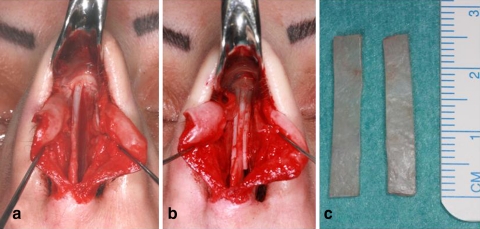
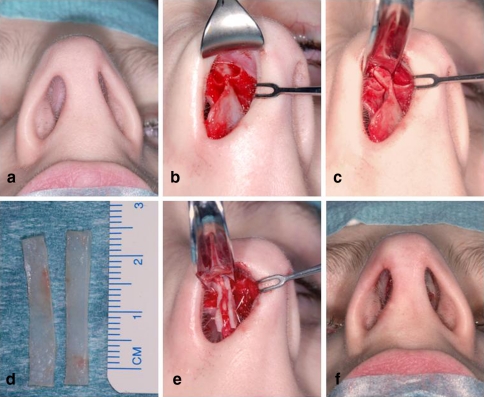
- Spreader grafts help preserve/restore the normal internal nasal valve angle, restore dorsal aesthetic lines, support and straighten the corrected deviated cartilaginous septal dorsum, and reconstruct the saddled nasal dorsum.
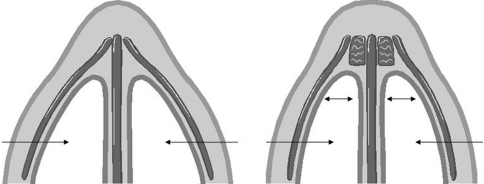
- Their functional value is debated: they widen the middle nasal vault, but the review states they have limited ability to support and lateralize the collapsed lateral nasal wall, and Fig. 4 describes them as widening the middle nasal vault “without any effect on nasal valve collapse.”
- Normal nasal valve angle in a normal Caucasian is reported as 9–15°, with collapse when the narrowest part becomes narrower than 9°.
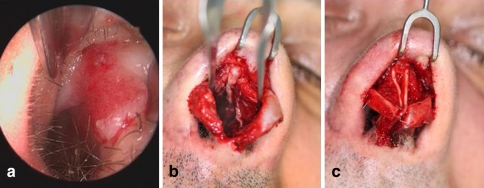
- Alternatives include alar batten grafts, H-graft, auto-spreader flap, double-layered stepped spreader graft, and endonasal subperichondral placement; synthetic/injectable materials include hyaluronic acid, calcium hydroxylapatite, high-density porous polyethylene, and polylactic/polyglycolic acid polymer.
Methods
- Design: critical literature review of spreader grafts in rhinoplasty, covering etiology/diagnosis/treatment of nasal valve collapse, humpy nose, crooked nose, nasal dorsum reconstruction, surgical technique, materials, limitations, and alternatives.
- Data/sample: no primary patient sample or systematic database search is described; the paper reviews and cites prior literature.
- Analysis: narrative synthesis of surgical anatomy, indications, techniques, and reported outcomes; no quantitative meta-analysis is reported.
Limitations
- Stated: there is still controversy on the extent of spreader grafts’ value in nasal patency; they are limited in adequately supporting and lateralizing the lateral nasal wall; long enough cartilage grafts may be difficult to obtain in secondary rhinoplasty or after septoplasty; auto-spreader flaps are limited in deviated dorsal septum and asymmetric dorsal aesthetic lines.
- Evident: as a narrative critical review, it does not report a systematic search strategy, inclusion/exclusion criteria, risk-of-bias assessment, or pooled quantitative outcomes.
- Evident: no primary data or patient outcomes are measured in the paper; conclusions rely on cited studies and the authors’ synthesis.
Model-written summary. Check it against the paper before relying on it.
Integrity signals
Registry
Cites
Statistics
Figures
Verification
Claims the paper makes
2 Valid · 3 Not valid · 22 Not checked · 10 Own results and interpretations
The cited sources support only part of this claim — read each source’s verdict below.
In the paper
“Nasal valve collapse occurs when this narrowest part becomes weak and narrower than 9° [3].”
§ The value of spreader grafts in rhinoplasty: a critical review > Etiology, diagnosis, and treatment of the nasal valve collapse
What the sources say
- Partly supportedcites [3] Marakami C Nasal valve collapse Ear Nose Throat J 2004 83 163 164 15086009 sourceExperimental — accuracy not yet measured
The passage labeled Abstract says the internal nasal valve’s cross-sectional area decreases as its angle narrows, and describes collapse when the angle is less than 10° to 15°. It does not give a 9° threshold or say that the narrowest part must become weak. (LLM, conf=0.88)
plainstates a cause- Asserted: passes — The authors put it forward as true.
- Checkable: passes — It can be checked against evidence.
- Load-bearing: unclear — It is unclear whether the paper’s conclusions depend on it.
- Based: passes — The paper gives a reason why it holds.
- Partly supported
A claim is checked only against the cited paper’s full text, never its abstract, and none is available for its sources.
In the paper
“The average angle of the nasal valve in a normal Caucasian ranged from 9 to 15° [4, 5].”
§ The value of spreader grafts in rhinoplasty: a critical review > Etiology, diagnosis, and treatment of the nasal valve collapse
What the sources say
- Not checked — no full text of the sourcecites [4] McCaffrey TV Rhinomanometry and diagnosis of nasal obstruction Facial Plast Surg 1990 7 266 273 10.1055/s-2008-1064694 source
- Not checked — no full text of the sourcecites [5] Haight JS Cole P The site and function of the nasal valve Laryngoscope 1983 93 49 55 10.1288/00005537-198301000-00009 6823174 source
plain- Asserted: passes — The authors put it forward as true.
- Checkable: passes — It can be checked against evidence.
- Load-bearing: unclear — It is unclear whether the paper’s conclusions depend on it.
- Based: passes — The paper gives a reason why it holds.
A statement the paper makes itself — it cites no source for it, so there is none to check. The quote shows it is in the paper.
In the paper
“In addition, removal of the nasal hump during rhinoplasty may distort the junction of the upper lateral cartilages and the septum, causing collapse of the internal nasal valve angle.”
§ The value of spreader grafts in rhinoplasty: a critical review > Etiology, diagnosis, and treatment of the nasal valve collapse
hedgedstates a possible cause- Asserted: passes — The authors put it forward as true.
- Checkable: passes — It can be checked against evidence.
- Load-bearing: passes — The paper’s conclusions depend on it.
- Based: passes — The paper gives a reason why it holds.
A claim is checked only against the cited paper’s full text, never its abstract, and none is available for its sources.
In the paper
“Nasal valve collapse is a common anatomical cause for nasal obstruction [1, 2].”
§ The value of spreader grafts in rhinoplasty: a critical review > Etiology, diagnosis, and treatment of the nasal valve collapse
What the sources say
- Not checked — no full text of the sourcecites [1] Toriumi DM Management of the middle nasal vault in rhinoplasty Operat Tech Plast Reconstr Surg 1995 2 16 30 10.1016/S1071-0949(05)80013-7 source
- Not checked — no full text of the sourcecites [2] Sheen JH Spreader graft: a method of reconstructing the roof of the middle nasal vault following rhinoplasty Plast Reconstr Surg 1984 73 230 239 10.1097/00006534-198402000-00013 6695022 source
plainstates a cause- Asserted: passes — The authors put it forward as true.
- Checkable: passes — It can be checked against evidence.
- Load-bearing: passes — The paper’s conclusions depend on it.
- Based: passes — The paper gives a reason why it holds.
In the paper
“Alar batten grafts are especially useful for addressing nasal valve collapse caused by a weak lateral nasal wall [8].”
§ The value of spreader grafts in rhinoplasty: a critical review > Limitations of spreader grafts and alternatives
What the sources say
- Not checked — no full text of the sourcecites [8] Becker DG Becker SS Treatment of nasal obstruction from nasal valve collapse with alar batten grafts J Long Term Eff Med Implants 2003 13 259 269 10.1615/JLongTermEffMedImplants.v13.i3.100 14516189 source
plainstates a cause- Asserted: passes — The authors put it forward as true.
- Checkable: passes — It can be checked against evidence.
- Load-bearing: unclear — It is unclear whether the paper’s conclusions depend on it.
- Based: passes — The paper gives a reason why it holds.
13 more claims
Create a free account to see all 37 claims and every source verdict.
- It may state two separate claims as one. 11
- Probably not a substantial claim. 12
Citations
Cites
Spreader Graft: A Method of Reconstructing the Roof of the Middle Nasal Vault Following Rhinoplasty
Sheen, J. H. (1984) · Plastic and Reconstructive Surgery · doi:10.1097/00006534-198402000-00013 · Cited by 614
(2014) · 50 Studies Every Plastic Surgeon Should Know · doi:10.1201/b17524-46 · Cited by 512
The site and function of the nasal valve
Haight, J. S. J., & Cole, P. (1983) · The Laryngoscope · doi:10.1288/00005537-198301000-00009 · Cited by 372 · cited 4×
“Spreader grafts play a useful role in the treatment of nasal valve collapse by widening the nasal valve angle with variable degrees of success [2, 5, 7, 11, 30, 31].”
BackgroundInfluentialUse of Alar Batten Grafts for Correction of Nasal Valve Collapse
Toriumi, D. M., Josen, J., Weinberger, M., & Tardy, M. E. (1997) · Archives of Otolaryngology - Head and Neck Surgery · doi:10.1001/archotol.1997.01900080034002 · Cited by 329
The Flaring Suture to Augment the Repair of the Dysfunctional Nasal Valve
Park, S. S. (1998) · Plastic & Reconstructive Surgery · doi:10.1097/00006534-199804040-00036 · Cited by 167
The Spreader Flap in Primary Rhinoplasty
Gruber, R. P., Park, E., Newman, J., Berkowitz, L., & Oneal, R. (2007) · Plastic and Reconstructive Surgery · doi:10.1097/01.prs.0000259198.42852.d4 · Cited by 162
Using the Autospreader Flap in Primary Rhinoplasty
Byrd, H. S., Meade, R. A., & Gonyon, D. L. (2007) · Plastic and Reconstructive Surgery · doi:10.1097/01.prs.0000259196.02216.a5 · Cited by 150
Evidence supporting functional rhinoplasty or nasal valve repair: A 25‐year systematic review
Rhee, J. S., Arganbright, J. M., McMullin, B. T., & Hannley, M. (2008) · Otolaryngology–Head and Neck Surgery · doi:10.1016/j.otohns.2008.02.007 · Cited by 132 · cited 1×
“Spreader grafts play a role in the treatment of nasal valve collapse by widening the nasal valve angle and maintaining the widened angle with variable degrees of success [5, 7, 11, 14].”
BackgroundSpreader graft: a method of reconstructing the roof of the middle nasal vault following rhinoplasty.
Sheen, J. H. (1984) · PubMed · Cited by 112
Upper Lateral Cartilage Spreader Flaps in Rhinoplasty
ONEAL, R., & BERKOWITZ, R. (1998) · Aesthetic Surgery Journal · doi:10.1016/s1090-820x(98)70095-0 · Cited by 110
Cited by
Seth, I., Lim, B., Xie, Y., Cevik, J., Rozen, W. M., Ross, R. J., & Lee, M. (2023) · Aesthetic Surgery Journal Open Forum · doi:10.1093/asjof/ojad084 · Cited by 78
“…contextual overview, briefly discussing the mechanism and potential side effects, before identifying spreader, Alar batten, and Butterfly grafts, 15,16 but failed to discuss the spreader graft’s limitations in expanding a collapsed lateral nasal wall as noted by Teymoortash et al. Only 1 of its 5…”
Barrett, D. M., Casanueva, F. J., & Cook, T. A. (2016) · Facial Plastic Surgery Clinics of North America · doi:10.1016/j.fsc.2016.03.001 · Cited by 55
Ferreira, M. G., Santos, M., Carmo, D. O., Fertuzinhos, A., Sousa, C. A. E., Santos, J. N., Dourado, N., & Amarante, J. M. (2020) · Aesthetic Surgery Journal · doi:10.1093/asj/sjaa221 · Cited by 40
Hassanpour, S. E., Heidari, A., Moosavizadeh, S. M., Tarahomi, M., Tabrizi, A. G., & Tavakoli, S. (2016) · PubMed Central · Cited by 48
Paul, M. A., Kamali, P., Chen, A. D., Ibrahim, A. M. S., Wu, W. W., Becherer, B. E., Medin, C. R., & Lin, S. J. (2018) · Plastic & Reconstructive Surgery Global Open · doi:10.1097/gox.0000000000001615 · Cited by 35
Repair of Lateral Wall Insufficiency
Vaezeafshar, R., Moubayed, S. P., & Most, S. P. (2018) · JAMA Facial Plastic Surgery · doi:10.1001/jamafacial.2017.0718 · Cited by 34
Effects of Spreader Grafts on Olfactory Function in Septorhinoplasty
Ulusoy, S., Dinç, M., Dalğıç, A., Dizdar, D., Avınçsal, M. Ö., & Külekçi, M. (2015) · Aesthetic Plastic Surgery · doi:10.1007/s00266-015-0597-2 · Cited by 18
Challenging Rhinoplasty for the Cleft Lip and Palate Patient
Cuzalina, A. L., & Tolomeo, P. G. (2020) · Oral and Maxillofacial Surgery Clinics of North America · doi:10.1016/j.coms.2020.09.012 · Cited by 17
Effect of Spreader Graft on Nasal Functions in Septorhinoplasty Surgery
Mamanov, M., Batıoğlu-Karaaltın, A., İnci, E., & Erdur, Z. B. (2017) · Journal of Craniofacial Surgery · doi:10.1097/scs.0000000000003613 · Cited by 11
Functional and aesthetic outcomes of spreader graft and auto-spreader flap after nasal hump removal
Naguib, M. B., Ahmed, M. R., Madian, Y. T., Elnahriry, T. M., & Eldeeb, W. E. (2020) · The Egyptian Journal of Otolaryngology · doi:10.1186/s43163-020-00058-6 · Cited by 11
Sazgar, A. A., Razmara, N., Razfar, A., Sazgar, A. K., & Amali, A. (2019) · Journal of Plastic Reconstructive & Aesthetic Surgery · doi:10.1016/j.bjps.2019.06.022 · Cited by 11
Self-citationShafaeei, Y., & Zare, N. J. (2019) · The Journal of craniofacial surgery (Print) · doi:10.1097/scs.0000000000005744 · Cited by 7
“However, this technique provides less support to the overall structure of the nasal vault.(6) Although routinely used in rhinoplasty, this technique can lead to a waste of time on the one hand and cause the graft tissue to fall into the mucoperichondrial pocket and lead to the movement of the grafts away from their or…”
MethodEarly Results and Description of a New Modification of Spreader Graft to Enlarge Nasal Valve Area
Şahin, M., & Özmen, Ö. A. (2016) · Journal of Craniofacial Surgery · doi:10.1097/scs.0000000000002597 · Cited by 8
Atighechi, S., Sarafraz, Z., Baradaranfar, M., Dadgarnia, M. H., Zand, V., Meybodian, M., Mandegari, M., Shirkhoda, S., & Vaziribozorg, S. (2018) · Journal of Craniofacial Surgery · doi:10.1097/scs.0000000000005078 · Cited by 10
PROBLEMS OF SECONDARY RHINOPLASTY
Артыков, К. П., Azizov, K. N., & ISMOILOV, E. K. (2020) · Avicenna Bulletin · doi:10.25005/2074-0581-2020-22-4-595-605 · Cited by 8
Uses of Various Grafting Techniques in External Approach Rhinoplasty: An Overview
Khan, N. A., Rehman, A., & Yadav, R. (2016) · Indian Journal of Otolaryngology and Head & Neck Surgery · doi:10.1007/s12070-016-1007-z · Cited by 10
Update on the evidence for functional rhinoplasty techniques
Chan, D., & Shipchandler, T. Z. (2015) · Current Opinion in Otolaryngology & Head & Neck Surgery · doi:10.1097/moo.0000000000000172 · Cited by 7
“Spreader grafts are recognized as the gold standard in reconstruction and restoration of the middle vault [37,39].”
BackgroundGuyuron, B., & Xia, T. Y. (2022) · Aesthetic Plastic Surgery · doi:10.1007/s00266-022-02897-5 · Cited by 6
“Spreader grafts were often prophylactically placed after dorsal hump reductions to prevent iatrogenic narrowing at the junction between the ULCs and dorsal septum, which can cause mid-vault collapse and result in an inverted V deformity [2].”
BackgroundAccurate and Specific Measuring Grid for Otorhinolaryngological Surgeries
Parab, S. R., Khan, M. M., & Rana, A. K. (2020) · Indian Journal of Otolaryngology and Head & Neck Surgery · doi:10.1007/s12070-020-01886-x · Cited by 6
Revision Rhinoplasty: With Introduction of a Novel Preoperative Assessment Classification System
Jiang, A. Y., Chamata, E. S., & Bressler, F. J. (2021) · Seminars in Plastic Surgery · doi:10.1055/s-0041-1727271 · Cited by 8
Functional and Cosmetic Considerations in Saddle Nose Deformity Repair
Pham, T., Winkler, A. A., & Gadkaree, S. K. (2025) · Otolaryngologic Clinics of North America · doi:10.1016/j.otc.2024.07.016 · Cited by 6
Complications Associated with Spreader Grafts and Spreader Flaps: A Systematic Review
Fallahi, H. R., Keyhan, S. O., Dastgir, R., Jahanbani, M., Ramezanzade, S., & Yousefi, P. (2022) · Aesthetic Plastic Surgery · doi:10.1007/s00266-022-02790-1 · Cited by 10
“Nevertheless, this technique also comes with few complications including excessively wide middle nasal vault, an asymmetry in nasal cartilages, the collapse of lateral walls, and reduction of internal nasal valve angle which results in nasal obstruction [46].”
BackgroundKim, Y., & Jang, Y. J. (2019) · Journal of rhinology · doi:10.18787/jr.2019.26.2.75 · Cited by 5
Balanced Cantilever Graft for Supporting the Cartilaginous Side Wall of Nose
Raghavan, U., Daoud, M., Heywood, E. G., & Ullas, G. (2021) · Aesthetic Surgery Journal · doi:10.1093/asj/sjab212 · Cited by 5
Functional Compromise in the Middle Vault in the Management of Revision Rhinoplasty
Friedman, O., & Wang, L. L. (2018) · Facial Plastic Surgery · doi:10.1055/s-0038-1654677 · Cited by 4
ElBestar, M., Zeid, M., Lasheen, H. N., Farahat, A., El-Fouly, M., Sabaa, M. A. E., & ElSalmawy, A. (2020) · Egyptian Journal of Ear Nose Throat and Allied Sciences · doi:10.21608/ejentas.2020.32090.1221 · Cited by 5
“The skeletal framework of the hump may constitute cartilaginous, bony or both components[1].”
BackgroundSeptal Reconstruction: Simple to Complex
Oliver, J. R., & Humphrey, C. D. (2023) · Facial Plastic Surgery · doi:10.1055/s-0043-1771498 · Cited by 5
Update in the management of the middle vault in rhinoplasty
Fedok, F. G. (2016) · Current Opinion in Otolaryngology & Head & Neck Surgery · doi:10.1097/moo.0000000000000275 · Cited by 5
Spreader Graft Placement: An Effective Procedure for Alleviation of Internal Nasal Valve Collapse
Garg, L. N., Singh, N. K., Kappagantu, K. M., & Yadav, A. (2021) · Journal of Oral and Maxillofacial Surgery · doi:10.1016/j.joms.2021.05.034 · Cited by 5
Farr, S. T. (2019) · IntechOpen eBooks · doi:10.5772/intechopen.79209 · Cited by 4
Positioning the Nasal Tip in Rhinoplasty
Mattos, D., Hanna, S. A., Datta, S., et al. (2025) · Plastic & Reconstructive Surgery · doi:10.1097/prs.0000000000012163 · Cited by 3
Functional evaluation of Septal L-strut extension graft in East Asians
Kim, S.-B., Baik, S.-H., Lee, K., Dhong, E., Jeong, S.-H., & Han, S. (2024) · Journal of Plastic Reconstructive & Aesthetic Surgery · doi:10.1016/j.bjps.2024.05.010 · Cited by 3
Modified alar batten grafts for treatment in nasal valve dysfunction: Our experience
Raposo, A., Lajara, J., Guillén, A., & Garcia-Purriños, F. J. (2021) · Auris Nasus Larynx · doi:10.1016/j.anl.2021.08.006 · Cited by 4
Comparative Functional Effect of Alternative Surgical Techniques Used in Rhinoplasty
Xavier, R., Lopes, S. A., Menger, D. J., Carvalho, H. C., & Spratley, J. (2022) · Annals of Otology Rhinology & Laryngology · doi:10.1177/00034894221111096 · Cited by 5
Novel method for correcting cephalic rotation in Asian nasal tip plasty
Sun, Y., Wu, G., Jiang, Z., Cao, W., Li, S., & Dai, T. (2022) · Journal of Plastic Reconstructive & Aesthetic Surgery · doi:10.1016/j.bjps.2022.10.003 · Cited by 3
Abduwani, J. A., & Singh, A. B. (2014) · American Journal of Otolaryngology · doi:10.1016/j.amjoto.2014.10.035 · Cited by 3
Structural rhinoplasty for the persistently twisted nose
Morisada, M. V., Humphrey, C. D., & Kriet, J. D. (2024) · Plastic and Aesthetic Research · doi:10.20517/2347-9264.2023.119 · Cited by 2
Closed Treatment of the Internal Nasal Valve
Boyce, C., Ovaitt, A. K., & Hetzler, L. T. (2025) · Otolaryngologic Clinics of North America · doi:10.1016/j.otc.2024.08.012 · Cited by 2
Rhinoplasty challenges and surgery outcomes in older adults
Aliyeva, A., & Sarı, E. (2025) · European Journal of Plastic Surgery · doi:10.1007/s00238-025-02344-z · Cited by 2
Understanding Nasal Valve Compromise in Nasal Airway Obstruction: A New Classification System
AlQuniabut, I., Oh, J., & Choi, J.-Y. (2022) · Journal of Craniofacial Surgery · doi:10.1097/scs.0000000000008997 · Cited by 2
Augmentation Grafts in Septorhinoplasty: Our Experience
Nataraj., R., Mohan, J., Reshma, C., et al. (2015) · International Journal of Otolaryngology and Head & Neck Surgery · doi:10.4236/ijohns.2015.44054 · Cited by 2
“Spreader graft Spreader grafts are used to correct the middle vault of the nose and are placed between the upper lateral cartilage and the dorsal septum [4] [5] (Figure 9 and Figure 10).”
BackgroundMiddle nasal valve collapse: a way to resolve
Milicic, D., & Serodio, C. (2018) · Journal of Otolaryngology-ENT Research · doi:10.15406/joentr.2018.10.00329 · Cited by 3
Cleft Lip and Palate Patient Rhinoplasty
Cuzalina, A. L., & Tamim, A. (2019) · IntechOpen eBooks · doi:10.5772/intechopen.82116 · Cited by 5
“Sutures through the upper lateral cartilages and septum are placed to apply force in the opposite direction of the L-strut deviation, and thus correcting it and creating symmetry [14].”
BackgroundRichardson, S., & Khandeparker, R. V. S. (2021) · Springer eBooks · doi:10.1007/978-981-15-1346-6_76 · Cited by 2
Mathematical Analysis of the Functions of Spreader Graft
Raghavan, U., Ullas, G., & Daoud, M. (2020) · Plastic & Reconstructive Surgery · doi:10.1097/prs.0000000000007305 · Cited by 3
Management of the Middle Vault
Pruthi, A., Dobratz, E. J., & Dougherty, W. (2023) · Facial Plastic Surgery · doi:10.1055/a-2148-2141 · Cited by 2
“15 Spreader grafts generally measure 15 to20 mm in length, 2.5 to3mm in height, and 1to2mm in width.”
BackgroundInfluentialHasanpour, S. E., Amini, M., & Rouientan, A. (2023) · WORLD JOURNAL OF PLASTIC SURGERY · doi:10.61186/wjps.12.3.24 · Cited by 1
“The spreader graft is not able to adequately lateralize the lateral wall of the nose effectively, and this affects the functional outcome 7 .”
BackgroundFacial Gender-Affirming Surgery
Knox, J. A., & Hoffman, W. Y. (2024) · Oral and Maxillofacial Surgery Clinics of North America · doi:10.1016/j.coms.2024.01.004 · Cited by 1
Effect of Surgical Specialty on Postoperative Complications of Rhinoplasty
Chinta, S. R., Kumar, K., Sibala, D. R., Haleem, A., Warrier, A. K., Celidonio, J., & Eloy, J. A. (2025) · Otolaryngology · doi:10.1002/ohn.1338 · Cited by 2
“29 30 ‐ 32 The increased likelihood of multiple sites for cartilage grafts and the use of alloplastic implants may both contribute to the increased odds of postoperative sepsis in the plastics cohort.”
Caudal Septoplasty for Treatment of C-Shaped Craniocaudal Deviation Using Synthetic Struts
Moina, D. G., Moina, G. M., & Rancati, A. O. (2016) · The American Journal of Cosmetic Surgery · doi:10.1177/0748806816679608 · Cited by 1
“Nonetheless, cartilage grafting can lead to widening of the nose, especially in patients with thin nasal dorsum, impairing aesthetic results.(1,2) However, tip widening does not depend only on the use of spreader grafts.”
BackgroundAn Initial Survey of Septorhinoplasty in Crooked Nose Deformities
Villafuerte, C. V., Dy, A. E. S., & Lapeña, J. F. F. (2016) · Philippine Journal of Otolaryngology Head and Neck Surgery · doi:10.32412/pjohns.v31i1.311 · Cited by 1
Elwany, S. (2024) · Springer eBooks · doi:10.1007/978-3-031-70077-4_11 · Cited by 1
Sherif, A. E., & Kamel, I. (2019) · The Egyptian Journal of Plastic and Reconstructive Surgery · doi:10.21608/ejprs.2019.65109 · Cited by 1
Is There a Risk of Saddle Nose Deformity after Spreader Grafts and Flaps?
Eweiss, A. Z. (2022) · Facial Plastic Surgery · doi:10.1055/a-1760-1709 · Cited by 2
Crooked nose correction: an institutional experience
Das, A. (2019) · International Journal of Otorhinolaryngology and Head and Neck Surgery · doi:10.18203/issn.2454-5929.ijohns20193868
The Problem We Face: The “Compartmentalized” Conventional View of Facial/Nasal Anatomy
Stupak, H. D. (2020) · Springer eBooks · doi:10.1007/978-3-030-44674-1_1
Significance of Inner Nasal Valve In Septoplasty
Bhoyar, S. S., Kashid, G. M., Gaikwad, D. A., Purohit, S. A., Gupta, A., Waghmare, S. K., & Palve, H. (2021) · VIMS Health Science Journal · doi:10.46858/vimshsj.8102
Nasal valve obstruction (鼻弁狭窄) の治療経験
宮脇, 剛., 哲史, 大., 浅香, 大., 鴻信義, & 内田満 (2013) · 耳鼻咽喉科展望 · doi:10.11453/orltokyo.56.363
Ponnusamy, S., Trehan, S., Lade, H., & Bhardwaj, R. (2022) · Saudi Journal of Otorhinolaryngology Head and Neck Surgery · doi:10.4103/sjoh.sjoh_31_21 · Cited by 2
How to Adjust the Thickness of the Spreader Graft in Nasal Valve Collapse
Kim, Y. N., Lee, J. G., Lee, J. Y., & Cho, K. R. (2022) · Korean Journal of Otorhinolaryngology - Head and Neck Surgery · doi:10.3342/kjorl-hns.2022.00633
Mir, Z. A., Ansari, H. H., Shami, H. B., Jan, S. N., & Khan, F. A. (2022) · Pakistan Journal of Medical and Health Sciences · doi:10.53350/pjmhs20221612174
2 Comparative Anatomical/Functional Considerations of Various Ethnic Groups
(2023) · Thieme Medical Publishers eBooks · doi:10.1055/b-0043-193203
16 Prevention and Repair of Internal Nasal Valve Dysfunction for the Reconstructive Surgeon
(2023) · Haug Verlag in Georg Thieme Verlag KG eBooks · doi:10.1055/b-0043-196663
Nasal Obstruction: The Role and Management of the Nasal Valve and Inferior Turbinates
Carney, A. S., & Woolford, T. (2023) · Springer eBooks · doi:10.1007/978-3-031-28690-2_44
Glushko, A. V., Gammadaeva, S. S., Manturova, N. E., et al. (2023) · Plastic Surgery and Aesthetic Medicine · doi:10.17116/plast.hirurgia202304246
Jamalpour, M. R., Narimani, A., Pirdehghan, A., Mohammadi, R., & Rasipour, T. (2023) · Journal of Advances in Medical and Biomedical Research · doi:10.30699/jambs.31.149.536 · Cited by 1
An Algorithmic Approach to use Extended Spreader Grafts in Deviated Noses
Sohail, M., Bashir, M. M., Hassan, A., et al. (2024) · Aesthetic Plastic Surgery · doi:10.1007/s00266-024-04528-7
Shruthi, G. S., Soni, K. D., Swathi Krishna, M., Sharma, V., Choudhury, B., Goyal, A., & Raghavan, U. (2026) · The Journal of Laryngology & Otology · doi:10.1017/s0022215126104356
“12 Furthermore, it offers the advantage of not compromising the integrity of the middle nasal vault, a limitation associated with the external placement of spreader grafts.”
Strategies for the Previously Operated Septum
Liu, D. H., Hamilton, G. S., & Wong, B. J. F. (2026) · Facial Plastic Surgery Clinics of North America · doi:10.1016/j.fsc.2026.01.002
Aksakal, C., Kars, A., & Altıparmak, S. (2026) · Journal of Craniofacial Surgery · doi:10.1097/scs.0000000000012994 · Cited by 1
The Efficacy of Spreader Grafts and Auto-Spreader Flaps in Relieving Nasal Obstruction
Forghani, S. F., Mousavi, A., Mousavi, Z., Saraee, A., Gharahgheshlagh, S. N., Ghanooni, P., & Vaghardoost, R. (2026) · Journal of Maxillofacial and Oral Surgery · doi:10.1007/s12663-026-03179-2
Alshwareb, A. M., Alghanim, A. H., Busbaih, A. J., Obeid, A. A., & Alarfaj, A. (2026) · Aesthetic Plastic Surgery · doi:10.1007/s00266-026-06191-6
Metadata
- Authors
- Teymoortash, A., Fasunla, J. A., & Sazgar, A. A.
- Affiliations
- Philipps University of Marburg (DE)
- Tehran University of Medical Sciences (IR)
- Corresponding author
- Teymoortash, A.
- ORCID
- Sazgar, A. A.
- Venue
- European Archives of Oto-Rhino-Laryngology
- Published
- 2011-11-19
- Volume
- 269
- Issue
- 5
- Pages
- 1411-1416
- ISSN
- 0937-4477 (ISSN-L)
- 1434-4726
- PMC
- PMC3321146
- OpenAlex
- W2161267734
- Semantic Scholar
- 69c712fa9df9a5d61c450fb26698fad7d279f8da
- Cited by
- 72
- References
- 43
- Citations by year
- 2026: 5 · 2025: 5 · 2024: 5 · 2023: 9 · 2022: 9 · 2021: 6 · 2020: 8 · 2019: 7 · 2018: 4 · 2017: 2 · 2016: 7 · 2015: 3 · 2014: 1 · 2013: 1
- FWCI
- 0.12
- Type
- journal article
- Language
- en
- Open access
- hybrid
- doi.org
- Licence
- cc-by-nc
- Locations
- European Archives of Oto-Rhino-Laryngology (publishedVersion, cc-by-nc)
- Europe PMC (PubMed Central) (publishedVersion, cc-by-nc)
- PubMed Central (publishedVersion, cc-by-nc)
- PubMed (publishedVersion)
- Topics
- Health Sciences › Medicine › Surgery › Nasal Surgery and Airway Studies
- Health Sciences › Dentistry › Oral Surgery › Cleft Lip and Palate Research
- Health Sciences › Medicine › Surgery › Reconstructive Facial Surgery Techniques
- Keywords
- spreader grafts, rhinoplasty, nasal dorsum, septal deviation, nasal patency, nasal aesthetics
- MeSH terms
- Humans, Nasal Septum, Nose Deformities, Acquired, Rhinoplasty, Nasal Obstruction, Nasal Cartilages
About these checks
Registry, retraction, Cites and statistics results are computed, not judged, with one exception: a printed reference that no index lists is read once by a model before it counts as a citation error. Claims are extracted by a model and kept only when their quote appears verbatim in the text; each cited source is then checked, with a model’s help, for whether it says what the claim relies on. Those verdicts can be wrong — read the claim’s quote and the cited source before relying on one.
The claim verdicts this report counts are experimental: their accuracy is not yet measured.
A language model drew the claims from the paper on 2026-10-10, under version 3 of the claim definition (model deepseek-v4.1-flash, prompt extract-v3).
A second model labelled each claim on 2026-10-10 (model jev-1.13-20260917, definition revision gold-guideline-v0.2).
Cited sources are checked with a language model’s help (gpt-6-sol).
Statistics and arithmetic are recomputed, not judged.
Confidence bands are shown only for fields calibrated on our annotated test set. None is calibrated yet, so no band is shown.
What counts as a claim ›How we measure confidence ›How we check this ›
Are you an author, or do you see a problem with this page? Request a review
Data sources
Bibliographic data: Semantic Scholar, OpenAlex, Crossref.
Contains information from the Semantic Scholar Academic Graph Datasets, made available under the ODC Attribution License (ODC-BY 1.0).
Semantic Scholar’s data is described in: Kinney, R., et al. (2023). The Semantic Scholar Open Data Platform. arXiv:2301.10140.
