

The value of spreader grafts in rhinoplasty: a critical review
Open accessThe DOI matches its Crossref record; 42 of the 43 references it cites were found in a registry or an index; 2 of the 38 sources its claims cite were checked for support.
Abstract
Critical review noting that spreader grafts restore dorsum aesthetics, support the nasal valve, and help maintain a straightened septal dorsum, while their impact on nasal patency is valuable but not absolute.
Overview
CoChat Summary
TL;DR
Spreader grafts are valuable in rhinoplasty for restoring the internal nasal valve angle, dorsal aesthetic lines, and a straightened or reconstructed nasal dorsum, but their functional benefit for nasal patency remains controversial. This critical review describes their indications, surgical technique, materials, limitations, and alternatives.
Key findings
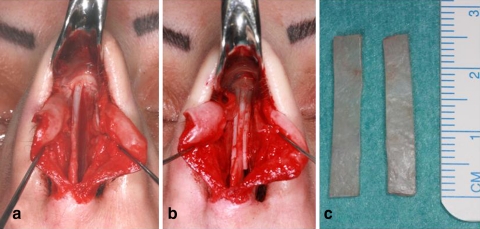
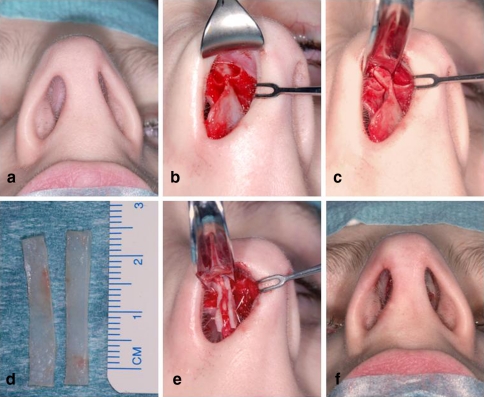
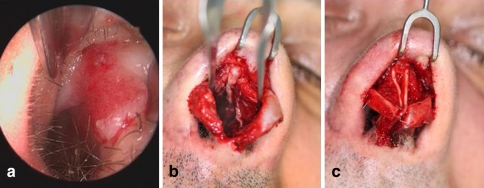
- Spreader grafts help preserve/restore the normal internal nasal valve angle, restore dorsal aesthetic lines, support and straighten the corrected deviated cartilaginous septal dorsum, and reconstruct the saddled nasal dorsum.
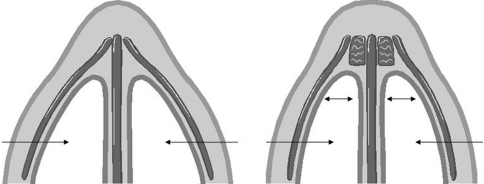
- Their functional value is debated: they widen the middle nasal vault, but the review states they have limited ability to support and lateralize the collapsed lateral nasal wall, and Fig. 4 describes them as widening the middle nasal vault “without any effect on nasal valve collapse.”
- Normal nasal valve angle in a normal Caucasian is reported as 9–15°, with collapse when the narrowest part becomes narrower than 9°.
- Alternatives include alar batten grafts, H-graft, auto-spreader flap, double-layered stepped spreader graft, and endonasal subperichondral placement; synthetic/injectable materials include hyaluronic acid, calcium hydroxylapatite, high-density porous polyethylene, and polylactic/polyglycolic acid polymer.
Methods
- Design: critical literature review of spreader grafts in rhinoplasty, covering etiology/diagnosis/treatment of nasal valve collapse, humpy nose, crooked nose, nasal dorsum reconstruction, surgical technique, materials, limitations, and alternatives.
- Data/sample: no primary patient sample or systematic database search is described; the paper reviews and cites prior literature.
- Analysis: narrative synthesis of surgical anatomy, indications, techniques, and reported outcomes; no quantitative meta-analysis is reported.
Limitations
- Stated: there is still controversy on the extent of spreader grafts’ value in nasal patency; they are limited in adequately supporting and lateralizing the lateral nasal wall; long enough cartilage grafts may be difficult to obtain in secondary rhinoplasty or after septoplasty; auto-spreader flaps are limited in deviated dorsal septum and asymmetric dorsal aesthetic lines.
- Evident: as a narrative critical review, it does not report a systematic search strategy, inclusion/exclusion criteria, risk-of-bias assessment, or pooled quantitative outcomes.
- Evident: no primary data or patient outcomes are measured in the paper; conclusions rely on cited studies and the authors’ synthesis.
Model-written summary. Check it against the paper before relying on it.
Integrity signals
Registry
Cites
Statistics
Figures
Verification
Claims the paper makes
2 Valid · 3 Not valid · 22 Not checked · 10 Own results and interpretations
The cited sources support only part of this claim — read each source’s verdict below.
In the paper
“Nasal valve collapse occurs when this narrowest part becomes weak and narrower than 9° [3].”
§ The value of spreader grafts in rhinoplasty: a critical review > Etiology, diagnosis, and treatment of the nasal valve collapse
What the sources say
- Partly supportedcites [3] Marakami C Nasal valve collapse Ear Nose Throat J 2004 83 163 164 15086009 sourceExperimental — accuracy not yet measured
The passage labeled Abstract says the internal nasal valve’s cross-sectional area decreases as its angle narrows, and describes collapse when the angle is less than 10° to 15°. It does not give a 9° threshold or say that the narrowest part must become weak. (LLM, conf=0.88)
plainstates a cause- Asserted: passes — The authors put it forward as true.
- Checkable: passes — It can be checked against evidence.
- Load-bearing: unclear — It is unclear whether the paper’s conclusions depend on it.
- Based: passes — The paper gives a reason why it holds.
- Partly supported
A claim is checked only against the cited paper’s full text, never its abstract, and none is available for its sources.
In the paper
“The average angle of the nasal valve in a normal Caucasian ranged from 9 to 15° [4, 5].”
§ The value of spreader grafts in rhinoplasty: a critical review > Etiology, diagnosis, and treatment of the nasal valve collapse
What the sources say
- Not checked — no full text of the sourcecites [4] McCaffrey TV Rhinomanometry and diagnosis of nasal obstruction Facial Plast Surg 1990 7 266 273 10.1055/s-2008-1064694 source
- Not checked — no full text of the sourcecites [5] Haight JS Cole P The site and function of the nasal valve Laryngoscope 1983 93 49 55 10.1288/00005537-198301000-00009 6823174 source
plain- Asserted: passes — The authors put it forward as true.
- Checkable: passes — It can be checked against evidence.
- Load-bearing: unclear — It is unclear whether the paper’s conclusions depend on it.
- Based: passes — The paper gives a reason why it holds.
A statement the paper makes itself — it cites no source for it, so there is none to check. The quote shows it is in the paper.
In the paper
“In addition, removal of the nasal hump during rhinoplasty may distort the junction of the upper lateral cartilages and the septum, causing collapse of the internal nasal valve angle.”
§ The value of spreader grafts in rhinoplasty: a critical review > Etiology, diagnosis, and treatment of the nasal valve collapse
hedgedstates a possible cause- Asserted: passes — The authors put it forward as true.
- Checkable: passes — It can be checked against evidence.
- Load-bearing: passes — The paper’s conclusions depend on it.
- Based: passes — The paper gives a reason why it holds.
A claim is checked only against the cited paper’s full text, never its abstract, and none is available for its sources.
In the paper
“Nasal valve collapse is a common anatomical cause for nasal obstruction [1, 2].”
§ The value of spreader grafts in rhinoplasty: a critical review > Etiology, diagnosis, and treatment of the nasal valve collapse
What the sources say
- Not checked — no full text of the sourcecites [1] Toriumi DM Management of the middle nasal vault in rhinoplasty Operat Tech Plast Reconstr Surg 1995 2 16 30 10.1016/S1071-0949(05)80013-7 source
- Not checked — no full text of the sourcecites [2] Sheen JH Spreader graft: a method of reconstructing the roof of the middle nasal vault following rhinoplasty Plast Reconstr Surg 1984 73 230 239 10.1097/00006534-198402000-00013 6695022 source
plainstates a cause- Asserted: passes — The authors put it forward as true.
- Checkable: passes — It can be checked against evidence.
- Load-bearing: passes — The paper’s conclusions depend on it.
- Based: passes — The paper gives a reason why it holds.
In the paper
“Alar batten grafts are especially useful for addressing nasal valve collapse caused by a weak lateral nasal wall [8].”
§ The value of spreader grafts in rhinoplasty: a critical review > Limitations of spreader grafts and alternatives
What the sources say
- Not checked — no full text of the sourcecites [8] Becker DG Becker SS Treatment of nasal obstruction from nasal valve collapse with alar batten grafts J Long Term Eff Med Implants 2003 13 259 269 10.1615/JLongTermEffMedImplants.v13.i3.100 14516189 source
plainstates a cause- Asserted: passes — The authors put it forward as true.
- Checkable: passes — It can be checked against evidence.
- Load-bearing: unclear — It is unclear whether the paper’s conclusions depend on it.
- Based: passes — The paper gives a reason why it holds.
13 more claims
Create a free account to see all 37 claims and every source verdict.
- It may state two separate claims as one. 11
- Probably not a substantial claim. 12
Citations
Cites
Spreader Graft: A Method of Reconstructing the Roof of the Middle Nasal Vault Following Rhinoplasty
Sheen, J. H. (1984) · Plastic and Reconstructive Surgery · doi:10.1097/00006534-198402000-00013 · Cited by 614
(2014) · 50 Studies Every Plastic Surgeon Should Know · doi:10.1201/b17524-46 · Cited by 512
The site and function of the nasal valve
Haight, J. S. J., & Cole, P. (1983) · The Laryngoscope · doi:10.1288/00005537-198301000-00009 · Cited by 372 · cited 4×
“Spreader grafts play a useful role in the treatment of nasal valve collapse by widening the nasal valve angle with variable degrees of success [2, 5, 7, 11, 30, 31].”
BackgroundInfluentialUse of Alar Batten Grafts for Correction of Nasal Valve Collapse
Toriumi, D. M., Josen, J., Weinberger, M., & Tardy, M. E. (1997) · Archives of Otolaryngology - Head and Neck Surgery · doi:10.1001/archotol.1997.01900080034002 · Cited by 329
The Flaring Suture to Augment the Repair of the Dysfunctional Nasal Valve
Park, S. S. (1998) · Plastic & Reconstructive Surgery · doi:10.1097/00006534-199804040-00036 · Cited by 167
The Spreader Flap in Primary Rhinoplasty
Gruber, R. P., Park, E., Newman, J., Berkowitz, L., & Oneal, R. (2007) · Plastic and Reconstructive Surgery · doi:10.1097/01.prs.0000259198.42852.d4 · Cited by 162
Using the Autospreader Flap in Primary Rhinoplasty
Byrd, H. S., Meade, R. A., & Gonyon, D. L. (2007) · Plastic and Reconstructive Surgery · doi:10.1097/01.prs.0000259196.02216.a5 · Cited by 150
Evidence supporting functional rhinoplasty or nasal valve repair: A 25‐year systematic review
Rhee, J. S., Arganbright, J. M., McMullin, B. T., & Hannley, M. (2008) · Otolaryngology–Head and Neck Surgery · doi:10.1016/j.otohns.2008.02.007 · Cited by 132 · cited 1×
“Spreader grafts play a role in the treatment of nasal valve collapse by widening the nasal valve angle and maintaining the widened angle with variable degrees of success [5, 7, 11, 14].”
BackgroundSpreader graft: a method of reconstructing the roof of the middle nasal vault following rhinoplasty.
Sheen, J. H. (1984) · PubMed · Cited by 112
Upper Lateral Cartilage Spreader Flaps in Rhinoplasty
ONEAL, R., & BERKOWITZ, R. (1998) · Aesthetic Surgery Journal · doi:10.1016/s1090-820x(98)70095-0 · Cited by 110
Management of the middle nasal vault in rhinoplasty
Toriumi, D. M. (1995) · Operative Techniques in Plastic and Reconstructive Surgery · doi:10.1016/s1071-0949(05)80013-7 · Cited by 94 · cited 3×
“The etiology may be congenital, traumatic, or iatrogenic, especially after septorhinoplasty [1, 2, 5].”
BackgroundRhinoplasty: Septal Saddle Nose Deformity and Composite Reconstruction
Daniel, R. K. (2007) · Plastic and Reconstructive Surgery · doi:10.1097/01.prs.0000252503.30804.5e · Cited by 94 · cited 1×
“These spreader grafts provide support to the nasal wall, prevent collapse of the nasal vault, and address the problem of cartilage warping [22].”
BackgroundAuricular Cartilage Grafts And Nasal Surgery
Murrell, G. L. (2004) · The Laryngoscope · doi:10.1097/01.mlg.0000149440.20608.7c · Cited by 88 · cited 1×
“Auricular cartilage from cavum concha can also be used for the spreader graft [23] especially in revision rhinoplasty with inadequate septal cartilage or the surgeon’s preference.”
BackgroundThe diagnosis and treatment of nasal valve collapse
Wittkopf, M., Wittkopf, J., & Ries, W. R. (2008) · Current Opinion in Otolaryngology & Head & Neck Surgery · doi:10.1097/moo.0b013e3282f396ef · Cited by 84 · cited 3×
“Spreader grafts play a useful role in the treatment of nasal valve collapse by widening the nasal valve angle with variable degrees of success [2, 5, 7, 11, 30, 31].”
BackgroundSaddle Nose Deformity: A New Classification and Treatment
Daniel, R. K., & Brenner, K. A. (2006) · Facial Plastic Surgery Clinics of North America · doi:10.1016/j.fsc.2006.06.008 · Cited by 82 · cited 1×
“septal perforation, facial trauma, septo(rhino)plasty, cocaine abuse and systemic diseases like Wegener’s granulomatosis and T-cell lymphoma [19, 20].”
BackgroundNasal Airway Preservation Using the Autospreader Technique
Yoo, S., & Most, S. P. (2011) · Archives of Facial Plastic Surgery · doi:10.1001/archfaci.2011.7 · Cited by 82 · cited 1×
“This technique avoids harvesting and carving cartilage for grafting from other locations [29, 36].”
Yoo, S. (2011) · Archives of Facial Plastic Surgery · doi:10.1001/archfacial.2011.7 · Cited by 76
Computed Tomography Technique for Evaluation of the Nasal Valve
Poetker, D. M., Rhee, J. S., Mocan, B. O., & Michel, M. A. (2004) · Archives of Facial Plastic Surgery · doi:10.1001/archfaci.6.4.240 · Cited by 65
André, R. F., Paun, S. H., & Vuyk, H. D. (2004) · Archives of Facial Plastic Surgery · doi:10.1001/archfaci.6.1.36 · Cited by 55 · cited 3×
“Spreader grafts play a useful role in the treatment of nasal valve collapse by widening the nasal valve angle with variable degrees of success [2, 5, 7, 11, 30, 31].”
BackgroundMendelsohn, M. (2005) · Archives of Facial Plastic Surgery · doi:10.1001/archfaci.7.2.74 · Cited by 52
Revision rhinoplasty: review of deformities, aetiology and treatment strategies
Vuyk, H. D., Watts, S. J., & Vindayak, B. (2000) · Clinical Otolaryngology and Allied Sciences · doi:10.1046/j.1365-2273.2000.00353.x · Cited by 50 · cited 1×
“septal perforation, facial trauma, septo(rhino)plasty, cocaine abuse and systemic diseases like Wegener’s granulomatosis and T-cell lymphoma [19, 20].”
BackgroundTreatment of Nasal Obstruction From Nasal Valve Collapse with Alar Batten Grafts
Becker, D. G., & Becker, S. S. (2003) · Journal of Long-Term Effects of Medical Implants · doi:10.1615/jlongtermeffmedimplants.v13.i3.100 · Cited by 49 · cited 1×
“useful for addressing nasal valve collapse caused by a weak lateral nasal wall [8].”
BackgroundThe Use of High-Density Porous Polyethylene as a Custom-Made Nasal Spreader Graft
Gürlek, A., Celik, M., Fariz, A., Ersöz-Öztürk, A., Eren, A. T., & Tenekeci, G. (2006) · Aesthetic Plastic Surgery · doi:10.1007/s00266-005-0119-8 · Cited by 47 · cited 2×
“The synthetic materials can be useful in revision surgeries, especially where there is inadequate cartilage [27, 29].”
BackgroundRamirez, O. M., & Pozner, J. N. (1996) · Clinics in Plastic Surgery · doi:10.1016/s0094-1298(20)31121-4 · Cited by 42 · cited 1×
“The acquired crooked nose is more common and typically caused by trauma [16].”
BackgroundMeasurement of nasal resistance by rhinomanometry in 892 Japanese elementary school children
Kobayashi, R., Miyazaki, S., Karaki, M., Kobayashi, E., Karaki, R., Akiyama, K., Matsubara, A., & Mori, N. (2011) · Auris Nasus Larynx · doi:10.1016/j.anl.2010.06.002 · Cited by 40 · cited 2×
“Rhinomanometry is an objective test used to assess nasal obstruction [2, 10].”
BackgroundThe Effect of Spreader Grafts on Nasal Dorsal Width in Patients With Nasal Valve Insufficiency
Ingels, K. J. A. O., Orhan, K. S., & van Heerbeek, N. (2008) · Archives of Facial Plastic Surgery · doi:10.1001/archfaci.10.5.354 · Cited by 37
Shield Graft for the Nasal Tip
Kamer, F. M., & Churukian, M. M. (1984) · Archives of Otolaryngology - Head and Neck Surgery · doi:10.1001/archotol.1984.00800350050013 · Cited by 36
Nasal Spreader Grafts: A Comparison of Medpor to Autologous Tissue Reconstruction
Reiffel, A. J., Cross, K. J., & Spinelli, H. M. (2011) · Annals of Plastic Surgery · doi:10.1097/sap.0b013e3181d3ef8e · Cited by 35 · cited 1×
“Other materials which have been used as spreader grafts are hyaluronic acid (Restylane) [25], calcium hydroxylapatite (Radiesse) [26], high-density porous polyethylene (Medpor) [27, 28], and polymer of polylactic and polyglycolic acid (Lactosorb) [29].”
BackgroundNyte, C. P. (2006) · The Laryngoscope · doi:10.1097/01.mlg.0000218047.06639.eb · Cited by 35
Murakami, C. (2004) · Ear, Nose & Throat Journal · doi:10.1177/014556130408300310 · Cited by 34 · cited 2×
“The internal nasal valve is the narrowest part of the nasal airway and its cross-sectional area is determined by the angle formed between the caudal part of the upper lateral cartilage and nasal septal cartilage [3, 4].”
BackgroundReconstruction of Saddle Nose Deformity With Three-Dimensional Costal Cartilage Graft
Bilen, B. T., & Kilinç, H. (2007) · Journal of Craniofacial Surgery · doi:10.1097/scs.0b013e318052fecd · Cited by 32 · cited 1×
“While minimal deformities can be treated with dorsal onlay grafts, in major saddle nose deformities, reconstruction of the saddled nasal dorsum and tip support with two articulated pieces of rib cartilages are usually required [21].”
BackgroundA Simple and Reliable Method of Patient Evaluation in the Surgical Treatment of Nasal Obstruction
Constantinides, M., Galli, S. K. D., & Miller, P. J. (2002) · Ear, Nose & Throat Journal · doi:10.1177/014556130208101015 · Cited by 29 · cited 2×
“ModiWed Cottle’s maneuver was developed to identify the degree and location of speciWc anatomic abnormalities in the nose [9].”
MethodRhinoplasty with Advancing Age
Rohrich, R. J., & Hollier, L. H. (1996) · Clinics in Plastic Surgery · doi:10.1016/s0094-1298(20)31118-4 · Cited by 25
Faris, C., Koury, E., Kothari, P., & Frosh, A. C. (2006) · PubMed · Cited by 25
Jin, H.-R., Jin, H.-R., & Won, T.-B. (2007) · Acta Oto-Laryngologica · doi:10.1080/03655230701624947 · Cited by 23 · cited 1×
“In addition, they restore the dorsal aesthetic eyebrow-nasal lines of the nasal dorsum [15].”
BackgroundHyaluronic acid Spreader-Graft Injection for Internal Nasal Valve Collapse
Nyte, C. P. (2007) · Ear, Nose & Throat Journal · doi:10.1177/014556130708600510 · Cited by 22
Reconstruction of the Internal Nasal Valve with a Splay Conchal Graft
Deylamipour, M., Azarhoshangh, A., & Karimi, H. (2005) · Plastic and Reconstructive Surgery · doi:10.1097/01.prs.0000117182.95245.d9 · Cited by 22 · cited 1×
“Spreader grafts are usually linear strips of autologous cartilages, which may be harvested from the septal cartilage, aural (conchal) cartilage, or rib cartilage [24].”
BackgroundRHINOPLASTY WITH ADVANCING AGE
Rohrich, R. J., & Hollier, L. H. (1999) · Otolaryngologic Clinics of North America · doi:10.1016/s0030-6665(05)70168-7 · Cited by 21 · cited 1×
“paralysis or paresis, allergic and non-allergic rhinitis may contribute and worsen nasal valve insuYciency [6, 7].”
BackgroundRhinomanometry and Diagnosis of Nasal Obstruction
McCaffrey, T. (1990) · Facial Plastic Surgery · doi:10.1055/s-2008-1064694 · Cited by 21
A novel method for internal nasal valve reconstruction: H‐graft technique
Tastan, E., Demirci, M., Aydin, E., Aydogan, F., Kazikdas, K. C., Kurkcuoglu, M., & Ugur, M. B. (2011) · The Laryngoscope · doi:10.1002/lary.21437 · Cited by 16 · cited 1×
“of the graft on septal dorsum as well as having the combined advantages of spreader and splay eVect [33].”
BackgroundA Double-Layered, Stepped Spreader Graft for the Deviated Nose
Seyhan, A., Ozden, S., Gungor, M., & Celik, D. (2009) · Annals of Plastic Surgery · doi:10.1097/sap.0b013e318184ab4f · Cited by 13 · cited 1×
“after straightening of a deviated nose [37].”
Patterson, C. N. (1981) · The Laryngoscope · doi:10.1288/00005537-198106000-00011 · Cited by 13
Cited by
Seth, I., Lim, B., Xie, Y., Cevik, J., Rozen, W. M., Ross, R. J., & Lee, M. (2023) · Aesthetic Surgery Journal Open Forum · doi:10.1093/asjof/ojad084 · Cited by 78
“…contextual overview, briefly discussing the mechanism and potential side effects, before identifying spreader, Alar batten, and Butterfly grafts, 15,16 but failed to discuss the spreader graft’s limitations in expanding a collapsed lateral nasal wall as noted by Teymoortash et al. Only 1 of its 5…”
Barrett, D. M., Casanueva, F. J., & Cook, T. A. (2016) · Facial Plastic Surgery Clinics of North America · doi:10.1016/j.fsc.2016.03.001 · Cited by 55
Ferreira, M. G., Santos, M., Carmo, D. O., Fertuzinhos, A., Sousa, C. A. E., Santos, J. N., Dourado, N., & Amarante, J. M. (2020) · Aesthetic Surgery Journal · doi:10.1093/asj/sjaa221 · Cited by 40
Hassanpour, S. E., Heidari, A., Moosavizadeh, S. M., Tarahomi, M., Tabrizi, A. G., & Tavakoli, S. (2016) · PubMed Central · Cited by 48
Paul, M. A., Kamali, P., Chen, A. D., Ibrahim, A. M. S., Wu, W. W., Becherer, B. E., Medin, C. R., & Lin, S. J. (2018) · Plastic & Reconstructive Surgery Global Open · doi:10.1097/gox.0000000000001615 · Cited by 35
Metadata
- Authors
- Teymoortash, A., Fasunla, J. A., & Sazgar, A. A.
- Affiliations
- Philipps University of Marburg (DE)
- Tehran University of Medical Sciences (IR)
- Corresponding author
- Teymoortash, A.
- ORCID
- Sazgar, A. A.
- Venue
- European Archives of Oto-Rhino-Laryngology
- Published
- 2011-11-19
- Volume
- 269
- Issue
- 5
- Pages
- 1411-1416
- ISSN
- 0937-4477 (ISSN-L)
- 1434-4726
- PMC
- PMC3321146
- OpenAlex
- W2161267734
- Semantic Scholar
- 69c712fa9df9a5d61c450fb26698fad7d279f8da
- Cited by
- 72
- References
- 43
- Citations by year
- 2026: 5 · 2025: 5 · 2024: 5 · 2023: 9 · 2022: 9 · 2021: 6 · 2020: 8 · 2019: 7 · 2018: 4 · 2017: 2 · 2016: 7 · 2015: 3 · 2014: 1 · 2013: 1
- FWCI
- 0.12
- Type
- journal article
- Language
- en
- Open access
- hybrid
- doi.org
- Licence
- cc-by-nc
- Locations
- European Archives of Oto-Rhino-Laryngology (publishedVersion, cc-by-nc)
- Europe PMC (PubMed Central) (publishedVersion, cc-by-nc)
- PubMed Central (publishedVersion, cc-by-nc)
- PubMed (publishedVersion)
- Topics
- Health Sciences › Medicine › Surgery › Nasal Surgery and Airway Studies
- Health Sciences › Dentistry › Oral Surgery › Cleft Lip and Palate Research
- Health Sciences › Medicine › Surgery › Reconstructive Facial Surgery Techniques
- Keywords
- spreader grafts, rhinoplasty, nasal dorsum, septal deviation, nasal patency, nasal aesthetics
- MeSH terms
- Humans, Nasal Septum, Nose Deformities, Acquired, Rhinoplasty, Nasal Obstruction, Nasal Cartilages
About these checks
Registry, retraction, Cites and statistics results are computed, not judged, with one exception: a printed reference that no index lists is read once by a model before it counts as a citation error. Claims are extracted by a model and kept only when their quote appears verbatim in the text; each cited source is then checked, with a model’s help, for whether it says what the claim relies on. Those verdicts can be wrong — read the claim’s quote and the cited source before relying on one.
The claim verdicts this report counts are experimental: their accuracy is not yet measured.
A language model drew the claims from the paper on 2026-10-10, under version 3 of the claim definition (model deepseek-v4.1-flash, prompt extract-v3).
A second model labelled each claim on 2026-10-10 (model jev-1.13-20260917, definition revision gold-guideline-v0.2).
Cited sources are checked with a language model’s help (gpt-6-sol).
Statistics and arithmetic are recomputed, not judged.
Confidence bands are shown only for fields calibrated on our annotated test set. None is calibrated yet, so no band is shown.
What counts as a claim ›How we measure confidence ›How we check this ›
Are you an author, or do you see a problem with this page? Request a review
Data sources
Bibliographic data: Semantic Scholar, OpenAlex, Crossref.
Contains information from the Semantic Scholar Academic Graph Datasets, made available under the ODC Attribution License (ODC-BY 1.0).
Semantic Scholar’s data is described in: Kinney, R., et al. (2023). The Semantic Scholar Open Data Platform. arXiv:2301.10140.
