

The knowns and unknowns of neural adaptations to resistance training
Open accessThe DOI matches its Crossref record; 109 of the 109 references it cites were found in a registry or an index.
Abstract
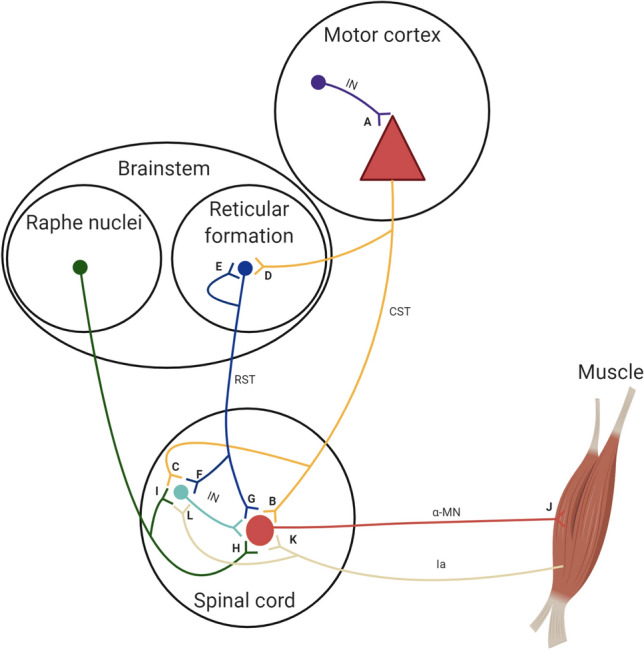
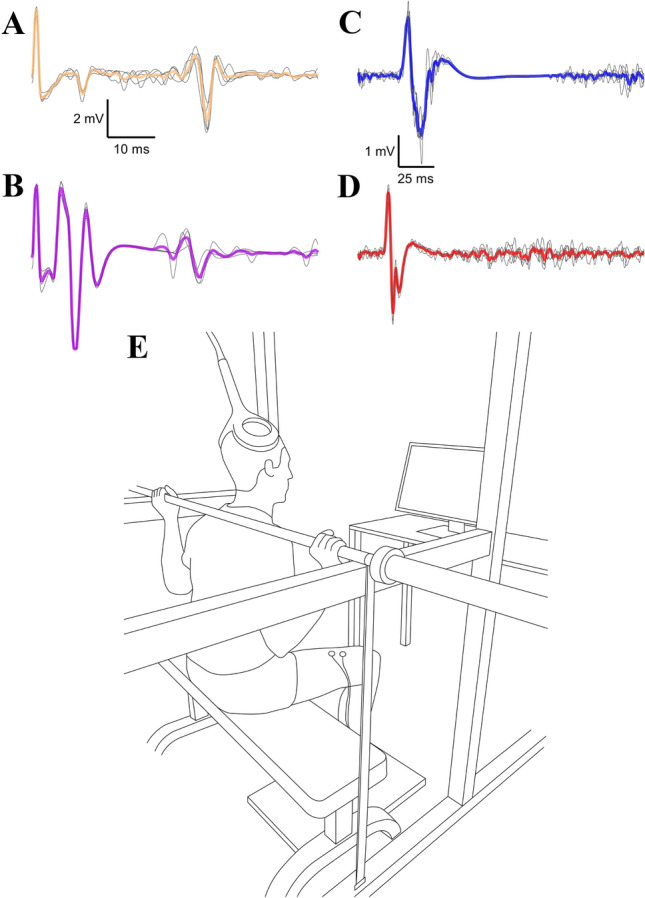
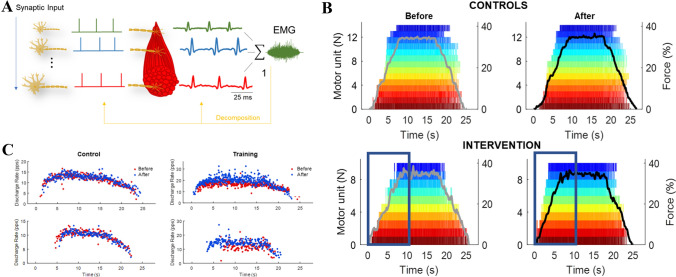
The initial increases in force production with resistance training are thought to be primarily underpinned by neural adaptations. This notion is firmly supported by evidence displaying motor unit adaptations following resistance training; however, the precise locus of neural adaptation remains elusive. The purpose of this review is to clarify and critically discuss the literature concerning the site(s) of putative neural adaptations to short-term resistance training. The proliferation of studies employing non-invasive stimulation techniques to investigate evoked responses have yielded variable results, but generally support the notion that resistance training alters intracortical inhibition. Nevertheless, methodological inconsistencies and the limitations of techniques, e.g. limited relation to behavioural outcomes and the inability to measure volitional muscle activity, preclude firm conclusions. Much of the literature has focused on the corticospinal tract; however, preliminary research in non-human primates suggests reticulospinal tract is a potential substrate for neural adaptations to resistance training, though human data is lacking due to methodological constraints. Recent advances in technology have provided substantial evidence of adaptations within a large motor unit population following resistance training. However, their activity represents the transformation of afferent and efferent inputs, making it challenging to establish the source of adaptation. Whilst much has been learned about the nature of neural adaptations to resistance training, the puzzle remains to be solved. Additional analyses of motoneuron firing during different training regimes or coupling with other methodologies (e.g., electroencephalography) may facilitate the estimation of the site(s) of neural adaptations to resistance training in the future.
Overview
The claims and statistics of this paper haven’t been checked yet.
Free: it reads the open-access text and checks the first 5 claims that cite a source we can check. Create a free account to check every claim.
Integrity signals
Registry
Cites
Statistics
Figures
Verification
Claims the paper makes
The claims and statistics of this paper haven’t been checked yet.
Free: it reads the open-access text and checks the first 5 claims that cite a source we can check. Create a free account to check every claim.
Claims other papers make about this one
Each is checked against this paper’s own text: does it say what the citing paper says it does?
The source backs part of the claim, not all of it — or backs it for a different population, condition or comparison.
In the citing paper
“There is evidence that resistance training exercise induces neural adaptations, such as increased recruitment of motor units, firing frequency, and coordinated movements between muscles, which can enhance force production and increase strength independent of hypertrophic or body composition changes [52, 53].”
From The effects of a home-based resistance training programme on body composition and muscle function during weight loss in people living with overweight or obesity: a randomised controlled pilot trial (2025) · cites this paper as [53]
Experimental — accuracy not yet measured
Self-check
Percentages, sums and reported differences re-computed from the paper’s own numbers.
The self-check needs the paper’s full text.
Citations
Cites
NON-INVASIVE MAGNETIC STIMULATION OF HUMAN MOTOR CORTEX
Barker, A. T., Jalinous, R., & Freeston, I. L. (1985) · The Lancet · doi:10.1016/s0140-6736(85)92413-4 · Cited by 4,460
Rossini, P. M., Burke, D., Chen, R., Cohen, L. G., Daskalakis, Z., Di Iorio, R., Di Lazzaro, V., Ferreri, F., Fitzgerald, P. B., George, M. S., et al. (2015) · Clinical Neurophysiology · doi:10.1016/j.clinph.2015.02.001 · Cited by 2,753
Neural Mechanisms for Interacting with a World Full of Action Choices
Cisek, P., & Kalaska, J. F. (2010) · Annual Review of Neuroscience · doi:10.1146/annurev.neuro.051508.135409 · Cited by 1,543
Neural adaptation to resistance training
SALE, D. G. (1988) · Medicine & Science in Sports & Exercise · doi:10.1249/00005768-198810001-00009 · Cited by 1,421
Folland, J. P., & Williams, A. G. (2007) · Sports Medicine · doi:10.2165/00007256-200737020-00004 · Cited by 1,347
(1979) · PubMed · Cited by 1,302
LAWRENCE, D. G., & KUYPERS, H. G. J. M. (1968) · Brain · doi:10.1093/brain/91.1.1 · Cited by 1,285
Ziemann, U., Lönnecker, S., Steinhoff, B. J., & Paulus, W. (1996) · Annals of Neurology · doi:10.1002/ana.410400306 · Cited by 1,137
Van Cutsem, M., Duchateau, J., & Hainaut, K. (1998) · The Journal of Physiology · doi:10.1111/j.1469-7793.1998.295by.x · Cited by 777
Häkkinen, K., Kallinen, M., Izquierdo, M., Jokelainen, K., Lassila, H., Mälkiä, E., Kraemer, W. J., Newton, R. U., & Alen, M. (1998) · Journal of Applied Physiology · doi:10.1152/jappl.1998.84.4.1341 · Cited by 776
Cited by
Items 101–200 of 235
Abdelmohsen, A. M., & Nabil, B. A. (2025) · Physiotherapy Research International · doi:10.1002/pri.70093 · Cited by 4
Angasu, N. W., Bekele, Z., & Taddese, A. (2026) · BMC Research Notes · doi:10.1186/s13104-026-07798-3 · Cited by 4
Neural System and Its Adaptation to Exercise
Demirci, C. S., & Arslan, S. A. (2023) · Springer eBooks · doi:10.1007/978-3-031-27184-7_19 · Cited by 4
The mechanisms of resistance training and its impact on anxiety and depression: a literature review
Lewicka, W., Sośniak, I., Szaliński, K., & Szczęsna, E. (2025) · Journal of Education Health and Sport · doi:10.12775/jehs.2025.80.59447 · Cited by 4
Castelli, F., Mian, O. S., Bruton, A. M., Valappil, A. C., & Tillin, N. A. (2025) · European Journal of Applied Physiology · doi:10.1007/s00421-025-05707-3 · Cited by 4
Salse‐Batán, J., Torrado, P., & Marina, M. (2025) · Sports Health A Multidisciplinary Approach · doi:10.1177/19417381251320574 · Cited by 4
Augustsson, S. R., & Gannby, E. (2023) · Sports · doi:10.3390/sports11120236 · Cited by 4
Green, L. A., McGuire, J., & Gabriel, D. A. (2021) · Frontiers in Human Neuroscience · doi:10.3389/fnhum.2021.764660 · Cited by 4
Angasu, N. W., Bekele, Z., & Taddese, A. (2025) · Journal of Human Sport and Exercise · doi:10.55860/kqe3k378 · Cited by 3
Miftachurochmah, Y., Rismayanthi, C., Mulyawan, R., & Pamungkas, G. (2025) · Pedagogy of Physical Culture and Sports · doi:10.15561/26649837.2025.0308 · Cited by 3
Xue, J., Gao, W. D., Zhang, C., Peng, S., Chen, Z., Zou, R., Wu, W., Zhang, L., Tang, W., & Liu, W. (2025) · Journal of Sports Science and Medicine · doi:10.52082/jssm.2025.824 · Cited by 3
Cousins, S. D., Kucewicz, S. T. C., Wundersitz, D. W. T., Collins, B. E. G., Cooke, M. B., McKeown, N., Galvão, H. B. F., Resciniti, S. M., Lyristakis, P., Gordon, B. A., et al. (2025) · Scientific Reports · doi:10.1038/s41598-025-24066-9 · Cited by 3
Fatigue- and Training-Related Differences in Muscle Activation and Coordination
Santos, P., Vaz, J. R., Gomes, M., Barão, G., Infante, J., & Pezarat‐Correia, P. (2025) · International Journal of Sports Medicine · doi:10.1055/a-2734-2159 · Cited by 3
Antoni, M. F., Damayanti, E. D. R., Suyoko, A., Samudra, F. E., Andriana, L. M., & Yudhistira, D. (2025) · Journal of Sport Science and Fitness · doi:10.15294/jssf.v11i1.31029 · Cited by 3
Zhang, M., Zhang, X., Fang, W., Wu, K., & Bian, J. (2026) · Journal of Sports Sciences · doi:10.1080/02640414.2026.2637247 · Cited by 3
Zhou, K., Lin, R., Zhao, Z., Yu, N., Zheng, X., Li, J., Deng, N., & Sun, Y. (2026) · Frontiers in Physiology · doi:10.3389/fphys.2026.1777883 · Cited by 3
Neto, W. K., Gama, E. F., Silva, W. D. A., de Oliveira, T. V. A., Boas, A. E. D. S. V., Ciena, A. P., Anaruma, C. A., & Caperuto, É. C. (2022) · Experimental Brain Research · doi:10.1007/s00221-021-06295-2 · Cited by 3
Kuśmierska, M., & Kuśmierski, J. (2024) · Quality in Sport · doi:10.12775/qs.2024.15.51852 · Cited by 3
Plasma Volume Shifts and Acid–Base Balance After a Single Bout of Resistance Training
Schierbauer, J., Zimmer, R. T., Wachsmuth, N. B., Maassen, N., & Schmidt, W. (2024) · Journal of Science in Sport and Exercise · doi:10.1007/s42978-024-00314-8 · Cited by 4
Jerez‐Martínez, A., & Romero‐Arenas, S. (2025) · Research Quarterly for Exercise and Sport · doi:10.1080/02701367.2025.2542816 · Cited by 2
Wąsacz, W., Rydzik, Ł., Kryst, Ł., Spieszny, M., Jaworski, J., & Ambroży, T. (2025) · Applied Sciences · doi:10.3390/app151810048 · Cited by 2
Zaccaron, S., Mari, L., D’Alleva, M., Stafuzza, J., Lazzer, S., & Rejc, E. (2025) · Medicine & Science in Sports & Exercise · doi:10.1249/mss.0000000000003855 · Cited by 2
The influence of sex and training status on neuromuscular measures of the bicep brachii
Amoozi, H., Rahmani, H., & Button, D. C. (2025) · Journal of Applied Physiology · doi:10.1152/japplphysiol.00783.2025 · Cited by 2
Kim, C.-B., Sung, J., Ahn, D., Jo, E., Baek, K., Heo, H. R., Oh, J. H., Zhang, F., Park, H. S., Kim, H. S., et al. (2025) · Nutrients · doi:10.3390/nu18010083 · Cited by 2
Feasibility, Physiological Rationale, and Practical Application of Resistance-based Exercise Snacks
Lee, K., & Jo, J. (2026) · The Korean Journal of Sports Medicine · doi:10.5763/kjsm.2026.44.1.4 · Cited by 2
Ma, Z., Zheng, C., Gao, T., Zhao, Z., Zheng, X. M., Liao, T., & Wang, Y. T. (2026) · Frontiers in Physiology · doi:10.3389/fphys.2026.1748244 · Cited by 2
Wu, B., Yin, M., Song, Z., Tao, M., Xu, K., Nassis, G. P., Bishop, C. J., & Girard, O. (2026) · Biology of Sport · doi:10.5114/biolsport.2026.159564 · Cited by 2
Colonna, S., D'Alessandro, A., Tarozzi, R., & Casacci, F. (2025) · Cureus · doi:10.7759/cureus.83785 · Cited by 2
Hortobágyi, T., DeVita, P., Brady, R. B., & Rider, P. M. (2022) · Biomechanics · doi:10.3390/biomechanics2010002 · Cited by 2
Benavides-Roca, L., Salazar-Orellana, C., Díaz-Coira, G., & Alarcón-Rivera, M. (2025) · Archivos de medicina del deporte: revista de la Federación Española de Medicina del Deporte y de la Confederación Iberoamericana de Medicina del Deporte · doi:10.18176/archmeddeporte.00183 · Cited by 2
Dolin, R., & Zaki, B. B. (2022) · Kinésithérapie la Revue · doi:10.1016/j.kine.2022.03.011 · Cited by 2
Haigney, E., Atkinson, E., Ansdell, P., Vitório, R., Thomas, K., Goodall, S., Howatson, G., Angius, L., Kidgell, D. J., Spillane, P., et al. (2025) · European Journal of Neuroscience · doi:10.1111/ejn.70205 · Cited by 1
Self-citationNeuromechanics of Nonuse and Compensation: Implications for Rehabilitation After Stroke
Faity, G. V., Mottet, D., Froger, J., & Delorme, M. (2026) · Neurorehabilitation and neural repair · doi:10.1177/15459683261445442 · Cited by 1
Impact of resistance training-induced changes in muscle quality on muscle power: a post-hoc analysis
Zimin, W. A. N. G., Taniguchi, M., Saeki, J., & Ichihashi, N. (2025) · The Journal of Sports Medicine and Physical Fitness · doi:10.23736/s0022-4707.25.16924-7 · Cited by 1
Park, J., Lee, G., & Chang, M. (2025) · Journal of Oral Rehabilitation · doi:10.1111/joor.70070 · Cited by 1
Integrative Approach and Innovative Strategies for Neurophysiology-Based Functional Training
Cho, J., Kim, D., & Lee, M.-C. (2025) · Exercise Science · doi:10.15857/ksep.2025.00353 · Cited by 1
Kılcı, A., Eryılmaz, S. K., Boyraz, C., Günaştı, Ö., Postallı, Ç. Ö., Karakaş, S., Tiyekli, E., Koç, M. E., Özgünen, K., & Kurdak, S. S. (2025) · Isokinetics and Exercise Science · doi:10.1177/09593020251394684 · Cited by 2
Bass, K. A., Reece, T. M., Ciccone, A. B., Cleary, C. J., Herda, A. A., & Herda, T. J. (2026) · Journal of Neurophysiology · doi:10.1152/jn.00338.2025 · Cited by 1
Sato, S., Maroto‐Izquierdo, S., Nunes, J. P., & Nakamura, M. (2026) · European Journal of Applied Physiology · doi:10.1007/s00421-026-06169-x · Cited by 1
Siddique, U., Frazer, A. K., Tallent, J., Hayman, O., Akalu, Y., Rostami, M., Uribe, S. A., Walker, S., & Kidgell, D. J. (2026) · European Journal of Applied Physiology · doi:10.1007/s00421-026-06222-9 · Cited by 1
Kurmi, S., Shirodkar, S., Parab, S. B., & Doshi, G. (2026) · Current Alzheimer Research · doi:10.2174/0115672050467997260323164241 · Cited by 1
Han, S., Yoon, J., & Park, D. (2026) · Neurorehabilitation · doi:10.1177/10538135261449483 · Cited by 1
Ahmed, K., Kirschmann, J. M., Herder, E. S., Memon, R. F., Shah, S. B., Kukkar, K. K., Walsh, D., Johnston, C. A., & Parikh, P. J. (2026) · Sensors · doi:10.3390/s26123805 · Cited by 1
Muscle metaboreflex dysfunction in cardiovascular disease
de Araújo, C. C., de Andrade, R. D., Goulart, C. D. L., Alves, I. M., de Oliveira, L. V. F., & Cipriano, G. (2026) · American Journal of Physiology-Heart and Circulatory Physiology · doi:10.1152/ajpheart.00086.2026 · Cited by 1
Dalmay, D., Pinto, J. M., Gámez-Fernández, M. M., Robbins, D., Wells, J. E. T., Gough, L. A., Witard, O. C., & Deb, S. K. (2026) · Nutrition Reviews · doi:10.1093/nutrit/nuag102 · Cited by 1
Wasiluk, A., Kyrychenko, V., Deak, G.-F., Saczuk, J., & Wilczewski, R. (2026) · Polish Journal of Sport and Tourism · doi:10.2478/pjst-2026-0013 · Cited by 1
Zeng, Y., Lin, J., Peng, F., Shi, Y., Yang, Z., Ripley, N. J., Girard, O., Granacher, U., & Li, W. (2026) · Scandinavian Journal of Medicine and Science in Sports · doi:10.1111/sms.70333 · Cited by 1
IoT-Based Multi-Level Sensors Electromyography (EMG) Acquisition System
Bacho, M. S. H., Saad, I., Ahmedy, F. B., Jeffree, M. S., Bolong, N., Lim, K. G., & Teo, K. T. K. (2023) · IEEE International Conference on Artificial Intelligence in Engineering and Technology (IICAIET) · doi:10.1109/iicaiet59451.2023.10291756 · Cited by 1
Hänninen, H., Kalaja, S., Kalaja, T., Vuoriainen, A., Rinnevuori, M., & Haapasalo, L. (2025) · Science of Gymnastics Journal · doi:10.52165/sgj.17.2.259-271 · Cited by 1
Maintien de la fonction musculaire : Exercice en hémodialyse : rôles physiologiques de eIF3f
Pavlin, L. (2021) · theses.fr (ABES) · doi:10.70675/47a22f7bz4659z43a7za47dzc83eaf9b4b66 · Cited by 1
Muscular Strength Predicts Phase Angle in Breast Cancer Survivors
Short, T., Teranishi-Hashimoto, C., & Yamada, P. M. (2023) · Topics in Exercise Science and Kinesiology · doi:10.9741/2766-2187.1059
Efeito do treinamento físico sobre a função endotelial de pacientes com angina refratária
Jordão, C. P. (2022) · Digital Library of Theses and Dissertations (Universidade de São Paulo) · doi:10.11606/t.5.2022.tde-30092022-123459
Filho, E. M. A. A., Fernandes, M. S. D. S., Ramos, T. L., Fidelis, D. E. D. S., Martins, J. C. D. C., do Nascimento, H. R., do Nascimento, I. R., dos Santos, L. F., & de Souza, R. F. (2024) · Revista de Educação Física / Journal of Physical Education · doi:10.37310/ref.v93i1.2953
Compound Antrenmanlarının Futbolcularda Addüktör, Abdüktör Kas Kuvveti ve Rasyosuna Etkisi
Yıldırım, S. (2024) · Sportive · doi:10.53025/sportive.1544025
Wenqing, L. U., Wu, Z., Jinghui, G. A. O., Wenjin, L. I. U., & Huang, Y. (2025) · Rehabilitation Medicine · doi:10.3724/sp.j.1329.2025.02005
Frigerio, M., & Manodoro, S. (2025) · MDPI eBooks · doi:10.3390/books978-3-7258-3749-6
FISIOLOGIA APLICADA À PERFORMANCE E À HIPERTROFIA
Fernandes, V. E., Dohler, P. H. A., & de Souza, W. S. (2025) · REVISTA MULTIDISCIPLINAR INTEGRADA - REMI · doi:10.61164/15m8kr36
ФІЗИЧНІ НАВАНТАЖЕННЯ ТА ЇХ ВПЛИВ НА НЕРВОВУ СИСТЕМУ: АНАТОМІЧНІ ТА ФІЗІОЛОГІЧНІ АСПЕКТИ
Прокоф’єва, О., Dekhtiarova, O., Каденко, І., Bashtovenko, O., & Литвиненко, В. (2025) · Перспективи та інновації науки · doi:10.52058/2786-4952-2025-11(57)-3533-3545
Binmahfoz, A. (2025) · Enlighten: Theses (The University of Glasgow) · doi:10.5525/gla.thesis.85383
Tagawa, R., Watanabe, D., Ito, K., Otsuyama, T., Nakayama, K., Sanbongi, C., & Miyachi, M. (2022) · Figshare · doi:10.6084/m9.figshare.20921197
Tagawa, R., Watanabe, D., Ito, K., Otsuyama, T., Nakayama, K., Sanbongi, C., & Miyachi, M. (2022) · Figshare · doi:10.6084/m9.figshare.20921200
Nepomuceno, P., Souza, W. H., Pakosh, M. T., Musselman, K. E., & Craven, B. C. (2024) · Figshare · doi:10.6084/m9.figshare.25754949
Tagawa, R., Watanabe, D., Ito, K., Otsuyama, T., Nakayama, K., Sanbongi, C., & Miyachi, M. (2022) · Figshare · doi:10.6084/m9.figshare.20921191
Factors influencing corticospinal excitability during arm cycling
Lockyer, E. J. (2024) · Memorial University Research Repository (Memorial University) · doi:10.48336/73jk-1b82
Tagawa, R., Watanabe, D., Ito, K., Otsuyama, T., Nakayama, K., Sanbongi, C., & Miyachi, M. (2022) · Figshare · doi:10.6084/m9.figshare.20921188
Ylijärvi, S. (2023) · Jyväskylä University Digital Archive (University of Jyväskylä)
Hreyfigetuþjálfun : skilgreining á hagnýtri aðferða- og hugmyndafræði
Mabazza, M. M. (2024) · Skemman
Effects of resistance training in patients with multiple sclerosis - literature review
Skubic, Š. (2024) · Repository of the University of Ljubljana (University of Ljubljana)
Exploring the Efficacy of Exercise Interventions To Improve Phase Angle
Short, T. (2023) · ScholarSpace (University of Hawaii at Manoa)
Effects of six weeks of squat training in the load-velocity profile of the squat and the deadlift
Arrenega, C. (2024) · Portuguese National Funding Agency for Science, Research and Technology (RCAAP Project by FCT)
Hanssen, B., & Desloovere, K. (2022) · Lirias
Leikko, E. (2025) · Jyväskylä University Digital Archive (University of Jyväskylä)
Jones, E. J. (2024) · Nottingham ePrints (University of Nottingham)
Jõutreeningu printsiibid skeletilihase hüpertroofia ja maksimaaljõu arendamisel
Külaots, K. (2025) · DSpace repository (University of Tartu)
Chivaka, P. K. (2023) · Nottingham ePrints (University of Nottingham)
Effects of SCP-SCP-T Exercise on Improving Throwing Performance of Senior Javelin Throwing Athletes
Mappanyukki, A. A., & Atifah, N. I. (2025) · JURNAL PENDIDIKAN JASMANI DAN OLAHRAGA · doi:10.17509/jpjo.v10i1.80506
Maksimivoiman ja ponnistuskyvyn välinen suhde suomalaisilla huipputason cheerleading urheilijoilla
Hellström, A. (2025) · Theseus (Ammattikorkeakoulujen)
ІННОВАЦІЙНІ ПІДХОДИ В НЕЙРОРЕАБІЛІТАЦІЇ: СВІТОВИЙ ДОСВІД
Скрябіна, О. М., Рашиді, Б., & Карлова, Т. Є. (2025) · Bulletin of Problems Biology and Medicine · doi:10.29254/2523-4110-2025-4-179/addition-133-135
Castilla-López, C., & Romero‐Franco, N. (2025) · Football Studies · doi:10.1016/j.footst.2025.100018
da Costa, B. D. V. L. (2023) · LA Referencia (Red Federada de Repositorios Institucionales de Publicaciones Científicas)
Carneiro, N. H. (2024) · LA Referencia (Red Federada de Repositorios Institucionales de Publicaciones Científicas)
Mechanisms of Skeletal Muscle Mass Regulation and Muscle Memory
Gundersen, K., Bruusgaard, J. C., & Eftestøl, E. (2026) · Acta Physiologica · doi:10.1111/apha.70152
Kitsuksan, T., Chuensiri, N., & Limroongreungrat, W. (2026) · Physiotherapy Quarterly · doi:10.5114/pq/203955
Safety and Efficacy of Exercise-based Cardiac Rehabilitation in Patients with Refractory Angina
Dourado, L. O. C., Jordão, C. P., Vieira, M. L. C., Gowdak, L. H. W., Negrão, C. E., César, L. A. M., & de Matos, L. D. N. J. (2025) · Arquivos Brasileiros de Cardiologia · doi:10.36660/abc.20250331
Li, A., Tang, J., Zheng, K., Chen, J., Wang, G., & Feng, D. (2026) · Journal of Exercise Science & Fitness · doi:10.1016/j.jesf.2026.200456
Lu, J., Lei, T., Zamri, E. N., & Shaharudin, S. (2026) · BMC Sports Science Medicine and Rehabilitation · doi:10.1186/s13102-026-01656-2
Vallance, P., Malliaras, P., & Kidgell, D. J. (2026) · Journal of Electromyography and Kinesiology · doi:10.1016/j.jelekin.2026.103142
The Positive Effects of Exercise on Adolescent Growth and Development
Shahrbanian, S. (2026) · Advances in experimental medicine and biology · doi:10.1007/978-981-95-7000-3_11
Kaliarntas, K., Morais, N., Andronikos, G., Dounavi, D. M., Souglis, A. G., Wearing, S. C., & Bogdanis, G. C. (2026) · Biomechanics · doi:10.3390/biomechanics6020034
Bontemps, B. (2022) · theses.fr (ABES) · doi:10.70675/ecc687ddzda3fz4c17z8da1zeb25164892b1
Optimal control in reaching post stroke
Faity, G. V. (2023) · theses.fr (ABES) · doi:10.70675/b8d3edc7z391fz48abzb21bz9a7e5dd638ae
Pizzimenti, M. (2021) · theses.fr (ABES) · doi:10.70675/c5e8c59dzf135z4524zbdddzd5ad228c0677
Metadata
- Authors
- Škarabot, J., Brownstein, C. G., Casolo, A., Del Vecchio, A., & Ansdell, P.
- Affiliations
- Loughborough University (GB)
- Laboratoire Interuniversitaire de Biologie de la Motricité (FR)
- University of Padua (IT)
- Northumbria University (GB)
- Corresponding author
- Ansdell, Paul
- Venue
- European Journal of Applied Physiology
- Published
- 2020-12-23
- Volume
- 121
- Issue
- 3
- Pages
- 675-685
- ISSN
- 0020-9376 (ISSN-L)
- 1439-6319
- 1439-6327
- PMC
- PMC7892509
- OpenAlex
- W3110082071
- Semantic Scholar
- 2110e6ba40fb912a1f4d7eef1502cca7fcd25811
- Cited by
- 183
- References
- 109
- Citations by year
- 2026: 46 · 2025: 47 · 2024: 22 · 2023: 27 · 2022: 26 · 2021: 15
- FWCI
- 3.34
- Type
- journal article
- Language
- en
- Open access
- hybrid
- doi.org
- Licence
- cc-by
- creativecommons.org/licenses/by/4.0 (tdm)
- creativecommons.org/licenses/by/4.0 (vor)
- Locations
- European Journal of Applied Physiology (publishedVersion, cc-by)
- PubMed Central (publishedVersion, cc-by)
- PubMed (publishedVersion)
- Northumbria Research Link (Northumbria University) (acceptedVersion)
- Figshare (submittedVersion, cc-by)
- Padua Research Archive (University of Padova) (submittedVersion, cc-by)
- Funders
- Northumbria University
- Topics
- Health Sciences › Medicine › Orthopedics and Sports Medicine › Sports Performance and Training
- Physical Sciences › Engineering › Biomedical Engineering › Muscle activation and electromyography studies
- Health Sciences › Medicine › Physiology (medical) › Cardiovascular and exercise physiology
- Keywords
- neural adaptation, resistance training, intracortical inhibition, corticospinal tract, reticulospinal tract, non-invasive brain stimulation, motor evoked potentials, force generation, short-term training
- MeSH terms
- Adaptation, Physiological, Humans, Motor Neurons, Evoked Potentials, Motor, Resistance Training
About these checks
Registry, retraction, Cites and statistics results are computed, not judged, with one exception: a printed reference that no index lists is read once by a model before it counts as a citation error. Claims are extracted by a model and kept only when their quote appears verbatim in the text; each cited source is then checked, with a model’s help, for whether it says what the claim relies on. Those verdicts can be wrong — read the claim’s quote and the cited source before relying on one.
Statistics and arithmetic are recomputed, not judged.
Confidence bands are shown only for fields calibrated on our annotated test set. None is calibrated yet, so no band is shown.
What counts as a claim ›How we measure confidence ›How we check this ›
Are you an author, or do you see a problem with this page? Request a review
Data sources
Bibliographic data: Semantic Scholar, OpenAlex, Crossref.
Contains information from the Semantic Scholar Academic Graph Datasets, made available under the ODC Attribution License (ODC-BY 1.0).
Semantic Scholar’s data is described in: Kinney, R., et al. (2023). The Semantic Scholar Open Data Platform. arXiv:2301.10140.
