

The knowns and unknowns of neural adaptations to resistance training
Open accessThe DOI matches its Crossref record; 109 of the 109 references it cites were found in a registry or an index.
Abstract
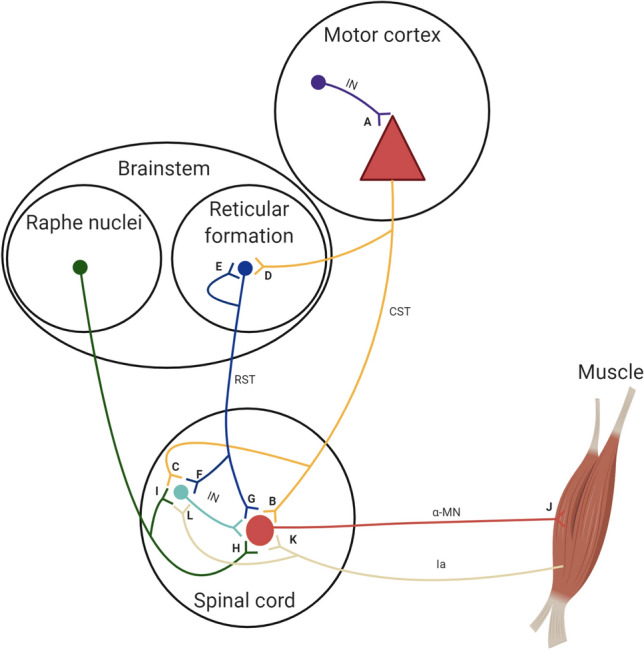
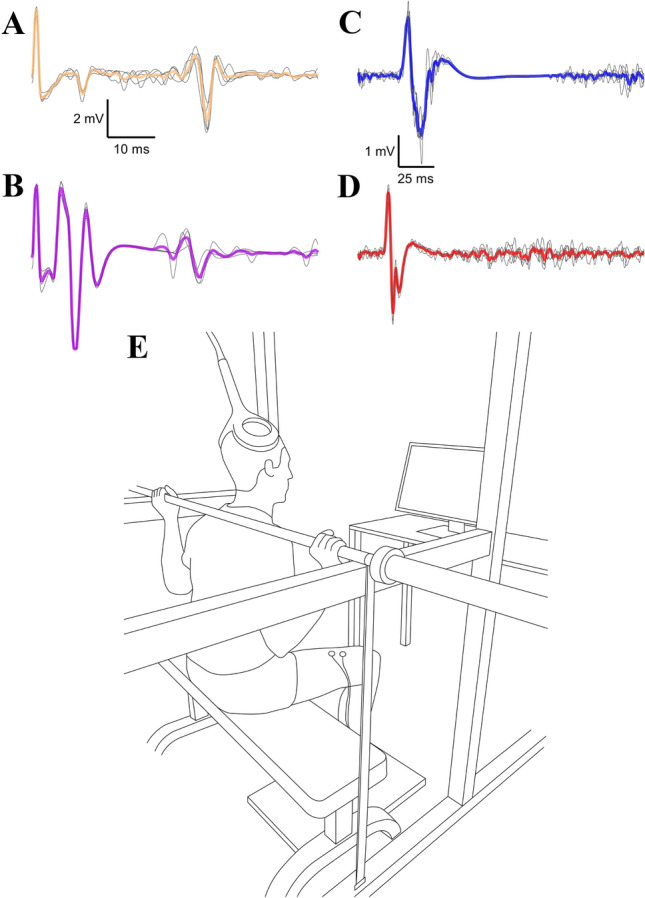
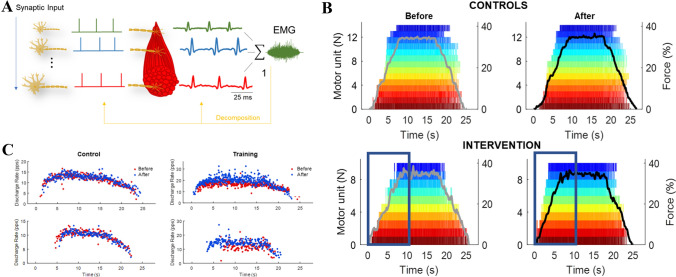
The initial increases in force production with resistance training are thought to be primarily underpinned by neural adaptations. This notion is firmly supported by evidence displaying motor unit adaptations following resistance training; however, the precise locus of neural adaptation remains elusive. The purpose of this review is to clarify and critically discuss the literature concerning the site(s) of putative neural adaptations to short-term resistance training. The proliferation of studies employing non-invasive stimulation techniques to investigate evoked responses have yielded variable results, but generally support the notion that resistance training alters intracortical inhibition. Nevertheless, methodological inconsistencies and the limitations of techniques, e.g. limited relation to behavioural outcomes and the inability to measure volitional muscle activity, preclude firm conclusions. Much of the literature has focused on the corticospinal tract; however, preliminary research in non-human primates suggests reticulospinal tract is a potential substrate for neural adaptations to resistance training, though human data is lacking due to methodological constraints. Recent advances in technology have provided substantial evidence of adaptations within a large motor unit population following resistance training. However, their activity represents the transformation of afferent and efferent inputs, making it challenging to establish the source of adaptation. Whilst much has been learned about the nature of neural adaptations to resistance training, the puzzle remains to be solved. Additional analyses of motoneuron firing during different training regimes or coupling with other methodologies (e.g., electroencephalography) may facilitate the estimation of the site(s) of neural adaptations to resistance training in the future.
Overview
The claims and statistics of this paper haven’t been checked yet.
Free: it reads the open-access text and checks the first 5 claims that cite a source we can check. Create a free account to check every claim.
Integrity signals
Registry
Cites
Statistics
Figures
Verification
Claims the paper makes
The claims and statistics of this paper haven’t been checked yet.
Free: it reads the open-access text and checks the first 5 claims that cite a source we can check. Create a free account to check every claim.
Claims other papers make about this one
Each is checked against this paper’s own text: does it say what the citing paper says it does?
The source backs part of the claim, not all of it — or backs it for a different population, condition or comparison.
In the citing paper
“There is evidence that resistance training exercise induces neural adaptations, such as increased recruitment of motor units, firing frequency, and coordinated movements between muscles, which can enhance force production and increase strength independent of hypertrophic or body composition changes [52, 53].”
From The effects of a home-based resistance training programme on body composition and muscle function during weight loss in people living with overweight or obesity: a randomised controlled pilot trial (2025) · cites this paper as [53]
Experimental — accuracy not yet measured
Self-check
Percentages, sums and reported differences re-computed from the paper’s own numbers.
The self-check needs the paper’s full text.
Citations
Cites
NON-INVASIVE MAGNETIC STIMULATION OF HUMAN MOTOR CORTEX
Barker, A. T., Jalinous, R., & Freeston, I. L. (1985) · The Lancet · doi:10.1016/s0140-6736(85)92413-4 · Cited by 4,460
Rossini, P. M., Burke, D., Chen, R., Cohen, L. G., Daskalakis, Z., Di Iorio, R., Di Lazzaro, V., Ferreri, F., Fitzgerald, P. B., George, M. S., et al. (2015) · Clinical Neurophysiology · doi:10.1016/j.clinph.2015.02.001 · Cited by 2,753
Neural Mechanisms for Interacting with a World Full of Action Choices
Cisek, P., & Kalaska, J. F. (2010) · Annual Review of Neuroscience · doi:10.1146/annurev.neuro.051508.135409 · Cited by 1,543
Neural adaptation to resistance training
SALE, D. G. (1988) · Medicine & Science in Sports & Exercise · doi:10.1249/00005768-198810001-00009 · Cited by 1,421
Folland, J. P., & Williams, A. G. (2007) · Sports Medicine · doi:10.2165/00007256-200737020-00004 · Cited by 1,347
(1979) · PubMed · Cited by 1,302
LAWRENCE, D. G., & KUYPERS, H. G. J. M. (1968) · Brain · doi:10.1093/brain/91.1.1 · Cited by 1,285
Ziemann, U., Lönnecker, S., Steinhoff, B. J., & Paulus, W. (1996) · Annals of Neurology · doi:10.1002/ana.410400306 · Cited by 1,137
Van Cutsem, M., Duchateau, J., & Hainaut, K. (1998) · The Journal of Physiology · doi:10.1111/j.1469-7793.1998.295by.x · Cited by 777
Häkkinen, K., Kallinen, M., Izquierdo, M., Jokelainen, K., Lassila, H., Mälkiä, E., Kraemer, W. J., Newton, R. U., & Alen, M. (1998) · Journal of Applied Physiology · doi:10.1152/jappl.1998.84.4.1341 · Cited by 776
Neural adaptation to resistance training: changes in evoked V-wave and H-reflex responses
Aagaard, P., Simonsen, E. B., Andersen, J. L., Magnusson, P., & Dyhre-Poulsen, P. (2002) · Journal of Applied Physiology · doi:10.1152/japplphysiol.01185.2001 · Cited by 661
Anticipatory activity of motor cortex neurons in relation to direction of an intended movement
Tanji, J., & Evarts, E. V. (1976) · Journal of Neurophysiology · doi:10.1152/jn.1976.39.5.1062 · Cited by 659
Multichannel Blind Source Separation Using Convolution Kernel Compensation
Holobar, A., & Zazula, D. (2007) · IEEE Transactions on Signal Processing · doi:10.1109/tsp.2007.896108 · Cited by 648
Considerations for use of the Hoffmann reflex in exercise studies
Zehr, E. P. (2002) · European Journal of Applied Physiology · doi:10.1007/s00421-002-0577-5 · Cited by 612
The extraction of neural strategies from the surface EMG: an update
Farina, D., Merletti, R., & Enoka, R. M. (2014) · Journal of Applied Physiology · doi:10.1152/japplphysiol.00162.2014 · Cited by 589
Persistent inward currents in motoneuron dendrites: Implications for motor output
Heckman, C. J., Gorassini, M. A., & Bennett, D. J. (2005) · Muscle & Nerve · doi:10.1002/mus.20261 · Cited by 487
The H-reflex as a probe: Pathways and pitfalls
Knikou, M. (2008) · Journal of Neuroscience Methods · doi:10.1016/j.jneumeth.2008.02.012 · Cited by 445
Safety factor at the neuromuscular junction
Wood, S. J., & R. Slater, C. (2001) · Progress in Neurobiology · doi:10.1016/s0301-0082(00)00055-1 · Cited by 443
Del Vecchio, A., Casolo, A., Negro, F., Scorcelletti, M., Bazzucchi, I., Enoka, R., Felici, F., & Farina, D. (2019) · The Journal of Physiology · doi:10.1113/jp277250 · Cited by 436
Self-citationAdaptations in coactivation after isometric resistance training
Carolan, B., & Cafarelli, E. (1992) · Journal of Applied Physiology · doi:10.1152/jappl.1992.73.3.911 · Cited by 431
Heckman, C. J., & Enoka, R. M. (2012) · Comprehensive Physiology · doi:10.1002/cphy.c100087 · Cited by 414
Muscle Strength and Its Development: New Perspectives
Enoka, R. M. (1988) · Sports Medicine · doi:10.2165/00007256-198806030-00003 · Cited by 380
Monosynaptic and oligosynaptic contributions to human ankle jerk and H-reflex
Burke, D., Gandevia, S. C., & McKeon, B. (1984) · Journal of Neurophysiology · doi:10.1152/jn.1984.52.3.435 · Cited by 377
Changes in descending motor pathway connectivity after corticospinal tract lesion in macaque monkey
Zaaimi, B., Edgley, S. A., Soteropoulos, D. S., & Baker, S. N. (2012) · Brain · doi:10.1093/brain/aws115 · Cited by 375
Tutorial: Analysis of motor unit discharge characteristics from high-density surface EMG signals
Del Vecchio, A., Holobar, A., Falla, D., Felici, F., Enoka, R. M., & Farina, D. (2020) · Journal of Electromyography and Kinesiology · doi:10.1016/j.jelekin.2020.102426 · Cited by 372
The uses and interpretations of the motor-evoked potential for understanding behaviour
Bestmann, S., & Krakauer, J. W. (2015) · Experimental Brain Research · doi:10.1007/s00221-014-4183-7 · Cited by 351
Ziemann, U., Ishii, K., Borgheresi, A., Yaseen, Z., Battaglia, F., Hallett, M., Cincotta, M., & Wassermann, E. M. (1999) · The Journal of Physiology · doi:10.1111/j.1469-7793.1999.0895p.x · Cited by 345
Bistability in Spinal Motoneurons In Vivo: Systematic Variations in Persistent Inward Currents
Lee, R. H., & Heckman, C. J. (1998) · Journal of Neurophysiology · doi:10.1152/jn.1998.80.2.583 · Cited by 345
Neural Adaptations to Resistance Training: Implications for Movement Control
Carroll, T. J., Riek, S., & Carson, R. G. (2001) · Sports Medicine · doi:10.2165/00007256-200131120-00001 · Cited by 326
Training-Related Adaptations in Motor Unit Discharge Rate in Young and Older Adults
Kamen, G., & Knight, C. A. (2004) · The Journals of Gerontology Series A: Biological Sciences and Medical Sciences · doi:10.1093/gerona/59.12.1334 · Cited by 312
Direct and Indirect Connections with Upper Limb Motoneurons from the Primate Reticulospinal Tract
Riddle, C. N., Edgley, S. A., & Baker, S. N. (2009) · The Journal of Neuroscience · doi:10.1523/jneurosci.3720-08.2009 · Cited by 310
Patterns of projection and branching of reticulospinal neurons
Peterson, B. W., Maunz, R. A., Pitts, N. G., & Mackel, R. G. (1975) · Experimental Brain Research · doi:10.1007/bf00238019 · Cited by 304
Activity‐dependent excitability changes in normal and demyelinated rat spinal root axons.
Bostock, H., & Grafe, P. (1985) · The Journal of Physiology · doi:10.1113/jphysiol.1985.sp015769 · Cited by 267
Kim, Y., Lai, B., Mehta, T., Thirumalai, M., Padalabalanarayanan, S., Rimmer, J. H., & Motl, R. W. (2019) · American Journal of Physical Medicine & Rehabilitation · doi:10.1097/phm.0000000000001174 · Cited by 252
Intrinsic Activation of Human Motoneurons: Possible Contribution to Motor Unit Excitation
Gorassini, M., Yang, J. F., Siu, M., & Bennett, D. J. (2002) · Journal of Neurophysiology · doi:10.1152/jn.00024.2001 · Cited by 249
The sites of neural adaptation induced by resistance training in humans
Carroll, T. J., Riek, S., & Carson, R. G. (2002) · The Journal of Physiology · doi:10.1111/j..2002.t01-1-00641.x · Cited by 243
Di Lazzaro, V., Pilato, F., Dileone, M., Profice, P., Ranieri, F., Ricci, V., Bria, P., Tonali, P. A., & Ziemann, U. (2007) · Clinical Neurophysiology · doi:10.1016/j.clinph.2007.07.005 · Cited by 240
Human motor unit recordings: Origins and insight into the integrated motor system
Duchateau, J., & Enoka, R. M. (2011) · Brain Research · doi:10.1016/j.brainres.2011.06.011 · Cited by 238
Adrian, E. D., & Bronk, D. W. (1928) · The Journal of Physiology · doi:10.1113/jphysiol.1928.sp002509 · Cited by 233
Recruitment and some other features of reflex inhibition
Liddell, E. G. T., & Sherrington, C. S. (1925) · Proceedings of the Royal Society of London. Series B, Containing Papers of a Biological Character · doi:10.1098/rspb.1925.0016 · Cited by 232
Testing the excitability of human motoneurons
McNeil, C. J., Butler, J. E., Taylor, J. L., & Gandevia, S. C. (2013) · Frontiers in Human Neuroscience · doi:10.3389/fnhum.2013.00152 · Cited by 228
Plantar flexor activation capacity and H reflex in older adults: adaptations to strength training
Scaglioni, G., Ferri, A., Minetti, A. E., Martin, A., Van Hoecke, J., Capodaglio, P., Sartorio, A., & Narici, M. V. (2002) · Journal of Applied Physiology · doi:10.1152/japplphysiol.00367.2001 · Cited by 215
Martinez‐Valdes, E., Negro, F., Laine, C. M., Falla, D., Mayer, F., & Farina, D. (2017) · The Journal of Physiology · doi:10.1113/jp273662 · Cited by 215
Noninvasive stimulation of the human corticospinal tract
Taylor, J. L., & Gandevia, S. C. (2004) · Journal of Applied Physiology · doi:10.1152/japplphysiol.01116.2003 · Cited by 214
Principles of Motor Unit Physiology Evolve With Advances in Technology
Farina, D., Negro, F., Muceli, S., & Enoka, R. M. (2016) · Physiology · doi:10.1152/physiol.00040.2015 · Cited by 212
The variability of intracortical inhibition and facilitation
Orth, M., Snijders, A. H., & Rothwell, J. C. (2003) · Clinical Neurophysiology · doi:10.1016/s1388-2457(03)00243-8 · Cited by 196
Unilateral strength training increases voluntary activation of the opposite untrained limb
Lee, M., Gandevia, S. C., & Carroll, T. J. (2009) · Clinical Neurophysiology · doi:10.1016/j.clinph.2009.01.002 · Cited by 178
Vila-Chã, C., Falla, D., & Farina, D. (2010) · Journal of Applied Physiology · doi:10.1152/japplphysiol.01213.2009 · Cited by 178
Associations between motor unit action potential parameters and surface EMG features
Del Vecchio, A., Negro, F., Felici, F., & Farina, D. (2017) · Journal of Applied Physiology · doi:10.1152/japplphysiol.00482.2017 · Cited by 176
Motor Neuron Pools of Synergistic Thigh Muscles Share Most of Their Synaptic Input
Laine, C. M., Martinez-Valdes, E., Falla, D., Mayer, F., & Farina, D. (2015) · The Journal of Neuroscience · doi:10.1523/jneurosci.0240-15.2015 · Cited by 173
Beck, S., Taube, W., Gruber, M., Amtage, F., Gollhofer, A., & Schubert, M. (2007) · Brain Research · doi:10.1016/j.brainres.2007.08.048 · Cited by 173
Enoka, R. M., & Duchateau, J. (2015) · Journal of Applied Physiology · doi:10.1152/japplphysiol.00280.2015 · Cited by 166
Carroll, T. J., Selvanayagam, V. S., Riek, S., & Semmler, J. G. (2011) · Acta Physiologica · doi:10.1111/j.1748-1716.2011.02271.x · Cited by 166
Siddique, U., Rahman, S., Frazer, A. K., Pearce, A. J., Howatson, G., & Kidgell, D. J. (2020) · Sports Medicine · doi:10.1007/s40279-020-01258-z · Cited by 163
Strength training reduces intracortical inhibition
Weier, A. T., Pearce, A. J., & Kidgell, D. J. (2012) · Acta Physiologica · doi:10.1111/j.1748-1716.2012.02454.x · Cited by 159
Neuronal Basis of Crossed Actions from the Reticular Formation on Feline Hindlimb Motoneurons
Jankowska, E., Hammar, I., Sławińska, U., Maleszak, K., & Edgley, S. A. (2003) · Journal of Neuroscience · doi:10.1523/jneurosci.23-05-01867.2003 · Cited by 150
Reticulospinal Contributions to Gross Hand Function after Human Spinal Cord Injury
Baker, S. N., & Perez, M. A. (2017) · The Journal of Neuroscience · doi:10.1523/jneurosci.3368-16.2017 · Cited by 150
Transcranial magnetic stimulation during resistance training of the tibialis anterior muscle
Griffin, L., & CAFARELLI, E. (2006) · Journal of Electromyography and Kinesiology · doi:10.1016/j.jelekin.2006.05.001 · Cited by 149
Effect of strength training upon motoneuron excitability in man
SALE, D. G., MacDOUGALL, J. D., UPTON, A. R. M., & McCOMAS, A. J. (1983) · Medicine & Science in Sports & Exercise · doi:10.1249/00005768-198315010-00011 · Cited by 147
Corticospinal responses following strength training: a systematic review and meta‐analysis
Kidgell, D. J., Bonanno, D. R., Frazer, A. K., Howatson, G., & Pearce, A. J. (2017) · European Journal of Neuroscience · doi:10.1111/ejn.13710 · Cited by 140
Schubert, M., Beck, S., Taube, W., Amtage, F., Faist, M., & Gruber, M. (2008) · European Journal of Neuroscience · doi:10.1111/j.1460-9568.2008.06186.x · Cited by 137
Corticomotor plasticity following unilateral strength training
Goodwill, A. M., Pearce, A. J., & Kidgell, D. J. (2012) · Muscle & Nerve · doi:10.1002/mus.23316 · Cited by 130
Christie, A., & Kamen, G. (2010) · Muscle & Nerve · doi:10.1002/mus.21539 · Cited by 123
Spinal Reflex Plasticity during Maximal Dynamic Contractions after Eccentric Training
DUCLAY, J., MARTIN, A., ROBBE, A., & POUSSON, M. (2008) · Medicine & Science in Sports & Exercise · doi:10.1249/mss.0b013e31816184dc · Cited by 121
Effects of imagery motor training on torque production of ankle plantar flexor muscles
Zijdewind, I., Toering, S. T., Bessem, B., van der Laan, O., & Diercks, R. L. (2003) · Muscle & Nerve · doi:10.1002/mus.10406 · Cited by 117
The human hand motor area is transiently suppressed by an unexpected auditory stimulus
Furubayashi, T., Ugawa, Y., Terao, Y., Hanajima, R., Sakai, K., Machii, K., Mochizuki, H., Shiio, Y., Uesugi, H., Enomoto, H., et al. (2000) · Clinical Neurophysiology · doi:10.1016/s1388-2457(99)00200-x · Cited by 115
Effects of exercise training on α-motoneurons
Gardiner, P., Dai, Y., & Heckman, C. J. (2006) · Journal of Applied Physiology · doi:10.1152/japplphysiol.00482.2006 · Cited by 108
Johnson, M. D., Thompson, C. K., Tysseling, V. M., Powers, R. K., & Heckman, C. J. (2017) · Journal of Neurophysiology · doi:10.1152/jn.00018.2017 · Cited by 107
Yacyshyn, A. F., Woo, E. J., Price, M. C., & McNeil, C. J. (2016) · Experimental Brain Research · doi:10.1007/s00221-016-4742-1 · Cited by 105
Afsharipour, B., Manzur, N., Duchcherer, J., Fenrich, K. K., Thompson, C. K., Negro, F., Quinlan, K. A., Bennett, D. J., & Gorassini, M. A. (2020) · Journal of Neurophysiology · doi:10.1152/jn.00194.2020 · Cited by 100
The Effects of Acute Aerobic Exercise on the Primary Motor Cortex
Singh, A. M., & Staines, W. R. (2015) · Journal of Motor Behavior · doi:10.1080/00222895.2014.983450 · Cited by 99
Cortical, Corticospinal, and Reticulospinal Contributions to Strength Training
Glover, I. S., & Baker, S. N. (2020) · Journal of Neuroscience · doi:10.1523/jneurosci.1923-19.2020 · Cited by 99
Škarabot, J., Mesquita, R. N. O., Brownstein, C. G., & Ansdell, P. (2019) · Experimental Physiology · doi:10.1113/ep087557 · Cited by 94
Self-citationDevanne, H., Cassim, F., Éthier, C., Brizzi, L., Thévenon, A., & Capaday, C. (2006) · European Journal of Neuroscience · doi:10.1111/j.1460-9568.2006.04760.x · Cited by 92
The role of inhibition in human motor cortical plasticity
Bachtiar, V., & Stagg, C. J. (2014) · Neuroscience · doi:10.1016/j.neuroscience.2014.07.059 · Cited by 83
Cortical inhibition is reduced following short-term training in young and older adults
Christie, A. D., & Kamen, G. (2013) · AGE · doi:10.1007/s11357-013-9577-0 · Cited by 83
Falvo, M. J., Sirevaag, E. J., Rohrbaugh, J. W., & Earhart, G. M. (2010) · European Journal of Applied Physiology · doi:10.1007/s00421-010-1432-8 · Cited by 81
Manca, A., Hortobágyi, T., Rothwell, J. C., & Deriu, F. (2018) · Journal of Applied Physiology · doi:10.1152/japplphysiol.01016.2017 · Cited by 79
Coombs, T. A., Frazer, A. K., Horvath, D., Pearce, A. J., Howatson, G., & Kidgell, D. J. (2016) · European Journal of Applied Physiology · doi:10.1007/s00421-016-3436-5 · Cited by 77
Functional maximal strength training induces neural transfer to single-joint tasks
Fimland, M. S., Helgerud, J., Grüber, M., Leivseth, G., & Hoff, J. (2009) · European Journal of Applied Physiology · doi:10.1007/s00421-009-1096-4 · Cited by 75
On the functional organization and operational principles of the motor cortex
Capaday, C., Ethier, C., Van Vreeswijk, C., & Darling, W. G. (2013) · Frontiers in Neural Circuits · doi:10.3389/fncir.2013.00066 · Cited by 74
Zaaimi, B., Dean, L. R., & Baker, S. N. (2017) · Journal of Neurophysiology · doi:10.1152/jn.00672.2017 · Cited by 71
Marchand‐Pauvert, V., Nicolas, G., Burke, D. J., & Pierrot-Deseilligny, E. (2002) · The Journal of Physiology · doi:10.1113/jphysiol.2002.021683 · Cited by 70
Noninvasive Stimulation of Human Corticospinal Axons Innervating Leg Muscles
Martin, P. G., Butler, J. E., Gandevia, S. C., & Taylor, J. L. (2008) · Journal of Neurophysiology · doi:10.1152/jn.90380.2008 · Cited by 69
Leung, M., Rantalainen, T., Teo, W., & Kidgell, D. J. (2017) · European Journal of Applied Physiology · doi:10.1007/s00421-017-3736-4 · Cited by 69
Vecchio, A. D., & Farina, D. (2019) · Journal of Neural Engineering · doi:10.1088/1741-2552/ab4d05 · Cited by 68
Effects of Four Weeks of Strength Training on the Corticomotoneuronal Pathway
Nuzzo, J. L., BARRY, B. K., Jones, M. D., Gandevia, S. C., & Taylor, J. L. (2017) · Medicine & Science in Sports & Exercise · doi:10.1249/mss.0000000000001367 · Cited by 67
Strength Training Increases Conduction Velocity of High-Threshold Motor Units
CASOLO, A., Farina, D., Falla, D., Bazzucchi, I., Felici, F., & Vecchio, A. D. (2019) · Medicine & Science in Sports & Exercise · doi:10.1249/mss.0000000000002196 · Cited by 65
Self-citationGallego, J. A., Dideriksen, J. L., Holobar, A., Ibáñez, J., Pons, J. L., Louis, E. D., Rocon, E., & Farina, D. (2015) · Journal of Neurophysiology · doi:10.1152/jn.00531.2014 · Cited by 64
Cortical and reticular contributions to human precision and power grip
Tazoe, T., & Pérez, M. A. (2016) · The Journal of Physiology · doi:10.1113/jp273679 · Cited by 64
Revill, A. L., & Fuglevand, A. J. (2016) · The Journal of Physiology · doi:10.1113/jp272823 · Cited by 63
Adaptations of motoneuron properties after weight-lifting training in rats
Krutki, P., Mrówczyński, W., Bączyk, M., Łochyński, D., & Celichowski, J. (2017) · Journal of Applied Physiology · doi:10.1152/japplphysiol.00121.2017 · Cited by 61
Ansdell, P., Brownstein, C. G., Škarabot, J., Angius, L., Kidgell, D. J., Frazer, A. K., Hicks, K. M., Durbaba, R., Howatson, G., Goodall, S., et al. (2020) · Experimental Physiology · doi:10.1113/ep088629 · Cited by 60
Self-citationCarroll, T. J., Barton, J., Hsu, M., & Lee, M. (2009) · Acta Physiologica · doi:10.1111/j.1748-1716.2009.01992.x · Cited by 55
Changes in agonist EMG activation level during MVC cannot explain early strength improvement
Holtermann, A., Roeleveld, K., Vereijken, B., & Ettema, G. J. C. (2005) · European Journal of Applied Physiology · doi:10.1007/s00421-005-1365-9 · Cited by 51
Summation of Excitatory and Inhibitory Synaptic Inputs by Motoneurons With Highly Active Dendrites
Hyngstrom, A. S., Johnson, M. D., & Heckman, C. J. (2008) · Journal of Neurophysiology · doi:10.1152/jn.01253.2007 · Cited by 50
Kidgell, D. J., & Pearce, A. J. (2011) · The Journal of Strength and Conditioning Research · doi:10.1519/jsc.0b013e318212de69 · Cited by 43
The Effects of Biological Sex and Ovarian Hormones on Exercise-Induced Neuroplasticity
El-Sayes, J., Turco, C. V., Skelly, L. E., Nicolini, C., Fahnestock, M., Gibala, M. J., & Nelson, A. J. (2019) · Neuroscience · doi:10.1016/j.neuroscience.2019.04.054 · Cited by 41
Giboin, L., Weiss, B., Thomas, F., & Grüber, M. (2017) · Acta Physiologica · doi:10.1111/apha.12998 · Cited by 37
Kalmar, J. M. (2018) · Applied Physiology, Nutrition, and Metabolism · doi:10.1139/apnm-2018-0123 · Cited by 34
Brownstein, C. G., Ansdell, P., Škarabot, J., Frazer, A. K., Kidgell, D. J., Howatson, G., Goodall, S., & Thomas, K. (2018) · Experimental Physiology · doi:10.1113/ep086982 · Cited by 30
Self-citationElectrical stimulation of human corticospinal axons at the level of the lumbar spinal segments
Škarabot, J., Ansdell, P., Brownstein, C. G., Thomas, K., Howatson, G., Goodall, S., & Durbaba, R. (2018) · European Journal of Neuroscience · doi:10.1111/ejn.14321 · Cited by 29
Self-citationChapter 39 Properties of Human Peripheral Nerves: Implications for Studies of Human Motor Control
Burke, D. J., & Gandevia, S. C. (1999) · Progress in brain research · doi:10.1016/s0079-6123(08)62878-2 · Cited by 28
Colomer‐Poveda, D., Romero‐Arenas, S., Lundbye‐Jensen, J., Hortobágyi, T., & Márquez, G. (2019) · Journal of Applied Physiology · doi:10.1152/japplphysiol.01106.2018 · Cited by 21
Durbaba, R., Cassidy, A., Budini, F., & Macaluso, A. (2013) · Journal of Applied Physiology · doi:10.1152/japplphysiol.00917.2011 · Cited by 17
Avela, J., & Grüber, M. (2010) · Wiley eBooks · doi:10.1002/9781444324822.ch8 · Cited by 14
Effects of exercise training on -motoneurons
Gardiner, P. F., Dai, Y., & Heckman, C. J. (2006) · Cited by 13
Motor Unit-Driven Identification of Pathological Tremor in Electroencephalograms
Holobar, A., Gallego, J. Á., Kranjec, J., Rocón, E., Romero, J. P., Benito‐León, J., Pons, J. L., & Glaser, V. (2018) · Frontiers in Neurology · doi:10.3389/fneur.2018.00879 · Cited by 12
Changes in motor unit discharge patterns following strength training
Kim, E. H., Hassan, A. S., & Heckman, C. J. (2019) · The Journal of Physiology · doi:10.1113/jp278137 · Cited by 11
Cited by
The molecular athlete: exercise physiology from mechanisms to medals
Furrer, R., Hawley, J. A., & Handschin, C. (2023) · Physiological Reviews · doi:10.1152/physrev.00017.2022 · Cited by 217
Neuromuscular adaptations to resistance training in elite versus recreational athletes
Aslam, S., Habyarimana, J. D. D., & Bin, S. Y. (2025) · Frontiers in Physiology · doi:10.3389/fphys.2025.1598149 · Cited by 122
Pearcey, G. E. P., Alizedah, S., Power, K. E., & Button, D. C. (2021) · European Journal of Applied Physiology · doi:10.1007/s00421-021-04730-4 · Cited by 109
Lacio, M., Vieira, J. G., Trybulski, R., Campos, Y., Santana, D., Filho, J. E., Novaes, J., Vianna, J., & Wilk, M. (2021) · International Journal of Environmental Research and Public Health · doi:10.3390/ijerph182111237 · Cited by 55
The Application of Exercise Training for Diabetic Peripheral Neuropathy
Holmes, C. J., & Hastings, M. K. (2021) · Journal of Clinical Medicine · doi:10.3390/jcm10215042 · Cited by 84
Metadata
- Authors
- Škarabot, J., Brownstein, C. G., Casolo, A., Del Vecchio, A., & Ansdell, P.
- Affiliations
- Loughborough University (GB)
- Laboratoire Interuniversitaire de Biologie de la Motricité (FR)
- University of Padua (IT)
- Northumbria University (GB)
- Corresponding author
- Ansdell, Paul
- Venue
- European Journal of Applied Physiology
- Published
- 2020-12-23
- Volume
- 121
- Issue
- 3
- Pages
- 675-685
- ISSN
- 0020-9376 (ISSN-L)
- 1439-6319
- 1439-6327
- PMC
- PMC7892509
- OpenAlex
- W3110082071
- Cited by
- 183
- References
- 109
- Citations by year
- 2026: 46 · 2025: 47 · 2024: 22 · 2023: 27 · 2022: 26 · 2021: 15
- FWCI
- 3.34
- Type
- journal article
- Language
- en
- Open access
- hybrid
- doi.org
- Licence
- cc-by
- creativecommons.org/licenses/by/4.0 (tdm)
- creativecommons.org/licenses/by/4.0 (vor)
- Locations
- European Journal of Applied Physiology (publishedVersion, cc-by)
- PubMed Central (publishedVersion, cc-by)
- PubMed (publishedVersion)
- Northumbria Research Link (Northumbria University) (acceptedVersion)
- Figshare (submittedVersion, cc-by)
- Padua Research Archive (University of Padova) (submittedVersion, cc-by)
- Funders
- Northumbria University
- Topics
- Health Sciences › Medicine › Orthopedics and Sports Medicine › Sports Performance and Training
- Physical Sciences › Engineering › Biomedical Engineering › Muscle activation and electromyography studies
- Health Sciences › Medicine › Physiology (medical) › Cardiovascular and exercise physiology
- Keywords
- neural adaptation, resistance training, intracortical inhibition, corticospinal tract, reticulospinal tract, non-invasive brain stimulation, motor evoked potentials, force generation, short-term training
- MeSH terms
- Adaptation, Physiological, Humans, Motor Neurons, Evoked Potentials, Motor, Resistance Training
About these checks
Registry, retraction, Cites and statistics results are computed, not judged, with one exception: a printed reference that no index lists is read once by a model before it counts as a citation error. Claims are extracted by a model and kept only when their quote appears verbatim in the text; each cited source is then checked, with a model’s help, for whether it says what the claim relies on. Those verdicts can be wrong — read the claim’s quote and the cited source before relying on one.
Statistics and arithmetic are recomputed, not judged.
Confidence bands are shown only for fields calibrated on our annotated test set. None is calibrated yet, so no band is shown.
What counts as a claim ›How we measure confidence ›How we check this ›
Are you an author, or do you see a problem with this page? Request a review
Data sources
Bibliographic data: Semantic Scholar, OpenAlex, Crossref.
Contains information from the Semantic Scholar Academic Graph Datasets, made available under the ODC Attribution License (ODC-BY 1.0).
Semantic Scholar’s data is described in: Kinney, R., et al. (2023). The Semantic Scholar Open Data Platform. arXiv:2301.10140.
