

The knowns and unknowns of neural adaptations to resistance training
Open accessThe DOI matches its Crossref record; 109 of the 109 references it cites were found in a registry or an index.
Abstract
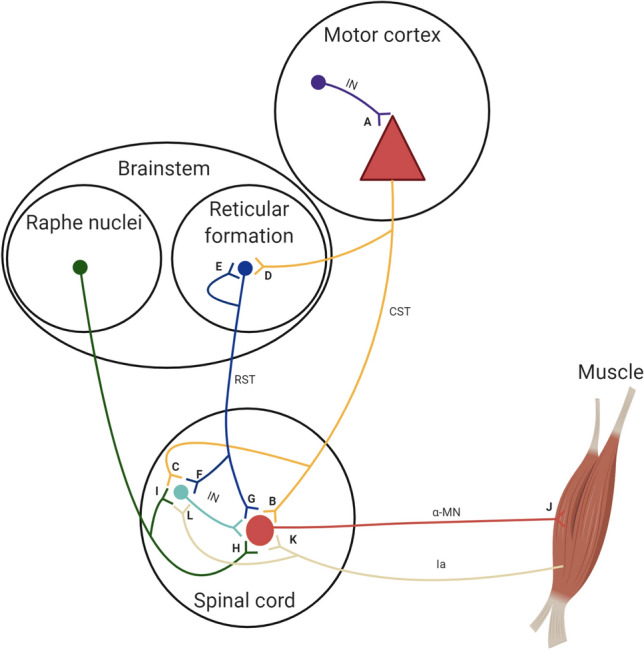
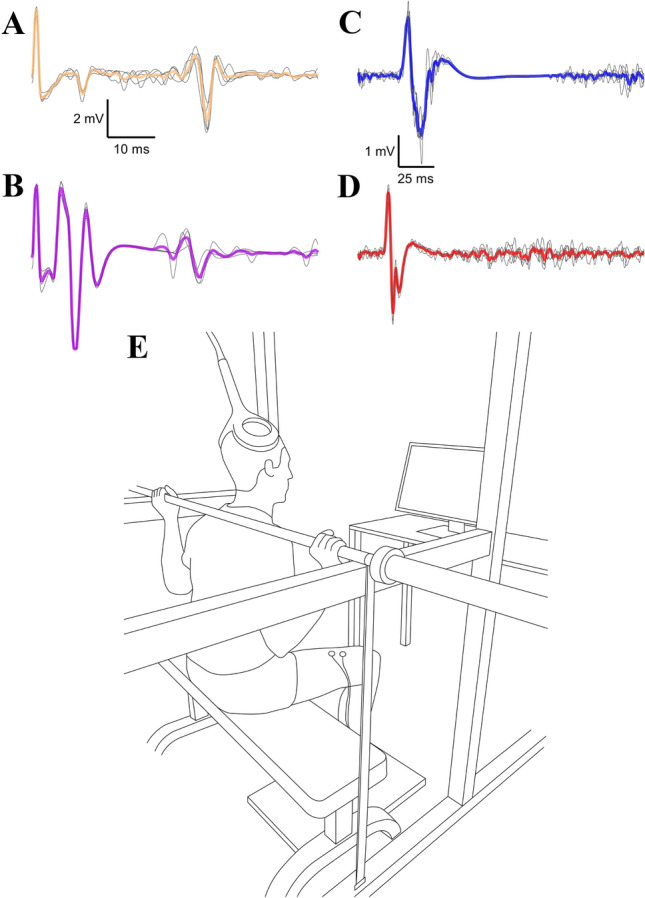
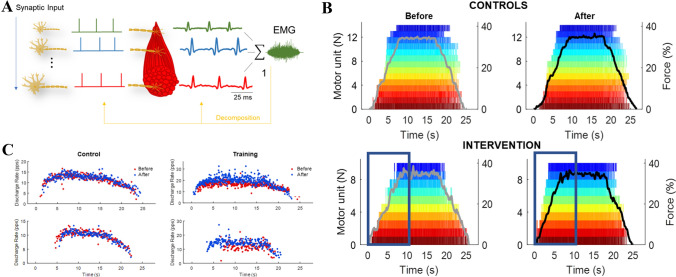
The initial increases in force production with resistance training are thought to be primarily underpinned by neural adaptations. This notion is firmly supported by evidence displaying motor unit adaptations following resistance training; however, the precise locus of neural adaptation remains elusive. The purpose of this review is to clarify and critically discuss the literature concerning the site(s) of putative neural adaptations to short-term resistance training. The proliferation of studies employing non-invasive stimulation techniques to investigate evoked responses have yielded variable results, but generally support the notion that resistance training alters intracortical inhibition. Nevertheless, methodological inconsistencies and the limitations of techniques, e.g. limited relation to behavioural outcomes and the inability to measure volitional muscle activity, preclude firm conclusions. Much of the literature has focused on the corticospinal tract; however, preliminary research in non-human primates suggests reticulospinal tract is a potential substrate for neural adaptations to resistance training, though human data is lacking due to methodological constraints. Recent advances in technology have provided substantial evidence of adaptations within a large motor unit population following resistance training. However, their activity represents the transformation of afferent and efferent inputs, making it challenging to establish the source of adaptation. Whilst much has been learned about the nature of neural adaptations to resistance training, the puzzle remains to be solved. Additional analyses of motoneuron firing during different training regimes or coupling with other methodologies (e.g., electroencephalography) may facilitate the estimation of the site(s) of neural adaptations to resistance training in the future.
Overview
The claims and statistics of this paper haven’t been checked yet.
Free: it reads the open-access text and checks the first 5 claims that cite a source we can check. Create a free account to check every claim.
Integrity signals
Registry
Cites
Statistics
Figures
Verification
Claims the paper makes
The claims and statistics of this paper haven’t been checked yet.
Free: it reads the open-access text and checks the first 5 claims that cite a source we can check. Create a free account to check every claim.
Claims other papers make about this one
Each is checked against this paper’s own text: does it say what the citing paper says it does?
The source backs part of the claim, not all of it — or backs it for a different population, condition or comparison.
In the citing paper
“There is evidence that resistance training exercise induces neural adaptations, such as increased recruitment of motor units, firing frequency, and coordinated movements between muscles, which can enhance force production and increase strength independent of hypertrophic or body composition changes [52, 53].”
From The effects of a home-based resistance training programme on body composition and muscle function during weight loss in people living with overweight or obesity: a randomised controlled pilot trial (2025) · cites this paper as [53]
Experimental — accuracy not yet measured
Self-check
Percentages, sums and reported differences re-computed from the paper’s own numbers.
The self-check needs the paper’s full text.
Citations
Cites
NON-INVASIVE MAGNETIC STIMULATION OF HUMAN MOTOR CORTEX
Barker, A. T., Jalinous, R., & Freeston, I. L. (1985) · The Lancet · doi:10.1016/s0140-6736(85)92413-4 · Cited by 4,460
Rossini, P. M., Burke, D., Chen, R., Cohen, L. G., Daskalakis, Z., Di Iorio, R., Di Lazzaro, V., Ferreri, F., Fitzgerald, P. B., George, M. S., et al. (2015) · Clinical Neurophysiology · doi:10.1016/j.clinph.2015.02.001 · Cited by 2,753
Neural Mechanisms for Interacting with a World Full of Action Choices
Cisek, P., & Kalaska, J. F. (2010) · Annual Review of Neuroscience · doi:10.1146/annurev.neuro.051508.135409 · Cited by 1,543
Neural adaptation to resistance training
SALE, D. G. (1988) · Medicine & Science in Sports & Exercise · doi:10.1249/00005768-198810001-00009 · Cited by 1,421
Folland, J. P., & Williams, A. G. (2007) · Sports Medicine · doi:10.2165/00007256-200737020-00004 · Cited by 1,347
(1979) · PubMed · Cited by 1,302
LAWRENCE, D. G., & KUYPERS, H. G. J. M. (1968) · Brain · doi:10.1093/brain/91.1.1 · Cited by 1,285
Ziemann, U., Lönnecker, S., Steinhoff, B. J., & Paulus, W. (1996) · Annals of Neurology · doi:10.1002/ana.410400306 · Cited by 1,137
Van Cutsem, M., Duchateau, J., & Hainaut, K. (1998) · The Journal of Physiology · doi:10.1111/j.1469-7793.1998.295by.x · Cited by 777
Häkkinen, K., Kallinen, M., Izquierdo, M., Jokelainen, K., Lassila, H., Mälkiä, E., Kraemer, W. J., Newton, R. U., & Alen, M. (1998) · Journal of Applied Physiology · doi:10.1152/jappl.1998.84.4.1341 · Cited by 776
Cited by
Items 201–235 of 235
Shetty, S., Luo, Y., Thomas, A., Gamil, K., Saxena, I., Guha, S., Vohra, R., & Lott, D. J. (2026) · Journal of Neurology · doi:10.1007/s00415-026-13808-y
Zhang, Z., Fan, T., Wu, J., & Sun, Y. (2026) · Scientific Reports · doi:10.1038/s41598-026-48631-y
APLNR reduction in kidney-muscle crosstalk in renal model recovered by exercise and STAT3 inhibition
Pereira, G., Santos, T. C. D. O., Arioni, S. T., Seibt, P. M., dos Santos, E. P., FORTUNA, L., Lazzarotto, R., Zazula, M. F., Agudelo, J. S. H., Silva, D. T. D. R. E., et al. (2026) · Biochemistry and Biophysics Reports · doi:10.1016/j.bbrep.2026.102565
Rosa, G. H. D. M., Pereira, G. S., Boni, F. D. S., da Silva, M. L., & de Araújo, J. E. (2026) · European Journal of Neuroscience · doi:10.1111/ejn.70501
Dreismickenbecker, E., Stephan, H., WIESE, J., Anders, M., Kreuzer, M., Fleckenstein, J., Henkemeier, U., Faber, J., Hilberg, T., & Tomschi, F. (2026) · International Journal of Psychophysiology · doi:10.1016/j.ijpsycho.2026.113387
Stefaniak, W., Bączkowicz, D., & Marusiak, J. (2026) · Journal of Biomechanics · doi:10.1016/j.jbiomech.2026.113404
Huh, H., Yang, X., Bello, S., Runyan, D., Sivakumar, M., Kashyap, P., Sentis, L., & Lu, N. (2026) · IEEE Transactions on Neural Systems and Rehabilitation Engineering · doi:10.1109/tnsre.2026.3702857
Nunes, G. S., Solner, M. W., de Oliveira, J., Wageck, B., & Dangui, A. J. M. (2026) · Sports Medicine · doi:10.1007/s40279-026-02473-w
Olmos, A. A., Lawson, D. J., Sontag, S. A., Richardson, L. D., Roth, B. L., Jeon, S., Redinger, A. L., Gamache, S., & Trevino, M. A. (2026) · Experimental Brain Research · doi:10.1007/s00221-026-07334-6
Lecce, E., Amoruso, P., Vecchio, A. D., Casolo, F., Felici, F., Farina, D., & Bazzucchi, I. (2026) · bioRxiv (Cold Spring Harbor Laboratory) · doi:10.64898/2026.06.26.734811
Li, J., & Hu, P. (2026) · Frontiers in Physiology · doi:10.3389/fphys.2026.1852484
The Influence of Pre-Training Muscle Size on Strength Gain: An Exploratory Analysis
Hammert, W. B., Song, J. S., Yamada, Y., Kataoka, R., Kang, A., Sallberg, R. W., Metcalf, E. E., & Loenneke, J. P. (2026) · International Journal of Strength and Conditioning · doi:10.47206/ijsc.v6i1.557
Longrak, R., & Jaidee, W. (2026) · Pamukkale Journal of Sport Sciences · doi:10.54141/psbd.1822619
The therapeutic exercise framework: an integrative approach to optimizing tissue capacity
Inman, C., Schrey, P., & Borstad, J. (2026) · Physiotherapy Theory and Practice · doi:10.1080/09593985.2026.2709826
Sukupuolierot maksimivoiman kehityksessä 12 viikon voimaharjoittelujakson aikana
Tikkanen, H. O. (2026) · Jyväskylä University Digital Archive (University of Jyväskylä)
Nitkotom, S., Lertwanich, P., Kiratisin, P., Suntornon, P., Sonsukong, A., Rangsiyanon, P., Tosapornsupaluck, A., Vachalathiti, R., Areerak, K., Piamthipmanas, T., et al. (2026) · Knee Surgery and Related Research · doi:10.1186/s43019-026-00343-3
Hasnah, H., Walinga, A. N. T., Amir, D. E., Awaluddin, M., & Suprianto, S. (2026) · Journal of Educational Studies · doi:10.58218/jes.v4i2.3567
de Oude, K. I., Elbers, R. G., Oppewal, A., & Festen, D. A. M. (2026) · Sports · doi:10.3390/sports14080359
The role of physical activity in oral cancer recovery: a systematic review
Lint, L. V., Lefever, M., Meert, Y., Christiaens, L., Willaert, R., Alaerts, K., & Dessel, J. V. (2026) · Physical Therapy · doi:10.1093/ptj/pzag088
Lee, S., & Kim, B.-K. (2026) · Applied Sciences · doi:10.3390/app16168320
Zhang, Y., Liu, X., Bao, J., Zhang, X., Diao, P., Sun, G., Zhang, J., 范庆民, Wang, Z., & Coso, J. D. (2026) · Frontiers in Physiology · doi:10.3389/fphys.2026.1828882
Huang, D., Zeng, Z., Zhou, C., Xie, Q., Li, H., Chen, L., Li, Z., Zhou, A., & Zhang, R. (2026) · Applied Sciences · doi:10.3390/app16178875
Ghoseiri, K. (2026) · HARVEST (University of Saskatchewan)
Hill, C. K., Rattenborg, J., Martens, A., Houchlei, S., Vleisides, B., Verkler, A., Mclean, A., Buehler, S., Smith, C. R., Goddard, S., et al. (2026) · Obesities · doi:10.3390/obesities6050067
Neural and Muscular Adaptations to Resistance Training: Neuromuscular and Molecular Mechanisms
Tuncel, O., Atlı, A., Eraslan, A., Düger, G., & Aras, Z. (2026) · DergiPark
Hangboard Training as a Preventive Strategy for Upper Extremity Pathologies in Rock Climbers
Kornienko, K., Torkieh, J., Shah, K., Woodruff, D., Raymond, C., Chung, M., & Katt, B. M. (2026) · Sports Health A Multidisciplinary Approach · doi:10.1177/19417381261486277
Wang, X., Hui, X., Fu, Z., Guo, Y., Duan, L., Shi, W., Dong, Q., Xu, Q., & Xu, X. (2026) · iScience · doi:10.1016/j.isci.2026.117257
Shalsabilla, N., Oktadinata, A., & Hasibuan, M. U. Z. (2026) · Pendas Jurnal Ilmiah Pendidikan Dasar · doi:10.23969/jp.v11i02.46752
Interventions to improve neuromuscular function in older adults
Altheyab, A. (2026) · Nottingham ePrints (University of Nottingham)
Kui, M., Soh, K. G., & Dev, R. D. O. (2026) · International Journal of Education and Training (InjET) · doi:10.47836/injet.12.2.11
de Mendonça, V. L. A., Oliveira, R. X., Silva, I. D. A. O., Costa, A. F., Araújo, E. M., Coelho‐Júnior, H. J., Franco, O. L., & Aguiar, S. D. S. (2026) · Diseases · doi:10.3390/diseases14110395
Lu, M., Tian, Y., Wang, J., & Liang, Y. (2026) · Frontiers in Psychology · doi:10.3389/fpsyg.2026.1979254
Thonglong, T., Nasome, S., Kasikam, S., Jansomkoy, I., & Kitraksa, W. (2026) · Journal of SciTech-ASEAN · doi:10.67909/jsta.e262007
Chalchat, E., Siracusa, J., Bourrilhon, C., Charlot, K., Martin, V., & Garcia-Vicencio, S. (2022) · doi:10.3389/fphys.2022.877485.s002
Costa, A. C. D. S., de Jesus, L. F., Rocha, R., da Silva, R. S., Ferreira, J. G. D. S., & Franchi, U. M. (2026) · Derecho y cambio social. · doi:10.54899/dcs.v23i100.227
Metadata
- Authors
- Škarabot, J., Brownstein, C. G., Casolo, A., Del Vecchio, A., & Ansdell, P.
- Affiliations
- Loughborough University (GB)
- Laboratoire Interuniversitaire de Biologie de la Motricité (FR)
- University of Padua (IT)
- Northumbria University (GB)
- Corresponding author
- Ansdell, Paul
- Venue
- European Journal of Applied Physiology
- Published
- 2020-12-23
- Volume
- 121
- Issue
- 3
- Pages
- 675-685
- ISSN
- 0020-9376 (ISSN-L)
- 1439-6319
- 1439-6327
- PMC
- PMC7892509
- OpenAlex
- W3110082071
- Semantic Scholar
- 2110e6ba40fb912a1f4d7eef1502cca7fcd25811
- Cited by
- 183
- References
- 109
- Citations by year
- 2026: 46 · 2025: 47 · 2024: 22 · 2023: 27 · 2022: 26 · 2021: 15
- FWCI
- 3.34
- Type
- journal article
- Language
- en
- Open access
- hybrid
- doi.org
- Licence
- cc-by
- creativecommons.org/licenses/by/4.0 (tdm)
- creativecommons.org/licenses/by/4.0 (vor)
- Locations
- European Journal of Applied Physiology (publishedVersion, cc-by)
- PubMed Central (publishedVersion, cc-by)
- PubMed (publishedVersion)
- Northumbria Research Link (Northumbria University) (acceptedVersion)
- Figshare (submittedVersion, cc-by)
- Padua Research Archive (University of Padova) (submittedVersion, cc-by)
- Funders
- Northumbria University
- Topics
- Health Sciences › Medicine › Orthopedics and Sports Medicine › Sports Performance and Training
- Physical Sciences › Engineering › Biomedical Engineering › Muscle activation and electromyography studies
- Health Sciences › Medicine › Physiology (medical) › Cardiovascular and exercise physiology
- Keywords
- neural adaptation, resistance training, intracortical inhibition, corticospinal tract, reticulospinal tract, non-invasive brain stimulation, motor evoked potentials, force generation, short-term training
- MeSH terms
- Adaptation, Physiological, Humans, Motor Neurons, Evoked Potentials, Motor, Resistance Training
About these checks
Registry, retraction, Cites and statistics results are computed, not judged, with one exception: a printed reference that no index lists is read once by a model before it counts as a citation error. Claims are extracted by a model and kept only when their quote appears verbatim in the text; each cited source is then checked, with a model’s help, for whether it says what the claim relies on. Those verdicts can be wrong — read the claim’s quote and the cited source before relying on one.
Statistics and arithmetic are recomputed, not judged.
Confidence bands are shown only for fields calibrated on our annotated test set. None is calibrated yet, so no band is shown.
What counts as a claim ›How we measure confidence ›How we check this ›
Are you an author, or do you see a problem with this page? Request a review
Data sources
Bibliographic data: Semantic Scholar, OpenAlex, Crossref.
Contains information from the Semantic Scholar Academic Graph Datasets, made available under the ODC Attribution License (ODC-BY 1.0).
Semantic Scholar’s data is described in: Kinney, R., et al. (2023). The Semantic Scholar Open Data Platform. arXiv:2301.10140.
