

The DOI matches its Crossref record; 69 of the 69 references it cites were found in a registry or an index.
Functional neuroanatomy of the insular lobe
Open accessAbstract
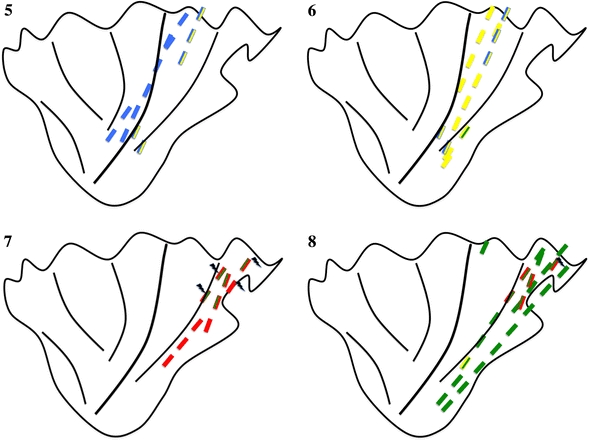
The insula is the fifth lobe of the brain and it is the least known. Hidden under the temporal, frontal and parietal opercula, as well as under dense arterial and venous vessels, its accessibility is particularly restricted. Functional data on this region in humans, therefore, are scarce and the existing evidence makes conclusions on its functional and somatotopic organization difficult. 5 patients with intractable epilepsy underwent an invasive presurgical evaluation with implantation of diagnostic invasive-depth electrodes, including insular electrodes that were inserted using a mesiocaudodorsal to laterorostroventral approach. Altogether 113 contacts were found to be in the insula and were stimulated with alternating currents during preoperative monitoring. Different viscerosensitive and somatosensory phenomena were elicited by stimulation of these electrodes. A relatively high density of electrode contacts enabled us to delineate several functionally distinct areas within the insula. We found somatosensory symptoms to be restricted to the posterior insula and a subgroup of warmth or painful sensations in the dorsal posterior insula. Viscerosensory symptoms were elicited by more anterior electrode contacts with a subgroup of gustatory symptoms occurring after stimulation of electrode contacts in the central part of the insula. The anterior insula did not show reproducible responses to stimulation. In line with previous studies, we found evidence for somato- and viscerosensory cortex in the insula. In addition, our results suggest that there is a predominantly posterior and central distribution of these functions in the insular lobe.
Overview
The claims and statistics of this paper haven’t been checked yet.
Run the check — free, no account needed. It reads the open-access text and checks the sources it cites.
Integrity signals
Registry
Cites
Statistics
Figures
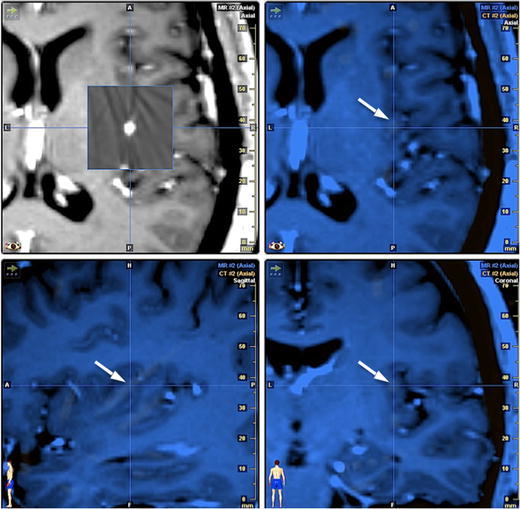
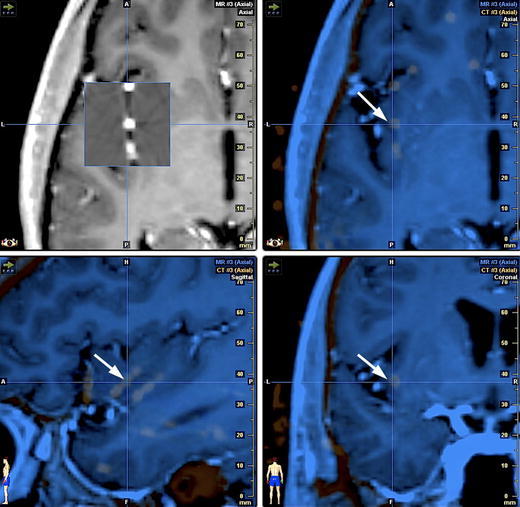
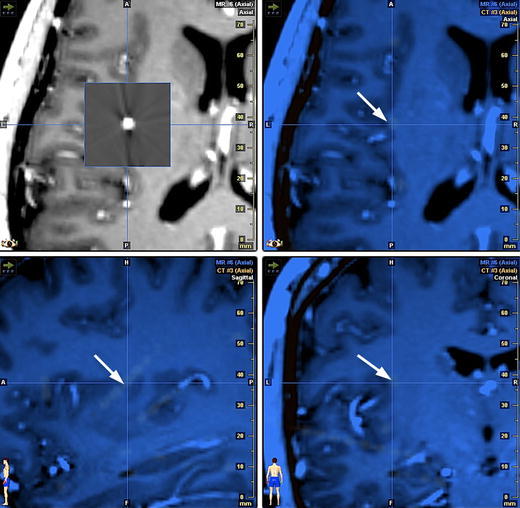
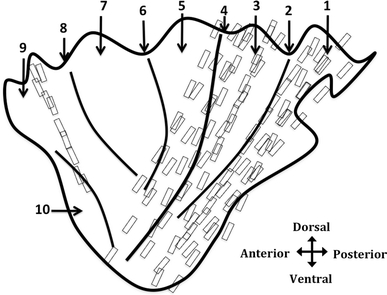
Verification
Claims the paper makes
The claims and statistics of this paper haven’t been checked yet.
Run the check — free, no account needed. It reads the open-access text and checks the sources it cites.
Claims other papers make about this one
Each is checked against this paper’s own text: does it say what the citing paper says it does?
The cited source says what the claim attributes to it.
In the citing paper
“This is consistent with evidence that intracranial stimulation of different insula regions is associated with distinct internal sensations (Stephani et al., 2011).”
From Atypical interoception as a common risk factor for psychopathology: A review (2021) · cites this paper as Stephani et al., 2011
Self-check
Percentages, sums and reported differences re-computed from the paper’s own numbers.
The self-check needs the paper’s full text.
Citations
Cites
How do you feel — now? The anterior insula and human awareness
(Bud) Craig, A. D. (2009) · Nature Reviews Neuroscience · doi:10.1038/nrn2555 · Cited by 6,657 · cited 3×
“Results of these and other studies and considerations concerning the neuroanatomy of the insula have led to a hypothesis regarding a central role of the insula for higher cortical functions and processing of homeostatic information (Singer et al. 2004; Craig 2009).”
BackgroundResultHow do you feel? Interoception: The sense of the physiological condition of the body
Craig, A. D. (2002) · Nature Reviews Neuroscience · doi:10.1038/nrn894 · Cited by 6,006
Empathy for Pain Involves the Affective but not Sensory Components of Pain
Singer, T., Seymour, B., O'Doherty, J., Kaube, H., Dolan, R. J., & Frith, C. D. (2004) · Science · doi:10.1126/science.1093535 · Cited by 3,929
A specific neural substrate for perceiving facial expressions of disgust
Phillips, M. L., Young, A. W., Senior, C., Brammer, M., Andrew, C., Calder, A. J., Bullmore, E. T., Perrett, D. I., Rowland, D., Williams, S. C. R., et al. (1997) · Nature · doi:10.1038/39051 · Cited by 1,609
Penfield, W. G. (1950) · Digital Commons - RU (Rockefeller University) · Cited by 1,387
Kurth, F., Zilles, K., Fox, P. T., Laird, A. R., & Eickhoff, S. B. (2010) · Brain Structure and Function · doi:10.1007/s00429-010-0255-z · Cited by 1,293
Damage to the insula disrupts addiction to cigarette smoking
Naqvi, N. H., Rudrauf, D., Damasio, H., & Bechara, A. (2007) · Science · doi:10.1126/science.1135926 · Cited by 1,245
Die Cytoarchitektonik der Hirnrinde des erwachsenen Menschen
Economo, C. V., & Koskinas, G. N. (1925) · Springer eBooks · Cited by 1,234
The Cerebral Cortex of Man: A Clinical Study of Localization of Function
(1968) · JAMA · doi:10.1001/jama.1968.03150020096041 · Cited by 1,218
Insula of the old world monkey. III: Efferent cortical output and comments on function
Mesulam, M. ‐., & Mufson, E. J. (1982) · Journal of Comparative Neurology · doi:10.1002/cne.902120104 · Cited by 1,013
Research works printed but not linked: 4
- Brodmann K (1909) Vergleichende Lokalisationslehre der Großhirnrinde des Menschen. Barth JA, Leipzig
- Reil JC (1809) Die sylvische Grube. Arch Physiol 9:195–208
- Rose M (1928) Die Inselrinde des Menschen und der Tiere. J Psychol Neurol 37:467–624
- Vogt C, Vogt O (1919) Allgemeine Ergebnisse unserer Hirnforschung. J Psychol Neurol 25:279–461
Cited by
Sorted by citations
Structure and Function of the Human Insula
Uddin, L. Q., Nomi, J. S., Hébert-Seropian, B., Ghaziri, J., & Boucher, O. (2017) · Journal of Clinical Neurophysiology · doi:10.1097/wnp.0000000000000377 · Cited by 1,262
Nieuwenhuys, R. (2012) · Progress in Brain Research · doi:10.1016/b978-0-444-53860-4.00007-6 · Cited by 580
Dynamic Development of Regional Cortical Thickness and Surface Area in Early Childhood
Lyall, A. E., Shi, F., Geng, X., Woolson, S., Li, G., Wang, L., Hamer, R. M., Shen, D., & Gilmore, J. H. (2015) · Cerebral Cortex · doi:10.1093/cercor/bhu027 · Cited by 376
Interoception and psychopathology: A developmental neuroscience perspective
Murphy, J., Brewer, R., Catmur, C., & Bird, G. (2017) · Developmental Cognitive Neuroscience · doi:10.1016/j.dcn.2016.12.006 · Cited by 404
Contributions of the insula to cognition and emotion
Gasquoine, P. G. (2014) · Neuropsychology Review · doi:10.1007/s11065-014-9246-9 · Cited by 400
Metadata
- Authors
- Stephani, C., Fernandez-Baca Vaca, G., Maciunas, R., Koubeissi, M., & Lüders, H. O.
- Affiliations
- University Hospitals Cleveland Medical Center (US)
- Corresponding author
- Stephani, C.
- Venue
- Brain Structure and Function
- Published
- 2010-12-14
- Volume
- 216
- Issue
- 2
- Pages
- 137-149
- ISSN
- 1863-2653 (ISSN-L)
- 1863-2661
- PMC
- PMC3097350
- OpenAlex
- W2167344375
- Cited by
- 251
- References
- 69
- Citations by year
- 2026: 8 · 2025: 20 · 2024: 12 · 2023: 17 · 2022: 18 · 2021: 20 · 2020: 14 · 2019: 18 · 2018: 26 · 2017: 21 · 2016: 17 · 2015: 19 · 2014: 10 · 2013: 11 · 2012: 13
- FWCI
- 6.12
- Type
- journal article
- Language
- en
- Open access
- hybrid
- doi.org
- Licence
- cc-by-nc
- Locations
- Brain Structure and Function (publishedVersion, cc-by-nc)
- PubMed Central (publishedVersion, cc-by-nc)
- PubMed (publishedVersion)
- GoeScholar The Publication Server of the Georg-August-Universität Göttingen (Georg-August-Universität Göttingen) (submittedVersion, cc-by)
- Topics
- Health Sciences › Medicine › Clinical Neurology › Epilepsy research and treatment
- Life Sciences › Neuroscience › Cognitive Neuroscience › Tactile and Sensory Interactions
- Health Sciences › Medicine › Psychiatry and Mental health › Psychosomatic Disorders and Their Treatments
- Keywords
- insula, functional neuroanatomy, somatosensory cortex, gustatory cortex, insular lobe, drug-resistant epilepsy, preoperative assessment, electrical stimulation, somatotopic organization, depth electrodes
- MeSH terms
- Adult, Analysis of Variance, Brain Mapping, Cerebral Cortex, Electrodes, Implanted, Electroencephalography, Epilepsy, Female, Humans, Sensation, Deep Brain Stimulation
About these checks
Registry, retraction, Cites and statistics results are computed, not judged, with one exception: a printed reference that no index lists is read once by a model before it counts as a citation error. Claims are extracted by a model and kept only when their quote appears verbatim in the text; each cited source is then checked, with a model’s help, for whether it says what the claim relies on. Those verdicts can be wrong — read the claim’s quote and the cited source before relying on one.
Statistics and arithmetic are recomputed, not judged.
Confidence bands are shown only for fields calibrated on our annotated test set. None is calibrated yet, so no band is shown.
What counts as a claim ›How we measure confidence ›How we check this ›
Are you an author, or do you see a problem with this page? Request a review
