

Animal models of major depression: drawbacks and challenges
Open accessThe DOI matches its Crossref record; 282 of the 283 references it cites were found in a registry or an index.
Abstract
Major depression is a leading contributor to the global burden of disease. This situation is mainly related to the chronicity and/or recurrence of the disorder, and to poor response to antidepressant therapy. Progress in this area requires valid animal models. Current models are based either on manipulating the environment to which rodents are exposed (during the developmental period or adulthood) or biological underpinnings (i.e. gene deletion or overexpression of candidate genes, targeted lesions of brain areas, optogenetic control of specific neuronal populations, etc.). These manipulations can alter specific behavioural and biological outcomes that can be related to different symptomatic and pathophysiological dimensions of major depression. However, animal models of major depression display substantial shortcomings that contribute to the lack of innovative pharmacological approaches in recent decades and which hamper our capabilities to investigate treatment-resistant depression. Here, we discuss the validity of these models, review putative models of treatment-resistant depression, major depression subtypes and recurrent depression. Furthermore, we identify future challenges regarding new paradigms such as those proposing dimensional rather than categorical approaches to depression.
Overview
The claims and statistics of this paper haven’t been checked yet.
Free: it reads the open-access text and checks the first 5 claims that cite a source we can check. Create a free account to check every claim.
Integrity signals
Registry
Cites
Statistics
Figures
Verification
Claims the paper makes
The claims and statistics of this paper haven’t been checked yet.
Free: it reads the open-access text and checks the first 5 claims that cite a source we can check. Create a free account to check every claim.
Self-check
Percentages, sums and reported differences re-computed from the paper’s own numbers.
The self-check needs the paper’s full text.
Citations
Cites
Diagnostic and Statistical Manual of Mental Disorders
American Psychiatric Association (2013) · doi:10.1176/appi.books.9780890425596 · Cited by 116,369
Diagnostic and Statistical Manual of Mental Disorders
Williams, J. B. W., & First, M. (2013) · Encyclopedia of Social Work · doi:10.1093/acrefore/9780199975839.013.104 · Cited by 109,519 · cited 1×
“Additionally, anger and irritability are one of the key symptoms in the diagnoses of some depression subtypes such as melancholic depression and premenstrual dysphoric disorder in women (American Psychiatric Association 2013; Hantsoo and Epperson 2015).”
BackgroundMolecular Mechanisms of Depression: Perspectives on New Treatment Strategies
Lang, U. E., & Borgwardt, S. (2013) · Cellular Physiology and Biochemistry · doi:10.1159/000350094 · Cited by 8,475
From inflammation to sickness and depression: when the immune system subjugates the brain
Dantzer, R., O'Connor, J. C., Freund, G. G., Johnson, R. W., & Kelley, K. W. (2008) · Nature Reviews Neuroscience · doi:10.1038/nrn2297 · Cited by 7,395
Insel, T., Cuthbert, B., Garvey, M., Heinssen, R., Pine, D. S., Quinn, K., Sanislow, C., & Wang, P. (2010) · American Journal of Psychiatry · doi:10.1176/appi.ajp.2010.09091379 · Cited by 7,067
Rush, A. J., Trivedi, M. H., Wisniewski, S. R., Nierenberg, A. A., Stewart, J. W., Warden, D., Niederehe, G., Thase, M. E., Lavori, P. W., Lebowitz, B. D., et al. (2006) · American Journal of Psychiatry · doi:10.1176/ajp.2006.163.11.1905 · Cited by 5,643
Morris water maze: procedures for assessing spatial and related forms of learning and memory
Vorhees, C. V., & Williams, M. T. (2006) · Nature Protocols · doi:10.1038/nprot.2006.116 · Cited by 4,629
Depression: a new animal model sensitive to antidepressant treatments
PORSOLT, R. D., LE PICHON, M., & JALFRE, M. (1977) · Nature · doi:10.1038/266730a0 · Cited by 4,451
Requirement of hippocampal neurogenesis for the behavioral effects of antidepressants
Santarelli, L., Saxe, M., Gross, C., Surget, A., Battaglia, F., Dulawa, S., Weisstaub, N., Lee, J., Duman, R., Arancio, O., et al. (2003) · Science · doi:10.1126/science.1083328 · Cited by 4,321
Self-citationDeep Brain Stimulation for Treatment-Resistant Depression
Mayberg, H. S., Lozano, A. M., Voon, V., McNeely, H. E., Seminowicz, D., Hamani, C., Schwalb, J. M., & Kennedy, S. H. (2005) · Neuron · doi:10.1016/j.neuron.2005.02.014 · Cited by 4,059
Research works printed but not linked: 1
- Association AP Diagnostic criteria from dsm-iv-tr 2000 Washington, DC American Psychiatric Publishing
Cited by
Items 201–300 of 508
Manosso, L. M., Broseghini, L. D. R., Campos, J. M. B., Padilha, A. P. Z., Botelho, M. E. M., da Costa, M. D. A., Abelaira, H. M., Gonçalves, C. L., & Réus, G. Z. (2022) · Brain Research Bulletin · doi:10.1016/j.brainresbull.2022.09.024 · Cited by 10
Animal Models in Neuroscience: What Is the “Culture of Care”?
Montanari, M., Bonsi, P., Martella, G., & Wirz, A. (2024) · Encyclopedia · doi:10.3390/encyclopedia4010018 · Cited by 11
A new mouse model of depression induced by chronic restraint stress combined with lipopolysaccharide
Ying, L., Zheng, H., Zhu, J., Liang, X., Liu, H., & Cui, W. (2024) · Journal of Psychiatric Research · doi:10.1016/j.jpsychires.2024.04.045 · Cited by 10
Pańczyszyn-Trzewik, P., Stachowicz, K., Misztak, P., Nowak, G., & Sowa-Kućma, M. (2024) · Pharmaceuticals · doi:10.3390/ph17060762 · Cited by 11
“The results indicated a temporary loss of self-care and motivation in OB mice, typical of the depressive phenotype and anhedonia development [25,39,40].”
BackgroundCanto‐de‐Souza, L., Baptista‐de‐Souza, D., Thiele, M., Garcia, V. L., Silva, K. C., de Souza, F. V., Crestani, C. C., & Nunes‐de‐Souza, R. L. (2025) · Progress in Neuro-Psychopharmacology and Biological Psychiatry · doi:10.1016/j.pnpbp.2025.111313 · Cited by 13
Drewko, A. J., Habets, R. L. P., & Brunt, T. M. (2025) · Molecular Psychiatry · doi:10.1038/s41380-025-03169-9 · Cited by 19
“In general, tests that are most relevant to depression and anxiety disorders include some form of Pavlovian fear conditioning and fear extinction [112, 113], together with a manipulation procedure, such as an environmental aversion test or fear induction test [114, 115].”
Glucagon-like peptide-1 medicines in neurological and psychiatric disorders
Fang, S., Cui, F., & Drucker, D. J. (2025) · Cell Reports Medicine · doi:10.1016/j.xcrm.2025.102511 · Cited by 13
“71 It is unclear whether GLP-1 medicines affect psychiatric symptoms independent of the impact of weight loss on psychological well-being in clinical trials.”
Hyperoxygenation Ameliorates Stress-induced Neuronal and Behavioral Deficits
Choi, J., Kwon, H., Seoh, J., & Han, P. (2021) · Experimental Neurobiology · doi:10.5607/en21029 · Cited by 9
“Rodent models have been used to understand the neural and molecular mechanisms underlying stress-induced adaptive changes in the brain [7-9].”
Pereira, M., Siba, I. P., Acco, A., Correia, D., Lapa, F. D. R., Santos, A. R. S., Ruani, A. P., Pizzolatti, M. G., & Andreatini, R. (2022) · Behavioural Brain Research · doi:10.1016/j.bbr.2022.113905 · Cited by 11
Lung-brain crosstalk: Behavioral disorders and neuroinflammation in septic survivor mice
Bonorino, K. C., Kraus, S. I., Martins, G. H. C., Probst, J. J., Moecke, D. P., Sumar, A. H. D. S., Casal, Y. R., Oliveira, F. R. M. B., Sordi, R., Assreuy, J., et al. (2024) · Brain Behavior & Immunity - Health · doi:10.1016/j.bbih.2024.100823 · Cited by 10
“They also showed decreased grooming duration during the SST, suggesting decreased motivation and increased anhedonic-like behavior (Pizza-galli, 2014; Planchez et al., 2019).”
BackgroundState of the Art in Sub-Phenotyping Midbrain Dopamine Neurons
Basso, V., Döbrössy, M. D., Thompson, L. H., Kirik, D., Fuller, H. R., & Gates, M. A. (2024) · Biology · doi:10.3390/biology13090690 · Cited by 12
“For more information about the models developed to study PD, schizophrenia, and depression, refer to Khan 2019), respectively [184–186].”
MethodVanisree, A. J., & Thamizhoviya, G. (2021) · Journal of Molecular Neuroscience · doi:10.1007/s12031-021-01798-7 · Cited by 10
Guanosine as a promising target for fast-acting antidepressant responses
Camargo, A., & Rodrigues, A. L. S. (2022) · Pharmacology Biochemistry and Behavior · doi:10.1016/j.pbb.2022.173422 · Cited by 10
Kwarteng, F., Wang, R., Micov, V., Hausknecht, K. A., Turk, M. C., Ishiwari, K., Oubraim, S., Wang, A., Richards, J. B., Haj‐Dahmane, S., et al. (2022) · Psychopharmacology · doi:10.1007/s00213-022-06242-1 · Cited by 10
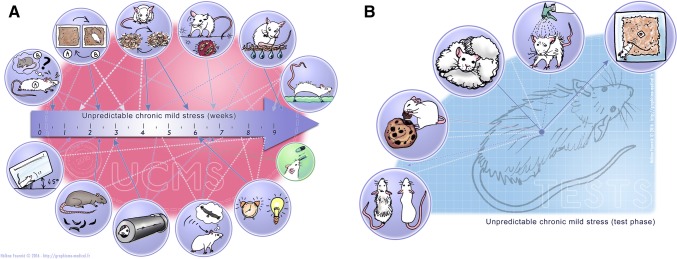
“We employed a widely used chronic unpredictable stress (CUS) model during adolescence in rats (Chaby et al. 2015; Hollis et al. 2013; Planchez et al. 2019; Sequeira-Cordero et al. 2019b).”
MethodResultXeni, F., Marangoni, C., & Jackson, M. G. (2024) · Neuropsychopharmacology · doi:10.1038/s41386-024-01899-y · Cited by 11
“It has been shown to induce de fi cits in reward-related domains and exaggerated emotional reactivity relevant to MDD [26].”
BackgroundAjaman, M., Naserzadeh, R., & Ghorbanzadeh, B. (2020) · Behavioural Pharmacology · doi:10.1097/fbp.0000000000000600 · Cited by 10
“At this 6-min test, mice develop characteristic ‘immobility’ behavior (Planchez et al., 2019).”
BackgroundMa, K., Wilson, C., Hannan, A. J., & Renoir, T. (2020) · Pharmacology Biochemistry and Behavior · doi:10.1016/j.pbb.2020.172940 · Cited by 9
Are omega-3 fatty acids efficacious in the treatment of depression? A review
Lange, K. W., Nakamura, Y., Zhao, H., Bai, D., & Wang, H. (2021) · Journal of Food Bioactives · doi:10.31665/jfb.2021.14265 · Cited by 9
“However, it should be borne in mind that the commonly used animal models of major depressive disorder have substantial shortcomings, particularly in regard to depression subtypes, therapy-resistant depression and recurrent depression (Planchez et al., 2019).”
BackgroundLlach, C.-D., Le, G. H., Shah, H., Marcato, L. M., Brietzke, E. M., Gill, H., Tabassum, A., Badulescu, S., Rosenblat, J. D., McIntyre, R. S., et al. (2025) · Journal of Neuroimmunology · doi:10.1016/j.jneuroim.2025.578587 · Cited by 8
Mohseni, F., & Rafaiee, R. (2025) · Journal of the American Association for Laboratory Animal Science · doi:10.30802/aalas-jaalas-24-131 · Cited by 8
Liu, S., Zhang, Y., Zhou, H., Ma, Y., Huang, F., Lei, T., Wang, Q., & Yu, S. (2025) · Journal of Agricultural and Food Chemistry · doi:10.1021/acs.jafc.4c09773 · Cited by 9
Wang, Z., Robbins, B., Zhuang, R., van Bruggen, R., Sandini, T. M., Li, X., & Zhang, Y. (2025) · Scientific Reports · doi:10.1038/s41598-025-03383-z · Cited by 10
“The SIS protocol, adapted from previous studies 19,36,37 , involved daily changes in the cage partners of the individuals in the SIS subgroups during the stress periods.”
Gonçalves, B. S. M., Mariotti, F. F. N., Ponsone, G., Soares, T. A. A., Perão, P. C. B. G., Mônico‐Neto, M., Cariste, L. M., Maluf, A., Nascimento, G. D. S. S., Antunes, H. K. M., et al. (2021) · Hormones and Behavior · doi:10.1016/j.yhbeh.2021.105087 · Cited by 9
Mota‐Ramírez, L. D., & Escobar, C. (2023) · Developmental Psychobiology · doi:10.1002/dev.22392 · Cited by 10
Díez-Solinska, A., Azkona, G., Muñoz‐Culla, M., Beitia, G., Goñi‐Balentziaga, O., Gómez-Lázaro, E., & Vegas, Ó. (2023) · Physiology & Behavior · doi:10.1016/j.physbeh.2023.114306 · Cited by 8
Mancini, C., Babicola, L., Chila, G., Segni, M. D., Municchi, D., D’Addario, S. L., Spoleti, E., Passeri, A., Cifani, C., Andolina, D., et al. (2024) · iScience · doi:10.1016/j.isci.2024.111328 · Cited by 9
Mesripour, A., & Golchin, S. (2022) · Iranian Journal of Psychiatry · doi:10.18502/ijps.v17i2.8911 · Cited by 11
“Anhedonia is another feature of depression that could be evaluated by SP in animal models (28).”
BackgroundLipowska, M. M., Sadowska, E. T., Palme, R., & Koteja, P. (2022) · Scientific Reports · doi:10.1038/s41598-022-06060-7 · Cited by 9
How the Sucrose Preference Succeeds or Fails as a Measurement of Anhedonia
Strekalova, T. V. (2022) · Neuromethods · doi:10.1007/978-1-0716-2748-8_6 · Cited by 8
Mendes‐Silva, A. P., Prévot, T. D., Banasr, M., Sibille, E. L., & Diniz, B. S. (2022) · Frontiers in Cellular Neuroscience · doi:10.3389/fncel.2022.999303 · Cited by 8
“is associated with social defeat-induced depression- and anxietylike behavior in mice, and learning and memory impairments (Sullivan and Gratton, 2002; Lupien et al., 2009; Felix-Ortiz et al., 2016; Burgos-Robles et al., 2017; Planchez et al., 2019).”
BackgroundPresa, M. H., da Rocha, M. J., Pires, C. S., Ledebuhr, K. N. B., da Costa, G. P., Alves, D. A. C., Bortolatto, C. F., & Brüning, C. A. (2023) · ACS Chemical Neuroscience · doi:10.1021/acschemneuro.3c00108 · Cited by 8
Horita, J. K. H. A., da Silva, M. C. M., Ferrari, C. Z., Vieira, É. L. M., Moreira, F. A., de Oliveira, A. C. P., & Reis, H. J. (2020) · NeuroImmunoModulation · doi:10.1159/000511181 · Cited by 10
Hazani, R., Lavidor, M., & Weller, A. (2022) · Schizophrenia Bulletin · doi:10.1093/schbul/sbac093 · Cited by 9
Berrío, J. P., & Kalliokoski, O. (2025) · FEBS Letters · doi:10.1002/1873-3468.70077 · Cited by 7
“Yet, we are not certain to what extent it is a good method for studying depressions [15], if at all.”
Brubaker, M., Kapadia, S., Maletic, V., Chambers, J., Watling, C., & Citrome, L. (2025) · Neuropsychiatric Disease and Treatment · doi:10.2147/ndt.s501207 · Cited by 7
“…studies support a greater effect of brexpiprazole + antidepressant therapy versus the respective monotherapies in various validated (with regard to etiology, symptomatology, and treatment response 67–69 ) behavioral models and tests of treatment effects on depression-and PTSD-like behaviors.”
Borroto-Escuela, D., Serrano-Castro, P. J., Sánchez‐Pérez, J. A., Barbancho, M. Á., Fuxé, K., & Narváez, M. (2024) · Expert Opinion on Therapeutic Targets · doi:10.1080/14728222.2024.2342517 · Cited by 8
Arrabal-Gómez, C., Serrano-Castro, P. J., Sánchez‐Pérez, J. A., García‐Casares, N., Fuxé, K., Borroto-Escuela, D., & Narváez, M. (2024) · Expert Opinion on Therapeutic Targets · doi:10.1080/14728222.2024.2342524 · Cited by 7
Persistent decision-making in mice, monkeys and humans
Laurie, V.-J., Shourkeshti, A., Chen, C. S., Herman, A. B., Grissom, N. M., & Ebitz, R. B. (2026) · Proceedings of the Royal Society B Biological Sciences · doi:10.1098/rspb.2025.1983 · Cited by 11
Antidepressant and Anxiolytic Effects of Fermented Huauzontle, a Prehispanic Mexican Pseudocereal
Santiago‐López, L., Almada-Corral, A., Garcia, H. S., Mata‐Haro, V., González-Córdova, A. F., Vallejo‐Córdoba, B., & Hernández‐Mendoza, A. (2022) · Foods · doi:10.3390/foods12010053 · Cited by 8
“05) immobility time than the antidepressant positive control group, then, a higher immobility time indicates a greater depressive state [42,43].”
BackgroundTerpenoids and Triterpenoid Saponins: Future Treatment for Depression
Mando, Z., Zarzour, R. H. A., Alshehade, S. A., Afzan, A., Shaari, K., Hassan, Z., Mahror, N., & Zakaria, F. (2023) · Current Traditional Medicine · doi:10.2174/2215083809666230223121504 · Cited by 9
The unfixed light pattern contributes to depressive-like behaviors in male mice
Liu, Q., Meng, Q., Ding, Y., Jiang, J., Kang, C., Yuan, L., Guo, W., Zhao, Z., Yuan, Y., Wei, X., et al. (2023) · Chemosphere · doi:10.1016/j.chemosphere.2023.139680 · Cited by 7
Zoicas, I., Licht, C., Mühle, C., & Kornhuber, J. (2024) · Neuroscience & Biobehavioral Reviews · doi:10.1016/j.neubiorev.2024.105726 · Cited by 7
RNA therapeutics for mood disorders: current evidence toward clinical trials
Marois, M. L., Tzavara, E. T., Ibrahim, E. C., Blin, O., & Belzeaux-R, R. (2021) · Expert Opinion on Investigational Drugs · doi:10.1080/13543784.2021.1928073 · Cited by 7
Kim, H. J., Kim, H., Choi, Y., Lee, J., Kim, D., Lee, S. K., & Park, K.-S. (2021) · Phytomedicine · doi:10.1016/j.phymed.2021.153703 · Cited by 8
Lin, S., Du, Y., Xia, Y., Xie, Y., Xiao, L., & Wang, G. (2022) · Frontiers in Psychiatry · doi:10.3389/fpsyt.2022.950910 · Cited by 11
“Furthermore, optogenetic inactivation of this pathway during FST completely reverses ketamine’s antidepressant response, indicating it may be involved in the rapid antidepressant effect of ketamine (118).”
BackgroundInfluentialSocial isolation leads to mild social recognition impairment and losses in brain cellularity
Guimarães, D. M., Valério‐Gomes, B., Vianna-Barbosa, R. J., Oliveira, W., Neves, G. A., Tovar-Moll, F. F., & Lent, R. (2023) · Brain Structure and Function · doi:10.1007/s00429-023-02705-z · Cited by 7
“Moderate success of antidepressant treatment has been shown in different animal models of depression and mood disorders (Willner and Belzung 2015; Planchez et al. 2019).”
BackgroundCui, Y., Ursuliak, Z., & Rupasinghe, H. P. V. (2025) · Progress in Neuro-Psychopharmacology and Biological Psychiatry · doi:10.1016/j.pnpbp.2025.111567 · Cited by 7
Wang, Q., Wang, H., & Dwivedi, Y. (2024) · Biological Psychiatry Global Open Science · doi:10.1016/j.bpsgos.2024.100365 · Cited by 7
García-Serrano, A. M., Skoug, C., Axling, U., Korhonen, E. R., Teixeira, C., Ahrén, I. L., Mukhopadhya, I., Boteva, N., Martin, J. C., Scott, K. P., et al. (2017) · Beneficial Microbes · doi:10.1163/18762891-bja00040 · Cited by 8
Duranté, E. K., Ribeiro, A., Gaspard-Boulinc, L., Boutron, I., Henry, C., Petit, A., Houenou, J., Lemogne, C., & Chevance, A. (2025) · The British Journal of Psychiatry · doi:10.1192/bjp.2024.292 · Cited by 8
“79 Of note, behaviours characterised with the social defeat paradigm can be referred to as hopelessness in animal research, but rarely with the common terms used to refer to non-physical pain, which may explain the paucity of animal studies collected in our search.”
AdipoRon as a Novel Therapeutic Agent for Depression: A Comprehensive Review of Preclinical Evidence
Laurindo, L. F., Rodrigues, V. D., Mellem, R. H., Haber, R. S. D. A., Valenti, V. E., Laurindo, L. F., Chagas, E. F. B., de Oliveira, C. M., Direito, R., Miglino, M. A., et al. (2025) · Biomedicines · doi:10.3390/biomedicines13081867 · Cited by 6
“In humans, unlike rats, the multifactorial nature of depression has been more well-funded, although recent studies have affirmed that physical or endocrine stress can trigger depression in animals [66,67].”
Annafi, O. S., Adeleke, P. A., Enebeli, L., Ajayi, A. M., Ben‐Azu, B., Okubena, O., & Umukoro, S. (2025) · Journal of Molecular Histology · doi:10.1007/s10735-025-10532-1 · Cited by 6
“Thus, the ability of rodents (Planchez et al. 2019; Adeleke et al. 2023), which has been correlated with the state of apathy, a prominent symptom of depression (Cathomas et al. 2015; Planchez et al. 2019 ).”
Braga‐Dias, A. C., Otero, S. J. C., Oliveira, M., Canto‐de‐Souza, L., Crestani, C. C., Canto‐de‐Souza, A., Baptista‐de‐Souza, D., & Nunes‐de‐Souza, R. L. (2025) · European Journal of Pain · doi:10.1002/ejp.70106 · Cited by 6
“Studies show a relationship between nest-building impairment and apathy behaviours in animals with a depressive-like behavioural profile (Planchez et al. 2019).”
Barbetti, M., Mancabelli, L., Vacondio, F., Longhi, G., Ferlenghi, F., Viglioli, M., Turroni, F., Carnevali, L., Mor, M., Ventura, M., et al. (2024) · Progress in Neuro-Psychopharmacology and Biological Psychiatry · doi:10.1016/j.pnpbp.2024.110963 · Cited by 7
“In animal studies, various stress paradigms are employed to explore the mechanisms underlying the development of depressive-like phenotypes and to evaluate the effectiveness of new therapeutic interventions (Planchez et al., 2019).”
Abidin, İ., Keser, H., Şahin, E., Öztürk, H., Başoğlu, H., Alver, A., & Aydın-Abidin, S. (2024) · Laboratory Animal Research · doi:10.1186/s42826-024-00193-8 · Cited by 7
“In rodent models of depression, the time spent trying to escape decreases over time [23].”
BackgroundBergosh, M., Medvidovic, S., Zepeda, N., Crown, L. M., Ipe, J., Debattista, L., Romero, L., Amjadi, E., Lam, T., Hakopian, E., et al. (2024) · Frontiers in Neuroscience · doi:10.3389/fnins.2024.1389096 · Cited by 8
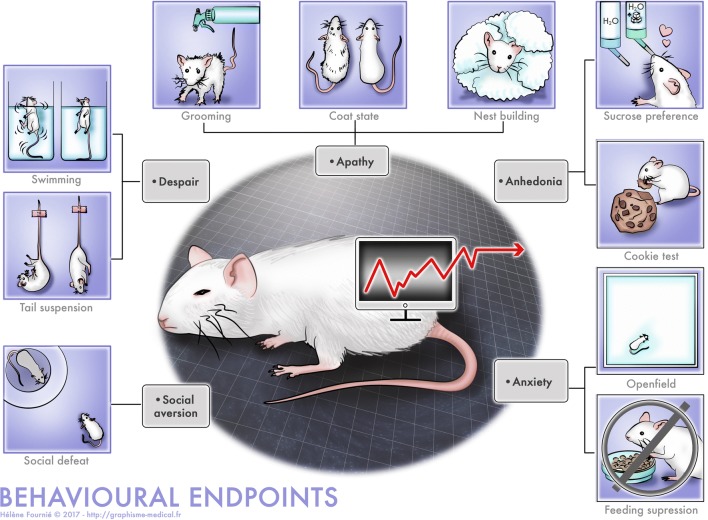
“Despair, the second core symptom of depression beside apathy (Kennedy, 2008), is typically measured in rodents via the Forced Swim Test (FST), where increased immobile time in the test trial putatively represents despair (Planchez et al., 2019).”
BackgroundMethodConrad, C. D., Peay, D. N., Acuña, A. M., Whittaker, K. E., & Donnay, M. E. (2024) · Hormones and Behavior · doi:10.1016/j.yhbeh.2024.105600 · Cited by 7
Okitsu, M., Fujita, M., Moriya, Y., Kotajima‐Murakami, H., Ide, S., Kojima, R., Sekiyama, K., Takahashi, K., & Ikeda, K. (2024) · International Journal of Molecular Sciences · doi:10.3390/ijms25147993 · Cited by 6
“The NBT can be used to examine apathy symptoms [40], although a wide variety of causes, such as general condition, distress, and pain, may also provoke deficits in nesting behavior [41].”
BackgroundMedina, J., Guzman, R. M. D., & Workman, J. L. (2024) · Neuropharmacology · doi:10.1016/j.neuropharm.2024.110095 · Cited by 8
Gergues, M. M., Lalani, L. K., & Kheirbek, M. A. (2024) · Neuropsychopharmacology · doi:10.1038/s41386-024-01942-y · Cited by 8
Talty, C.-E., Murphy, S. F., & VandeVord, P. J. (2024) · Neuroscience · doi:10.1016/j.neuroscience.2024.09.039 · Cited by 7
“The splash test, a measure of self-care and apathy in rodents, assesses changes in grooming behavior (Planchez et al., 2019).”
The metabolic regulator USF-1 is involved in the control of affective behaviour in mice
Sideromenos, S., Nikou, M., Czuczu, B., Thalheimer, N., Gundacker, A., Horváth, O., Rico, L. C., Stöhrmann, P., Niello, M., Partonen, T., et al. (2022) · Translational Psychiatry · doi:10.1038/s41398-022-02266-5 · Cited by 7
“Notably, the displays in the FST and the NSF are considered as distinctive depression-related behavioural dimensions [54].”
BackgroundKent, M., Kovalev, D., Hart, B., LeServe, D. S., Handford, G., Vavra, D. T., & Lambert, K. G. (2022) · Journal of Neuroendocrinology · doi:10.1111/jne.13179 · Cited by 7
“sant psychotropic interventions increased in popularity through the 1990s.(7) The recently introduced enrichment-loss rodent model involves”
BackgroundTan, G., Chen, H., & Leuthardt, E. C. (2025) · Neuromodulation Technology at the Neural Interface · doi:10.1016/j.neurom.2025.08.001 · Cited by 10
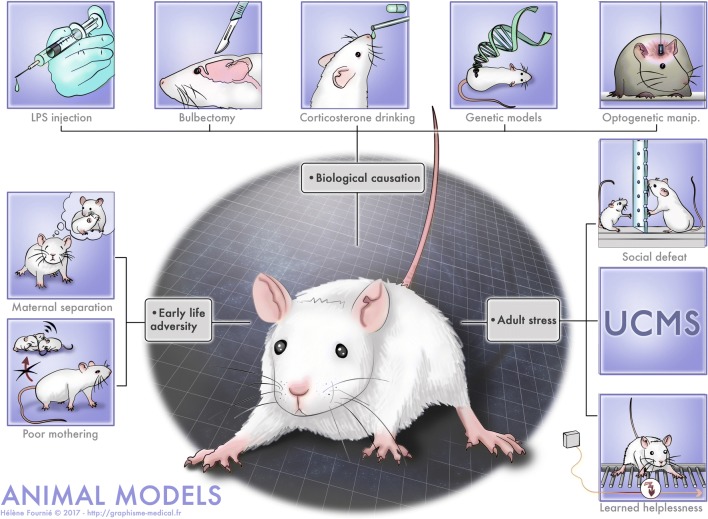
“Commonly used depression models include environmentally induced, pharmacological, genetic, and lesion-based paradigms 45–47 .”
Assessing laboratory animal welfare: the crucial importance of construct validity
Mason, G. J. (2026) · Laboratory Animals · doi:10.1177/00236772251380871 · Cited by 7
Bridge, S., Karagiannis, S. N., & Borsini, A. (2024) · Brain Behavior & Immunity - Health · doi:10.1016/j.bbih.2024.100778 · Cited by 8
“The use of primarily observable despair and anhedonia as surrogates for depression may be argued as neglectful of the nuanced and highly variable nature of depressive presentations (Planchez et al., 2019).”
BackgroundBastos, C. R., Bevilacqua, L. M., Mendes, L. F. B., Xavier, J., Gruhn, K., Kaster, M. P., & Ghisleni, G. (2024) · Journal of Psychiatric Research · doi:10.1016/j.jpsychires.2024.05.019 · Cited by 6
Seltorexant for major depressive disorder
Valentino, K., Teopiz, K. M., Wong, S., Zhang, M. C., Le, G. H., Choi, H., Ballum, H., Dri, C. E., Cheung, W., & McIntyre, R. S. (2025) · Expert Opinion on Emerging Drugs · doi:10.1080/14728214.2025.2452514 · Cited by 7
“Models are also limited in the fact that they do not mimic the heterogeneity of symptoms observed in MDD patients [93].”
A Novel Mouse Model of Depression: Advantages in Immune Research and Clinical Translation
Xiong, J., Zhang, X., Li, J., Ren, C., Shen, T., Su, Y., & Si, T. (2025) · International Journal of Biological Sciences · doi:10.7150/ijbs.104950 · Cited by 5
“However, similar to genetic manipulation of inflammation-related genes, this model fails to reflect the characteristics of patients with depression who have real or chronic inflammation[14].”
Hemanny, C., Moura, I., Mello, M., Figueiredo, A. M., Demarzo, M., & de Oliveira, I. R. (2023) · Middle East Current Psychiatry · doi:10.1186/s43045-023-00321-5 · Cited by 7
“The relationship between stressors and depression has abundant evidence in both humans [53–56] and animal models of depression, which induce passive patterns in humans or depressive-like behaviors in other animals [14].”
BackgroundDomin, H., Konieczny, J., Cieślik, P., Pochwat, B., Wyska, E., Szafarz, M., Lenda, T., Biała, D., Gąsior, Ł., Śmiałowska, M., et al. (2023) · Behavioural Brain Research · doi:10.1016/j.bbr.2023.114729 · Cited by 6
Oh, H., Prévot, T. D., Newton, D. F., & Sibille, E. L. (2021) · Current Opinion in Pharmacology · doi:10.1016/j.coph.2021.07.012 · Cited by 5
Animal models in Alzheimer's disease: Biological plausibility and mood disorders
Castillo-Rangel, C., Marín, G., Díaz-Chiguer, D. L., Zarate-Calderon, C., Viveros-Martínez, I., Salazar, F., Torres-Pasillas, J. G., Hernández-Contreras, K. A., Vega-Quesada, L. A., Cano-Ortega, Y., et al. (2023) · Neurology Perspectives · doi:10.1016/j.neurop.2023.100110 · Cited by 5
Tavares, L. R. R., Petrilli, L. A., Baptista‐de‐Souza, D., Canto‐de‐Souza, L., Planeta, C. S., Guimarães, F. S., Nunes‐de‐Souza, R. L., & Canto‐de‐Souza, A. (2024) · Cannabis and Cannabinoid Research · doi:10.1089/can.2022.0300 · Cited by 6
“41 After application, the latency and frequency of grooming were recorded for 5 min as an index of self-care and motivational behavior.”
Han, X., Song, J., Geng, Z., Li, R., & Li, B. (2025) · Cell Calcium · doi:10.1016/j.ceca.2025.103054 · Cited by 4
Courtes, A. C., Jones, G. H., Henter, I. D., Shahani, L., Fries, G. R., Juruena, M. F., Soares, J. C., Zarate, C. A., & Machado‐Vieira, R. (2025) · Journal of Affective Disorders · doi:10.1016/j.jad.2025.120016 · Cited by 5
Lost in translation: toward clinically effective translational research
Tan, V. T. Y., & Ward, R. D. (2025) · Translational Psychiatry · doi:10.1038/s41398-025-03688-7 · Cited by 4
“The same can be said for animal models of depression [30, 44 – 46].”
Psychobiotics at the Frontiers of Neurodegenerative and Neuropsychiatric Research
Jiménez-Pareyón, G. R., Cristóbal-Luna, J. M., García-Martínez, Y., Garfias-Noguez, C., Damián, M. R., Torres-Maravilla, E., & Sánchez-Pardo, M. E. (2025) · Microorganisms · doi:10.3390/microorganisms13122718 · Cited by 5
“Both germ-free and conventionally colonized animals have proven valuable in uncovering mechanisms by which gut microbial composition impacts brain function, stress regulation, and cognitive performance [74–76].”
The Habenula’s role in major depressive disorder: recent insights from preclinical and human studies
Lin, F., Casmey, K., Codeluppi-Arrowsmith, S. A., & Turecki, G. (2026) · Translational Psychiatry · doi:10.1038/s41398-026-03867-0 · Cited by 5
“Animal models can be used to target and manipulate speci fi c regions, subtypes of cells and proteins in the brain to determine casual effects of various molecular manipulations [51, 60, 61].”
Stress-related changes in amygdala-prefrontal network functional connectivity
Serrano, J., Hrybouski, S., & Malykhin, N. V. (2026) · Biological Psychology · doi:10.1016/j.biopsycho.2026.109245 · Cited by 4
Lin, L., Wu, H.-B., & Qiu, Z.-K. (2023) · Current Computer - Aided Drug Design · doi:10.2174/1573409919666230417103355 · Cited by 5
Advancing methods for the biodemography of aging within social contexts
Hernández‐Pacheco, R., Steiner, U. K., Rosati, A. G., & Tuljapurkar, S. D. (2023) · Neuroscience & Biobehavioral Reviews · doi:10.1016/j.neubiorev.2023.105400 · Cited by 4
“…nature of many disease symptoms and the difficult evaluation and predictive validation of a model (Nestler and Hyman, 2010; Prabhakar, 2012; Teeple et al., 2013; McGonigle and Ruggeri, 2014; Planchez et al., 2019) may contribute to high rates of translational failure using laboratory animal models.”
MethodKhaled, H., Ghasemi, Z., Inagaki, M., Patel, K., Naito, Y., Feller, B., Yi, N., Bourojeni, F. B., Lee, A. K., Chofflet, N., et al. (2024) · The EMBO Journal · doi:10.1038/s44318-024-00252-9 · Cited by 5
“Grooming assessments are often used to identify depression-like behavior, as depressed mice exhibit reduced grooming in splash tests or deterioration of coat state (Bouguiyoud et al, 2021; Kalueff et al, 2016; Planchez et al, 2019).”
Delcourte, S., Bouloufa, A., Rovera, R., Brunet, E., Le, H. D., Williams, A. E., Panda, S., Azmani, R., Raineteau, O., Dkhissi‐Benyahya, O., et al. (2025) · Frontiers in Pharmacology · doi:10.3389/fphar.2025.1592909 · Cited by 4
“Hence, CDMRD represents a novel treatment-resistant depression-like animal model exhibiting construct (corticosterone dysfunction), face (change in despair-, anhedonia-or anxious-like behavior) and predictive (reversal only with combinatory treatment) validity (Planchez et al., 2019).”
Choi, Y., Kim, Y., Lee, H., & Cho, S. (2021) · Evidence-based Complementary and Alternative Medicine · doi:10.1155/2021/8888841 · Cited by 4
Genetic animal models for psychiatric disorders
Zhou, Y., Samsom, J., & Wong, A. H. C. (2022) · Elsevier eBooks · doi:10.1016/b978-0-12-819602-1.00015-2 · Cited by 4
StressMatic: A Novel Automated System to Induce Depressive- and Anxiety-like Phenotype in Rats
Martins‐Macedo, J., Mateus‐Pinheiro, A., Alves, C. S. C., Veloso, F., Gomes, E. D., Ribeiro, I., Correia, J. S., Silveira‐Rosa, T., Alves, N. D., Rodrigues, A. J., et al. (2023) · Cells · doi:10.3390/cells12030381 · Cited by 4
“are based on stress exposure paradigms, the administration of glucocorticoids, genetic manipulations, and the interaction between gene and environmental factors [4,6,7].”
BackgroundBehavioral and Neurostructural changes associated with Chronic Amygdala HyperactivationPreprint
Misquitta, K. A., Codeluppi-Arrowsmith, S. A., Knoch, J., Bansal, Y., Tomoda, T., Ellegood, J., Lerch, J. P., Sibille, E. L., Nikolova, Y. S., & Banasr, M. (2021) · bioRxiv (Cold Spring Harbor Laboratory) · doi:10.1101/2021.09.11.459894 · Cited by 8
“Other tests measuring anxiety and anhedonia exist however most cannot be repeated hindering longitudinal analysis (Nollet et al., 2013; Planchez et al., 2019).”
BackgroundHwang, D.-J., Kim, J., Cho, J., Koo, J., Jang, Y., & Kim, T.-K. (2025) · Scientific Reports · doi:10.1038/s41598-025-98630-8 · Cited by 3
“5 and 8).”
New insights into the molecular pathophysiology and treatment of depression
Chattaraj, B., Karmakar, S., & Jash, R. (2025) · Neuroscience · doi:10.1016/j.neuroscience.2025.08.013 · Cited by 3
Huang, M., He, S., Wang, Y., Zeng, Y., Chen, Q., Chen, Y., Wang, X., Li, Y., Chen, L., Zheng, S., et al. (2025) · Communications Biology · doi:10.1038/s42003-025-08719-z · Cited by 3
“These tests are well-validatedindicatorsofbehavioraldespair,anhedonia,andsocialwithdrawal inrodentmodelsofdepression 70,71 .”
Ruanpang, J., Thongta, N., Vattarakorn, A., Ngampramuan, S., Pariwatcharakul, P., Tapechum, S., Care, C., & Pakaprot, N. (2025) · Veterinary World · doi:10.14202/vetworld.2025.2823-2838 · Cited by 3
“Its core symptoms are anhedonia (the inability to experience pleasure) and despair (the complete loss or absence of hope, representing a depressed mood) [37, 38].”
Gabriel-Segard, T., Heberden, C., Mondot, S., Duquesnoy, M., Dicembre, M., Naudon, L., Philippe, C., Maximin, E., Blais, A., Jacota, M., et al. (2025) · Gut Microbes · doi:10.1080/19490976.2025.2563701 · Cited by 5
Erkizia-Santamaría, I., Fernández, L., Horrillo, I., Meana, J. J., & Ortega, J. E. (2026) · Neurobiology of Stress · doi:10.1016/j.ynstr.2026.100815 · Cited by 4
“…in the early 1980s (Katz, 1982), has evolved significantly since it was first developed, and remains one of the most robust, reliable and widely used stress-based depression-like models, with strong construct validity for human depressive disorders (Planchez et al., 2019; Willner, 2017b).”
Orlando, R., Ginerete, R. P., Cavalleri, L., Aliperti, V., Imbriglio, T., Battaglia, G., Zuena, A. R., Nicoletti, F., Pich, E. M., & Collo, G. (2022) · Frontiers in Pharmacology · doi:10.3389/fphar.2022.913210 · Cited by 3
“, SSRIs or SNRIs); and, 3) experimental animal models of TRD, characterized by a reduced or absent response to antidepressants (Planchez et al., 2019; Kelly et al., 2022).”
BackgroundKnowledge gaps in psychedelic medicalisation: Preclinical and neuroimaging mechanisms
McCulloch, D. E.-W., López, J. P., Dalla, C., Ċastrén, E., Erritzøe, D., Frøkjær, V. G., Lundberg, J., Preller, K. H., Fisher, P. M., & Knudsen, G. M. (2023) · Neuroscience Applied · doi:10.1016/j.nsa.2023.103929 · Cited by 4
“…disorders, most animal studies investigating the response to treatment are based on analyses using standard behavioural paradigms to assess anhedonia and despair-like behaviours, such as the forced swim, tail suspension, or glucose preference tests, among others (Planchez et al., 2019).”
Jahromy, M. H., Charousaei, H., & Charousaei, A. (2025) · Brain and Behavior · doi:10.1002/brb3.70320 · Cited by 6
“As previously mentioned, sucrose preference and cookie tests assess anhedonia (Planchez et al. 2019).”
Queiroz, S. D. A., Júnior, L. R. D. N., de Carvalho, A. B. P., da Silva, T. V., Ramos, S. D. S., Meneguzzo, V., Mathias, K., Tiscoski, A. D. B., Piacentini, N., Goldim, M. P. D. S., et al. (2025) · Schizophrenia Research · doi:10.1016/j.schres.2025.03.031 · Cited by 3
Sabbag, T., Kritman, M., & Akirav, I. (2025) · Cells · doi:10.3390/cells14120938 · Cited by 4
“Reduced grooming duration was also reported in previous studies following chronic stress exposure in female rats [45] and in male rats [46].”
Xu, X. F., Zhang, A. M., Hu, T., Yang, J., Wang, M., Xu, Y., & Cao, W. Y. (2025) · European Journal of Pharmacology · doi:10.1016/j.ejphar.2025.177884 · Cited by 3
Metadata
- Authors
- Planchez, B., Surget, A., & Belzung, C.
- Affiliations
- Université de Tours (FR)
- Corresponding author
- Belzung, Catherine
- Venue
- Journal of Neural Transmission
- Published
- 2019-10-04
- Volume
- 126
- Issue
- 11
- Pages
- 1383-1408
- ISSN
- 0300-9564 (ISSN-L)
- 1435-1463
- PMC
- PMC6815270
- OpenAlex
- W2977895995
- Cited by
- 480
- References
- 283
- Citations by year
- 2026: 45 · 2025: 93 · 2024: 81 · 2023: 77 · 2022: 70 · 2021: 74 · 2020: 37 · 2019: 1
- FWCI
- 5.84
- Type
- journal article
- Language
- en
- Open access
- hybrid
- doi.org
- Licence
- cc-by
- creativecommons.org/licenses/by/4.0 (tdm)
- creativecommons.org/licenses/by/4.0 (vor)
- Locations
- Journal of Neural Transmission (publishedVersion, cc-by)
- Europe PMC (PubMed Central) (publishedVersion, cc-by)
- PubMed Central (publishedVersion, cc-by)
- PubMed (publishedVersion)
- HAL (submittedVersion)
- Topics
- Health Sciences › Medicine › Pharmacology (medical) › Treatment of Major Depression
- Life Sciences › Neuroscience › Cellular and Molecular Neuroscience › Neurotransmitter Receptor Influence on Behavior
- Life Sciences › Neuroscience › Behavioral Neuroscience › Stress Responses and Cortisol
- Keywords
- major depressive disorder, animal models of depression, treatment-resistant depression, recurrent depression, depression subtypes, optogenetics, environmental enrichment, rodent models, antidepressant response
- MeSH terms
- Animals, Behavior, Animal, Major Depressive Disorder, Depressive Disorder, Major, Disease Models, Animal, Depressive Disorder, Treatment-Resistant
About these checks
Registry, retraction, Cites and statistics results are computed, not judged, with one exception: a printed reference that no index lists is read once by a model before it counts as a citation error. Claims are extracted by a model and kept only when their quote appears verbatim in the text; each cited source is then checked, with a model’s help, for whether it says what the claim relies on. Those verdicts can be wrong — read the claim’s quote and the cited source before relying on one.
Statistics and arithmetic are recomputed, not judged.
Confidence bands are shown only for fields calibrated on our annotated test set. None is calibrated yet, so no band is shown.
What counts as a claim ›How we measure confidence ›How we check this ›
Are you an author, or do you see a problem with this page? Request a review
Data sources
Bibliographic data: Semantic Scholar, OpenAlex, Crossref.
Contains information from the Semantic Scholar Academic Graph Datasets, made available under the ODC Attribution License (ODC-BY 1.0).
Semantic Scholar’s data is described in: Kinney, R., et al. (2023). The Semantic Scholar Open Data Platform. arXiv:2301.10140.
