

Animal models of major depression: drawbacks and challenges
Open accessThe DOI matches its Crossref record; 282 of the 283 references it cites were found in a registry or an index.
Abstract
Major depression is a leading contributor to the global burden of disease. This situation is mainly related to the chronicity and/or recurrence of the disorder, and to poor response to antidepressant therapy. Progress in this area requires valid animal models. Current models are based either on manipulating the environment to which rodents are exposed (during the developmental period or adulthood) or biological underpinnings (i.e. gene deletion or overexpression of candidate genes, targeted lesions of brain areas, optogenetic control of specific neuronal populations, etc.). These manipulations can alter specific behavioural and biological outcomes that can be related to different symptomatic and pathophysiological dimensions of major depression. However, animal models of major depression display substantial shortcomings that contribute to the lack of innovative pharmacological approaches in recent decades and which hamper our capabilities to investigate treatment-resistant depression. Here, we discuss the validity of these models, review putative models of treatment-resistant depression, major depression subtypes and recurrent depression. Furthermore, we identify future challenges regarding new paradigms such as those proposing dimensional rather than categorical approaches to depression.
Overview
The claims and statistics of this paper haven’t been checked yet.
Free: it reads the open-access text and checks the first 5 claims that cite a source we can check. Create a free account to check every claim.
Integrity signals
Registry
Cites
Statistics
Figures
Verification
Claims the paper makes
The claims and statistics of this paper haven’t been checked yet.
Free: it reads the open-access text and checks the first 5 claims that cite a source we can check. Create a free account to check every claim.
Self-check
Percentages, sums and reported differences re-computed from the paper’s own numbers.
The self-check needs the paper’s full text.
Citations
Cites
Diagnostic and Statistical Manual of Mental Disorders
American Psychiatric Association (2013) · doi:10.1176/appi.books.9780890425596 · Cited by 116,369
Diagnostic and Statistical Manual of Mental Disorders
Williams, J. B. W., & First, M. (2013) · Encyclopedia of Social Work · doi:10.1093/acrefore/9780199975839.013.104 · Cited by 109,519 · cited 1×
“Additionally, anger and irritability are one of the key symptoms in the diagnoses of some depression subtypes such as melancholic depression and premenstrual dysphoric disorder in women (American Psychiatric Association 2013; Hantsoo and Epperson 2015).”
BackgroundMolecular Mechanisms of Depression: Perspectives on New Treatment Strategies
Lang, U. E., & Borgwardt, S. (2013) · Cellular Physiology and Biochemistry · doi:10.1159/000350094 · Cited by 8,475
From inflammation to sickness and depression: when the immune system subjugates the brain
Dantzer, R., O'Connor, J. C., Freund, G. G., Johnson, R. W., & Kelley, K. W. (2008) · Nature Reviews Neuroscience · doi:10.1038/nrn2297 · Cited by 7,395
Insel, T., Cuthbert, B., Garvey, M., Heinssen, R., Pine, D. S., Quinn, K., Sanislow, C., & Wang, P. (2010) · American Journal of Psychiatry · doi:10.1176/appi.ajp.2010.09091379 · Cited by 7,067
Rush, A. J., Trivedi, M. H., Wisniewski, S. R., Nierenberg, A. A., Stewart, J. W., Warden, D., Niederehe, G., Thase, M. E., Lavori, P. W., Lebowitz, B. D., et al. (2006) · American Journal of Psychiatry · doi:10.1176/ajp.2006.163.11.1905 · Cited by 5,643
Morris water maze: procedures for assessing spatial and related forms of learning and memory
Vorhees, C. V., & Williams, M. T. (2006) · Nature Protocols · doi:10.1038/nprot.2006.116 · Cited by 4,629
Depression: a new animal model sensitive to antidepressant treatments
PORSOLT, R. D., LE PICHON, M., & JALFRE, M. (1977) · Nature · doi:10.1038/266730a0 · Cited by 4,451
Requirement of hippocampal neurogenesis for the behavioral effects of antidepressants
Santarelli, L., Saxe, M., Gross, C., Surget, A., Battaglia, F., Dulawa, S., Weisstaub, N., Lee, J., Duman, R., Arancio, O., et al. (2003) · Science · doi:10.1126/science.1083328 · Cited by 4,321
Self-citationDeep Brain Stimulation for Treatment-Resistant Depression
Mayberg, H. S., Lozano, A. M., Voon, V., McNeely, H. E., Seminowicz, D., Hamani, C., Schwalb, J. M., & Kennedy, S. H. (2005) · Neuron · doi:10.1016/j.neuron.2005.02.014 · Cited by 4,059
Research works printed but not linked: 1
- Association AP Diagnostic criteria from dsm-iv-tr 2000 Washington, DC American Psychiatric Publishing
Cited by
James, K. A., Stromin, J. I., Steenkamp, N., & Combrinck, M. I. (2023) · Frontiers in Endocrinology · doi:10.3389/fendo.2023.1085950 · Cited by 364
Neuroinflammation, memory, and depression: new approaches to hippocampal neurogenesis
Wu, A., & Zhang, J. (2023) · Journal of Neuroinflammation · doi:10.1186/s12974-023-02964-x · Cited by 306
Du Preez, A., Onorato, D., Eiben, I., Musaelyan, K., Egeland, M., Zunszain, P. A., Fernandes, C., Thuret, S., & Pariante, C. M. (2021) · Brain, Behavior, and Immunity · doi:10.1016/j.bbi.2020.07.015 · Cited by 285
Li, W., Ali, T., He, K., Liu, Z., Shah, F. A., Ren, Q., Liu, Y., Jiang, A., & Li, S. (2021) · Brain, Behavior, and Immunity · doi:10.1016/j.bbi.2020.11.008 · Cited by 263
Animal Models of Depression: What Can They Teach Us about the Human Disease?
Becker, M., Pinhasov, A., & Ornoy, A. (2021) · Diagnostics · doi:10.3390/diagnostics11010123 · Cited by 180
“However, this early stress effect inducing a depression-like phenotype is inconsistent [30,40,72] and depends on the mouse strain [73].”
BackgroundWang, S., Leri, F., & Rizvi, S. J. (2021) · Progress in Neuro-Psychopharmacology and Biological Psychiatry · doi:10.1016/j.pnpbp.2021.110289 · Cited by 160
Rodent tests of depression and anxiety: Construct validity and translational relevance
Gencturk, S., & Ünal, G. (2024) · Cognitive Affective & Behavioral Neuroscience · doi:10.3758/s13415-024-01171-2 · Cited by 175
“Given that capturing all aspects of human disorders in an animal model is not possible, rodent models on depression and anxiety reflect only certain aspects of these disorders based on their pathophysiology (Becker et al., 2021; Gururajan et al., 2019; Planchez et al., 2019).”
BackgroundA non-hallucinogenic LSD analog with therapeutic potential for mood disorders
Lewis, V., Bonniwell, E. M., Lanham, J. K., Ghaffari, A., Sheshbaradaran, H., Cao, A. B., Calkins, M. M., Bautista-Carro, M. A., Arsenault, E., Telfer, A., et al. (2023) · Cell Reports · doi:10.1016/j.celrep.2023.112203 · Cited by 167
Georgiou, P., Zanos, P., Mou, T.-C. M., An, X., Gerhard, D. M., Dryanovski, D. I., Potter, L. E., Highland, J. N., Jenne, C. E., Stewart, B. W., et al. (2022) · Nature Neuroscience · doi:10.1038/s41593-022-01146-x · Cited by 134
The neuroscience of sadness: A multidisciplinary synthesis and collaborative review
Arias, J. A., Williams, C., Raghvani, R., Aghajani, M., Baez, S., Belzung, C., Booij, L., Busatto, G., Chiarella, J., Fu, C. H., et al. (2020) · Neuroscience & Biobehavioral Reviews · doi:10.1016/j.neubiorev.2020.01.006 · Cited by 119
“Also relevant here is the application of this knowledge to better understand the pathogenesis of depressive disorders and mechanisms for antidepressant action using a variety of paradigms including social defeat, behavioural despair, and learned helplessness (Krishnan and Nestler, 2011; Planchez et al., 2019).”
Self-citationMarkov, D. D. (2022) · Brain Sciences · doi:10.3390/brainsci12101287 · Cited by 143
Kim, J., Suh, Y.-H., & Chang, K.-A. (2021) · Molecular Brain · doi:10.1186/s13041-020-00726-x · Cited by 116
“So we generated a CPMS mouse model for depression in young adulthood by exposing cumulative three kinds of mild stress (P, M, and S) in early life using a modified protocol that complements the previous mouse model based on stress [34].”
MethodChronic stress and endothelial dysfunction: mechanisms, experimental challenges, and the way ahead
Sher, L. D., Geddie, H., Olivier, L., Cairns, M., Truter, N., Beselaar, L., & Essop, M. F. (2020) · American Journal of Physiology-Heart and Circulatory Physiology · doi:10.1152/ajpheart.00244.2020 · Cited by 127
The opioid system in depression
Jelen, L. A., Stone, J. M., Young, A. H., & Mehta, M. A. (2022) · Neuroscience & Biobehavioral Reviews · doi:10.1016/j.neubiorev.2022.104800 · Cited by 108
“While the FST (and TST) is a useful high-throughput predictive screen for antidepressant drugs, there is no evidence that immobility in the FST produces an animal ‘model’ of depression (Stanford, 2020; Planchez et al., 2019) and findings from these tests should not be overinterpreted.”
ROS-Targeted Depression Therapy via BSA-Incubated Ceria Nanoclusters
Fu, S., Chen, H., Yang, W., Xia, X., Zhao, S. Y., Xu, X., Ai, P., Cai, Q., Li, X., Wang, Y., et al. (2022) · Nano Letters · doi:10.1021/acs.nanolett.2c01334 · Cited by 110
Markov, D. D., & Novosadova, E. V. (2022) · Biology · doi:10.3390/biology11111621 · Cited by 132
Sharma, S., Chawla, S., Kumar, P., Ahmad, R., & Verma, P. K. (2024) · Brain Research · doi:10.1016/j.brainres.2024.149123 · Cited by 108
VTA-projecting cerebellar neurons mediate stress-dependent depression-like behaviors
Baek, S. J., Park, J., Kim, J., Yamamoto, Y., & Tanaka, K. (2022) · eLife · doi:10.7554/elife.72981 · Cited by 102
Dysregulation of brain dopamine systems in major depressive disorder
Delva, N. C., & Stanwood, G. D. (2021) · Experimental Biology and Medicine · doi:10.1177/1535370221991830 · Cited by 107
Long-term effects of chronic stress models in adult mice
Tran, I., & Gellner, A. (2023) · Journal of Neural Transmission · doi:10.1007/s00702-023-02598-6 · Cited by 103
Defining Valid Chronic Stress Models for Depression With Female Rodents
Lopez, J., & Bagot, R. C. (2021) · Biological Psychiatry · doi:10.1016/j.biopsych.2021.03.010 · Cited by 86
Deep brain stimulation for refractory major depressive disorder: a comprehensive review
Johnson, K. A., Okun, M. S., Scangos, K. W., Mayberg, H. S., & de Hemptinne, C. (2024) · Molecular Psychiatry · doi:10.1038/s41380-023-02394-4 · Cited by 136
“Animal models have also been instrumental in understanding speci fi c domains of MDD [25].”
Dai, W., Feng, K., Sun, X., Xu, L., Wu, S., Rahman, K., Jia, D. T., & Han, T. (2021) · Journal of Ethnopharmacology · doi:10.1016/j.jep.2021.114692 · Cited by 89
Li, X., Teng, T., Yan, W., Fan, L., Liu, X., Clarke, G. A., Zhu, D., Jiang, Y., Xiang, Y., Yu, Y., et al. (2023) · Translational Psychiatry · doi:10.1038/s41398-023-02486-3 · Cited by 94
“The stressors in CUMS, SD and LH models were mainly unpredictable, such as unpredictable foot-shock, attack from resident rats and multiple unpredictable in CUMS regime [7, 76, 77].”
BackgroundTest, Rinse, Repeat: A Review of Carryover Effects in Rodent Behavioral Assays.
Cnops, V., Iyer, V. R., Parathy, N., Wong, P., & Dawe, G. (2022) · Neuroscience and Biobehavioral Reviews · doi:10.1016/j.neubiorev.2022.104560 · Cited by 67
Inflammation in the pathogenesis of depression: a disorder of neuroimmune origin
Corrigan, M., O’Rourke, A. M., Moran, B., Fletcher, J. M., & Harkin, A. (2023) · Neuronal Signaling · doi:10.1042/ns20220054 · Cited by 86
Eliwa, H., Brizard, B., Guisquet, A. L., Hen, R., Belzung, C., & Surget, A. (2020) · Psychoneuroendocrinology · doi:10.1016/j.psyneuen.2020.105097 · Cited by 84
“These measures are commonly associated with increased passive stress coping and anxiety-like behaviors respectively, and are regarded as distinctive depression-related endophenotypes (Planchez et al., 2019).”
BackgroundSelf-citationRawat, R., Tunc‐Ozcan, E., McGuire, T. L., Peng, C., & Kessler, J. A. (2022) · Nature Communications · doi:10.1038/s41467-022-30386-5 · Cited by 81
Beyond the neuron: Role of non-neuronal cells in stress disorders
Cathomas, F., Holt, L. M., Parise, E. M., Liu, J., Murrough, J. W., Casaccia, P., Nestler, E. J., & Russo, S. J. (2022) · Neuron · doi:10.1016/j.neuron.2022.01.033 · Cited by 76
Encore: Behavioural animal models of stress, depression and mood disorders
Petković, A., & Chaudhury, D. (2022) · Frontiers in Behavioral Neuroscience · doi:10.3389/fnbeh.2022.931964 · Cited by 87
“Interestingly, elevated dopaminergic VTA firing is associated with activated AKT, which is necessary and sufficient to induce increased immobility and reduced sucrose preference (Krishnan et al., 2008).”
BackgroundMethodInfluentialParvalbumin interneuron alterations in stress-related mood disorders: A systematic review
Perlman, G., Tanti, A., & Mechawar, N. (2021) · Neurobiology of Stress · doi:10.1016/j.ynstr.2021.100380 · Cited by 81
Muhammad, R. N., Ahmed, L. A., Abdelsalam, R. M., Ahmed, K. A., & Attia, A. S. (2021) · Neurotherapeutics · doi:10.1007/s13311-021-01140-4 · Cited by 72
Inflammation, stress and depression: An exploration of ketamine’s therapeutic profile
Johnston, J. N., Greenwald, M. S., Henter, I. D., Kraus, C., Mkrtchian, A., Clark, N. G., Park, L. T., Gold, P. W., Zarate, C. A., & Kadriu, B. (2023) · Drug Discovery Today · doi:10.1016/j.drudis.2023.103518 · Cited by 80
Cattane, N., Vernon, A. C., Borsini, A., Scassellati, C., Endres, D., Capuron, L., Tamouza, R., Benros, M. E., Leza, J. C., Pariante, C. M., et al. (2022) · European Neuropsychopharmacology · doi:10.1016/j.euroneuro.2022.02.002 · Cited by 64
Roberts, C., Sahakian, B. J., & Robbins, T. W. (2020) · Neuroscience & Biobehavioral Reviews · doi:10.1016/j.neubiorev.2020.09.001 · Cited by 65
How Stress Shapes Neuroimmune Function: Implications for the Neurobiology of Psychiatric Disorders
Koo, J. W., & Wohleb, E. S. (2020) · Biological Psychiatry · doi:10.1016/j.biopsych.2020.11.007 · Cited by 65
Zebrafish as an Animal Model for Testing Agents with Antidepressant Potential
Lachowicz, J. I., Niedziałek, K., Rostkowska, E., Szopa, A., Świąder, K., Szponar, J., & Serefko, A. (2021) · Life · doi:10.3390/life11080792 · Cited by 64
“The face validity assumes that symptoms of induced depression-like behavior in animals are similar to those observed in humans, including similarity of biochemical changes [30].”
BackgroundMaramis, M. M., Mahajudin, M. S., & Khotib, J. (2020) · Neuropsychobiology · doi:10.1159/000508682 · Cited by 64
Transient Elevation of Plasma Glucocorticoids Supports Psilocybin-Induced Anxiolysis in Mice
Jones, N., Zahid, Z., Grady, S. M., Sultan, Z. W., Zheng, Z., Razidlo, J. A., Banks, M. I., & Wenthur, C. J. (2023) · ACS Pharmacology & Translational Science · doi:10.1021/acsptsci.3c00123 · Cited by 61
Conn, K., Milton, L. K., Huang, K., Munguba, H., Ruuska, J., Lemus, M. B., Greaves, E., Homman‐Ludiye, J., Oldfield, B. J., & Foldi, C. J. (2024) · Molecular Psychiatry · doi:10.1038/s41380-024-02575-9 · Cited by 68
Fiksinski, A., Hoftman, G. D., Vorstman, J. A. S., & Bearden, C. E. (2022) · Molecular Psychiatry · doi:10.1038/s41380-022-01783-5 · Cited by 65
“, immobility during tail suspension) are analogous to human psychiatric disorders [20, 49, 50].”
BackgroundThe impact of adult neurogenesis on affective functions: of mice and men
Alonso, M., Petit, A.-C., & Lledo, P. (2024) · Molecular Psychiatry · doi:10.1038/s41380-024-02504-w · Cited by 42
“Some of these models are based on well-known risk factors for mood disorders, such as repeated stress situations or HPA axis dysfunction for depression [170].”
BackgroundPałucha-Poniewiera, A., Podkowa, K., Rafało-Ulińska, A., Brański, P., & Burnat, G. (2020) · Behavioural Pharmacology · doi:10.1097/fbp.0000000000000564 · Cited by 59
Immunotherapy for depression: Recent insights and future targets
Bai, Y., Cai, Y., Chang, D., Li, D., Huo, X., & Zhu, T. (2024) · Pharmacology & Therapeutics · doi:10.1016/j.pharmthera.2024.108624 · Cited by 58
Impact of Stress on Epilepsy: Focus on Neuroinflammation—A Mini Review
Espinosa‐García, C., Zeleke, H., & Rojas, A. (2021) · International Journal of Molecular Sciences · doi:10.3390/ijms22084061 · Cited by 69
von Mücke-Heim, I.-A., Urbina-Treviño, L., Bordes, J., Ries, C., Schmidt, M. V., & Deussing, J. M. (2022) · Molecular Psychiatry · doi:10.1038/s41380-022-01762-w · Cited by 61
“Relating the current standards to the paradigms and behavioural tests used to induce and measure depressive-like behaviour in mice [16, 17] it can be reasoned that related species are predestined to develop similar but not necessarily identical symptoms indicative of a shared emotional and cognitive continuum.”
BackgroundResultInfluentialHerselman, M. F., Bailey, S., & Bobrovskaya, L. (2022) · International Journal of Molecular Sciences · doi:10.3390/ijms23042013 · Cited by 55
“Thus, current animal models of depression described next rely on criteria where the model must produce a similar behavioural phenotype, respond to clinically effective antidepressant treatments and should have a comparable neurobiological phenotype; however, there are limitations to the currently established animal mo…”
BackgroundSex Differences in Depression-Like Behaviors in Adult Mice Depend on Endophenotype and Strain
Pitzer, C., Kurpiers, B., & Eltokhi, A. (2022) · Frontiers in Behavioral Neuroscience · doi:10.3389/fnbeh.2022.838122 · Cited by 55
Exercise as an antidepressant: exploring its therapeutic potential
Hwang, D.-J., Koo, J., Kim, T.-K., Jang, Y., Hyun, A.-H., Yook, J.-S., Yoon, C.-S., & Cho, J. (2023) · Frontiers in Psychiatry · doi:10.3389/fpsyt.2023.1259711 · Cited by 52
Huang, H., Lin, Y., Panyod, S., Chen, R.-A., Lin, Y., Chai, L. M. X., Hsu, C., Wu, W., Lu, K., Huang, Y., et al. (2022) · Journal of Ethnopharmacology · doi:10.1016/j.jep.2022.115872 · Cited by 48
Si, L., Xiao, L., Xie, Y., Xu, H., Yuan, G., Xu, W., & Wang, G. (2022) · Journal of Affective Disorders · doi:10.1016/j.jad.2022.12.092 · Cited by 50
Microglial‐Biomimetic Memantine‐Loaded Polydopamine Nanomedicines for Alleviating Depression
Jiang, C., Yang, X., Huang, Q., Lei, T., Luo, H., Wu, D., Yang, Z., Xu, Y., Dou, Y., Ma, X., et al. (2025) · Advanced Materials · doi:10.1002/adma.202417869 · Cited by 57
P2X7R antagonists in chronic stress-based depression models: a review
von Mücke-Heim, I.-A., Ries, C., Urbina-Treviño, L., & Deussing, J. M. (2021) · European Archives of Psychiatry and Clinical Neuroscience · doi:10.1007/s00406-021-01306-3 · Cited by 49
Cardoner, N., Andero, R., Cano, M., Marin-Blasco, I., Porta-Casteràs, D., Serra-Blasco, M., Via, E., Vicent-Gil, M., & Portella, M. J. (2024) · Current Neuropharmacology · doi:10.2174/1570159x21666230703091435 · Cited by 45
Ploski, J. E., & Vaidya, V. A. (2021) · Biological Psychiatry · doi:10.1016/j.biopsych.2021.04.009 · Cited by 51
Pałucha-Poniewiera, A., Podkowa, K., & Rafało-Ulińska, A. (2021) · Progress in Neuro-Psychopharmacology and Biological Psychiatry · doi:10.1016/j.pnpbp.2020.110239 · Cited by 43
Increasing Adult Hippocampal Neurogenesis Promotes Resilience in a Mouse Model of Depression
Planchez, B., Lagunas, N., Guisquet, A. L., Legrand, M., Surget, A., Hen, R., & Belzung, C. (2021) · Cells · doi:10.3390/cells10050972 · Cited by 53
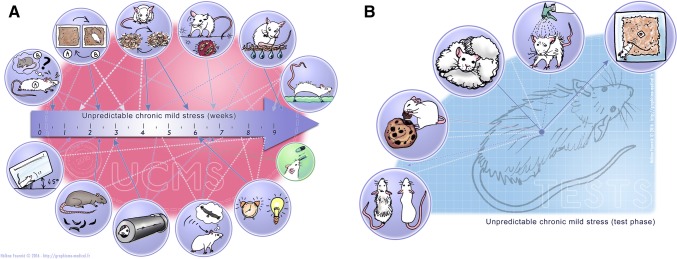
“In an attempt to shed more light on the potential link between AHN and stress resilience, we stimulated AHN in an animal model of unpredictable chronic mild stress (UCMS), which is a naturalistic model of MD [43,44].”
MethodSelf-citationCatalysts for change: the cellular neurobiology of psychedelics
Banks, M. I., Zahid, Z., Jones, N. T., Sultan, Z. W., & Wenthur, C. J. (2021) · Molecular Biology of the Cell · doi:10.1091/mbc.e20-05-0340 · Cited by 37
“Animal models have shown that chronic stress induces behavioral and neural changes that can be reversed by antidepressants (Campos et al., 2013; Moda-Sava et al., 2019; Planchez et al., 2019).”
BackgroundShin, H. S., Lee, S. H., Moon, H. J., So, Y. H., Jang, H. J., Lee, K., Ahn, C., & Jung, E. (2024) · Brain Research Bulletin · doi:10.1016/j.brainresbull.2024.110903 · Cited by 46
“Moreover, the CUS model is limited in terms of reliability and reproducibility (Antoniuk et al., 2019; Planchez et al., 2019), and the threshold for stress response that translates physiological effects into harmful consequences varies according to an individual ’ s neuroendocrine and genetic…”
Yu, S., Liu, S., Wang, N., Yu, D., Qin, M., Wu, J., & Guan, Q. (2021) · Phytomedicine · doi:10.1016/j.phymed.2021.153792 · Cited by 45
Effects of corticosterone on BDNF expression and mood behaviours in mice
Lin, L., Herselman, M. F., Zhou, X., & Bobrovskaya, L. (2022) · Physiology & Behavior · doi:10.1016/j.physbeh.2022.113721 · Cited by 47
Antidepressant Effect of Intermittent Long-Term Systemic Administration of Irisin in Mice
Pignataro, P., Dicarlo, M., Zerlotin, R., Storlino, G., Oranger, A., Sanesi, L., Lovero, R., Buccoliero, C., Mori, G., Colaianni, G., et al. (2022) · International Journal of Molecular Sciences · doi:10.3390/ijms23147596 · Cited by 45
“In some previous studies, the antidepressant effect of drugs was investigated using animal models of depression induced by a sequence of unpredictable stressors (chronic unpredictable stress), genetic modifications, and the chronic administration of a wide range of different molecules [27,66].”
BackgroundStanton, L. M., Price, A. J., & Manning, E. E. (2023) · Journal of Neuroendocrinology · doi:10.1111/jne.13268 · Cited by 43
Mood and microbes: a comprehensive review of intestinal microbiota’s impact on depression
Luqman, A., He, M., Hassan, A., Ullah, M., Zhang, L., Khan, M. R., Din, A. U., Ullah, K., Wang, W. J., & Wang, G. (2024) · Frontiers in Psychiatry · doi:10.3389/fpsyt.2024.1295766 · Cited by 44
“These actions comprise feeling helpless and anhedonia, two hallmarks of depression symptoms (140, 141).”
BackgroundZou, T., Sugimoto, K., Zhang, J., Liu, Y., Zhang, Y., Liang, H., Jiang, Y., Wang, J., Duan, G., & Mei, C. (2020) · Frontiers in Cell and Developmental Biology · doi:10.3389/fcell.2020.553728 · Cited by 39
RetractedAmaghnouje, A., Mechchate, H., Es-safi, I., Boukhira, S., Aliqahtani, A. S., Noman, O. M., Nasr, F. A., Conte, R., Calarco, A., & Bousta, D. (2020) · Molecules · doi:10.3390/molecules25235653 · Cited by 39
“The TST shares with FST the potential to induce an immobility behavior, sometimes referred to as despair, in mice, which is claimed to mimic a condition similar to human depression [17].”
BackgroundModeling Parkinson's disease‐related symptoms in alpha‐synuclein overexpressing mice
Aniszewska, A., Bergström, J. J. E., Ingelsson, M., & Ekmark‐Lewén, S. (2022) · Brain and Behavior · doi:10.1002/brb3.2628 · Cited by 44
“Due to the limited validity of these procedures, their accuracy and relevance remain a topic of discussion (Krishnan & Nestler, 2011; Planchez et al., 2019;Wang et al., 2017).”
BackgroundChronic pain impact on rodents’ behavioral repertoire
Cunha, A. M., Pereira-Mendes, J., Almeida, A., Guimarães, M. R., & Leite‐Almeida, H. (2020) · Neuroscience & Biobehavioral Reviews · doi:10.1016/j.neubiorev.2020.09.022 · Cited by 39
Vicentini, F., Szamosi, J. C., Rossi, L., Griffin, L., Nieves, K., Bihan, D. G., Lewis, I. A., Pittman, Q. J., Swain, M. G., Surette, M. G., et al. (2022) · Brain Behavior and Immunity · doi:10.1016/j.bbi.2022.03.001 · Cited by 41
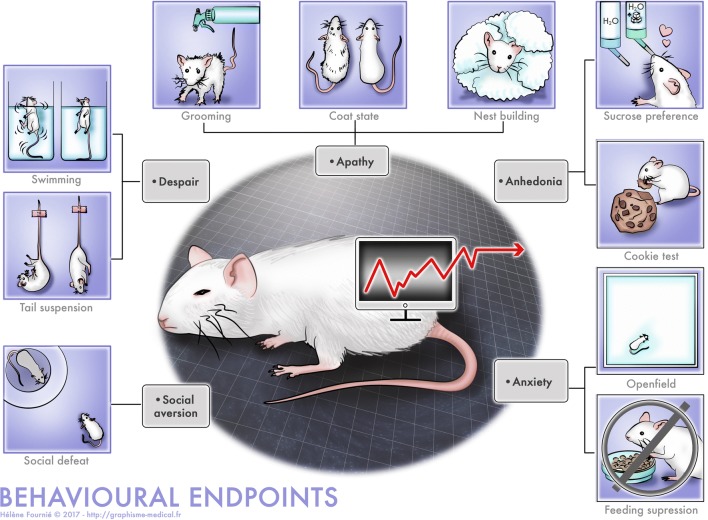
“…we suggest that a more comprehensive analysis of depression-like behaviour in mice is necessary for better conclusions, with future studies incorporating a combination of tests that each interrogate different behavioural traits (e.g., anhedonia, apathy, social aversion) (Planchez et al., 2019).”
BackgroundBarroca, N. C. B., Santa, G. D., Suchecki, D., Garcia‐Cairasco, N., & Umeoka, E. H. D. L. (2022) · Neuroscience & Biobehavioral Reviews · doi:10.1016/j.neubiorev.2022.104771 · Cited by 41
The Wistar Kyoto Rat: A Model of Depression Traits
Redei, E. E., Udell, M. E., Woods, L. C. S., & Chen, H. (2022) · Current Neuropharmacology · doi:10.2174/1570159x21666221129120902 · Cited by 41
“Aside from transgenic models, where a single gene is modified, stress-induced depression models are very common [216].”
BackgroundVeloso, I. C., Delanogare, E., Machado, A. E., Braga, S. P., Rosa, G. K., Bem, A. F. D., Rafique, J., Saba, S., da Trindade, R. N., Galetto, F. Z., et al. (2021) · Journal of Pharmacy and Pharmacology · doi:10.1093/jpp/rgaa070 · Cited by 39
Repurposing Immunomodulatory Imide Drugs (IMiDs) in Neuropsychiatric and Neurodegenerative Disorders
Jung, Y. J., Tweedie, D., Scerba, M. T., Kim, D. S., Palmas, M. F., Pisanu, A., Carta, A. R., & Greig, N. H. (2021) · Frontiers in Neuroscience · doi:10.3389/fnins.2021.656921 · Cited by 38
Rayan, N. A., Kumar, V., Aow, J., Rastegar, N., Lim, M. G. L., O’Toole, N., Aliwarga, E., Arcego, D. M., Yeo, G. H. T., Wong, J. Y., et al. (2022) · Molecular Psychiatry · doi:10.1038/s41380-022-01725-1 · Cited by 42
“The use of naïve, healthy animals in such an approach limits common confounds known to be associated with current models of depression [33].”
Neuroinflammation in osteoarthritis: From pain to mood disorders
Amodeo, G., Magni, G., Galimberti, G., Riboldi, B., Franchi, S., Sacerdote, P., & Ceruti, S. (2024) · Biochemical Pharmacology · doi:10.1016/j.bcp.2024.116182 · Cited by 37
“…swimming (FST) tests are instead generally accepted and validated methods to evaluate the presence of a depressive-like behavior [98], while the novel object recognition test (NOR) is the most frequently utilized to detect memory impairment, that is usually also associated with depression [99].”
Samsuzzaman, M., Lee, J. H., Hong, S., Park, H., Chang, K., Kim, H.-B., Park, M. G., Eo, H., Oh, M. S., & Kim, S. Y. (2024) · Biological Research · doi:10.1186/s40659-024-00572-4 · Cited by 41
“The dopamine (DA), epinephrine (EPI), and 5-HT levels were analyzed using the protocol reported by Plan-chez et al. [39].”
Brain immune cells characterization in UCMS exposed P2X7 knock-out mouse
Troubat, R., Leman, S., Pinchaud, K., Surget, A., Barone, P. R., Roger, S., Guisquet, A. L., Brizard, B., Belzung, C., & Camus, V. (2021) · Brain Behavior and Immunity · doi:10.1016/j.bbi.2021.02.012 · Cited by 34
Self-citationThe Role of Glutamate Underlying Treatment-resistant Depression
Kim, J., Kim, T.-E., Lee, S., & Koo, J. W. (2023) · Clinical Psychopharmacology and Neuroscience · doi:10.9758/cpn.22.1034 · Cited by 41
“, ketamine and deep brain stimulation) that are reported to be effective in TRD, and (iv) a parallel to a known clinical risk factor [62].”
BackgroundEpigenetic mechanisms underlying stress-induced depression
de Carvalho, L. M., Chen, W.-Y., & Lasek, A. W. (2020) · International review of neurobiology · doi:10.1016/bs.irn.2020.08.001 · Cited by 35
Repurposing Ketamine in Depression and Related Disorders: Can This Enigmatic Drug Achieve Success?
Carboni, E., Carta, A. R., Carboni, E., & Novelli, A. (2021) · Frontiers in Neuroscience · doi:10.3389/fnins.2021.657714 · Cited by 35
Zhang, X., Asim, M., Fang, W., Monir, H. M., Wang, H., Kim, K., Feng, H., Wang, S., Gao, Q., Lai, Y., et al. (2023) · Molecular Psychiatry · doi:10.1038/s41380-023-02127-7 · Cited by 34
Kim, H., Choi, H., Han, K., Sim, W., Suh, H. J., & Ahn, Y. (2024) · Journal of Ethnopharmacology · doi:10.1016/j.jep.2024.119224 · Cited by 33
Cardinal, P., de Oliveira, C. M., Sauvant, J., Foury, A., Darnaudéry, M., Vancassel, S., Castanon, N., & Capuron, L. (2021) · Journal of Neuroinflammation · doi:10.1186/s12974-021-02330-9 · Cited by 33
“While most depression models usually focus on one particular MDD risk factor [23, 55, 56], we compared exposure to HFD and UCMS.”
BackgroundYu, S., Wang, X., Lv, L., Liu, T., & Guan, Q. (2023) · International Journal of Pharmaceutics · doi:10.1016/j.ijpharm.2023.123284 · Cited by 34
Benefits of animal models to understand the pathophysiology of depressive disorders
Czéh, B., & Simon, M. (2020) · Progress in Neuro-Psychopharmacology and Biological Psychiatry · doi:10.1016/j.pnpbp.2020.110049 · Cited by 30
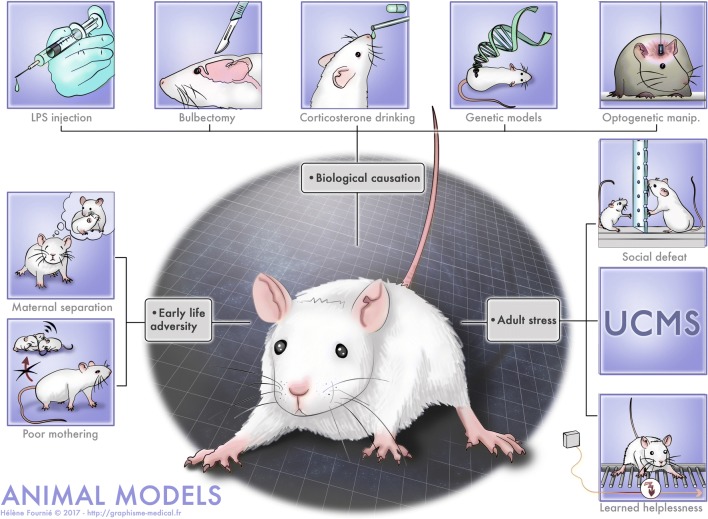
“descriptions on the currently available animal models and discuss the pros and cons of using them (Antoniuk et al., 2019; Czéh et al., 2016; Gururajan et al., 2019; Harro, 2019; Planchez et al., 2019; Pryce and Fuchs, 2017; Qingzhong Wang et al., 2017; Willner, 2017).”
MethodChang, M., Zhang, L., Dai, H., & Sun, L. (2021) · Brain and Behavior · doi:10.1002/brb3.2300 · Cited by 30
“Depression is a state of aversion to activity and low mood, and affects behavior, thoughts, feelings, senseofwell-being, and tendencies (Planchez et al., 2019).”
BackgroundBehavioral, hormonal, and neural alterations induced by social contagion for pain in mice
Baptista‐de‐Souza, D., Tavares, L. R. R., Canto‐de‐Souza, L., Nunes‐de‐Souza, R. L., & Canto‐de‐Souza, A. (2021) · Neuropharmacology · doi:10.1016/j.neuropharm.2021.108878 · Cited by 30
Bernardo, A. M., Lee, P., Marcotte, M. D., Mian, M. Y., Rezvanian, S., Sharmin, D., Kovačević, A., Savić, M. M., Cook, J. M., Sibille, E. L., et al. (2022) · Neuropsychopharmacology · doi:10.1038/s41386-022-01360-y · Cited by 30
Bian, L.-H., Wang, S., Li, W., Li, J., Yin, Y., Ye, F.-F., & Guo, J. (2023) · Biomedicine & Pharmacotherapy · doi:10.1016/j.biopha.2023.115921 · Cited by 32
Li, S., Lo, Y., Tseng, H.-Y., Lin, S.-H., Kuo, C., Chen, T.-C., Chang, C.-W., Liang, Y., Lin, Y.-C., Wang, C.-Y., et al. (2023) · Neurobiology of Stress · doi:10.1016/j.ynstr.2023.100566 · Cited by 30
Zoubovsky, S. P., Williams, M. T., Hoseus, S., Tumukuntala, S., Riesenberg, A. N., Schulkin, J. A., Vorhees, C. V., Campbell, K., Lim, H., & Muglia, L. J. (2022) · Translational Psychiatry · doi:10.1038/s41398-022-01785-5 · Cited by 34
“We used the SPT to evaluate anhedonia, a symptom often seen in depression [39].”
MethodYamanashi, T., Malicoat, J. R., Steffen, K. T., Zarei, K., Li, R., Purnell, B. S., Najafi, A., Saito, K., Singh, U., Toth, B. A., et al. (2020) · Journal of Psychiatric Research · doi:10.1016/j.jpsychires.2020.12.036 · Cited by 30
Kim, Y., & Cho, S. (2020) · Journal of Ginseng Research · doi:10.1016/j.jgr.2020.08.006 · Cited by 29
“Since its effect was confirmed using three different models respectivelymimicking different causes like socioenvironmental stressors and inflammation, Rg3 can be another promising candidate for antidepressant [48].”
BackgroundMethodLiang, W., Liu, Y., Zhou, K., Jian, P., Zhang, Q., Chang, Z., Wu, L., Hong-sheng, C., & Zhang, L. (2021) · Journal of Ethnopharmacology · doi:10.1016/j.jep.2021.114655 · Cited by 27
Calarco, C. A., Fox, M. E., Terheyden, S. V., Turner, M. D., Alipio, J. B., Chandra, R., & Lobo, M. K. (2021) · Frontiers in Psychiatry · doi:10.3389/fpsyt.2021.737389 · Cited by 29
Colniță, A., Toma, V. A., Brezeştean, I., Tahir, M. A., & Dina, N. E. (2023) · Biosensors · doi:10.3390/bios13050499 · Cited by 29
“On the other hand, MDD is characterized by long-lasting desensitization of 5-HT1A autoreceptors in the dorsal raphe [57].”
BackgroundThe underestimated sex: A review on female animal models of depression
Lima, S., Sousa, N., Patrício, P., & Pinto, L. (2021) · Neuroscience & Biobehavioral Reviews · doi:10.1016/j.neubiorev.2021.12.021 · Cited by 28
Can animals develop depression? An overview and assessment of ‘depression-like’ states
MacLellan, A., Fureix, C., Polanco, A., & Mason, G. J. (2021) · Behaviour · doi:10.1163/1568539x-bja10132 · Cited by 29
Hormonal contraceptives, stress, and the brain: The critical need for animal models
Tronson, N. C., & Schuh, K. M. (2022) · Frontiers in Neuroendocrinology · doi:10.1016/j.yfrne.2022.101035 · Cited by 26
“Because stress and motivational systems are highly interactive, and decreased motivation and the related construct, anhedonia, are hallmarks of depression (Planchez et al., 2019; Slattery and Cryan, 2017).”
BackgroundTseng, Y.-T., Zhao, B., Ding, H., Liang, L., Schaefke, B., & Wang, L. (2023) · Translational Psychiatry · doi:10.1038/s41398-023-02481-8 · Cited by 29
“Patients with different subtypes of depression may exhibit differences in endocrinology, neurocircuitry changes, as well as differences in response to treatment, which requires suitable animal models to explore the mechanisms underlying different depression subtypes [58].”
Background
Metadata
- Authors
- Planchez, B., Surget, A., & Belzung, C.
- Affiliations
- Université de Tours (FR)
- Corresponding author
- Belzung, Catherine
- Venue
- Journal of Neural Transmission
- Published
- 2019-10-04
- Volume
- 126
- Issue
- 11
- Pages
- 1383-1408
- ISSN
- 0300-9564 (ISSN-L)
- 1435-1463
- PMC
- PMC6815270
- OpenAlex
- W2977895995
- Cited by
- 480
- References
- 283
- Citations by year
- 2026: 45 · 2025: 93 · 2024: 81 · 2023: 77 · 2022: 70 · 2021: 74 · 2020: 37 · 2019: 1
- FWCI
- 5.84
- Type
- journal article
- Language
- en
- Open access
- hybrid
- doi.org
- Licence
- cc-by
- creativecommons.org/licenses/by/4.0 (tdm)
- creativecommons.org/licenses/by/4.0 (vor)
- Locations
- Journal of Neural Transmission (publishedVersion, cc-by)
- Europe PMC (PubMed Central) (publishedVersion, cc-by)
- PubMed Central (publishedVersion, cc-by)
- PubMed (publishedVersion)
- HAL (submittedVersion)
- Topics
- Health Sciences › Medicine › Pharmacology (medical) › Treatment of Major Depression
- Life Sciences › Neuroscience › Cellular and Molecular Neuroscience › Neurotransmitter Receptor Influence on Behavior
- Life Sciences › Neuroscience › Behavioral Neuroscience › Stress Responses and Cortisol
- Keywords
- major depressive disorder, animal models of depression, treatment-resistant depression, recurrent depression, depression subtypes, optogenetics, environmental enrichment, rodent models, antidepressant response
- MeSH terms
- Animals, Behavior, Animal, Major Depressive Disorder, Depressive Disorder, Major, Disease Models, Animal, Depressive Disorder, Treatment-Resistant
About these checks
Registry, retraction, Cites and statistics results are computed, not judged, with one exception: a printed reference that no index lists is read once by a model before it counts as a citation error. Claims are extracted by a model and kept only when their quote appears verbatim in the text; each cited source is then checked, with a model’s help, for whether it says what the claim relies on. Those verdicts can be wrong — read the claim’s quote and the cited source before relying on one.
Statistics and arithmetic are recomputed, not judged.
Confidence bands are shown only for fields calibrated on our annotated test set. None is calibrated yet, so no band is shown.
What counts as a claim ›How we measure confidence ›How we check this ›
Are you an author, or do you see a problem with this page? Request a review
Data sources
Bibliographic data: Semantic Scholar, OpenAlex, Crossref.
Contains information from the Semantic Scholar Academic Graph Datasets, made available under the ODC Attribution License (ODC-BY 1.0).
Semantic Scholar’s data is described in: Kinney, R., et al. (2023). The Semantic Scholar Open Data Platform. arXiv:2301.10140.
