

A Japanese version of Mother-to-Infant Bonding Scale: factor structure, longitudinal changes and links with maternal mood during the early postnatal period in Japanese mothers
Open accessThe DOI matches its Crossref record; 26 of the 27 references it cites were found in a registry or an index.
Abstract
The objectives of this study were (1) to develop a Japanese version of Mother-to- Infant Bonding Scale Japanese version (MIBS-J) based on Kumar's Mother Infant Bonding Questionnaire that could be used to screen the general population for problems in the mother's feelings towards her new baby and to validate it for clinical use and (2) to examine the factor structure of the items and create subscales of the questionnaire for the Japanese version. The MIBS-J is a simple self-report questionnaire designed to detect the problems in a mother's feelings towards her newborn baby. Participants (n = 554) were recruited at an outpatient clinic of a maternity hospital in a community after 30-weeks gestation. MIBS-J and the Edinburgh Postnatal Depression Scale (EPDS) were administered on the fifth day at the maternity ward and mailed at 1 and 4 months postnatally. Exploratory factor analysis and confirmatory factor analysis demonstrated a two-factor structure out of eight items: lack of affection (LA) and anger/rejection (AR). Chronbach's α coefficients were 0.71 and 0.57, respectively. The LA and AR scores had strong correlations across postnatal times. The mothers with higher (worse) AR scores on the MIBS-J at any of the three periods had higher scores on the EPDS. MIBS-J demonstrated acceptable reliability and reasonable construct validity in this Japanese sample.
Overview
The claims and statistics of this paper haven’t been checked yet.
Free: it reads the open-access text and checks the first 5 claims that cite a source we can check. Create a free account to check every claim.
Integrity signals
Registry
Cites
Statistics
Figures
Verification
Claims the paper makes
The claims and statistics of this paper haven’t been checked yet.
Free: it reads the open-access text and checks the first 5 claims that cite a source we can check. Create a free account to check every claim.
Claims other papers make about this one
Each is checked against this paper’s own text: does it say what the citing paper says it does?
The cited source says what the claim attributes to it.
In the citing paper
“The weaker associations observed in the first postpartum week may be explained by evidence suggesting the formation of the mother-infant bond is a dynamic process that, for some mothers, is not yet established during the first postpartum week (Yoshida et al., 2012).”
From Associations between maternal psychological distress and mother-infant bonding: a systematic review and meta-analysis (2023) · cites this paper as Yoshida et al., 2012
Self-check
Percentages, sums and reported differences re-computed from the paper’s own numbers.
The self-check needs the paper’s full text.
Citations
Cites
Tabachnick, B. G., & Fidell, L. S. (1983) · Cited by 80,054
Detection of Postnatal Depression: Development of the 10-item Edinburgh Postnatal Depression Scale
Cox, J. L., Holden, J. M., & Sagovsky, R. (1987) · British Journal of Psychiatry · doi:10.1192/bjp.150.6.782 · Cited by 14,183
The Scree Test For The Number Of Factors
Cattell, R. B. (1966) · Multivariate Behavioral Research · doi:10.1207/s15327906mbr0102_10 · Cited by 13,554
Schermelleh-Engel, K., Moosbrugger, H., & Müller, H. (2003) · Department of Psychology - University of Koblenz-Landau · doi:10.23668/psycharchives.12784 · Cited by 8,975
The handbook of psychological testing
(1993) · Choice Reviews Online · doi:10.5860/choice.31-1802 · Cited by 3,534
Wiley Series in Probability and Mathematics Statistics
(1981) · Wiley Series in Probability and Statistics · doi:10.1002/0471725250.scard · Cited by 2,220
Handbook of Psychological Testing
Kline, P. (2013) · Routledge eBooks · doi:10.4324/9781315812274 · Cited by 1,194
Wiley Series in Probability and Mathematical Statistics
(2011) · Wiley Series in Probability and Statistics · doi:10.1002/9781118165485.scard · Cited by 804
A Screening Questionnaire for mother-infant bonding disorders
Brockington, I. F., Oates, J., George, S., Turner, D., Vostanis, P., Sullivan, M., Loh, C., & Murdoch, C. (2001) · Archives of Women's Mental Health · doi:10.1007/s007370170010 · Cited by 600 · cited 2×
“Brockington et al. (2001) developed the Postpartum Bonding Questionnaire (PBQ), which is a self-rating questionnaire.”
BackgroundMethodThe Postpartum Bonding Questionnaire: a validation
Brockington, I. F., Fraser, C., & Wilson, D. (2006) · Archives of Women's Mental Health · doi:10.1007/s00737-006-0132-1 · Cited by 568 · cited 3×
“Factor analysis”
BackgroundMethod
Cited by
Items 101–191 of 191
Chen, C., Mochizuki, Y., Asai, Y., Okawa, S., Okubo, R., Nakagawa, S., & Tabuchi, T. (2023) · Asian Journal of Psychiatry · doi:10.1016/j.ajp.2023.103874 · Cited by 6
Takehara, K., Okamura, M., Sugiura, N., Suto, M., Sasaki, H., & Mori, R. (2016) · BMJ Open · doi:10.1136/bmjopen-2016-011919 · Cited by 7
Sugishita, K., Kamibeppu, K., & Matsuo, H. (2016) · Health · doi:10.4236/health.2016.812126 · Cited by 5
“The “anger and rejection” score of MIBS represents a direct risk factor for child abuse [13] [15].”
BackgroundChanges in psychological status of postpartum women due to the COVID-19 pandemic in Japan
Suzuki, S. (2020) · The Journal of Maternal-Fetal & Neonatal Medicine · doi:10.1080/14767058.2020.1814250 · Cited by 8
“In the Japanese version of Mother-to-Infant Bonding Scale (MIBS-J), there is a possibility that the mother will have problems regarding feelings for her baby if scores of 3 points or more [4].”
BackgroundOgata, Y., Matsumoto, T., Suzuki, Y., Nishigori, T., Goto, A., Satô, A., Fukuda, T., Imaizumi, K., Kyozuka, H., Murata, T., et al. (2025) · Scientific Reports · doi:10.1038/s41598-025-87430-9 · Cited by 6
“…disorders in mothers (no/yes); maternal bonding failure (The Japanese version of Mother-to-Infant Bonding Scale [MIBS-J] ≧ 5: no/yes) 36 ; maternal education level (< 10; 10 to < 13; ≧ 13); paternal education level (< 10; 10 to < 13; ≧ 13); maternal occupation (no/yes); household…”
Nishigori, T., Obara, T., Metoki, H., Sakurai, K., Mori, M., Suzuki, T., Ishikuro, M., Tatsuta, N., Saito, M., Sugawara, J., et al. (2022) · JMA Journal · doi:10.31662/jmaj.2022-0041 · Cited by 5
Gui, Y., Hisada, A., Yamamoto, M., Kawanami, A., Mori, C., Sakurai, K., The Japan Environment, C. S. (. G., Kamijima, M., Yamazaki, S., Ohya, Y., et al. (2023) · BMC Pregnancy and Childbirth · doi:10.1186/s12884-023-06014-5 · Cited by 6
“MIB was assessed at one year after delivery using the Japanese version of the Mother-to-Infant Bonding Scale (MIBS-J) [56].”
MethodChanvrier, H., Rattaz, V., Offredi, V., Dupuis, M., & Horsch, A. (2024) · BMJ Open · doi:10.1136/bmjopen-2023-080557 · Cited by 5
Shinohara, S., Shinohara, R., Kojima, R., Otawa, S., Kushima, M., Miyake, K., Yui, H., Ooka, T., Akiyama, Y., Horiuchi, S., et al. (2024) · Journal of Affective Disorders · doi:10.1016/j.jad.2024.06.001 · Cited by 4
Edwards, H., Buisman‐Pijlman, F. T. A., Esterman, A., Phillips, C., Orgeig, S., & Gordon, A. L. (2021) · Journal of Midwifery & Women s Health · doi:10.1111/jmwh.13217 · Cited by 6
Doi, S. K., Isumi, A., & Fujiwara, T. (2022) · Frontiers in Psychiatry · doi:10.3389/fpsyt.2022.782939 · Cited by 5
Suzuki, T., Nishigori, T., Obara, T., Mori, M., Sakurai, K., Ishikuro, M., Hamada, H., Saito, M., Sugawara, J., Arima, T., et al. (2023) · Social Psychiatry and Psychiatric Epidemiology · doi:10.1007/s00127-023-02505-0 · Cited by 6
“The MIBS-J was developed to measure maternal bonding [7] and is a well-recognized instrument in Japan.”
BackgroundMethodThe Relationship Between Bonding Impairment and Maternal Postpartum Smoking
Faisal‐Cury, A., & Matijasevich, A. (2021) · Maternal and Child Health Journal · doi:10.1007/s10995-021-03306-0 · Cited by 3
Translation and Cross-Cultural Adaptation into French of the Mother-to-Infant Bonding Scale
Pernoud, A., Taylor, A., Luca, R. D., Marci, R., Timmins, É. M., Potter, K., & Bothorel, H. (2025) · Patient Related Outcome Measures · doi:10.2147/prom.s524248 · Cited by 4
“23–27 As a result, the MIBS has been adapted in other languages such as Japanese, 28 Indonesian 29 or Swedish.”
Exploring Attachment in Adults With Autism Spectrum Disorder: A Systematic Review
Sonfelianu, A., González‐Sala, F., & Lacomba‐Trejo, L. (2025) · Actas Españolas de Psiquiatría · doi:10.62641/aep.v53i4.1928 · Cited by 4
“On the other hand, the scales used to assess maternal bonding were the Mother to Infant Bonding Scale (MIBS) [74,76,94] Japanese version, and the Parental Bonding Instrument [12,84].”
Psychosocial factors associated with mother–infant bonding in Indonesian samples
Minayati, K., Ismail, R. I., Muskananfola, F. V., Nugraheni, T. P. W., Chairunnisa, S., Wiriadinata, N. E. R., Sugiyanto, M., Clarissa, A., Pradana, K., & Wiguna, T. (2022) · International Journal of Social Psychiatry · doi:10.1177/00207640221087616 · Cited by 4
“Since the Japanese version of MIBS-I has had no exact cut-off point yet (Yoshida et al., 2012), the study used data-driven cut-offs.”
MethodFujii, M., Kawanishi, Y., Niwa, F., Hirabayashi, K., Kanatani, K. T., Nakayama, T., & the Japan Environment and Children’s Study Group (2023) · Journal of Children and Media · doi:10.1080/17482798.2023.2251162 · Cited by 3
“Mother – infant bonding was measured using the Mother-to-Infant Bonding Scale (MIBS), Japanese version (MIBS-J) (Taylor et al., 2005; Yoshida et al., 2012), with two subscales: “impaired bonding” and “anger and rejection.””
MethodInfluentialTakahashi, I., Obara, T., Ishikuro, M., Orui, M., Noda, A., Shinoda, G., Nagami, F., Hozawa, A., Nishimura, T., Tsuchiya, K. J., et al. (2024) · Journal of Public Health · doi:10.1093/pubmed/fdae240 · Cited by 4
Sampei, M., & Fujiwara, T. (2020) · International Journal of Environmental Research and Public Health · doi:10.3390/ijerph17176099 · Cited by 3
“Maternal–Infant Bonding Impairment We evaluated maternal–infant bonding impairment using the 10-item version of the Mother to Infant Bonding Scale Japanese version (MIBS-J) [40] with a validated cut-off point of 4/5 [41].”
MethodKotozaki, Y. (2020) · Psychology · doi:10.4236/psych.2020.119087 · Cited by 5
Baba, K., Kataoka, Y., & Kitamura, T. (2023) · Healthcare · doi:10.3390/healthcare11121740 · Cited by 3
“[11] did not measure the factor mean invariance across the time points.”
BackgroundMethodResultInfluentialPalacios-Hernández, B. (2015) · TDX (Tesis Doctorals en Xarxa) · Cited by 3
Sawano, E., Doi, H., Nagai, T., Ikeda, S., & Shinohara, K. (2016) · Behavioural Brain Research · doi:10.1016/j.bbr.2016.11.001 · Cited by 5
Kita, S., Umeshita, K., Tobe, H., Hayashi, M., & Kamibeppu, K. (2019) · Violence and Victims · doi:10.1891/0886-6708.vv-d-18-00093 · Cited by 4
“Yoshida et al. (2012) reported good validity and reliability of the MIBS-J among Japanese women.”
BackgroundMethodResultInfluentialAizawa, M., Murakami, K., Takahashi, I., Ohseto, H., Noda, A., Shinoda, G., Orui, M., Ishikuro, M., Obara, T., Hamada, H., et al. (2023) · Nutrition Journal · doi:10.1186/s12937-023-00901-5 · Cited by 3
Nishigori, T., Nishigori, H., Suzuki, T., Fukuda, T., Murata, T., Kyozuka, H., Satô, A., Ogata, Y., Nagasaka, Y., Yasumura, S., et al. (2024) · Breastfeeding Medicine · doi:10.1089/bfm.2024.0195 · Cited by 4
Postpartum Mental Status in Women with Social Problems at a Japanese perinatal center
Kurashina, R., & Suzuki, S. (2021) · Hypertension Research in Pregnancy · doi:10.14390/jsshp.hrp2021-011 · Cited by 3
“2 childcare support, (11) those who are thought to be anxious due to aggressive and/or impulsive attitudes, (12) those with alcohol or drug dependence, (13) those who move frequently from one place to another, and (14) those with children with medical problems, such as premature infants and disabled children.”
BackgroundKatou, Y., Okamura, M., & Ohira, M. (2022) · Midwifery · doi:10.1016/j.midw.2022.103485 · Cited by 2
Hada, A., Ohashi, Y., Usui, Y., & Kitamura, T. (2024) · Healthcare · doi:10.3390/healthcare12090881 · Cited by 2
“A lack of affection, anger, and rejection in the Japanese version of the Mother-to-Infant Bonding Scale [44,45] and anger and restrictedness, a lack of affection, rejection, and fear in the Postnatal Bonding Questionnaire [46,47] are reported as latent constructs (i.e., syndromes) in factor…”
BackgroundHaruna, Y., & Suzuki, S. (2024) · Hypertension Research in Pregnancy · doi:10.14390/jsshp.hrp2024-005 · Cited by 2
Clinical features of bonding disorders in Japanese mothers derived from the Stafford interview
Nishikii, Y., Suetsugu, Y., Yamashita, H., & Yoshida, K. (2025) · BMC Women s Health · doi:10.1186/s12905-025-03795-z · Cited by 2
Self-citationWahyu, M. D., Zain, E., Watanabe, Y., Fukui, N., Hashijiri, K., Motegi, T., Ogawa, M., Egawa, J., Nishijima, K., & Someya, T. (2025) · Journal of Affective Disorders · doi:10.1016/j.jad.2025.119763 · Cited by 2
Sugishita, K., Kurihara, K., Murayama, S., & Kamibeppu, K. (2013) · Health · doi:10.4236/health.2013.54097 · Cited by 2
“(Abuse risk assessment [23], Edinburgh Postpartum Depression Scale [24] and Mother-to-Infant Bonding Scale [25] and 19.”
BackgroundMethodInfluentialKita, Y., Koyama, T., Tabuchi, T., & Shizawa, M. (2025) · Healthcare · doi:10.3390/healthcare13121422 · Cited by 2
Suzuki, T., Nishigori, T., Obara, T., Sakurai, K., Ishikuro, M., Hamada, H., Watanabe, Z., Saito, M., Ota, C., Arima, T., et al. (2025) · Infant Mental Health Journal · doi:10.1002/imhj.70047 · Cited by 1
Mori, A., J-P, N. A., Komori, K., Mitsuda, N., Imanaka, M., Maeda, N., Nagai, R., Hisakawa, H., Eitoku, M., SUGANUMA, N., et al. (2025) · Attachment & Human Development · doi:10.1080/14616734.2025.2609262 · Cited by 2
“Mother — infant bonding was evaluated by using the Japanese version of the Mother-to-Infant Bonding Scale (MIBS-J) at 1 year after childbirth (Yoshida et al., 2012).”
Promoting Mother-to-Baby Attachment to Prevent Postpartum Depression: An Intervention Study
Sugishita, K., & 北川, 眞. (2018) · Women s Health - Open Journal · doi:10.17140/whoj-4-128 · Cited by 4
Tagawa, K., Tsunematsu, M., & Kakehashi, M. (2021) · Children · doi:10.3390/children8121084 · Cited by 3
Baba, K., & Kataoka, Y. (2023) · International Journal of Environmental Research and Public Health · doi:10.3390/ijerph20136317 · Cited by 1
Kawai, K., Tomioka, H., Yamada, H., Mamiya, S., Kato, A., Iwanami, A., & Inamoto, A. (2023) · Cureus · doi:10.7759/cureus.45585 · Cited by 5
“The Mother-to-Infant Bonding Scale Japanese version (MIBS-J) and two of its subscales, namely, lack of affection (LA) and anger and rejection (AR) [4], are widely used in Japan to measure MIB.”
BackgroundMethodInfluentialYamamoto, M., Takauma, F., Tada, K., Baba, K., & Kitamura, T. (2023) · Advances in Reproductive Sciences · doi:10.4236/arsci.2023.114015 · Cited by 1
Hagiwara, K., Chen, C., Okubo, R., Okawa, S., Nakagawa, S., & Tabuchi, T. (2024) · Archives of Women s Mental Health · doi:10.1007/s00737-024-01467-9 · Cited by 2
“The distribution of the MIBS total scores across each latent profile is visually illustrated in Fig.”
InfluentialBenton, M., Ishikuro, M., Obara, T., Noda, A., Murakami, K., Kuriyama, S., & Ismail, K. (2024) · Preventive Medicine · doi:10.1016/j.ypmed.2024.108101 · Cited by 2
Steinbrueck, P.-C., Meyer, G., & Ayerle, G. M. (2024) · Maternal and Child Health Journal · doi:10.1007/s10995-024-04029-8 · Cited by 1
“Yoshida et al. (2012 ) observed that maternal feelings of affection and anger showed a decline at four months postpartum when compared to levels recorded just five days after childbirth.”
Nindrea, R. D., Ming, L. C., & Sari, N. P. (2025) · Clinical Epidemiology and Global Health · doi:10.1016/j.cegh.2025.102028 · Cited by 8
Mason, M. (2015) · Journal of Health Visiting · doi:10.12968/johv.2015.3.8.432 · Cited by 1
Mitani, A., Ono, M., Maeda, J., & Kido, K. (2022) · International Journal of Nursing & Clinical Practices · doi:10.15344/2394-4978/2022/354 · Cited by 1
“as an instrument for assessing the attachment of postpartum mothers to their children [12].”
BackgroundMethodInfluentialHow to promote ‘discipline without tough love’ during pregnancy: a randomized controlled trial
Suzuki, S. (2019) · F1000Research · doi:10.12688/f1000research.20666.1 · Cited by 1
Baba, K., Kataoka, Y., & Kitamura, T. (2021) · Research Square · doi:10.21203/rs.3.rs-1006778/v1 · Cited by 1
Infant Sleep Quality and its’ Several Related Factors: An Indonesian SamplesPreprint
Muskananfola, F. V., Wiguna, T., Ismail, R. I., Nugraheni, T. P. W., & Chairunnisa, S. (2019) · bioRxiv (Cold Spring Harbor Laboratory) · doi:10.1101/618058
Evaluation of the Quality of the Setting up of Early Mother-Born Interactions
Chtabou, G., Mammad, K., Chkirate, M., Karjouh, K., & Ahami, A. O. T. (2019) · Open Journal of Medical Psychology · doi:10.4236/ojmp.2019.84007
“Other Japanese authors have proposed a validation of the Japanese version of the MIBQ in 10 items [26].”
BackgroundHow to promote ‘discipline without tough love’ during pregnancy: a randomized controlled trial
Suzuki, S. (2021) · F1000Research · doi:10.12688/f1000research.20666.2
妊娠・出産から育児への過程を支えるために ─心理士の立場から─
新村, 麻. (2021) · 日本周産期・新生児医学会雑誌 · doi:10.34456/jjspnm.56.4_604
Takubo, Y., Tsujino, N., Aikawa, Y., Fukiya, K., Iwai, M., Uchino, T., Ito, M., Akiba, Y., Mizuno, M., & Nemoto, T. (2021) · Research Square · doi:10.21203/rs.3.rs-659189/v1
Tourrette, C., Guédeney, A., Wendland, J., et al. (2020) · Dunod eBooks · doi:10.3917/dunod.tourr.2020.01.0241
Takahashi, Y., Yokota, H., & Fukuda, M. (2022) · The Kitakanto Medical Journal · doi:10.2974/kmj.72.23
Yoshida, K., Nishikii, Y., & Yamashita, H. (2015) · Elsevier eBooks · doi:10.1016/b978-0-08-097086-8.27082-7
Self-citationYoshida, K., Iwayama, M., Das, P., & Howard, L. M. (2020) · Mental health and illness worldwide · doi:10.1007/978-981-10-2348-4_26
Self-citationYoshida, K., Iwayama, M., Das, P., & Howard, L. M. (2020) · Mental health and illness worldwide · doi:10.1007/978-981-10-0753-8_26-1
Self-citationHow to promote ‘discipline without tough love’ during pregnancy: a randomized controlled trial
Suzuki, S. (2022) · F1000Research · doi:10.12688/f1000research.20666.3
Sanae, S. A. D. A., Tsutsumi, C., Seiko, R. Y. U., & Kimiyo, I. T. O. (2023) · Journal of Japan Academy of Midwifery · doi:10.3418/jjam.jjam-2023-0009 · Cited by 1
Kato, D., Okuno, A., Ishikawa, T., Itakura, S., Oguchi, S., Kasahara, Y., Kanenishi, K., Kitadai, Y., Kimura, Y., Shimojo, N., et al. (2024) · doi:10.2196/preprints.58337
FUJITA, K., & OTSUKI, E. (2024) · Minerva Psychiatry · doi:10.23736/s2724-6612.23.02427-2
Samejima, A., Motoki, N., Haga, A., Tokutake, C., Nakagomi, S., Tsukahara, T., Nomiyama, T., & Kanai, M. (2024) · Yonago acta medica · doi:10.33160/yam.2024.08.005 · Cited by 3
Relationship between oil massage of infants and maternal stress using physical and online modes
Takahata, Y., & Hirai, M. (2024) · Journal of International Nursing Research · doi:10.53044/jinr.2023-0018
Recurrence and chronicity of bonding disorders diagnosed using the structured interview: case report
Nishikii, Y., Suetsugu, Y., Yamashita, H., & Yoshida, K. (2025) · Frontiers in Psychology · doi:10.3389/fpsyg.2024.1464417
Self-citationKato, D., Okuno, A., Ishikawa, T., Itakura, S., Oguchi, S., Kasahara, Y., Kanenishi, K., Kitadai, Y., Kimura, Y., Shimojo, N., et al. (2025) · JMIR Pediatrics and Parenting · doi:10.2196/58337
“At 1 month post partum, the Japanese version of the Mother-to-Infant Bonding Scale (MIBS-J) [24] was used to assess the mothers’ feelings toward their babies.”
Sanzen, I., Matsumura, K., Tsuchida, A., Hamazaki, K., Inadera, H., The Japan Environment and Children’s Study (JECS) Group, Kamijima, M., Yamazaki, S., Ohya, Y., Kishi, R., et al. (2025) · Scientific Reports · doi:10.1038/s41598-025-02983-z · Cited by 2
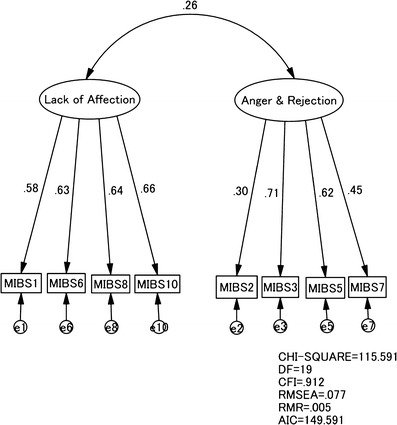
“The results showed that our two-factor structure (χ 2 /df = 592.6, CFI = 0.919, and RMSEA = 0.082) had a similar fit to the two-factor structure previously reported (χ 2 /df = 6.1, CFI = 0.912, and RMSEA = 0.077) 48 .”
InfluentialHada, A., Ohashi, Y., Usui, Y., Sakanashi, K., Tanaka, T., Takauma, F., Tada, K., & Kitamura, T. (2025) · Research Square · doi:10.21203/rs.3.rs-6858320/v1
Tokumitsu, K., Sugawara, N., Fisher, S. D., Keta, T., Takeuchi, J. S., Yachimori, K., & Yasui‐Furukori, N. (2025) · medRxiv · doi:10.1101/2025.10.06.25337335
Nindrea, R. D., Rosalina, L., Novera, M., Ming, L. C., Sari, N. P., Avilla, N. A., Putri, F. A. R., & Rivani, N. P. (2025) · MethodsX · doi:10.1016/j.mex.2025.103750 · Cited by 3
“Mother – infant bonding was assessed using a 10-item bonding questionnaire, adapted from established scales, which utilizes a four-point Likert scale ranging from 0 to 3 [17,18], focusing on emotional closeness, responsiveness, and perceived quality of the maternal relationship with the infant.”
Kanekasu, H., Watanabe, H., Hara, S., & Ando, H. (2025) · Cureus · doi:10.7759/cureus.98864
“Bonding failure was measured using the Japanese version of the Mother-to-Infant Bonding Scale (MIBS), developed by Yoshida et al. [20].”
Furuno, M., Hikita, N., Suetsugu, Y., Matsufuji, H., Sato, Y., Kajiwara, S., & Morokuma, S. (2025) · Journal of Reproductive and Infant Psychology · doi:10.1080/02646838.2025.2592702
Aizawa, M., Murakami, K., Takahashi, I., Ohseto, H., Noda, A., Shinoda, G., Orui, M., Ishikuro, M., Obara, T., Hamada, H., et al. (2024) · Figshare · doi:10.6084/m9.figshare.26650062
Watanabe, K., Noguchi, S., SHIKO, Y., Sakamaki, D., Kawasaki, Y., & Mazda, Y. (2025) · JA Clinical Reports · doi:10.1186/s40981-025-00833-5
“The Japanese version of the mother-infant bonding scale (MIBS-J) is a simple self-report questionnaire designed to detect problems with a mother’s feelings towards her newborn baby [7].”
Association between mode of delivery and early mother–infant bonding
Ozalp, E., Aktas, T. D., Üçok, B. S., Zincir, S., & Ağaoğlu, R. T. (2026) · International Journal of Gynecology & Obstetrics · doi:10.1002/ijgo.70787
“13,17 As a different result, Döblin et al. have indicated that bonding might be stronger in mothers who have had a cesarean section and that this is related to the mother's positive perception of the birth experience.”
Sakaeda, K., & Sasaki, N. (2025) · Journal of Japan Academy of Nursing Science · doi:10.5630/jans.45.927
Tokumitsu, K., Sugawara, N., Fisher, S. D., Keta, T., Takeuchi, J. S., Yachimori, K., & Yasui‐Furukori, N. (2026) · Scientific Reports · doi:10.1038/s41598-026-43513-9 · Cited by 1
“The Japanese version has been validated and widely used in Japan 25 .”
Saito, K., Inano, H., Tsuchida, A., Kasamatsu, H., Sasano, K., SHIMADA, K., Matsumura, K., Hamazaki, K., Inadera, H., Hasegawa, T., et al. (2026) · BMC Pregnancy and Childbirth · doi:10.1186/s12884-026-08729-7
Psychometric Validation of the Mother–Infant Bonding Scale in Greek Mothers up to 1 Year Postpartum
Ekizoglou, C., Sarantaki, A., Makrygiorgos, N., Zaravinos-Tsakos, F., Anagnostopoulos, D., Papageorgiou, C., Zervas, I. M., & Vousoura, E. (2026) · Behavioral Sciences · doi:10.3390/bs16030397
“…Arabic (El Hadathy et al., 2024), Dutch (van Bussel et al., 2010), French (Bienfait et al., 2011; Pernoud et al., 2025), Indonesian (Wiguna & Ismail, 2019), Japanese (Kitamura et al., 2015; Ohara et al., 2016; Yoshida et al., 2012), Swedish (Mörelius et al., 2020) and Turkish (Örün et al., 2013).”
InfluentialNishigori, T., Nishigori, H., Satô, A., Ogata, Y., Fukuda, T., Murata, T., Kyozuka, H., Yamada, M., Chishiki, M., Yasumura, S., et al. (2026) · Journal of Developmental Origins of Health and Disease · doi:10.1017/s2040174426100476
Vanharen, Y., Verstraete, M., Berendoncks, A. V., Mannaerts, D., & Goossens, E. (2026) · International Journal of Gynecology & Obstetrics · doi:10.1002/ijgo.70961
Por, L., Zain, E., Fukui, N., Watanabe, Y., Hashijiri, K., Motegi, T., Ogawa, M., & Boku, S. (2026) · Neuropsychiatric Disease and Treatment · doi:10.2147/ndt.s595969 · Cited by 1
Ikeuchi, K., Shimotake, Y., Muchanga, S. M. J., Mbelambela, E. P., Yosida, S., Minami, M., Eitoku, M., & Suganuma, N. (2026) · Journal of Family Issues · doi:10.1177/0192513x261444364
Muramoto, M., & Ikeda, M. (2026) · Japan Journal of Nursing Science · doi:10.1111/jjns.70057
Inano, H., Matsumura, K., Tsuchida, A., Inadera, H., SHIMADA, K., Hasegawa, T., & The Japan Environment and Children's Study (JECS) Group (2026) · Archives of Women s Mental Health · doi:10.1007/s00737-026-01726-x
“The higher the MIBS-J score, the worse the mother– infant bonding.”
InfluentialTakahashi, I., Obara, T., Yamamoto, M., Ishikuro, M., Orui, M., Noda, A., Shinoda, G., Nagami, F., Hozawa, A., Nishimura, T., et al. (2026) · American Journal of Epidemiology · doi:10.1093/aje/kwag025 · Cited by 1
Hiraoka, D., Tachi, A., Takahashi, Y., Kato, S., Ito, Y., Ohya, Y., Saitoh, S., Sugiura‐Ogasawara, M., Kamijima, M., the Japan Environment & Children's Study (JECS) Group, et al. (2026) · BMC Pregnancy and Childbirth · doi:10.1186/s12884-026-09574-4
“The Japanese version has demonstrated acceptable reliability and validity and has been used in perinatal research and clinical practice in Japan [21, 42].”
Higuchi, N., Matsubara, T., Murata, S., Asada, H., Hayashi, K., & Nakagawa, S. (2026) · Journal of Psychiatric Research · doi:10.1016/j.jpsychires.2026.09.007
Kumar, A., Mishra, M., Tiwari, M., Singh, V. P., Mukhopadhyay, R., Srivastava, A., Kumar, M., Agarwal, A. T. D., Singh, S. N., Tripathi, S., et al. (2026) · BMJ Open · doi:10.1136/bmjopen-2026-116601
Yasaka, T., Fujisawa, T. X., & Tomoda, A. (2026) · Frontiers in Psychiatry · doi:10.3389/fpsyt.2026.1939326
“The MIBS has been reported to comprise a two-factor structure: “ anger and rejection ” (items 2, 3, 5, 7) and “ lack of affection ” (items 1, 6, 8, and 10) (32, 36).”
Influential
Metadata
- Authors
- Yoshida, K., Yamashita, H., Conroy, S., Marks, M., & Kumar, C.
- Affiliations
- Kyushu University (JP)
- University of London (GB)
- Corresponding author
- Yoshida, Keiko
- Venue
- Archives of Women's Mental Health
- Published
- 2012-06-26
- Volume
- 15
- Issue
- 5
- Pages
- 343-352
- ISSN
- 1434-1816 (ISSN-L)
- 1435-1102
- PMC
- PMC3443344
- OpenAlex
- W1976804387
- Cited by
- 191
- References
- 27
- Citations by year
- 2026: 15 · 2025: 24 · 2024: 22 · 2023: 23 · 2022: 15 · 2021: 22 · 2020: 19 · 2019: 19 · 2018: 8 · 2017: 6 · 2016: 9 · 2015: 4 · 2014: 1 · 2013: 4
- FWCI
- 2.78
- Type
- journal article
- Language
- en
- Open access
- hybrid
- doi.org
- Licence
- cc-by
- Locations
- Archives of Women s Mental Health (publishedVersion, cc-by)
- Europe PMC (PubMed Central) (publishedVersion, cc-by)
- PubMed Central (publishedVersion, cc-by)
- PubMed (publishedVersion)
- Research Portal (King's College London) (submittedVersion)
- Funders
- Japan Society for the Promotion of Science (21390589)
- Topics
- Health Sciences › Medicine › Public Health, Environmental and Occupational Health › Maternal Mental Health During Pregnancy and Postpartum
- Social Sciences › Psychology › Social Psychology › Attachment and Relationship Dynamics
- Health Sciences › Medicine › Pediatrics, Perinatology and Child Health › Infant Development and Preterm Care
- Keywords
- mother-infant bonding, Japanese version, questionnaire validation, factor structure, lack of affection, postpartum depression, maternal mood, early postpartum period
- MeSH terms
- Adult, Affect, Emotions, Female, Humans, Japan, Longitudinal Studies, Mother-Child Relations, Psychometrics, Surveys and Questionnaires, Postpartum Period
About these checks
Registry, retraction, Cites and statistics results are computed, not judged, with one exception: a printed reference that no index lists is read once by a model before it counts as a citation error. Claims are extracted by a model and kept only when their quote appears verbatim in the text; each cited source is then checked, with a model’s help, for whether it says what the claim relies on. Those verdicts can be wrong — read the claim’s quote and the cited source before relying on one.
Statistics and arithmetic are recomputed, not judged.
Confidence bands are shown only for fields calibrated on our annotated test set. None is calibrated yet, so no band is shown.
What counts as a claim ›How we measure confidence ›How we check this ›
Are you an author, or do you see a problem with this page? Request a review
Data sources
Bibliographic data: Semantic Scholar, OpenAlex, Crossref.
Contains information from the Semantic Scholar Academic Graph Datasets, made available under the ODC Attribution License (ODC-BY 1.0).
Semantic Scholar’s data is described in: Kinney, R., et al. (2023). The Semantic Scholar Open Data Platform. arXiv:2301.10140.
