

A Japanese version of Mother-to-Infant Bonding Scale: factor structure, longitudinal changes and links with maternal mood during the early postnatal period in Japanese mothers
Open accessThe DOI matches its Crossref record; 26 of the 27 references it cites were found in a registry or an index.
Abstract
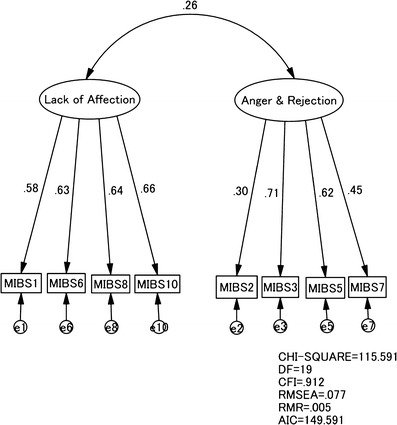
The objectives of this study were (1) to develop a Japanese version of Mother-to- Infant Bonding Scale Japanese version (MIBS-J) based on Kumar's Mother Infant Bonding Questionnaire that could be used to screen the general population for problems in the mother's feelings towards her new baby and to validate it for clinical use and (2) to examine the factor structure of the items and create subscales of the questionnaire for the Japanese version. The MIBS-J is a simple self-report questionnaire designed to detect the problems in a mother's feelings towards her newborn baby. Participants (n = 554) were recruited at an outpatient clinic of a maternity hospital in a community after 30-weeks gestation. MIBS-J and the Edinburgh Postnatal Depression Scale (EPDS) were administered on the fifth day at the maternity ward and mailed at 1 and 4 months postnatally. Exploratory factor analysis and confirmatory factor analysis demonstrated a two-factor structure out of eight items: lack of affection (LA) and anger/rejection (AR). Chronbach's α coefficients were 0.71 and 0.57, respectively. The LA and AR scores had strong correlations across postnatal times. The mothers with higher (worse) AR scores on the MIBS-J at any of the three periods had higher scores on the EPDS. MIBS-J demonstrated acceptable reliability and reasonable construct validity in this Japanese sample.
Overview
The claims and statistics of this paper haven’t been checked yet.
Free: it reads the open-access text and checks the first 5 claims that cite a source we can check. Create a free account to check every claim.
Integrity signals
Registry
Cites
Statistics
Figures
Verification
Claims the paper makes
The claims and statistics of this paper haven’t been checked yet.
Free: it reads the open-access text and checks the first 5 claims that cite a source we can check. Create a free account to check every claim.
Claims other papers make about this one
Each is checked against this paper’s own text: does it say what the citing paper says it does?
The cited source says what the claim attributes to it.
In the citing paper
“The weaker associations observed in the first postpartum week may be explained by evidence suggesting the formation of the mother-infant bond is a dynamic process that, for some mothers, is not yet established during the first postpartum week (Yoshida et al., 2012).”
From Associations between maternal psychological distress and mother-infant bonding: a systematic review and meta-analysis (2023) · cites this paper as Yoshida et al., 2012
Self-check
Percentages, sums and reported differences re-computed from the paper’s own numbers.
The self-check needs the paper’s full text.
Citations
Cites
Tabachnick, B. G., & Fidell, L. S. (1983) · Cited by 80,058
Detection of Postnatal Depression: Development of the 10-item Edinburgh Postnatal Depression Scale
Cox, J. L., Holden, J. M., & Sagovsky, R. (1987) · British Journal of Psychiatry · doi:10.1192/bjp.150.6.782 · Cited by 14,183
The Scree Test For The Number Of Factors
Cattell, R. B. (1966) · Multivariate Behavioral Research · doi:10.1207/s15327906mbr0102_10 · Cited by 13,554
Schermelleh-Engel, K., Moosbrugger, H., & Müller, H. (2003) · Department of Psychology - University of Koblenz-Landau · doi:10.23668/psycharchives.12784 · Cited by 8,975
The handbook of psychological testing
(1993) · Choice Reviews Online · doi:10.5860/choice.31-1802 · Cited by 3,534
Wiley Series in Probability and Mathematics Statistics
(1981) · Wiley Series in Probability and Statistics · doi:10.1002/0471725250.scard · Cited by 2,220
Handbook of Psychological Testing
Kline, P. (2013) · Routledge eBooks · doi:10.4324/9781315812274 · Cited by 1,194
Wiley Series in Probability and Mathematical Statistics
(2011) · Wiley Series in Probability and Statistics · doi:10.1002/9781118165485.scard · Cited by 804
A Screening Questionnaire for mother-infant bonding disorders
Brockington, I. F., Oates, J., George, S., Turner, D., Vostanis, P., Sullivan, M., Loh, C., & Murdoch, C. (2001) · Archives of Women's Mental Health · doi:10.1007/s007370170010 · Cited by 600 · cited 2×
“Brockington et al. (2001) developed the Postpartum Bonding Questionnaire (PBQ), which is a self-rating questionnaire.”
BackgroundMethodThe Postpartum Bonding Questionnaire: a validation
Brockington, I. F., Fraser, C., & Wilson, D. (2006) · Archives of Women's Mental Health · doi:10.1007/s00737-006-0132-1 · Cited by 568 · cited 3×
“Factor analysis”
BackgroundMethod
Cited by
O’Higgins, M., Roberts, I. S. J., Glover, V., & Taylor, A. (2013) · Archives of Women's Mental Health · doi:10.1007/s00737-013-0354-y · Cited by 201
Kuriyama, S., Metoki, H., Kikuya, M., Obara, T., Ishikuro, M., Yamanaka, C., Nagai, M., Matsubara, H., Kobayashi, T., Sugawara, J., et al. (2020) · International Journal of Epidemiology · doi:10.1093/ije/dyz169 · Cited by 190
O’Dea, G. A., Youssef, G. J., Hagg, L. J., Francis, L. M., Spry, E. A., Rossen, L., Smith, I., Teague, S. J., Mansour, K., Booth, A., et al. (2023) · Archives of Women's Mental Health · doi:10.1007/s00737-023-01332-1 · Cited by 213
“The weaker associations observed in the first postpartum week may be explained by evidence suggesting the formation of the mother-infant bond is a dynamic process that, for some mothers, is not yet established during the first postpartum week (Yoshida et al., 2012).”
BackgroundWittkowski, A., Vatter, S., Muhinyi, A., Garrett, C., & Henderson, M. (2020) · Clinical Psychology Review · doi:10.1016/j.cpr.2020.101906 · Cited by 121
Screen Time at Age 1 Year and Communication and Problem-Solving Developmental Delay at 2 and 4 Years
Takahashi, I., Obara, T., Ishikuro, M., Murakami, K., Ueno, F., Noda, A., Onuma, T., Shinoda, G., Nishimura, T., Tsuchiya, K. J., et al. (2023) · Archives of Pediatrics and Adolescent Medicine · doi:10.1001/jamapediatrics.2023.3057 · Cited by 202
Kushima, M., Kojima, R., Shinohara, R., Horiuchi, S., Otawa, S., Ooka, T., Akiyama, Y., Miyake, K., Yokomichi, H., Yamagata, Z., et al. (2022) · JAMA Pediatrics · doi:10.1001/jamapediatrics.2021.5778 · Cited by 114
Shorey, S., Ng, Y. P. M., Ng, E. D., Siew, A. L., Mörelius, E., Yoong, J., & Gandhi, M. (2019) · Journal of Medical Internet Research · doi:10.2196/10816 · Cited by 97
Kita, S., Haruna, M., Matsuzaki, M., & Kamibeppu, K. (2016) · Archives of Women s Mental Health · doi:10.1007/s00737-016-0603-y · Cited by 90
“Of the ten items of theMIBSJ, two items (items four and nine) are removed when calculating the score of the subscales because the factor loadings of those items were quite low for both factors (Yoshida et al. 2012).”
BackgroundMethodInfluentialNakano, M., Upadhyaya, S., Chudal, R., Skokauskas, N., Luntamo, T., Sourander, A., & Kaneko, H. (2019) · BMC Psychiatry · doi:10.1186/s12888-019-2068-9 · Cited by 140
Kasamatsu, H., Tsuchida, A., Matsumura, K., Shimao, M., Hamazaki, K., Inadera, H., & the Japan Environment and Children's Study Group (2019) · Psychological Medicine · doi:10.1017/s0033291719002101 · Cited by 95
“While both EPDS and MIBS-J comprise multiple factors(Yoshida et al., 2012; Kubota et al., 2014; Takehara et al., 2018), few studies have investigated the association between each factor of postpartum depression and mother-infant bonding failure.”
Psychological status of postpartum women under the COVID-19 pandemic in Japan
Suzuki, S. (2020) · The Journal of Maternal-Fetal & Neonatal Medicine · doi:10.1080/14767058.2020.1763949 · Cited by 81
“In the MIBS-J, there is a pos- sibility that the mother will have problems regarding feelings for her baby if the scores are 3 points or more [7].”
MethodInfluentialMatsunaga, A., Takauma, F., Tada, K., & Kitamura, T. (2017) · Early Human Development · doi:10.1016/j.earlhumdev.2017.04.008 · Cited by 70
Kitamura, T., Takegata, M., Haruna, M., Yoshida, K., Yamashita, H., Murakami, M., & Goto, Y. (2013) · Journal of Child and Family Studies · doi:10.1007/s10826-013-9849-4 · Cited by 73
“Our results were virtually the same as those of Yoshida et al. (2012), who studied only mothers.”
BackgroundMethodResultInfluentialSelf-citationSuetsugu, Y., Honjo, S., Ikeda, M., & Kamibeppu, K. (2015) · Journal of Psychosomatic Research · doi:10.1016/j.jpsychores.2015.02.008 · Cited by 61
The humanistic burden of postpartum depression: a systematic literature review
Simas, T. A. M., Huang, M., Patton, C., Reinhart, M. L., Chawla, A., Clemson, C., & Eldar‐Lissai, A. (2018) · Current Medical Research and Opinion · doi:10.1080/03007995.2018.1552039 · Cited by 58
Fujiwara, T., Weisman, O., Ochi, M., Shirai, K., Matsumoto, K., Noguchi, E., & Feldman, R. (2019) · Psychoneuroendocrinology · doi:10.1016/j.psyneuen.2018.12.004 · Cited by 48
“Correlations among study variables, including salivary OT levels, experienced parenting (PBI scales), parental rejection (MIBS for mother), parenting style (APQ involvement for grandmother), and genetic risk alleles as continuous variables within each generation are presented in Table 2.”
InfluentialMotegi, T., Watanabe, Y., Fukui, N., Ogawa, M., Hashijiri, K., Tsuboya, R., Sugai, T., Egawa, J., Araki, R., Haino, K., et al. (2020) · Neuropsychiatric Disease and Treatment · doi:10.2147/ndt.s287036 · Cited by 47
Matsumura, K., Hamazaki, K., Tsuchida, A., Kasamatsu, H., Inadera, H., The Japan Environment and Children’s Study (JECS) Group, Kamijima, M., Yamazaki, S., Ohya, Y., Kishi, R., et al. (2020) · Scientific Reports · doi:10.1038/s41598-020-67321-x · Cited by 52
Ohashi, Y., Kitamura, T., Sakanashi, K., & Tanaka, T. (2016) · Healthcare · doi:10.3390/healthcare4030050 · Cited by 90
Tsuchida, A., Hamazaki, K., Matsumura, K., Miura, K., Kasamatsu, H., Inadera, H., Kawamoto, T., Ohya, Y., Kishi, R., Yaegashi, N., et al. (2018) · Journal of Psychiatric Research · doi:10.1016/j.jpsychires.2018.11.022 · Cited by 58
Kaneko, H., & Honjo, S. (2014) · Psychology · doi:10.4236/psych.2014.59126 · Cited by 48
“…study also reported correlations between maternal bonding and depression at 1 month (r = .46, Kokubu, Okano, & Sugiyama, 2012) and at 4 months postpartum (r = .39, Yoshida et al., 2012), although they used the Mother Infant Bonding Scale (Kumar, 1997; Taylor et al., 2005), instead of the PBQ.”
The Current Concept of Paternal Bonding: A Systematic Scoping Review
Suzuki, D., Ohashi, Y., Shinohara, E., Usui, Y., Yamada, F., Yamaji, N., Sasayama, K., Suzuki, H., Nieva, R. F., da Silva Lopes, K., et al. (2022) · Healthcare · doi:10.3390/healthcare10112265 · Cited by 39
“Other tools included the Bonding Scale [24,42], the Portuguese version of the Mother–Infant Bonding Scale (MIBS [33]), the Taiji Kanjyo Hyotei Syakudo (TKHS [25]) [54]), the Japanese version of the Mother–Infant Bonding Scale (MIBS-J [55]) [39], the validated Maternal-Fetal Attachment questionnaire (MFA [56,57]) [34],…”
MethodOhara, M., Okada, T., Kubota, C., Nakamura, Y., Shiino, T., Aleksić, B., Morikawa, M., Yamauchi, A., Uno, Y., Murase, S., et al. (2016) · BMC Psychiatry · doi:10.1186/s12888-016-0933-3 · Cited by 42
“In addition, our two subscale correspond with “Lack of Affection” and “Anger and Rejection” in the 10-item Japanese version of the Mother-to-Infant Bonding Scale by Yoshida et al. and Kitamura et al. that revealed a twofactor structure [5, 14].”
MethodInfluentialMorais, A. O. D. D. S., Simões, V. M. F., Rodrigues, L. D. S., Batista, R. F. L., Lamy, Z. C., de Carvalho, C. A., da Sílva, A. A. M., & Ribeiro, M. R. C. (2017) · Cadernos de Saúde Pública · doi:10.1590/0102-311x00032016 · Cited by 105
Nishigori, H., Obara, T., Nishigori, T., Metoki, H., Mizuno, S., Ishikuro, M., Sakurai, K., Hamada, H., Watanabe, Z., Hoshiai, T., et al. (2018) · The Journal of Maternal-Fetal & Neonatal Medicine · doi:10.1080/14767058.2018.1560414 · Cited by 38
“Of the items on the MIBS-J, two items (items 4 and 9) were removed when calculating the score of the subscales because the loading of those items was quite low for both factors [5,6].”
BackgroundMethodInfluentialKitamura, T., Ohashi, Y., Kita, S., Haruna, M., & Kubo, R. (2013) · Open Journal of Psychiatry · doi:10.4236/ojpsych.2013.33a001 · Cited by 36
Ohashi, Y., Sakanashi, K., Tanaka, T., & Kitamura, T. (2016) · The Open Family Studies Journal · doi:10.2174/1874922401608010027 · Cited by 40
“These results mean that depression and bonding disorder occur over the entire course of the perinatal period, not just during the postnatal period, and are consistent with the findings of previous longitudinal studies [36, 55].”
Yoshida, T., Matsumura, K., Tsuchida, A., Hamazaki, K., & Inadera, H. (2019) · Journal of Affective Disorders · doi:10.1016/j.jad.2019.11.005 · Cited by 45
Ohara, M., Okada, T., Kubota, C., Nakamura, Y., Shiino, T., Aleksić, B., Morikawa, M., Yamauchi, A., Uno, Y., Murase, S., et al. (2017) · Psychiatry and Clinical Neurosciences · doi:10.1111/pcn.12541 · Cited by 45
“It is composed of nine items: loving, disappointed, neutral or felt nothing, possessive, resentful, dislike, protective, joyful, and aggressive.(34,35) The MIBQ is rated on a 4-point Likert scale (from 0 [very much] to 3 [not at all]), with the scale of some items being reversed.”
Japan Environment & Children’s Study Group, Tsuchiya, S., Tsuchiya, M., Momma, H., Koseki, T., Igarashi, K., Nagatomi, R., Arima, T., & Yaegashi, N. (2019) · BMC Pediatrics · doi:10.1186/s12887-019-1877-9 · Cited by 40
Depla, A. L., Ruiter, M. L.-D., Laureij, L. T., Ernst‐Smelt, H. E., Hazelzet, J. A., Franx, A., Bekker, M. N., & BUZZ Project Team (2022) · Journal of Medical Internet Research · doi:10.2196/37725 · Cited by 36
“For example, the threshold for the Mother-to-Infant Bonding Scale was set quite low based on the literature [34,35], resulting in many alerts on mother-child bonding.”
BackgroundOhara, M., Nakatochi, M., Okada, T., Aleksić, B., Nakamura, Y., Shiino, T., Yamauchi, A., Kubota, C., Morikawa, M., Murase, S., et al. (2018) · Journal of Psychiatric Research · doi:10.1016/j.jpsychires.2018.09.001 · Cited by 34
Faisal-Cury, A., Bertazzi Levy, R., Kontos, A., Tabb, K., & Matijasevich, A. (2020) · Journal of Psychosomatic Obstetrics & Gynecology · doi:10.1080/0167482x.2019.1653846 · Cited by 28
Faisal‐Cury, A., Tabb, K. M., Ziebold, C., & Matijasevich, A. (2021) · Journal of Affective Disorders Reports · doi:10.1016/j.jadr.2021.100125 · Cited by 54
Hirokawa, K., Kimura, T., Ikehara, S., Honjo, K., Sato, T., Ueda, K., & Iso, H. (2018) · Journal of Affective Disorders · doi:10.1016/j.jad.2018.09.060 · Cited by 31
Fukui, N., Motegi, T., Watanabe, Y., Hashijiri, K., Tsuboya, R., Ogawa, M., Sugai, T., Egawa, J., Enomoto, T., & Someya, T. (2021) · Nutrients · doi:10.3390/nu13041184 · Cited by 39
Keller, N., Medved, V., & Armano, G. (2016) · Breastfeeding Medicine · doi:10.1089/bfm.2016.0093 · Cited by 25
Takubo, Y., Tsujino, N., Aikawa, Y., Fukiya, K., Iwai, M., Uchino, T., Ito, M., Akiba, Y., Mizuno, M., & Nemoto, T. (2021) · BMC Pregnancy and Childbirth · doi:10.1186/s12884-021-04331-1 · Cited by 27
“The MIBS was suggested to have a two-factor structure composed of “Lack of affection” (Items 1, 6, 8, and 10) and “Anger and rejection” (Items 2, 3, 5, and 7) [35].”
BackgroundMethodInfluentialTakeishi, Y., Nakamura, Y., Kawajiri, M., Atogami, F., & Yoshizawa, T. (2019) · The Tohoku Journal of Experimental Medicine · doi:10.1620/tjem.249.9 · Cited by 27
Bienfait, M., Haquet, A., Maury, M., Faillie, J., Combes, C., & Cambonie, G. (2017) · Devenir · doi:10.3917/dev.174.0233 · Cited by 27
Shishido, E., Shuo, T., Takahata, K., & Horiuchi, S. (2019) · PLoS ONE · doi:10.1371/journal.pone.0221821 · Cited by 25
Sasayama, D., Owa, T., Kudo, T., Kaneko, W., Makita, M., Kuge, R., Shiraishi, K., Nomiyama, T., Washizuka, S., & Honda, H. (2025) · Archives of Women s Mental Health · doi:10.1007/s00737-025-01585-y · Cited by 26
“However, the EPDS, MIBS-J, and SDQ scores were consistent with nationwide data (Hashijiri et al. 2021; Moriwaki and Kamio 2014; Toku-mitsu et al. 2020; Yoshida et al. 2012), suggesting that, with respect to these scores, the study participants were representative of the general population in Japan.”
InfluentialTakeishi, Y., Nakamura, Y., Yoshida, M., Kawajiri, M., Atogami, F., & Yoshizawa, T. (2021) · Healthcare · doi:10.3390/healthcare9040375 · Cited by 18
“The Mother-to-Infant Bonding Scale (MIBS) was used to evaluate bonding between mother and infant [8].”
BackgroundMethodHashijiri, K., Watanabe, Y., Fukui, N., Motegi, T., Ogawa, M., Egawa, J., Enomoto, T., & Someya, T. (2021) · Neuropsychiatric Disease and Treatment · doi:10.2147/ndt.s336819 · Cited by 19
“In contrast, Matsunaga et al(11) used scores from items 2, 3, 5, and 7 for “anger and rejection” and scores from items 1, 6, 8, and 10 for “lack of affection”.(9) Therefore, further studies are needed to draw definitive conclusions about the optimal cutoff score for the MIBS-J.”
BackgroundMethodInfluentialYoshimasu, K., Miyauchi, N., Satô, A., Yaegashi, N., Nakai, K., Hattori, H., Arima, T., & Japan Environment and Children's Study Group (2020) · Journal of obstetrics and gynaecology research · doi:10.1111/jog.14189 · Cited by 22
“MIBS-J demonstrated acceptable reliability and reasonable construct validity in a Japanese sample.(14,17) Explanatory and confirmatory factor analyses demonstrated a twofactor structure out of eight items: LA and AR, which”
MethodAli, R., Alnuaimi, K. M., & Al-Jarrah, I. (2020) · Nursing and Health Sciences · doi:10.1111/nhs.12684 · Cited by 28
Emotional Rejection of the Infant: Status of the Concept
Brockington, I. (2016) · Psychopathology · doi:10.1159/000448334 · Cited by 21
Validation study of Indonesian mother–infant bonding scale
Wiguna, T., & Ismail, R. I. (2019) · Asian Journal of Psychiatry · doi:10.1016/j.ajp.2019.05.003 · Cited by 19
Motegi, T., Fukui, N., Hashijiri, K., Tsuboya, R., Sugai, T., Egawa, J., 三留, 節., Araki, R., Haino, K., Yamaguchi, M., et al. (2019) · Psychiatry and Clinical Neurosciences · doi:10.1111/pcn.12920 · Cited by 18
“This version of the MIBS was translated into Japanese by Yoshida as the MIBS-J.3 In Japan, the MIBS-J is widely used in the fields of perinatal care and welfare services, as well as in research.”
MethodKuroda, Y., Goto, A., Koyama, Y., Hosoya, M., Fujimori, K., Yasumura, S., Nishigori, H., Kuse, M., Kyozuka, H., Satô, A., et al. (2020) · Journal of Affective Disorders · doi:10.1016/j.jad.2020.09.021 · Cited by 19
Inoue, C., Hashimoto, Y., & Ohira, M. (2021) · Nursing and Health Sciences · doi:10.1111/nhs.12837 · Cited by 26
Tokuda, N., Kobayashi, Y., Tanaka, H., Sawai, H., Shibahara, H., Takeshima, Y., Shima, M., Kamijima, M., Yamazaki, S., Ohya, Y., et al. (2021) · Journal of Psychiatric Research · doi:10.1016/j.jpsychires.2021.05.056 · Cited by 24
Inoue, C., Hashimoto, Y., Nakatani, Y., & Ohira, M. (2022) · Nursing and Health Sciences · doi:10.1111/nhs.12918 · Cited by 25
Kita, S., Haruna, M., Matsuzaki, M., & Kamibeppu, K. (2019) · Violence Against Women · doi:10.1177/1077801219835052 · Cited by 17
“The Cronbach’s alphas for the subscales of the MIBS-J in this study were MIBS_LA = .70 and MIBS_AR = .55, which were similar to the values reported in a previous study (Yoshida et al., 2012).”
BackgroundMethodResultInfluentialNitahara, K., Hidaka, N., Sakai, A., Kido, S., & Kato, K. (2020) · Journal of Perinatal Medicine · doi:10.1515/jpm-2019-0412 · Cited by 18
Noshiro, K., Umazume, T., Inubashiri, M., Tamura, M., Hosaka, M., & Watari, H. (2023) · Nutrients · doi:10.3390/nu15030768 · Cited by 17
“It was developed by Kumar and has shown good validity as a screening measure in Japan [23,24].”
BackgroundPark, S., Greene, M. C., Melby, M. K., Fujiwara, T., & Surkan, P. J. (2019) · Journal of Interpersonal Violence · doi:10.1177/0886260519875561 · Cited by 18
“Both showed fairly high internal consistency (Cronbach’s α = .71 for MIBS-LA, and Cronbach’s α = .59 for MIBS-AR; Yoshida et al., 2012).”
BackgroundMurakami, K., Ueno, F., Nakamura, I., Ishikuro, M., Noda, A., Onuma, T., Obara, T., & Kuriyama, S. (2020) · Journal of Affective Disorders · doi:10.1016/j.jad.2020.12.187 · Cited by 16
Fukui, N., Motegi, T., Watanabe, Y., Hashijiri, K., Tsuboya, R., Ogawa, M., Sugai, T., Egawa, J., Enomoto, T., & Someya, T. (2021) · Psychiatry and Clinical Neurosciences · doi:10.1111/pcn.13289 · Cited by 18
“This version of the MIBS was translated into Japanese and validated by Yoshida et al.25 We described the MIBS-J in detail in our previous studies.10,18 Participants are asked to rate the 10 questions on a four-point Likert-type scale, from 0 to 3 in the MIBS-J.”
MethodImpaired mother-infant bonding: a community study from India
Thamby, A., Bajaj, A., Manoj, L., Sunil Kumar, G., Gokul, G. R., Thennarasu, K., & Jaisoorya, T. S. (2022) · Journal of Reproductive and Infant Psychology · doi:10.1080/02646838.2022.2125938 · Cited by 17
“The scale has a total of 10 questions with scores ranging from 0 to 30 (Yoshida et al., 2012).”
BackgroundMurakami, K., Ishikuro, M., Obara, T., Noda, A., Ueno, F., Onuma, T., Matsuzaki, F., Takahashi, I., Kikuchi, S., Kobayashi, N., et al. (2023) · Journal of Affective Disorders · doi:10.1016/j.jad.2023.01.044 · Cited by 13
Fukui, N., Watanabe, Y., Motegi, T., Hashijiri, K., Ogawa, M., Egawa, J., Enomoto, T., & Someya, T. (2023) · BMC Psychiatry · doi:10.1186/s12888-023-04970-y · Cited by 16
“The HADS was previously translated into Japanese by Kitamura [27], and the Japanese version was validated in a previous study [28].”
BackgroundInfluentialTakubo, Y., Nemoto, T., Obata, Y., Baba, Y., Yamaguchi, T., Katagiri, N., Tsujino, N., Kitamura, T., & Mizuno, M. (2019) · Case Reports in Psychiatry · doi:10.1155/2019/9157214 · Cited by 18
Terada, S., Fujiwara, T., Obikane, E., & Tabuchi, T. (2022) · International Journal of Environmental Research and Public Health · doi:10.3390/ijerph19074251 · Cited by 14
Song, M., Ishii, H., Toda, M., Tomimatsu, T., Katsuyama, H., Nakai, Y., & Shimoya, K. (2017) · Open Journal of Obstetrics and Gynecology · doi:10.4236/ojog.2017.72017 · Cited by 15
Xu, X., Wang, Z., Zhang, W., Guo, J., Wei, W., Zhang, M., Ding, X., Liu, X., Yang, Q., Wang, K., et al. (2024) · BMC Psychology · doi:10.1186/s40359-024-02031-x · Cited by 19
Osman, Y. M. M., Toda, M., Ogasawara, A., Hirose, N., Chen, S., Kawasaki, H., & Shimpuku, Y. (2025) · BMC Nursing · doi:10.1186/s12912-025-03072-2 · Cited by 18
“The validity and reliability of the Japanese version of the MIBS have been reported previously [28].”
Costa, J., Santos, O., Virgolino, A., Pereira, M. E., Stefanovska–Petkovska, M., Silva, H., Navarro‐Costa, P., Barbosa, M., das Neves, R. C., Silva, I. D. E., et al. (2021) · International Journal of Environmental Research and Public Health · doi:10.3390/ijerph18052558 · Cited by 22
Popo, E., Kenyon, S. L., Dann, S.-A., MacArthur, C., & Blissett, J. M. (2017) · PLoS ONE · doi:10.1371/journal.pone.0182544 · Cited by 17
“Depressed women are less likely to develop warm, loving 56 feelings towards their children [18-20] and failure to bond has implications for the 57 subsequent relationship.”
BackgroundMurakami, K., Noda, A., Ishikuro, M., Obara, T., Ueno, F., Onuma, T., Matsuzaki, F., Kikuchi, S., Kobayashi, N., Hamada, H., et al. (2023) · Archives of Women s Mental Health · doi:10.1007/s00737-023-01298-0 · Cited by 16
“For the subscale cutoffs, we used percentile values similar to those for the total MIBS-J score: LA score of ≥2 and AR score of ≥3 (Murakami et al., 2021; Murakami et al., 2022).”
BackgroundMethodResultInfluentialPostpartum loneliness predicts future depressive symptoms: a nationwide Japanese longitudinal study
Chen, C., Mochizuki, Y., Okawa, S., Okubo, R., Nakagawa, S., & Tabuchi, T. (2024) · Archives of Women s Mental Health · doi:10.1007/s00737-024-01424-6 · Cited by 17
“To evaluate the quality of mother-to-infant bonding, we employed the MIBS (Taylor et al. 2005; Yoshida et al. 2012).”
Chen, C., Okawa, S., Okubo, R., Hagiwara, K., Mizumoto, T., Higuchi, N., Nakagawa, S., & Tabuchi, T. (2024) · Psychiatry Research · doi:10.1016/j.psychres.2024.115814 · Cited by 16
Hiraoka, D., Kawanami, A., Sakurai, K., & Mori, C. (2024) · Psychological Medicine · doi:10.1017/s0033291723003707 · Cited by 15
Manurung, S., Setyowati, S., Ginanjar, A. S., Soesilo, T. E. B., & Tyastuti, D. (2019) · Enfermería Clínica · doi:10.1016/j.enfcli.2019.06.013 · Cited by 12
“The blues mother correlates with the poor bonding relationship between mother and fetal.(12,13) Emotional and mood changes of the mother toward mother and fetal interactions are influenced by several factors, such as the mother’s role and tasks, culture, economy and social support.”
BackgroundA Swedish translation and validation of the Mother-to-Infant Bonding Scale
Mörelius, E., Elander, A., & Saghamre, E. (2020) · Scandinavian Journal of Public Health · doi:10.1177/1403494820910336 · Cited by 12
“[10] yoshida K, yamashita H, Conroy S, et al.”
BackgroundMatsunaga, A., Ohashi, Y., Sakanashi, K., & Kitamura, T. (2020) · Journal of Psychiatric Research · doi:10.1016/j.jpsychires.2020.11.017 · Cited by 12
A Reliability Generalization Meta-Analysis of the Mother-To-Infant Bonding Scale
Demir, E., Öz, S., Aral, N., & Gürsoy, F. (2022) · Psychological Reports · doi:10.1177/00332941221114413 · Cited by 13
“” Maternal emotional involvement with the baby in the perinatal period is recognized and called “ bonding ” (Yoshida et al., 2012), which is a process in which the infant “ attaches ” to their mother.”
BackgroundHarasawa, N., Chen, C., Okawa, S., Okubo, R., Matsubara, T., Nakagawa, S., & Tabuchi, T. (2025) · Communications Psychology · doi:10.1038/s44271-024-00171-9 · Cited by 17
Factors influencing postpartum depression among Japanese parents: A prospective longitudinal study
Yamakawa, Y., Maruta, M., Higuchi, Y., Tokunaga, A., Iwanaga, R., Honda, S., Imamura, A., & Tanaka, G. (2023) · Neuropsychopharmacology Reports · doi:10.1002/npr2.12326 · Cited by 12
Chen, C., Okawa, S., Okubo, R., Nakagawa, S., & Tabuchi, T. (2023) · Asian Journal of Psychiatry · doi:10.1016/j.ajp.2023.103778 · Cited by 11
Toivo, J., Tulivuo, N., Kanzaki, M., Koivisto, A., Kylmä, J., & Paavilainen, E. (2023) · Children · doi:10.3390/children10111806 · Cited by 14
“As shown in previous studies [2,6,17,35,36,43,44], the results showed that the parents had a strong affection for their baby.”
BackgroundMethodResultInfluentialKanekasu, H., Shiraiwa, Y., Taira, S., & Watanabe, H. (2024) · Archives of Women s Mental Health · doi:10.1007/s00737-024-01441-5 · Cited by 14
“Adoptable validity and reliability have been reported (Yoshida et al. 2012).”
BackgroundMethodTsuchiya, S., Tsuchiya, M., Momma, H., Nagatomi, R., Arima, T., Yaegashi, N., Igarashi, K., & the Japan Environment and Children’s Study Group (2021) · International Journal of Paediatric Dentistry · doi:10.1111/ipd.12791 · Cited by 10
Tokuda, N., Tanaka, H., Sawai, H., Shibahara, H., Takeshima, Y., & Shima, M. (2023) · Journal of Affective Disorders · doi:10.1016/j.jad.2023.02.130 · Cited by 12
Capelli, E., Anceresi, G., Grumi, S., & Provenzi, L. (2023) · Infant Behavior and Development · doi:10.1016/j.infbeh.2023.101826 · Cited by 9
Obikane, E., Baba, T., Shinozaki, T., Obata, S., Nakanishi, S., Murata, C., Ushio, E., Suzuki, Y., Shirakawa, N., Honda, M., et al. (2021) · BMC Pregnancy and Childbirth · doi:10.1186/s12884-021-03767-9 · Cited by 9
Okamoto, Y., Doi, S. K., Isumi, A., Sugawara, J., Maeda, K., Satoh, S., Fujiwara, T., & Mitsuda, N. (2022) · International Journal of Gynecology & Obstetrics · doi:10.1002/ijgo.14263 · Cited by 8
Hadathy, D. E., Malaeb, D. N., Hallit, S. R., Fekih‐Romdhane, F., & Barakat, H. (2024) · BMC Psychiatry · doi:10.1186/s12888-024-05745-9 · Cited by 11
“Evidence for acceptable internal consistency of the MIBS-8 has also been demonstrated in the original validation study (α = 0.7) and other previous linguistic validations, including the Japanese (α = 0.78) [63], Chinese (α = 0.73) [64] and Swedish (α = 0.78) versions.”
ResultInfluentialImpact of Intimate Partner Violence on Children
Doswell, A., Kazmir, S., Segal, R. S., & Tiyyagura, G. K. (2025) · Pediatric Clinics of North America · doi:10.1016/j.pcl.2024.12.005 · Cited by 13
Chen, C., Okawa, S., Okubo, R., Nakagawa, S., & Tabuchi, T. (2024) · Journal of Affective Disorders · doi:10.1016/j.jad.2024.01.001 · Cited by 10
Use of the Stafford Interview for assessing perinatal bonding disorders
Nishikii, Y., Suetsugu, Y., Yamashita, H., & Yoshida, K. (2019) · BMJ Case Reports · doi:10.1136/bcr-2018-228696 · Cited by 7
Self-citationAssociation between personal values in adolescence and impaired bonding relationship with children
Obikane, E., Watanabe, K., Nishi, D., & Kawakami, N. (2020) · BMC Psychology · doi:10.1186/s40359-020-00463-9 · Cited by 9
Yoshida, K., Goto, A., Takebayashi, Y., Murakami, M., & Sasaki, M. (2021) · Infant Mental Health Journal · doi:10.1002/imhj.21940 · Cited by 9
Self-citationKunimi, Y., Minami, M., Muchanga, S. M. J., Eitoku, M., Hayashi, K., Fujieda, M., Suganuma, N., & Maeda, N. (2021) · Journal of Affective Disorders · doi:10.1016/j.jad.2021.11.058 · Cited by 13
Yamada, K., Kimura, T., Cui, M., Kubota, Y., Tanaka, E., Wakaizumi, K., Ikehara, S., Kimura, T., Iso, H., & the Japan Environment and Children's Study Group (2020) · Pain · doi:10.1097/j.pain.0000000000002084 · Cited by 9
Murakami, K., Ishikuro, M., Obara, T., Ueno, F., Noda, A., Onuma, T., Matsuzaki, F., Kikuchi, S., Kobayashi, N., Hamada, H., et al. (2022) · Archives of Women s Mental Health · doi:10.1007/s00737-022-01266-0 · Cited by 7
Tokumitsu, K., Yasui‐Furukori, N., Fisher, S. D., Keta, T., Yamada, C., Takeuchi, J. S., Yachimori, K., Sugawara, N., & Shimoda, K. (2023) · Neuropsychopharmacology Reports · doi:10.1002/npr2.12321 · Cited by 4
Saito, T., Shimokaze, T., Niizuma, M., Suzuki, M., Toyoshima, M., & Toyoshima, K. (2024) · PEC Innovation · doi:10.1016/j.pecinn.2024.100315 · Cited by 5
“The MIBS is a revised version of the Mother-Infant Bonding Questionnaire (MIBQ) [22] developed by Kumar to assess postpartum bond formation disorders; we used its Japanese version (MIBS-J) [23,24].”
MethodThe effects of mother-infant bonding on children's strengths and difficulties
Kawasaki, T., Noda, Y., Hirano, Y., Kawanami, A., Sakurai, K., Mori, C., & Shimizu, E. (2025) · Heliyon · doi:10.1016/j.heliyon.2025.e41727 · Cited by 7
“The MIBS comprises 10 items investigating mothers ’ emotional bonding with children [22,23] (supplementary file 2).”
Terada, S., Fujiwara, T., Sugawara, J., Maeda, K., Satoh, S., & Mitsuda, N. (2023) · Journal of Affective Disorders · doi:10.1016/j.jad.2023.06.058 · Cited by 6
Metadata
- Authors
- Yoshida, K., Yamashita, H., Conroy, S., Marks, M., & Kumar, C.
- Affiliations
- Kyushu University (JP)
- University of London (GB)
- Corresponding author
- Yoshida, Keiko
- Venue
- Archives of Women's Mental Health
- Published
- 2012-06-26
- Volume
- 15
- Issue
- 5
- Pages
- 343-352
- ISSN
- 1434-1816 (ISSN-L)
- 1435-1102
- PMC
- PMC3443344
- OpenAlex
- W1976804387
- Cited by
- 191
- References
- 27
- Citations by year
- 2026: 15 · 2025: 24 · 2024: 22 · 2023: 23 · 2022: 15 · 2021: 22 · 2020: 19 · 2019: 19 · 2018: 8 · 2017: 6 · 2016: 9 · 2015: 4 · 2014: 1 · 2013: 4
- FWCI
- 2.78
- Type
- journal article
- Language
- en
- Open access
- hybrid
- doi.org
- Licence
- cc-by
- Locations
- Archives of Women s Mental Health (publishedVersion, cc-by)
- Europe PMC (PubMed Central) (publishedVersion, cc-by)
- PubMed Central (publishedVersion, cc-by)
- PubMed (publishedVersion)
- Research Portal (King's College London) (submittedVersion)
- Funders
- Japan Society for the Promotion of Science (21390589)
- Topics
- Health Sciences › Medicine › Public Health, Environmental and Occupational Health › Maternal Mental Health During Pregnancy and Postpartum
- Social Sciences › Psychology › Social Psychology › Attachment and Relationship Dynamics
- Health Sciences › Medicine › Pediatrics, Perinatology and Child Health › Infant Development and Preterm Care
- Keywords
- mother-infant bonding, Japanese version, questionnaire validation, factor structure, lack of affection, postpartum depression, maternal mood, early postpartum period
- MeSH terms
- Adult, Affect, Emotions, Female, Humans, Japan, Longitudinal Studies, Mother-Child Relations, Psychometrics, Surveys and Questionnaires, Postpartum Period
About these checks
Registry, retraction, Cites and statistics results are computed, not judged, with one exception: a printed reference that no index lists is read once by a model before it counts as a citation error. Claims are extracted by a model and kept only when their quote appears verbatim in the text; each cited source is then checked, with a model’s help, for whether it says what the claim relies on. Those verdicts can be wrong — read the claim’s quote and the cited source before relying on one.
Statistics and arithmetic are recomputed, not judged.
Confidence bands are shown only for fields calibrated on our annotated test set. None is calibrated yet, so no band is shown.
What counts as a claim ›How we measure confidence ›How we check this ›
Are you an author, or do you see a problem with this page? Request a review
Data sources
Bibliographic data: Semantic Scholar, OpenAlex, Crossref.
Contains information from the Semantic Scholar Academic Graph Datasets, made available under the ODC Attribution License (ODC-BY 1.0).
Semantic Scholar’s data is described in: Kinney, R., et al. (2023). The Semantic Scholar Open Data Platform. arXiv:2301.10140.
