

Towards an ICF core set for ADHD: a worldwide expert survey on ability and disability
Open accessThe DOI matches its Crossref record; 38 of the 39 references it cites were found in a registry or an index.
Abstract
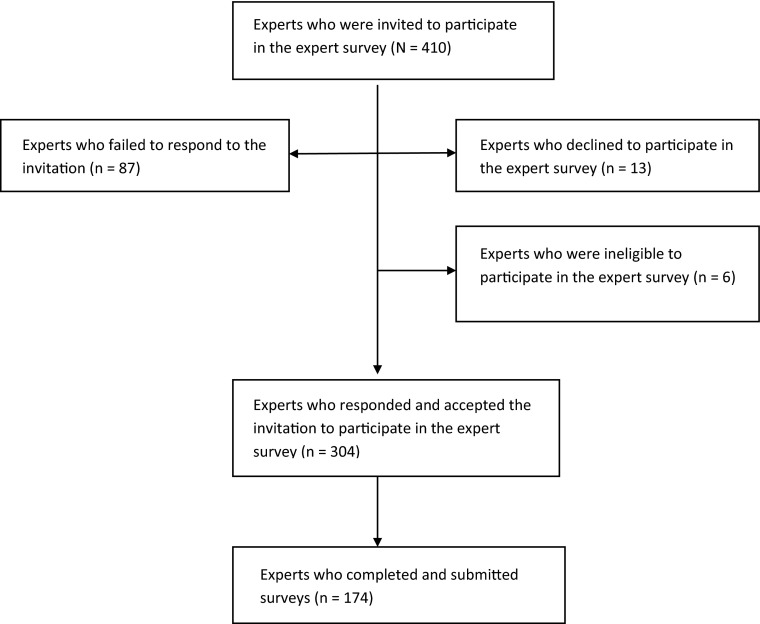
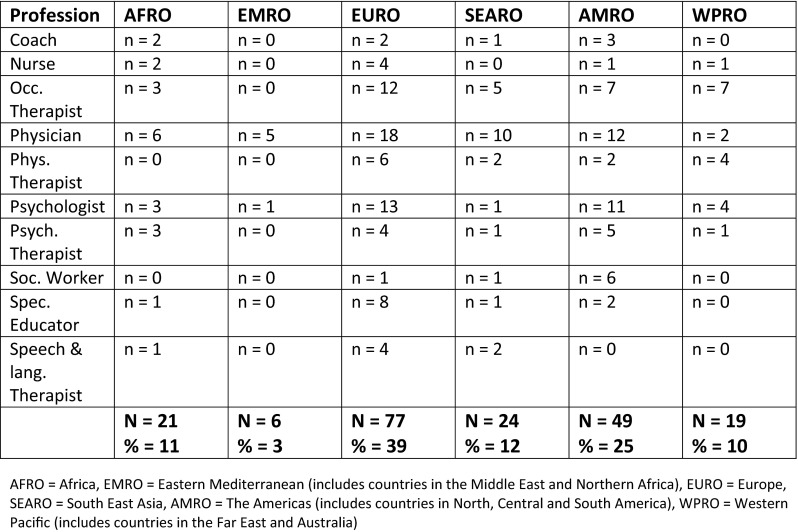
This is the second in a series of four empirical studies designed to develop International Classification of Functioning, Disability and Health (ICF and Children and Youth version, ICF-CY) core sets for attention deficit hyperactivity disorder (ADHD). The objective of this stage was to gather the opinions from international experts on which ability and disability concepts were considered relevant to functioning in ADHD. An email-based survey was carried out amongst international experts in ADHD. Relevant functional ability and disability concepts were extracted from their responses and linked to the ICF/-CY categories by two independent researchers using a standardised linking procedure. 174 experts from 11 different disciplines and 45 different countries completed the survey. Meaningful concepts identified in their responses were linked to 185 ICF/-CY categories. Of these, 83 categories were identified by at least 5 % of the experts and considered the most relevant to ADHD: 30 of these were related to Body functions (most identified: attention functions, 85 %), 30 to Activities and Participation (most identified: school education, 52 %), 20 to Environmental factors (most identified: support from immediate family, 61 %), and 3 to Body structures (most identified: structure of brain, 83 %). Experts also provided their views on particular abilities related to ADHD, naming characteristics such as high-energy levels, flexibility and resiliency. Gender differences in the expression of ADHD identified by experts pertained mainly to females showing more internalising (e.g. anxiety, low self-esteem) and less externalising behaviours (e.g. hyperactivity), leading to a risk of late- and under-diagnosis in females. Results indicate that the impact of ADHD extends beyond the core symptom domains, into all areas of life and across the lifespan. The current study in combination with three additional preparatory studies (comprehensive scoping review, focus groups, clinical study) will provide the scientific basis to define the ADHD ICF/-CY core sets for multi-purpose use in basic and applied research and every day clinical practice.
Overview
The claims and statistics of this paper haven’t been checked yet.
Free: it reads the open-access text and checks the first 5 claims that cite a source we can check. Create a free account to check every claim.
Integrity signals
Registry
Cites
Statistics
Figures
Verification
Claims the paper makes
The claims and statistics of this paper haven’t been checked yet.
Free: it reads the open-access text and checks the first 5 claims that cite a source we can check. Create a free account to check every claim.
Claims other papers make about this one
Each is checked against this paper’s own text: does it say what the citing paper says it does?
In the citing paper
“Despite the widespread opinion amongst clinicians that the co-occurrence profiles differ between sexes/genders80,81 — with males more likely to show externalizing problems such as oppositional defiant disorder and conduct disorder, and females more likely to show internalizing problems such as anxiety and mood disorders — the evidence is inconsistent.”
From Sex and gender in neurodevelopmental conditions (2023) · cites this paper as [81]
Self-check
Percentages, sums and reported differences re-computed from the paper’s own numbers.
The self-check needs the paper’s full text.
Citations
Cites
The worldwide prevalence of ADHD: a systematic review and metaregression analysis
Polanczyk, G., de Lima, M. S., Horta, B. L., Biederman, J., & Rohde, L. A. (2007) · American Journal of Psychiatry · doi:10.1176/ajp.2007.164.6.942 · Cited by 5,346 · cited 1×
“Attention deficit hyperactivity disorder (ADHD) is a neurodevelopmental condition, defined by patterns of inattention, impulsivity and hyperactivity, which affects approximately 5 % of children [1, 2] and 2.”
BackgroundSelf-citationInternational Classification of Functioning Disability and Health (ICF)
Battistella, L. R., & Brito, C. M. M. D. (2002) · Acta Fisiátrica · doi:10.5935/0104-7795.20020003 · Cited by 4,446
International Classification of Functioning, Disability and Health
Chard, G. (2004) · British Journal of Occupational Therapy · doi:10.1177/030802260406700101 · Cited by 3,688
International Classification of Functioning, Disability and Health (ICF) 2001
Jiménez Buñuales, M. ª. T., González Diego, P., & Martín Moreno, J. M. ª. (2002) · Revista Española de Salud Pública · doi:10.1590/s1135-57272002000400002 · Cited by 3,254
International statistical classification of diseases and related health problems. Tenth revision.
Brämer, G. R. (1988) · PubMed · Cited by 1,884
Polanczyk, G. V., Willcutt, E. G., Salum, G. A., Kieling, C., & Rohde, L. A. (2014) · International Journal of Epidemiology · doi:10.1093/ije/dyt261 · Cited by 1,822 · cited 1×
“Attention deficit hyperactivity disorder (ADHD) is a neurodevelopmental condition, defined by patterns of inattention, impulsivity and hyperactivity, which affects approximately 5 % of children [1, 2] and 2.”
BackgroundSelf-citationPrevalence and correlates of adult attention-deficit hyperactivity disorder: meta-analysis
Simon, V., Czobor, P., Bálint, S., Mészáros, Á., & Bitter, I. (2009) · British Journal of Psychiatry · doi:10.1192/bjp.bp.107.048827 · Cited by 1,601 · cited 1×
“5 % of adults worldwide [3].”
ICF linking rules: an update based on lessons learned
Cieza, A., Geyh, S., Chatterji, S., Kostanjsek, N., Üstün, B., & Stucki, G. (2005) · Journal of Rehabilitation Medicine · doi:10.1080/16501970510040263 · Cited by 1,304 · cited 1×
“These were then linked to ICF-CY categories following the formal linking rules and procedures determined by the WHO ICF Research Branch [31, 32].”
MethodEmotion Dysregulation in Attention Deficit Hyperactivity Disorder
Shaw, P., Stringaris, A., Nigg, J., & Leibenluft, E. (2014) · American Journal of Psychiatry · doi:10.1176/appi.ajp.2013.13070966 · Cited by 1,232
Cieza, A., Brockow, T., Ewert, T., Amman, E., Kollerits, B., Chatterji, S., ÜstÜn, T. B., & Stucki, G. (2002) · Journal of Rehabilitation Medicine · doi:10.1080/165019702760279189 · Cited by 854 · cited 1×
“These were then linked to ICF-CY categories following the formal linking rules and procedures determined by the WHO ICF Research Branch [31, 32].”
Method
Cited by
Sex and gender in neurodevelopmental conditions
Bölte, S., Neufeld, J., Marschik, P. B., Williams, Z. J., Gallagher, L., & Lai, M.-C. (2023) · Nature Reviews Neurology · doi:10.1038/s41582-023-00774-6 · Cited by 249
Self-citationAnnual Research Review: Perspectives on progress in ADHD science – from characterization to cause
Sonuga‐Barke, E. J. S., Becker, S. P., Bölte, S., Castellanos, F. X., Franke, B., Newcorn, J. H., Nigg, J. T., Rohde, L. A., & Simonoff, E. (2023) · Journal of Child Psychology and Psychiatry · doi:10.1111/jcpp.13696 · Cited by 157
Self-citationCoghill, D. R., Banaschewski, T., Soutullo, C., Cottingham, M. G., & Zuddas, A. (2017) · European Child & Adolescent Psychiatry · doi:10.1007/s00787-017-0986-y · Cited by 122
“It will be interesting to see whether recent work to develop a standardized nomenclature and toolkit to describe and code functional impairment in people with ADHD based on the World Health Organization’s International Classification of Functioning, Disability and Health will result in a more cohesive and structured a…”
BackgroundSelf-citationWeiss, M. D., McBride, N. M., Craig, S. G., & Jensen, P. S. (2018) · Evidence-Based Mental Health · doi:10.1136/ebmental-2018-300025 · Cited by 120
Bölte, S., Lawson, W. B., Marschik, P. B., & Girdler, S. (2021) · BioEssays · doi:10.1002/bies.202000254 · Cited by 99
Self-citationAn international qualitative study of ability and disability in ADHD using the WHO-ICF framework
Mahdi, S., Viljoen, M., Massuti, R., Selb, M., Almodayfer, O., Karande, S., de Vries, P. J., Rohde, L., & Bölte, S. (2017) · European Child & Adolescent Psychiatry · doi:10.1007/s00787-017-0983-1 · Cited by 88
“However, these orienting frequency analyses only reflect the consistency of ICF(-CY) categories across groups and were mainly conducted to facilitate comparisons with the other two previous preparatory studies [13, 35].”
BackgroundResultInfluentialSelf-citationHolst, Y., & Thorell, L. B. (2020) · Applied Neuropsychology: Adult · doi:10.1080/23279095.2018.1532429 · Cited by 76
Standardised assessment of functioning in ADHD: consensus on the ICF Core Sets for ADHD
Bölte, S., Mahdi, S., Coghill, D., Gau, S. S.-F., Granlund, M., Holtmann, M., Karande, S., Levy, F., Rohde, L. A., Segerer, W., et al. (2018) · European Child & Adolescent Psychiatry · doi:10.1007/s00787-018-1119-y · Cited by 65
“, a scoping review [36], an expert survey [37], a qualitative study [38], and a clinical cross-sectional study [39].”
InfluentialSelf-citationAn international clinical study of ability and disability in ADHD using the WHO-ICF framework
Mahdi, S., Ronzano, N., Knüppel, A., Dias, J. C., Albdah, A., Chien-Ho, L., Almodayfer, O., Bluschke, A., Karande, S., Huang, H.-L., et al. (2018) · European Child & Adolescent Psychiatry · doi:10.1007/s00787-018-1124-1 · Cited by 65
“The specificity of the checklist content was increased by including additional 30 ICF-CY categories (12 body functions; 14 activities and participation; 4 environmental factors) that were found to be important in ADHD based on the previous three preparatory studies; a comprehensive scoping review [41], an expert surve…”
BackgroundMethodResultInfluentialSelf-citationSaban, M. T., & Kirby, A. (2018) · Current Developmental Disorders Reports · doi:10.1007/s40474-018-0126-5 · Cited by 65
Social cognition in autism and ADHD
Bölte, S. (2025) · Neuroscience & Biobehavioral Reviews · doi:10.1016/j.neubiorev.2025.106022 · Cited by 56
“Individuals with ADHD have been described by professionals as flexible, agreeable, entertaining and robust, and autistic people as honest, loyal, kind and creative (de Schipper et al., 2015, 2016), all psychological constructs associated with social cognition in one or another form.”
Self-citationNorwich, B. (2016) · Frontiers in Education · doi:10.3389/feduc.2016.00005 · Cited by 54
Hahn‐Markowitz, J., Berger, I., Manor, I., & Maeir, A. (2017) · American Journal of Occupational Therapy · doi:10.5014/ajot.2017.022053 · Cited by 46
“Participation in occupations of personal care, household chores, academics, leisure, and social domains is often impeded by executive dysfunction among children with ADHD (Antshel, Hier, & Barkley, 2014; Biederman et al., 2004; de Schipper et al., 2015; Tseng & Gau, 2013).”
“Being ADHD”: a Qualitative Study
Redshaw, R., & McCormack, L. (2022) · Advances in Neurodevelopmental Disorders · doi:10.1007/s41252-021-00227-5 · Cited by 37
Tofani, M., Mustari, M., Tiozzo, E., Dall’Oglio, I., Morelli, D., Gawronski, O., Salata, M., Cantonetti, L., Castelli, E., Lallo, D. D., et al. (2022) · Disability and Rehabilitation · doi:10.1080/09638288.2022.2136269 · Cited by 26
Alehagen, L., Bölte, S., & Black, M. H. (2024) · Autism · doi:10.1177/13623613241272044 · Cited by 24
“…systematic literature reviews (de Schipper, Lundequist, Coghill, et al., 2015; de Schipper, Lundequist, Wilteus, et al., 2015), expert surveys (de Schipper, Mahdi, et al., 2015; de Schipper et al., 2016), qualitative studies (Mahdi et al., 2017; Mahdi, Viljoen, et al., 2018), and clinical…”
Self-citationFrondelius, I. A., Ranjbar, V., & Danielsson, L. (2019) · BMJ Open · doi:10.1136/bmjopen-2019-031570 · Cited by 33
“(Emma) For one participant, it first became clear what ADHD actually was when he studied together with other teenagers with ADHD.”
BackgroundInfluentialSoares, L. S., Alves, A. L. C., Costa, D. D. S., Malloy-Diniz, L. F., Paula, J. J. D., Romano-Silva, M. A., & Miranda, D. M. D. (2021) · Frontiers in Psychiatry · doi:10.3389/fpsyt.2021.593150 · Cited by 17
Conway, K. M. C., Ciafaloni, E., Matthews, D. J., Westfield, C., James, K., Paramsothy, P., & Romitti, P. A. (2017) · Disability and Rehabilitation · doi:10.1080/09638288.2017.1312567 · Cited by 17
“ICF core sets are being developed for each of these diagnoses with preliminary reports of 28 and 30 second-level function categories, respectively (23, 24).”
Bölte, S., Alehagen, L., Black, M. H., Hasslinger, J., Wessman, E., Remnélius, K. L., Marschik, P. B., D’Arcy, E., Seidel, A., Girdler, S. J., et al. (2024) · Developmental Medicine & Child Neurology · doi:10.1111/dmcn.15865 · Cited by 22
Self-citationDayan, H., Khoury‐Kassabri, M., & Pollak, Y. (2022) · Brain Sciences · doi:10.3390/brainsci12101336 · Cited by 18
Weiss, M. D. (2022) · Brain Sciences · doi:10.3390/brainsci12081014 · Cited by 15
Surgeon Reported Outcome Measure for Spine Trauma
Sadiqi, S., Verlaan, J., Lehr, A. M., Dvorak, M. F., Kandziora, F., Rajasekaran, S., Schnake, K. J., Vaccaro, A. R., & Öner, F. C. (2016) · Spine · doi:10.1097/brs.0000000000001683 · Cited by 10
Limsakul, C., Noten, S., Selb, M., Stam, H., van der Slot, W., & Roebroeck, M. E. (2020) · Journal of Rehabilitation Medicine · doi:10.2340/16501977-2669 · Cited by 12
Impairment Assessment in Adult ADHD and Related Disorders: Current Opinions From Clinic and Research
Fuermaier, A. B. M., Lima, C. G.-S., & Tucha, O. M. (2024) · Journal of Attention Disorders · doi:10.1177/10870547241261598 · Cited by 10
“Despite significant milestones on the ICF regarding a conceptual framework of impairment, and defining relevant domains of functioning (Bölte et al., 2018, 2024; De Schipper, Mahdi, et al., 2015; de Schipper, Lundequist, et al., 2015; Mahdi et al., 2018), one may conclude from the results of our survey that clinicians…”
MethodResultInfluentialBorges, M. G. D. S., de Medeiros, A. M., & Lemos, S. M. A. (2018) · CoDAS · doi:10.1590/2317-1782/20182017184 · Cited by 8
“Within the field of SLP, the use of both the ICF and ICF-CY is still poorly systematized, mainly in the Brazilian scientific literature and daily practice of professionals.”
BackgroundResultInfluentialRisk and resilience in developmental diversity: Protocol of developing ICF core sets
Black, M. H., Goidsenhoven, L. V., Hens, K., Bourgeron, T., & Bölte, S. (2023) · Neurodiversity · doi:10.1177/27546330231190235 · Cited by 7
“Responses to the online survey will be analyzed using a two-phase approach outlined in established guidelines for the analysis of qualitative data using the ICF (Cieza et al., 2019) and as conducted in previous studies (de Schipper et al., 2015, 2016).”
MethodSelf-citationHasslinger, J., Sirviö, S., Berggren, S., Myers, L., Flygare, O., Tammimies, K., & Bölte, S. (2016) · Translational Developmental Psychiatry · doi:10.3402/tdp.v4.30556 · Cited by 7
Self-citationBar-Ilan, R. T., Cohen, N., & Maeir, A. (2018) · American Journal of Occupational Therapy · doi:10.5014/ajot.2018.021485 · Cited by 9
“ADHD is a prevalent lifelong disorder involving impaired EFs that has a negative impact on participation and quality of life (Antshel, Hier, & Barkley, 2013; de Schipper et al., 2015; Willcutt, 2012).”
Sense of Coherence Is Associated with Functional Impairment in Individuals Diagnosed with ADHD
Dayan, H., Khoury‐Kassabri, M., & Pollak, Y. (2025) · Sci · doi:10.3390/sci7020060 · Cited by 7
Golos, A., Budman, J. R., Shterenshus, A., & Bar-Ilan, R. T. (2023) · Occupational Therapy International · doi:10.1155/2023/4832354 · Cited by 4
Ramji, A. V., & Foster, J. (2023) · Journal of Educational Sciences & Psychology · doi:10.51865/jesp.2023.2.12 · Cited by 6
“Additionally, a series of 4 investigations was conducted in multiple countries to establish how "ability" and "disability" have been studied till date (de Schipper et al., 2015a; de Schipper et al., 2015b; Mahdi et al., 2017).”
Bickton, F. M., Manifield, J., Limbani, F., Dixon, J., Holland, A. E., Taylor, R. S., Calderwood, C., Wittich, W., Gregson, C. L., Heine, M., et al. (2025) · Journal of Multimorbidity and Comorbidity · doi:10.1177/26335565251343923 · Cited by 4
Healey, D. M., Rajendran, K., O’Neill, S. C., Gopin, C. B., & Halperin, J. M. (2016) · British Journal of Developmental Psychology · doi:10.1111/bjdp.12134 · Cited by 4
“Recently, researchers have started the process of creating a standardized profile of the functioning of youngsters with ADHD using the World Health Organisation (WHO) International Classification of Functioning, Disability and Health –Child and Youth version (ICF-CY; De Schipper et al., 2015).”
MethodPredictors of Quality of Life and Symptom Severity in Attention Deficit/Hyperactivity Disorder
Lemes, P. (2017) · International Physical Medicine & Rehabilitation Journal · doi:10.15406/ipmrj.2017.01.00030 · Cited by 3
“According to expert opinion [3] and patients themselves [4] the most common functional impairments in ADHD are associated with neuropsychological performance (especially attention) [3] school performance and social functioning [3,4].”
BackgroundSchöfl, M., von Aster, M., & Kaufmann, L. (2023) · Archives of Pediatrics · doi:10.29011/2575-825x.100261 · Cited by 2
Brodard, F., Radice, A., & Bader, M. (2022) · Psychologie Française · doi:10.1016/j.psfr.2022.07.001 · Cited by 3
Toshishige, Y., Kondo, M., Watanabe, T., Yamada, A., Hashimoto, H., Okazaki, J., Tokuyama, N., Kuwabara, J., Mizushima, H., & Akechi, T. (2023) · Psychiatry and Clinical Neurosciences Reports · doi:10.1002/pcn5.95 · Cited by 1
Perspectives and Expertise of Secondary Ensemble Music Educators With ADHD
Hopkins, E. J. (2024) · Journal of Music Teacher Education · doi:10.1177/10570837241269966 · Cited by 3
“The condition may also bring strengths such as creativity, flexibility, passion, drive, and multitasking skill (de Schipper et al., 2015).”
Attention Deficit/Hyperactivity Disorder (ADHD)-Related Strengths in Adults: A Scoping Review
Rafael, R. B., Jia, H., Rouel, M., Wootton, B. M., & Mitchison, D. (2026) · Journal of Attention Disorders · doi:10.1177/10870547261425737 · Cited by 2
“An ICF core set for ADHD was developed through a series of multinational studies (Bölte et al., 2018; de Schipper et al., 2015; de Schipper et al., 2015; Mahdi et al., 2017, 2018).”
InfluentialReview of adult attention-deficit/hyperactivity disorder in South Africa
Munasur-Naidoo, A. P., & Truter, I. (2017) · Expert Review of Pharmacoeconomics & Outcomes Research · doi:10.1080/14737167.2017.1359089 · Cited by 3
Fatores ambientais da CIF e vida diária no Parkinson
de Oliveira, A. K. D., de Azevedo, J. A., Câmara, M. B. C., & de Melo, L. P. (2021) · REVISTA CIF BRASIL · doi:10.4322/cifbrasil.2021.004
“É necessário lembrar que a OMS possui uma família de classificações internacionais, tendo a Classificação Internacional de Doenças (Décima Revisão – CID-10) como mais conhecida, que objetiva identificar e classificar as doenças, sendo a CIF complementar, que por sua vez, visa classificar os indivíduos não somente pela…”
BackgroundVIDAS LOUCAS? UMA REVISÃO DE LITERATURA E DE IMAGINÁRIO SOBRE A NEURODIVERSIDADE
Jardim, F. D. C. (2023) · Congresso Internacional Interdisciplinar em Sociais e Humanidades (CONINTER) · doi:10.29327/1396573.1-9
Les parents au cœur de l’approche Cog-Fun dans l’accompagnement de leur enfant présentant un TDAH
Dantin, P., & Mallet, C. (2024) · Ergothérapies · doi:10.60856/w6ct-n592
Improving neurodiversity awareness in school students: a scoping review protocol
Hiremath, M., Freeman, N. C., Alshawsh, M. A., & Ure, A. M. (2025) · JBI Evidence Synthesis · doi:10.11124/jbies-24-00315 · Cited by 4
Association Between Probable Adult ADHD and Profession in India: A Cross-Sectional Study
Gupta, A. D., Ray, B., Basu, A., Singh, R. B. S., Sarkar, S., & Ghosh, A. (2026) · Cureus · doi:10.7759/cureus.112114
“The presence of probable ADHD screening positivity among various professions resonates with research by Lee et al. [10] and de Schipper et al. [23], which identified positive attributes associated with ADHD, including creativity, high energy levels, and flexibility.”
Billiet, L., Baets, S. D., VELDE, D. V. D., van Nispen, R. M. A., & van der Aa, H. P. A. (2026) · BMJ Open · doi:10.1136/bmjopen-2026-123955
Metadata
- Authors
- de Schipper, E., Mahdi, S., Coghill, D., de Vries, P. J., Gau, S. S.-F., Granlund, M., Holtmann, M., Karande, S., Levy, F., Almodayfer, O., Rohde, L., Tannock, R., & Bölte, S.
- Affiliations
- Region Stockholm (SE)
- University of Dundee (GB)
- National Taiwan University (TW)
- Jönköping University (SE)
- LWL-Universitätsklinik Hamm (DE)
- King Edward Memorial Hospital and Seth G.S. Medical College (IN)
- King Abdulaziz Medical City (SA)
- University of Toronto (CA)
- Corresponding author
- Bölte, Sven
- ORCID
- Venue
- European Child & Adolescent Psychiatry
- Published
- 2015-10-01
- Volume
- 24
- Issue
- 12
- Pages
- 1509-1521
- ISSN
- 1018-8827 (ISSN-L)
- 1435-165X
- PMC
- PMC4648970
- OpenAlex
- W2126162961
- Cited by
- 48
- References
- 39
- Citations by year
- 2026: 3 · 2025: 4 · 2024: 5 · 2023: 7 · 2022: 6 · 2021: 3 · 2020: 1 · 2019: 2 · 2018: 6 · 2017: 6 · 2016: 5
- FWCI
- 4.60
- Type
- journal article
- Language
- en
- Open access
- hybrid
- doi.org
- Locations
- European Child & Adolescent Psychiatry (publishedVersion, cc-by)
- PubMed Central (publishedVersion, cc-by)
- PubMed (publishedVersion)
- Discovery Research Portal (University of Dundee) (submittedVersion, cc-by)
- UNSWorks (UNSW Sydney) (submittedVersion, cc-by-nc-nd)
- KTH Publication Database DiVA (KTH Royal Institute of Technology) (submittedVersion, other-oa)
- Americanae (AECID Library) (submittedVersion, other-oa)
- eSpace (Curtin University) (submittedVersion)
- Minerva Access (University of Melbourne) (submittedVersion, cc-by)
- UNSWorks (University of New South Wales, Sydney, Australia) (submittedVersion, cc-by-nc-nd)
- LA Referencia (Red Federada de Repositorios Institucionales de Publicaciones Científicas) (submittedVersion, cc-by-nc-sa)
- Funders
- Vetenskapsrådet (SE) (523-2009-7054)
- Vetenskapsrådet, FAS, FORMAS, Vinnova (259-2012-24)
- Topics
- Health Sciences › Medicine › Psychiatry and Mental health › Attention Deficit Hyperactivity Disorder
- Health Sciences › Medicine › Rehabilitation › Cerebral Palsy and Movement Disorders
- Social Sciences › Psychology › Neuropsychology and Physiological Psychology › Developmental and Educational Neuropsychology
- Keywords
- attention deficit hyperactivity disorder, ICF Core Sets, ICF-CY, functional capacity, concept of disability, expert opinion, physiological function, activities and participation, environmental factors, gender differences in ADHD, school education, family support, brain structure
- MeSH terms
- Adolescent, Attention Deficit Disorder with Hyperactivity, Child, Female, Humans, Male, Quality of Life, Surveys and Questionnaires, International Classification of Functioning, Disability and Health
About these checks
Registry, retraction, Cites and statistics results are computed, not judged, with one exception: a printed reference that no index lists is read once by a model before it counts as a citation error. Claims are extracted by a model and kept only when their quote appears verbatim in the text; each cited source is then checked, with a model’s help, for whether it says what the claim relies on. Those verdicts can be wrong — read the claim’s quote and the cited source before relying on one.
Statistics and arithmetic are recomputed, not judged.
Confidence bands are shown only for fields calibrated on our annotated test set. None is calibrated yet, so no band is shown.
What counts as a claim ›How we measure confidence ›How we check this ›
Are you an author, or do you see a problem with this page? Request a review
Data sources
Bibliographic data: Semantic Scholar, OpenAlex, Crossref.
Contains information from the Semantic Scholar Academic Graph Datasets, made available under the ODC Attribution License (ODC-BY 1.0).
Semantic Scholar’s data is described in: Kinney, R., et al. (2023). The Semantic Scholar Open Data Platform. arXiv:2301.10140.
