

The faster internal clock in ADHD is related to lower processing speed: WISC-IV profile analyses and time estimation tasks facilitate the distinction between real ADHD and pseudo-ADHD
Open accessThe DOI matches its Crossref record; 59 of the 61 references it cites were found in a registry or an index; 3 of the 17 sources its claims cite were checked for support.
Abstract
Alterations in temporal processing may represent a primary cause of key symptoms in ADHD. This study is aimed at investigating the nature of time-processing alterations in ADHD and assessing the possible utility of testing time estimation for clinical diagnostics. Retrospective verbal time estimation in the range of several minutes was examined in 50 boys with ADHD and 53 boys with other mental disorders. All participants (age 7-16) attended an outpatient clinic for ADHD diagnostics. The diagnostic assessment included the WISC-IV. Subjects with ADHD made longer and less accurate duration estimates than the clinical control group. The ADHD group showed a specific WISC-IV profile with processing speed deficits. In the ADHD group there was a correlation between processing speed and quality of time estimation that was not observed in the comparison group: higher processing speed indices were related to more accurate duration estimates. The findings provide support for the presence of a faster internal clock in subjects with ADHD and lend further support to the existence of a specific WISC-IV profile in subjects with ADHD. The results show that analyzing WISC-IV profiles and time estimation tasks are useful differential diagnosis tools, particularly when it comes to distinguishing between "real ADHD" and pseudo-ADHD.
Overview
CoChat Summary
## TL;DR
In 103 boys referred for ADHD diagnostic assessment, those diagnosed with ADHD gave longer and less accurate retrospective time estimates and showed a specific WISC-IV profile with lower processing speed. The authors argue these two measures may help distinguish “real ADHD” from other psychiatric conditions with overlapping symptoms.
## Key findings
- Of the 103 analyzed participants, 50 had ADHD and 53 served as clinical controls with other psychiatric disorders; the ADHD group included 29 combined presentation (ADHD-C) and 21 predominantly inattentive presentation (ADHD-PI).
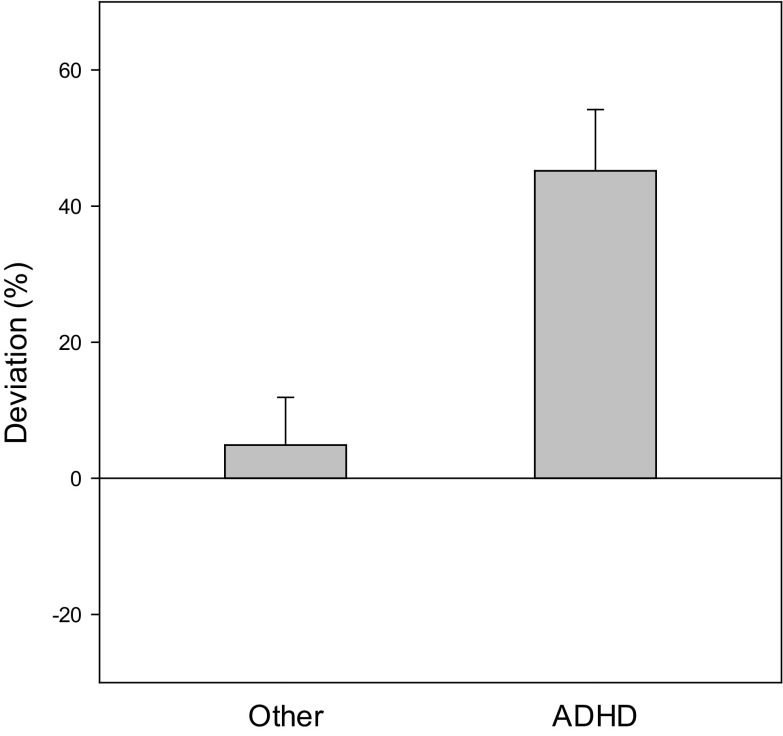
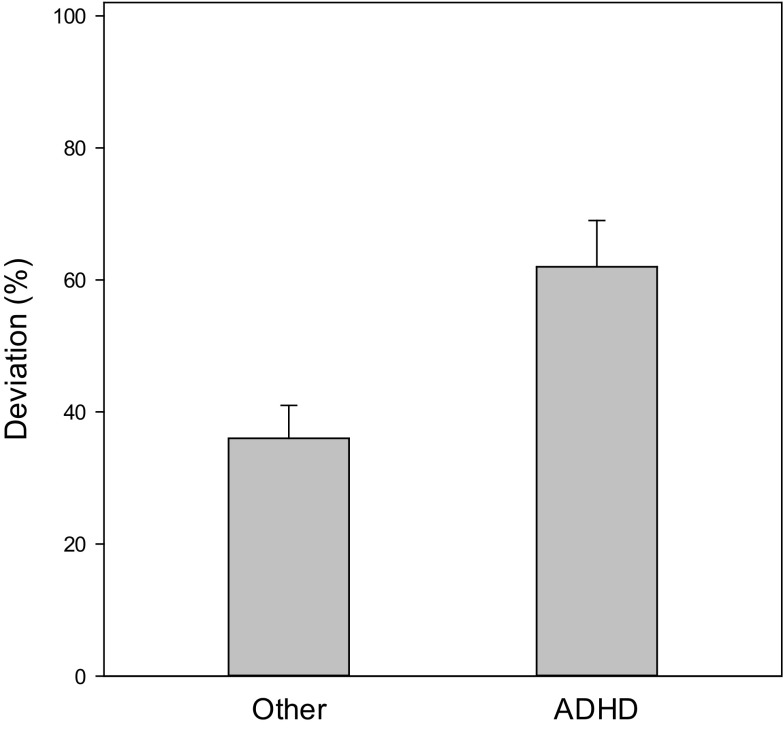
- Boys with ADHD overestimated the duration of a subtest by about 40% relative to actual time, and their estimates were significantly longer than controls’ estimates (p < 0.001); they were also less accurate (p < 0.003).
- The ADHD group had significantly lower WISC-IV processing speed than controls, with no group differences in full-scale IQ, verbal comprehension, perceptual reasoning, or working memory; ADHD-C and ADHD-PI both showed lower processing speed than controls (p < 0.001).
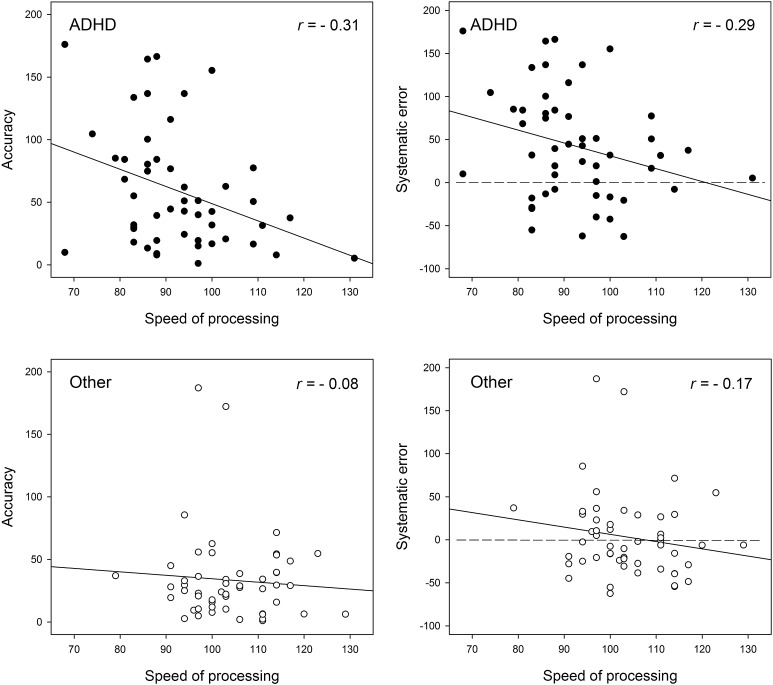
- Within the ADHD group, higher processing speed was associated with shorter and more precise time estimates; no such correlation was found in the clinical control group.
## Methods
- Clinical comparison study of boys aged 7–16 years referred to an outpatient child and adolescent psychiatric clinic for ADHD diagnostic assessment.
- After exclusions, 103 subjects remained: 50 with ADHD and 53 clinical controls with other mental disorders; all underwent multi-session diagnostic assessment including interviews, parent/teacher rating scales, school report review, WISC-IV, and a retrospective verbal time estimation task.
- Main analyses used descriptive statistics, variance analyses (including F tests), ANCOVA for age effects, and Pearson correlations; time estimates were expressed as relative deviation, systematic error, and accuracy score.
## Limitations
- The paper states that the small sample size precludes a serious statistical analysis of subgroups.
- The findings are restricted to male subjects, as stated by the paper.
- Evident from the text: the clinical control group was heterogeneous (depressive, anxiety, adjustment, specific learning, reactive attachment, and conduct disorders), which complicates attribution of effects to any single comparison diagnosis.
Model-written summary. Check it against the paper before relying on it.
Integrity signals
Registry
Cites
Statistics
Figures
Verification
Claims the paper makes
3 Valid · 0 Not valid · 10 Not checked · 34 Own results and interpretations
A result the paper reports from its own data — it cites no other source for it, so there is none to check. The quote shows it is in the paper.
In the paper
“Subjects with ADHD made longer and less accurate duration estimates than the clinical control group.”
- Also stated in: § Results · plain
“Subjects with ADHD gave significantly higher time estimates than subjects with other mental disorders (p < 0.001).”
- Also stated in: § Discussion · plain
“Retrospective time estimates of subjects with ADHD were significantly longer and less accurate than estimates made by patients with other psychiatric disorders.”
§ The faster internal clock in ADHD is related to lower processing speed: WISC-IV profile analyses and time estimation tasks facilitate the distinction between real ADHD and pseudo-ADHD > Abstract
plain- Asserted: passes — The authors put it forward as true.
- Checkable: passes — It can be checked against evidence.
- Load-bearing: passes — The paper’s conclusions depend on it.
- Based: passes — The paper gives a reason why it holds.
- Also stated in: § Results · plain
A result the paper reports from its own data — it cites no other source for it, so there is none to check. The quote shows it is in the paper.
In the paper
“In the ADHD group there was a correlation between processing speed and quality of time estimation that was not observed in the comparison group: higher processing speed indices were related to more accurate duration estimates.”
- Also stated in: § Results · plain
“In the ADHD group, there are correlations between processing speed and systematic error as well as between processing speed and accuracy score. Subjects with a lower processing speed index made longer and less precise estimates. No such correlation was found for the clinical control group.”
- Also stated in: § Discussion · plain
“In terms of the ADHD group, there were correlations between processing speed index and systematic error as well as between processing speed index and accuracy score: subjects with higher scores in processing speed provided estimates of relevant time durations that were shorter and more precise.”
§ The faster internal clock in ADHD is related to lower processing speed: WISC-IV profile analyses and time estimation tasks facilitate the distinction between real ADHD and pseudo-ADHD > Abstract
plainstates an association- Asserted: passes — The authors put it forward as true.
- Checkable: passes — It can be checked against evidence.
- Load-bearing: passes — The paper’s conclusions depend on it.
- Based: passes — The paper gives a reason why it holds.
- Also stated in: § Results · plain
A result the paper reports from its own data — it cites no other source for it, so there is none to check. The quote shows it is in the paper.
In the paper
“Ratings by parents in the ADHD group yielded higher ADHD total scores compared to the clinical control group [F(1,105) = 16.51, p < 0.001] as well as higher scores on the inattention [F(1,105) = 22.96, p < 0.001] and hyperactivity subscales [F(1,105) = 8.84, p = 0.004].”
§ The faster internal clock in ADHD is related to lower processing speed: WISC-IV profile analyses and time estimation tasks facilitate the distinction between real ADHD and pseudo-ADHD > Results
plain- Asserted: passes — The authors put it forward as true.
- Checkable: passes — It can be checked against evidence.
- Load-bearing: unclear — It is unclear whether the paper’s conclusions depend on it.
- Based: passes — The paper gives a reason why it holds.
A result the paper reports from its own data — it cites no other source for it, so there is none to check. The quote shows it is in the paper.
In the paper
“Teachers’ ratings also yielded higher ADHD total scores [F(1,63) = 8.56, p = 0.005] and higher scores on the inattention subscale [F(1,63) = 27.49, p = 0.001] for the ADHD group.”
§ The faster internal clock in ADHD is related to lower processing speed: WISC-IV profile analyses and time estimation tasks facilitate the distinction between real ADHD and pseudo-ADHD > Results
plain- Asserted: passes — The authors put it forward as true.
- Checkable: passes — It can be checked against evidence.
- Load-bearing: unclear — It is unclear whether the paper’s conclusions depend on it.
- Based: passes — The paper gives a reason why it holds.
A result the paper reports from its own data — it cites no other source for it, so there is none to check. The quote shows it is in the paper.
In the paper
“The difference between ADHD subtypes with lower processing speed in ADHD-PI was also significant (p = 0.021; d = 0.68).”
§ The faster internal clock in ADHD is related to lower processing speed: WISC-IV profile analyses and time estimation tasks facilitate the distinction between real ADHD and pseudo-ADHD > Results
plain- Asserted: passes — The authors put it forward as true.
- Checkable: passes — It can be checked against evidence.
- Load-bearing: passes — The paper’s conclusions depend on it.
- Based: passes — The paper gives a reason why it holds.
19 more claims
Create a free account to see all 47 claims and to verify the 2 references still open.
- Probably not a substantial claim. 17
- It may state two separate claims as one. 11
Claims other papers make about this one
Each is checked against this paper’s own text: does it say what the citing paper says it does?
The source backs part of the claim, not all of it — or backs it for a different population, condition or comparison.
In the citing paper
“To date, beyond learning disorders, PS deficits are most consistently associated with attention-deficit/hyperactivity disorder (ADHD) in the mental health literature23–34.”
From Diagnostic Associations of Processing Speed in a Transdiagnostic, Pediatric Sample (2020) · cites this paper as [24]
Experimental — accuracy not yet measuredThe cited source says what the claim attributes to it.
In the citing paper
“Some studies show that children with ADHD have lower PS scores than those with other clinical disorders, indicating PS has potential to help inform diagnosis23,24.”
From Diagnostic Associations of Processing Speed in a Transdiagnostic, Pediatric Sample (2020) · cites this paper as [24]
The cited source says what the claim attributes to it.
In the citing paper
“Others have found that ADHD-C and ADHD-I are both associated with PS deficits24,29”
From Diagnostic Associations of Processing Speed in a Transdiagnostic, Pediatric Sample (2020) · cites this paper as [24]
Statistics recomputed
Every reported test result, recomputed from its test statistic and degrees of freedom. A result shows as not adding up only once an independent check has confirmed it.
- ConsistentF(1, 103) = 0.34reported p = .56 · recomputed p = .561
“F(1,103) = 0.34, p = .56”
- ConsistentF(1, 105) = 28.51reported p < .001 · recomputed p < .001
“F(1,105) = 28.51, p < .001”
- ConsistentF(1, 105) = 16.51reported p < .001 · recomputed p < .001
“F(1,105) = 16.51, p < .001”
- ConsistentF(1, 105) = 22.96reported p < .001 · recomputed p < .001
“F(1,105) = 22.96, p < .001”
- ConsistentF(1, 105) = 8.84reported p = .004 · recomputed p = .004
“F(1,105) = 8.84, p = .004”
2 more recomputed tests
Create a free account to see every test the Stats check recomputed.
Self-check
Percentages, sums and reported differences re-computed from the paper’s own numbers.
Self-check results appear here once an independent check has confirmed them.
Citations
Cites
De Los Reyes, A., & Kazdin, A. E. (2005) · Psychological Bulletin · doi:10.1037/0033-2909.131.4.483 · Cited by 2,548 · cited 1×
“However, there are often discrepancies among ratings of child psychopathology provided by parents, children and teachers [15].”
BackgroundAttention-Deficit Hyperactivity Disorder: A Handbook for Diagnosis and Treatment
SPRAFKIN, J., & CARLSON, G. A. (1992) · American Journal of Psychiatry · doi:10.1176/ajp.149.9.1266 · Cited by 1,900
sagvolden, T., johansen, E. B., aase, H., & russell, V. A. (2005) · Behavioral and Brain Sciences · doi:10.1017/s0140525x05000075 · Cited by 1,035 · cited 1×
“A faster internal clock in ADHD may result in reinforcing effects that wane more quickly [42], which may result in discounting the value of delayed rewards [56].”
BackgroundYen, J.-Y., Ko, C.-H., Yen, C.-F., Wu, H.-Y., & Yang, M.-J. (2007) · Journal of Adolescent Health · doi:10.1016/j.jadohealth.2007.02.002 · Cited by 817
Barkley, R. A., Edwards, G., Laneri, M., Fletcher, K., & Metevia, L. (2001) · Journal of Abnormal Child Psychology · doi:10.1023/a:1012233310098 · Cited by 638
Decision making, impulsivity and time perception
Wittmann, M., & Paulus, M. P. (2008) · Trends in Cognitive Sciences · doi:10.1016/j.tics.2007.10.004 · Cited by 602 · cited 1×
“A faster internal clock in ADHD may result in reinforcing effects that wane more quickly [42], which may result in discounting the value of delayed rewards [56].”
BackgroundSonuga-Barke, E., Bitsakou, P., & Thompson, M. (2010) · Journal of the American Academy of Child & Adolescent Psychiatry · doi:10.1016/j.jaac.2009.12.018 · Cited by 504 · cited 1×
“According to the triple pathway model [46], deficits in temporal processing may represent a primary cause of the key symptoms of ADHD in addition to inhibitory control and delay-related processes.”
BackgroundPathophysiological distortions in time perception and timed performance
Allman, M. J., & Meck, W. H. (2012) · Brain · doi:10.1093/brain/awr210 · Cited by 460 · cited 1×
“Earlier studies have provided evidence that subjects with ADHD show alterations in prospective timing when attention is directed to the passage of time due to attention deficits [1].”
BackgroundBrown, S. W. (1985) · Perception & Psychophysics · doi:10.3758/bf03198848 · Cited by 424 · cited 1×
“The accuracy score is the absolute (unsigned) value of the deviation [8], which shows the magnitude of a participant ́s error irrespective of the direction.”
BackgroundProspective and Retrospective Judgments of Time as a Function of Amount of Information Processed
Hicks, R. E., Miller, G. W., & Kinsbourne, M. (1976) · The American Journal of Psychology · doi:10.2307/1421469 · Cited by 390 · cited 1×
“In a retrospective estimation task, subjects are asked for a judgment without prior warning subsequent to duration presentation [22].”
Background
Research works printed but not linked: 2
- Döpfner M Görtz-Dorten A Lehmkuhl G Diagnostik-System für psychische Störungen nach ICD-10 und DSM-IV für Kinder und Jugendliche – II, DISYPS-II. [Diagnostics system for mental disorders according to ICD-10 and DSM-IV in childhood and adolescents] 2014 Bern Huber
- Petermann F Petermann U Wechsler intelligence scale for children—fourth edition, WISC-IV, Deutschsprachige Adaptation nach D. Wechsler 2011 Frankfurt Pearson
Cited by
Deep Learning Based on Event-Related EEG Differentiates Children with ADHD from Healthy Controls
Vahid, A., Bluschke, A., Roessner, V., Stober, S., & Beste, C. (2019) · Journal of Clinical Medicine · doi:10.3390/jcm8071055 · Cited by 115
“Previously, interval timing has reliably been shown to be altered in ADHD [24,27–33] and seems to be useful to distinguish between ‘real ADHD’ and ‘pseudo-ADHD’ [34].”
BackgroundPtacek, R., Weissenberger, S., Braaten, E., Klicperova-Baker, M., Goetz, M., Raboch, J., Vnukova, M., & Stefano, G. B. (2019) · Medical Science Monitor · doi:10.12659/msm.914225 · Cited by 102
“conducted a study using the Wechsler Intelligence Scale for Children version IV (WISC-IV) and found that there were ways of integrating some of the WISC-IV time processing tasks to diagnose ADHD better [44].”
BackgroundMethodTime Perception Deficits in Children and Adolescents with ADHD: A Meta-analysis
Zheng, Q., Wang, X., Chiu, K. Y., & Shum, K. K. (2020) · Journal of Attention Disorders · doi:10.1177/1087054720978557 · Cited by 66
“These findings are in line with the hypothesis of a “faster internal clock” that prevails in individuals with ADHD (Walg et al., 2017).”
ResultMolavi, P., Nadermohammadi, M., Salvat Ghojehbeiglou, H., Vicario, C. M., Nitsche, M. A., & Salehinejad, M. A. (2020) · BMC Psychiatry · doi:10.1186/s12888-020-02887-4 · Cited by 51
“Analyzing WISC-IV profiles are suggested as useful differential diagnosis tools, particularly in distinguishing between “real ADHD” and pseudo-ADHD [37, 38].”
MethodNeurophysiological mechanisms of interval timing dissociate inattentive and combined ADHD subtypes
Bluschke, A., Schuster, J., Roessner, V., & Beste, C. (2018) · Scientific Reports · doi:10.1038/s41598-018-20484-0 · Cited by 35
Donati, G., Dumontheil, I., & Meaburn, E. L. (2019) · Mind Brain and Education · doi:10.1111/mbe.12198 · Cited by 33
Diagnostic Associations of Processing Speed in a Transdiagnostic, Pediatric Sample
Kramer, E., Koo, B., Restrepo, A., Koyama, M., Neuhaus, R., Pugh, K., Andreotti, C., & Milham, M. (2020) · Scientific Reports · doi:10.1038/s41598-020-66892-z · Cited by 28
A novel approach to intra-individual performance variability in ADHD
Bluschke, A., Zink, N., Mückschel, M., Roessner, V., & Beste, C. (2020) · European Child & Adolescent Psychiatry · doi:10.1007/s00787-020-01555-y · Cited by 31
Zheng, Q., Cheng, Y. Y., Sonuga-Barke, E. J. S., & Shum, K. K. (2022) · Research on Child and Adolescent Psychopathology · doi:10.1007/s10802-022-00937-x · Cited by 34
“Prior research suggested that working memory deficit may affect the accurate registration of temporal pulses emitted by the “internal clock” in the timing process (Gibbon et al., 1984) and thus influence an individual’s perception of time (Pan & Luo, 2012; Walg et al., 2017; Lee & Yang, 2018).”
BackgroundResultInfluentialTime processing in neurological and psychiatric conditions
Hinault, T., D’Argembeau, A., Bowler, D., Piolino, P., Desaunay, P., Provasi, J., Platel, H., The, J. T., Charretier, L., Giersch, A., et al. (2023) · Neuroscience & Biobehavioral Reviews · doi:10.1016/j.neubiorev.2023.105430 · Cited by 36
“Indeed, children and adolescents with ADHD tend to overestimate (i.e., durations are judged as longer than controls), and to underproduce (i.e., shorter produced intervals than controls) durations over a second (Zheng et al., 2022; Walg et al., 2017).”
Comparative analysis of the WISC-IV in a clinical setting: ADHD vs. non-ADHD
Ünal, D., Çıçek, N. M., Çak, T., Sakarya, G., Artık, A., Karaboncuk, Y., Özusta, Ş., & Kültür, S. E. Ç. (2020) · Archives de Pédiatrie · doi:10.1016/j.arcped.2020.11.001 · Cited by 26
Moradi, N., Rajabi, S., & Nejad, A. M. (2022) · Applied Neuropsychology Child · doi:10.1080/21622965.2022.2112679 · Cited by 28
“Therefore, a deficit in working memory in a child with ADHD could impact the precise registration of pulses in the timing process and then the time perception (Walg et al., 2017).”
BackgroundResultInfluentialVisual-motor attention in children with ADHD: The role of automatic and controlled processes
Fabio, R. A., Andricciola, F., & Caprì, T. (2022) · Research in Developmental Disabilities · doi:10.1016/j.ridd.2022.104193 · Cited by 19
Krieger, V., & Amador-Campos, J. A. (2021) · Child Neuropsychology · doi:10.1080/09297049.2021.1917530 · Cited by 16
“ADHD-C is associated with deficits on measures of visuospatial working memory, processing speed, sustained attention and vigilance (e.g. commission errors and distractibility) and inhibitory control (e.g. Adams et al., 2008; Barnett et al., 2005; Nikolas & Nigg, 2013; Walg et al., 2017).”
BackgroundResultFenollar-Cortés, J., López-Pinar, C., & Watkins, M. W. (2018) · International Journal of School & Educational Psychology · doi:10.1080/21683603.2018.1474820 · Cited by 17
“Smitha et al., 2014; Thaler et al., 2013; Theiling & Petermann, 2014; Walg et al., 2017).”
BackgroundAuditory time thresholds in the range of milliseconds but not seconds are impaired in ADHD
Anobile, G., Bartoli, M., Pfanner, C., Masi, G., Cioni, G., & Tinelli, F. (2022) · Scientific Reports · doi:10.1038/s41598-022-05425-2 · Cited by 18
Conte, G., Costanza, C., Novelli, M., Scarselli, V., Arigliani, E., Valente, F., Baglioni, V., Terrinoni, A., Chiarotti, F., & Cardona, F. (2024) · Children · doi:10.3390/children11020226 · Cited by 19
“Moreover, processing speed deficits have been posited as a potential neuropsychological marker of ADHD that may distinguish inattention due to ADHD from that due to other mental health conditions, such as depression [95,96].”
BackgroundNetwork Analysis of ADHD Symptoms and Cognitive Profiles in Children
Zhou, Q., Ye, X., Wei, C., Wu, Y., Ren, P., Lin, X., Li, L., Xiang, W., & Xiao, L. (2023) · Neuropsychiatric Disease and Treatment · doi:10.2147/ndt.s409503 · Cited by 11
“Therefore, the attention deficit might produce various degree of impact on to the cognitive performance.(35,53) Interestingly, we found that the PRI scores of children with ADHD were better than the Chinese norm, which was consistent with the study of Walg et al, in contrary to the study of Dinçer et al.”
ResultPrediction of attention deficit hyperactivity disorder based on explainable artificial intelligence
Sória, I. N., Rico-Juan, J. R., de Mier, R. J.-R., & Lavigne-Cerván, R. (2024) · Applied Neuropsychology Child · doi:10.1080/21622965.2024.2336019 · Cited by 22
“…et al., 2016; Jiang et al., 2015; Kim & Song, 2020; Krane & Tannock, 2001; Matsuura et al., 2014; Mayes & Calhoun, 2004; 2006; Navarro-Soria et al., 2020; Parke et al., 2020; Snow & Sapp, 2000; Styck & Watkins, 2017; Thaler et al., 2015; Ulla et al., 2007; Walg et al., 2017; Wanderer et al., 2021).”
Deconstructing Cognitive Heterogeneity in Puerto Rican Spanish-Speaking Children With ADHD
Nuñez, A., Miguel, L. S., Keene, J. R., Donohue, B. C., & Allen, D. N. (2020) · Journal of the International Neuropsychological Society · doi:10.1017/s135561772000020x · Cited by 9
“Other studies have documented that children with ADHD have slow processing speed (Mulder, Pitchford, & Marlow, 2011; Shanahan et al., 2006; Walg et al., 2017), with some evidence of more severe impairments among children with ADHD-inattentive compared with ADHD-combined (Kubo et al., 2018; Thaler…”
BackgroundResultInfluentialTeachers, not parents, are able to predict time processing skills in preschoolers
Tobia, V., Bonifacci, P., Bernabini, L., & Marzocchi, G. M. (2019) · British Journal of Developmental Psychology · doi:10.1111/bjdp.12294 · Cited by 11
Timing and delay discounting in attention‐deficit/hyperactivity disorder: A translational approach
Fox, A. E., Nicholson, A. M., Singha, D., Thieret, B. A. S., Ortiz, M., & Visser, E. J. (2023) · Developmental Psychobiology · doi:10.1002/dev.22399 · Cited by 8
Vadnais, S. A., Kibby, M. Y., & Jagger-Rickels, A. C. (2018) · Developmental Neuropsychology · doi:10.1080/87565641.2018.1469135 · Cited by 13
Lee, U., Oh, K., Shin, Y. C., Jeon, S. W., Cho, S. J., Kim, J., Kim, E. S., Lee, M. Y., Moon, S., Kim, E.-J., et al. (2024) · Child Neuropsychology · doi:10.1080/09297049.2024.2357380 · Cited by 6
“Cognitive profile analysis of the ADHD subtypes showed that children with the inatten-tive subtype had greater weakness in processing speed performance (Thaler et al., 2013; Walg et al., 2017).”
Sense of time is slower following exhaustive cycling exercise
Moore, A. R., & Olson, M. (2024) · Psychological Research · doi:10.1007/s00426-023-01914-9 · Cited by 8
“The findings of this study may be relevant to people with conditions such as attention-deficit/hyperactivity disorder (ADHD) which induce an underproduction (overestimation) of time due to a seemingly faster internal clock (Pta-cek et al., 2019; Walg et al., 2017).”
Fasano, A., Biancardi, C., Masi, G., Vecchia, S. D., Frumento, P., Mazzoni, A., Falotico, E., Faraguna, U., & Sicca, F. (2022) · Journal of Psychiatric Research · doi:10.1016/j.jpsychires.2022.10.057 · Cited by 7
Korolczuk, I., Burle, B., Casini, L. A., Gerc, K., Lustyk, D., Senderecka, M., & Coull, J. T. (2025) · PLoS ONE · doi:10.1371/journal.pone.0319621 · Cited by 6
Attention Deficit Hyperactivity Disorder: A Holistic Approach . Parte 1
Avelar, J. L. T., & Alcalá, L. E. C. (2024) · Seminars in Medical Writing and Education · doi:10.56294/mw2024483 · Cited by 3
Learning Impairments in Fmr1 -/- mice on an Audio-Visual Temporal Pattern Discrimination TaskPreprint
Mol, W., Post, S., Lee, M., & Goel, A. (2024) · bioRxiv (Cold Spring Harbor Laboratory) · doi:10.1101/2024.09.25.615092 · Cited by 3
“Other studies show that ADHD individuals underproduce durations of time, judging durations to be shorter (Walg et al., 2017; Zheng et al., 2022).”
Huang, D.-I., Chou, T.-H., Huang, C., Chang, Y., Huang, C., Griffiths, M. D., & Potenza, M. N. (2025) · Journal of Behavioral Addictions · doi:10.1556/2006.2025.00092 · Cited by 3
Avelar, J. L. T., & Alcalá, L. E. C. (2024) · Seminars in Medical Writing and Education · doi:10.56294/mw2024482 · Cited by 2
Transcranial direct current stimulation improves time perception in children with ADHD
Nejati, V., Mirikaram, F., & Nitsche, M. A. (2024) · Scientific Reports · doi:10.1038/s41598-024-82974-8 · Cited by 4
Attention Deficit Hyperactivity Disorder: A Holistic Approach. Part 2
Avelar, J. L. T., & Alcalá, L. E. C. (2023) · Seminars in Medical Writing and Education · doi:10.56294/mw2023178 · Cited by 2
Impact and Treatment of ADHD in the Argentine Context
Avelar, J. L. T., & Alcalá, L. E. C. (2023) · Seminars in Medical Writing and Education · doi:10.56294/mw2023177 · Cited by 2
Tobia, V., Landis, T., & Graziano, P. (2021) · Journal of Child and Family Studies · doi:10.1007/s10826-021-02004-3 · Cited by 2
Anxiety symptoms are distinctly related to working memory deficits in adults with ADHD
Rauch, A. A., Soble, J. R., & Silton, R. L. (2025) · Applied Neuropsychology Adult · doi:10.1080/23279095.2024.2449170 · Cited by 9
Visual Function and Neuropsychological Profiling of Idiopathic Infantile Nystagmus
Morelli, F., Catalano, G., Scognamillo, I., Balzarotti, N., Luparia, A., Olivier, L., Bertone, C., Gori, M., & Signorini, S. G. (2023) · Brain Sciences · doi:10.3390/brainsci13091348 · Cited by 1
Sense of time is slower following exhaustive cycling exercisePreprint
Moore, A. R., & Olson, M. (2023) · Research Square · doi:10.21203/rs.3.rs-2680875/v1 · Cited by 1
The whiteboard: visualising personal agency in a lockdown microcosm
O’Callaghan, S. (2021) · Visual Studies · doi:10.1080/1472586x.2021.1979898 · Cited by 1
Lavigne-Cerván, R., Collado-Valero, J. A., Martínez-González, A. E., & Navarro-Soria, I. N.-S. (2026) · Revista de Psicología Clínica Con Niños y Adolescentes · doi:10.21134/rpcna.2026.13.1.2 · Cited by 1
Rico-Juan, J. R., Sória, I. N., Lavigne-Cerván, R., Rosales-Gómez, M., & Collado-Valero, J. A. (2026) · Applied Sciences · doi:10.3390/app16189184
Time Perception in Psychiatric Disorders
Marazziti, D., Gambini, M., Pescini, E., & Gurrieri, R. (2026) · Psychiatric Clinics of North America · doi:10.1016/j.psc.2026.01.008
Wennberg, B., Kjellberg, A., Gustafsson, P. A., Almqvist, L., & Janeslätt, G. K. (2026) · Children · doi:10.3390/children13010143
“The perception of time is mainly researched in experimental studies [26,28,29].”
Impaired Time Perception in Attention Deficit Hyperactivity Disorder
Chutko, L. S., Yakovenko, E. A., Surushkina, S. Y., Анисимова, Т. И., Didur, М. D., Cherednichenko, D. V., Scheglova, L. V., Брониславовна, С. И., & Snegova, E. V. (2025) · Neuroscience and Behavioral Physiology · doi:10.1007/s11055-025-01925-6
Learning impairments in Fmr1−/− mice on an audio-visual temporal pattern discrimination task
Mol, W., Post, S., Lee, M., Thapa, R., Erickson, M. A., & Goel, A. (2025) · Journal of Neurodevelopmental Disorders · doi:10.1186/s11689-025-09638-0 · Cited by 3
“Other studies show that ADHD individuals underproduce durations of time, judging durations to be shorter [57, 60].”
Impaired time perception in attention deficit hyperactivity disorder
Chutko, L. S., Yakovenko, E. A., Surushkina, S. Y., Анисимова, Т. И., Didur, М. D., Cherednichenko, D. V., Щеглова, Л. В., Брониславовна, С. И., & Snegova, E. V. (2025) · S S Korsakov Journal of Neurology and Psychiatry · doi:10.17116/jnevro202512506155
Subjective time dilation in abstinent patients with alcohol use disorder
Wu, J., Liu, Y., Kong, X., Zhang, D., Hao, W., & Ye, Z. (2024) · Journal of Clinical and Experimental Neuropsychology · doi:10.1080/13803395.2024.2427320 · Cited by 1
“Similarly, Walg et al. (2017) reported an association between the tendency of time overestimation and slow information processing in children with attention deficit hyperactivity disorder.”
Transcranial direct current stimulation improves time perception in children with ADHDPreprint
Nejati, V., Mirikaram, F., & Nitsche, M. A. (2023) · Research Square · doi:10.21203/rs.3.rs-3094471/v1
Baron-Steele, M. R. (2023) · Digital Repository Service (Northeastern University) · doi:10.17760/d20486941
على, م. (2021) · Mağallaẗ Kulliyyaẗ Al-Adāb, Ǧāmiʿaẗ Al-Zaqāzīq/Mağallaẗ Kulliyyaẗ Al-Adāb Ǧāmiʿaẗ Al-Zaqāzīq · doi:10.21608/artzag.2022.100624.1062
Prospective and Retrospective Verbal Time Estimation in Children with ADHD
Walg, M., & Prior, H. (2021) · Advances in Cognitive Psychology · doi:10.5709/acp-0330-y · Cited by 1
Self-citationDeppert, V. C. (2021) · Publication Server of Goethe University Frankfurt am Main (Goethe University Frankfurt) · doi:10.21248/gups.64500
Associations between Processing Speed and Psychopathology in a Transdiagnostic, Pediatric SamplePreprint
Kramer, E. L., Koo, B., Restrepo, A., et al. (2019) · bioRxiv (Cold Spring Harbor Laboratory) · doi:10.1101/743021
Adıgüzel Akman, Ö., & Bıyıklı, C. (2026) · International Journal of Developmental Neuroscience · doi:10.1002/jdn.70151
Metadata
- Authors
- Walg, M., Hapfelmeier, G., El-Wahsch, D., & Prior, H.
- Affiliations
- Sana Kliniken AG (DE)
- Heinrich Heine University Düsseldorf (DE)
- Goethe University Frankfurt (DE)
- Corresponding author
- Prior, Helmut
- Venue
- European Child & Adolescent Psychiatry
- Published
- 2017-03-10
- Volume
- 26
- Issue
- 10
- Pages
- 1177-1186
- ISSN
- 1018-8827 (ISSN-L)
- 1435-165X
- PMC
- PMC5610226
- OpenAlex
- W2593986652
- Cited by
- 49
- References
- 61
- Citations by year
- 2026: 3 · 2025: 6 · 2024: 9 · 2023: 7 · 2022: 5 · 2021: 6 · 2020: 6 · 2019: 4 · 2018: 3
- FWCI
- 2.92
- Type
- journal article
- Language
- en
- Open access
- hybrid
- doi.org
- Locations
- European Child & Adolescent Psychiatry (publishedVersion, cc-by)
- Europe PMC (PubMed Central) (publishedVersion, cc-by)
- PubMed Central (publishedVersion, cc-by)
- PubMed (publishedVersion)
- Topics
- Health Sciences › Medicine › Psychiatry and Mental health › Attention Deficit Hyperactivity Disorder
- Social Sciences › Psychology › Neuropsychology and Physiological Psychology › Developmental and Educational Neuropsychology
- Life Sciences › Neuroscience › Cognitive Neuroscience › Neural and Behavioral Psychology Studies
- Keywords
- attention deficit hyperactivity disorder, internal clock, temporal processing, time estimation, processing speed, differential diagnosis, duration estimation, children
- MeSH terms
- Adolescent, Attention Deficit Disorder with Hyperactivity, Child, Female, Humans, Male, Retrospective Studies, Time Perception, Wechsler Scales
About these checks
Registry, retraction, Cites and statistics results are computed, not judged, with one exception: a printed reference that no index lists is read once by a model before it counts as a citation error. Claims are extracted by a model and kept only when their quote appears verbatim in the text; each cited source is then checked, with a model’s help, for whether it says what the claim relies on. Those verdicts can be wrong — read the claim’s quote and the cited source before relying on one.
The claim verdicts this report counts are experimental: their accuracy is not yet measured.
A language model drew the claims from the paper on 2026-09-30, under version 3 of the claim definition (model deepseek-v4.1-flash, prompt extract-v3).
A second model labelled each claim on 2026-09-30 (model jev-1.13-20260917, definition revision gold-guideline-v0.2).
Statistics and arithmetic are recomputed, not judged.
Confidence bands are shown only for fields calibrated on our annotated test set. None is calibrated yet, so no band is shown.
What counts as a claim ›How we measure confidence ›How we check this ›
Are you an author, or do you see a problem with this page? Request a review
Data sources
Bibliographic data: Semantic Scholar, OpenAlex, Crossref.
Contains information from the Semantic Scholar Academic Graph Datasets, made available under the ODC Attribution License (ODC-BY 1.0).
Semantic Scholar’s data is described in: Kinney, R., et al. (2023). The Semantic Scholar Open Data Platform. arXiv:2301.10140.
