

Medical comorbidities in children and adolescents with autism spectrum disorders and attention deficit hyperactivity disorders: a systematic review
Open accessThe DOI matches its Crossref record; 68 of the 68 references it cites were found in a registry or an index.
Abstract
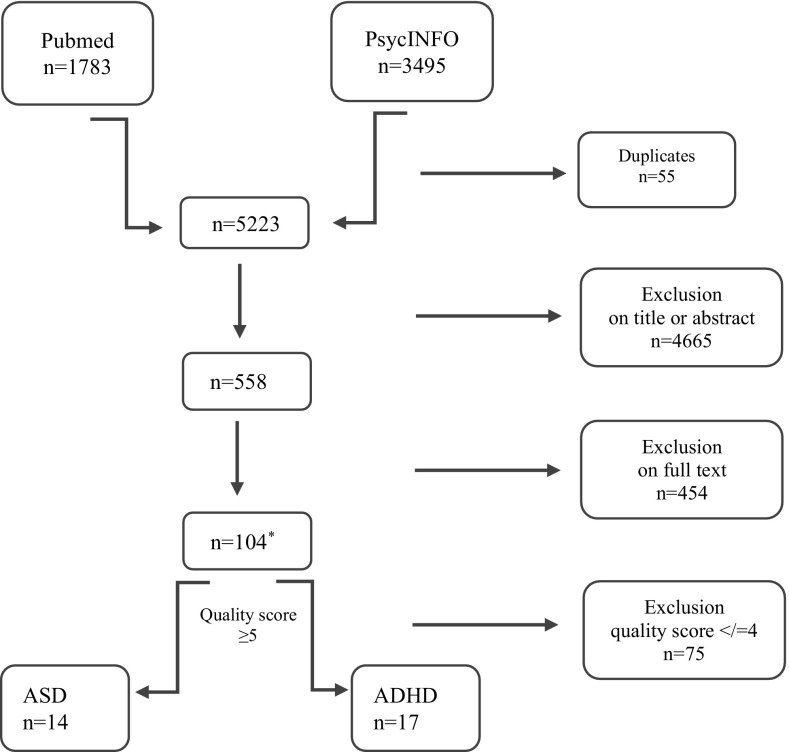
Somatic disorders occur more often in adult psychiatric patients than in the general adult population. However, in child and adolescent psychiatry this association is unclear, mainly due to a lack of integration of existing data. To address this issue, we here present a systematic review on medical comorbidity in the two major developmental disorders autism spectrum disorder (ASD) and attention deficit hyperactivity disorder (ADHD) and formulate clinical recommendations. The literature was searched using the PubMed and PsycINFO databases (2000-1 May 2016) with the keywords "[((child and adolescent) AND (Autism OR Attention Deficit Hyperactivity Disorder* OR ADHD)) AND ("Cardiovascular Diseases" [Mesh] OR "Endocrine System Diseases" [Mesh] OR "Immune System Diseases" [Mesh] OR "Neurobehavioral Manifestations" [Mesh] OR "Gastrointestinal Disorders" [Mesh] OR Somatic OR Autoimmune disease OR Nervous system disease OR Infection OR Infectious disease)]. Two raters independently assessed the quality of the eligible studies. The initial search identified 5278 articles. Based on inclusion and exclusion criteria 104 papers were selected and subsequently subjected to a quality control. This quality was assessed according to a standardized and validated set of criteria and yielded 29 studies for inclusion. This thorough literature search provides an overview of relevant articles on medical comorbidity in ADHD and/or ASD, and shows that medical disorders in these children and adolescents appear to be widespread. Those who work with children with ASD and/or ADHD should be well aware of this and actively promote routine medical assessment. Additionally, case-control studies and population-based studies are needed to provide reliable prevalence estimates. Future studies should furthermore focus on a broader evaluation of medical disorders in children and adolescents with ADHD and/or ASD to improve treatment algorithm in this vulnerable group.
Overview
The claims and statistics of this paper haven’t been checked yet.
Free: it reads the open-access text and checks the first 5 claims that cite a source we can check. Create a free account to check every claim.
Integrity signals
Registry
Cites
Statistics
Figures
Verification
Claims the paper makes
The claims and statistics of this paper haven’t been checked yet.
Free: it reads the open-access text and checks the first 5 claims that cite a source we can check. Create a free account to check every claim.
Claims other papers make about this one
Each is checked against this paper’s own text: does it say what the citing paper says it does?
The source backs part of the claim, not all of it — or backs it for a different population, condition or comparison.
In the citing paper
“The most common co-occurring psychiatric conditions are anxiety disorders, attention-deficit/hyperactivity disorder (ADHD), depressive disorders, and oppositional defiant and conduct disorders (Simonoff et al. 2008), while the most common co-occurring medical conditions include gastro-intestinal problems, sleep difficulties, and seizures (Muskens et al. 2017).”
From The Diagnosis of Autism: From Kanner to DSM-III to DSM-5 and Beyond (2021) · cites this paper as Muskens et al. 2017
Experimental — accuracy not yet measuredThe source backs part of the claim, not all of it — or backs it for a different population, condition or comparison.
In the citing paper
“Co-occurring psychiatric and medical disorders are common among individuals with ASD, with estimates suggesting that 63–78% of individuals with ASD have at least one co-occurring psychiatric condition (Simonoff et al. 2008; Strang et al. 2012), and approximately 10–77% have at least one co-occurring medical condition (Muskens et al. 2017; Betancur 2011).”
From The Diagnosis of Autism: From Kanner to DSM-III to DSM-5 and Beyond (2021) · cites this paper as Muskens et al. 2017
Experimental — accuracy not yet measuredIn the citing paper
“potential pathological sources of pain such as neurologic disorders (seizures and epilepsy) and gastrointestinal problems are known to be frequent in ASD (13, 14).”
From Autism, joint hypermobility-related disorders and pain (2018) · cites this paper as [14]
Self-check
Percentages, sums and reported differences re-computed from the paper’s own numbers.
The self-check needs the paper’s full text.
Citations
Cites
Diagnostic and Statistical Manual of Mental Disorders
American Psychiatric Association (2013) · doi:10.1176/appi.books.9780890425596 · Cited by 116,369
Diagnostic and Statistical Manual of Mental Disorders
Williams, J. B. W., & First, M. (2013) · Encyclopedia of Social Work · doi:10.1093/acrefore/9780199975839.013.104 · Cited by 109,519
(2013) · The Lancet · doi:10.1016/s0140-6736(12)62129-1 · Cited by 3,010
Subclinical Thyroid Disease: Scientific Review and Guidelines for Diagnosis and Management
Surks, M. I., Ortiz, E., Daniels, G. H., Sawin, C. T., Col, N. F., Cobin, R. H., Franklyn, J. A., Hershman, J. M., Burman, K. D., Denke, M. A., et al. (2004) · JAMA · doi:10.1001/jama.291.2.228 · Cited by 1,800 · cited 1×
“For example, adults with hypothyroidism are at risk for mood disorders [6, 7], and patients with schizophrenia and bipolar disorder have an increased risk of developing metabolic syndrome, due to their psychiatric disease as well as the use of antipsychotic drugs [8, 9].”
BackgroundBuie, T., Campbell, D. B., Fuchs, G. J., Furuta, G. T., Levy, J., VandeWater, J., Whitaker, A. H., Atkins, D., Bauman, M. L., Beaudet, A. L., et al. (2010) · Pediatrics · doi:10.1542/peds.2009-1878c · Cited by 872 · cited 2×
“concluded that medical disorders, such as gastro-intestinal problems, occur commonly in individuals with ASD [26].”
BackgroundIsle of Wight Studies, 1964–1974
Rutter, M., Tizard, J., Yule, W., Graham, P., & Whitmore, K. (1976) · Psychological Medicine · doi:10.1017/s003329170001388x · Cited by 812
Konrad, K., & Eickhoff, S. B. (2010) · Human Brain Mapping · doi:10.1002/hbm.21058 · Cited by 670 · cited 1×
“This association between neurologic disorders that affect brain systems and behavioral disorders is in line with other studies examining developmental disorders such as autism, ADHD, and neurobehavioral problems [29, 30].”
ResultAdverse effects of antipsychotic medications.
Muench, J., & Hamer, A. M. (2010) · PubMed · Cited by 589
Talkowski, M. E., Rosenfeld, J. A., Blumenthal, I., Pillalamarri, V., Chiang, C., Heilbut, A., Ernst, C., Hanscom, C., Rossin, E., Lindgren, A. M., et al. (2012) · Cell · doi:10.1016/j.cell.2012.03.028 · Cited by 577
Cadman, D., Boyle, M., Szatmari, P., & Offord, D. R. (1987) · Pediatrics · doi:10.1542/peds.79.5.805 · Cited by 575 · cited 1×
“In conclusion, medical comorbidity in children and adolescents with ASD and ADHD appears to occur in numerous medical areas [27, 70].”
Background
Research works printed but not linked: 1
- Diagnostic and Statistical Manual of Mental Disorders (1994) 4th edition, Text Revision (DSM-IV-TR). American Psychiatric Association, Washington, DC
Cited by
Items 101–200 of 258
Oneib, B., Fajoui, Y., & Elghazouani, F. (2022) · The Egyptian Journal of Neurology Psychiatry and Neurosurgery · doi:10.1186/s41983-021-00437-7 · Cited by 13
Shulman, C., Rice, C. E., Morrier, M. J., & Esler, A. (2020) · Psychiatric Clinics of North America · doi:10.1016/j.psc.2020.08.002 · Cited by 15
Li, D., Chen, Y., Hsiao, R. C.-J., Chen, H., & Yen, C. (2021) · International Journal of Environmental Research and Public Health · doi:10.3390/ijerph18115824 · Cited by 11
“However, research has demonstrated that medical illnesses in individuals with ADHD are widespread across different physical categories, such as cardiovascular, immunological, neurological, and gastroenterological diseases [12,13].”
BackgroundSubgrouping school-aged children on the autism spectrum based on co-occurring psychiatric symptoms
Piergies, A. M. H., Hirota, T., Monden, R., & Zheng, S. (2022) · Research in Autism · doi:10.1016/j.rasd.2022.101983 · Cited by 10
Fernández, R. V., Plaza-Sanz, M., Hernández-Layna, C., Verde‐Cagiao, M., Benito-Ruiz, G., & Carvajal, F. (2023) · Frontiers in Psychiatry · doi:10.3389/fpsyt.2023.1088727 · Cited by 11
Ferreira, M. L., & Loyacono, N. (2021) · Journal of Personalized Medicine · doi:10.3390/jpm11060514 · Cited by 10
“Recent manuscripts reviewed the so-called comorbidities in ASD [4,5].”
BackgroundBadgett, N. M., Sadikova, E., Menezes, M., & Mazurek, M. O. (2022) · Journal of Autism and Developmental Disorders · doi:10.1007/s10803-022-05503-4 · Cited by 12
“, 2008) and medical conditions (Dizitzer et al., 2020; Muskens et al., 2017) are common.”
BackgroundAni, C. C., Ayyash, H. F., & Ogundele, M. O. (2022) · BMJ Paediatrics Open · doi:10.1136/bmjpo-2021-001381 · Cited by 12
Leibson, C. L., Weaver, A. L., Myers, S. M., Long, K. H., Ransom, J. E., Voigt, R. G., & Katusic, S. K. (2020) · Value in Health · doi:10.1016/j.jval.2019.12.006 · Cited by 13
Villarreal, V., Katusic, M. Z., Myers, S. M., Weaver, A. L., Nocton, J. J., & Voigt, R. G. (2024) · Journal of Developmental & Behavioral Pediatrics · doi:10.1097/dbp.0000000000001232 · Cited by 9
Grivas, G., Frye, R. E., & Hahn, J. (2021) · Journal of Personalized Medicine · doi:10.3390/jpm11100950 · Cited by 10
Hou, Y., Yu, L., Jamnik, M. R., Liu, D., Wilson, E., Wu, X., Moreira, J., Mujica, B. F., Mukhopadhyay, E. S., Novotney, A., et al. (2025) · Neuroscience & Biobehavioral Reviews · doi:10.1016/j.neubiorev.2025.106355 · Cited by 8
Hsu, J.-W., Tsai, S., Chen, M., & Huang, K. (2019) · Taiwanese Journal of Psychiatry · doi:10.4103/tpsy.tpsy_14_19 · Cited by 11
“Medical comorbidities Some studies suggested that sleep apnea, restless legs syndrome, tic disorder, seizure/epilepsy, iron deficiency, traumatic brain injury, atopic diseases, and systemic inflammatory diseases are related to the poor clinical outcome of ADHD and treatment resistance [56].”
BackgroundAccess and cost of services for autistic children and adults in Italy: a carers’ perspective
Micai, M., Fulceri, F., Salvitti, T., Romano, G., & Scattoni, M. L. (2024) · Frontiers in Psychiatry · doi:10.3389/fpsyt.2024.1299473 · Cited by 8
Jasenovec, T., Radošinská, D., Celušáková, H., Filcikova, D., Babinská, K., Ostatníková, D., & Radošinská, J. (2019) · Physiological Research · doi:10.33549/physiolres.934349 · Cited by 8
Longitudinal relations between autistic-like features and functional somatic symptoms in adolescence
Hogendoorn, E., Hartman, C. A., Burke, S., van Dijk, M., & Rosmalen, J. G. M. (2023) · Autism · doi:10.1177/13623613221143874 · Cited by 8
“Previous research has also shown associations between autism and somatic health conditions (Muskens et al., 2017).”
Assessment of medical morbidities in a rhesus monkey model of naturally occurring low sociality
Myers, A. K., Talbot, C. F., Rosso, L. A. D., Maness, A. C., Simmons, S. M. V., Garner, J. P., Capitanio, J. P., & Parker, K. J. (2021) · Autism Research · doi:10.1002/aur.2512 · Cited by 8
“In addition to ASD’s core behavioral symptoms, patients with ASD exhibit a variety of well-documented medical morbidities at significantly higher rates than the general population (Bauman, 2010; Cawthorpe, 2017; Hand et al., 2020; Kohane et al., 2012; Muskens et al., 2017).”
BackgroundTreating Children with ASD: The Perspective of Caregivers
Breik, N., Kuo, I. F., Bugden, S., Moffat, M., & Alessi-Severini, S. (2018) · Journal of Pharmacy & Pharmaceutical Sciences · doi:10.18433/jpps29829 · Cited by 7
“ASD and Attention Deficit Hyperactivity Disorder (ADHD) co-occurrence, formally recognized only in the latest version of the Diagnostic and Statistical Manual of Mental Disorders (DSM-V), has presented clinicians with challenges in terms of effective treatments (10).”
BackgroundDetecting Time Concept Competence in Children with Autism Spectrum and Attention Disorders
Hus, Y. (2022) · Neuropsychiatric Disease and Treatment · doi:10.2147/ndt.s331985 · Cited by 9
“Furthermore, both disorders exhibit the following: emotional dysregulation – A salient feature present from early childhood to adulthood, compromised EF development,(57) and medical comorbidities.(58) However, the DSM 5 diagnostic criteria for each differs, as does the approach to detection.”
BackgroundSchall, U., Fulham, W. R., Günther, M., Bergmann, J., Thienel, R., Ortmann, J., Wall, N. G., Álvarez, P. G., & Youlden, A.-M. (2024) · Clinical EEG and Neuroscience · doi:10.1177/15500594241255499 · Cited by 7
Complete Spectrum of Physical Comorbidities with Autism Spectrum Disorder in a Nationwide Cohort
Steinhausen, H., Villumsen, M. D., Støving, R. K., & Bilenberg, N. (2024) · Journal of Autism and Developmental Disorders · doi:10.1007/s10803-024-06476-2 · Cited by 10
“Pre-existing studies are based on smaller data sets and lack coverage of the full spectrum of PD (Arrondo et al., 2022; Davignon et al., 2018; De Hert et al., 2011; Kohane et al., 2012; Mouridsen et al., 2013; Muskens et al., 2017).”
Eyoh, E. E., Failla, M. D., Williams, Z. J., Schwartz, K. L., Cutting, L. E., Landman, B. A., & Cascio, C. J. (2021) · Journal of Autism and Developmental Disorders · doi:10.1007/s10803-021-05380-3 · Cited by 7
Fusar‐Poli, L., Martinez, M., Surace, T., Meo, V., Patania, F., Avanzato, C., Signorelli, M. S., & Aguglia, E. (2022) · Brain Sciences · doi:10.3390/brainsci12010116 · Cited by 8
Brito, A., Franco, F. B., Brentani, H., & Beltrão-Braga, P. C. B. (2023) · BMC Psychiatry · doi:10.1186/s12888-023-04747-3 · Cited by 10
Ibsen, E. W. D., & Thomsen, P. H. (2024) · Nordic Journal of Psychiatry · doi:10.1080/08039488.2024.2381541 · Cited by 31
“Furthermore, there is an increased prevalence of children with ASD combined with a range of somatic diseases, including but not limited to epilepsy, immune diseases, and gastrointestinal diseases [4].”
Gastrointestinal, nutritional, endocrine, and microbiota conditions in autism spectrum disorder
Loyacono, N., Sanz, M. L., Gerbi, M. D., Martínez, L. M., Ferreira, M. L., & Iermoli, R. H. (2020) · Archivos Argentinos de Pediatria · doi:10.5546/aap.2020.eng.e271 · Cited by 20
ADHS im Kindes- und Jugendalter. Update 2020
Popow, C., & Ohmann, S. (2020) · Pädiatrie & Pädologie · doi:10.1007/s00608-020-00789-y · Cited by 8
Edelson, S. M. (2022) · Genes · doi:10.3390/genes13020274 · Cited by 9
“Over the past two decades, researchers have documented a number of medical comorbidities associated with Asperger syndrome and autism/ASD [13,34].”
BackgroundMuskens, J. B., Ester, W. A., Klip, H., Zinkstok, J., van Dongen‐Boomsma, M., & Staal, W. (2023) · Child Psychiatry & Human Development · doi:10.1007/s10578-023-01587-w · Cited by 8
“A systematic review showed a broad range of somatic comorbidities in NDD, which can manifest across different somatic areas, such as immunology (asthma, atopy, food allergy), neurology (seizures and epilepsy) and gastroenterology (abdominal pain, nausea, malnutrition, constipation) [14].”
InfluentialSelf-citationde Oliveira, M. T., Gonzalez, M. A. B. S., Boiate, J. V. R., Mesa, V., Gonçalves, D. H., Pinto, M. G., Pinto, C. R. D. S., Filho, J. O. A., & Sivieri, K. (2025) · Annals of Human Biology · doi:10.1080/03014460.2025.2535430 · Cited by 10
“GI symptoms are particularly prevalent in children with ASD, with studies reporting that up to 46.5% of individuals with ASD experience some form of GI discomfort (Muskens et al. 2017).”
Influentialvan Tetering, E. M. A., Muskens, J. B., Deenik, J., Pillen, S., Cahn, W., von Rosenstiel, I. A., Oomen, M., Rommelse, N. N. J., Staal, W., & Klip, H. (2023) · BMC Psychiatry · doi:10.1186/s12888-023-04884-9 · Cited by 7
“Unhealthy lifestyle and poor physical health are also frequently seen among children with MI, such as autism spectrum disorders (ASD), Attention Deficit Hyperactivity Disorder (ADHD), depression, and anxiety disorders, compared to children without MI [4, 5].”
BackgroundSelf-citationWu, S., Yang, T., He, Y., Cui, X., Luo, X., & Liu, J. (2021) · Frontiers in Psychiatry · doi:10.3389/fpsyt.2021.630845 · Cited by 7
Lai, M., Anagnostou, E. A., Wiznitzer, M., Allison, C. L., & Baron‐Cohen, S. (2018) · OSF Preprints (OSF Preprints) · doi:10.31219/osf.io/8z5rv · Cited by 7
Health care utilization in children and adolescents with psychiatric disorders
Agnafors, S., Kjellström, A. N., Björk, M. P., Rusner, M., & Torgerson, J. (2023) · Acta Psychiatrica Scandinavica · doi:10.1111/acps.13590 · Cited by 5
“While there is a substantial literature on the comorbidity of ADHD in children, 18,19 it is plausible that these patients are seen in specialist somatic care rather than primary care.”
BackgroundAkintunde, M. E., Lin, Y., Krakowiak, P., Pessah, I. N., Hertz‐Picciotto, I., Puschner, B., Ashwood, P., & de Water, J. V. (2023) · Brain Behavior & Immunity - Health · doi:10.1016/j.bbih.2023.100697 · Cited by 6
“If PBDE levels can differentially impact the immune response in autism, perhaps this could account for why some individuals on the autism spectrum are more prone to both bacterial and viral infections (Muskens et al., 2017).”
BackgroundKennedy, C. H., Huedo-Medina, T. B., Twachtman‐Bassett, J., Kalsner, L., Areny-Joval, R., & Eigsti, I. (2024) · Advances in Neurodevelopmental Disorders · doi:10.1007/s41252-024-00395-0 · Cited by 5
“Our findings are consistent with other recent analyses of health conditions among children with ASD showing a higher prevalence of somatic conditions when indexed against samples from the general pediatric population (Kohane et al., 2012; Muskens et al., 2017; Vargason et al., 2019).”
Medical disorders in a Danish cohort of children with attention-deficit hyperactivity disorder
Laugesen, B., Lauritsen, M. B., Færk, E., & Jensen, C. M. (2021) · European Child & Adolescent Psychiatry · doi:10.1007/s00787-020-01693-3 · Cited by 5
Cardon, G. J., Buckhannon, M., & Rojas, D. C. (2023) · Biological Psychology · doi:10.1016/j.biopsycho.2023.108712 · Cited by 6
Brown, K. A., Donise, K. R., Cancilliere, M. K., Aluthge, D. P., & Chen, E. S. (2023) · PubMed Central · Cited by 10
Birioukova, L. M., van Luijtelaar, G., & Midzyanovskaya, I. S. (2024) · Receptors · doi:10.3390/receptors3010004 · Cited by 5
“In parallel, it is known that patients with autism spectrum disorders suffer from a significantly higher number of somatic medical issues [121], as compared to the general population.”
BackgroundAdolescents' Perceptions of Living With Co-Existing ADHD and Medical Disorder in Denmark
Enggaard, H., Laugesen, B., Zoffmann, V., Lauritsen, M. B., & Jørgensen, R. (2020) · Journal of Pediatric Nursing · doi:10.1016/j.pedn.2020.03.004 · Cited by 5
Cheak‐Zamora, N., Teti, M., & Tait, A. (2020) · Autism in Adulthood · doi:10.1089/aut.2019.0072 · Cited by 5
“10,11 Although medical conditions are often not the young adult’s first concern, their continued connection with the health care system and the need for coordinated care makes HCT services critical for AYA.”
Reasons for Reduced Learning Motivation in Students with Attention Deficit Hyperactivity Disorder
Katunova, V. V. (2019) · Journal of Modern Foreign Psychology · doi:10.17759/jmfp.2019080206 · Cited by 6
Robledo-Castro, C., Martínez, C. H., & Londoño, D. M. M. (2023) · Children and Youth Services Review · doi:10.1016/j.childyouth.2023.107374 · Cited by 5
Maternal Stress, Pregnancy Diseases and Child Hyperactivity and Attention Deficit (ADHD)
Castejón, O. J. (2018) · Biomedical Journal of Scientific & Technical Research · doi:10.26717/bjstr.2018.12.002228 · Cited by 6
“[34], the associations between neurodevelopmental disorders and personality are at least partly due to genetic effects influencing both conditions.”
BackgroundFrench, B., Newell, V., Nalbant, G., Wright, H., Daley, D., & Cassidy, S. (2026) · Frontiers in Psychiatry · doi:10.3389/fpsyt.2026.1702822 · Cited by 4
“Mixed reviews reported suicidal ideation rates of 10.9% – 66% and suicidal behaviours (plans or attempts) 1% – 35% (18, 19).”
InfluentialVives-Vilarroig, J., Ruíz-Bernardo, P., & Gómez, A. G. (2024) · Journal of Autism and Developmental Disorders · doi:10.1007/s10803-023-06174-5 · Cited by 6
Srividhya, D., Snijesh, V. P., Sathyanarayanan, R., Sosalegowda, A. H., Korlimarla, A., Murthy, A. S. N., Prabhakaran, N., Vijayanand, M., & Gowda, N. K. C. (2024) · Molecular Syndromology · doi:10.1159/000539400 · Cited by 5
Conrad, C. E., Ziegler, S. M. T., Bilenberg, N., Christiansen, J. H., Fagerlund, B., Hermann, R., Jeppesen, P., Kamp, C. B., Thomsen, P. H., Jakobsen, J. C., et al. (2025) · PLoS ONE · doi:10.1371/journal.pone.0323798 · Cited by 6
Barnhill, K. M., Devlin, M., & Hewitson, L. C. (2019) · Clinical Reviews in Bone and Mineral Metabolism · doi:10.1007/s12018-019-09268-w · Cited by 4
“Other specific comorbid medical diagnoses such as inflammatory bowel disease directly impact bone health [13, 14].”
BackgroundKapogiannis, A., Makris, G., Darviri, C., Artemiadis, A., Klonaris, D., Tsoli, S., Bachourou, T., Stefanaki, C., Papanikolaou, Κ., Chrousos, G. P., et al. (2020) · International Journal of Disability Development and Education · doi:10.1080/1034912x.2020.1802647 · Cited by 5
Larsen, L. B., Daley, D., Lange, A., Sonuga-Barke, E. J. S., Thomsen, P. H., Jensen, J. S., & Rask, C. U. (2022) · European Child & Adolescent Psychiatry · doi:10.1007/s00787-022-02025-3 · Cited by 4
“However, medical comorbidities, particularly of immunological, neurological, and gastroenterological character [15, 16], are also common in ADHD.”
BackgroundHow Does Health Impact Challenging Behavior?
Kennedy, C. H. (2021) · Research and Practice for Persons with Severe Disabilities · doi:10.1177/1540796921996437 · Cited by 6
“These include gastrointestinal disorders, immune system disorders, and central nervous system comorbidities (e.g., Kohane et al., 2012; Muskens et al., 2017).”
BackgroundEditorial focused issue ‘The role of nutrition in child and adolescent onset mental disorders’
Rommelse, N. N. J., & Hebebrand, J. (2017) · European Child & Adolescent Psychiatry · doi:10.1007/s00787-017-1041-8 · Cited by 4
Ziegler, S. M. T., Jeppesen, P., Christiansen, J. H., Conrad, C. E., Davidsen, K. A., Engkjær-Trautwein, G., Engstrøm, J., Fagerlund, B., Gøtzsche, M. V., Hastrup, L. H., et al. (2025) · Trials · doi:10.1186/s13063-025-09017-z · Cited by 5
“Key developmental milestones are most readily acquired during biologically predetermined periods early in life and are marked by high levels of neuronal plasticity [21–24].”
Kelley, C., Slater, C. L., Sorrentino, M., Noone, D., Hung, J., Sajda, P., & Wang, Q. (2025) · European Journal of Neuroscience · doi:10.1111/ejn.70356 · Cited by 3
Salabura, C., Sourty, A., Bat‐Pitault, F., Regnery, K., Mayen, S., & Colson, S. (2024) · L Encéphale · doi:10.1016/j.encep.2024.04.007 · Cited by 3
Bucknor, M. C., Keating, B. A., Han, V. X., Gloss, B., Dey, P., Aryamanesh, N., Marshall, L. L., Graham, M. E., Dissanayake, R., Lau, X., et al. (2026) · Inflammation Research · doi:10.1007/s00011-025-02152-y · Cited by 4
“Human cases frequently report alterations in circulating levels of cytokines, immunoglobulins, immune cell composition and abnormal innate or adaptive immune responses [56, 58, 94–96].”
Research Issues Involving the Biology of Autism
Edelson, S. M. (2019) · Autism and Developmental Disorders · doi:10.17759/autdd.2019170102 · Cited by 4
Reasons for reduced learning motivation in students with attention deficit hyperactivity disorder
Katunova, V. V. (2019) · Journal of Modern Foreign Psychology · doi:10.17759/jmfp.2019080301 · Cited by 3
Humanismo en medicina. El rol crucial del pediatra en el trastorno del espectro autista
Loyacono, N., Ferreira, M. L., & Iermoli, R. H. (2019) · Archivos Argentinos de Pediatria · doi:10.5546/aap.2019.195 · Cited by 3
Ryan, T., McClain, M. B., Merrill, A. C., Dahir, N. S., Harris, B., & Irby, S. M. (2021) · Advances in Autism · doi:10.1108/aia-06-2020-0035 · Cited by 3
Digital serious games for emotional recognition in people with autism spectrum disorder
Peinemann, F., Tendal, B., & Bölte, S. (2021) · Cochrane Database of Systematic Reviews · doi:10.1002/14651858.cd014673 · Cited by 3
Adult Persons with ADHD and Their Lifestyle
Björk, A., Rönngren, Y., & Våge, L. (2023) · Autism and child psychopathology series · doi:10.1007/978-3-031-41709-2_7 · Cited by 3
He, T., Xu, C., Hu, W., Zhang, Z., Zhou, Z., Cui, X., Tang, Y., & Dong, X. (2024) · Current Psychology · doi:10.1007/s12144-024-06711-0 · Cited by 3
Ciolino, A. E., Ferreira, M. L., & Loyacono, N. (2024) · Journal of Personalized Medicine · doi:10.3390/jpm14101031 · Cited by 3
“A dynamic and systemic approach is urgently needed [5,72,79–81].”
BackgroundInteraction between XRN2 mutation and gut microbiota on the risks of autism spectrum disorder
Wang, H., Zhang, Q., Chen, Y., Hou, F., Zhu, K., Jiang, Q., Xiao, P., Xiang, Z., Wu, X., Fan, Y., et al. (2023) · Research in Autism · doi:10.1016/j.rasd.2023.102297 · Cited by 3
Gálvez, A., & Pacheco‐Unguetti, A. P. (2025) · Healthcare · doi:10.3390/healthcare13111216 · Cited by 2
“Moreover, individuals with ASD frequently experience high rates of co-occurring physical and mental health conditions, such as anxiety and depression, which contribute to the complexity of their needs [16,17].”
Chuang, Y., Huang, Y., Lai, M., Su, S., & Kuo, C. (2025) · Autism Research · doi:10.1002/aur.70109 · Cited by 2
“Compared with the general population, autistic people have elevated risks of experiencing physical illnesses such as gastrointestinal, autoimmune, endocrine, and neurological disorders (Mouridsen et al. 2013; Muskens et al. 2017; Zerbo et al. 2015).”
Trends in Hospitalizations of Adolescents With Psychiatric Disorders in Acute Care Hospitals
Ishitsuka, K., Shinjo, D., Yamawaki, K., & Fushimi, K. (2025) · Hospital Pediatrics · doi:10.1542/hpeds.2024-008097 · Cited by 2
How Might Comorbid Conditions Co-occurring With Child Autism Impact Parenting Stress?
Shepherd, D., Landon, J., & Goedeke, S. (2026) · Journal of Autism and Developmental Disorders · doi:10.1007/s10803-026-07214-6 · Cited by 3
Theodoratou, M., Katsarou, D. V., Mantsos, E., Megari, K., Denazi, E., Papadopoulou, S. L., & Efthymiou, E. (2026) · IGI Global eBooks · doi:10.4018/979-8-3373-6405-6.ch013 · Cited by 2
Shaloui-Chaharpaniche, F., & Esmaeili, S. (2024) · International journal of body, mind and culture · doi:10.22122/ijbmc.v11i1.513 · Cited by 2
Manjunath, K. M., & Vijayaraghavan, V. (2024) · Biomedical Signal Processing and Control · doi:10.1016/j.bspc.2024.107009 · Cited by 2
Parfenenko, M. A., Данцев, И. С., Bochenkov, S. V., Kuramagomedova, R. G., Vinogradova, N. V., Afanaseva, M. P., Groznova, O. S., & Voinova, V. Y. (2024) · Neurogenetics · doi:10.1007/s10048-024-00781-9 · Cited by 2
Tsakiri, M., Mavrou, K., & Symeonidou, S. (2025) · European Journal of Special Needs Education · doi:10.1080/08856257.2025.2459532 · Cited by 2
“Consequently, parents of disabled children extend their role to that of teacher, advocate, therapist, system and/or support navigator (Lai et al. 2019; Muskens, Velders, and Staal 2017).”
Wilson, N., Gajwani, R., Fleming, M., Findlay, M., Stocks, H., Walker, G., Corrigan, N., & Minnis, H. (2025) · BMJ Open · doi:10.1136/bmjopen-2024-090823 · Cited by 2
“17 A growing body of evidence is also now emerging to demonstrate a longitudinal association between specific NDCs in childhood and adolescence and certain physical long-term conditions (LTCs) in adulthood.”
Tromans, S. J., Yao, G., Kiani, R., Alexander, R., Al-Uzri, M. M., & Brugha, T. S. (2019) · BMJ Open · doi:10.1136/bmjopen-2019-033169 · Cited by 2
Doenyas, C., & Mutluer, T. (2020) · Çocuk ve Gençlik Ruh Sağlığı Dergisi / Turkish Journal of Child and Adolescent Mental Health · doi:10.4274/tjcamh.galenos.2020.96158 · Cited by 2
Brown, K. A., Sarkar, I. N., & Chen, E. S. (2020) · PubMed · Cited by 4
Schöfl, M., von Aster, M., & Kaufmann, L. (2023) · Archives of Pediatrics · doi:10.29011/2575-825x.100261 · Cited by 2
“Likewise, children and adolescents with neurodevelopmental disorders such as ADHD, ASD and SLD are reported to exhibit a high prevalence for physical co-occurring conditions such as migraine, respiratory (asthma), and gastrointestinal complaints, among others [14,15].”
BackgroundPhysical Activity Participation among Adolescent Boys with Autism Spectrum Disorder
Jachyra, P. (2020) · TSpace (University of Toronto) · doi:10.13140/rg.2.2.29816.81920 · Cited by 5
Developmental Considerations in Consultation-Liaison Psychology
Noeder, M. M., & Davis, A. L. (2020) · Issues in clinical child psychology · doi:10.1007/978-3-030-35598-2_28 · Cited by 1
PHYSICAL COMORBIDITIES IN CHILDREN WITH AUTISM SPECTRUM DISORDERS
Maritska, Z., Isman, R., Prananjaya, B. A., & Parisa, N. (2022) · Indonesian Journal for Health Sciences · doi:10.24269/ijhs.v6i2.4615 · Cited by 1
“comorbidities in ASD patients varied between 10,7 to 77,4%[25].”
BackgroundJasenovec, T., Radošinská, D., Belica, I., Rašková, B., Púzserová, A., Vrbjar, N., & Radošinská, J. (2024) · Biomedicines · doi:10.3390/biomedicines12112619 · Cited by 1
“In addition to these core symptoms, children with ASD often experience various physical comorbidities, such as immunological, gastrointestinal, or neurological issues [2].”
Autism Spectrum Disorder and Medical Complexity: A Sum Greater Than Its Parts
Coller, R. J., & DaWalt, L. S. (2025) · PEDIATRICS · doi:10.1542/peds.2024-069339 · Cited by 2
Wang, N. (2025) · Journal of Public Child Welfare · doi:10.1080/15548732.2025.2585273 · Cited by 1
Pregnancy and Childbirth in Neurodivergent Women: Shift Towards Personalized Maternity Care
Avdeeva, A. M., Parfenenko, M. A., Брызгалина, Е., Muminova, K., & Сагдуллаевна, Х. З. (2025) · Journal of Personalized Medicine · doi:10.3390/jpm15110557 · Cited by 1
Parenting strategies to support sleep in autistic children: A Delphi consensus study
Bruce, O., Drummond, S. P. A., Sim, W. H., & Yap, M. B. H. (2025) · Research in Autism · doi:10.1016/j.reia.2025.202764 · Cited by 1
MacKenzie, K. T., Mazefsky, C. A., Minshew, N. J., & Eack, S. M. (2019) · Families in Society The Journal of Contemporary Social Services · doi:10.1177/1044389419852865 · Cited by 1
Castejón, O. J. (2019) · Biomedical Journal of Scientific & Technical Research · doi:10.26717/bjstr.2019.19.003321 · Cited by 1
“[43], the associations between neurodevelopmental disorders and personality are at least partly due to genetic”
BackgroundJyonouchi, H., & Geng, L. (2021) · IntechOpen eBooks · doi:10.5772/intechopen.95548 · Cited by 1
Van (vroeg)herkenning naar diagnostisch profiel
de Bildt, A. A., Slaats-Willemse, D. I. E., & van den Bergh, M. (2021) · Bohn Stafleu van Loghum eBooks · doi:10.1007/978-90-368-2665-5_7 · Cited by 1
Shubochkina, E. I., Александровна, Ч. С., & Khramtsov, P. I. (2023) · Russian Pediatric Journal · doi:10.46563/1560-9561-2023-26-5-353-359 · Cited by 1
Ataben, M. O., Olofu, P. A., & Ifeoma, E. S. (2024) · Global Journal of Educational Research · doi:10.4314/gjedr.v23i3.1 · Cited by 1
de Jesus, A. J. B. (2020) · Digital Library of Theses and Dissertations (Universidade de São Paulo) · doi:10.11606/t.10.2020.tde-27082020-174347 · Cited by 2
(2018) · Fogyatékosság és társadalom. · doi:10.31287/ft · Cited by 1
Social paediatric perspective on Attention-Deficit/Hyperactivity Disorder
Levelink, B. (2021) · Research Publications (Maastricht University) · doi:10.26481/dis.20210630bl · Cited by 1
Pervin, M. M. (2023) · eDiss (Georg-August-Universität Göttingen) · doi:10.53846/goediss-9684 · Cited by 1
Conrad, C. E., Ziegler, S. M. T., Bilenberg, N., Christiansen, J. H., Fagerlund, B., Hermann, R., Jeppesen, P., Kamp, C. B., Thomsen, P. H., Jakobsen, J. C., et al. (2023) · Research Square · doi:10.21203/rs.3.rs-2495096/v1 · Cited by 1
Metadata
- Authors
- Muskens, J. B., Velders, F. P., & Staal, W. G.
- Affiliations
- Radboud University Medical Center (NL)
- University Medical Center Utrecht (NL)
- Corresponding author
- Muskens, Jet B.
- Venue
- European Child & Adolescent Psychiatry
- Published
- 2017-07-03
- Volume
- 26
- Issue
- 9
- Pages
- 1093-1103
- ISSN
- 1018-8827 (ISSN-L)
- 1435-165X
- PMC
- PMC5591355
- OpenAlex
- W2730169795
- Semantic Scholar
- 3a8ea1df741372156a9071ebd4916a41ba0c8e81
- Cited by
- 232
- References
- 68
- Citations by year
- 2026: 13 · 2025: 21 · 2024: 27 · 2023: 37 · 2022: 23 · 2021: 35 · 2020: 31 · 2019: 28 · 2018: 15 · 2017: 2
- FWCI
- 2.32
- Type
- journal article
- Language
- en
- Open access
- hybrid
- doi.org
- Locations
- European Child & Adolescent Psychiatry (publishedVersion, cc-by)
- PubMed Central (publishedVersion, cc-by)
- PubMed (publishedVersion)
- Utrecht University Repository (Utrecht University) (submittedVersion, other-oa)
- Radboud Repository (Radboud University) (submittedVersion)
- Radboud Repository (Radboud University) (submittedVersion, other-oa)
- Topics
- Life Sciences › Neuroscience › Cognitive Neuroscience › Autism Spectrum Disorder Research
- Health Sciences › Medicine › Psychiatry and Mental health › Attention Deficit Hyperactivity Disorder
- Health Sciences › Medicine › Psychiatry and Mental health › Child Nutrition and Feeding Issues
- Keywords
- comorbidities, autism spectrum disorder, attention deficit hyperactivity disorder, children and adolescents, somatic diseases, cardiovascular disease, endocrine disorders, immune system diseases, gastrointestinal diseases, autoimmune disease, infectious diseases, prevalence estimates
- MeSH terms
- Autism Spectrum Disorder, Adolescent, Attention Deficit Disorder with Hyperactivity, Child, Child, Preschool, Cross-Sectional Studies, Female, Humans, Male, Comorbidity
About these checks
Registry, retraction, Cites and statistics results are computed, not judged, with one exception: a printed reference that no index lists is read once by a model before it counts as a citation error. Claims are extracted by a model and kept only when their quote appears verbatim in the text; each cited source is then checked, with a model’s help, for whether it says what the claim relies on. Those verdicts can be wrong — read the claim’s quote and the cited source before relying on one.
Statistics and arithmetic are recomputed, not judged.
Confidence bands are shown only for fields calibrated on our annotated test set. None is calibrated yet, so no band is shown.
What counts as a claim ›How we measure confidence ›How we check this ›
Are you an author, or do you see a problem with this page? Request a review
Data sources
Bibliographic data: Semantic Scholar, OpenAlex, Crossref.
Contains information from the Semantic Scholar Academic Graph Datasets, made available under the ODC Attribution License (ODC-BY 1.0).
Semantic Scholar’s data is described in: Kinney, R., et al. (2023). The Semantic Scholar Open Data Platform. arXiv:2301.10140.
