

Medical comorbidities in children and adolescents with autism spectrum disorders and attention deficit hyperactivity disorders: a systematic review
Open accessThe DOI matches its Crossref record; 68 of the 68 references it cites were found in a registry or an index.
Abstract
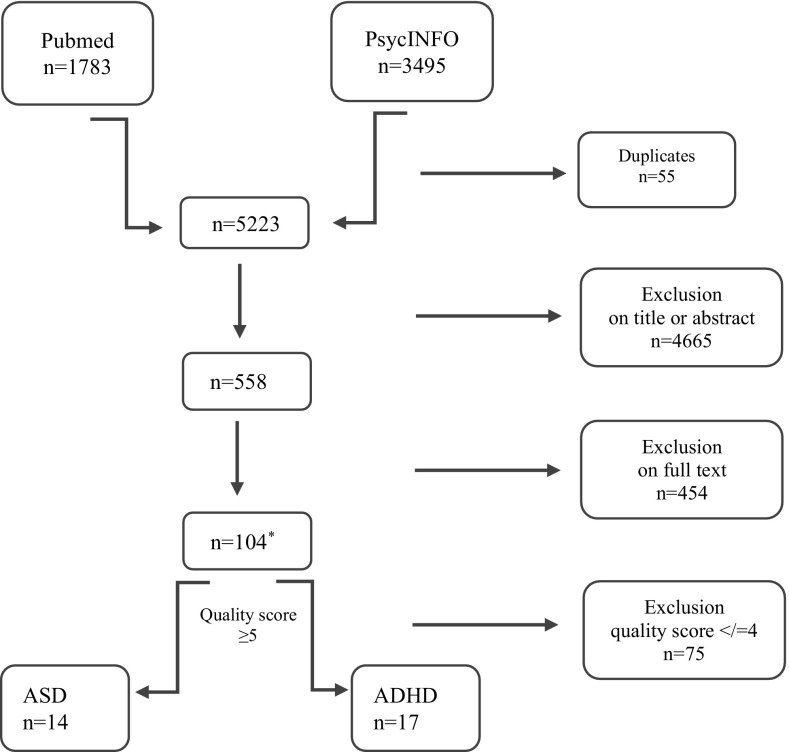
Somatic disorders occur more often in adult psychiatric patients than in the general adult population. However, in child and adolescent psychiatry this association is unclear, mainly due to a lack of integration of existing data. To address this issue, we here present a systematic review on medical comorbidity in the two major developmental disorders autism spectrum disorder (ASD) and attention deficit hyperactivity disorder (ADHD) and formulate clinical recommendations. The literature was searched using the PubMed and PsycINFO databases (2000-1 May 2016) with the keywords "[((child and adolescent) AND (Autism OR Attention Deficit Hyperactivity Disorder* OR ADHD)) AND ("Cardiovascular Diseases" [Mesh] OR "Endocrine System Diseases" [Mesh] OR "Immune System Diseases" [Mesh] OR "Neurobehavioral Manifestations" [Mesh] OR "Gastrointestinal Disorders" [Mesh] OR Somatic OR Autoimmune disease OR Nervous system disease OR Infection OR Infectious disease)]. Two raters independently assessed the quality of the eligible studies. The initial search identified 5278 articles. Based on inclusion and exclusion criteria 104 papers were selected and subsequently subjected to a quality control. This quality was assessed according to a standardized and validated set of criteria and yielded 29 studies for inclusion. This thorough literature search provides an overview of relevant articles on medical comorbidity in ADHD and/or ASD, and shows that medical disorders in these children and adolescents appear to be widespread. Those who work with children with ASD and/or ADHD should be well aware of this and actively promote routine medical assessment. Additionally, case-control studies and population-based studies are needed to provide reliable prevalence estimates. Future studies should furthermore focus on a broader evaluation of medical disorders in children and adolescents with ADHD and/or ASD to improve treatment algorithm in this vulnerable group.
Overview
The claims and statistics of this paper haven’t been checked yet.
Free: it reads the open-access text and checks the first 5 claims that cite a source we can check. Create a free account to check every claim.
Integrity signals
Registry
Cites
Statistics
Figures
Verification
Claims the paper makes
The claims and statistics of this paper haven’t been checked yet.
Free: it reads the open-access text and checks the first 5 claims that cite a source we can check. Create a free account to check every claim.
Claims other papers make about this one
Each is checked against this paper’s own text: does it say what the citing paper says it does?
The source backs part of the claim, not all of it — or backs it for a different population, condition or comparison.
In the citing paper
“The most common co-occurring psychiatric conditions are anxiety disorders, attention-deficit/hyperactivity disorder (ADHD), depressive disorders, and oppositional defiant and conduct disorders (Simonoff et al. 2008), while the most common co-occurring medical conditions include gastro-intestinal problems, sleep difficulties, and seizures (Muskens et al. 2017).”
From The Diagnosis of Autism: From Kanner to DSM-III to DSM-5 and Beyond (2021) · cites this paper as Muskens et al. 2017
Experimental — accuracy not yet measuredThe source backs part of the claim, not all of it — or backs it for a different population, condition or comparison.
In the citing paper
“Co-occurring psychiatric and medical disorders are common among individuals with ASD, with estimates suggesting that 63–78% of individuals with ASD have at least one co-occurring psychiatric condition (Simonoff et al. 2008; Strang et al. 2012), and approximately 10–77% have at least one co-occurring medical condition (Muskens et al. 2017; Betancur 2011).”
From The Diagnosis of Autism: From Kanner to DSM-III to DSM-5 and Beyond (2021) · cites this paper as Muskens et al. 2017
Experimental — accuracy not yet measuredIn the citing paper
“potential pathological sources of pain such as neurologic disorders (seizures and epilepsy) and gastrointestinal problems are known to be frequent in ASD (13, 14).”
From Autism, joint hypermobility-related disorders and pain (2018) · cites this paper as [14]
Self-check
Percentages, sums and reported differences re-computed from the paper’s own numbers.
The self-check needs the paper’s full text.
Citations
Cites
Diagnostic and Statistical Manual of Mental Disorders
American Psychiatric Association (2013) · doi:10.1176/appi.books.9780890425596 · Cited by 116,369
Diagnostic and Statistical Manual of Mental Disorders
Williams, J. B. W., & First, M. (2013) · Encyclopedia of Social Work · doi:10.1093/acrefore/9780199975839.013.104 · Cited by 109,519
(2013) · The Lancet · doi:10.1016/s0140-6736(12)62129-1 · Cited by 3,010
Subclinical Thyroid Disease: Scientific Review and Guidelines for Diagnosis and Management
Surks, M. I., Ortiz, E., Daniels, G. H., Sawin, C. T., Col, N. F., Cobin, R. H., Franklyn, J. A., Hershman, J. M., Burman, K. D., Denke, M. A., et al. (2004) · JAMA · doi:10.1001/jama.291.2.228 · Cited by 1,800 · cited 1×
“For example, adults with hypothyroidism are at risk for mood disorders [6, 7], and patients with schizophrenia and bipolar disorder have an increased risk of developing metabolic syndrome, due to their psychiatric disease as well as the use of antipsychotic drugs [8, 9].”
BackgroundBuie, T., Campbell, D. B., Fuchs, G. J., Furuta, G. T., Levy, J., VandeWater, J., Whitaker, A. H., Atkins, D., Bauman, M. L., Beaudet, A. L., et al. (2010) · Pediatrics · doi:10.1542/peds.2009-1878c · Cited by 872 · cited 2×
“concluded that medical disorders, such as gastro-intestinal problems, occur commonly in individuals with ASD [26].”
BackgroundIsle of Wight Studies, 1964–1974
Rutter, M., Tizard, J., Yule, W., Graham, P., & Whitmore, K. (1976) · Psychological Medicine · doi:10.1017/s003329170001388x · Cited by 812
Konrad, K., & Eickhoff, S. B. (2010) · Human Brain Mapping · doi:10.1002/hbm.21058 · Cited by 670 · cited 1×
“This association between neurologic disorders that affect brain systems and behavioral disorders is in line with other studies examining developmental disorders such as autism, ADHD, and neurobehavioral problems [29, 30].”
ResultAdverse effects of antipsychotic medications.
Muench, J., & Hamer, A. M. (2010) · PubMed · Cited by 589
Talkowski, M. E., Rosenfeld, J. A., Blumenthal, I., Pillalamarri, V., Chiang, C., Heilbut, A., Ernst, C., Hanscom, C., Rossin, E., Lindgren, A. M., et al. (2012) · Cell · doi:10.1016/j.cell.2012.03.028 · Cited by 577
Cadman, D., Boyle, M., Szatmari, P., & Offord, D. R. (1987) · Pediatrics · doi:10.1542/peds.79.5.805 · Cited by 575 · cited 1×
“In conclusion, medical comorbidity in children and adolescents with ASD and ADHD appears to occur in numerous medical areas [27, 70].”
Background
Research works printed but not linked: 1
- Diagnostic and Statistical Manual of Mental Disorders (1994) 4th edition, Text Revision (DSM-IV-TR). American Psychiatric Association, Washington, DC
Cited by
Tateno, M., Teo, A. R., Ukai, W., Kanazawa, J., Katsuki, R., Kubo, H., & Kato, T. A. (2019) · Frontiers in Psychiatry · doi:10.3389/fpsyt.2019.00455 · Cited by 362
The Diagnosis of Autism: From Kanner to DSM-III to DSM-5 and Beyond
Rosen, N. E., Lord, C., & Volkmar, F. R. (2021) · Journal of Autism and Developmental Disorders · doi:10.1007/s10803-021-04904-1 · Cited by 302
Ameis, S. H., Lai, M.-C., Mulsant, B. H., & Szatmari, P. (2020) · Molecular Autism · doi:10.1186/s13229-020-00365-y · Cited by 227
Lai, M.-C., Anagnostou, E., Wiznitzer, M., Allison, C., & Baron-Cohen, S. (2020) · The Lancet Neurology · doi:10.1016/s1474-4422(20)30034-x · Cited by 250
Micai, M., Fatta, L. M., Gila, L., Caruso, A., Salvitti, T., Fulceri, F., Ciaramella, A., D'Amico, R., Del Giovane, C., Bertelli, M., et al. (2023) · Neuroscience & Biobehavioral Reviews · doi:10.1016/j.neubiorev.2023.105436 · Cited by 184
“Medical and neurological CCs, such as sleep problems, epilepsy, sensory impairments, atopy, autoimmune disorders, and obesity, have been reported to be more common in autism than in general population (Al-Beltagi, 2021; Muskens et al., 2017).”
BackgroundChallenges Surrounding the Diagnosis of Autism in Children
Hus, Y., & Segal, O. (2021) · Neuropsychiatric Disease and Treatment · doi:10.2147/ndt.s282569 · Cited by 173
“addition, 60% of the children also exhibited associated food selectivity issues.(56) In a GID study(14) with difficult”
BackgroundCarlsson, T., Molander, F., Taylor, M. J., Jonsson, U., & Bölte, S. (2021) · Development and Psychopathology · doi:10.1017/s0954579420000620 · Cited by 182
“…are heterogeneous, and their complexity is compounded by high comorbidity rates with several conditions (i.e. other psychiatric disorders, neurological and immunological disorders, gastrointestinal disturbances, and congenital anomalies) (Muskens, Velders, & Staal, 2017; Simonoff et al., 2008).”
BackgroundKong, X., Liu, J., Cetinbas, M., Sadreyev, R., Koh, M., Huang, H., Adeseye, A., He, P., Zhu, J., Russell, H., et al. (2019) · Nutrients · doi:10.3390/nu11092128 · Cited by 146
“Patients with autism suffer from many co-occurring GI conditions [55].”
BackgroundLee, V., Albaum, C. S., Modica, P. T., Ahmad, F., Gorter, J. W., Khanlou, N., McMorris, C. A., Lai, J., Harrison, C., Hedley, T., et al. (2021) · Autism Research · doi:10.1002/aur.2616 · Cited by 139
“…navigators, or teachers in providing supports, and to manage high rates of child and adolescent behavioral difficulties (Lai et al., 2019; Muskens et al., 2017), while balancing their own needs (i.e., career) and family (i.e., siblings and other dependents) responsibilities (Shorey et…”
BackgroundMoog, N. K., Cummings, P., Jackson, K., Aschner, J. L., Barrett, E. S., Bastain, T. M., Blackwell, C. K., Enlow, M. B., Breton, C. V., Bush, N. R., et al. (2023) · The Lancet Public Health · doi:10.1016/s2468-2667(23)00025-7 · Cited by 111
“9,10 As a result, whether maternal childhood maltreatment exposure is associated with specific versus broader transdiagnostic increases in disease risk is unknown.”
BackgroundInflammation, Anxiety, and Stress in Attention-Deficit/Hyperactivity Disorder
Saccaro, L. F., Schilliger, Z., Perroud, N. A., & Piguet, C. (2021) · Biomedicines · doi:10.3390/biomedicines9101313 · Cited by 114
(2022) · American Psychiatric Association Publishing eBooks · doi:10.1176/appi.books.9780890425787.x01_neurodevelopmental_disorders · Cited by 107
Sprengers, J. J., van Andel, D. M., Zuithoff, N. P. A., Keijzer-Veen, M. G., Schulp, A. J. A., Scheepers, F. E., Lilien, M. R., Oranje, B., & Bruining, H. (2021) · Journal of the American Academy of Child & Adolescent Psychiatry · doi:10.1016/j.jaac.2020.07.888 · Cited by 97
Cannabinoids for People with ASD: A Systematic Review of Published and Ongoing Studies
Fusar‐Poli, L., Cavone, V., Tinacci, S., Concas, I., Petralia, A., Signorelli, M. S., Díaz‐Caneja, C. M., & Aguglia, E. (2020) · Brain Sciences · doi:10.3390/brainsci10090572 · Cited by 102
Rydzewska, E., Dunn, K., & Cooper, S.-A. (2021) · The British Journal of Psychiatry · doi:10.1192/bjp.2020.167 · Cited by 81
“…no population-based samples, selected samples, retrospective analyses, missing diagnostic criteria for ASD and for incontinence Medical conditions (Muskens et al 2017)30 Systematic review 5 studies on immunological conditions, 5 studies on gastrointestinal problems, 1 study on genitourinary…”
BackgroundBaker, E. J., Stavropoulos, K. K. M., Baker, B. L., & Blacher, J. (2021) · Research in Autism · doi:10.1016/j.rasd.2021.101761 · Cited by 89
“Comorbidities are frequent in the ASD population and become increasingly prevalent during adolescence (Mannion et al., 2013; Muskens et al., 2017).”
BackgroundAutism, joint hypermobility-related disorders and pain
Baeza-Velasco, C., Cohen, D., Hamonet, C., Vlamynck, E., Diaz, L., Cravero, C., Cappe, E., & Guinchat, V. (2018) · Frontiers in Psychiatry · doi:10.3389/fpsyt.2018.00656 · Cited by 78
Comorbidities and quality of life in children with intellectual disability
Reddihough, D. S., Leonard, H., Jacoby, P. A., Kim, R., Epstein, A., Murphy, N., Reid, S., Whitehouse, A., Williams, K. J., & Downs, J. A. (2021) · Child Care Health and Development · doi:10.1111/cch.12873 · Cited by 75
Akmatov, M. K., Ermakova, T., & Bätzing, J. (2021) · Journal of Attention Disorders · doi:10.1177/1087054719865779 · Cited by 68
“Other allergic diseases such as atopic dermatitis have been reported, too (Muskens et al., 2017), and were also observed in our study; the OR of atopic dermatitis was 2.”
BackgroundInfluentialSchmengler, H., Cohen, D., Tordjman, S., & Melchior, M. (2021) · Frontiers in Psychiatry · doi:10.3389/fpsyt.2021.566368 · Cited by 70
“These studies consider often only one neurodevelopmental disorder (e.g., ASD), despite that comorbidity is the rule rather than the exception among neurodevelopmental disorders (99–101).”
West, K., Yin, X., Rutherford, E. M., Wee, B., Choi, J., Chrisman, B., Dunlap, K., Hannibal, R. L., Hartono, W., Lin, M., et al. (2022) · Scientific Reports · doi:10.1038/s41598-022-21327-9 · Cited by 73
Wiwe Lipsker, C., Bölte, S., Hirvikoski, T., Lekander, M., Holmström, L., & Wicksell, R. K. (2018) · Journal of Pain Research · doi:10.2147/jpr.s177534 · Cited by 65
“Medical comorbidities, particularly of immunological, neurological, and gastroenterological character, appear to be common in children with ADHD or ASD.(24,25) Research has also shown that children with chronic medical conditions inversely could present with an increased, but often unrecognized, risk of having a neuro…”
BackgroundInfluentialKittel-Schneider, S., Arteaga-Henriquez, G., Vasquez, A. A., Asherson, P., Banaschewski, T., Brikell, I., Buitelaar, J., Cormand, B., Faraone, S. V., Freitag, C. M., et al. (2022) · Neuroscience & Biobehavioral Reviews · doi:10.1016/j.neubiorev.2021.10.035 · Cited by 54
Autism spectrum disorders and psychiatric comorbidities: a narrative review
Barlattani, T., D’Amelio, C., Cavatassi, A., Luca, D. D., Stefano, R. D., Berardo, A. D., Mantenuto, S., Minutillo, F., Leonardi, V., Renzi, G., et al. (2023) · Giornale italiano di psicopatologia/Journal of psychopathology/Italian journal of psychopathology · doi:10.36148/2284-0249-n281 · Cited by 119
Moloney, M., Hennessy, T., & Doody, O. (2021) · BMJ Open · doi:10.1136/bmjopen-2020-039647 · Cited by 61
Physical health of autistic girls and women: a scoping review
Kassee, C., Babinski, S., Tint, A., Lunsky, Y., Brown, H. K., Ameis, S. H., Szatmari, P., Lai, M.-C., & Einstein, G. (2020) · Molecular Autism · doi:10.1186/s13229-020-00380-z · Cited by 60
Vargason, T., Frye, R. E., McGuinness, D. L., & Hahn, J. (2019) · Autism Research · doi:10.1002/aur.2128 · Cited by 59
“All COC categories were more prevalent in the ASD cohort than in the POP cohort, agreeing with previous studies that have observed an increased prevalence of COCs in ASD [Muskens et al., 2017].”
ResultDevelopmental Trajectories of Feeding Problems in Children with Autism Spectrum Disorder
Peverill, S., Smith, I. M., Duku, E., Szatmari, P., Mirenda, P., Vaillancourt, T., Volden, J., Zwaigenbaum, L., Bennett, T., Elsabbagh, M., et al. (2019) · Journal of Pediatric Psychology · doi:10.1093/jpepsy/jsz033 · Cited by 52
Autism Spectrum Disorder and Medical Cannabis: Review and Clinical Experience
Mostafavi, M., & Gaitanis, J. N. (2020) · Seminars in Pediatric Neurology · doi:10.1016/j.spen.2020.100833 · Cited by 63
Ramirez-Celis, A., Croen, L., Yoshida, C. K., Alexeeff, S., Schauer, J. D., Yolken, R. H., Ashwood, P., & de Water, J. V. (2022) · Molecular Psychiatry · doi:10.1038/s41380-022-01633-4 · Cited by 55
A Metabolomics Approach to Screening for Autism Risk in the Children's Autism Metabolome Project
Smith, A. M., Natowicz, M. R., Braas, D., Ludwig, M. A., Ney, D. M., Donley, E. L. R., Burrier, R. E., & Amaral, D. G. (2020) · Autism Research · doi:10.1002/aur.2330 · Cited by 53
Dell’Osso, L., Massoni, L., Battaglini, S., Cremone, I. M., Carmassi, C., & Carpita, B. (2022) · Annals of General Psychiatry · doi:10.1186/s12991-022-00390-6 · Cited by 48
“On the other hand, the association between autonomic instability and psychiatric symptoms like depression, anxiety and sleep disorders was previously stressed in the literature [57, 58].”
BackgroundMcDonnell, C. G., DeLucia, E. A., Hayden, E. P., Anagnostou, E. A., Nicolson, R., Kelley, E. A., Georgiades, S., Liu, X., & Stevenson, R. A. (2019) · Journal of Autism and Developmental Disorders · doi:10.1007/s10803-019-04320-6 · Cited by 49
Molecular Alterations of the Endocannabinoid System in Psychiatric Disorders
Navarro, D., Gasparyan, A., Navarrete, F., Torregrosa, A. B., Rubio, G., Marín, M., Acosta, G. B., García‐Gutiérrez, M. S., & Manzanares, J. (2022) · International Journal of Molecular Sciences · doi:10.3390/ijms23094764 · Cited by 53
“Medical comorbidities are also highly prevalent among ASD subjects [342].”
BackgroundCo-occurring conditions in children with Down syndrome and autism: a retrospective study
Spinazzi, N. A., Santoro, J. D., Pawlowski, K. G., Anzueto, G., Howe, Y. J., Patel, L., & Baumer, N. (2023) · Journal of Neurodevelopmental Disorders · doi:10.1186/s11689-023-09478-w · Cited by 49
Wang, H., Lee, P. M. Y., Zhang, J., Svendsen, K., Li, F. R., & Li, J. (2023) · BMC Medicine · doi:10.1186/s12916-023-02747-4 · Cited by 46
“The most prevalent comorbid conditions within those with intellectual disability were ADHD and ASD, which are risk factors for CVD [51, 52].”
BackgroundListening to young people with autism: learning from researcher experiences
Scott-Barrett, J., Cebula, K., & Florian, L. (2019) · International Journal of Research & Method in Education · doi:10.1080/1743727x.2018.1462791 · Cited by 36
“Mental health conditions, medical complications (such as epilepsy), and intellectual disabilities, can, and frequently do, co-occur with autism (Blackmon et al. 2016; Levy, Mandell, and Schultz 2009; Muskens, Velders, and Staal 2017).”
BackgroundSchott, W., Tao, S., & Shea, L. (2021) · Autism Research · doi:10.1002/aur.2644 · Cited by 46
“Children on the spectrum have higher prevalence of several conditions, ranging from psychiatric disorders (anxiety, depression and ADHD) to physical health conditions, such as gastrointestinal disorders, sleep disorders, and obesity (Devnani & Hegde, 2015; McElhanon et al., 2014; Muskens et al., 2017; Stevens et al.,…”
BackgroundRetained Primitive Reflexes and Potential for Intervention in Autistic Spectrum Disorders
Melillo, R. J., Leisman, G., Machado, C., Machado-Ferrer, Y., Chinchilla-Acosta, M., Kamgang, S., Melillo, T., & Carmeli, E. (2022) · Frontiers in Neurology · doi:10.3389/fneur.2022.922322 · Cited by 48
“Sometimes, we observe that fine motor coordination can also be affected (21, 174, 175).”
BackgroundProteomic Investigations of Autism Brain Identify Known and Novel Pathogenetic Processes
Abraham, J. R., Szoko, N., Barnard, J., Rubin, R. A., Schlatzer, D., Lundberg, K. C., Li, X., & Natowicz, M. R. (2019) · Scientific Reports · doi:10.1038/s41598-019-49533-y · Cited by 45
Vargason, T., McGuinness, D. L., & Hahn, J. (2019) · Journal of Autism and Developmental Disorders · doi:10.1007/s10803-018-3743-2 · Cited by 38
The use of iPSC technology for modeling Autism Spectrum Disorders
Russo, F. B., Brito, A., de Freitas, A. M., Castanha, A. G., Freitas, B. C. D., & Beltrão-Braga, P. C. B. (2019) · Neurobiology of Disease · doi:10.1016/j.nbd.2019.104483 · Cited by 43
Arteaga-Henríquez, G., Gisbert, L., & Ramos‐Quiroga, J. A. (2023) · CNS Drugs · doi:10.1007/s40263-023-00993-x · Cited by 43
“Individuals with ASD often display abnormal immune responses [10, 11], and are also characterized by a higher incidence of comorbid immune-mediated conditions, such as diabetes mellitus [12], psoriasis [13], autoimmune thyroiditis [14], and/or allergy [15].”
BackgroundThe role of microbiota in autism spectrum disorders
Campion, D., Ponzo, P., Alessandria, C., Saracco, G. M., & Balzola, F. A. (2018) · Minerva Gastroenterologica e Dietologica · doi:10.23736/s1121-421x.18.02493-5 · Cited by 41
“associated with more severe behavioral symptoms in the affected child.(4)”
BackgroundWeight Management in Primary Care for Children With Autism: Expert Recommendations
Curtin, C., Hyman, S. L., Boas, D. D., Hassink, S. G., Broder‐Fingert, S., Ptomey, L. T., Gillette, M. L. D., Fleming, R. K., Must, A., & Bandini, L. G. (2020) · PEDIATRICS · doi:10.1542/peds.2019-1895p · Cited by 42
Fucà, E., Guerrera, S., Valeri, G., Casula, L., Novello, R. L., Menghini, D., & Vicari, S. (2023) · Journal of Clinical Medicine · doi:10.3390/jcm12020677 · Cited by 42
Ahnemark, E., Schiena, M. D., Fredman, A.-C., Medin, E., Söderling, J. K., & Ginsberg, Y. (2018) · BMC Psychiatry · doi:10.1186/s12888-018-1803-y · Cited by 47
“Optimum care for patients with ADHD may involve an integrated and multidisciplinary approach for identifying and treating co-occurring psychiatric and somatic disorders [39].”
BackgroundExploring Human–Companion Animal Interaction in Families of Children with Autism
Carlisle, G. K., Johnson, R. A., Wang, Z., Brosi, T., Rife, E. M., & Hutchison, A. (2020) · Journal of Autism and Developmental Disorders · doi:10.1007/s10803-020-04390-x · Cited by 43
“2016), medical conditions (Muskens et al. 2017), sleep and behavioral problems (Mazurek and Sohl 2016), and atypical sensory processing (Suarez 2012).”
BackgroundCarta, A., Fucà, E., Guerrera, S., Napoli, E., Valeri, G., & Vicari, S. (2020) · Frontiers in Psychology · doi:10.3389/fpsyg.2020.00861 · Cited by 40
Somatic burden of attention‐deficit/hyperactivity disorder across the lifecourse
Libutzki, B., Neukirch, B., Reif, A., & Hartman, C. A. (2024) · Acta Psychiatrica Scandinavica · doi:10.1111/acps.13694 · Cited by 41
Kong, X., Liu, J., Liu, K., Koh, M., Tian, R., Hobbie, C., Fong, M., Chen, Q., Zhao, M., Budjan, C., et al. (2020) · Journal of Autism and Developmental Disorders · doi:10.1007/s10803-020-04524-1 · Cited by 40
Carlisle, G. K., Johnson, R. A., Wang, Z., Bibbo, J. L., Cheak‐Zamora, N., & Lyons, L. A. (2020) · Journal of Pediatric Nursing · doi:10.1016/j.pedn.2020.11.011 · Cited by 39
Shahidullah, J. D., Azad, G. F., Mezher, K. R., McClain, M. B., & McIntyre, L. L. (2018) · Clinical Pediatrics · doi:10.1177/0009922818774344 · Cited by 36
“neurology), mental (eg, attention-deficit/hyperactivity disorder [ADHD], anxiety, and depression), and cognitive (eg, intellectual disability) functioning.(7,8) The multifaceted nature of ASD speaks to the need for involvement from providers from multiple disciplines to be involved in a child’s care.”
BackgroundCasanova, M., & Widman, C. J. (2021) · Evidence & Policy · doi:10.1332/174426421x16142770974065 · Cited by 35
Qu, X., Lee, L., Ladd‐Acosta, C., Hong, X., Ji, Y., Kalb, L. G., Volk, H. E., & Wang, X. (2022) · Autism Research · doi:10.1002/aur.2680 · Cited by 35
“NDs are highly comorbid conditions (Levy et al., 2010; Muskens et al., 2017).”
BackgroundMcIntyre, L. L., Santiago, R. T., Sutherland, M., & Garbacz, S. A. (2023) · School Psychology · doi:10.1037/spq0000531 · Cited by 30
The Future of Disentangling the Heterogeneity of Autism With Neuroimaging Studies
Duan, X., Shan, X., Uddin, L. Q., & Chen, H. (2024) · Biological Psychiatry · doi:10.1016/j.biopsych.2024.08.008 · Cited by 31
Physical and Pharmacologic Restraint in Hospitalized Children With Autism Spectrum Disorder
Calabrese, M. E. A., Sideridis, G. D., & Weitzman, C. C. (2023) · PEDIATRICS · doi:10.1542/peds.2023-062172 · Cited by 29
Hegvik, T., Chen, Q., Kuja‐Halkola, R., Klungsøyr, K., Butwicka, A., Lichtenstein, P., Almqvist, C., Faraone, S. V., Haavik, J., & Larsson, H. (2021) · International Journal of Epidemiology · doi:10.1093/ije/dyab151 · Cited by 28
Challenges in the Diagnosis and Management of Pain in Individuals with Autism Spectrum Disorder
Liu, J., Chen, L. L., Shen, S., Mao, J., Lopes, M. S. O. C., Liu, S., & Kong, X. (2020) · Review Journal of Autism and Developmental Disorders · doi:10.1007/s40489-020-00199-7 · Cited by 33
“ASD is associated with many systemic comorbidities, such as gastrointestinal (GI) dysfunction (9–91%) (Mannion and Leader 2013), autoimmune conditions such as allergies (approximately 20%) (Muskens et al. 2017), and sensory dysfunctions (76%) (Klintwall et al.”
BackgroundHou, Y., Yu, L., Liu, D., Wilson, E., Wu, X., Moreira, J. P., Mujica, B. F., Mukhopadhyay, E. S., Novotney, A., & Payne, J. M. (2024) · Journal of the American Academy of Child & Adolescent Psychiatry · doi:10.1016/j.jaac.2024.09.011 · Cited by 26
Comorbidities Affecting Children with Autism Spectrum Disorder: A Retrospective Chart Review
Burns, J., Phung, R. R., McNeill, S., Hanlon‐Dearman, A., & Ricci, M. F. (2023) · Children · doi:10.3390/children10081414 · Cited by 30
“Rates of comorbidities in other studies have varied based on the type of comorbidities included but range from about 10 to 77% [13,16].”
BackgroundAbraham, J. R., Szoko, N., & Natowicz, M. R. (2019) · Advances in experimental medicine and biology · doi:10.1007/978-3-030-05542-4_12 · Cited by 27
The ASKSP Revised (ASKSP-R) as a Measure of ASD Knowledge for Professional Populations
McClain, M. B., Harris, B., Haverkamp, C. R., Golson, M. E., & Schwartz, S. (2019) · Journal of Autism and Developmental Disorders · doi:10.1007/s10803-019-04321-5 · Cited by 26
Harris, J. F., Gorman, L. P., Doshi, A., Swope, S., & Page, S. D. (2020) · Autism · doi:10.1177/1362361320974491 · Cited by 26
“Medical conditions may include gastrointestinal problems, dietary issues, or seizures as well as obesity with subsequent cardiovascular and metabolic involvement (Croen et al., 2015; Davignon et al., 2018; Muskens et al., 2017).”
BackgroundProsperi, M., Santocchi, E., Muratori, F., Narducci, C., Calderoni, S., Tancredi, R., Morales, M. A., & Guiducci, L. (2019) · BMC Pediatrics · doi:10.1186/s12887-019-1841-8 · Cited by 26
Lebeña, A., Faresjö, Å., Faresjö, T., & Ludvigsson, J. (2023) · BMC Psychiatry · doi:10.1186/s12888-023-05298-3 · Cited by 24
“The phenotypes of neurodevelopmental disorders (NDDs) are heterogeneous, and their complexity is compounded by high comorbidity rates with several conditions (i.e., gastrointestinal disturbances, congenital anomalies, and immunological disorders) [7].”
BackgroundGaléra, C., Cortese, S., Orri, M., Collet, O. A., van der Waerden, J. E. B., Melchior, M., Boivin, M., Tremblay, R. E., & Côté, S. M. (2021) · Molecular Psychiatry · doi:10.1038/s41380-021-01357-x · Cited by 23
Targeting Shank3 deficiency and paresthesia in autism spectrum disorder: A brief review
Huang, M., Qi, Q., & Xu, T. (2023) · Frontiers in Molecular Neuroscience · doi:10.3389/fnmol.2023.1128974 · Cited by 24
“org ASD and control comorbidities (Aman, 2004; Muskens et al., 2017).”
BackgroundSchool-Clinic Care Coordination for Youth with ASD: A National Survey of School Psychologists
McClain, M. B., Shahidullah, J. D., Mezher, K. R., Haverkamp, C. R., Benallie, K. J., & Schwartz, S. (2019) · Journal of Autism and Developmental Disorders · doi:10.1007/s10803-019-03985-3 · Cited by 22
Zdankiewicz-Ścigała, E., Ścigała, D., Sikora, J., Kwaterniak, W., & Longobardi, C. (2021) · PLOS ONE · doi:10.1371/journal.pone.0255460 · Cited by 21
“[46] conducted a meta-analysis to verify the prevalence of somatic disorders in people with attention deficit hyperactivity disorder (ADHD) and ASD.”
BackgroundRobledo-Castro, C., Castaño, P. R. L., & Bonilla-Santos, G. (2023) · Journal of Attention Disorders · doi:10.1177/10870547231187164 · Cited by 23
“This condition frequently shows comorbidity with other clinical alterations such as behavioral, learning, and anxiety disorders (Muskens et al., 2017; Zuluaga-Valencia & Fandiño-Tabares, 2017).”
BackgroundFoster Care Involvement Among Youth With Intellectual and Developmental Disabilities
Shea, L., Villodas, M. L., Ventimiglia, J. C., Wilson, A. B., & Cooper, D. (2024) · Archives of Pediatrics and Adolescent Medicine · doi:10.1001/jamapediatrics.2023.6580 · Cited by 21
Advances in the etiology and neuroimaging of children with attention deficit hyperactivity disorder
Shen, F., & Zhou, H. (2024) · Frontiers in Pediatrics · doi:10.3389/fped.2024.1400468 · Cited by 27
Lebeña, A., Faresjö, Å., Jones, M. P., Bengtsson, F., Faresjö, T., & Ludvigsson, J. (2024) · Scientific Reports · doi:10.1038/s41598-024-65067-4 · Cited by 24
“Common immune-mediated diseases such as asthma and eczema have repeatedly been linked to ADHD 46–48 , similarly, ADHD has been related to autoimmune diseases, such as celiac disease, ulcerative colitis, psoriasis, ankylosing spondylitis and T1D 47,49 .”
BackgroundShulman, C., Rice, C. E., Morrier, M. J., & Esler, A. (2020) · Child and Adolescent Psychiatric Clinics of North America · doi:10.1016/j.chc.2020.01.002 · Cited by 22
Höfer, J., Hoffmann, F., Dörks, M., Kamp‐Becker, I., Küpper, C. S., Poustka, L., Roepke, S., Roessner, V., Stroth, S., Wolff, N., et al. (2021) · Journal of Autism and Developmental Disorders · doi:10.1007/s10803-021-04955-4 · Cited by 25
Kong, X., Liu, J., Chien, T., Batalden, M., & Hirsh, D. A. (2019) · Journal of Autism and Developmental Disorders · doi:10.1007/s10803-019-03922-4 · Cited by 19
Differentiating between ADHD and ASD in childhood: some directions for practitioners
Rommelse, N. N. J., Visser, J. C., & Hartman, C. A. (2018) · European Child & Adolescent Psychiatry · doi:10.1007/s00787-018-1165-5 · Cited by 21
Riccio, M. P., Marino, M., Garotti, R., Tassiello, A., Maffettone, V., Pezone, M., & Bravaccio, C. (2025) · Frontiers in Psychiatry · doi:10.3389/fpsyt.2025.1587454 · Cited by 19
Mukhamedshina, Y. O., Абдулахатовна, Ф. Р., Nigmatullina, I., Rutland, C. S., & Vasina, V. (2022) · BMC Medical Education · doi:10.1186/s12909-021-03095-8 · Cited by 23
Ghanouni, P., & Seaker, L. (2021) · Journal of Autism and Developmental Disorders · doi:10.1007/s10803-021-05159-6 · Cited by 21
Pujalte, G. G. A., Narducci, D. M., Smith, M. S., King, R. L., Logan, K., Callender, S. S., Liebman, C., Kane, S. F., Israel, M., Wolf, S. F., et al. (2023) · Clinical Journal of Sport Medicine · doi:10.1097/jsm.0000000000001152 · Cited by 20
Marazziti, D., Diep, P.-T., Carter, C. S., & Carbone, M. G. (2022) · Current Medicinal Chemistry · doi:10.2174/0929867329666220727120646 · Cited by 19
A 16-Year Cohort Analysis of Autism Spectrum Disorder-Associated Morbidity in a Pediatric Population
Cawthorpe, D. (2018) · Frontiers in Psychiatry · doi:10.3389/fpsyt.2018.00635 · Cited by 18
Catalá-López, F., Ridao-López, M., Núñez-Beltrán, A., Gènova-Maleras, R., Alonso‐Arroyo, A., Aleixandre‐Benavent, R., Catalá, M. A., & Tabarés‐Seisdedos, R. (2019) · Systematic Reviews · doi:10.1186/s13643-019-0967-y · Cited by 21
Gubbiotti, M., Balboni, G., Bini, V., Elisei, S., Bedetti, C., Marchiafava, M., & Giannantoni, A. (2019) · Neurourology and Urodynamics · doi:10.1002/nau.24081 · Cited by 16
Georgoula, C., Ferrín, M., Pietraszczyk-Kędziora, B., Hervas, A., Marret, S., Oliveira, G., Rosier, A., Crutel, V., Besse, E., Severo, C. A., et al. (2022) · Child Psychiatry & Human Development · doi:10.1007/s10578-022-01328-5 · Cited by 16
Celiac disease in autism spectrum disorder: data from an Italian child cohort
Zambrano, S., Parma, B., Morabito, V., Borini, S., Romaniello, R., Molteni, M., Mani, E., & Selicorni, A. (2023) · The Italian Journal of Pediatrics/Italian journal of pediatrics · doi:10.1186/s13052-023-01484-x · Cited by 15
Association between COVID-19 risk-mitigation behaviors and specific mental disorders in youth
Conway, K. P., Bhardwaj, K., Michel, E., Paksarian, D., Nikolaidis, A., Kang, M., Merikangas, K. R., & Milham, M. P. (2023) · Child and Adolescent Psychiatry and Mental Health · doi:10.1186/s13034-023-00561-7 · Cited by 14
“Children and adolescents with autism spectrum disorders are at increased risk of several medical conditions including immunological, gastroenterological, neurological, and other medical complaints [23].”
BackgroundLeisman, G., & Melillo, R. J. (2025) · Journal of Paediatrics and Child Health · doi:10.1111/jpc.70053 · Cited by 15
“The most frequent childhood neuro-behavioral disorder comorbidities are developmental coordination disorder (DCD), “clumsiness,” or motor incoordination [59].”
Kumbul, Y. Ç., Işık, Ü., Kılıç, F., Sivrice, M. E., & Akın, V. (2022) · Noise and Health · doi:10.4103/nah.nah_75_21 · Cited by 15
Jaskiw, G. E., Obrenovich, M. E., & Donskey, C. J. (2019) · Psychopharmacology · doi:10.1007/s00213-019-05267-3 · Cited by 13
Lin, C., Lin, W., Chou, I., Lee, I., & Hong, S. (2019) · Frontiers in Pediatrics · doi:10.3389/fped.2019.00452 · Cited by 13
Excess Mortality in Individuals with Autism Spectrum Disorder: A Population-Based Cohort Study
Huang, Y., Wu, S., Lee, M., Chen, Y., Yang, Y., Kuo, T., Hung, T., Dewey, M. E., Stewart, R. J., & Chen, V. C. (2024) · Neuropsychiatric Disease and Treatment · doi:10.2147/ndt.s437766 · Cited by 13
Coppola, S., Nocerino, R., Oglio, F., Golia, P., Falco, M. D., Riccio, M. P., Carucci, L., Rea, T., Simeone, S., Garotti, R., et al. (2024) · The Italian Journal of Pediatrics/Italian journal of pediatrics · doi:10.1186/s13052-024-01794-8 · Cited by 13
Eshraghi, A. A., Memis, I., Wang, F., White, I., Furar, E., Mittal, J., Moosa, M., Atkins, C. M., & Mittal, R. (2022) · PLoS ONE · doi:10.1371/journal.pone.0275937 · Cited by 14
Cheak‐Zamora, N., Petroski, G. F., Manna, A. L., Beversdorf, D. Q., & Farmer, J. E. (2020) · Journal of Autism and Developmental Disorders · doi:10.1007/s10803-020-04690-2 · Cited by 12
Bürki, L., Höfer, J., Kamp‐Becker, I., Poustka, L., Roessner, V., Stroth, S., Wolff, N., Hoffmann, F., & Bachmann, C. (2021) · Research in Developmental Disabilities · doi:10.1016/j.ridd.2021.103931 · Cited by 13
Peisch, V. D., & Arnett, A. B. (2022) · Development and Psychopathology · doi:10.1017/s095457942200116x · Cited by 11
Metadata
- Authors
- Muskens, J. B., Velders, F. P., & Staal, W. G.
- Affiliations
- Radboud University Medical Center (NL)
- University Medical Center Utrecht (NL)
- Corresponding author
- Muskens, Jet B.
- Venue
- European Child & Adolescent Psychiatry
- Published
- 2017-07-03
- Volume
- 26
- Issue
- 9
- Pages
- 1093-1103
- ISSN
- 1018-8827 (ISSN-L)
- 1435-165X
- PMC
- PMC5591355
- OpenAlex
- W2730169795
- Semantic Scholar
- 3a8ea1df741372156a9071ebd4916a41ba0c8e81
- Cited by
- 232
- References
- 68
- Citations by year
- 2026: 13 · 2025: 21 · 2024: 27 · 2023: 37 · 2022: 23 · 2021: 35 · 2020: 31 · 2019: 28 · 2018: 15 · 2017: 2
- FWCI
- 2.32
- Type
- journal article
- Language
- en
- Open access
- hybrid
- doi.org
- Locations
- European Child & Adolescent Psychiatry (publishedVersion, cc-by)
- PubMed Central (publishedVersion, cc-by)
- PubMed (publishedVersion)
- Utrecht University Repository (Utrecht University) (submittedVersion, other-oa)
- Radboud Repository (Radboud University) (submittedVersion)
- Radboud Repository (Radboud University) (submittedVersion, other-oa)
- Topics
- Life Sciences › Neuroscience › Cognitive Neuroscience › Autism Spectrum Disorder Research
- Health Sciences › Medicine › Psychiatry and Mental health › Attention Deficit Hyperactivity Disorder
- Health Sciences › Medicine › Psychiatry and Mental health › Child Nutrition and Feeding Issues
- Keywords
- comorbidities, autism spectrum disorder, attention deficit hyperactivity disorder, children and adolescents, somatic diseases, cardiovascular disease, endocrine disorders, immune system diseases, gastrointestinal diseases, autoimmune disease, infectious diseases, prevalence estimates
- MeSH terms
- Autism Spectrum Disorder, Adolescent, Attention Deficit Disorder with Hyperactivity, Child, Child, Preschool, Cross-Sectional Studies, Female, Humans, Male, Comorbidity
About these checks
Registry, retraction, Cites and statistics results are computed, not judged, with one exception: a printed reference that no index lists is read once by a model before it counts as a citation error. Claims are extracted by a model and kept only when their quote appears verbatim in the text; each cited source is then checked, with a model’s help, for whether it says what the claim relies on. Those verdicts can be wrong — read the claim’s quote and the cited source before relying on one.
Statistics and arithmetic are recomputed, not judged.
Confidence bands are shown only for fields calibrated on our annotated test set. None is calibrated yet, so no band is shown.
What counts as a claim ›How we measure confidence ›How we check this ›
Are you an author, or do you see a problem with this page? Request a review
Data sources
Bibliographic data: Semantic Scholar, OpenAlex, Crossref.
Contains information from the Semantic Scholar Academic Graph Datasets, made available under the ODC Attribution License (ODC-BY 1.0).
Semantic Scholar’s data is described in: Kinney, R., et al. (2023). The Semantic Scholar Open Data Platform. arXiv:2301.10140.
