

Mediators of outcome in adolescent psychotherapy and their implications for theories and mechanisms of change: a systematic review
Open accessThe DOI matches its Crossref record; 93 of the 95 references it cites were found in a registry or an index; 20 of the 43 sources its claims cite were checked for support.
Abstract
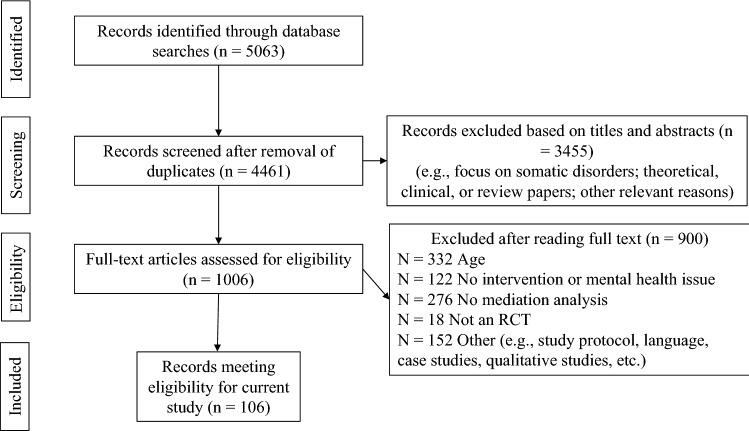
Psychotherapeutic treatment of adolescents requires age-specific approaches and thus plausibly also involves different change mechanisms than adult psychotherapy. To guide further research and improve therapeutic outcomes for adolescents, we reviewed all RCTs investigating mechanisms of change in the psychological treatment of adolescents to identify the most promising age-, disorder- or treatment-specific mediators. Following the preferred reporting items for systematic reviews (PRISMA), 106 studies were included that reported 252 statistical mediation tests assessed with 181 different measures. Most often studied and significant mediators were cognitive, followed by family-related, and behavioral variables. Several mediators were identified to be promising for future investigations: changes in negative thoughts, dysfunctional beliefs and metacognitive skills; family functioning and parenting skills; as well as successful engagement in therapy activities and increased impulse control. Symptom change during therapy was least often a mediator for other therapeutic changes. Relational and emotional mediators were largely understudied, whereas peer-influence appeared a promising mediator for intervention outcomes. Adolescence-specific mediators were most commonly investigated. Majority of studied mediators were not disorder-specific. There was a tendency to mainly test change mechanisms of specific theoretical models without considering other possible change theories. Further, virtually no studies fulfilled all criteria for rigorously investigating mediation and only nine were classified with an overall good study quality. While bearing in mind the current limitations in study designs, methodological rigor and reporting, there appears to be substantial evidence for transdiagnostic age-specific change models in the psychological treatment of adolescents. For future research, need for consensus on a core set of transdiagnostic and transtheoretical mediators and measures is highlighted. These should address likely core mechanisms of change, as well as take into account age-relevant developmental challenges and biological markers.
Overview
CoChat Summary
TL;DR
This systematic review of 106 RCTs and 252 mediation tests in adolescent psychotherapy found cognitive, family-related, and behavioral mediators most often studied and significant, with promising candidates including negative thoughts, dysfunctional beliefs, metacognitive skills, family functioning, parenting skills, therapy engagement, and impulse control. Evidence was mostly moderate or insufficient, relational and emotional mediators were understudied, and few studies met rigorous mediation criteria.
Key findings
- Across 106 RCTs, 252 mediation tests, and 181 different measures, the most frequently studied and significant mediators were cognitive, followed by family-related and behavioral variables; symptom change during therapy was least often a mediator for other therapeutic changes.
- Promising mediators for future research were changes in negative thoughts, dysfunctional beliefs, and metacognitive skills; family functioning and parenting skills; and successful engagement in therapy activities and increased impulse control.
- Relational and emotional mediators were largely understudied, although peer influence appeared promising; adolescence-specific mediators were most commonly investigated, and the majority of studied mediators were not disorder-specific.
- No mediator category had strong evidence; moderate evidence varied by diagnosis, and only 9 of 106 studies (8.8%) were classified as having both relatively low risk of bias and proper mediation-testing rigor.
Methods
- PRISMA systematic review registered in Prospero (CRD42020177535), searching MEDLINE and PsycINFO from inception to March 23, 2022, for RCTs of psychosocial or psychotherapeutic interventions in adolescents aged 10–19 with mental disorders or psychological difficulties and a formal statistical mediation test.
- 106 studies were included; data were extracted on setting, population, intervention/comparator, outcomes, mediators, mediation analysis type, and risk of bias.
- Mediators were categorized by qualitative content analysis into cognitive, family-related, behavioral, therapy-related, relational, and emotional domains; evidence was graded using an adapted Best Evidence Synthesis Rating System, and study quality used Kazdin/Lemmens criteria plus the Mixed Methods Appraisal Tool.
Limitations
- Stated by the authors: studies were primarily from Western industrialized countries, limiting representativity; gender balance was good but gender-specific mediator conclusions could not be drawn; heterogeneity and no agreed mediation effect size prevented aggregated effect-size estimation and funnel-plot/publication-bias testing, and the file-drawer problem was difficult to evaluate.
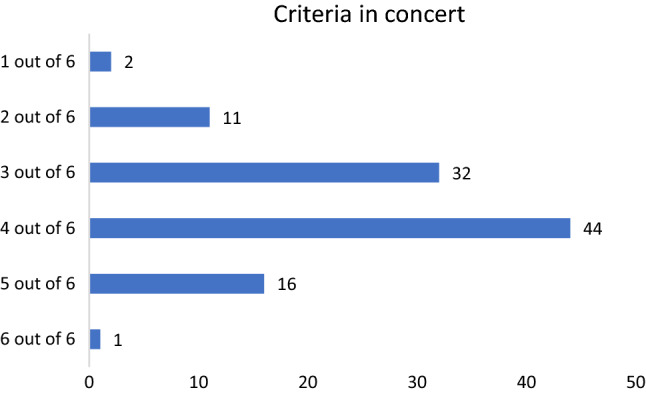
- Stated by the authors: virtually all studies had shortcomings against Kazdin’s criteria; only one study fulfilled all six criteria, 64.7% violated the temporal criterion, 33 studies did not report a specific indirect-effect estimation method, and measures were mostly self-report and highly heterogeneous.
- Evident from the text: no biological mediator was identified; IPT, third-wave therapies, and psychodynamic therapy were strikingly understudied; many mediator categories had too few studies for strong conclusions, and findings were likely confounded by researchers mainly testing mediators aligned with their own therapeutic models.
Model-written summary. Check it against the paper before relying on it.
Integrity signals
Registry
Cites
Statistics
Figures
Verification
Claims the paper makes
17 Valid · 2 Not valid · 15 Not checked · 106 Own results and interpretations
Every source the paper cites for this claim was checked and supports it.
In the paper
“However, even in CBT the evidence base is inconclusive”
§ Mediators of outcome in adolescent psychotherapy and their implications for theories and mechanisms of change: a systematic review > Introduction > Diagnosis-specific mediators in children and adolescents
What the sources say
- Supportedcites [28] Lemmens LHJM, Müller VNLS, Arntz A, Huibers MJH (2016) Mechanisms of change in psychotherapy for depression: An empirical update and evaluation of research aimed at identifying psychological mediators. Clin Psychol Rev 50:95–107. 10.1016/j.cpr.2016.09.004 27770716 source
The Study characteristics and results section reports support for partial mediation in 63.3% of cases examining CBT-specific mediators, rather than consistent support. The Discussion says none of the identified studies met all requirements for testing treatment mediation, supporting the characterization of the mechanisms-of-change evidence as inconclusive. (LLM, conf=0.91)
plain- Asserted: passes — The authors put it forward as true.
- Checkable: passes — It can be checked against evidence.
- Load-bearing: passes — The paper’s conclusions depend on it.
- Based: passes — The paper gives a reason why it holds.
- Supported
The cited sources support only part of this claim — read each source’s verdict below.
In the paper
“and it appears only one original study from 21 reviews directly manipulated a mediator variable in an experimental design so far [37].”
§ Mediators of outcome in adolescent psychotherapy and their implications for theories and mechanisms of change: a systematic review > Introduction > Diagnosis-specific mediators in children and adolescents
What the sources say
- Partly supportedcites [37] Hirsch CR, Krahé C, Whyte J, Loizou S, Bridge L, Norton S, Mathews A (2018) Interpretation training to target repetitive negative thinking in generalized anxiety disorder and depression. J Consult Clin Psychol 86(12):1017–1030. 10.1037/ccp0000310 30507227 sourceExperimental — accuracy not yet measured
The Design section describes an original experiment using interpretation-bias training, and the mediation-results section reports that measured interpretation bias partially mediated several outcomes. The paper does not establish that this was the only such study among 21 reviews; that count and exclusivity are unsupported by our copy. (LLM, conf=0.87)
hedged- Asserted: passes — The authors put it forward as true.
- Checkable: passes — It can be checked against evidence.
- Load-bearing: passes — The paper’s conclusions depend on it.
- Based: passes — The paper gives a reason why it holds.
- Partly supported
The cited sources support only part of this claim — read each source’s verdict below.
In the paper
“yet the evidence base is even smaller in psychotherapy for children and adolescents.”
§ Mediators of outcome in adolescent psychotherapy and their implications for theories and mechanisms of change: a systematic review > Introduction
What the sources say
- Partly supportedcites [14] Cuijpers P, Reijnders M, Huibers MJH (2019) The role of common factors in psychotherapy outcomes. Annu Rev Clin Psychol 15:207–231. 10.1146/annurev-clinpsy-050718-095424 30550721 sourceExperimental — accuracy not yet measured
The Introduction (page unavailable) says scientific knowledge about psychotherapy’s mechanisms of change is limited, and Recommendations for Future Research (page unavailable) says few studies use the methods needed to establish how those mechanisms work. The paper does not say that the evidence base is even smaller for children and adolescents than for other populations; searches for those terms found no relevant discussion. (LLM, conf=0.83)
plain- Asserted: passes — The authors put it forward as true.
- Checkable: passes — It can be checked against evidence.
- Load-bearing: passes — The paper’s conclusions depend on it.
- Based: passes — The paper gives a reason why it holds.
- Partly supported
Every source the paper cites for this claim was checked and supports it.
In the paper
“a recent review on brain-related functional mediators in adult psychotherapy failing to identify any studies on them [89]”
§ Mediators of outcome in adolescent psychotherapy and their implications for theories and mechanisms of change: a systematic review > Discussion
What the sources say
- Supportedcites [89] Carey TA, Griffiths R, Dixon JE, Hines S (2020) Identifying functional mechanisms in psychotherapy: a scoping systematic review. Front Psych 11:291. 10.3389/fpsyt.2020.00291 PMC7180170 32362848 source
The Discussion says the review sought functional mechanisms connected to known neurobiological brain processes and found no studies meeting that question. The Results report that no studies were retained after full-text review. This supports the claim about studies of brain-related functional mediators, not a broader claim that no brain-related psychotherapy studies exist. (LLM, conf=0.92)
plain- Asserted: passes — The authors put it forward as true.
- Checkable: passes — It can be checked against evidence.
- Load-bearing: passes — The paper’s conclusions depend on it.
- Based: passes — The paper gives a reason why it holds.
- Supported
The cited sources support only part of this claim — read each source’s verdict below.
In the paper
“The main limitation shared by virtually all the studies in terms of study design was a lack of clear experimental manipulation of the mediator [75].”
§ Mediators of outcome in adolescent psychotherapy and their implications for theories and mechanisms of change: a systematic review > Discussion
What the sources say
- Partly supportedcites [75] Pirlott AG, MacKinnon DP (2016) Design approaches to experimental mediation. J Exp Soc Psychol 66:29–38. 10.1016/j.jesp.2015.09.012 27570259 PMC4999253 sourceExperimental — accuracy not yet measured
The Abstract says studies commonly measure rather than experimentally manipulate the mediator, and the Discussion identifies the resulting inability to establish its causal effect as a major shortcoming. The paper does not assess the citing authors’ set of studies or establish that virtually all of them share this limitation. (LLM, conf=0.86)
plain- Asserted: passes — The authors put it forward as true.
- Checkable: passes — It can be checked against evidence.
- Load-bearing: passes — The paper’s conclusions depend on it.
- Based: passes — The paper gives a reason why it holds.
- Partly supported
57 more claims · 2 with their cited sources checked
Create a free account to see all 140 claims and to verify the 1 reference still open.
- Probably not a substantial claim. 45
- It may state two separate claims as one. 53
- The quote only partly states this claim. 1
Claims other papers make about this one
Each is checked against this paper’s own text: does it say what the citing paper says it does?
The cited source says what the claim attributes to it.
In the citing paper
“First, there is still no consensus on the most relevant transdiagnostic mechanisms in psychological interventions in adolescents [188].”
From Efficacy of a transdiagnostic Internet prevention approach in adolescents (EMPATIA study): study protocol of a randomized controlled trial (2024) · cites this paper as [188]
Self-check
Percentages, sums and reported differences re-computed from the paper’s own numbers.
Each contradiction between two passages listed here was confirmed by an independent check.
Rated major: it would touch a result — a value a result rests on, reported and recomputed p-values on opposite sides of the significance level, two passages that conflict with no sign which is right, or a cited work retracted before this paper was published.
In the paper
§ Mediators of outcome in adolescent psychotherapy and their implications for theories and mechanisms of change: a systematic review > Results > Qualitative synthesis of mediators
“we classified the 106 studies into k = 12 good study quality, k = 26 satisfactory study quality and k = 68 unsatisfactory study quality.”
§ Mediators of outcome in adolescent psychotherapy and their implications for theories and mechanisms of change: a systematic review > Abstract
“only nine were classified with an overall good study quality.”
Rated major: it would touch a result — a value a result rests on, reported and recomputed p-values on opposite sides of the significance level, two passages that conflict with no sign which is right, or a cited work retracted before this paper was published.
In the paper
§ Mediators of outcome in adolescent psychotherapy and their implications for theories and mechanisms of change: a systematic review > Results > Qualitative synthesis of mediators
“For anxiety disorders, moderate evidence emerged only for cognitive mediators”
§ Mediators of outcome in adolescent psychotherapy and their implications for theories and mechanisms of change: a systematic review > Results > Qualitative synthesis of mediators
“| Behavioral | 6 (10) | – | 2 (3) | 3 | Moderate |”
Rated major: it would touch a result — a value a result rests on, reported and recomputed p-values on opposite sides of the significance level, two passages that conflict with no sign which is right, or a cited work retracted before this paper was published.
In the paper
“| Total (252) | Total (252) | Total (252) | 160 | 82 |”
§ Mediators of outcome in adolescent psychotherapy and their implications for theories and mechanisms of change: a systematic review > Results > Qualitative synthesis of mediators
Reported 252 · recomputed 242
Rated minor: it would not touch a result — a value no result rests on, a p-value that stays on the same side of the significance level, or a conflict that is clerical, resolved elsewhere in the paper, or outside its own findings.
In the paper
§ Mediators of outcome in adolescent psychotherapy and their implications for theories and mechanisms of change: a systematic review > Results > Qualitative synthesis of mediators
“Finally, emotional mediators were used in 20 analyses”
§ Mediators of outcome in adolescent psychotherapy and their implications for theories and mechanisms of change: a systematic review > Results > Qualitative synthesis of mediators
“| Emotional (13) | Emotional (13) | Emotional (13) | 8 | 5 |”
Rated minor: it would not touch a result — a value no result rests on, a p-value that stays on the same side of the significance level, or a conflict that is clerical, resolved elsewhere in the paper, or outside its own findings.
In the paper
“structural equation modeling (SEM) (k = 20, 19.6%)”
§ Mediators of outcome in adolescent psychotherapy and their implications for theories and mechanisms of change: a systematic review > Results
Reported 19.6 · recomputed 18.867925
3 more findings
Create a free account to see every finding of this check.
Citations
Cites
The PRISMA 2020 statement: An updated guideline for reporting systematic reviews
Page, M. J., McKenzie, J. E., Bossuyt, P. M., Boutron, I., Hoffmann, T. C., Mulrow, C. D., Shamseer, L., Tetzlaff, J. M., Akl, E. A., Brennan, S. E., et al. (2021) · BMJ · doi:10.1136/bmj.n71 · Cited by 108,283
Baron, R. M., & Kenny, D. A. (1986) · Journal of Personality and Social Psychology · doi:10.1037/0022-3514.51.6.1173 · Cited by 91,532
Preacher, K. J., & Hayes, A. F. (2008) · Behavior Research Methods · doi:10.3758/brm.40.3.879 · Cited by 34,117
Cochrane Handbook for Systematic Reviews of Interventions
(2019) · doi:10.1002/9781119536604 · Cited by 14,828
Addressing Moderated Mediation Hypotheses: Theory, Methods, and Prescriptions
Preacher, K. J., Rucker, D. D., & Hayes, A. F. (2007) · Multivariate Behavioral Research · doi:10.1080/00273170701341316 · Cited by 9,973
A comparison of methods to test mediation and other intervening variable effects
MacKinnon, D. P., Lockwood, C. M., Hoffman, J. M., West, S. G., & Sheets, V. (2002) · Psychological Methods · doi:10.1037/1082-989x.7.1.83 · Cited by 9,406 · cited 1×
“However, the limitations of this approach include low power and overly low Type I error rates, unless the mediated effect or sample size is large [43].”
Confidence Limits for the Indirect Effect: Distribution of the Product and Resampling Methods
MacKinnon, D. P., Lockwood, C. M., & Williams, J. (2004) · Multivariate Behavioral Research · doi:10.1207/s15327906mbr3901_4 · Cited by 7,806 · cited 1×
“Yet, often neither of these two conditions is met nor the related assumption that the distribution of the mediated effect is normal [44].”
The environment and disease: association or causation?
Hill, A. B. (2015) · Journal of the Royal Society of Medicine · doi:10.1177/0141076814562718 · Cited by 7,285
Cumpston, M., Li, T., Page, M. J., Chandler, J., Welch, V. A., Higgins, J. P., & Thomas, J. (2019) · Cochrane Database of Systematic Reviews · doi:10.1002/14651858.ed000142 · Cited by 7,218
Insel, T., Cuthbert, B., Garvey, M., Heinssen, R., Pine, D. S., Quinn, K., Sanislow, C., & Wang, P. (2010) · American Journal of Psychiatry · doi:10.1176/appi.ajp.2010.09091379 · Cited by 7,067 · cited 1×
“A similar approach has already been advocated e.g., by the National Institute of Mental Health’s Research Domain Criteria [92], recommending a dimensional rather than categorical approach to understanding mental illness and its early determinants on various levels, from the neural to the behavioral.”
Research works printed but not linked: 2
- Briggs NE (2006) Estimation of the standard error and confidence interval of the indirect effect in multiple mediator models [Dissertation]. Ohio State University, Ohio. http://rave.ohiolink.edu/etdc/view?acc_num=osu1158693880
- Popper KR (1963) Science as falsification. Karl Popper, conjectures and refutations. Routledge and Keagan Paul, London
Cited by
Luyten, P., Campbell, C., Moser, M., & Fonagy, P. (2024) · Clinical Psychology Review · doi:10.1016/j.cpr.2024.102380 · Cited by 106
Parental Involvement in Adolescent Psychological Interventions: A Meta-analysis
Pine, A. E., Baumann, M. G., Modugno, G., & Compas, B. E. (2024) · Clinical Child and Family Psychology Review · doi:10.1007/s10567-024-00481-8 · Cited by 65
“Research on treatment mechanisms for adolescent therapy more broadly, let alone with parent-involved interventions, remains preliminary (e.g., Kazdin, 2007; Taubner et al., 2023).”
BackgroundFalkenström, F. (2024) · Clinical Psychology Review · doi:10.1016/j.cpr.2024.102435 · Cited by 39
A systematic review of protective and promotive factors in refugee mental health
Nickerson, A., Mai, V., Keegan, D., Willoughby, C., Humphreys, K., Im, J. J. Y., Sundram, S., Procter, N. G., Seidler, Z. E., Scharpf, F., et al. (2024) · Nature Mental Health · doi:10.1038/s44220-024-00336-9 · Cited by 28
Defense mechanisms in individuals with depressive and anxiety symptoms: a network analysis
Giuseppe, M. D., Buglio, G. L., Cerasti, E., Boldrini, T., Conversano, C., Lingiardi, V., & Tanzilli, A. (2024) · Frontiers in Psychology · doi:10.3389/fpsyg.2024.1465164 · Cited by 31
Kasper, L. A., Hauschild, S., Berning, A., Holl, J., & Taubner, S. (2024) · PLoS ONE · doi:10.1371/journal.pone.0300984 · Cited by 18
“As mentalization becomes challenging when emotions intensify, learning to better menta-lize emotions is considered a key mechanism of change in psychotherapy [7].”
BackgroundSelf-citationPsychological interventions for depression in children and adolescents: A bibliometric analysis
Wang, N., Kong, J.-Q., Bai, N., Zhang, H.-Y., & Yin, M. (2024) · World Journal of Psychiatry · doi:10.5498/wjp.v14.i3.467 · Cited by 12
Taubner, S., & Sharp, C. (2024) · Clinical Psychology in Europe · doi:10.32872/cpe.12433 · Cited by 13
“…cents, Taubner et al. (2023) However, inconclusive results were detected for specific mechanisms, e.g. change of schemas did not explain changes in symptoms whereas changes in mentalizing, defensive functioning and use of skills explained changes at least partially (Volkert et al., 2021a, 2021b).”
ResultSelf-citationTaubner, S., & Sharp, C. (2023) · Die Psychotherapie · doi:10.1007/s00278-023-00696-0 · Cited by 8
“2016; Taubner et al. 2023).”
Self-citationKhan, A., Madihie, A., Ullah, F., Abid, O., & Awan, K. H. (2025) · Counselling and Psychotherapy Research · doi:10.1002/capr.12870 · Cited by 6
Automated segmentation of child-clinician speech in naturalistic clinical contexts
Bertamini, G., Furlanello, C., Chétouani, M., Cohen, D., & Venuti, P. (2025) · Research in Developmental Disabilities · doi:10.1016/j.ridd.2024.104906 · Cited by 5
Mediators of Outcome in Trauma-Focused Psychotherapy with Youth: A Systematic Review
Protić, S., Wittmann, L., Taubner, S., Cerón, S. C., Ioannou, Y., Heinonen, E. O., Saliba, A., Moreno-Peral, P., Volkert, J., Barkauskienė, R., et al. (2024) · Trauma Violence & Abuse · doi:10.1177/15248380231223264 · Cited by 5
“Some efforts in establishing empirically validated psychotherapy mediators in adolescents with mental health problems have already been made (e.g., Mestre et al., 2022; Taubner et al., 2023; Weersing & Weisz, 2002), and some represent a work in progress (Volkert et al., 2021).”
Self-citationSchäpermeier, M. T., Jesussek, A., Kirchherr, J., Monninger, M., Feneberg, A. C., & Hechler, T. (2025) · Journal of Affective Disorders Reports · doi:10.1016/j.jadr.2025.100970 · Cited by 8
Jańczak, M. O., Górska, D., Jurek, P., et al. (2025) · medRxiv · doi:10.1101/2025.01.02.25319931 · Cited by 3
Self-citationHow can (or could) biology inform more effective parenting interventions for childhood aggression?
Perkins, E. R., Mossin, I., Goldstein, N. E. S., Jaffee, S. R., NeMoyer, A., Hernandez‐Pena, L., Wallace, A. A., Saven, H. Q., Perlstein, S., Gardner, F. E. M., et al. (2024) · Aggression and Violent Behavior · doi:10.1016/j.avb.2024.101985 · Cited by 3
Areas, M., Domench, C. G., Babl, A., Hoffmann, A. F., Spratte, S. P., Roussos, A., & Penedo, J. M. G. (2023) · Cogent Mental Health · doi:10.1080/28324765.2023.2267590 · Cited by 6
“In their meta-analysis, Taubner et al. (2023) found 23 studies with relational mediators, and a total of 65% of these studies reported significant effects.”
Long, Y., & Yu, M. (2025) · Current Psychology · doi:10.1007/s12144-025-07680-8 · Cited by 2
“Currently, many intermediate fac - tors in the outcomes of adolescent psychological therapy involve cognitive regulatory factors, parental/family fac - tors, emotional factors, and behavioral factors (Protić et al., 2024 ; Taubner et al., 2023 ).”
Hirsig, A., Häfeli, X. A., & Schmidt, S. J. (2024) · Trials · doi:10.1186/s13063-024-08241-3 · Cited by 2
“First, there is still no consensus on the most relevant transdiagnostic mechanisms in psychological interventions in adolescents [188].”
BackgroundSelf-citationPark, H. S., Becker, K. D., Chu, W., Reeder, K., Lechuga, C., Ahuna, J. K., Wu, E. G., Darden, L., Williams, R., Serrano, R., et al. (2025) · Psychotherapy Research · doi:10.1080/10503307.2025.2521792 · Cited by 2
Validation of the Capacity for the Psychotherapy Process Scale for Use in Adolescent Patients
Hou, Y., Hu, J., Zhang, X., Zhao, J., Yang, X., Sun, X., Li, Y., Zhang, L., Lyu, Z., Fang, L., et al. (2024) · Research on Child and Adolescent Psychopathology · doi:10.1007/s10802-024-01209-6 · Cited by 1
“Consequently, further research on the process and outcomes of psychotherapy in adolescents is necessary to identify the treatment processes that facilitate successful treatment changes, thereby optimizing the outcomes for this age group (Taubner et al., 2023).”
Young, G. A. (2026) · Psychiatry International · doi:10.3390/psychiatryint7040169
“Change mechanisms are defined as processes linked to alterations in patient presentation in psychotherapy, or to altered outcomes in symptom or dysfunction manifestation in psychotherapy (after Elliott, 2010 [12]; Kazdin, 2007 [13]; in Taubner et al., 2023 [14]).”
Mortimer, R., Iluczyk, D., Li, E. T., Mechler, J., Lindqvist, K., Andersson, G., Midgley, N., & Clements, H. (2026) · Psychotherapy Research · doi:10.1080/10503307.2026.2692602
Olseth, A. R., Bjørnebekk, G., Hagen, K. A., & Keleş, S. (2026) · Research Square · doi:10.21203/rs.3.rs-10190263/v1
Liu, L., Tang, J. Y.-M., & Xu, J.-Q. (2026) · Mindfulness · doi:10.1007/s12671-026-02868-w
“As no standard exists for assessing mediation study quality, general criteria for identifying mediators in psychosocial interventions were applied (Kazdin, 2014; Taubner et al., 2024; Vo & Vansteelandt, 2022).”
Bandel, J., Izdebska, A., Zając, D., Franczyk, J. A., Wojciechowska, M., Wójcik-Pyrć, K., Sieński, M., & Jańczak, M. O. (2026) · Psychiatria i Psychologia Kliniczna · doi:10.15557/pipk.2026.0016 · Cited by 1
Strengthening law enforcement mechanisms for labor dispute resolution
Takasanakeng, E. R., Bachri, S., Pati, S., et al. (2026) · Corporate Law & Governance Review · doi:10.22495/clgrv8i2p13
“Taubner et al. (2024) assess that mediation is only effective when the mediator has sufficient authority and when the parties have equal will.”
Zoller, B. K., Bögels, S. M., Meppelink, R., & de Bruin, E. I. (2026) · Children · doi:10.3390/children13030434 · Cited by 1
“The relative neglect of ADHD is underscored by Taubner et al.’s [40] systematic review of mediators across 106 adolescent psychotherapy RCTs: anxiety (k = 19), depression (k = 20) and substance-use disorders (k = 25) were well-represented, while ADHD was grouped among conditions with only one to…”
Ong, S. E.-Y., Forooshani, S. A., Izadikhah, Z., & Krishnamoorthy, G. (2026) · Journal of Child & Adolescent Trauma · doi:10.1007/s40653-026-00854-x · Cited by 1
“Adolescence is a period of significant relational changes, during which interpersonal competence and problems may have unique trajectories and therapeutic responsiveness compared with those of adults (Cuijpers et al., 2020; Lam et al., 2014; Taubner et al., 2024).”
Thakur, H., Parkhurst, J. T., Schleider, J. L., & Lekkas, D. (2026) · Child Psychiatry & Human Development · doi:10.1007/s10578-026-01996-7
Hofmann, L., Dose, C., Döpfner, M., & Goertz‐Dorten, A. (2026) · Child Psychiatry & Human Development · doi:10.1007/s10578-026-01999-4
Rozek, C. S., Arney, M., Kedl, B., Doom, J. R., & Rozek, D. C. (2025) · JMIR Mental Health · doi:10.2196/65491 · Cited by 1
“The correlation between the improvement in negative cognition beliefs and the increase in overall positive emotional valence underscores the critical relationship between cognitive restructuring and changing emotions that has been both observed and theorized in CBT [44].”
Schäfer, S. K., Burmeister, C. F., Lottermoser, E., Schäfer, C. G., Ortolano, L. C., Stoffers‐Winterling, J., Flasinski, T., Equit, M., Schneider, S., Lieb, K., et al. (2025) · BMJ Open · doi:10.1136/bmjopen-2025-103872
“43 44 While the MetaPsy platform (https://www.metapsy.org) provides a unique open-access database on psychotherapy outcomes, it primarily covers short-term effects in adults with common mental disorders.”
Behaghel, A., Jean, E., Cipel, H., Manolios, É., Ponsard, C., Révah‐Levy, A., & Sibéoni, J. (2025) · Journal of Psychiatric and Mental Health Nursing · doi:10.1111/jpm.70011 · Cited by 1
Tian, X., Cui, Y., Jiang, P., Chen, P., Li, Y., Yan, X., Gong, J., Yuan, X., Ren, J., Zhang, H., et al. (2025) · doi:10.2196/preprints.76219
Mantere, O., Myllyniemi, A., Salusjärvi, E., et al. (2024) · Research Square · doi:10.21203/rs.3.rs-4856616/v1
Self-citation(2024) · doi:10.21203/rs.3.rs-4188992/v1
Self-citation
Metadata
- Authors
- Taubner, S., Ioannou, Y., Saliba, A., Sales, C. M. D., Volkert, J., Protić, S., Adler, A., Barkauskiene, R., Conejo-Cerón, S., Di Giacomo, D., Mestre, J. M., Moreno-Peral, P., Vieira, F. M., Mota, C. P., Henriques, M. I. R. S., Røssberg, J. I., Perdih, T. S., Schmidt, S. J., Zettl, M., Ulberg, R., & Heinonen, E.
- Affiliations
- Heidelberg University (DE)
- University of Nicosia (CY)
- University of Malta (MT)
- Universidade do Porto (PT)
- International Psychoanalytic University Berlin (DE)
- Vilnius University (LT)
- University of Trás-os-Montes and Alto Douro (PT)
- Oslo University Hospital (NO)
- University of Bern (CH)
- University of Oslo (NO)
- Finnish Institute for Health and Welfare (FI)
- Corresponding author
- Taubner, Svenja
- ORCID
- Venue
- European Child & Adolescent Psychiatry
- Published
- 2023-03-15
- Volume
- 33
- Issue
- 10
- Pages
- 3321-3358
- ISSN
- 1018-8827 (ISSN-L)
- 1435-165X
- PMC
- PMC11564358
- OpenAlex
- W4324305984
- Semantic Scholar
- 2117d02951e2bed80b41e16a761a35a76eef18b0
- Cited by
- 36
- References
- 93
- Citations by year
- 2026: 11 · 2025: 10 · 2024: 13 · 2023: 2
- FWCI
- 1.83
- Type
- journal article
- Language
- en
- Open access
- hybrid
- doi.org
- Licence
- cc-by
- creativecommons.org/licenses/by/4.0 (tdm)
- creativecommons.org/licenses/by/4.0 (vor)
- Locations
- European Child & Adolescent Psychiatry (publishedVersion, cc-by)
- PubMed Central (publishedVersion, cc-by)
- PubMed (publishedVersion)
- OAR@UM (University of Malta) (submittedVersion, other-oa)
- PUBLISSO (German National Library of Medicine) (submittedVersion, cc-by)
- Portuguese National Funding Agency for Science, Research and Technology (RCAAP Project by FCT) (submittedVersion, other-oa)
- Archivio Istituzionale della Ricerca - Università degli Studi dell Aquila (submittedVersion, cc-by-nc-nd)
- RODIN (Universidad de Cádiz) (submittedVersion, cc-by)
- Bern Open Repository and Information System (University of Bern) (submittedVersion, cc-by)
- Työväentutkimus Vuosikirja (submittedVersion)
- NORA - Norwegian Open Research Archives (submittedVersion, other-oa)
- STM:n Hallinnonalan avoin julkaisuarkisto (Julkari) (submittedVersion)
- Open Access CRIS of the University of Bern
- Funders
- Ruprecht-Karls-Universität Heidelberg
- Topics
- Social Sciences › Psychology › Clinical Psychology › Psychotherapy Techniques and Applications
- Social Sciences › Psychology › Clinical Psychology › Personality Disorders and Psychopathology
- Social Sciences › Psychology › Experimental and Cognitive Psychology › Anxiety, Depression, Psychometrics, Treatment, Cognitive Processes
- Keywords
- adolescent psychotherapy, mechanisms of change, cognitive mediators, family functioning, parenting skills, metacognitive skills, dysfunctional attitudes, peer influence, impulse control, treatment engagement
- MeSH terms
- Adolescent, Mental Disorders, Humans, Psychotherapy
About these checks
Registry, retraction, Cites and statistics results are computed, not judged, with one exception: a printed reference that no index lists is read once by a model before it counts as a citation error. Claims are extracted by a model and kept only when their quote appears verbatim in the text; each cited source is then checked, with a model’s help, for whether it says what the claim relies on. Those verdicts can be wrong — read the claim’s quote and the cited source before relying on one.
The claim verdicts this report counts are experimental: their accuracy is not yet measured.
A language model drew the claims from the paper on 2026-10-03, under version 3 of the claim definition (model deepseek-v4.1-flash, prompt extract-v3).
A second model labelled each claim on 2026-10-03 (model jev-1.13-20260917, definition revision gold-guideline-v0.2).
Cited sources are checked with a language model’s help (gpt-6-sol).
Statistics and arithmetic are recomputed, not judged.
Confidence bands are shown only for fields calibrated on our annotated test set. None is calibrated yet, so no band is shown.
What counts as a claim ›How we measure confidence ›How we check this ›
Are you an author, or do you see a problem with this page? Request a review
Data sources
Bibliographic data: Semantic Scholar, OpenAlex, Crossref.
Contains information from the Semantic Scholar Academic Graph Datasets, made available under the ODC Attribution License (ODC-BY 1.0).
Semantic Scholar’s data is described in: Kinney, R., et al. (2023). The Semantic Scholar Open Data Platform. arXiv:2301.10140.
