

User experiences of medical students with 360-degree virtual reality applications to prepare them for the clerkships
Open accessThe DOI matches its Crossref record; 23 of the 23 references it cites were found in a registry or an index.
Abstract
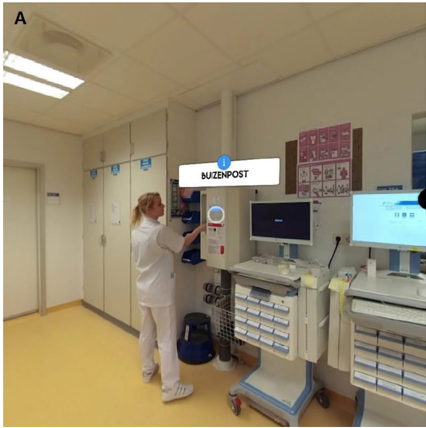
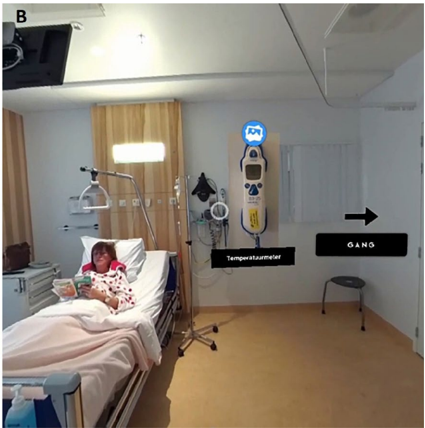
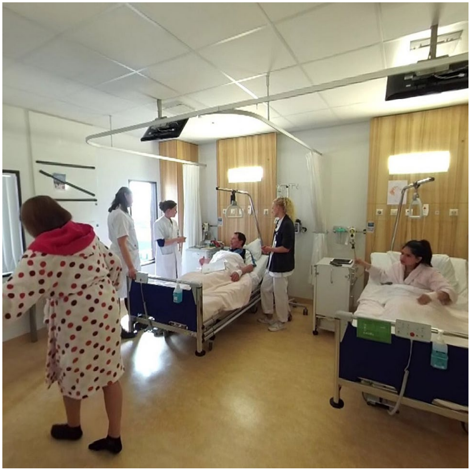
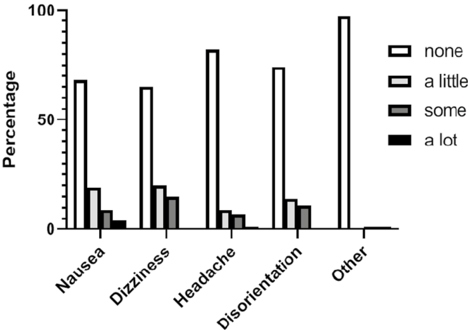
For medical students, the transition from the preclinical to the clinical phase of their curriculum (clerkships) can result in increased levels of stress and anxiety. This is partly caused by low self-perception of preparedness. By using 360° video-based virtual reality it is possible to provide learners virtual access to clinical situations ahead of time. This technique can provide active and contextual user experiences and offers opportunities to demonstrate both behavioral skills and subject knowledge. We developed two 360° video-based virtual reality applications for medical students transitioning to the clerkships. In this study, we describe the development and evaluated the user experiences. Two virtual reality applications were developed for use in a small group learning session. One of the applications is an interactive virtual tour of a hospital ward, in which learners explore the Internal Medicine ward and learn about the roles of different health care professionals and their mutual interactions. In each room, the learners listen to a voice-over and look at hotspots to gather additional information. The other application has been developed to train students in observing (un)professional behavior of healthcare providers in their daily activities. An evaluation was performed by an anonymous explorative questionnaire with open and closed questions (Likert scales) regarding the user experience and cybersickness symptoms. In our study, 171 students used the applications and completed the questionnaire. For 63% of the respondents, this was their first experience with a virtual reality headset. Qualitative analysis showed that students evaluated the learning method as realistic, informative and enjoyable. Most students evaluated virtual reality as a good (59%) or excellent (26%) tool for learning. Forty-five percent of the students experienced physical discomfort, such as nausea, dizziness, headache and disorientation. In most cases, these complaints were mild, although a small number experienced severe nausea (n = 6) or severe headache (n = 2). Students suggested several areas of improvement including increase of display resolution and decrease of ambient noise causing distraction. 360° video-based virtual reality can successfully be implemented in the medical curriculum to create a realistic learning experience to prepare students for the clerkships.
Overview
The claims and statistics of this paper haven’t been checked yet.
Free: it reads the open-access text and checks the first 5 claims that cite a source we can check. Create a free account to check every claim.
Integrity signals
Registry
Cites
Statistics
Figures
Verification
Claims the paper makes
The claims and statistics of this paper haven’t been checked yet.
Free: it reads the open-access text and checks the first 5 claims that cite a source we can check. Create a free account to check every claim.
Self-check
Percentages, sums and reported differences re-computed from the paper’s own numbers.
The self-check needs the paper’s full text.
Citations
Cites
Virtual reality and the transformation of medical education
Pottle, J. (2019) · Future Healthcare Journal · doi:10.7861/fhj.2019-0036 · Cited by 985 · cited 1×
“Although there are also inspiring examples of computer generated VR for medical education (Pottle 2019), in this paper, we focus on 360° video based VR.”
BackgroundReview on cybersickness in applications and visual displays
Rebenitsch, L., & Owen, C. (2016) · Virtual Reality · doi:10.1007/s10055-016-0285-9 · Cited by 971 · cited 1×
“The incidence of cybersickness has been reported to range from 25 up to 80% (Rebenitsch and Owen 2016).”
BackgroundMunafo, J., Diedrick, M., & Stoffregen, T. A. (2017) · Experimental Brain Research · doi:10.1007/s00221-016-4846-7 · Cited by 566 · cited 1×
“In a more recently published study with the Oculus Rift head-mounted display, the incidence in two experiments ranged from 25 to 56% (Munafo et al. 2016).”
Perceived stress during undergraduate medical training: a qualitative study
Radcliffe, C., & Lester, H. (2003) · Medical Education · doi:10.1046/j.1365-2923.2003.01405.x · Cited by 557
Cybersickness: Perception of Self-Motion in Virtual Environments
McCauley, M. E., & Sharkey, T. J. (1992) · Presence: Teleoperators and Virtual Environments · doi:10.1162/pres.1992.1.3.311 · Cited by 508 · cited 1×
“Cybersickness has been described as a form of motion sickness that is caused by motions in a virtual environment (McCauley and Sharkey 1992).”
BackgroundInvestigating learning outcomes and subjective experiences in 360-degree videos
Rupp, M. A., Odette, K. L., Kozachuk, J., Michaelis, J. R., Smither, J. A., & McConnell, D. S. (2019) · Computers & Education · doi:10.1016/j.compedu.2018.09.015 · Cited by 239 · cited 1×
“The possible educational benefits of 360° videos include reported high levels of interest, engagement, enjoyment and perception that the experience was useful to the students (Lee et al. 2017; Rupp et al. 2019; Johnson et al. 2018; Harrington et al. 2017; Chan et al. 2021).”
BackgroundEducational 360-Degree Videos in Virtual Reality: a Scoping Review of the Emerging Research
Snelson, C., & Hsu, Y.-C. (2020) · TechTrends · doi:10.1007/s11528-019-00474-3 · Cited by 204 · cited 2×
“However, more research is needed in order to understand how, and under which conditions, 360° video supports the learning process (Snelson and Hsu 2020).”
BackgroundHuber, T., Paschold, M., Hansen, C., Wunderling, T., Lang, H., & Kneist, W. (2017) · Surgical Endoscopy · doi:10.1007/s00464-017-5500-6 · Cited by 180 · cited 1×
“The sense of presence can contribute positively to the learning process (Huber et al. 2017).”
BackgroundBeyond the struggles: a scoping review on the transition to undergraduate clinical training
Atherley, A., Dolmans, D., Hu, W., Hegazi, I., Alexander, S., & Teunissen, P. W. (2019) · Medical Education · doi:10.1111/medu.13883 · Cited by 168 · cited 3×
“Commonly used strategies to ease the important transition to the clinical workplace include ‘transition to clerkship courses’, problem-based learning, early patient contacts, portfolios and reflective interviews (Atherley 2019).”
BackgroundMethod360° virtual reality video for the acquisition of knot tying skills: A randomised controlled trial
Yoganathan, S., Finch, D. A., Parkin, E., & Pollard, J. (2018) · International Journal of Surgery · doi:10.1016/j.ijsu.2018.04.002 · Cited by 167 · cited 1×
“A small randomized controlled trial comparing 360° video to conventional 2D video for learning surgical knot-tying skills showed significant better learning outcomes in the group using 360° video (Yoganathan et al. 2018).”
Background
Research works printed but not linked: 2
- Buchman SA and Henderson DE (2018) Using virtual reality 360 video for Interprofessional Simulation Education. Nursing Edu- cation Research Conference 2018 (NERC18)
- Miles MB, Huberman AM, Saldaña J (2018) Qualitative Data Analysis: a Methods Sourcebook, 4th edition. Sage,London
Cited by
Immersive procedural training in virtual reality: A systematic literature review
Jongbloed, J., Chaker, R., & Lavoué, É. (2024) · Computers & Education · doi:10.1016/j.compedu.2024.105124 · Cited by 130
“…applications involved usability studies of 360 ◦ video visits of hospitals or operating rooms to give residents an immersive experience with situated and contextualized information before their first real-life work experiences (Pieterse et al., 2023; Queisner et al., 2022; Snarby et al., 2019).”
Designing for collaborative learning in immersive virtual reality: a systematic literature review
Paulsen, L., Dau, S., & Davidsen, J. (2024) · Virtual Reality · doi:10.1007/s10055-024-00975-4 · Cited by 120
“While other forms of collaborative learning around VR exists, e.g. individual VR with followed by group discussions (Pieterse et al. 2023) or collaborative learning across realities (Paulsen et al. 2022; Steier 2020), the focus has been narrowed to collaborative learning in VR, in order to ensure…”
Fung, T. C. J., Chan, S. L., Lam, C. F. M., Lam, C. Y., Cheng, C. C. W., Lai, M. H., Ho, C. C. J., Au, S. L., Mak, L. Y., Hu, S., et al. (2025) · BMC Nursing · doi:10.1186/s12912-025-03492-0 · Cited by 48
“However, concerns exist regarding AI’s perceived human-like qualities, which could impact the authenticity of these simulations [7, 8].”
Fung, T. C. J., Chan, S. L., Lam, C. F., Lam, C. Y., Cheng, C. C. W., Lai, M. H., Cheuk, C. J. H., Au, S. L., Mak, L. Y., Hu, S., et al. (2025) · doi:10.21203/rs.3.rs-6250414/v1 · Cited by 48
Baysan, A., Çonoğlu, G., Özkütük, N., & Orgun, F. (2023) · Nurse Education Today · doi:10.1016/j.nedt.2023.105886 · Cited by 41
Jiang, Z., Zhang, Y., & Chiang, F. (2024) · British Journal of Educational Technology · doi:10.1111/bjet.13464 · Cited by 22
Torosian, S., Mousakhani, V., Wehsener, S., Ramnauth, V., & Walcott-Bedeau, G. (2025) · Discover Education · doi:10.1007/s44217-025-00628-x · Cited by 19
“Pieterse reported that 45% of their participants (n = 77) experienced physiological discomfort, including nausea, headache, and disorientation, with 5% (n = 9) experiencing severe symptoms [17].”
Collaborative 360° virtual reality training of medical students in clinical examinations
Davidsen, J., Larsen, D. V., Rasmussen, S., & Paulsen, L. (2024) · Medical Education Online · doi:10.1080/10872981.2024.2412398 · Cited by 13
“While some studies use individual 360° Virtual Reality as the foundation for later group discussions [18], there are currently no studies on collaborative training within 360° Virtual Reality.”
BackgroundKey determinants of intention to use virtual reality in medical training
Urbistondo, P. A., Pérez-Aranda, J., & Molina, A. M. C. (2024) · Virtual Reality · doi:10.1007/s10055-024-00990-5 · Cited by 12
“Healthcare is a field in which VR is most expected to play a vital role due to its wide range of applications (Aiello et al. 2023; Pieterse et al. 2023).”
Karimi, H., Clarke, S. A., & Watson, E. J. (2025) · Journal of Medical Radiation Sciences · doi:10.1002/jmrs.882 · Cited by 9
Cook, M. (2024) · The Journal of Academic Librarianship · doi:10.1016/j.acalib.2024.102933 · Cited by 6
Ready, set, experience: Using virtual reality in risk assessment teaching
Bruno, C., Joy, S., Briley, R., Adcock, B., & Grace, K. (2025) · Clinical Simulation in Nursing · doi:10.1016/j.ecns.2025.101712 · Cited by 3
Laor, B., Benabess, S., Kundu, S., Gerk, A., Botelho, F. M. N., Kwizera, J.-R., Kundu, A., Dolby, T., Guadagno, E., Ghosh, D., et al. (2025) · Journal of surgical education · doi:10.1016/j.jsurg.2025.103794 · Cited by 3
Arif, L. S., Soemantri, D., & Findyartini, A. (2024) · Education in Medicine Journal · doi:10.21315/eimj2024.16.3.6 · Cited by 2
Chen, C., Chen, C.-P., Sun, F.-J., Lee, C., & Pan, Y.-T. (2025) · Virtual Reality · doi:10.1007/s10055-025-01273-3 · Cited by 1
“Due to the unpredictable nature of such emergencies, medical students often have limited hands-on experience during their clinical rotations in clerkship courses (Pieterse et al. 2023 ; Mitzman et al. 2024 ).”
Vieira, N. L., Ng, W. M., Lim, S.-Y., Rhu, J., Ahn, J., Kim, J., Son, M. H., & Cha, W. C. (2025) · Applied Sciences · doi:10.3390/app152312816 · Cited by 1
Metaverse and Its Applications
Vyas, S., Gupta, S., & Tyagi, A. (2025) · Springer eBooks · doi:10.1007/978-981-96-5844-2_1
Realidad Mixta como herramienta pedagógica en la Educación Médica Superior
Benavides, V. S. N., & Zambrano, J. L. V. (2025) · UNESUM - Ciencias Revista Científica Multidisciplinaria · doi:10.47230/unesum-ciencias.v9.n3.2025.59-71
Zhang, Y., Sun, J., Marshall, K., Mitchell, J. P., Laprade, J., Nederveen, J. P., Helli, P. B., & Rebalka, I. A. (2025) · Anatomical Sciences Education · doi:10.1002/ase.70145
Thovuttikul, S., Kongsawasdi, S., Wantanajittikul, K., & Peansukmanee, S. (2025) · International Computer Science and Engineering Conference · doi:10.1109/icsec67360.2025.11297986
“To find the optimal integration of first-and third-person perspectives within 360-degree VR, this study evaluates user experience, skill acquisition, and physiological responses to different perspectives [4].”
HybParc: Digital gestützte praxisnahe Lehr- und Lernformate
Willemer, M.-C., Bibrack, E., Perge, C., Hoffmann, H., Pretze, D., Stransky, C., Lohr, E., Petr, K., Mauersberger, F., & Roeder, I. (2025) · Lessons Learned · doi:10.25369/ll.v5i2.108
Extended reality in medical education: a scoping review
Wolpe, B. H., Leite, M. P., de Miranda, C. M., da Costa, M., Prado, M. R. M., & Mello, R. G. (2026) · Revista Brasileira de Educação Médica · doi:10.1590/1981-5271v50.1-2025-0175
Al-Sheikhly, D., Elmagarmid, K. A., Hammami, M. A., Dargham, S. R., & Manyama, M. F. (2026) · JMIR Formative Research · doi:10.2196/95423
“Pieterse et al [13] reported that 360° VR applications enhanced students’ readiness and confidence for clinical clerkships by allowing them to explore realistic clinical scenarios in a safe, nonthreatening environment prior to in-person exposure.”
InfluentialCosoli, R., Amenduni, F., Candido, V., & Cattáneo, A. (2026) · Empirical research in vocational education and training · doi:10.1186/s40461-026-00209-8
“Pieterse et al. (2023) and Singh et al. (2024) provide another example of effective 360° applications, depicting hospital environments, to create authentic learning experiences for medical students.”
A Systematic Literature Review on Cinematic Virtual Reality Design Elements
Ali, M. E. M., Affandy, H. B., & Ahmad, Y. (2026) · Journal of Human Development and Communication (JoHDeC) · doi:10.58915/johdec.v15.2026.3436
“Emotional engagement and empathy are especially emphasized in narrative-driven experiences, such as health communication or cultural storytelling, where the goal is to provoke identification and emotional resonance (Farmer et al., 2024; Pieterse et al., 2023).”
Baharudin, H., Rahman, K. A., Mohid, S. Z., Asuhaimi, F. A., Alimin, S. R., & Mustafa, N. M. (2026) · e-Jurnal Penyelidikan dan Inovasi · doi:10.53840/e-jpi.v13i2.425
Virtual Reality 360–degree Experiences and Intention to Visit Service Locations: A Comparative Study
Le, N., Nguyen, C. H. Q., Nguyen, T. T., & Nguyen, H. T. L. (2026) · SAGE Open · doi:10.1177/21582440261498941
Metadata
- Authors
- Pieterse, A. D., Hierck, B. P., de Jong, P. G. M., Ginn, T. F., Hamoen, E. C., & Reinders, M. E. J.
- Affiliations
- Leiden University Medical Center (NL)
- Utrecht University (NL)
- Leiden University (NL)
- Corresponding author
- Pieterse, Arianne D.
- ORCID
- Venue
- Virtual Reality
- Published
- 2023-01-11
- Volume
- 27
- Issue
- 2
- Pages
- 1381-1389
- ISSN
- 1359-4338 (ISSN-L)
- 1434-9957
- OpenAlex
- W4315650939
- Cited by
- 21
- References
- 23
- Citations by year
- 2026: 5 · 2025: 9 · 2024: 6 · 2023: 1
- FWCI
- 3.63
- Type
- journal article
- Language
- en
- Open access
- hybrid
- doi.org
- Licence
- cc-by
- creativecommons.org/licenses/by/4.0 (tdm)
- creativecommons.org/licenses/by/4.0 (vor)
- Locations
- Virtual Reality (publishedVersion, cc-by)
- EUR Research Repository (Erasmus University Rotterdam) (publishedVersion, cc-by)
- Leiden Repository (Leiden University) (submittedVersion, cc-by)
- EUR Research Repository (Erasmus University Rotterdam) (submittedVersion, cc-by)
- Data Archiving and Networked Services (DANS) (submittedVersion, cc-by)
- Utrecht University Repository (Utrecht University) (submittedVersion, other-oa)
- Funders
- Universiteit Leiden
- Leids Universitair Medisch Centrum
- Topics
- Physical Sciences › Computer Science › Human-Computer Interaction › Virtual Reality Applications and Impacts
- Social Sciences › Education › Simulation-Based Education in Healthcare
- Social Sciences › Education › Innovations in Medical Education
- Keywords
- 360-degree video, medical students, clinical rotations, preclinical to clinical transition, user experience, cybersickness, professionalism training, small group learning, medical education, clinical preparedness
About these checks
Registry, retraction, Cites and statistics results are computed, not judged, with one exception: a printed reference that no index lists is read once by a model before it counts as a citation error. Claims are extracted by a model and kept only when their quote appears verbatim in the text; each cited source is then checked, with a model’s help, for whether it says what the claim relies on. Those verdicts can be wrong — read the claim’s quote and the cited source before relying on one.
Statistics and arithmetic are recomputed, not judged.
Confidence bands are shown only for fields calibrated on our annotated test set. None is calibrated yet, so no band is shown.
What counts as a claim ›How we measure confidence ›How we check this ›
Are you an author, or do you see a problem with this page? Request a review
Data sources
Bibliographic data: Semantic Scholar, OpenAlex, Crossref.
Contains information from the Semantic Scholar Academic Graph Datasets, made available under the ODC Attribution License (ODC-BY 1.0).
Semantic Scholar’s data is described in: Kinney, R., et al. (2023). The Semantic Scholar Open Data Platform. arXiv:2301.10140.
