

Review: modulation of the oral microbiome by the host to promote ecological balance
Open accessThe DOI matches its Crossref record; 124 of the 124 references it cites were found in a registry or an index.
Abstract
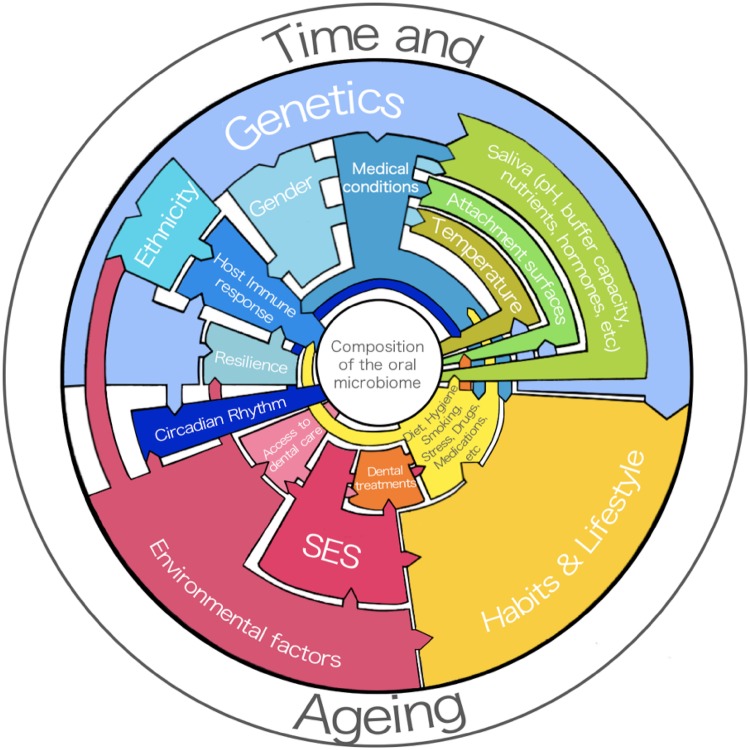
The indivisible relationship between the human host and its oral microbiome has been shaped throughout the millennia, by facing various changes that have forced the adaptation of oral microorganisms to new environmental conditions. In this constant crosstalk between the human host and its microbiome, a bidirectional relationship has been established. The microorganisms provide the host with functions it cannot perform on its own and at the same time the host provides its microbes with a suitable environment for their growth and development. These host factors can positively affect the microbiome, promoting diversity and balance between different species, resulting in a state of symbiosis and absence of pathology. In contrast, other host factors can negatively influence the composition of the oral microbiome and drive the interaction towards a dysbiotic state, where the balance tilts towards a harmful relationship between the host and its microbiome. The aim of this review is to describe the role host factors play in cultivating and maintaining a healthy oral ecology and discuss mechanisms that can prevent its drift towards dysbiosis.
Overview
The claims and statistics of this paper haven’t been checked yet.
Free: it reads the open-access text and checks the first 5 claims that cite a source we can check. Create a free account to check every claim.
Integrity signals
Registry
Cites
Statistics
Figures
Verification
Claims the paper makes
The claims and statistics of this paper haven’t been checked yet.
Free: it reads the open-access text and checks the first 5 claims that cite a source we can check. Create a free account to check every claim.
Claims other papers make about this one
Each is checked against this paper’s own text: does it say what the citing paper says it does?
The cited source says what the claim attributes to it.
In the citing paper
“The relationship between the oral microbiota and the oral physicochemical environment changes dynamically. This relationship may evolve from a healthy symbiotic relationship to pathological dysbiosis39.”
From Recent advances in the pathogenesis and prevention strategies of dental calculus (2024) · cites this paper as [39]
Self-check
Percentages, sums and reported differences re-computed from the paper’s own numbers.
The self-check needs the paper’s full text.
Citations
Cites
Alberts, B., Johnson, A., Lewis, J., Morgan, D., Raff, M., Roberts, K., & Walter, P. (2017) · W.W. Norton eBooks · doi:10.1201/9781315735368 · Cited by 6,365
The human microbiome: at the interface of health and disease
Cho, I., & Blaser, M. J. (2012) · Nature Reviews Genetics · doi:10.1038/nrg3182 · Cited by 3,449
The Placenta Harbors a Unique Microbiome
Aagaard, K., Ma, J., Antony, K. M., Ganu, R., Petrosino, J., & Versalovic, J. (2014) · Science Translational Medicine · doi:10.1126/scitranslmed.3008599 · Cited by 2,494
Tjäderhane, L., Buzalaf, M. A. R., Carrilho, M., & Chaussain, C. (2015) · Caries Research · doi:10.1159/000363582 · Cited by 2,306
Pitts, N. B., Zero, D. T., Marsh, P. D., Ekstrand, K., Weintraub, J. A., Ramos-Gomez, F., Tagami, J., Twetman, S., Tsakos, G., & Ismail, A. (2017) · Nature Reviews Disease Primers · doi:10.1038/nrdp.2017.30 · Cited by 1,823
The oral microbiome – an update for oral healthcare professionals
Kilian, M., Chapple, I. L. C., Hannig, M., Marsh, P. D., Meuric, V., Pedersen, A. M. L., Tonetti, M. S., Wade, W. G., & Zaura, E. (2016) · British Dental Journal · doi:10.1038/sj.bdj.2016.865 · Cited by 1,269
Host Biology in Light of the Microbiome: Ten Principles of Holobionts and Hologenomes
Bordenstein, S. R., & Theis, K. R. (2015) · PLOS Biology · doi:10.1371/journal.pbio.1002226 · Cited by 1,240 · cited 2×
“Symbiosis Two or more species living closely together in a long-term relationship [2]”
Risk factors for periodontal disease
Genco, R. J., & Borgnakke, W. S. (2013) · Periodontology 2000 · doi:10.1111/j.1600-0757.2012.00457.x · Cited by 1,232
The Role of Bacteria in the Caries Process: Ecological Perspectives
Takahashi, N., & Nyvad, B. (2011) · Journal of Dental Research · doi:10.1177/0022034510379602 · Cited by 1,199
Dynamics and associations of microbial community types across the human body
Ding, T., & Schloss, P. D. (2014) · Nature · doi:10.1038/nature13178 · Cited by 885
Research works printed but not linked: 2
- Marsh P. Marsh and Martin's oral microbiology. [Sixth] edition. ed. Edinburgh: Elsevier; 2016.
- Marsh PD, Head DA, Devine DA. Ecological approaches to oral biofilms: control without killing. Caries Res. 2015;49(Suppl 1):46–54. https://doi.org/10.1159/000377732 . · DOI · Paper page
Cited by
Armed to the Teeth—The Oral Mucosa Immunity System and Microbiota
Ptasiewicz, M., Grywalska, E., Mertowska, P., Korona‐Głowniak, I., Poniewierska-Baran, A., Niedźwiedzka‐Rystwej, P., & Chałas, R. (2022) · International Journal of Molecular Sciences · doi:10.3390/ijms23020882 · Cited by 120
Salivary microbiome profiles of oral cancer patients analyzed before and after treatment
Mäkinen, A. I., Pappalardo, V. Y., Buijs, M. J., Brandt, B. W., Mäkitie, A. A., Meurman, J. H., & Zaura, E. (2023) · Microbiome · doi:10.1186/s40168-023-01613-y · Cited by 99
“It should be noted, however, that the measures with which the positive modification of oral microbiome is done remain elusive and warrant for further research [54].”
BackgroundEnvironmental factors and periodontal microbiome
Buduneli, N. (2020) · Periodontology 2000 · doi:10.1111/prd.12355 · Cited by 96
Mechanisms of Porphyromonas gingivalis to translocate over the oral mucosa and other tissue barriers
de Jongh, C. A., de Vries, T. J., Bikker, F. J., Gibbs, S., & Krom, B. P. (2023) · Journal of Oral Microbiology · doi:10.1080/20002297.2023.2205291 · Cited by 83
Self-citationOral Microbiome: Getting to Know and Befriend Neighbors, a Biological Approach
Bacali, C., Vulturar, R., Buduru, S. D., Cozma, A., Fodor, A., Chiş, A., LUCACIU, O. P., Damian, L. O., & Moldovan, M. (2022) · Biomedicines · doi:10.3390/biomedicines10030671 · Cited by 74
“The diversity and abundance of the microbiome increase from newborn period to senescence [5] (Figure 1).”
BackgroundInfluentialBostanghadiri, N., Kouhzad, M., Taki, E., Elahi, Z., Khoshbayan, A., Navidifar, T., & Darban-Sarokhalil, D. (2024) · Frontiers in Microbiology · doi:10.3389/fmicb.2024.1431785 · Cited by 61
“In addition, gingival crevicular fluid (GCF) provides a source of nutrition for the microbiota, containing glycoprotein, heme and albumin (Cornejo Ulloa et al., 2019; Wade, 2021).”
BackgroundHost’s Immunity and Candida Species Associated with Denture Stomatitis: A Narrative Review
Bars, P. L., Kouadio, A. A., Bandiaky, O. N., Guéhennec, L. L., & de la Cochetière, M.-F. (2022) · Microorganisms · doi:10.3390/microorganisms10071437 · Cited by 89
Compositional Differences in the Oral Microbiome of E-cigarette Users
Chopyk, J., Bojanowski, C. M., Shin, J. H., Moshensky, A., Fuentes, A. L., Bonde, S. S., Chuki, D., Pride, D. T., & Alexander, L. E. C. (2021) · Frontiers in Microbiology · doi:10.3389/fmicb.2021.599664 · Cited by 74
Nath, S., Zilm, P. S., Jamieson, L., Kapellas, K., Goswami, N., Ketagoda, K., & Weyrich, L. S. (2021) · PLoS ONE · doi:10.1371/journal.pone.0260433 · Cited by 66
Microbial dysbiosis: The root cause of periodontal disease
Kumar, P. (2021) · Journal of Periodontology · doi:10.1002/jper.21-0245 · Cited by 71
Polyamine biomarkers as indicators of human disease
Amin, M., Tang, S., Shalamanova, L., Taylor, R. L., Wylie, S. R., Abdullah, B. M., & Whitehead, K. A. (2021) · Biomarkers · doi:10.1080/1354750x.2021.1875506 · Cited by 62
Sex Steroid Hormones as a Balancing Factor in Oral Host Microbiome Interactions
Ulloa, P. C., Krom, B. P., & van der Veen, M. H. (2021) · Frontiers in Cellular and Infection Microbiology · doi:10.3389/fcimb.2021.714229 · Cited by 56
Self-citationMaki, K. A., Ganesan, S. M., Meeks, B., Farmer, N. M., Kazmi, N., Barb, J. J., Joseph, P. V., & Wallen, G. R. (2022) · Journal of Translational Medicine · doi:10.1186/s12967-022-03785-x · Cited by 45
“Factors (both internal and external) such as diet, certain medications, smoking, moisture of the environment, and periodontal disease status alter the amount and composition of saliva, which impacts the surrounding epithelial tissues and oral cavity [33].”
BackgroundRecent advances in the pathogenesis and prevention strategies of dental calculus
Wei, Y., Dang, G.-P., Ren, Z.-Y., Wan, M.-C., Wang, C.-Y., Li, H.-B., Zhang, T., Tay, F. R., & Niu, L.-N. (2024) · npj Biofilms and Microbiomes · doi:10.1038/s41522-024-00529-1 · Cited by 43
“This relationship may evolve from a healthy symbiotic relationship to pathological dysbiosis 39 .”
BackgroundResolution of inflammation in oral diseases
Eltay, E. G., & Dyke, T. E. V. (2023) · Pharmacology & Therapeutics · doi:10.1016/j.pharmthera.2023.108453 · Cited by 47
Is There a Link between Oropharyngeal Microbiome and Schizophrenia? A Narrative Review
Martin, S., Foulon, A., El‐Hage, W., Dufour‐Rainfray, D., & Denis, F. (2022) · International Journal of Molecular Sciences · doi:10.3390/ijms23020846 · Cited by 33
“It was found that the host of this phage, Lactobacillus gasseri is at least 400 times more abundant in PWS than controls [20,44].”
BackgroundThe Role of Fermented Dairy Products on Gut Microbiota Composition
Okoniewski, A., Dobrzyńska, M., Kusyk, P., Dziedzic, K., Przysławski, J., & Drzymała-Czyż, S. (2023) · Fermentation · doi:10.3390/fermentation9030231 · Cited by 38
Age-related oral microbiota dysbiosis and systemic diseases
Deng, L., Guan, G., Cannon, R. D., & Mei, L. (2025) · Microbial Pathogenesis · doi:10.1016/j.micpath.2025.107717 · Cited by 35
Maitre, Y., Mahalli, R., Micheneau, P., Delpierre, A., Guérin, M., Amador, G., & Denis, F. (2021) · Microorganisms · doi:10.3390/microorganisms9071450 · Cited by 28
“While the use of probiotics may appear as a complementary therapeutic means for patients with mental disorders, it is necessary to keep in mind the multifactorial character of the oral microbiome homeostasis [87].”
BackgroundAdvancing and refining archaeological dental calculus research using multiomic frameworks
Wright, S. L., Dobney, K., & Weyrich, L. (2021) · STAR: Science & Technology of Archaeological Research · doi:10.1080/20548923.2021.1882122 · Cited by 21
Shigdel, R., Johannessen, A., Huang, L., Peddada, S., Real, F. G., Ringel‐Kulka, T., Svanes, C., & Bertelsen, R. J. (2023) · Respiratory Research · doi:10.1186/s12931-023-02491-6 · Cited by 25
“Introduction Oral microbiome interacts with the gut and lung microbial communities and together they have an important role in human health and disease [1].”
BackgroundOral Microbiome and Host Health: Review on Current Advances in Genome-Wide Analysis
Cho, Y., Kim, K.-H., Lee, Y., Ku, Y., & Seol, Y. (2021) · Applied Sciences · doi:10.3390/app11094050 · Cited by 30
“On the contrary, the host can also create a negative influence [56,57].”
BackgroundPark, D.-Y., Hwang, J., Kim, Y., Lee, D., Kim, Y.-Y., Kim, H., & Hwang, I. (2023) · Scientific Reports · doi:10.1038/s41598-023-35168-7 · Cited by 26
Heritage-specific oral microbiota in Indigenous Australian dental calculus
Handsley‐Davis, M., Kapellas, K., Jamieson, L., Hedges, J., Skelly, E., Kaidonis, J. A., Anastassiadis, P. M., & Weyrich, L. S. (2022) · Evolution Medicine and Public Health · doi:10.1093/emph/eoac024 · Cited by 21
“Oral microbiota are influenced by numerous factors, such as vertical transmission, diet, medical treatments and environmental and behavioural context [25].”
BackgroundMonnoyer, R., Eftedal, I., Hjelde, A., Deb, S. K., Haugum, K., & Lautridou, J. (2021) · Frontiers in Physiology · doi:10.3389/fphys.2021.702634 · Cited by 19
La, X., Jiang, H., Chen, A., Zheng, H., Shen, L., Chen, W., Yang, F., Zhang, L., Cai, X., Mao, H., et al. (2022) · Journal of Oral Microbiology · doi:10.1080/20002297.2022.2053389 · Cited by 25
Hallang, S., Esberg, A., Haworth, S. J., & Johansson, I. (2021) · Microorganisms · doi:10.3390/microorganisms9081674 · Cited by 18
Lee, J., Lee, J., Song, H., Son, M. J., Li, L., Rhyu, I., Lee, Y., Koo, K., An, J., Kim, J. S., et al. (2020) · Diagnostics · doi:10.3390/diagnostics10100820 · Cited by 23
“This ecosystem can be affected by genetic factors of the host and environmental factors, including smoking [10].”
BackgroundThe forgotten link: how the oral microbiome shapes childhood growth and development
Tjandrawinata, R. R., Amalia, N., Tandi, Y. Y. P., Athallah, A. F., Wibowo, C. A., Aditya, M. R., Muhammad, A., Azizah, M. R., Humardani, F. M., Nojaid, A., et al. (2025) · Frontiers in Oral Health · doi:10.3389/froh.2025.1547099 · Cited by 20
Asili, P., Mirahmad, M., Rezaei, P., Mahdavi, M. R., Larijani, B. A., & Tavangar, S. M. (2023) · Journal of Gastrointestinal Cancer · doi:10.1007/s12029-022-00901-4 · Cited by 16
“Conversely, some host factors may have a negative impact on the oral microbiome composition and its balance, leading the interaction to a dysbiotic state, and pathologic condition [41].”
Oral bacteriophages: metagenomic clues to interpret microbiomes
Banar, M., Rokaya, D., Azizian, R., Khurshid, Z., & Banakar, M. (2024) · PeerJ · doi:10.7717/peerj.16947 · Cited by 19
“The oral microbiota consists of different microbial species, including bacteria, protozoa, archaea, viruses, fungi, and ultra-small organisms (candidate phyla radiation group) ( Cornejo Ulloa, Van der Veen & Krom, 2019 ; Zaura et al., 2014 ; Wade, 2021 ; Radaic & Kapila, 2021 ).”
BackgroundThe oral microbiome is associated with HPA axis response to a psychosocial stressor
Charalambous, E. G., Mériaux, S. B., Guébels, P., Muller, C. P., Leenen, F. A. D., Elwenspoek, M. M. C., Thiele, I., Hertel, J., & Turner, J. D. (2024) · Scientific Reports · doi:10.1038/s41598-024-66796-2 · Cited by 17
“This ability of the OM to react to the host’s hormonal response is part due to resilience mechanisms determining the community composition and driving homeostasis 25,36 .”
BackgroundShigeishi, H., Nakamura, M., Oka, I., Su, C.-Y., Yano, K., Ishikawa, M., Kaneyasu, Y., Sugiyama, M., & Ohta, K. (2021) · Diagnostics · doi:10.3390/diagnostics11081397 · Cited by 13
“Introduction A dynamic balance between oral microorganisms and the host (involving genetics, host immune response, and circadian rhythm) is critical for the maintenance of oral health [1].”
BackgroundBoulares, A., Jdidi, H., & Bragazzi, N. L. (2025) · International Dental Journal · doi:10.1016/j.identj.2024.07.005 · Cited by 11
The Oral Microbiota: A Literature Review for Updating Professionals in Dentistry. Part I
Barboza‐Solís, C., & Acuña-Amador, L. (2019) · Odovtos - International Journal of Dental Sciences · doi:10.15517/ijds.2020.39178 · Cited by 19
“Moreover, several factors (Table 2) may impact the oral microbiota composition and metabolism such as host lifestyle and health status (31-33).”
Medicinal herbs, especially Hibiscus sabdariffa, inhibit oral pathogenic bacteria
Takada, K., Nakano, S., Nishio, R., Muku, D., Mochizuki, S., Inui, I., Okita, K., Koga, A., Watanabe, K., Nagai‐Yoshioka, Y., et al. (2024) · Journal of Oral Biosciences · doi:10.1016/j.job.2024.01.006 · Cited by 10
Bogdanović, M., Mladenović, D. D., Mojović, L. V., Djuriš, J., & Djukić‐Vuković, A. (2024) · Brazilian Journal of Pharmaceutical Sciences · doi:10.1590/s2175-97902024e23272 · Cited by 14
Sato, H., Yano, A., Shimoyama, Y., Sato, T., Sugiyama, Y., & Kishi, M. (2021) · BMC Oral Health · doi:10.1186/s12903-021-01926-0 · Cited by 11
“Once the microbiota is established, it helps to protect the host from invasion by pathogenic microorganisms and subsequent infection [15, 16].”
BackgroundAsghar, F., Bano, A., Waheed, F., Anjum, A. A., Ejaz, H., & Javed, N. (2023) · Saudi Journal of Biological Sciences · doi:10.1016/j.sjbs.2023.103613 · Cited by 14
Oral Microbiome Traits of Type 1 Diabetes and Phenylketonuria Patients in Latvia
Abola, I., Gudrā, D., Ustinova, M., Frīdmanis, D., Emulina, D. E., Skadiņš, I., Brinkmane, A., Lauga-Tuņina, U., Gailīte, L., & Auzenbaha, M. (2023) · Microorganisms · doi:10.3390/microorganisms11061471 · Cited by 9
“Saliva is often collected for microbiome analysis as it contains numerous microorganisms that shed from various intraoral surfaces such as the teeth, gingival crevices, dorsum of the tongue, and buccal mucosa [4,5], which is an easy non-invasive sampling method and does not cause discomfort to the patient.”
BackgroundRashid, M. H., Kumar, S. P., Rajan, R., & Mamillapalli, A. (2025) · BMC Oral Health · doi:10.1186/s12903-024-05381-5 · Cited by 16
Chepchumba, B., Asudi, G. O., Katana, J., Ngayo, M. O., & Akhwale, J. K. (2024) · Archives of Microbiology · doi:10.1007/s00203-024-03897-6 · Cited by 9
“Typically, the normal temperature range of the human oral cavity is between 34 and 37 °C, promoting the growth of a wide range of bacterial species Cornejo Ulloa et al. (2019).”
The hidden link: How oral and respiratory microbiomes affect multiple sclerosis
Jameie, M., Ahli, B., Ghadir, S., Azami, M., Amanollahi, M., Ebadi, R., Rafati, A., & Moghadasi, A. N. (2024) · Multiple Sclerosis and Related Disorders · doi:10.1016/j.msard.2024.105742 · Cited by 8
When the clock ticks wrong with COVID‐19
Papagerakis, S. M., Said, R. S., Ketabat, F., Mahmood, R., Pundir, M., Lobanova, L., Guenther, G., Pannone, G., Lavender, K. J., McAlpin, B. R., et al. (2022) · Clinical and Translational Medicine · doi:10.1002/ctm2.949 · Cited by 10
The making of the oral microbiome in Agta hunter–gatherers
Dobón, B., Musciotto, F., Mira, Á., Greenacre, M. J., Schlaepfer, R., Aguileta, G., Astete, L. H., Ngales, M. L., Latora, V., Battiston, F., et al. (2023) · Evolutionary Human Sciences · doi:10.1017/ehs.2023.9 · Cited by 11
de Araújo, M. P., Sato, M. O., Sato, M., WM, K. M. B., Coelho, L. F. L., Souza, R. L. M., Kawai, S., & Marques, M. J. (2022) · PeerJ · doi:10.7717/peerj.13401 · Cited by 10
Yu, K.-M., Lee, A.-M., Cho, H.-S., Lee, J.-W., & Lim, S. (2022) · International Journal of Legal Medicine · doi:10.1007/s00414-022-02919-6 · Cited by 10
Cyclodextrins as Multi-Functional Ingredients in Dentistry
Braga, S. S. (2023) · Pharmaceutics · doi:10.3390/pharmaceutics15092251 · Cited by 7
“Diet is an important factor affecting the oral microbiome, with the excess intake of processed foods, a common action in modern developed societies, being associated with a higher incidence of cavities and periodontal disease; the reduced intake of fruits and vegetables, causing less abundance of vitamins in the human…”
BackgroundA Potential “Vitaminic Strategy” against Caries and Halitosis
Pietrangelo, L., Magnifico, I., Petronio, G. P., Cutuli, M. A., Venditti, N., Nicolosi, D., Perna, A., Guerra, G., & Marco, R. D. (2022) · Applied Sciences · doi:10.3390/app12052457 · Cited by 7
The Oral Microbiome of Healthy Japanese People at the Age of 90
Nomura, Y., Kakuta, E., Kaneko, N., Nohno, K., Yoshihara, A., & Hanada, N. (2020) · Applied Sciences · doi:10.3390/app10186450 · Cited by 6
Toyama, N., Ekuni, D., Matsui, D., Koyama, T., Nakatochi, M., Momozawa, Y., Kubo, M., & Morita, M. (2021) · International Journal of Environmental Research and Public Health · doi:10.3390/ijerph18126430 · Cited by 6
“The oral microbiome is affected by diurnal rhythm, oral health behavior, and food intake [36].”
BackgroundZaura, E. (2022) · Dentistry Journal · doi:10.3390/dj10090156 · Cited by 8
“, during puberty, pregnancy, menopause), presence of intraoral appliances or dentures, and salivary properties [25,26].”
BackgroundThe concept of balance in microbiome research
O’Malley, M. A. (2024) · BioEssays · doi:10.1002/bies.202400050 · Cited by 8
Toyama, N., Ekuni, D., Yokoi, A., Fukuhara, D., Islam, M. M., Sawada, N., Nakashima, Y., Nakahara, M., Sumita, I., & Morita, M. (2022) · Frontiers in Cellular and Infection Microbiology · doi:10.3389/fcimb.2022.957890 · Cited by 7
The exposome and the human oral microbiome through the one health lens
Limo, L., Donovan, J., Frisbee, S. J., & Gomaa, N. A. (2026) · Archives of Oral Biology · doi:10.1016/j.archoralbio.2026.106504 · Cited by 4
Impact of Electronic Cigarette Use on the Oral Microbiota: A Systematic Review
Rosa, G. R. M. L., Samaranayake, L. P., Zaura, E., Sun, A., Fuochi, V., Furneri, P. M., Kowalski, J., Myszel, K., Chapple, I., & Polosa, R. (2026) · Journal Of Clinical Periodontology · doi:10.1111/jcpe.70111 · Cited by 6
Role of Oral Microbiota in Preserving Health and Disease Management
Pandey, N. (2024) · doi:10.46889/jcim.2024.5203 · Cited by 7
Oral Microbiome Metabarcoding in Two Invasive Small Mammals from New Zealand
Emami‐Khoyi, A., Benmazouz, I., Paterson, A. M., Ross, J. G., Murphy, E., Bothwell, J., Alizadeh, H., van Vuuren, B. J., & Teske, P. R. (2020) · Diversity · doi:10.3390/d12070278 · Cited by 4
da Silva, S. E. M., Fernandes, R. R., da Silva, M. E. M., Duarte, H. O., da Câmara, R. O., Lopes, M. L. D. D. S., Martins, A. R. L. D. A., & da Silveira, É. J. D. (2025) · Clinical Oral Investigations · doi:10.1007/s00784-025-06465-4 · Cited by 4
Mutanobactin D from the Human Microbiome: Chemistry, Biology, and Molecular Dynamics Studies
Brandl, P., Lüthy, L., Pultar, F., Hansen, M. E., Jelmini, N., Faris, J., Yasmin, S. O., Kamenik, A. S., Arnold, R., Ebert, M., et al. (2025) · Journal of the American Chemical Society · doi:10.1021/jacs.5c08850 · Cited by 3
Khosravi, M., Berardis, D. D., Mazloom, S., Adibi, A., Javan, N., Ghiasi, Z., Nafeli, M., & Rahmanian, N. (2023) · Electronic Journal of General Medicine · doi:10.29333/ejgm/13092 · Cited by 3
Cornejo, C. F., Soken, L. J., Salgado, P., Gliosca, L., & Squassi, A. (2023) · International Journal of Clinical Pediatric Dentistry · doi:10.5005/jp-journals-10005-2489 · Cited by 6
“Eur Arch Paediatric Dent 2006;7(1):17–22.”
InfluentialFactors associated with the counts of selected oral microorganisms in nursing home residents
Wenger, K., Pendleton, C., Xie, X. J., Caplan, D. J., Drake, D. R., & Marchini, L. (2020) · Special Care in Dentistry · doi:10.1111/scd.12530 · Cited by 4
Chemical dialogues at the crossroads of host–bacteria interactions
Diab, E., Thome, N. U., Elsayed, S. S., Raaijmakers, J. M., & van Wezel, G. P. (2026) · Trends in Microbiology · doi:10.1016/j.tim.2026.03.013 · Cited by 3
Stability and Antibacterial Property of Polyherbal Mouthwash Formulated Using Local Ingredients
Nafea, J., Edbeib, M. F., Notarte, K. I., Huyop, F., & Yaakub, H. (2020) · Biosaintifika Journal of Biology & Biology Education · doi:10.15294/biosaintifika.v12i3.25243 · Cited by 10
“As the saliva sample was obtained from individuals with good oral hygiene and no oral medical history, the saliva may contain benign oral microbiota (Ulloa et al., 2019).”
BackgroundDeterminasi Jumlah Bakteri Porphyromonas Gingivalis ATCC 33277 pada Saliva Anak Stunting
Salsabila, N., Kasuma, N., & Yerizel, E. (2023) · e-GIGI · doi:10.35790/eg.v12i1.47864 · Cited by 4
“kelangsungan hidupnya karena saliva menjadi sumber nutrisi dan pemberi sinyal terhadap mikrobiota rongga mulut.(27) Jumlah mikroorganisme pada saliva dapat mencapai 10(8) atau 10(9) sel/ml saliva.”
BackgroundPietro, L. D., Boroumand, M., Lattanzi, W., Manconi, B., Salvati, M., Cabras, T., Olianas, A., Flore, L., Serrao, S., Calò, C. M., et al. (2023) · International Journal of Molecular Sciences · doi:10.3390/ijms241915010 · Cited by 2
Association of oral microbiota with obesity in children: insight from dental physicians
Vedam, V., & Ganapathy, S. (2020) · Hong Kong Medical Journal · doi:10.12809/hkmj208479 · Cited by 2
Roy, S., Majumder, P., & Bhattacharya, K. (2020) · medRxiv · doi:10.1101/2020.08.15.20175067 · Cited by 3
“There is a crosstalk between the host and the microbiota, which is highly influenced by various factors like lifestyle and behaviors, tobacco consumption, oral hygiene, use of antibiotics, and the industrial revolution [10, 11].”
BackgroundThe making of the oral microbiome in Agta hunter-gatherersPreprint
Dobón, B., Musciotto, F., Mira, Á., Greenacre, M. J., Schlaepfer, R., Aguileta, G., Astete, L. H., Ngales, M. L., Latora, V., Battiston, F., et al. (2022) · bioRxiv (Cold Spring Harbor Laboratory) · doi:10.1101/2022.05.03.490437 · Cited by 2
Oral metagenomics changes the game in carcinogenesis
Marzbali, M. Y., Banakar, M., Mousavi, S. M., & Lai, C. W. (2024) · Elsevier eBooks · doi:10.1016/b978-0-443-13531-6.00007-0 · Cited by 1
Probiotic Bacteriotherapeutic Approaches in Oral Healthcare
Vedam, V., Sivadas, G., & Parasuraman, S. (2024) · Springer eBooks · doi:10.1007/978-981-97-4235-6_3 · Cited by 1
High-Altitude-Induced Dysbiosis in Gut and Oral Microbiome: Strategies for Restoration of Microbiota
Kumari, M., Yadav, A., Kumari, A., Rai, C., Varshney, R. K., & Meena, R. C. (2025) · Springer eBooks · doi:10.1007/978-981-96-8642-1_6 · Cited by 1
Khan, H., & Rehmat, A. (2024) · Annals of Experimental and Molecular Biology · doi:10.23880/aemb-16000125 · Cited by 1
Salivary screening for Selenomonas noxia in the oral cavity of pediatric patients
Davidowitz, R., Howard, K. M., & Kingsley, K. (2019) · doi:10.12944/cdrj.01.o1.01 · Cited by 1
Salivary Biomarkers in the Diagnosis and Monitoring of Metabolic and Endocrine Diseases
Tvarijonaviciute, A., Lucena, S., Silva, F. C. E., & Lamy, E. (2020) · Springer eBooks · doi:10.1007/978-3-030-37681-9_8 · Cited by 1
Microbiome Augmented Therapeutic Interventions for a Healthy Oral System
Hashim, N. T. (2021) · Elsevier eBooks · doi:10.1016/b978-0-12-819265-8.00013-9
Sánchez-Tito, M. A., & Díaz, I. E. C. (2021) · Revista Habanera de Ciencias Médicas · Cited by 2
Pietrangelo, L., Magnifico, I., Petronio, G. P., Cutuli, M. A., Venditti, N., Nicolosi, D., Perna, A., Guerra, G., & Marco, R. D. (2021) · Research Square · doi:10.21203/rs.3.rs-892470/v1
“As a result of this complex interaction, the balance between bene cial and pathogen species is continuously altered, passing from a state of symbiosis and health to a dysbiotic state with the upcoming of oral pathologies such as caries, gingivitis and periodontitis (2,4).”
BackgroundOral Microbiome: An Opening to Healthy Possibilities
Vasudevan, S., Neelakantan, P., & Solomon, A. P. (2022) · Springer eBooks · doi:10.1007/978-981-16-7672-7_2
Salivary screening for Selenomonas noxia in the oral cavity of pediatric patients
Davidowitz, R., Howard, K. M., & Kingsley, K. (2019) · ENVIRO Dental Journal · doi:10.12944/edj.01.01.01
Baum, F. (2023) · eDiss (Georg-August-Universität Göttingen) · doi:10.53846/goediss-10124
Khosravi, M., Merza, M., Saleh, R. O., Habib, H. A., Alnemare, A. K., Mahfoz, T. M. B., Ghaffar, U. B., Ghildiyal, P., Shoja, S. J., & Elawady, A. (2024) · Medical Hypotheses · doi:10.1016/j.mehy.2024.111284
Higiene oral en el adulto mayor con diabetes mellitus
Cahueñas, A. B. (2020) · Caminos de Investigación · doi:10.59773/ci.v2i1.18 · Cited by 3
Khosravi, M., Berardis, D. D., Sarabandi, S., Mazloom, S., Adibi, A., Javan, N., Ghiasi, Z., Nafeli, M., & Rahmanian, N. (2024) · Mental Illness · doi:10.1155/2024/5595195 · Cited by 1
Oral immune system and microbes
Dinis, M., & Tran, N. C. (2024) · Elsevier eBooks · doi:10.1016/b978-0-323-90144-4.00005-7 · Cited by 1
Management of Denture Stomatitis with a Herbal Armamentarium
Chauhan, V., Saxena, P., Nautiyal, A., & Gupta, P. (2024) · Current Dentistry · doi:10.2174/012542579x317149241202064449 · Cited by 1
Ajmal, R., Imran, F., Ayub, A., Bilal, A., Bilal, M., Ali, K., Khan, S., Hussain, M., & Masood, M. (2025) · Regulatory Mechanisms in Biosystems · doi:10.15421/0225010
Choi, H.-S., Park, E., & Pang, E. (2025) · Journal of Prosthetic Dentistry · doi:10.1016/j.prosdent.2025.10.021
Shigdel, R., Johannessen, A., Lin, H., Peddada, S., Gómez Real, F., Ringel‐Kulka, T., Svanes, C., & Bertelsen, R. J. (2023) · Figshare · doi:10.6084/m9.figshare.23672448
Mäkinen, A. I., Pappalardo, V. Y., Buijs, M. J., Brandt, B. W., Mäkitie, A. A., Meurman, J. H., & Zaura, E. (2024) · Figshare · doi:10.6084/m9.figshare.26608719
Mäkinen, A. I., Pappalardo, V. Y., Buijs, M. J., Brandt, B. W., Mäkitie, A. A., Meurman, J. H., & Zaura, E. (2024) · Figshare · doi:10.6084/m9.figshare.26608722
Mäkinen, A. I., Pappalardo, V. Y., Buijs, M. J., Brandt, B. W., Mäkitie, A. A., Meurman, J. H., & Zaura, E. (2024) · Figshare · doi:10.6084/m9.figshare.26608725
Wang, X.-J., Ye, L., Liu, Y., Li, H., Shi, H., & Zheng, L.-Y. (2026) · Frontiers in Cellular and Infection Microbiology · doi:10.3389/fcimb.2025.1695928
Pasman, R., Krom, B. P., Zhang, J., Brul, S., & Zaat, S. A. J. (2026) · Applied and Environmental Microbiology · doi:10.1128/aem.01961-25
Self-citationLocal and systemic effects of probiotic modulation of the oral microbiota
Petrella, C., Minni, A., Laureti, C., Zoccali, F., Riccardi, G., & Barbato, C. (2026) · Discover Food · doi:10.1007/s44187-026-00956-3 · Cited by 3
Metadata
- Authors
- Cornejo Ulloa, P., van der Veen, M. H., & Krom, B. P.
- Affiliations
- Academic Center for Dentistry Amsterdam (NL)
- Corresponding author
- Krom, Bastiaan P.
- ORCID
- Krom, Bastiaan P.
- Venue
- Odontology
- Published
- 2019-02-04
- Volume
- 107
- Issue
- 4
- Pages
- 437-448
- ISSN
- 1618-1247 (ISSN-L)
- 1618-1255
- PMC
- PMC6732124
- OpenAlex
- W2914537250
- Cited by
- 104
- References
- 124
- Citations by year
- 2026: 11 · 2025: 8 · 2024: 20 · 2023: 17 · 2022: 18 · 2021: 16 · 2020: 11 · 2019: 3
- FWCI
- 1.70
- Type
- journal article
- Language
- en
- Open access
- hybrid
- doi.org
- Licence
- cc-by
- creativecommons.org/licenses/by/4.0 (tdm)
- Locations
- Odontology (publishedVersion, cc-by)
- Europe PMC (PubMed Central) (publishedVersion, cc-by)
- PubMed Central (publishedVersion, cc-by)
- PubMed (publishedVersion)
- VU Research Portal (publishedVersion, cc-by)
- UvA-DARE (University of Amsterdam) (submittedVersion, cc-by)
- Data Archiving and Networked Services (DANS) (submittedVersion, other-oa)
- Data Archiving and Networked Services (DANS) (submittedVersion, cc-by)
- Funders
- Universiteit van Amsterdam
- Topics
- Health Sciences › Dentistry › Periodontics › Oral microbiology and periodontitis research
- Life Sciences › Biochemistry, Genetics and Molecular Biology › Molecular Biology › Gut microbiota and health
- Health Sciences › Dentistry › General Dentistry › Dental Research and COVID-19
- Keywords
- oral microbiota, host-microbe interactions, host factors, microbial ecology, dysbiosis, microbial diversity, symbiosis, oral health
- MeSH terms
- Humans, Mouth, Symbiosis, Microbiota, Dysbiosis
About these checks
Registry, retraction, Cites and statistics results are computed, not judged, with one exception: a printed reference that no index lists is read once by a model before it counts as a citation error. Claims are extracted by a model and kept only when their quote appears verbatim in the text; each cited source is then checked, with a model’s help, for whether it says what the claim relies on. Those verdicts can be wrong — read the claim’s quote and the cited source before relying on one.
Statistics and arithmetic are recomputed, not judged.
Confidence bands are shown only for fields calibrated on our annotated test set. None is calibrated yet, so no band is shown.
What counts as a claim ›How we measure confidence ›How we check this ›
Are you an author, or do you see a problem with this page? Request a review
Data sources
Bibliographic data: Semantic Scholar, OpenAlex, Crossref.
Contains information from the Semantic Scholar Academic Graph Datasets, made available under the ODC Attribution License (ODC-BY 1.0).
Semantic Scholar’s data is described in: Kinney, R., et al. (2023). The Semantic Scholar Open Data Platform. arXiv:2301.10140.
