

Off to market: but which one? Understanding the participation of small-scale farmers in short food supply chains—a Hungarian case study
Open accessThe DOI matches its Crossref record; 73 of the 73 references it cites were found in a registry or an index.
Abstract
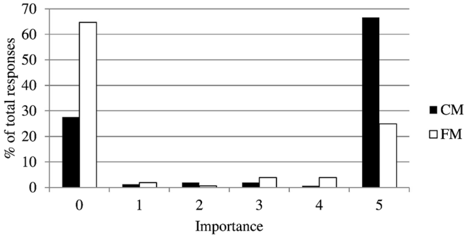
The research described in this paper was designed to identify the factors that influence the importance small-scale farmers place on different marketing channels of short food supply chains. The focus concerns two entirely different types of market that are present in the bigger cities in Hungary: ‘conventional’ markets where there are no restrictions on locality but the farmer-market relationship is based on binding contracts, and newly-emergent farmers’ markets at which only local growers can sell ad hoc, using their own portable facilities. Results are based on a survey that was conducted in 2013 among 156 Hungarian market oriented farmer-vendors at different types of market and confirm that different markets are visited by different types of farmers. Farmers who favour conventional markets are typically less educated, operate on smaller scales and are more committed to their chosen markets via long-term contracts (which reduce the probability of their trying other outlets). The preference for farmers’ markets is stronger with farmers who are more open to cooperation, have specific investment plans for developing their farms and among those who are specifically looking to directly interact with their customers to avoid middlemen. The relevance of the findings is highlighted by the ongoing Short Food Supply Chain Thematic Sub-programme in the present European Union financing period; farmers’ profiles in any given marketing channel must be understood if short food supply chains are to be effectively promoted. Different types of small-scale farmers will benefit from different supporting frameworks, interventions, and initiatives.
Overview
The claims and statistics of this paper haven’t been checked yet.
Free: it reads the open-access text and checks the first 5 claims that cite a source we can check. Create a free account to check every claim.
Integrity signals
Registry
Cites
Statistics
Figures
Verification
Claims the paper makes
The claims and statistics of this paper haven’t been checked yet.
Free: it reads the open-access text and checks the first 5 claims that cite a source we can check. Create a free account to check every claim.
Claims other papers make about this one
Each is checked against this paper’s own text: does it say what the citing paper says it does?
The source backs part of the claim, not all of it — or backs it for a different population, condition or comparison.
In the citing paper
“Beginning producers face higher entry barriers, particularly in intermediated channels requiring formal contracts and consistent supply [35,44].”
From Who Reaches the Consumer? A Network Analysis of Market Reach Factors of Slovakia's Short Food Supply Chains (2026) · cites this paper as [44]
Experimental — accuracy not yet measuredThe source backs part of the claim, not all of it — or backs it for a different population, condition or comparison.
In the citing paper
“Processing and product diversification further increase market reach by enabling producers to stabilize income across seasons and respond to heterogeneous urban demand [1,35,44].”
From Who Reaches the Consumer? A Network Analysis of Market Reach Factors of Slovakia's Short Food Supply Chains (2026) · cites this paper as [44]
Experimental — accuracy not yet measuredThe source backs part of the claim, not all of it — or backs it for a different population, condition or comparison.
In the citing paper
“Organic producers are frequently documented as relying on direct sales channels [41,44,54].”
From Who Reaches the Consumer? A Network Analysis of Market Reach Factors of Slovakia's Short Food Supply Chains (2026) · cites this paper as [44]
Experimental — accuracy not yet measuredThe source backs part of the claim, not all of it — or backs it for a different population, condition or comparison.
In the citing paper
“The literature documents a significant effect of certification on market penetration, driven by increased consumer trust and higher perceived product value, and shows that it facilitates access to specialized markets [23,44,52] and, in some contexts, to international markets [53].”
From Who Reaches the Consumer? A Network Analysis of Market Reach Factors of Slovakia's Short Food Supply Chains (2026) · cites this paper as [44]
Experimental — accuracy not yet measuredThe cited source says what the claim attributes to it.
In the citing paper
“This result contrasts with literature that presents diversification as a strategy for risk reduction and expansion of distribution opportunities [1,35,44].”
From Who Reaches the Consumer? A Network Analysis of Market Reach Factors of Slovakia's Short Food Supply Chains (2026) · cites this paper as [44]
2 more claims about this paper
Create a free account to see every claim other papers make about this one.
Self-check
Percentages, sums and reported differences re-computed from the paper’s own numbers.
The self-check needs the paper’s full text.
Citations
Cites
Transaction-Cost Economics: The Governance of Contractual Relations
Williamson, O. E. (1979) · The Journal of Law and Economics · doi:10.1086/466942 · Cited by 10,190 · cited 2×
“The TCE theory starts from the assumptions of bounded rationality and opportunism and its main objective is to assign a tailormade governance structure that reduces transaction costs (Williamson 1979; James 2000; Schweitzer et al.”
(2013) · American Economic Review · doi:10.1257/aer.103.6.i · Cited by 7,220
Regression Models for Categorical Dependent Variables Using Stata
Guzmán, J. (2013) · Puerto Rico health sciences journal · Cited by 5,304
Regression Models for Categorical Dependent Variables Using Stata
Long, J. S., & Jeremy Freese, A. (2014) · Cited by 4,624
The Changing Role of Marketing in the Corporation
Webster, F. E. (1992) · Journal of Marketing · doi:10.1177/002224299205600402 · Cited by 2,768 · cited 4×
“2001): spot market, non-contractual relationship p with nonqualified partner, non-contractual relationship with qualified partner, contractual relationship, relation-based alliance, equity-based alliance and vertical integration (Williamson 1973; Webster 1992; Peterson et al.”
Influential(2018) · Journal of Business Logistics · doi:10.1002/(issn)2158-1592 · Cited by 2,522
Renting, H., Marsden, T. K., & Banks, J. (2003) · Environment and Planning A: Economy and Space · doi:10.1068/a3510 · Cited by 1,985 · cited 3×
“SFSCs typically involve the use of various marketing channels (Renting et al. 2003; Watts et al. 2005; Jarosz 2008).”
Performance Outcomes of Purchasing Arrangements in Industrial Buyer-Vendor Relationships
Noordewier, T. G., John, G., & Nevin, J. R. (1990) · Journal of Marketing · doi:10.1177/002224299005400407 · Cited by 1,644 · cited 4×
“The theoretically grounded classification of Gellynck and Molnár (2009) uses the following seven interrelated governance structures forming a continuum (John and Weitz 1988; Noordewier et al. 1990; Sporleder 1992; Henderson 1994; Peterson et al. 2001): spot market, non-contractual relationship p with nonqualified part…”
InfluentialEmbeddedness and local food systems: notes on two types of direct agricultural market
Hinrichs, C. C. (2000) · Journal of Rural Studies · doi:10.1016/s0743-0167(99)00063-7 · Cited by 1,396 · cited 2×
“2013), especially, when quantitative studies are involved (e.g. Hardesty and Leff 2010; for qualitative examples see e.g.; Hinrichs 2000; Brown and Miller 2008; Kneafsey et al. 2013).”
The Changing Role of Marketing in the Corporation
Webster, F. E. (1992) · Journal of Marketing · doi:10.2307/1251983 · Cited by 1,124
Research works printed but not linked: 5
- 35. Juhász, A. 2012. A közvetlen értékesítés szerepe és lehetőségei a hazai élelmiszerek piacrajutásában [The current performance and opportunities of farm-direct sales in the food supply chain in Hungary]. Agrárgazdasági Tanulmányok [Agroeconomic Studies]. Budapest: Agrárgazdasági Kutató Intézet [Research Institute of Agricultural Economics].
- 41. Lass, D., A. Bevis, G. Stevenson, J. Hendrickson, and K. Ruhf. 2003. Community supported agriculture entering the 21st century: Results from the 2001 national survey. Amherst: University of Massachusetts, Department of Resource Economics.
- 45. Macneil, I. R. 1978. Contracts: Adjustment of Long Term Relations Under Classical, Neoclassical, and Relational Contract Law. Northwestern University Law Review of Agricultural Economics 72: 854-905.
- 46. Martinez, S., M. Hand, M. Da Pra, S. Pollack, K. Ralston, T. Smith, S. Vogel, S. Clark, L. Lohr, S. Low, and C. Newman. 2010. Local Food Systems: Concepts, Impacts, and Issues. ERR. 97. Waonfer- emshington: U.S. Department of Agriculture, Economic Research Service.
- 66. Trent, R. J. 2005. Why RELATIONSHIPS Matter. Supply Chain Man- agement Review 9 (8): 53-60.
Cited by
Local food systems: Reviewing two decades of research
Enthoven, L., & Van den Broeck, G. (2021) · Agricultural Systems · doi:10.1016/j.agsy.2021.103226 · Cited by 339
Food Supply Chains and Short Food Supply Chains: Coexistence conceptual framework
Thomé, K. M., Cappellesso, G., Ramos, E. L. A., & Duarte, S. C. D. L. (2021) · Journal of Cleaner Production · doi:10.1016/j.jclepro.2020.123207 · Cited by 138
Wang, M., Kumar, V., Ruan, X., Saad, M., Garza-Reyes, J. A., & Kumar, A. (2022) · Operations Management Research · doi:10.1007/s12063-021-00188-x · Cited by 80
“Studies focusing on FMs found that the direct interactions can help to regain the profit shared by intermediates in conventional food supply systems and facilitate economic development of local areas (Watts et al. 2011; Benedek et al. 2017).”
BackgroundAntecedents of farmers’ willingness to participate in short food supply chains
Charatsari, C., Kitsios, F., Stafyla, A., Aidonis, D., & Lioutas, E. D. (2018) · British Food Journal · doi:10.1108/bfj-09-2017-0537 · Cited by 69
Benedek, Z., Fertő, I., Marreiros, C., de Aguiar, P. M., Pocol, C. B., Čechura, L., Põder, A., Pääso, P., & Bakucs, Z. (2021) · PLoS ONE · doi:10.1371/journal.pone.0251715 · Cited by 63
“Our results implied that in most countries, producers involved in direct marketing typically used 1–2 or 1–3 channels before the outbreak of the pandemic (this magnitude corresponds to the findings of [61]); the case of Romania stands out due to the higher number of channels that were actively used by many.”
ResultSelf-citationIntermediate short food supply chains: a systematic review
Renkema‐Singh, M., & Hilletofth, P. (2022) · British Food Journal · doi:10.1108/bfj-06-2022-0463 · Cited by 63
Consumers’ purchase behavior in short food supply chains using social commerce in Indonesia
Sadeli, A. H., Perdana, T., Deliana, Y., & Onggo, B. (2022) · Journal of Cleaner Production · doi:10.1016/j.jclepro.2022.135812 · Cited by 46
“SFSCs can vary from a direct supply chain with no intermediaries to indirect supply chains that have a single or limited number of in-termediaries between producers and consumers (Aubry and Kebir, 2013; Benedek et al., 2018).”
Mobilising the Past: Towards a Conceptualisation of Retro‐Innovation
Zagata, L., Sutherland, L., Hrabák, J., & Lošťák, M. (2020) · Sociologia Ruralis · doi:10.1111/soru.12310 · Cited by 67
Short Food Supply Chains in Europe: Scientific Research Directions
Evola, R. S., Peira, G., Varese, E., Bonadonna, A., & Vesce, E. (2022) · Sustainability · doi:10.3390/su14063602 · Cited by 66
“…such as gender, income and age were also detected in the consumer samples of the various studies, but what stood out most during the full text screening was the widespread agreement on the finding that the consumers involved in SFSCs generally have a high level of education [11,53,66,74,83,85,105].”
Short food supply chains: the link between participation and farmers' competencies
Charatsari, C., Kitsios, F., & Lioutas, E. D. (2020) · Renewable Agriculture and Food Systems · doi:10.1017/s1742170519000309 · Cited by 58
Community Supported Agriculture Farmers’ Perceptions of Management Benefits and Drawbacks
Samoggia, A., Perazzolo, C., Kocsis, P., & Prete, M. D. (2019) · Sustainability · doi:10.3390/su11123262 · Cited by 61
“The shared responsibility by CSA members is one of the main differences between a CSA and a vegetable box scheme [4,14].”
BackgroundMarketing to the foodshed: Why do farmers participate in local food systems?
Schoolman, E. D., Morton, L. W., Arbuckle, J. G., & Han, G. (2021) · Journal of Rural Studies · doi:10.1016/j.jrurstud.2020.08.055 · Cited by 54
Diwakar, K. C., Roberts, R. E., & Quach, S. (2022) · Asia Pacific Journal of Marketing and Logistics · doi:10.1108/apjml-08-2021-0560 · Cited by 43
Benedek, Z., Baráth, L., Fertő, I., Merino‐Gaibor, E., Molnár, A., Orbán, É., & Nemes, G. (2022) · Sociologia Ruralis · doi:10.1111/soru.12358 · Cited by 44
“, 2012); thus, purely being open to cooperation is a sign of open-mindedness among them (Benedek et al., 2018).”
BackgroundResultSelf-citationThe Multiplier Effects of Food Relocalization: A Systematic Review
Benedek, Z., Fertő, I., & Szente, V. (2020) · Sustainability · doi:10.3390/su12093524 · Cited by 45
Self-citationConnolly, R., Bogue, J., & Repar, L. A. (2022) · Sustainability · doi:10.3390/su141811626 · Cited by 45
Short Food Supply Chains as a Practical Implication of Sustainable Development Ideas
Raftowicz-Filipkiewicz, M., Solarz, K., & Dradrach, A. (2024) · Sustainability · doi:10.3390/su16072910 · Cited by 33
Mapping the intellectual structure of short food supply chains research: a bibliometric analysis
Luo, J., Liang, Y., & Bai, Y. (2021) · British Food Journal · doi:10.1108/bfj-05-2021-0465 · Cited by 37
Exploring the nexus between poor governance and household food security
Khan, Y., Bojnec, Š., Daraz, U., & Zulpiqar, F. (2024) · Economic Change and Restructuring · doi:10.1007/s10644-024-09679-w · Cited by 28
“A dynamic state facilitates a viable country by managing the production, distribution, and consumption of goods and services (Benedek et al. 2018).”
PRIORITISING REQUIREMENTS OF INFORMATIONAL SHORT FOOD SUPPLY CHAIN PLATFORMS USING A FUZZY APPROACH
Burgess, P., & Sunmola, F. T. (2021) · Procedia Computer Science · doi:10.1016/j.procs.2021.01.335 · Cited by 29
Improving the design of local short food supply chains: Farmers’ views in Wallonia, Belgium
Enthoven, L., Skambracks, M., & den Broeck, G. V. (2023) · Journal of Rural Studies · doi:10.1016/j.jrurstud.2023.01.016 · Cited by 24
Yang, Y., Lian, D., Zhang, Y., Wang, D., & Wang, J. (2024) · Journal of the Knowledge Economy · doi:10.1007/s13132-024-01742-1 · Cited by 27
RetractedO’Connor, G., Reis, K., Desha, C., & Burkett, I. (2024) · Agriculture and Human Values · doi:10.1007/s10460-024-10601-3 · Cited by 25
Maas, M., Abebe, G. K., Hartt, C. M., & Yiridoe, E. K. (2022) · Sustainability · doi:10.3390/su14138216 · Cited by 22
“In contrast, a similar study in Italy did not find SFSCs more environmentally friendly [53].”
ResultInfluentialDo Farmers Participating in Short Food Supply Chains Use Less Pesticides? Evidence from France
Chiaverina, P., Drogué, S., & Jacquet, F. (2023) · Ecological Economics · doi:10.1016/j.ecolecon.2023.108034 · Cited by 20
Horvath, C., Koning, M., Raton, G., & Combes, F. (2024) · Food Policy · doi:10.1016/j.foodpol.2024.102763 · Cited by 18
Benedek, Z., Balogh, P. G., Baráth, L., Fertő, I., Lajos, V., Orbán, É., Szabó, G., & Nemes, G. (2020) · EuroChoices · doi:10.1111/1746-692x.12292 · Cited by 18
Self-citationOn the transformative potential of Hungarian local food-buying clubs
Benedek, Z. (2023) · Frontiers in Sustainable Food Systems · doi:10.3389/fsufs.2023.1124877 · Cited by 15
“This study presents insights from Hungary, which has an established tradition of direct consumer-producer interaction through conventional markets, on-farm sales, and other initiatives (Benedek et al., 2018), although the development of modern AFNs is considered to have significant potential (Benedek and Balázs, 2016;…”
BackgroundSelf-citationMolist, A. M. I., Kallas, Z., & Fuentes, O. V. G. (2024) · Sustainability · doi:10.3390/su16062505 · Cited by 14
Achieving fairness in the food system
Onyeaka, H., Duan, K., Miri, T., Pang, G., Shiu, E., Pokhilenko, I., Ögtem‐Young, Ö., Jabbour, L., Miles, K., Khan, A., et al. (2024) · Food and Energy Security · doi:10.1002/fes3.572 · Cited by 13
Exploring Attractive Quality Requirements for Short Food Supply Chain Digital Platforms
Burgess, P., & Sunmola, F. T. (2022) · International Journal of Information Systems and Supply Chain Management · doi:10.4018/ijisscm.304372 · Cited by 11
Triple Bottom Line Analysis in an Agribusiness Supply Chain
Zanin, A., Magro, C. B. D., Mazzioni, S., & Afonso, P. (2020) · Lecture notes on multidisciplinary industrial engineering · doi:10.1007/978-3-030-43616-2_28 · Cited by 11
Wang, M., Kumar, P. V., Ruan, X., & Neutzling, D. M. (2019) · Revista Ciências Administrativas · doi:10.5020/2318-0722.2018.9067 · Cited by 11
Navigating high-value marketing channels for fruit and vegetable farmers in India
Saini, M., & Savita, U. (2025) · International Journal of Retail & Distribution Management · doi:10.1108/ijrdm-02-2024-0082 · Cited by 10
Rana, M., & Maharjan, K. L. (2022) · Sustainability · doi:10.3390/su14042357 · Cited by 10
Pardo, C. M., & Fikar, C. (2024) · The International Journal of Logistics Management · doi:10.1108/ijlm-03-2024-0150 · Cited by 9
Unraveling critical success factors of local food supply chains: a systematic literature review
Saleh, A., Hilletofth, P., & Fobbe, L. (2025) · Journal of Business and Industrial Marketing · doi:10.1108/jbim-01-2024-0027 · Cited by 8
Filimonau, V., Hattingh, L., Neave, S., & Parfitt, C. (2024) · Journal of Foodservice Business Research · doi:10.1080/15378020.2024.2372483 · Cited by 8
“Research on SFSCs is particularly needed in developing economies where the number of smallholder farmers is high, but they do not have access to international food markets (Benedek et al., 2018).”
Resilience of short food supply chains to external shocks: an Ecuadorian cocoa case study
Merino‐Gaibor, E., Rivas, A. A. A., de Barcellos, M. D., & Gellynck, X. (2025) · Agroecology and Sustainable Food Systems · doi:10.1080/21683565.2025.2524739 · Cited by 9
“Among those most affected are smallholder farmers, who often operate in resource-constrained environments with limited access to infrastructure, markets, and financial services (Bene 2020; Benedek, Fertő, and Molnár 2017).”
Investigating capabilities of intermediaries in short food supply chains: A resource-based view
Renkema-Singh, M., & Hilletofth, P. (2025) · Agricultural and Food Economics · doi:10.1186/s40100-025-00432-z · Cited by 6
Sustainability of Meat Value Chain: Bibliometric Review of Main Trends and Theoretical Connections
Traça, A. B., Campos, S., Dionísio, A., Jesus, M. S., Santos, J., & Mata, F. (2025) · Sustainability · doi:10.3390/su17051773 · Cited by 6
“This model not only reinforces environmental sustainability, but also allows for a fairer distribution of value and promotes transparency, consolidating itself as an effective strategy to face the contemporary challenges of food production and sustainability [34,37].”
The wellbeing paradox in Hungarian local sustainable agriculture: a health psychology approach
Birtalan, I. L., Fertő, I., Neulinger, Á., Rácz, J., & Oláh, A. (2022) · BMC Public Health · doi:10.1186/s12889-022-14643-2 · Cited by 7
“Not surprisingly, farmers who are actively involved in a local food environment show commitment to food quality, environmental, and social benefits [15, 33, 43].”
BackgroundSelf-citationFarmer involvement in short food supply chains: a systematic literature review
Chiaverina, P., Drogué, S., Jacquet, F., Lev, L. S., & King, R. P. (2024) · RePEc: Research Papers in Economics · doi:10.22004/ag.econ.339892 · Cited by 5
Salman, M., Fertő, I., Alobid, M., & Pék, É. (2020) · Irrigation and Drainage · doi:10.1002/ird.2538 · Cited by 5
Self-citationGreening the logistics operations in the agri-food sector: What do sustainability reports disclose
Kontopanou, M., Mouzakitis, Y., & Tsoulfas, G. Τ. (2024) · E3S Web of Conferences · doi:10.1051/e3sconf/202458511007 · Cited by 4
Kistermelői sikerek a COVID-19 járvány első hullámában: a személyesség szerepe az értékesítésben
Benedek, Z., Balogh, P. G., Baráth, L., Fertő, I., Lajos, V., Orbán, É., Szabo, G. G., & Nemes, G. (2020) · Statisztikai Szemle · doi:10.20311/stat2020.12.hu1398 · Cited by 4
Self-citationToward more sustainable food supply chains: insights from short food supply chains in Jordan
Abdulkareem, M. A., Alsoussi, A., & Shbikat, N. (2026) · Frontiers in Sustainability · doi:10.3389/frsus.2026.1705470 · Cited by 3
Câmara, S. B., & Andreatta, T. (2021) · Revista Brasileira de Gestão e Desenvolvimento Regional · doi:10.54399/rbgdr.v17i2.6334 · Cited by 3
Križan, F., Bilková, K., Novotná, M., Kunc, J., & Hencelová, P. (2023) · Moravian Geographical Reports · doi:10.2478/mgr-2023-0017 · Cited by 3
Smędzik-Ambroży, K., Sapa, A., Borychowski, M., & Stępień, S. (2024) · Annals of the Polish Association of Agricultural and Agribusiness Economists · doi:10.5604/01.3001.0054.5218 · Cited by 2
What makes a devoted local-food-buying club customer?
Benedek, Z., & Fertő, I. (2024) · Heliyon · doi:10.1016/j.heliyon.2024.e40030 · Cited by 5
Self-citationVandenhaute, H., Gellynck, X., & Steur, H. D. (2025) · Agribusiness · doi:10.1002/agr.22028 · Cited by 2
Forgács, C. (2021) · Proceedings of the International Scientific Conference "Economic Science for Rural Development"/Economic Science for Rural Development · doi:10.22616/esrd.2021.55.045 · Cited by 2
Xu, Y., Zhang, M., Chen, P., & Fold, N. (2025) · Geoforum · doi:10.1016/j.geoforum.2025.104455 · Cited by 1
Zuhri, N. M., Rahayu, E. S., Kusnandar, K., & Harisudin, M. (2023) · Journal of International Conference Proceedings · doi:10.32535/jicp.v6i1.2236 · Cited by 1
Andreatta, T., Câmara, S. B., & Brandão, J. B. (2023) · Redes · doi:10.17058/redes.v28i1.17908 · Cited by 1
Final Reflections—Short Food Supply Chains in the Agri-Food Context: Charting the Future Agenda
Alessandrini, M. (2024) · Studies in European economic law and regulation · doi:10.1007/978-3-031-69390-8_8 · Cited by 1
Monticone, F., & Samoggia, A. (2025) · Cities · doi:10.1016/j.cities.2025.105806 · Cited by 1
Varecha, L., Jarábková, J., & Hrivnák, M. (2026) · Agriculture · doi:10.3390/agriculture16060649
“Beginning producers face higher entry barriers, particularly in intermediated channels requiring formal contracts and consistent supply [35,44].”
InfluentialProspettive delle filiere corte in Europa attraverso il progetto SMARTCHAIN
Xhakollari, V., Medici, M., Canavari, M., & Castellini, A. (2020) · Archivio istituzionale della ricerca (Alma Mater Studiorum Università di Bologna) · Cited by 1
de Queiroz, S. S., de Grandi, A. M., & Plein, C. (2022) · RECIMA21 - Revista Científica Multidisciplinar · doi:10.47820/recima21.v3i1.1057
How to Engage Regional Food Producers in Collaborative Supply Models: Lessons from Rural BavariaPreprint
Pfennig, G., & Zajac, S. (2025) · SSRN Electronic Journal · doi:10.2139/ssrn.5608290
The evolution and dynamics of farmer engagement in direct-to-consumer channels in France
Chiaverina, P., & Drogué, S. (2025) · European Review of Agricultural Economics · doi:10.1093/erae/jbaf040
Török, Á. (2025) · Studies in Agricultural Economics · doi:10.7896/j.3252
Birtalan, I. L., Fertő, I., Neulinger, Á., Rácz, J., & Oláh, A. (2024) · Figshare · doi:10.6084/m9.figshare.26553611
Self-citationFragnon, A. C. (2024) · Open Repository and Bibliography (University of Luxembourg)
Petruzzelli, M. (2024) · AMS Dottorato Institutional Doctoral Theses Repository (University of Bologna) · doi:10.48676/unibo/amsdottorato/11497
TỔNG QUAN VỀ SỰ THAM GIA CỦA HỘ NÔNG DÂN TRONG HỆ THỐNG THỰC PHẨM ĐỊA PHƯƠNG
Bùi, T. K. H., & Phạm, V. H. (2025) · Tạp chí Khoa học Nông nghiệp Việt Nam · doi:10.31817/tckhnnvn.2025.23.11.11
Farms and marketing channels: a network-based interpretation of connectivity and resilience
Malekinezhad, F., Maye, D., & Gorton, M. (2026) · British Food Journal · doi:10.1108/bfj-06-2025-0841
Beyond roles: shared value orientations and attitudes in local food systems
Benedek, Z., Nemes, G., Fertő, I., & Bakucs, Z. (2026) · Agriculture and Human Values · doi:10.1007/s10460-026-10862-0
“Others, often traditional smallholders, face structural and informational barriers that limit their involvement (Benedek et al. 2018 ).”
InfluentialSelf-citationHelyi élelmiszerek és rövid ellátási láncok Székelyföldön
Molnár, J. (2026) · doi:10.54598/006960
Une analyse de la durabilité et de la dynamique des circuits courts
Chiaverina, P. (2024) · theses.fr (ABES) · doi:10.70675/4d1ad13cz86a1z46d8zb101z6d8bed5e70dd
Exploring farmers' willingness to join short food supply chains
Ion, R., Anton, T., Popa, O., Mîț, A., & Tudorache, C. (2026) · Western Balkan Journal of Agricultural Economics and Rural Development · doi:10.5937/wbjae2501049a
“At the same time, the short chain also contributes to reducing pollution, because the distribution route is a short one (Benedek et al., 2018; Rucabado Palomar, Cuéllar Padilla, 2020).”
Bringas, I. C. T., Dibene, C. G. C., & Rodríguez, J. M. P. (2026) · Agricultura Sociedad y Desarrollo · doi:10.22231/asyd.v23i3.1836
Stępień, S., Zdráhal, I., Hupková, D., Maican, S., & Muntean, A. C. (2026) · Central European Economic Journal · doi:10.2478/ceej-2026-0018
Sadeli, A. H., Onggo, B. S., & Perdana, T. (2026) · Cleaner Logistics and Supply Chain · doi:10.1016/j.clscn.2026.100382
Metadata
- Authors
- Benedek, Z., Fertő, I., & Molnár, A.
- Affiliations
- Institute of Economics (HU)
- University of Kaposvár (HU)
- Ghent University (BE)
- Corresponding author
- Benedek, Zsófia
- Venue
- Agriculture and Human Values
- Published
- 2017-10-23
- Volume
- 35
- Issue
- 2
- Pages
- 383-398
- ISSN
- 0889-048X (ISSN-L)
- 1572-8366
- OpenAlex
- W2766768126
- Cited by
- 71
- References
- 71
- Citations by year
- 2026: 9 · 2025: 10 · 2024: 16 · 2023: 6 · 2022: 10 · 2021: 9 · 2020: 7 · 2019: 3 · 2018: 1
- FWCI
- 2.96
- Type
- journal article
- Language
- en
- Open access
- hybrid
- doi.org
- Licence
- cc-by
- creativecommons.org/licenses/by/4.0 (tdm)
- Locations
- Agriculture and Human Values (publishedVersion, cc-by)
- Repository of the Academy's Library (Library of the Hungarian Academy of Sciences) (acceptedVersion)
- Ghent University Academic Bibliography (Ghent University) (submittedVersion, cc-by)
- RePEc: Research Papers in Economics (submittedVersion)
- Funders
- Országos Tudományos Kutatási Alapprogramok (OTKA PD 109177, OTKA PD 116226)
- Topics
- Life Sciences › Agricultural and Biological Sciences › Plant Science › Organic Food and Agriculture
- Life Sciences › Agricultural and Biological Sciences › General Agricultural and Biological Sciences › Agricultural Innovations and Practices
- Social Sciences › Economics, Econometrics and Finance › Economics and Econometrics › Agricultural economics and policies
- Keywords
- short food supply chains, smallholder farmers, farmers' markets, distribution channels, long-term contracts, farmer education, farm size, farmer cooperation, intermediaries
About these checks
Registry, retraction, Cites and statistics results are computed, not judged, with one exception: a printed reference that no index lists is read once by a model before it counts as a citation error. Claims are extracted by a model and kept only when their quote appears verbatim in the text; each cited source is then checked, with a model’s help, for whether it says what the claim relies on. Those verdicts can be wrong — read the claim’s quote and the cited source before relying on one.
Statistics and arithmetic are recomputed, not judged.
Confidence bands are shown only for fields calibrated on our annotated test set. None is calibrated yet, so no band is shown.
What counts as a claim ›How we measure confidence ›How we check this ›
Are you an author, or do you see a problem with this page? Request a review
Data sources
Bibliographic data: Semantic Scholar, OpenAlex, Crossref.
Contains information from the Semantic Scholar Academic Graph Datasets, made available under the ODC Attribution License (ODC-BY 1.0).
Semantic Scholar’s data is described in: Kinney, R., et al. (2023). The Semantic Scholar Open Data Platform. arXiv:2301.10140.
