

Content moderation by LLM: from accuracy to legitimacy
Open accessThe DOI matches its Crossref record; 125 of the 125 references it cites were found in a registry or an index.
Abstract
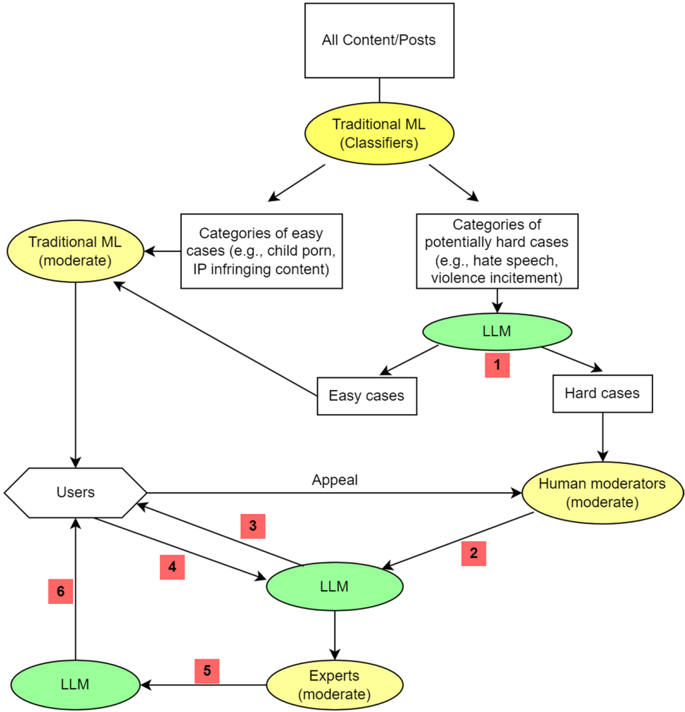
One trending application of LLM (large language model) is to use it for content moderation in online platforms. Most current studies on this application have focused on the metric of accuracy —the extent to which LLMs make correct decisions about content. This article argues that accuracy is insufficient and misleading because it fails to grasp the distinction between easy cases and hard cases, as well as the inevitable trade-offs in achieving higher accuracy. Closer examination reveals that content moderation is a constitutive part of platform governance, the key to which is to gain and enhance legitimacy . Instead of making moderation decisions correctly, the chief goal of LLMs is to make them legitimate. In this regard, this article proposes a paradigm shift from the single benchmark of accuracy towards a legitimacy-based framework for evaluating the performance of LLM moderators. The framework suggests that for easy cases, the key is to ensure accuracy, speed, and transparency, while for hard cases, what matters is reasoned justification and user participation. Examined under this framework, LLMs’ real potential in moderation is not accuracy improvement. Rather, LLMs can better contribute in four other aspects: to conduct screening of hard cases from easy cases, to provide quality explanations for moderation decisions, to assist human reviewers in getting more contextual information, and to facilitate user participation in a more interactive way. To realize these contributions, this article proposes a workflow for incorporating LLMs into the content moderation system. Using normative theories from law and social sciences to critically assess the new technological application, this article seeks to redefine LLMs’ role in content moderation and redirect relevant research in this field.
Overview
The claims and statistics of this paper haven’t been checked yet.
Free: it reads the open-access text and checks the first 5 claims that cite a source we can check. Create a free account to check every claim.
Integrity signals
Registry
Cites
Statistics
Figures
Verification
Claims the paper makes
The claims and statistics of this paper haven’t been checked yet.
Free: it reads the open-access text and checks the first 5 claims that cite a source we can check. Create a free account to check every claim.
Claims other papers make about this one
Each is checked against this paper’s own text: does it say what the citing paper says it does?
The source backs part of the claim, not all of it — or backs it for a different population, condition or comparison.
In the citing paper
“Their operation on socially sedimented corpora reflects and extends human purposes [6,49] while simultaneously introducing new teleological orientations, such as filtering, ranking, and generating content [34].”
From 4E cognition and the coevolution of human–AI interaction (2025) · cites this paper as [34]
Experimental — accuracy not yet measured
Self-check
Percentages, sums and reported differences re-computed from the paper’s own numbers.
The self-check needs the paper’s full text.
Citations
Cites
Vaswani, A., Shazeer, N., Parmar, N., Uszkoreit, J., Jones, L., Gomez, A. N., Kaiser, L., & Polosukhin, I. (2017) · arXiv · doi:10.48550/arxiv.1706.03762 · Cited by 120,404 · cited 3×
“LLM can also self-evaluate their answers by measuring the level of confidence ([109], 3).”
BackgroundHuang, L., Yu, W., Ma, W., Zhong, W., Feng, Z., Wang, H., Chen, Q., Peng, W., Feng, X., Qin, B., et al. (2025) · ACM Transactions on Information Systems · doi:10.1145/3703155 · Cited by 4,688 · cited 1×
“It allows us to rethink LLMs’ real potential in content moderation and platform governance, as well as what improvements can be made to further realize its potential.”
Intercoder Reliability in Qualitative Research: Debates and Practical Guidelines
O’Connor, C., & Joffe, H. (2020) · International Journal of Qualitative Methods · doi:10.1177/1609406919899220 · Cited by 3,871 · cited 1×
“One salient issue, as noted by many researchers in this field, is the intercoder disagreement, referring to the instance that different moderators cannot reach consensus on a case ([87]).”
BackgroundPositivism and the Separation of Law and Morals
Hart, H. L. A. (1958) · Harvard Law Review · doi:10.2307/1338225 · Cited by 1,929
Waldron, J. (1999) · Oxford University Press eBooks · doi:10.1093/acprof:oso/9780198262138.001.0001 · Cited by 1,649
Çömlekçi, M. F. (2019) · Kırklareli University - AVESIS · Cited by 1,607
The Brussels Effect: How the European Union Rules the World
Bradford, A. (2020) · doi:10.1093/oso/9780190088583.001.0001 · Cited by 1,349
Bias and Fairness in Large Language Models: A Survey
Gallegos, I. O., Rossi, R. A., Barrow, J., Tanjim, M. M., Kim, S., Dernoncourt, F., Yu, T., Zhang, R., & Ahmed, N. K. (2024) · Computational Linguistics · doi:10.1162/coli_a_00524 · Cited by 1,245 · cited 1×
“It allows us to rethink LLMs’ real potential in content moderation and platform governance, as well as what improvements can be made to further realize its potential.”
ChatGPT Outperforms Crowd-Workers for Text-Annotation Tasks
Gilardi, F., Alizadeh, M., & Kubli, M. (2023) · arXiv · doi:10.48550/arxiv.2303.15056 · Cited by 1,207 · cited 4×
“And some studies indicated that LLM’s accuracy score is higher than the outsourced human moderators ([46], 2).”
BackgroundMethodInfluentialChatGPT outperforms crowd workers for text-annotation tasks
Gilardi, F., Alizadeh, M., & Kubli, M. (2023) · Proceedings of the National Academy of Sciences · doi:10.1073/pnas.2305016120 · Cited by 1,197 · cited 4×
“And some studies indicated that LLM’s accuracy score is higher than the outsourced human moderators ([46], 2).”
BackgroundMethodInfluentialCan LLMs Express Their Uncertainty? An Empirical Evaluation of Confidence Elicitation in LLMs
Xiong, M., Hu, Z., Lu, X., Li, Y., Fu, J., He, J., & Hooi, B. (2023) · arXiv · doi:10.48550/arxiv.2306.13063 · Cited by 618 · cited 3×
“LLM moderation is a costly practice ([25]; [68], 10).”
BackgroundSiren's Song in the AI Ocean: A Survey on Hallucination in Large Language Models
Zhang, Y., Li, Y., Cui, L., Cai, D., Liu, L., Fu, T., Huang, X., Zhao, E., Zhang, Y., Xu, C., et al. (2023) · arXiv · doi:10.48550/arxiv.2309.01219 · Cited by 544 · cited 1×
“Publication date: June 2025.”
Siren's Song in the AI Ocean: A Survey on Hallucination in Large Language Models
Zhang, Y., Li, Y., Cui, L., Cai, D., Liu, L., Fu, T., Huang, X., Zhao, E., Zhang, Y., Chen, Y., et al. (2025) · Computational Linguistics · doi:10.1162/coli.a.16 · Cited by 534 · cited 1×
“Publication date: June 2025.”
HateXplain: A Benchmark Dataset for Explainable Hate Speech Detection
Mathew, B., Saha, P., Yimam, S. M., Biemann, C., Goyal, P., & Mukherjee, A. (2021) · Proceedings of the AAAI Conference on Artificial Intelligence · doi:10.1609/aaai.v35i17.17745 · Cited by 513
Ethical and social risks of harm from Language Models
Weidinger, L., Mellor, J., Rauh, M., Griffin, C., Uesato, J., Huang, P.-S., Cheng, M., Glaese, M., Balle, B., Kasirzadeh, A., et al. (2021) · arXiv · doi:10.48550/arxiv.2112.04359 · Cited by 477 · cited 4×
“Taking what the majority holds as the “truth”, LLM “may reinforce majority views and further marginalise minority per-spectives” ([9], 23).”
BackgroundInfluentialContent moderation, AI, and the question of scale
Gillespie, T. (2020) · Big Data & Society · doi:10.1177/2053951720943234 · Cited by 437 · cited 2×
“This might be a challenging task since “it is not clear how to know in advance which areas are safely bulk and which are more controversial, as the landscape of controversy changes over time” ([47], 3).”
BackgroundMore human than human: measuring ChatGPT political bias
Motoki, F., Pinho Neto, V., & Rodrigues, V. (2024) · Public Choice · doi:10.1007/s11127-023-01097-2 · Cited by 329 · cited 1×
“Publication date: June 2025.”
Tyler, T. R., Goff, P. A., & MacCoun, R. J. (2015) · Psychological Science in the Public Interest · doi:10.1177/1529100615617791 · Cited by 280 · cited 1×
“Another crucial component of legitimacy is procedural justice, which refers to the approach, manner, and process in which rules are enacted and enforced [106].”
BackgroundWatch Your Language: Investigating Content Moderation with Large Language Models
Kumar, D., AbuHashem, Y. A., & Durumeric, Z. (2024) · Proceedings of the International AAAI Conference on Web and Social Media · doi:10.1609/icwsm.v18i1.31358 · Cited by 233
Huang, F., Kwak, H., & An, J. (2023) · arXiv · doi:10.48550/arxiv.2302.07736 · Cited by 231 · cited 5×
“Sometimes, LLM may be uncertain about its reasoning, expressing confusion like a human ([57], 2).”
BackgroundInfluentialHuang, F., Kwak, H., & An, J. (2023) · Companion Proceedings of the ACM Web Conference 2023 · doi:10.1145/3543873.3587368 · Cited by 224 · cited 5×
“Sometimes, LLM may be uncertain about its reasoning, expressing confusion like a human ([57], 2).”
BackgroundInfluentialDworkin, R. (1975) · Harvard Law Review · doi:10.2307/1340249 · Cited by 217
Jhaver, S., Bruckman, A., & Gilbert, E. (2019) · Proceedings of the ACM on Human-Computer Interaction · doi:10.1145/3359252 · Cited by 203 · cited 1×
“In addition, reading explanations of moderation decisions is an educational opportunity for users to learn and internalize the community norms [59].”
BackgroundArtificial Intelligence & Human Rights: Opportunities & Risks
Raso, F., Hilligoss, H., Krishnamurthy, V., Bavitz, C., & Kim, L. Y. (2018) · SSRN Electronic Journal · doi:10.2139/ssrn.3259344 · Cited by 189 · cited 1×
“As ([90], 38) summarized, “the largest online platforms, such as Facebook and Google, exercise more power over our right to free expression than any court, king, or president ever has—in view of the very significant percentage of human discourse that occurs within the boundaries of these ‘walled…”
BackgroundHallucination is Inevitable: An Innate Limitation of Large Language Models
Xu, Z., Jain, S., & Kankanhalli, M. (2024) · arXiv · doi:10.48550/arxiv.2401.11817 · Cited by 180
Suzor, N. (2018) · Social Media + Society · doi:10.1177/2056305118787812 · Cited by 171 · cited 2×
“Scholars have proposed various benchmarks or principles as indexes of legitimacy, such as transparency, democratic participation, and rule of law ([6], 5; [103], 2-4).”
BackgroundMolina, M. D., & Sundar, S. S. (2022) · Journal of Computer-Mediated Communication · doi:10.1093/jcmc/zmac010 · Cited by 170 · cited 3×
“Users could pose their comments on whether the justificaiton of a decision is powerful enough and whether some other factors should be considered in making the decision ([84], 3).”
BackgroundMethodGongane, V. U., Munot, M. V., & Anuse, A. D. (2022) · Social Network Analysis and Mining · doi:10.1007/s13278-022-00951-3 · Cited by 153 · cited 3×
“Ordinary human moderators are generally slower than machines but are quicker than expert moderators, as they spend about 10 to 30 seconds on average in moderating one piece of content ([50], 32; [52], 116).”
BackgroundTowards Explainable Harmful Meme Detection through Multimodal Debate between Large Language Models
Lin, H., Luo, Z., Gao, W. G., Ma, J., Wang, B., & Yang, R. (2024) · International World Wide Web Conference (WWW) · doi:10.1145/3589334.3645381 · Cited by 152 · cited 1×
“The model responds that the speech should not be removed because "additional context was needed to determine if it was part of hate speech or misinformation campaigns" ([ nr_Penagos2024 ]).”
Policy Legitimacy and the Supreme Court: The Sources and Contexts of Legitimation
Mondak, J. J. (1994) · Political Research Quarterly · doi:10.1177/106591299404700306 · Cited by 151 · cited 1×
“Substantive legitimacy evaluates the content of decisions – whether they are correct, fair, or conforming to some high values or principles ([85], 676-7).”
BackgroundDeep learning for hate speech detection: a comparative study
Malik, J. S., Qiao, H., Pang, G., & van den Hengel, A. (2024) · International Journal of Data Science and Analytics · doi:10.1007/s41060-024-00650-6 · Cited by 151 · cited 1×
“It allows us to rethink LLMs’ real potential in content moderation and platform governance, as well as what improvements can be made to further realize its potential.”
LLM-Mod: Can Large Language Models Assist Content Moderation?
Kolla, M., Salunkhe, S., Chandrasekharan, E., & Saha, K. (2024) · CHI Conference Extended Abstracts on Human Factors in Computing Systems (CHI EA) · doi:10.1145/3613905.3650828 · Cited by 142 · cited 3×
“When researchers provide the LLM with moderation decisions and relevant content rules, it can generate quality explanations for the decisions ([66]).”
BackgroundJhaver, S., Appling, D. S., Gilbert, E., & Bruckman, A. (2019) · Proceedings of the ACM on Human-Computer Interaction · doi:10.1145/3359294 · Cited by 139 · cited 2×
“Justification is one of the most important factors that affects users’ perception of the fairness of moderation ([ nr_Jhaveretal2019 ]).”
Data Augmentation using Large Language Models: Data Perspectives, Learning Paradigms and ChallengesPreprint
Ding, B., Qin, C., Zhao, R., Luo, T., Li, X., Chen, G., Xia, W., Hu, J., Luu, A. T., & Joty, S. (2024) · arXiv (Cornell University) · doi:10.48550/arxiv.2403.02990 · Cited by 132 · cited 1×
“This technique has been called data augmentation ([5]).”
MethodHuman-LLM Collaborative Annotation Through Effective Verification of LLM Labels
Wang, X., Kim, H., Rahman, S., Mitra, K., & Miao, Z. (2024) · Proceedings of the CHI Conference on Human Factors in Computing Systems · doi:10.1145/3613904.3641960 · Cited by 128 · cited 1×
“LLM can also self-evaluate their answers by measuring the level of confidence ([109], 3).”
BackgroundDemystifying ChatGPT: An In-depth Survey of OpenAI’s Robust Large Language Models
Bhattacharya, P., Prasad, V. K., Verma, A., Gupta, D. K., Sapsomboon, A., Viriyasitavat, W., & Dhiman, G. (2024) · Archives of Computational Methods in Engineering · doi:10.1007/s11831-024-10115-5 · Cited by 118 · cited 2×
“The pretraining of LLM by large corpus of data exposes the models to a wide range of content from diverse sources ([14], 16-17 ).”
BackgroundMethodHate speech detection in social media: Techniques, recent trends, and future challenges
Rawat, A., Kumar, S., & Samant, S. S. (2024) · Wiley Interdisciplinary Reviews Computational Statistics · doi:10.1002/wics.1648 · Cited by 117 · cited 1×
“LLMs are based on deep learning (DL) techniques which can “extract pertinent features from textual data, eliminating the requirement of manual feature engineering – a typical practice in conventional ML approaches” ([91], 34).”
MethodRe-humanizing the platform: Content moderators and the logic of care
Ruckenstein, M., & Turunen, L. L. M. (2020) · New Media & Society · doi:10.1177/1461444819875990 · Cited by 115 · cited 3×
“But when a rule is so ambiguous in its applicability or that it dictates multiple reasonable, but potentially conflicting, results ([58], 94), moderators have to use other tools, sometimes judgment calls, to pick from those conflicting options.”
BackgroundLi, L., Fan, L., Atreja, S., & Hemphill, L. (2024) · ACM Transactions on the Web · doi:10.1145/3643829 · Cited by 102 · cited 2×
“Such practice generates substantial costs for subsidizing the labor ([108]; [70], 2) and also introduces biases into the process ([33]).”
BackgroundProbing LLMs for hate speech detection: strengths and vulnerabilities
Roy, S., Harshvardhan, A. V., Mukherjee, A., & Saha, P. (2023) · Findings of the Association for Computational Linguistics: EMNLP (Findings of EMNLP) · doi:10.18653/v1/2023.findings-emnlp.407 · Cited by 99
Evaluating the legitimacy of platform governance: A review of research and a shared research agenda
Suzor, N., Van Geelen, T., & Myers West, S. (2018) · International Communication Gazette · doi:10.1177/1748048518757142 · Cited by 98 · cited 2×
“But one common concern underlying these different types of motives is legitimacy ([1], 104) – the concern of how platforms’ exercise of power could be justified and recognized ([104], 387; [21], 68; [43], 666).”
BackgroundEvaluating GPT-3 Generated Explanations for Hateful Content Moderation
Wang, H., Hee, M. S., Awal, M. R., Choo, K. T. W., & Lee, R. K.-W. (2023) · International Joint Conference on Artificial Intelligence · doi:10.24963/ijcai.2023/694 · Cited by 98
Legal Theory and the Obligation of a Judge: The Hart/Dworkin Dispute
Soper, E. P. (1977) · Michigan Law Review · doi:10.2307/1287980 · Cited by 84 · cited 2×
“Sometimes the application of a rule may lead to unconventional or controversial results ([100], 488).”
BackgroundTowards Interpretable Hate Speech Detection using Large Language Model-extracted Rationales
Nirmal, A., Bhattacharjee, A., Sheth, P., & Liu, H. (2024) · Workshop on Online Abuse and Harms (WOAH) · doi:10.18653/v1/2024.woah-1.17 · Cited by 83
Roumeliotis, K. I., Tselikas, N. D., & Nasiopoulos, D. Κ. (2025) · Future Internet · doi:10.3390/fi17010028 · Cited by 81
Governing Online Speech: From 'Posts-As-Trumps' to Proportionality and Probability
Douek, E. (2020) · SSRN Electronic Journal · doi:10.2139/ssrn.3679607 · Cited by 80 · cited 5×
“That’s why people have widely accepted that it is “unrealistic to expect rules to be applied correctly in every case” ([36], 766), and that perfect accuracy is “unaffordable” and “intolerably costly” ([99], 185-6).”
BackgroundMethodInfluentialCan LLM Graph Reasoning Generalize beyond Pattern Memorization?
Zhang, Y., Wang, H., Feng, S., Tan, Z., Han, X., He, T., & Tsvetkov, Y. (2024) · Findings of the Association for Computational Linguistics: EMNLP (Findings of EMNLP) · doi:10.18653/v1/2024.findings-emnlp.127 · Cited by 79
Contestability For Content Moderation
Vaccaro, K., Xiao, Z., Hamilton, K., & Karahalios, K. (2021) · Proceedings of the ACM on Human-Computer Interaction · doi:10.1145/3476059 · Cited by 77 · cited 2×
“Instead of passively waiting for the platform’s reply, users should be engaged with a participatory design that encourages real-time communications ([ nr_Vaccaroetal2021 ]).”
The Dawn After the Dark: An Empirical Study on Factuality Hallucination in Large Language Models
Li, J., Chen, J., Ren, R., Cheng, X., Zhao, X., Nie, J.-Y., & Wen, J.-R. (2024) · Proceedings of the 62nd Annual Meeting of the Association for Computational Linguistics (Volume 1: Long Papers) · doi:10.18653/v1/2024.acl-long.586 · Cited by 70
Bagley, N. (2019) · Michigan Law Review · doi:10.36644/mlr.118.3.procedure · Cited by 65
Can Large Language Models Capture Dissenting Human Voices?
Lee, N., An, N., & Thorne, J. (2023) · Conference on Empirical Methods in Natural Language Processing (EMNLP) · doi:10.18653/v1/2023.emnlp-main.278 · Cited by 64 · cited 1×
“Publication date: June 2025.”
Ma, H., Zhang, C., Fu, H., Zhao, P., & Wu, B. (2023) · arXiv (Cornell University) · doi:10.48550/arxiv.2310.03400 · Cited by 64 · cited 3×
“The key condition for this technique is human supervision, which determines the quality of the annotated datasets as well as the learning process ([73], 2).”
BackgroundThe perils and promises of fact-checking with large language models
Quelle, D., & Bovet, A. (2024) · Frontiers in Artificial Intelligence · doi:10.3389/frai.2024.1341697 · Cited by 63 · cited 1×
“Similar work of testing LLM’s ability in fact-checking has been done by ([89]).”
BackgroundShorinwa, O., Mei, Z., Lidard, J., Ren, A. Z., & Majumdar, A. (2026) · ACM Computing Surveys · doi:10.1145/3744238 · Cited by 61 · cited 2×
“…token to estimate the probability of responses; while for black-box LLMs, uncertainty can be measured either by evaluating the consistency of the multiple responses or by directly asking the model to estimate its confidence in a verbal way ([ nr_Shorinwaetal2024 ], 13-18; [ nr_Becker_Soatto2024 ]).”
Robustifying Safety-Aligned Large Language Models through Clean Data CurationPreprint
Liu, X., Liang, J., Ye, M., & Xi, Z. (2024) · arXiv (Cornell University) · doi:10.48550/arxiv.2405.19358 · Cited by 60 · cited 2×
“One effective approach is to conduct curation during LLM’s pretraining process ([71]); another approach is to add safety filters in LLM’s API ([70], 24).”
BackgroundLLM Lies: Hallucinations are not Bugs, but Features as Adversarial Examples
Yao, J.-Y., Ning, K.-P., Liu, Z., Ning, M., Li, Y., & Yuan, L. (2023) · arXiv (Cornell University) · doi:10.48550/arxiv.2310.01469 · Cited by 58 · cited 1×
“Hallucinations are the non-sensical or fabricated answers produced by LLMs; they are not fully explainable: in many occasions, developers do not know why they emerge and how to prevent them ([113]).”
BackgroundCycles of Thought: Measuring LLM Confidence through Stable ExplanationsPreprint
Becker, E., & Soatto, S. (2024) · arXiv (Cornell University) · doi:10.48550/arxiv.2406.03441 · Cited by 57
Analyzing the Use of Large Language Models for Content Moderation with ChatGPT Examples
Franco, M., Gaggi, O., & Palazzi, C. E. (2023) · doi:10.1145/3599696.3612895 · Cited by 56 · cited 2×
“Within a span of less than two years, such topic has generated considerable scholarly discussion (see [42]; [46]; [57]; [93]; [73]; [86]; [66]; [12]; [68]; [8]).”
BackgroundMediating Community-AI Interaction through Situated Explanation: The Case of AI-Led Moderation
Kou, Y., & Gui, X. (2020) · Proceedings of the ACM on Human-Computer Interaction · doi:10.1145/3415173 · Cited by 54 · cited 1×
“4) Putting transparency into the framework of governance, we can conclude that “[e]xplanation is not just about providing accurate information about how AI works, but fundamentally social and situated” ([67], 102:18).”
BackgroundHate Personified: Investigating the role of LLMs in content moderation
Masud, S., Singh, S., Hangya, V., Fraser, A., & Chakraborty, T. (2024) · Conference on Empirical Methods in Natural Language Processing (EMNLP) · doi:10.18653/v1/2024.emnlp-main.886 · Cited by 54
Moderating New Waves of Online Hate with Chain-of-Thought Reasoning in Large Language Models
Vishwamitra, N., Guo, K., Romit, F. T., Ondracek, I., Cheng, L., Zhao, Z., & Hu, H. (2024) · IEEE Symposium on Security and Privacy (S&P) · doi:10.1109/sp54263.2024.00181 · Cited by 50 · cited 5×
“What’s more, ([12]) has used chain-of-thought reasoning to prompt the LLM and observed a superior rate of accuracy in detecting new waves of online hatred.”
BackgroundInfluentialRethinking Interpretability in the Era of Large Language Models
Singh, C., Inala, J. P., Galley, M., Caruana, R., & Gao, J. (2024) · arXiv · doi:10.48550/arxiv.2402.01761 · Cited by 50 · cited 1×
“The natural language interface of LLMs makes them more convenient and efficient for conversations than previous ML models ([ nr_Singhetal2024 ]).”
Latif, S., Usama, M., Malik, M. I., & Schuller, B. W. (2025) · IEEE Computational Intelligence Magazine · doi:10.1109/mci.2024.3504833 · Cited by 47
Properties and Challenges of LLM-Generated Explanations
Kunz, J., & Kuhlmann, M. (2024) · Workshop on Bridging Human-Computer Interaction and Natural Language Processing (HCI+NLP) · doi:10.18653/v1/2024.hcinlp-1.2 · Cited by 46
MBIAS: Mitigating Bias in Large Language Models While Retaining Context
Raza, S., Raval, A., & Chatrath, V. (2024) · Workshop on Computational Approaches to Subjectivity, Sentiment and Social Media Analysis (WASSA) · doi:10.18653/v1/2024.wassa-1.9 · Cited by 44
Stance Detection on Social Media with Fine-Tuned Large Language ModelsPreprint
Gül, İ., Lebret, R., & Aberer, K. (2024) · arXiv (Cornell University) · doi:10.48550/arxiv.2404.12171 · Cited by 42 · cited 2×
“Through pretraining, LLM already acquires contextual knowledge and understanding across a diverse range of areas; when new context emerges, LLMs can be adjusted to fit with the new context through prompting or fine-tuning ([88], 3; [53], 2).”
BackgroundContext Steering: Controllable Personalization at Inference Time
He, J. Z.-Y., Pandey, S., Schrum, M., & Dragan, A. D. (2025) · International Conference on Learning Representations · doi:10.48550/arxiv.2405.01768 · Cited by 40
Goodbye human annotators? Content analysis of social policy debates using ChatGPT
Gielens, E., Sowula, J., & Leifeld, P. (2025) · Journal of Social Policy · doi:10.1017/s0047279424000382 · Cited by 36 · cited 1×
“It allows us to rethink LLMs’ real potential in content moderation and platform governance, as well as what improvements can be made to further realize its potential.”
Investigating Annotator Bias in Large Language Models for Hate Speech DetectionPreprint
Das, A. K., Zhang, Z., Hasan, N., Sarkar, S., Jamshidi, F., Bhattacharya, T., Rahgouy, M., Raychawdhary, N., Feng, D., Jain, V., et al. (2024) · arXiv (Cornell University) · doi:10.48550/arxiv.2406.11109 · Cited by 35
Nghiem, H. T., & Daumé, H. (2024) · Findings of the Association for Computational Linguistics: EMNLP (Findings of EMNLP) · doi:10.18653/v1/2024.findings-emnlp.343 · Cited by 34
LACIE: Listener-Aware Finetuning for Confidence Calibration in Large Language ModelsPreprint
Stengel-Eskin, E., Hase, P., & Bansal, M. (2024) · arXiv (Cornell University) · doi:10.48550/arxiv.2405.21028 · Cited by 34
Censorship from Plato to Social Media
Gosztonyi, G. (2023) · Law, governance and technology series · doi:10.1007/978-3-031-46529-1 · Cited by 33 · cited 1×
“Ordinary human moderators are generally slower than machines but are quicker than expert moderators, as they spend about 10 to 30 seconds on average in moderating one piece of content ([ Gonganeetal2022 ], 32; [ Gosztonyi2023 ], 116).”
Quantifying Uncertainty in Answers from any Language Model and Enhancing their Trustworthiness
Chen, J., & Mueller, J. (2024) · Proceedings of the 62nd Annual Meeting of the Association for Computational Linguistics (Volume 1: Long Papers) · doi:10.18653/v1/2024.acl-long.283 · Cited by 33 · cited 1×
“The primary way to conduct this task is by evaluating LLMs’ level of confidence or uncertainty ([ nr_Chen_Mueller2024 ]; [ Wangetal2024 ], 3).”
Is Your LLM Outdated? A Deep Look at Temporal Generalization
Zhu, C., Chen, N., Gao, Y., Zhang, Y., Tiwari, P., & Wang, B. (2025) · Proceedings of the 2025 Conference of the Nations of the Americas Chapter of the Association for Computational Linguistics: Human Language Technologies (Volume 1: Long Papers) · doi:10.18653/v1/2025.naacl-long.381 · Cited by 33
Silver Lining in the Fake News Cloud: Can Large Language Models Help Detect Misinformation?
Kumar, R., Goddu, B., Saha, S., & Jatowt, A. (2025) · IEEE Transactions on Artificial Intelligence · doi:10.1109/tai.2024.3440248 · Cited by 32 · cited 1×
“LLMs can help with the task of differentiation, conducting preliminary screening, and leaving complex issues to human experts ([ nr_Kumaretal2024 ]; [ nr_Villate-Castilloetal2024 ]).”
MBIAS: Mitigating Bias in Large Language Models While Retaining ContextPreprint
Raza, S., Raval, A., & Chatrath, V. (2024) · Workshop on Computational Approaches to Subjectivity, Sentiment and Social Media Analysis · doi:10.48550/arxiv.2405.11290 · Cited by 31 · cited 1×
“That means, there is tension between promoting safety and preserving integrity of the training data ([92]).”
BackgroundMisinfoEval: Generative AI in the Era of “Alternative Facts”
Gabriel, S., Lyu, L., Siderius, J., Ghassemi, M., Andreas, J., & Ozdaglar, A. (2024) · Conference on Empirical Methods in Natural Language Processing (EMNLP) · doi:10.18653/v1/2024.emnlp-main.487 · Cited by 30
Mok, L., Nanda, S., & Anderson, A. (2023) · Proceedings of the ACM on Human-Computer Interaction · doi:10.1145/3610100 · Cited by 29 · cited 1×
“Scholars found that people would deem algorithms more acceptable when they are more informed about how the algorithms work and afforded more control in their work ([83], 4, 20).”
BackgroundTransformer-based models for combating rumours on microblogging platforms: a review
Anggrainingsih, R., Hassan, G. M., & Datta, A. (2024) · Artificial Intelligence Review · doi:10.1007/s10462-024-10837-9 · Cited by 29 · cited 1×
“On the other hand, fine-tuning the models for specific scenarios introduces extra costs, including computational resources, preparation of the fine-tuning dataset, and the required expertise ([18], 212).”
BackgroundContent-filtering AI systems–limitations, challenges and regulatory approaches
Marsoof, A., Luco, A. C., Tan, H. H., & Joty, S. (2022) · Information & Communications Technology Law · doi:10.1080/13600834.2022.2078395 · Cited by 28 · cited 1×
“It allows us to rethink LLMs’ real potential in content moderation and platform governance, as well as what improvements can be made to further realize its potential.”
Simple synthetic data reduces sycophancy in large language models
Wei, J., Huang, D., Lu, Y., Zhou, D., & Le, Q. V. (2023) · arXiv · doi:10.48550/arxiv.2308.03958 · Cited by 28 · cited 1×
“Publication date: June 2025.”
Content Moderation for Evolving Policies using Binary Question Answering
Mullick, S. S., Bhambhani, M., Sinha, S., Mathur, A., Gupta, S., & Shah, J. (2023) · Proceedings of the conference - Association for Computational Linguistics. Meeting · doi:10.18653/v1/2023.acl-industry.54 · Cited by 26 · cited 2×
“Because the decision logic is decoupled from the model, LLM can quickly adapt to changes of policy and context without re-annotating the data and re-training the model ([15], 562).”
BackgroundMethodOnline Content Moderation: Does Justice Need a Human Face?
Katsaros, M., Kim, J., & Tyler, T. R. (2023) · International Journal of Human-Computer Interaction · doi:10.1080/10447318.2023.2210879 · Cited by 24 · cited 1×
“Explanation has been recognized as an important factor of legitimacy: for example, empirical findings show that “users who did receive some sort of explanation from moderators regarding their removal were less likely to have posts removed in the future” ([61], 71).”
BackgroundCausality Guided Disentanglement for Cross-Platform Hate Speech Detection
Sheth, P., Moraffah, R., Kumarage, T., Chadha, A. R., & Liu, H. (2024) · ACM International Conference on Web Search and Data Mining (WSDM) · doi:10.1145/3616855.3635771 · Cited by 24 · cited 1×
“Such capability of making cross-domain generalizations makes LLM distinctive from traditional ML models, which rely on quality labeled data on specific platforms or contexts ([98]).”
BackgroundZiegenbein, T., Skitalinskaya, G., Makou, A. B., & Wachsmuth, H. (2024) · Proceedings of the conference - Association for Computational Linguistics. Meeting · doi:10.18653/v1/2024.acl-long.244 · Cited by 24
Cao, Y. T., Domingo, L.-F., Gilbert, S., Mazurek, M. L., Shilton, K., & Daumé, H. (2024) · Conference on Empirical Methods in Natural Language Processing (EMNLP) · doi:10.18653/v1/2024.emnlp-main.209 · Cited by 24
Denton, E., Díaz, M., Kivlichan, I., Prabhakaran, V., & Rosen, R. (2021) · arXiv (Cornell University) · doi:10.48550/arxiv.2112.04554 · Cited by 22 · cited 1×
“Such practice generates substantial costs for subsidizing the labor ([108]; [70], 2) and also introduces biases into the process ([33]).”
BackgroundCan Large Language Models Capture Dissenting Human Voices?
Lee, N., An, N. M., & Thorne, J. (2023) · arXiv · doi:10.48550/arxiv.2305.13788 · Cited by 22 · cited 1×
“Publication date: June 2025.”
Ferguson, S. A., Aoyagui, P. A., Rizvi, R., Kim, Y., & Kuzminykh, A. (2024) · Proceedings of the ACM on Human-Computer Interaction · doi:10.1145/3687056 · Cited by 21 · cited 1×
“Publication date: June 2025.”
Choi, E. C., & Ferrara, E. (2024) · Companion Proceedings of the ACM Web Conference 2024 · doi:10.1145/3589335.3651910 · Cited by 18 · cited 1×
“([28]) tested the fine-tuned LLMs’ performance in fact-checking and discovered that “LLMs can reliably assess the relationships between social media posts and verified claims, offering performance comparable to human evaluations”.”
BackgroundGonzález‐Bustamante, B. (2024) · arXiv (Cornell University) · doi:10.48550/arxiv.2409.09741 · Cited by 17
Fischman, J. B. (2019) · The Journal of Legal Analysis · doi:10.1093/jla/laaa010 · Cited by 16
From hate to harmony: Leveraging large language models for safer speech in times of COVID-19 crisis
Chao, A. F. Y., Wang, C.-S., Li, B.-Y., & Chen, H.-Y. (2024) · Heliyon · doi:10.1016/j.heliyon.2024.e35468 · Cited by 15 · cited 1×
“For example, LLMs have been tested to effectively paraphrase hate speech with non-harmful words ([ nr_Chaoetal2024 ]) and to rewrite inappropriate arguments while preserving their content ([ nr_Ziegenbeinetal2024 ]).”
On the independence of association bias and empirical fairness in language models
Cabello, L., Jørgensen, A. K., & Søgaard, A. (2023) · 2023 ACM Conference on Fairness, Accountability, and Transparency · doi:10.1145/3593013.3594004 · Cited by 14 · cited 1×
“Publication date: June 2025.”
ChatGPT, can you solve the content moderation dilemma?
Penagos, E. V. (2024) · International Journal of Law and Information Technology · doi:10.1093/ijlit/eaae028 · Cited by 14 · cited 2×
“One promising point is that studies found that even though LLMs may not accurately understand contextual content directly, they can generate good explanations for those cases after being provided with moderation outcomes by humans ([ nr_Penagos2024 ]).”
Evaluating the Efficacy of Large Language Models in Detecting Fake News: A Comparative AnalysisPreprint
Koka, S., Vuong, A., & Kataria, A. (2024) · SSRN Electronic Journal · doi:10.2139/ssrn.4841777 · Cited by 13 · cited 1×
“([65]) revealed that LLMs exhibit a high degree of accuracy in detecting fake news.”
BackgroundBodaghi, A., Fung, B. C. M., & Schmitt, K. (2025) · ACM Transactions on the Web · doi:10.1145/3700791 · Cited by 12 · cited 1×
“Studies revealed that optimized LLMs can generate synthetic datasets with high quality ([ nr_Bodaghietal2024 ]).”
Watson, B. (2023) · Jurisprudence · doi:10.1080/20403313.2023.2165789 · Cited by 11 · cited 1×
“…we get highly determinate answers regarding what the law prescribes ([97], 423): consider our behaviors adjusted according to the law, the quick and clear advice we receive from lawyers during consultation, and cases that are settled or finalized at trial level ([97], 412-3; [41], 597; [110], 225).”
BackgroundThe Dawn After the Dark: An Empirical Study on Factuality Hallucination in Large Language Models
Li, J., Chen, J., Ren, R., Cheng, X., Zhao, W. X., Nie, J.-Y., & Wen, J.-R. (2024) · arXiv · doi:10.48550/arxiv.2401.03205 · Cited by 10
Sensitive Content Classification in Social Media: A Holistic Resource and EvaluationPreprint
Antypas, D., Sen, I., Perez-Almendros, C., Camacho-Collados, J., & Barbieri, F. (2024) · arXiv (Cornell University) · doi:10.48550/arxiv.2411.19832 · Cited by 8
A HARD LOOK AT ‘HARD CASES’: THE NIGHTMARE OF A NOBLE DREAMER
Hutchinson, A. C., & Wakefield, J. N. (1982) · Oxford Journal of Legal Studies · doi:10.1093/ojls/2.1.86 · Cited by 7 · cited 4×
“Disagreement about fact is one type of causes that makes a case hard ([58], 93).”
BackgroundInfluentialIFAN: An Explainability-Focused Interaction Framework for Humans and NLP Models
Mosca, E., Dementieva, D., Ajdari, T. E., Kummeth, M., Gringauz, K., Zhou, Y., & Groh, G. (2023) · International Joint Conference on Natural Language Processing and Conference of the Asia-Pacific Chapter of the Association for Computational Linguistics (IJCNLP-AACL) · doi:10.18653/v1/2023.ijcnlp-demo.7 · Cited by 7
Crowe, J. (2018) · Statute Law Review · doi:10.1093/slr/hmy027 · Cited by 6 · cited 1×
“Jurists like Hart and Dworkin shared the view that for hard cases, adjudicators need to justify their decisions ([29], 80).”
BackgroundDönmez, E., Vu, T., & Faleńska, A. (2024) · Conference on Empirical Methods in Natural Language Processing (EMNLP) · doi:10.18653/v1/2024.emnlp-main.1019 · Cited by 6
Shorinwa, O., Mei, Z., Lidard, J., et al. (2024) · arXiv (Cornell University) · doi:10.48550/arxiv.2412.05563 · Cited by 5 · cited 2×
“…token to estimate the probability of responses; while for black-box LLMs, uncertainty can be measured either by evaluating the consistency of the multiple responses or by directly asking the model to estimate its confidence in a verbal way ([ nr_Shorinwaetal2024 ], 13-18; [ nr_Becker_Soatto2024 ]).”
Multimodal Hate Speech Detection using Fine-Tuned Llama 2 Model
Sasidaran, K., & Geetha, J. (2024) · International Conference on Intelligent Algorithms for Computational Intelligence Systems (IACIS) · doi:10.1109/iacis61494.2024.10722018 · Cited by 4
Probing LLMs for hate speech detection: strengths and vulnerabilitiesPreprint
Roy, S., Harshavardhan, A., Mukherjee, A., et al. (2023) · arXiv (Cornell University) · doi:10.48550/arxiv.2310.12860 · Cited by 3 · cited 2×
“Disagreement about fact is one type of causes that makes a case hard ([58], 93).”
BackgroundEvaluating the Efficacy of Large Language Models in Detecting Fake News: A Comparative AnalysisPreprint
Koka, S., Vuong, A., & Kataria, A. (2024) · arXiv (Cornell University) · doi:10.48550/arxiv.2406.06584 · Cited by 3 · cited 1×
“([65]) revealed that LLMs exhibit a high degree of accuracy in detecting fake news.”
BackgroundIFAN: An Explainability-Focused Interaction Framework for Humans and NLP ModelsPreprint
Mosca, E., Dementieva, D., Ajdari, T. E., Kummeth, M., Gringauz, K., Zhou, Y., & Groh, G. (2023) · arXiv (Cornell University) · doi:10.48550/arxiv.2303.03124 · Cited by 3 · cited 2×
“Such feature, supported by its extensive training, makes it capable of providing high-quality explanations for moderation decisions, enhancing transparency of the process ([86], 7-8).”
BackgroundMethodWatch Your Language: Investigating Content Moderation with Large Language ModelsPreprint
Kumar, D., AbuHashem, Y. A., & Durumeric, Z. (2023) · arXiv (Cornell University) · doi:10.48550/arxiv.2309.14517 · Cited by 2
AlDahoul, N., Tan, M. J. T., Kasireddy, H. R., et al. (2024) · arXiv (Cornell University) · doi:10.48550/arxiv.2411.17123 · Cited by 2 · cited 1×
“It allows us to rethink LLMs’ real potential in content moderation and platform governance, as well as what improvements can be made to further realize its potential.”
Can Hallucination Reduction in LLMs Improve Online Sexism Detection?
Ding, L., Rajapaksha, P., Myat, A. K., Farahbakhsh, R., & Crespi, N. (2024) · Lecture notes in networks and systems · doi:10.1007/978-3-031-66329-1_40 · Cited by 1
Unmasking Misinformation: Leveraging CNN, BERT, and GPT Models for Robust Fake News ClassificationPreprint
Roumeliotis, K. I., Tselikas, N. D., & Nasiopoulos, D. Κ. (2024) · Preprints.org · doi:10.20944/preprints202411.0786.v1 · Cited by 1
Supporting Human Raters with the Detection of Harmful Content using Large Language ModelsPreprint
Thomas, K., Kelley, P. G., Tao, D. D. J., et al. (2024) · arXiv (Cornell University) · doi:10.48550/arxiv.2406.12800 · Cited by 1 · cited 7×
“One study shows that once multiple policies have been prompted to LLMs, their accuracy of classification will decrease and the costs will increase ([8], 9-10).”
BackgroundInfluentialExploring Large Language Models for Hate Speech Detection in Rioplatense SpanishPreprint
Pérez, J. M., Miguel, P., & Cotik, V. (2024) · arXiv (Cornell University) · doi:10.48550/arxiv.2410.12174 · Cited by 1 · cited 1×
“The problem with this approach is that human moderators sometimes differ in moderating cases.”
Enhancing LLM-based Hatred and Toxicity Detection with Meta-Toxic Knowledge GraphPreprint
Zhao, Y., Zhu, J., Xu, C., et al. (2024) · arXiv (Cornell University) · doi:10.48550/arxiv.2412.15268 · Cited by 1
Hateful Meme Detection through Context-Sensitive Prompting and Fine-Grained LabelingPreprint
Ouyang, R., Jaidka, K., Mukerjee, S., & Cui, G. (2024) · arXiv (Cornell University) · doi:10.48550/arxiv.2411.10480 · Cited by 1
Harmful YouTube Video Detection: A Taxonomy of Online Harm and MLLMs as Alternative AnnotatorsPreprint
Jo, C. W., Wesołowska, M., & Wojcieszak, M. (2024) · arXiv (Cornell University) · doi:10.48550/arxiv.2411.05854 · Cited by 1
Collaborative Human-AI Risk Annotation: Co-Annotating Online Incivility with CHAIRAPreprint
Park, J., Ellezhuthil, R. D., Wiśniewski, P., et al. (2024) · arXiv (Cornell University) · doi:10.48550/arxiv.2409.14223 · cited 2×
“Such a huge knowledge base empowers LLMs with the ability to provide various sources of information, distinctive from traditional ML models and human moderators, which only acquire domain-specific knowledge ([ Shethetal2024 ], [ nr_Parketal2024 ]).”
Safe Guard: an LLM-agent for Real-time Voice-based Hate Speech Detection in Social Virtual RealityPreprint
Xu, Y., Hou, Q., Wan, H., et al. (2024) · arXiv (Cornell University) · doi:10.48550/arxiv.2409.15623 · cited 1×
“It allows us to rethink LLMs’ real potential in content moderation and platform governance, as well as what improvements can be made to further realize its potential.”
U-GIFT: Uncertainty-Guided Firewall for Toxic Speech in Few-Shot ScenarioPreprint
Song, J., Wang, X., Wang, Y., et al. (2025) · arXiv (Cornell University) · doi:10.48550/arxiv.2501.00907
Is Your LLM Outdated? A Deep Look at Temporal Generalization
Zhu, C., Chen, N., Gao, Y., Zhang, Y., Tiwari, P., & Wang, B. (2024) · arXiv · doi:10.48550/arxiv.2405.08460
Moderating New Waves of Online Hate with Chain-of-Thought Reasoning in Large Language Models
Vishwamitra, N., Guo, K., Romit, F. T., Ondracek, I., Cheng, L., Zhao, Z., & Hu, H. (2023) · arXiv · doi:10.48550/arxiv.2312.15099 · cited 5×
“What’s more, ([12]) has used chain-of-thought reasoning to prompt the LLM and observed a superior rate of accuracy in detecting new waves of online hatred.”
BackgroundInfluentialLi, Y., Zhang, P., Gu, H., Lu, T., Qiao, S., Shu, Y., Shao, Y., & Gu, N. (2024) · arXiv · doi:10.48550/arxiv.2411.01844
Towards Efficient and Explainable Hate Speech Detection via Model Distillation
Piot, P., & Parapar, J. (2024) · arXiv · doi:10.48550/arxiv.2412.13698
Research works printed but not linked: 26
- Bonaventura CD et al (2025) From detection to explanation: effective learning strategies for LLMs in online abusive language research. In: Proceedings of the 31st international conference on computational lin- guistics. Association for computational linguistics, pp 2067-2084. h t t p s : / / a c l a n t -
- Wonjeong Jo C et al (2024) Harmful YouTube video detection: a taxonomy of online harm and MLLMs as alternative annotators. Preprint at arXiv:https://arxiv.org/abs/2411.05854 · arXiv
- Yang D et al (2024) On verbalized confidence scores for LLMs. Preprint at a r X i v : h t t p s : / / a r x i v . o r g / a b s / 2 4 1 2 . 1 4 7 3
- Villate-Castillo G et al (2024) A collaborative content moderation framework for toxicity detection based on conformalized estimates of annotation disagreement. Preprint at a r X i v : h t t p s : / / a r x i v . o r g / a b s / 2 4 1 1 . 0 4 0 9 v
- Guerdan L et al (2024) A framework for evaluating LLMs under task indeterminacy. Preprint at a r X i v : h t t p s : / / a r x i v . o r g / a b s / 2 4 1 1 . 1 3 7 6
- Xiong M et al (2024) Can LLMs express their uncertainty? An empirical evaluation of confidence elicitation in LLMs. In: The 12th international conference on learning representations. h : / / o Sharma M et al (2023) Towards understanding sycophancy in language models. Preprint at a r X i v : h t t : / / a
- Sharma M et al (2023) Towards understanding sycophancy in language models. Preprint at arXiv:https://arxiv.org/abs/2310.13548 · arXiv
- Kroeger N et al (2024) Are large language models post hoc explainers? Preprint at a r X i v : h t t p s : / / a r x
- Manvi R et al (2024) Large language models are geographically biased. In: Proceedings of the 41st interna- tional conference on machine learning. ICML'24. Vienna, Austria
- Wang Y et al (2024) ImpScore: a learnable metric for quantifying the implicitness level of language. Preprint at arXiv:https://arxiv.org/abs/2411.
- Wang Z et al (2024) MLLM-as-a-judge for image safety without human labeling. Preprint at a r X i v : h t t p s : / / a r x i v . o r g / a b s / 2 5 0 1 . 0 0 1 9
- Bloch-Wehba H (2019) Global platform governance: private power in the shadow of the state. SMU Law Rev 72:27-80
- Brennan-Marquez K (2017) Plausible cause: explanatory standards in the age of powerful machines. Vander- bilt Law Rev 70:1249-1301
- Divakaran DM, Peddinti ST (2024) LLMs for cyber security: new opportunities. Preprint at a r X i v : h t t p s : / / a r x i v . o r g / a b s / 2 4 0 4 . 1 1 3 3
- Elkin-Koren N, Perel M (2023) Speech contestation by design: democratizing speech governance by AI. Fla State Univ Law Rev 50:611-665
- Freeman J (2000) The private role in public governance. New York Univ Law Rev 75:543-675
- Hutchinson AC (1989) Democracy and determinacy: an essay on legal interpretation. Univ Miami Law Rev 43:541-576
- Kaminski ME (2019) Binary governance: lessons from the GDPR's approach to algorithmic accountability. Southern California Law Rev 92:1529-1616
- Klonick K (2018) The new governors: the people, rules, and processes governing online speech. Harv Law Rev 131:1598-1670
- Meta (2022). How Meta prioritizes content for review. https://transparency.meta.com/policies/improving/prioritizing-content-review/. Accessed 13 Aug 2024
- Meta (2022). How review teams work. https://transparency.meta.com/enforcement/detecting-violations/how-review-teams-work/. Accessed 13 Aug 2024
- Nahmias Y, Perel M (2021) The oversight of content moderation by AI: impact assessments and their limita- tions. Harv J Legislat 58:145-194
- Schauer F (1985) Easy cases. Southern California Law Rev 58:399-440
- Solum LB (2004) Procedural justice. Southern California Law Rev 78:181-321
- Suzor N et al (2019) What do we mean when we talk about transparency? Toward meaningful transparency in commercial content moderation. Int J Commun 13:1526-1543
- Willner D, Chakrabarti S (2024) Using LLMs for policy-driven content classification. https://www.techpolicy.press/using-llms-for-policy-driven-content-classification/. Accessed 13 Aug 2024
Cited by
Hallucination to truth: a review of fact-checking and factuality evaluation in large language models
Rahman, S. S., Islam, M. A., Alam, M. M., Zeba, M., Rahman, M. A., Chowa, S. S., Raiaan, M. A. K., & Azam, S. (2026) · Artificial Intelligence Review · doi:10.1007/s10462-025-11454-w · Cited by 39
“As newer fact-checking techniques, datasets, and benchmarks are published rapidly, it is challenging for researchers and practitioners to keep track of effective solutions [4].”
4E cognition and the coevolution of human–AI interaction
Noller, J. (2025) · Discover Artificial Intelligence · doi:10.1007/s44163-025-00595-0 · Cited by 15
Han, R., An, L., Zhou, W., Chen, M., & Li, G. (2026) · Information Processing & Management · doi:10.1016/j.ipm.2026.104808 · Cited by 2
Mittal, P., Sharma, S., Solanki, S., Kumar, L., Haripriya, R., & Beg, R. (2026) · Discover Artificial Intelligence · doi:10.1007/s44163-026-01279-z · Cited by 4
Alsayed, A., Elhag, S., & Badri, S. K. (2026) · Information · doi:10.3390/info17010076 · Cited by 1
Metadata
- Authors
- Huang, T.
- Affiliations
- City University of Hong Kong (HK)
- Corresponding author
- Huang, Tao
- ORCID
- Huang, Tao
- Venue
- Artificial Intelligence Review
- Published
- 2025-07-19
- Volume
- 58
- Issue
- 10
- ISSN
- 0269-2821 (ISSN-L)
- 1573-7462
- OpenAlex
- W4412962348
- Cited by
- 24
- References
- 80
- Citations by year
- 2026: 19 · 2025: 4
- FWCI
- 24.05
- Type
- journal article
- Language
- en
- Open access
- hybrid
- doi.org
- Licence
- cc-by-nc-nd
- creativecommons.org/licenses/by-nc-nd/4.0 (tdm)
- creativecommons.org/licenses/by-nc-nd/4.0 (vor)
- Locations
- Artificial Intelligence Review (publishedVersion, cc-by-nc-nd)
- CityU Scholars (submittedVersion, cc-by-nc-nd)
- Funders
- City University of Hong Kong (7200786)
- Topics
- Physical Sciences › Computer Science › Artificial Intelligence › Ethics and Social Impacts of AI
- Social Sciences › Law › Freedom of Expression and Defamation
- Social Sciences › Law › Artificial Intelligence in Law
- Keywords
- content moderation, large language models, platform governance, legitimacy, explainable AI, user participation, digital platforms
About these checks
Registry, retraction, Cites and statistics results are computed, not judged, with one exception: a printed reference that no index lists is read once by a model before it counts as a citation error. Claims are extracted by a model and kept only when their quote appears verbatim in the text; each cited source is then checked, with a model’s help, for whether it says what the claim relies on. Those verdicts can be wrong — read the claim’s quote and the cited source before relying on one.
Statistics and arithmetic are recomputed, not judged.
Confidence bands are shown only for fields calibrated on our annotated test set. None is calibrated yet, so no band is shown.
What counts as a claim ›How we measure confidence ›How we check this ›
Are you an author, or do you see a problem with this page? Request a review
Data sources
Bibliographic data: Semantic Scholar, OpenAlex, Crossref.
Contains information from the Semantic Scholar Academic Graph Datasets, made available under the ODC Attribution License (ODC-BY 1.0).
Semantic Scholar’s data is described in: Kinney, R., et al. (2023). The Semantic Scholar Open Data Platform. arXiv:2301.10140.
