

Is the breast-conserving treatment with radiotherapy appropriate in BRCA1/2 mutation carriers? Long-term results and review of the literature
Open accessThe DOI matches its Crossref record; 58 of the 58 references it cites were found in a registry or an index; 2 of the 76 sources its claims cite were checked for support.
Abstract
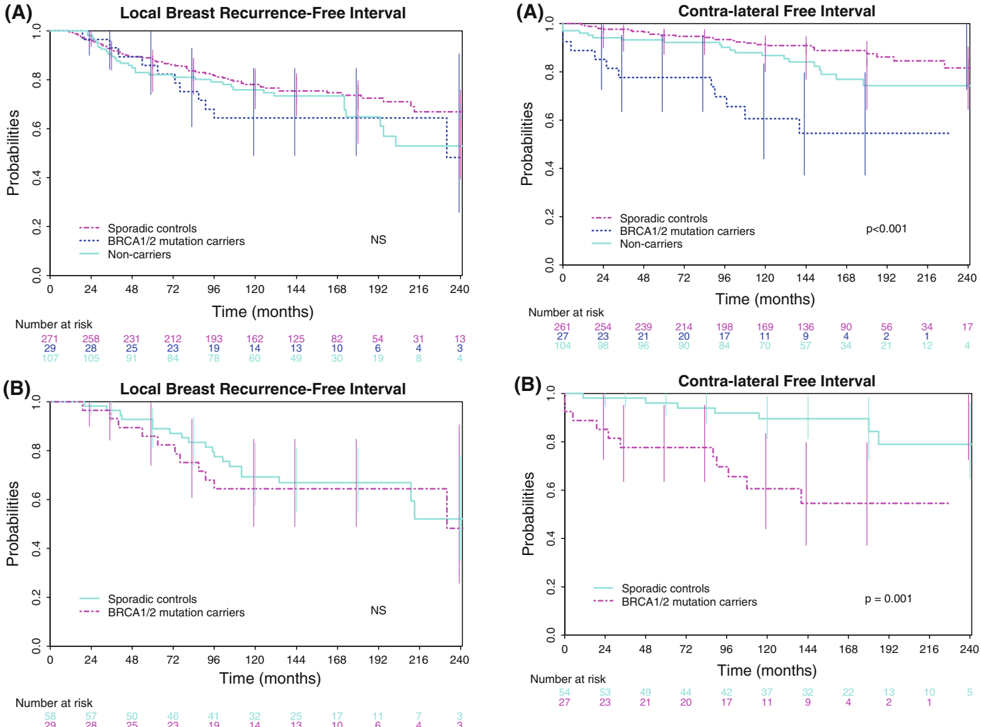
As tumours in BRCA1/2 mutation carriers might be more sensitive to radiation, we investigated after long-term follow-up whether mutation status influenced the rate of ipsilateral and contralateral breast cancers after breast-conserving treatment (BCT). BRCA1 and BRCA2 genes were screened for germline mutations in 131 patients with a family history of breast and/or ovarian cancer who had undergone BCT and radiotherapy. Patients were matched to 261 controls with sporadic breast cancer according to age at diagnosis and year of treatment. Controls were followed up for at least as long as the interval between diagnosis and genetic screening in familial cases. Rates of ipsilateral and contralateral cancer between groups were compared by the log-rank test. The BRCA1/2 mutations occurred in 20.6% of tested patients. Tumours in mutation carriers were more likely to be grade III (P < 10(-4)) and oestrogen receptor negative (P = 0.005) than in non-carriers and controls. Overall median follow-up was 161 months. There was no significant difference in ipsilateral tumours between mutation carriers, non-carriers and controls (P = 0.13). On multivariate analysis, age was the most significant predictor for ipsilateral recurrence (P < 10(-3)). The rate of contralateral cancer was significantly higher in familial cases: 40.7% (mutation carriers), 20% (non-carriers), and 11% (controls) (P < 10(-4)). After 13.4 years of follow-up, the rate of ipsilateral tumours was no higher in mutation carriers…
Overview
CoChat Summary
## TL;DR
This matched retrospective single-institution study found that, after a median follow-up of 13.4 years, BRCA1/2 mutation carriers had no higher ipsilateral breast tumor recurrence after breast-conserving treatment plus radiotherapy than non-carriers or sporadic controls. However, contralateral breast cancer was significantly more common in carriers, so breast-conserving treatment remained a possible option but with caution and risk-reduction discussion.
## Key findings
- Among 131 screened patients, 27 (20.6%) carried a BRCA mutation: 19 BRCA1 and 8 BRCA2.
- Median follow-up was 161 months overall (167 months in carriers, 161 months in non-carriers, 156 months in controls), and there was no significant difference in ipsilateral tumor recurrence among groups (P = 0.13) or between carriers and matched controls (P = 0.43).
- Tumors in mutation carriers were more often grade III (P < 10^-4) and hormone receptor negative (estrogen receptor P = 0.018, progesterone receptor P = 0.02) than in non-carriers or controls.
- Contralateral breast cancer was significantly higher in BRCA carriers: 40.7% in carriers versus 20.2% in familial non-carriers versus 11.1% in sporadic controls (P < 10^-4). In multivariate analysis, BRCA mutation status was the only significant predictor of contralateral cancer (P < 10^-4), while age was the only significant predictor of local recurrence (RR 1.05 [1.02–1.07] per decreasing year of age; P < 10^-3).
## Methods
- Retrospective matched case-control study at Institut Curie of women with small breast cancers treated with breast-conserving surgery and radiotherapy between 1981 and 2000.
- 131 patients with a family history of breast/ovarian cancer were genetically screened; they were matched to 261 sporadic controls by age at diagnosis, year of treatment, and follow-up period.
- Survival and recurrence outcomes were analyzed with Kaplan–Meier, log-rank tests, and Cox proportional hazards models adjusting for age, nodal status, receptor status, and grade.
## Limitations
- The paper states the main weakness is the limited number of patients and the retrospective nature of the study.
- Evident from the text: some analyses were limited by missing data/not determined values and the small number of events in subgroups, and the authors note that the effect of tamoxifen on contralateral risk was not studied because of the high number of receptor-negative tumors.
- Evident from the text: the cohort is from a single institution, which may limit generalizability.
Model-written summary. Check it against the paper before relying on it.
Integrity signals
Registry
Cites
Statistics
Figures
Verification
Claims the paper makes
2 Valid · 1 Not valid · 19 Not checked · 27 Own results and interpretations
The sources with a verdict support this claim; the rest weren’t checked yet, have no full text we could read, or their verdicts aren’t rated yet.
In the paper
“All studies of BRCA1 and/or BRCA2 mutation carriers so far have reported an increased incidence of contralateral breast cancer [9, 15, 28-30, 37, 38, 40].”
What the sources say
- Supportedcites [9] 9. Robson M, Chappuis PO, Satagopan J et al (2004) A combined analysis of outcome following breast cancer: differences in survival based on BRCA1/BRCA2 mutation status and administration of adjuvant treatment. Breast Cancer Res 6:R8-R17 source
Robson et al. (2003) report exactly the finding the citing sentence attributes to it: in the Results (Ipsilateral and contralateral breast cancer) women with mutations were significantly more likely to develop contralateral breast cancer at 10 years (27% vs 8%; P < 0.0001), with similar risk in BRCA1 (27%) and BRCA2 (32%) carriers. The Discussion states 'Women with BRCA1/BRCA2 mutations are at substantial increased risk for metachronous contralateral breast cancer throughout the follow-up period,' and notes this rate is similar to that observed in affected carriers after mastectomy [29] and in prospectively followed heterozygote cohorts [30,31]; the Conclusion repeats that 'the risk for contralateral disease is substantially higher.' Nothing in our copy contradicts an increased contralateral incidence, so this source supports the generalization (the 'all studies so far' scope is the citing authors' own framing, but every element attributed here — BRCA1 and/or BRCA2 carriers, increased contralateral breast cancer incidence — is stated in the paper). (LLM, conf=0.85)
- Not checked yetcites [15] 15. Cortez D, Wang Y, Qin J et al (1999) Requirement of ATMdependent phosphorylation of Brca1 in the DNA damage response to double-strand breaks. Science 286:1162-1166 source
- Not checked yetcites [28] 28. Kirova YM, Stoppa-Lyonnet D, Savignoni A et al (2005) Risk of breast cancer recurrence and contralateral breast cancer in relation to BRCA1 and BRCA2 mutation status following breastconserving surgery and radiotherapy. Eur J Cancer 41:2304-2311 source
- Not checked yetcites [29] 29. Pierce LJ, Strawderman M, Narod SA et al (2000) Effect of radiotherapy after breast-conserving treatment in women with breast cancer and germline BRCA1/2 mutations. J Clin Oncol 18:3360-3369 source
- Not checked yetcites [30] 30. Pierce L, Levin A, Rebbeck T et al (2006) Ten-year multiinstitutional results of breast-conserving surgery and radiotherapy in BRCA1/2-associated stage I/II breast cancer. J Clin Oncol 24:2437-2443 source
- Not checked yetcites [37] 37. Haffty BG, Harrold E, Khan AJ et al (2002) Outcome of conservatively managed early-onset breast cancer by BRCA1/ BRCA2 status. Lancet 359:1471-1477 source
- Not checked yetcites [38] 38. Seynaeve C, Verhoog LC, Van De Bosch LM et al (2004) Ipsilateral breast tumour recurrence in hereditary breast cancer following breast-conserving therapy. Eur J Cancer 40:1150-1158 source
- Not checked yetcites [40] 40. Turner BC, Harrold E, Matloff E et al (1999) BRCA1/BRCA2 germline mutations in locally recurrent breast cancer patients after lumpectomy and radiation therapy: implications for breastconserving management in patients with BRCA1/BRCA2 mutations. J Clin Oncol 17:3017-3024 <!-- image --> source
plainstates an association- Asserted: passes — The authors put it forward as true.
- Checkable: passes — It can be checked against evidence.
- Load-bearing: passes — The paper’s conclusions depend on it.
- Based: passes — The paper gives a reason why it holds.
- Supported
The cited sources support only part of this claim — read each source’s verdict below.
In the paper
“Robson et al. [9] reported a 27% risk in carriers versus an 8% risk in non-carriers ( P = 0.002) after 10 years of follow-up.”
What the sources say
- Partly supportedcites [9] 9. Robson M, Chappuis PO, Satagopan J et al (2004) A combined analysis of outcome following breast cancer: differences in survival based on BRCA1/BRCA2 mutation status and administration of adjuvant treatment. Breast Cancer Res 6:R8-R17 sourceExperimental — accuracy not yet measured
The Results section (‘Ipsilateral and contralateral breast cancer’) reports a 10-year contralateral breast cancer risk of 27% in mutation carriers versus 8% in non-carriers. It gives P < 0.0001 for that comparison, not P = 0.002; the latter value refers to age under 50 as a predictor of ipsilateral disease. (LLM, conf=0.95)
plainstates an association- Asserted: passes — The authors put it forward as true.
- Checkable: passes — It can be checked against evidence.
- Load-bearing: passes — The paper’s conclusions depend on it.
- Based: passes — The paper gives a reason why it holds.
- Partly supported
A result the paper reports from its own data — it cites no other source for it, so there is none to check. The quote shows it is in the paper.
In the paper
“There was no significant difference in ipsilateral tumours between mutation carriers, non-carriers and controls ( P = 0.13).”
- Also stated in: § Results · plain
“There was no significant difference in ipsilateral tumour recurrence amongst groups ( P = 0.13) nor between mutation carriers and their matched controls ( P = 0.43)”
plain- Asserted: passes — The authors put it forward as true.
- Checkable: passes — It can be checked against evidence.
- Load-bearing: passes — The paper’s conclusions depend on it.
- Based: passes — The paper gives a reason why it holds.
- Also stated in: § Results · plain
A result the paper reports from its own data — it cites no other source for it, so there is none to check. The quote shows it is in the paper.
In the paper
“The BRCA1/2 mutations occurred in 20.6% of tested patients.”
- Also stated in: § Results · plain
“Twenty-seven patients (20.6%) with a family history of breast cancer had a BRCA mutation (19 BRCA1 , 8 BRCA2 ) (21.3% tumours).”
plainn = 7- Asserted: passes — The authors put it forward as true.
- Checkable: passes — It can be checked against evidence.
- Load-bearing: unclear — It is unclear whether the paper’s conclusions depend on it.
- Based: passes — The paper gives a reason why it holds.
- Also stated in: § Results · plain
A result the paper reports from its own data — it cites no other source for it, so there is none to check. The quote shows it is in the paper.
In the paper
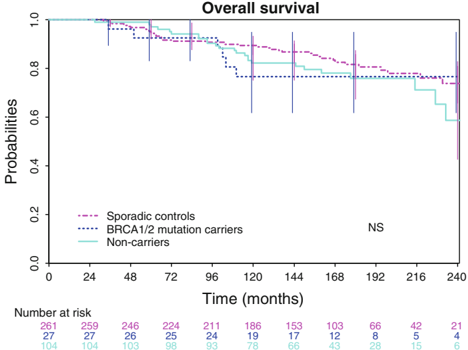
“There was no significant difference in the overall survival between the three groups (Fig. 3).”
- Also stated in: § Discussion · plain
“At the same time, there was no difference in the overall survival in the different groups of patients.”
plain- Asserted: passes — The authors put it forward as true.
- Checkable: passes — It can be checked against evidence.
- Load-bearing: passes — The paper’s conclusions depend on it.
- Based: passes — The paper gives a reason why it holds.
- Also stated in: § Discussion · plain
24 more claims
Create a free account to see all 49 claims and to verify the 74 references still open.
- It may state two separate claims as one. 10
- Probably not a substantial claim. 13
Citations
Cites
Nonparametric Estimation from Incomplete Observations
Kaplan, E. L., & Meier, P. (1992) · Springer Series in Statistics · doi:10.1007/978-1-4612-4380-9_25 · Cited by 45,181
Regression Models and Life-Tables
Cox, D. R. (1972) · Journal of the Royal Statistical Society Series B: Statistical Methodology · doi:10.1111/j.2517-6161.1972.tb00899.x · Cited by 39,793
Nonparametric Estimation from Incomplete Observations
Kaplan, E. L., & Meier, P. (1958) · Journal of the American Statistical Association · doi:10.1080/01621459.1958.10501452 · Cited by 39,158
Regression Models and Life-Tables
Cox, D. R. (1992) · Springer Series in Statistics · doi:10.1007/978-1-4612-4380-9_37 · Cited by 26,297 · cited 1×
“The influence of BRCA mutation, adjusted for other prognostic factors, was assessed in a multivariate analysis by the Cox proportional hazards model, in a forward stepwise regression procedure [ 52 ].”
MethodEvaluation of survival data and two new rank order statistics arising in its consideration.
Mantel, N. (1966) · PubMed · Cited by 7,519
Fisher, B., Anderson, S., Bryant, J., Margolese, R. G., Deutsch, M., Fisher, E. R., Jeong, J.-H., & Wolmark, N. (2002) · New England Journal of Medicine · doi:10.1056/nejmoa022152 · Cited by 6,249
Veronesi, U., Cascinelli, N., Mariani, L., Greco, M., Saccozzi, R., Luini, A., Aguilar, M., & Marubini, E. (2002) · New England Journal of Medicine · doi:10.1056/nejmoa020989 · Cited by 4,450
Gene-Expression Profiles in Hereditary Breast Cancer
Hedenfalk, I., Duggan, D., Chen, Y., Radmacher, M., Bittner, M., Simon, R., Meltzer, P., Gusterson, B., Esteller, M., Raffeld, M., et al. (2001) · New England Journal of Medicine · doi:10.1056/nejm200102223440801 · Cited by 1,733
Cancer Susceptibility and the Functions of BRCA1 and BRCA2
Venkitaraman, A. R. (2002) · Cell · doi:10.1016/s0092-8674(02)00615-3 · Cited by 1,713
Cited by
Castro, E., Goh, C., Leongamornlert, D., Saunders, E., Tymrakiewicz, M., Dadaev, T., Govindasami, K., Guy, M., Ellis, S., Frost, D., et al. (2015) · European Urology · doi:10.1016/j.eururo.2014.10.022 · Cited by 368
“However previous studies in breast cancer have failed to show a relevant difference in local relapse or toxicity following radiation therapy (RT) compared with noncarriers [7–9].”
ResultTung, N. M., Boughey, J. C., Pierce, L. J., Robson, M. E., Bedrosian, I., Dietz, J. R., Dragun, A., Gelpi, J. B., Hofstatter, E. W., Isaacs, C. J., et al. (2020) · Journal of Clinical Oncology · doi:10.1200/jco.20.00299 · Cited by 332
Valachis, A., Nearchou, A. D., & Lind, P. (2014) · Breast Cancer Research and Treatment · doi:10.1007/s10549-014-2890-1 · Cited by 178
“Few data were available about the prognosis of carriers versus non-carriers after BCT since only three studies presented survival data [10, 15, 22].”
BackgroundMethodResultInfluentialvan den Broek, A. J., Schmidt, M. K., Veer, L. V. ‘., Tollenaar, R. A. �. �., & van Leeuwen, F. E. (2015) · PLoS ONE · doi:10.1371/journal.pone.0120189 · Cited by 150
BRCA1/BRCA2Pathogenic Variant Breast Cancer: Treatment and Prevention Strategies
Lee, A., Moon, B.-I., & Kim, T. H. (2019) · Annals of Laboratory Medicine · doi:10.3343/alm.2020.40.2.114 · Cited by 178
Mutter, R. W., Choi, J. I., Jimenez, R., Kirova, Y., Fagundes, M., Haffty, B. G., Amos, R. A., Bradley, J. A., Chen, P. Y., Ding, X., et al. (2021) · International Journal of Radiation Oncology*Biology*Physics · doi:10.1016/j.ijrobp.2021.05.110 · Cited by 132
Self-citationvan den Broek, A. J., van ’t Veer, L. J., Hooning, M. J., Cornelissen, S., Broeks, A., Rutgers, E. J., Smit, V. T. H. B. M., Cornelisse, C. J., van Beek, M., Janssen-Heijnen, M. L., et al. (2016) · Journal of Clinical Oncology · doi:10.1200/jco.2015.62.3942 · Cited by 104
Molina‐Montes, E., Perez-Nevot, B., Pollán, M., Sánchez‐Cantalejo, E., Espín, J., & Sánchez, M. (2014) · The Breast · doi:10.1016/j.breast.2014.10.005 · Cited by 100
“…cancer history was confirmed through cancer registry data (review of medical records) in all cases, including sporadic breast cancer cases. e Low Kirova et al. 2010 [38] France Update of [52,53] 131 women treated with breast-conserving surgery and radiotherapy (during 1981 e2000) and with…”
BackgroundInfluentialChiba, A., Hoskin, T. L., Hallberg, E. J., Cogswell, J. A., Heins, C. N., Couch, F. J., & Boughey, J. C. (2016) · Annals of Surgical Oncology · doi:10.1245/s10434-016-5328-7 · Cited by 75
Prevalence and differentiation of hereditary breast and ovarian cancers in Japan
Nakamura, S., Takahashi, M., Tozaki, M., Nakayama, T., Nomizu, T., Miki, Y., Murakami, Y., Aoki, D., Iwase, T., Nishimura, S., et al. (2013) · Breast Cancer · doi:10.1007/s12282-013-0503-1 · Cited by 70
BRCA Mutation Testing in Determining Breast Cancer Therapy
Smith, K. L., & Isaacs, C. J. (2011) · The Cancer Journal · doi:10.1097/ppo.0b013e318238f579 · Cited by 82
“Most recent studies suggest that the risk of ipsilateral breast tumor recurrence after breastconserving surgery and radiation in womenwith BRCAmutationY associated breast cancer is not significantly different from that in women with sporadic breast cancer.(4,5,23) However, many studies are limited by short follow-up,…”
BackgroundGermline Genetic Testing for Breast Cancer Risk: The Past, Present, and Future
Yadav, S., & Couch, F. J. (2019) · American Society of Clinical Oncology Educational Book · doi:10.1200/edbk_238987 · Cited by 70
van den Broek, A. J., Schmidt, M. K., Veer, L. V. ‘., Oldenburg, H. S. A., Rutgers, E. J. T., Russell, N. S., Smit, V. T. H. B. M., Voogd, A. C., Koppert, L. B., Siesling, S., et al. (2018) · Annals of Surgery · doi:10.1097/sla.0000000000002804 · Cited by 61
Evron, E., Ben-David, A., Goldberg, H., Fried, G., Kaufman, B., Catane, R., Pfeffer, M. R., Geffen, D. B., Chernobelsky, P., Karni, T., et al. (2018) · Annals of Oncology · doi:10.1093/annonc/mdy515 · Cited by 55
High risk of in-breast tumor recurrence after BRCA1/2-associated breast cancer
Nilsson, M. P., Hartman, L., Kristoffersson, U., Johannsson, O. T., Borg, Å., Henriksson, K., Lanke, E., Olsson, H., & Loman, N. (2014) · Breast Cancer Research and Treatment · doi:10.1007/s10549-014-3115-3 · Cited by 56
“This can probably be explained by the fact that carriers who get breast cancer when they are very young are likely to have other predisposing or modifying factors of genetic or environmental nature, and thus an increased risk of new primary breast cancers [10, 15, 21].”
BRCA1 Mutation: A Predictive Marker for Radiation Therapy?
Kan, C. E., & Zhang, J. (2015) · International Journal of Radiation Oncology*Biology*Physics · doi:10.1016/j.ijrobp.2015.05.037 · Cited by 63
“As expected, the incidence of contralateral breast cancer was significantly greater in those patients with BRCA1/2 mutations than in the controls, owing to the high risk of new primary cancers inherent in this population (78).”
BackgroundRadiotherapy in the Treatment of Hereditary Breast Cancer
Pierce, L. J., & Haffty, B. G. (2010) · Seminars in Radiation Oncology · doi:10.1016/j.semradonc.2010.08.008 · Cited by 53
Davey, M. G., Davey, C. M., Ryan, É. J., Lowery, A., & Kerin, M. J. (2021) · The Breast · doi:10.1016/j.breast.2021.02.001 · Cited by 53
Privé, B. M., Slootbeek, P. H. J., Laarhuis, B. I., Naga, S. P., van der Doelen, M. J., van Kalmthout, L. W. M., de Keizer, B., Ezziddin, S., Kratochwil, C., Morgenstern, A., et al. (2021) · Prostate Cancer and Prostatic Diseases · doi:10.1038/s41391-021-00424-2 · Cited by 44
Pal, T., & Vadaparampil, S. T. (2012) · Cancer Control · doi:10.1177/107327481201900402 · Cited by 49
Macchini, M., Centonze, F., Peretti, U., Orsi, G., Militello, A. M., Valente, M. M., Cascinu, S., & Reni, M. (2021) · Cancer Treatment Reviews · doi:10.1016/j.ctrv.2021.102262 · Cited by 37
Huszno, J., Budryk, M., Kołosza, Z., & Nowara, E. (2013) · Oncology · doi:10.1159/000354834 · Cited by 40
A functional −77T>C polymorphism in XRCC1 is associated with risk of breast cancer
Liu, L., Yuan, P., Liu, L., et al. (2010) · Breast Cancer Research and Treatment · doi:10.1007/s10549-010-0959-z · Cited by 40
“Epidemiological studies supported that rare but high-penetrance mutations in BRCA1 and BRCA2 explained only up to 5% of breast cancer incidence, mostly familiar cases [6].”
BackgroundBreast Conserving Surgery for BRCA Mutation Carriers—A Systematic Review
Co, M. T.-H., Liu, W. K. T., Leung, J., Li, C. H., Tse, T., Wong, M., & Kwong, A. (2019) · Clinical Breast Cancer · doi:10.1016/j.clbc.2019.07.014 · Cited by 43
Bernier, J., & Poortmans, P. M. (2014) · The Breast · doi:10.1016/j.breast.2014.12.003 · Cited by 35
“Kirova [43]”
BackgroundResultInfluentialWho should not undergo breast conservation?
Nijenhuis, M. V., & Rutgers, E. J. T. (2013) · The Breast · doi:10.1016/j.breast.2013.07.021 · Cited by 31
“BRCA 1/2 mutation carrier is not a contra indication in itself but risks, particularly the high incidence of second primaries, have to be discussed with the patient [36,37].”
BackgroundLoap, P., Beddok, A., Cao, K. I., Goudjil, F., Fourquet, A., Dendale, R., & Kirova, Y. (2021) · Cancer/Radiothérapie · doi:10.1016/j.canrad.2021.01.005 · Cited by 30
Self-citationLocoregional Treatments and Ipsilateral Breast Cancer Recurrence Rates in BRCA1/2 Mutation Carriers
Bernstein‐Molho, R., Laitman, Y., Galper, S. L., Jacobson, G., Boursi, B., Gal‐Yam, E. N., Kaufman, B., Friedman, E., & Kaidar‐Person, O. (2020) · International Journal of Radiation Oncology*Biology*Physics · doi:10.1016/j.ijrobp.2020.11.058 · Cited by 31
Barzan, D., Veldwijk, M. R., Herskind, C., Li, Y., Zhang, B., Sperk, E., Du, W., Zhang, X.-J., & Wenz, F. K. (2013) · European Journal of Human Genetics · doi:10.1038/ejhg.2013.38 · Cited by 33
Verhagen, C. V. M., Vossen, D. M., Borgmann, K., Hageman, F., Grenman, R. A., Verwijs-Janssen, M., Mout, L., Kluin, R. J. C., Nieuwland, M., Severson, T., et al. (2018) · Oncotarget · doi:10.18632/oncotarget.24797 · Cited by 33
Wan, Q., Su, L., Ouyang, T., Li, J., Wang, T., Fan, Z., Fan, T., Lin, B., & Xie, Y. (2021) · JAMA Network Open · doi:10.1001/jamanetworkopen.2021.6259 · Cited by 26
“004 Median (range) 50 (19-90) 43 (27-81) 47 (21-75) 51 (19-90) ≤45 2913 110 (58.”
Brédart, A., Kop, J., DePauw, A., Caron, O., Sultan, S., Leblond, D., Fajac, A., Buecher, B., Gauthier‐Villars, M., Noguès, C., et al. (2013) · British Journal of Cancer · doi:10.1038/bjc.2012.599 · Cited by 34
“Women with BC who carry a mutation in the BRCA1/2 gene have an increased risk of developing a second primary BC (Kirova et al, 2010).”
BackgroundSelf-citationVallard, A., Magné, N., Guy, J., Espenel, S., Rancoule, C., diao, P., Deutsch, É., Rivera, S., & Chargari, C. (2019) · British Journal of Radiology · doi:10.1259/bjr.20170657 · Cited by 27
Trombetta, M. G., Dragun, A. J., Mayr, N. A., & Pierce, L. J. (2020) · Practical Radiation Oncology · doi:10.1016/j.prro.2020.04.003 · Cited by 26
Su, L., Xu, Y., Ouyang, T., Li, J., Wang, T., Fan, Z., Fan, T., Lin, B., & Xie, Y. (2020) · International Journal of Cancer · doi:10.1002/ijc.32918 · Cited by 25
BRCA and Breast Cancer-Related High-Penetrance Genes
Han, S., & Kim, S. (2021) · Advances in experimental medicine and biology · doi:10.1007/978-981-32-9620-6_25 · Cited by 27
Local Recurrence after Breast Cancer Affects Specific Survival Differently according to Patient Age
Courdi, A., Doyen, J., Gal, J., et al. (2010) · Oncology · doi:10.1159/000323483 · Cited by 20
Molecular characteristics of breast cancer according to clinicopathological factors
Huszno, J., & Kołosza, Z. (2019) · Molecular and Clinical Oncology · doi:10.3892/mco.2019.1869 · Cited by 19
BRCA1/BRCA2 mutations in Japanese women with ductal carcinoma in situ
Liu, Y., Ide, Y., Inuzuka, M., Tazawa, S., Kanada, Y., Matsunaga, Y., Kuwayama, T., Sawada, T., Akashi‐Tanaka, S., & Nakamura, S. (2019) · Molecular Genetics & Genomic Medicine · doi:10.1002/mgg3.493 · Cited by 19
“It indicated that, BCS might be a treatment option for DCIS patients with BRCA mutation, for they may be more sensitive to radiation (Garcia‐Etienne et al., 2009; Kirova et al., 2010).”
BackgroundGenetic testing in women with breast cancer: implications for treatment
Paterson, R. J., & Phillips, K. (2017) · Expert Review of Anticancer Therapy · doi:10.1080/14737140.2017.1374175 · Cited by 19
“cancer for patients with either a mutation in BRCA1 or BRCA2, ranging from 17 to 40% [22,23].”
BackgroundKim, H., Choi, D. H., Park, W., Im, Y., Ahn, J. S., Park, Y. H., Nam, S. J., Kim, S. W., Lee, J. E., Yu, J. H., et al. (2019) · Hereditary Cancer in Clinical Practice · doi:10.1186/s13053-018-0103-3 · Cited by 17
Ye, F., Huang, L., Lang, G., Hu, X., Di, G., Shao, Z., & Cao, A. (2020) · Cancer Medicine · doi:10.1002/cam4.2836 · Cited by 16
Targeting DNA repair in breast cancer
Paluch–Shimon, S., & Evron, E. (2019) · The Breast · doi:10.1016/j.breast.2019.06.007 · Cited by 15
Yoon, K.-H., Chae, S., Kang, E., Shin, H.-C., Kim, J. H., Kim, I. A., Park, S. Y., Kim, S., & Kim, E. (2019) · Journal of Breast Cancer · doi:10.4048/jbc.2019.22.e47 · Cited by 17
Saadatmand, S., Vos, J. R., Hooning, M. J., Oosterwijk, J. C., Koppert, L. B., de Bock, G. H., Ausems, M. G. E. M., van Asperen, C. J., Aalfs, C. M., Gómez-García, E. B., et al. (2014) · International Journal of Cancer · doi:10.1002/ijc.28941 · Cited by 19
“Some explanations for the large proportion of BRCA1/2 mutation carriers at risk for breast at age 60 in our study are: approximately 60% of BRCA1/2 mutation carriers opt for screening over risk-reducing bilateral mastectomy in The Netherlands,(22) and in case of malignancy, breast conserving therapy is considered equa…”
BackgroundNara, M., Ishihara, S., Kitano, A., Tamura, N., Aruga, T., Kobayashi, D., Nakamura, S., & Yamauchi, H. (2022) · Breast Cancer · doi:10.1007/s12282-022-01343-3 · Cited by 14
Breast Cancer Adjuvant Radiotherapy in BRCA1/2, TP53, ATM Genes Mutations: Are There Solved Issues?
Lazzari, G., Buono, G., Zannino, B., & Silvano, G. (2021) · Breast Cancer Targets and Therapy · doi:10.2147/bctt.s306075 · Cited by 24
“patients with BC treated with surgery followed by ART carrying or not carrying BRCA1/2 mutations.(46) A recent meta-”
Genetic Factors in the Locoregional Management of Breast Cancer
Haffty, B. G., Euhus, D., & Pierce, L. J. (2020) · Journal of Clinical Oncology · doi:10.1200/jco.19.02859 · Cited by 13
Plakhins, G., Irmejs, A., Gardovskis, A., Subatniece, S., Liepniece‐Karele, I., Purkalne, G., Teibe, U., Trofimovičs, G., Miklaševičs, E., & Gardovskis, J. (2013) · Familial Cancer · doi:10.1007/s10689-013-9646-7 · Cited by 14
“Although several studies have shown that breast conserving surgery does not have a negative impact on survival of BRCA1–associated breast cancer patients [31, 32], we have observed significant differences between predicted and observed overall survival rates among patients treated with different types of surgery.”
Evron, E., Ben-David, M. A., Kaidar‐Person, O., & Corn, B. W. (2022) · Journal of Clinical Oncology · doi:10.1200/jco.22.01609 · Cited by 12
Prophylactic Salpingo-Oophorectomy and Survival After BRCA1/2 Breast Cancer Resection
Martelli, G., Barretta, F., Vernieri, C., Folli, S., Pruneri, G., Segattini, S., Trapani, A., Carolla, C., Spatti, G., Miceli, R., et al. (2023) · JAMA Surgery · doi:10.1001/jamasurg.2023.4770 · Cited by 14
Zhang, Y., Yi, P., Chen, W., Ming, J., Zhu, B., Li, Z., Shen, N., Shi, W., Ke, J., Zhao, Q., et al. (2014) · Tumor Biology · doi:10.1007/s13277-013-1348-0 · Cited by 9
“The most important advance in understanding genetic susceptibility to BC was the detection of two major predisposing genes BRCA1 and BRCA2 , which were identified through the genetic linkage mapping and the positional cloning in the last decade of the twentieth century [3].”
BackgroundProphylactic and Therapeutic Breast Conservation inBRCA1/2Mutation Carriers
Croshaw, R. L., Marshall, M. L., Williams, T. L., Erb, K. M., & Julian, T. B. (2011) · International Journal of Breast Cancer · doi:10.4061/2011/481563 · Cited by 12
“prognostically important in predicting IBTR [20, 22, 41].”
ResultQian, C., Liang, Y., Yang, M., Bao, S., Bai, J., Yin, Y., & Yu, H. (2021) · Gland Surgery · doi:10.21037/gs-21-413 · Cited by 8
Jobsen, J. J., van der Palen, J. A. M., Brinkhuis, M., Ong, F., & Struikmans, H. (2015) · Acta Oncologica · doi:10.3109/0284186x.2015.1074281 · Cited by 8
Management of patients with BRCA mutation from the point of view of a breast surgeon
Riis, M. L. H. (2021) · Annals of Medicine and Surgery · doi:10.1016/j.amsu.2021.102311 · Cited by 8
Kim, H., Choi, D. H., & Park, W. (2020) · Medicina · doi:10.3390/medicina56100514 · Cited by 5
“[22] investigated whether mutation status can influence the rate of ipsilateral and contralateral breast cancers after breast-conserving treatment.”
BackgroundRisk Management for BRCA1/BRCA2 Mutation Carriers Without and With Breast Cancer
Mainor, C. B., & Isaacs, C. J. (2020) · Current Breast Cancer Reports · doi:10.1007/s12609-019-00350-2 · Cited by 13
Medical factors influencing decision making regarding radiation therapy for breast cancer
Dilaveri, C. A., Sandhu, N. P., Neal, L., Wittich, M. N., Hieken, T. J., Wahner‐Roedler, D. L., Ghosh, K., & MacBride, M. (2014) · International Journal of Women s Health · doi:10.2147/ijwh.s71591 · Cited by 9
Local approaches to hereditary breast cancer
Cooper, B. T., Murphy, J. O., Sacchini, V., & Formenti, S. C. (2013) · Annals of Oncology · doi:10.1093/annonc/mdt327 · Cited by 7
Filleron, T., Dalenc, F., Kramar, A., Spielmann, M., Lévy, C., Fumoleau, P., Canon, J.-L. R., Martin, A., & Roche, H. H. (2013) · Bulletin du Cancer · doi:10.1684/bdc.2013.1791 · Cited by 7
Sibilio, A., Curcio, A., Toesca, A., Rossi, E. M. C., & Corso, G. (2022) · Current Opinion in Oncology · doi:10.1097/cco.0000000000000872 · Cited by 6
“Rates of ipsilateral events after BCS and RT seem to be mostly comparable between carriers and noncarriers [42,62,63], reminding us that local control is also greatly influenced by other factors (e.”
BackgroundGoel, V., Sharma, D., Sharma, A., & Mallick, S. (2022) · Radiotherapy and Oncology · doi:10.1016/j.radonc.2022.09.007 · Cited by 4
Aristei, C., Bölükbaşı, Y., Kaidar‐Person, O., Pfeffer, R., Arenas, M., Boersma, L. J., Ciabattoni, A., Coles, C. E., Franco, P., Krengli, M., et al. (2022) · Critical Reviews in Oncology/Hematology · doi:10.1016/j.critrevonc.2022.103774 · Cited by 6
Role of Breast Surgery in BRCA Mutation Carriers
Nestle-Krämling, C., & Kühn, T. (2012) · Breast Care · doi:10.1159/000343717 · Cited by 9
Prognostic factors for local recurrence following breast-conserving treatment in young women
Bollet, M. A., Kirova, Y., Fourquet, A., de Crémoux, P., & Reyal, F. (2010) · Expert Review of Anticancer Therapy · doi:10.1586/era.10.67 · Cited by 4
Self-citationBRCA1 Mutation: An Insidious Enemy with Multiple Facets…
Godin, P., Duhoux, F. P., Mazzeo, F., et al. (2022) · Case Reports in Oncology · doi:10.1159/000521840 · Cited by 3
Lymph node status as a prognostic factor in BRCA-positive breast cancer
Lee, J., Park, H. Y., Jung, J. H., Kim, W. W., Chae, Y. S., Lee, S. J., Lee, S., & Bae, Y. (2017) · Journal of Surgical Research · doi:10.1016/j.jss.2017.03.065 · Cited by 5
“Several early studies indicated that breast-conserving surgery may be appropriate local therapy for BRCApositive breast cancer [8,9].”
BackgroundInfluentialSurgical Treatment of Breast Cancer in BRCA-Mutation Carriers
Özmen, V. (2015) · Meme sağlığı dergisi/Meme sağlığı dergisi · doi:10.5152/tjbh.2015.0001 · Cited by 3
Intensivierte Früherkennung bei Frauen mit genetischer Brustkrebsdisposition
Schreer, I. (2015) · Der Onkologe · doi:10.1007/s00761-014-2838-4 · Cited by 2
A functional 277T>C polymorphism in XRCC1 is associated with risk of breast cancer
YuanLi, L., WuXiaomin, L., Guo, Z., et al. (2011) · Cited by 2
Vasigh, M., Mohamed, A., Jacobs, L. K., Lange, J. R., Camp, M. S., Sun, B., Wright, P., O’Donnell, M., Tran, H.-T., Sogunro, O. A., et al. (2024) · Annals of Surgical Oncology · doi:10.1245/s10434-024-16243-3 · Cited by 2
Outcomes After Breast Radiation Therapy in a Diverse Patient Cohort With a Germline BRCA1/2 Mutation
Chapman, B. V., Liu, D., Shen, Y., Olamigoke, O. O., Lakomy, D. S., Gutierrez‐Barrera, A. M., Stecklein, S. R., Sawakuchi, G. O., Bright, S. J., Bedrosian, I., et al. (2021) · International Journal of Radiation Oncology*Biology*Physics · doi:10.1016/j.ijrobp.2021.09.033 · Cited by 2
Wolfe, A. R., Jain, R., Pawlik, T. M., Walker, J. P., & Williams, T. M. (2018) · Advances in Radiation Oncology · doi:10.1016/j.adro.2018.08.025 · Cited by 1
Thomssen, C., & Wand, D. (2012) · Der Onkologe · doi:10.1007/s00761-011-2095-8 · Cited by 7
Delaloge, S., Rimareix, F., Balleyguier, C., Remenieras, A., Varga, A., Uzan, C., Bourgier, C., & Caron, O. (2010) · ONCOLOGIE · doi:10.1007/s10269-010-1877-8 · Cited by 1
Morozumi, K., Nakamura, Y., Oikawa, M., et al. (2026) · Urologic Oncology Seminars and Original Investigations · doi:10.1016/j.urolonc.2026.07.003
Kondo, S., Kida, K., Suzuki, M., Kajiura, Y., Takei, J., Kanomata, N., Yamanaka, M., & Yoshida, A. (2026) · Breast Cancer Research and Treatment · doi:10.1007/s10549-026-07976-8
“In a previous meta-analysis [9], no difference was observed on the prog - nosis after BCS between BRCA + and BRCA –, and all seven studies in the meta-analysis consistently showed the same results [ 15, 20 –25 ].”
Liu, B., Xu, J., Wang, J., Liu, F., Xing, H., Wang, S., Xd, Z., & Wang, L. (2026) · Frontiers in Oncology · doi:10.3389/fonc.2026.1746949
Hereditäre Krebserkrankungen in der Gynäkologie
Seitz, S., Holzhauser, I., & Lessel, D. (2025) · Die Gynäkologie · doi:10.1007/s00129-025-05429-9
Radiation Sensitivity for BRCA Mutation Carriers
Yoshida, R. (2025) · Springer eBooks · doi:10.1007/978-981-96-6779-6_4
Tsoutsou, P. P., Eberhardt, A.-L., Gruber, G., Henke, G., Jeannerret-Sozzi, W., Linsenmeier, C., Lössl, K., Valli, M., Weber, W. P., Zaugg, K., et al. (2024) · Strahlentherapie und Onkologie · doi:10.1007/s00066-024-02332-5
Hereditäre Krebserkrankungen in der Gynäkologie
Seitz, S., & Ortmann, O. (2020) · Der Gynäkologe · doi:10.1007/s00129-020-04592-5
Hereditary Breast Cancer: Prophylactic Mastectomy, Breast Conservation, and Rates of Cancer
Walsh, S. M., Robson, M. E., & Sacchini, V. (2019) · Springer eBooks · doi:10.1007/978-3-319-62927-8_4
MANEJO QUIRÚRGICO DE LA PACIENTE CON CÁNCER DE MAMA PORTADORA DE MUTACIONES GENÉTICAS
Donaire, J. M., Peralta, O., & Bravo, M. E. (2017) · Revista Médica Clínica Las Condes · doi:10.1016/j.rmclc.2017.06.005 · Cited by 2
Radiation Oncology Considerations in the Management of Mutation Carriers with Breast Cancer
Moran, M. S. (2017) · Springer eBooks · doi:10.1007/978-3-319-59198-8_9
Surgical Management of Breast Cancer in BRCA Mutation Carriers
Cronin, P. A., & Cody, H. S. (2017) · Springer eBooks · doi:10.1007/978-3-319-59198-8_7 · Cited by 1
Which Surgery in Geriatric Breast Cancer
Graziano, P. (2016) · Journal of Surgery and Surgical Research · doi:10.17352/2455-2968.000023
“In support of a surgical treatment based on the parameters you have cancer studies conducted by the authors [7,8], that show delays in diagnostic geriatric patients (more than 70) compared to women under the age [9].”
MethodBordes, V., Frenel, J., Mervoyer, A., & Delnatte, C. (2016) · Elsevier eBooks · doi:10.1016/b978-2-294-74449-5.00021-6
Forme avancée de carcinome infiltrant
Mery, E., Charitansky, H., Dalenc, F., Boulet, B., & Massabeau, C. (2016) · Elsevier eBooks · doi:10.1016/b978-2-294-74449-5.00019-8
Gutowski, M. (2013)
Breast conserving surgery and radiation as a choice for patients with BRCA mutations
Pinto, C. A., Kotinsley, K., & Trombetta, M. G. (2012) · Journal of Solid Tumors · doi:10.5430/jst.v2n5p45 · Cited by 1
Management of women with BRCA1 / 2 mutation-associated breast cancer
Bayraktar, S., & Glück, S. (2012) · Breast Cancer Management · doi:10.2217/bmt.12.22
E10. Issues around hereditary breast cancer and local treatment
Oldenburg, H. S. A. (2012) · European Journal of Cancer · doi:10.1016/s0959-8049(12)70061-8
Reply to P.G. Tsoutsou et al and A.H. Trainer et al
Sabri, S., & Abdulkarim, B. (2011) · Journal of Clinical Oncology · doi:10.1200/jco.2011.38.6672
Trombetta, M. G., Kotinsley, K., & Julian, T. B. (2011) · Journal of Radiotherapy in Practice · doi:10.1017/s1460396911000021
“7% for carriers versus 20% for non-carriers).(6)”
BackgroundThe Optimization of Breast Conservation
Dooley, W. C., Keshtgar, M., Tot, T., Yamamoto, D., & El-Tamer, M. B. (2011) · International Journal of Breast Cancer · doi:10.4061/2011/456378
Les sous-types moléculaires du cancer du sein. Apport des technologies à haut débit
Reyal, F., Bollet, M. A., Roubaud, G., Vincent‐Salomon, A., & Salmon, R. J. (2010) · Bio Tribune Magazine · doi:10.1007/s11834-010-0024-6
Self-citationLes sous-types moléculaires du cancer du sein. Apport des technologies à haut débit
Reyal, F., Bollet, M. A., Roubaud, G., Vincent‐Salomon, A., & Salmon, R. J. (2010) · ONCOLOGIE · doi:10.1007/s10269-010-1907-6
Self-citation
Metadata
- Authors
- Kirova, Y. M., Savignoni, A., Sigal-Zafrani, B., de La Rochefordiere, A., Salmon, R. J., This, P., Asselain, B., Stoppa-Lyonnet, D., & Fourquet, A.
- Affiliations
- Institut Curie (FR)
- Corresponding author
- Kirova, Youlia M.
- Venue
- Breast Cancer Research and Treatment
- Published
- 2009-12-24
- Volume
- 120
- Issue
- 1
- Pages
- 119-126
- ISSN
- 0167-6806 (ISSN-L)
- 1573-7217
- OpenAlex
- W2072876845
- Cited by
- 102
- References
- 58
- Citations by year
- 2026: 3 · 2025: 2 · 2024: 2 · 2023: 1 · 2022: 6 · 2021: 11 · 2020: 9 · 2019: 10 · 2018: 4 · 2017: 5 · 2016: 4 · 2015: 7 · 2014: 8 · 2013: 9 · 2012: 6
- FWCI
- 0.66
- Type
- journal article
- Language
- en
- Open access
- green
- hal.science
- Licence
- other-oa
- www.springer.com/tdm (tdm)
- Locations
- Breast Cancer Research and Treatment (publishedVersion)
- PubMed (publishedVersion)
- HAL (submittedVersion, other-oa)
- Trinity's Access to Research Output (TARA) (Trinity College Dublin) (submittedVersion)
- Topics
- Life Sciences › Biochemistry, Genetics and Molecular Biology › Genetics › BRCA gene mutations in cancer
- Life Sciences › Biochemistry, Genetics and Molecular Biology › Cancer Research › Breast Cancer Treatment Studies
- Health Sciences › Medicine › Epidemiology › Multiple and Secondary Primary Cancers
- Keywords
- breast-conserving therapy, BRCA1 mutation, BRCA2 mutation, germline mutation carriers, radiotherapy, ipsilateral breast cancer recurrence, contralateral breast cancer, radiosensitivity, hereditary breast cancer, tumor grade, long-term follow-up
- MeSH terms
- Adult, Age Factors, Breast Neoplasms, Combined Modality Therapy, Female, Heterozygote, Humans, Middle Aged, Neoplasm Recurrence, Local, Neoplasm Staging, Retrospective Studies, Mastectomy, Segmental, Incidence, Case-Control Studies, Neoplasms, Second Primary, Disease-Free Survival, Genes, BRCA1, Genes, BRCA2, Kaplan-Meier Estimate
About these checks
Registry, retraction, Cites and statistics results are computed, not judged, with one exception: a printed reference that no index lists is read once by a model before it counts as a citation error. Claims are extracted by a model and kept only when their quote appears verbatim in the text; each cited source is then checked, with a model’s help, for whether it says what the claim relies on. Those verdicts can be wrong — read the claim’s quote and the cited source before relying on one.
The claim verdicts this report counts are experimental: their accuracy is not yet measured.
A language model drew the claims from the paper on 2026-10-11, under version 3 of the claim definition (model deepseek-v4.1-flash, prompt extract-v3).
A second model labelled each claim on 2026-10-11 (model jev-1.13-20260917, definition revision gold-guideline-v0.2).
Cited sources are checked with a language model’s help (qwen3.8-omni-flash and gpt-6-sol).
Statistics and arithmetic are recomputed, not judged.
Confidence bands are shown only for fields calibrated on our annotated test set. None is calibrated yet, so no band is shown.
What counts as a claim ›How we measure confidence ›How we check this ›
Are you an author, or do you see a problem with this page? Request a review
Data sources
Bibliographic data: Semantic Scholar, OpenAlex, Crossref.
Contains information from the Semantic Scholar Academic Graph Datasets, made available under the ODC Attribution License (ODC-BY 1.0).
Semantic Scholar’s data is described in: Kinney, R., et al. (2023). The Semantic Scholar Open Data Platform. arXiv:2301.10140.
