

Understanding Social Anxiety Disorder in Adolescents and Improving Treatment Outcomes: Applying the Cognitive Model of Clark and Wells (1995)
Open accessThe DOI matches its Crossref record; 192 of the 192 references it cites were found in a registry or an index.
Abstract
Social anxiety disorder is a condition characterised by a marked and persistent fear of being humiliated or scrutinised by others. Age-of-onset data point to adolescence as a developmentally sensitive period for the emergence of the condition, at a time when the peer group becomes increasingly important. Social anxiety in adolescence is associated with considerable impairment that persists through to adulthood. There are clear potential benefits to delivering effective interventions during adolescence. However, there is limited evidence on the specific efficacy of available therapies. This is in contrast to adults, for whom we have interventions with very specific treatment effects. One such treatment is individual cognitive therapy. Cognitive therapy is based on the cognitive model of social anxiety proposed by Clark and Wells (in: Heimberg, Leibowitz, Hope, Scheiber (eds) Social phobia: diagnosis, assessment and treatment, The Guilford Press, New York, 1995). The present review examines the potential application of this adult cognitive model to the understanding of adolescent social anxiety and considers additional adolescent-specific factors that need to be accommodated. It is suggested that a developmentally sensitive adoption of the cognitive model of social anxiety disorder (Clark and Wells 1995) for adolescents may lead to better treatment outcomes.
Overview
The claims and statistics of this paper haven’t been checked yet.
Free: it reads the open-access text and checks the first 5 claims that cite a source we can check. Create a free account to check every claim.
Integrity signals
Registry
Cites
Statistics
Figures
Verification
Claims the paper makes
The claims and statistics of this paper haven’t been checked yet.
Free: it reads the open-access text and checks the first 5 claims that cite a source we can check. Create a free account to check every claim.
Claims other papers make about this one
Each is checked against this paper’s own text: does it say what the citing paper says it does?
The source backs part of the claim, not all of it — or backs it for a different population, condition or comparison.
In the citing paper
“The factors involved in the cognitive models seem applicable to children and adolescents (Chapman, Halldorsson, and Creswell 2020;Leigh and Clark 2018).”
From Negative Flashforward Imagery in Adolescent Social Anxiety Disorder: A Pilot Study of Imagery Reports and a Short EMDR Intervention. (2024) · cites this paper as Leigh and Clark 2018
Experimental — accuracy not yet measuredThe check wasn’t confident either way, so it gives no verdict — never disputed.
In the citing paper
“Given that the amygdala is believed to play a role in attentional bias processes [12], it is therefore expected that SSRIs may positively influence the intrapersonal processes related to SAD.”
From The risks versus the benefits of pharmacological intervention in social anxiety disorder in children (2025) · cites this paper as [12]
Experimental — accuracy not yet measured
Self-check
Percentages, sums and reported differences re-computed from the paper’s own numbers.
The self-check needs the paper’s full text.
Citations
Cites
Diagnostic and Statistical Manual of Mental Disorders
American Psychiatric Association (2013) · doi:10.1176/appi.books.9780890425596 · Cited by 116,369
Statistical Power Analysis for the Behavioral Sciences
Muller, K. (1989) · Technometrics · doi:10.1080/00401706.1989.10488618 · Cited by 99,167
Statistical power analysis for the behavioral sciences
(1990) · Computers, Environment and Urban Systems · doi:10.1016/0198-9715(90)90050-4 · Cited by 65,269
Home visits: a strategy to improve newborn survival - Authors' reply
(2008) · Americanae (AECID Library) · doi:10.1016/s0140 · Cited by 22,524
Kessler, R. C., Berglund, P., Demler, O., Jin, R., Merikangas, K. R., & Walters, E. E. (2005) · Archives of General Psychiatry · doi:10.1001/archpsyc.62.6.593 · Cited by 20,391 · cited 2×
“1999b), with incidence increasing through the adolescent years and a median age of onset of 13 years (Kessler et al. 2005).”
BackgroundAn inventory for measuring clinical anxiety: Psychometric properties.
Beck, A. T., Epstein, N., Brown, G., & Steer, R. A. (1988) · Journal of Consulting and Clinical Psychology · doi:10.1037/0022-006x.56.6.893 · Cited by 14,407 · cited 3×
“SAD and high social anxiety adolescents both endorsed elevated self-reported arousal (measured on a subscale of items from the on Beck Anxiety Inventory (BAI) (Beck et al. 1988) compared to controls (SAD vs.”
MethodInfluentialMerikangas, K. R., He, J.-P., Burstein, M., Swanson, S. A., Avenevoli, S., Cui, L., Benjet, C., Georgiades, K., & Swendsen, J. (2010) · Journal of the American Academy of Child & Adolescent Psychiatry · doi:10.1016/j.jaac.2010.05.017 · Cited by 6,278
Cyberbullying: Its nature and impact in secondary school pupils
Smith, P. K., Mahdavi, J., Carvalho, M., Fisher, S., Russell, S., & Tippett, N. (2008) · Journal of Child Psychology and Psychiatry · doi:10.1111/j.1469-7610.2007.01846.x · Cited by 3,639
A cognitive-behavioral model of anxiety in social phobia
Rapee, R. M., & Heimberg, R. G. (1997) · Behaviour Research and Therapy · doi:10.1016/s0005-7967(97)00022-3 · Cited by 2,987 · cited 5×
“We note that quite a few of the maintenance processes that we discuss are highlighted in other prominent models, particularly the model of Rapee and Heimberg (1997), but those models also emphasise some other processes that are not included in this review.”
BackgroundMethodInfluentialA cognitive model of social phobia
Adrian Wells, A. (1995) · Research Explorer (The University of Manchester) · Cited by 2,701
Research works printed but not linked: 7
- Cicchetti D Cohen D Developmental psychopathology: Theory and method 2006 New York Wiley
- Kendall PC Choudhury M Hudson JL Webb A “The C.A.T. Project” manual for the cognitive-behavioral treatment of anxious adolescents 2002 Ardmore, PA Workbook Publishing
- Kendall PC Hedtke K Cognitive-behavioral therapy for anxious children: Therapist manual 2006 3 Ardmore, PA Workbook Publishing
- Lenhart A Teen, social media and technology overview 2015 2015 Washington, DC Pew Internet & American Life Project
- National Institute for Health and Care Excellence. (2013). Social anxiety disorder: Recognition, assessment and treatment of social anxiety disorder. (Clinical guideline 159). 31869048
- Schreiber F Stangier U Steil R Fragebogen zur Erfassung von Vorstellungsbildern bei Sozialer Phobie 2009 Frankfurt am Main Goethe-University
- World Health Organization The ICD-10 classification of mental and behavioural disorders: Clinical descriptions and diagnostic guidelines 1992 Geneva World Health Organization
Cited by
Items 101–200 of 259
Presentation skills of business and economics students: Cluster analysis
Ćurlin, T., Bach, M. P., & Miloloža, I. (2020) · Croatian Review of Economic Business and Social Statistics · doi:10.2478/crebss-2020-0009 · Cited by 8
Yu, M., Lv, F., Liu, Z., & Gao, D. (2022) · Current Psychology · doi:10.1007/s12144-022-03229-1 · Cited by 9
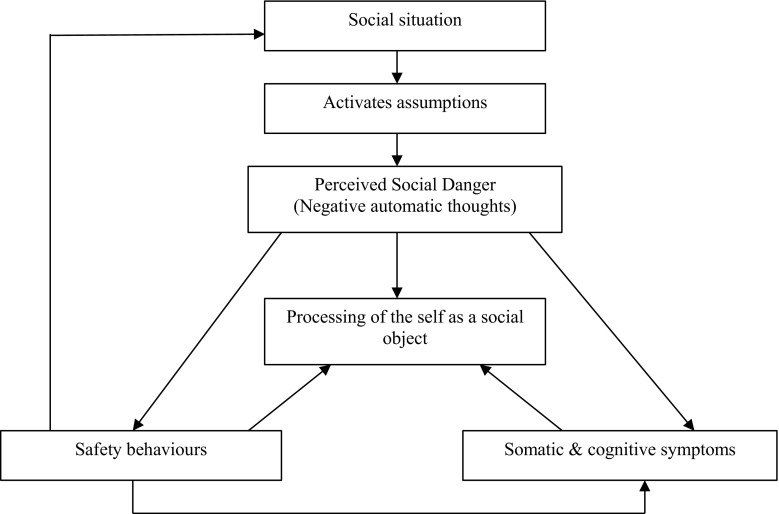
“Then negative automatic thoughts about social threat appear, and the socially anxious individuals would in turn biasedly interpret the social clues, leading to a vicious cycle of negative thoughts and psychological distress (Leigh & Clark, 2018).”
BackgroundAvoidance Bias to Angry Faces Predicts the Development of Depressive Symptoms among Adolescent Girls
Woody, M. L., Ladouceur, C. D., Borrero, E., Wang, Y. S., & Silk, J. S. (2022) · Research on Child and Adolescent Psychopathology · doi:10.1007/s10802-022-00948-8 · Cited by 5
“Similarly, prevalence rates of social anxiety disorder (SAD) increase to around 10% by the end of adolescence (Leigh & Clark, 2018), and gender differences in SAD are maximal during this time [i.e., girls at > 1.5 times greater risk than boys (Asher et al., 2017)].”
BackgroundInfluentialGazo, A. M., & Mahasneh, A. M. (2024) · Journal of Education and Health Promotion · doi:10.4103/jehp.jehp_172_24 · Cited by 8
Zhu, J., Jiang, Z., Li, Y., Cai, Y., & Chen, J. (2025) · Acta Psychologica · doi:10.1016/j.actpsy.2025.104884 · Cited by 7
Vietmeier, N., Tuschen‐Caffier, B., & Asbrand, J. (2025) · Scientific Reports · doi:10.1038/s41598-025-95032-8 · Cited by 5
Li, X., Yang, Q., Zhou, Z., Zeng, M., Lü, C., & Dong, W. (2025) · Frontiers in Psychology · doi:10.3389/fpsyg.2025.1491743 · Cited by 8
Jing, T., Ju, S.-Y., Ridzuan, M. R., Kong, L.-K., Rahman, N. A. S. A., Li, J., Xu, J., & Zhou, M. (2025) · BMC Psychology · doi:10.1186/s40359-025-03544-9 · Cited by 10
“Social anxiety, often known as social phobia, is a disorder defined by an intense dread of being observed or embar-rassed by others [31].”
Yu, M., & Wang, J. (2024) · Cognitive Therapy and Research · doi:10.1007/s10608-024-10479-9 · Cited by 5
“The findings corroborated the solid evidence how IB influence SA in adolescents and, in line with Leigh and Clark (2018), again proved that applying cognitive models of SAD in adolescents needs further and population-specific examination.”
InfluentialAcademic Self Efficacy, Social Anxiety and Academic Success in University Students
Majeed, S. (2022) · PAKISTAN LANGUAGES AND HUMANITIES REVIEW · doi:10.47205/plhr.2022(6-iii)06 · Cited by 17
Yu, M., Westenberg, P. M., Wang, Y., Wang, J., & Miers, A. C. (2021) · Current Psychology · doi:10.1007/s12144-021-01346-x · Cited by 8
Aliabadi, M., hosseini, S. E., Golmohammadi, R., & Motlagh, M. S. (2023) · Journal of Occupational Hygiene Engineering · doi:10.52547/johe.10.1.1 · Cited by 6
“Furthermore, based on the cognitive model proposed by Leigh and Clark [60], when individuals suffering from social anxiety enter an anxiety-inducing social situation, they feel threatened and focus inward, concentrating on anxiety responses [57].”
MethodDoes social anxiety look the same in the online and offline world?
Biglbauer, S. (2024) · Current Psychology · doi:10.1007/s12144-024-06386-7 · Cited by 6
“The two aims of this study were to examine whether the intensity of social anxiety differed in offline and online social interactions and to explore whether the CWM (Clark & Wells, 1995 ) can be applied to understand social anxiety in the context of online interactions.”
InfluentialSun, L., Fan, J., Wang, W., & Zhang, Z. (2025) · Clinical Child and Family Psychology Review · doi:10.1007/s10567-025-00541-7 · Cited by 11
“…personality profiles of bullies and victims within different subtypes of traditional bullying, which could help inform personalized interventions tailored to the specific psychological consequences associated with each subtype of bullying (Dai et al., 2025; Leigh & Clark, 2018; Sun et al., 2025).”
Vogel, F., Delvert, A., Rupp, S., & Reichert, J. (2025) · Cognitive Therapy and Research · doi:10.1007/s10608-025-10650-w · Cited by 7
“As was reviewed above, common disorder models, although validated in empirical research and often applied in standardised therapies (Leigh & Clark, 2018), may not adequately reflect the heterogeneity within a patient population.”
InfluentialLin, W., Liu, L., & Faridniya, H. (2025) · Acta Psychologica · doi:10.1016/j.actpsy.2025.106088 · Cited by 7
Dones, V. C., Yamat, K. S., Santos, K. E. P., Concepcion, A. V. M., & Lacson, M. A. R. (2024) · Acta Medica Philippina · doi:10.47895/amp.vi0.8140 · Cited by 13
Worry and Depressive Symptoms in Adolescents with Neurodevelopmental Disorders
Stewart, S., Houghton, S. J., Glasgow, K., & Macqueen, L. (2025) · International Journal of Environmental Research and Public Health · doi:10.3390/ijerph22020185 · Cited by 6
“Even when in friendships, those with NDDs may be vulnerable to being treated unfairly because they find it hard to understand the nuances of emotion presentation [87].”
Cawthorne, T., Käll, A., Bennett, S. D., Andersson, G., & Shafran, R. (2022) · PLoS ONE · doi:10.1371/journal.pone.0278746 · Cited by 6
Factors Contributing to Students' Willingness to Communicate during English Day Program
Auliyah, Z., & Sujannah, W. D. (2023) · SALEE Study of Applied Linguistics and English Education · doi:10.35961/salee.v4i2.845 · Cited by 10
“In psychology, fear of being laughed at by others is included in Social Anxiety Disorder (SAD), which is a psychological condition when a person feels constant fear of being humiliated and observed by others (Leigh & Clark, 2018).”
BackgroundSkumsnes, T., Fjermestad, K. W., Wergeland, G. J., Aalberg, M., Heiervang, E. R., Kodal, A., & Ingul, J. M. (2024) · Research on Child and Adolescent Psychopathology · doi:10.1007/s10802-024-01215-8 · Cited by 5
“In their cognitive model of social anxiety disorder, Clark and Wells (1995 ) focused on these specific maintain - ing factors, as they could hinder the potential learning effect of exposure tasks.”
BackgroundKasperzack, D., & Becker, K. (2025) · Die Psychotherapie · doi:10.1007/s00278-025-00780-7 · Cited by 5
Affective dynamics and emotional reactivity in social anxiety disorder
Foote, B., Lamers, F., Xiao, Y., Cui, L., Zipunnikov, V., Husky, M. M., & Merikangas, K. R. (2025) · Psychological Medicine · doi:10.1017/s0033291725000121 · Cited by 4
“Therefore, these broader manifestations of SAD should be incorporated into program content and measures of outcome in both adults and youth (Butler, O ’ Day, Swee, Horenstein, & Heimberg, 2021; Leigh & Clark, 2018).”
Vietmeier, N., Tuschen‐Caffier, B., & Asbrand, J. (2026) · Research on Child and Adolescent Psychopathology · doi:10.1007/s10802-026-01422-5 · Cited by 4
“Interventions such as video feedback, cognitive restructuring, or peer modelling should be considered to more directly challenge and modify negative self-beliefs (e.g., Hodson et al., 2008; Leigh & Clark, 2018).”
Social Anxiety Strategies Through Gaming
Copeman, M., & Freeman, J. (2022) · Lecture notes in computer science · doi:10.1007/978-3-031-05637-6_19 · Cited by 7
“Interventions for SAD often take a pharmaceutical approach, such as the use of selective serotine re-uptake inhibitors, or therapeutic approaches like cognitive behavioural theory (CBT), or a combination of both [15, 16].”
BackgroundDiagnosis-Specific Group CBT Treating Social Anxiety in Adolescents: A Feasibility Study
Agersnap, T. N., Hougaard, E., Jensen, M. B., & Thastum, M. (2022) · Scandinavian Journal of Child and Adolescent Psychiatry and Psychology · doi:10.2478/sjcapp-2022-0010 · Cited by 7
“Several diagnosis-specific CBT programs for SAD have been developed (20-24), but to our knowledge only one study has made a direct comparison between diagnosis-specific CBT and generic CBT in”
MethodKim, B., Niu, X., & Zhang, F. (2022) · Neuropsychologia · doi:10.1016/j.neuropsychologia.2022.108418 · Cited by 6
Aydın, S. E. E., Küçük, F., & Başkaya, E. (2026) · Archives of Psychiatric Nursing · doi:10.1016/j.apnu.2026.152051 · Cited by 3
Liu, C.-H., Chen, Y.-L., Ai, W., Ni, H., & Lai, M. (2026) · Child and Adolescent Psychiatry and Mental Health · doi:10.1186/s13034-026-01044-1 · Cited by 4
“…psychometric validity that the two measures tap into separable constructs, camouflaging can pheno-typically overlap with safety behaviors such as avoidance (e.g., avoiding being noticed in social situations) and impression management strategies (e.g., trying to fit-in and act “normal”) [73].”
Du, Y., Wan, X., Xu, J., & Feng, H. (2026) · Child Psychiatry & Human Development · doi:10.1007/s10578-026-02003-9 · Cited by 4
Cheah, C., Lavery, C., Johnson, A. R., Clarke, P., Hyett, M. P., & McEvoy, P. M. (2024) · Journal of Anxiety Disorders · doi:10.1016/j.janxdis.2024.102960 · Cited by 5
Chen, Y., Wei, J., Wang, H., Zhang, J., Peng, H., & Li, Q. (2025) · Journal of Youth and Adolescence · doi:10.1007/s10964-025-02267-9 · Cited by 4
Videoconference anxiety: Conceptualization, scale development, and preliminary validation
Gözpınar, N., Çakıroğlu, S., Zorlu, A., Budak, B. Y., & Görmez, V. (2022) · Bulletin of the Menninger Clinic · doi:10.1521/bumc.2022.86.3.223 · Cited by 3
Virtual Reality Revolution: Strategies for treating mental and emotional disorders
Nava, E., & Jalote-Parmar, A. (2022) · Conference proceedings/Conference proceedings - IEEE International Conference on Systems, Man, and Cybernetics · doi:10.1109/smc53654.2022.9945483 · Cited by 5
“It is about self-confidence and influences social relationships in different contexts, making individuals feel constantly judged and humiliated [17].”
BackgroundVagos, P., Figueiredo, D. V., Ganho-Ávila, A., Mayr, A. J., & Rijo, D. (2023) · Frontiers in Psychology · doi:10.3389/fpsyg.2022.915677 · Cited by 6
Ayeras, S. R., Bumanlag, J., Guzman, B. F. D., Reyes, B. M., Ruiz, A. K., & Villarama, J. A. (2024) · Journal of interdisciplinary perspectives · doi:10.69569/jip.2024.0169 · Cited by 15
Zhang, P., Wang, M., Ding, L., Zhang, J., Yuan, Y., & Tian, X. L. (2024) · Frontiers in Psychiatry · doi:10.3389/fpsyt.2024.1421907 · Cited by 5
Nicola, E., Mastroyannopoulou, K., Reeves, H., & Pass, L. (2024) · Aggression and Violent Behavior · doi:10.1016/j.avb.2024.102013 · Cited by 5
Martel, S. R., Falcone, M. M., Etkin, R. G., Marin, C. E., Lebowitz, E. R., & Silverman, W. K. (2022) · European Journal of Education and Psychology · doi:10.32457/ejep.v15i2.1965 · Cited by 4
The risks versus the benefits of pharmacological intervention in social anxiety disorder in children
Hofmann, S. G., Kasch, C., Pereira, B., Barbosa, C., & Andreoli, G. (2025) · Expert Review of Neurotherapeutics · doi:10.1080/14737175.2025.2461763 · Cited by 2
“Although the model was initially developed for adults, research demonstrates its applicability to children and adolescents as well [11].”
Nordh, M., Serlachius, E., Hesser, H., Mataix‐Cols, D., & Högström, J. (2022) · Behaviour Research and Therapy · doi:10.1016/j.brat.2022.104230 · Cited by 5
King, E. K., Halbreich, E. D., Anderson, E., & Mueller, M. K. (2023) · Human-Animal Interactions · doi:10.1079/hai.2023.0036 · Cited by 3
“…one area of particularly high clinical and practical value is identifying how to promote adaptive coping to help adolescents manage social anxiety, given its prevalence among adolescents and associated deleterious outcomes associated with social anxiety disorder (Leigh and Clark, 2018).”
BackgroundThe relation between social anxiety and perceptions of likeability and friendship in adolescents
Baartmans, J. M. D., van Steensel, F. J. A., Pouwels, J. L., Lansu, T. A. M., Wiers, R. W. H. J., Bögels, S. M., & Klein, A. M. (2024) · Clinical Psychology in Europe · doi:10.32872/cpe.10705 · Cited by 3
“In addition, they expect that their social performances have disastrous consequences, and as a result, they are likely to avoid social situations (Leigh & Clark, 2018; Ranta et al., 2014).”
InfluentialLeigh, E., Clark, D. M., & Chiu, K. (2025) · Journal of Behavior Therapy and Experimental Psychiatry · doi:10.1016/j.jbtep.2025.102020 · Cited by 3
Self-citationSchade, E., White, P. T., & Maramaldi, P. (2025) · Biological Psychology · doi:10.1016/j.biopsycho.2025.109137 · Cited by 4
Cui, L.-C., Pi, Y., Cao, Y., Deng, J.-Q., Yu, M., & Tang, X.-F. (2025) · Acta Psychologica · doi:10.1016/j.actpsy.2025.105916 · Cited by 2
Schmidt-Peter, T., Mühlberger, A., & Wechsler, T. F. (2026) · Frontiers in Virtual Reality · doi:10.3389/frvir.2026.1787939 · Cited by 2
“…position as quickly and accurately as possible (by bypassing the agent without any explicit social interaction) Approach-avoidance task in VR Avoidance of social stimuli as maintaining factor (Clark and Wells, 1995, Rapee and Heimberg, 1997 Participants had to assert their rights in two roleplays.”
InfluentialReconceptualizing cognitive-behavioral processes in youth anxiety in the digital age
Skjerdingstad, N., & Leigh, E. (2026) · Nature Mental Health · doi:10.1038/s44220-026-00633-5 · Cited by 3
“Research on post-event processing in socially anxious youth is limited; however, the few existing studies suggest that rumination may be heightened in adolescent social anxiety 15 .”
InfluentialSelf-citationBODY IMAGE DAN KECEMASAN SOSIAL PADA REMAJA PEREMPUAN DI KOTA MAKASSAR
Muhammad Nur Iksan, M., Razak, A., & Fakhri, N. (2022) · Egalita Jurnal Kesetaraan dan Keadilan Gender · doi:10.18860/egalita.v17i2.16323 · Cited by 10
“Lestari (2012) mengatakan bahwa kecemasan sosial adalah kecemasan dalam bersosialisasi dengan orang lain, kelompok yang berbeda atau bentuk rasa cemas ini diarahkan pada lingkungan sosial.”
BackgroundSukmawati, Y., Lestari, R., & Wardhani, V. (2023) · Jurnal Aisyah Jurnal Ilmu Kesehatan · doi:10.30604/jika.v8i1.1668 · Cited by 2
Fan, Z., Shi, X., Huang, X., & Li, L. (2024) · BMC Psychiatry · doi:10.1186/s12888-024-05991-x · Cited by 2
“According to the Social Anxiety Cognitive Model, individuals with high social anxiety tend to anticipate others’ negative responses towards themselves and internalized self-protection behavior patterns i.e. concealment and avoidance, experiencing intense lone-liness [24].”
MethodWalder, N., Berger, T., Hürzeler, D., McDougal, E., Edbrooke-Childs, J. H., & Schmidt, S. J. (2025) · Scientific Reports · doi:10.1038/s41598-025-10193-w · Cited by 2
“A further explanation for the delayed response could be drawn from the Cognitive Model of Social Phobia 30 which posits that social anxiety is maintained by mechanisms such as avoidance behaviour 29 .”
Uzun, K., & Arslan, G. (2025) · Psychological Reports · doi:10.1177/00332941251363472 · Cited by 4
Higham, M., & Demkowicz, O. (2021) · British Journal of Special Education · doi:10.1111/1467-8578.12391 · Cited by 6
Bernal-Altamirano, D., Herrera-Quispe, B. A., & Cunza-Aranzábal, D. F. (2022) · Revista de Psicopatología y Psicología Clínica · doi:10.5944/rppc.29581 · Cited by 3
Badulescu, S., Le, G. H., Wong, S., Kwan, A. T. H., Guo, Z., Teopiz, K. M., Phan, L., Subramaniapillai, M., Rosenblat, J. D., Mansur, R. B., et al. (2024) · Neurological Sciences · doi:10.1007/s10072-024-07377-z · Cited by 2
“Moreover, the discrepancy can be attributed to factors which affect familial/home responsibilities that would not contribute to impairment in the other domains, such as social anxiety, strained interpersonal relationships, and isolation because of the COVID-19 pandemic [15–17].”
Pengaruh Media Sosial Terhadap Citra Tubuh Pada Remaja Dan Dewasa Awal
Sutini, T. (2022) · Jurnal Keperawatan Muhammadiyah · doi:10.30651/jkm.v7i4.15506 · Cited by 8
Veit, L., Jungmann, S. M., & Freitag, C. M. (2023) · Zeitschrift für Kinder- und Jugendpsychiatrie und Psychotherapie · doi:10.1024/1422-4917/a000951 · Cited by 1
Winoto, I., & Basuki, R. (2023) · K ta Kita · doi:10.9744/katakita.11.3.407-415 · Cited by 1
“According to the World Health Organization (WHO) and American Psychiatric Association, “social anxiety disorder is a debilitating condition characterized by a marked and persistent fear of being humiliated or scrutinized by others” (Leigh & Clark, 2018).”
Ebrahimi, S., Moheb, N., & Vafa, M. A. (2024) · Iranian Journal of Public Health · doi:10.18502/ijph.v53i4.15575 · Cited by 1
Wojtaszek, J. A., Koch, E. I., Arble, E. P., & Loverich, T. M. (2024) · Journal of Anxiety Disorders · doi:10.1016/j.janxdis.2024.102928 · Cited by 2
Bavi, S., Salar, A. R., Talayeri, A., & Bahmaei, H. (2025) · Journal of Contemporary Psychotherapy · doi:10.1007/s10879-025-09676-8 · Cited by 1
Zhang, Y., Huang, Y., Chen, R., Gao, D., & Yu, M. (2025) · Psychology Health & Medicine · doi:10.1080/13548506.2025.2502845 · Cited by 1
“Consistent with both Clark and Wells (1995) and Hofmann’s models (2007), SFA and PER were shown to be highly correlated with SA among adolescents (Hodson et al., 2008; Leigh & Clark, 2018).”
Solberg, H., Idsøe, T., & Keleş, S. (2025) · Frontiers in Psychiatry · doi:10.3389/fpsyt.2025.1461887 · Cited by 3
Vagos, P., Figueiredo, D. V., & Cunha, M. I. V. A. (2025) · European Child & Adolescent Psychiatry · doi:10.1007/s00787-025-02824-4 · Cited by 1
“Some of those variables (e.g., negative cognitions, self-focused attention, the practice of safety-behaviors) may be taken from Clark and Wells [ 11 ] model of social anxiety, which has been proven effec - tive for explaining [ 37, 64] and intervening in adolescent SAD [ 36, 38, 59]).”
Iurina, E., & Kosonogov, V. (2025) · Asian Journal of Psychiatry · doi:10.1016/j.ajp.2025.104703 · Cited by 2
The effect of empathy intervention and VR exergames on social anxiety in left-behind children
Xiao, Z., Peng, D., Lü, C., & Zhuang, X. (2025) · Frontiers in Psychology · doi:10.3389/fpsyg.2025.1595174 · Cited by 3
Cengiz, Ş. N. K., Güney, E., Özaslan, A., & Sarıpınar, E. G. (2025) · Child and Adolescent Psychiatry and Mental Health · doi:10.1186/s13034-025-00968-4 · Cited by 6
“SAD, particularly during adolescence, can cause difficulties in peer interactions, contribute to academic problems, and lead to increased school absenteeism [5, 6].”
Zhang, H., & Li, B. J. (2025) · Education and Information Technologies · doi:10.1007/s10639-025-13804-1 · Cited by 1
“Moreover, individuals with social anxiety are typically more concerned about nega - tive evaluations of themselves than others (Leigh & Clark, 2018).”
Kan, M. O., & Demir, S. (2025) · BMC Psychology · doi:10.1186/s40359-025-03583-2 · Cited by 5
Streit, H., Merkt, L., Reindl, M., Zeder, J., & Berking, M. (2026) · Cognitive Behaviour Therapy · doi:10.1080/16506073.2025.2607746 · Cited by 1
“…those dysfunctional beliefs are activated and pivotal to inducing high levels of anxiety, which is then maintained by several cognitive and behavioral processes, such as a high self-focusing, anticipatory and post-event processing and safety behavior (Hofmann, 2007; Leigh & Clark, 2018).”
Silent Struggles: Exploring Social Anxiety and Its Impact on Nigerian Adolescents
Muhammed, S., & Omidire, M. F. (2026) · Journal of Educational Cultural and Psychological Studies (ECPS Journal) · doi:10.7358/ecps-2025-032-muom · Cited by 1
Fichtenmaier, A. J., & George, A. M. (2026) · Addiction · doi:10.1111/add.70345 · Cited by 4
“SAD disproportionately affects young people, with 90% of cases occurring before the age of 23 years [10,11].”
Zeka, F., Nordentoft, M., Hirzle, T., Madsen, I. J. W., Arnfred, B., Pedersen, M. Ø., Hansen, D. W., & Glenthøj, L. (2026) · Computers in Human Behavior Reports · doi:10.1016/j.chbr.2026.101032 · Cited by 1
Liu, X., Xu, Z., & Wang, H. (2026) · Frontiers in Psychology · doi:10.3389/fpsyg.2026.1802991 · Cited by 2
“Cognitive models of social anxiety posit that individuals’ perceptions of threat and their appraisal of coping resources shape evaluative concerns in social situations (Leigh and Clark, 2018; Toyama and Yamazaki, 2022).”
Xiong, Z., Shaheduola, B., & Yu, X. (2026) · Journal of Affective Disorders · doi:10.1016/j.jad.2026.121980 · Cited by 1
Gavcar, E. G., ŞİMŞEK, Ç., Büber, A., Başay, Ö., Başay, B. K., Terzioğlu, M. A., & İplikçi, S. (2026) · Computers in Human Behavior · doi:10.1016/j.chb.2026.109078 · Cited by 1
Rahmani, N., Teymuri, S., Bayazi, M. H., & Rajaei, A. R. (2021) · Current Psychology · doi:10.1007/s12144-021-02423-x · Cited by 3
CBT for Social Anxiety Disorder
Nordahl, H., & Wells, A. (2021) · Cambridge University Press eBooks · doi:10.1017/9781108355605.008 · Cited by 6
Cognitive Behavioral Therapy for Anxiety Disorders
Todd, G., & Branch, R. (2021) · Cambridge University Press eBooks · doi:10.1017/9781108355605.003 · Cited by 1
Apostolakis, M., Theodorou, M., Neophytou, K., & Panayiotou, G. (2022) · Frontiers in Psychology · doi:10.3389/fpsyg.2022.1002221 · Cited by 2
“org adolescence (Beesdo et al., 2007; Kessler et al., 2007; Burstein et al., 2011; Leigh and Clark, 2018) and, if left untreated, persists in adulthood and negatively impacts quality of life (Van Ameringen et al.”
BackgroundExamining the Latent Dimensions of Social Anxiety Disorder
Mordeno, I. G., Bigcas, J. D., & Mordeno, E. R. (2023) · Psychological Reports · doi:10.1177/00332941231156815 · Cited by 1
“Finally, in a more developmental perspective, Leigh and Clark (2018) argued that social anxiety is prevalent in this stage of emerging adulthood.”
Saudi Arabian Perceptions of Childhood Anxiety, Parental Communication, and Parenting Style
Abed, L. G., Abed, M. G., & Shackelford, T. K. (2023) · Healthcare · doi:10.3390/healthcare11081142 · Cited by 1
“Similarly, Leigh and Clark [13] found that children develop fear and anxiety when consistently and repeatedly exposed to fear-or threat-related information.”
BackgroundFigueiredo, D. V., Vagos, P., Ganho-Ávila, A., Salvador, M. D. C., Nobre-Lima, L., & Rijo, D. (2023) · Journal of Evidence-Based Psychotherapies · doi:10.24193/jebp.2023.1.2 · Cited by 3
Social anxiety disorder: prevalence and dominant factor among adolescents in urban and rural school
Priasmoro, D. P., Kusuma, I. Y., & Asri, Y. (2024) · International Journal of Public Health Science (IJPHS) · doi:10.11591/ijphs.v13i2.23610 · Cited by 5
“According to Leigh and Clark [13], social anxiety can be influenced by two prominent factors: friendship and peer relationships.”
BackgroundInfluentialJones, M., Bosacki, S., & Talwar, V. (2024) · The Journal of Genetic Psychology · doi:10.1080/00221325.2024.2386016 · Cited by 1
“For example, some youth prefer solitude to avoid others, or because of anxiety and fear of social interactions (Borg & Willoughby, 2023; Leigh & Clark, 2018).”
Halidu, M. D., Moe, C. F., Behboudi‐Gandevani, S., & Haugan, T. (2024) · Frontiers in Public Health · doi:10.3389/fpubh.2024.1484501 · Cited by 2
The Use of Gamification in Social Phobia
Simões-Silva, V., Maravalhas, V., Cunha, A. R., Soares, M. I., & Marques, A. J. (2020) · Advances in medical technologies and clinical practice book series · doi:10.4018/978-1-7998-7472-0.ch009 · Cited by 1
Homaei, F., & Khaleghipour, S. (2022) · journal of Adolescent and Youth Psychological Studies · doi:10.52547/jspnay.3.2.402
The effectiveness of Emotion-Focused Therapy on Reducing Anxiety and Self-Compassion in Adolescents
Minaei, H. (2022) · doi:10.61838/kman.aftj.3.2.27 · Cited by 5
The Effect of Social Comparison and Fear of Missing Out on Anxiety Symptoms in Late Adolescents
Adams, O. (2021) · OpenCommons at University of Connecticut (University of Connecticut) · Cited by 3
Carter, V. J. (2025) · FHSU Scholars Repository (Fort Hays State University) · doi:10.58809/rsij7168 · Cited by 1
Kognitionen von Kindern mit sozialer Angststörung unter Stress
Schwarz, J., Schreiber, F., Kühnemund, M., Weber, C., Stangier, U., & Melfsen, S. (2020) · Zeitschrift für Kinder- und Jugendpsychiatrie und Psychotherapie · doi:10.1024/1422-4917/a000702 · Cited by 1
Fear and missing out : internet-treatment for social anxiety disorder in youth
Nordh, M. (2020) · Figshare
Ganguly, M., Mohanty, S., Mishra, S., Patra, S., & Jha, M. (2021) · Yoga Mimamsa · doi:10.4103/ym.ym_19_21 · Cited by 3
Exploration of Occupational Barriers of At-Promise Youth with Photovoice
Bie, F., Baisch, B., Ellenwood, Q., Krohn, K., & Santellan, I. (2021) · Dominican Scholar (Dominican University of California) · doi:10.33015/dominican.edu/2022.ot.03
“Leigh and Clark (2018) identifies that socially anxious youth face challenges with social relationships, such as having fewer friends, and peer and romantic relationships being of poorer quality.”
BackgroundWITHDRAWN: Researching Social Anxiety in an Online Sample of PatientsPreprint
Khalifa, S. (2021) · Research Square · doi:10.21203/rs.3.rs-1134881/v1
Stallard, P. N. (2020) · Wiley eBooks · doi:10.1002/9781119396307.refs
Immersive Games for Neurodiversity and Mental Health in Children and Young Adults
Li, C., Belter, M., Platt-Young, Z., & Lukosch, H. K. (2022) · Advances in human and social aspects of technology book series · doi:10.4018/978-1-7998-9732-3.ch012 · Cited by 2
Metadata
- Authors
- Leigh, E., & Clark, D. M.
- Affiliations
- University of Oxford (GB)
- Corresponding author
- Leigh, Eleanor
- Venue
- Clinical Child and Family Psychology Review
- Published
- 2018-04-13
- Volume
- 21
- Issue
- 3
- Pages
- 388-414
- ISSN
- 1096-4037 (ISSN-L)
- 1573-2827
- PMC
- PMC6447508
- OpenAlex
- W2797570234
- Cited by
- 260
- References
- 191
- Citations by year
- 2026: 45 · 2025: 41 · 2024: 46 · 2023: 29 · 2022: 36 · 2021: 33 · 2020: 24 · 2019: 4 · 2018: 2
- FWCI
- 2.51
- Type
- journal article
- Language
- en
- Open access
- hybrid
- doi.org
- Locations
- Clinical Child and Family Psychology Review (publishedVersion, cc-by)
- PubMed Central (publishedVersion, cc-by)
- PubMed (publishedVersion)
- Funders
- Wellcome Trust (102176/Z/13/Z, WT069777)
- National Institute for Health Research (NF-SI-0512-10132)
- Topics
- Social Sciences › Psychology › Experimental and Cognitive Psychology › Anxiety, Depression, Psychometrics, Treatment, Cognitive Processes
- Social Sciences › Psychology › Clinical Psychology › Child and Adolescent Psychosocial and Emotional Development
- Social Sciences › Psychology › Clinical Psychology › Psychological Treatments and Assessments
- Keywords
- social anxiety disorder, adolescents, cognitive therapy, treatment outcomes, age of onset, peer groups, developmental factors
- MeSH terms
- Phobia, Social, Adolescent, Humans, Models, Psychological, Cognitive Behavioral Therapy
About these checks
Registry, retraction, Cites and statistics results are computed, not judged, with one exception: a printed reference that no index lists is read once by a model before it counts as a citation error. Claims are extracted by a model and kept only when their quote appears verbatim in the text; each cited source is then checked, with a model’s help, for whether it says what the claim relies on. Those verdicts can be wrong — read the claim’s quote and the cited source before relying on one.
Statistics and arithmetic are recomputed, not judged.
Confidence bands are shown only for fields calibrated on our annotated test set. None is calibrated yet, so no band is shown.
What counts as a claim ›How we measure confidence ›How we check this ›
Are you an author, or do you see a problem with this page? Request a review
Data sources
Bibliographic data: Semantic Scholar, OpenAlex, Crossref.
Contains information from the Semantic Scholar Academic Graph Datasets, made available under the ODC Attribution License (ODC-BY 1.0).
Semantic Scholar’s data is described in: Kinney, R., et al. (2023). The Semantic Scholar Open Data Platform. arXiv:2301.10140.
