

Pericytes from Brain Microvessels Strengthen the Barrier Integrity in Primary Cultures of Rat Brain Endothelial Cells
Open accessThe DOI matches its Crossref record; 18 of the 18 references it cites were found in a registry or an index.
Abstract
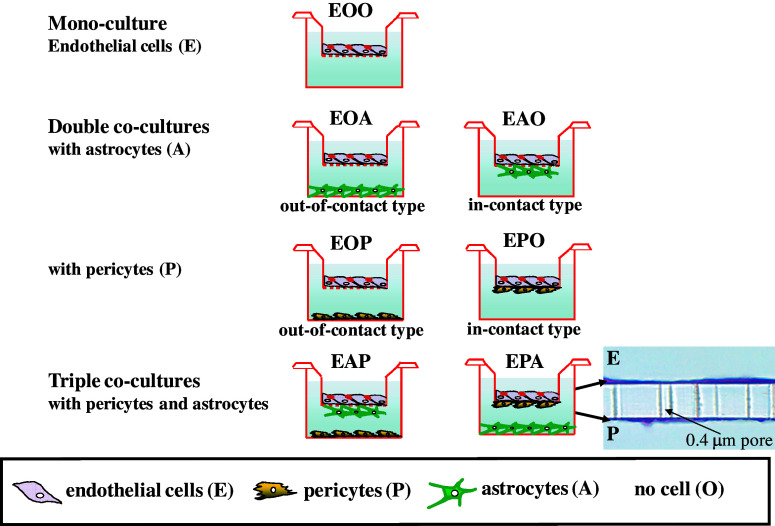
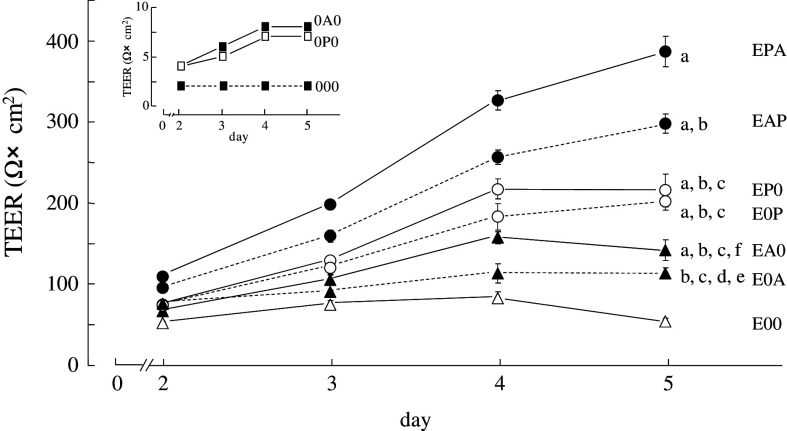
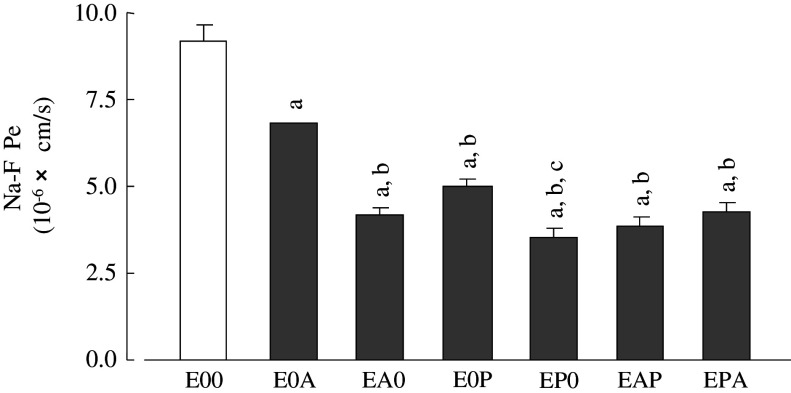
(1) The blood-brain barrier (BBB) characteristics of cerebral endothelial cells are induced by organ-specific local signals. Brain endothelial cells lose their phenotype in cultures without cross-talk with neighboring cells. (2) In contrast to astrocytes, pericytes, another neighboring cell of endothelial cells in brain capillaries, are rarely used in BBB co-culture systems. (3) Seven different types of BBB models, mono-culture, double and triple co-cultures, were constructed from primary rat brain endothelial cells, astrocytes and pericytes on culture inserts. The barrier integrity of the models were compared by measurement of transendothelial electrical resistance and permeability for the small molecular weight marker fluorescein. (4) We could confirm that brain endothelial monolayers in mono-culture do not form tight barrier. Pericytes induced higher electrical resistance and lower permeability for fluorescein than type I astrocytes in co-culture conditions. In triple co-culture models the tightest barrier was observed when endothelial cells and pericytes were positioned on the two sides of the porous filter membrane of the inserts and astrocytes at the bottom of the culture dish. (5) For the first time a rat primary culture based syngeneic triple co-culture BBB model has been constructed using brain pericytes beside brain endothelial cells and astrocytes. This model, mimicking closely the anatomical position of the cells at the BBB in vivo, was superior to the other BBB models tested. (6) The influence of pericytes on the BBB properties of brain endothelial cells may be as important as that of astrocytes and could be exploited in the construction of better BBB models.
Overview
The claims and statistics of this paper haven’t been checked yet.
Free: it reads the open-access text and checks the first 5 claims that cite a source we can check. Create a free account to check every claim.
Integrity signals
Registry
Cites
Statistics
Figures
Verification
Claims the paper makes
The claims and statistics of this paper haven’t been checked yet.
Free: it reads the open-access text and checks the first 5 claims that cite a source we can check. Create a free account to check every claim.
Claims other papers make about this one
Each is checked against this paper’s own text: does it say what the citing paper says it does?
The cited source says what the claim attributes to it.
In the citing paper
“Other evidence for the role of pericytes in BBB function comes from in vitro transwell experiments where the presence of pericytes in the basolateral chamber increases transendothelial electrical resistance (TEER) [16, 18–20].”
From Role of iPSC-derived pericytes on barrier function of iPSC-derived brain microvascular endothelial cells in 2D and 3D (2019) · cites this paper as [19]
In the citing paper
“The in vitro BBB models were established within 4 days of seeding the cells according to the manufacturer’s instructions46.”
From Vascular RAGE transports oxytocin into the brain to elicit its maternal bonding behaviour in mice (2019) · cites this paper as [46]
Self-check
Percentages, sums and reported differences re-computed from the paper’s own numbers.
The self-check needs the paper’s full text.
Citations
Cites
Astrocyte-endothelial interactions at the blood-brain barrier
Abbott, N. J., Rönnbäck, L., & Hansson, E. (2006) · Nature Reviews Neuroscience · doi:10.1038/nrn1824 · Cited by 5,595 · cited 2×
“…cells, astrocytes were the first to be recognized as regulators of brain endothelial characteristics and functions (for reviews see Abbott 2005; Abbott et al. 2006; Haseloff et al. 2005) including the induction of tight junctions (TJs) (Tao-Cheng et al. 1987), a fundamental characteristic of…”
BackgroundLack of Pericytes Leads to Endothelial Hyperplasia and Abnormal Vascular Morphogenesis
Hellström, M., Gerhardt, H., Kalén, M., Li, X., Eriksson, U., Wolburg, H., & Betsholtz, C. (2001) · The Journal of Cell Biology · doi:10.1083/jcb.153.3.543 · Cited by 1,100 · cited 2×
“Despite their localization as the nearest neighbors of endothelial cells with a fundamental role in stabilizing brain capillary structure in vivo (Hellström et al. 2001), few data are available on the functional significance of pericytes on BBB properties.”
BackgroundPermeability Studies on In Vitro Blood–Brain Barrier Models: Physiology, Pathology, and Pharmacology
Deli, M. A., Ábrahám, C. S., Kataoka, Y., & Niwa, M. (2005) · Cellular and Molecular Neurobiology · doi:10.1007/s10571-004-1377-8 · Cited by 643 · cited 5×
“Transendothelial permeability coefficient (Pe in 10 –6 cm/s) was calculated as previously described (Deli et al. 2005).”
BackgroundMethodInfluentialSelf-citationDynamics of CNS Barriers: Evolution, Differentiation, and Modulation
Abbott, N. J. (2005) · Cellular and Molecular Neurobiology · doi:10.1007/s10571-004-1374-y · Cited by 469 · cited 1×
“Among these cells, astrocytes were the first to be recognized as regulators of brain endothelial characteristics and functions (for reviews see Abbott 2005; Abbott et al. 2006; Haseloff et al. 2005) including the induction of tight junctions (TJs) (Tao-Cheng et al. 1987), a fundamental…”
BackgroundTight junctions of brain endothelium in vitro are enhanced by astroglia
Tao-Cheng, J., Nagy, Z., & Brightman, M. (1987) · The Journal of Neuroscience · doi:10.1523/jneurosci.07-10-03293.1987 · Cited by 399 · cited 2×
“…and functions (for reviews see Abbott 2005; Abbott et al. 2006; Haseloff et al. 2005) including the induction of tight junctions (TJs) (Tao-Cheng et al. 1987), a fundamental characteristic of the BBB. Brain pericytes, the cells sharing the basal membrane with capillary endothelial…”
BackgroundDohgu, S., Takata, F., Yamauchi, A., Nakagawa, S., Egawa, T., Naito, M., Tsuruo, T., Sawada, Y., Niwa, M., & Kataoka, Y. (2005) · Brain Research · doi:10.1016/j.brainres.2005.01.027 · Cited by 350 · cited 4×
“Brain pericytes, the cells sharing the basal membrane with capillary endothelial cells, were recently found to be also able to induce BBB functions in cultured brain endothelial cells (Hayashi et al. 2004; Dohgu et al. 2005).”
BackgroundInfluentialSelf-citationHori, S., Ohtsuki, S., Hosoya, K., Nakashima, E., & Terasaki, T. (2004) · Journal of Neurochemistry · doi:10.1111/j.1471-4159.2004.02343.x · Cited by 341 · cited 1×
“Pericyte-derived angiopoietin-1 enhanced occludin gene expression in a brain endothelial cell line (Hori et al. 2004).”
BackgroundPerrière, N., Demeuse, P., Garcia, E., Regina, A., Debray, M., Andreux, J. ‐., Couvreur, P., Scherrmann, J. ‐., Temsamani, J., Couraud, P. ‐., et al. (2005) · Journal of Neurochemistry · doi:10.1111/j.1471-4159.2004.03020.x · Cited by 330 · cited 2×
“5 ng/ml), heparin (100 lg/ml), insulin (5 lg/ml), transferrin (5 lg/ml), sodium selenite (5 ng/ml) (insulin-transferrin-sodium selenite media supplement), gentamicin (50 lg/ml), and puromycin (4 lg/ml) (Perrière et al. 2005) (RBEC medium I) at 37 C with a humidified atmosphere of 5% CO2/95% air, for 2 days.”
MethodSelf-citationHaseloff, R. F., Blasig, I. E., Bauer, H. C., & Bauer, H. (2005) · Cellular and Molecular Neurobiology · doi:10.1007/s10571-004-1375-x · Cited by 301 · cited 2×
“Among these cells, astrocytes were the first to be recognized as regulators of brain endothelial characteristics and functions (for reviews see Abbott 2005; Abbott et al. 2006; Haseloff et al. 2005) including the induction of tight junctions (TJs) (Tao-Cheng et al.”
BackgroundHydrocortisone Reinforces the Blood–Brain Barrier Properties in a Serum Free Cell Culture System
Hoheisel, D., Nitz, T., Franke, H., Wegener, J., Hakvoort, A., Tilling, T., & Galla, H.-J. (1998) · Biochemical and Biophysical Research Communications · doi:10.1006/bbrc.1997.8051 · Cited by 260 · cited 1×
“From Day 1, the culture medium was supplemented with 500 nM hydrocortisone (Hoheisel et al. 1998).”
Method
Research works printed but not linked: 1
- Deli MA, Szabó CA, Dung NTK, Joó F (1997) Immunohistochemical and electron microscopy detections on primary cultures of rat cerebral endothelial cells. In: Boer AG, Sutanto W (eds) Drug transport across the blood–brain barrier: in vivo and in vitro techniques. Harwood Academic Publishers, Amsterdam, pp 23–28
Cited by
The Blood-Brain Barrier in Health and Chronic Neurodegenerative Disorders
Zlokovic, B. V. (2008) · Neuron · doi:10.1016/j.neuron.2008.01.003 · Cited by 3,280
“In vitro studies with cultured pericytes and BEC have suggested that pericytes strengthen the BBB permeability and maintain the vascular integrity and maturation (Nakagawa et al., 2007).”
Bell, R. D., Winkler, E. A., Sagare, A. P., Singh, I., LaRue, B., Deane, R., & Zlokovic, B. V. (2010) · Neuron · doi:10.1016/j.neuron.2010.09.043 · Cited by 1,448
“, 1993), and pericytes enhance the endothelial barrier integrity in vitro (Nakagawa et al., 2007; Kröll et al., 2009).”
BackgroundNeuroinflammatory mechanisms of blood-brain barrier damage in ischemic stroke
Yang, C., Hawkins, K. E., Doré, S., & Candelario-Jalil, E. (2019) · American Journal of Physiology-Cell Physiology · doi:10.1152/ajpcell.00136.2018 · Cited by 871
“Further findings show that the improvement in BBB properties by pericytes was associated with enhanced levels of TJs in rat brain endothelial cells (46, 143, 144).”
BackgroundHelms, H. C., Abbott, N. J., Burek, M., Cecchelli, R., Couraud, P.-O., Deli, M. A., Förster, C., Galla, H. J., Romero, I. A., Shusta, E. V., et al. (2016) · Journal of Cerebral Blood Flow & Metabolism · doi:10.1177/0271678x16630991 · Cited by 843
“The triple cultures including pericytes were developed to further mimic the neurovascular unit.(97,98) Initially, it was shown that inclusion of pericytes caused a greater differentiation of the brain endothelial cells than astrocyte or pericyte co-culture alone,(98) and since then the model has been applied in 13 pub…”
MethodSelf-citationThe Blood-Brain Barrier in Brain Homeostasis and Neurological Diseases
Weiss, N., Miller, F., Cazaubon, S., & Couraud, P.-O. (2009) · Biochimica et Biophysica Acta (BBA) - Biomembranes · doi:10.1016/j.bbamem.2008.10.022 · Cited by 731
“In line with the understanding of the aforementioned cell – cell interactions taking place at the BBB, most in vitro BBB models proposed so far are based on co-cultures of brain ECs and astrocytes (or glial cells) [19] in two-chamber cell culture systems (Fig.”
Metadata
- Authors
- Nakagawa, S., Deli, M. A., Nakao, S., Honda, M., Hayashi, K., Nakaoke, R., Kataoka, Y., & Niwa, M.
- Affiliations
- Nagasaki University (JP)
- Institute of Biophysics (HU)
- Fukuoka University (JP)
- Corresponding author
- Deli, Mária A.
- Venue
- Cellular and Molecular Neurobiology
- Published
- 2007-09-06
- Volume
- 27
- Issue
- 6
- Pages
- 687-694
- ISSN
- 0272-4340 (ISSN-L)
- 1573-6830
- PMC
- PMC11517186
- OpenAlex
- W2097760799
- Cited by
- 364
- References
- 18
- Citations by year
- 2026: 7 · 2025: 12 · 2024: 12 · 2023: 13 · 2022: 22 · 2021: 28 · 2020: 19 · 2019: 25 · 2018: 27 · 2017: 27 · 2016: 18 · 2015: 27 · 2014: 29 · 2013: 19 · 2012: 13
- FWCI
- 8.26
- Type
- journal article
- Language
- en
- Open access
- hybrid
- doi.org
- Licence
- cc-by-nc
- Locations
- Cellular and Molecular Neurobiology (publishedVersion, cc-by-nc)
- PubMed Central (publishedVersion, cc-by-nc)
- PubMed (publishedVersion)
- Funders
- Ministry of Economy, Trade and Industry
- Hungarian Scientific Research Fund
- Nemzeti Kutatási és Technológiai Hivatal (RET 08/2004)
- Topics
- Life Sciences › Neuroscience › Neurology › Barrier Structure and Function Studies
- Health Sciences › Medicine › Oncology › Drug Transport and Resistance Mechanisms
- Life Sciences › Biochemistry, Genetics and Molecular Biology › Molecular Biology › Ion Transport and Channel Regulation
- Keywords
- pericytes, blood-brain barrier, brain endothelial cells, astrocytes, barrier integrity, transendothelial electrical resistance, fluorescein permeability, primary cell culture, cell-cell interactions
- MeSH terms
- Animals, Animals, Newborn, Blood-Brain Barrier, Brain, Capillary Permeability, Cell Membrane Permeability, Cells, Cultured, Microcirculation, Models, Biological, Rats, Wistar, Coculture Techniques, Fluorescein, Pericytes, Endothelial Cells, Rats
About these checks
Registry, retraction, Cites and statistics results are computed, not judged, with one exception: a printed reference that no index lists is read once by a model before it counts as a citation error. Claims are extracted by a model and kept only when their quote appears verbatim in the text; each cited source is then checked, with a model’s help, for whether it says what the claim relies on. Those verdicts can be wrong — read the claim’s quote and the cited source before relying on one.
Statistics and arithmetic are recomputed, not judged.
Confidence bands are shown only for fields calibrated on our annotated test set. None is calibrated yet, so no band is shown.
What counts as a claim ›How we measure confidence ›How we check this ›
Are you an author, or do you see a problem with this page? Request a review
Data sources
Bibliographic data: Semantic Scholar, OpenAlex, Crossref.
Contains information from the Semantic Scholar Academic Graph Datasets, made available under the ODC Attribution License (ODC-BY 1.0).
Semantic Scholar’s data is described in: Kinney, R., et al. (2023). The Semantic Scholar Open Data Platform. arXiv:2301.10140.
