

Pericytes from Brain Microvessels Strengthen the Barrier Integrity in Primary Cultures of Rat Brain Endothelial Cells
Open accessThe DOI matches its Crossref record; 18 of the 18 references it cites were found in a registry or an index.
Abstract
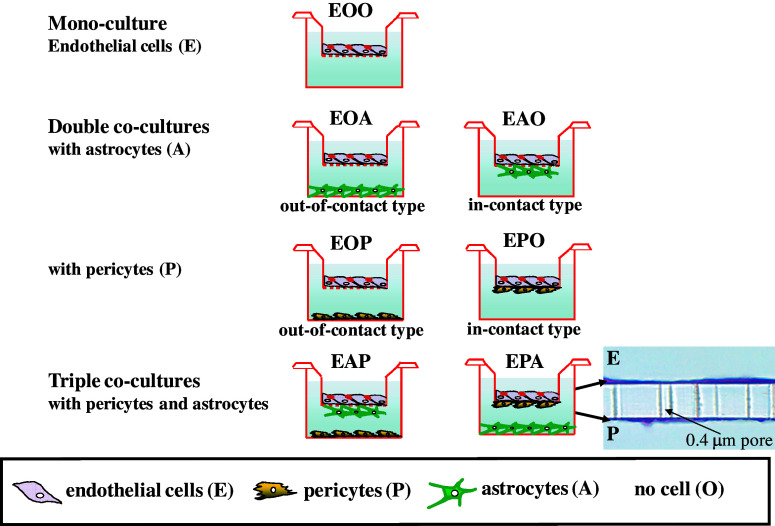
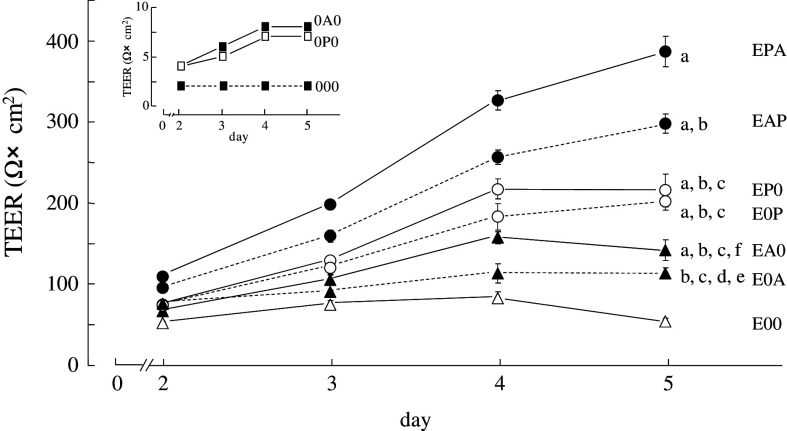
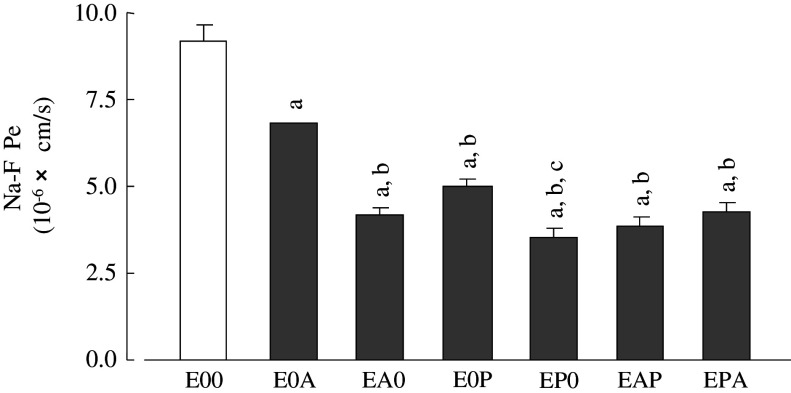
(1) The blood-brain barrier (BBB) characteristics of cerebral endothelial cells are induced by organ-specific local signals. Brain endothelial cells lose their phenotype in cultures without cross-talk with neighboring cells. (2) In contrast to astrocytes, pericytes, another neighboring cell of endothelial cells in brain capillaries, are rarely used in BBB co-culture systems. (3) Seven different types of BBB models, mono-culture, double and triple co-cultures, were constructed from primary rat brain endothelial cells, astrocytes and pericytes on culture inserts. The barrier integrity of the models were compared by measurement of transendothelial electrical resistance and permeability for the small molecular weight marker fluorescein. (4) We could confirm that brain endothelial monolayers in mono-culture do not form tight barrier. Pericytes induced higher electrical resistance and lower permeability for fluorescein than type I astrocytes in co-culture conditions. In triple co-culture models the tightest barrier was observed when endothelial cells and pericytes were positioned on the two sides of the porous filter membrane of the inserts and astrocytes at the bottom of the culture dish. (5) For the first time a rat primary culture based syngeneic triple co-culture BBB model has been constructed using brain pericytes beside brain endothelial cells and astrocytes. This model, mimicking closely the anatomical position of the cells at the BBB in vivo, was superior to the other BBB models tested. (6) The influence of pericytes on the BBB properties of brain endothelial cells may be as important as that of astrocytes and could be exploited in the construction of better BBB models.
Overview
The claims and statistics of this paper haven’t been checked yet.
Free: it reads the open-access text and checks the first 5 claims that cite a source we can check. Create a free account to check every claim.
Integrity signals
Registry
Cites
Statistics
Figures
Verification
Claims the paper makes
The claims and statistics of this paper haven’t been checked yet.
Free: it reads the open-access text and checks the first 5 claims that cite a source we can check. Create a free account to check every claim.
Claims other papers make about this one
Each is checked against this paper’s own text: does it say what the citing paper says it does?
The cited source says what the claim attributes to it.
In the citing paper
“Other evidence for the role of pericytes in BBB function comes from in vitro transwell experiments where the presence of pericytes in the basolateral chamber increases transendothelial electrical resistance (TEER) [16, 18–20].”
From Role of iPSC-derived pericytes on barrier function of iPSC-derived brain microvascular endothelial cells in 2D and 3D (2019) · cites this paper as [19]
In the citing paper
“The in vitro BBB models were established within 4 days of seeding the cells according to the manufacturer’s instructions46.”
From Vascular RAGE transports oxytocin into the brain to elicit its maternal bonding behaviour in mice (2019) · cites this paper as [46]
Self-check
Percentages, sums and reported differences re-computed from the paper’s own numbers.
The self-check needs the paper’s full text.
Citations
Cites
Astrocyte-endothelial interactions at the blood-brain barrier
Abbott, N. J., Rönnbäck, L., & Hansson, E. (2006) · Nature Reviews Neuroscience · doi:10.1038/nrn1824 · Cited by 5,595 · cited 2×
“…cells, astrocytes were the first to be recognized as regulators of brain endothelial characteristics and functions (for reviews see Abbott 2005; Abbott et al. 2006; Haseloff et al. 2005) including the induction of tight junctions (TJs) (Tao-Cheng et al. 1987), a fundamental characteristic of…”
BackgroundLack of Pericytes Leads to Endothelial Hyperplasia and Abnormal Vascular Morphogenesis
Hellström, M., Gerhardt, H., Kalén, M., Li, X., Eriksson, U., Wolburg, H., & Betsholtz, C. (2001) · The Journal of Cell Biology · doi:10.1083/jcb.153.3.543 · Cited by 1,100 · cited 2×
“Despite their localization as the nearest neighbors of endothelial cells with a fundamental role in stabilizing brain capillary structure in vivo (Hellström et al. 2001), few data are available on the functional significance of pericytes on BBB properties.”
BackgroundPermeability Studies on In Vitro Blood–Brain Barrier Models: Physiology, Pathology, and Pharmacology
Deli, M. A., Ábrahám, C. S., Kataoka, Y., & Niwa, M. (2005) · Cellular and Molecular Neurobiology · doi:10.1007/s10571-004-1377-8 · Cited by 643 · cited 5×
“Transendothelial permeability coefficient (Pe in 10 –6 cm/s) was calculated as previously described (Deli et al. 2005).”
BackgroundMethodInfluentialSelf-citationDynamics of CNS Barriers: Evolution, Differentiation, and Modulation
Abbott, N. J. (2005) · Cellular and Molecular Neurobiology · doi:10.1007/s10571-004-1374-y · Cited by 469 · cited 1×
“Among these cells, astrocytes were the first to be recognized as regulators of brain endothelial characteristics and functions (for reviews see Abbott 2005; Abbott et al. 2006; Haseloff et al. 2005) including the induction of tight junctions (TJs) (Tao-Cheng et al. 1987), a fundamental…”
BackgroundTight junctions of brain endothelium in vitro are enhanced by astroglia
Tao-Cheng, J., Nagy, Z., & Brightman, M. (1987) · The Journal of Neuroscience · doi:10.1523/jneurosci.07-10-03293.1987 · Cited by 399 · cited 2×
“…and functions (for reviews see Abbott 2005; Abbott et al. 2006; Haseloff et al. 2005) including the induction of tight junctions (TJs) (Tao-Cheng et al. 1987), a fundamental characteristic of the BBB. Brain pericytes, the cells sharing the basal membrane with capillary endothelial…”
BackgroundDohgu, S., Takata, F., Yamauchi, A., Nakagawa, S., Egawa, T., Naito, M., Tsuruo, T., Sawada, Y., Niwa, M., & Kataoka, Y. (2005) · Brain Research · doi:10.1016/j.brainres.2005.01.027 · Cited by 350 · cited 4×
“Brain pericytes, the cells sharing the basal membrane with capillary endothelial cells, were recently found to be also able to induce BBB functions in cultured brain endothelial cells (Hayashi et al. 2004; Dohgu et al. 2005).”
BackgroundInfluentialSelf-citationHori, S., Ohtsuki, S., Hosoya, K., Nakashima, E., & Terasaki, T. (2004) · Journal of Neurochemistry · doi:10.1111/j.1471-4159.2004.02343.x · Cited by 341 · cited 1×
“Pericyte-derived angiopoietin-1 enhanced occludin gene expression in a brain endothelial cell line (Hori et al. 2004).”
BackgroundPerrière, N., Demeuse, P., Garcia, E., Regina, A., Debray, M., Andreux, J. ‐., Couvreur, P., Scherrmann, J. ‐., Temsamani, J., Couraud, P. ‐., et al. (2005) · Journal of Neurochemistry · doi:10.1111/j.1471-4159.2004.03020.x · Cited by 330 · cited 2×
“5 ng/ml), heparin (100 lg/ml), insulin (5 lg/ml), transferrin (5 lg/ml), sodium selenite (5 ng/ml) (insulin-transferrin-sodium selenite media supplement), gentamicin (50 lg/ml), and puromycin (4 lg/ml) (Perrière et al. 2005) (RBEC medium I) at 37 C with a humidified atmosphere of 5% CO2/95% air, for 2 days.”
MethodSelf-citationHaseloff, R. F., Blasig, I. E., Bauer, H. C., & Bauer, H. (2005) · Cellular and Molecular Neurobiology · doi:10.1007/s10571-004-1375-x · Cited by 301 · cited 2×
“Among these cells, astrocytes were the first to be recognized as regulators of brain endothelial characteristics and functions (for reviews see Abbott 2005; Abbott et al. 2006; Haseloff et al. 2005) including the induction of tight junctions (TJs) (Tao-Cheng et al.”
BackgroundHydrocortisone Reinforces the Blood–Brain Barrier Properties in a Serum Free Cell Culture System
Hoheisel, D., Nitz, T., Franke, H., Wegener, J., Hakvoort, A., Tilling, T., & Galla, H.-J. (1998) · Biochemical and Biophysical Research Communications · doi:10.1006/bbrc.1997.8051 · Cited by 260 · cited 1×
“From Day 1, the culture medium was supplemented with 500 nM hydrocortisone (Hoheisel et al. 1998).”
Method
Research works printed but not linked: 1
- Deli MA, Szabó CA, Dung NTK, Joó F (1997) Immunohistochemical and electron microscopy detections on primary cultures of rat cerebral endothelial cells. In: Boer AG, Sutanto W (eds) Drug transport across the blood–brain barrier: in vivo and in vitro techniques. Harwood Academic Publishers, Amsterdam, pp 23–28
Cited by
The Blood-Brain Barrier in Health and Chronic Neurodegenerative Disorders
Zlokovic, B. V. (2008) · Neuron · doi:10.1016/j.neuron.2008.01.003 · Cited by 3,280
“In vitro studies with cultured pericytes and BEC have suggested that pericytes strengthen the BBB permeability and maintain the vascular integrity and maturation (Nakagawa et al., 2007).”
Bell, R. D., Winkler, E. A., Sagare, A. P., Singh, I., LaRue, B., Deane, R., & Zlokovic, B. V. (2010) · Neuron · doi:10.1016/j.neuron.2010.09.043 · Cited by 1,448
“, 1993), and pericytes enhance the endothelial barrier integrity in vitro (Nakagawa et al., 2007; Kröll et al., 2009).”
BackgroundNeuroinflammatory mechanisms of blood-brain barrier damage in ischemic stroke
Yang, C., Hawkins, K. E., Doré, S., & Candelario-Jalil, E. (2019) · American Journal of Physiology-Cell Physiology · doi:10.1152/ajpcell.00136.2018 · Cited by 871
“Further findings show that the improvement in BBB properties by pericytes was associated with enhanced levels of TJs in rat brain endothelial cells (46, 143, 144).”
BackgroundHelms, H. C., Abbott, N. J., Burek, M., Cecchelli, R., Couraud, P.-O., Deli, M. A., Förster, C., Galla, H. J., Romero, I. A., Shusta, E. V., et al. (2016) · Journal of Cerebral Blood Flow & Metabolism · doi:10.1177/0271678x16630991 · Cited by 843
“The triple cultures including pericytes were developed to further mimic the neurovascular unit.(97,98) Initially, it was shown that inclusion of pericytes caused a greater differentiation of the brain endothelial cells than astrocyte or pericyte co-culture alone,(98) and since then the model has been applied in 13 pub…”
MethodSelf-citationThe Blood-Brain Barrier in Brain Homeostasis and Neurological Diseases
Weiss, N., Miller, F., Cazaubon, S., & Couraud, P.-O. (2009) · Biochimica et Biophysica Acta (BBA) - Biomembranes · doi:10.1016/j.bbamem.2008.10.022 · Cited by 731
“In line with the understanding of the aforementioned cell – cell interactions taking place at the BBB, most in vitro BBB models proposed so far are based on co-cultures of brain ECs and astrocytes (or glial cells) [19] in two-chamber cell culture systems (Fig.”
A new blood–brain barrier model using primary rat brain endothelial cells, pericytes and astrocytes
Nakagawa, S., Deli, M. A., Kawaguchi, H., Shimizudani, T., Shimono, T., Kittel, Á., Tanaka, K., & Niwa, M. (2009) · Neurochemistry International · doi:10.1016/j.neuint.2008.12.002 · Cited by 728
“Seven types of BBB models were constructed (Fig. 4; Nakagawa et al., 2007).”
InfluentialSelf-citationKlaassen, I., Van Noorden, C. J. F., & Schlingemann, R. O. (2013) · Progress in Retinal and Eye Research · doi:10.1016/j.preteyeres.2013.02.001 · Cited by 722
Looking at the blood–brain barrier: Molecular anatomy and possible investigation approaches
Cardoso, F. L., Brites, D., & Brito, M. A. (2010) · Brain Research Reviews · doi:10.1016/j.brainresrev.2010.05.003 · Cited by 569
Molecular pathophysiology of cerebral edema
Stokum, J. A., Gerzanich, V., & Simard, J. M. (2016) · Journal of Cerebral Blood Flow & Metabolism · doi:10.1177/0271678x15617172 · Cited by 587
Blood–Brain Barrier Dysfunction as a Cause and Consequence of Alzheimer's Disease
Erickson, M. A., & Banks, W. A. (2013) · Journal of Cerebral Blood Flow & Metabolism · doi:10.1038/jcbfm.2013.135 · Cited by 572
Lippmann, E. S., Al-Ahmad, A., Azarin, S. M., Palecek, S. P., & Shusta, E. V. (2014) · Scientific Reports · doi:10.1038/srep04160 · Cited by 508
Erickson, M. A., & Banks, W. A. (2018) · Pharmacological Reviews · doi:10.1124/pr.117.014647 · Cited by 378
“Pericytes are also important for the induction of the BBB phenotype in vitro, as pericyte coculture with BECs increases the integrity of the barrier (Nakagawa et al., 2007).”
BackgroundExtracellular matrix and matrix receptors in blood–brain barrier formation and stroke
Baeten, K. M., & Akassoglou, K. (2011) · Developmental Neurobiology · doi:10.1002/dneu.20954 · Cited by 397
“, 2011), TEER, and permeability were influenced more by pericytes than astrocytes (Nakagawa et al., 2007).”
BackgroundTakeshita, Y., & Ransohoff, R. M. (2012) · Immunological Reviews · doi:10.1111/j.1600-065x.2012.01127.x · Cited by 325
“Moreover, studies have been conducted with triple cultures of BMVECs, astrocytes, and pericytes (103, 140), as well as with BMVECs,”
ResultDisruption of central nervous system barriers in multiple sclerosis
Alvarez, J. I., Cayrol, R., & Prat, A. (2011) · Biochimica et Biophysica Acta (BBA) - Molecular Basis of Disease · doi:10.1016/j.bbadis.2010.06.017 · Cited by 334
Hatherell, K., Couraud, P.-O., Romero, I. A., Weksler, B., & Pilkington, G. J. (2011) · Journal of Neuroscience Methods · doi:10.1016/j.jneumeth.2011.05.012 · Cited by 334
In vitro models of the blood-brain barrier
Wilhelm, I., Fazakas, C., & Krizbai, I. (2011) · Acta Neurobiologiae Experimentalis · doi:10.55782/ane-2011-1828 · Cited by 298
“More recently, a triple co-culture model including endothelial cells, astrocytes and pericytes was characterized and shown to have high TEER and low permeability (Nakagawa et al. 2007, 2009).”
BackgroundNishitsuji, K., Hosono, T., Nakamura, T., Bu, G., & Michikawa, M. (2011) · Journal of Biological Chemistry · doi:10.1074/jbc.m111.225532 · Cited by 275
Li, F., Lan, Y., Wang, Y., Wang, J., Yang, G., Meng, F., Han, H., Meng, A., Wang, Y., & Yang, X. (2011) · Developmental Cell · doi:10.1016/j.devcel.2011.01.011 · Cited by 258
“HUVEC, primary brain ECs, and pericytes were isolated and cultured as described (Crampton et al., 2007; Nakagawa et al., 2007; Song and Pachter, 2003).”
BackgroundMethodInfluentialNeurovascular Unit: a Focus on Pericytes
Sá-Pereira, I., Brites, D., & Brito, M. A. (2012) · Molecular Neurobiology · doi:10.1007/s12035-012-8244-2 · Cited by 267
“[109] showed that the contact between the three different cells increased the TEER and consequently tightened TJs.”
BackgroundVascular Cell Senescence Contributes to Blood–Brain Barrier Breakdown
Yamazaki, Y., Baker, D. J., Tachibana, M., Liu, C.-C., van Deursen, J. M., Brott, T. G., Bu, G., & Kanekiyo, T. (2016) · Stroke · doi:10.1161/strokeaha.115.010835 · Cited by 263
The blood–brain barrier in neurodegenerative disease: a rhetorical perspective
Carvey, P. M., Hendey, B., & Monahan, A. J. (2009) · Journal of Neurochemistry · doi:10.1111/j.1471-4159.2009.06319.x · Cited by 251
“In addition, Nakagawa et al. (2007) showed that pericytes are critical in maintaining the BEC’s ability to transport insulin in the face of high glucose levels.”
BackgroundPericytes at the intersection between tissue regeneration and pathology: Figure 1
Birbrair, A., Zhang, T., Wang, Z.-M., Messi, M. L., Mintz, A., & Delbono, O. (2015) · Clinical Science · doi:10.1042/cs20140278 · Cited by 245
Directed differentiation of human pluripotent stem cells to blood-brain barrier endothelial cells
Qian, T., Maguire, S. E., Canfield, S. G., Bao, X., Olson, W. R., Shusta, E. V., & Palecek, S. P. (2017) · Science Advances · doi:10.1126/sciadv.1701679 · Cited by 254
In-vitro blood-brain barrier models for drug screening and permeation studies: an overview
Bagchi, S., Chhibber, T., Lahooti, B., Verma, A., Borse, V., & Jayant, R. D. (2019) · Drug Design, Development and Therapy · doi:10.2147/dddt.s218708 · Cited by 234
“BMEC–pericyte–astrocyte triple co-culture model is a more reliable in vitro BBB model due to the higher transendothelial electric resistance (TEER) value and lower permeability, which generates tighter BBB, ideal for permeability studies.(27,46)”
BackgroundA Novel Transwell Blood Brain Barrier Model Using Primary Human Cells
Stone, N. L., England, T. J., & O’Sullivan, S. E. (2019) · Frontiers in Cellular Neuroscience · doi:10.3389/fncel.2019.00230 · Cited by 251
Canfield, S. G., Stebbins, M. J., Morales, B. S., Asai, S. W., Vatine, G. D., Svendsen, C. N., Palecek, S. P., & Shusta, E. V. (2017) · Journal of Neurochemistry · doi:10.1111/jnc.13923 · Cited by 250
“More recently, pericytes in co-culture have been shown to have similar BBB enhancing effects to astrocytes (Nakagawa et al. 2007; Lippmann et al. 2014).”
BackgroundCurrent concepts of blood-brain barrier development
Liebner, S., Czupalla, C. J., & Wolburg, H. (2011) · The International Journal of Developmental Biology · doi:10.1387/ijdb.103224sl · Cited by 227
“Dente et al. (Dente et al., 2001) and Nakagawa et al. (Nakagawa et al., 2007) have reported on PCs evoking an improvement of barrier properties in co-cultured microvessel ECs.”
BackgroundHellinger, É., Veszelka, S., Tóth, A. E., Walter, F., Kittel, Á., Bakk, M. L., Tihanyi, K., Háda, V., Nakagawa, S., Dinh Ha Duy, T., et al. (2012) · European Journal of Pharmaceutics and Biopharmaceutics · doi:10.1016/j.ejpb.2012.07.020 · Cited by 237
Self-citationIn Vitro Models of the Blood-Brain Barrier
Neuhaus, W. (2020) · Handbook of Experimental Pharmacology · doi:10.1007/164_2020_370 · Cited by 236
Barriers in the brain: a renaissance?
Saunders, N. R., Ek, C. J., Habgood, M. D., & Dziegielewska, K. M. (2008) · Trends in Neurosciences · doi:10.1016/j.tins.2008.03.003 · Cited by 228
In Vitro Models of the Blood–Brain Barrier for the Study of Drug Delivery to the Brain
Wilhelm, I., & Krizbai, I. A. (2014) · Molecular Pharmaceutics · doi:10.1021/mp500046f · Cited by 211
Nishioku, T., Dohgu, S., Takata, F., Eto, T., Ishikawa, N., Kodama, K. B., Nakagawa, S., Yamauchi, A., & Kataoka, Y. (2009) · Cellular and Molecular Neurobiology · doi:10.1007/s10571-008-9322-x · Cited by 210
“Recently, pericytes have been found to augment BBB functions in cultured brain endothelial cells (Dohgu et al. 2005; Takata et al. 2007; Nakagawa et al. 2007 ).”
BackgroundSelf-citationSize, shape, and flexibility influence nanoparticle transport across brain endothelium under flow
Nowak, M., Brown, T. D., Graham, A., Helgeson, M. E., & Mitragotri, S. (2020) · Bioengineering & Translational Medicine · doi:10.1002/btm2.10153 · Cited by 211
Takata, F., Dohgu, S., Matsumoto, J., Takahashi, H., Machida, T., Wakigawa, T., Harada, E., Miyaji, H., Koga, M., Nishioku, T., et al. (2011) · Journal of Neuroinflammation · doi:10.1186/1742-2094-8-106 · Cited by 202
“Primary cultures of rat brain pericytes and rat brain microvascular endothelial cells (RBECs) were prepared from three-week-old Wistar rats, as previously described [1,4,22,23].”
MethodSelf-citationCell-Culture Models of the Blood–Brain Barrier
He, Y., Yao, Y., Tsirka, S. E., & Cao, Y. (2014) · Stroke · doi:10.1161/strokeaha.114.005427 · Cited by 194
The CNS microvascular pericyte: pericyte-astrocyte crosstalk in the regulation of tissue survival
Bonkowski, D., Katyshev, V., Balabanov, R. D., Borisov, A., & Dore-Duffy, P. (2011) · Fluids and Barriers of the CNS · doi:10.1186/2045-8118-8-8 · Cited by 207
“The triple co-culture of pericytes and astrocytes with ECs is thought by most investigators to represent a better model system to study the BBB [73-76].”
Wolff, A., Antfolk, M., Brodin, B., & Tenje, M. (2015) · Journal of Pharmaceutical Sciences · doi:10.1002/jps.24329 · Cited by 191
Linville, R. M., DeStefano, J. G., Sklar, M. B., Xu, Z., Farrell, A. M., Bogorad, M. I., Chu, C., Walczak, P., Cheng, L., Mahairaki, V., et al. (2019) · Biomaterials · doi:10.1016/j.biomaterials.2018.10.023 · Cited by 199
Human pluripotent stem cell–derived brain pericyte–like cells induce blood-brain barrier properties
Stebbins, M. J., Gastfriend, B. D., Canfield, S. G., Lee, M.-S., Richards, D., Faubion, M. G., Li, W.-J., Daneman, R., Palecek, S. P., & Shusta, E. V. (2019) · Science Advances · doi:10.1126/sciadv.aau7375 · Cited by 195
“While many studies have used primary brain pericytes to enhance BMEC barrier properties, primary brain pericytes offer limited scalability, especially for human in vitro BBB models (28, 30, 67).”
BackgroundHanada, S., Fujioka, K., Inoue, Y., Kanaya, F., Manome, Y., & Yamamoto, K. (2014) · International Journal of Molecular Sciences · doi:10.3390/ijms15021812 · Cited by 186
“short time (30 min) and it is already confirmed that the estimated permeability coefficient is correlated with in vivo permeability [45,46].”
A versatile lab-on-a-chip tool for modeling biological barriers
Walter, F. R., Valkai, S., Kincses, A., Petneházi, A., Czeller, T., Veszelka, S., Ormos, P., Deli, M. A., & Dér, A. (2016) · Sensors and Actuators B: Chemical · doi:10.1016/j.snb.2015.07.110 · Cited by 177
Self-citationSumi, N., Nishioku, T., Takata, F., Matsumoto, J., Watanabe, T., Shuto, H., Yamauchi, A., Dohgu, S., & Kataoka, Y. (2010) · Cellular and Molecular Neurobiology · doi:10.1007/s10571-009-9446-7 · Cited by 179
“Primary cultures of RBEC were prepared from 3-week-old Wistar rats, as previously described (Deli et al. 1993; Nakagawa et al. 2007).”
MethodSelf-citationA role for human brain pericytes in neuroinflammation
Jansson, D., Rustenhoven, J., Feng, S., Hurley, D., Oldfield, R. L., Bergin, P. S., Mee, E. W., Faull, R. L., & Dragunow, M. (2014) · Journal of Neuroinflammation · doi:10.1186/1742-2094-11-104 · Cited by 168
“Together these cells comprise the neurovascular unit [76,77].”
BackgroundVascular RAGE transports oxytocin into the brain to elicit its maternal bonding behaviour in mice
Yamamoto, Y., Liang, M., Munesue, S., Deguchi, K., Harashima, A., Furuhara, K., Yuhi, T., Zhong, J., Akther, S., Goto, H., et al. (2019) · Communications Biology · doi:10.1038/s42003-019-0325-6 · Cited by 171
Cell‐specific blood–brain barrier regulation in health and disease: a focus on hypoxia
Engelhardt, S., Patkar, S., & Ogunshola, O. O. (2014) · British Journal of Pharmacology · doi:10.1111/bph.12489 · Cited by 168
“In vitro studies using cells of human, murine, bovine and porcine origin further underlined the positive effect of pericytes on BBB tightness (Hayashi et al., 2004; Dohgu et al., 2005; Nakagawa et al., 2007; Al Ahmad et al., 2009; Daneman et al., 2010).”
BackgroundWan, W., Cao, L., Liu, L., Zhang, C., Kalionis, B., Tai, X., Li, Y., & Xia, S. (2015) · Journal of Neurochemistry · doi:10.1111/jnc.13122 · Cited by 168
“…by measuring the permeability of cells to sodium fluorescein (Na-F, MW: 376 Da), following a previously described protocol (Kis et al. 2001; Nakagawa et al. 2007; Watanabe et al. 2013). bEnd.3 cells (5 9 104 cells/cm2) were cultured on 6.5 mm diameter polycarbonate membrane Transwell…”
MethodInfluentialXue, Q., Liu, Y., Qi, H., Ma, Q., Xu, L., Chen, W., Chen, G., & Xu, X. (2013) · International Journal of Biological Sciences · doi:10.7150/ijbs.5115 · Cited by 144
“Sequentially, Nakagawa S et al [9,21] established primary rat BMECs, astrocytes and pericytes cells co-culture model.”
BackgroundAgrin, Aquaporin-4, and Astrocyte Polarity as an Important Feature of the Blood-Brain Barrier
Wolburg, H., Noell, S., Wolburg-Buchholz, K., Mack, A., & Fallier-Becker, P. (2009) · The Neuroscientist · doi:10.1177/1073858408329509 · Cited by 146
Raimondi, I., Izzo, L., Tunesi, M., Comar, M., Albani, D., & Giordano, C. (2020) · Frontiers in Bioengineering and Biotechnology · doi:10.3389/fbioe.2019.00435 · Cited by 156
“…rat BCEC + astrocytes co-culture AD, encephalitis, MS occludins, claudins 5, ZO-I TEER 300–600 Pe 1.4 (with sucrose) Pe 4.3 (with Lucifer yellow) Nakagawa et al., 2007, 2009; Perrière et al., 2007; Abbott et al., 2012 Primary rat BCEC + astrocytes + pericytes co-culture AD occludins, claudins…”
InfluentialBaburamani, A. A., Ek, C. J., Walker, D. W., & Castillo-Melendez, M. (2012) · Frontiers in Physiology · doi:10.3389/fphys.2012.00424 · Cited by 135
“…(Daneman et al., 2010), making it more likely that these contacts have regulatory roles at the BBB. Pericytes are cells that wrap around endothelial cells and provide structural support, stability, and integrity to the vessel wall (Ballabh et al., 2004b; Nakagawa et al., 2007; Kaur and Ling, 2008).”
BackgroundPericytes are heterogeneous in their origin within the same tissue
Prazeres, P. H. D. M., Sena, I. F. G., Borges, I. D. T., de Azevedo, P. O., Andreotti, J. P., de Paiva, A. E., de Almeida, V. M., Guerra, D. A. P., Santos, G. S. P., Mintz, A., et al. (2017) · Developmental Biology · doi:10.1016/j.ydbio.2017.05.001 · Cited by 151
“, 2003), and, in the central nervous system, collaborate with astrocytes to maintain the functional integrity of the blood brain barrier (Al Ahmad et al., 2011; Armulik et al., 2010; Bell et al., 2010; Cuevas et al., 1984; Daneman et al., 2010; Dohgu et al., 2005; Kamouchi et al., 2011; Krueger and Bechmann, 2010; Nak…”
BackgroundLogan, S., Arzua, T., Canfield, S. G., Seminary, E. R., Sison, S. L., Ebert, A. D., & Bai, X. (2019) · Comprehensive physiology · doi:10.1002/cphy.c180025 · Cited by 154
New experimental models of the blood-brain barrier for CNS drug discovery
Kaisar, M. A., Sajja, R. K., Prasad, S., Abhyankar, V. V., Liles, T., & Cucullo, L. (2017) · Expert Opinion on Drug Discovery · doi:10.1080/17460441.2017.1253676 · Cited by 135
“Coculture with mouse astrocyte cell lines EC on top & astrocytes on the bottom of Transwell insert 80 [7]”
MethodBenchmarking in vitro tissue-engineered blood–brain barrier models
DeStefano, J. G., Jamieson, J. J., Linville, R. M., & Searson, P. C. (2018) · Fluids and Barriers of the CNS · doi:10.1186/s12987-018-0117-2 · Cited by 142
Dual-targeting immunoliposomes using angiopep-2 and CD133 antibody for glioblastoma stem cells
Kim, J. S., Shin, D. H., & Kim, J. (2017) · Journal of Controlled Release · doi:10.1016/j.jconrel.2017.11.026 · Cited by 144
Johnsen, K. B., & Moos, T. (2015) · Journal of Controlled Release · doi:10.1016/j.jconrel.2015.11.032 · Cited by 147
3D brain angiogenesis model to reconstitute functional human blood–brain barrier in vitro
Lee, S., Chung, M., Lee, S., & Jeon, N. L. (2020) · Biotechnology and Bioengineering · doi:10.1002/bit.27224 · Cited by 130
Amyotrophic lateral sclerosis: A neurovascular disease
Garbuzova-Davis, S. N., Rodrigues, M. C. O., Hernandez‐Ontiveros, D. G., Louis, M. K., Willing, A. E., Borlongan, C. V., & Sanberg, P. R. (2011) · Brain Research · doi:10.1016/j.brainres.2011.04.049 · Cited by 143
Moura, R. P., Martins, C., Pinto, S., Sousa, F., & Sarmento, B. (2019) · Expert Opinion on Drug Delivery · doi:10.1080/17425247.2019.1583205 · Cited by 125
“Pericytes, in turn, can modulate BBB trans-endothelial resistance [22], rate of transcytosis, and expression of efflux pumps [23].”
BackgroundLi, H., Wang, P., Huang, F., Jin, J., Wu, H., Zhang, B., Wang, Z., Shi, H., & Wu, X. (2017) · Toxicology and Applied Pharmacology · doi:10.1016/j.taap.2017.12.019 · Cited by 126
Thanabalasundaram, G., Schneidewind, J., Pieper, C., & Galla, H. (2011) · The International Journal of Biochemistry & Cell Biology · doi:10.1016/j.biocel.2011.05.002 · Cited by 134
Ponio, J. B.-D., El-Ayoubi, F., Glacial, F., Ganeshamoorthy, K., Driancourt, C., Godet, M., Perrière, N., Guillevic, O., Couraud, P. O., & Uzan, G. (2014) · PLoS ONE · doi:10.1371/journal.pone.0084179 · Cited by 108
Infection of human pericytes by HIV‐1 disrupts the integrity of the blood–brain barrier
Nakagawa, S., Castro, V., & Toborek, M. (2012) · Journal of Cellular and Molecular Medicine · doi:10.1111/j.1582-4934.2012.01622.x · Cited by 117
“pericytes have been demonstrated to be involved in the maintenance of brain homeostasis, angiogenesis, neovascularization and the regulation of cerebral blood flow [10–14].”
BackgroundSelf-citationJamieson, J. J., Linville, R. M., Ding, Y. Y., Gerecht, S., & Searson, P. C. (2019) · Fluids and Barriers of the CNS · doi:10.1186/s12987-019-0136-7 · Cited by 117
Thomsen, M. S., Birkelund, S., Burkhart, A., Stensballe, A., & Moos, T. (2016) · Journal of Neurochemistry · doi:10.1111/jnc.13747 · Cited by 120
“This is in agreement with the study by Burkhart et al. (2015) on rat BCEC models, but is opposed to the results by Nakagawa et al. (2007) reporting further increase in TEER, when the rat BCECs are grown in triple-culture (Nakagawa et al. 2007).”
BackgroundResultChen, C.-J., Ou, Y.-C., Li, J.-R., Chang, C.-Y., Pan, H.-C., Lai, C.-Y., Liao, S.-L., Raung, S.-L., & Chang, C.-J. (2014) · Journal of Virology · doi:10.1128/jvi.02738-13 · Cited by 107
“Although pericytes possess permeability-inducing and -reducing effects (19, 20), we found that pericytes acquired barrier disruption ability in response to JEV infection.”
BackgroundWisniewska‐Kruk, J., Hoeben, K. A., Vogels, I. M. C., Gaillard, P. J., Noorden, C. J. F. V., Schlingemann, R. O., & Klaassen, I. (2011) · Experimental Eye Research · doi:10.1016/j.exer.2011.12.003 · Cited by 117
A microfluidic model of human brain (μHuB) for assessment of blood brain barrier
Brown, T. D., Nowak, M., Bayles, A. V., Prabhakarpandian, B., Karande, P., Lahann, J., Helgeson, M. E., & Mitragotri, S. (2019) · Bioengineering & Translational Medicine · doi:10.1002/btm2.10126 · Cited by 106
PDGFR-β restores blood-brain barrier functions in a mouse model of focal cerebral ischemia
Shen, J., Xu, G., Zhu, R., Yuan, J., Ishii, Y., Hamashima, T., Matsushima, T., Yamamoto, S., Takatsuru, Y., Nabekura, J., et al. (2018) · Journal of Cerebral Blood Flow & Metabolism · doi:10.1177/0271678x18769515 · Cited by 107
Solar, P., Zamani, A., Lakatosová, K., & Joukal, M. (2022) · Fluids and Barriers of the CNS · doi:10.1186/s12987-022-00312-4 · Cited by 110
Watson, P. M. D., Paterson, J., Thom, G., Ginman, U., Lundquist, S., & Webster, C. I. (2013) · BMC Neuroscience · doi:10.1186/1471-2202-14-59 · Cited by 105
“Recently, increasingly complex co-culture models, such as triple cultures of endothelial cells with astrocytes and pericytes [10-12] have been developed.”
BackgroundRole of Autophagy in Endothelial Damage and Blood–Brain Barrier Disruption in Ischemic Stroke
Kim, K.-A., Shin, D., Kim, J., Shin, Y., Rajanikant, G. K., Majid, A., Baek, S., & Bae, O. (2018) · Stroke · doi:10.1161/strokeaha.117.017287 · Cited by 101
In vitro modeling of blood–brain barrier and interface functions in neuroimmune communication
Erickson, M. A., Wilson, M., & Banks, W. A. (2020) · Fluids and Barriers of the CNS · doi:10.1186/s12987-020-00187-3 · Cited by 104
Microfluidic-based vascularized microphysiological systems
Lee, S., Ko, J., Park, D., Lee, S.-R., Chung, M., Lee, Y., & Jeon, N. L. (2018) · Lab on a Chip · doi:10.1039/c8lc00285a · Cited by 91
Brain Pericytes: Emerging Concepts and Functional Roles in Brain Homeostasis
Kamouchi, M., Ago, T., & Kitazono, T. (2010) · Cellular and Molecular Neurobiology · doi:10.1007/s10571-010-9605-x · Cited by 107
“The in vitro BBB model has revealed that pericytes are required to maintain BBB function (Hori et al. 2004; Dohgu et al. 2005; Parkinson and Hacking 2005; Hartmann et al. 2007; Nakagawa et al. 2007; Kim et al. 2008; Zozulya et al. 2008; Cardoso et al. 2010).”
BackgroundTabuchi, M., Imamura, S., Kawakami, Z., Ikarashi, Y., & Kase, Y. (2012) · Cellular and Molecular Neurobiology · doi:10.1007/s10571-012-9839-x · Cited by 95
“The BBB model used in the present study was constructed from primary cultures of rat brain microvessel endothelial cells, pericytes, and astrocytes, which mimic the anatomical condition in vivo (Nakagawa et al. 2007, 2009).”
MethodResultInfluentialKluger, M. S., Clark, P. R., Tellides, G., Gerke, V., & Pober, J. S. (2013) · Arteriosclerosis, Thrombosis, and Vascular Biology · doi:10.1161/atvbaha.112.300893 · Cited by 87
“Furthermore, the formation of a CNS-like tight barriers by such cells often requires CNS-derived extrinsic factors like astrocyte-conditioned medium.(66,67) The unique properties of the vasculature within the CNS also raises questions about whether findings using these cells can be extrapolated to peripheral microvess…”
BackgroundA new angle on blood–CNS interfaces: A role for connexins?
De Bock, M., Vandenbroucke, R. E., Decrock, E., Culot, M., Cecchelli, R., & Leybaert, L. (2014) · FEBS Letters · doi:10.1016/j.febslet.2014.02.060 · Cited by 84
Pericytes: brain-immune interface modulators
Hurtado-Alvarado, G., Cabañas-Morales, A. M., & Gómez-Gónzalez, B. (2014) · Frontiers in Integrative Neuroscience · doi:10.3389/fnint.2013.00080 · Cited by 90
Thanabalasundaram, G., Pieper, C., Lischper, M., & Galla, H. (2010) · Brain Research · doi:10.1016/j.brainres.2010.05.096 · Cited by 97
Blood–brain barrier modeling with co‐cultured neural progenitor cell‐derived astrocytes and neurons
Lippmann, E. S., Weidenfeller, C., Svendsen, C. N., & Shusta, E. V. (2011) · Journal of Neurochemistry · doi:10.1111/j.1471-4159.2011.07434.x · Cited by 92
“Pericyte co-culture with BMECs has been shown to up-regulate TEER (Nakagawa et al. 2007, 2009), decrease permeability (Dohgu et al. 2005; Nakagawa et al. 2007, 2009), and cause structural reorganization (Ramsauer et al. 2002).”
Chaulagain, B., Gothwal, A., Lamptey, R. N. L., Trivedi, R., Mahanta, A. K., Layek, B., & Singh, J. (2023) · International Journal of Molecular Sciences · doi:10.3390/ijms24032710 · Cited by 75
Stanimirovic, D. B., Bani-Yaghoub, M., Perkins, M., & Haqqani, A. S. (2015) · Expert Opinion on Drug Discovery · doi:10.1517/17460441.2015.974545 · Cited by 83
“For example, the barrier cells used in in vitro BBB models include ‘surrogate,’ often epithelial cells such as MDCK and Caco2, occasionally transiently or stably transfected with specific transporter(s) [18,19] or CNS-derived endothelial cells [10,20-25].”
BackgroundNoninvasive nanoparticle strategies for brain tumor targeting
Sun, C., Ding, Y., Zhou, L. J., Shi, D., Sun, L., Webster, T. J., & Shen, Y. (2017) · Nanomedicine Nanotechnology Biology and Medicine · doi:10.1016/j.nano.2017.07.009 · Cited by 91
Morofuji, Y., & Nakagawa, S. (2020) · Current Pharmaceutical Design · doi:10.2174/1381612826666200224112534 · Cited by 90
Self-citationThe blood-brain barrier studied in vitro across species
Thomsen, M. S., Humle, N., Hede, E., Moos, T., Burkhart, A., & Thomsen, L. B. (2021) · PLOS ONE · doi:10.1371/journal.pone.0236770 · Cited by 79
“However, setting up the triple culture model is complex, which is probably why this model is not commonly used, despite it has been developed and characterized for all three species [22, 28, 29, 31, 57].”
BackgroundWan, Y., Jin, H.-J., Zhu, Y.-Y., Fang, Z., Mao, L., He, Q., Xia, Y.-P., Li, M., Li, Y., Chen, X., et al. (2018) · The FASEB Journal · doi:10.1096/fj.201701121r · Cited by 86
A New Human Blood–Retinal Barrier Model Based on Endothelial Cells, Pericytes, and Astrocytes
Fresta, C. G., Fidilio, A., Caruso, G., Caraci, F., Giblin, F. J., Leggio, G. M., Salomone, S., Drago, F., & Bucolo, C. (2020) · International Journal of Molecular Sciences · doi:10.3390/ijms21051636 · Cited by 88
“Cell culture models can be simply set up and represent valuable tools to investigate several biological phenomena occurring on complex systems such as BRB and BBB, under physiological and pathological conditions.”
BackgroundMethodInfluentialNeumaier, F., Zlatopolskiy, B. D., & Neumaier, B. (2021) · Pharmaceutics · doi:10.3390/pharmaceutics13101542 · Cited by 86
Blood-Brain Barrier Alterations and Edema Formation in Different Brain Mass Lesions
Solar, P., Hendrych, M., Barák, M., Valeková, H., Hermanová, M., & Jančálek, R. (2022) · Frontiers in Cellular Neuroscience · doi:10.3389/fncel.2022.922181 · Cited by 85
“Other functions of pericytes include participating in the development of the BBB, influencing vascular permeability and inflammatory processes, as well as maintaining vessel stability through growth factors and angiogenic molecules (Dore-Duffy and LaManna, 2007; Nakagawa et al., 2007; Armulik et al., 2011).”
BackgroundRadiation-induced blood–brain barrier damages: An in vitro study
Fauquette, W., Amourette, C., Dehouck, M., & Diserbo, M. (2011) · Brain Research · doi:10.1016/j.brainres.2011.11.022 · Cited by 88
“The blood–brain barrier (BBB) is a continuous cellular layer formed by the highly specialized endothelial cells of brain capillaries in close contact with astrocyte end-feet (Abbott et al., 2006) and pericytes (Nakagawa et al., 2007).”
Murine in vitro model of the blood–brain barrier for evaluating drug transport
Shayan, G., Choi, Y. S., Shusta, E. V., Shuler, M. L., & Lee, K. H. (2010) · European Journal of Pharmaceutical Sciences · doi:10.1016/j.ejps.2010.11.005 · Cited by 88
Machida, T., Dohgu, S., Takata, F., Matsumoto, J., Kimura, I., Koga, M., Nakamoto, K., Yamauchi, A., & Kataoka, Y. (2017) · Neuroscience · doi:10.1016/j.neuroscience.2017.03.026 · Cited by 84
Self-citationNoumbissi, M. E., Galasso, B., & Stins, M. F. (2018) · Fluids and Barriers of the CNS · doi:10.1186/s12987-018-0097-2 · Cited by 77
“Pericytes have also been shown to increase the BBB integrity [39, 40] and the proportion of TJ proteins (occludin and claudin-5) [41].”
BackgroundImamura, S., Tabuchi, M., Kushida, H., Nishi, A., Kanno, H., Yamaguchi, T., Sekiguchi, K., Ikarashi, Y., & Kase, Y. (2011) · Cellular and Molecular Neurobiology · doi:10.1007/s10571-011-9676-3 · Cited by 78
“Recently, a BBB model using co-culture of primary rat brain endothelial cells, pericytes, and astrocytes was developed as a BBB kit to evaluate the BBB permeability of centrally acting compounds ( Nakagawa et al. 2007, 2009 ).”
MethodModarres, H. P., Janmaleki, M., Novin, M., Saliba, J., Moussa, F. E. H., Charan, M. R., Seyfoori, A., SadAbadi, H., Vandal, M., Nguyen, M. D., et al. (2018) · Journal of Controlled Release · doi:10.1016/j.jconrel.2018.01.024 · Cited by 80
“In tri-culture BBB models, ECs are usually cultured on top of the semipermeable membrane; pericytes on the lower side; and astrocytes at the bottom of the well [177,183].”
BackgroundResultEngineering the human blood-brain barrier in vitro
Jamieson, J. J., Searson, P. C., & Gerecht, S. (2017) · Journal of Biological Engineering · doi:10.1186/s13036-017-0076-1 · Cited by 72
Machida, T., Takata, F., Matsumoto, J., Takenoshita, H., Kimura, I., Yamauchi, A., Dohgu, S., & Kataoka, Y. (2015) · Neuroscience Letters · doi:10.1016/j.neulet.2015.05.028 · Cited by 79
Self-citationA dynamic perfusion based blood-brain barrier model for cytotoxicity testing and drug permeation
Elbakary, B., & Badhan, R. K. S. (2020) · Scientific Reports · doi:10.1038/s41598-020-60689-w · Cited by 76
Metadata
- Authors
- Nakagawa, S., Deli, M. A., Nakao, S., Honda, M., Hayashi, K., Nakaoke, R., Kataoka, Y., & Niwa, M.
- Affiliations
- Nagasaki University (JP)
- Institute of Biophysics (HU)
- Fukuoka University (JP)
- Corresponding author
- Deli, Mária A.
- Venue
- Cellular and Molecular Neurobiology
- Published
- 2007-09-06
- Volume
- 27
- Issue
- 6
- Pages
- 687-694
- ISSN
- 0272-4340 (ISSN-L)
- 1573-6830
- PMC
- PMC11517186
- OpenAlex
- W2097760799
- Cited by
- 364
- References
- 18
- Citations by year
- 2026: 7 · 2025: 12 · 2024: 12 · 2023: 13 · 2022: 22 · 2021: 28 · 2020: 19 · 2019: 25 · 2018: 27 · 2017: 27 · 2016: 18 · 2015: 27 · 2014: 29 · 2013: 19 · 2012: 13
- FWCI
- 8.26
- Type
- journal article
- Language
- en
- Open access
- hybrid
- doi.org
- Licence
- cc-by-nc
- Locations
- Cellular and Molecular Neurobiology (publishedVersion, cc-by-nc)
- PubMed Central (publishedVersion, cc-by-nc)
- PubMed (publishedVersion)
- Funders
- Ministry of Economy, Trade and Industry
- Hungarian Scientific Research Fund
- Nemzeti Kutatási és Technológiai Hivatal (RET 08/2004)
- Topics
- Life Sciences › Neuroscience › Neurology › Barrier Structure and Function Studies
- Health Sciences › Medicine › Oncology › Drug Transport and Resistance Mechanisms
- Life Sciences › Biochemistry, Genetics and Molecular Biology › Molecular Biology › Ion Transport and Channel Regulation
- Keywords
- pericytes, blood-brain barrier, brain endothelial cells, astrocytes, barrier integrity, transendothelial electrical resistance, fluorescein permeability, primary cell culture, cell-cell interactions
- MeSH terms
- Animals, Animals, Newborn, Blood-Brain Barrier, Brain, Capillary Permeability, Cell Membrane Permeability, Cells, Cultured, Microcirculation, Models, Biological, Rats, Wistar, Coculture Techniques, Fluorescein, Pericytes, Endothelial Cells, Rats
About these checks
Registry, retraction, Cites and statistics results are computed, not judged, with one exception: a printed reference that no index lists is read once by a model before it counts as a citation error. Claims are extracted by a model and kept only when their quote appears verbatim in the text; each cited source is then checked, with a model’s help, for whether it says what the claim relies on. Those verdicts can be wrong — read the claim’s quote and the cited source before relying on one.
Statistics and arithmetic are recomputed, not judged.
Confidence bands are shown only for fields calibrated on our annotated test set. None is calibrated yet, so no band is shown.
What counts as a claim ›How we measure confidence ›How we check this ›
Are you an author, or do you see a problem with this page? Request a review
Data sources
Bibliographic data: Semantic Scholar, OpenAlex, Crossref.
Contains information from the Semantic Scholar Academic Graph Datasets, made available under the ODC Attribution License (ODC-BY 1.0).
Semantic Scholar’s data is described in: Kinney, R., et al. (2023). The Semantic Scholar Open Data Platform. arXiv:2301.10140.
