

The “value” of values-driven data in identifying Indigenous health and climate change priorities
Open accessThe DOI matches its Crossref record; 50 of the 50 references it cites were found in a registry or an index.
Abstract
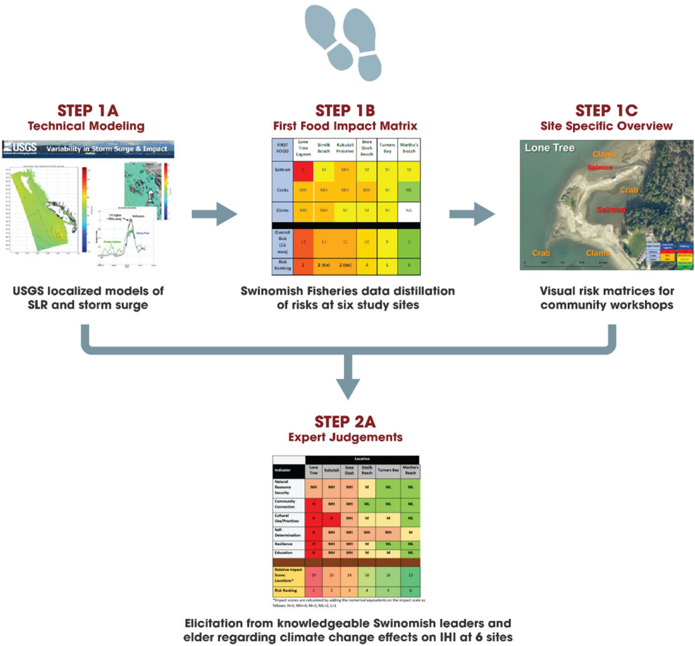
Scholars worldwide have stated that some of the most devastating health impacts from climate change are experienced by Indigenous peoples. Yet, climate change health assessments rely primarily on technical data from climate models, with limited local knowledge and little to no values-driven community data. Values-driven data provide important information about how people define what health means, their health priorities, and preferred actions to maintain or improve health. The Swinomish Indian Tribal Community (Washington State, USA) developed and implemented a climate change health assessment founded on values-driven data. Successfully eliciting, structuring, and ultimately summarizing community values were achieved by incorporating tools and techniques from western disciplines (e.g., decision science, behavioral research) with local indigenous ways of learning and sharing. Results demonstrate that the assessment meaningfully engaged community members and effectively added their knowledge and values into the decision process. The assessment results protect and strengthen Swinomish community health and well-being by elevating health priorities, focusing limited energy and resources, ensuring that community members and others are working toward common goals, and establishing agreement around intended outcomes/results.
Overview
The claims and statistics of this paper haven’t been checked yet.
Free: it reads the open-access text and checks the first 5 claims that cite a source we can check. Create a free account to check every claim.
Integrity signals
Registry
Cites
Statistics
Figures
Verification
Claims the paper makes
The claims and statistics of this paper haven’t been checked yet.
Free: it reads the open-access text and checks the first 5 claims that cite a source we can check. Create a free account to check every claim.
Claims other papers make about this one
Each is checked against this paper’s own text: does it say what the citing paper says it does?
The check wasn’t confident either way, so it gives no verdict — never disputed.
In the citing paper
“Also, relocation necessitated by climate change could force people to leave the lands where their ancestors have lived for thousands of years, with direct impacts on mental health, social capital, food security, water supply, sanitation, infectious diseases, injury, and health care access.7”
From How Indigenous Communities Are Adapting To Climate Change: Insights From The Climate-Ready Tribes Initiative: Analysis examines how indigenous communities are adapting to climate change. (2020) · cites this paper as [7]
Experimental — accuracy not yet measured
Self-check
Percentages, sums and reported differences re-computed from the paper’s own numbers.
The self-check needs the paper’s full text.
Citations
Cites
(2011) · Cited by 14,317
8 Decolonizing Methodologies: Research and Indigenous Peoples
Tuhiwai Smith, L. (2024) · Foundational Concepts of Decolonial and Southern Epistemologies · doi:10.21832/9781800418868-012 · Cited by 9,810
(2009) · Cited by 2,537
Value-Focused Thinking: A Path to Creative Decisionmaking
Keeney, R. L. (1992) · Cited by 2,133
The construction of preference.
Slovic, P. (1995) · American Psychologist · doi:10.1037/0003-066x.50.5.364 · Cited by 2,009 · cited 1×
“The informal but systematic workshop design helped participants develop better informed judgments, a critical step when participants arrive with little project information and have not considered yet why one site might deserve more attention than another (i.e., trade-offs) (Slovic 1995).”
Background(1990) · Elsevier eBooks · doi:10.1016/c2009-0-21635-7 · Cited by 1,953
Contingent weighting in judgment and choice.
Tversky, A., Sattath, S., & Slovic, P. (1988) · Psychological Review · doi:10.1037/0033-295x.95.3.371 · Cited by 1,567
Decolonizing Methodologies: Research and Indigenous Peoples
Overton, J. (2013) · Development in Practice · doi:10.1080/09614524.2013.790946 · Cited by 1,349
Structured Decision Making: A Practical Guide to Environmental Management Choices
Gregory, R., Failing, L., Harstone, M., Long, G., McDaniels, T., & Ohlson, D. (2012) · doi:10.1002/9781444398557 · Cited by 807 · cited 2×
“tangible considerations (Gregory et al. 2012), or overpowered by metrics or considerations that are more commonly used in predominant assessment methodologies (Kovach 2010; Smith”
Background
Cited by
Health, Wellbeing and the Changing Structure of Communities
(2023) · Climate Change 2022 – Impacts, Adaptation and Vulnerability · doi:10.1017/9781009325844.009 · Cited by 294
Indigenous Peoples: Traditional knowledges, climate change, and health
Redvers, N., Aubrey, P., Celidwen, Y., & Hill, K. X. (2023) · PLOS Global Public Health · doi:10.1371/journal.pgph.0002474 · Cited by 204
“In the development of adaptation plans, a “valuesdriven” community-informed approach allows Indigenous People to define health, establish health priorities, and determine necessary actions to improve health [65].”
BackgroundIndigenous climate change adaptation: New directions for emerging scholarship
Johnson, D. E., Parsons, M., & Fisher, K. (2021) · Environment and Planning E Nature and Space · doi:10.1177/25148486211022450 · Cited by 134
The White/Wiphala Paper on Indigenous Peoples' food systems
Food and Agriculture Organization of the United Nations (2021) · FAO eBooks · doi:10.4060/cb4932en · Cited by 88
Schramm, P. J., Al Janabi, A. L., Campbell, L. W., Donatuto, J. L., & Gaughen, S. C. (2020) · Health Affairs · doi:10.1377/hlthaff.2020.00997 · Cited by 71
Self-citationJohnson, D. E., Parsons, M., & Fisher, K. (2021) · Local Environment · doi:10.1080/13549839.2021.1901266 · Cited by 71
Galway, L. P., Esquega, E., & Jones-Casey, K. (2022) · Social Science & Medicine · doi:10.1016/j.socscimed.2022.114700 · Cited by 60
Chapter 15 : Human Health. Fifth National Climate Assessment
Hayden, M. H., Schramm, P. J., Beard, C. B., Bell, J. E., Bernstein, A. S., Bieniek-Tobasco, A., Cooley, N., Diuk‐Wasser, M. A., Dorsey, M. K., Ebi, K. L., et al. (2023) · doi:10.7930/nca5.2023.ch15 · Cited by 55
Koehn, L. E., Nelson, L. K., Samhouri, J. F., Norman, K., Jacox, M. G., Cullen, A. C., Fiechter, J., Buil, M. P., & Levin, P. S. (2022) · PLoS ONE · doi:10.1371/journal.pone.0272120 · Cited by 49
Aylward, B., Cunsolo, A., Vriezen, R., & Harper, S. L. (2022) · International Review of Psychiatry · doi:10.1080/09540261.2022.2029368 · Cited by 44
Climate Change and Health: Local Solutions to Local Challenges
Schramm, P. J., Ahmed, M. S., Siegel, H., Donatuto, J. L., Campbell, L. W., Raab, K. K., & Svendsen, E. R. (2020) · Current Environmental Health Reports · doi:10.1007/s40572-020-00294-1 · Cited by 42
Self-citationRethinking Resilience: Definition, Context, and Measure
Phillips, F. Y., & Chao, A. (2022) · IEEE Transactions on Engineering Management · doi:10.1109/tem.2021.3139051 · Cited by 30
“[8] mention an “index of six health indicators” among the Swinomish people of the Pacific Northwest, among which is resilience.”
BackgroundJohnson, D. E., Fisher, K., & Parsons, M. (2023) · Environment and Planning E Nature and Space · doi:10.1177/25148486231217891 · Cited by 26
“…the impact of climate change on health-giving interpersonal and more-than-human relationships, discussions of this nature are still largely absent in the L&D literature and under-developed in climate and health scholarship (Donatuto et al., 2019; Sawatzky et al., 2020; Tschakert et al., 2019).”
Reshaping Monitoring, Evaluation and Learning for Locally Led Adaptation
Coger, T., Corry, S., & Gregorowski, R. (2021) · doi:10.46830/wriwp.20.00060 · Cited by 24
“Cocreating an evaluative process was also a valuable decision-support and learning tool for the Swinomish community and in other evaluations based on indigenous knowledge (Donatuto et al. 2020; Kerr 2012).”
BackgroundRhodes, K. L., Echo‐Hawk, A., Lewis, J., Cresci, V. L., Satter, D. E., & Dillard, D. A. (2023) · Public Health Reports · doi:10.1177/00333549231199477 · Cited by 23
Perspectives on managing fisheries for community wellbeing in the face of climate change
Nelson, L. K., Bøgeberg, M., Cullen, A. C., Koehn, L. E., Strawn, A., & Levin, P. S. (2022) · MAST. Maritime studies/Maritime studies · doi:10.1007/s40152-021-00252-z · Cited by 21
“In this paper, we build on the growing body of literature examining the role of values and perspectives in environmental management (Satterfield et al., 2013; Chan et al., 2016; Donatuto et al., 2020; Levin et al., 2021).”
Grigorieva, E. A., Alexeev, V. A., & Walsh, J. E. (2023) · International Journal of Biometeorology · doi:10.1007/s00484-023-02531-2 · Cited by 19
“…implications for indigenous and non-indigenous inhabitants, causing direct and indirect health effects (Casson et al. 2019; Contosta et al. 2019), which may decrease the incidence of hypothermia and associated morbidity and mortality among the Arctic residents in winter (Donatuto et al. 2020).”
BackgroundKınay, P., Wang, X., Augustine, P. J., & Augustine, M. (2023) · Environmental Research Climate · doi:10.1088/2752-5295/accb01 · Cited by 18
“Very recently, however, Indigenous Peoples have noted signs of greater environmental changes and challenges to their resilience than they have faced in the past such as species declines and new appearances; anomalies in weather patterns; and declining health of forests and grasslands [27, 29, 30].”
BackgroundClimatic and Ecological Change in the Americas: A Perspective from Historical Ecology
Whitaker, J. A., Armstrong, C. G., & Odonne, G. (2023) · Routledge eBooks · doi:10.4324/9781003316497 · Cited by 18
Palaschuk, N., Gauthier, J., & Bullock, R. C. L. (2023) · Forest Policy and Economics · doi:10.1016/j.forpol.2023.103104 · Cited by 16
Kumar, A., Devi, J. P., & Thangavel, M. (2025) · Mitigation and Adaptation Strategies for Global Change · doi:10.1007/s11027-025-10226-9 · Cited by 16
“CC leads to extreme weather events, increasing vector-borne diseases, waterborne illnesses, malnutrition, and mental health issues among tribal populations (Chandra and Mukherjee 2022; Donatuto et al. 2020 ; Kumar and Mohanasundari 2025c ).”
Clam Gardens Across Generations and Places Support Social–Ecological Resilience to Global Change
Lepofsky, D., & Salomon, A. K. (2023) · Routledge eBooks · doi:10.4324/9781003316497-9 · Cited by 14
New York State Climate Impacts Assessment Chapter 07: Human Health and Safety
Barnes, J., Sheffield, P. E., Graber, N. M., Jessel, S., Lanza, K., Limaye, V. S., Morrow, F., Sauthoff, A., Schmeltz, M. T., Smith, S., et al. (2024) · Annals of the New York Academy of Sciences · doi:10.1111/nyas.15244 · Cited by 14
The promise and reality of social and cultural metrics
Bessette, D., & Gregory, R. (2020) · Ecology and Society · doi:10.5751/es-11730-250311 · Cited by 12
“…health statistics, the health of the ecosystem and the relation of the community to the natural environment are rarely covered as part of community health assessments, even though these considerations are highly significant to many communities (Slootweg et al. 2001, Donatuto et al. 2019).”
BackgroundChapter 27 : Northwest. Fifth National Climate Assessment
Chang, M. H., Erikson, L., Araújo, K. M., Asinas, E. N., Hatfield, S. C., Crozier, L. G., Fleishman, E., Greene, C. S., Grossman, E. E., Luce, C. H., et al. (2023) · doi:10.7930/nca5.2023.ch27 · Cited by 13
Donatuto, J. L., Campbell, L. W., LeCompte, J. K., Rohlman, D., & Tadlock, S. (2020) · Sustainability · doi:10.3390/su12218913 · Cited by 11
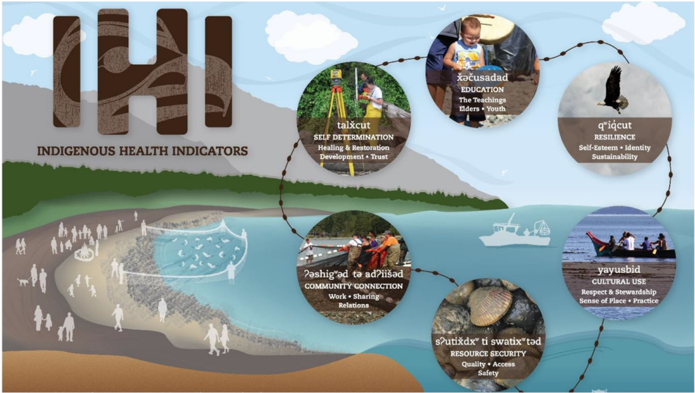
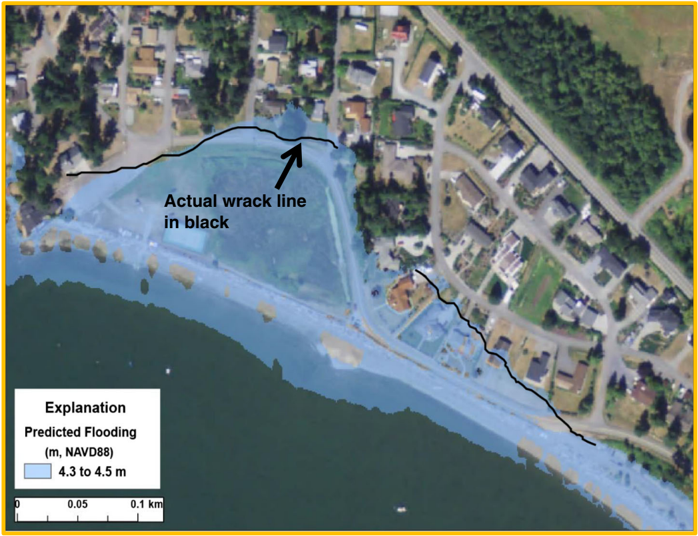
“In sum, the image depicts Swinomish people engaging in culturally important practices, which ‘feed the body and the spirit’ in the Swinomish way [17,18].”
BackgroundSelf-citationChapter 16 : Tribes and Indigenous Peoples. Fifth National Climate Assessment
Whyte, K. P., Novak, R., Laramie, M. B., Bruscato, N. G., David-Chavez, D., Dockry, M. J., Johnson, M. K., Jones, C. E., & Leonard, K. (2023) · doi:10.7930/nca5.2023.ch16 · Cited by 11
Reimagining Attawapiskat: Indigenous youth voices, community engagement and mixed-media storytelling
Wiebe, S. M., Gilpin, E. M., & Butet-Roch, L. (2020) · Journal of Environmental Media · doi:10.1386/jem_00013_1 · Cited by 8
Zimmermann, S., Dermody, B. J., Davis, N., Divine, L. M., Padula, V. M., Lestenkof-Zacharof, K., Wassen, M. J., & Dorresteijn, I. (2024) · Regional Environmental Change · doi:10.1007/s10113-024-02255-y · Cited by 7
“…and non-indigenous actors are particularly important, as culturally appropriate outcomes for these communities can only be achieved where ILTK is integrated into decision-making processes through co-production and co-management (Armitage et al. 2011; Donatuto et al. 2019; Yua et al. 2021).”
Paul, K. L., Augare, H., Weatherwax, M., Caplins, L., Falcon, C., Carter, C. J., & Ruppel, K. T. (2023) · Environment and Planning F · doi:10.1177/26349825231154869 · Cited by 7
“It is critical that Tribal Nations maintain Ownership, Control, Access and Possession (OCAP) of collectively held knowledge in order to mobilize new understandings to address pressing public policy and health issues (Armatas et al., 2016; Donatuto et al., 2020; First Nations Information Governance Centre, 2014; Sasaka…”
BackgroundMullen, H. (2022) · Deep Blue (University of Michigan) · doi:10.7302/4329 · Cited by 8
Addressing inequities and meeting needs of Indigenous communities in floodplain management
Zimmerman, O., Eison, T., Carey, R. G., & Levin, P. S. (2024) · Frontiers in Climate · doi:10.3389/fclim.2024.1306542 · Cited by 5
Indigenous resurgence in the Blue Economy: Relational values to guide kelp mariculture
Gutzmann, S. B., Humchitt, C., Kowalchuk, K., Hunt, D., Allchurch, A., Cisneros-Montemayor, A. M., & Salomon, A. K. (2025) · People and Nature · doi:10.1002/pan3.70214 · Cited by 5
“…on ecosystem valuation (Ament et al., 2017 ; Klain et al., 2017 ; Podladly et al., 2020 ), climate vulnerability (Harper et al., 2022 ), Indigenous health indica - tors (Donatuto et al., 2020 ) and the semi-directed interviews held with Kwakiutl knowledge-keepers at the beginning of this study.”
Community Digital Storytelling for Locally Led Adaptation: Practice, opportunities and challenges
Theocharis, A. (2026) · Environmental Science & Policy · doi:10.1016/j.envsci.2026.104359 · Cited by 4
Banuet-Martínez, M., Vriezen, R., Yamamoto, S. S., Espinosa-Romero, M. J., Cunsolo, A., & Harper, S. L. (2024) · Environmental Research Letters · doi:10.1088/1748-9326/ad8cf0 · Cited by 4
Tenojoen lohenkalastuskiellon yhteiskunnalliset vaikutukset ja niiden seuranta
Abernethy, P., Saijets, J., Jokinen, M., Knuuttila, M., & Hiedanpää, J. (2022) · Jukuri (Natural Resources Institute Finland (Luke)) · Cited by 4
Greiner, C. M., Barber, J. S., Donatuto, J. L., Poe, M. R., Williams, S.-Q. J., Loomis, L., & Campbell, W. L. (2025) · Journal of Integrative Environmental Sciences · doi:10.1080/1943815x.2025.2573346 · Cited by 3
“Additionally, for tribes, a decline in the availability of and access to marine resources, especially cultural keystone species such as clams, directly affects health and well-being (Donatuto et al. 2020; Menezes 2001; Poe et al. 2016).”
Self-citationConducting more inclusive solar geoengineering research: A feminist science framework
Kravitz, B., & Sikka, T. (2022) · Environment and Planning E Nature and Space · doi:10.1177/25148486221132831 · Cited by 3
“…example, health impacts of climate change often incorporate climate model information on outcomes but rarely include local knowledge or values-driven community data, making it impossible to accurately prioritize information, provide meaning, and decide on courses of action (Donatuto et al., 2020).”
BackgroundGutzmann, S. B. (n.d.) · Summit (Simon Fraser University) · Cited by 4
Sa’adi, Z., Noor, Z. Z., Zaidi, N. S., Mohamed, N. H., Razak, F. A., Foze, M. F., Noor, S. F. M., Hridoy, M. A. A. M., Shahid, S., Ershadfath, F., et al. (2026) · International Journal of Biometeorology · doi:10.1007/s00484-026-03218-0 · Cited by 2
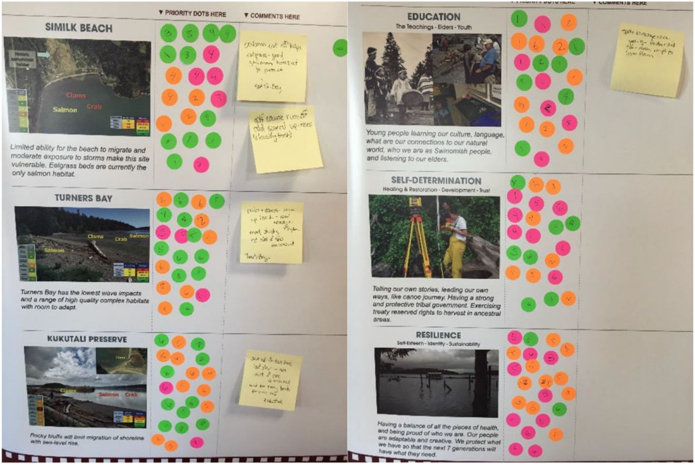
“…and visual storytelling (Perdana et al. 2025 ), dotmocracy offers an accessible plat - form for youth engagement in climate resilience planning (Donatuto et al. 2019 ; Kimbell et al. 2025), transforming adaptation discussions from abstract concepts into tangible, community-centered actions.”
Enhancing water protection on Tribal lands
Sullivan, S. M. P., Hedden‐Nicely, D. R., & Bulltail, G. (2024) · Frontiers in Ecology and the Environment · doi:10.1002/fee.2751 · Cited by 2
“2019; Donatuto et al .”
Zimmermann, S., Dermody, B. J., Carothers, C., Fant, V. D., Divine, L. M., Lestenkof-Zacharof, K., Padula, V. M., Theunissen, B., Wassen, M. J., & Dorresteijn, I. (2025) · Sustainability Science · doi:10.1007/s11625-025-01665-z · Cited by 1
“Despite this potential, most assessments and interventions for Indigenous food systems to date address shallow system levels (parameters and feedbacks), while deep system levels remain underrepresented (Abson et al. 2017; Meadows 1999; Zimmermann et al. 2023; Donatuto et al. 2019).”
Lewis, D., Castleden, H. E., Masuda, J. R., Richmond, C. A. M., & Jolly, D. (2025) · Risk Analysis · doi:10.1111/risa.70073 · Cited by 1
“…value that come with pursuing traditional cultural activities, which are deemed intangible because they are perceived as unquantifiable (see Arquette et al., 2002; Donatuto et al., 2011, 2020; Place & Hanlon, 2011; Raymond et al., 2013; Satterfield et al., 2013; Wheatley & Wheatley, 2000).”
Cross-Chapter Box HEALTH : Co-benefits of Climate Actions for Human Health, Wellbeing and Equity
Tirado, M. C., Biesbroek, G. R., Pelling, M., Hess, J., Creutzig, F., Kerr, R. B., Eriksen, S., Campbell-Lendrum, D. H., Gilmore, E., Figueroa, M., et al. (2022) · Wageningen University & Research Publications · Cited by 1
Chong, K., Emberley-Korkmaz, S., & Basu, N. (2026) · Integrated Environmental Assessment and Management · doi:10.1093/inteam/vjag005 · Cited by 1
Shaw, E. (2022) · Digital Commons - Michigan Tech (Michigan Technological University) · doi:10.37099/mtu.dc.etdr/1456 · Cited by 1
"What we know is how we've survived": Tribal Emergency Management and the Resilience Paradox
Dent, L. (2022) · University of North Texas Digital Library (University of North Texas) · doi:10.12794/metadc1944363
van Aalst, M., Cissé, G., Ayanlade, A., Berrang‐Ford, L., Kerr, R. B., Biesbroek, G. R., Bowen, K., Caretta, M. A., Cheong, S. M., Chow, W., et al. (2022) · Wageningen University & Research Publications
Chong, K. (2025) · eScholarship@McGill (McGill) · doi:10.82308/1246
Warltier, D. W. (2023) · eScholarship@McGill (McGill) · doi:10.82308/44574
Saleh, M. (2025) · cIRcle (University of British Columbia)
Abad, B., & BANTULO, J. S. (2026) · Psychology and Education A Multidisciplinary Journal · doi:10.70838/pemj.590203
Merrick, C., Sinyon, D., Lincoln, L., Khan, M., Donatuto, J. L., Vertigan, T., Errett, N. A., Isaksen, T. B., Fresco, N., & Hahn, M. B. (2026) · PLOS Climate · doi:10.1371/journal.pclm.0000995
Self-citationSharma, S., & Dadhwal, K. S. (2026) · Social Theory & Health · doi:10.1057/s41285-026-00272-x
“The impacts of climate change on the indigenous communities are becoming increasingly severe, contributing to higher prevalence of plethora of climate-sensitive diseases (Donatuto et al. 2020).”
Metadata
- Authors
- Donatuto, J., Campbell, L., & Trousdale, W.
- Corresponding author
- Donatuto, Jamie
- Venue
- Climatic Change
- Published
- 2019-11-30
- Volume
- 158
- Issue
- 2
- Pages
- 161-180
- ISSN
- 0165-0009 (ISSN-L)
- 1573-1480
- OpenAlex
- W2990118513
- Cited by
- 43
- References
- 50
- Citations by year
- 2026: 6 · 2025: 4 · 2024: 5 · 2023: 11 · 2022: 8 · 2021: 4 · 2020: 5
- FWCI
- 4.15
- Type
- journal article
- Language
- en
- Open access
- hybrid
- doi.org
- Licence
- cc-by
- creativecommons.org/licenses/by/4.0 (tdm)
- creativecommons.org/licenses/by/4.0 (vor)
- Locations
- Climatic Change (publishedVersion, cc-by)
- RePEc: Research Papers in Economics (submittedVersion)
- Funders
- U.S. Environmental Protection Agency (RD-83559501)
- National Science Foundation (1728807)
- National Indian Health Board (NA)
- Topics
- Social Sciences › Health › Indigenous Health, Education, and Rights
- Social Sciences › Anthropology › Indigenous Studies and Ecology
- Physical Sciences › Environmental Science › Health, Toxicology and Mutagenesis › Climate Change and Health Impacts
- Keywords
- Indigenous health, health impacts of climate change, community values, local knowledge, health priorities, participatory decision-making, Indigenous wellbeing
About these checks
Registry, retraction, Cites and statistics results are computed, not judged, with one exception: a printed reference that no index lists is read once by a model before it counts as a citation error. Claims are extracted by a model and kept only when their quote appears verbatim in the text; each cited source is then checked, with a model’s help, for whether it says what the claim relies on. Those verdicts can be wrong — read the claim’s quote and the cited source before relying on one.
Statistics and arithmetic are recomputed, not judged.
Confidence bands are shown only for fields calibrated on our annotated test set. None is calibrated yet, so no band is shown.
What counts as a claim ›How we measure confidence ›How we check this ›
Are you an author, or do you see a problem with this page? Request a review
Data sources
Bibliographic data: Semantic Scholar, OpenAlex, Crossref.
Contains information from the Semantic Scholar Academic Graph Datasets, made available under the ODC Attribution License (ODC-BY 1.0).
Semantic Scholar’s data is described in: Kinney, R., et al. (2023). The Semantic Scholar Open Data Platform. arXiv:2301.10140.
