

Effects of Mindfulness-Based Cognitive Therapy on Specificity of Life Goals
Open accessThe DOI matches its Crossref record; 37 of the 39 references it cites were found in a registry or an index.
Abstract
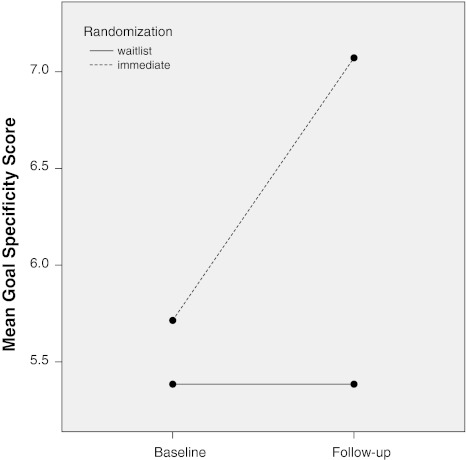
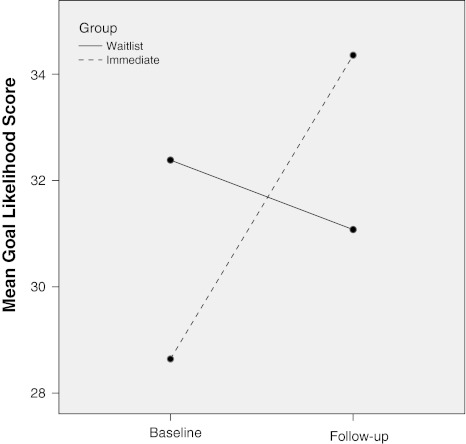
This study explored the immediate effects of a course of Mindfulness-Based Cognitive Therapy (MBCT) for chronically depressed participants with a history of suicidality on the specificity of important goals for the future. Participants were randomly allocated to immediate treatment with MBCT or to a waitlist condition and life goals were assessed both before and after the treatment or waiting period. Results showed that participants receiving MBCT reported significantly more specific goals post-treatment whereas those allocated to the waitlist condition showed no significant change. Similarly, participants allocated to MBCT regarded themselves as significantly more likely to achieve their important goals post-treatment, whilst again there was no significant change in the waitlist group. Increases in goal specificity were associated with parallel increases in autobiographical memory specificity whereas increases in goal likelihood were associated with reductions in depressed mood. These results suggest that MBCT may enable participants to clarify their important goals and in doing so increase their confidence in their capacity to move in valued life directions.
Overview
The claims and statistics of this paper haven’t been checked yet.
Free: it reads the open-access text and checks the first 5 claims that cite a source we can check. Create a free account to check every claim.
Integrity signals
Registry
Cites
Statistics
Figures
Verification
Claims the paper makes
The claims and statistics of this paper haven’t been checked yet.
Free: it reads the open-access text and checks the first 5 claims that cite a source we can check. Create a free account to check every claim.
Claims other papers make about this one
Each is checked against this paper’s own text: does it say what the citing paper says it does?
In the citing paper
“MBCT has been shown to reduce overgeneral autobiographical memory (55, 69, 70), improve attention deployment and maintenance during sad mood (71) and reduce attentional-bias towards negative emotional stimuli (72), although such attentional improvements are not ubiquitous (42, 48, 73).”
From Mindfulness-Based Interventions in Psychiatry (2018) · cites this paper as [71]
Self-check
Percentages, sums and reported differences re-computed from the paper’s own numbers.
The self-check needs the paper’s full text.
Citations
Cites
Baron, R. M., & Kenny, D. A. (1986) · Journal of Personality and Social Psychology · doi:10.1037/0022-3514.51.6.1173 · Cited by 91,532 · cited 2×
“To explore whether change in BDIII mediated the effect of randomisation group on outcome we again conducted a test for mediation (Baron and Kenny 1986).”
BackgroundMethodBuilding a practically useful theory of goal setting and task motivation: A 35-year odyssey.
Locke, E. A., & Latham, G. P. (2002) · American Psychologist · doi:10.1037/0003-066x.57.9.705 · Cited by 7,766 · cited 1×
“…that are less specific (typically goals drawn from a higher level in the goal hierarchy) are broadly regarded as being more difficult to achieve, since they lack information that can direct behaviour and provide cues to action (Emmons 1992; Gollwitzer and Brandstatter 1997; Locke and Latham 2002).”
Background(1999) · Cited by 5,934
On the Self-Regulation of Behavior
Carver, C. S., & Scheier, M. F. (1998) · Cambridge University Press eBooks · doi:10.1017/cbo9781139174794 · Cited by 4,110 · cited 3×
“Since failure to make adequate progress towards desired goals results in negative affect (Carver and Scheier 1998), lack of specificity of goals may be linked to heightened risk of depression.”
Background(2001) · Cited by 3,666
Constructive and unconstructive repetitive thought
Watkins, E. R. (2008) · Psychological Bulletin · doi:10.1037/0033-2909.134.2.163 · Cited by 2,421 · cited 2×
“…relative to adoption of an abstract self focus, and that increased concreteness of problem solutions mediates this effect (Watkins and Moulds 2005; see Watkins 2008, for a detailed analysis of the impact of abstract versus concrete construal level on repetitive thought and its consequences).”
BackgroundAutobiographical memory specificity and emotional disorder.
Williams, J. M. G., Barnhofer, T., Crane, C., Herman, D., Raes, F., Watkins, E., & Dalgleish, T. (2007) · Psychological Bulletin · doi:10.1037/0033-2909.133.1.122 · Cited by 1,688 · cited 2×
“For example manipulations that promote a concrete processing style appear to have benefits for aspects of psychological functioning including autobiographical memory specificity ( Watkins and Teasdale 2001, 2004 ) and emotional reactivity (Watkins et al. 2008), when compared to manipulations that encourage ruminative…”
BackgroundSelf-citationSelf-regulation through goal setting
Latham, G. P., & Locke, E. A. (1991) · Organizational Behavior and Human Decision Processes · doi:10.1016/0749-5978(91)90021-k · Cited by 1,370
Implementation intentions and effective goal pursuit.
Gollwitzer, P. M., & Brandstätter, V. (1997) · Journal of Personality and Social Psychology · doi:10.1037/0022-3514.73.1.186 · Cited by 1,343 · cited 4×
“achieve, since they lack information that can direct behaviour and provide cues to action (Emmons 1992; Gollwitzer and Brandstatter 1997; Locke and Latham 2002).”
BackgroundInfluentialAutobiographical memory in suicide attempters.
Williams, J. M., & Broadbent, K. (1986) · Journal of Abnormal Psychology · doi:10.1037/0021-843x.95.2.144 · Cited by 1,330 · cited 3×
“Those participants who were eligible for the study were invited to a second assessment session during which they completed several additional questionnaires, the goals task and the autobiographical memory test (Williams and Broadbent 1986).”
BackgroundInfluential
Research works printed but not linked: 1
- Beck AT Steer RA Brown GK Manual for BDI-II 1996 San Antonio, TX Psychological Corporation
Cited by
Andrews‐Hanna, J. R., Smallwood, J., & Spreng, R. N. (2014) · Annals of the New York Academy of Sciences · doi:10.1111/nyas.12360 · Cited by 2,102
Gu, J., Strauss, C., Bond, R., & Cavanagh, K. (2015) · Clinical Psychology Review · doi:10.1016/j.cpr.2015.01.006 · Cited by 1,712
van der Velden, A. M., Kuyken, W., Wattar, U., Crane, C., Pallesen, K. J., Dahlgaard, J., Fjorback, L. O., & Piet, J. (2015) · Clinical Psychology Review · doi:10.1016/j.cpr.2015.02.001 · Cited by 455
“Lack of goal speci fi city has been identi fi ed as a feature of depression and suicidality, and increasing the speci fi city of life goals may build resilience and reduce risk of relapse (Crane et al., 2012).”
BackgroundSelf-citationProspects for a clinical science of mindfulness-based intervention
Dimidjian, S., & Segal, Z. V. (2015) · American Psychologist · doi:10.1037/a0039589 · Cited by 291
Andrews-Hanna, J. R., Kaiser, R. H., Turner, A. E. J., Reineberg, A. E., Godinez, D., Dimidjian, S., & Banich, M. T. (2013) · Frontiers in Psychology · doi:10.3389/fpsyg.2013.00900 · Cited by 184
“When applied to chronic depression, these therapies have also shown promise in increasing the specificity and perceived likelihood of achieving individuals’ life goals (Crane et al., 2012).”
BackgroundMindfulness-Based Interventions in Psychiatry
Shapero, B. G., Greenberg, J., Pedrelli, P., de Jong, M., & Desbordes, G. (2018) · Focus · doi:10.1176/appi.focus.20170039 · Cited by 172
Psychological therapies for treatment-resistant depression in adults
Ijaz, S., Davies, P., Williams, C. J., Kessler, D., Lewis, G., & Wiles, N. (2018) · Cochrane Database of Systematic Reviews · doi:10.1002/14651858.cd010558.pub2 · Cited by 155
Campos, D., Cebolla, A., Quero, S., Bretón-López, J. M., Botella, C., Soler, J., García‐Campayo, J., Demarzo, M., & Baños, R. (2015) · Personality and Individual Differences · doi:10.1016/j.paid.2015.08.040 · Cited by 183
Mechanisms of mindfulness: Rumination and self-compassion
Svendsen, J. L., Kvernenes, K. V., Wiker, A. S., & Dundas, I. (2017) · Nordic Psychology · doi:10.1080/19012276.2016.1171730 · Cited by 88
“…of responding to emotional distress; e.g, Velotti, Garofalo, & Bizzi, 2015), having more specific life goals (in contrast to having diffuse goals; Crane et al., 2012), lessened self-discrepancy (i.e, smaller perceived distance between current self and idealized self; Crane et al., 2008), and…”
BackgroundMindfulness-based cognitive therapy in patients with depression: current perspectives
MacKenzie, M., Abbott, K., & Kocovski, N. (2018) · Neuropsychiatric Disease and Treatment · doi:10.2147/ndt.s160761 · Cited by 68
“26,27 32, 34 , 35 Repetitive negative thinking”
Medlicott, E., Phillips, A., Crane, C., Hinze, V., Taylor, L., Tickell, A., Montero-Marin, J., & Kuyken, W. (2021) · International Journal of Environmental Research and Public Health · doi:10.3390/ijerph18116023 · Cited by 67
“The ‘Measure to elicit positive future goals and plans’ (MEPGAP) [55] has been adapted in previous research to measure conditional goal setting [56,57].”
MethodSelf-citationMorris, L., Mansell, W., & McEvoy, P. (2016) · Frontiers in Psychology · doi:10.3389/fpsyg.2016.00099 · Cited by 65
“Emerging research indicates that greater mindfulness is associated with increased clarity regarding important goals and greater flexibility of goal pursuit (Crane et al., 2010, 2012).”
BackgroundMindfulness changes construal level: An experimental investigation.
Chan, E. Y., & Wang, Y. (2019) · Journal of Experimental Psychology General · doi:10.1037/xge0000654 · Cited by 57
Reduced Specificity of Personal Goals and Explanations for Goal Attainment in Major Depression
Dickson, J. M., & Moberly, N. J. (2013) · PLoS ONE · doi:10.1371/journal.pone.0064512 · Cited by 66
“For instance, research suggests that mindfulness-based cognitive therapy for chronic depression enhances the specificity of life goals and increases expectancies for goal attainment post-therapy [29].”
BackgroundResultA review on future episodic thinking in mood and anxiety disorders
Moustafa, A. A., Morris, A. N., & Haj, M. E. (2018) · Reviews in the Neurosciences · doi:10.1515/revneuro-2017-0055 · Cited by 45
Franquesa, A., Cebolla, A., García‐Campayo, J., Demarzo, M., Elices, M., Pascual, J. C., & Soler, J. (2017) · Mindfulness · doi:10.1007/s12671-017-0702-5 · Cited by 52
“…cognitive therapy for chronically depressed participants with a history of suicidality, many of the patients reported more clarity about their important goals, and this perceived clarity increased their confidence in their capacity to move in valued life directions (Crane et al. 2012).”
BackgroundCrane, C., Heron, J. E., Gunnell, D., Lewis, G., Evans, J., & Williams, J. M. G. (2015) · Memory · doi:10.1080/09658211.2015.1008014 · Cited by 33
Self-citationGoal planning in mental health service delivery: A systematic integrative review
Stewart, V., McMillan, S. S., Hu, J., Ng, R., El-Den, S., O’Reilly, C., & Wheeler, A. J. (2022) · Frontiers in Psychiatry · doi:10.3389/fpsyt.2022.1057915 · Cited by 30
“Other studies reported on the experiences of goal planning (25, 26), collaboration (42), and outcomes, including specificity of goals (34), motivation levels (36), and episodes of seclusion (30).”
BackgroundEffect of mindfulness-based cognitive therapy on academic grit among university student
Rusadi, R. M., Sugara, G. S., & Isti‘adah, F. N. (2021) · Current Psychology · doi:10.1007/s12144-021-01795-4 · Cited by 51
“This is reinforced by research (Crane et al., 2012a) in terms of what is stipulated in mindfulness-based cognitive therapy to help the individual to achieve life goals.”
BackgroundMethodResultInfluentialReduced goal specificity is associated with reduced memory specificity in depressed adults
Belcher, J., & Kangas, M. (2013) · Cognition & Emotion · doi:10.1080/02699931.2013.807776 · Cited by 30
Extensions and Mechanisms of Mindfulness‐based Cognitive Therapy: A Review of the Evidence
Metcalf, C. A., & Dimidjian, S. (2014) · Australian Psychologist · doi:10.1111/ap.12074 · Cited by 27
“With respect to additional symptoms, MBCT has been reported to have benefit as compared with TAU or WLC within studies focused on paranoia (Collip et al., 2013), goal specificity (Crane et al., 2012), and memory specificity (Hargus et al., 2010) related to suicidality.”
BackgroundZainal, N. H., & Newman, M. G. (2023) · European Psychiatry · doi:10.1192/j.eurpsy.2023.2 · Cited by 26
“These ideas are consistent with evidence that therapist-led MBIs raised trait-like specificity of life goals and perseverance [69] and enhanced state-level positive emotions, gratitude, and constructive responses to pleasant everyday activities in persistently depressed adults [70, 71].”
Dynamic Regulation of Internal Experience: Mechanisms of Therapeutic Change
Andrews‐Hanna, J. R., Christoff, K., & O'Connor, M. (2020) · Oxford University Press eBooks · doi:10.1093/oso/9780190881511.003.0005 · Cited by 20
Hitchcock, C., Rudokaite, J., Haag, C., Patel, S. D., Smith, A., Kuhn, I. L., Jermann, F., Ma, S. H., Kuyken, W., Williams, J., et al. (2022) · Behaviour Research and Therapy · doi:10.1016/j.brat.2022.104048 · Cited by 17
Self-citationAutobiographical Memory and Mindfulness: a Critical Review with a Systematic Search
Dominguez, E., Casagrande, M., & Raffone, A. (2022) · Mindfulness · doi:10.1007/s12671-022-01902-x · Cited by 16
“Additional support for the positive effects of MBCT on reducing OGM irrespective of mood valence comes from a study that examined this intervention in participants with a history of chronic/recurrent depression and suicidal ideation or behavior (Crane et al., 2012).”
BackgroundRational Suicide in the Elderly
Balasubramaniam, M., & McCue, R. E. (2016) · Springer eBooks · doi:10.1007/978-3-319-32672-6 · Cited by 10
Strub, L., & Tarquinio, C. (2012) · L Évolution Psychiatrique · doi:10.1016/j.evopsy.2012.04.007 · Cited by 15
Mindfulness-based cognitive therapy in the intervention of psychiatric disorders: A review
Xie, J., Zhou, J., Gong, L.-N., Iennaco, J. D., & Ding, S.-Q. (2014) · International Journal of Nursing Sciences · doi:10.1016/j.ijnss.2014.05.015 · Cited by 8
Mindfulness-Based Cognitive Therapy for Treatment-Resistant Depression
Deen, S. R., Sipe, W. E. B., & Eisendrath, S. J. (2016) · Springer eBooks · doi:10.1007/978-3-319-29866-5_12 · Cited by 12
Jácome, A. D. N., Sousa, J. D. S. M., de Resende, C. M. B. M., Barbosa, G. A. S., de Araújo, A. A., & de Almeida, É. O. (2020) · Research Society and Development · doi:10.33448/rsd-v9i10.8485 · Cited by 7
Karahan, F. Ş., & Bakalım, O. (2021) · Spiritual Psychology and Counseling · doi:10.37898/spc.2021.6.1.131 · Cited by 4
“On the other hand, Crane et al. (2012) suggested that mindfulness based interventions have the potential to affect goal related processes.”
BackgroundEpisodic future thinking in drug addiction
Morris, A. N., Haj, M. E., & Moustafa, A. A. (2020) · Elsevier eBooks · doi:10.1016/b978-0-12-816979-7.00008-x · Cited by 4
Using life goals to explore subjective well-being of people in northeast Thailand
Promphakping, B., Somaboot, P., Mee-Udon, F., Rattanaprathum, N., Weeranakin, P., Promphakping, N., & Suparatanagool, S. (2021) · International Journal of Sociology and Social Policy · doi:10.1108/ijssp-06-2020-0219 · Cited by 5
Exploring the Effects of Interrelated Goals, Anxiety, and Mindfulness on Somatic Symptoms
Christoe-Frazier, L., & Johnson, B. D. (2021) · Mindfulness · doi:10.1007/s12671-021-01653-1 · Cited by 3
Effectiveness of manual therapy in masticatory muscles for tmd patients - a review of the literature
Sousa, J. D. S. M., Jácome, A. D. N., da Costa, M. P. S. D. N., de Resende, C. M. B. M., Barbosa, G. A. S., de Araújo, A. A., & de Almeida, É. O. (2020) · Research Society and Development · doi:10.33448/rsd-v9i10.8335 · Cited by 4
“According to the inclusion criteria in the 3 selected studies the patients were diagnosed with TMD of muscular origin through RDC / TMD. They were predominantly female subjects, aged between 18 and 69 years, a total of 169 subjects were analyzed. Three clinical trials published between 2012 and 2013 varied in the type…”
BackgroundMethodResultInfluentialYeh, L.-H., Zhou, X., & Chen, X. (2022) · International Journal of Psychological Studies · doi:10.5539/ijps.v14n4p20 · Cited by 1
“This lack of correlation was not congruent with the trait study by Crawley (2014) or the treatment outcome studies (Crane et al., 2012; Heeren et al., 2009; Williams et al., 2000).”
BackgroundMethodResultInfluentialPsilocybin Experiential Therapist Training: Insights from a World-First StudyPreprint
Ioakimidis-MacDougall, G., Gardner, J., & Liknaitzky, P. (2025) · medRxiv · doi:10.1101/2025.11.15.25340324 · Cited by 1
Impact of Psychotherapy on Rational Suicide
Etter, D. W., & Kolva, E. (2016) · Springer eBooks · doi:10.1007/978-3-319-32672-6_12
Mindfulness-based cognitive therapy for the management and prevention of depression
Holas, P., Żołnierczyk-Zreda, D., & Centralny Instytut Ochrony Pracy – Państwowy Instytut Badawczy, W. (2018) · Psychiatria i Psychologia Kliniczna · doi:10.15557/pipk.2018.0007
Riding the Waves of Cognitive Behavioral Therapy
Morris, L., McEvoy, P., Wallwork, T., Bates, R., Comiskey, J., & Mansell, W. (2018) · Elsevier eBooks · doi:10.1016/b978-0-12-813989-9.00011-7
Hitchcock, C., Rudokaite, J., Haag, C., Patel, S. D., Smith, A., Kuhn, I. L., Jermann, F., Ma, H., Kuyken, W., Williams, J. M. G., et al. (2021) · PsyArXiv (OSF Preprints) · doi:10.31234/osf.io/s98a6
“Included studies (Crane, Winder, Hargus, Amarasinghe, & Barnhofer, 2012; Jermann et al., 2013; Kuyken et al., 2008; Ma & Teasdale, 2004; Spinhoven et al., 2006; Teasdale et al., 2000; Williams et al., 2014) are presented in Table 1.”
BackgroundSelf-citationالله, م. خ. م. ع. (2023) · مجلة جامعة الفيوم للعلوم التربوية والنفسية · doi:10.21608/jfust.2023.310530
Rusli, R., Tanaputra, J. J., & Safitri, J. (2024) · Konselor · doi:10.24036/0202312454-0-86 · Cited by 2
“Previous research found that mindfulness is positively related to grit, where the higher the level of mindfulness, the higher the level of grit and vice versa, and helps individuals in achieving life goals (Crane et al., 2012; Cheung et al., 2022; Christopher et al., 2022).”
BackgroundDedeler, M., & Akün, E. (2026) · Current Psychology · doi:10.1007/s12144-025-08936-z
Karahan, F. Ş., & Bakalım, O. (2020) · DergiPark (Istanbul University)
Mindfulness-Based Intervention for Depression
Yun, J.-A. (2026) · Springer eBooks · doi:10.1007/978-981-95-7147-5_17
Metadata
- Authors
- Crane, C., Winder, R., Hargus, E., Amarasinghe, M., & Barnhofer, T.
- Affiliations
- Warneford Hospital (GB)
- University of Oxford (GB)
- Corresponding author
- Crane, Catherine
- Venue
- Cognitive Therapy and Research
- Published
- 2011-01-21
- Volume
- 36
- Issue
- 3
- Pages
- 182-189
- ISSN
- 0147-5916 (ISSN-L)
- 1573-2819
- PMC
- PMC3348486
- OpenAlex
- W2165188189
- Cited by
- 46
- References
- 39
- Citations by year
- 2026: 2 · 2025: 1 · 2024: 1 · 2023: 2 · 2022: 4 · 2021: 6 · 2020: 5 · 2019: 1 · 2018: 6 · 2017: 1 · 2016: 5 · 2015: 5 · 2014: 3 · 2013: 3 · 2012: 1
- FWCI
- 2.42
- Type
- journal article
- Language
- en
- Open access
- hybrid
- doi.org
- Licence
- cc-by-nc
- Locations
- Cognitive Therapy and Research (publishedVersion, cc-by-nc)
- PubMed Central (publishedVersion, cc-by-nc)
- PubMed (publishedVersion)
- Research Portal (King's College London) (publishedVersion, other-oa)
- Funders
- Wellcome Trust (067797, 067797/Z/02/A)
- Mind and Life Institute
- Topics
- Social Sciences › Psychology › Clinical Psychology › Mindfulness and Compassion Interventions
- Social Sciences › Psychology › Social Psychology › Psychological Well-being and Life Satisfaction
- Social Sciences › Psychology › Developmental and Educational Psychology › Identity, Memory, and Therapy
- Keywords
- mindfulness-based cognitive therapy, chronic depression, suicidality, life goals, goal specificity, autobiographical memory, depressive mood, treatment effects
About these checks
Registry, retraction, Cites and statistics results are computed, not judged, with one exception: a printed reference that no index lists is read once by a model before it counts as a citation error. Claims are extracted by a model and kept only when their quote appears verbatim in the text; each cited source is then checked, with a model’s help, for whether it says what the claim relies on. Those verdicts can be wrong — read the claim’s quote and the cited source before relying on one.
Statistics and arithmetic are recomputed, not judged.
Confidence bands are shown only for fields calibrated on our annotated test set. None is calibrated yet, so no band is shown.
What counts as a claim ›How we measure confidence ›How we check this ›
Are you an author, or do you see a problem with this page? Request a review
Data sources
Bibliographic data: Semantic Scholar, OpenAlex, Crossref.
Contains information from the Semantic Scholar Academic Graph Datasets, made available under the ODC Attribution License (ODC-BY 1.0).
Semantic Scholar’s data is described in: Kinney, R., et al. (2023). The Semantic Scholar Open Data Platform. arXiv:2301.10140.
