

Cognitive lifestyle jointly predicts longitudinal cognitive decline and mortality risk
Open accessThe DOI matches its Crossref record; 33 of the 34 references it cites were found in a registry or an index.
Abstract
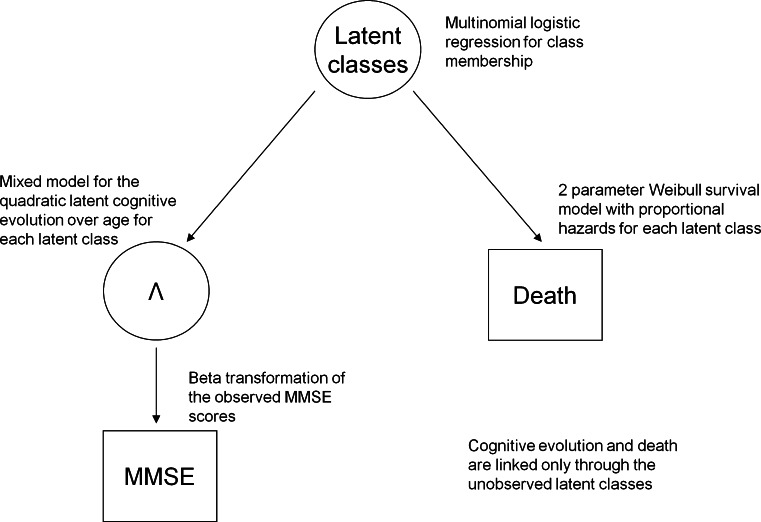
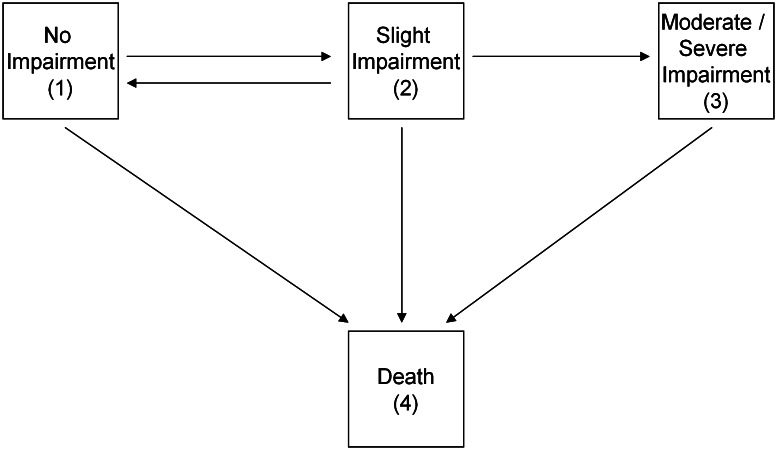
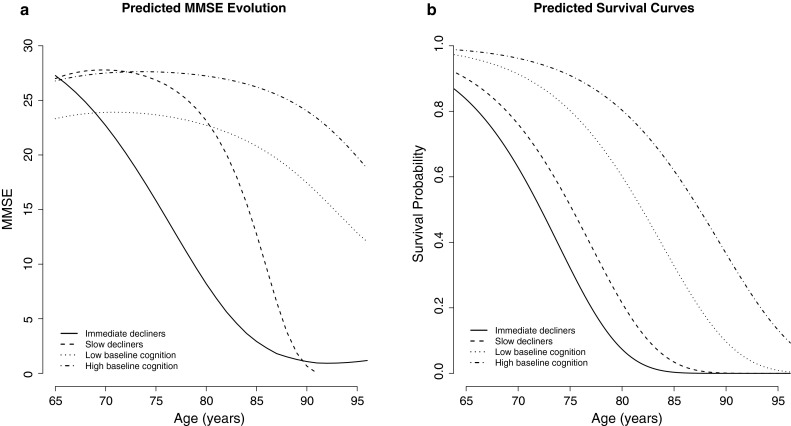
Cognitive lifestyle measures such as education, occupation, and social engagement are commonly associated with late-life cognitive ability although their associations with cognitive decline tend to be mixed. However, longitudinal analyses of cognition rarely account for death and dropout, measurement error of the cognitive phenotype, and differing trajectories for different population sub-groups. This paper applies a joint latent class mixed model (and a multi-state model in a sensitivity analysis) that accounts for these issues to a large (n = 3,653), population-based cohort, Paquid, to model the relationship between cognitive lifestyle and cognitive decline. Cognition was assessed over a 20-year period using the Mini-Mental State Examination. Three cognitive lifestyle variables were assessed: education, mid-life occupation, and late-life social engagement. The analysis identified four latent sub-populations with class-specific longitudinal cognitive decline and mortality risk. Irrespective of the cognitive trajectory, increased social engagement was associated with a decreased mortality risk. High education was associated with the most favourable cognitive trajectory, and after adjusting for cognitive decline, with an increased mortality risk. Mid-life occupational complexity was also associated with more favourable trajectories but not with mortality risk. To realistically examine the link between cognitive lifestyle and cognitive decline, complex statistical models are required. This paper applies and compares in a sensitivity analysis two such models, and shows education to be linked to a compression of cognitive morbidity irrespective of cognitive trajectory. Furthermore, a potentially modifiable variable, late-life social engagement is associated with a decreased mortality risk in all of the population sub-groups.
Overview
The claims and statistics of this paper haven’t been checked yet.
Free: it reads the open-access text and checks the first 5 claims that cite a source we can check. Create a free account to check every claim.
Integrity signals
Registry
Cites
Statistics
Figures
Verification
Claims the paper makes
The claims and statistics of this paper haven’t been checked yet.
Free: it reads the open-access text and checks the first 5 claims that cite a source we can check. Create a free account to check every claim.
Self-check
Percentages, sums and reported differences re-computed from the paper’s own numbers.
The self-check needs the paper’s full text.
Citations
Cites
Folstein, M. F., Folstein, S. E., & McHugh, P. R. (1975) · Journal of Psychiatric Research · doi:10.1016/0022-3956(75)90026-6 · Cited by 88,282
Hirono, N., Mori, E., Ikejiri, Y., Imamura, T., Shimomura, T., Hashimoto, M., Yamashita, H., & Ikeda, M. (1997) · Brain and nerve · Cited by 21,039
Kok, J. S., Berg, I. J., & Scherder, E. J. A. (2013) · Dementia and Geriatric Cognitive Disorders Extra · doi:10.1159/000353441 · Cited by 20,589
Older Adults' Reasons for Using Technology while Aging in Place
Peek, S. T. M., Luijkx, K. G., Rijnaard, M. D., Nieboer, M. E., van der Voort, C. S., Aarts, S., van Hoof, J., Vrijhoef, H. J. M., & Wouters, E. J. M. (2016) · Gerontology · doi:10.1159/000430949 · Cited by 19,690
Sensitivity and False Alarm Rate of a Fall Sensor in Long-Term Fall Detection in the Elderly
Kangas, M., Korpelainen, R., Vikman, I., Nyberg, L., & Jämsä, T. (2015) · Gerontology · doi:10.1159/000362720 · Cited by 18,909
Gauthier, S., Reisberg, B., Zaudig, M., Petersen, R. C., Ritchie, K., Broich, K., Belleville, S., Brodaty, H., Bennett, D., Chertkow, H., et al. (2006) · The Lancet · doi:10.1016/s0140-6736(06)68542-5 · Cited by 3,850
An active and socially integrated lifestyle in late life might protect against dementia
Fratiglioni, L., Paillard-Borg, S., & Winblad, B. (2004) · The Lancet Neurology · doi:10.1016/s1474-4422(04)00767-7 · Cited by 2,135 · cited 1×
“dementia in later life [1–4].”
Brookmeyer, R., Gray, S., & Kawas, C. (1998) · American Journal of Public Health · doi:10.2105/ajph.88.9.1337 · Cited by 1,787 · cited 1×
“Understanding the relationship between these potentially modifiable variables and longitudinal population-based cognitive trajectories is vital as even a modest delay to the onset of severe cognitive impairment and dementia could have a tremendous public health impact [5].”
BackgroundMulti-State Models for Panel Data: The msm Package for R
Jackson, C. H. (2011) · Journal of Statistical Software · doi:10.18637/jss.v038.i08 · Cited by 1,297 · cited 1×
“1 [25] and the R package ‘msm’ [26].”
Brain reserve and dementia: a systematic review
VALENZUELA, M. J., & SACHDEV, P. (2006) · Psychological Medicine · doi:10.1017/s0033291705006264 · Cited by 932 · cited 1×
“dementia in later life [1–4].”
Cited by
Kelly, M. E., Duff, H., Kelly, S., McHugh Power, J. E., Brennan, S., Lawlor, B. A., & Loughrey, D. G. (2017) · Systematic Reviews · doi:10.1186/s13643-017-0632-2 · Cited by 1,027
Social Isolation and Cognitive Function in Later Life: A Systematic Review and Meta-Analysis
Evans, I. E. M., Martyr, A., Collins, R., Brayne, C., & Clare, L. (2019) · Journal of Alzheimer’s Disease · doi:10.3233/jad-180501 · Cited by 531
Self-citationThe Rotterdam Study: 2016 objectives and design update
Hofman, A., Brusselle, G. G. O., Murad, S. D., van Duijn, C. M., Franco, O. H., Goedegebure, A., Ikram, M. A., Klaver, C. C. W., Nijsten, T. E. C., Peeters, R. P., et al. (2015) · European Journal of Epidemiology · doi:10.1007/s10654-015-0082-x · Cited by 382
The Rotterdam Scan Study: design update 2016 and main findings
Ikram, M. A., van der Lugt, A., Niessen, W. J., Koudstaal, P. J., Krestin, G. P., Hofman, A., Bos, D., & Vernooij, M. W. (2015) · European Journal of Epidemiology · doi:10.1007/s10654-015-0105-7 · Cited by 217
“For additional EJE references on determinants of common neurological disorders see [122–136].”
BackgroundSocial activity, cognitive decline and dementia risk: a 20-year prospective cohort study
Marioni, R. E., Proust-Lima, C., Amieva, H., Brayne, C., Matthews, F. E., Dartigues, J.-F., & Jacqmin-Gadda, H. (2015) · BMC Public Health · doi:10.1186/s12889-015-2426-6 · Cited by 210
“Given that a previous longitudinal analysis of cognitive decline in the Paquid cohort found no evidence for cohort effects [13], age at baseline was not included as a covariate.”
MethodSelf-citationBuscot, M.-J., Thomson, R. J., Juonala, M., Sabin, M. A., Burgner, D. P., Lehtimäki, T., Hutri-Kähönen, N., Viikari, J. S. A., Raitakari, O. T., & Magnussen, C. G. (2018) · European Heart Journal · doi:10.1093/eurheartj/ehy161 · Cited by 191
Andrew, M. K., & Keefe, J. M. (2014) · BMC Geriatrics · doi:10.1186/1471-2318-14-90 · Cited by 181
“Late-life social engagement has been associated with improved survival [37].”
BackgroundComputerised cognitive training for preventing dementia in people with mild cognitive impairment
Gates, N. J., Vernooij, R. W., Di Nisio, M., Karim, S., March, E., Martínez, G., & Rutjes, A. W. (2019) · Cochrane Database of Systematic Reviews · doi:10.1002/14651858.cd012279.pub2 · Cited by 168
Li, H., Li, C., Wang, A., Qi, Y., Feng, W., Hou, C., Tao, L., Liu, X., Li, X., Wang, W., et al. (2020) · Alzheimer s Research & Therapy · doi:10.1186/s13195-020-00691-6 · Cited by 165
Kang, J. M., Kim, N., Lee, S. Y., Woo, S. K., Park, G., Yeon, B. K., Park, J. W., Youn, J. H., Ryu, S., Lee, J., et al. (2021) · Journal of Medical Internet Research · doi:10.2196/24526 · Cited by 149
“Additionally, lifelong exposure to cognitively and mentally engaging activities has been shown to protect against cognitive decline [7], and performance of cognitively stimulating activities in advanced age was associated with better cognitive function [8].”
Occupational cognitive requirements and late-life cognitive aging
Pool, L. R., Weuve, J., Wilson, R. S., Bültmann, U., Evans, D. A., & Mendes de Leon, C. F. (2016) · Neurology · doi:10.1212/wnl.0000000000002569 · Cited by 128
Dual Sensory Impairment and Cognitive Decline: The Results From the Shelter Study
Yamada, Y., Denkinger, M. D., Onder, G., Henrard, J., van der Roest, H. G., Finne‐Soveri, H., Richter, T., Vlachova, M., Bernabei, R., & Topinková, E. (2015) · The Journals of Gerontology Series A · doi:10.1093/gerona/glv036 · Cited by 123
Wu, Z., Phyo, A. Z. Z., Alharbi, T., Woods, R. L., & Ryan, J. L. (2020) · Journal of Alzheimer s Disease Reports · doi:10.3233/adr-200232 · Cited by 118
“found that being female and higher social engagement decreased the risk of mortality in all classes, but higher education counterintuitively increased the risk of mortality in the best class [44].”
BackgroundGates, N. J., Rutjes, A. W., Nisio, M. D., Karim, S., Chong, L., March, E. G., Martínez, G., & Vernooij, R. W. M. (2020) · Cochrane Database of Systematic Reviews · doi:10.1002/14651858.cd012277.pub3 · Cited by 114
Crimmins, E. M., Saito, Y., & Kim, J. K. (2016) · SSM - Population Health · doi:10.1016/j.ssmph.2016.10.007 · Cited by 89
Olaya, B., Bobák, M., Haro, J. M., & Demakakos, P. (2017) · Journal of the American Geriatrics Society · doi:10.1111/jgs.14789 · Cited by 84
Gates, N. J., Rutjes, A. W., Nisio, M. D., Karim, S., Chong, L., March, E. G., Martínez, G., & Vernooij, R. W. M. (2019) · Cochrane Database of Systematic Reviews · doi:10.1002/14651858.cd012277.pub2 · Cited by 108
“Marioni 2014 Marioni RE, Proust-Lima C, Amieva H, Brayne C, Matthews FE, Dartigues JF, et al. Cognitive lifestyle jointly predicts longitudinal cognitive decline and mortality risk.”
BackgroundResultTu, L., Lv, X., Yuan, C., Zhang, M., Fan, Z., Xu, X., Zeng, Y., Yu, X., & Wang, H. (2020) · International Psychogeriatrics · doi:10.1017/s1041610220000538 · Cited by 72
“# These authors have contributed equally to this work. addition, two to four cognitive trajectories have been reported (Marioni et al., 2014; Min, 2018; Olaya et al., 2017; Taniguchi et al., 2017) to differentiate individuals with poor baseline performance and rapid decline from those with better…”
BackgroundMid- to Late-Life Trajectories of Blood Pressure and the Risk of Stroke: The Rotterdam Study
Portegies, M. L. P., Mirza, S. S., Verlinden, V. J. A., Hofman, A., Koudstaal, P. J., Swanson, S. A., & Ikram, M. A. (2016) · Hypertension · doi:10.1161/hypertensionaha.116.07098 · Cited by 69
“In the current analysis, the model differentiates the population into groups (latent classes) with different profiles of blood pressure and links these classes to potential risk of stroke.(30,31,33) Trajectories of blood pressure over age from 55 years onward were modeled using a class-specific linear mixed model with…”
MethodReas, E. T., Laughlin, G. A., Bergstrom, J., Kritz‐Silverstein, D. C., Barrett-Connor, E. L., & McEvoy, L. K. (2017) · American Journal of Geriatric Psychiatry · doi:10.1016/j.jagp.2017.03.008 · Cited by 74
“If higher education and engagement in cognitively stimulating activities increase resilience to cognitive decline with age (18, 19), it is possible that the sex differences observed here in rates of executive function decline may reflect lifetime differences in exposure to cognitively demanding experiences that could…”
BackgroundSudell, M., Kolamunnage‐Dona, R., & Smith, C. T. (2016) · BMC Medical Research Methodology · doi:10.1186/s12874-016-0272-6 · Cited by 80
Polygenic predictors of age-related decline in cognitive ability
Ritchie, S. J., Hill, W. D., Marioni, R. E., Davies, G., Hagenaars, S. P., Harris, S. E., Cox, S. R., Taylor, A. M., Corley, J., Pattie, A., et al. (2019) · Molecular Psychiatry · doi:10.1038/s41380-019-0372-x · Cited by 63
Self-citationIs There a Link Between Cognitive Reserve and Cognitive Function in the Oldest-Old?
Lavrencic, L. M., Richardson, C. D., Harrison, S. L., Terrera, G. M., Keage, H. A. D., Brittain, K., Kirkwood, T. B. L., Jagger, C., Robinson, L. A., & Stephan, B. C. M. (2017) · The Journals of Gerontology Series A · doi:10.1093/gerona/glx140 · Cited by 60
“It has been shown over the last decade that cognitive reserve components such as education, occupation, and social engagement have independent effects on cognitive change in late-life (10).”
Adherence profiles in kidney transplant patients: Causes and consequences
Villeneuve, C., Rousseau, A., Rerolle, J.-P., Couzi, L., Kamar, N., Essig, M., Etienne, I., Westeel, P.-F., Büchler, M., Esposito, L., et al. (2020) · Patient Education and Counseling · doi:10.1016/j.pec.2019.08.002 · Cited by 53
Long-term Cognitive Trajectories and Mortality in Older Women
Yaffe, K. S., Peltz, C. B., Ewing, S. K., McCulloch, C. E., Cummings, S., Cauley, J. A., Hillier, T. A., & Ensrud, K. E. (2016) · The Journals of Gerontology Series A · doi:10.1093/gerona/glw003 · Cited by 61
“found that compared with older adults with the least decline on global cognition over 20 years, both fast and slow decliners had higher mortality risk (18).”
BackgroundFoverskov, E., Glymour, M. M., Mortensen, E. L., Holm, A., Lange, T., & Lund, R. (2018) · American Journal of Epidemiology · doi:10.1093/aje/kwy162 · Cited by 47
Gates, N. J., Rutjes, A. W., Di Nisio, M., Karim, S., Chong, L.-Y., March, E., Martínez, G., & Vernooij, R. W. (2019) · Cochrane Database of Systematic Reviews · doi:10.1002/14651858.cd012278.pub2 · Cited by 46
Grzywacz, J. G., Segel-Karpas, D., & Lachman, M. E. (2016) · Journal of Occupational & Environmental Medicine · doi:10.1097/jom.0000000000000727 · Cited by 45
Ding, J., Chen, X., Shi, Z., Bai, K., & Shi, S. (2023) · Frontiers in Public Health · doi:10.3389/fpubh.2023.1107158 · Cited by 42
“(21, 26) For ease of interpretation, we have assigned labels to these trajectories based on their modeled graphic patterns.”
BackgroundThe association of white matter free water with cognition in older adults
Gullett, J. M., O’Shea, A. M., Lamb, D. G., Porges, E. C., O’Shea, D. M., Pasternak, O., Cohen, R. A., & Woods, A. J. (2020) · NeuroImage · doi:10.1016/j.neuroimage.2020.117040 · Cited by 54
Robison, L. S., Francis, N., Popescu, D. L., Anderson, M. E., Hatfield, J. T., Xu, F., Anderson, B. J., Nostrand, W. E. V., & Robinson, J. K. (2020) · International Journal of Molecular Sciences · doi:10.3390/ijms21030843 · Cited by 36
Alterations in comprehensive geriatric assessment decrease survival of elderly patients with cancer
Frasca, M., Soubeyran, P., Bellera, C. A., Rainfray, M., Leffondré, K., Mathoulin‐Pélissier, S., Jeannin, G., Patrick, M., Nehme-Schuster, H., Leroy, V., et al. (2017) · European Journal of Cancer · doi:10.1016/j.ejca.2017.11.013 · Cited by 34
Race, APOE ɛ4, and Long-Term Cognitive Trajectories in a Biracial Population Sample
Rajan, K. B., McAninch, E. A., Wilson, R. S., Weuve, J., Barnes, L. L., & Evans, D. A. (2019) · Journal of Alzheimer s Disease · doi:10.3233/jad-190538 · Cited by 46
“The identification of cognitive trajectory groups has some similarities to previous findings in a longitudinal sample of EAs [36].”
Hussenoeder, F. S., Riedel-Heller, S. G., Conrad, I., & Rodriguez, F. S. (2019) · American Journal of Health Promotion · doi:10.1177/0890117119861309 · Cited by 39
GBA moderates cognitive reserve's effect on cognitive function in patients with Parkinson's disease
Chang, C.-W., Tan, C., Hong, W., & Yu, R. (2024) · Journal of Neurology · doi:10.1007/s00415-024-12374-5 · Cited by 34
“CR is a dynamic and lifelong process influenced by myriad experiences [24] that mold brain processing [25], foster protective brain networks [26], and mitigate cognitive decline in later stages of life [27].”
Cognitive Diversity in a Healthy Aging Cohort: Cross-Domain Cognition in the Cam-CAN Project
Shafto, M. A., Henson, R. N., Matthews, F. E., Taylor, J. R., Emery, T., Erzinçlioğlu, S., Hanley, C., Rowe, J. B., Cusack, R., Calder, A. J., et al. (2019) · Journal of Aging and Health · doi:10.1177/0898264319878095 · Cited by 34
“…of interventions to support cognitive abilities in later life (Bielak et al., 2014; Bourassa et al., 2017; Clare et al., 2017; James et al., 2011; Marioni et al., 2014), with very few studies of aging including a younger group (but see Borgeest, Henson, Shafto, Samu, & Kievit, 2019; Seeman et…”
BackgroundSelf-citationMeiner, Z., Ayers, E. I., Bennett, D. A., Wang, C., & Verghese, J. (2021) · European Journal of Neurology · doi:10.1111/ene.14841 · Cited by 29
“Epidemiological studies have indicated that lifelong cognitively stimulating experiences, including education and occupation and leisure activities, were linked to improved late- life cognition, reduced risk of cognitive decline and lower incidence of MCI and AD [47,48].”
BackgroundBrilleman, S. L., Wolfe, R. S., Moreno‐Betancur, M., Sales, A. E., Langa, K. M., Li, Y., Biddison, E. L. D., Rubinson, L., & Iwashyna, T. J. (2016) · Social Science & Medicine · doi:10.1016/j.socscimed.2016.12.007 · Cited by 29
“Since these two outcomes are endogenous in older people, they must be modelled together (12, 13).”
BackgroundHindle, J. V., Martin‐Forbes, P. A., Martyr, A., Bastable, A. J. M., Pye, K. L., Gathercole, V. C. M., THOMAS, E. M., & Clare, L. (2017) · International Journal of Geriatric Psychiatry · doi:10.1002/gps.4677 · Cited by 28
“, 2012) and reduces cognitive decline in later life (Marioni et al., 2014).”
BackgroundVercambre, M., Okereke, O. I., Kawachi, I. I., Grodstein, F., & Kang, J. H. (2016) · Journal of Alzheimer s Disease · doi:10.3233/jad-150867 · Cited by 25
“In the few studies that have evaluated retirement and cognitive function, they have examined the association with some pre-retirement job characteristics [17–22] (e.”
The Ubiquity of Cognitive Impairment in Human Illness: a Systematic Review of Meta-Analyses
Schretlen, D. J., Finley, J. A., Bene, V. A. D., & Varvaris, M. (2024) · Archives of Clinical Neuropsychology · doi:10.1093/arclin/acae113 · Cited by 24
Life course engagement in enriching activities: When and how does it matter for cognitive aging?
Frank, C. C., Mundy, L. M., & Smith, J. (2023) · Psychology and Aging · doi:10.1037/pag0000744 · Cited by 24
Child-to-adult body mass index trajectories and the risk of subclinical renal damage in middle age
Yan, Y., Zheng, W., Ma, Q., Chu, C., Hu, J., Wang, K., Liao, Y., Chen, C., Yuan, Y., Lv, Y.-B., et al. (2021) · International Journal of Obesity · doi:10.1038/s41366-021-00779-5 · Cited by 20
Wu, Z., Woods, R. L., Chong, T. T. ‐., Orchard, S. G., Shah, R. C., Wolfe, R. S., Storey, E., Sheets, K. M., Murray, A. M., McNeil, J. J., et al. (2022) · Frontiers in Medicine · doi:10.3389/fmed.2022.917254 · Cited by 24
Williams, B. D., Pendleton, N., & Chandola, T. (2021) · Aging Neuropsychology and Cognition · doi:10.1080/13825585.2021.1889958 · Cited by 18
Heid, A. R., Haitsma, K. S. V., Kleban, M. H., Rovine, M. J., & Abbott, K. H. (2015) · Journal of Applied Gerontology · doi:10.1177/0733464815617288 · Cited by 16
“…capacity), they also experienced a change in their ability to engage in the same way with their environment or achieve person by environment fit (Bartoli, Aguzzi, & Tarricone, 2010; Lawton & Nahemow, 1973; Marioni et al., 2014; Marsiske, Klumb, & Baltes, 1997; Rosso, Taylor, Tabb, & Michael, 2013).”
BackgroundLobo, E., Gracia‐García, P., Lobo, A., Saz, P., & De‐la‐Cámara, C. (2021) · International Journal of Environmental Research and Public Health · doi:10.3390/ijerph18137092 · Cited by 17
“Except for one study in Spain analyzing trajectories of verbal memory [21] and the PAQID [22] and the INSIGHT-PreAD [23] studies in France, there are no data from Southern Europe or in other Mediterranean countries modeling cognitive trajectories over time.”
Trajectories of general cognition and dementia in English older population: An exploration
Tampubolon, G., Nazroo, J. Y., & Pendleton, N. (2017) · European Geriatric Medicine · doi:10.1016/j.eurger.2017.08.001 · Cited by 16
Duan, X., Dang, Y., Kang, C., Rong, P., Yan, M., Zhang, S., Cui, J., Zhao, Y., Chen, F., Zhou, J., et al. (2023) · Frontiers in Aging Neuroscience · doi:10.3389/fnagi.2023.1084136 · Cited by 14
“65 for each latent class, reflecting an acceptable uncertainty of posterior classification) (Marioni et al., 2014; Norris et al., 2021), clinical plausibility, and interpretability (the size of the smallest class size ≥45 subjects).”
BackgroundChen, X., Ding, J., Shi, Z., Bai, K., Shi, S., & Tian, Q. (2024) · BMC Public Health · doi:10.1186/s12889-024-18823-0 · Cited by 14
“…composite criteria: (1) observing improvement in the Bayesian information criterion (BIC); (2) entropy > 0.7; (3) at least 10% of the participants in each trajectory class; (4) values of mean posterior class membership probabilities; and (5) confirming visually distinct trajectories [24, 25].”
BackgroundInfluentialLongitudinal Modeling of Depressive Trajectories Among HIV-Infected Men Using Cocaine
Mukerji, S. S., Haghighat, R., Misra, V., Lorenz, D. R., Holman, A., Dutta, A., & Gabuzda, D. H. (2017) · AIDS and Behavior · doi:10.1007/s10461-017-1801-y · Cited by 14
Kyheng, M., Babykina, G., Ternynck, C., Devos, D., Labreuche, J., & Duhamel, A. (2021) · BMC Medical Research Methodology · doi:10.1186/s12874-021-01377-9 · Cited by 15
“These objectives can be summarized as follows: 1) to study the relationship between a longitudinal biomarker and the risk of event [8–11]; 2) to identify sub-groups of longitudinal biomarker progression censored by the event occurrence [12]; 3) to study the impact of different factors on the longitudinal biomarker pro…”
BackgroundGeyer, S., Eberhard, S., Schmidt, B. M. W., Epping, J., & Tetzlaff, J. (2018) · PLoS ONE · doi:10.1371/journal.pone.0202631 · Cited by 14
Blocker, E. M., Fry, A. C., Luebbers, P. E., Burns, J. M., Perales‐Puchalt, J., Hansen, D. T., & Vidoni, E. D. (2020) · Kansas Journal of Medicine · doi:10.17161/kjm.v13i.13872 · Cited by 14
Qiu, J., Zhou, C., Xiang, S., Dong, J., Zhu, Q., Yin, J., Lu, X., & Xiao, Z. (2022) · Frontiers in Microbiology · doi:10.3389/fmicb.2022.828275 · Cited by 11
Formal Neuropsychological Testing
Bene, V. A. D., Gerstenecker, A. T., & Lazar, R. M. (2022) · Clinics in Geriatric Medicine · doi:10.1016/j.cger.2022.07.003 · Cited by 12
Feldberg, C., Hermida, P. D., Tartaglini, M. F., Stefani, D., Somale, V., & Allegri, R. (2016) · AIMS Medical Science · doi:10.3934/medsci.2016.1.77 · Cited by 17
“Several studies [28,29] suggest that”
Calatayud, E., Subirón‐Valera, A. B., Marcén-Román, Y., Salavera, C., Andrade-Gómez, E., Rodríguez‐Roca, B., & Gómez‐Soria, I. (2023) · Sustainability · doi:10.3390/su15032533 · Cited by 14
Kang, J. M., Kim, N., Yun, S. K., Seo, H., Bae, J. N., Kim, W., Na, K., Cho, S., Ryu, S., Noh, Y., et al. (2024) · Psychogeriatrics · doi:10.1111/psyg.13161 · Cited by 13
“4 The concept of cognitive reserve relates with Alzheimer ’ s disease (AD) pathology, clinical manifestations, 5 and structural and functional neuroimaging.”
The impact of lifestyle factors on trajectories of cognitive subtypes in the older adult population
Rodrigues, E. A., Mahamadou, A. J. D., & Moreno, S. (2025) · Scientific Reports · doi:10.1038/s41598-025-91171-0 · Cited by 13
“…trajectories, with individuals in steeper cognitive decline trajectories being more strongly associated with detrimental factors such as smoking 43 , while those maintaining higher cognitive performance being more closely linked to protective factors such as education and physical activity 22,44 .”
Zheng, W., Mu, J., Yan, Y., Chu, C., Su, X., Man, Z., Zhang, W., & Luo, D. (2023) · Hypertension Research · doi:10.1038/s41440-023-01387-8 · Cited by 10
“%) and average posterior probability (>0.7) [12].”
InfluentialYang, J., Zhou, C., & Li, H. (2023) · PsyCh Journal · doi:10.1002/pchj.712 · Cited by 10
“A high degree of participation in leisure and social activities is beneficial for the maintenance of individuals ’ cognitive function (Hou et al., 2023; Hou & Li, 2022; Mao et al., 2020; Marioni et al., 2014; Wang, Liang, et al., 2017).”
BackgroundGates, N. J., Karim, S., Rutjes, A. W., Ware, J., Chong, L. Y., March, E. G., & Vernooij, R. W. M. (2016) · Cochrane Database of Systematic Reviews · doi:10.1002/14651858.cd012278 · Cited by 10
Wang, L., Ren, L., Wang, Y., Ji, Z., Zhu, R., Sun, Y., Li, J., & Zhang, L. (2023) · Annals of Medicine · doi:10.1080/07853890.2023.2267572 · Cited by 10
Gates, N. J., Karim, S., Rutjes, A. W., Ware, J., Chong, L. Y., March, E. G., & Vernooij, R. W. M. (2016) · Cochrane Database of Systematic Reviews · doi:10.1002/14651858.cd012277 · Cited by 13
Liu, X., Wang, Q., Liu, S., Liu, B., Kong, F., Zhang, W., Sun, Q., & Li, H. (2023) · Journal of Affective Disorders Reports · doi:10.1016/j.jadr.2023.100466 · Cited by 13
Howlett, J., Hill, S. M., Ritchie, C. W., & Tom, B. D. M. (2021) · Frontiers in Big Data · doi:10.3389/fdata.2021.676168 · Cited by 10
“…outcomes[23, 24, 25, 26, 27, 28, 29, 30, 31, 32, 33 , 9, 34, 35, 36, 37, 38, 39, 40, 41] and can be combined with models for event-history data[42, 43, 44, 45, 46, 47, 48, 49]; event-based models which attempt to model the pathological cascade of events occurring as the disease develops and…”
BackgroundWang, P., Zhou, C., & Li, H.-J. (2024) · BMC Public Health · doi:10.1186/s12889-024-20483-z · Cited by 9
Cheng, S., Yin, R., Wu, K., Wang, Q., Zhang, H., Ling, L., Chen, W., & Shi, L. (2024) · Frontiers in Public Health · doi:10.3389/fpubh.2024.1380657 · Cited by 6
Feldberg, C., Stefani, D., Somale, V., & Allegri, R. (2015) · Neurología Argentina · doi:10.1016/j.neuarg.2015.09.004 · Cited by 7
Gracía-Rebled, A. C., Santabárbara, J., López‐Antón, R., Tomás, C., Lobo, E., Marcos, G., & Lobo, A. (2017) · Revista Española de Geriatría y Gerontología · doi:10.1016/j.regg.2017.07.001 · Cited by 11
Feldberg, C., Barreyro, J. P., Quián, M. D. R., Hermida, P. D., Ofman, S. D., Irrazábal, N., Tartaglini, M. F., & Serrano, C. M. (2024) · Dementia & Neuropsychologia · doi:10.1590/1980-5764-dn-2023-0038 · Cited by 7
“Leisure time activities provide excellent opportunities for brain enrichment 40 .”
BackgroundZhao, Y., Zhou, W., Xing, M., Zhang, L., Tong, Y., Lv, X., Ma, Y., & Li, W. (2024) · The Journal of Prevention of Alzheimer s Disease · doi:10.14283/jpad.2024.96 · Cited by 7
“Furthermore, our study quantitatively assessed the associations between cognitive function decline and mortality rates, a crucial aspect that was overlooked in some prior research (8, 10), providing valuable insights into the associations between cognitive decline and mortality outcomes.”
Soares, P. S. M., Gonzalez, T. N., Paludo, C. D. S., & Meucci, R. D. (2022) · The International Journal of Aging and Human Development · doi:10.1177/00914150221109917 · Cited by 5
“…medical illness, psychiatric or neurological problems), such as visiting church and neighborhood associations, with a better score in MMSE (Andrew & Rockwood, 2010; Lee et al., 2009; Marioni et al., 2014), other studies did not find this association (Aartsen et al., 2002; Iwasa et al., 2012).”
BackgroundCognitive Trajectories in Older Adults Diagnosed With Hematologic Malignant Neoplasms
Huang, L., Shi, Y., Boscardin, W. J., & Steinman, M. A. (2024) · JAMA Network Open · doi:10.1001/jamanetworkopen.2024.31057 · Cited by 5
Compression of cognitive morbidity by higher education in individuals aged 75+ living in Germany
Rodriguez, F. S., Matschinger, H., Angermeyer, M. C., Luck, T., & Riedel-Heller, S. G. (2018) · International Journal of Geriatric Psychiatry · doi:10.1002/gps.4950 · Cited by 6
A Multimodal Risk Network Predicts Executive Function Trajectories in Non-demented Aging
Sapkota, S., McFall, G. P., Masellis, M., & Dixon, R. A. (2021) · Frontiers in Aging Neuroscience · doi:10.3389/fnagi.2021.621023 · Cited by 3
Memory Trajectories and Disability Among Older Couples: The Mediating Role of Depressive Symptoms
Kong, D., Lu, P., Jiang, D., & Chan, H. Y. L. (2023) · The Journals of Gerontology Series B · doi:10.1093/geronb/gbad163 · Cited by 4
Gates, N. J., Karim, S., Rutjes, A. W., Ware, J., March, E. G., & Vernooij, R. W. M. (2016) · Cochrane Database of Systematic Reviews · doi:10.1002/14651858.cd012279 · Cited by 7
Adultos mayores población vulnerable en México: una aproximación multivariada
Pavón-León, P., Martínez, A. J., Gutiérrez-Alba, G., & Armenta-Arellano, S. (2020) · Revista de Salud Pública · doi:10.31052/1853.1180.v24.n1.25242 · Cited by 3
“En cambio, cuando hay mayor educación, apoyo de redes sociales, además de tener una ocupación después de la mitad de la vida se asocia con una mejor trayectoria cognitiva (23).”
BackgroundNew insights on later-life memory decline over time with a variable-centered approach
Pachana, N. A. (2022) · International Psychogeriatrics · doi:10.1017/s1041610222001193 · Cited by 1
“In addition, Marioni et al. (2014) found that higher occupational complexity was associated with more favorable trajectories of cognitive decline, but with a smaller magnitude of association than education.”
BackgroundWei, Y., Zhang, Y., Li, Y., Meng, F., Zhang, R. F., You, Z., Xie, C., & Zhou, J. (2025) · Behavioral Sciences · doi:10.3390/bs15030365 · Cited by 2
“So far, little is known about whether or not maintaining cognitive function stability over time may be protective against death (Marioni et al., 2014; Rajan et al., 2014).”
Nazar, G., Cabezas, M.-F., Reyes‐Molina, D., Castillo-Trecán, P., Diaz‐Toro, F., & Petermann-Rocha, F. E. (2025) · Health Psychology Review · doi:10.1080/17437199.2025.2508987 · Cited by 3
“Greater social stimulation and engagement in later life are associated with better cognitive outcomes (Marioni et al., 2014); therefore, a successful transition into retirement involves retirees finding new socially stimulating activities to replace those provided by work.”
Longitudinal associations between cancer history and cognitive functioning among older adults.
Wang, K., Cheatham, L. P., Marbut, A., & Chen, X. (2021) · Archives of gerontology and geriatrics (Print) · doi:10.1016/j.archger.2021.104521 · Cited by 1
Miller, L. R., Reed, C., Divers, R. M., & Calamia, M. R. (2023) · Journal of Geriatric Psychiatry and Neurology · doi:10.1177/08919887231175436 · Cited by 2
“23,30,31,39,55 When accounting for some of these factors (ie, IADLs, depression, life space, age, SES, years of education), driving frequency still signi fi cantly predicted cognitive decline across most domains over time.”
BackgroundMallick, A., & Santra, A. (2023) · Springer eBooks · doi:10.1007/978-3-031-40128-2_12 · Cited by 1
Rebled, A. C. G., Santabárbara, J., López‐Antón, R., Aznar, C. T., & Aragüés, G. M. (2016) · PubMed Central
Feldberg, C., Stefani, D., García, L. M., Mailing, I., Caruso, G., Somale, V., & Allegri, R. (2019) · Neurología Argentina · doi:10.1016/j.neuarg.2019.01.001
Modeling growth curves for epidemiology
Johnson, W. (2021) · Elsevier eBooks · doi:10.1016/b978-0-12-822652-0.00010-9 · Cited by 2
Normal cognition and ageing: structure, function, and cognitive reserve
Starr, J. M. (2017) · Oxford University Press eBooks · doi:10.1093/med/9780198701590.003.0121
Kang, J. M., Kim, N., Lee, S. Y., Woo, S. K., Yeon, B. K., Lee, J., Youn, J. H., Ryu, S., & Cho, S. (2020) · Research Square · doi:10.21203/rs.3.rs-49030/v1
“Additionally, lifelong exposure to cognitively and mentally engaging activities is known to protect against cognitive decline [7], and the performance of cognitively stimulating activities in old age has been found to lead to better cognitive function [8].”
BackgroundBaseline Differences in Driving Frequency as a Predictor of Cognitive Decline
Miller, L. R. (2022) · Louisiana State University · doi:10.31390/gradschool_theses.5644
“, socioeconomic status (SES), level of education) to greater rates of cognitive decline over time (James et al., 2011a; James et al., 2011c; Donovan et al., 2017, Butters et al., 2000: James et al., 2011b; Marioni et al., 2014).”
BackgroundYu, B., Jia, P., Dou, Q., & Yang, S. (2023) · Archives of Gerontology and Geriatrics · doi:10.1016/j.archger.2023.105324
Duan, X., Qi, W., Zhuang, G., Li, Y., & Zhang, H. (2025) · The Egyptian Journal of Neurology Psychiatry and Neurosurgery · doi:10.1186/s41983-025-00976-3
“…in Bayesian Information Criterion (BIC); (2) ensuring that each trajectory class included at least 3% of the participants; (3) average posterior class membership probabilities exceeding 90%; and (4) confirmation of visually distinct trajectories, as validated in previous studies [16, 17].”
Tian, J., & Han, Y. (2025) · Research Square · doi:10.21203/rs.3.rs-6516923/v1
Han, Y.-X., Li, S., Li, Z.-S., Tian, R.-Z., Pan, C.-C., & Qi, H.-G. (2025) · Neurology International · doi:10.3390/neurolint17120192
Chen, X., Ding, J., Shi, Z., Bai, K., Shi, S., & Tian, Q. (2024) · Figshare · doi:10.6084/m9.figshare.26722161
Figure 15 In New Acoels (Acoela, Acoelomorpha) From North Carolina
Hooge, M. D., Smith, J. P. S., & Iii (2004) · INFM-OAR (INFN Catania) · doi:10.5281/zenodo.157624
Metadata
- Authors
- Marioni, R. E., Proust-Lima, C., Amieva, H., Brayne, C., Matthews, F. E., Dartigues, J.-F., & Jacqmin-Gadda, H.
- Affiliations
- University of Cambridge (GB)
- MRC Biostatistics Unit (GB)
- Corresponding author
- Marioni, Riccardo E.
- Venue
- European Journal of Epidemiology
- Published
- 2014-02-28
- Volume
- 29
- Issue
- 3
- Pages
- 211-219
- ISSN
- 0393-2990 (ISSN-L)
- 1573-7284
- PMC
- PMC4003346
- OpenAlex
- W2132231262
- Cited by
- 99
- References
- 34
- Citations by year
- 2025: 6 · 2024: 10 · 2023: 13 · 2022: 6 · 2021: 10 · 2020: 9 · 2019: 9 · 2018: 5 · 2017: 10 · 2016: 13 · 2015: 6 · 2014: 1
- FWCI
- 7.63
- Type
- journal article
- Language
- en
- Open access
- hybrid
- doi.org
- Locations
- European Journal of Epidemiology (publishedVersion, cc-by)
- Europe PMC (PubMed Central) (publishedVersion)
- PubMed Central (publishedVersion, cc-by)
- PubMed (publishedVersion)
- Repository@Hull (Worktribe) (University of Hull) (submittedVersion, cc-by)
- Repository@Hull (Worktribe) (University of Hull) (submittedVersion)
- Funders
- National Institute for Health and Care Research (NF-SI-0611-10084)
- University of Edinburgh (G0700704/84698)
- Agence Nationale de la Recherche (2010 PRSP 006 01)
- Centre for Cognitive Ageing and Cognitive Epidemiology
- Directorate for Biological Sciences
- Novartis Pharma
- Medical Research Council (G0700704)
- Engineering and Physical Sciences Research Council
- Biotechnology and Biological Sciences Research Council
- Economic and Social Research Council
- Topics
- Health Sciences › Medicine › Psychiatry and Mental health › Dementia and Cognitive Impairment Research
- Social Sciences › Psychology › Developmental and Educational Psychology › Aging and Gerontology Research
- Social Sciences › Psychology › Experimental and Cognitive Psychology › Cognitive Abilities and Testing
- Keywords
- cognitive decline, mortality risk, occupational complexity, social engagement, latent class mixed models, multi-state models, cognitive trajectories, late-life cognition, PAQUID cohort, Mini-Mental State Examination
- MeSH terms
- Age Factors, Aged, Aged, 80 and over, Aging, Cognition, Cognition Disorders, Educational Status, Female, France, Humans, Life Style, Male, Mental Status Schedule, Neuropsychological Tests, Occupations, Predictive Value of Tests, Risk Factors, Models, Statistical
About these checks
Registry, retraction, Cites and statistics results are computed, not judged, with one exception: a printed reference that no index lists is read once by a model before it counts as a citation error. Claims are extracted by a model and kept only when their quote appears verbatim in the text; each cited source is then checked, with a model’s help, for whether it says what the claim relies on. Those verdicts can be wrong — read the claim’s quote and the cited source before relying on one.
Statistics and arithmetic are recomputed, not judged.
Confidence bands are shown only for fields calibrated on our annotated test set. None is calibrated yet, so no band is shown.
What counts as a claim ›How we measure confidence ›How we check this ›
Are you an author, or do you see a problem with this page? Request a review
Data sources
Bibliographic data: Semantic Scholar, OpenAlex, Crossref.
Contains information from the Semantic Scholar Academic Graph Datasets, made available under the ODC Attribution License (ODC-BY 1.0).
Semantic Scholar’s data is described in: Kinney, R., et al. (2023). The Semantic Scholar Open Data Platform. arXiv:2301.10140.
