

Determinants of adherence to heart failure medication: a systematic literature review
Open accessThe DOI matches its Crossref record; 42 of the 42 references it cites were found in a registry or an index.
Abstract
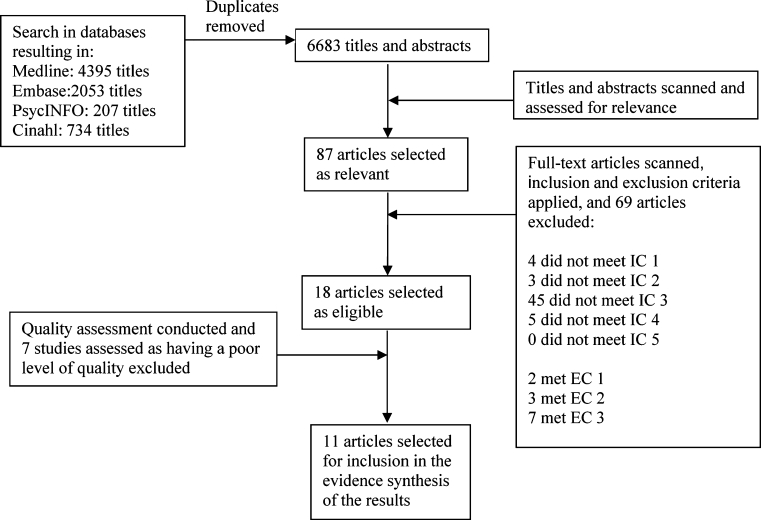
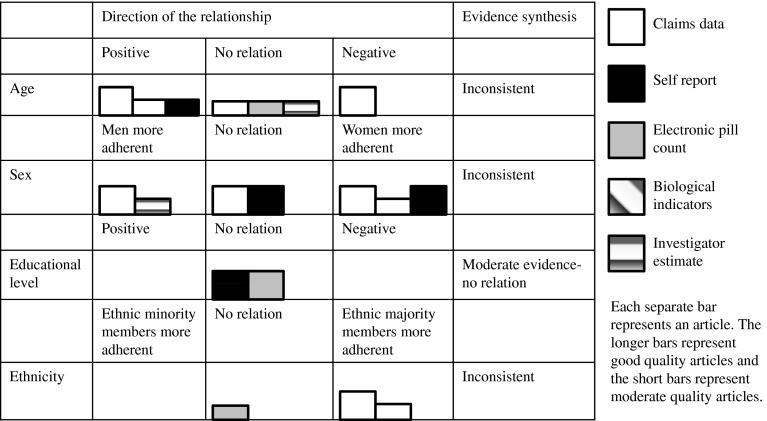
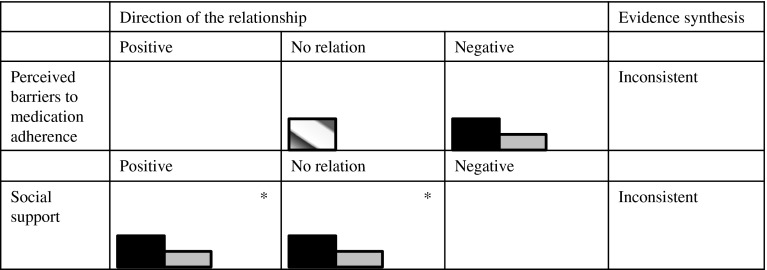
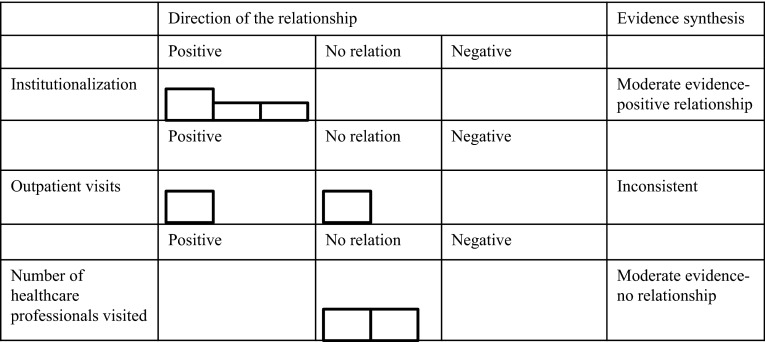
A systematic literature review was conducted to summarize the existing evidence on presumed determinants of heart failure (HF) medication adherence. The aim was to assess the evidence and provide directions for future medication adherence interventions for HF patients. Based on a search in relevant databases and a quality assessment, eleven articles were included in the review. A best evidence synthesis was used to combine the results of presumed determinants that were found more than once in the literature. Results were classified according the World Health Organization's (WHO) multidimensional adherence model. Results demonstrated a relationship between having been institutionalized in the past (including hospitalizations and nursing home visits) and higher adherence levels. This finding is related to the healthcare system dimension of the WHO model. The presumed determinants related to the other dimensions, such as social and economic factors, condition-related, therapy-related, and patient-related factors of the multidimensional adherence model all had inconsistent evidence. However, there was also an indication that patients' educational level and the number of healthcare professionals they have visited are not related to higher adherence levels. Based on the current review, HF patients who have been institutionalized in the past are more adherent to HF medication. Many other presumed determinants were investigated, but displayed inconsistent evidence. Due to the lack of evidence, it was not possible to make recommendations for future interventions.
Overview
The claims and statistics of this paper haven’t been checked yet.
Free: it reads the open-access text and checks the first 5 claims that cite a source we can check. Create a free account to check every claim.
Integrity signals
Registry
Cites
Statistics
Figures
Verification
Claims the paper makes
The claims and statistics of this paper haven’t been checked yet.
Free: it reads the open-access text and checks the first 5 claims that cite a source we can check. Create a free account to check every claim.
Claims other papers make about this one
Each is checked against this paper’s own text: does it say what the citing paper says it does?
The source backs part of the claim, not all of it — or backs it for a different population, condition or comparison.
In the citing paper
“Some evidence for a positive impact of education on adherence was exclusively noted for cardiovascular conditions [23, 37].”
From Medication adherence influencing factors—an (updated) overview of systematic reviews (2019) · cites this paper as [37]
Experimental — accuracy not yet measuredThe source backs part of the claim, not all of it — or backs it for a different population, condition or comparison.
In the citing paper
“Some evidence for a negative impact of mental comorbidity on medication adherence was exclusively noted in hepatitis C and cardiovascular conditions [21, 27, 30, 37].”
From Medication adherence influencing factors—an (updated) overview of systematic reviews (2019) · cites this paper as [37]
Experimental — accuracy not yet measuredThe source backs part of the claim, not all of it — or backs it for a different population, condition or comparison.
In the citing paper
“The impact of all other therapy related factors (duration of therapy, number of tablets, intake frequency, intake at meals) was uncertain in all conditions [23, 28, 35–39].”
From Medication adherence influencing factors—an (updated) overview of systematic reviews (2019) · cites this paper as [37]
Experimental — accuracy not yet measuredThe cited source says what the claim attributes to it.
In the citing paper
“The SRs of cardiovascular conditions showed some evidence that large ethnic groups are more adherent than ethnic minorities [37].”
From Medication adherence influencing factors—an (updated) overview of systematic reviews (2019) · cites this paper as [37]
The cited source says what the claim attributes to it.
In the citing paper
“The impact of financial status was uncertain in Parkinson disease, hepatitis C and cardiovascular conditions [21, 23, 27, 36, 37].”
From Medication adherence influencing factors—an (updated) overview of systematic reviews (2019) · cites this paper as [37]
4 more claims about this paper
Create a free account to see every claim other papers make about this one.
Self-check
Percentages, sums and reported differences re-computed from the paper’s own numbers.
The self-check needs the paper’s full text.
Citations
Cites
2013 ACCF/AHA Guideline for the Management of Heart Failure
Yancy, C. W., Jessup, M., Bozkurt, B., Butler, J., Casey, D. E., Drazner, M. H., Fonarow, G. C., Geraci, S. A., Horwich, T., Januzzi, J. L., et al. (2013) · Journal of the American College of Cardiology · doi:10.1016/j.jacc.2013.05.019 · Cited by 12,536
Osterberg, L., & Blaschke, T. (2005) · New England Journal of Medicine · doi:10.1056/nejmra050100 · Cited by 7,974
Adherence to Long-Term Therapies: Evidence for Action
De Geest, S., & Sabaté, E. (2003) · European Journal of Cardiovascular Nursing · doi:10.1016/s1474-5151(03)00091-4 · Cited by 6,272
Kirk, J., MacDonald, A., Lavender, P., Dean, J., & Rubin, G. (2017) · Biomedicine Hub · doi:10.1159/000480347 · Cited by 3,887
2005 WRITING COMMITTEE MEMBERS, Hunt, S. A., Abraham, W. T., Chin, M. H., Feldman, A. M., Francis, G. S., Ganiats, T. G., Jessup, M., Konstam, M. A., Mancini, D. M., et al. (2009) · Circulation · doi:10.1161/circulationaha.109.192065 · Cited by 3,720
ESC Guidelines for the Diagnosis and Treatment of Acute and Chronic Heart Failure 2008
Dickstein, K., Authors/Task Force Members, Cohen-Solal, A., Filippatos, G., McMurray, J. J. V., Ponikowski, P., Poole-Wilson, P. A., Strömberg, A., van Veldhuisen, D. J., Atar, D., et al. (2008) · European Journal of Heart Failure · doi:10.1016/j.ejheart.2008.08.005 · Cited by 3,512
Self-citationThe revised illness perception questionnaire (IPQ-R)
Moss-Morris, R., Weinman, J., Petrie, K., Horne, R., Cameron, L., & Buick, D. (2002) · Psychology & Health · doi:10.1080/08870440290001494 · Cited by 2,949
Adherence to Long‐Term Therapies: Evidence for Action
Burkhart, P. V., & Sabaté, E. (2003) · Journal of Nursing Scholarship · doi:10.1111/j.1547-5069.2003.tb00001.x · Cited by 2,526
Tracking of childhood overweight into adulthood: a systematic review of the literature
Singh, A. S., Mulder, C., Twisk, J. W. R., Van Mechelen, W., & Chinapaw, M. J. M. (2008) · Obesity Reviews · doi:10.1111/j.1467-789x.2008.00475.x · Cited by 2,494
DiMatteo, M. R. (2004) · Medical Care · doi:10.1097/01.mlr.0000114908.90348.f9 · Cited by 2,169 · cited 1×
“8 % in the general patient population [6].”
BackgroundMedication Adherence: Its Importance in Cardiovascular Outcomes
Ho, P. M., Bryson, C. L., & Rumsfeld, J. S. (2009) · Circulation · doi:10.1161/circulationaha.108.768986 · Cited by 1,488
Evaluation of the Quality of Prognosis Studies in Systematic Reviews
Hayden, J. A., Côté, P., & Bombardier, C. (2006) · Annals of Internal Medicine · doi:10.7326/0003-4819-144-6-200603210-00010 · Cited by 1,452
HFSA 2010 Comprehensive Heart Failure Practice Guideline
Heart Failure Society of America (2010) · Journal of Cardiac Failure · doi:10.1016/j.cardfail.2010.04.004 · Cited by 1,290
Best evidence synthesis: An intelligent alternative to meta-analysis
Slavin, R. E. (1995) · Journal of Clinical Epidemiology · doi:10.1016/0895-4356(94)00097-a · Cited by 949
Systematic Review of Psychosocial Factors at Work and Private Life as Risk Factors for Back Pain
Hoogendoorn, W. E., van Poppel, M. N. M., Bongers, P. M., Koes, B. W., & Bouter, L. M. (2000) · Spine · doi:10.1097/00007632-200008150-00017 · Cited by 915
Incidence and Epidemiology of Heart Failure
Kannel, W. B. (2000) · Heart Failure Reviews · doi:10.1023/a:1009884820941 · Cited by 453
The harvest plot: A method for synthesising evidence about the differential effects of interventions
Ogilvie, D., Fayter, D., Petticrew, M., Sowden, A., Thomas, S., Whitehead, M., & Worthy, G. (2008) · BMC Medical Research Methodology · doi:10.1186/1471-2288-8-8 · Cited by 418
Jaarsma, T. (1999) · European Heart Journal · doi:10.1053/euhj.1998.1341 · Cited by 386
Self-citationSelf-care behaviors among patients with heart failure
Artinian, N. T., Magnan, M., Sloan, M., & Lange, M. P. (2002) · Heart & Lung · doi:10.1067/mhl.2002.123672 · Cited by 296
Noncompliance With Congestive Heart Failure Therapy in the Elderly
Monane, M. (1994) · Archives of Internal Medicine · doi:10.1001/archinte.154.4.433 · Cited by 277
Relationship between psychosocial variables and compliance in patients with heart failure
Evangelista, L. S., Berg, J., & Dracup, K. (2001) · Heart & Lung · doi:10.1067/mhl.2001.116011 · Cited by 240 · cited 6×
“Of those that did find a significant relationship, three studies [25, 31, 34] found that higher age is related to more adherence.”
BackgroundResultInfluentialSocial Support and Self-Care of Patients with Heart Failure
Sayers, S. L., Riegel, B., Pawlowski, S., Coyne, J. C., & Samaha, F. F. (2008) · Annals of Behavioral Medicine · doi:10.1007/s12160-007-9003-x · Cited by 236
A conceptual framework to study medication adherence in older adults
MURRAY, M. (2004) · The American Journal of Geriatric Pharmacotherapy · doi:10.1016/s1543-5946(04)90005-0 · Cited by 222
Wu, J.-R., Moser, D. K., Chung, M. L., & Lennie, T. A. (2008) · Journal of Cardiac Failure · doi:10.1016/j.cardfail.2008.02.011 · Cited by 219
Adherence in heart failure in the elderly: Problem and possible solutions
van der Wal, M. H. L., & Jaarsma, T. (2008) · International Journal of Cardiology · doi:10.1016/j.ijcard.2007.10.011 · Cited by 189
Self-citationAdherence to Medication According to Sex and Age in the CHARM Programme
Granger, B. B., Ekman, I., Granger, C. B., Ostergren, J., Olofsson, B., Michelson, E., McMurray, J. J. V., Yusuf, S., Pfeffer, M. A., & Swedberg, K. (2009) · European Journal of Heart Failure · doi:10.1093/eurjhf/hfp142 · Cited by 143
Compliance Behaviors of Elderly Patients With Advanced Heart Failure
Evangelista, L. S., Doering, L. V., Dracup, K., Westlake, C., Hamilton, M., & Fonarow, G. C. (2003) · The Journal of Cardiovascular Nursing · doi:10.1097/00005082-200307000-00005 · Cited by 133
Psychological Factors and Treatment Adherence Behavior in Patients With Chronic Heart Failure
Schweitzer, R. D., Head, K., & Dwyer, J. W. (2007) · The Journal of Cardiovascular Nursing · doi:10.1097/00005082-200701000-00012 · Cited by 97
Predictors of refill non‐adherence in patients with heart failure
George, J., & Shalansky, S. J. (2007) · British Journal of Clinical Pharmacology · doi:10.1111/j.1365-2125.2006.02800.x · Cited by 96
Determinants of heart failure self-care: a systematic literature review
Oosterom-Calo, R., van Ballegooijen, A. J., Terwee, C. B., Velde, S. J. T., Brouwer, I. A., Jaarsma, T., & Brug, J. (2011) · Heart Failure Reviews · doi:10.1007/s10741-011-9292-9 · Cited by 90
Self-citationBagchi, A. D., Esposito, D., Kim, M., Verdier, J. M., & Bencio, D. (2007) · Clinical Therapeutics · doi:10.1016/j.clinthera.2007.08.015 · Cited by 86
Angiotensin-converting enzyme inhibitor compliance and dosing among patients with heart failure
Roe, C. M., Motheral, B. R., Teitelbaum, F., & Rich, M. W. (1999) · American Heart Journal · doi:10.1016/s0002-8703(99)70005-0 · Cited by 73
Reliability and validity of the compliance belief scales among patients with heart failure
Bennett, S. J., Perkins, S. M., Lane, K. A., Forthofer, M. M., Brater, D. C., & Murray, M. D. (2001) · Heart & Lung · doi:10.1067/mhl.2001.114193 · Cited by 63
Medication nonadherence: Part II--A pilot study in patients with congestive heart failure.
Pt, R., & Ruffin, D. M. (1998) · PubMed · Cited by 60
Testing the psychometric properties of the Medication Adherence Scale in patients with heart failure
Wu, J.-R., Chung, M., Lennie, T. A., Hall, L. A., & Moser, D. K. (2008) · Heart & Lung · doi:10.1016/j.hrtlng.2007.10.001 · Cited by 60
Berben, L., Bogert, L., Leventhal, M., Fridlund, B., Jaarsma, T., Norekvål, T. M., Smith, K. M., Strömberg, A., Thompson, D. R., & Geest, S. D. (2010) · European Journal of Cardiovascular Nursing · doi:10.1016/j.ejcnurse.2010.10.004 · Cited by 55
Self-citationLamb, D. A., Eurich, D. T., McAlister, F. A., Tsuyuki, R. T., Semchuk, W., Wilson, T. W., & Blackburn, D. F. (2009) · Circulation Cardiovascular Quality and Outcomes · doi:10.1161/circoutcomes.108.813600 · Cited by 52
Roe, C. M., Motheral, B. R., Teitelbaum, F., & Rich, M. W. (2000) · American Journal of Health-System Pharmacy · doi:10.1093/ajhp/57.2.139 · Cited by 49
Pamboukian, S. V., Nisar, M. I., Patel, S., Gu, L., McLeod, M., Costanzo, M. R., & Heroux, A. L. (2008) · Clinical Cardiology · doi:10.1002/clc.20175 · Cited by 38
Ruf, Stewart, S., Pretorius, S., Kubheka, M., Lautenschläger, C., Presek, P., & Sliwa, K. S. (2010) · Europe PMC (PubMed Central) · Cited by 37
Molloy, G. J., Gao, C., Johnston, D. W., Johnston, M., Witham, M. D., Struthers, A. D., & McMurdo, M. E. T. (2009) · European Journal of Heart Failure · doi:10.1093/eurjhf/hfp059 · Cited by 37
Predictors of medication compliance among older heart failure patients
Cholowski, K., & Cantwell, R. (2007) · International Journal of Older People Nursing · doi:10.1111/j.1748-3743.2007.00082.x · Cited by 31
Cited by
Medication adherence influencing factors—an (updated) overview of systematic reviews
Gast, A., & Mathes, T. (2019) · Systematic Reviews · doi:10.1186/s13643-019-1014-8 · Cited by 560
Jaarsma, T., Hill, L., Bayes‐Genis, A., La Rocca, H. B., Castiello, T., Čelutkienė, J., Marques‐Sule, E., Plymen, C. M., Piper, S. E., Riegel, B., et al. (2021) · European Journal of Heart Failure · doi:10.1002/ejhf.2008 · Cited by 538
Self-citationWilder, M. E., Kulie, P., Jensen, C., Levett, P., Blanchard, J., Dominguez, L. W., Portela, M., Srivastava, A., Li, Y., & McCarthy, M. L. (2021) · Journal of General Internal Medicine · doi:10.1007/s11606-020-06447-0 · Cited by 259
van der Pols-Vijlbrief, R., Wijnhoven, H. A. H., Schaap, L. A., Terwee, C. B., & Visser, M. (2014) · Ageing Research Reviews · doi:10.1016/j.arr.2014.09.001 · Cited by 190
Self-citationAdherence influencing factors – a systematic review of systematic reviews
Mathes, T., Jaschinski, T., & Pieper, D. (2014) · Archives of Public Health · doi:10.1186/2049-3258-72-37 · Cited by 183
“The effect of social support was unclear in both systematic reviews that analysed this exposure [13,14].”
BackgroundInfluential
Metadata
- Authors
- Oosterom-Calo, R., van Ballegooijen, A. J., Terwee, C. B., te Velde, S. J., Brouwer, I. A., Jaarsma, T., & Brug, J.
- Affiliations
- Philips (Netherlands) (NL)
- Amsterdam Public Health (NL)
- Linköping University (SE)
- Corresponding author
- Oosterom-Calo, R.
- Venue
- Heart Failure Reviews
- Published
- 2012-06-22
- Volume
- 18
- Issue
- 4
- Pages
- 409-427
- ISSN
- 1382-4147 (ISSN-L)
- 1573-7322
- PMC
- PMC3677977
- OpenAlex
- W2160716494
- Semantic Scholar
- 7b692a7b6004a90b9b341312714c05d2b9b52431
- Cited by
- 97
- References
- 42
- Citations by year
- 2026: 7 · 2025: 8 · 2024: 8 · 2023: 9 · 2022: 8 · 2021: 8 · 2020: 14 · 2019: 5 · 2018: 2 · 2017: 9 · 2016: 5 · 2015: 9 · 2014: 4 · 2013: 1
- FWCI
- 0.59
- Type
- journal article
- Language
- en
- Open access
- hybrid
- doi.org
- Licence
- cc-by
- Locations
- Heart Failure Reviews (publishedVersion, cc-by)
- Europe PMC (PubMed Central) (publishedVersion, cc-by)
- PubMed Central (publishedVersion, cc-by)
- PubMed (publishedVersion)
- Pure Amsterdam UMC (publishedVersion)
- Amsterdam UMC (VU Amsterdam) - Institutional Repository (publishedVersion)
- VU Research Portal (publishedVersion, other-oa)
- DiVA (Linkoping University) (submittedVersion, other-oa)
- Data Archiving and Networked Services (DANS) (submittedVersion, other-oa)
- Data Archiving and Networked Services (DANS) (submittedVersion)
- Topics
- Health Sciences › Medicine › Family Practice › Medication Adherence and Compliance
- Health Sciences › Medicine › Cardiology and Cardiovascular Medicine › Heart Failure Treatment and Management
- Health Sciences › Medicine › Cardiology and Cardiovascular Medicine › Atrial Fibrillation Management and Outcomes
- Keywords
- heart failure, medication adherence, predictors of adherence, institutionalization, hospitalization, nursing home visits, patient education level, socioeconomic factors, patient factors, adherence interventions
- MeSH terms
- Cardiovascular Agents, Heart Failure, Humans, Health Knowledge, Attitudes, Practice, Patient Education as Topic, Risk Factors, World Health Organization, Risk Assessment, Evidence-Based Medicine, Medication Adherence
About these checks
Registry, retraction, Cites and statistics results are computed, not judged, with one exception: a printed reference that no index lists is read once by a model before it counts as a citation error. Claims are extracted by a model and kept only when their quote appears verbatim in the text; each cited source is then checked, with a model’s help, for whether it says what the claim relies on. Those verdicts can be wrong — read the claim’s quote and the cited source before relying on one.
Statistics and arithmetic are recomputed, not judged.
Confidence bands are shown only for fields calibrated on our annotated test set. None is calibrated yet, so no band is shown.
What counts as a claim ›How we measure confidence ›How we check this ›
Are you an author, or do you see a problem with this page? Request a review
Data sources
Bibliographic data: Semantic Scholar, OpenAlex, Crossref.
Contains information from the Semantic Scholar Academic Graph Datasets, made available under the ODC Attribution License (ODC-BY 1.0).
Semantic Scholar’s data is described in: Kinney, R., et al. (2023). The Semantic Scholar Open Data Platform. arXiv:2301.10140.
