

Family Poverty and Trajectories of Children’s Emotional and Behavioural Problems: The Moderating Roles of Self-Regulation and Verbal Cognitive Ability
The DOI matches its Crossref record; 61 of the 61 references it cites were found in a registry or an index.
Abstract
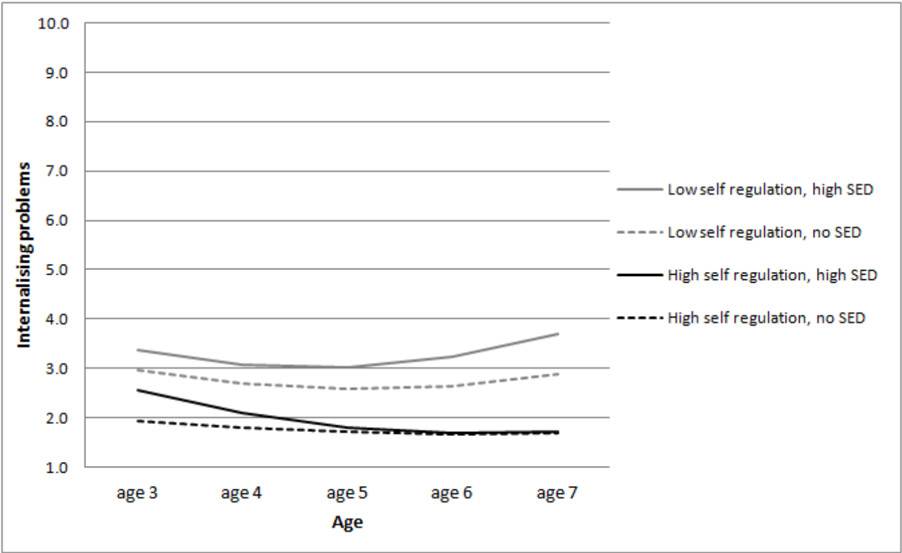
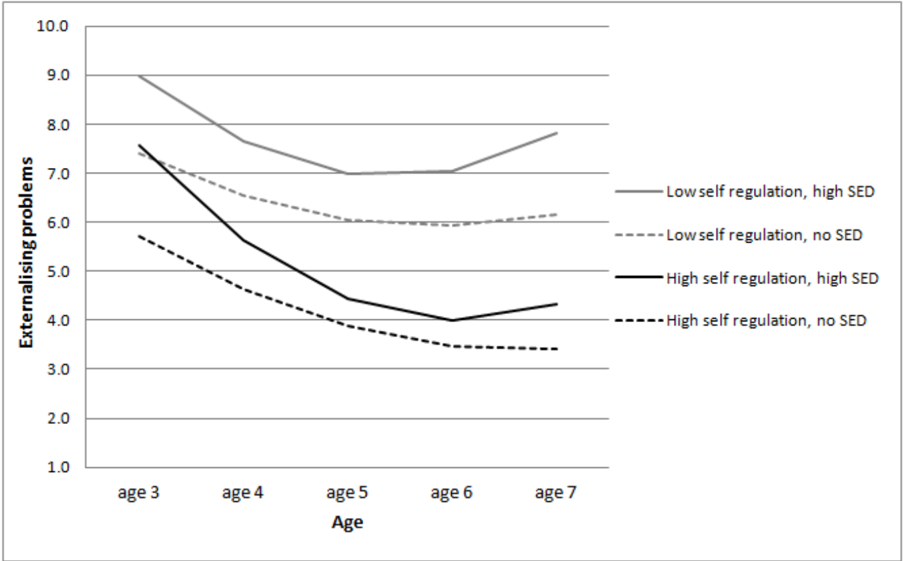
Socio-economic disadvantage is strongly associated with children's emotional (internalising) and behavioural (externalising) problems. Self-regulation and verbal cognitive ability have been related to children's emotional and behavioural resilience to socio-economic disadvantage. Despite being inter-related, self-regulation and verbal cognitive ability have not been examined jointly as promoting resilience in young children. This study investigated the roles of self-regulation and verbal cognitive ability in children's emotional and behavioural resilience to family socio-economic disadvantage from early to middle childhood (ages 3, 5, and 7 years; N = 16,916; 49 % girls). Using multivariate response growth curve modelling, we found that the relationship between socio-economic disadvantage and internalising problems was stronger for children with lower verbal cognitive ability. Also, poor children with high and low levels of self-regulation showed a widening gap in both emotional and behavioural problems over time. Poor and non-poor children alike benefited from self-regulation, but poor children appeared to be more vulnerable to low self-regulation. Self-regulation and verbal cognitive ability seem to be important protective factors for young children growing up in poor families.
Overview
The claims and statistics of this paper haven’t been checked yet.
Free: it reads the open-access text and checks the first 5 claims that cite a source we can check. Create a free account to check every claim.
Integrity signals
Registry
Cites
Statistics
Figures
Verification
Claims the paper makes
The claims and statistics of this paper haven’t been checked yet.
Free: it reads the open-access text and checks the first 5 claims that cite a source we can check. Create a free account to check every claim.
Claims other papers make about this one
Each is checked against this paper’s own text: does it say what the citing paper says it does?
The source backs part of the claim, not all of it — or backs it for a different population, condition or comparison.
In the citing paper
“Self-regulation skills are important prerequisites for skills associated with school readiness and higher-order learning, including decision making, problem solving, self-direction and organization, metacognition, learning from educational experience and practice, conflict resolution, perseverance, and resilience”
From Malleability, plasticity, and individuality: How children learn and develop in context1 (2019) · cites this paper as Flouri, Midouhas, & Joshi, 2014
Experimental — accuracy not yet measuredThe cited source says what the claim attributes to it.
In the citing paper
“In a large study of child emotional and behavioural resilience in the context of persistent poverty, verbal cognitive ability was found to be significantly associated with low levels of child internalising problems.58”
From What factors are associated with resilient outcomes in children exposed to social adversity? A systematic review (2019) · cites this paper as [58]
In the citing paper
“Although Flouri et al 58 found that self-regulation benefited both poor and non-poor children, there was an increasing gap in outcomes over time between the poor children with high and low regulation, particularly in terms of internalising problems.”
From What factors are associated with resilient outcomes in children exposed to social adversity? A systematic review (2019) · cites this paper as [58]
In the citing paper
“The trajectories of internalising and externalising problems of poor and non-poor children with high self-regulation were similar, particularly as they got older.58”
From What factors are associated with resilient outcomes in children exposed to social adversity? A systematic review (2019) · cites this paper as [58]
Self-check
Percentages, sums and reported differences re-computed from the paper’s own numbers.
The self-check needs the paper’s full text.
Citations
Cites
Hierarchical Linear Models: Applications and Data Analysis Methods.
Longford, N. T., Bryk, A. S., & Raudenbush, S. W. (1993) · Contemporary Sociology · doi:10.2307/2075823 · Cited by 18,724
The Strengths and Difficulties Questionnaire: A research note
Goodman, R. (1997) · Journal of Child Psychology and Psychiatry · doi:10.1111/j.1469-7610.1997.tb01545.x · Cited by 14,908
Screening for serious mental illness in the general population
Kessler, R. C., Barker, P. R., Colpe, L. J., Epstein, J. F., Gfroerer, J. C., Hiripi, E., Howes, M. J., Normand, S.-L. T., Manderscheid, R. W., Walters, E. E., et al. (2003) · Archives of General Psychiatry · doi:10.1001/archpsyc.60.2.184 · Cited by 5,692 · cited 1×
“Psychological distress was measured with the 6-item Kessler scale (Kessler et al. 2003), which assesses the experience of recent non-specific psychological distress (α=0.”
MethodSocioeconomic status and child development
Bradley, R. H., & Corwyn, R. F. (2002) · Annual Review of Psychology · doi:10.1146/annurev.psych.53.100901.135233 · Cited by 5,484
A gradient of childhood self-control predicts health, wealth, and public safety
Moffitt, T. E., Arseneault, L., Belsky, D., Dickson, N., Hancox, R. J., Harrington, H., Houts, R., Poulton, R., Roberts, B. W., Ross, S., et al. (2011) · Proceedings of the National Academy of Sciences · doi:10.1073/pnas.1010076108 · Cited by 4,885
Socioeconomic disadvantage and child development
McLoyd, V. C. (1998) · American Psychologist · doi:10.1037/0003-066x.53.2.185 · Cited by 3,763
Handbook of self-regulation: research, theory, and applications
(2005) · Choice Reviews Online · doi:10.5860/choice.42-3719 · Cited by 3,645
Skill formation and the economics of investing in disadvantaged children
Heckman, J. J. (2006) · Science · doi:10.1126/science.1128898 · Cited by 3,559 · cited 1×
“Self-regulation is more malleable than verbal cognitive ability, particularly in the early years (Heckman 2006), and, as such, a clearer target for intervention.”
BackgroundHierarchical Linear Models: Applications and Data Analysis Methods.
Goldstein, H., Bryk, A. S., & Raudenbush, S. W. (1993) · Journal of the American Statistical Association · doi:10.2307/2290750 · Cited by 3,321
Blair, C., & Razza, R. P. (2007) · Child Development · doi:10.1111/j.1467-8624.2007.01019.x · Cited by 3,140 · cited 1×
“Early self-regulation has been linked to positive outcomes such as academic readiness and success (Blair and Razza 2007), empathy, compliance, and social competence (Eisenberg et al.”
Background
Research works printed but not linked: 4
- Eisenberg, N., Valiente, C., & Eggum, N. D. (2010b). Self-regulation and school readiness. Early Education and Development, 21, 681–698. doi: 10.1080/10409289.2010.497451 . · DOI · Paper page
- Elliott, C. D., Smith, P., & McCulloch, K. (1996). The British Ability Scales Second Edition (BAS II): Administration and scoring manual. London: NFER-Nelson.
- Hansen, K. (2010). Millennium cohort study first, second, third and fourth surveys: A guide to the datasets (5th ed.). London: Centre for Longitudinal Studies, Institute of Education, University of London.
- Plewis, I. (2007). The Millennium Cohort Study: Technical report on sampling (4th ed.). London: Centre for Longitudinal Studies, Institute of Education, University of London.
Cited by
Self-regulation in childhood as a predictor of future outcomes: A meta-analytic review.
Robson, D. A., Allen, M. S., & Howard, S. J. (2020) · Psychological Bulletin · doi:10.1037/bul0000227 · Cited by 759
“12 (1.1) - Self-report: SCRS Aggressive behavior 16 Flouri et al. (2014) 16,916 Longitudinal UK Both (51”
BackgroundInfluentialMalleability, plasticity, and individuality: How children learn and develop in context1
Cantor, P., Osher, D., Berg, J., Steyer, L., & Rose, T. (2019) · Applied Developmental Science · doi:10.1080/10888691.2017.1398649 · Cited by 328
Gartland, D., Riggs, E., Muyeen, S., Giallo, R., Afifi, T. O., MacMillan, H., Herrman, H., Bulford, E., & Brown, S. J. (2019) · BMJ Open · doi:10.1136/bmjopen-2018-024870 · Cited by 248
“58 Borman and Overman 60 in a cross-sectional study of 925 low SES third grade students purposively selected from a longitudinal cohort found a higher internal locus of control to be associated with resilient outcomes (as defined by performing better than expected in maths), irrespective of…”
Palacios-Barrios, E. E., & Hanson, J. L. (2019) · Comprehensive Psychiatry · doi:10.1016/j.comppsych.2018.12.012 · Cited by 155
Oberle, E., Gist, A., Cooray, M. S., & Pinto, J. B. R. (2020) · Psychology in the Schools · doi:10.1002/pits.22432 · Cited by 170
On the Meanings of Self-Regulation: Digital Humanities in Service of Conceptual Clarity
Burman, J. T., Green, C. D., & Shanker, S. G. (2015) · Child Development · doi:10.1111/cdev.12395 · Cited by 147
Clair, M. S., Forrest, C. L., Yew, S. G. K., & Gibson, J. L. (2019) · Journal of Speech Language and Hearing Research · doi:10.1044/2018_jslhr-l-18-0061 · Cited by 122
“Indeed, Flouri et al. (2014) indicated that the increased emotional difficulties associated with poverty were moderated by children’s verbal ability, such that children in poverty with high language ability did not have elevated emotional symptoms.”
BackgroundMazza, J. R. S. E., Lambert, J., Zunzunegui, M. V., Tremblay, R. E., Boivin, M., & Côté, S. M. (2017) · Social Science & Medicine · doi:10.1016/j.socscimed.2017.01.039 · Cited by 96
Noonan, K., Burns, R., & Violato, M. (2018) · SSM - Population Health · doi:10.1016/j.ssmph.2018.03.002 · Cited by 65
Bailey, T., Totsika, V., Hastings, R. P., Hatton, C., & Emerson, E. (2019) · Journal of Child Psychology and Psychiatry · doi:10.1111/jcpp.13080 · Cited by 78
“…internalising and externalising behaviour problems fit better curvilinear trajectories (Bongers, Koot, van der Ende, & Vernhulst, 2003) with Flouri, Midouhas, and Joshi (2014) reporting an increase in both externalising and internalising behaviour from ages 3 to 5, followed by a lull…”
BackgroundArslan, G. (2017) · Child Indicators Research · doi:10.1007/s12187-017-9486-3 · Cited by 77
Behavioral Problems and Socioemotional Competence at 18 to 22 Months of Extremely Premature Children
Peralta-Carcelén, M., Carlo, W. A., Pappas, A., Vaucher, Y. E., Yeates, K. O., Phillips, V. A., Gustafson, K. E., Payne, A. H., Duncan, A. F., Newman, J. E., et al. (2017) · PEDIATRICS · doi:10.1542/peds.2016-1043 · Cited by 53
Huang, C.-C., Chen, Y., Jin, H., Stringham, M., Liu, C., & Oliver, C. (2020) · Frontiers in Psychology · doi:10.3389/fpsyg.2020.00594 · Cited by 49
Self-regulation mitigates the association between household chaos and children's behavior problems
Crespo, L. M., Trentacosta, C. J., Udo-Inyang, I., Northerner, L. M., Chaudhry, K., & Williams, A. (2018) · Journal of Applied Developmental Psychology · doi:10.1016/j.appdev.2018.10.005 · Cited by 61
“especially problematic for children from lower-income families who face recurrent and severe stressors (Flouri et al., 2014; Raver, 2004).”
BackgroundMaughan, B., Rowe, R., & Murray, J. (2017) · Wiley eBooks · doi:10.1002/9781119092254.ch16 · Cited by 50
Schibli, K., Wong, K., Hedayati, N., & D’Angiulli, A. (2017) · Annals of the New York Academy of Sciences · doi:10.1111/nyas.13369 · Cited by 60
Flouri, E., Papachristou, E., Midouhas, E., Joshi, H. E., Ploubidis, G. B., & Lewis, G. (2018) · European Child & Adolescent Psychiatry · doi:10.1007/s00787-018-1155-7 · Cited by 52
“1 3 suggesting high levels of comorbid externalizing and internalizing problems in childhood [6, 59].”
BackgroundSelf-citationHanson, J. L., Gillmore, A. D., Yu, T., Holmes, C. J., Hallowell, E. S., Barton, A. W., Beach, S. R. H., Galván, A., MacKillop, J., Windle, M., et al. (2019) · Child Development · doi:10.1111/cdev.13154 · Cited by 41
Tzavidis, N., Salvati, N., Schmid, T., Flouri, E., & Midouhas, E. (2015) · Journal of the Royal Statistical Society Series A (Statistics in Society) · doi:10.1111/rssa.12126 · Cited by 51
“…measurements are due to unit or item SDQ non-response in a given time point, and previous MCS research demonstrates that less favourable family socioeconomic characteristics (e.g. lower parental qualifications) and ethnic minority backgrounds predict such non-response (Flouri et al., 2014a, b).”
MethodResultSelf-citationBaron, A., Evangelou, M., Malmberg, L., & Meléndez‐Torres, G. J. (2017) · Campbell Systematic Reviews · doi:10.4073/csr.2017.10 · Cited by 63
Nath, S., Russell, G., Kuyken, W., Psychogiou, L., & Ford, T. J. (2016) · Psychological Medicine · doi:10.1017/s0033291716000234 · Cited by 49
“…be associated with fathers’ depressive symptoms, parenting and children’s emotional and behavioural outcomes (Goodman, 2004; Kiernan & Huerta, 2008; Hanington et al. 2010, 2012; Malmberg & Flouri, 2011; Flouri et al. 2014; Gutierrez-Galve et al. 2015), we controlled for these factors in our models.”
MethodBista, S., Tait, R. J., Straker, L. M., Lin, A. P., Steinbeck, K. S., Graham, P. L., Kang, M. S., Lymer, S. J., Robinson, M., Marino, J. L., et al. (2024) · Development and Psychopathology · doi:10.1017/s0954579423001505 · Cited by 46
“…including child ’ s sex, ethnicity, temperament, and personality (Fanti & Henrich, 2010; Leve et al., 2005; Shi et al., 2020; Wang et al., 2016); and, cognitive and language problems (Bornstein et al., 2013; Fanti & Henrich, 2010; Flouri et al., 2014; Petersen et al., 2013; Shi et al., 2020).”
Wadman, R., Hiller, R. M., & Clair, M. S. (2019) · Development and Psychopathology · doi:10.1017/s0954579419000191 · Cited by 51
Schoon, I., Nasim, B., & Cook, R. (2021) · British Educational Research Journal · doi:10.1002/berj.3724 · Cited by 55
Moran, L., Lengua, L. J., Zalewski, M., Ruberry, E., Klein, M., Thompson, S., & Kiff, C. (2017) · Journal of Research in Personality · doi:10.1016/j.jrp.2016.03.003 · Cited by 35
Childhood stunting and cognitive development: a meta-analysis
Sideropoulos, V., Draper, A., Chereau, B. M., Ang, L., & Dockrell, J. E. (2025) · Journal of Global Health · doi:10.7189/jogh.15.04257 · Cited by 52
“Our findings are consistent with previous studies capturing the influence of similar moderators on cognitive and socio-emotional development in typical as well as atypical populations [ 82 , 83 ].”
Chen, J., Wang, Z., Wong, H., & Tang, V. M. (2021) · Child Indicators Research · doi:10.1007/s12187-021-09835-y · Cited by 34
School composition, family poverty and child behaviour
Flouri, E., & Midouhas, E. (2016) · Social Psychiatry and Psychiatric Epidemiology · doi:10.1007/s00127-016-1206-7 · Cited by 40
Self-citationCarriedo, N., Rodríguez‐Villagra, O. A., Moguilner, S., Morales, J.-P., Huepe-Artigas, D., Soto, V., Franco-O’Byrne, D., Ibáñez, A. M., Bekinschtein, T. A., & Huepe, D. (2024) · Frontiers in Psychology · doi:10.3389/fpsyg.2024.1321242 · Cited by 38
The development of behavior problems among disabled and non-disabled children in England
Fauth, R. C., Platt, L., & Parsons, S. (2017) · Journal of Applied Developmental Psychology · doi:10.1016/j.appdev.2017.06.008 · Cited by 41
“Moreover, our approach is consistent with extant research on behavioral development using the same study (e.g., Fitzsimons, Goodman, Kelly, & Smith, 2017; Flouri et al., 2014; Midouhas et al., 2014), and thus facilitates direct comparison.”
ResultBorja, S. G., Nurius, P. S., Song, C., & Lengua, L. J. (2019) · Children and Youth Services Review · doi:10.1016/j.childyouth.2019.03.007 · Cited by 35
Mazza, J. R. S. E., Boivin, M., Tremblay, R. E., Michel, G., Salla, J., Lambert, J., Zunzunegui, M. V., & Côté, S. M. (2016) · Social Psychiatry and Psychiatric Epidemiology · doi:10.1007/s00127-016-1252-1 · Cited by 31
Silver, A. M., Elliott, L. E., & Libertus, M. E. (2022) · Journal of Educational Psychology · doi:10.1037/edu0000679 · Cited by 30
Baron, A., & Malmberg, L. (2017) · European Journal of Developmental Psychology · doi:10.1080/17405629.2017.1399875 · Cited by 34
“Specifically, existing research indicates (Flouri et al., 2014; Raver, Blair, & Willoughby, 2013) the potential for poverty and stressful life events to undercut children’s self-regulation from the earliest years; if such a stressful life event precipitates an early decline in self-regulation, then the results suggest…”
BackgroundMethodInfluentialNoroña-Zhou, A. N., & Tung, I. (2020) · Infant Mental Health Journal · doi:10.1002/imhj.21877 · Cited by 38
Supporting Young Children’s Self-Regulation Through Nature-Based Practices in Preschool
Ernst, J. A., & Stelley, H. (2024) · Behavioral Sciences · doi:10.3390/bs14111013 · Cited by 36
Family social capital mediates the effect of poverty on children's anxiety and depression
Li, C., Liang, Z., Yin, X., & Zhang, Q. (2018) · Journal of Community Psychology · doi:10.1002/jcop.22086 · Cited by 26
Parkes, A., Sweeting, H. N., & Wight, D. (2016) · Research on Child and Adolescent Psychopathology · doi:10.1007/s10802-015-0116-6 · Cited by 29
“This has pointed to family factors including socioeconomic disadvantage (Flouri et al. 2014), father absence (Bayer et al.”
BackgroundBarry, K. R., Hanson, J. L., Calma‐Birling, D., Lansford, J. E., Bates, J. E., & Dodge, K. A. (2022) · Developmental Science · doi:10.1111/desc.13260 · Cited by 25
Designing Maker initiatives for educational inclusion
Leonard, S. N., Repetto, M., Kennedy, J., Tudini, V., & Fowler, S. (2022) · International Journal of Technology and Design Education · doi:10.1007/s10798-022-09754-1 · Cited by 29
“Importantly, it is also likely to occur at the level of capacity—Maker educational designs tend to rely on high levels of student self-regulation that is less likely to be found in disadvantaged populations (Evans & Kim, 2013; Flouri et al., 2014; O’Connor et al., 2019).”
BackgroundCase, A. C., & Kraftman, L. (2024) · Oxford Open Economics · doi:10.1093/ooec/odad060 · Cited by 25
Miller, P. L., Betancur, L., Whitfield, K., & Votruba‐Drzal, E. (2020) · Development and Psychopathology · doi:10.1017/s0954579419001494 · Cited by 28
Mueller, M. A. E., & Flouri, E. (2020) · Journal of Environmental Psychology · doi:10.1016/j.jenvp.2020.101472 · Cited by 27
Self-citationGueron‐Sela, N., Bedford, R., Wagner, N. J., & Propper, C. B. (2017) · Journal of Clinical Child & Adolescent Psychology · doi:10.1080/15374416.2017.1381911 · Cited by 26
“Research indicates that self-regulatory abilities may also protect children against the negative effect of environmental risk factors on IBs (Flouri et al., 2014; Lengua et al., 2008; Muhtadie et al., 2013), suggesting that the interaction between dispositional and environmental factors may…”
BackgroundWeiss, S. J., & Leung, C. Y. (2021) · Infant Mental Health Journal · doi:10.1002/imhj.21924 · Cited by 23
Bridger, E. K., & Daly, M. (2018) · Psychological Medicine · doi:10.1017/s0033291718002118 · Cited by 25
“, 2016) and the occurrence of emotional internalizing problems (Flouri et al., 2014).”
BackgroundNili, A. N., Krogh‐Jespersen, S., Perlman, S. B., Estabrook, R., Petitclerc, A., Briggs‐Gowan, M. J., Sherlock, P., Norton, E. S., & Wakschlag, L. S. (2022) · Research on Child and Adolescent Psychopathology · doi:10.1007/s10802-022-00945-x · Cited by 19
“These children represent the opposite end of the theorized regulatory spectrum and the potential protectiveness of greater selfregulation ability (Flouri et al., 2014; Mischel et al., 2011).”
BackgroundFamily and neighbourhood risk and children's problem behaviour: The moderating role of intelligence
Flouri, E., Midouhas, E., & Joshi, H. E. (2015) · Intelligence · doi:10.1016/j.intell.2015.08.003 · Cited by 19
Self-citationFu, W., Zhang, W., Dong, Y., & Chen, G. (2024) · British Journal of Developmental Psychology · doi:10.1111/bjdp.12525 · Cited by 20
“Children with lower SES are more likely to be affected by low self-regulation ability; that is, children with low SES show more prominent emotional and behavioural problems when their self-regulation ability is low (Flouri et al., 2014).”
Rowe, S. L., Zimmer‐Gembeck, M. J., & Hood, M. (2016) · Journal of Adolescence · doi:10.1016/j.adolescence.2016.04.001 · Cited by 26
Elsayed, N. M., Luby, J., & Barch, D. (2023) · Neuroscience and Biobehavioral Reviews · doi:10.1016/j.neubiorev.2023.105303 · Cited by 14
Jewell, S. L., Suk, H. W., & Luecken, L. J. (2017) · Developmental Psychobiology · doi:10.1002/dev.21595 · Cited by 17
Deserno, M. K., Sachisthal, M. S. M., Epskamp, S., & Raijmakers, M. E. J. (2021) · PsyArXiv (OSF Preprints) · doi:10.31234/osf.io/ngfxq · Cited by 16
Baron, A., Malmberg, L., Evangelou, M., Nesbitt, K. T., & Farran, D. C. (2019) · Early Education and Development · doi:10.1080/10409289.2019.1613327 · Cited by 22
Leung, C., Hui, A. N. N., Wong, R. S. M., Rao, N., Karnilowicz, W., Chung, K., Chan, J., & Ip, P. (2022) · Archives of Pediatrics and Adolescent Medicine · doi:10.1001/jamapediatrics.2021.6308 · Cited by 14
Chen, L., & Yeung, W. J. (2023) · Frontiers in Psychology · doi:10.3389/fpsyg.2023.1203524 · Cited by 13
“Finally, self-regulation serves as an essential child-level resource that empowers children to adjust to adversities and maintain or improve their mental health under adversity (Lengua and Long, 2002; Lengua, 2003; Eiden et al., 2007; Lengua et al., 2008; Flouri et al., 2014).”
BackgroundRiley, H. O., Lo, S. L., Rosenblum, K. L., Sturza, J. S., Kaciroti, N., Lumeng, J. C., & Miller, A. L. (2020) · Childhood Obesity · doi:10.1089/chi.2019.0186 · Cited by 11
Recognizing Resilience in Children: A Review
Schafer, E. S. (2022) · Trauma Care · doi:10.3390/traumacare2030039 · Cited by 13
Heredia, M. E. R., Guzmán, I. M. N. G. N., & Pardo, X. M. (2021) · Interacciones Revista de Avances en Psicología · doi:10.24016/2021.v7.228 · Cited by 10
Fauth, R. C., Parsons, S., & Platt, L. (2014) · London School of Economics and Political Science Research Online (London School of Economics and Political Science) · Cited by 7
Williams, C. A., Thompson, P. A., & Hastings, R. P. (2025) · Research in Developmental Disabilities · doi:10.1016/j.ridd.2025.105082 · Cited by 7
Torres, M. M., Thommen, É., Morán, E., & Guidetti, M. (2021) · Frontiers in Psychology · doi:10.3389/fpsyg.2021.642242 · Cited by 10
Healthy Start Home Visiting Program—School-Based Model: Cluster Randomized Controlled Trial
Leung, C., Tsang, S., Heung, K., & Tam, M. (2018) · Research on Social Work Practice · doi:10.1177/1049731518786578 · Cited by 6
Demidenko, M. I., Kelly, D. P., Hardi, F. A., Ip, K. I., Lee, S., Becker, H. C., Hong, S. H., Thijssen, S., Luciana, M. M., & Keating, D. P. (2022) · Neuroimage Reports · doi:10.1016/j.ynirp.2022.100133 · Cited by 9
“, 2002; McLoyd, 1998) have been reported to increase risks for child behavioral problems (Flouri et al., 2014) and poor functioning in academic settings (Hair et al.”
BackgroundSelf-Regulation Competence as a Superpower: An Integrated Framework for K-12
Trautwein, U., Eberhart, J., Dignath, C., Bonner, C. V., & Roberts, B. W. (2026) · Educational Psychology Review · doi:10.1007/s10648-026-10190-z · Cited by 6
“Broad conceptualizations of self-regulation—including EFs—also show associations with lower levels of externalizing (e.g., aggression) and internalizing symptoms (e.g., anxiety or depression; Flouri et al., 2014; Robson et al., 2020).”
The War on Poverty Then and Now: A Plan Toward Ultimate Victory
Joseph, R. (2017) · Poverty & Public Policy · doi:10.1002/pop4.174 · Cited by 5
'Non-cognitive' skills: What are they and how can they be measured in the British cohort studies?
Joshi, H. E. (2014) · Cited by 11
Self-citationThe effect of social support provided to poor children on their emotional state and hope levels
SÖNGÜT, S., & Gözübüyük, G. (2025) · Journal of Pediatric Nursing · doi:10.1016/j.pedn.2025.01.034 · Cited by 5
Efficacy of Fun to Learn for the Young Program: Randomized Controlled Trial
Leung, C., Tsang, S., & Li, B. (2017) · Journal of Child and Family Studies · doi:10.1007/s10826-017-0790-9 · Cited by 5
“Children from poor families experience difficulties in learning and psychosocial development (Flouri et al. 2014).”
BackgroundLatham, R. M., Arseneault, L., Ploubidis, G. B., Das‐Munshi, J., Moreno‐Agostino, D., Bakolis, I., Blangis, F., & Fisher, H. L. (2025) · Development and Psychopathology · doi:10.1017/s0954579425000203 · Cited by 4
“Analyses of children in the UK Millennium Cohort Study (MCS) have highlighted factors such as self-regulation (Flouri et al., 2014a), cognitive ability (Flouri et al., 2014a), green space (Flouri et al., 2014b), and early aspirations (Flouri et al., 2016) as buffering some negative effects of…”
InfluentialYang, Y., Obsuth, I., Zhu, X., Ribeaud, D., Eisner, M., & Murray, A. L. (2024) · Journal of Adolescence · doi:10.1002/jad.12438 · Cited by 3
“…conditions on OFTP and mental health problems as shown in previous studies (Andre et al., 2018; Card et al., 2008; Faheem et al., 2022; Flouri et al., 2014; Kooij et al., 2018; McKay & Cole, 2017; Oldehinkel & Bouma, 2011), these covariates were adjusted for by regressing the random…”
Schlesinger, Y., Paz, Y., Rousseau, S., Atzaba‐Poria, N., & Frenkel, T. I. (2025) · Child Development · doi:10.1111/cdev.14250 · Cited by 3
“…that optimal early caregiving experiences may foster resilience through children's development of emotional regulatory skills (Calkins and Hill 2007; Morales and Fox 2019; Morris et al. 2017), which support adaptive responses to everyday stressors (e.g., Flouri et al. 2014; Troy and Mauss 2011).”
Baron, A., Evangelou, M., Malmberg, L., & Meléndez‐Torres, G. J. (2016) · Campbell Systematic Reviews · doi:10.1002/cl2.160 · Cited by 5
Case, A. C., & Kraftman, L. (2022) · doi:10.1920/re.ifs.2022.0227 · Cited by 7
Nong, J., Zhu, P., Li, X., Chai, P., Zhai, T., & Zhang, Y. (2022) · Adolescents · doi:10.3390/adolescents2040037 · Cited by 5
Feeling the distance: The relationship between emotion regulation and spatial ability in childhood
Flouri, E., & Tsomokos, D. I. (2024) · Development and Psychopathology · doi:10.1017/s0954579424001093 · Cited by 2
“…et al., 2015), academic success (Graziano et al., 2007; Wong et al., 2023), mental health (Kovacs et al., 2008; Zsigo et al., 2023), and well-being (Chervonsky & Hunt, 2019; Flouri et al., 2014; Perry et al., 2020), but also for positive outcomes across the lifespan (Riediger & Bellingtier, 2022).”
Self-citationPark, Y., Seo, D. G., Moore, E. J., & Kim, B. (2017) · The Journal of Educational Research · doi:10.1080/00220671.2017.1284040 · Cited by 2
Work, Poverty, and Financial Stress
Haslam, D. M., & Burke, K. (2018) · Springer eBooks · doi:10.1007/978-3-319-94598-9_21 · Cited by 3
Chen, C., Wang, Z., Cao, X., & Zhu, J. (2023) · Cerebral Cortex · doi:10.1093/cercor/bhad320 · Cited by 2
Socioeconomic status and its relationship to educational resources
Sledge, C. M. (2016) · Rowan Digitals Works (Rowan University) · Cited by 2
Liang, Z., Tang, S., & Li, Z. X. (2026) · Frontiers in Psychology · doi:10.3389/fpsyg.2026.1768618 · Cited by 1
“…development (Hanson et al., 2013), impaired cognitive abilities (Chen and Zhang, 2024), lower academic achievement (Baker et al., 2012), weaker self-regulation skills and more severe emotional disorders (Flouri et al., 2014), as well as higher risks of problem behaviors (Gutman et al., 2019).”
Zhu, X., Tang, Y., Zhao, X., & Zhao, X. (2026) · Journal of Youth and Adolescence · doi:10.1007/s10964-026-02390-1 · Cited by 1
“Related evidence suggests that stronger executive functioning helps individuals disengage from negative stimuli and redirect attention toward more positive and adaptive information, thereby reducing difficulties associ - ated with socioeconomic disadvantage (Flouri et al., 2014; Zhao et al., 2023).”
Meijer, J. S., Leenen, S., Vugs, B., van Beek, P. E., van Pul, C., & Andriessen, P. (2026) · Frontiers in Developmental Psychology · doi:10.3389/fdpys.2025.1705552 · Cited by 1
Moltrecht, B., Patalay, P., Deighton, J., Edbrooke-Childs, J. H., & Krause, K. R. (2023) · PsyArXiv (OSF Preprints) · doi:10.31234/osf.io/6buae · Cited by 1
Cai, Y., Zhan, S., & Zhang, L. (2023) · Research Square · doi:10.21203/rs.3.rs-3346917/v1 · Cited by 1
Adolescent Self-Regulation and the Influence of Peer Victimization: Examining Dynamic Interactions
Knoble, N. B. (2015) · Scholars' Bank (University of Oregon) · Cited by 2
Kneale, D., Patalay, P., Thomas, J., Khatwa, M., Stansfield, C., & Fitzsimons, E. (2018) · F1000Research · doi:10.12688/f1000research.15990.1
“Nevertheless, the CBQ was used in seven studies, and did capture some domains that would be otherwise unavailable, including, for example, self-regulation (Flouri et al., 2014).”
MethodMattock, R. (2018) · White Rose eTheses Online (University of Leeds, The University of Sheffield, University of York)
Joseph, R. (2017) · FIU - Digital Commons (Florida International University) · doi:10.25148/etd.fidc001929
Consideration of Individual Differences in Cognitive Interventions for Children at Risk for Poverty
Fracchia, C. S., Giovannetti, F., & Pietto, M. L. (2022) · Springer eBooks · doi:10.1007/978-3-031-06908-6_16 · Cited by 2
Song, Z., Huang, J., Li, R., Yan, J., Ye, J., Wu, Q., Wang, H., & Sun, X. (2022) · Research Square · doi:10.21203/rs.3.rs-2196340/v1
Urban School Violence: Responding with Culture and Protective Factors Among Youth of Color
Wallace, C. M., Dixon, R. D., McGee, Z. T., & Malone‐Colon, L. (2022) · Springer eBooks · doi:10.1007/978-3-031-13134-9_4
Turner, J., Roberts, R., Proeve, M. J., & Chen, J. (2023) · International Journal of Wellbeing · doi:10.5502/ijw.v13i2.2515s2
Jin, X., & Ahn, J. (2023) · Frontiers in Psychology · doi:10.3389/fpsyg.2023.1290597
“And Preschoolers’ problem behaviors also are influenced by demographic characteristics, such as gender, age, and family socioeconomic status (SES) (Aebi et al., 2014; Flouri et al., 2014; Hosokawa and Katsura, 2018; Yu et al., 2020).”
BackgroundThe resilient brain against childhood povertyPreprint
Hu, B., Yang, T., Hu, Y., & Qin, S. (2024) · medRxiv · doi:10.1101/2024.06.18.24308965
Lemos, N. B. A. G., Carson, V., Howard, S. J., Cristi‐Montero, C., da Cunha, G. L., Mota, J. G., Okely, A., Bandeira, P. F. R., & Martins, C. (2024) · Infant and Child Development · doi:10.1002/icd.2526 · Cited by 1
Valencia, A. (2024) · PsyArXiv (OSF Preprints) · doi:10.31234/osf.io/qfcbw
Hu, X., & Cheng, S. (2025) · Journal of Religion and Health · doi:10.1007/s10943-025-02310-w
“Self-regulation is a person’s ability to autonomously control their actions and attention in the service of pre-established ends (Flouri et al., 2014).”
InfluentialArias, A. M. G., Specht, P. M., Granados, A. V., Caicedo-Mera, J. C., Cotrina, J. M., & Canencio, D. M. A. (2025) · Revista Colombiana de Psicología · doi:10.15446/rcp.v34n2.114470
“Previous studies have shown that the development of linguistic skills represents a protective factor for children exposed to poverty (Flouri et al., 2014), which is a highly prevalent ace in low-and middle-income countries.”
Influential
Metadata
- Authors
- Flouri, E., Midouhas, E., & Joshi, H.
- Affiliations
- University of London (GB)
- Corresponding author
- Flouri, Eirini
- Venue
- Journal of Abnormal Child Psychology
- Published
- 2014-01-29
- Volume
- 42
- Issue
- 6
- Pages
- 1043-1056
- ISSN
- 0091-0627 (ISSN-L)
- 1573-2835
- OpenAlex
- W2013100412
- Cited by
- 102
- References
- 61
- Citations by year
- 2026: 6 · 2025: 8 · 2024: 8 · 2023: 10 · 2022: 10 · 2021: 7 · 2020: 7 · 2019: 6 · 2018: 12 · 2017: 14 · 2016: 8 · 2015: 4 · 2014: 2
- FWCI
- 11.01
- Type
- journal article
- Language
- en
- Open access
- closed
- Licence
- www.springer.com/tdm (tdm)
- Locations
- Research on Child and Adolescent Psychopathology (publishedVersion)
- PubMed (publishedVersion)
- UCL Discovery (University College London) (submittedVersion)
- Funders
- Economic and Social Research Council (ES/G040923/1, ES/J001414/1)
- Topics
- Social Sciences › Psychology › Clinical Psychology › Child and Adolescent Psychosocial and Emotional Development
- Social Sciences › Education › Early Childhood Education and Development
- Social Sciences › Psychology › Clinical Psychology › Child Abuse and Trauma
- Keywords
- household poverty, socioeconomic deprivation, children's emotional problems, internalizing problems, externalizing problems, self-regulation, resilience, protective factors, early childhood, developmental trajectories, moderating effect
- MeSH terms
- Child, Child Behavior Disorders, Child, Preschool, Cognition, Family, Female, United Kingdom, Humans, Internal-External Control, Male, Poverty, Surveys and Questionnaires
About these checks
Registry, retraction, Cites and statistics results are computed, not judged, with one exception: a printed reference that no index lists is read once by a model before it counts as a citation error. Claims are extracted by a model and kept only when their quote appears verbatim in the text; each cited source is then checked, with a model’s help, for whether it says what the claim relies on. Those verdicts can be wrong — read the claim’s quote and the cited source before relying on one.
Statistics and arithmetic are recomputed, not judged.
Confidence bands are shown only for fields calibrated on our annotated test set. None is calibrated yet, so no band is shown.
What counts as a claim ›How we measure confidence ›How we check this ›
Are you an author, or do you see a problem with this page? Request a review
Data sources
Bibliographic data: Semantic Scholar, OpenAlex, Crossref.
Contains information from the Semantic Scholar Academic Graph Datasets, made available under the ODC Attribution License (ODC-BY 1.0).
Semantic Scholar’s data is described in: Kinney, R., et al. (2023). The Semantic Scholar Open Data Platform. arXiv:2301.10140.
