

The Diagnosis of Autism: From Kanner to DSM-III to DSM-5 and Beyond
Open accessThe DOI matches its Crossref record; 215 of the 219 references it cites were found in a registry or an index, and 2 are not checked yet; 74 of the 223 sources its claims cite were checked for support.
Abstract
In this paper we review the impact of DSM-III and its successors on the field of autism-both in terms of clinical work and research. We summarize the events leading up to the inclusion of autism as a "new" official diagnostic category in DSM-III, the subsequent revisions of the DSM, and the impact of the official recognition of autism on research. We discuss the uses of categorical vs. dimensional approaches and the continuing tensions around broad vs. narrow views of autism. We also note some areas of current controversy and directions for the future.
Verified 2026-11-25 · 2 references not checked yet
Overview
CoChat Summary
## TL;DR
This review traces how autism became an official diagnostic category in DSM-III and how later DSM/ICD revisions shifted it from narrower, category-based definitions toward broader, more dimensional conceptions. It argues that these changes improved clinical utility and research, while ongoing controversies remain around boundaries, sex/gender, culture, race/ethnicity, social class, and global access.
## Key findings
- Autism was first included as an official diagnostic category in DSM-III (APA 1980), after research in the 1970s supported its validity as distinct from childhood schizophrenia and after earlier estimates suggested it was rare, at about 3 in 10,000 children in one early study and 7 in 10,000 in 1999.
- The move from DSM-III-R to DSM-5/ICD-11 shifted autism from a three-domain model to a two-domain model, and the paper states this updated factor structure produced increased sensitivity with minimal reduction in specificity.
- When DSM-5 replaced multiple DSM-IV subcategories with a single ASD diagnosis, the paper reports over 90% of children with PDDs met DSM-5 ASD criteria, with the remainder likely captured by social communication disorder.
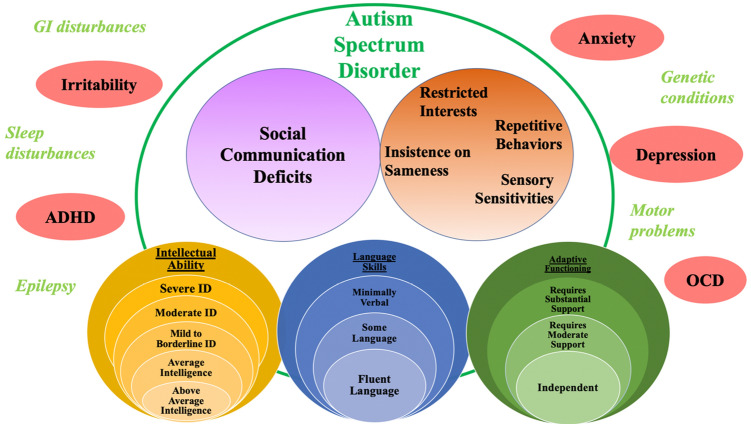
- The paper notes substantial co-occurring conditions in ASD: 63–78% have at least one psychiatric condition, and approximately 10–77% have at least one medical condition.
## Methods
- Narrative review of the historical and conceptual development of autism diagnosis from Kanner’s 1943 description through DSM-III, DSM-IV, DSM-5, and ICD-11.
- Synthesizes prior studies, field trials, factor-analytic work, and epidemiologic findings rather than reporting a new empirical sample.
- Compares categorical and dimensional diagnostic approaches using prior diagnostic instruments and published findings.
## Limitations
- The paper is a review, so it does not present new primary data or a single analytic sample; this is evident from the text.
- It relies heavily on prior studies, including some discussed by the authors as based on earlier DSM-IV datasets, which the paper notes are not fully comparable to finalized DSM-5 criteria; this is stated in the paper.
- The paper itself notes that many controversies remain unresolved, especially around sex/gender differences, culture, social class, race/ethnicity, and global underdiagnosis; this is stated in the paper.
Model-written summary. Check it against the paper before relying on it.
Integrity signals
Registry
Cites
Statistics
Figures
Verification
Claims the paper makes
55 Valid · 8 Not valid · 85 Not checked · 38 Own results and interpretations
At least one cited source doesn’t support this claim or points to a different paper, and none confirmed it — see the verdicts below.
In the paper
“The updated factor structure of symptomatology, compared to the previous three-domain model, resulted in increased sensitivity with minimal reduction in specificity (Frazier et al. 2012).”
§ The Diagnosis of Autism: From Kanner to DSM-III to DSM-5 and Beyond > Categorical Approaches to DSM-5 and ICD-11 > Three-Domain Versus Two-Domain Symptom Model
What the sources say
- Disputedcites Frazier et al. 2012 matched to “Validation of Proposed DSM-5 Criteria for Autism Spectrum Disorder” (2012) sourceExperimental — accuracy not yet measured
The Results (DSM-IV-TR vs. DSM-5, Aim 2) report the opposite comparison: proposed DSM-5 criteria had lower sensitivity and higher specificity than DSM-IV-TR criteria. The increase in sensitivity with minimal loss of specificity applied to relaxing the DSM-5 symptom requirement, not to replacing the previous three-domain model. (LLM, conf=0.92)
Checked by a reasoning model — may be wrong.
plainstates a cause- Asserted: passes — The authors put it forward as true.
- Checkable: passes — It can be checked against evidence.
- Load-bearing: passes — The paper’s conclusions depend on it.
- Based: passes — The paper gives a reason why it holds.
- Disputed
The cited sources that could be checked couldn’t confirm or dispute this claim.
In the paper
“Building on DSM-IV and decades of research, DSM-5 (APA 2013) marks an important shift in the conceptualization of autism from a multi-categorical diagnostic system to a single diagnosis based on multiple dimensions.”
§ The Diagnosis of Autism: From Kanner to DSM-III to DSM-5 and Beyond > Categorical Approaches to DSM-5 and ICD-11 > Value of Subcategories Versus Dimensions
What the sources say
- Could not verifycites APA 2013 matched to “Diagnostic and Statistical Manual of Mental Disorders” (2013) sourceExperimental — accuracy not yet measured
The passages labeled 11 September 2026 discuss depression, not autism classification. Searches for DSM-5’s autism diagnosis, earlier diagnostic categories, and multiple dimensions returned no relevant passage from the indexed copy, so it cannot verify the attributed shift. (LLM, conf=0.76)
plainstates a cause- Asserted: passes — The authors put it forward as true.
- Checkable: passes — It can be checked against evidence.
- Load-bearing: passes — The paper’s conclusions depend on it.
- Based: passes — The paper gives a reason why it holds.
- Could not verify
The cited sources that could be checked couldn’t confirm or dispute this claim.
In the paper
“Recognizing the myriad behavioral presentations among individuals with ASD of varying developmental levels, DSM-5 and ICD-11 introduced broad principles in place of specific examples to better define symptom subdomains.”
§ The Diagnosis of Autism: From Kanner to DSM-III to DSM-5 and Beyond > Categorical Approaches to DSM-5 and ICD-11 > Use of Principles Versus Examples
What the sources say
- Could not verifycites APA 2013 matched to “Diagnostic and Statistical Manual of Mental Disorders” (2013) sourceExperimental — accuracy not yet measured
The passages supplied under the cited title are WHO material about depression (11 September 2026), not DSM-5 autism criteria. Searches for ASD symptom subdomains, broad principles, specific examples, and ICD-11 returned no relevant passage, so our copy cannot verify the claim. (LLM, conf=0.76)
- Not matchedcites World Health Organization 2018
An author–year citation the paper’s reference list doesn’t settle. We don’t search these by name.
plainstates a cause- Asserted: passes — The authors put it forward as true.
- Checkable: passes — It can be checked against evidence.
- Load-bearing: unclear — It is unclear whether the paper’s conclusions depend on it.
- Based: passes — The paper gives a reason why it holds.
- Could not verify
The cited sources support only part of this claim — read each source’s verdict below.
In the paper
“Retrospective reports reveal that the length of time between recognition and diagnosis often distorts a caregiver’s recollection of the age of initial symptom onset (Hus et al. 2011), thus obscuring the accuracy of onset reporting in previous editions of DSM and ICD.”
§ The Diagnosis of Autism: From Kanner to DSM-III to DSM-5 and Beyond > Dimensional Approaches > Dimensional Approach to Core ASD Symptoms and DSM-5
What the sources say
- Partly supportedcites Hus et al. 2011 matched to “Telescoping of caregiver report on the Autism Diagnostic Interview – Revised” (2011) sourceExperimental — accuracy not yet measured
The Conclusions describe telescoping in caregivers’ retrospective reports of developmental milestones, and the Discussion says the time between an event and its reporting can affect recall. But the paper does not identify the interval between recognition and diagnosis as the cause; its Discussion instead says caregivers’ reported age of first concern was relatively stable. Changes in estimated symptom-onset age were reported for interviewers’ judgments, not caregivers’ recollection. (LLM, conf=0.86)
plainstates a cause- Asserted: passes — The authors put it forward as true.
- Checkable: passes — It can be checked against evidence.
- Load-bearing: passes — The paper’s conclusions depend on it.
- Based: passes — The paper gives a reason why it holds.
- Partly supported
The cited sources support only part of this claim — read each source’s verdict below.
In the paper
“Dimensional measures such as these can provide information about the phenotypic profiles in autism, both related to autism symptoms as well as non-autism related symptoms, that can contribute to improved treatment planning and better symptom tracking over time (Gotham et al. 2009; Kim et al. 2018).”
§ The Diagnosis of Autism: From Kanner to DSM-III to DSM-5 and Beyond > Dimensional Approaches > History of Dimensional Approaches
What the sources say
- Partly supportedcites Gotham et al. 2009 matched to “Standardizing ADOS Scores for a Measure of Severity in Autism Spectrum Disorders” (2009) sourceExperimental — accuracy not yet measured
The Abstract says an autism-specific severity measure could help describe phenotypes across samples and time, and the Conclusion proposes tracking changes in ASD severity and examining associations with characteristics such as behavior problems. The paper does not say the measure profiles non-autism symptoms themselves or improves treatment planning; its clinical uses are presented as possibilities requiring further validation. (LLM, conf=0.86)
- Partly supportedcites Kim et al. 2018 matched to “Variability in Autism Symptom Trajectories Using Repeated Observations From 14 to 36 Months of Age” (2018) sourceExperimental — accuracy not yet measured
The Discussion (page unavailable) says that tracking individual autism symptoms alongside developmental and communication skills can inform monitoring and assessment of treatment response. It also notes diagnostic and treatment implications. The paper does not establish the broader claim that dimensional profiles of non-autism-related symptoms improve treatment planning. (LLM, conf=0.83)
plainstates a possible cause- Asserted: passes — The authors put it forward as true.
- Checkable: passes — It can be checked against evidence.
- Load-bearing: unclear — It is unclear whether the paper’s conclusions depend on it.
- Based: passes — The paper gives a reason why it holds.
- Partly supported
85 more claims · 26 with their cited sources checked
Create a free account to see all 186 claims and to verify the 2 references still open.
- It may state two separate claims as one. 77
- Probably not a substantial claim. 34
- The quote only partly states this claim. 1
Claims other papers make about this one
Each is checked against this paper’s own text: does it say what the citing paper says it does?
The source backs part of the claim, not all of it — or backs it for a different population, condition or comparison.
In the citing paper
“Evidence as to whether the switch from the DSM-IV to the DSM-5 algorithm of ASD has impacted on its prevalence is conflicting (56, 57).”
From Prevalence of Autism Spectrum Disorder and Co-morbidities in Children and Adolescents: A Systematic Literature Review (2021) · cites this paper as [57]
Experimental — accuracy not yet measuredThe cited source says what the claim attributes to it.
In the citing paper
“Both authoritative guidebooks used by medical professionals for the diagnosis and treatment of diseases and disorders collapse autism into a single diagnosis of Autism Spectrum Disorder, embracing the same two major aspects: difficulties in initiating and sustaining social communication and social interaction, and restricted interests and repetitive behaviors (Rosen et al. 2021).”
From Autism Spectrum Disorder and auditory sensory alterations: a systematic review on the integrity of cognitive and neuronal functions related to auditory processing (2023) · cites this paper as Rosen et al. 2021
Citations
Cites
Diagnostic and Statistical Manual of Mental Disorders
American Psychiatric Association (2013) · doi:10.1176/appi.books.9780890425596 · Cited by 116,369
(1943) · The Nervous child · Cited by 8,870
Lord, C., Risi, S., Lambrecht, L., Cook, E. H., Leventhal, B. L., DiLavore, P. C., Pickles, A., & Rutter, M. (2000) · Journal of Autism and Developmental Disorders · doi:10.1023/a:1005592401947 · Cited by 7,520
Self-citationResearch Diagnostic Criteria: Rationale and Reliability
Spitzer, R. L. (1978) · Archives of General Psychiatry · doi:10.1001/archpsyc.1978.01770300115013 · Cited by 6,951
Baio, J., Wiggins, L., Christensen, D. L., Maenner, M. J., Daniels, J., Warren, Z., Kurzius-Spencer, M., Zahorodny, W., Robinson, C., Rosenberg, et al. (2018) · MMWR. Surveillance Summaries · doi:10.15585/mmwr.ss6706a1 · Cited by 6,078
Maenner, M. J., Shaw, K. A., Baio, J., EdS1, Washington, A., Patrick, M., DiRienzo, M., Christensen, D. L., Wiggins, L. D., Pettygrove, S., et al. (2020) · MMWR. Surveillance Summaries · doi:10.15585/mmwr.ss6904a1 · Cited by 3,780
Simonoff, E., Pickles, A., Charman, T., Chandler, S., Loucas, T., & Baird, G. (2008) · Journal of the American Academy of Child & Adolescent Psychiatry · doi:10.1097/chi.0b013e318179964f · Cited by 3,399
Autistic disturbances of affective contact.
Kanner, L. (1968) · PubMed · Cited by 3,143
Lord, C., Elsabbagh, M., Baird, G., & Veenstra-Vanderweele, J. (2018) · The Lancet · doi:10.1016/s0140-6736(18)31129-2 · Cited by 2,819
Self-citationWhat Is the Male-to-Female Ratio in Autism Spectrum Disorder? A Systematic Review and Meta-Analysis
Loomes, R., Hull, L., & Mandy, W. P. L. (2017) · Journal of the American Academy of Child & Adolescent Psychiatry · doi:10.1016/j.jaac.2017.03.013 · Cited by 2,804
Research works printed but not linked: 10
- American Psychiatric Association (APA) Diagnostic and Statistical Manual of Mental Disorders, 2nd edition (DSM-II) 1968 Washington, DC American Psychiatric Press
- American Psychiatric Association (APA) Diagnostic and Statistical Manual of Mental Disorders, 3rd edition (DSM-III) 1980 Washington, DC American Psychiatric Press
- American Psychiatric Association (APA) Diagnostic and Statistical Manual of Mental Disorders, 3rd edition revised (DSM-III-R) 1987 Washington, DC American Psychiatric Publishing
- American Psychiatric Association (APA) Diagnostic and Statistical Manual of Mental Disorders, 4th edition (DSM-IV) 1994 Washington, DC American Psychiatric Publishing
- Donvan J Zucker C In a different key: The story of autism 2016 New York Broadway Books
- Heller T Dementia infantilis Zeitschrift fur die Erforschung und Behandlung des Jugenlichen Schwachsinns 1908 2 141 165
- Rutter M Garmezy N Hetherington EM Developmental psychopathology Mussen’s handbook of child psychology 1983 New York Wiley 755 911
- Volkmar FR Klin A McPartland JC McPartland JC Klin A Volkmar FR Asperger syndrome: An overview Asperger syndrome: Assessing and treating high-functioning autism spectrum disorders 2014 2 New York Guilford Press 1 42
- World Health Organization The International Classification of Diseases, 10th edition (ICD-10) 1992 Geneva, Switzerland American College of Physicians
- World Health Organization The International Classification of Diseases, 10th edition (ICD-10) classification of mental and behavioural disorders: Clinical descriptions and diagnostic guidelines 1992 Geneva, Switzerland American College of Physicians
Cited by
Items 101–200 of 292
Firestein, M. R., Myers, M. M., Feder, K. J., Ludwig, R. J., & Welch, M. G. (2022) · Children · doi:10.3390/children9020284 · Cited by 10
“Autism spectrum disorder (ASD) is a pervasive neurodevelopmental disorder characterized by impairments in social interaction and communication, as well as restricted or repetitive behaviors and interests [11].”
BackgroundEpidemiologia do transtorno do espectro do autismo: rastreamento e prevalência na população
Ribeiro, T. C. (2022) · Digital Library of Theses and Dissertations (Universidade de São Paulo) · doi:10.11606/t.5.2022.tde-22092022-170809 · Cited by 51
Stratifying the autisms by a type I versus type II distinction in early development
Lombardo, M. V., Severino, I., & Mandelli, V. (2026) · Nature Mental Health · doi:10.1038/s44220-026-00603-x · Cited by 9
Ojeda, Á. H., Barahona-Fuentes, G. D. F., Órdenes, F. V., Tapia, M. M., Yeomans‐Cabrera, M., & Martínez-Líbano, J. (2023) · Review Journal of Autism and Developmental Disorders · doi:10.1007/s40489-023-00410-5 · Cited by 13
Self-diagnosis of psychiatric conditions as a threat to personal autonomy
Isufi, I. (2024) · Philosophical Psychology · doi:10.1080/09515089.2024.2411242 · Cited by 7
“ICD and DSM both characterize autism under the unitary classification of “Autism Spectrum Disorder” and agree in their general diagnostics (Rosen et al., 2021).”
Sankari, M. S., & Kannammal, A. (2025) · Elsevier eBooks · doi:10.1016/b978-0-443-30080-6.00018-3 · Cited by 4
Online resources and educational materials relating to autism spectrum disorder
Slavych, B. K., Oliver, C., McIntyre, N. S., & Zraick, R. I. (2025) · Health Education Journal · doi:10.1177/00178969251328913 · Cited by 7
“Individuals with autism vary greatly in cognitive, language and adaptive skills and many medical, developmental and mental health conditions co-occur with ASD leading to heterogeneity in presentation and support needs (Rosen et al., 2021).”
Barn med autism, tidig intervention, och kvalitet i inkluderande förskolemiljö
Bejnö, H. (2025) · doi:10.16993/bct.h · Cited by 6
Curran, C., Roberts, R., Gannoni, A. F., & Jeyaseelan, D. (2024) · Journal of Autism and Developmental Disorders · doi:10.1007/s10803-023-06202-4 · Cited by 7
“As such, there is a need to assess co-occurring intellectual disability to characterise the presentation of ASD (Rosen et al., 2021).”
Parents’ Experiences after Their Child’s Autism Diagnosis: A Reflexive Thematic Analysis
Hughes, R., Curley, K., & Kotera, Y. (2024) · Psychiatry International · doi:10.3390/psychiatryint5030026 · Cited by 13
“A contemporary of Kanner, Hans Asperger also described autistic traits [68,69], although Asperger suggested they resembled a personality disorder, while Kanner considered autism a developmental condition [70].”
BackgroundPathways to autism diagnosis in adulthood
Dufour, I., Chiu, Y. M., Brodeur, S., Courteau, M., Courteau, J., Dubé, E., LESAGE, A. D., Fombonne, E. J., & Couture, M. M. (2025) · Journal of Neurodevelopmental Disorders · doi:10.1186/s11689-025-09627-3 · Cited by 6
“At that time, infantile autism was considered rare, with a prevalence estimated between 3 to 7 in 10,000 children [1–3].”
Li, Y., Xie, T., Li, L., Jing, L., Vos, M., Chang, Z., Snieder, H., & Hartman, C. A. (2025) · Nature Mental Health · doi:10.1038/s44220-025-00546-9 · Cited by 5
“This history of recognition has probably led to under-or misdiagnosis of autism in current older generations and a potential overdiagnosis in the current younger generation 25 .”
Xiong, N., & Yu, Z. (2026) · Neuropsychiatric Disease and Treatment · doi:10.2147/ndt.s585060 · Cited by 6
“22,23 In 1944, milder form of autism was described which is now known as Asperger’s syndrome.”
The proportion of intellectual disability in autism spectrum disorder over two decades
Salkić, A., Tideman, M., Martini, M. I., Larsson, H., Lichtenstein, P., Chang, Z., D'Onofrio, B. M., Brikell, I., Kuja‐Halkola, R., Knez, R., et al. (2026) · Psychiatry Research · doi:10.1016/j.psychres.2026.117246 · Cited by 4
“…symptomatology as more notable developmental differences are usually detected earlier (Gillberg, 2010; Carlsson et al., 2013; Vivanti et al., 2013; Rosen et al., 2021; Denisova et al., 2022), possibly due to the impact of cognitive function on communicative abilities (Saban-Bezalel et al., 2022;…”
Self-reported autistic traits and psychosocial outcomes among university students in Malaysia
Low, H. M., Zainal, M. S., Pang, J. C., Ang, Y., & de Vries, M. (2023) · Autism · doi:10.1177/13623613231167501 · Cited by 10
“…that many adults with ASC do not have a diagnosis could be due to the fact that ASC was diagnosed infrequently until it was captured under the category of Pervasive Developmental Disorder in the Diagnostic and Statistical Manual of Mental Disorders (3rd ed., DSM-III) in 1980 (Rosen et al., 2021).”
BackgroundTranstorno do espectro autista: Uma abordagem da medicina da família e comunidade
Paro, L. B., Barreto, L. B., Alves, N. F. D. C., & Moreira, S. L. D. A. (2024) · Research Society and Development · doi:10.33448/rsd-v13i3.45188 · Cited by 3
Casper-White, R., Shloim, N., & Hebron, J. (2025) · Counselling and Psychotherapy Research · doi:10.1002/capr.12903 · Cited by 2
Dow, M. J., & Wang, T. (2025) · International Journal of Environmental Research and Public Health · doi:10.3390/ijerph22060816 · Cited by 3
“Even before the 2013 publication, there were controversies, concerns, and researchers’ questions about the appropriateness of the DSM-5 criteria for toddlers at risk of developmental disorders [36].”
Varia, J. C., Herbert, M. R., & Hooker, B. S. (2025) · Molecular Neurobiology · doi:10.1007/s12035-025-05589-8 · Cited by 10
“Kanner and Asperger laid the foundation to make the distinction between autism and childhood schizophrenia [552], later clarified in the 1980 s with the 3rd edition of The Diagnostic and Statistical Manual of Mental Disorders (DSM-III) [20, 455].”
Rosen, N. E., Schiltz, H. K., & Lord, C. (2022) · Autism Research · doi:10.1002/aur.2854 · Cited by 8
“Considering the heterogeneity of ASD (Masi et al., 2017; Rosen et al., 2021), the educational placement of school-aged students with ASD can vary widely across mainstream, contained special education classrooms, and specialized schools, along with the potential for placements to change from grade…”
BackgroundSelf-citationLas TIC y la competencia sociocomunicativa del alumnado con TEA: una revisión sistemática
Carbonell, A. M., Rico, G. M., González-García, R. J., & Pérez, M. C. (2023) · EDMETIC · doi:10.21071/edmetic.v12i1.14578 · Cited by 3
Whither Asperger’s Post DSM-5? An Opinion Piece
Volkmar, F. R., & Woodbury‐Smith, M. (2024) · Review Journal of Autism and Developmental Disorders · doi:10.1007/s40489-023-00425-y · Cited by 6
Self-citationJin, L., Cui, H., Zhang, P., & Cai, C. (2024) · European Journal of Pediatrics · doi:10.1007/s00431-024-05837-4 · Cited by 10
“Epidemiological studies have shown that ASD is diagnosed in about 1% of children worldwide [1] and in 2.3% of children in the USA [2].”
InfluentialMcAllister, M. L., Mcfayden, T. C., & Harrop, C. (2025) · Autism Research · doi:10.1002/aur.3298 · Cited by 2
“However, echolalia itself has been a core feature of autism since Kanner's first descriptions and has been included in diagnostic criteria since 1980 (Rosen, Lord, and Volkmar 2021).”
Petty, S., & Cantwell, A. (2025) · Diversity & Inclusion Research · doi:10.1002/dvr2.70018 · Cited by 5
“Therefore, as understanding of autistic characteristics changes over time, assessment tools that provide examples of repetitive behaviours need to be revised in order to be inclusive (Rosen et al. 2021).”
Autism Spectrum Disorder in Adolescents and Adults: An Introduction
Volkmar, F. R., Reichow, B., & McPartland, J. C. (2024) · Springer eBooks · doi:10.1007/978-3-031-46463-8_1 · Cited by 5
Self-citationNeurodiversity Framework: Model, Tenets, and Critiques
Vanderburg, J. L., Pagán, A. F., & Pearson, D. A. (2024) · Springer eBooks · doi:10.1007/978-3-031-40858-8_65-1 · Cited by 5
Assessing Autism Co-Occurrence in Fragile X Syndrome: Proposing a Preliminary CARS-2 Cut-Off Score
Chavers, T. N., Elmquist, M., Schabes, C., Mohammed, L., Banasik, A., & Sterling, A. M. (2025) · Journal of Autism and Developmental Disorders · doi:10.1007/s10803-025-06888-8 · Cited by 2
“Recently, the definition of autism has evolved to include a dimensional approach to capture the core autistic traits while allowing for heterogeneity in the quality and quantity of autism symptoms (APA, 2013; Rosen et al., 2021).”
Intervention adherence and its predictors among parents of children with autism spectrum disorder
Cai, M., Dai, Y., Duan, M., Chen, M., Ji, Y., Zhou, L., Chen, L., & Zhang, L. (2025) · Journal of Pediatric Nursing · doi:10.1016/j.pedn.2025.09.015 · Cited by 4
Spanish Validation of the Autism Spectrum Quotient for Children (AQ-Child-SV)
Fernández-Álvarez, C. J., Yon-Hernández, J. A., Wojcik, D. Z., García, A. H., Bejarano‐Martín, Á., Villoria, E. D., de la Paz, M. P., & Canal‐Bedia, R. (2025) · Journal of Autism and Developmental Disorders · doi:10.1007/s10803-025-07068-4 · Cited by 4
“…symptoms from a dimensional perspective is important for improving detection and diagnostic procedures as it considers the continuous distribution of autistic traits and its fluctuating behavioral symptoms as interrelated constructs that vary in intensity and expression (Rosen et al., 2021 ).”
Purnawansyah, P., Ramadhan, A. M., Darwis, H., Lahuddin, H., Azis, H., & Tenripada, A. U. (2025) · doi:10.1109/iceeie66203.2025.11251965 · Cited by 2
“Persistent challenges with social communication and interaction are a hallmark of autism spectrum disorder (ASD) [2], a neurodevelopmental disorder that lasts a lifetime and is essential to the DSM-5's diagnostic criteria [3], [7].”
Vidal, O., Merino, D., Fernandez, A., Mercery, M., Herbreteau, L., Askenazy-Gittard, F., Zuluaga, M. A., Ismailova, E., Douet, V., & Thümmler, S. (2025) · Neuroscience & Biobehavioral Reviews · doi:10.1016/j.neubiorev.2025.106496 · Cited by 5
Huang, T., Lin, M.-H., Hsu, T., Yu, C.-H. A., & Hsueh, Y. (2025) · PLoS Biology · doi:10.1371/journal.pbio.3003231 · Cited by 3
“nutrient supplement in correcting the social behaviors seen in the Tbr1+/- ASD mouse model.”
Huang, Y.-F., Liu, C., Liu, Z., Zhuang, X., Chen, J.-H., Zhang, Z.-N., Shen, C., & Hu, Y. (2026) · Brain · doi:10.1093/brain/awag058 · Cited by 3
Mohamed, Z. A., Thokerunga, E., Tang, C., Jimale, A. O., & Fan, J. (2022) · Open Journal of Psychiatry · doi:10.4236/ojpsych.2022.123020 · Cited by 2
Autism Spectrum Disorders-A Review on The Preventive Aspects
Barik, S., Patnaik, L., & Pattanaik, S. (2023) · National Journal of Community Medicine · doi:10.55489/njcm.140620232975 · Cited by 5
“9 It was first described by Leo Kanner in 1943 10,11 and thought to be a rare disorder.”
BackgroundHistory and Overview of Applied Behavior Analysis
Cividini‐Motta, C., Livingston, C. P., Flores, A. M., & McMillan, N. M. (2023) · Autism and child psychopathology series · doi:10.1007/978-3-031-27587-6_1 · Cited by 3
Alfieri, P., Montanaro, F. A. M., Caciolo, C., Cumbo, F., Scibelli, F., & Vicari, S. (2023) · Autism and child psychopathology series · doi:10.1007/978-3-031-24926-6_17 · Cited by 5
Social Psychiatry: Neurodevelopmental Disorders
Gogineni, R. R., Joshi, P. R., & Rostain, A. L. (2023) · Oxford University Press eBooks · doi:10.1093/med/9780197521359.003.0023 · Cited by 3
Práticas psicológicas, autismo e decolonização: a emergência de um diálogo
Lemos, E. L. D. M. D., Nunes, L. D. L., & de Vasconcelos, D. C. (2023) · Interritórios · doi:10.51359/2525-7668.2023.258801 · Cited by 2
Marinello, W. P., Gillera, S. E. A., Huang, L., Rollman, J., Reif, D. M., & Patisaul, H. B. (2023) · NeuroToxicology · doi:10.1016/j.neuro.2023.10.012 · Cited by 2
Molecular diagnostic yield of whole-exome sequencing in Saudi autistic children with epilepsy.
Alharbi, A. A., Al-Zahrani, M. H., Ebbi, M. M., Alqurashi, M. M., Baqays, A. A., Shami, A. A., Alghamdi, R. A., & Alzahrani, A. H. (2024) · PubMed Central · Cited by 4
Leo Kanner: The Physician and Pioneer of Autism
Hamidi, A., Persaud, N. A., Ganti, L., et al. (2024) · Cureus · doi:10.7759/cureus.73859 · Cited by 2
Mental health care use of autistic adults: Identifying longitudinal patterns using sequence analysis
Selten, I. S., Ziermans, T. B., Rapoport, I. L., Jonkman, K. M., & Geurts, H. M. (2024) · Autism · doi:10.1177/13623613241304513 · Cited by 4
“While progress has been made (Leedham et al., 2020; Rosen et al., 2021; White et al., 2018), we reiterate the call for prioritizing this on the research agenda (Benevides et al., 2020).”
Li, Y., Zhou, Y., Vos, M., Bos, M., Steen, O. D., Wray, N. R., Hartman, C. A., & Snieder, H. (2025) · Nature Mental Health · doi:10.1038/s44220-025-00535-y · Cited by 2
“…in the range of 0. https://doi.org/10.1038/s44220-025-00535-y were historically under-or misdiagnosed in older generations owing to different diagnostic criteria and limited public awareness 30 , leading to greater discordance in relatives across generations than those within the same generation.”
InfluentialCarbonell, A. M., Pérez, M. C., & Rico, G. M. (2023) · Revista Inclusiones · doi:10.58210/fprc3504 · Cited by 5
Silva, J. C. B., & Batista, D. C. D. A. (2023) · Revista Multidisciplinar do Nordeste Mineiro · doi:10.61164/rmnm.v13i1.1989 · Cited by 2
Sensory integration disorders in children with autism spectrum disorder—A review study
Krupa-Kotara, K. H., Kosiorz, M., Barylska, K., & Grajek, M. K. (2023) · Applied Psychology Research · doi:10.59400/apr.v2i1.548 · Cited by 6
Dunn, V. S., Petty, S., & Fawcett, A. L. (2024) · Brain and Behavior · doi:10.1002/brb3.3501 · Cited by 1
Psychological Theories of Autism: Everything, All at Once, In One PlacePreprint
Ewen, J. B. (2023) · PsyArXiv (OSF Preprints) · doi:10.31234/osf.io/kguq2 · Cited by 3
Dow, M. J., & Wang, T. (2024) · Preprints.org · doi:10.20944/preprints202406.1055.v1 · Cited by 1
Prematurity and Genetic Liability for Autism Spectrum DisorderPreprint
Zhang, Y., Yahia, A., Sandin, S., Ådén, U., & Tammimies, K. (2024) · medRxiv · doi:10.1101/2024.11.20.24317613 · Cited by 3
Binder, M. D., Sterckx, S., & Assche, K. V. (2023) · The International Library of Bioethics · doi:10.1007/978-3-031-25315-7_11 · Cited by 2
Autism Spectrum Disorder (ASD)
Rutten, M. R., Zhong, J., Rolison, M. J., & Sukhodolsky, D. G. (2024) · Elsevier eBooks · doi:10.1016/b978-0-323-95702-1.00076-2 · Cited by 3
Aurebekk, I. K. J. (2024) · Tidsskrift for Den norske legeforening · doi:10.4045/tidsskr.23.0738 · Cited by 3
Hyper Morphological Graph for Brain Structural Connection Analysis
Xiong, T., & Zhang, X. (2024) · IEEE International Symposium on Biomedical Imaging (ISBI) · doi:10.1109/isbi56570.2024.10635206 · Cited by 2
“Numerous studies emphasize the substantial individual variability in structural connectivity within human brains [19], even among subgroups with the same neurological disorder [21] – [23].”
BackgroundCarbonell, A. M., & Palacios, I. F. (2024) · EDMETIC · doi:10.21071/edmetic.v14i1.17510 · Cited by 1
Im, G. J., Thak, P. K., Park, J. H., Park, B., Chang, J., Park, E., Chae, S. W., & Jung, H. H. (2025) · Korean Journal of Otorhinolaryngology - Head and Neck Surgery · doi:10.3342/kjorl-hns.2024.00423 · Cited by 1
Orphan G Protein‐Coupled Receptors: A Novel Research Frontier in Autism and Associated Disorders
Gholamalizadeh, H., Rahimi, V. B., & Askari, V. R. (2025) · Archiv der Pharmazie · doi:10.1002/ardp.70018 · Cited by 2
Couture, M. M., Courteau, J., Brodeur, S., Chiu, Y. M., Courteau, M., Dubé, E., Thomas, N., LESAGE, A. D., Fombonne, E. J., & Dufour, I. (2025) · Autism Research · doi:10.1002/aur.70072 · Cited by 2
Mitigating Sex-Related Biases to Elucidate the Autism Phenotype
Burrows, C. A., Elison, J. T., & Piven, J. (2025) · Biological Psychiatry · doi:10.1016/j.biopsych.2025.06.035 · Cited by 4
Beckwith, R., & Stephens-Lewis, D. (2025) · Research in Developmental Disabilities · doi:10.1016/j.ridd.2025.105084 · Cited by 1
Expanding Descriptions of Autistic Rituals and Routines: A Co‐Produced Update
Petty, S., Cantwell, A., Clayton, L., Matthews, L., & Angell‐McGregor, S. (2025) · Diversity & Inclusion Research · doi:10.1002/dvr2.70039 · Cited by 1
“…tools that identify examples of repetitive behaviours and assess their functional impact because different types of repetitive behaviours are often grouped together and people use these different behaviours in highly variable personal circumstances (Collis et al. 2022, 2024; Rosen et al. 2021).”
Singal, D., Enns, J. E., Friesen, K. J., Bopp, K. D., Cameranesi, M., Hanlon‐Dearman, A., Lai, J., Nickel, N. C., Shooshtari, S., Zwaigenbaum, L., et al. (2025) · Canadian Journal of Public Health · doi:10.17269/s41997-025-01113-6 · Cited by 3
“The latest versions of the Diagnostic and Statistical Manual of Mental Disorders (DSM-5 and DSM-5-TR) consolidate previously separate categories (e.g., autistic disorder, Asperger’s syndrome) into a single spectrum disorder (autism spectrum disorder) (Rosen et al., 2021).”
Bibliometric Analysis of Publications on Autism Spectrum Disorder in Türkiye
Aşut, G., Aslan, N. Y., Kurt, H. G., & Kahve, A. C. (2025) · Psikiyatride Guncel Yaklasimlar - Current Approaches in Psychiatry · doi:10.18863/pgy.1760622 · Cited by 1
Cheng, Y., Shi, J., Wei, Y., Luo, J., Shi, Y., & Jiang, Z. (2025) · Asian Journal of Psychiatry · doi:10.1016/j.ajp.2025.104790 · Cited by 1
Autism genetics: perspectives, discourse, and community engagement
Life, B. E., Thomas, T., Asher, R., Bruwer, Z., Buckle, K. L., Chepkirui, D., Donald, K. A., Dwyer, P. S. R., Halladay, A. K., Harker, S. A., et al. (2025) · Trends in Genetics · doi:10.1016/j.tig.2025.11.002 · Cited by 2
Dillenburger, K. (2025) · Autism and child psychopathology series · doi:10.1007/978-3-032-01237-1_9 · Cited by 1
Social Evaluation of Neurotype-Dependent Media Contents in Autistic and Non-Autistic Adults
Alexandrovsky, M., Ai, W., Yu, J., Cunningham, W. A., & Lai, M. (2026) · Autism in Adulthood · doi:10.1177/25739581261416455 · Cited by 1
Nikahd, M., Hyer, M., Wolf, B. O., Patterson, B. W., Bishop, L., & Hand, B. N. (2026) · Age and Ageing · doi:10.1093/ageing/afag015 · Cited by 3
Marzouk, M. A., & Ibrahim, S. S. (2026) · International Journal of Human-Computer Interaction · doi:10.1080/10447318.2026.2633206 · Cited by 1
Expanding Understanding of Autism Spectrum Disorder in Girls and Women: A New Paradigm
Bitensky, D., Clauss‐Ehlers, C. S., & Veksler, K. M. (2026) · Behavioral Sciences · doi:10.3390/bs16030396 · Cited by 1
“However, reports were also made in the 1700s and 1800s (Rosen et al., 2021).”
Kuang, C., Chen, F., Nie, Y., Gou, Z., Yan, J., & Liu, G. (2026) · Journal of Speech Language and Hearing Research · doi:10.1044/2026_jslhr-25-00625 · Cited by 1
Decreased Sound Tolerance in Autism: A Clinical-Phenomenological Study
Nicolás Vega, C., & Vega, C. (2026) · Psychopathology · doi:10.1159/000552498 · Cited by 1
“This shift is reflected in their inclusion in the DSM-5 diagnostic criteria [9].”
Celebrating 40 years since DSM-III
Volkmar, F. R. (2021) · Journal of Autism and Developmental Disorders · doi:10.1007/s10803-021-05262-8 · Cited by 1
Self-citationAutyzm – dylematy diagnostyczne. Między biologią a objawami
Sumiła, A., Szostakiewicz, Ł., Bogotko, M., & Pawłowicz, M. (2022) · Psychologia Rozwojowa · doi:10.4467/20843879pr.22.009.17466 · Cited by 2
(2023) · International Journal of Psychiatry · doi:10.33140/ijp.08.04.01 · Cited by 1
“In a situation where the parents have to navigate the various services offered on their own, such a formulation could act as a helpful guide through the maze of contradictory and confusing options available [23-32].”
BackgroundSandoval-Talamantes, A. K., Tenorio, J. A., Santos‐Simarro, F., Adán, C., Fernández‐Elvira, M., García-Fernández, L., Muñoz, Y., Lapunzina, P. D., & Nevado, J. (2023) · Genes · doi:10.3390/genes14112091 · Cited by 3
de Carvalho, F. B., Saldanha, J. B., Silva, M. M. T., Silva, G. L., Lopes, J. B. P., Cordeiro, L. B., & Oliveira, C. S. (2023) · Cuadernos de Educación y Desarrollo · doi:10.55905/cuadv15n12-086 · Cited by 2
Introduction to Autism for Assistive Technologists
Boyd, L. E. (2024) · Synthesis lectures on technology and health · doi:10.1007/978-3-031-48843-6_1 · Cited by 1
Neuroprotection induced by sulphoraphane in central nervous system disorders
Sharma, P., Luhach, K., Dhiman, N., Awasthi, R., Kharkwal, H., Kulkarni, G. T., & Sharma, B. (2024) · Elsevier eBooks · doi:10.1016/b978-0-443-23763-8.00053-1 · Cited by 1
Soumier, A., Lio, G., & Demily, C. (2024) · Molecular Psychiatry · doi:10.1038/s41380-024-02487-8 · Cited by 1
“Autism spectrum disorders are identi fi ed by core symptoms in the social communication domain and by restricted interests and repetitive behaviors [200].”
Abed, W. J., & Nasir, N. A. (2025) · International Journal of Research in Medical Sciences · doi:10.18203/2320-6012.ijrms20252773 · Cited by 1
Odor Experience Stabilizes Glomerular Output Representations in Two Mouse Models of Autism
Sturm, K. L., Semak, D., Scheier, Z. A., Ramos, R. L., & Otazu, G. H. (2025) · eNeuro · doi:10.1523/eneuro.0271-25.2025 · Cited by 2
“This characteristic is described as an “ insistence on sameness ” in the DSM-V (Rosen et al., 2021).”
The Effect of Structured Teaching Methods on Restricted Repetitive Behaviors of Autistic Children
Ruan, R. (2025) · International Journal of Healthcare Information Systems and Informatics · doi:10.4018/ijhisi.385602 · Cited by 3
Holmes, S. C. (2023) · Global Journal of Intellectual & Developmental Disabilities · doi:10.19080/gjidd.2023.12.555829 · Cited by 1
Shared Alteration of Whole-Brain Connectivity and Olfactory Deficits in Multiple Autism Mouse ModelsPreprint
Hsu, T., Chen, C.-P., Lin, M.-H., Huang, T., Wang, C.-Y., Lee, C.-M., Chen, B., Wang, C.-Y., & Hsueh, Y. (2025) · bioRxiv (Cold Spring Harbor Laboratory) · doi:10.1101/2025.02.02.636175 · Cited by 1
Maes, P., & Tager-Flusberg, H. B. (2025) · Elsevier eBooks · doi:10.1016/b978-0-323-95504-1.00531-7 · Cited by 1
An Introduction to Autism and the Autism Spectrum
Volkmar, F. R., Jackson, S. L. J., & Pete, B. M. (2021) · Springer eBooks · doi:10.1007/978-3-030-70913-6_1 · Cited by 2
Self-citationHigh spatial frequency information in primes hastens happy faces categorization in autistic adults.Preprint
Lacroix, A., Nalborczyk, L., Dutheil, F., Kovarski, K., Sylvie Chokron, A., Garrido, M. I., Gomot, M., & Mermillod, M. (2021) · PsyArXiv (OSF Preprints) · doi:10.31234/osf.io/vqy2u
Singh, S., & Dalton, A. E. (2021) · Journal of Student Research · doi:10.47611/jsrhs.v10i2.1771
Muellerleile, J. (2022) · Publication Server of Goethe University Frankfurt am Main (Goethe University Frankfurt) · doi:10.21248/gups.68693
Argyriadis, A., Efstratopoulou, M., & Argyriadi, A. (2022) · Advances in early childhood and K-12 education · doi:10.4018/978-1-6684-4680-5.ch016
LANGUAGE FEATURES OF TURKISH SPEAKING CHILDREN WITH AUTISM
Servi, C. (2022) · International Journal of Eurasian Education and Culture · doi:10.35826/ijoecc.628
Rebecchi, K. (2023) · PsyArXiv (OSF Preprints) · doi:10.31234/osf.io/erdba
Ma, D., Huang, J., & Xiong, T. (2023) · Medicine · doi:10.1097/md.0000000000033247 · Cited by 1
“[14] ASD is characterized by impairments in 3 behavioral domains, including social interaction, communication and stereotyped repetitive behaviors.[15] In the 2010 Global Burden of Disease study, an estimated 52 million people had ASD globally, equating to a prevalence of 1 in 132 individuals.”
Diagnosis of Co-occurring Autism and Attention Deficit Hyperactivity Disorder
Sainsbury, W. J. (2023) · Open Access Victoria University of Wellington | Te Herenga Waka (Figshare) · doi:10.26686/wgtn.22584664
Ruffing, S., Ullrich, C., Flotats‐Bastardas, M., Poryo, M., & Meyer, S. (2023) · Wiener Medizinische Wochenschrift · doi:10.1007/s10354-023-01012-w · Cited by 2
Cohen, I. L., Schutte, C., & Hewitson, L. C. (2023) · Research in Autism · doi:10.1016/j.rasd.2023.102206 · Cited by 1
Peng, C., Chen, J., Li, S., Huang, B., Cui, W., Li, J., & Peng, L. (2023) · Pharmacological Research - Modern Chinese Medicine · doi:10.1016/j.prmcm.2023.100296
Metadata
- Authors
- Rosen, N. E., Lord, C., & Volkmar, F. R.
- Affiliations
- University of California, Los Angeles (US)
- Yale University (US)
- Corresponding author
- Rosen, Nicole E.
- Venue
- Journal of Autism and Developmental Disorders
- Published
- 2021-02-24
- Volume
- 51
- Issue
- 12
- Pages
- 4253-4270
- ISSN
- 0162-3257 (ISSN-L)
- 1573-3432
- PMC
- PMC8531066
- OpenAlex
- W3130188805
- Cited by
- 302
- References
- 219
- Citations by year
- 2026: 54 · 2025: 85 · 2024: 62 · 2023: 56 · 2022: 36 · 2021: 9
- FWCI
- 6.01
- Type
- journal article
- Language
- en
- Open access
- hybrid
- doi.org
- Licence
- cc-by
- creativecommons.org/licenses/by/4.0 (tdm)
- creativecommons.org/licenses/by/4.0 (vor)
- Locations
- Journal of Autism and Developmental Disorders (publishedVersion, cc-by)
- Europe PMC (PubMed Central) (publishedVersion, other-oa)
- PubMed Central (publishedVersion, cc-by)
- PubMed (publishedVersion)
- Funders
- Simons Foundation
- National Institute of Child Health and Human Development (R01HD081199)
- Topics
- Life Sciences › Neuroscience › Cognitive Neuroscience › Autism Spectrum Disorder Research
- Social Sciences › Arts and Humanities › Philosophy › Mental Health and Psychiatry
- Social Sciences › Psychology › General Psychology › Academic and Historical Perspectives in Psychology
- Keywords
- autism diagnosis, DSM-III, DSM-5, diagnostic classification, autism spectrum disorder, history of autism, diagnostic criteria revision
- MeSH terms
- Autism Spectrum Disorder, Autistic Disorder, Humans, Recognition, Psychology, Diagnostic and Statistical Manual of Mental Disorders
About these checks
Registry, retraction, Cites and statistics results are computed, not judged, with one exception: a printed reference that no index lists is read once by a model before it counts as a citation error. Claims are extracted by a model and kept only when their quote appears verbatim in the text; each cited source is then checked, with a model’s help, for whether it says what the claim relies on. Those verdicts can be wrong — read the claim’s quote and the cited source before relying on one.
The claim verdicts this report counts are experimental: their accuracy is not yet measured.
A language model drew the claims from the paper on 2026-09-29, under version 3 of the claim definition (model deepseek-v4.1-flash, prompt extract-v3).
A second model labelled each claim on 2026-09-29 (model jev-1.13-20260917, definition revision gold-guideline-v0.2).
Cited sources are checked with a language model’s help (gpt-6-sol).
Statistics and arithmetic are recomputed, not judged.
Confidence bands are shown only for fields calibrated on our annotated test set. None is calibrated yet, so no band is shown.
What counts as a claim ›How we measure confidence ›How we check this ›
Are you an author, or do you see a problem with this page? Request a review
Data sources
Bibliographic data: Semantic Scholar, OpenAlex, Crossref.
Contains information from the Semantic Scholar Academic Graph Datasets, made available under the ODC Attribution License (ODC-BY 1.0).
Semantic Scholar’s data is described in: Kinney, R., et al. (2023). The Semantic Scholar Open Data Platform. arXiv:2301.10140.
