

The Diagnosis of Autism: From Kanner to DSM-III to DSM-5 and Beyond
Open accessThe DOI matches its Crossref record; 215 of the 219 references it cites were found in a registry or an index, and 2 are not checked yet; 74 of the 223 sources its claims cite were checked for support.
Abstract
In this paper we review the impact of DSM-III and its successors on the field of autism-both in terms of clinical work and research. We summarize the events leading up to the inclusion of autism as a "new" official diagnostic category in DSM-III, the subsequent revisions of the DSM, and the impact of the official recognition of autism on research. We discuss the uses of categorical vs. dimensional approaches and the continuing tensions around broad vs. narrow views of autism. We also note some areas of current controversy and directions for the future.
Verified 2026-11-22 · 2 references not checked yet
Overview
CoChat Summary
## TL;DR
This review traces how autism became an official diagnostic category in DSM-III and how later DSM/ICD revisions shifted it from narrower, category-based definitions toward broader, more dimensional conceptions. It argues that these changes improved clinical utility and research, while ongoing controversies remain around boundaries, sex/gender, culture, race/ethnicity, social class, and global access.
## Key findings
- Autism was first included as an official diagnostic category in DSM-III (APA 1980), after research in the 1970s supported its validity as distinct from childhood schizophrenia and after earlier estimates suggested it was rare, at about 3 in 10,000 children in one early study and 7 in 10,000 in 1999.
- The move from DSM-III-R to DSM-5/ICD-11 shifted autism from a three-domain model to a two-domain model, and the paper states this updated factor structure produced increased sensitivity with minimal reduction in specificity.
- When DSM-5 replaced multiple DSM-IV subcategories with a single ASD diagnosis, the paper reports over 90% of children with PDDs met DSM-5 ASD criteria, with the remainder likely captured by social communication disorder.
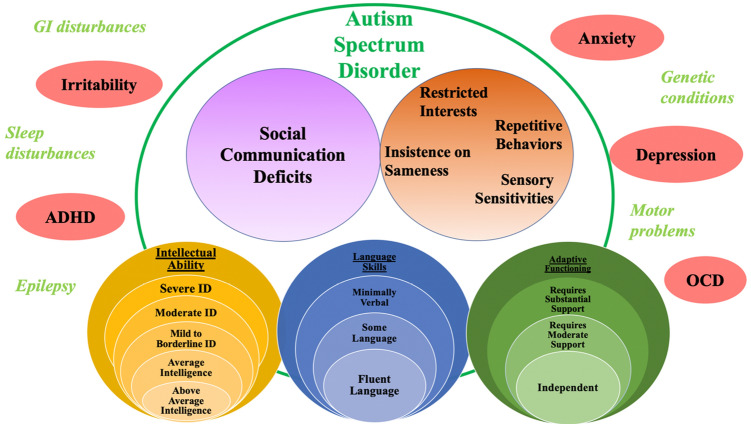
- The paper notes substantial co-occurring conditions in ASD: 63–78% have at least one psychiatric condition, and approximately 10–77% have at least one medical condition.
## Methods
- Narrative review of the historical and conceptual development of autism diagnosis from Kanner’s 1943 description through DSM-III, DSM-IV, DSM-5, and ICD-11.
- Synthesizes prior studies, field trials, factor-analytic work, and epidemiologic findings rather than reporting a new empirical sample.
- Compares categorical and dimensional diagnostic approaches using prior diagnostic instruments and published findings.
## Limitations
- The paper is a review, so it does not present new primary data or a single analytic sample; this is evident from the text.
- It relies heavily on prior studies, including some discussed by the authors as based on earlier DSM-IV datasets, which the paper notes are not fully comparable to finalized DSM-5 criteria; this is stated in the paper.
- The paper itself notes that many controversies remain unresolved, especially around sex/gender differences, culture, social class, race/ethnicity, and global underdiagnosis; this is stated in the paper.
Model-written summary. Check it against the paper before relying on it.
Integrity signals
Registry
Cites
Statistics
Figures
Verification
Claims the paper makes
55 Valid · 8 Not valid · 85 Not checked · 38 Own results and interpretations
At least one cited source doesn’t support this claim or points to a different paper, and none confirmed it — see the verdicts below.
In the paper
“The updated factor structure of symptomatology, compared to the previous three-domain model, resulted in increased sensitivity with minimal reduction in specificity (Frazier et al. 2012).”
§ The Diagnosis of Autism: From Kanner to DSM-III to DSM-5 and Beyond > Categorical Approaches to DSM-5 and ICD-11 > Three-Domain Versus Two-Domain Symptom Model
What the sources say
- Disputedcites Frazier et al. 2012 matched to “Validation of Proposed DSM-5 Criteria for Autism Spectrum Disorder” (2012) sourceExperimental — accuracy not yet measured
The Results (DSM-IV-TR vs. DSM-5, Aim 2) report the opposite comparison: proposed DSM-5 criteria had lower sensitivity and higher specificity than DSM-IV-TR criteria. The increase in sensitivity with minimal loss of specificity applied to relaxing the DSM-5 symptom requirement, not to replacing the previous three-domain model. (LLM, conf=0.92)
Checked by a reasoning model — may be wrong.
plainstates a cause- Asserted: passes — The authors put it forward as true.
- Checkable: passes — It can be checked against evidence.
- Load-bearing: passes — The paper’s conclusions depend on it.
- Based: passes — The paper gives a reason why it holds.
- Disputed
The cited sources that could be checked couldn’t confirm or dispute this claim.
In the paper
“Building on DSM-IV and decades of research, DSM-5 (APA 2013) marks an important shift in the conceptualization of autism from a multi-categorical diagnostic system to a single diagnosis based on multiple dimensions.”
§ The Diagnosis of Autism: From Kanner to DSM-III to DSM-5 and Beyond > Categorical Approaches to DSM-5 and ICD-11 > Value of Subcategories Versus Dimensions
What the sources say
- Could not verifycites APA 2013 matched to “Diagnostic and Statistical Manual of Mental Disorders” (2013) sourceExperimental — accuracy not yet measured
The passages labeled 11 September 2026 discuss depression, not autism classification. Searches for DSM-5’s autism diagnosis, earlier diagnostic categories, and multiple dimensions returned no relevant passage from the indexed copy, so it cannot verify the attributed shift. (LLM, conf=0.76)
plainstates a cause- Asserted: passes — The authors put it forward as true.
- Checkable: passes — It can be checked against evidence.
- Load-bearing: passes — The paper’s conclusions depend on it.
- Based: passes — The paper gives a reason why it holds.
- Could not verify
The cited sources that could be checked couldn’t confirm or dispute this claim.
In the paper
“Recognizing the myriad behavioral presentations among individuals with ASD of varying developmental levels, DSM-5 and ICD-11 introduced broad principles in place of specific examples to better define symptom subdomains.”
§ The Diagnosis of Autism: From Kanner to DSM-III to DSM-5 and Beyond > Categorical Approaches to DSM-5 and ICD-11 > Use of Principles Versus Examples
What the sources say
- Could not verifycites APA 2013 matched to “Diagnostic and Statistical Manual of Mental Disorders” (2013) sourceExperimental — accuracy not yet measured
The passages supplied under the cited title are WHO material about depression (11 September 2026), not DSM-5 autism criteria. Searches for ASD symptom subdomains, broad principles, specific examples, and ICD-11 returned no relevant passage, so our copy cannot verify the claim. (LLM, conf=0.76)
- Not matchedcites World Health Organization 2018
An author–year citation the paper’s reference list doesn’t settle. We don’t search these by name.
plainstates a cause- Asserted: passes — The authors put it forward as true.
- Checkable: passes — It can be checked against evidence.
- Load-bearing: unclear — It is unclear whether the paper’s conclusions depend on it.
- Based: passes — The paper gives a reason why it holds.
- Could not verify
The cited sources support only part of this claim — read each source’s verdict below.
In the paper
“Retrospective reports reveal that the length of time between recognition and diagnosis often distorts a caregiver’s recollection of the age of initial symptom onset (Hus et al. 2011), thus obscuring the accuracy of onset reporting in previous editions of DSM and ICD.”
§ The Diagnosis of Autism: From Kanner to DSM-III to DSM-5 and Beyond > Dimensional Approaches > Dimensional Approach to Core ASD Symptoms and DSM-5
What the sources say
- Partly supportedcites Hus et al. 2011 matched to “Telescoping of caregiver report on the Autism Diagnostic Interview – Revised” (2011) sourceExperimental — accuracy not yet measured
The Conclusions describe telescoping in caregivers’ retrospective reports of developmental milestones, and the Discussion says the time between an event and its reporting can affect recall. But the paper does not identify the interval between recognition and diagnosis as the cause; its Discussion instead says caregivers’ reported age of first concern was relatively stable. Changes in estimated symptom-onset age were reported for interviewers’ judgments, not caregivers’ recollection. (LLM, conf=0.86)
plainstates a cause- Asserted: passes — The authors put it forward as true.
- Checkable: passes — It can be checked against evidence.
- Load-bearing: passes — The paper’s conclusions depend on it.
- Based: passes — The paper gives a reason why it holds.
- Partly supported
The cited sources support only part of this claim — read each source’s verdict below.
In the paper
“Dimensional measures such as these can provide information about the phenotypic profiles in autism, both related to autism symptoms as well as non-autism related symptoms, that can contribute to improved treatment planning and better symptom tracking over time (Gotham et al. 2009; Kim et al. 2018).”
§ The Diagnosis of Autism: From Kanner to DSM-III to DSM-5 and Beyond > Dimensional Approaches > History of Dimensional Approaches
What the sources say
- Partly supportedcites Gotham et al. 2009 matched to “Standardizing ADOS Scores for a Measure of Severity in Autism Spectrum Disorders” (2009) sourceExperimental — accuracy not yet measured
The Abstract says an autism-specific severity measure could help describe phenotypes across samples and time, and the Conclusion proposes tracking changes in ASD severity and examining associations with characteristics such as behavior problems. The paper does not say the measure profiles non-autism symptoms themselves or improves treatment planning; its clinical uses are presented as possibilities requiring further validation. (LLM, conf=0.86)
- Partly supportedcites Kim et al. 2018 matched to “Variability in Autism Symptom Trajectories Using Repeated Observations From 14 to 36 Months of Age” (2018) sourceExperimental — accuracy not yet measured
The Discussion (page unavailable) says that tracking individual autism symptoms alongside developmental and communication skills can inform monitoring and assessment of treatment response. It also notes diagnostic and treatment implications. The paper does not establish the broader claim that dimensional profiles of non-autism-related symptoms improve treatment planning. (LLM, conf=0.83)
plainstates a possible cause- Asserted: passes — The authors put it forward as true.
- Checkable: passes — It can be checked against evidence.
- Load-bearing: unclear — It is unclear whether the paper’s conclusions depend on it.
- Based: passes — The paper gives a reason why it holds.
- Partly supported
85 more claims · 26 with their cited sources checked
Create a free account to see all 186 claims and every source verdict.
- It may state two separate claims as one. 77
- Probably not a substantial claim. 34
- The quote only partly states this claim. 1
Claims other papers make about this one
Each is checked against this paper’s own text: does it say what the citing paper says it does?
The source backs part of the claim, not all of it — or backs it for a different population, condition or comparison.
In the citing paper
“Evidence as to whether the switch from the DSM-IV to the DSM-5 algorithm of ASD has impacted on its prevalence is conflicting (56, 57).”
From Prevalence of Autism Spectrum Disorder and Co-morbidities in Children and Adolescents: A Systematic Literature Review (2021) · cites this paper as [57]
Experimental — accuracy not yet measuredThe cited source says what the claim attributes to it.
In the citing paper
“Both authoritative guidebooks used by medical professionals for the diagnosis and treatment of diseases and disorders collapse autism into a single diagnosis of Autism Spectrum Disorder, embracing the same two major aspects: difficulties in initiating and sustaining social communication and social interaction, and restricted interests and repetitive behaviors (Rosen et al. 2021).”
From Autism Spectrum Disorder and auditory sensory alterations: a systematic review on the integrity of cognitive and neuronal functions related to auditory processing (2023) · cites this paper as Rosen et al. 2021
Citations
Cites
Diagnostic and Statistical Manual of Mental Disorders
American Psychiatric Association (2013) · doi:10.1176/appi.books.9780890425596 · Cited by 116,369
(1943) · The Nervous child · Cited by 8,870
Lord, C., Risi, S., Lambrecht, L., Cook, E. H., Leventhal, B. L., DiLavore, P. C., Pickles, A., & Rutter, M. (2000) · Journal of Autism and Developmental Disorders · doi:10.1023/a:1005592401947 · Cited by 7,520
Self-citationResearch Diagnostic Criteria: Rationale and Reliability
Spitzer, R. L. (1978) · Archives of General Psychiatry · doi:10.1001/archpsyc.1978.01770300115013 · Cited by 6,951
Baio, J., Wiggins, L., Christensen, D. L., Maenner, M. J., Daniels, J., Warren, Z., Kurzius-Spencer, M., Zahorodny, W., Robinson, C., Rosenberg, et al. (2018) · MMWR. Surveillance Summaries · doi:10.15585/mmwr.ss6706a1 · Cited by 6,078
Maenner, M. J., Shaw, K. A., Baio, J., EdS1, Washington, A., Patrick, M., DiRienzo, M., Christensen, D. L., Wiggins, L. D., Pettygrove, S., et al. (2020) · MMWR. Surveillance Summaries · doi:10.15585/mmwr.ss6904a1 · Cited by 3,780
Simonoff, E., Pickles, A., Charman, T., Chandler, S., Loucas, T., & Baird, G. (2008) · Journal of the American Academy of Child & Adolescent Psychiatry · doi:10.1097/chi.0b013e318179964f · Cited by 3,399
Autistic disturbances of affective contact.
Kanner, L. (1968) · PubMed · Cited by 3,143
Lord, C., Elsabbagh, M., Baird, G., & Veenstra-Vanderweele, J. (2018) · The Lancet · doi:10.1016/s0140-6736(18)31129-2 · Cited by 2,819
Self-citationWhat Is the Male-to-Female Ratio in Autism Spectrum Disorder? A Systematic Review and Meta-Analysis
Loomes, R., Hull, L., & Mandy, W. P. L. (2017) · Journal of the American Academy of Child & Adolescent Psychiatry · doi:10.1016/j.jaac.2017.03.013 · Cited by 2,804
Global Prevalence of Autism and Other Pervasive Developmental Disorders
Elsabbagh, M., Divan, G., Koh, Y., Kim, Y. S., Kauchali, S., Marcín, C., Montiel‐Nava, C., Patel, V., Paula, C. S., Wang, C., et al. (2012) · Autism Research · doi:10.1002/aur.239 · Cited by 2,636
International Journal of Special Education
(2022) · doi:10.52783/ijse · Cited by 2,526
Toward objective classification of childhood autism: Childhood Autism Rating Scale (CARS)
Schopler, E., Reichler, R. J., DeVellis, R. F., & Daly, K. (1980) · Journal of Autism and Developmental Disorders · doi:10.1007/bf02408436 · Cited by 2,432
Die „Autistischen Psychopathen” im Kindesalter
Asperger, H. (1944) · Archiv für Psychiatrie und Nervenkrankheiten · doi:10.1007/bf01837709 · Cited by 2,163 · cited 2×
“In some respects, Asperger’s original report (Asperger 1944) stood in contrast to Kanner’s earlier (1943) paper.”
BackgroundResultThe Prevalence of DSM-IV Attention-Deficit/Hyperactivity Disorder: A Meta-Analytic Review
Willcutt, E. G. (2012) · Neurotherapeutics · doi:10.1007/s13311-012-0135-8 · Cited by 2,160 · cited 4×
“1 3 Delays in ASD diagnosis among minority children in the U.S. also stem from the large number of minority children, compared to Caucasian children, who receive non-ASD diagnoses (ADHD, conduct disorder, or adjustment disorder) prior to receiving formal ASD diagnoses (Magaña et al.”
BackgroundInfluentialLord, C., Rutter, M., Goode, S., Heemsbergen, J., Jordan, H., Mawhood, L., & Schopler, E. (1989) · Journal of Autism and Developmental Disorders · doi:10.1007/bf02211841 · Cited by 2,030
Self-citationAsperger’s syndrome: a clinical account
Wing, L. (1981) · Psychological Medicine · doi:10.1017/s0033291700053332 · Cited by 1,913 · cited 2×
“Until Wing’s review of Asperger’s original paper (Wing 1981), however, there was relatively little awareness of the condition (fewer than 100 studies were published on the topic after Asperger’s paper and before Wing’s clinical description in 1993).”
BackgroundAutism Diagnostic Observation Schedule
Lord, C., Rutter, M., Goode, S., Heemsbergen, J., Jordan, H., Mawhood, L., & Schopler, E. (2016) · PsycTESTS Dataset · doi:10.1037/t54175-000 · Cited by 1,678
Self-citationAutism Diagnostic Interview-Revised
Rutter, M., LeCouteur, A., & Lord, C. (2016) · PsycTESTS Dataset · doi:10.1037/t18128-000 · Cited by 1,627
Self-citationStandardizing ADOS Scores for a Measure of Severity in Autism Spectrum Disorders
Gotham, K., Pickles, A., & Lord, C. (2009) · Journal of Autism and Developmental Disorders · doi:10.1007/s10803-008-0674-3 · Cited by 1,605
Self-citationEpidemiological Surveys of Autism and Other Pervasive Developmental Disorders: An Update
Fombonne, E. (2003) · Journal of Autism and Developmental Disorders · doi:10.1023/a:1025054610557 · Cited by 1,505 · cited 1×
“While prevalence of ASD likely does not differ across racial and ethnic groups (Fombonne 2003; Maenner et al.”
BackgroundDementia Praecox oder Gruppe der Schizophrenien
Bleuler, E. (1911) · Cited by 1,429
The Autism Diagnostic Observation Schedule: Revised Algorithms for Improved Diagnostic Validity
Gotham, K., Risi, S., Pickles, A., & Lord, C. (2007) · Journal of Autism and Developmental Disorders · doi:10.1007/s10803-006-0280-1 · Cited by 1,161
Self-citationBargiela, S., Steward, R., & Mandy, W. (2016) · Journal of Autism and Developmental Disorders · doi:10.1007/s10803-016-2872-8 · Cited by 1,087
Hs, H. (1978) · PubMed · Cited by 1,051
The epidemiology of autism: a review
FOMBONNE, E. (1999) · Psychological Medicine · doi:10.1017/s0033291799008508 · Cited by 981 · cited 2×
“A marked gender difference was also noted in that males were much more likely (3–5 times) to have the condition (Fombonne 1999).”
BackgroundAutism From 2 to 9 Years of Age
Lord, C., Risi, S., DiLavore, P. S., Shulman, C., Thurm, A., & Pickles, A. (2006) · Archives of General Psychiatry · doi:10.1001/archpsyc.63.6.694 · Cited by 973
Self-citationBetancur, C. (2011) · Brain Research · doi:10.1016/j.brainres.2010.11.078 · Cited by 954 · cited 1×
“2017; Betancur 2011).”
Racial/Ethnic Disparities in the Identification of Children With Autism Spectrum Disorders
Mandell, D. S., Wiggins, L. D., Carpenter, L. A., Daniels, J., DiGuiseppi, C., Durkin, M. S., Giarelli, E., Morrier, M. J., Nicholas, J. S., Pinto-Martin, J. A., et al. (2009) · American Journal of Public Health · doi:10.2105/ajph.2007.131243 · Cited by 946
Constantino, J. N. (2013) · Encyclopedia of Autism Spectrum Disorders · doi:10.1007/978-1-4419-1698-3_296 · Cited by 908
The Role of Emotion Regulation in Autism Spectrum Disorder
Mazefsky, C. A., Herrington, J., Siegel, M., Scarpa, A., Maddox, B. B., Scahill, L., & White, S. W. (2013) · Journal of the American Academy of Child & Adolescent Psychiatry · doi:10.1016/j.jaac.2013.05.006 · Cited by 881
Diagnosis and definition of childhood autism
Rutter, M. (1978) · Journal of Autism and Childhood Schizophrenia · doi:10.1007/bf01537863 · Cited by 750 · cited 1×
“Thus, Rutter (1978) proposed a new definition of autism that included delayed and deviant social and language abilities beyond general developmental level, as well as restricted interests and repetitive behaviors—all with onset early in life.”
BackgroundOlusanya, B. O., Davis, A. C., Wertlieb, D., Boo, N.-Y., Nair, M. K. C., Halpern, R., Kuper, H., Breinbauer, C., de Vries, P. J., Gladstone, M., et al. (2018) · The Lancet Global Health · doi:10.1016/s2214-109x(18)30309-7 · Cited by 719
Test Review: Social Responsiveness Scale–Second Edition (SRS-2)
Bruni, T. P. (2014) · Journal of Psychoeducational Assessment · doi:10.1177/0734282913517525 · Cited by 701 · cited 2×
“2012b) and the Social Responsiveness Scale, Second Edition (SRS-2; Constantino and Gruber 2012) are among the most widely used dimensional measures to quantify autism severity with relative independence from participant characteristics such as IQ (Gotham et al.”
BackgroundAsperger Syndrome—Some Epidemiological Considerations: A Research Note
Gillberg, I. C., & Gillberg, C. (1989) · Journal of Child Psychology and Psychiatry · doi:10.1111/j.1469-7610.1989.tb00275.x · Cited by 603 · cited 1×
“1992; Gillberg and Gillberg 1989; Klin et al.”
Corbett, B. A., Constantine, L. J., Hendren, R., Rocke, D., & Ozonoff, S. (2009) · Psychiatry Research · doi:10.1016/j.psychres.2008.02.005 · Cited by 584
Depression in Persons with Autism: Implications for Research and Clinical Care
Ghaziuddin, M., Ghaziuddin, N., & Greden, J. (2002) · Journal of Autism and Developmental Disorders · doi:10.1023/a:1016330802348 · Cited by 579
Handbook of Autism and Pervasive Developmental Disorders
Wiznitzer, M. (1988) · Neurology · doi:10.1212/wnl.38.10.1663-d · Cited by 562
Patterns of growth in verbal abilities among children with autism spectrum disorder.
Anderson, D. K., Lord, C., Risi, S., DiLavore, P. S., Shulman, C., Thurm, A., Welch, K., & Pickles, A. (2007) · Journal of Consulting and Clinical Psychology · doi:10.1037/0022-006x.75.4.594 · Cited by 553
Self-citationLanguage Assessment and Development in Toddlers with Autism Spectrum Disorders
Luyster, R. J., Kadlec, M. B., Carter, A., & Tager-Flusberg, H. (2008) · Journal of Autism and Developmental Disorders · doi:10.1007/s10803-007-0510-1 · Cited by 539
Disparities in Diagnoses Received Prior to a Diagnosis of Autism Spectrum Disorder
Mandell, D. S., Ittenbach, R. F., Levy, S. E., & Pinto-Martin, J. A. (2007) · Journal of Autism and Developmental Disorders · doi:10.1007/s10803-006-0314-8 · Cited by 533
Social Skill Deficits and Anxiety in High-Functioning Adolescents With Autism Spectrum Disorders
Bellini, S. (2004) · Focus on Autism and Other Developmental Disabilities · doi:10.1177/10883576040190020201 · Cited by 524 · cited 1×
“Compared to individuals with ASD alone, those with ASD and co-occurring anxiety also demonstrate more severe autism symptoms, in addition to greater impairments in psychosocial functioning more generally (Bellini 2004; Tantam 2000).”
BackgroundA Multisite Study of the Clinical Diagnosis of Different Autism Spectrum Disorders
Lord, C. (2012) · Archives of General Psychiatry · doi:10.1001/archgenpsychiatry.2011.148 · Cited by 516 · cited 2×
“DSM-IV and ICD-10 criteria had included examples, derived from multiple levels of analyses, that described specific behaviors, such as shared enjoyment, general qualities, and important contexts (e.g., peer interaction), through which deficits in ASD could reliably be seen (Mahjouri and Lord 2012).”
BackgroundSelf-citationDurkin, M. S., Maenner, M. J., Meaney, F. J., Levy, S. E., DiGuiseppi, C., Nicholas, J. S., Kirby, R. S., Pinto-Martin, J. A., & Schieve, L. A. (2010) · PLoS ONE · doi:10.1371/journal.pone.0011551 · Cited by 509
Neurotribes: the legacy of autism and the future of neurodiversity
(2016) · Choice Reviews Online · doi:10.5860/choice.194735 · Cited by 487
The Empty Fortress: Infantile Autism and the Birth of the Self
M, B., & Gelfand, D. (1967) · The Journal of NERVOUS and MENTAL DISEASE · doi:10.1097/00005053-196704000-00012 · Cited by 477
Sensitivity and specificity of proposed DSM-5 diagnostic criteria for autism spectrum disorder
McPartland, J. C., Reichow, B., & Volkmar, F. R. (2012) · Journal of the American Academy of Child & Adolescent Psychiatry · doi:10.1016/j.jaac.2012.01.007 · Cited by 476
Self-citationBishop, D. V. M., & Norbury, C. F. (2002) · Journal of Child Psychology and Psychiatry · doi:10.1111/1469-7610.00114 · Cited by 474
Studies in the Childhood Psychoses I. Diagnostic Criteria and Classification
Kolvin, I. (1971) · British Journal of Psychiatry · doi:10.1192/bjp.118.545.381 · Cited by 468 · cited 2×
“It is likely that this reflected an awareness of the small handful of children in samples like that of Kolvin (1971) who developed autism after age 3.”
BackgroundKlin, A., Volkmar, F. R., Sparrow, S. S., Cicchetti, D. V., & Rourke, B. P. (1995) · Journal of Child Psychology and Psychiatry · doi:10.1111/j.1469-7610.1995.tb01361.x · Cited by 462
Self-citationKing, R. (2008) · Cited by 458
(2014) · Choice Reviews Online · doi:10.5860/choice.51-3280 · Cited by 449 · cited 1×
“Some of these concerns were more general in nature and concerned the entire process of drafting DSM-5 (Frances 2013), while others more specifically centered on developments relative to autism (Greenberg 2013).”
Childhood schizophrenia reconsidered
Rutter, M. (1972) · Journal of Autism and Childhood Schizophrenia · doi:10.1007/bf01537622 · Cited by 440 · cited 1×
“Firstly, studies of the clinical phenomenology of autism including age of onset (for autism in early childhood) and family history of schizophrenia (not common in autism), as compared to childhood schizophrenia, made it clear that these were distinct concepts (Kolvin 1971, 1972; Rutter 1972).”
BackgroundVOLKMAR, F. R., & NELSON, D. S. (1990) · Journal of the American Academy of Child & Adolescent Psychiatry · doi:10.1097/00004583-199001000-00020 · Cited by 439
Self-citation(1964) · Andalas University Repository (Andalas University) · Cited by 436
Home-Based Behavioral Treatment of Young Children with Autism
Sheinkopf, S. J., & Siegel, B. (1998) · Journal of Autism and Developmental Disorders · doi:10.1023/a:1026054701472 · Cited by 416
Field trial for autistic disorder in DSM-IV
(1994) · American Journal of Psychiatry · doi:10.1176/ajp.151.9.1361 · Cited by 401
Self-citationGenetic influences and infantile autism
FOLSTEIN, S., & RUTTER, M. (1977) · Nature · doi:10.1038/265726a0 · Cited by 400
Validation of Proposed DSM-5 Criteria for Autism Spectrum Disorder
Frazier, T. W., Youngstrom, E. A., Speer, L., Embacher, R., Law, P., Constantino, J., Findling, R. L., Hardan, A. Y., & Eng, C. (2012) · Journal of the American Academy of Child & Adolescent Psychiatry · doi:10.1016/j.jaac.2011.09.021 · Cited by 392
Research Review: Structural language in autistic spectrum disorder – characteristics and causes
Boucher, J. (2012) · Journal of Child Psychology and Psychiatry · doi:10.1111/j.1469-7610.2011.02508.x · Cited by 382 · cited 2×
“2007), while other children never acquire expressive language (Boucher 2012).”
BackgroundDSM-5 and autism spectrum disorders (ASDs): an opportunity for identifying ASD subtypes
Grzadzinski, R., Huerta, M., & Lord, C. (2013) · Molecular Autism · doi:10.1186/2040-2392-4-12 · Cited by 378
Self-citationAccess to Diagnosis and Treatment Services Among Latino Children With Autism Spectrum Disorders
Magaña, S., Lopez, K., Aguinaga, A., & Morton, H. (2013) · Intellectual and Developmental Disabilities · doi:10.1352/1934-9556-51.3.141 · Cited by 375
Mattila, M.-L., Kielinen, M., Linna, S.-L., Jussila, K., Ebeling, H., Bloigu, R., Joseph, R. M., & Moilanen, I. (2011) · Journal of the American Academy of Child & Adolescent Psychiatry · doi:10.1016/j.jaac.2011.04.001 · Cited by 373
ASD in Females: Are We Overstating the Gender Difference in Diagnosis?
Kreiser, N. L., & White, S. W. (2014) · Clinical Child and Family Psychology Review · doi:10.1007/s10567-013-0148-9 · Cited by 367
The Empty Fortress: Infantile Autism and the Birth of the Self
Bettelheim, B. (1972) · Medical Entomology and Zoology · Cited by 365
Bishop, S. L., Richler, J., & Lord, C. (2006) · Child Neuropsychology · doi:10.1080/09297040600630288 · Cited by 347
Self-citationDurkin, M. S., Maenner, M. J., Baio, J., Christensen, D., Daniels, J., Fitzgerald, R., Imm, P., Lee, L.-C., Schieve, L. A., Van Naarden Braun, K., et al. (2017) · American Journal of Public Health · doi:10.2105/ajph.2017.304032 · Cited by 347
Huerta, M., Bishop, S. L., Duncan, A., Hus, V., & Lord, C. (2012) · American Journal of Psychiatry · doi:10.1176/appi.ajp.2012.12020276 · Cited by 341
Self-citationLanguage‐association cortex asymmetry in autism and specific language impairment
De Fossé, L., Hodge, S. M., Makris, N., Kennedy, D. N., Caviness, V. S., McGrath, L., Steele, S., Ziegler, D. A., Herbert, M. R., Frazier, J. A., et al. (2004) · Annals of Neurology · doi:10.1002/ana.20275 · Cited by 339
Journal of Autism and Developmental Disorders
Engle, K. K. (1980) · The American Journal of Occupational Therapy · doi:10.5014/ajot.34.4.284c · Cited by 339
Richler, J., Huerta, M., Bishop, S. L., & Lord, C. (2010) · Development and Psychopathology · doi:10.1017/s0954579409990265 · Cited by 335
Self-citationRepetitive behaviors in autism: relationships with associated clinical features
Gabriels, R. L., Cuccaro, M. L., Hill, D. E., Ivers, B. J., & Goldson, E. (2005) · Research in Developmental Disabilities · doi:10.1016/j.ridd.2004.05.003 · Cited by 334
Lam, K. S. L., Bodfish, J. W., & Piven, J. (2008) · Journal of Child Psychology and Psychiatry · doi:10.1111/j.1469-7610.2008.01944.x · Cited by 320
Psychological Disorder in Adolescents and Adults with Asperger Syndrome
Tantam, D. (2000) · Autism · doi:10.1177/1362361300004001004 · Cited by 316 · cited 1×
“Compared to individuals with ASD alone, those with ASD and co-occurring anxiety also demonstrate more severe autism symptoms, in addition to greater impairments in psychosocial functioning more generally (Bellini 2004; Tantam 2000).”
BackgroundSubcategories of Restricted and Repetitive Behaviors in Children with Autism Spectrum Disorders
Bishop, S. L., Hus, V., Duncan, A., Huerta, M., Gotham, K., Pickles, A., Kreiger, A., Buja, A., Lund, S., & Lord, C. (2013) · Journal of Autism and Developmental Disorders · doi:10.1007/s10803-012-1671-0 · Cited by 315
Self-citationTiming of the Diagnosis of Autism in African American Children
Constantino, J. N., Abbacchi, A. M., Saulnier, C., Klaiman, C., Mandell, D. S., Zhang, Y., Hawks, Z., Bates, J., Klin, A., Shattuck, P., et al. (2020) · Pediatrics · doi:10.1542/peds.2019-3629 · Cited by 315
Strang, J. F., Kenworthy, L., Daniolos, P., Case, L., Wills, M. C., Martin, A., & Wallace, G. L. (2012) · Research in Autism Spectrum Disorders · doi:10.1016/j.rasd.2011.06.015 · Cited by 314
Predictors of outcome among high functioning children with autism and Asperger syndrome
Szatmari, P., Bryson, S. E., Boyle, M. H., Streiner, D. L., & Duku, E. (2003) · Journal of Child Psychology and Psychiatry · doi:10.1111/1469-7610.00141 · Cited by 310
Billstedt, E., Carina Gillberg, I., & Gillberg, C. (2007) · Journal of Child Psychology and Psychiatry · doi:10.1111/j.1469-7610.2007.01774.x · Cited by 309
Epidemiology of autism in adults across age groups and ability levels
Brugha, T. S., Spiers, N., Bankart, J., Cooper, S.-A., McManus, S., Scott, F. J., Smith, J., & Tyrer, F. (2016) · British Journal of Psychiatry · doi:10.1192/bjp.bp.115.174649 · Cited by 299
Cuccaro, M. L., Shao, Y., Grubber, J., Slifer, M., Wolpert, C. M., Donnelly, S. L., Abramson, R. K., Ravan, S. A., Wright, H. H., DeLong, G. R., et al. (2003) · Child Psychiatry and Human Development · doi:10.1023/a:1025321707947 · Cited by 299
National society for autistic children definition of the syndrome of autism
(1978) · Journal of Autism and Childhood Schizophrenia · doi:10.1007/bf01537864 · Cited by 296 · cited 1×
“The American National Society for Autistic Children (NSAC 1978) also proposed a definition that included unusual rates and sequences of development (which overlapped to some degree with Rutter), but also emphasized hypo- and hyper-sensitivities to the environment.”
BackgroundConstantino, J. N., & Charman, T. (2016) · The Lancet Neurology · doi:10.1016/s1474-4422(15)00151-9 · Cited by 294
Annual research review: re-thinking the classification of autism spectrum disorders
Lord, C., & Jones, R. M. (2012) · Journal of Child Psychology and Psychiatry · doi:10.1111/j.1469-7610.2012.02547.x · Cited by 290 · cited 2×
“DSM-IV and ICD-10 criteria had included examples, derived from multiple levels of analyses, that described specific behaviors, such as shared enjoyment, general qualities, and important contexts (e.g., peer interaction), through which deficits in ASD could reliably be seen (Mahjouri and Lord 2012).”
BackgroundSelf-citationOzonoff, S., South, M., & Miller, J. N. (2000) · Autism · doi:10.1177/1362361300004001003 · Cited by 286
Evidence-Based Behavioral Interventions for Repetitive Behaviors in Autism
Boyd, B. A., McDonough, S. G., & Bodfish, J. W. (2012) · Journal of Autism and Developmental Disorders · doi:10.1007/s10803-011-1284-z · Cited by 275
Rai, D., Lewis, G., Lundberg, M., Araya, R., Svensson, A., Dalman, C., Carpenter, P., & Magnusson, C. (2012) · Journal of the American Academy of Child & Adolescent Psychiatry · doi:10.1016/j.jaac.2012.02.012 · Cited by 267
Autism prevalence in China is comparable to Western prevalence
Sun, X., Allison, C., Wei, L., Matthews, F. E., Auyeung, B., Wu, Y. Y., Griffiths, S., Zhang, J., Baron-Cohen, S., & Brayne, C. (2019) · Molecular Autism · doi:10.1186/s13229-018-0246-0 · Cited by 266
Underdiagnosis and Referral Bias of Autism in Ethnic Minorities
Begeer, S., Bouk, S. E., Boussaid, W., Terwogt, M. M., & Koot, H. M. (2009) · Journal of Autism and Developmental Disorders · doi:10.1007/s10803-008-0611-5 · Cited by 264
An evaluation of the autism behavior checklist
Volkmar, F. R., Cicchetti, D. V., Dykens, E., Sparrow, S. S., Leckman, J. F., & Cohen, D. J. (1988) · Journal of Autism and Developmental Disorders · doi:10.1007/bf02211820 · Cited by 258
Self-citationMacintosh, K. E., & Dissanayake, C. (2004) · Journal of Child Psychology and Psychiatry · doi:10.1111/j.1469-7610.2004.00234.x · Cited by 258
Georgiades, S., Szatmari, P., Boyle, M., Hanna, S., Duku, E., Zwaigenbaum, L., Bryson, S., Fombonne, E., Volden, J., Mirenda, P., et al. (2013) · Journal of Child Psychology and Psychiatry · doi:10.1111/j.1469-7610.2012.02588.x · Cited by 257
The definition and prevalence of autism: A review
Wing, L. (1993) · European Child & Adolescent Psychiatry · doi:10.1007/bf02098832 · Cited by 255 · cited 2×
“In many respects, this approach mirrored the recommendations of Lorna Wing for a broader view of the diagnostic concept (Wing 1993).”
BackgroundResultWiggins, L. D., Robins, D. L., Bakeman, R., & Adamson, L. B. (2009) · Journal of Autism and Developmental Disorders · doi:10.1007/s10803-009-0711-x · Cited by 248
The external validity of Asperger disorder: Lack of evidence from the domain of neuropsychology.
Miller, J. N., & Ozonoff, S. (2000) · Journal of Abnormal Psychology · doi:10.1037/0021-843x.109.2.227 · Cited by 244
Social and demographic factors that influence the diagnosis of autistic spectrum disorders
Russell, G., Steer, C., & Golding, J. (2011) · Social Psychiatry and Psychiatric Epidemiology · doi:10.1007/s00127-010-0294-z · Cited by 239
Epidemiology of Infantile Autism
Treffert, D. A. (1970) · Archives of General Psychiatry · doi:10.1001/archpsyc.1970.01740290047006 · Cited by 239 · cited 1×
“At the time that autism was first recognized in DSM-III, it appeared to be a rare disorder with a rate of 3 in 10,000 children in one of the first studies (Treffert 1970), and estimated as somewhat higher but still rare, 7 in 10,000 children, in 1999 (Fombonne 1999).”
BackgroundSex and gender impacts on the behavioural presentation and recognition of autism
Lai, M.-C., & Szatmari, P. (2020) · Current Opinion in Psychiatry · doi:10.1097/yco.0000000000000575 · Cited by 237
Defining the cognitive phenotype of autism
Charman, T., Jones, C. R. G., Pickles, A., Simonoff, E., Baird, G., & Happé, F. (2011) · Brain Research · doi:10.1016/j.brainres.2010.10.075 · Cited by 234
Muskens, J. B., Velders, F. P., & Staal, W. G. (2017) · European Child & Adolescent Psychiatry · doi:10.1007/s00787-017-1020-0 · Cited by 232
Deprivation, ethnicity and the prevalence of intellectual and developmental disabilities
Emerson, E. (2012) · Journal of Epidemiology and Community Health · doi:10.1136/jech.2010.111773 · Cited by 219 · cited 1×
“2015; Emerson 2012; Rai et al.”
Occurrence and Family Impact of Elopement in Children With Autism Spectrum Disorders
Anderson, C., Law, J. K., Daniels, A., Rice, C., Mandell, D. S., Hagopian, L., & Law, P. A. (2012) · Pediatrics · doi:10.1542/peds.2012-0762 · Cited by 219
A TRI‐AXIAL CLASSIFICATION OF MENTAL DISORDERS IN CHILDHOOD: AN INTERNATIONAL STUDY*
Rutter, M., Lebovici, S., Eisenberg, L., Sneznevskij, A. V., Sadoun, R., Brooke, E., & Lin, T. (1969) · Journal of Child Psychology and Psychiatry · doi:10.1111/j.1469-7610.1969.tb02067.x · Cited by 217
Divan, G., Vajaratkar, V., Desai, M. U., Strik‐Lievers, L., & Patel, V. (2012) · Autism Research · doi:10.1002/aur.1225 · Cited by 210
Socioeconomic Disparities and Prevalence of Autism Spectrum Disorders and Intellectual Disability
Delobel-Ayoub, M., Ehlinger, V., Klapouszczak, D., Maffre, T., Raynaud, J.-P., Delpierre, C., & Arnaud, C. (2015) · PLOS ONE · doi:10.1371/journal.pone.0141964 · Cited by 210
Outcome in Autism and Autistic-like Conditions
GILLBERG, C. (1991) · Journal of the American Academy of Child & Adolescent Psychiatry · doi:10.1097/00004583-199105000-00004 · Cited by 206 · cited 1×
“Individuals with ASD have been shown to vary widely in cognitive abilities, from severe intellectual disability to superior intelligence, with individuals in these extremes differing in outcomes (Gillberg 1991; Lord et al.”
BackgroundKim, Y. S., Fombonne, E., Koh, Y.-J., Kim, S.-J., Cheon, K.-A., & Leventhal, B. L. (2014) · Journal of the American Academy of Child & Adolescent Psychiatry · doi:10.1016/j.jaac.2013.12.021 · Cited by 197
PICKLES, A., & ANGOLD, A. (2003) · Development and Psychopathology · doi:10.1017/s0954579403000282 · Cited by 193
Did Asperger's Cases Have Asperger Disorder? A Research Note
Miller, J. N., & Ozonoff, S. (1997) · Journal of Child Psychology and Psychiatry · doi:10.1111/j.1469-7610.1997.tb02354.x · Cited by 193
NeuroTribes: The Legacy of Autism and the Future of Neurodiversity
Cross, J. (2017) · Journal of Developmental & Behavioral Pediatrics · doi:10.1097/dbp.0000000000000378 · Cited by 193
Specifying PDD-NOS: A Comparison of PDD-NOS, Asperger Syndrome, and Autism
WALKER, D. R., THOMPSON, A., ZWAIGENBAUM, L., GOLDBERG, J., BRYSON, S. E., MAHONEY, W. J., STRAWBRIDGE, C. P., & SZATMARI, P. (2004) · Journal of the American Academy of Child & Adolescent Psychiatry · doi:10.1097/00004583-200402000-00012 · Cited by 191
Testing the construct validity of proposed criteria for DSM-5 autism spectrum disorder
Mandy, W. P. L., Charman, T., & Skuse, D. H. (2012) · Journal of the American Academy of Child & Adolescent Psychiatry · doi:10.1016/j.jaac.2011.10.013 · Cited by 191
Autism spectrum disorder in sub‐saharan africa: A comprehensive scoping review
Franz, L., Chambers, N., von Isenburg, M., & de Vries, P. J. (2017) · Autism Research · doi:10.1002/aur.1766 · Cited by 189
The differentiation of childhood psychoses: An analysis of checklists for 2,218 psychotic children
Rimland, B. (1971) · Journal of Autism and Childhood Schizophrenia · doi:10.1007/bf01537955 · Cited by 188 · cited 1×
“One of the first widely circulated measures for assessing autism was the Diagnostic Checklist for Behavior-Disturbed Children (Forms E-1 & E-2; Rimland 1964, 1971).”
BackgroundKim, S. H., & Lord, C. (2010) · Autism Research · doi:10.1002/aur.142 · Cited by 188
Self-citationThe Empty Fortress: Infantile Autism and the Birth of the Self.
WORK, H. H. (1967) · Archives of Pediatrics & Adolescent Medicine · doi:10.1001/archpedi.1967.02090230151037 · Cited by 184
The EU-AIMS Longitudinal European Autism Project (LEAP): clinical characterisation
Charman, T., Loth, E., Tillmann, J., Crawley, D., Wooldridge, C., Goyard, D., Ahmad, J., Auyeung, B., Ambrosino, S., Banaschewski, T., et al. (2017) · Molecular Autism · doi:10.1186/s13229-017-0145-9 · Cited by 183
Catarino, A., Andrade, A., Churches, O., Wagner, A. P., Baron-Cohen, S., & Ring, H. (2013) · Molecular Autism · doi:10.1186/2040-2392-4-1 · Cited by 183
Baird, G., Charman, T., Pickles, A., Chandler, S., Loucas, T., Meldrum, D., Carcani-Rathwell, I., Serkana, D., & Simonoff, E. (2008) · Journal of Autism and Developmental Disorders · doi:10.1007/s10803-008-0571-9 · Cited by 182
Hus, V., Pickles, A., Cook, E. H., Risi, S., & Lord, C. (2007) · Biological Psychiatry · doi:10.1016/j.biopsych.2006.08.044 · Cited by 172
Self-citationMarlow, M., Servili, C., & Tomlinson, M. (2019) · Autism Research · doi:10.1002/aur.2033 · Cited by 164
Encyclopedia of Autism Spectrum Disorders
(2013) · Reference Reviews · doi:10.1108/rr-05-2013-0124 · Cited by 162
Feral children and clever animals: reflections on human nature
(1994) · Choice Reviews Online · doi:10.5860/choice.31-4641 · Cited by 161 · cited 2×
“…Fred R. Volkmar fred.volkmar@yale.edu 1 University of California, Los Angeles, USA 2 Yale University, New Haven, USA 3 Southern Connecticut State University, New Haven, USA 1 3 intellectually disabled (Donvan and Zucker 2016) and in the 1700s with some reports of feral children (Candland 1995).”
BackgroundHow will DSM-5 affect autism diagnosis? A systematic literature review and meta-analysis
Kulage, K. M., Smaldone, A. M., & Cohn, E. G. (2014) · Journal of Autism and Developmental Disorders · doi:10.1007/s10803-014-2065-2 · Cited by 160
Diagnostic Instruments in Autistic Spectrum Disorders
Lord, C., & Corsello, C. (2005) · Handbook of Autism and Pervasive Developmental Disorders · doi:10.1002/9780470939352.ch2 · Cited by 156
Self-citationPrognosis in autism: do specialist treatments affect long-term outcome?
Howlin, P. (1997) · European Child & Adolescent Psychiatry · doi:10.1007/bf00566668 · Cited by 152 · cited 1×
“The first studies about course and outcome in autism tended to paint a rather bleak picture with relatively few individuals attaining adult selfsufficiency and independence (Howlin 1997).”
BackgroundSystematic Review of the Relationship Between Autism Stigma and Informal Caregiver Mental Health
Papadopoulos, C., Lodder, A., Constantinou, G., & Randhawa, G. (2019) · Journal of Autism and Developmental Disorders · doi:10.1007/s10803-018-3835-z · Cited by 146
Differences in Autism Symptoms Between Minority and Non-Minority Toddlers
Tek, S., & Landa, R. J. (2012) · Journal of Autism and Developmental Disorders · doi:10.1007/s10803-012-1445-8 · Cited by 143
Bishop, S., Gahagan, S., & Lord, C. (2007) · Journal of Child Psychology and Psychiatry · doi:10.1111/j.1469-7610.2007.01782.x · Cited by 143
Self-citationKhowaja, M. K., Hazzard, A. P., & Robins, D. L. (2015) · Journal of Autism and Developmental Disorders · doi:10.1007/s10803-014-2339-8 · Cited by 137
Szatmari, P., Bryson, S., Duku, E., Vaccarella, L., Zwaigenbaum, L., Bennett, T., & Boyle, M. H. (2009) · Journal of Child Psychology and Psychiatry · doi:10.1111/j.1469-7610.2009.02123.x · Cited by 136
Autism in Developing Countries: Lessons from Iran
Samadi, S. A., & McConkey, R. (2011) · Autism Research and Treatment · doi:10.1155/2011/145359 · Cited by 134
Fombonne, E. (2020) · Journal of Child Psychology and Psychiatry · doi:10.1111/jcpp.13296 · Cited by 134 · cited 1×
“2016; Constantino and Charman 2016; Lai and Szatmari 2020), although the validity (Fombonne 2020) and the gender specificity (Frazier and Hardan 2017) of the ‘camouflage’ construct have been challenged.”
BackgroundThe Book of Woe: The DSM and the Unmaking of Psychiatry
Greenberg, G. (2013) · Medical Entomology and Zoology · Cited by 133
SIEGEL, B., PLINER, C., ESCHLER, J., & ELLIOTT, G. R. (1988) · Journal of Developmental & Behavioral Pediatrics · doi:10.1097/00004703-198808000-00004 · Cited by 132
Bard, J. S. (2013) · Journal of Legal Medicine · doi:10.1080/01947648.2013.831304 · Cited by 131 · cited 1×
“Some of these concerns were more general in nature and concerned the entire process of drafting DSM-5 (Frances 2013), while others more specifically centered on developments relative to autism (Greenberg 2013).”
BackgroundBartak, L., & Rutter, M. (1973) · Journal of Child Psychology and Psychiatry · doi:10.1111/j.1469-7610.1973.tb01185.x · Cited by 129
Aldinger, K. A., Lane, C. J., Veenstra‐VanderWeele, J., & Levitt, P. (2015) · Autism Research · doi:10.1002/aur.1492 · Cited by 125
DSM-IV vs DSM-5 diagnostic criteria for toddlers with Autism
Matson, J. L., Kozlowski, A. M., Hattier, M. A., Horovitz, M., & Sipes, M. (2012) · Developmental Neurorehabilitation · doi:10.3109/17518423.2012.672341 · Cited by 125
Pervasive Developmental Disorder Not Otherwise Specified
Towbin, K. E. (2005) · Handbook of Autism and Pervasive Developmental Disorders · doi:10.1002/9780470939345.ch6 · Cited by 124 · cited 3×
“1992b), the ‘residual’ or ‘subthreshold’ category was labeled pervasive developmental disorder not otherwise specified (PDDNOS), with no other conditions included in the PDD class (Towbin 1997).”
BackgroundMinhas, A., Vajaratkar, V., Divan, G., Hamdani, S. U., Leadbitter, K., Taylor, C., Aldred, C., Tariq, A., Tariq, M., Cardoza, P., et al. (2015) · International Review of Psychiatry · doi:10.3109/09540261.2015.1049128 · Cited by 123
de Vries, P. J. (2016) · Current Opinion in Neurology · doi:10.1097/wco.0000000000000297 · Cited by 121
Smith, I. C., Reichow, B., & Volkmar, F. R. (2015) · Journal of Autism and Developmental Disorders · doi:10.1007/s10803-015-2423-8 · Cited by 121
Self-citationPrevalence and Incidence of Autism Spectrum Disorder in an Israeli Population
Davidovitch, M., Hemo, B., Manning-Courtney, P., & Fombonne, E. (2013) · Journal of Autism and Developmental Disorders · doi:10.1007/s10803-012-1611-z · Cited by 120
Domains of Social Communication Handicap in Autism Spectrum Disorder
ROBERTSON, J. M., TANGUAY, P. E., L'ECUYER, S., SIMS, A., & WALTRIP, C. (1999) · Journal of the American Academy of Child & Adolescent Psychiatry · doi:10.1097/00004583-199906000-00022 · Cited by 115
The assessment of autistic children: a selective review of available instruments
Parks, S. L. (1983) · Journal of Autism and Developmental Disorders · doi:10.1007/bf01531565 · Cited by 115 · cited 2×
“The use of clinician case notes to inform diagnostic decisions, rather than reliance exclusively on parent-report, improved the precision of diagnoses and advanced the field of behavior-based assessment (Corsello 2013; Parks 1983).”
MethodExplaining Low Rates of Autism Among Hispanic Schoolchildren in Texas
Palmer, R. F., Walker, T., Mandell, D., Bayles, B., & Miller, C. S. (2010) · American Journal of Public Health · doi:10.2105/ajph.2008.150565 · Cited by 114
Gona, J. K., Newton, C. R., Rimba, K., Mapenzi, R., Kihara, M., Van de Vijver, F. J. R., & Abubakar, A. (2015) · PLOS ONE · doi:10.1371/journal.pone.0132729 · Cited by 112
On the objective diagnosis of infantile autism.
Rimland, B. (1968) · PubMed · Cited by 112
Opinion: Sex, gender and the diagnosis of autism—A biosocial view of the male preponderance
Goldman, S. (2013) · Research in Autism Spectrum Disorders · doi:10.1016/j.rasd.2013.02.006 · Cited by 108 · cited 1×
“2017, 2018); (2) sociocultural factors that may differentially influence the application of diagnostic criteria (Goldman 2013; Kreiser and White 2014); (3) subtle qualitative differences in girls’ presentations of core autism symptoms; and/or (4) greater protective factors in girls that may allow…”
BackgroundImpact of ADHD symptoms on autism spectrum disorder symptom severity
Sprenger, L., Bühler, E., Poustka, L., Bach, C., Heinzel-Gutenbrunner, M., Kamp-Becker, I., & Bachmann, C. (2013) · Research in Developmental Disabilities · doi:10.1016/j.ridd.2013.07.028 · Cited by 105
Childhood Autism Rating Scale, Second Edition
Zibulsky, J., & Viezel, K. (2014) · Encyclopedia of Special Education · doi:10.1002/9781118660584.ese0463 · Cited by 105
Harrison, A. J., Long, K. A., Tommet, D. C., & Jones, R. N. (2017) · Journal of Autism and Developmental Disorders · doi:10.1007/s10803-017-3176-3 · Cited by 104
Ingersoll, B., & Wainer, A. (2014) · Handbook of Autism and Pervasive Developmental Disorders, Fourth Edition · doi:10.1002/9781118911389.hautc02 · Cited by 104 · cited 3×
“In an important way, Asperger’s report started what has been a continued debate on the boundaries of autism, the “broader autism phenotype”, and issues of neurodiversity (Ingersoll and Wainer 2014; Silverman 2015).”
BackgroundTrends in Autism Spectrum Disorder Diagnoses: 1994–2007
Rosenberg, R. E., Daniels, A. M., Law, J. K., Law, P. A., & Kaufmann, W. E. (2009) · Journal of Autism and Developmental Disorders · doi:10.1007/s10803-009-0723-6 · Cited by 103
Prevalence of Autism Spectrum Disorders in Hispanic and Non-Hispanic White Children
Pedersen, A., Pettygrove, S., Meaney, F. J., Mancilla, K., Gotschall, K., Kessler, D. B., Grebe, T. A., & Cunniff, C. (2012) · Pediatrics · doi:10.1542/peds.2011-1145 · Cited by 100
Solomon, M., Olsen, E., Niendam, T., Ragland, J. D., Yoon, J., Minzenberg, M., & Carter, C. S. (2011) · Schizophrenia Research · doi:10.1016/j.schres.2011.03.005 · Cited by 99
Fernell, E., Hedvall, Å., Norrelgen, F., Eriksson, M., Höglund-Carlsson, L., Barnevik-Olsson, M., Svensson, L., Holm, A., Westerlund, J., & Gillberg, C. (2010) · Research in Developmental Disabilities · doi:10.1016/j.ridd.2010.02.003 · Cited by 98
Three diagnostic systems for autism: DSM-III, DSM-III-R, and ICD-10
Volkmar, F. R., Cicchetti, D. V., Bregman, J., & Cohen, D. J. (1992) · Journal of Autism and Developmental Disorders · doi:10.1007/bf01046323 · Cited by 97
Self-citationTekola, B., Baheretibeb, Y., Roth, I., Tilahun, D., Fekadu, A., Hanlon, C., & Hoekstra, R. A. (2016) · Global Mental Health · doi:10.1017/gmh.2016.17 · Cited by 92
Telescoping of caregiver report on the Autism Diagnostic Interview – Revised
Hus, V., Taylor, A., & Lord, C. (2011) · Journal of Child Psychology and Psychiatry · doi:10.1111/j.1469-7610.2011.02398.x · Cited by 87
Self-citationBrief report: A comparison of the diagnostic criteria for Asperger syndrome
Ghaziuddin, M., Tsai, L. Y., & Ghaziuddin, N. (1992) · Journal of Autism and Developmental Disorders · doi:10.1007/bf01046332 · Cited by 83
Freeman, B. J., Ritvo, E. R., Guthrie, D., Schroth, P., & Ball, J. (1978) · Journal of the American Academy of Child Psychiatry · doi:10.1016/s0002-7138(09)61012-8 · Cited by 78
The DSM-III-R Field Trial of Pervasive Developmental Disorders
SPITZER, R. L., & SIEGEL, B. (1990) · Journal of the American Academy of Child & Adolescent Psychiatry · doi:10.1097/00004583-199011000-00003 · Cited by 75
AN INSTRUMENT FOR EVALUATING AUTISTIC CHILDREN
Ruttenberg, B. A., Dratman, M. L., Fraknoi, J., & Wenar, C. (1966) · Journal of the American Academy of Child Psychiatry · doi:10.1016/s0002-7138(09)62093-8 · Cited by 74
International Classification of Diseases 10th edition (ICD-10)
Tzitzivacos, D. (2007) · CME/Continuing medical education · Cited by 73
Windham, G. C., Smith, K. S., Rosen, N. J., Anderson, M., Grether, J. K., Coolman, R. B., & Harris, S. (2014) · Journal of Autism and Developmental Disorders · doi:10.1007/s10803-014-2032-y · Cited by 73
Self-citationEquivalence of symptom dimensions in females and males with autism
Frazier, T. W., & Hardan, A. Y. (2017) · Autism · doi:10.1177/1362361316660066 · Cited by 71
Variability in Autism Symptom Trajectories Using Repeated Observations From 14 to 36 Months of Age
Kim, S. H., Bal, V. H., Benrey, N., Choi, Y. B., Guthrie, W., Colombi, C., & Lord, C. (2018) · Journal of the American Academy of Child & Adolescent Psychiatry · doi:10.1016/j.jaac.2018.05.026 · Cited by 70
Self-citationNeuroTribes: The Legacy of Autism and the Future of Neurodiversity by Steve Silberman (review)
Silverman, C. (2015) · Anthropological Quarterly · doi:10.1353/anq.2015.0057 · Cited by 67 · cited 1×
“In an important way, Asperger’s report started what has been a continued debate on the boundaries of autism, the “broader autism phenotype”, and issues of neurodiversity (Ingersoll and Wainer 2014; Silverman 2015).”
BackgroundChiang, H.-M., Tsai, L. Y., Cheung, Y. K., Brown, A., & Li, H. (2014) · Journal of Autism and Developmental Disorders · doi:10.1007/s10803-013-2025-2 · Cited by 66
What the DSM-5 Portends for Research, Diagnosis, and Treatment of Autism Spectrum Disorders
Mahjouri, S., & Lord, C. E. (2012) · Current Psychiatry Reports · doi:10.1007/s11920-012-0327-2 · Cited by 66
Self-citationThe influence of parental concern on the utility of autism diagnostic instruments
Havdahl, K. A., Bishop, S. L., Surén, P., Øyen, A., Lord, C., Pickles, A., von Tetzchner, S., Schjølberg, S., Gunnes, N., Hornig, M., et al. (2017) · Autism Research · doi:10.1002/aur.1817 · Cited by 64
Self-citationDai, Y. G., Porto, K. S., Skapek, M., Barton, M. L., Dumont-Mathieu, T. M., FEIN, D. A., & Robins, D. L. (2020) · Journal of Autism and Developmental Disorders · doi:10.1007/s10803-020-04428-0 · Cited by 56 · cited 1×
“Issues relative to the use of screening instruments in various cultures and across multiple countries have also been noted (Dai et al. 2020; Havdahl et al. 2017; Khowaja et al. 2015; Kimple et al. 2014; Rea et al. 2019; Surén et al. 2019; Windham et al. 2014), and, together with the considerations in assessment, highl…”
BackgroundDefining Autism Subgroups: A Taxometric Solution
Ingram, D. G., Takahashi, T. N., & Miles, J. H. (2008) · Journal of Autism and Developmental Disorders · doi:10.1007/s10803-007-0469-y · Cited by 54
Snow, A. V., & Lecavalier, L. (2011) · Journal of Autism and Developmental Disorders · doi:10.1007/s10803-010-1054-3 · Cited by 54
Pervasive developmental disorders: From DSM-III to DSM-III-R
Waterhouse, L. H., Wing, L., Spitzer, R. L., & Siegel, B. (1992) · Journal of Autism and Developmental Disorders · doi:10.1007/bf01046326 · Cited by 53
Autism Across Cultures: Perspectives From Non‐Western Cultures and Implications for Research
Freeth, M., Milne, E., Sheppard, E., & Ramachandran, R. (2014) · Handbook of Autism and Pervasive Developmental Disorders, Fourth Edition · doi:10.1002/9781118911389.hautc43 · Cited by 51 · cited 1×
“Cultural context is a crucial consideration in the diagnostic process, both in accurately assessing for ASD and in understanding the implications of a diagnosis (Freeth et al. 2014).”
BackgroundOhan, J. L., Ellefson, S. E., & Corrigan, P. W. (2015) · Journal of Autism and Developmental Disorders · doi:10.1007/s10803-015-2485-7 · Cited by 51
Rea, K. E., Armstrong-Brine, M., Ramirez, L., & Stancin, T. (2019) · Journal of Developmental & Behavioral Pediatrics · doi:10.1097/dbp.0000000000000691 · Cited by 49
HERTZIG, M. E., SNOW, M. E., NEW, E., & SHAPIRO, T. (1990) · Journal of the American Academy of Child & Adolescent Psychiatry · doi:10.1097/00004583-199001000-00019 · Cited by 49
(2006) · SUNY Digital Repository Support (State University of New York System) · Cited by 48
Editorial: Change of journal scope and title
Schopler, E., Rutter, M. L., & Chess, S. (1979) · Journal of Autism and Developmental Disorders · doi:10.1007/bf01531287 · Cited by 47
International classification of diseases 11th edition (ICD-11)
Khoury, B., Kogan, C., & Daouk, S. (2017) · Encyclopedia of Personality and Individual Differences · doi:10.1007/978-3-319-28099-8_904-1 · Cited by 47
Brief report: A comparison of DSM-III and DSM-III-R criteria for autism
Factor, D. C., Freeman, N. L., & Kardash, A. (1989) · Journal of Autism and Developmental Disorders · doi:10.1007/bf02212862 · Cited by 42 · cited 1×
“However, research quickly began to suggest that the concept of PDD may have been overly broadened (Factor 1989; Hertzig et al.”
BackgroundWiggins, L. D., Barger, B., Moody, E., Soke, G., Pandey, J., & Levy, S. (2019) · Journal of Autism and Developmental Disorders · doi:10.1007/s10803-017-3072-x · Cited by 41
Foley-Nicpon, M., L. Fosenburg, S., G. Wurster, K., & Assouline, S. G. (2017) · Journal of Autism and Developmental Disorders · doi:10.1007/s10803-016-2973-4 · Cited by 41
Lecavalier, L., Bodfish, J., Harrop, C., Whitten, A., Jones, D., Pritchett, J., Faldowski, R., & Boyd, B. (2020) · Autism Research · doi:10.1002/aur.2257 · Cited by 40
Sensitivity and specificity of early screening for autism
Surén, P., Havdahl, A., Bresnahan, M. A., Hirtz, D., Hornig, M., Lord, C., Reichborn‐Kjennerud, T., Schjølberg, S., Øyen, A., Magnus, P. M., et al. (2019) · BJPsych Open · doi:10.1192/bjo.2019.34 · Cited by 40 · cited 1×
“Issues relative to the use of screening instruments in various cultures and across multiple countries have also been noted (Dai et al. 2020; Havdahl et al. 2017; Khowaja et al. 2015; Kimple et al. 2014; Rea et al. 2019; Surén et al. 2019; Windham et al. 2014), and, together with the considerations in assessment, highl…”
BackgroundSelf-citationDifferentiating communication disorders and autism in children
Matson, J. L., & Neal, D. (2010) · Research in Autism Spectrum Disorders · doi:10.1016/j.rasd.2009.12.006 · Cited by 39
Clinical Validity of the ADI-R in a US-Based Latino Population
Vanegas, S. B., Magaña, S., Morales, M., & McNamara, E. (2016) · Journal of Autism and Developmental Disorders · doi:10.1007/s10803-015-2690-4 · Cited by 38
Cohen, D. J., Caparulo, B. K., Gold, J. R., Waldo, M. C., Shaywitz, B. A., Ruttenberg, B. A., & Rimland, B. (1978) · Journal of the American Academy of Child Psychiatry · doi:10.1016/s0002-7138(09)61013-x · Cited by 38
Smith, L., Malcolm-Smith, S., & de Vries, P. J. (2017) · Autism · doi:10.1177/1362361316648469 · Cited by 37
Brief report: Developmental aspects of DSM-III-R criteria for autism
Volkmar, F. R., Cicchetti, D. V., Cohen, D. J., & Bregman, J. (1992) · Journal of Autism and Developmental Disorders · doi:10.1007/bf01046334 · Cited by 36
Self-citationPerformance of the Modified Checklist for Autism in Toddlers in Spanish-Speaking Patients
Kimple, K. S., Bartelt, E. A., Wysocki, K. L., & Steiner, M. J. (2014) · Clinical Pediatrics · doi:10.1177/0009922814522346 · Cited by 33
Parent-Endorsed Sex Differences in Toddlers with and Without ASD: Utilizing the M-CHAT
Øien, R. A., Hart, L., Schjølberg, S., Wall, C. A., Kim, E. S., Nordahl-Hansen, A., Eisemann, M. R., Chawarska, K., Volkmar, F. R., & Shic, F. (2017) · Journal of Autism and Developmental Disorders · doi:10.1007/s10803-016-2945-8 · Cited by 31
Self-citationGenetics of Autism Spectrum Disorders
Rutter, M., & Thapar, A. (2014) · Handbook of Autism and Pervasive Developmental Disorders, Fourth Edition · doi:10.1002/9781118911389.hautc17 · Cited by 31
Zeman, P. M. (1975) · American Journal of Psychiatry · doi:10.1176/ajp.132.2.212-b · Cited by 31
Synchrony of Chromosome Duplication
Gilbert, C. W., Lajtha, L. G., Muldal, S., & Ockey, C. H. (1966) · Nature · doi:10.1038/209537b0 · Cited by 30
Kommu, J. V. S., K.R., G., Srinath, S., Girimaji, S. C., P. Seshadri, S., Gopalakrishna, G., & Doddaballapura K., S. (2017) · Asian Journal of Psychiatry · doi:10.1016/j.ajp.2017.03.017 · Cited by 29
Research works printed but not linked: 10
- American Psychiatric Association (APA) Diagnostic and Statistical Manual of Mental Disorders, 2nd edition (DSM-II) 1968 Washington, DC American Psychiatric Press
- American Psychiatric Association (APA) Diagnostic and Statistical Manual of Mental Disorders, 3rd edition (DSM-III) 1980 Washington, DC American Psychiatric Press
- American Psychiatric Association (APA) Diagnostic and Statistical Manual of Mental Disorders, 3rd edition revised (DSM-III-R) 1987 Washington, DC American Psychiatric Publishing
- American Psychiatric Association (APA) Diagnostic and Statistical Manual of Mental Disorders, 4th edition (DSM-IV) 1994 Washington, DC American Psychiatric Publishing
- Donvan J Zucker C In a different key: The story of autism 2016 New York Broadway Books
- Heller T Dementia infantilis Zeitschrift fur die Erforschung und Behandlung des Jugenlichen Schwachsinns 1908 2 141 165
- Rutter M Garmezy N Hetherington EM Developmental psychopathology Mussen’s handbook of child psychology 1983 New York Wiley 755 911
- Volkmar FR Klin A McPartland JC McPartland JC Klin A Volkmar FR Asperger syndrome: An overview Asperger syndrome: Assessing and treating high-functioning autism spectrum disorders 2014 2 New York Guilford Press 1 42
- World Health Organization The International Classification of Diseases, 10th edition (ICD-10) 1992 Geneva, Switzerland American College of Physicians
- World Health Organization The International Classification of Diseases, 10th edition (ICD-10) classification of mental and behavioural disorders: Clinical descriptions and diagnostic guidelines 1992 Geneva, Switzerland American College of Physicians
Cited by
Bougeard, C., Picarel-Blanchot, F., Schmid, R., Campbell, R., & Buitelaar, J. (2021) · Frontiers in Psychiatry · doi:10.3389/fpsyt.2021.744709 · Cited by 330
“Evidence as to whether the switch from the DSM-IV to the DSM-5 algorithm of ASD has impacted on its prevalence is conflicting (56, 57).”
BackgroundHughes, M. M., Shaw, K. A., DiRienzo, M., Durkin, M. S., Esler, A., Hall‐Lande, J., Wiggins, L. D., Zahorodny, W. M., Singer, A., & Maenner, M. J. (2023) · Public Health Reports · doi:10.1177/00333549231163551 · Cited by 159
The global prevalence of autism spectrum disorder in children: a systematic review and meta-analysis
Issac, A., Halemani, K., Shetty, A. P., Thimmappa, L., Vijay, V. R., Koni, K., Mishra, P., & Kapoor, V. (2025) · Osong Public Health and Research Perspectives · doi:10.24171/j.phrp.2024.0286 · Cited by 168
“Changes in diagnostic criteria have contributed to an increase in reported cases, along with heightened public awareness and understanding of ASD [5].”
Gonçalves, A. M., & Monteiro, P. (2023) · Journal of Neural Transmission · doi:10.1007/s00702-023-02595-9 · Cited by 88
Michelini, G., Carlisi, C. O., Eaton, N. R., Elison, J. T., Haltigan, J. D., Kotov, R., Krueger, R. F., Latzman, R. D., Li, J. J., Levin-Aspenson, H. F., et al. (2024) · World Psychiatry · doi:10.1002/wps.21225 · Cited by 119
“Overall, it is clear from decades of research that – as for dimensional conceptualizations of internalizing, externalizing and psychotic conditions 8,366 – dimensional measures of neurodevelopmental conditions show higher reliability than categorical indicators 7,41 .”
Metadata
- Authors
- Rosen, N. E., Lord, C., & Volkmar, F. R.
- Affiliations
- University of California, Los Angeles (US)
- Yale University (US)
- Corresponding author
- Rosen, Nicole E.
- Venue
- Journal of Autism and Developmental Disorders
- Published
- 2021-02-24
- Volume
- 51
- Issue
- 12
- Pages
- 4253-4270
- ISSN
- 0162-3257 (ISSN-L)
- 1573-3432
- PMC
- PMC8531066
- OpenAlex
- W3130188805
- Cited by
- 302
- References
- 219
- Citations by year
- 2026: 54 · 2025: 85 · 2024: 62 · 2023: 56 · 2022: 36 · 2021: 9
- FWCI
- 6.01
- Type
- journal article
- Language
- en
- Open access
- hybrid
- doi.org
- Licence
- cc-by
- creativecommons.org/licenses/by/4.0 (tdm)
- creativecommons.org/licenses/by/4.0 (vor)
- Locations
- Journal of Autism and Developmental Disorders (publishedVersion, cc-by)
- Europe PMC (PubMed Central) (publishedVersion, other-oa)
- PubMed Central (publishedVersion, cc-by)
- PubMed (publishedVersion)
- Funders
- Simons Foundation
- National Institute of Child Health and Human Development (R01HD081199)
- Topics
- Life Sciences › Neuroscience › Cognitive Neuroscience › Autism Spectrum Disorder Research
- Social Sciences › Arts and Humanities › Philosophy › Mental Health and Psychiatry
- Social Sciences › Psychology › General Psychology › Academic and Historical Perspectives in Psychology
- Keywords
- autism diagnosis, DSM-III, DSM-5, diagnostic classification, autism spectrum disorder, history of autism, diagnostic criteria revision
- MeSH terms
- Autism Spectrum Disorder, Autistic Disorder, Humans, Recognition, Psychology, Diagnostic and Statistical Manual of Mental Disorders
About these checks
Registry, retraction, Cites and statistics results are computed, not judged, with one exception: a printed reference that no index lists is read once by a model before it counts as a citation error. Claims are extracted by a model and kept only when their quote appears verbatim in the text; each cited source is then checked, with a model’s help, for whether it says what the claim relies on. Those verdicts can be wrong — read the claim’s quote and the cited source before relying on one.
The claim verdicts this report counts are experimental: their accuracy is not yet measured.
A language model drew the claims from the paper on 2026-09-29, under version 3 of the claim definition (model deepseek-v4.1-flash, prompt extract-v3).
A second model labelled each claim on 2026-09-29 (model jev-1.13-20260917, definition revision gold-guideline-v0.2).
Cited sources are checked with a language model’s help (gpt-6-sol).
Statistics and arithmetic are recomputed, not judged.
Confidence bands are shown only for fields calibrated on our annotated test set. None is calibrated yet, so no band is shown.
What counts as a claim ›How we measure confidence ›How we check this ›
Are you an author, or do you see a problem with this page? Request a review
Data sources
Bibliographic data: Semantic Scholar, OpenAlex, Crossref.
Contains information from the Semantic Scholar Academic Graph Datasets, made available under the ODC Attribution License (ODC-BY 1.0).
Semantic Scholar’s data is described in: Kinney, R., et al. (2023). The Semantic Scholar Open Data Platform. arXiv:2301.10140.
